Question bank

Q&A: practice questions with answers

Search questions on any topic. Filter by exam category, exam, subject and topic, try the question, then open the answer and explanation.

Courses – airGurukul

53,050 questions in the question bank.

Q3841.
A sphere of radius R is cut from a larger solid sphere of radius 2R as shown in the figure. The ratio of the moment of inertia of the smaller sphere to that of the rest part of the sphere about the Y-axis is:
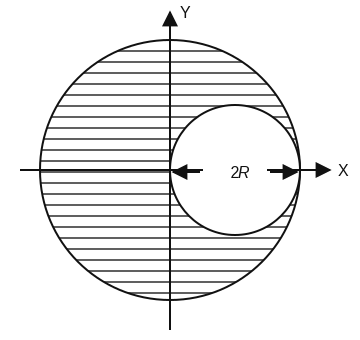
चित्रानुसार त्रिज्या 2R के एक बड़े ठोस गोले से त्रिज्या R का एक गोला काटा जाता है। Y-अक्ष के परितः छोटे गोले के जड़त्व आघूर्ण का गोले के शेष भाग के जड़त्व आघूर्ण से अनुपात है:
  1. A757
  2. B764
  3. C78
  4. D740
Show answer

Concept: Mass ∝ volume; small sphere touches the Y-axis (its centre is at distance R), so use the parallel axis theorem. Irest=Ibig−Ismall.

  1. Let big sphere mass M; small sphere mass M8 (radius halved).
  2. Ibig=25M(2R)2=85MR2=6440MR2.
  3. Ismall=25⋅M8R2+M8R2=740MR2.
  4. Irest=64−740MR2=5740MR2.
  5. Ratio =757.

Short trick: Work in units of MR²/40: big = 64, small = 7, rest = 57.

Answer: (A) 757

अवधारणा: द्रव्यमान ∝ आयतन; छोटा गोला Y-अक्ष को स्पर्श करता है (केंद्र R दूरी पर), अतः समांतर अक्ष प्रमेय लगाएँ। Irest=Ibig−Ismall।

  1. बड़े गोले का द्रव्यमान M; छोटे गोले का M8 (त्रिज्या आधी)।
  2. Ibig=25M(2R)2=85MR2=6440MR2।
  3. Ismall=25⋅M8R2+M8R2=740MR2।
  4. Irest=64−740MR2=5740MR2।
  5. अनुपात =757।

शॉर्ट ट्रिक: MR²/40 की इकाई में: बड़ा = 64, छोटा = 7, शेष = 57।

उत्तर: (A) 757
NEET UGPhysicsRotational motion – moment of inertia of cavity sphereNEET UG 2025 · 4 May Shift 1 →
Q3842.
An electron (mass 9×10⁻³¹ kg and charge 1.6×10⁻¹⁹ C) moving with speed c/100 (c = speed of light) is injected into a magnetic field B→ of magnitude 9×10⁻⁴ T perpendicular to its direction of motion. We wish to apply an uniform electric E→ together with the magnetic field so that the electron does not deflect from its path. Then (Speed of light c=3×10⁸ m s−1)
c/100 चाल (c = प्रकाश की चाल) से गतिमान एक इलेक्ट्रॉन (द्रव्यमान 9×10⁻³¹ kg तथा आवेश 1.6×10⁻¹⁹ C) को उसकी गति की दिशा के लंबवत 9×10⁻⁴ T परिमाण के चुंबकीय क्षेत्र B→ में प्रवेश कराया जाता है। हम चुंबकीय क्षेत्र के साथ एक एकसमान विद्युत क्षेत्र E→ लगाना चाहते हैं ताकि इलेक्ट्रॉन अपने पथ से विचलित न हो। तब (प्रकाश की चाल c=3×10⁸ m s−1)
  1. AE→ is parallel to B→ and its magnitude is 27×102 V m−1E→, B→ के समांतर है और इसका परिमाण 27×102 V m−1 है
  2. BE→ is parallel to B→ and its magnitude is 27×104 V m−1E→, B→ के समांतर है और इसका परिमाण 27×104 V m−1 है
  3. CE→ is perpendicular to B→ and its magnitude is 27×104 V m−1E→, B→ के लंबवत है और इसका परिमाण 27×104 V m−1 है
  4. DE→ is perpendicular to B→ and its magnitude is 27×102 V m−1E→, B→ के लंबवत है और इसका परिमाण 27×102 V m−1 है
Show answer

Concept: No deflection when electric and magnetic forces cancel: qE=qvB, with E→⊥B→ (and ⊥ v→) so that the forces are along the same line, opposite.

  1. v=3×108100=3×10⁶ m/s.
  2. E=vB=3×106×9×10−4=2700=27×102 V/m.
  3. A parallel E→ would push along B→ while the magnetic force is ⊥ to B→ – they could never cancel (A, B wrong).

Short trick: Velocity selector: v = E/B, E ⊥ B. Mass and charge data are not needed.

Answer: (D) E→⊥B→, 27×102 V/m

अवधारणा: विचलन नहीं होगा जब विद्युत और चुंबकीय बल निरस्त हों: qE=qvB, तथा E→⊥B→ (और v→ के ⊥) ताकि बल एक ही रेखा में विपरीत हों।

  1. v=3×108100=3×10⁶ m/s।
  2. E=vB=3×106×9×10−4=2700=27×102 V/m।
  3. समांतर E→, B→ की दिशा में बल देगा जबकि चुंबकीय बल B→ के ⊥ है – वे कभी निरस्त नहीं होंगे (A, B गलत)।

शॉर्ट ट्रिक: वेग वरणक: v = E/B, E ⊥ B। द्रव्यमान व आवेश के आँकड़ों की आवश्यकता नहीं।

उत्तर: (D) E→⊥B→, 27×102 V/m

NEET UGPhysicsMoving charges – velocity selectorNEET UG 2025 · 4 May Shift 1 →
Q3843.
The electric field in a plane electromagnetic wave is given by
Ez=60cos⁡(5x+1.5×10⁹t) V/m
Then expression for the corresponding magnetic field is (here subscripts denote the direction of the field):
एक समतल विद्युतचुंबकीय तरंग में विद्युत क्षेत्र दिया गया है
Ez=60cos⁡(5x+1.5×10⁹t) V/m
तब संगत चुंबकीय क्षेत्र का व्यंजक है (यहाँ पादांक क्षेत्र की दिशा दर्शाते हैं):
  1. ABz=60cos⁡(5x+1.5×10⁹t) T
  2. BBz=60sin⁡(5x+1.5×10⁹t) T
  3. CBy=2×10⁻⁷cos⁡(5x+1.5×10⁹t) T
  4. DBx=2×10⁻⁷cos⁡(5x+1.5×10⁹t) T
Show answer

Concept: In an EM wave E→, B→ and the propagation direction are mutually perpendicular, in phase, and B0=E0c.

  1. Phase (5x+ωt) ⇒ wave travels along the x-axis; E→ is along z, so B→ must be along y.
  2. B0=603×108=2×10⁻⁷ T, same phase (cos).
  3. A, B: B along z (parallel to E) and wrong magnitude; D: B along x (propagation direction) – impossible.

Short trick: B ⊥ E ⊥ k: only y is left; and B₀ = E₀/c.

Answer: (C) By=2×10⁻⁷cos⁡(5x+1.5×10⁹t) T

अवधारणा: विद्युतचुंबकीय तरंग में E→, B→ तथा संचरण दिशा परस्पर लंबवत होते हैं, समान कला में होते हैं, तथा B0=E0c।

  1. कला (5x+ωt) ⇒ तरंग x-अक्ष के अनुदिश चलती है; E→ z दिशा में है, अतः B→ y दिशा में होगा।
  2. B0=603×108=2×10⁻⁷ T, समान कला (cos)।
  3. A, B: B, z दिशा में (E के समांतर) तथा परिमाण गलत; D: B, x दिशा (संचरण दिशा) में – असंभव।

शॉर्ट ट्रिक: B ⊥ E ⊥ k: केवल y बचता है; और B₀ = E₀/c।

उत्तर: (C) By=2×10⁻⁷cos⁡(5x+1.5×10⁹t) T

NEET UGPhysicsElectromagnetic waves – field relationsNEET UG 2025 · 4 May Shift 1 →
Q3844.
A body weighs 48 N on the surface of the earth. The gravitational force experienced by the body due to the earth at a height equal to one-third the radius of the earth form its surface is:
एक पिंड का पृथ्वी की सतह पर भार 48 N है। पृथ्वी की सतह से पृथ्वी की त्रिज्या के एक-तिहाई के बराबर ऊँचाई पर पृथ्वी के कारण पिंड पर लगने वाला गुरुत्वीय बल है:
  1. A32 N
  2. B36 N
  3. C16 N
  4. D27 N
Show answer

Concept: F∝1r2 (exact, not the small-h approximation): Fh=F0(RR+h)2.

  1. h=R3⇒RR+h=34.
  2. Fh=48×916=27 N.

Short trick: Distance becomes 4/3 R ⇒ force × 9/16. (Using 1 − 2h/R would wrongly give 16 N.)

Answer: (D) 27 N

अवधारणा: F∝1r2 (यथार्थ सूत्र, छोटे h का सन्निकटन नहीं): Fh=F0(RR+h)2।

  1. h=R3⇒RR+h=34।
  2. Fh=48×916=27 N।

शॉर्ट ट्रिक: दूरी 4/3 R हो जाती है ⇒ बल × 9/16। (1 − 2h/R लगाने पर गलत उत्तर 16 N आता।)

उत्तर: (D) 27 N

NEET UGPhysicsGravitation – variation of g with heightNEET UG 2025 · 4 May Shift 1 →
Q3845.
An unpolarized light beam travelling in air is incident on a medium of refractive index 1.73 at Brewster's angle. Then -
वायु में चलता एक अध्रुवित प्रकाश पुंज अपवर्तनांक 1.73 वाले माध्यम पर ब्रूस्टर कोण पर आपतित होता है। तब -
  1. ABoth reflected and transmitted light are perfectly polarized with angles of reflection and refraction close to 60∘ and 30∘, respectivelyपरावर्तित और पारगमित दोनों प्रकाश पूर्णतः ध्रुवित हैं, तथा परावर्तन और अपवर्तन कोण क्रमशः लगभग 60∘ और 30∘ हैं
  2. BTransmitted light is completely polarized with angle of refraction close to 30∘पारगमित प्रकाश पूर्णतः ध्रुवित है तथा अपवर्तन कोण लगभग 30∘ है
  3. CReflected light is completely polarized and the angle of reflection is close to 60∘परावर्तित प्रकाश पूर्णतः ध्रुवित है तथा परावर्तन कोण लगभग 60∘ है
  4. DReflected light is partially polarized and the angle of reflection is close to 30∘परावर्तित प्रकाश आंशिक रूप से ध्रुवित है तथा परावर्तन कोण लगभग 30∘ है
Show answer

Concept: Brewster's law tan⁡iB=μ; at iB the reflected light is completely plane polarised, the refracted light is only partially polarised, and reflected ⊥ refracted ray.

  1. tan⁡iB=1.73=3⇒iB=60∘ = angle of reflection.
  2. Angle of refraction =90∘−60∘=30∘.
  3. A and B wrong: transmitted light is only partially polarised. D wrong: reflected light is completely polarised and reflection angle is 60°.

Short trick: At Brewster angle: Reflected = fully polarised, Refracted = partly; i + r = 90°.

Answer: (C) Reflected light completely polarised, reflection angle ≈ 60°

अवधारणा: ब्रूस्टर का नियम tan⁡iB=μ; iB पर परावर्तित प्रकाश पूर्णतः समतल ध्रुवित, अपवर्तित प्रकाश केवल आंशिक ध्रुवित, तथा परावर्तित किरण ⊥ अपवर्तित किरण।

  1. tan⁡iB=1.73=3⇒iB=60∘ = परावर्तन कोण।
  2. अपवर्तन कोण =90∘−60∘=30∘।
  3. A और B गलत: पारगमित प्रकाश केवल आंशिक ध्रुवित है। D गलत: परावर्तित प्रकाश पूर्णतः ध्रुवित है और परावर्तन कोण 60° है।

शॉर्ट ट्रिक: ब्रूस्टर कोण पर: परावर्तित = पूर्ण ध्रुवित, अपवर्तित = आंशिक; i + r = 90°।

उत्तर: (C) परावर्तित प्रकाश पूर्णतः ध्रुवित, परावर्तन कोण ≈ 60°

NEET UGPhysicsWave optics – Brewster's lawNEET UG 2025 · 4 May Shift 1 →
Q3846.
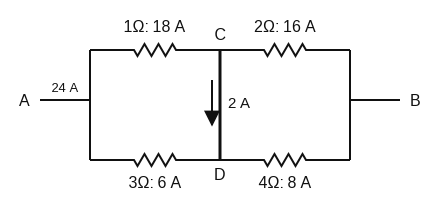
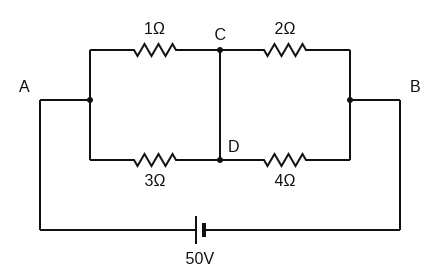
A constant voltage of 50 V is maintained between the points A and B of the circuit shown in the figure. The current through the branch CD of the circuit is:
चित्र में दर्शाए गए परिपथ के बिंदुओं A और B के बीच 50 V की नियत वोल्टता बनाए रखी गई है। परिपथ की शाखा CD से गुजरने वाली धारा है:
  1. A2.5 A
  2. B3.0 A
  3. C1.5 A
  4. D2.0 A
Show answer

Concept: CD is a wire, so C and D are one node: (1 Ω ∥ 3 Ω) in series with (2 Ω ∥ 4 Ω). Then apply the junction rule at C.

  1. R=1×31+3+2×42+4=34+43=2512 Ω; I=50×1225=24 A.
  2. Left pair (same p.d.): I1Ω=24×34=18 A, I3Ω=6 A.
  3. Right pair: I2Ω=24×46=16 A, I4Ω=8 A.
  4. At C: 18 A arrives, 16 A leaves through 2 Ω ⇒ ICD=18−16=2 A (from C to D).

Short trick: Current in a shorting link = difference of currents in the series-side resistors on the same rail.

Answer: (D) 2.0 A

अवधारणा: CD एक तार है, अतः C और D एक ही संधि हैं: (1 Ω ∥ 3 Ω) श्रेणी में (2 Ω ∥ 4 Ω)। फिर C पर संधि नियम लगाएँ।

  1. R=1×31+3+2×42+4=34+43=2512 Ω; I=50×1225=24 A।
  2. बायाँ युग्म (समान विभवांतर): I1Ω=24×34=18 A, I3Ω=6 A।
  3. दायाँ युग्म: I2Ω=24×46=16 A, I4Ω=8 A।
  4. C पर: 18 A आती है, 16 A, 2 Ω से निकलती है ⇒ ICD=18−16=2 A (C से D की ओर)।

शॉर्ट ट्रिक: शॉर्टिंग तार में धारा = एक ही ओर के प्रतिरोधों की धाराओं का अंतर।

उत्तर: (D) 2.0 A

NEET UGPhysicsCurrent electricity – Kirchhoff's lawsNEET UG 2025 · 4 May Shift 1 →
Q3847.
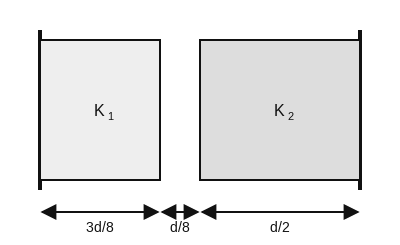
The plates of a parallel plate capacitor are separated by d. Two slabs of different dielectric constant K1 and K2 with thickness 38d and d2, respectively are inserted in the capacitor. Due to this, the capacitance becomes two times larger than when there is nothing between the plates.
If K1=1.25K2, the value of K1 is:
एक समांतर प्लेट संधारित्र की प्लेटों के बीच की दूरी d है। भिन्न परावैद्युतांक K1 और K2 वाली दो पट्टिकाएँ, जिनकी मोटाई क्रमशः 38d और d2 है, संधारित्र में डाली जाती हैं। इसके कारण धारिता, प्लेटों के बीच कुछ न होने की स्थिति से दुगुनी हो जाती है।
यदि K1=1.25K2 है, तो K1 का मान है:
  1. A1.60
  2. B1.33
  3. C2.66
  4. D2.33
Show answer

Concept: Slabs in series with the remaining air gap: C=ε0Ad−t1−t2+t1K1+t2K2.

  1. C′=2C0 ⇒ effective gap =d2: d8+3d8K1+d2K2=d2.
  2. K2=K11.25⇒12K2=58K1.
  3. 18+38K1+58K1=12⇒1K1=38.
  4. K1=83≈2.66.

Short trick: Doubling C means the "air-equivalent" gap must be d/2.

Answer: (C) 2.66

अवधारणा: पट्टिकाएँ शेष वायु अंतराल के साथ श्रेणी में: C=ε0Ad−t1−t2+t1K1+t2K2।

  1. C′=2C0 ⇒ प्रभावी अंतराल =d2: d8+3d8K1+d2K2=d2।
  2. K2=K11.25⇒12K2=58K1।
  3. 18+38K1+58K1=12⇒1K1=38।
  4. K1=83≈2.66।

शॉर्ट ट्रिक: C दुगुनी होने का अर्थ है "वायु-तुल्य" अंतराल d/2 होना चाहिए।

उत्तर: (C) 2.66

NEET UGPhysicsCapacitance – dielectric slabsNEET UG 2025 · 4 May Shift 1 →
Q3848.
Consider the dimeter of a spherical object being measured with the help of a Vernier caliper. Suppose its 10 Vernier scale Divisions (V.S.D.) are equal to its 9 Main scale Divisions (M.S.D). The least division in the M.S. is 0.1 cm and the zero of V.S. is at x=0.1 cm when the jaws of Vernier calipers are closed.
If the main scale reading for the diameter is M = 5 cm and the number of coinciding vernier division is 8, the measured diameter after zero error correction, is
एक वर्नियर कैलिपर्स की सहायता से एक गोलाकार वस्तु का व्यास मापा जा रहा है। माना इसके 10 वर्नियर पैमाना भाग (V.S.D.) इसके 9 मुख्य पैमाना भागों (M.S.D.) के बराबर हैं। मुख्य पैमाने का न्यूनतम भाग 0.1 cm है तथा जबड़े बंद होने पर वर्नियर पैमाने का शून्य x=0.1 cm पर है।
यदि व्यास के लिए मुख्य पैमाना पाठ्यांक M = 5 cm है और संपाती वर्नियर भाग 8 है, तो शून्य त्रुटि संशोधन के बाद मापा गया व्यास है
  1. A4.98 cm
  2. B5.00 cm
  3. C5.18 cm
  4. D5.08 cm
Show answer

Concept: LC = 1 MSD − 1 VSD; true reading = MSR + (VSR × LC) − zero error (positive zero error is subtracted).

  1. LC =0.1−910(0.1)=0.01 cm.
  2. Observed =5+8×0.01=5.08 cm.
  3. Zero error =+0.1 cm ⇒ corrected =5.08−0.1=4.98 cm.

Short trick: Option D (5.08) is the trap – it forgets the zero correction.

Answer: (A) 4.98 cm

अवधारणा: अल्पतमांक = 1 MSD − 1 VSD; सही पाठ्यांक = MSR + (VSR × LC) − शून्य त्रुटि (धनात्मक शून्य त्रुटि घटाई जाती है)।

  1. अल्पतमांक =0.1−910(0.1)=0.01 cm।
  2. प्रेक्षित =5+8×0.01=5.08 cm।
  3. शून्य त्रुटि =+0.1 cm ⇒ संशोधित =5.08−0.1=4.98 cm।

शॉर्ट ट्रिक: विकल्प D (5.08) जाल है – इसमें शून्य संशोधन भुला दिया गया है।

उत्तर: (A) 4.98 cm

NEET UGPhysicsUnits and measurements – vernier calipers with zero errorNEET UG 2025 · 4 May Shift 1 →
Q3849.
A 2 amp current is flowing through two different small circular copper coils having radii ratio 1: 2. The ratio of their respective magnetic moments will be
त्रिज्याओं के अनुपात 1 : 2 वाली दो भिन्न छोटी वृत्ताकार ताँबे की कुंडलियों में 2 ऐम्पियर धारा बह रही है। उनके चुंबकीय आघूर्णों का अनुपात होगा
  1. A2 : 1
  2. B4 : 1
  3. C1 : 4
  4. D1 : 2
Show answer

Concept: μ=NIA=NIπr2; same current ⇒ μ∝r2.

  1. μ1μ2=(r1r2)2=(12)2=14.

Short trick: Magnetic moment goes with AREA, so square the radius ratio.

Answer: (C) 1 : 4

अवधारणा: μ=NIA=NIπr2; समान धारा ⇒ μ∝r2।

  1. μ1μ2=(r1r2)2=(12)2=14।

शॉर्ट ट्रिक: चुंबकीय आघूर्ण क्षेत्रफल के अनुसार चलता है, अतः त्रिज्या अनुपात का वर्ग लें।

उत्तर: (C) 1 : 4

NEET UGPhysicsMoving charges – magnetic moment of a coilNEET UG 2025 · 4 May Shift 1 →
Q3850.
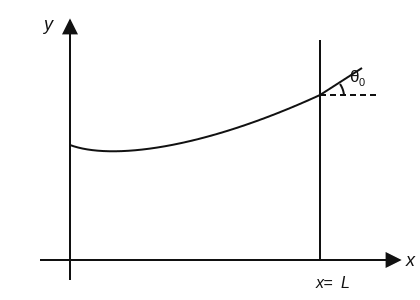
Consider a water tank shown in the figure. It has one wall at x=L and can be taken to be very wide in the z direction. When filled with a liquid of surface tension S and density ρ, the liquid surface makes angle θ0 (θ0<<1) with the x-axis at x=L. If y(x) is the height of the surface then the equation for y(x) is:

(take θ(x)=sin⁡θ(x)=tan⁡θ(x)=dydx, g is the acceleration due to gravity)
चित्र में दर्शाए गए एक पानी के टैंक पर विचार कीजिए। इसकी एक दीवार x=L पर है तथा इसे z दिशा में बहुत चौड़ा माना जा सकता है। पृष्ठ तनाव S और घनत्व ρ वाले द्रव से भरने पर, x=L पर द्रव पृष्ठ x-अक्ष से कोण θ0 (θ0<<1) बनाता है। यदि y(x) पृष्ठ की ऊँचाई है, तो y(x) का समीकरण है:

(θ(x)=sin⁡θ(x)=tan⁡θ(x)=dydx लें, g गुरुत्वीय त्वरण है)
  1. Ad2ydx2=ρgS
  2. Bdydx=ρgSx
  3. Cd2ydx2=ρgSx
  4. Dd2ydx2=ρgSy
Show answer

Concept: Balance on a thin strip of surface: pressure jump across a cylindrical (z-wide) surface is Δp=SR, with curvature 1R≈d2ydx2 for small slopes; this jump equals the hydrostatic pressure difference ρgy (y measured from the level where the surface would be flat).

  1. Vertical force on a surface element of width dx: S[sin⁡θ(x+dx)−sin⁡θ(x)]=Sd2ydx2dx.
  2. It balances the pressure deficit ρgydx of the raised liquid: Sd2ydx2=ρgy.
  3. d2ydx2=ρgSy.
  4. Why the others are wrong: A makes the curvature constant (a parabola) and independent of height; B and C tie the slope/curvature to the position x, but the pressure that bends the surface depends on the height y of the liquid, not on x.

Short trick: Curvature ∝ height ⇒ y″ ∝ y (solution y∝ex/lc, capillary length lc=S/ρg).

Answer: (D) d2ydx2=ρgSy

अवधारणा: पृष्ठ की एक पतली पट्टी पर संतुलन: बेलनाकार (z में चौड़े) पृष्ठ के आर-पार दाब-अंतर Δp=SR, छोटे ढाल के लिए वक्रता 1R≈d2ydx2; यह दाब-अंतर द्रवस्थैतिक दाबांतर ρgy के बराबर है (y उस स्तर से मापा गया जहाँ पृष्ठ समतल होता)।

  1. चौड़ाई dx के पृष्ठ अवयव पर ऊर्ध्वाधर बल: S[sin⁡θ(x+dx)−sin⁡θ(x)]=Sd2ydx2dx।
  2. यह ऊपर उठे द्रव की दाब-कमी ρgydx को संतुलित करता है: Sd2ydx2=ρgy।
  3. d2ydx2=ρgSy।
  4. अन्य विकल्प गलत क्यों: A में वक्रता नियत (परवलय) है और ऊँचाई पर निर्भर नहीं करती; B और C ढाल/वक्रता को स्थिति x से जोड़ते हैं, जबकि पृष्ठ को मोड़ने वाला दाब द्रव की ऊँचाई y पर निर्भर करता है, x पर नहीं।

शॉर्ट ट्रिक: वक्रता ∝ ऊँचाई ⇒ y″ ∝ y (हल y∝ex/lc, केशिका लंबाई lc=S/ρg)।

उत्तर: (D) d2ydx2=ρgSy

NEET UGPhysicsFluids – surface tension and meniscus shapeNEET UG 2025 · 4 May Shift 1 →
Q3851.
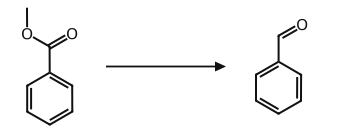
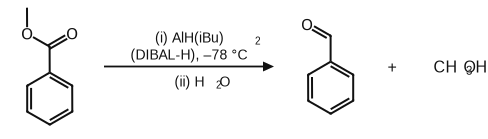
Identify the suitable reagent for the following conversion.
निम्नलिखित रूपांतरण के लिए उपयुक्त अभिकर्मक पहचानिए।
  1. A(i) NaBH4, (ii) H+/H2O
  2. BH2/Pd-BaSO4
  3. C(i) LiAlH4, (ii) H+/H2O
  4. D(i) AlH(iBu)2 (ii) H2O
Show answer

Concept: DIBAL-H [AlH(iBu)2] is a bulky, mild hydride that reduces esters (and nitriles) only up to the aldehyde stage at low temperature.

  1. Methyl benzoate C6H5COOCH3 must lose –OCH3 and stop at C6H5CHO.
  2. DIBAL-H gives a stable tetrahedral Al-intermediate at –78 °C; water then releases benzaldehyde + CH3OH.
  3. NaBH4 barely reduces esters; LiAlH4 over-reduces to benzyl alcohol; H2/Pd-BaSO4 (Rosenmund) works on acid chlorides, not esters.

Short trick: Ester/nitrile → aldehyde = DIBAL-H; acid chloride → aldehyde = Rosenmund; anything → alcohol = LiAlH4.

Answer: (D) (i) AlH(iBu)2 (ii) H2O

अवधारणा: DIBAL-H [AlH(iBu)2] एक भारी (bulky), मृदु हाइड्राइड है जो कम ताप पर एस्टर (और नाइट्राइल) को केवल ऐल्डिहाइड अवस्था तक अपचयित करता है।

  1. मेथिल बेन्ज़ोएट C6H5COOCH3 से –OCH3 हटकर अभिक्रिया C6H5CHO पर रुकनी चाहिए।
  2. –78 °C पर DIBAL-H एक स्थायी चतुष्फलकीय Al-मध्यवर्ती बनाता है; फिर जल मिलाने पर बेन्ज़ैल्डिहाइड + CH3OH मुक्त होते हैं।
  3. NaBH4 एस्टर को लगभग अपचयित नहीं करता; LiAlH4 बेन्ज़िल ऐल्कोहॉल तक अपचयित कर देता है; H2/Pd-BaSO4 (रोज़ेनमुंड) अम्ल क्लोराइड पर काम करता है, एस्टर पर नहीं।

शॉर्ट ट्रिक: एस्टर/नाइट्राइल → ऐल्डिहाइड = DIBAL-H; अम्ल क्लोराइड → ऐल्डिहाइड = रोज़ेनमुंड; ऐल्कोहॉल तक = LiAlH4।

उत्तर: (D) (i) AlH(iBu)2 (ii) H2O

NEET UGChemistryAldehydes – reduction of esters (DIBAL-H)NEET UG 2025 · 4 May Shift 1 →
Q3852.
The correct order of decreasing acidity of the following aliphatic acids is
निम्नलिखित ऐलिफैटिक अम्लों की अम्लता के घटते क्रम का सही क्रम है
  1. AHCOOH > CH3COOH > (CH3)2CHCOOH > (CH3)3CCOOH
  2. BHCOOH > (CH3)3CCOOH > (CH3)2CHCOOH > CH3COOH
  3. C(CH3)3CCOOH > (CH3)2CHCOOH > CH3COOH > HCOOH
  4. DCH3COOH > (CH3)2CHCOOH > (CH3)3CCOOH > HCOOH
Show answer

Concept: Electron-releasing (+I) alkyl groups destabilise the carboxylate anion, so acidity falls as the number of alkyl groups on the α-carbon rises.

  1. HCOOH has no alkyl group → most stable HCOO– → strongest (pKa ≈ 3.75).
  2. CH3COOH: one CH3 (pKa ≈ 4.76).
  3. (CH3)2CHCOOH: two CH3 → more +I → weaker.
  4. (CH3)3CCOOH: three CH3 → maximum +I → weakest.
  5. Options (B), (C), (D) all place a more alkylated acid above a less alkylated one, so they are wrong.

Short trick: More alkyl = more +I = weaker acid; formic acid always tops the aliphatic list.

Answer: (A) HCOOH > CH3COOH > (CH3)2CHCOOH > (CH3)3CCOOH

अवधारणा: इलेक्ट्रॉन-दाता (+I) ऐल्किल समूह कार्बोक्सिलेट ऋणायन को अस्थायी करते हैं, अतः α-कार्बन पर ऐल्किल समूह बढ़ने पर अम्लता घटती है।

  1. HCOOH में कोई ऐल्किल समूह नहीं → HCOO– सबसे स्थायी → सबसे प्रबल (pKa ≈ 3.75)।
  2. CH3COOH: एक CH3 (pKa ≈ 4.76)।
  3. (CH3)2CHCOOH: दो CH3 → अधिक +I → और दुर्बल।
  4. (CH3)3CCOOH: तीन CH3 → अधिकतम +I → सबसे दुर्बल।
  5. विकल्प (B), (C), (D) अधिक ऐल्किलित अम्ल को कम ऐल्किलित अम्ल से ऊपर रखते हैं, अतः गलत हैं।

शॉर्ट ट्रिक: जितने अधिक ऐल्किल, उतना अधिक +I, उतना दुर्बल अम्ल; ऐलिफैटिक अम्लों में फॉर्मिक अम्ल सबसे ऊपर।

उत्तर: (A) HCOOH > CH3COOH > (CH3)2CHCOOH > (CH3)3CCOOH

NEET UGChemistryCarboxylic acids – acidic strengthNEET UG 2025 · 4 May Shift 1 →
Q3853.
Which one of the following reactions does NOT belong to “Lassaigne’s test”?
निम्नलिखित में से कौन-सी अभिक्रिया “लैसे परीक्षण (Lassaigne’s test)” से संबंधित नहीं है?
  1. ANa + X Δ​ NaX
  2. B2CuO + C Δ​ 2Cu + CO2
  3. CNa + C + N Δ​ NaCN
  4. D2Na + S Δ​ Na2S
Show answer

Concept: In Lassaigne’s test the organic compound is fused with sodium metal so that N, S and halogens become ionic NaCN, Na2S and NaX (sodium fusion extract).

  1. (A) Na + X → NaX: halogen converted to sodium halide – part of the test.
  2. (C) Na + C + N → NaCN: nitrogen detected as cyanide – part of the test.
  3. (D) 2Na + S → Na2S: sulphur detected as sulphide – part of the test.
  4. (B) 2CuO + C → 2Cu + CO2 is the copper(II) oxide test for carbon (CO2 turns lime water milky) – not Lassaigne’s test.

Short trick: Lassaigne = “Na + element”; any reaction without sodium is the odd one out.

Answer: (B) 2CuO + C → 2Cu + CO2

अवधारणा: लैसे परीक्षण में कार्बनिक यौगिक को सोडियम धातु के साथ संगलित किया जाता है जिससे N, S तथा हैलोजेन आयनिक NaCN, Na2S व NaX (सोडियम संगलन निष्कर्ष) में बदल जाते हैं।

  1. (A) Na + X → NaX: हैलोजेन सोडियम हैलाइड में बदलता है – परीक्षण का भाग।
  2. (C) Na + C + N → NaCN: नाइट्रोजन सायनाइड के रूप में पहचानी जाती है – परीक्षण का भाग।
  3. (D) 2Na + S → Na2S: सल्फर सल्फाइड के रूप में पहचाना जाता है – परीक्षण का भाग।
  4. (B) 2CuO + C → 2Cu + CO2 कार्बन का कॉपर(II) ऑक्साइड परीक्षण है (CO2 चूने के पानी को दूधिया करती है) – लैसे परीक्षण नहीं।

शॉर्ट ट्रिक: लैसे = “Na + तत्व”; जिस अभिक्रिया में सोडियम नहीं, वही अलग है।

उत्तर: (B) 2CuO + C → 2Cu + CO2

NEET UGChemistryOrganic chemistry – Lassaigne’s testNEET UG 2025 · 4 May Shift 1 →
Q3854.
If the rate constant of a reaction is 0.03 s–1, how much time does it take for 7.2 mol L–1 concentration of the reactant to get reduced to 0.9 mol L–1?
(Given: log 2 = 0.301)
यदि किसी अभिक्रिया का वेग स्थिरांक 0.03 s–1 है, तो अभिकारक की सांद्रता 7.2 mol L–1 से घटकर 0.9 mol L–1 होने में कितना समय लगेगा?
(दिया है: log 2 = 0.301)
  1. A210 s
  2. B21.0 s
  3. C69.3 s
  4. D23.1 s
Show answer

Concept: The unit s–1 shows a first-order reaction: t=2.303klog⁡[A]0[A].

  1. [A]0[A]=7.20.9=8, so log 8 = 3 log 2 = 0.903.
  2. t=2.3030.03×0.903=76.77×0.903≈69.3 s.

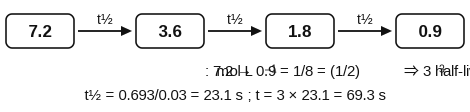
Short trick: 7.2 → 3.6 → 1.8 → 0.9 is three half-lives; t½ = 0.693/0.03 = 23.1 s, so t = 3 × 23.1 = 69.3 s (23.1 s is the trap option = one half-life).

Answer: (C) 69.3 s

अवधारणा: इकाई s–1 बताती है कि अभिक्रिया प्रथम कोटि की है: t=2.303klog⁡[A]0[A]।

  1. [A]0[A]=7.20.9=8, अतः log 8 = 3 log 2 = 0.903।
  2. t=2.3030.03×0.903=76.77×0.903≈69.3 s।

शॉर्ट ट्रिक: 7.2 → 3.6 → 1.8 → 0.9 तीन अर्ध-आयु हैं; t½ = 0.693/0.03 = 23.1 s, अतः t = 3 × 23.1 = 69.3 s (23.1 s केवल एक अर्ध-आयु वाला भ्रामक विकल्प है)।

उत्तर: (C) 69.3 s

NEET UGChemistryChemical kinetics – first-order reactionNEET UG 2025 · 4 May Shift 1 →
Q3855.
Given below are two statements :
Statement I: A hypothetical diatomic molecule with bond order zero is quite stable.
Statement II: As bond order increases, the bond length increases.
In the light of the above statements, choose the most appropriate answer from the options given below :
नीचे दो कथन दिए गए हैं :
कथन I: शून्य आबंध कोटि वाला एक काल्पनिक द्विपरमाणुक अणु काफी स्थायी होता है।
कथन II: आबंध कोटि बढ़ने पर आबंध लंबाई बढ़ती है।
उपरोक्त कथनों के आलोक में, नीचे दिए गए विकल्पों में से सबसे उपयुक्त उत्तर चुनिए :
  1. AStatement I is true but Statement II is falseकथन I सत्य है परन्तु कथन II असत्य है
  2. BStatement I is false but Statement II is trueकथन I असत्य है परन्तु कथन II सत्य है
  3. CBoth Statement I and Statement II are trueकथन I और कथन II दोनों सत्य हैं
  4. DBoth Statement I and Statement II are falseकथन I और कथन II दोनों असत्य हैं
Show answer

Concept: Bond order = ½(Nb – Na). A molecule exists only if bond order > 0; bond length is inversely related to bond order.

  1. Statement I: bond order 0 (e.g. He2, Be2) means no net bonding – such a molecule does not exist. False.
  2. Statement II: higher bond order → stronger, shorter bond (N2 110 pm < O2 121 pm < F2 142 pm). Bond length decreases, so False.

Short trick: Bond order ↑ ⇒ bond energy ↑, bond length ↓, stability ↑; BO = 0 ⇒ molecule does not exist.

Answer: (D) Both Statement I and Statement II are false

अवधारणा: आबंध कोटि = ½(Nb – Na)। अणु तभी अस्तित्व में होता है जब आबंध कोटि > 0 हो; आबंध लंबाई आबंध कोटि के व्युत्क्रमानुपाती होती है।

  1. कथन I: आबंध कोटि 0 (जैसे He2, Be2) का अर्थ है कोई शुद्ध आबंधन नहीं – ऐसा अणु अस्तित्व में नहीं होता। असत्य।
  2. कथन II: अधिक आबंध कोटि → प्रबल व छोटा आबंध (N2 110 pm < O2 121 pm < F2 142 pm)। आबंध लंबाई घटती है, अतः असत्य।

शॉर्ट ट्रिक: आबंध कोटि ↑ ⇒ आबंध ऊर्जा ↑, आबंध लंबाई ↓, स्थायित्व ↑; BO = 0 ⇒ अणु का अस्तित्व नहीं।

उत्तर: (D) कथन I और कथन II दोनों असत्य हैं

NEET UGChemistryChemical bonding – bond order (MOT)NEET UG 2025 · 4 May Shift 1 →
Q3856.
Out of the following complex compounds, which of the compound will be having the minimum conductance in solution?
निम्नलिखित संकुल यौगिकों में से किस यौगिक की विलयन में चालकता न्यूनतम होगी?
  1. A[Co(NH3)6]Cl3
  2. B[Co(NH3)5Cl]Cl
  3. C[Co(NH3)3Cl3]
  4. D[Co(NH3)4Cl2]
Show answer

Concept: Molar conductance depends on the number of ions a complex gives in solution; a neutral complex (no counter-ions) gives none and has the minimum conductance.

  1. [Co(NH3)6]Cl3 → [Co(NH3)6]3+ + 3Cl–: 4 ions (highest).
  2. [Co(NH3)5Cl]Cl as written gives 2 ions (the real Co(III) compound is [Co(NH3)5Cl]Cl2, 3 ions).
  3. [Co(NH3)3Cl3] is a neutral Co(III) complex: 0 ions → minimum conductance.
  4. [Co(NH3)4Cl2] is printed with no counter-ion, i.e. as a neutral Co(II) complex – it too gives 0 ions in solution.
  5. So, as printed, options (C) and (D) both show zero ionisable species and are equally correct.

Short trick: Count ions outside the square bracket: none outside ⇒ non-electrolyte ⇒ lowest conductance.

Answer: Bonus – options (C) and (D) are both written as neutral, non-ionising complexes, so two options are correct as printed.

अवधारणा: मोलर चालकता इस पर निर्भर करती है कि संकुल विलयन में कितने आयन देता है; उदासीन संकुल (कोई प्रति-आयन नहीं) कोई आयन नहीं देता और उसकी चालकता न्यूनतम होती है।

  1. [Co(NH3)6]Cl3 → [Co(NH3)6]3+ + 3Cl–: 4 आयन (सर्वाधिक)।
  2. [Co(NH3)5Cl]Cl जैसा लिखा है, 2 आयन देता है (वास्तविक Co(III) यौगिक [Co(NH3)5Cl]Cl2 है, 3 आयन)।
  3. [Co(NH3)3Cl3] एक उदासीन Co(III) संकुल है: 0 आयन → न्यूनतम चालकता।
  4. [Co(NH3)4Cl2] बिना प्रति-आयन के छपा है, अर्थात उदासीन Co(II) संकुल – यह भी विलयन में 0 आयन देता है।
  5. अतः छपे रूप में विकल्प (C) और (D) दोनों शून्य आयन दर्शाते हैं और समान रूप से सही हैं।

शॉर्ट ट्रिक: वर्ग कोष्ठक के बाहर के आयन गिनिए: बाहर कोई नहीं ⇒ अविद्युत-अपघट्य ⇒ न्यूनतम चालकता।

उत्तर: बोनस – विकल्प (C) और (D) दोनों उदासीन, अनायनित संकुल के रूप में लिखे गए हैं, अतः छपे रूप में दो विकल्प सही हैं।

NEET UGChemistryCoordination compounds – ionisation and conductanceNEET UG 2025 · 4 May Shift 1 →
Q3857.
Which of the following aqueous solution will exhibit highest boiling point?
निम्नलिखित में से कौन-सा जलीय विलयन उच्चतम क्वथनांक प्रदर्शित करेगा?
  1. A0.01 M Na2SO4
  2. B0.015 M C6H12O6
  3. C0.01 M Urea0.01 M यूरिया
  4. D0.01 M KNO3
Show answer

Concept: ΔTb = i Kb m, so the solution with the largest i × m (effective particle concentration) boils highest.

  1. Na2SO4 → 2Na+ + SO42–: i = 3, i × m = 0.03.
  2. Glucose: non-electrolyte, i = 1, i × m = 0.015.
  3. Urea: i = 1, i × m = 0.01.
  4. KNO3 → K+ + NO3–: i = 2, i × m = 0.02.
  5. Largest value 0.03 → 0.01 M Na2SO4.

Short trick: Multiply concentration by number of ions and pick the biggest product – colligative = count of particles.

Answer: (A) 0.01 M Na2SO4

अवधारणा: ΔTb = i Kb m, अतः जिस विलयन का i × m (प्रभावी कण सांद्रता) सबसे अधिक है, उसका क्वथनांक सर्वाधिक होगा।

  1. Na2SO4 → 2Na+ + SO42–: i = 3, i × m = 0.03।
  2. ग्लूकोज़: अविद्युत-अपघट्य, i = 1, i × m = 0.015।
  3. यूरिया: i = 1, i × m = 0.01।
  4. KNO3 → K+ + NO3–: i = 2, i × m = 0.02।
  5. सबसे बड़ा मान 0.03 → 0.01 M Na2SO4।

शॉर्ट ट्रिक: सांद्रता × आयनों की संख्या – जिसका गुणनफल सबसे बड़ा, वही उत्तर; अणुसंख्य गुणधर्म = कणों की गिनती।

उत्तर: (A) 0.01 M Na2SO4

NEET UGChemistrySolutions – elevation of boiling point (van’t Hoff factor)NEET UG 2025 · 4 May Shift 1 →
Q3858.
Given below are two statements : one is labelled as Assertion (A) and the other is labelled as Reason (R).
Assertion (A): undergoes SN2 reaction faster than
Reason (R): Iodine is a better leaving group because of its large size.
In the light of the above statements, choose the correct answer from the options given below.
नीचे दो कथन दिए गए हैं : एक को अभिकथन (A) तथा दूसरे को कारण (R) कहा गया है।
अभिकथन (A): , की तुलना में SN2 अभिक्रिया तीव्रता से करता है।
कारण (R): आयोडीन अपने बड़े आकार के कारण बेहतर अवशिष्ट समूह (leaving group) है।
उपरोक्त कथनों के आलोक में, नीचे दिए गए विकल्पों में से सही उत्तर चुनिए।
  1. AA is true but R is falseA सत्य है परन्तु R असत्य है
  2. BA is false but R is trueA असत्य है परन्तु R सत्य है
  3. CBoth A and R are true and R is the correct explanation of AA और R दोनों सत्य हैं तथा R, A की सही व्याख्या है
  4. DBoth A and R are true but R is not the correct explanation of AA और R दोनों सत्य हैं परन्तु R, A की सही व्याख्या नहीं है
Show answer

Concept: In SN2 the C–X bond breaks in the rate-determining step; with the same alkyl group, rate follows leaving-group ability I– > Br– > Cl– > F–.

  1. Both substrates are primary butyl halides (1-iodobutane vs 1-chlorobutane), so steric factors are identical.
  2. C–I bond is longer and weaker than C–Cl; the large I– spreads its charge over a big volume and is a very stable, weak base.
  3. Hence 1-iodobutane reacts faster – A true; R true and it is exactly the reason for A.

Short trick: Same R-group ⇒ compare only X: bigger halide = weaker C–X = better leaving group = faster SN1 and SN2.

Answer: (C) Both A and R are true and R is the correct explanation of A

अवधारणा: SN2 में C–X आबंध वेग-निर्धारक पद में टूटता है; समान ऐल्किल समूह के लिए वेग अवशिष्ट समूह की क्षमता के क्रम I– > Br– > Cl– > F– में होता है।

  1. दोनों अभिकर्मक प्राथमिक ब्यूटिल हैलाइड हैं (1-आयोडोब्यूटेन बनाम 1-क्लोरोब्यूटेन), अतः त्रिविम (steric) कारक समान हैं।
  2. C–I आबंध C–Cl से लंबा व दुर्बल है; बड़ा I– अपना आवेश बड़े आयतन में फैला देता है और बहुत स्थायी, दुर्बल क्षारक है।
  3. अतः 1-आयोडोब्यूटेन तेज़ी से अभिक्रिया करता है – A सत्य; R सत्य है और ठीक यही A का कारण है।

शॉर्ट ट्रिक: समान R-समूह ⇒ केवल X की तुलना: बड़ा हैलाइड = दुर्बल C–X = बेहतर अवशिष्ट समूह = तीव्र SN1 व SN2।

उत्तर: (C) A और R दोनों सत्य हैं तथा R, A की सही व्याख्या है

NEET UGChemistryHaloalkanes – S<sub>N</sub>2 reactivity and leaving groupNEET UG 2025 · 4 May Shift 1 →
Q3859.
Consider the following compounds :
KO2, H2O2 and H2SO4.
The oxidation states of the underlined elements in them are, respectively,
निम्नलिखित यौगिकों पर विचार कीजिए :
KO2, H2O2 तथा H2SO4।
इनमें रेखांकित तत्वों की ऑक्सीकरण अवस्थाएँ क्रमशः हैं
  1. A+1, –2, and +4+1, –2, तथा +4
  2. B+4, –4, and +6+4, –4, तथा +6
  3. C+1, –1, and +6+1, –1, तथा +6
  4. D+2, –2, and +6+2, –2, तथा +6
Show answer

Concept: Alkali metals are always +1; peroxide oxygen is –1; sum of oxidation numbers in a neutral molecule is zero.

  1. KO2 is potassium superoxide (O2–): K = +1.
  2. H2O2 is a peroxide: 2(+1) + 2x = 0 ⇒ O = –1.
  3. H2SO4: 2(+1) + S + 4(–2) = 0 ⇒ S = +6.
  4. Sequence +1, –1, +6 → option (C).

Short trick: Group-1 metal ⇒ +1 no matter what the anion (oxide, peroxide or superoxide); only oxygen’s number changes.

Answer: (C) +1, –1, and +6

अवधारणा: क्षार धातुएँ सदैव +1 होती हैं; परॉक्साइड ऑक्सीजन –1 होती है; उदासीन अणु में ऑक्सीकरण संख्याओं का योग शून्य होता है।

  1. KO2 पोटैशियम सुपरऑक्साइड (O2–) है: K = +1।
  2. H2O2 परॉक्साइड है: 2(+1) + 2x = 0 ⇒ O = –1।
  3. H2SO4: 2(+1) + S + 4(–2) = 0 ⇒ S = +6।
  4. क्रम +1, –1, +6 → विकल्प (C)।

शॉर्ट ट्रिक: वर्ग-1 धातु ⇒ +1, ऋणायन चाहे ऑक्साइड, परॉक्साइड या सुपरऑक्साइड हो; केवल ऑक्सीजन की संख्या बदलती है।

उत्तर: (C) +1, –1, तथा +6

NEET UGChemistryRedox reactions – oxidation numberNEET UG 2025 · 4 May Shift 1 →
Q3860.
Match List-I with List-II.
List-IList-II
A. Haber processI. Fe catalyst
B. Wacker oxidationII. PdCl2
C. Wilkinson catalystIII. [(PPh3)3RhCl]
D. Ziegler catalystIV. TiCl4 with Al(CH3)3
Choose the correct answer from the options given below:
सूची-I का सूची-II से मिलान कीजिए।
सूची-Iसूची-II
A. हाबर प्रक्रमI. Fe उत्प्रेरक
B. वेकर ऑक्सीकरणII. PdCl2
C. विल्किन्सन उत्प्रेरकIII. [(PPh3)3RhCl]
D. ज़ीग्लर उत्प्रेरकIV. TiCl4 के साथ Al(CH3)3
नीचे दिए गए विकल्पों में से सही उत्तर चुनिए :
  1. AA-I, B-II, C-III, D-IV
  2. BA-I, B-IV, C-III, D-II
  3. CA-I, B-II, C-IV, D-III
  4. DA-II, B-III, C-I, D-IV
Show answer

Concept: Standard NCERT catalyst list for important industrial processes.

  1. Haber process (N2 + 3H2 → 2NH3): finely divided iron (Mo promoter) – A-I.
  2. Wacker process (ethene → ethanal): PdCl2 (with CuCl2) – B-II.
  3. Wilkinson’s catalyst for alkene hydrogenation: [(PPh3)3RhCl] – C-III.
  4. Ziegler–Natta catalyst for polythene/polypropene: TiCl4 + Al(CH3)3 (trialkylaluminium) – D-IV.

Short trick: Names in alphabetical order match List-II in order here: Fe, Pd, Rh, Ti → I, II, III, IV.

Answer: (A) A-I, B-II, C-III, D-IV

अवधारणा: महत्त्वपूर्ण औद्योगिक प्रक्रमों के उत्प्रेरकों की मानक NCERT सूची।

  1. हाबर प्रक्रम (N2 + 3H2 → 2NH3): सूक्ष्म विभाजित आयरन (Mo वर्धक) – A-I।
  2. वेकर प्रक्रम (एथीन → एथेनैल): PdCl2 (CuCl2 सहित) – B-II।
  3. ऐल्कीन के हाइड्रोजनीकरण हेतु विल्किन्सन उत्प्रेरक: [(PPh3)3RhCl] – C-III।
  4. पॉलिथीन/पॉलिप्रोपीन हेतु ज़ीग्लर–नाटा उत्प्रेरक: TiCl4 + Al(CH3)3 (ट्राइऐल्किलऐलुमिनियम) – D-IV।

शॉर्ट ट्रिक: यहाँ Fe, Pd, Rh, Ti क्रम से I, II, III, IV से मेल खाते हैं – सीधा मिलान।

उत्तर: (A) A-I, B-II, C-III, D-IV

NEET UGChemistryd-block & coordination – industrial catalystsNEET UG 2025 · 4 May Shift 1 →