Question bank

Q&A: practice questions with answers

Search questions on any topic. Filter by exam category, exam, subject and topic, try the question, then open the answer and explanation.

Courses – airGurukul

53,050 questions in the question bank.

Q4301.
Spraying sugarcane crop with which of the following plant growth regulators, increases the length of stem, thus, increasing the yield?
गन्ने की फसल पर निम्नलिखित में से किस पादप वृद्धि नियामक का छिड़काव करने से तने की लंबाई बढ़ती है और इस प्रकार उपज बढ़ती है?
  1. AGibberellinजिबरेलिन
  2. BCytokininसाइटोकाइनिन
  3. CAbscisic acidऐब्सिसिक अम्ल
  4. DAuxinऑक्सिन
Show answer

Concept: Gibberellins cause internode elongation. NCERT: spraying sugarcane with gibberellins increases the length of the stem and raises the yield by as much as 20 tonnes per acre.

  1. Sugarcane stores sugar in its stem, so a longer stem means more sugar.
  2. Cytokinin promotes cell division and delays senescence. ABA is a growth inhibitor. Auxin is used for rooting and as a weedicide, not for this purpose.

Short trick: Think GA = Grow tall: it lengthens sugarcane stems, makes grape stalks longer and causes bolting.

Answer: (A) Gibberellin

अवधारणा: जिबरेलिन पर्वसंधियों (internodes) का दीर्घीकरण करते हैं। NCERT: गन्ने पर जिबरेलिन के छिड़काव से तने की लंबाई बढ़ती है और उपज लगभग 20 टन प्रति एकड़ तक बढ़ जाती है।

  1. गन्ना अपने तने में शर्करा संचित करता है, अतः लंबे तने से अधिक शर्करा मिलती है।
  2. साइटोकाइनिन कोशिका विभाजन बढ़ाता है और जीर्णता को टालता है। ABA वृद्धि-संदमक है। ऑक्सिन जड़ निकालने और खरपतवारनाशी के रूप में प्रयुक्त होता है, इस कार्य के लिए नहीं।

शॉर्ट ट्रिक: GA = Grow tall: यह गन्ने का तना लंबा करता है, अंगूर का डंठल लंबा करता है और बोल्टिंग कराता है।

उत्तर: (A) जिबरेलिन
NEET UGBotanyPlant growth regulators – gibberellinsNEET UG 2024 · 5 May Shift 1 →
Q4302.
Given below are two statements:
Statement I: In C3 plants, some O2 binds to RuBisCO, hence CO2 fixation is decreased.
Statement II: In C4 plants, mesophyll cells show very little photorespiration while bundle sheath cells do not show photorespiration.
In the light of the above statements, choose the correct answer from the options given below:
नीचे दो कथन दिए गए हैं:
कथन I: C3 पादपों में कुछ O2 RuBisCO से जुड़ जाती है, अतः CO2 स्थिरीकरण घट जाता है।
कथन II: C4 पादपों में पर्णमध्योतक (mesophyll) कोशिकाएँ बहुत कम प्रकाश-श्वसन दर्शाती हैं, जबकि पूलाच्छद (bundle sheath) कोशिकाएँ प्रकाश-श्वसन नहीं दर्शातीं।
उपर्युक्त कथनों के आलोक में, नीचे दिए गए विकल्पों में से सही उत्तर चुनिए:
  1. ABoth Statement I and Statement II are falseकथन I और कथन II दोनों असत्य हैं
  2. BStatement I is true but Statement II is falseकथन I सत्य है परन्तु कथन II असत्य है
  3. CStatement I is false but Statement II is trueकथन I असत्य है परन्तु कथन II सत्य है
  4. DBoth Statement I and Statement II are trueकथन I और कथन II दोनों सत्य हैं
Show answer

Concept: RuBisCO can act as an oxygenase. C3 plants therefore lose fixed carbon to photorespiration, while C4 plants avoid it.

  1. Statement I – true. In C3 plants some O2 binds to RuBisCO, giving 1 PGA + 1 phosphoglycolate, so CO2 fixation decreases.
  2. Statement II – false. In C4 plants the mesophyll cells have no RuBisCO (PEPcase fixes CO2), so they show no photorespiration at all. The bundle sheath cells have a high CO2 concentration, which minimises oxygenase activity. NCERT states that photorespiration does not occur in C4 plants.

Short trick: No RuBisCO in C4 mesophyll means no photorespiration there. Saying "very little" makes Statement II false.

Answer: (B) Statement I is true but Statement II is false

अवधारणा: RuBisCO ऑक्सीजिनेज़ की तरह भी कार्य कर सकता है। इसलिए C3 पादप स्थिर कार्बन प्रकाश-श्वसन में खोते हैं, जबकि C4 पादप इससे बचते हैं।

  1. कथन I – सत्य। C3 पादपों में कुछ O2 RuBisCO से जुड़ती है, जिससे 1 PGA + 1 फॉस्फोग्लाइकोलेट बनते हैं, अतः CO2 स्थिरीकरण घटता है।
  2. कथन II – असत्य। C4 पादपों में पर्णमध्योतक कोशिकाओं में RuBisCO होता ही नहीं (PEPcase CO2 स्थिर करता है), अतः वहाँ प्रकाश-श्वसन बिल्कुल नहीं होता। पूलाच्छद में CO2 की सांद्रता अधिक होती है, जिससे ऑक्सीजिनेज़ क्रिया न्यूनतम रहती है। NCERT कहती है कि C4 पादपों में प्रकाश-श्वसन नहीं होता।

शॉर्ट ट्रिक: C4 पर्णमध्योतक में RuBisCO नहीं, तो वहाँ प्रकाश-श्वसन भी नहीं। "बहुत कम" कहना कथन II को असत्य बनाता है।

उत्तर: (B) कथन I सत्य है परन्तु कथन II असत्य है

NEET UGBotanyPhotosynthesis – photorespirationNEET UG 2024 · 5 May Shift 1 →
Q4303.
Match List I with List II.
List-IList-II
A. GLUT-4I. Hormone
B. InsulinII. Enzyme
C. TrypsinIII. Intercellular ground substance
D. CollagenIV. Enables glucose transport into cells
Choose the correct answer from the options given below:
सूची-I का सूची-II से मिलान कीजिए।
सूची-Iसूची-II
A. GLUT-4I. हॉर्मोन
B. इंसुलिनII. एंजाइम
C. ट्रिप्सिनIII. अंतरकोशिकीय आधार पदार्थ
D. कोलैजनIV. कोशिकाओं में ग्लूकोज़ के परिवहन को संभव बनाता है
नीचे दिए गए विकल्पों में से सही उत्तर चुनिए:
  1. AA-I, B-II, C-III, D-IV
  2. BA-II, B-III, C-IV, D-I
  3. CA-III, B-IV, C-I, D-II
  4. DA-IV, B-I, C-II, D-III
Show answer

Concept: This matches NCERT's table "Some proteins and their functions".

  1. A → IV: GLUT-4 enables glucose transport into cells.
  2. B → I: insulin is a hormone.
  3. C → II: trypsin is an enzyme (a protease).
  4. D → III: collagen is the intercellular ground substance.

Short trick: GLUT-4 goes with glucose. Only option (D) begins with A-IV.

Answer: (D) A-IV, B-I, C-II, D-III

अवधारणा: यह NCERT की तालिका "कुछ प्रोटीन और उनके कार्य" से मेल खाता है।

  1. A → IV: GLUT-4 कोशिकाओं में ग्लूकोज़ परिवहन संभव बनाता है।
  2. B → I: इंसुलिन एक हॉर्मोन है।
  3. C → II: ट्रिप्सिन एक एंजाइम (प्रोटिएज़) है।
  4. D → III: कोलैजन अंतरकोशिकीय आधार पदार्थ है।

शॉर्ट ट्रिक: GLUT-4 को glucose से जोड़ें। केवल विकल्प (D) A-IV से शुरू होता है।

उत्तर: (D) A-IV, B-I, C-II, D-III

NEET UGBotanyBiomolecules – proteins and functionsNEET UG 2024 · 5 May Shift 1 →
Q4304.
Read the following statements and choose the set of correct statements:
In the members of Phaeophyceae,
A. Asexual reproduction occurs usually by biflagellate zoospores.
B. Sexual reproduction is by oogamous method only.
C. Stored food is in the form of carbohydrates which is either mannitol or laminarin.
D. The major pigments found are chlorophyll a, c and carotenoids and xanthophyll.
E. Vegetative cells have a cellulosic wall, usually covered on the outside by gelatinous coating of algin.
Choose the correct answer from the options given below:
निम्नलिखित कथनों को पढ़िए और सही कथनों का समुच्चय चुनिए:
फियोफाइसी के सदस्यों में,
A. अलैंगिक जनन प्रायः द्विकशाभिकी चलबीजाणुओं (biflagellate zoospores) द्वारा होता है।
B. लैंगिक जनन केवल विषमयुग्मकी (oogamous) विधि से होता है।
C. संचित भोजन कार्बोहाइड्रेट के रूप में होता है, जो मैनिटॉल या लैमिनेरिन होता है।
D. पाए जाने वाले मुख्य वर्णक क्लोरोफिल a, c तथा कैरोटिनॉइड और ज़ैंथोफिल हैं।
E. कायिक कोशिकाओं में सेलुलोज़ की भित्ति होती है, जो प्रायः बाहर से ऐल्जिन के जिलेटिनी आवरण से ढकी रहती है।
नीचे दिए गए विकल्पों में से सही उत्तर चुनिए:
  1. AB, C, D and E onlyकेवल B, C, D और E
  2. BA, C, D and E onlyकेवल A, C, D और E
  3. CA, B, C and E onlyकेवल A, B, C और E
  4. DA, B, C and D onlyकेवल A, B, C और D
Show answer

Concept: Features of brown algae (Phaeophyceae) from NCERT.

  1. A – true. Asexual reproduction is by pear-shaped biflagellate zoospores with two unequal, laterally attached flagella.
  2. B – false. Sexual reproduction may be isogamous, anisogamous or oogamous, not only oogamous.
  3. C – true. Food is stored as complex carbohydrates, laminarin or mannitol.
  4. D – true. The pigments are chlorophyll a, c, carotenoids and xanthophylls (fucoxanthin).
  5. E – true. The cellulosic wall is covered by a gelatinous coating of algin.

Short trick: The word "only" is a warning sign. B is the single false statement, and the option without B is (B).

Answer: (B) A, C, D and E only

अवधारणा: NCERT के अनुसार भूरे शैवाल (फियोफाइसी) के लक्षण।

  1. A – सत्य। अलैंगिक जनन नाशपाती के आकार के द्विकशाभिकी चलबीजाणुओं से होता है, जिनमें दो असमान, पार्श्व में जुड़े कशाभ होते हैं।
  2. B – असत्य। लैंगिक जनन समयुग्मकी, असमयुग्मकी या विषमयुग्मकी हो सकता है, केवल विषमयुग्मकी नहीं।
  3. C – सत्य। भोजन जटिल कार्बोहाइड्रेट, लैमिनेरिन या मैनिटॉल, के रूप में संचित होता है।
  4. D – सत्य। वर्णक क्लोरोफिल a, c, कैरोटिनॉइड और ज़ैंथोफिल (फ्यूकोज़ैंथिन) हैं।
  5. E – सत्य। सेलुलोज़ भित्ति ऐल्जिन के जिलेटिनी आवरण से ढकी होती है।

शॉर्ट ट्रिक: "केवल" शब्द चेतावनी का संकेत है। B एकमात्र असत्य कथन है, और B रहित विकल्प (B) है।

उत्तर: (B) केवल A, C, D और E

NEET UGBotanyPlant kingdom – PhaeophyceaeNEET UG 2024 · 5 May Shift 1 →
Q4305.
Which of the following statements is correct regarding the process of replication in E. coli?
E. coli में प्रतिकृतिकरण की प्रक्रिया के संबंध में निम्नलिखित में से कौन-सा कथन सही है?
  1. AThe DNA dependent RNA polymerase catalyses polymerization in one direction, that is 5′ → 3′.DNA आश्रित RNA पॉलीमरेज़ एक ही दिशा में, अर्थात् 5′ → 3′ में, बहुलकीकरण उत्प्रेरित करता है।
  2. BThe DNA dependent DNA polymerase catalyses polymerization in 5′ → 3′ as well as 3′ → 5′ direction.DNA आश्रित DNA पॉलीमरेज़ 5′ → 3′ तथा 3′ → 5′ दोनों दिशाओं में बहुलकीकरण उत्प्रेरित करता है।
  3. CThe DNA dependent DNA polymerase catalyses polymerization in 5′ → 3′ direction.DNA आश्रित DNA पॉलीमरेज़ 5′ → 3′ दिशा में बहुलकीकरण उत्प्रेरित करता है।
  4. DThe DNA dependent DNA polymerase catalyses polymerization in one direction that is 3′ → 5′.DNA आश्रित DNA पॉलीमरेज़ एक ही दिशा में, अर्थात् 3′ → 5′ में, बहुलकीकरण उत्प्रेरित करता है।
Show answer

Concept: The main replication enzyme is DNA-dependent DNA polymerase. It catalyses polymerisation in one direction only, 5′ → 3′.

  1. (A) is about RNA polymerase, which carries out transcription, not replication, so it does not answer the question.
  2. (B) and (D) are wrong because polymerase cannot add nucleotides in the 3′ → 5′ direction.
  3. Since synthesis is only 5′ → 3′, the leading strand is continuous and the lagging strand is discontinuous (Okazaki fragments).

Short trick: New nucleotides are always added at the free 3′-OH end, so the chain grows 5′ → 3′.

Answer: (C) DNA dependent DNA polymerase, 5′ → 3′

अवधारणा: प्रतिकृतिकरण का मुख्य एंजाइम DNA आश्रित DNA पॉलीमरेज़ है। यह केवल एक दिशा, 5′ → 3′, में बहुलकीकरण उत्प्रेरित करता है।

  1. (A) RNA पॉलीमरेज़ के बारे में है, जो अनुलेखन करता है, प्रतिकृतिकरण नहीं; अतः यह प्रश्न का उत्तर नहीं है।
  2. (B) और (D) गलत हैं क्योंकि पॉलीमरेज़ 3′ → 5′ दिशा में न्यूक्लियोटाइड नहीं जोड़ सकता।
  3. संश्लेषण केवल 5′ → 3′ होने के कारण अग्रग रज्जुक सतत और पश्चगामी रज्जुक असतत (ओकाज़ाकी खंड) बनता है।

शॉर्ट ट्रिक: नए न्यूक्लियोटाइड सदा मुक्त 3′-OH सिरे पर जुड़ते हैं, अतः शृंखला 5′ → 3′ बढ़ती है।

उत्तर: (C) DNA आश्रित DNA पॉलीमरेज़, 5′ → 3′

NEET UGBotanyMolecular basis of inheritance – DNA replicationNEET UG 2024 · 5 May Shift 1 →
Q4306.
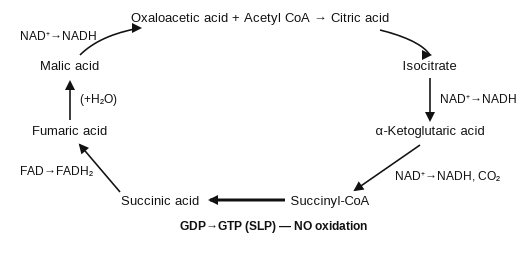
Identify the step in tricarboxylic acid cycle, which does not involve oxidation of substrate.
ट्राइकार्बोक्सिलिक अम्ल चक्र के उस चरण को पहचानिए जिसमें क्रियाधार (substrate) का ऑक्सीकरण नहीं होता।
  1. ASuccinic acid → Malic acidसक्सिनिक अम्ल → मैलिक अम्ल
  2. BSuccinyl-CoA → Succinic acidसक्सिनिल-CoA → सक्सिनिक अम्ल
  3. CIsocitrate → α-ketoglutaric acidआइसोसाइट्रेट → α-कीटोग्लूटैरिक अम्ल
  4. DMalic acid → Oxaloacetic acidमैलिक अम्ल → ऑक्सैलोऐसीटिक अम्ल
Show answer

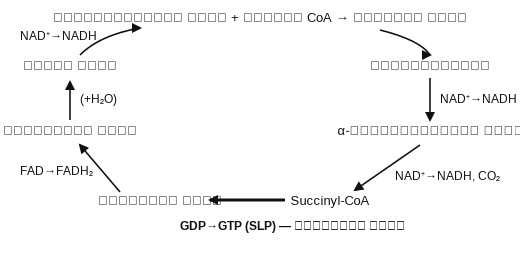
Concept: In the TCA cycle, oxidation (dehydrogenation) happens at four steps that give 3 NADH + 1 FADH2. Succinyl-CoA → succinic acid is a substrate-level phosphorylation that gives GTP and involves no oxidation.

  1. Isocitrate → α-ketoglutarate: NAD+ → NADH, an oxidative decarboxylation.
  2. α-Ketoglutarate → succinyl-CoA: NAD+ → NADH.
  3. Succinyl-CoA → succinate: GDP → GTP, with no electron removal.
  4. Succinate → fumarate: FAD → FADH2. Fumarate + H2O → malate is hydration.
  5. Malate → OAA: NAD+ → NADH.
  6. Option (A), succinic → malic, passes through the FAD step, so it is an oxidation.

Short trick: In the Krebs cycle the GTP step (SLP) is the "no-oxidation" step.

Answer: (B) Succinyl-CoA → Succinic acid

अवधारणा: TCA चक्र में ऑक्सीकरण (विहाइड्रोजनीकरण) चार चरणों में होता है, जिनसे 3 NADH + 1 FADH2 मिलते हैं। सक्सिनिल-CoA → सक्सिनिक अम्ल क्रियाधार-स्तरीय फॉस्फोरिलीकरण है, जिससे GTP बनता है; इसमें कोई ऑक्सीकरण नहीं होता।

  1. आइसोसाइट्रेट → α-कीटोग्लूटैरेट: NAD+ → NADH, एक ऑक्सीकारी विकार्बोक्सिलीकरण।
  2. α-कीटोग्लूटैरेट → सक्सिनिल-CoA: NAD+ → NADH।
  3. सक्सिनिल-CoA → सक्सिनेट: GDP → GTP, कोई इलेक्ट्रॉन नहीं निकलता।
  4. सक्सिनेट → फ्यूमैरेट: FAD → FADH2। फ्यूमैरेट + H2O → मैलेट जलयोजन है।
  5. मैलेट → OAA: NAD+ → NADH।
  6. विकल्प (A), सक्सिनिक → मैलिक, FAD वाले चरण से होकर जाता है, अतः यह ऑक्सीकरण है।

शॉर्ट ट्रिक: क्रेब्स चक्र में GTP वाला चरण (SLP) ही "ऑक्सीकरण-रहित" चरण है।

उत्तर: (B) सक्सिनिल-CoA → सक्सिनिक अम्ल

NEET UGBotanyRespiration in plants – Krebs cycleNEET UG 2024 · 5 May Shift 1 →
Q4307.
Match List I with List II.
List-IList-II
A. Robert MayI. Species-Area relationship
B. Alexander von HumboldtII. Long term ecosystem experiment using out door plots
C. Paul EhrlichIII. Global species diversity at about 7 million
D. David TilmanIV. Rivet popper hypothesis
Choose the correct answer from the options given below:
सूची-I का सूची-II से मिलान कीजिए।
सूची-Iसूची-II
A. रॉबर्ट मेI. जाति-क्षेत्र संबंध
B. अलेक्ज़ेंडर वॉन हम्बोल्टII. बाहरी भूखंडों (outdoor plots) पर दीर्घकालीन पारितंत्र प्रयोग
C. पॉल एर्लिकIII. वैश्विक जाति विविधता लगभग 70 लाख
D. डेविड टिलमैनIV. रिवेट पॉपर परिकल्पना
नीचे दिए गए विकल्पों में से सही उत्तर चुनिए:
  1. AA-III, B-I, C-IV, D-II
  2. BA-I, B-III, C-II, D-IV
  3. CA-III, B-IV, C-II, D-I
  4. DA-II, B-III, C-I, D-IV
Show answer

Concept: These are NCERT's scientists in the biodiversity chapter.

  1. A → III: Robert May estimated global species diversity at about 7 million.
  2. B → I: Alexander von Humboldt gave the species-area relationship (log S = log C + Z log A).
  3. C → IV: Paul Ehrlich proposed the rivet popper hypothesis.
  4. D → II: David Tilman ran long-term ecosystem experiments using outdoor plots and showed that more species give more stability.

Short trick: May = "Many" species (7 million), and Humboldt = Area. These two alone fix option (A).

Answer: (A) A-III, B-I, C-IV, D-II

अवधारणा: ये NCERT के जैव विविधता अध्याय के वैज्ञानिक हैं।

  1. A → III: रॉबर्ट मे ने वैश्विक जाति विविधता लगभग 70 लाख (7 million) आँकी।
  2. B → I: अलेक्ज़ेंडर वॉन हम्बोल्ट ने जाति-क्षेत्र संबंध दिया (log S = log C + Z log A)।
  3. C → IV: पॉल एर्लिक ने रिवेट पॉपर परिकल्पना दी।
  4. D → II: डेविड टिलमैन ने बाहरी भूखंडों पर दीर्घकालीन पारितंत्र प्रयोग किए और दिखाया कि अधिक जातियों से अधिक स्थिरता मिलती है।

शॉर्ट ट्रिक: May = "Many" जातियाँ (70 लाख), और Humboldt = क्षेत्र (Area)। इन्हीं दो से विकल्प (A) तय हो जाता है।

उत्तर: (A) A-III, B-I, C-IV, D-II

NEET UGBotanyBiodiversity – scientists and conceptsNEET UG 2024 · 5 May Shift 1 →
Q4308.
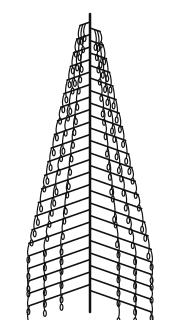
Identify the correct description about given figure.
दिए गए चित्र के संबंध में सही विवरण को पहचानिए।
  1. AWater pollinated flowers showing stamens with mucilaginous covering.श्लेष्मी आवरण युक्त पुंकेसर दर्शाते जल-परागित पुष्प।
  2. BCleistogamous flowers showing Endogamy.अंतःप्रजनन (Endogamy) दर्शाते अनुन्मील्य (cleistogamous) पुष्प।
  3. CCompact inflorescence showing complete autogamyपूर्ण स्वयुग्मन (autogamy) दर्शाता सघन पुष्पक्रम।
  4. DWind pollinated plant inflorescence showing flowers with well exposed stamens.भली-भाँति अनावृत पुंकेसरों वाले पुष्प दर्शाता वायु-परागित पादप का पुष्पक्रम।
Show answer

Concept: Wind-pollinated flowers have well-exposed stamens, so the pollen is easily dispersed by wind currents. They are often packed into an inflorescence, e.g. the tassel of corn.

  1. The figure shows a feathery inflorescence with many small flowers whose stamens hang out on long filaments. This is the typical wind-pollination adaptation.
  2. (A) Water-pollinated flowers have a mucilage coat on the pollen and are submerged or on the water surface. That is not what the figure shows.
  3. (B) and (C) Cleistogamous flowers never open, so their stamens are not exposed. That rules out autogamy in a closed flower.

Short trick: Exposed, dangling stamens plus a feathery inflorescence point to wind pollination. Think of maize tassels and grasses.

Answer: (D) Wind pollinated plant inflorescence showing flowers with well exposed stamens.

अवधारणा: वायु-परागित पुष्पों के पुंकेसर भली-भाँति अनावृत होते हैं, जिससे परागकण आसानी से वायु धाराओं में बिखर जाते हैं। ये प्रायः पुष्पक्रम में सघन रूप से व्यवस्थित होते हैं, जैसे मक्का का टैसल (tassel)।

  1. चित्र में पंखनुमा पुष्पक्रम है जिसमें अनेक छोटे पुष्प हैं और उनके पुंकेसर लंबे पुंतंतुओं पर लटके हैं। यह वायु परागण का विशिष्ट अनुकूलन है।
  2. (A) जल-परागित पुष्पों में परागकणों पर श्लेष्मी आवरण होता है और वे जल में डूबे या जल-सतह पर होते हैं। चित्र में यह नहीं दिखता।
  3. (B) और (C) अनुन्मील्य पुष्प कभी खुलते नहीं, अतः उनके पुंकेसर अनावृत नहीं होते। इसलिए बंद पुष्प का स्वयुग्मन यहाँ लागू नहीं होता।

शॉर्ट ट्रिक: अनावृत, लटकते पुंकेसर और पंखनुमा पुष्पक्रम वायु परागण का संकेत हैं। मक्का के टैसल और घासें याद करें।

उत्तर: (D) भली-भाँति अनावृत पुंकेसरों वाले पुष्प दर्शाता वायु-परागित पादप का पुष्पक्रम

NEET UGBotanySexual reproduction in flowering plants – wind pollinationNEET UG 2024 · 5 May Shift 1 →
Q4309.
In an ecosystem if the Net Primary Productivity (NPP) of first trophic level is 100x(kcal m−2)yr−1, what would be the GPP (Gross Primary Productivity) of the third trophic level of the same ecosystem?
किसी पारितंत्र में यदि प्रथम पोषी स्तर की शुद्ध प्राथमिक उत्पादकता (NPP) 100x(kcal m−2)yr−1 है, तो उसी पारितंत्र के तृतीय पोषी स्तर की सकल प्राथमिक उत्पादकता (GPP) क्या होगी?
  1. Ax(kcal m−2)yr−1
  2. B10x(kcal m−2)yr−1
  3. C100x3x(kcal m−2)yr−1
  4. Dx10(kcal m−2)yr−1
Show answer

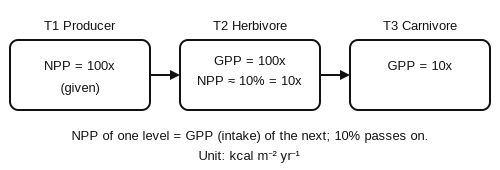
Concept: The NPP of one trophic level is the energy available to, i.e. the gross intake (GPP) of, the next level. Only about 10% of a level's gross intake remains as its net production (Lindeman's 10% law).

  1. GPP of the 2nd trophic level = NPP of the 1st = 100x.
  2. NPP of the 2nd trophic level ≈ 10% of 100x = 10x.
  3. GPP of the 3rd trophic level = NPP of the 2nd = 10x kcal m−2 yr−1.

Short trick: Going from level 1's NPP to level 3's GPP takes only one 10% step, not two. So divide by 10 once: 100x → 10x.

Answer: (B) 10x(kcal m−2)yr−1

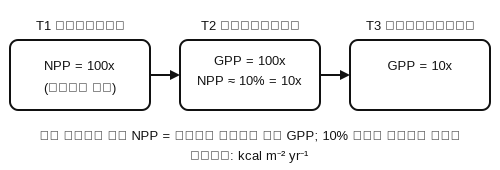
अवधारणा: किसी पोषी स्तर की NPP अगले स्तर को उपलब्ध ऊर्जा, अर्थात् उसका सकल अंतर्ग्रहण (GPP), होती है। किसी स्तर के सकल अंतर्ग्रहण का केवल लगभग 10% उसका शुद्ध उत्पादन बनता है (लिंडेमान का 10% नियम)।

  1. द्वितीय पोषी स्तर की GPP = प्रथम की NPP = 100x।
  2. द्वितीय पोषी स्तर की NPP ≈ 100x का 10% = 10x।
  3. तृतीय पोषी स्तर की GPP = द्वितीय की NPP = 10x kcal m−2 yr−1।

शॉर्ट ट्रिक: स्तर 1 की NPP से स्तर 3 की GPP तक केवल एक 10% चरण है, दो नहीं। अतः एक बार 10 से भाग दें: 100x → 10x।

उत्तर: (B) 10x(kcal m−2)yr−1

NEET UGBotanyEcosystem – productivity and energy flowNEET UG 2024 · 5 May Shift 1 →
Q4310.
Match List I with List II.
List-IList-II
A. RoseI. Twisted aestivation
B. PeaII. Perigynous flower
C. CottonIII. Drupe
D. MangoIV. Marginal placentation
Choose the correct answer from the options given below:
सूची-I का सूची-II से मिलान कीजिए।
सूची-Iसूची-II
A. गुलाबI. व्यावर्तित (Twisted) पुष्पदल विन्यास
B. मटरII. परिजायांगी पुष्प
C. कपासIII. अष्ठिल फल (Drupe)
D. आमIV. सीमांत (Marginal) बीजांडन्यास
नीचे दिए गए विकल्पों में से सही उत्तर चुनिए:
  1. AA-I, B-II, C-III, D-IV
  2. BA-IV, B-III, C-II, D-I
  3. CA-II, B-III, C-IV, D-I
  4. DA-II, B-IV, C-I, D-III
Show answer

Concept: These are NCERT examples from the morphology chapter.

  1. A → II: rose has a perigynous flower.
  2. B → IV: pea (Fabaceae) has marginal placentation.
  3. C → I: cotton (and china rose, lady's finger) has twisted aestivation.
  4. D → III: mango is a drupe, a fruit with a stony endocarp.

Short trick: Mango → drupe, Pea → Marginal, and Cotton → twisted, "like a Cotton thread". Option (D) has all three.

Answer: (D) A-II, B-IV, C-I, D-III

अवधारणा: ये आकारिकी अध्याय के NCERT उदाहरण हैं।

  1. A → II: गुलाब का पुष्प परिजायांगी होता है।
  2. B → IV: मटर (फैबेसी) में सीमांत बीजांडन्यास होता है।
  3. C → I: कपास (तथा गुड़हल, भिंडी) में व्यावर्तित पुष्पदल विन्यास होता है।
  4. D → III: आम अष्ठिल फल (drupe) है, जिसका अंतःफलभित्ति कठोर होता है।

शॉर्ट ट्रिक: आम → अष्ठिल, मटर → सीमांत, और कपास → व्यावर्तित, "कपास के धागे जैसा मुड़ा"। विकल्प (D) में तीनों हैं।

उत्तर: (D) A-II, B-IV, C-I, D-III

NEET UGBotanyMorphology of flowering plants – families and featuresNEET UG 2024 · 5 May Shift 1 →
Q4311.
Match List I with List II.
List-I
(Types of Stamens)
List-II
(Example)
A. MonoadelphousI. Citrus
B. DiadelphousII. Pea
C. PolyadelphousIII. Lily
D. EpiphyllousIV. China-rose
Choose the correct answer from the options given below:
सूची-I का सूची-II से मिलान कीजिए।
सूची-I
(पुंकेसरों के प्रकार)
सूची-II
(उदाहरण)
A. एकसंघी (Monoadelphous)I. सिट्रस (नींबू वंश)
B. द्विसंघी (Diadelphous)II. मटर
C. बहुसंघी (Polyadelphous)III. लिली
D. परिदललग्न (Epiphyllous)IV. गुड़हल (China-rose)
नीचे दिए गए विकल्पों में से सही उत्तर चुनिए:
  1. AA-IV, B-I, C-II, D-III
  2. BA-I, B-II, C-IV, D-III
  3. CA-III, B-I, C-IV, D-II
  4. DA-IV, B-II, C-I, D-III
Show answer

Concept: Stamens fused by their filaments into one, two or more bundles are called mono-, di- or polyadelphous. Stamens attached to the perianth are called epiphyllous.

  1. A → IV: china-rose is monoadelphous (one bundle).
  2. B → II: pea is diadelphous (two bundles, 9 + 1).
  3. C → I: citrus is polyadelphous (more than two bundles).
  4. D → III: lily is epiphyllous (attached to the tepals).

Short trick: Mono = China-rose with its single staminal tube, and Di = Pea's (9)+1. Only option (D) has both.

Answer: (D) A-IV, B-II, C-I, D-III

अवधारणा: पुंतंतुओं द्वारा एक, दो या अधिक समूहों में जुड़े पुंकेसरों को क्रमशः एकसंघी, द्विसंघी या बहुसंघी कहते हैं। परिदलपुंज से जुड़े पुंकेसर परिदललग्न (epiphyllous) कहलाते हैं।

  1. A → IV: गुड़हल एकसंघी है (एक समूह)।
  2. B → II: मटर द्विसंघी है (दो समूह, 9 + 1)।
  3. C → I: सिट्रस बहुसंघी है (दो से अधिक समूह)।
  4. D → III: लिली परिदललग्न है (परिदलों से जुड़े)।

शॉर्ट ट्रिक: एकसंघी = एक पुंकेसरी नलिका वाला गुड़हल, और द्विसंघी = मटर का (9)+1। दोनों केवल विकल्प (D) में हैं।

उत्तर: (D) A-IV, B-II, C-I, D-III

NEET UGBotanyMorphology of flowering plants – androeciumNEET UG 2024 · 5 May Shift 1 →
Q4312.
Which of the following are fused in somatic hybridization involving two varieties of plants?
पादपों की दो किस्मों के बीच कायिक संकरण में निम्नलिखित में से किनका संलयन कराया जाता है?
  1. ASomatic embryosकायिक भ्रूण
  2. BProtoplastsजीवद्रव्यक (Protoplasts)
  3. CPollensपरागकण
  4. DCallusकैलस
Show answer

Concept: In somatic hybridisation, protoplasts isolated from two plant varieties are fused to form a hybrid protoplast. The hybrid is then grown into a new plant, e.g. the pomato.

  1. The cell wall is first digested by enzymes (cellulase and pectinase) to release the naked protoplasts.
  2. The fused protoplasts are cultured to raise somatic hybrids.
  3. Somatic embryos and callus are products of tissue culture, not units of fusion. Fusion of pollen would be sexual, not somatic.

Short trick: "Somatic" means body cells, and "hybrid" means fusion. Body cells without their walls are protoplasts.

Answer: (B) Protoplasts

अवधारणा: कायिक संकरण में पादपों की दो किस्मों से पृथक किए गए जीवद्रव्यकों का संलयन कराकर संकर जीवद्रव्यक बनाया जाता है। फिर उससे नया पादप उगाया जाता है, जैसे पोमैटो।

  1. पहले एंजाइमों (सेलुलेज़ और पेक्टिनेज़) से कोशिका भित्ति को पचाकर नग्न जीवद्रव्यक प्राप्त किए जाते हैं।
  2. संलयित जीवद्रव्यकों का संवर्धन करके कायिक संकर उगाए जाते हैं।
  3. कायिक भ्रूण और कैलस ऊतक संवर्धन के उत्पाद हैं, संलयन की इकाइयाँ नहीं। परागकणों का संलयन लैंगिक होगा, कायिक नहीं।

शॉर्ट ट्रिक: "कायिक" का अर्थ है शरीर की कोशिकाएँ, और "संकरण" का अर्थ है संलयन। भित्ति-रहित शरीर कोशिकाएँ जीवद्रव्यक हैं।

उत्तर: (B) जीवद्रव्यक

NEET UGBotanyBiotechnology – somatic hybridisationNEET UG 2024 · 5 May Shift 1 →
Q4313.
Match List I with List II.
List-IList-II
A. Frederick GriffithI. Genetic code
B. Francois Jacob & Jacque MonodII. Semi-conservative mode of DNA replication
C. Har Gobind KhoranaIII. Transformation
D. Meselson & StahlIV. Lac operon
Choose the correct answer from the options given below:
सूची-I का सूची-II से मिलान कीजिए।
सूची-Iसूची-II
A. फ्रेडरिक ग्रिफिथI. आनुवंशिक कूट
B. फ्रांस्वा जैकब और जैक मोनॉडII. DNA प्रतिकृतिकरण की अर्ध-संरक्षी विधि
C. हरगोविंद खुरानाIII. रूपांतरण (Transformation)
D. मेसेल्सन और स्टालIV. lac ओपेरॉन
नीचे दिए गए विकल्पों में से सही उत्तर चुनिए:
  1. AA-III, B-IV, C-I, D-II
  2. BA-II, B-III, C-IV, D-I
  3. CA-IV, B-I, C-II, D-III
  4. DA-III, B-II, C-I, D-IV
Show answer

Concept: These are landmark experiments in molecular biology.

  1. A → III: Griffith (1928) showed transformation in Streptococcus pneumoniae.
  2. B → IV: Jacob and Monod elucidated the lac operon.
  3. C → I: Har Gobind Khorana helped decipher the genetic code by synthesising RNA with defined base combinations.
  4. D → II: Meselson and Stahl (1958) proved semi-conservative replication using 15N.

Short trick: Griffith goes with transformation and Meselson-Stahl with semi-conservative replication. Only option (A) has both.

Answer: (A) A-III, B-IV, C-I, D-II

अवधारणा: ये आण्विक जीवविज्ञान के ऐतिहासिक प्रयोग हैं।

  1. A → III: ग्रिफिथ (1928) ने Streptococcus pneumoniae में रूपांतरण दर्शाया।
  2. B → IV: जैकब और मोनॉड ने lac ओपेरॉन की व्याख्या की।
  3. C → I: हरगोविंद खुराना ने निश्चित क्षार संयोजन वाले RNA का संश्लेषण करके आनुवंशिक कूट को समझने में योगदान दिया।
  4. D → II: मेसेल्सन और स्टाल (1958) ने 15N का उपयोग करके अर्ध-संरक्षी प्रतिकृतिकरण सिद्ध किया।

शॉर्ट ट्रिक: ग्रिफिथ को रूपांतरण से और मेसेल्सन-स्टाल को अर्ध-संरक्षी प्रतिकृतिकरण से जोड़ें। दोनों केवल विकल्प (A) में हैं।

उत्तर: (A) A-III, B-IV, C-I, D-II

NEET UGBotanyMolecular basis of inheritance – scientistsNEET UG 2024 · 5 May Shift 1 →
Q4314.
The DNA present in chloroplast is
हरितलवक (chloroplast) में उपस्थित DNA होता है:
  1. ACircular, double strandedवृत्ताकार, द्विरज्जुकी
  2. BLinear, single strandedरैखिक, एकरज्जुकी
  3. CCircular, single strandedवृत्ताकार, एकरज्जुकी
  4. DLinear, double strandedरैखिक, द्विरज्जुकी
Show answer

Concept: NCERT: the stroma of the chloroplast contains small, double-stranded circular DNA molecules and 70S ribosomes.

  1. This is like prokaryotic DNA, which supports the endosymbiotic origin of chloroplasts from cyanobacteria.
  2. Mitochondria likewise have circular double-stranded DNA.
  3. Linear double-stranded DNA is found in the eukaryotic nucleus. Single-stranded DNA occurs in some viruses, e.g. φX174.

Short trick: Think Chloroplast = Circular = like Cyanobacteria, and double-stranded like all cellular DNA.

Answer: (A) Circular, double stranded

अवधारणा: NCERT: हरितलवक के स्ट्रोमा में छोटे, द्विरज्जुकी वृत्ताकार DNA अणु और 70S राइबोसोम होते हैं।

  1. यह असीमकेंद्रकी (prokaryotic) DNA जैसा है, जो सायनोबैक्टीरिया से हरितलवक की अंतःसहजीवी उत्पत्ति का समर्थन करता है।
  2. माइटोकॉन्ड्रिया में भी वृत्ताकार द्विरज्जुकी DNA होता है।
  3. रैखिक द्विरज्जुकी DNA ससीमकेंद्रकी केंद्रक में मिलता है। एकरज्जुकी DNA कुछ विषाणुओं में होता है, जैसे φX174।

शॉर्ट ट्रिक: Chloroplast = Circular = Cyanobacteria जैसा, और सभी कोशिकीय DNA की तरह द्विरज्जुकी।

उत्तर: (A) वृत्ताकार, द्विरज्जुकी

NEET UGBotanyCell: the unit of life – chloroplastNEET UG 2024 · 5 May Shift 1 →
Q4315.
Match List I with List II.
List-IList-II
A. Citric acid cycleI. Cytoplasm
B. GlycolysisII. Mitochondrial matrix
C. Electron transport systemIII. Intermembrane space of mitochondria
D. Proton gradientIV. Inner mitochondrial membrane
Choose the correct answer from the options given below:
सूची-I का सूची-II से मिलान कीजिए।
सूची-Iसूची-II
A. सिट्रिक अम्ल चक्रI. कोशिकाद्रव्य
B. ग्लाइकोलिसिसII. माइटोकॉन्ड्रियल आधात्री (matrix)
C. इलेक्ट्रॉन परिवहन तंत्रIII. माइटोकॉन्ड्रिया का अंतराझिल्ली अवकाश
D. प्रोटॉन प्रवणताIV. माइटोकॉन्ड्रिया की आंतरिक झिल्ली
नीचे दिए गए विकल्पों में से सही उत्तर चुनिए:
  1. AA-II, B-I, C-IV, D-III
  2. BA-III, B-IV, C-I, D-II
  3. CA-IV, B-III, C-II, D-I
  4. DA-I, B-II, C-III, D-IV
Show answer

Concept: Each step of aerobic respiration takes place in a specific compartment.

  1. A → II: the citric acid (Krebs) cycle takes place in the mitochondrial matrix.
  2. B → I: glycolysis takes place in the cytoplasm.
  3. C → IV: the ETS complexes I–IV are located in the inner mitochondrial membrane.
  4. D → III: protons are pumped into the intermembrane space, which builds the proton gradient that drives ATP synthase (F0–F1).

Short trick: Glycolysis is in the cytoplasm because it is the "outside" step. Of the options, only (A) has B-I.

Answer: (A) A-II, B-I, C-IV, D-III

अवधारणा: वायवीय श्वसन का प्रत्येक चरण एक विशिष्ट कक्ष में होता है।

  1. A → II: सिट्रिक अम्ल (क्रेब्स) चक्र माइटोकॉन्ड्रियल आधात्री में होता है।
  2. B → I: ग्लाइकोलिसिस कोशिकाद्रव्य में होता है।
  3. C → IV: ETS के सम्मिश्र I–IV माइटोकॉन्ड्रिया की आंतरिक झिल्ली में स्थित होते हैं।
  4. D → III: प्रोटॉन अंतराझिल्ली अवकाश में पंप होते हैं, जिससे प्रोटॉन प्रवणता बनती है जो ATP सिंथेज़ (F0–F1) को चलाती है।

शॉर्ट ट्रिक: ग्लाइकोलिसिस कोशिकाद्रव्य में होता है क्योंकि यह "बाहरी" चरण है। विकल्पों में केवल (A) में B-I है।

उत्तर: (A) A-II, B-I, C-IV, D-III

NEET UGBotanyRespiration in plants – sites of reactionsNEET UG 2024 · 5 May Shift 1 →
Q4316.
Which of the following is not a natural/traditional contraceptive method?
निम्नलिखित में से कौन-सी एक प्राकृतिक/पारंपरिक गर्भनिरोधक विधि नहीं है?
  1. APeriodic abstinenceआवधिक संयम (Periodic abstinence)
  2. BLactational amenorrheaदुग्धस्रवण अनार्तव (Lactational amenorrhea)
  3. CVaultsवॉल्ट्स (Vaults)
  4. DCoitus interruptusसहवास अंतराल (Coitus interruptus)
Show answer

Concept: Natural methods avoid meeting of ovum and sperm without any device or chemical; vaults are barrier devices.

  1. Periodic abstinence – no coitus from day 10 to 17 of the cycle (fertile period): natural.
  2. Lactational amenorrhea – no ovulation during intense breast-feeding (up to ~6 months after parturition): natural.
  3. Coitus interruptus (withdrawal) – penis withdrawn before ejaculation: natural.
  4. Vaults (like diaphragms and cervical caps) are rubber barriers inserted in the female reproductive tract to cover the cervix – a barrier method, not natural.

Short trick: Natural = "PLC" – Periodic abstinence, Lactational amenorrhea, Coitus interruptus. Anything you insert (vault, diaphragm, cap, IUD) is not natural.

Answer: (C) Vaults

अवधारणा: प्राकृतिक विधियाँ बिना किसी युक्ति या रसायन के अंडाणु व शुक्राणु के मिलने से बचाती हैं; वॉल्ट्स रोध (barrier) युक्तियाँ हैं।

  1. आवधिक संयम – चक्र के 10वें से 17वें दिन (उर्वर काल) तक सहवास नहीं: प्राकृतिक।
  2. दुग्धस्रवण अनार्तव – तीव्र स्तनपान काल (प्रसव के बाद लगभग 6 माह) में अंडोत्सर्ग नहीं होता: प्राकृतिक।
  3. सहवास अंतराल (withdrawal) – स्खलन से ठीक पहले शिश्न को बाहर निकालना: प्राकृतिक।
  4. वॉल्ट्स (डायाफ्राम व गर्भाशय-ग्रीवा टोपी की तरह) रबर के रोध हैं जो स्त्री जनन मार्ग में लगाकर गर्भाशय-ग्रीवा को ढकते हैं – यह रोध विधि है, प्राकृतिक नहीं।

शॉर्ट ट्रिक: प्राकृतिक = "PLC" – Periodic abstinence, Lactational amenorrhea, Coitus interruptus. जो भी शरीर में लगाया जाए (वॉल्ट, डायाफ्राम, कैप, IUD) वह प्राकृतिक नहीं।

उत्तर: (C) वॉल्ट्स

NEET UGZoologyReproductive health – natural contraceptive methodsNEET UG 2024 · 5 May Shift 1 →
Q4317.
Match List I with List II:
List IList II
A. Common coldI. Plasmodium
B. HaemozoinII. Typhoid
C. Widal testIII. Rhinoviruses
D. AllergyIV. Dust mites
Choose the correct answer from the options given below:
सूची-I का सूची-II से मिलान कीजिए :
सूची Iसूची II
A. सामान्य जुकाम (Common cold)I. प्लाज्मोडियम (Plasmodium)
B. हीमोज़ोइन (Haemozoin)II. टाइफॉइड
C. विडाल परीक्षण (Widal test)III. राइनोवायरस
D. एलर्जीIV. धूल के कीट (Dust mites)
नीचे दिए गए विकल्पों में से सही उत्तर चुनिए :
  1. AA-I, B-III, C-II, D-IV
  2. BA-III, B-I, C-II, D-IV
  3. CA-IV, B-II, C-III, D-I
  4. DA-II, B-IV, C-III, D-I
Show answer

Concept: Pathogen/diagnostic facts from NCERT "Human Health and Disease".

  1. A. Common cold is caused by rhinoviruses → III.
  2. B. Haemozoin is the toxin released when Plasmodium ruptures RBCs (causes chill and high fever) → I.
  3. C. Widal test confirms typhoid → II.
  4. D. Allergens such as pollen and dust mites cause allergy → IV.

Short trick: Start with the sure pair A-III (rhino-cold) – only option (B) has it.

Answer: (B) A-III, B-I, C-II, D-IV

अवधारणा: NCERT अध्याय "मानव स्वास्थ्य एवं रोग" के रोगजनक/निदान संबंधी तथ्य।

  1. A. सामान्य जुकाम राइनोवायरस से होता है → III।
  2. B. हीमोज़ोइन वह विष है जो प्लाज्मोडियम द्वारा RBC फटने पर निकलता है (ठिठुरन व तेज़ बुखार) → I।
  3. C. विडाल परीक्षण से टाइफॉइड की पुष्टि होती है → II।
  4. D. परागकण व धूल के कीट जैसे एलर्जन एलर्जी करते हैं → IV।

शॉर्ट ट्रिक: पक्की जोड़ी A-III (राइनो-जुकाम) से शुरू करें – यह केवल विकल्प (B) में है।

उत्तर: (B) A-III, B-I, C-II, D-IV

NEET UGZoologyHuman health and disease – pathogens and testsNEET UG 2024 · 5 May Shift 1 →
Q4318.
Which or the following statements is incorrect?
निम्नलिखित में से कौन-सा कथन गलत है?
  1. AMost commonly used bio-reactors are of stirring type.सबसे अधिक उपयोग होने वाले बायोरिएक्टर विलोडन (stirring) प्रकार के होते हैं।
  2. BBio-reactors are used to produce small scale bacterial cultures.बायोरिएक्टरों का उपयोग छोटे पैमाने पर जीवाणु संवर्धन तैयार करने के लिए किया जाता है।
  3. CBio-reactors have an agitator system, an oxygen delivery system and foam control system.बायोरिएक्टरों में आलोडक (agitator) तंत्र, ऑक्सीजन प्रदाय तंत्र तथा झाग नियंत्रण तंत्र होता है।
  4. DA bio-reactor provides optimal growth conditions for achieving the desired product.बायोरिएक्टर वांछित उत्पाद प्राप्त करने के लिए इष्टतम वृद्धि परिस्थितियाँ प्रदान करता है।
Show answer

Concept: Bioreactors are large vessels (100–1000 L) for large-scale production of recombinant products.

  1. (A) Correct – stirred-tank bioreactors are the most common.
  2. (B) Incorrect – small volume cultures cannot give appreciable product; bioreactors were developed for large-scale culture.
  3. (C) Correct – a stirred tank has an agitator, oxygen delivery, foam control, temperature and pH control systems and sampling ports.
  4. (D) Correct – it provides optimal temperature, pH, substrate, salts, vitamins and oxygen.

Short trick: "Bio-reactor = big reactor" – anything saying "small scale" is wrong.

Answer: (B) Bio-reactors are used to produce small scale bacterial cultures.

अवधारणा: बायोरिएक्टर बड़े पात्र (100–1000 लीटर) हैं जिनमें पुनर्योगज उत्पादों का बड़े पैमाने पर उत्पादन होता है।

  1. (A) सही – विलोडन-टैंक बायोरिएक्टर सबसे सामान्य हैं।
  2. (B) गलत – छोटे आयतन के संवर्धन से पर्याप्त उत्पाद नहीं मिलता; बायोरिएक्टर बड़े पैमाने के संवर्धन के लिए बनाए गए।
  3. (C) सही – विलोडन टैंक में आलोडक, ऑक्सीजन प्रदाय, झाग नियंत्रण, ताप व pH नियंत्रण तंत्र तथा प्रतिचयन द्वार होते हैं।
  4. (D) सही – यह इष्टतम ताप, pH, क्रियाधार, लवण, विटामिन व ऑक्सीजन देता है।

शॉर्ट ट्रिक: "बायो-रिएक्टर = बड़ा रिएक्टर" – जहाँ "छोटे पैमाने" लिखा हो वह गलत है।

उत्तर: (B) बायोरिएक्टरों का उपयोग छोटे पैमाने पर जीवाणु संवर्धन तैयार करने के लिए किया जाता है।

NEET UGZoologyBiotechnology – bioreactorsNEET UG 2024 · 5 May Shift 1 →
Q4319.
Which of the following are Autoimmune disorders?
A. Myasthenia gravis
B. Rheumatoid arthritis
C. Gout
D. Muscular dystrophy
E. Systemic Lupus Erythematosus (SLE)
Choose the most appropriate answer from the options given below
निम्नलिखित में से कौन-से स्वप्रतिरक्षी (Autoimmune) विकार हैं?
A. मायस्थेनिया ग्रेविस
B. रूमेटॉइड संधिशोथ (Rheumatoid arthritis)
C. गाउट
D. पेशीय दुष्पोषण (Muscular dystrophy)
E. सिस्टेमिक ल्यूपस एरिथेमेटोसस (SLE)
नीचे दिए गए विकल्पों में से सबसे उपयुक्त उत्तर चुनिए
  1. AA, B and E onlyकेवल A, B और E
  2. BB, C and E onlyकेवल B, C और E
  3. CC, D and E onlyकेवल C, D और E
  4. DA, B and D onlyकेवल A, B और D
Show answer

Concept: Autoimmunity = immune system attacks self-cells.

  1. A. Myasthenia gravis – antibodies against acetylcholine receptors at the neuromuscular junction: autoimmune.
  2. B. Rheumatoid arthritis – immune attack on synovial joints: autoimmune.
  3. C. Gout – deposition of uric acid crystals in joints: metabolic, not autoimmune.
  4. D. Muscular dystrophy – genetic progressive degeneration of skeletal muscle: not autoimmune.
  5. E. SLE – autoantibodies against many self-tissues: autoimmune.

Short trick: Autoimmune trio in NCERT: "MRS" – Myasthenia gravis, Rheumatoid arthritis, SLE (+ type-1 diabetes, Graves).

Answer: (A) A, B and E only

अवधारणा: स्वप्रतिरक्षा = प्रतिरक्षा तंत्र का अपनी ही कोशिकाओं पर आक्रमण।

  1. A. मायस्थेनिया ग्रेविस – तंत्रिका-पेशी संधि पर ऐसीटिलकोलीन ग्राहियों के विरुद्ध प्रतिरक्षी: स्वप्रतिरक्षी।
  2. B. रूमेटॉइड संधिशोथ – साइनोवियल संधियों पर प्रतिरक्षा आक्रमण: स्वप्रतिरक्षी।
  3. C. गाउट – संधियों में यूरिक अम्ल क्रिस्टलों का जमाव: उपापचयी, स्वप्रतिरक्षी नहीं।
  4. D. पेशीय दुष्पोषण – कंकाल पेशी का आनुवंशिक, प्रगामी क्षय: स्वप्रतिरक्षी नहीं।
  5. E. SLE – अनेक स्व-ऊतकों के विरुद्ध स्वप्रतिपिंड: स्वप्रतिरक्षी।

शॉर्ट ट्रिक: NCERT की स्वप्रतिरक्षी तिकड़ी "MRS" – Myasthenia gravis, Rheumatoid arthritis, SLE (+ टाइप-1 मधुमेह, ग्रेव्स)।

उत्तर: (A) केवल A, B और E

NEET UGZoologyImmunity – autoimmune disordersNEET UG 2024 · 5 May Shift 1 →
Q4320.
Match List I with List II:
List IList II
A. Down’s syndromeI. 11th chromosome
B. α-ThalassemiaII. ‘X’ chromosome
C. β-ThalassemiaIII. 21st chromosome
D. Klinefelter’s syndromeIV. 16th chromosome
Choose the correct answer from the options given below:
सूची-I का सूची-II से मिलान कीजिए :
सूची Iसूची II
A. डाउन सिंड्रोमI. 11वाँ गुणसूत्र
B. α-थैलेसीमियाII. ‘X’ गुणसूत्र
C. β-थैलेसीमियाIII. 21वाँ गुणसूत्र
D. क्लाइनफेल्टर सिंड्रोमIV. 16वाँ गुणसूत्र
नीचे दिए गए विकल्पों में से सही उत्तर चुनिए :
  1. AA-II, B-III, C-IV, D-I
  2. BA-III, B-IV, C-I, D-II
  3. CA-IV, B-I, C-II, D-III
  4. DA-I, B-II, C-III, D-IV
Show answer

Concept: Chromosomal location of the disorder (NCERT).

  1. A. Down’s syndrome – trisomy of chromosome 21 → III.
  2. B. α-thalassemia – genes HBA1 and HBA2 on chromosome 16 → IV.
  3. C. β-thalassemia – single gene HBB on chromosome 11 → I.
  4. D. Klinefelter’s syndrome – an extra X chromosome (47, XXY) → II.

Short trick: "Alpha = 16, Beta = 11" – α (two genes, HBA1 + HBA2) gets the bigger number; β (one gene, HBB) the smaller.

Answer: (B) A-III, B-IV, C-I, D-II

अवधारणा: विकार से संबंधित गुणसूत्र (NCERT)।

  1. A. डाउन सिंड्रोम – गुणसूत्र 21 की त्रिसूत्रता → III।
  2. B. α-थैलेसीमिया – जीन HBA1 व HBA2, गुणसूत्र 16 पर → IV।
  3. C. β-थैलेसीमिया – एकल जीन HBB, गुणसूत्र 11 पर → I।
  4. D. क्लाइनफेल्टर सिंड्रोम – एक अतिरिक्त X गुणसूत्र (47, XXY) → II।

शॉर्ट ट्रिक: "अल्फा = 16, बीटा = 11" – α (दो जीन, HBA1 + HBA2) को बड़ी संख्या; β (एक जीन, HBB) को छोटी।

उत्तर: (B) A-III, B-IV, C-I, D-II

NEET UGZoologyPrinciples of inheritance – genetic disordersNEET UG 2024 · 5 May Shift 1 →