Question bank

Q&A: practice questions with answers

Search questions on any topic. Filter by exam category, exam, subject and topic, try the question, then open the answer and explanation.

Courses – airGurukul

53,050 questions in the question bank.

Q4361.
Match List I with List II:
List IList II
A. The structures used for storing of food.I. Gizzard
B. Ring 6-8 blind tubules at junction of foregut and midgut.II. Gastric Caeca
C. Ring of 100-150 yellow coloured thin filaments at junction of midgut and hindgutIII. Malpighian tubules
D. The structures used for grinding the food.IV. Crop
Choose the correct answer from the options given below:
सूची-I का सूची-II से मिलान कीजिए :
सूची Iसूची II
A. भोजन संग्रहण हेतु प्रयुक्त संरचनाएँ।I. पेषणी (Gizzard)
B. अग्रांत्र व मध्यांत्र के संधि-स्थल पर 6-8 अंधनलिकाओं का वलय।II. जठर अंधनाल (Gastric Caeca)
C. मध्यांत्र व पश्चांत्र के संधि-स्थल पर 100-150 पीले रंग के पतले तंतुओं का वलयIII. मैल्पीघी नलिकाएँ
D. भोजन पीसने हेतु प्रयुक्त संरचनाएँ।IV. अन्नपुट (Crop)
नीचे दिए गए विकल्पों में से सही उत्तर चुनिए :
  1. AA-I, B-II, C-III, D-IV
  2. BA-IV, B-III, C-II, D-I
  3. CA-III, B-II, C-IV, D-I
  4. DA-IV, B-II, C-III, D-I
Show answer

Concept: Alimentary canal of cockroach: foregut (crop, gizzard), midgut (with gastric caeca), hindgut (Malpighian tubules at junction).

  1. Crop – sac-like, stores food → A-IV.
  2. Gastric (hepatic) caeca – 6–8 blind tubules at foregut–midgut junction, secrete digestive juice → B-II.
  3. Malpighian tubules – 100–150 yellow filaments at midgut–hindgut junction, excretory → C-III.
  4. Gizzard (proventriculus) – chitinous teeth, grinds food → D-I.

Short trick: Order along the gut: Crop → Gizzard → caeca → midgut → Malpighian tubules → hindgut.

Answer: (D) A-IV, B-II, C-III, D-I

अवधारणा: कॉकरोच की आहारनाल: अग्रांत्र (अन्नपुट, पेषणी), मध्यांत्र (जठर अंधनाल सहित), पश्चांत्र (संधि पर मैल्पीघी नलिकाएँ)।

  1. अन्नपुट – थैलीनुमा, भोजन संग्रहित करता है → A-IV।
  2. जठर (यकृत) अंधनाल – अग्रांत्र-मध्यांत्र संधि पर 6–8 अंधनलिकाएँ, पाचक रस स्रावित → B-II।
  3. मैल्पीघी नलिकाएँ – मध्यांत्र-पश्चांत्र संधि पर 100–150 पीले तंतु, उत्सर्जी → C-III।
  4. पेषणी (प्रोवेंट्रिकुलस) – काइटिनी दाँत, भोजन पीसती है → D-I।

शॉर्ट ट्रिक: आहारनाल में क्रम: अन्नपुट → पेषणी → अंधनाल → मध्यांत्र → मैल्पीघी नलिकाएँ → पश्चांत्र।

उत्तर: (D) A-IV, B-II, C-III, D-I
NEET UGZoologyStructural organisation – digestive system of cockroachNEET UG 2024 · 5 May Shift 1 →
Q4362.
Given below are two statements :
Statement I : The cerebral hemispheres are connected by nerve tract known as corpus callosum.
Statement II : The brain stem consists of the medulla oblongata, pons and cerebrum.
In the light of the above statements, choose the most appropriate answer from the options given below :
नीचे दो कथन दिए गए हैं :
कथन I : प्रमस्तिष्क गोलार्ध कॉर्पस कैलोसम नामक तंत्रिका पथ द्वारा जुड़े होते हैं।
कथन II : मस्तिष्क स्तंभ (brain stem) मेडुला ऑब्लांगेटा, पोंस तथा प्रमस्तिष्क (cerebrum) से बना होता है।
उपर्युक्त कथनों के आलोक में, नीचे दिए गए विकल्पों में से सबसे उपयुक्त उत्तर चुनिए :
  1. ABoth Statement I and Statement II are incorrect.कथन I और कथन II दोनों गलत हैं।
  2. BStatement I is correct but Statement II is incorrect.कथन I सही है परन्तु कथन II गलत है।
  3. CStatement I is incorrect but Statement II is correct.कथन I गलत है परन्तु कथन II सही है।
  4. DBoth Statement I and Statement II are correct.कथन I और कथन II दोनों सही हैं।
Show answer

Concept: Corpus callosum joins the two cerebral hemispheres; brain stem = midbrain + pons + medulla oblongata.

  1. Statement I – the hemispheres are connected by a tract of nerve fibres, the corpus callosum → correct.
  2. Statement II – brain stem is midbrain, pons and medulla; the cerebrum is forebrain, not brain stem → incorrect.

Short trick: Brain stem = "M-P-M" (Midbrain, Pons, Medulla) – no "cerebrum".

Answer: (B) Statement I is correct but Statement II is incorrect.

अवधारणा: कॉर्पस कैलोसम दोनों प्रमस्तिष्क गोलार्धों को जोड़ता है; मस्तिष्क स्तंभ = मध्यमस्तिष्क + पोंस + मेडुला ऑब्लांगेटा।

  1. कथन I – गोलार्ध तंत्रिका तंतुओं के पथ कॉर्पस कैलोसम द्वारा जुड़े हैं → सही।
  2. कथन II – मस्तिष्क स्तंभ मध्यमस्तिष्क, पोंस व मेडुला से बना है; प्रमस्तिष्क अग्रमस्तिष्क का भाग है, मस्तिष्क स्तंभ का नहीं → गलत।

शॉर्ट ट्रिक: मस्तिष्क स्तंभ = "M-P-M" (मध्यमस्तिष्क, पोंस, मेडुला) – "प्रमस्तिष्क" नहीं।

उत्तर: (B) कथन I सही है परन्तु कथन II गलत है।

NEET UGZoologyNeural control – human brainNEET UG 2024 · 5 May Shift 1 →
Q4363.
Match List I with List II:
List IList II
A. Mesozoic EraI. Lower invertebrates
B. Proterozoic EraII. Fish & Amphibia
C. Cenozoic EraIII. Birds & Reptiles
D. Paleozoic EraIV. Mammals
Choose the correct answer from the options given below:
सूची-I का सूची-II से मिलान कीजिए :
सूची Iसूची II
A. मीसोज़ोइक महाकल्पI. निम्न अकशेरुकी
B. प्रोटेरोज़ोइक महाकल्पII. मछलियाँ एवं उभयचर
C. सीनोज़ोइक महाकल्पIII. पक्षी एवं सरीसृप
D. पैलियोज़ोइक महाकल्पIV. स्तनधारी
नीचे दिए गए विकल्पों में से सही उत्तर चुनिए :
  1. AA-III, B-I, C-II, D-IV
  2. BA-I, B-II, C-IV, D-III
  3. CA-III, B-I, C-IV, D-II
  4. DA-II, B-I, C-III, D-IV
Show answer

Concept: Dominant life of each era.

  1. Proterozoic – oldest of these, life mainly lower invertebrates → B-I.
  2. Paleozoic – age of fishes and amphibians → D-II.
  3. Mesozoic – age of reptiles (dinosaurs); birds appeared → A-III.
  4. Cenozoic – age of mammals → C-IV.

Short trick: Order "Proterozoic → Paleozoic → Mesozoic → Cenozoic" = invertebrates → fish/amphibia → reptiles/birds → mammals.

Answer: (C) A-III, B-I, C-IV, D-II

अवधारणा: प्रत्येक महाकल्प का प्रमुख जीवन।

  1. प्रोटेरोज़ोइक – इनमें सबसे प्राचीन, मुख्यतः निम्न अकशेरुकी → B-I।
  2. पैलियोज़ोइक – मछलियों व उभयचरों का युग → D-II।
  3. मीसोज़ोइक – सरीसृपों (डायनासोर) का युग; पक्षी प्रकट हुए → A-III।
  4. सीनोज़ोइक – स्तनधारियों का युग → C-IV।

शॉर्ट ट्रिक: क्रम "प्रोटेरो → पैलियो → मीसो → सीनो" = अकशेरुकी → मछली/उभयचर → सरीसृप/पक्षी → स्तनधारी।

उत्तर: (C) A-III, B-I, C-IV, D-II

NEET UGZoologyEvolution – geological time scaleNEET UG 2024 · 5 May Shift 1 →
Q4364.
As per ABO blood grouping system, the blood group of father is B+, mother is A+ and child is O+. Their respective genotype can be
A. IBi/IAi/ii
B. IBIB/IAIA/ii
C. IAIB/iIA/iBi
D. IAi/IBi/IAi
E. iIB/iIA/IAIB
Choose the most appropriate answer from the options given below.
ABO रुधिर वर्ग पद्धति के अनुसार, पिता का रुधिर वर्ग B+, माता का A+ तथा संतान का O+ है। उनके क्रमशः जीनप्ररूप हो सकते हैं
A. IBi/IAi/ii
B. IBIB/IAIA/ii
C. IAIB/iIA/iBi
D. IAi/IBi/IAi
E. iIB/iIA/IAIB
नीचे दिए गए विकल्पों में से सबसे उपयुक्त उत्तर चुनिए।
  1. AB onlyकेवल B
  2. BC & BC और B
  3. CD & E onlyकेवल D और E
  4. DA onlyकेवल A
Show answer

Concept: Group O child must be ii, so each parent must carry an i allele; IA and IB are dominant over i.

  1. Child O → genotype ii; father B → IBIB or IBi; mother A → IAIA or IAi.
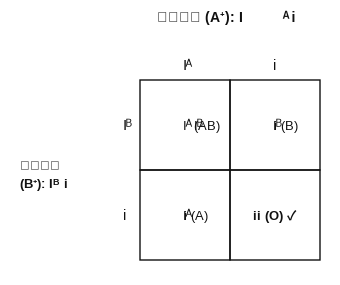
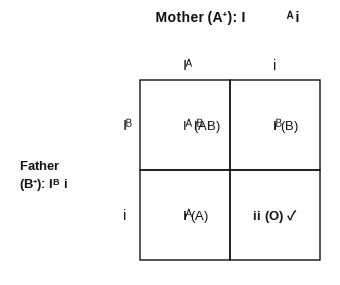
  2. To give i to the child: father IBi, mother IAi (see the cross) → set A ✔.
  3. B: homozygous parents IBIB × IAIA can only give IAIB (AB) children ✘.
  4. C: father IAIB is group AB, not B ✘.
  5. D: father IAi is group A, and child IAi is A, not O ✘.
  6. E: child IAIB is AB, not O ✘.

Short trick: Just check the child: only "ii" can be O. Only set A ends in ii with heterozygous parents.

Answer: (D) A only

अवधारणा: O वर्ग की संतान ii होनी चाहिए, अतः प्रत्येक जनक में i युग्मविकल्पी होना आवश्यक; IA व IB, i पर प्रभावी हैं।

  1. संतान O → जीनप्ररूप ii; पिता B → IBIB या IBi; माता A → IAIA या IAi।
  2. संतान को i देने के लिए: पिता IBi, माता IAi (क्रॉस देखें) → समुच्चय A ✔।
  3. B: समयुग्मजी जनक IBIB × IAIA से केवल IAIB (AB) संतान ✘।
  4. C: पिता IAIB वर्ग AB है, B नहीं ✘।
  5. D: पिता IAi वर्ग A है, तथा संतान IAi भी A है, O नहीं ✘।
  6. E: संतान IAIB वर्ग AB है, O नहीं ✘।

शॉर्ट ट्रिक: केवल संतान जाँचें: केवल "ii" ही O हो सकता है। विषमयुग्मजी जनकों सहित ii केवल समुच्चय A में।

उत्तर: (D) केवल A

NEET UGZoologyPrinciples of inheritance – ABO blood groupNEET UG 2024 · 5 May Shift 1 →
Q4365.
Given below are two statements :
Statement I : Bone marrow is the main lymphoid organ where all blood cells including lymphocytes are produced.
Statement II : Both Bone marrow and thymus provide micro environments for the development and maturation of T-lymphocytes.
In the light of the above statements, choose the most appropriate answer from the options given below :
नीचे दो कथन दिए गए हैं :
कथन I : अस्थि मज्जा मुख्य लसीकाभ अंग है जहाँ लसीकाणुओं सहित सभी रुधिर कोशिकाएँ उत्पन्न होती हैं।
कथन II : अस्थि मज्जा और थाइमस दोनों T-लसीकाणुओं के परिवर्धन और परिपक्वन के लिए सूक्ष्म-पर्यावरण प्रदान करते हैं।
उपर्युक्त कथनों के आलोक में, नीचे दिए गए विकल्पों में से सबसे उपयुक्त उत्तर चुनिए :
  1. ABoth Statement I and Statement II are incorrect.कथन I और कथन II दोनों गलत हैं।
  2. BStatement I is correct but Statement II is incorrect.कथन I सही है परन्तु कथन II गलत है।
  3. CStatement I is incorrect but Statement II is correct.कथन I गलत है परन्तु कथन II सही है।
  4. DBoth Statement I and Statement II are correct.कथन I और कथन II दोनों सही हैं।
Show answer

Concept: Primary lymphoid organs = bone marrow and thymus (NCERT).

  1. Statement I – NCERT: "The bone marrow is the main lymphoid organ where all blood cells including lymphocytes are produced" → correct.
  2. Statement II – NCERT: "Both bone-marrow and thymus provide micro-environments for the development and maturation of T-lymphocytes" → correct.

Short trick: Both are verbatim NCERT lines – when both statements read like the textbook, choose "both correct".

Answer: (D) Both Statement I and Statement II are correct.

अवधारणा: प्राथमिक लसीकाभ अंग = अस्थि मज्जा व थाइमस (NCERT)।

  1. कथन I – NCERT: "अस्थि मज्जा मुख्य लसीकाभ अंग है जहाँ लसीकाणुओं सहित सभी रुधिर कोशिकाएँ उत्पन्न होती हैं" → सही।
  2. कथन II – NCERT: "अस्थि मज्जा और थाइमस दोनों T-लसीकाणुओं के परिवर्धन और परिपक्वन के लिए सूक्ष्म-पर्यावरण प्रदान करते हैं" → सही।

शॉर्ट ट्रिक: दोनों NCERT की शब्दशः पंक्तियाँ हैं – जब दोनों कथन पाठ्यपुस्तक जैसे हों, "दोनों सही" चुनें।

उत्तर: (D) कथन I और कथन II दोनों सही हैं।

NEET UGZoologyHuman health and disease – lymphoid organsNEET UG 2024 · 5 May Shift 1 →
Q4366.
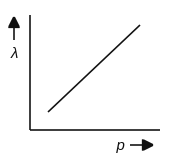
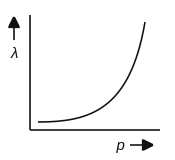
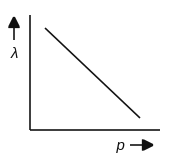
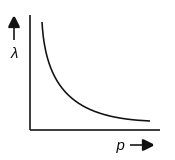
The graph which shows the variation of the de Broglie wavelength (λ) of a particle and its associated momentum (p) is
किसी कण की दे ब्रॉग्ली तरंगदैर्घ्य (λ) तथा उससे संबद्ध संवेग (p) के बीच परिवर्तन को दर्शाने वाला ग्राफ है
  1. A
  2. B
  3. C
  4. D
Show answer

Concept: de Broglie relation λ=hp, so λ∝1p.

  1. λp=h = constant – this is a rectangular hyperbola.
  2. As p increases, λ falls steeply first and then flattens, never touching either axis.
  3. Graph (A) and (C) are straight lines (linear relation) and (B) is increasing – all wrong.

Short trick: xy = constant ⇒ always a rectangular hyperbola in the first quadrant.

Answer: (D) the falling hyperbola

अवधारणा: दे ब्रॉग्ली संबंध λ=hp, अतः λ∝1p।

  1. λp=h = नियतांक – यह एक आयताकार अतिपरवलय (rectangular hyperbola) है।
  2. p बढ़ने पर λ पहले तेज़ी से घटता है फिर धीरे-धीरे, और किसी भी अक्ष को नहीं छूता।
  3. ग्राफ (A) और (C) सरल रेखाएँ (रैखिक संबंध) हैं तथा (B) बढ़ता हुआ है – सभी गलत।

शॉर्ट ट्रिक: xy = नियतांक ⇒ प्रथम चतुर्थांश में सदैव आयताकार अतिपरवलय।

उत्तर: (D) घटता हुआ अतिपरवलय

NEET UGPhysicsDual nature – de Broglie wavelengthNEET UG 2022 · 17 Jul Shift 1 →
Q4367.
As the temperature increases, the electrical resistance:
ताप बढ़ने पर विद्युत प्रतिरोध:
  1. AIncreases for both conductors and semiconductorsचालकों और अर्धचालकों दोनों के लिए बढ़ता है
  2. BDecreases for both conductors and semiconductorsचालकों और अर्धचालकों दोनों के लिए घटता है
  3. CIncreases for conductors but decreases for semiconductorsचालकों के लिए बढ़ता है परन्तु अर्धचालकों के लिए घटता है
  4. DDecreases for conductors but increases for semiconductorsचालकों के लिए घटता है परन्तु अर्धचालकों के लिए बढ़ता है
Show answer

Concept: ρ=mne2τ. In conductors n is fixed and τ falls with T; in semiconductors n rises exponentially with T.

  1. Conductor: more lattice vibrations → more collisions → τ decreases → R increases (positive temperature coefficient).
  2. Semiconductor: heat breaks covalent bonds → many more carriers (n) → R decreases (negative temperature coefficient).
  3. Hence options (A), (B), (D) are wrong.

Short trick: Metals: “hot = harder”; semiconductors: “hot = freer carriers”.

Answer: (C) Increases for conductors, decreases for semiconductors

अवधारणा: ρ=mne2τ। चालकों में n नियत रहता है और ताप बढ़ने पर τ घटता है; अर्धचालकों में ताप के साथ n चरघातांकी रूप से बढ़ता है।

  1. चालक: जालक कंपन बढ़ते हैं → टक्करें बढ़ती हैं → τ घटता है → R बढ़ता है (धनात्मक ताप गुणांक)।
  2. अर्धचालक: ऊष्मा से सहसंयोजक बंध टूटते हैं → आवेश वाहक (n) बहुत बढ़ जाते हैं → R घटता है (ऋणात्मक ताप गुणांक)।
  3. अतः विकल्प (A), (B), (D) गलत हैं।

शॉर्ट ट्रिक: धातु: “गर्म = कठिन मार्ग”; अर्धचालक: “गर्म = अधिक मुक्त वाहक”।

उत्तर: (C) चालकों के लिए बढ़ता है, अर्धचालकों के लिए घटता है

NEET UGPhysicsCurrent electricity – temperature dependence of resistanceNEET UG 2022 · 17 Jul Shift 1 →
Q4368.
Let T1 and T2 be the energy of an electron in the first and second excited states of hydrogen atom, respectively. According to the Bohr’s model of an atom; the ratio T1 : T2 is:
माना T1 तथा T2 क्रमशः हाइड्रोजन परमाणु की प्रथम तथा द्वितीय उत्तेजित अवस्थाओं में इलेक्ट्रॉन की ऊर्जा हैं। बोर के परमाणु मॉडल के अनुसार अनुपात T1 : T2 है:
  1. A1 : 4
  2. B4 : 1
  3. C4 : 9
  4. D9 : 4
Show answer

Concept: En=−13.6n2 eV. First excited state is n = 2, second excited state is n = 3.

  1. T1=E2=−13.64 eV =−3.4 eV
  2. T2=E3=−13.69 eV =−1.51 eV
  3. T1T2=1/41/9=94

Short trick: Excited state number + 1 = n. Ratio of energies = inverse ratio of n2 = 3² : 2².

Answer: (D) 9 : 4

अवधारणा: En=−13.6n2 eV। प्रथम उत्तेजित अवस्था n = 2 तथा द्वितीय उत्तेजित अवस्था n = 3 है।

  1. T1=E2=−13.64 eV =−3.4 eV
  2. T2=E3=−13.69 eV =−1.51 eV
  3. T1T2=1/41/9=94

शॉर्ट ट्रिक: उत्तेजित अवस्था क्रमांक + 1 = n। ऊर्जाओं का अनुपात = n2 का व्युत्क्रम अनुपात = 3² : 2²।

उत्तर: (D) 9 : 4

NEET UGPhysicsAtoms – Bohr model energy levelsNEET UG 2022 · 17 Jul Shift 1 →
Q4369.
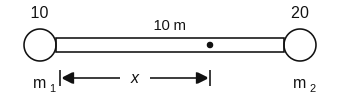
Two objects of mass 10 kg and 20 kg respectively are connected to the two ends of a rigid rod of length 10 m with negligible mass. The distance of the center of mass of the system from the 10 kg mass is:
10 kg तथा 20 kg द्रव्यमान की दो वस्तुएँ नगण्य द्रव्यमान की 10 m लंबी एक दृढ़ छड़ के दोनों सिरों से जुड़ी हैं। 10 kg द्रव्यमान से निकाय के द्रव्यमान केंद्र की दूरी है:
  1. A103 m
  2. B203 m
  3. C10 m
  4. D5 m
Show answer

Concept: Taking the 10 kg mass at the origin, xcm=m1x1+m2x2m1+m2.

  1. xcm=10(0)+20(10)10+20=20030
  2. xcm=203 m ≈ 6.67 m from the 10 kg mass (closer to the heavier mass, as expected).

Short trick: Distance from m1 = m2m1+m2×L=23×10.

Answer: (B) 203 m

अवधारणा: 10 kg द्रव्यमान को मूल बिंदु पर लेने पर, xcm=m1x1+m2x2m1+m2।

  1. xcm=10(0)+20(10)10+20=20030
  2. xcm=203 m ≈ 6.67 m, 10 kg द्रव्यमान से (भारी द्रव्यमान के अधिक निकट, जैसा अपेक्षित है)।

शॉर्ट ट्रिक: m1 से दूरी = m2m1+m2×L=23×10।

उत्तर: (B) 203 m

NEET UGPhysicsSystem of particles – centre of massNEET UG 2022 · 17 Jul Shift 1 →
Q4370.
The ratio of the distance travelled by a freely falling body in the 1st, 2nd, 3rd and 4th second
स्वतंत्र रूप से गिरती हुई किसी वस्तु द्वारा 1ले, 2रे, 3रे तथा 4थे सेकंड में तय की गई दूरियों का अनुपात
  1. A1 : 2 : 3 : 4
  2. B1 : 4 : 9 : 16
  3. C1 : 3 : 5 : 7
  4. D1 : 1 : 1 : 1
Show answer

Concept: Distance in the nth second (u = 0): sn=g2(2n−1).

  1. s1:s2:s3:s4=(2·1−1):(2·2−1):(2·3−1):(2·4−1)
  2. =1:3:5:7
  3. Option (B) 1 : 4 : 9 : 16 is the ratio of total distances in 1, 2, 3, 4 s – a common trap.

Short trick: Galileo’s law of odd numbers – from rest, successive equal time intervals give 1 : 3 : 5 : 7 …

Answer: (C) 1 : 3 : 5 : 7

अवधारणा: nवें सेकंड में तय दूरी (u = 0): sn=g2(2n−1)।

  1. s1:s2:s3:s4=(2·1−1):(2·2−1):(2·3−1):(2·4−1)
  2. =1:3:5:7
  3. विकल्प (B) 1 : 4 : 9 : 16, 1, 2, 3, 4 s में तय कुल दूरियों का अनुपात है – एक सामान्य भ्रम।

शॉर्ट ट्रिक: गैलीलियो का विषम संख्या नियम – विरामावस्था से, क्रमागत समान समय अंतरालों में दूरियाँ 1 : 3 : 5 : 7 …

उत्तर: (C) 1 : 3 : 5 : 7

NEET UGPhysicsKinematics – free fall (Galileo’s law of odd numbers)NEET UG 2022 · 17 Jul Shift 1 →
Q4371.
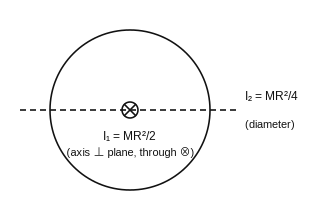
The ratio of the radius of gyration of a thin uniform disc about an axis passing through its centre and normal to its plane to the radius of gyration of the disc about its diameter is
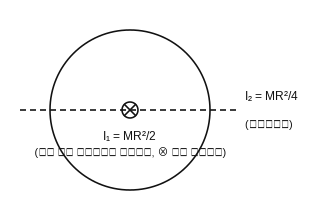
किसी पतली एकसमान चकती की, उसके केंद्र से गुजरने वाली तथा उसके तल के अभिलंबवत अक्ष के परितः घूर्णन त्रिज्या (radius of gyration) का, उसके व्यास के परितः घूर्णन त्रिज्या से अनुपात है
  1. A2 : 1
  2. B2 : 1
  3. C4 : 1
  4. D1 : 2
Show answer

Concept: I=MK2. For a disc I⊥=MR22 and, by the perpendicular-axis theorem, Id=I⊥2=MR24.

  1. MK12=MR22⇒K1=R2
  2. MK22=MR24⇒K2=R2
  3. K1K2=R/2R/2=22=2

Short trick: K ∝ √I, and I1:I2=2:1 ⇒ K1:K2=2:1.

Answer: (B) 2 : 1

अवधारणा: I=MK2। चकती के लिए I⊥=MR22 तथा लंबवत अक्ष प्रमेय से Id=I⊥2=MR24।

  1. MK12=MR22⇒K1=R2
  2. MK22=MR24⇒K2=R2
  3. K1K2=R/2R/2=22=2

शॉर्ट ट्रिक: K ∝ √I, तथा I1:I2=2:1 ⇒ K1:K2=2:1।

उत्तर: (B) 2 : 1

NEET UGPhysicsRotational motion – radius of gyrationNEET UG 2022 · 17 Jul Shift 1 →
Q4372.
The angular speed of a fly wheel moving with uniform angular acceleration changes from 1200 rpm to 3120 rpm in 16 seconds. The angular acceleration in rad/s2 is:
एकसमान कोणीय त्वरण से गतिमान एक गतिपालक चक्र (fly wheel) की कोणीय चाल 16 सेकंड में 1200 rpm से 3120 rpm हो जाती है। कोणीय त्वरण rad/s2 में है:
  1. A2π
  2. B4π
  3. C12π
  4. D104π
Show answer

Concept: α=ω2−ω1t with ω in rad/s: 1 rpm = 2π60 rad/s.

  1. Δω=3120−1200=1920 rpm =1920×2π60=64π rad/s
  2. α=64π16=4π rad/s²

Short trick: 1920/60 = 32 rev/s gained in 16 s ⇒ 2 rev/s² = 2 × 2π = 4π rad/s².

Answer: (B) 4π

अवधारणा: α=ω2−ω1t, जहाँ ω rad/s में: 1 rpm = 2π60 rad/s।

  1. Δω=3120−1200=1920 rpm =1920×2π60=64π rad/s
  2. α=64π16=4π rad/s²

शॉर्ट ट्रिक: 1920/60 = 32 rev/s, 16 s में ⇒ 2 rev/s² = 2 × 2π = 4π rad/s²।

उत्तर: (B) 4π

NEET UGPhysicsRotational kinematics – angular accelerationNEET UG 2022 · 17 Jul Shift 1 →
Q4373.
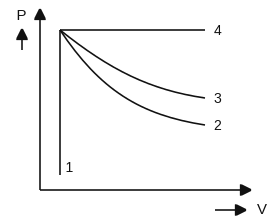
An ideal gas undergoes four different processes from the same initial state as shown in the figure below. Those processes are adiabatic, isothermal, isobaric and isochoric. The curve which represents the adiabatic process among 1, 2, 3 and 4 is:
एक आदर्श गैस समान प्रारंभिक अवस्था से चार भिन्न प्रक्रमों से गुजरती है, जैसा नीचे चित्र में दर्शाया गया है। ये प्रक्रम रुद्धोष्म, समतापी, समदाबी तथा समआयतनिक हैं। 1, 2, 3 तथा 4 में से रुद्धोष्म प्रक्रम को निरूपित करने वाला वक्र है:
  1. A1
  2. B2
  3. C3
  4. D4
Show answer

Concept: Slopes on a P-V diagram: isobaric = 0, isochoric = ∞ (vertical), isothermal =−PV, adiabatic =−γPV (steeper since γ>1).

  1. Curve 4 is horizontal → isobaric.
  2. Curve 1 is vertical → isochoric.
  3. Of the two falling curves, the steeper one (curve 2) is adiabatic; the gentler one (curve 3) is isothermal.

Short trick: Adiabatic is always γ times steeper than isothermal from the same point.

Answer: (B) 2

अवधारणा: P-V आरेख पर ढाल: समदाबी = 0, समआयतनिक = ∞ (ऊर्ध्वाधर), समतापी =−PV, रुद्धोष्म =−γPV (अधिक ढालू क्योंकि γ>1)।

  1. वक्र 4 क्षैतिज है → समदाबी।
  2. वक्र 1 ऊर्ध्वाधर है → समआयतनिक।
  3. दोनों गिरते वक्रों में से अधिक ढालू (वक्र 2) रुद्धोष्म है; कम ढालू (वक्र 3) समतापी है।

शॉर्ट ट्रिक: एक ही बिंदु से रुद्धोष्म वक्र सदैव समतापी से γ गुना अधिक ढालू होता है।

उत्तर: (B) 2

NEET UGPhysicsThermodynamics – P-V curves of processesNEET UG 2022 · 17 Jul Shift 1 →
Q4374.
Two hollow conducting spheres of radii R1 and R2 (R1 >> R2) have equal charges. The potential would be:
त्रिज्याओं R1 तथा R2 (R1 >> R2) के दो खोखले चालक गोलों पर समान आवेश हैं। विभव होगा:
  1. AMore on bigger sphereबड़े गोले पर अधिक
  2. BMore on smaller sphereछोटे गोले पर अधिक
  3. CEqual on both the sphereदोनों गोलों पर समान
  4. DDependent on the material properly of the sphereगोले के पदार्थ के गुण पर निर्भर
Show answer

Concept: Potential of a charged conducting sphere: V=kQR – independent of material.

  1. Same Q ⇒ V∝1R.
  2. R1>>R2⇒V1<<V2: the smaller sphere is at higher potential.
  3. Option (D) is wrong: for a conductor V depends only on Q and R.

Short trick: Same charge on a smaller sphere = more “crowded” = higher potential (that is why sharp points leak charge).

Answer: (B) More on smaller sphere

अवधारणा: आवेशित चालक गोले का विभव: V=kQR – पदार्थ पर निर्भर नहीं।

  1. समान Q ⇒ V∝1R।
  2. R1>>R2⇒V1<<V2: छोटा गोला उच्च विभव पर है।
  3. विकल्प (D) गलत: चालक के लिए V केवल Q तथा R पर निर्भर है।

शॉर्ट ट्रिक: छोटे गोले पर समान आवेश = अधिक “भीड़” = अधिक विभव (इसी कारण नुकीले सिरों से आवेश का क्षरण होता है)।

उत्तर: (B) छोटे गोले पर अधिक

NEET UGPhysicsElectrostatics – potential of charged spheresNEET UG 2022 · 17 Jul Shift 1 →
Q4375.
When light propagates through a material medium of relative permittivity ϵr, and relative permeability μr, the velocity of light, v is given by (c - velocity of light in vacuum)
जब प्रकाश आपेक्षिक विद्युतशीलता ϵr तथा आपेक्षिक चुम्बकशीलता μr वाले किसी द्रव्य माध्यम में संचरित होता है, तो प्रकाश का वेग v होगा (c - निर्वात में प्रकाश का वेग)
  1. Av=c
  2. Bv=μrϵr
  3. Cv=ϵrμr
  4. Dv=cϵrμr
Show answer

Concept: Speed of an EM wave: v=1ϵμ, with ϵ=ϵ0ϵr and μ=μ0μr.

  1. v=1ϵ0ϵrμ0μr=1ϵ0μ0⋅1ϵrμr
  2. Since c=1ϵ0μ0, v=cϵrμr.
  3. Options (B), (C) are dimensionless – cannot be a speed; (A) holds only in vacuum.

Short trick: Refractive index n=ϵrμr and v=c/n.

Answer: (D) v=cϵrμr

अवधारणा: विद्युतचुम्बकीय तरंग की चाल: v=1ϵμ, जहाँ ϵ=ϵ0ϵr तथा μ=μ0μr।

  1. v=1ϵ0ϵrμ0μr=1ϵ0μ0⋅1ϵrμr
  2. चूँकि c=1ϵ0μ0, अतः v=cϵrμr।
  3. विकल्प (B), (C) विमाहीन हैं – चाल नहीं हो सकते; (A) केवल निर्वात में सत्य है।

शॉर्ट ट्रिक: अपवर्तनांक n=ϵrμr तथा v=c/n।

उत्तर: (D) v=cϵrμr

NEET UGPhysicsEM waves – speed of light in a mediumNEET UG 2022 · 17 Jul Shift 1 →
Q4376.
A long solenoid of radius 1 mm has 100 turns per mm. If 1 A current flows in the solenoid, the magnetic field strength at the centre of the solenoid is :
1 mm त्रिज्या की एक लंबी परिनालिका में प्रति mm 100 फेरे हैं। यदि परिनालिका में 1 A धारा प्रवाहित हो, तो परिनालिका के केंद्र पर चुम्बकीय क्षेत्र की तीव्रता है:
  1. A6.28 × 10-2 T
  2. B12.56 × 10-2 T
  3. C12.26 × 10-4 T
  4. D6.28 × 10-4 T
Show answer

Concept: Inside a long solenoid B=μ0nI (n = turns per metre); the radius does not matter.

  1. n=10010−3 m=105 turns/m
  2. B=4π×10−7×105×1=4π×10−2 T
  3. B=12.56×10⁻² T

Short trick: Radius 1 mm is a distractor – B inside an ideal long solenoid is independent of radius.

Answer: (B) 12.56 × 10⁻² T

अवधारणा: लंबी परिनालिका के अंदर B=μ0nI (n = प्रति मीटर फेरे); त्रिज्या का कोई प्रभाव नहीं।

  1. n=10010−3 m=105 फेरे/m
  2. B=4π×10−7×105×1=4π×10−2 T
  3. B=12.56×10⁻² T

शॉर्ट ट्रिक: 1 mm त्रिज्या भ्रमित करने वाला आँकड़ा है – आदर्श लंबी परिनालिका के अंदर B त्रिज्या पर निर्भर नहीं।

उत्तर: (B) 12.56 × 10⁻² T

NEET UGPhysicsMagnetism – field of a solenoidNEET UG 2022 · 17 Jul Shift 1 →
Q4377.
The peak voltage of the ac source is equal to :
ac स्रोत की शिखर वोल्टता बराबर है:
  1. Athe value of voltage supplied to the circuitपरिपथ को दी गई वोल्टता के मान के
  2. Bthe rms value of the ac sourceac स्रोत के rms मान के
  3. C2 times the rms value of the ac sourceac स्रोत के rms मान के 2 गुने के
  4. D1/2 times the rms value of the ac sourceac स्रोत के rms मान के 1/2 गुने के
Show answer

Concept: For a sinusoidal voltage Vrms=V02.

  1. V0=2Vrms
  2. Example: 220 V mains (rms) has a peak of about 311 V.
  3. Option (D) inverts the relation; (A), (B) refer to the rms value, not the peak.

Short trick: Peak is always the bigger one: V0≈1.414Vrms.

Answer: (C) 2 times the rms value

अवधारणा: ज्यावक्रीय वोल्टता के लिए Vrms=V02।

  1. V0=2Vrms
  2. उदाहरण: 220 V (rms) घरेलू आपूर्ति का शिखर मान लगभग 311 V है।
  3. विकल्प (D) संबंध को उलट देता है; (A), (B) rms मान को दर्शाते हैं, शिखर मान को नहीं।

शॉर्ट ट्रिक: शिखर मान सदैव बड़ा: V0≈1.414Vrms।

उत्तर: (C) rms मान का 2 गुना

NEET UGPhysicsAlternating current – peak and rms valuesNEET UG 2022 · 17 Jul Shift 1 →
Q4378.
An electric lift with a maximum load of 2000 kg (lift + passengers) is moving up with a constant speed of 1.5 ms-1. The frictional force opposing the motion is 3000 N. The minimum power delivered by the motor to the lift in watts is: (g = 10 ms-2)
अधिकतम 2000 kg भार (लिफ्ट + यात्री) वाली एक विद्युत लिफ्ट 1.5 ms-1 की नियत चाल से ऊपर जा रही है। गति का विरोध करने वाला घर्षण बल 3000 N है। मोटर द्वारा लिफ्ट को दी गई न्यूनतम शक्ति वाट में है: (g = 10 ms-2)
  1. A23000
  2. B20000
  3. C34500
  4. D23500
Show answer

Concept: At constant velocity the net force is zero, so motor force = weight + friction; P=Fv.

  1. Weight = 2000 × 10 = 20000 N
  2. Fmotor=20000+3000=23000 N
  3. P=23000×1.5=34500 W

Short trick: Option (A) 23000 is the force, not the power – multiply by v.

Answer: (C) 34500 W

अवधारणा: नियत वेग पर कुल बल शून्य है, अतः मोटर बल = भार + घर्षण; P=Fv।

  1. भार = 2000 × 10 = 20000 N
  2. Fmotor=20000+3000=23000 N
  3. P=23000×1.5=34500 W

शॉर्ट ट्रिक: विकल्प (A) 23000 बल है, शक्ति नहीं – v से गुणा कीजिए।

उत्तर: (C) 34500 W

NEET UGPhysicsWork, energy and power – power of a lift motorNEET UG 2022 · 17 Jul Shift 1 →
Q4379.
In a Young's double slit experiment, a student observes 8 fringes in a certain segment of screen when a monochromatic light of 600 nm wavelength is used. If the wavelength of light is changed to 400 nm, then the number of fringes he would observe in the same region of the screen is
यंग के द्वि-झिरी प्रयोग में 600 nm तरंगदैर्घ्य का एकवर्णी प्रकाश प्रयुक्त करने पर एक छात्र पर्दे के एक निश्चित भाग में 8 फ्रिंजें देखता है। यदि प्रकाश की तरंगदैर्घ्य 400 nm कर दी जाए, तो पर्दे के उसी भाग में वह कितनी फ्रिंजें देखेगा?
  1. A6
  2. B8
  3. C9
  4. D12
Show answer

Concept: Fringe width β=λDd. For a fixed region, nβ = constant ⇒ nλ = constant.

  1. n1λ1=n2λ2
  2. 8×600=n2×400
  3. n2=12

Short trick: Smaller λ ⇒ narrower fringes ⇒ more fringes: 8 × 600/400 = 12.

Answer: (D) 12

अवधारणा: फ्रिंज चौड़ाई β=λDd। निश्चित भाग के लिए nβ = नियतांक ⇒ nλ = नियतांक।

  1. n1λ1=n2λ2
  2. 8×600=n2×400
  3. n2=12

शॉर्ट ट्रिक: कम λ ⇒ संकरी फ्रिंजें ⇒ अधिक फ्रिंजें: 8 × 600/400 = 12।

उत्तर: (D) 12

NEET UGPhysicsWave optics – YDSE fringe countNEET UG 2022 · 17 Jul Shift 1 →
Q4380.
A copper wire of length 10 m and radius (10−2/π) m has electrical resistance of 10 Ω. The current density in the wire for an electric field strength of 10 (V/m) is:
10 m लंबाई तथा (10−2/π) m त्रिज्या के एक ताँबे के तार का विद्युत प्रतिरोध 10 Ω है। 10 (V/m) विद्युत क्षेत्र तीव्रता के लिए तार में धारा घनत्व है:
  1. A104 A/m2
  2. B106 A/m2
  3. C10-5 A/m2
  4. D105 A/m2
Show answer

Concept: R=ρlA gives ρ; then Ohm’s law in vector form J=Eρ=σE.

  1. A=πr2=π×10−4π=10−4 m²
  2. ρ=RAl=10×10−410=10−4 Ω m
  3. J=Eρ=1010−4=105 A/m²

Short trick: Shortcut: J=Eρ=ElRA=10×1010×10−4=105.

Answer: (D) 105 A/m2

अवधारणा: R=ρlA से ρ ज्ञात करें; फिर ओम के नियम का सदिश रूप J=Eρ=σE।

  1. A=πr2=π×10−4π=10−4 m²
  2. ρ=RAl=10×10−410=10−4 Ω m
  3. J=Eρ=1010−4=105 A/m²

शॉर्ट ट्रिक: शॉर्टकट: J=Eρ=ElRA=10×1010×10−4=105।

उत्तर: (D) 105 A/m2

NEET UGPhysicsCurrent electricity – resistivity and current densityNEET UG 2022 · 17 Jul Shift 1 →