Question bank

Q&A: practice questions with answers

Search questions on any topic. Filter by exam category, exam, subject and topic, try the question, then open the answer and explanation.

Courses – airGurukul

53,050 questions in the question bank.

Q4541.
Given below are two statements:
Statement I: Autoimmune disorder is a condition where the body defense mechanism recognizes its own cells as foreign bodies.
Statement II: Rheumatoid arthritis is a condition where the body does not attack self cells.
In the light of the above statements, choose the most appropriate answer from the options given below:
नीचे दो कथन दिए गए हैं:
कथन I: स्वप्रतिरक्षा विकार वह दशा है जिसमें शरीर की रक्षा प्रणाली अपनी ही कोशिकाओं को बाहरी (foreign) मान लेती है।
कथन II: रूमेटॉइड संधिशोथ (Rheumatoid arthritis) वह दशा है जिसमें शरीर स्वयं की कोशिकाओं पर आक्रमण नहीं करता।
उपर्युक्त कथनों के आलोक में, नीचे दिए गए विकल्पों में से सबसे उपयुक्त उत्तर चुनिए:
  1. ABoth Statement I and Statement II are correctकथन I और कथन II दोनों सही हैं
  2. BBoth Statement I and Statement II are incorrectकथन I और कथन II दोनों गलत हैं
  3. CStatement I is correct but Statement II is incorrectकथन I सही है लेकिन कथन II गलत है
  4. DStatement I is incorrect but Statement II is correctकथन I गलत है लेकिन कथन II सही है
Show answer

Concept: NCERT: sometimes, due to genetic and other unknown reasons, the body attacks self-cells – this is auto-immune disease; rheumatoid arthritis is one example.

  1. Statement I – correct definition of autoimmunity.
  2. Statement II – incorrect: in rheumatoid arthritis the immune system does attack self cells (synovial membrane of joints).

Short trick: NCERT example list: "Rheumatoid arthritis = auto-immune" – any statement denying self-attack is false.

Answer: (C) Statement I is correct but Statement II is incorrect

अवधारणा: NCERT: कभी-कभी आनुवंशिक व अन्य अज्ञात कारणों से शरीर अपनी ही कोशिकाओं पर आक्रमण करता है – यही स्वप्रतिरक्षा रोग है; रूमेटॉइड संधिशोथ इसका एक उदाहरण है।

  1. कथन I – स्वप्रतिरक्षा की सही परिभाषा।
  2. कथन II – गलत: रूमेटॉइड संधिशोथ में प्रतिरक्षा तंत्र स्वयं की कोशिकाओं (जोड़ों की श्लेष कला) पर आक्रमण करता है।

शॉर्ट ट्रिक: NCERT उदाहरण: "रूमेटॉइड संधिशोथ = स्वप्रतिरक्षा" – स्व-आक्रमण को नकारने वाला कथन गलत है।

उत्तर: (C) कथन I सही है लेकिन कथन II गलत है
NEET UGZoologyHuman health and disease – autoimmunityNEET UG 2022 · 17 Jul Shift 1 →
Q4542.
Natural selection where more individuals acquire a specific character value other than the mean character value, leads to:
प्राकृतिक वरण, जिसमें अधिक संख्या में सदस्य माध्य लक्षण मान के अतिरिक्त किसी अन्य विशिष्ट लक्षण मान को प्राप्त करते हैं, किस ओर ले जाता है?
  1. AStabilising changeस्थायीकारी परिवर्तन
  2. BDirectional changeदिशात्मक परिवर्तन
  3. CDisruptive changeविदारक (Disruptive) परिवर्तन
  4. DRandom changeयादृच्छिक परिवर्तन
Show answer

Concept: NCERT: natural selection can lead to stabilisation (more individuals acquire the mean value), directional change (more individuals acquire a value other than the mean) or disruption (more individuals acquire peripheral values at both ends).

  1. Shift of the peak to one side, away from the mean = directional change ✔.
  2. Stabilising – peak stays at the mean and narrows.
  3. Disruptive – two peaks at both extremes.
  4. Random change is not a type of natural selection (that is genetic drift).

Short trick: Mean → Stays (stabilising); one side → Direction; both sides → Disrupt.

Answer: (B) Directional change

अवधारणा: NCERT: प्राकृतिक वरण से स्थायीकरण (अधिक सदस्य माध्य मान प्राप्त करते हैं), दिशात्मक परिवर्तन (अधिक सदस्य माध्य से भिन्न मान प्राप्त करते हैं) या विदारण (अधिक सदस्य दोनों सिरों के परिधीय मान प्राप्त करते हैं) हो सकता है।

  1. शिखर का माध्य से हटकर एक ओर खिसकना = दिशात्मक परिवर्तन ✔।
  2. स्थायीकारी – शिखर माध्य पर ही रहता है और संकरा होता है।
  3. विदारक – दोनों सिरों पर दो शिखर।
  4. यादृच्छिक परिवर्तन प्राकृतिक वरण का प्रकार नहीं है (वह आनुवंशिक विचलन है)।

शॉर्ट ट्रिक: माध्य → स्थिर (स्थायीकारी); एक ओर → दिशात्मक; दोनों ओर → विदारक।

उत्तर: (B) दिशात्मक परिवर्तन

NEET UGZoologyEvolution – natural selectionNEET UG 2022 · 17 Jul Shift 1 →
Q4543.
Given below are two statements:
Statement I: The coagulum is formed of a network of threads called thrombins.
Statement II: Spleen is the graveyard of erythrocytes.
In the light of the above statements, choose the most appropriate answer from the options given below:
नीचे दो कथन दिए गए हैं:
कथन I: स्कंद (coagulum) थ्रोम्बिन नामक धागों के जाल से बनता है।
कथन II: प्लीहा (spleen) लाल रुधिर कणिकाओं की कब्रगाह है।
उपर्युक्त कथनों के आलोक में, नीचे दिए गए विकल्पों में से सबसे उपयुक्त उत्तर चुनिए:
  1. ABoth Statement I and Statement II are correctकथन I और कथन II दोनों सही हैं
  2. BBoth Statement I and Statement II are incorrectकथन I और कथन II दोनों गलत हैं
  3. CStatement I is correct but Statement II is incorrectकथन I सही है लेकिन कथन II गलत है
  4. DStatement I is incorrect but Statement II is correctकथन I गलत है लेकिन कथन II सही है
Show answer

Concept: Clot (coagulum) = network of fibrin threads trapping dead and damaged formed elements; thrombin is the enzyme that makes fibrin.

  1. Statement I – incorrect: threads are of fibrin; thrombin converts fibrinogen → fibrin.
  2. Statement II – correct: RBCs live about 120 days and are then destroyed in the spleen – the graveyard of RBCs.

Short trick: Thrombokinase → thrombin → fibrin (threads). Enzyme ≠ thread.

Answer: (D) Statement I is incorrect but Statement II is correct

अवधारणा: थक्का (स्कंद) = फ़ाइब्रिन धागों का जाल जिसमें मृत व क्षतिग्रस्त संगठित पदार्थ फँसे होते हैं; थ्रोम्बिन वह एंजाइम है जो फ़ाइब्रिन बनाता है।

  1. कथन I – गलत: धागे फ़ाइब्रिन के होते हैं; थ्रोम्बिन फ़ाइब्रिनोजन → फ़ाइब्रिन बदलता है।
  2. कथन II – सही: RBC लगभग 120 दिन जीवित रहती हैं और फिर प्लीहा में नष्ट होती हैं – प्लीहा RBC की कब्रगाह है।

शॉर्ट ट्रिक: थ्रोम्बोकाइनेज़ → थ्रोम्बिन → फ़ाइब्रिन (धागे)। एंजाइम ≠ धागा।

उत्तर: (D) कथन I गलत है लेकिन कथन II सही है

NEET UGZoologyBody fluids and circulation – bloodNEET UG 2022 · 17 Jul Shift 1 →
Q4544.
Breeding crops with higher levels of vitamins and minerals or higher proteins and healthier fats is called:
विटामिनों और खनिजों के उच्च स्तर अथवा अधिक प्रोटीन और स्वास्थ्यकर वसा वाली फसलों का प्रजनन कहलाता है:
  1. ABiomagnificationजैव-आवर्धन (Biomagnification)
  2. BBioremediationजैव-उपचार (Bioremediation)
  3. CBiofortificationजैव-पुष्टिकरण (Biofortification)
  4. DBioaccumulationजैव-संचयन (Bioaccumulation)
Show answer

Concept: NCERT: biofortification – breeding crops with higher levels of vitamins and minerals, or higher protein and healthier fats – is the most practical means to improve public health.

  1. Examples: Atlas 66 wheat (high protein), vitamin-A enriched carrots/spinach/pumpkin, iron-fortified rice.
  2. Biomagnification – increase of toxicant concentration at successive trophic levels (e.g. DDT).
  3. Bioremediation – use of microbes to clean polluted sites.
  4. Bioaccumulation – build-up of a toxicant inside one organism.

Short trick: "Fortify" = strengthen nutritionally.

Answer: (C) Biofortification

अवधारणा: NCERT: जैव-पुष्टिकरण – विटामिन व खनिजों के उच्च स्तर, या अधिक प्रोटीन और स्वास्थ्यकर वसा वाली फसलों का प्रजनन – जन-स्वास्थ्य सुधारने का सबसे व्यावहारिक साधन है।

  1. उदाहरण: एटलस 66 गेहूँ (उच्च प्रोटीन), विटामिन-A समृद्ध गाजर/पालक/कद्दू, लौह-पुष्ट चावल।
  2. जैव-आवर्धन – क्रमिक पोषी स्तरों पर विषैले पदार्थ की सांद्रता का बढ़ना (जैसे DDT)।
  3. जैव-उपचार – प्रदूषित स्थलों की सफ़ाई के लिए सूक्ष्मजीवों का उपयोग।
  4. जैव-संचयन – किसी एक जीव के भीतर विषैले पदार्थ का जमा होना।

शॉर्ट ट्रिक: "पुष्टिकरण" = पोषण की दृष्टि से मज़बूत करना।

उत्तर: (C) जैव-पुष्टिकरण (Biofortification)

NEET UGZoologyStrategies for enhancement in food production – biofortificationNEET UG 2022 · 17 Jul Shift 1 →
Q4545.
In gene therapy of Adenosine Deaminase (ADA) deficiency, the patient requires periodic infusion of genetically engineered lymphocytes because:
एडिनोसिन डिएमिनेज़ (ADA) की कमी की जीन चिकित्सा में रोगी को आनुवंशिक रूप से अभियांत्रिक लसीकाणुओं (lymphocytes) के आवधिक निवेशन (infusion) की आवश्यकता होती है, क्योंकि:
  1. ARetroviral vector is introduced into these lymphocytesइन लसीकाणुओं में पश्चविषाणु (retroviral) वाहक प्रविष्ट कराया जाता है
  2. BGene isolated from marrow cells producing ADA is introduced into cells at embryonic stagesADA उत्पन्न करने वाली मज्जा कोशिकाओं से पृथक किया गया जीन भ्रूणीय अवस्था की कोशिकाओं में प्रविष्ट कराया जाता है
  3. CLymphocytes from patient’s blood are grown in culture, outside the bodyरोगी के रुधिर से लसीकाणुओं को शरीर के बाहर संवर्धन में उगाया जाता है
  4. DGenetically engineered lymphocytes are not immortal cells.आनुवंशिक रूप से अभियांत्रिक लसीकाणु अमर कोशिकाएँ नहीं हैं।
Show answer

Concept: In the first gene therapy (1990, 4-year-old girl), lymphocytes from the patient’s blood were cultured, a functional ADA cDNA was introduced with a retroviral vector and the cells were returned to the patient.

  1. These lymphocytes have a limited life span – they are not immortal – so they die and the patient needs periodic infusions ✔.
  2. (A) and (C) are steps of the procedure, not the reason for repeated infusion.
  3. (B) describes a permanent cure (gene into early embryonic stage cells), which would not need periodic infusion.

Short trick: Repeat dose ⇔ cells die. Permanent cure ⇔ gene into bone-marrow/embryonic cells.

Answer: (D) Genetically engineered lymphocytes are not immortal cells.

अवधारणा: पहली जीन चिकित्सा (1990, 4 वर्षीय बालिका) में रोगी के रुधिर से लसीकाणुओं का संवर्धन किया गया, पश्चविषाणु वाहक द्वारा कार्यशील ADA cDNA प्रविष्ट कराया गया और कोशिकाएँ रोगी को वापस दी गईं।

  1. इन लसीकाणुओं का जीवनकाल सीमित है – ये अमर नहीं हैं – अतः ये मर जाते हैं और रोगी को आवधिक निवेशन चाहिए ✔।
  2. (A) और (C) प्रक्रिया के चरण हैं, बार-बार निवेशन का कारण नहीं।
  3. (B) स्थायी उपचार का वर्णन है (जीन को प्रारंभिक भ्रूणीय कोशिकाओं में डालना), जिसमें आवधिक निवेशन की आवश्यकता नहीं होती।

शॉर्ट ट्रिक: बार-बार खुराक ⇔ कोशिकाएँ मरती हैं। स्थायी उपचार ⇔ जीन अस्थि-मज्जा/भ्रूणीय कोशिकाओं में।

उत्तर: (D) आनुवंशिक रूप से अभियांत्रिक लसीकाणु अमर कोशिकाएँ नहीं हैं।

NEET UGZoologyBiotechnology and its applications – gene therapyNEET UG 2022 · 17 Jul Shift 1 →
Q4546.
At which stage of life the oogenesis process is initiated?
जीवन की किस अवस्था में अंडजनन (oogenesis) प्रक्रिया प्रारंभ होती है?
  1. APubertyयौवनारंभ
  2. BEmbryonic development stageभ्रूणीय परिवर्धन अवस्था
  3. CBirthजन्म
  4. DAdultवयस्क
Show answer

Concept: NCERT: oogenesis is initiated during the embryonic development stage, when a couple of million gamete mother cells (oogonia) are formed in each foetal ovary; no more oogonia are formed or added after birth.

  1. Oogonia enter meiosis I and get arrested at prophase I as primary oocytes before birth.
  2. At puberty only the resumption/maturation of follicles begins – not the initiation of oogenesis.
  3. Spermatogenesis, by contrast, starts at puberty.

Short trick: Girls are born with all their eggs – so oogenesis must start before birth (embryo).

Answer: (B) Embryonic development stage

अवधारणा: NCERT: अंडजनन भ्रूणीय परिवर्धन के दौरान प्रारंभ होता है, जब प्रत्येक भ्रूणीय अंडाशय में लगभग 20 लाख युग्मक मातृ कोशिकाएँ (अंडजन) बनती हैं; जन्म के बाद कोई नया अंडजन नहीं बनता।

  1. अंडजन अर्धसूत्री I में प्रवेश कर जन्म से पहले ही प्रोफ़ेज़ I पर प्राथमिक अंडकोशिका के रूप में रुक जाते हैं।
  2. यौवनारंभ पर केवल पुटिकाओं का पुनः विकास/परिपक्वन शुरू होता है – अंडजनन का प्रारंभ नहीं।
  3. इसके विपरीत, शुक्राणुजनन यौवनारंभ पर शुरू होता है।

शॉर्ट ट्रिक: लड़कियाँ अपने सभी अंडों के साथ जन्म लेती हैं – अतः अंडजनन जन्म से पहले (भ्रूण में) ही शुरू होना चाहिए।

उत्तर: (B) भ्रूणीय परिवर्धन अवस्था

NEET UGZoologyHuman reproduction – oogenesisNEET UG 2022 · 17 Jul Shift 1 →
Q4547.
Lippes loop is a type of contraceptive used as:
लिप्पेस लूप (Lippes loop) एक प्रकार का गर्भनिरोधक है जिसका उपयोग किस रूप में होता है?
  1. ACervical barrierग्रीवा रोध (Cervical barrier)
  2. BVault barrierवॉल्ट रोध (Vault barrier)
  3. CNon-Medicated IUDअऔषधीय IUD (Non-medicated IUD)
  4. DCopper releasing IUDकॉपर मोचक IUD
Show answer

Concept: NCERT: IUDs are non-medicated (e.g. Lippes loop), copper-releasing (CuT, Cu7, Multiload 375) and hormone-releasing (Progestasert, LNG-20).

  1. Lippes loop is a non-medicated IUD – it increases phagocytosis of sperms within the uterus ✔.
  2. Cervical caps and vaults are barrier methods, not IUDs.
  3. Copper-releasing IUDs are CuT, Cu7, Multiload 375 – copper ions suppress sperm motility.

Short trick: "Lippes = Loop with Less (no) medicine".

Answer: (C) Non-Medicated IUD

अवधारणा: NCERT: IUD तीन प्रकार की होती हैं – अऔषधीय (जैसे लिप्पेस लूप), कॉपर मोचक (CuT, Cu7, मल्टीलोड 375) और हॉर्मोन मोचक (प्रोजेस्टासर्ट, LNG-20)।

  1. लिप्पेस लूप अऔषधीय IUD है – यह गर्भाशय में शुक्राणुओं की भक्षकाणुक्रिया (phagocytosis) बढ़ाता है ✔।
  2. ग्रीवा टोपी (cervical cap) और वॉल्ट रोध विधियाँ हैं, IUD नहीं।
  3. कॉपर मोचक IUD हैं CuT, Cu7, मल्टीलोड 375 – कॉपर आयन शुक्राणुओं की गतिशीलता घटाते हैं।

शॉर्ट ट्रिक: "Lippes = Loop बिना दवा के"।

उत्तर: (C) अऔषधीय IUD

NEET UGZoologyReproductive health – contraceptive methodsNEET UG 2022 · 17 Jul Shift 1 →
Q4548.
Which of the following functions is not performed by secretions from salivary glands?
निम्नलिखित में से कौन-सा कार्य लार ग्रंथियों के स्राव द्वारा नहीं किया जाता?
  1. AControl bacterial population in mouthमुख में जीवाणु समष्टि का नियंत्रण
  2. BDigestion of complex carbohydratesजटिल कार्बोहाइड्रेटों का पाचन
  3. CLubrication of oral cavityमुख गुहा का स्नेहन
  4. DDigestion of disaccharidesडाइसैकेराइडों का पाचन
Show answer

Concept: Saliva contains water, electrolytes, salivary amylase (ptyalin), lysozyme and mucus.

  1. (A) Lysozyme acts as an antibacterial agent – controls bacteria ✔ performed.
  2. (B) Salivary amylase hydrolyses about 30% of starch (a complex carbohydrate) into maltose at pH 6.8 ✔ performed.
  3. (C) Mucus lubricates the oral cavity and the bolus ✔ performed.
  4. (D) Disaccharides (maltose, lactose, sucrose) are digested by maltase, lactase, sucrase of intestinal juice – not by saliva.

Short trick: Saliva stops at maltose – "amylase makes the disaccharide, the intestine breaks it".

Answer: (D) Digestion of disaccharides

अवधारणा: लार में जल, विद्युत-अपघट्य, लार एमाइलेज़ (टायलिन), लाइसोज़ाइम और श्लेष्मा होते हैं।

  1. (A) लाइसोज़ाइम जीवाणुरोधी कारक है – जीवाणुओं का नियंत्रण ✔ होता है।
  2. (B) लार एमाइलेज़ pH 6.8 पर लगभग 30% स्टार्च (जटिल कार्बोहाइड्रेट) को माल्टोस में बदलता है ✔ होता है।
  3. (C) श्लेष्मा मुख गुहा और ग्रास (bolus) का स्नेहन करता है ✔ होता है।
  4. (D) डाइसैकेराइड (माल्टोस, लैक्टोस, सुक्रोस) का पाचन आंत्र रस के माल्टेज़, लैक्टेज़, सुक्रेज़ करते हैं – लार नहीं।

शॉर्ट ट्रिक: लार माल्टोस पर रुक जाती है – "एमाइलेज़ डाइसैकेराइड बनाता है, आंत उसे तोड़ती है"।

उत्तर: (D) डाइसैकेराइडों का पाचन

NEET UGZoologyDigestion and absorption – salivaNEET UG 2022 · 17 Jul Shift 1 →
Q4549.
If ‘8’ Drosophila in a laboratory population of ‘80’ died during a week, the death rate in the population is ___ individuals per Drosophila per week.
यदि प्रयोगशाला में ‘80’ की समष्टि में से ‘8’ Drosophila एक सप्ताह में मर गईं, तो समष्टि में मृत्यु दर ___ सदस्य प्रति Drosophila प्रति सप्ताह है।
  1. A0.1
  2. B10
  3. C1.0
  4. DZeroशून्य
Show answer

Concept: Death rate = number of deaths ÷ number of individuals in the population, per unit time.

  1. Death rate = 8 ÷ 80 = 0.1 individual per Drosophila per week.
  2. 10 is the percentage (10%), not the per-capita rate asked.

Short trick: Per-capita rate is always a fraction of the population – 8/80 = 1/10.

Answer: (A) 0.1

अवधारणा: मृत्यु दर = मृत सदस्यों की संख्या ÷ समष्टि में सदस्यों की संख्या, प्रति इकाई समय।

  1. मृत्यु दर = 8 ÷ 80 = 0.1 सदस्य प्रति Drosophila प्रति सप्ताह।
  2. 10 प्रतिशत (10%) है, पूछी गई प्रति-व्यक्ति दर नहीं।

शॉर्ट ट्रिक: प्रति-व्यक्ति दर सदा समष्टि का एक भिन्न होती है – 8/80 = 1/10।

उत्तर: (A) 0.1

NEET UGZoologyOrganisms and populations – population attributesNEET UG 2022 · 17 Jul Shift 1 →
Q4550.
Given below are two statements:
Statement I: Restriction endonucleases recognise specific sequences to cut DNA known as palindromic nucleotide sequences.
Statement II: Restriction endonucleases cut the DNA strand a little away from the centre of the palindromic site.
In the light of the above statements, choose the most appropriate answer from the options given below:
नीचे दो कथन दिए गए हैं:
कथन I: प्रतिबंधन एंडोन्यूक्लिएज़ DNA को काटने के लिए विशिष्ट अनुक्रमों को पहचानते हैं जिन्हें पैलिंड्रोमी न्यूक्लियोटाइड अनुक्रम कहते हैं।
कथन II: प्रतिबंधन एंडोन्यूक्लिएज़ DNA रज्जुक को पैलिंड्रोमी स्थल के केंद्र से थोड़ा हटकर काटते हैं।
उपर्युक्त कथनों के आलोक में, नीचे दिए गए विकल्पों में से सबसे उपयुक्त उत्तर चुनिए:
  1. ABoth Statement I and Statement II are correctकथन I और कथन II दोनों सही हैं
  2. BBoth Statement I and Statement II are incorrectकथन I और कथन II दोनों गलत हैं
  3. CStatement I is correct but Statement II is incorrectकथन I सही है लेकिन कथन II गलत है
  4. DStatement I is incorrect but Statement II is correctकथन I गलत है लेकिन कथन II सही है
Show answer

Concept: NCERT: each restriction endonuclease recognises a specific palindromic nucleotide sequence in DNA and cuts each strand a little away from the centre of the palindrome, but between the same two bases on the opposite strands.

  1. Statement I – correct (e.g. EcoRI recognises 5′-GAATTC-3′, which reads the same on both strands 5′→3′).
  2. Statement II – correct: EcoRI cuts between G and A, away from the centre, leaving single-stranded sticky ends.

Short trick: Off-centre cut ⇒ overhangs ⇒ sticky ends – the reason recombinant DNA joins easily.

Answer: (A) Both Statement I and Statement II are correct

अवधारणा: NCERT: प्रत्येक प्रतिबंधन एंडोन्यूक्लिएज़ DNA में एक विशिष्ट पैलिंड्रोमी न्यूक्लियोटाइड अनुक्रम पहचानता है और प्रत्येक रज्जुक को पैलिंड्रोम के केंद्र से थोड़ा हटकर, किंतु विपरीत रज्जुकों पर समान दो क्षारकों के बीच, काटता है।

  1. कथन I – सही (जैसे EcoRI 5′-GAATTC-3′ पहचानता है, जो दोनों रज्जुकों पर 5′→3′ दिशा में एक-सा पढ़ा जाता है)।
  2. कथन II – सही: EcoRI, G और A के बीच, केंद्र से हटकर काटता है, जिससे एकल-रज्जुक चिपचिपे सिरे (sticky ends) बनते हैं।

शॉर्ट ट्रिक: केंद्र से हटकर कटाव ⇒ उभरे सिरे ⇒ चिपचिपे सिरे – इसी से पुनर्योगज DNA आसानी से जुड़ता है।

उत्तर: (A) कथन I और कथन II दोनों सही हैं

NEET UGZoologyBiotechnology: principles and processes – restriction enzymesNEET UG 2022 · 17 Jul Shift 1 →
Q4551.
Which of the following is a correct statement?
निम्नलिखित में से कौन-सा कथन सही है?
  1. ACyanobacteria are a group of autotrophic organisms classified under Kingdom Monera.सायनोबैक्टीरिया स्वपोषी जीवों का एक समूह है जिसे मोनेरा जगत में वर्गीकृत किया गया है।
  2. BBacteria are exclusively heterotrophic organismsजीवाणु पूर्णतः परपोषी जीव हैं
  3. CSlime moulds are saprophytic organisms classified under Kingdom Monera.अवपंक कवक (slime moulds) मृतोपजीवी जीव हैं जिन्हें मोनेरा जगत में वर्गीकृत किया गया है।
  4. DMycoplasma have DNA, Ribosome and cell wallमाइकोप्लाज़्मा में DNA, राइबोसोम और कोशिका भित्ति होती है
Show answer

Concept: Kingdom Monera = all prokaryotes (bacteria, cyanobacteria, mycoplasma).

  1. (A) Correct – cyanobacteria (blue-green algae) have chlorophyll a and are photosynthetic autotrophs in Monera.
  2. (B) Wrong – bacteria may be autotrophic (photosynthetic/chemosynthetic) or heterotrophic.
  3. (C) Wrong – slime moulds are saprophytic protists (Kingdom Protista).
  4. (D) Wrong – Mycoplasma have DNA and ribosomes but no cell wall.

Short trick: Words like "exclusively" usually signal a false statement in biology.

Answer: (A) Cyanobacteria are a group of autotrophic organisms classified under Kingdom Monera.

अवधारणा: मोनेरा जगत = सभी प्रोकैरियोट (जीवाणु, सायनोबैक्टीरिया, माइकोप्लाज़्मा)।

  1. (A) सही – सायनोबैक्टीरिया (नील-हरित शैवाल) में क्लोरोफ़िल a होता है और ये मोनेरा के प्रकाश-संश्लेषी स्वपोषी हैं।
  2. (B) गलत – जीवाणु स्वपोषी (प्रकाश-संश्लेषी/रसायन-संश्लेषी) या परपोषी दोनों हो सकते हैं।
  3. (C) गलत – अवपंक कवक मृतोपजीवी प्रोटिस्ट हैं (प्रोटिस्टा जगत)।
  4. (D) गलत – माइकोप्लाज़्मा में DNA और राइबोसोम होते हैं, कोशिका भित्ति नहीं।

शॉर्ट ट्रिक: जीव-विज्ञान में "पूर्णतः/केवल" जैसे शब्द प्रायः गलत कथन का संकेत होते हैं।

उत्तर: (A) सायनोबैक्टीरिया स्वपोषी जीवों का एक समूह है जिसे मोनेरा जगत में वर्गीकृत किया गया है।

NEET UGZoologyBiological classification – Kingdom MoneraNEET UG 2022 · 17 Jul Shift 1 →
Q4552.
Statements related to human insulin are given below:
Which statement(s) is/are correct about genetically engineered Insulin?
(a) Pro-hormone insulin contain extra stretch of C-peptide
(b) A peptide and B-peptide chains of insulin were produced separately in E. coli, extracted and combined by creating a disulphide bond between them.
(c) Insulin used for treating Diabetes was extracted from Cattles and Pigs.
(d) Pro-hormone insulin needs to be processed for converting into a mature and functional hormone.
(e) Some patients develop allergic reactions to the foreign insulin.
Choose the most appropriate answer from the options given below:
मानव इंसुलिन से संबंधित कथन नीचे दिए गए हैं:
आनुवंशिक रूप से निर्मित इंसुलिन के बारे में कौन-सा/से कथन सही है/हैं?
(a) प्रो-हॉर्मोन इंसुलिन में C-पेप्टाइड का अतिरिक्त खंड होता है
(b) इंसुलिन की A-पेप्टाइड और B-पेप्टाइड श्रृंखलाओं को E. coli में अलग-अलग बनाया गया, निष्कर्षित किया गया और उनके बीच डाइसल्फ़ाइड बंध बनाकर जोड़ा गया।
(c) मधुमेह के उपचार में प्रयुक्त इंसुलिन मवेशियों और सूअरों से निष्कर्षित किया गया था।
(d) प्रो-हॉर्मोन इंसुलिन को परिपक्व और कार्यात्मक हॉर्मोन में बदलने के लिए प्रसंस्कृत करना पड़ता है।
(e) कुछ रोगियों में बाहरी इंसुलिन के प्रति एलर्जी अभिक्रिया होती है।
नीचे दिए गए विकल्पों में से सबसे उपयुक्त उत्तर चुनिए:
  1. A(a), (b) and (d) onlyकेवल (a), (b) और (d)
  2. B(b) onlyकेवल (b)
  3. C(c) and (d) onlyकेवल (c) और (d)
  4. D(c), (d) and (e) onlyकेवल (c), (d) और (e)
Show answer

Concept: In 1983, Eli Lilly prepared two DNA sequences for chains A and B of human insulin, expressed them separately in E. coli, and joined the chains by disulphide bonds to form human insulin – no pro-insulin step is involved.

  1. (b) Correct – exactly how genetically engineered insulin was made ✔.
  2. (a) and (d) describe natural pro-insulin made in the pancreas (with C-peptide, needing processing) – not the genetically engineered product, which has no C-peptide.
  3. (c) and (e) describe the older animal insulin from slaughtered cattle and pigs, which caused allergy in some patients – again not genetically engineered insulin.

Short trick: GE insulin = "A + B made apart, joined by S–S"; everything about C-peptide or cattle/pigs refers to other insulin.

Answer: (B) (b) only

अवधारणा: 1983 में एली लिली ने मानव इंसुलिन की A और B श्रृंखलाओं के दो DNA अनुक्रम तैयार किए, उन्हें E. coli में अलग-अलग अभिव्यक्त कराया और डाइसल्फ़ाइड बंधों से जोड़कर मानव इंसुलिन बनाया – इसमें प्रो-इंसुलिन चरण नहीं होता।

  1. (b) सही – आनुवंशिक रूप से निर्मित इंसुलिन ठीक इसी प्रकार बना ✔।
  2. (a) और (d) अग्न्याशय में बनने वाले प्राकृतिक प्रो-इंसुलिन का वर्णन हैं (C-पेप्टाइड युक्त, प्रसंस्करण आवश्यक) – आनुवंशिक रूप से निर्मित उत्पाद में C-पेप्टाइड नहीं होता।
  3. (c) और (e) वध किए गए मवेशियों व सूअरों से प्राप्त पुराने जंतु इंसुलिन का वर्णन हैं, जिससे कुछ रोगियों में एलर्जी होती थी – यह भी आनुवंशिक रूप से निर्मित इंसुलिन नहीं है।

शॉर्ट ट्रिक: GE इंसुलिन = "A + B अलग-अलग बने, S–S से जुड़े"; C-पेप्टाइड या मवेशी/सूअर वाली बातें अन्य इंसुलिन की हैं।

उत्तर: (B) केवल (b)

NEET UGZoologyBiotechnology and its applications – genetically engineered insulinNEET UG 2022 · 17 Jul Shift 1 →
Q4553.
Given below are two statements:
Statement I: In a scrubber, exhaust from the thermal plant is passed through the electric wires to charge the dust particles.
Statement II: Particular matter (PM 2.5) can not be removed by scrubber but can be removed by an electrostatic precipitator.
In the light of the above statements, choose the most appropriate answer from the options given below:
नीचे दो कथन दिए गए हैं:
कथन I: स्क्रबर में, तापीय संयंत्र से निकली निष्कास गैस को धूल कणों को आवेशित करने के लिए विद्युत तारों से गुज़ारा जाता है।
कथन II: कणिकीय पदार्थ (PM 2.5) को स्क्रबर द्वारा नहीं हटाया जा सकता, परंतु स्थिरवैद्युत अवक्षेपित्र (electrostatic precipitator) द्वारा हटाया जा सकता है।
उपर्युक्त कथनों के आलोक में, नीचे दिए गए विकल्पों में से सबसे उपयुक्त उत्तर चुनिए:
  1. ABoth Statement I and Statement II are correctकथन I और कथन II दोनों सही हैं
  2. BBoth Statement I and Statement II are incorrectकथन I और कथन II दोनों गलत हैं
  3. CStatement I is correct but Statement II is incorrectकथन I सही है लेकिन कथन II गलत है
  4. DStatement I is incorrect but Statement II is correctकथन I गलत है लेकिन कथन II सही है
Show answer

Concept: Electrostatic precipitator (ESP): electrode wires kept at several thousand volts produce a corona that releases electrons; these charge the dust particles, which are attracted to and collected on grounded plates – an ESP removes over 99% of the particulate matter in thermal-plant exhaust. Scrubber: the exhaust is passed through a spray of water or lime, which removes gases like SO2.

  1. Statement I – incorrect: passing exhaust through electric wires to charge dust particles is the working of an ESP, not of a scrubber.
  2. Statement II – correct: a scrubber is meant for gases (SO2), so it does not remove fine particulate matter such as PM 2.5, whereas the ESP is the device for removing particulate matter.
  3. So (D). (A) and (C) wrongly accept Statement I; (B) wrongly rejects Statement II.

Short trick: ESP → Particles (wires + plates); Scrubber → Sulphur dioxide (water/lime spray). "Wires in a scrubber" = wrong at once.

Answer: (D) Statement I is incorrect but Statement II is correct

अवधारणा: स्थिरवैद्युत अवक्षेपित्र (ESP): कई हज़ार वोल्ट पर रखे इलेक्ट्रोड तार कोरोना उत्पन्न करते हैं जो इलेक्ट्रॉन मुक्त करता है; ये धूल कणों को आवेशित करते हैं, जो भूसंपर्कित प्लेटों की ओर आकर्षित होकर उन पर एकत्र हो जाते हैं – ESP तापीय संयंत्र के निष्कास में उपस्थित 99% से अधिक कणिकीय पदार्थ हटा देता है। स्क्रबर: निष्कास को जल या चूने की फुहार से गुज़ारा जाता है, जो SO2 जैसी गैसें हटाती है।

  1. कथन I – गलत: धूल कणों को आवेशित करने के लिए निष्कास को विद्युत तारों से गुज़ारना ESP की कार्यविधि है, स्क्रबर की नहीं।
  2. कथन II – सही: स्क्रबर गैसों (SO2) के लिए होता है, अतः वह PM 2.5 जैसे सूक्ष्म कणिकीय पदार्थ को नहीं हटाता, जबकि कणिकीय पदार्थ हटाने का उपकरण ESP है।
  3. अतः (D)। (A) और (C) कथन I को गलत रूप से सही मानते हैं; (B) कथन II को गलत रूप से अस्वीकार करता है।

शॉर्ट ट्रिक: ESP → कण (तार + प्लेटें); स्क्रबर → सल्फ़र डाइऑक्साइड (जल/चूने की फुहार)। "स्क्रबर में तार" = तुरंत गलत।

उत्तर: (D) कथन I गलत है लेकिन कथन II सही है

NEET UGZoologyEnvironmental issues – air pollution controlNEET UG 2022 · 17 Jul Shift 1 →
Q4554.
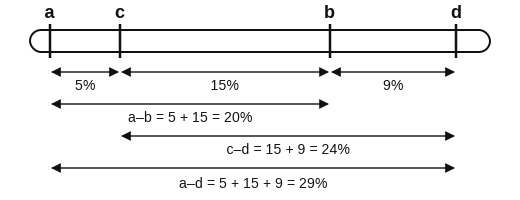
The recombination frequency between the genes a & c is 5%, b & c is 15%, b & d is 9%, a & b is 20%, c & d is 24% and a & d is 29%. What will be the sequence of these genes on a linear chromosome?
जीन a व c के बीच पुनर्योजन आवृत्ति 5%, b व c के बीच 15%, b व d के बीच 9%, a व b के बीच 20%, c व d के बीच 24% तथा a व d के बीच 29% है। एक रैखिक गुणसूत्र पर इन जीनों का अनुक्रम क्या होगा?
  1. Aa, d, b, c
  2. Bd, b, a, c
  3. Ca, b, c, d
  4. Da, c, b, d
Show answer

Concept: Recombination frequency is proportional to the distance between genes (1% = 1 map unit); distances of adjacent genes add up.

  1. The largest value, a–d = 29%, means a and d are the two ends.
  2. a–c = 5% (closest to a) and b–d = 9% (closest to d) ⇒ order a – c – b – d.
  3. Check: a–b = 5 + 15 = 20 ✔; c–d = 15 + 9 = 24 ✔; a–d = 5 + 15 + 9 = 29 ✔ (see map).

Short trick: Largest % = two ends; then place the smallest pairs next to their ends and verify additivity.

Answer: (D) a, c, b, d

अवधारणा: पुनर्योजन आवृत्ति जीनों के बीच की दूरी के समानुपाती होती है (1% = 1 मानचित्र इकाई); आसन्न जीनों की दूरियाँ जुड़ती हैं।

  1. सबसे बड़ा मान, a–d = 29%, अर्थात् a और d दोनों सिरों पर हैं।
  2. a–c = 5% (a के सबसे निकट) तथा b–d = 9% (d के सबसे निकट) ⇒ क्रम a – c – b – d।
  3. जाँच: a–b = 5 + 15 = 20 ✔; c–d = 15 + 9 = 24 ✔; a–d = 5 + 15 + 9 = 29 ✔ (मानचित्र देखें)।

शॉर्ट ट्रिक: सबसे बड़ा % = दोनों सिरे; फिर सबसे छोटे युग्मों को उनके सिरों के पास रखें और योग की जाँच करें।

उत्तर: (D) a, c, b, d

NEET UGZoologyPrinciples of inheritance – linkage and gene mappingNEET UG 2022 · 17 Jul Shift 1 →
Q4555.
Match list I with list II. Choose the correct answer from the options given below:
List IList II
(a) Glycogen(i) Hormone
(b) Globulin(ii) Biocatalyst
(c) Steroids(iii) Antibody
(d) Thrombin(iv) Storage product
सूची I का सूची II से मिलान कीजिए। नीचे दिए गए विकल्पों में से सही उत्तर चुनिए:
सूची Iसूची II
(a) ग्लाइकोजन(i) हॉर्मोन
(b) ग्लोबुलिन(ii) जैव-उत्प्रेरक
(c) स्टेरॉयड(iii) प्रतिरक्षी (Antibody)
(d) थ्रोम्बिन(iv) संचित उत्पाद
  1. A(a)- (iii); (b) - (ii); (c) - (iv); (d) - (i)
  2. B(a)- (iv); (b) - (ii); (c) - (i); (d) - (iii)
  3. C(a)- (ii); (b) - (iv); (c) - (iii); (d) - (i)
  4. D(a)- (iv); (b) - (iii); (c) - (i); (d) - (ii)
Show answer

Concept: Match each biomolecule with its role.

  1. Glycogen – storage polysaccharide of animals → (iv) storage product.
  2. Globulin – immunoglobulins (antibodies) are globulins → (iii) antibody.
  3. Steroids – many hormones (testosterone, oestrogen, cortisol) are steroids → (i) hormone.
  4. Thrombin – enzyme converting fibrinogen to fibrin → (ii) biocatalyst.

Short trick: Glycogen = storage is certain (a-iv) → only (B) and (D) remain; thrombin is an enzyme (d-ii) → (D).

Answer: (D) (a)- (iv); (b) - (iii); (c) - (i); (d) - (ii)

अवधारणा: प्रत्येक जैव-अणु का उसके कार्य से मिलान करें।

  1. ग्लाइकोजन – जंतुओं का संचित पॉलीसैकेराइड → (iv) संचित उत्पाद।
  2. ग्लोबुलिन – इम्युनोग्लोबुलिन (प्रतिरक्षी) ग्लोबुलिन हैं → (iii) प्रतिरक्षी।
  3. स्टेरॉयड – अनेक हॉर्मोन (टेस्टोस्टेरोन, एस्ट्रोजन, कॉर्टिसोल) स्टेरॉयड हैं → (i) हॉर्मोन।
  4. थ्रोम्बिन – फ़ाइब्रिनोजन को फ़ाइब्रिन में बदलने वाला एंजाइम → (ii) जैव-उत्प्रेरक।

शॉर्ट ट्रिक: ग्लाइकोजन = संचय निश्चित (a-iv) → केवल (B) और (D) बचते हैं; थ्रोम्बिन एंजाइम है (d-ii) → (D)।

उत्तर: (D) (a)- (iv); (b) - (iii); (c) - (i); (d) - (ii)

NEET UGZoologyBiomolecules – functions of biomoleculesNEET UG 2022 · 17 Jul Shift 1 →
Q4556.
Match list I with list II with respect to methods of contraception and their respective actions. Choose the correct answer from the options given below:
List IList II
(a) Diaphragms(i) Inhibit ovulation and Implantation
(b) Contraception Pills(ii) Increase phagocytosis of sperm within Uterus
(c) Intrauterine Devices(iii) Absences of Menstrual cycle and ovulation following parturition
(d) Lactational Amenorrhea(iv) They cover the cervix blocking the entry of sperms
गर्भनिरोध की विधियों और उनकी संबंधित क्रियाओं के संदर्भ में सूची I का सूची II से मिलान कीजिए। नीचे दिए गए विकल्पों में से सही उत्तर चुनिए:
सूची Iसूची II
(a) डायाफ्राम(i) अंडोत्सर्ग और रोपण (implantation) का संदमन
(b) गर्भनिरोधक गोलियाँ(ii) गर्भाशय में शुक्राणुओं की भक्षकाणुक्रिया में वृद्धि
(c) अंतर्गर्भाशयी युक्तियाँ (IUDs)(iii) प्रसव के बाद आर्तव चक्र और अंडोत्सर्ग का अभाव
(d) दुग्धस्रवण अनार्तव (Lactational Amenorrhea)(iv) ये गर्भाशय ग्रीवा को ढककर शुक्राणुओं का प्रवेश रोकते हैं
  1. A(a)- (iv); (b) - (i); (c) - (iii); (d) - (ii)
  2. B(a)- (iv); (b) - (i); (c) - (ii); (d) - (iii)
  3. C(a)- (ii); (b) - (iv); (c) - (i); (d) - (iii)
  4. D(a)- (iii); (b) - (ii); (c) - (i); (d) - (iv)
Show answer

Concept: Match each contraceptive method with how it works (NCERT, Reproductive Health).

  1. Diaphragms, cervical caps, vaults – rubber barriers that cover the cervix and block sperm entry → (iv).
  2. Oral pills (progestogens or progestogen–oestrogen) – inhibit ovulation and implantation → (i).
  3. IUDs – increase phagocytosis of sperms within the uterus (Cu ions also suppress sperm motility) → (ii).
  4. Lactational amenorrhoea – absence of menstruation and ovulation during intense lactation after parturition → (iii).

Short trick: a-iv and b-i are common to (A) and (B); IUD = phagocytosis (ii) decides (B).

Answer: (B) (a)- (iv); (b) - (i); (c) - (ii); (d) - (iii)

अवधारणा: प्रत्येक गर्भनिरोधक विधि का उसकी क्रिया-विधि से मिलान करें (NCERT, जनन स्वास्थ्य)।

  1. डायाफ्राम, ग्रीवा टोपी, वॉल्ट – रबर के रोध जो गर्भाशय ग्रीवा को ढककर शुक्राणु प्रवेश रोकते हैं → (iv)।
  2. मुखीय गोलियाँ (प्रोजेस्टोजन या प्रोजेस्टोजन–एस्ट्रोजन) – अंडोत्सर्ग और रोपण का संदमन → (i)।
  3. IUD – गर्भाशय में शुक्राणुओं की भक्षकाणुक्रिया बढ़ाते हैं (Cu आयन शुक्राणु गतिशीलता भी घटाते हैं) → (ii)।
  4. दुग्धस्रवण अनार्तव – प्रसव के बाद तीव्र स्तनपान काल में आर्तव और अंडोत्सर्ग का अभाव → (iii)।

शॉर्ट ट्रिक: a-iv और b-i, (A) व (B) दोनों में हैं; IUD = भक्षकाणुक्रिया (ii) से (B) तय होता है।

उत्तर: (B) (a)- (iv); (b) - (i); (c) - (ii); (d) - (iii)

NEET UGZoologyReproductive health – methods of contraceptionNEET UG 2022 · 17 Jul Shift 1 →
Q4557.
Which of the following are not the effects of Parathyroid hormone?
a. Stimulates the process of bone resorption,
b. Decreases Ca2+ level in blood,
c. Reabsorption of Ca2+ by renal tubules,
d. Decreases the absorption of Ca2+ from digested food,
e. Increases metabolism of carbohydrates.
Choose the most appropriate answer from the options given below
निम्नलिखित में से कौन-से पैराथाइरॉइड हॉर्मोन के प्रभाव नहीं हैं?
a. अस्थि पुनर्शोषण (bone resorption) की प्रक्रिया को उद्दीपित करता है,
b. रुधिर में Ca2+ का स्तर घटाता है,
c. वृक्क नलिकाओं द्वारा Ca2+ का पुनरवशोषण,
d. पचे हुए भोजन से Ca2+ का अवशोषण घटाता है,
e. कार्बोहाइड्रेटों के उपापचय को बढ़ाता है।
नीचे दिए गए विकल्पों में से सबसे उपयुक्त उत्तर चुनिए
  1. A(a) and (c) onlyकेवल (a) और (c)
  2. B(b), (d) and (e) onlyकेवल (b), (d) और (e)
  3. C(a) and (e) onlyकेवल (a) और (e)
  4. D(b) and (c) onlyकेवल (b) और (c)
Show answer

Concept: PTH is a hypercalcaemic hormone – it raises blood Ca2+ by acting on bone, kidney and gut.

  1. a – effect ✔: stimulates bone resorption (demineralisation).
  2. b – NOT an effect: PTH increases, not decreases, blood Ca2+ (lowering is done by thyrocalcitonin).
  3. c – effect ✔: stimulates reabsorption of Ca2+ by renal tubules.
  4. d – NOT an effect: PTH increases Ca2+ absorption from digested food.
  5. e – NOT an effect: carbohydrate metabolism is mainly regulated by thyroid hormones, insulin, glucagon, glucocorticoids.

Short trick: PTH = "Puts The calcium High" – anything that lowers Ca2+ is not PTH.

Answer: (B) (b), (d) and (e) only

अवधारणा: PTH अतिकैल्शियमरक्तता (hypercalcaemic) हॉर्मोन है – यह अस्थि, वृक्क और आंत पर कार्य करके रुधिर Ca2+ बढ़ाता है।

  1. a – प्रभाव ✔: अस्थि पुनर्शोषण (विखनिजीकरण) को उद्दीपित करता है।
  2. b – प्रभाव नहीं: PTH रुधिर Ca2+ को बढ़ाता है, घटाता नहीं (घटाने का कार्य थायरोकैल्सिटोनिन करता है)।
  3. c – प्रभाव ✔: वृक्क नलिकाओं द्वारा Ca2+ का पुनरवशोषण उद्दीपित करता है।
  4. d – प्रभाव नहीं: PTH पचे भोजन से Ca2+ का अवशोषण बढ़ाता है।
  5. e – प्रभाव नहीं: कार्बोहाइड्रेट उपापचय मुख्यतः थायरॉइड हॉर्मोन, इंसुलिन, ग्लूकागॉन, ग्लूकोकॉर्टिकॉइड नियंत्रित करते हैं।

शॉर्ट ट्रिक: PTH = "Puts The calcium High" – Ca2+ घटाने वाला कोई भी प्रभाव PTH का नहीं।

उत्तर: (B) केवल (b), (d) और (e)

NEET UGZoologyChemical coordination – parathyroid hormoneNEET UG 2022 · 17 Jul Shift 1 →
Q4558.
Select the incorrect statement with respect to acquired immunity:
उपार्जित प्रतिरक्षा के संबंध में गलत कथन चुनिए:
  1. APrimary response is produced when our body encounters a pathogen for the first time.जब हमारा शरीर पहली बार किसी रोगजनक से मिलता है तब प्राथमिक अनुक्रिया उत्पन्न होती है।
  2. BAnamnestic response is elicited on subsequent encounters with the same pathogenउसी रोगजनक से बाद में मिलने पर स्मरण (anamnestic) अनुक्रिया उत्पन्न होती है
  3. CAnamnestic response is due to memory of first encounterस्मरण अनुक्रिया पहली भेंट की स्मृति के कारण होती है
  4. DAcquired immunity is non-specific type of defense present at the time of birthउपार्जित प्रतिरक्षा जन्म के समय उपस्थित अविशिष्ट प्रकार की रक्षा है
Show answer

Concept: Acquired immunity is pathogen-specific and is characterised by memory; innate immunity is non-specific and present at birth.

  1. (A) Correct – first encounter gives a low-intensity primary response.
  2. (B), (C) Correct – later encounters give a highly intensified secondary (anamnestic) response, because the body remembers the first encounter.
  3. (D) Incorrect – this describes innate immunity, not acquired immunity.

Short trick: Innate = "In-born, non-specific"; Acquired = "Acquired later, specific + memory".

Answer: (D) Acquired immunity is non-specific type of defense present at the time of birth

अवधारणा: उपार्जित प्रतिरक्षा रोगजनक-विशिष्ट होती है और इसकी विशेषता स्मृति है; सहज प्रतिरक्षा अविशिष्ट होती है और जन्म से उपस्थित रहती है।

  1. (A) सही – पहली भेंट में कम तीव्रता की प्राथमिक अनुक्रिया होती है।
  2. (B), (C) सही – बाद की भेंटों में अत्यधिक तीव्र द्वितीयक (स्मरण) अनुक्रिया होती है, क्योंकि शरीर पहली भेंट को याद रखता है।
  3. (D) गलत – यह सहज प्रतिरक्षा का वर्णन है, उपार्जित प्रतिरक्षा का नहीं।

शॉर्ट ट्रिक: सहज = "जन्मजात, अविशिष्ट"; उपार्जित = "बाद में प्राप्त, विशिष्ट + स्मृति"।

उत्तर: (D) उपार्जित प्रतिरक्षा जन्म के समय उपस्थित अविशिष्ट प्रकार की रक्षा है

NEET UGZoologyHuman health and disease – immunityNEET UG 2022 · 17 Jul Shift 1 →
Q4559.
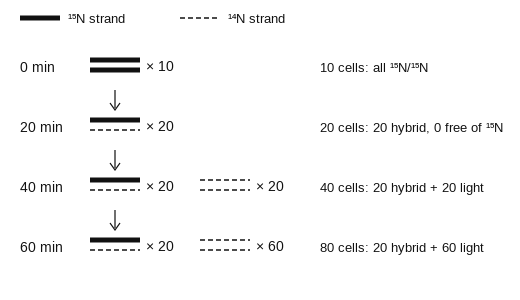
Ten E. coli cells with 15N- dsDNA are incubated in a medium containing 14N nucleotides. After 60 minutes, how many E. coli cells will have DNA totally free from 15N?
15N-dsDNA वाली दस E. coli कोशिकाओं को 14N न्यूक्लियोटाइड वाले माध्यम में ऊष्मायित किया जाता है। 60 मिनट के बाद कितनी E. coli कोशिकाओं का DNA 15N से पूर्णतः मुक्त होगा?
  1. A20 cells20 कोशिकाएँ
  2. B40 cells40 कोशिकाएँ
  3. C60 cells60 कोशिकाएँ
  4. D80 cells80 कोशिकाएँ
Show answer

Concept: Replication is semiconservative (Meselson–Stahl), and E. coli divides every 20 minutes ⇒ 60 min = 3 generations.

  1. Total cells = 10 × 23 = 80.
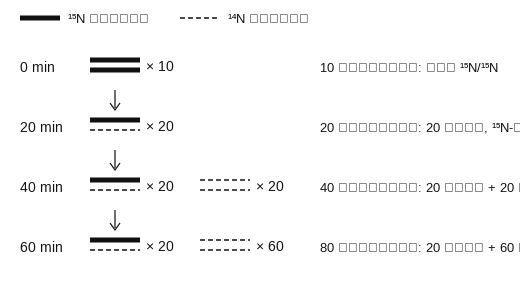
  2. The 2 heavy strands of each original DNA are never destroyed; they end up in 2 hybrid (15N/14N) molecules ⇒ 10 × 2 = 20 hybrid cells in every generation after the first.
  3. Cells free of 15N = 80 − 20 = 60 (generation-wise: 10 → 20 hybrid → 20 hybrid + 20 light → 20 hybrid + 60 light).

Short trick: Light-only cells = N·2n − 2N = 10·8 − 20 = 60.

Answer: (C) 60 cells

अवधारणा: प्रतिकृतियन अर्धसंरक्षी होता है (मेसेल्सन–स्टाल), और E. coli प्रत्येक 20 मिनट में विभाजित होता है ⇒ 60 मिनट = 3 पीढ़ियाँ।

  1. कुल कोशिकाएँ = 10 × 23 = 80।
  2. प्रत्येक मूल DNA के 2 भारी रज्जुक कभी नष्ट नहीं होते; वे 2 संकर (15N/14N) अणुओं में पहुँचते हैं ⇒ पहली पीढ़ी के बाद हर पीढ़ी में 10 × 2 = 20 संकर कोशिकाएँ।
  3. 15N-मुक्त कोशिकाएँ = 80 − 20 = 60 (पीढ़ीवार: 10 → 20 संकर → 20 संकर + 20 हल्की → 20 संकर + 60 हल्की)।

शॉर्ट ट्रिक: केवल हल्की कोशिकाएँ = N·2n − 2N = 10·8 − 20 = 60।

उत्तर: (C) 60 कोशिकाएँ

NEET UGZoologyMolecular basis of inheritance – semiconservative replicationNEET UG 2022 · 17 Jul Shift 1 →
Q4560.
If a colour blind female marries a man whose mother was also colour blind, what are the chances of her progeny having colour blindness?
यदि एक वर्णान्ध स्त्री ऐसे पुरुष से विवाह करती है जिसकी माता भी वर्णान्ध थी, तो उसकी संतति में वर्णान्धता होने की संभावना क्या है?
  1. A25%
  2. B50%
  3. C75%
  4. D100%
Show answer

Concept: Colour blindness is an X-linked recessive trait; a son always receives his X chromosome from his mother.

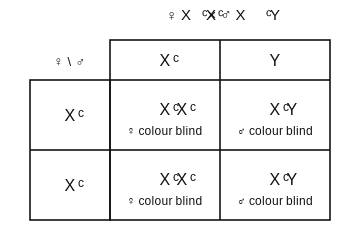
  1. Colour-blind female = XcXc.
  2. The man’s mother was colour blind (XcXc), so she gave him Xc ⇒ the man is XcY (colour blind).
  3. Cross XcXc × XcY: daughters XcXc, sons XcY – every child is colour blind = 100%.

Short trick: Colour-blind mother ⇒ all sons affected; colour-blind father too ⇒ all daughters affected as well.

Answer: (D) 100%

अवधारणा: वर्णान्धता X-सहलग्न अप्रभावी लक्षण है; पुत्र को X गुणसूत्र सदा माता से ही मिलता है।

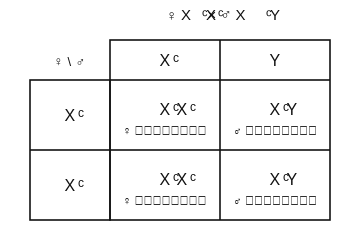
  1. वर्णान्ध स्त्री = XcXc।
  2. पुरुष की माता वर्णान्ध (XcXc) थी, अतः उसने पुत्र को Xc दिया ⇒ पुरुष XcY (वर्णान्ध) है।
  3. संकरण XcXc × XcY: पुत्रियाँ XcXc, पुत्र XcY – प्रत्येक संतान वर्णान्ध = 100%।

शॉर्ट ट्रिक: वर्णान्ध माता ⇒ सभी पुत्र प्रभावित; पिता भी वर्णान्ध ⇒ सभी पुत्रियाँ भी प्रभावित।

उत्तर: (D) 100%

NEET UGZoologyPrinciples of inheritance – sex-linked inheritanceNEET UG 2022 · 17 Jul Shift 1 →