Question bank

Q&A: practice questions with answers

Search questions on any topic. Filter by exam category, exam, subject and topic, try the question, then open the answer and explanation.

Courses – airGurukul

53,050 questions in the question bank.

Q961.

Which of the following sequences of hybridisation, geometry and magnetic nature are correct for the given coordination compounds ?

A. [NiCl4]2− – sp3, tetrahedral, paramagnetic
B. [Ni(NH3)6]2+ – sp3d2, octahedral, paramagnetic
C. [Ni(CO)4] – sp3, tetrahedral, paramagnetic
D. [Ni(CN)4]2− – dsp2, square planar, diamagnetic

Choose the correct answer from the options given below :

दिए गए उपसहसंयोजन यौगिकों के लिए संकरण, ज्यामिति तथा चुंबकीय प्रकृति के निम्नलिखित में से कौन-से अनुक्रम सही हैं ?

A. [NiCl4]2− – sp3, चतुष्फलकीय, अनुचुंबकीय
B. [Ni(NH3)6]2+ – sp3d2, अष्टफलकीय, अनुचुंबकीय
C. [Ni(CO)4] – sp3, चतुष्फलकीय, अनुचुंबकीय
D. [Ni(CN)4]2− – dsp2, वर्ग समतलीय, प्रतिचुंबकीय

नीचे दिए गए विकल्पों में से सही उत्तर चुनिए :

  1. AA, B, C and DA, B, C और D
  2. BB, C and D onlyकेवल B, C और D
  3. CA, C and D onlyकेवल A, C और D
  4. DA, B and D onlyकेवल A, B और D
Show answer

Concept: Strong-field ligands (CN−, CO) pair up d electrons; weak-field ligands do not.

  1. A: Ni2+ (3d8), Cl− weak → no pairing, sp3, tetrahedral, 2 unpaired e− → paramagnetic. Correct.
  2. B: Ni2+ 3d8 with 6 ligands; two 3d orbitals cannot be vacated, so inner-orbital d2sp3 is impossible → outer-orbital sp3d2, octahedral, 2 unpaired e− → paramagnetic. Correct.
  3. C: Ni(0) 3d84s2; CO pushes 4s electrons into 3d → 3d10, sp3, tetrahedral, diamagnetic. “Paramagnetic” is wrong.
  4. D: Ni2+ with CN− → pairing, dsp2, square planar, diamagnetic. Correct.
  5. A, B, D correct; (A), (B), (C) include the wrong statement C.

Short trick: Ni(CO)4 is d10 – always diamagnetic.

Answer: (D) A, B and D only

अवधारणा: प्रबल क्षेत्र लिगंड (CN−, CO) d इलेक्ट्रॉनों का युग्मन कराते हैं; दुर्बल क्षेत्र लिगंड नहीं।

  1. A: Ni2+ (3d8), Cl− दुर्बल → युग्मन नहीं, sp3, चतुष्फलकीय, 2 अयुग्मित e− → अनुचुंबकीय। सही।
  2. B: Ni2+ 3d8 तथा 6 लिगंड; d2sp3 के लिए दो 3d कक्षक रिक्त नहीं हो सकते, अतः बाह्य कक्षक sp3d2, अष्टफलकीय, 2 अयुग्मित e− → अनुचुंबकीय। सही।
  3. C: Ni(0) 3d84s2; CO, 4s इलेक्ट्रॉनों को 3d में भेज देता है → 3d10, sp3, चतुष्फलकीय, प्रतिचुंबकीय। “अनुचुंबकीय” गलत है।
  4. D: Ni2+ तथा CN− → युग्मन, dsp2, वर्ग समतलीय, प्रतिचुंबकीय। सही।
  5. A, B, D सही; (A), (B), (C) में गलत कथन C शामिल है।

शॉर्ट ट्रिक: Ni(CO)4 d10 है – सदैव प्रतिचुंबकीय।

उत्तर: (D) केवल A, B और D
JEE Main 2026 (April) – Paper 1 (B.E./B.Tech)ChemistryCoordination Compounds – VBT of Ni complexesJEE Main 2026 (April) – Paper 1 (B.E./B.Tech) 2026 · 6 Apr Shift 2 →
Q962.

Given below are two statements :

Statement I : A mixture of C12H22O11 (sugar) and NaCl can be separated by dissolving sugar in alcohol, due to differential solubility.

Statement II : Rose essence from rose petals is seperated by steam distillation due to its high volatility and insolubility in H2O.

In the light of the above statements, choose the correct answer from the options given below :

नीचे दो कथन दिए गए हैं :

कथन I : C12H22O11 (शर्करा) तथा NaCl के मिश्रण को विभेदी विलेयता (differential solubility) के कारण शर्करा को ऐल्कोहॉल में घोलकर पृथक किया जा सकता है।

कथन II : गुलाब की पंखुड़ियों से गुलाब का सत (rose essence) अपनी उच्च वाष्पशीलता तथा H2O में अविलेयता के कारण भाप आसवन (steam distillation) द्वारा पृथक किया जाता है।

उपर्युक्त कथनों के आलोक में, नीचे दिए गए विकल्पों में से सही उत्तर चुनिए :

  1. ABoth Statement I and Statement II are trueकथन I और कथन II दोनों सत्य हैं
  2. BBoth Statement I and Statement II are falseकथन I और कथन II दोनों असत्य हैं
  3. CStatement I is true but Statement II is falseकथन I सत्य है परंतु कथन II असत्य है
  4. DStatement I is false but Statement II is trueकथन I असत्य है परंतु कथन II सत्य है
Show answer

Concept: Separation exploits a property in which the components differ – solubility, volatility.

  1. Sugar (a polar organic compound) dissolves in (hot) alcohol whereas ionic NaCl is practically insoluble in it; filter off NaCl and evaporate the alcohol to recover sugar → Statement I is true.
  2. Essential oils such as rose essence are steam-volatile and immiscible with water; in steam distillation they distil below their boiling point along with steam and separate from the water layer → Statement II is true.
  3. Hence (B), (C), (D) are wrong.

Short trick: Essential oils (rose, lemongrass) → steam distillation is the textbook example.

Answer: (A) Both Statement I and Statement II are true

अवधारणा: पृथक्करण उस गुण पर आधारित होता है जिसमें घटक भिन्न हों – विलेयता, वाष्पशीलता।

  1. शर्करा (एक ध्रुवीय कार्बनिक यौगिक) (गर्म) ऐल्कोहॉल में घुल जाती है जबकि आयनिक NaCl उसमें लगभग अविलेय है; NaCl को छानकर अलग कीजिए तथा ऐल्कोहॉल वाष्पित कर शर्करा प्राप्त कीजिए → कथन I सत्य है।
  2. गुलाब के सत जैसे सगंध तेल भाप-वाष्पशील तथा जल के साथ अमिश्रणीय होते हैं; भाप आसवन में वे अपने क्वथनांक से कम ताप पर भाप के साथ आसवित होकर जल की परत से अलग हो जाते हैं → कथन II सत्य है।
  3. अतः (B), (C), (D) गलत हैं।

शॉर्ट ट्रिक: सगंध तेल (गुलाब, लेमनग्रास) → भाप आसवन का मानक उदाहरण।

उत्तर: (A) कथन I और कथन II दोनों सत्य हैं

JEE Main 2026 (April) – Paper 1 (B.E./B.Tech)ChemistryPurification of Organic Compounds – separation methodsJEE Main 2026 (April) – Paper 1 (B.E./B.Tech) 2026 · 6 Apr Shift 2 →
Q963.

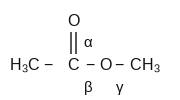
Shown below is the structure of methyl acetate with three different α, β and γ carbon - oxygen bonds.

The correct order of bond lengths of these bonds is :

नीचे मेथिल ऐसीटेट की संरचना दर्शाई गई है जिसमें तीन भिन्न α, β तथा γ कार्बन - ऑक्सीजन आबंध हैं।

इन आबंधों की आबंध लंबाइयों का सही क्रम है :

  1. Aα > β > γ
  2. Bα < β < γ
  3. Cα = β = γ
  4. Dα < β = γ
Show answer

Concept: Ester resonance: lone pair of the alkoxy O delocalises into C=O, CH3C(O−)=O+CH3.

  1. α (C=O): a double bond with only slight single-bond character → shortest (~1.20 Å).
  2. β (acyl C–O): partial double-bond character from resonance → intermediate (~1.34 Å).
  3. γ (O–CH3): pure single bond to an sp3 carbon → longest (~1.43 Å).
  4. Order α < β < γ; (A) reverses it, (C) and (D) ignore the resonance difference.

Short trick: More double-bond character → shorter bond: 2 > 1.x > 1.

Answer: (B) α < β < γ

अवधारणा: एस्टर अनुनाद: ऐल्कॉक्सी O का एकाकी युग्म C=O में विस्थानित होता है, CH3C(O−)=O+CH3।

  1. α (C=O): द्विआबंध जिसमें बहुत कम एकल-आबंध लक्षण → सबसे छोटा (~1.20 Å)।
  2. β (ऐसिल C–O): अनुनाद से आंशिक द्विआबंध लक्षण → मध्यम (~1.34 Å)।
  3. γ (O–CH3): sp3 कार्बन से शुद्ध एकल आबंध → सबसे लंबा (~1.43 Å)।
  4. क्रम α < β < γ; (A) इसे उलट देता है, (C) और (D) अनुनाद के अंतर की उपेक्षा करते हैं।

शॉर्ट ट्रिक: अधिक द्विआबंध लक्षण → छोटा आबंध: 2 > 1.x > 1।

उत्तर: (B) α < β < γ

JEE Main 2026 (April) – Paper 1 (B.E./B.Tech)ChemistryOrganic Chemistry – resonance and bond lengthJEE Main 2026 (April) – Paper 1 (B.E./B.Tech) 2026 · 6 Apr Shift 2 →
Q964.

‘x’ is the product which is obtained by the hydrolysis of prop-1-yne in the presence of mercuric sulphate under dilute acidic medium at 333 K. ‘y’ is the product which is obtained by the reaction of ethane nitrile with methyl magnesium bromide in dry ether followed by hydrolysis. IUPAC name of product obtained from ‘x’ and ‘y’ in the presence of barium hydroxide followed by heating is :

‘x’ वह उत्पाद है जो 333 K पर तनु अम्लीय माध्यम में मर्क्यूरिक सल्फेट की उपस्थिति में प्रोप-1-आइन के जल-अपघटन से प्राप्त होता है। ‘y’ वह उत्पाद है जो एथेननाइट्राइल की शुष्क ईथर में मेथिल मैग्नीशियम ब्रोमाइड से अभिक्रिया तथा उसके पश्चात जल-अपघटन से प्राप्त होता है। बेरियम हाइड्रॉक्साइड की उपस्थिति में ‘x’ तथा ‘y’ से प्राप्त उत्पाद को गर्म करने पर बने उत्पाद का IUPAC नाम है :

  1. A2 - Methylpent-4-en-3-one2 - मेथिलपेन्ट-4-ईन-3-ओन
  2. B4 - Methylpent-3-en-2-one4 - मेथिलपेन्ट-3-ईन-2-ओन
  3. C4 - Methylpent-1-ene4 - मेथिलपेन्ट-1-ईन
  4. D2 - Methylpent-3-one2 - मेथिलपेन्ट-3-ओन
Show answer

Concept: Markovnikov hydration of alkynes and Grignard addition to nitriles both give ketones; Ba(OH)2 brings about aldol condensation.

  1. x: CH3C≡CH + H2O (HgSO4/H2SO4, 333 K) → CH3COCH3 (acetone).
  2. y: CH3C≡N + CH3MgBr → (CH3)2C=NMgBr →H3O+ CH3COCH3 (acetone).
  3. Aldol: 2CH3COCH3 →Ba(OH)2 (CH3)2C(OH)CH2COCH3 (diacetone alcohol) →Δ,−H2O (CH3)2C=CHCOCH3 (mesityl oxide).
  4. Numbering from the C=O end: 4-methylpent-3-en-2-one. (A) is an incorrectly numbered/different skeleton, (C) has no C=O, (D) is a saturated ketone.

Short trick: Both reagents give acetone → aldol + heat → mesityl oxide.

Answer: (B) 4 - Methylpent-3-en-2-one

अवधारणा: ऐल्काइनों का मार्कोनीकॉफ जलयोजन तथा नाइट्राइलों पर ग्रिन्यार योग दोनों कीटोन देते हैं; Ba(OH)2 ऐल्डॉल संघनन कराता है।

  1. x: CH3C≡CH + H2O (HgSO4/H2SO4, 333 K) → CH3COCH3 (ऐसीटोन)।
  2. y: CH3C≡N + CH3MgBr → (CH3)2C=NMgBr →H3O+ CH3COCH3 (ऐसीटोन)।
  3. ऐल्डॉल: 2CH3COCH3 →Ba(OH)2 (CH3)2C(OH)CH2COCH3 (डाइऐसीटोन ऐल्कोहॉल) →Δ,−H2O (CH3)2C=CHCOCH3 (मेसिटिल ऑक्साइड)।
  4. C=O वाले सिरे से क्रमांकन: 4-मेथिलपेन्ट-3-ईन-2-ओन। (A) गलत क्रमांकित/भिन्न कंकाल है, (C) में C=O नहीं है, (D) संतृप्त कीटोन है।

शॉर्ट ट्रिक: दोनों अभिकर्मक ऐसीटोन देते हैं → ऐल्डॉल + ऊष्मा → मेसिटिल ऑक्साइड।

उत्तर: (B) 4 - मेथिलपेन्ट-3-ईन-2-ओन

JEE Main 2026 (April) – Paper 1 (B.E./B.Tech)ChemistryAldehydes and Ketones – aldol condensation of acetoneJEE Main 2026 (April) – Paper 1 (B.E./B.Tech) 2026 · 6 Apr Shift 2 →
Q965.

An optically active alkyl bromide C4H9Br, reacts with ethanolic KOH to form major compound [A] which reacts with bromine to give compound [B]. Compound [B] reacts with ethanolic KOH and sodamide to give compound [C]. One molecule of water adds to compound [C] on warming with mercuric sulphate and dilute sulphuric acid at 333 K to form compound [D]. The functional group in compound D will be confirmed by :

एक ध्रुवण घूर्णक (optically active) ऐल्किल ब्रोमाइड C4H9Br, एथेनॉलिक KOH से अभिक्रिया कर मुख्य यौगिक [A] बनाता है जो ब्रोमीन से अभिक्रिया कर यौगिक [B] देता है। यौगिक [B] एथेनॉलिक KOH तथा सोडामाइड से अभिक्रिया कर यौगिक [C] देता है। 333 K पर मर्क्यूरिक सल्फेट तथा तनु सल्फ्यूरिक अम्ल के साथ गर्म करने पर यौगिक [C] में जल का एक अणु जुड़कर यौगिक [D] बनाता है। यौगिक D में उपस्थित क्रियात्मक समूह की पुष्टि किसके द्वारा होगी :

  1. AHaloform testहैलोफॉर्म परीक्षण
  2. BLucas testलूकास परीक्षण
  3. CSilver mirror testरजत दर्पण परीक्षण
  4. DBenedict testबेनेडिक्ट परीक्षण
Show answer

Concept: Only 2-bromobutane among C4H9Br isomers is chiral; Saytzeff elimination, then dibromination–double dehydrohalogenation gives an alkyne.

  1. CH3CHBrCH2CH3 →alc.KOH CH3CH=CHCH3 [A] (Saytzeff product).
  2. [A] + Br2 → CH3CHBrCHBrCH3 [B].
  3. [B] →alc.KOH, NaNH2 CH3C≡CCH3 [C] (but-2-yne).
  4. Hydration (Hg2+/H+, 333 K) → CH3COCH2CH3 [D] (butan-2-one), a methyl ketone.
  5. CH3CO– group gives the iodoform (haloform) test. Lucas test is for alcohols; silver mirror and Benedict tests need an aldehyde – (B), (C), (D) fail.

Short trick: Any CH3C≡C–R hydrates to a methyl ketone → haloform.

Answer: (A) Haloform test

अवधारणा: C4H9Br समावयवों में केवल 2-ब्रोमोब्यूटेन किरेल है; सेत्सेफ विलोपन, फिर द्विब्रोमीनन–द्वि विहाइड्रोहैलोजनन से ऐल्काइन बनता है।

  1. CH3CHBrCH2CH3 →alc.KOH CH3CH=CHCH3 [A] (सेत्सेफ उत्पाद)।
  2. [A] + Br2 → CH3CHBrCHBrCH3 [B]।
  3. [B] →alc.KOH, NaNH2 CH3C≡CCH3 [C] (ब्यूट-2-आइन)।
  4. जलयोजन (Hg2+/H+, 333 K) → CH3COCH2CH3 [D] (ब्यूटेन-2-ओन), एक मेथिल कीटोन।
  5. CH3CO– समूह आयडोफॉर्म (हैलोफॉर्म) परीक्षण देता है। लूकास परीक्षण ऐल्कोहॉलों के लिए है; रजत दर्पण तथा बेनेडिक्ट परीक्षणों के लिए ऐल्डिहाइड चाहिए – (B), (C), (D) असफल।

शॉर्ट ट्रिक: कोई भी CH3C≡C–R जलयोजन पर मेथिल कीटोन देता है → हैलोफॉर्म।

उत्तर: (A) हैलोफॉर्म परीक्षण

JEE Main 2026 (April) – Paper 1 (B.E./B.Tech)ChemistryHydrocarbons – alkyne hydration and haloform testJEE Main 2026 (April) – Paper 1 (B.E./B.Tech) 2026 · 6 Apr Shift 2 →
Q966.

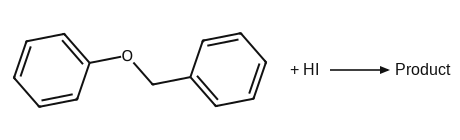
Consider the following reaction.

Statement I : In the above reaction, product formed will be a mixture of benzyl alcohol and iodobenzene.

Statement II : In the above reaction, the –O–CH2– bond is cleaved to give the product.

In the light of the above statements, choose the correct answer from the options given below :

निम्नलिखित अभिक्रिया पर विचार कीजिए।

कथन I : उपर्युक्त अभिक्रिया में बनने वाला उत्पाद बेन्ज़िल ऐल्कोहॉल तथा आयडोबेन्ज़ीन का मिश्रण होगा।

कथन II : उपर्युक्त अभिक्रिया में –O–CH2– आबंध विदलित होकर उत्पाद देता है।

उपर्युक्त कथनों के आलोक में, नीचे दिए गए विकल्पों में से सही उत्तर चुनिए :

  1. ABoth Statement I and Statement II are trueकथन I और कथन II दोनों सत्य हैं
  2. BBoth Statement I and Statement II are falseकथन I और कथन II दोनों असत्य हैं
  3. CStatement I is true but Statement II is falseकथन I सत्य है परंतु कथन II असत्य है
  4. DStatement I is false but Statement II is trueकथन I असत्य है परंतु कथन II सत्य है
Show answer

Concept: In aryl alkyl ethers the O–aryl bond has partial double-bond character and is never cleaved by HI; the O–alkyl (here benzylic) bond breaks.

  1. C6H5–O–CH2C6H5 is protonated by HI on oxygen.
  2. The O–CH2 bond breaks (stable benzyl carbocation / easy SN attack by I− at the benzylic carbon) → C6H5OH + C6H5CH2I.
  3. Products are phenol and benzyl iodide, not benzyl alcohol and iodobenzene (iodobenzene would need Ph–O cleavage) → Statement I false.
  4. The –O–CH2– bond is cleaved → Statement II true. Hence (A), (B), (C) are wrong.

Short trick: Ar–O stays intact: an aryl ether + HI always gives phenol.

Answer: (D) Statement I is false but Statement II is true

अवधारणा: ऐरिल ऐल्किल ईथरों में O–ऐरिल आबंध में आंशिक द्विआबंध लक्षण होता है और HI से कभी नहीं टूटता; O–ऐल्किल (यहाँ बेन्ज़िलिक) आबंध टूटता है।

  1. C6H5–O–CH2C6H5 का ऑक्सीजन HI द्वारा प्रोटॉनित होता है।
  2. O–CH2 आबंध टूटता है (स्थायी बेन्ज़िल कार्बधनायन / बेन्ज़िलिक कार्बन पर I− का सरल SN आक्रमण) → C6H5OH + C6H5CH2I।
  3. उत्पाद फ़ीनॉल तथा बेन्ज़िल आयोडाइड हैं, बेन्ज़िल ऐल्कोहॉल तथा आयडोबेन्ज़ीन नहीं (आयडोबेन्ज़ीन के लिए Ph–O विदलन चाहिए) → कथन I असत्य।
  4. –O–CH2– आबंध विदलित होता है → कथन II सत्य। अतः (A), (B), (C) गलत हैं।

शॉर्ट ट्रिक: Ar–O अक्षुण्ण रहता है: ऐरिल ईथर + HI सदैव फ़ीनॉल देता है।

उत्तर: (D) कथन I असत्य है परंतु कथन II सत्य है

JEE Main 2026 (April) – Paper 1 (B.E./B.Tech)ChemistryEthers – cleavage by HIJEE Main 2026 (April) – Paper 1 (B.E./B.Tech) 2026 · 6 Apr Shift 2 →
Q967.

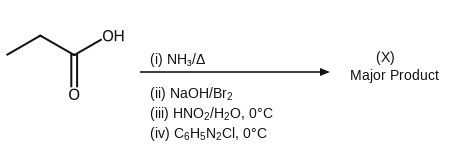
Consider the following organic reaction sequence. Choose the final product (X) from the following (consider the major product in all intermediate reactions)

निम्नलिखित कार्बनिक अभिक्रिया अनुक्रम पर विचार कीजिए। निम्नलिखित में से अंतिम उत्पाद (X) चुनिए (सभी मध्यवर्ती अभिक्रियाओं में मुख्य उत्पाद पर विचार कीजिए)

  1. ABenzeneबेन्ज़ीन
  2. BPhenolफ़ीनॉल
  3. CPropanolप्रोपेनॉल
  4. DChlorobenzeneक्लोरोबेन्ज़ीन
Show answer

Concept: Acid → amide → amine (one C less) → alcohol; an alcohol (ethanol) reduces a diazonium salt to the arene.

  1. CH3CH2COOH + NH3, Δ → CH3CH2CONH2 (propanamide).
  2. Hofmann bromamide (NaOH/Br2) → CH3CH2NH2 (ethanamine).
  3. HNO2/H2O, 0 °C → unstable aliphatic diazonium → CH3CH2OH + N2.
  4. C6H5N2Cl + CH3CH2OH → C6H6 + N2 + CH3CHO + HCl. X = benzene.
  5. Phenol would need warm water, chlorobenzene needs CuCl (Sandmeyer), and propanol is never formed (Hofmann removes one carbon) – (B), (C), (D) are wrong.

Short trick: ArN2+ + ethanol (or H3PO2) → ArH.

Answer: (A) Benzene

अवधारणा: अम्ल → ऐमाइड → ऐमीन (एक C कम) → ऐल्कोहॉल; ऐल्कोहॉल (एथेनॉल) डाइऐज़ोनियम लवण को ऐरीन में अपचयित करता है।

  1. CH3CH2COOH + NH3, Δ → CH3CH2CONH2 (प्रोपेनैमाइड)।
  2. हॉफमान ब्रोमैमाइड (NaOH/Br2) → CH3CH2NH2 (एथेनैमीन)।
  3. HNO2/H2O, 0 °C → अस्थायी ऐलिफैटिक डाइऐज़ोनियम → CH3CH2OH + N2।
  4. C6H5N2Cl + CH3CH2OH → C6H6 + N2 + CH3CHO + HCl। X = बेन्ज़ीन।
  5. फ़ीनॉल के लिए गर्म जल, क्लोरोबेन्ज़ीन के लिए CuCl (सैंडमेयर) चाहिए, और प्रोपेनॉल कभी नहीं बनता (हॉफमान एक कार्बन हटाता है) – (B), (C), (D) गलत हैं।

शॉर्ट ट्रिक: ArN2+ + एथेनॉल (या H3PO2) → ArH।

उत्तर: (A) बेन्ज़ीन

JEE Main 2026 (April) – Paper 1 (B.E./B.Tech)ChemistryAmines – Hofmann bromamide and diazonium saltsJEE Main 2026 (April) – Paper 1 (B.E./B.Tech) 2026 · 6 Apr Shift 2 →
Q968.

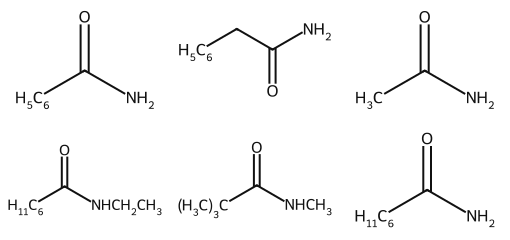
The number of compounds from the following which can undergo reaction with Br2/KOH (alcoholic) to give respective products and these respective products can also be obtained separately by Gabriel phthalimide reaction is :

निम्नलिखित में से उन यौगिकों की संख्या जो Br2/KOH (ऐल्कोहॉलीय) से अभिक्रिया कर संबंधित उत्पाद देते हैं तथा ये संबंधित उत्पाद गैब्रिएल थैलिमाइड अभिक्रिया द्वारा भी अलग से प्राप्त किए जा सकते हैं, है :

  1. A5
  2. B4
  3. C3
  4. D6
Show answer

Concept: Hofmann bromamide works only on primary amides RCONH2 (gives RNH2); Gabriel synthesis gives only primary aliphatic amines (aryl halides do not undergo SN with phthalimide anion).

  1. C6H5CONH2 → C6H5NH2 (aniline): Hofmann ✓, Gabriel ✗.
  2. C6H5CH2CONH2 → C6H5CH2NH2 (benzylamine): both ✓.
  3. CH3CONH2 → CH3NH2: both ✓.
  4. C6H11CONHCH2CH3 and (CH3)3CCONHCH3 are N-substituted (secondary) amides → no Hofmann reaction ✗.
  5. C6H11CONH2 → C6H11NH2 (cyclohexylamine, a primary aliphatic amine): both ✓.
  6. Count = 3 (benzyl, methyl, cyclohexyl amides); hence 5, 4 and 6 are wrong.

Short trick: Keep only –CONH2 amides whose R is not aryl.

Answer: (C) 3

अवधारणा: हॉफमान ब्रोमैमाइड केवल प्राथमिक ऐमाइड RCONH2 पर कार्य करता है (RNH2 देता है); गैब्रिएल संश्लेषण केवल प्राथमिक ऐलिफैटिक ऐमीन देता है (ऐरिल हैलाइड थैलिमाइड ऋणायन से SN नहीं करते)।

  1. C6H5CONH2 → C6H5NH2 (ऐनिलीन): हॉफमान ✓, गैब्रिएल ✗।
  2. C6H5CH2CONH2 → C6H5CH2NH2 (बेन्ज़िलऐमीन): दोनों ✓।
  3. CH3CONH2 → CH3NH2: दोनों ✓।
  4. C6H11CONHCH2CH3 तथा (CH3)3CCONHCH3 N-प्रतिस्थापित (द्वितीयक) ऐमाइड हैं → हॉफमान अभिक्रिया नहीं ✗।
  5. C6H11CONH2 → C6H11NH2 (साइक्लोहेक्सिलऐमीन, प्राथमिक ऐलिफैटिक ऐमीन): दोनों ✓।
  6. संख्या = 3 (बेन्ज़िल, मेथिल, साइक्लोहेक्सिल ऐमाइड); अतः 5, 4 तथा 6 गलत हैं।

शॉर्ट ट्रिक: केवल वे –CONH2 ऐमाइड रखिए जिनका R ऐरिल नहीं है।

उत्तर: (C) 3

JEE Main 2026 (April) – Paper 1 (B.E./B.Tech)ChemistryAmines – Hofmann bromamide and Gabriel synthesisJEE Main 2026 (April) – Paper 1 (B.E./B.Tech) 2026 · 6 Apr Shift 2 →
Q969.

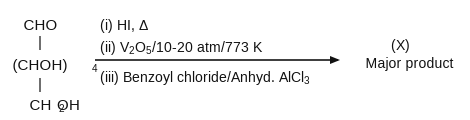
Consider the following reactions. Total number of electrons in the π bonds and lone pair of electrons in the product (X) is :

निम्नलिखित अभिक्रियाओं पर विचार कीजिए। उत्पाद (X) में π आबंधों के इलेक्ट्रॉनों तथा एकाकी युग्म इलेक्ट्रॉनों की कुल संख्या है :

  1. A12
  2. B16
  3. C14
  4. D18
Show answer

Concept: HI/Δ reduces glucose to n-hexane; V2O5 at 773 K and 10–20 atm aromatises n-hexane; Friedel–Crafts acylation then gives a ketone.

  1. Glucose →HI,Δ CH3(CH2)4CH3 (n-hexane).
  2. n-Hexane →V2O5, 773K, 10–20atm C6H6 (benzene).
  3. C6H6 + C6H5COCl →anhyd.AlCl3 C6H5COC6H5 (benzophenone) = X.
  4. π bonds: 3 + 3 (two rings) + 1 (C=O) = 7 → 14 electrons.
  5. Lone pairs: 2 on carbonyl O → 4 electrons. Total = 14 + 4 = 18.

Short trick: Ph2C=O: 7 π bonds × 2 + 2 lone pairs × 2 = 18.

Answer: (D) 18

अवधारणा: HI/Δ ग्लूकोस को n-हेक्सेन में अपचयित करता है; 773 K तथा 10–20 atm पर V2O5 n-हेक्सेन का ऐरोमैटीकरण करता है; फिर फ्रीडेल–क्राफ्ट्स ऐसिलन से कीटोन बनता है।

  1. ग्लूकोस →HI,Δ CH3(CH2)4CH3 (n-हेक्सेन)।
  2. n-हेक्सेन →V2O5, 773K, 10–20atm C6H6 (बेन्ज़ीन)।
  3. C6H6 + C6H5COCl →anhyd.AlCl3 C6H5COC6H5 (बेन्ज़ोफ़ीनोन) = X।
  4. π आबंध: 3 + 3 (दो वलय) + 1 (C=O) = 7 → 14 इलेक्ट्रॉन।
  5. एकाकी युग्म: कार्बोनिल O पर 2 → 4 इलेक्ट्रॉन। कुल = 14 + 4 = 18।

शॉर्ट ट्रिक: Ph2C=O: 7 π आबंध × 2 + 2 एकाकी युग्म × 2 = 18।

उत्तर: (D) 18

JEE Main 2026 (April) – Paper 1 (B.E./B.Tech)ChemistryBiomolecules / Aromatic Hydrocarbons – glucose to benzophenoneJEE Main 2026 (April) – Paper 1 (B.E./B.Tech) 2026 · 6 Apr Shift 2 →
Q970.

Treatment of a gas ‘X’ with a freshly prepared ferrous sulphate solution gives a compound ‘Y’ as a brown ring. The compounds X and Y are.

एक गैस ‘X’ को ताज़े बने फेरस सल्फेट विलयन से उपचारित करने पर एक यौगिक ‘Y’ भूरे वलय के रूप में प्राप्त होता है। यौगिक X तथा Y हैं।

  1. ANO and [Fe(NO)]SO4NO तथा [Fe(NO)]SO4
  2. BNO2 and [Fe(NO2)]SO4NO2 तथा [Fe(NO2)]SO4
  3. CN2O and [Fe(N2O)]SO4N2O तथा [Fe(N2O)]SO4
  4. DN2O4 and [Fe(N2O4)]SO4N2O4 तथा [Fe(N2O4)]SO4
Show answer

Concept: Brown ring test for nitrate: Fe2+ reduces NO3− to NO, which binds to Fe2+.

  1. NO3− + 3Fe2+ + 4H+ → NO + 3Fe3+ + 2H2O.
  2. [Fe(H2O)6]2+ + NO → [Fe(H2O)5(NO)]2+ (brown) + H2O, i.e. the nitrosyl ferrous sulphate [Fe(NO)]SO4.
  3. So X = NO; NO2, N2O and N2O4 do not form the brown nitrosyl complex – (B), (C), (D) are wrong.

Short trick: Brown ring = Fe–NO (nitrosyl).

Answer: (A) NO and [Fe(NO)]SO4

अवधारणा: नाइट्रेट का भूरा वलय परीक्षण: Fe2+, NO3− को NO में अपचयित करता है, जो Fe2+ से बंधता है।

  1. NO3− + 3Fe2+ + 4H+ → NO + 3Fe3+ + 2H2O।
  2. [Fe(H2O)6]2+ + NO → [Fe(H2O)5(NO)]2+ (भूरा) + H2O, अर्थात नाइट्रोसिल फेरस सल्फेट [Fe(NO)]SO4।
  3. अतः X = NO; NO2, N2O तथा N2O4 भूरा नाइट्रोसिल संकुल नहीं बनाते – (B), (C), (D) गलत हैं।

शॉर्ट ट्रिक: भूरा वलय = Fe–NO (नाइट्रोसिल)।

उत्तर: (A) NO तथा [Fe(NO)]SO4

JEE Main 2026 (April) – Paper 1 (B.E./B.Tech)ChemistryQualitative Analysis – brown ring testJEE Main 2026 (April) – Paper 1 (B.E./B.Tech) 2026 · 6 Apr Shift 2 →
Q971.

An excess of AgNO3 is added to 100 mL of a 0.05 M solution of tetraaquadichloridochromium (III) chloride. The number of moles of AgCl precipitated will be __________ × 10−3. (Nearest integer)

टेट्राऐक्वाडाइक्लोरिडोक्रोमियम (III) क्लोराइड के 0.05 M विलयन के 100 mL में AgNO3 का आधिक्य मिलाया जाता है। अवक्षेपित AgCl के मोलों की संख्या __________ × 10−3 होगी। (निकटतम पूर्णांक)

Show answer

Concept: Only counter-ions outside the coordination sphere are precipitated by Ag+.

  1. Formula: [Cr(H2O)4Cl2]Cl → [Cr(H2O)4Cl2]+ + Cl−: 1 ionisable Cl− per formula unit.
  2. Moles of complex = 0.05 mol L−1 × 0.100 L = 5 × 10⁻³ mol.
  3. Moles of AgCl = 1 × 5 × 10−3 = 5 × 10⁻³ mol.

Short trick: Count Cl outside [ ] × millimoles of complex = 1 × 5 = 5 mmol.

Answer: 5

अवधारणा: केवल उपसहसंयोजन मंडल के बाहर के प्रति-आयन ही Ag+ द्वारा अवक्षेपित होते हैं।

  1. सूत्र: [Cr(H2O)4Cl2]Cl → [Cr(H2O)4Cl2]+ + Cl−: प्रति सूत्र इकाई 1 आयननीय Cl−।
  2. संकुल के मोल = 0.05 mol L−1 × 0.100 L = 5 × 10⁻³ mol।
  3. AgCl के मोल = 1 × 5 × 10−3 = 5 × 10⁻³ mol।

शॉर्ट ट्रिक: [ ] के बाहर Cl की संख्या × संकुल के मिलीमोल = 1 × 5 = 5 mmol।

उत्तर: 5

JEE Main 2026 (April) – Paper 1 (B.E./B.Tech)ChemistryCoordination Compounds – ionisable chlorideJEE Main 2026 (April) – Paper 1 (B.E./B.Tech) 2026 · 6 Apr Shift 2 →
Q972.

An alkane (Y) requires 8 moles of oxygen for complete combustion and on chlorination with Cl2/hν, (Y) gives only one monochlorinated product (Z). The total number of primary carbon atoms in (Y) is __________.

एक ऐल्केन (Y) को पूर्ण दहन के लिए 8 मोल ऑक्सीजन की आवश्यकता होती है तथा Cl2/hν से क्लोरीनन पर (Y) केवल एक एकलक्लोरीनीकृत उत्पाद (Z) देता है। (Y) में प्राथमिक कार्बन परमाणुओं की कुल संख्या __________ है।

Show answer

Concept: CnH2n+2 + 3n+12 O2 → nCO2 + (n+1)H2O.

  1. 3n+12=8 → 3n + 1 = 16 → n = 5: C5H12.
  2. Isomers: n-pentane (3 monochloro products), isopentane (4), neopentane C(CH3)4 (all 12 H equivalent → 1 product).
  3. Y = neopentane: four CH3 groups each bonded to one carbon → 4 primary carbons (the central C is quaternary).

Short trick: 8 O2 → C5; single monochloride → C(CH3)4 → 4.

Answer: 4

अवधारणा: CnH2n+2 + 3n+12 O2 → nCO2 + (n+1)H2O।

  1. 3n+12=8 → 3n + 1 = 16 → n = 5: C5H12।
  2. समावयव: n-पेन्टेन (3 एकलक्लोरो उत्पाद), आइसोपेन्टेन (4), नियोपेन्टेन C(CH3)4 (सभी 12 H तुल्य → 1 उत्पाद)।
  3. Y = नियोपेन्टेन: चार CH3 समूह, प्रत्येक एक कार्बन से जुड़ा → 4 प्राथमिक कार्बन (केंद्रीय C चतुष्क है)।

शॉर्ट ट्रिक: 8 O2 → C5; एक ही एकलक्लोराइड → C(CH3)4 → 4।

उत्तर: 4

JEE Main 2026 (April) – Paper 1 (B.E./B.Tech)ChemistryHydrocarbons – combustion and monochlorinationJEE Main 2026 (April) – Paper 1 (B.E./B.Tech) 2026 · 6 Apr Shift 2 →
Q973.

500 mL of 0.2 M MnO4− solution in basic medium when mixed with 500 mL of 1.5 M KI solution, oxidises iodide ions to liberate molecular iodine. This liberated iodine is then titrated with a standard x M thiosulphate solution in presence of starch till the end point. If 300 mL of thiosulphate was consumed, then the value of x is __________.

क्षारीय माध्यम में 0.2 M MnO4− विलयन के 500 mL को 1.5 M KI विलयन के 500 mL के साथ मिलाने पर यह आयोडाइड आयनों को ऑक्सीकृत कर आण्विक आयोडीन मुक्त करता है। इस मुक्त आयोडीन का स्टार्च की उपस्थिति में अंतिम बिंदु तक मानक x M थायोसल्फेट विलयन से अनुमापन किया जाता है। यदि 300 mL थायोसल्फेट उपभुक्त हुआ, तो x का मान __________ है।

Show answer

Concept: In basic medium MnO4− + 2H2O + 3e− → MnO2 + 4OH− (n-factor 3); I2 + 2S2O32− → 2I− + S4O62− (thiosulphate n-factor 1).

  1. Moles of MnO4− = 0.2 × 0.5 = 0.1 mol → equivalents = 0.3.
  2. Moles of I− = 1.5 × 0.5 = 0.75 mol (0.75 equivalents) → MnO4− is limiting.
  3. 2MnO4− + 6I− + 4H2O → 2MnO2 + 3I2 + 8OH−: I2 = 0.15 mol (0.3 equivalents).
  4. Thiosulphate needed = 2 × 0.15 = 0.3 mol = x × 0.300 L → x = 1 M.

Short trick: eq. of MnO4− = eq. of S2O32−: 0.1 × 3 = x × 0.3 → x = 1.

Answer: 1

अवधारणा: क्षारीय माध्यम में MnO4− + 2H2O + 3e− → MnO2 + 4OH− (n-गुणांक 3); I2 + 2S2O32− → 2I− + S4O62− (थायोसल्फेट का n-गुणांक 1)।

  1. MnO4− के मोल = 0.2 × 0.5 = 0.1 mol → तुल्यांक = 0.3।
  2. I− के मोल = 1.5 × 0.5 = 0.75 mol (0.75 तुल्यांक) → MnO4− सीमांत है।
  3. 2MnO4− + 6I− + 4H2O → 2MnO2 + 3I2 + 8OH−: I2 = 0.15 mol (0.3 तुल्यांक)।
  4. आवश्यक थायोसल्फेट = 2 × 0.15 = 0.3 mol = x × 0.300 L → x = 1 M।

शॉर्ट ट्रिक: MnO4− के तुल्यांक = S2O32− के तुल्यांक: 0.1 × 3 = x × 0.3 → x = 1।

उत्तर: 1

JEE Main 2026 (April) – Paper 1 (B.E./B.Tech)ChemistryRedox Titration – iodometryJEE Main 2026 (April) – Paper 1 (B.E./B.Tech) 2026 · 6 Apr Shift 2 →
Q974.

In a closed flask at 600 K, one mole of X2Y4(g) attains equilibrium as given below :

X2Y4(g)⇌2XY2(g)

At equilibrium, 75% X2Y4(g) was dissociated and the total pressure is 1 atm. The magnitude of ΔrG⊖ (in kJ mol−1) at this temperature is __________. (Nearest Integer)

(Given : R = 8.3 J mol−1 K−1; ln 10 = 2.3, log 2 = 0.3, log 3 = 0.48, log 5 = 0.69, log 7 = 0.84)

600 K पर एक बंद फ्लास्क में X2Y4(g) का एक मोल नीचे दिए अनुसार साम्य प्राप्त करता है :

X2Y4(g)⇌2XY2(g)

साम्य पर 75% X2Y4(g) वियोजित हो गया तथा कुल दाब 1 atm है। इस ताप पर ΔrG⊖ (kJ mol−1 में) का परिमाण __________ है। (निकटतम पूर्णांक)

(दिया है : R = 8.3 J mol−1 K−1; ln 10 = 2.3, log 2 = 0.3, log 3 = 0.48, log 5 = 0.69, log 7 = 0.84)

Show answer

Concept: ΔrG⊖ = −RT ln Kp = −2.3RT log Kp; partial pressure = mole fraction × total pressure.

  1. At equilibrium: X2Y4 = 1 − 0.75 = 0.25 mol, XY2 = 2 × 0.75 = 1.5 mol; total = 1.75 mol.
  2. Kp=(1.5/1.75)2×10.25/1.75=(1.5)20.25×1.75=367=5.14.
  3. log Kp = log 36 − log 7 = 2(0.3) + 2(0.48) − 0.84 = 0.72.
  4. ΔrG⊖ = −2.3 × 8.3 × 600 × 0.72 = −8247 J mol−1 ≈ −8.25 kJ mol−1.
  5. Magnitude ≈ 8 kJ mol−1.

Short trick: For A ⇌ 2B with P = 1, Kp = 4α²/(1 − α²) = 4(0.5625)/0.4375 = 36/7.

Answer: 8

अवधारणा: ΔrG⊖ = −RT ln Kp = −2.3RT log Kp; आंशिक दाब = मोल अंश × कुल दाब।

  1. साम्य पर: X2Y4 = 1 − 0.75 = 0.25 mol, XY2 = 2 × 0.75 = 1.5 mol; कुल = 1.75 mol।
  2. Kp=(1.5/1.75)2×10.25/1.75=(1.5)20.25×1.75=367=5.14।
  3. log Kp = log 36 − log 7 = 2(0.3) + 2(0.48) − 0.84 = 0.72।
  4. ΔrG⊖ = −2.3 × 8.3 × 600 × 0.72 = −8247 J mol−1 ≈ −8.25 kJ mol−1।
  5. परिमाण ≈ 8 kJ mol−1।

शॉर्ट ट्रिक: A ⇌ 2B तथा P = 1 के लिए Kp = 4α²/(1 − α²) = 4(0.5625)/0.4375 = 36/7।

उत्तर: 8

JEE Main 2026 (April) – Paper 1 (B.E./B.Tech)ChemistryChemical Equilibrium – Kp and standard Gibbs energyJEE Main 2026 (April) – Paper 1 (B.E./B.Tech) 2026 · 6 Apr Shift 2 →
Q975.

Decomposition of a hydrocarbon follows the equation k=(5.5×10¹¹s−1)e−28000KT. The activation energy of reaction is __________ kJ mol−1. (Nearest Integer)

Given : R = 8.3 J K−1 mol−1

एक हाइड्रोकार्बन का अपघटन समीकरण k=(5.5×10¹¹s−1)e−28000KT का पालन करता है। अभिक्रिया की सक्रियण ऊर्जा __________ kJ mol−1 है। (निकटतम पूर्णांक)

दिया है : R = 8.3 J K−1 mol−1

Show answer

Concept: Arrhenius equation k=Ae−Ea/RT.

  1. Comparing exponents: EaR=28000 K.
  2. Ea = 28000 K × 8.3 J K−1 mol−1 = 232400 J mol−1 = 232.4 kJ mol−1.
  3. Nearest integer: 232.

Short trick: Ea = (number in the exponent) × R = 28 × 8.3 kJ.

Answer: 232

अवधारणा: आरेनियस समीकरण k=Ae−Ea/RT।

  1. घातांकों की तुलना: EaR=28000 K।
  2. Ea = 28000 K × 8.3 J K−1 mol−1 = 232400 J mol−1 = 232.4 kJ mol−1।
  3. निकटतम पूर्णांक: 232।

शॉर्ट ट्रिक: Ea = (घातांक में संख्या) × R = 28 × 8.3 kJ।

उत्तर: 232

JEE Main 2026 (April) – Paper 1 (B.E./B.Tech)ChemistryChemical Kinetics – Arrhenius equationJEE Main 2026 (April) – Paper 1 (B.E./B.Tech) 2026 · 6 Apr Shift 2 →
Q976.
Consider the relation R on the set {−2,−1,0,1,2} defined by (a,b)∈R if and only if 1+ab>0. Then, among the statements :
I. The number of elements in R is 17
II. R is an equivalence relation
समुच्चय {−2,−1,0,1,2} पर संबंध R पर विचार कीजिए, जो (a,b)∈R यदि और केवल यदि 1+ab>0 द्वारा परिभाषित है। तब, कथनों :
I. R में अवयवों की संख्या 17 है
II. R एक तुल्यता संबंध (equivalence relation) है
में से :
  1. AOnly I is trueकेवल I सत्य है
  2. BOnly II is trueकेवल II सत्य है
  3. CBoth I and II are trueI और II दोनों सत्य हैं
  4. DNeither I nor II is trueन तो I और न ही II सत्य है
Show answer

Concept: 1+ab>0 fails only when ab≤−1, i.e. when a,b are non-zero and of opposite signs. Check transitivity with a counter-example.

  1. Total ordered pairs =5×5=25.
  2. Pairs with ab≤−1: one of a,b in {1,2} and the other in {−1,−2}: 2×2×2=8 pairs (e.g. (1,−1) gives 1−1=0, not >0).
  3. So n(R)=25−8=17 – Statement I is true.
  4. Reflexive (1+a2>0) and symmetric, but (2,0)∈R, (0,−2)∈R while (2,−2)∉R (1−4<0). Not transitive, so not an equivalence relation – Statement II is false.

Short trick: 0 is related to everything, so it links 2 and −2, which are not related – transitivity breaks at once.

Answer: (A) Only I is true

अवधारणा: 1+ab>0 केवल तब असत्य है जब ab≤−1, अर्थात् a,b शून्येतर हों तथा विपरीत चिह्न के हों। संक्रामकता (transitivity) को प्रति-उदाहरण से जाँचिए।

  1. कुल क्रमित युग्म =5×5=25।
  2. ab≤−1 वाले युग्म: a,b में से एक {1,2} में और दूसरा {−1,−2} में: 2×2×2=8 युग्म (जैसे (1,−1) से 1−1=0, जो >0 नहीं है)।
  3. अतः n(R)=25−8=17 – कथन I सत्य है।
  4. स्वतुल्य (1+a2>0) तथा सममित है, परन्तु (2,0)∈R, (0,−2)∈R जबकि (2,−2)∉R (1−4<0)। संक्रामक नहीं, अतः तुल्यता संबंध नहीं – कथन II असत्य है।

शॉर्ट ट्रिक: 0 प्रत्येक अवयव से संबंधित है, अतः यह 2 और −2 को जोड़ता है, जो आपस में संबंधित नहीं हैं – संक्रामकता तुरंत टूट जाती है।

उत्तर: (A) केवल I सत्य है

JEE Main 2026 (April) – Paper 1 (B.E./B.Tech)MathematicsRelations – types of relationsJEE Main 2026 (April) – Paper 1 (B.E./B.Tech) 2026 · 8 Apr Shift 2 →
Q977.
The number of values of z∈C, satisfying the equations
|z−(4+8i)|=10 and |z−(3+5i)|+|z−(5+11i)|=45, is :
समीकरणों
|z−(4+8i)|=10 तथा |z−(3+5i)|+|z−(5+11i)|=45
को संतुष्ट करने वाले z∈C के मानों की संख्या है :
  1. A0
  2. B2
  3. C1
  4. D4
Show answer

Concept: |z−z0|=r is a circle; |z−z1|+|z−z2|=2a (with 2a>|z1−z2|) is an ellipse with foci z1,z2.

  1. Circle: centre (4,8), radius 10.
  2. Ellipse: foci (3,5) and (5,11), centre = midpoint (4,8), 2a=45⇒a=25, a2=20.
  3. Distance between foci =22+62=210⇒c=10, so b2=a2−c2=20−10=10, b=10.
  4. The circle has the same centre and radius =b (semi-minor axis), so it lies inside the ellipse and touches it only at the two ends of the minor axis.

Short trick: Concentric circle of radius b touches the ellipse at exactly 2 points (co-vertices).

Answer: (B) 2

अवधारणा: |z−z0|=r एक वृत्त है; |z−z1|+|z−z2|=2a (जहाँ 2a>|z1−z2|) नाभियों z1,z2 वाला दीर्घवृत्त है।

  1. वृत्त: केंद्र (4,8), त्रिज्या 10।
  2. दीर्घवृत्त: नाभियाँ (3,5) तथा (5,11), केंद्र = मध्य-बिंदु (4,8), 2a=45⇒a=25, a2=20।
  3. नाभियों के बीच दूरी =22+62=210⇒c=10, अतः b2=a2−c2=20−10=10, b=10।
  4. वृत्त का केंद्र वही है तथा त्रिज्या =b (अर्ध-लघु अक्ष), अतः वृत्त दीर्घवृत्त के अंदर रहता है और उसे केवल लघु अक्ष के दोनों सिरों पर स्पर्श करता है।

शॉर्ट ट्रिक: त्रिज्या b वाला संकेंद्री वृत्त दीर्घवृत्त को ठीक 2 बिंदुओं (लघु अक्ष के शीर्षों) पर स्पर्श करता है।

उत्तर: (B) 2

JEE Main 2026 (April) – Paper 1 (B.E./B.Tech)MathematicsComplex numbers – locus (circle and ellipse)JEE Main 2026 (April) – Paper 1 (B.E./B.Tech) 2026 · 8 Apr Shift 2 →
Q978.
If the system of linear equations :
x+y+z=6,
x+2y+5z=10,
2x+3y+λz=μ
has infinitely many solutions, then the value of λ+μ equals :
यदि रैखिक समीकरण निकाय :
x+y+z=6,
x+2y+5z=10,
2x+3y+λz=μ
के अनंत हल हैं, तो λ+μ का मान है :
  1. A12
  2. B16
  3. C22
  4. D28
Show answer

Concept: For infinitely many solutions, Δ=0 and the third equation must be a combination of the first two.

  1. Δ=|11112523λ|=(2λ−15)−(λ−10)+(3−4)=λ−6=0⇒λ=6.
  2. Equation (1) + Equation (2): 2x+3y+6z=16, which is exactly the third equation when λ=6 and μ=16.
  3. λ+μ=6+16=22.

Short trick: Coefficients (2,3) of x,y = sum of the first two rows, so λ=1+5=6, μ=6+10=16.

Answer: (C) 22

अवधारणा: अनंत हलों के लिए Δ=0 तथा तीसरा समीकरण पहले दो का संयोजन होना चाहिए।

  1. Δ=|11112523λ|=(2λ−15)−(λ−10)+(3−4)=λ−6=0⇒λ=6।
  2. समीकरण (1) + समीकरण (2): 2x+3y+6z=16, जो λ=6 तथा μ=16 होने पर ठीक तीसरा समीकरण है।
  3. λ+μ=6+16=22।

शॉर्ट ट्रिक: x,y के गुणांक (2,3) पहली दो पंक्तियों का योग हैं, अतः λ=1+5=6, μ=6+10=16।

उत्तर: (C) 22

JEE Main 2026 (April) – Paper 1 (B.E./B.Tech)MathematicsMatrices & determinants – system of linear equationsJEE Main 2026 (April) – Paper 1 (B.E./B.Tech) 2026 · 8 Apr Shift 2 →
Q979.
Let A=[α12230045] and B=[1000−5α004α−2α]+adj(A). If det(B)=66, then det(adj(A)) equals :
माना A=[α12230045] तथा B=[1000−5α004α−2α]+adj(A) है। यदि det(B)=66 है, तो det(adj(A)) बराबर है :
  1. A289
  2. B361
  3. C441
  4. D529
Show answer

Concept: Find adj(A) by cofactors, add the given matrix, then use det(adjA)=(detA)2 for a 3×3 matrix.

  1. adj(A)=[153−6−105α48−4α3α−2].
  2. B=[163−6−100480α−2].
  3. Expanding along column 2: detB=−3[(−10)(α−2)−32]=30α+36.
  4. 30α+36=66⇒α=1. Then detA=1(15)−1(10)+2(8)=21.
  5. det(adjA)=212=441.

Short trick: The added matrix cancels the α-terms of column 2 of adjA, leaving a single non-zero entry 3 in that column.

Answer: (C) 441

अवधारणा: सहखंडों से adj(A) ज्ञात कीजिए, दिया गया आव्यूह जोड़िए, फिर 3×3 आव्यूह के लिए det(adjA)=(detA)2 का प्रयोग कीजिए।

  1. adj(A)=[153−6−105α48−4α3α−2]।
  2. B=[163−6−100480α−2]।
  3. स्तंभ 2 के अनुदिश प्रसार करने पर: detB=−3[(−10)(α−2)−32]=30α+36।
  4. 30α+36=66⇒α=1। तब detA=1(15)−1(10)+2(8)=21।
  5. det(adjA)=212=441।

शॉर्ट ट्रिक: जोड़ा गया आव्यूह adjA के स्तंभ 2 के α-पदों को निरस्त कर देता है, उस स्तंभ में केवल एक शून्येतर अवयव 3 बचता है।

उत्तर: (C) 441

JEE Main 2026 (April) – Paper 1 (B.E./B.Tech)MathematicsMatrices & determinants – adjointJEE Main 2026 (April) – Paper 1 (B.E./B.Tech) 2026 · 8 Apr Shift 2 →
Q980.
Let α=3+4+8+9+13+14+… upto 40 terms. If (tan⁡β)α1020 is a root of the equation x2+x−2=0, β∈(0,π2), then sin2⁡β+3cos2⁡β is equal to :
माना α=3+4+8+9+13+14+… 40 पदों तक है। यदि (tan⁡β)α1020 समीकरण x2+x−2=0 का एक मूल है, β∈(0,π2), तो sin2⁡β+3cos2⁡β बराबर है :
  1. A2
  2. B74
  3. C52
  4. D32
Show answer

Concept: Group the terms in pairs; the pair sums form an A.P.

  1. Pairs: (3+4),(8+9),(13+14),… = 7,17,27,… – an A.P. with a=7, d=10, 20 terms.
  2. α=202[2(7)+19(10)]=10(204)=2040, so α1020=2.
  3. Roots of x2+x−2=0 are 1,−2. tan2⁡β≥0, so tan2⁡β=1⇒β=π4.
  4. sin2⁡β+3cos2⁡β=12+32=2.

Short trick: k-th pair =10k−3; ∑k=120(10k−3)=2100−60=2040.

Answer: (A) 2

अवधारणा: पदों को युग्मों में समूहित कीजिए; युग्मों के योग समांतर श्रेढ़ी (A.P.) बनाते हैं।

  1. युग्म: (3+4),(8+9),(13+14),… = 7,17,27,… – a=7, d=10 वाली 20 पदों की A.P.।
  2. α=202[2(7)+19(10)]=10(204)=2040, अतः α1020=2।
  3. x2+x−2=0 के मूल 1,−2 हैं। tan2⁡β≥0, अतः tan2⁡β=1⇒β=π4।
  4. sin2⁡β+3cos2⁡β=12+32=2।

शॉर्ट ट्रिक: k-वाँ युग्म =10k−3; ∑k=120(10k−3)=2100−60=2040।

उत्तर: (A) 2

JEE Main 2026 (April) – Paper 1 (B.E./B.Tech)MathematicsSequences & series – sum of series; trigonometryJEE Main 2026 (April) – Paper 1 (B.E./B.Tech) 2026 · 8 Apr Shift 2 →