Q11481.
In a certain code language,
'A # B' means ‘A is the daughter of B’,
'A % B' means ‘A is the father of B’,
'A − B' means ‘A is the son of B’,
'A @ B' means ‘A is the sister of B’.
How is S related to U if ‘S @ M − H # Y % U’?
एक निश्चित कूट भाषा में,
'A # B' का अर्थ है 'A, B की पुत्री है',
'A % B' का अर्थ है 'A, B का पिता है',
'A − B' का अर्थ है 'A, B का पुत्र है',
'A @ B' का अर्थ है 'A, B की बहन है'।
यदि 'S @ M − H # Y % U' है, तो S का U से क्या संबंध है?
- ASister's daughterबहन की पुत्री
- BBrother's daughterभाई की पुत्री
- CDaughterपुत्री
- DSisterबहन
Show answer
Concept: Decode left to right (+ = male, − = female).
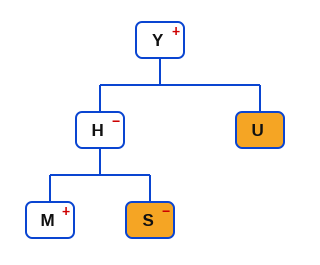
- S @ M: S is the sister of M (S female).
- M − H: M is the son of H.
- H # Y: H is the daughter of Y (H female).
- Y % U: Y is the father of U ⇒ H and U are siblings; H is U's sister.
- S is H's daughter ⇒ S is U's sister's daughter.
Short trick: S → (sister of M) → M is H's son → so S is H's daughter; H is U's sister ⇒ sister's daughter (U's gender is not needed).
Answer: (A) Sister's daughter
अवधारणा: बाएँ से दाएँ डिकोड करें (+ = पुरुष, − = स्त्री)।
- S @ M: S, M की बहन है।
- M − H: M, H का पुत्र है।
- H # Y: H, Y की पुत्री है।
- Y % U: Y, U का पिता ⇒ H और U भाई-बहन; H, U की बहन है।
- S, H की पुत्री ⇒ S, U की बहन की पुत्री।
शॉर्ट ट्रिक: S, M की बहन → M, H का पुत्र → S, H की पुत्री; H, U की बहन ⇒ बहन की पुत्री (U का लिंग जानना आवश्यक नहीं)।
उत्तर: (A) बहन की पुत्री