Question bank

Q&A: practice questions with answers

Search questions on any topic. Filter by exam category, exam, subject and topic, try the question, then open the answer and explanation.

Courses – airGurukul

53,050 questions in the question bank.

Q11921.
Select the pair which follows the same pattern as that followed by the two pairs given below. Both pairs follow the same pattern.
GNP : KRU
COK : GSP
उस युग्म का चयन कीजिए जो उसी पैटर्न का अनुसरण करता है जिसका अनुसरण नीचे दिए गए दो युग्मों द्वारा किया जाता है। दोनों युग्म समान पैटर्न का अनुसरण करते हैं।
GNP : KRU
COK : GSP
  1. AVIQ : ZNV
  2. BHDL : LJQ
  3. CHNR : LTW
  4. DVAM : ZER
Show answer

Concept: Find the shift of each letter position.

  1. GNP → KRU: +4, +4, +5.
  2. COK → GSP: +4, +4, +5.
  3. VAM → ZER: V+4 = Z, A+4 = E, M+5 = R ✔ (others give +4, +5/+6 patterns).

Short trick: Check only the 2nd letter (+4): VIQ→N (+5), HDL→J (+6), HNR→T (+6) fail at once.

Answer: (D) VAM : ZER

अवधारणा: हर अक्षर का खिसकाव ज्ञात करें।

  1. GNP → KRU: +4, +4, +5.
  2. COK → GSP: +4, +4, +5.
  3. VAM → ZER: V+4 = Z, A+4 = E, M+5 = R ✔ (बाकी में +5/+6 आता है)।

शॉर्ट ट्रिक: केवल दूसरा अक्षर (+4) जाँचें: VIQ→N (+5), HDL→J (+6), HNR→T (+6) तुरंत बाहर।

उत्तर: (D) VAM : ZER
RRB ALP CBT 1General Intelligence and ReasoningLetter analogyRRB ALP CBT 1 2025 · 11 Mar Shift 1 →
Q11922.
Refer to the following number and symbol series and answer the question that follows. Counting to be done from left to right only.
(Left) 3 ^ 5 # 6 £ 1 $ @ 8 % 7 * 4 ≺ Ω 9 2 (Right)
How many such symbols are there each of which is immediately preceded by a number and also immediately followed by another number?
निम्नलिखित संख्या और प्रतीक श्रृंखला को देखें और नीचे दिए गए प्रश्न का उत्तर दें। गिनती केवल बाएँ से दाएँ की जानी है।
(बाएँ) 3 ^ 5 # 6 £ 1 $ @ 8 % 7 * 4 ≺ Ω 9 2 (दाएँ)
ऐसे कितने प्रतीक हैं जिनमें से प्रत्येक के ठीक पहले एक संख्या है और ठीक बाद भी एक अन्य संख्या है?
  1. AThreeतीन
  2. BTwoदो
  3. COneएक
  4. DMore than threeतीन से अधिक
Show answer

Concept: Pattern: Number – Symbol – Number.

  1. 3 ^ 5 ✔, 5 # 6 ✔, 6 £ 1 ✔, 8 % 7 ✔, 7 * 4 ✔.
  2. 1 $ @, 4 ≺ Ω – fail.
  3. Count = 5, i.e. more than three.

Short trick: Stop counting once you reach 4 — the answer is already 'More than three'.

Answer: (D) More than three

अवधारणा: पैटर्न: संख्या – प्रतीक – संख्या।

  1. 3 ^ 5 ✔, 5 # 6 ✔, 6 £ 1 ✔, 8 % 7 ✔, 7 * 4 ✔.
  2. 1 $ @, 4 ≺ Ω – असफल।
  3. गिनती = 5, अर्थात तीन से अधिक।

शॉर्ट ट्रिक: 4 तक गिनती पहुँचते ही रुकें — उत्तर 'तीन से अधिक'।

उत्तर: (D) तीन से अधिक

RRB ALP CBT 1General Intelligence and ReasoningNumber–symbol seriesRRB ALP CBT 1 2025 · 11 Mar Shift 1 →
Q11923.
Below are given two sets of numbers. In each set of numbers, a certain mathematical operation on first number results in the second number. Similarly, certain mathematical operation on second number results in the third number and so on. Which of the given options follows the same set of operations as in question?
(NOTE – A two/three digit number cannot be broken into individual digits for operations e.g. if 37 is followed by 10, the operation cannot be 3+7 as a two digit number cannot be broken into individual digits)
4 - 8 - 10 - 12 ; 3 - 6 - 8 - 10
नीचे संख्याओं के दो समुच्चय दिए गए हैं। संख्याओं के प्रत्येक समुच्चय में, पहली संख्या पर एक निश्चित गणितीय संक्रिया से दूसरी संख्या प्राप्त होती है। इसी प्रकार, दूसरी संख्या पर निश्चित गणितीय संक्रिया से तीसरी संख्या प्राप्त होती है और इसी तरह आगे भी। दिए गए विकल्पों में से कौन-सा विकल्प प्रश्न के समान संक्रियाओं के समुच्चय का अनुसरण करता है?
(नोट – संक्रियाओं के लिए दो/तीन अंकों की संख्या को अलग-अलग अंकों में नहीं तोड़ा जा सकता, उदाहरण के लिए यदि 37 के बाद 10 आता है, तो संक्रिया 3+7 नहीं हो सकती क्योंकि दो अंकों की संख्या को अलग-अलग अंकों में नहीं तोड़ा जा सकता)
4 - 8 - 10 - 12 ; 3 - 6 - 8 - 10
  1. A7 - 14 - 16 - 20
  2. B10 - 20 - 22 - 26
  3. C9 - 18 - 20 - 24
  4. D1 - 2 - 4 - 6
Show answer

Concept: Identify the chain of operations from the given sets.

  1. 4 ×2 = 8, +2 = 10, +2 = 12; 3 ×2 = 6, +2 = 8, +2 = 10.
  2. Rule: ×2, +2, +2.
  3. 1 ×2 = 2, +2 = 4, +2 = 6 ✔ (others end with +4).

Short trick: All options satisfy ×2 and the first +2; just check the last step (+2).

Answer: (D) 1 - 2 - 4 - 6

अवधारणा: दिए गए समुच्चयों से संक्रियाओं की श्रृंखला पहचानें।

  1. 4 ×2 = 8, +2 = 10, +2 = 12; 3 ×2 = 6, +2 = 8, +2 = 10.
  2. नियम: ×2, +2, +2.
  3. 1 ×2 = 2, +2 = 4, +2 = 6 ✔ (बाकी में अंतिम चरण +4)।

शॉर्ट ट्रिक: सभी विकल्प ×2 और पहला +2 मानते हैं; केवल अंतिम चरण (+2) जाँचें।

उत्तर: (D) 1 - 2 - 4 - 6

RRB ALP CBT 1General Intelligence and ReasoningNumber set operationsRRB ALP CBT 1 2025 · 11 Mar Shift 1 →
Q11924.
If ‘+’ means ‘−’, ‘−’ means ‘×’, ‘×’ means ‘÷’, ‘÷’ means ‘+’, then what will come in place of the question mark (?) in the following equation?
188 ÷ 11 − 16 + 234 × 18 = ?
यदि ‘+’ का अर्थ ‘−’, ‘−’ का अर्थ ‘×’, ‘×’ का अर्थ ‘÷’, ‘÷’ का अर्थ ‘+’ है, तो निम्नलिखित समीकरण में प्रश्न चिह्न (?) के स्थान पर क्या आएगा?
188 ÷ 11 − 16 + 234 × 18 = ?
  1. A351
  2. B360
  3. C343
  4. D328
Show answer

Concept: Replace the signs, then apply BODMAS.

  1. 188 + 11 × 16 − 234 ÷ 18
  2. = 188 + 176 − 13 = 351

Short trick: Unit digit: 8 + 6 − 3 = 11 → ends in 1 → only 351.

Answer: (A) 351

अवधारणा: चिह्न बदलें, फिर BODMAS लागू करें।

  1. 188 + 11 × 16 − 234 ÷ 18
  2. = 188 + 176 − 13 = 351

शॉर्ट ट्रिक: इकाई अंक: 8 + 6 − 3 = 11 → अंत में 1 → केवल 351.

उत्तर: (A) 351

RRB ALP CBT 1General Intelligence and ReasoningMathematical operations – symbol interchangeRRB ALP CBT 1 2025 · 11 Mar Shift 1 →
Q11925.
Based on the English alphabetical order, three of the following four letter-cluster pairs are alike in a certain way and thus form a group. Which letter-cluster pair DOES NOT belong to that group? (Note: The odd one out is not based on the number of consonants/vowels or their position in the letter-cluster.)
अंग्रेज़ी वर्णमाला क्रम के आधार पर, निम्नलिखित चार अक्षर-समूह युग्मों में से तीन किसी निश्चित प्रकार से एकसमान हैं और इस प्रकार एक समूह बनाते हैं। कौन-सा अक्षर-समूह युग्म उस समूह से संबंधित नहीं है? (नोट: असंगत अक्षर-समूह, उस अक्षर-समूह में व्यंजनों/स्वरों की संख्या या उनके स्थान पर आधारित नहीं है।)
  1. AKG - HD
  2. BPL - MI
  3. CHD - EA
  4. DJF - HT
Show answer

Concept: Compare letter gaps within and across each pair.

  1. KG - HD: K−4 = G, H−4 = D, K−3 = H.
  2. PL - MI and HD - EA follow the same (−4, −4, −3).
  3. JF - HT: J−4 = F but H−4 ≠ T → odd one.

Short trick: Second cluster's letters should both be 3 behind the first's: T is ahead of F, so JF-HT is out instantly.

Answer: (D) JF - HT

अवधारणा: हर युग्म के भीतर और बीच अक्षर-अंतर की तुलना करें।

  1. KG - HD: K−4 = G, H−4 = D, K−3 = H.
  2. PL - MI और HD - EA भी (−4, −4, −3)।
  3. JF - HT: J−4 = F परंतु H−4 ≠ T → असंगत।

शॉर्ट ट्रिक: दूसरे समूह के अक्षर पहले से 3 पीछे होने चाहिए: T, F से आगे है, अतः JF-HT तुरंत अलग।

उत्तर: (D) JF - HT

RRB ALP CBT 1General Intelligence and ReasoningOdd letter-cluster pairRRB ALP CBT 1 2025 · 11 Mar Shift 1 →
Q11926.
FVWQ is related to RHIC in a certain way based on the English alphabetical order. In the same way, BRSM is related to NDEY. To which of the given options is LBCW related, following the same logic?
अंग्रेज़ी वर्णमाला क्रम के आधार पर FVWQ एक निश्चित प्रकार से RHIC से संबंधित है। उसी प्रकार, BRSM, NDEY से संबंधित है। समान तर्क का अनुसरण करते हुए, LBCW दिए गए विकल्पों में से किससे संबंधित है?
  1. AXINO
  2. BXNOI
  3. CXDSA
  4. DXOKI
Show answer

Concept: Each letter moves the same number of places (cyclic).

  1. F → R, V → H, W → I, Q → C: each +12.
  2. B → N, R → D, S → E, M → Y: each +12.
  3. L+12 = X, B+12 = N, C+12 = O, W+12 = I → XNOI.

Short trick: +12 ≡ −14; B and C are consecutive, so their codes must be consecutive (N, O) → only XNOI.

Answer: (B) XNOI

अवधारणा: हर अक्षर समान स्थान आगे बढ़ता है (चक्रीय)।

  1. F → R, V → H, W → I, Q → C: हर एक +12.
  2. B → N, R → D, S → E, M → Y: हर एक +12.
  3. L+12 = X, B+12 = N, C+12 = O, W+12 = I → XNOI.

शॉर्ट ट्रिक: B, C लगातार हैं, अतः उनके कूट भी लगातार (N, O) होंगे → केवल XNOI.

उत्तर: (B) XNOI

RRB ALP CBT 1General Intelligence and ReasoningLetter analogyRRB ALP CBT 1 2025 · 11 Mar Shift 1 →
Q11927.
A question is followed by two statements numbered (I) and (II). You have to decide whether the data provided in the statements are sufficient to answer the question. Read both the statements and decide the appropriate answer.
Q. Four boys – Gaurav, Himanshu, Ishan, and Kunal – have different heights. Who is the shortest?
(I) Ishan is taller than Gaurav but shorter than Kunal.
(II) Himanshu is taller than Gaurav but shorter than Ishan.
एक प्रश्न के बाद दो कथन (I) और (II) दिए गए हैं। आपको यह तय करना है कि कथनों में दिए गए आँकड़े प्रश्न का उत्तर देने के लिए पर्याप्त हैं या नहीं। दोनों कथनों को पढ़ें और उपयुक्त उत्तर चुनें।
प्रश्न: चार लड़के – गौरव, हिमांशु, ईशान और कुणाल – की ऊँचाइयाँ अलग-अलग हैं। सबसे छोटा कौन है?
(I) ईशान, गौरव से लंबा है परंतु कुणाल से छोटा है।
(II) हिमांशु, गौरव से लंबा है परंतु ईशान से छोटा है।
  1. AData in Statement II alone is sufficient to answer the question while data in Statement I is notकेवल कथन II के आँकड़े प्रश्न का उत्तर देने के लिए पर्याप्त हैं, जबकि कथन I के आँकड़े पर्याप्त नहीं हैं
  2. BData in both statements I and II together are NOT sufficient to answer the questionकथन I और II दोनों के आँकड़े मिलकर भी प्रश्न का उत्तर देने के लिए पर्याप्त नहीं हैं
  3. CData in both statements I and II together (and not statement I alone or statement II alone) are sufficient to answer the questionकथन I और II दोनों के आँकड़े मिलकर (न कि अकेले कथन I या अकेले कथन II) प्रश्न का उत्तर देने के लिए पर्याप्त हैं
  4. DData in Statement I alone is sufficient to answer the question while data in Statement II is notकेवल कथन I के आँकड़े प्रश्न का उत्तर देने के लिए पर्याप्त हैं, जबकि कथन II के आँकड़े पर्याप्त नहीं हैं
Show answer

Concept: Test each statement alone, then together.

  1. I: Gaurav < Ishan < Kunal — Himanshu unknown ✘.
  2. II: Gaurav < Himanshu < Ishan — Kunal unknown ✘.
  3. I + II: Gaurav < Himanshu < Ishan < Kunal → Gaurav is the shortest ✔.

Short trick: Each statement mentions only 3 of the 4 boys, so neither alone can decide.

Answer: (C) Both statements together are sufficient

अवधारणा: प्रत्येक कथन अकेले, फिर दोनों साथ जाँचें।

  1. I: गौरव < ईशान < कुणाल — हिमांशु अज्ञात ✘.
  2. II: गौरव < हिमांशु < ईशान — कुणाल अज्ञात ✘.
  3. I + II: गौरव < हिमांशु < ईशान < कुणाल → गौरव सबसे छोटा ✔.

शॉर्ट ट्रिक: हर कथन में 4 में से केवल 3 लड़के हैं, अतः कोई अकेला पर्याप्त नहीं।

उत्तर: (C) दोनों कथन मिलकर पर्याप्त

RRB ALP CBT 1General Intelligence and ReasoningData sufficiency – rankingRRB ALP CBT 1 2025 · 11 Mar Shift 1 →
Q11928.
In a race, five participants, A, B, C, D, and E, finished with different timings. A finished ahead of B but behind E. C did not finish last. Only one participant finished later than D. E finished second. Who among them finished first?
एक दौड़ में, पाँच प्रतिभागी A, B, C, D और E ने अलग-अलग समय पर दौड़ पूरी की। A ने B से पहले लेकिन E के बाद दौड़ पूरी की। C अंतिम स्थान पर नहीं रहा। केवल एक प्रतिभागी ने D के बाद दौड़ पूरी की। E दूसरे स्थान पर रहा। उनमें से किसने सबसे पहले दौड़ पूरी की?
  1. AB
  2. BC
  3. CA
  4. DD
Show answer

Concept: Place the fixed ranks first.

  1. E = 2nd; only one after D → D = 4th.
  2. E < A < B in order → A = 3rd, B = 5th.
  3. Remaining 1st place → C (C is not last ✔).

Short trick: A and B are both after E (2nd), D is 4th → the 1st place can only be C.

Answer: (B) C

अवधारणा: पहले निश्चित स्थान रखें।

  1. E = दूसरा; D के बाद केवल एक → D = चौथा।
  2. E, A, B क्रम में → A = तीसरा, B = पाँचवाँ।
  3. शेष पहला स्थान → C (C अंतिम नहीं ✔)।

शॉर्ट ट्रिक: A, B दोनों E (दूसरा) के बाद, D चौथा → पहला स्थान केवल C.

उत्तर: (B) C

RRB ALP CBT 1General Intelligence and ReasoningRanking / orderRRB ALP CBT 1 2025 · 11 Mar Shift 1 →
Q11929.
What should come in place of the question mark (?) in the given series based on the English alphabetical order?
MOP FHI YAB RTU ?
अंग्रेज़ी वर्णमाला क्रम के आधार पर दी गई श्रृंखला में प्रश्न चिह्न (?) के स्थान पर क्या आना चाहिए?
MOP FHI YAB RTU ?
  1. AKMU
  2. BKMJ
  3. CKNM
  4. DKMN
Show answer

Concept: Track first letters and the internal gaps.

  1. First letters: M, F, Y, R → each −7 → K.
  2. Inside each cluster: +2, +1 (MOP, FHI…) → K, M, N.

Short trick: Internal pattern +2, +1 alone eliminates KMU, KMJ, KNM.

Answer: (D) KMN

अवधारणा: पहले अक्षर और भीतरी अंतर देखें।

  1. पहले अक्षर: M, F, Y, R → हर बार −7 → K.
  2. हर समूह के भीतर: +2, +1 → K, M, N.

शॉर्ट ट्रिक: केवल भीतरी पैटर्न +2, +1 से KMU, KMJ, KNM बाहर।

उत्तर: (D) KMN

RRB ALP CBT 1General Intelligence and ReasoningLetter seriesRRB ALP CBT 1 2025 · 11 Mar Shift 1 →
Q11930.
Select the set in which the numbers are related in the same way as are the numbers of the following sets.
(NOTE: Operations should be performed on the whole numbers, without breaking down the numbers into their constituent digits. E.g. 13 – Operations on 13 such as adding/subtracting/multiplying to 13 can be performed. Breaking down 13 into 1 and 3 and then performing mathematical operations on 1 and 3 is not allowed.)
(3, 40, 42)
(1, 59, 63)
उस समुच्चय का चयन कीजिए जिसमें संख्याएँ उसी प्रकार संबंधित हैं जिस प्रकार निम्नलिखित समुच्चयों की संख्याएँ संबंधित हैं।
(नोट: संख्याओं को उनके घटक अंकों में तोड़े बिना, संक्रियाएँ पूर्ण संख्याओं पर की जानी चाहिए। उदाहरण के लिए 13 – 13 पर संक्रियाएँ जैसे 13 में जोड़ना/घटाना/गुणा करना आदि किया जा सकता है। 13 को 1 और 3 में तोड़कर फिर 1 और 3 पर गणितीय संक्रियाएँ करने की अनुमति नहीं है।)
(3, 40, 42)
(1, 59, 63)
  1. A(4, 54, 56)
  2. B(8, 89, 90)
  3. C(3, 41, 45)
  4. D(7, 74, 72)
Show answer

Concept: Find a rule linking all three numbers.

  1. (3, 40, 42): 40 − 3 + 5 = 42.
  2. (1, 59, 63): 59 − 1 + 5 = 63. Rule: third = second − first + 5.
  3. (7, 74, 72): 74 − 7 + 5 = 72 ✔; (4, 54, 56) → 55, (8, 89, 90) → 86, (3, 41, 45) → 43 ✘.

Short trick: Equivalent check: first + (third − second) = 5 → 7 + (−2) = 5 ✔.

Answer: (D) (7, 74, 72)

अवधारणा: तीनों संख्याओं को जोड़ने वाला नियम खोजें।

  1. (3, 40, 42): 40 − 3 + 5 = 42.
  2. (1, 59, 63): 59 − 1 + 5 = 63. नियम: तीसरी = दूसरी − पहली + 5.
  3. (7, 74, 72): 74 − 7 + 5 = 72 ✔; बाकी: 55, 86, 43 ✘.

शॉर्ट ट्रिक: समतुल्य जाँच: पहली + (तीसरी − दूसरी) = 5 → 7 + (−2) = 5 ✔.

उत्तर: (D) (7, 74, 72)

RRB ALP CBT 1General Intelligence and ReasoningNumber triadsRRB ALP CBT 1 2025 · 11 Mar Shift 1 →
Q11931.
Based on the English alphabetical order, three of the following four letter-cluster pairs are alike in a certain way and thus form a group. Which letter-cluster pair DOES NOT belong to that group? (Note: The odd one out is not based on the number of consonants/vowels or their position in the letter-cluster.)
अंग्रेज़ी वर्णमाला क्रम के आधार पर, निम्नलिखित चार अक्षर-समूह युग्मों में से तीन किसी निश्चित प्रकार से एकसमान हैं और इस प्रकार एक समूह बनाते हैं। कौन-सा अक्षर-समूह युग्म उस समूह से संबंधित नहीं है? (नोट: असंगत अक्षर-समूह, उस अक्षर-समूह में व्यंजनों/स्वरों की संख्या या उनके स्थान पर आधारित नहीं है।)
  1. AEG-JM
  2. BBD-FI
  3. CKM-PS
  4. DFH-KN
Show answer

Concept: Check the gap inside each cluster and between the first letters.

  1. EG-JM: +2 | +3, E→J = +5.
  2. KM-PS: +2 | +3, K→P = +5. FH-KN: +2 | +3, F→K = +5.
  3. BD-FI: +2 | +3 but B→F = +4 → odd.

Short trick: Internal gaps are identical everywhere, so test the jump between clusters (+5).

Answer: (B) BD-FI

अवधारणा: हर समूह के भीतर का अंतर और पहले अक्षरों का अंतर देखें।

  1. EG-JM: +2 | +3, E→J = +5.
  2. KM-PS: +2 | +3, K→P = +5. FH-KN: +2 | +3, F→K = +5.
  3. BD-FI: +2 | +3 परंतु B→F = +4 → असंगत।

शॉर्ट ट्रिक: भीतरी अंतर सब में समान, इसलिए समूहों के बीच छलाँग (+5) जाँचें।

उत्तर: (B) BD-FI

RRB ALP CBT 1General Intelligence and ReasoningOdd letter-cluster pairRRB ALP CBT 1 2025 · 11 Mar Shift 1 →
Q11932.
Read the given statements and conclusions carefully. Assuming that the information given in the statements is true, even if it appears to be at variance with commonly known facts, decide which of the given conclusions logically follow(s) from the statements.
Statements:
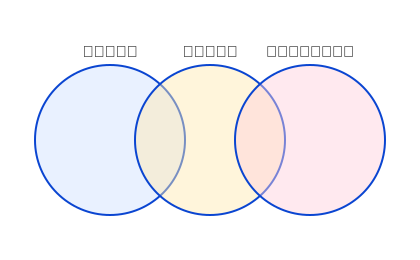
Some whales are sharks.
Some sharks are dolphins.
Conclusions:
(I) No shark is a whale.
(II) Some whales are dolphins.
दिए गए कथनों और निष्कर्षों को ध्यानपूर्वक पढ़ें। यह मानते हुए कि कथनों में दी गई जानकारी सत्य है, भले ही वह सामान्य रूप से ज्ञात तथ्यों से भिन्न प्रतीत होती हो, निर्णय लें कि दिए गए निष्कर्षों में से कौन-सा/कौन-से निष्कर्ष कथनों का तार्किक रूप से अनुसरण करता है/करते हैं।
कथन:
कुछ व्हेल, शार्क हैं।
कुछ शार्क, डॉल्फ़िन हैं।
निष्कर्ष:
(I) कोई शार्क, व्हेल नहीं है।
(II) कुछ व्हेल, डॉल्फ़िन हैं।
  1. ABoth conclusions (I) and (II) follow.दोनों निष्कर्ष (I) और (II) अनुसरण करते हैं।
  2. BNeither conclusion (I) nor (II) follows.न तो निष्कर्ष (I) और न ही (II) अनुसरण करता है।
  3. COnly conclusion (II) follows.केवल निष्कर्ष (II) अनुसरण करता है।
  4. DOnly conclusion (I) follows.केवल निष्कर्ष (I) अनुसरण करता है।
Show answer

Concept: Some + Some gives no definite conclusion between the end terms.

  1. I: 'Some whales are sharks' directly contradicts 'No shark is a whale' ✘.
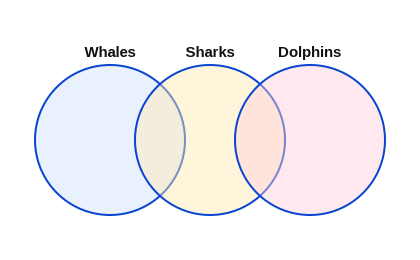
  2. II: Whales and dolphins are linked only through 'some' sharks — not certain ✘ (see the diagram: they need not overlap).

Short trick: Rule: Some + Some = No conclusion.

Answer: (B) Neither conclusion (I) nor (II) follows.

अवधारणा: कुछ + कुछ से अंतिम पदों के बीच कोई निश्चित निष्कर्ष नहीं।

  1. I: 'कुछ व्हेल शार्क हैं' सीधे 'कोई शार्क व्हेल नहीं' का खंडन करता है ✘.
  2. II: व्हेल और डॉल्फ़िन केवल 'कुछ' शार्क से जुड़े — निश्चित नहीं ✘ (आरेख देखें)।

शॉर्ट ट्रिक: नियम: कुछ + कुछ = कोई निष्कर्ष नहीं।

उत्तर: (B) न तो निष्कर्ष (I) और न ही (II) अनुसरण करता है।

RRB ALP CBT 1General Intelligence and ReasoningSyllogismRRB ALP CBT 1 2025 · 11 Mar Shift 1 →
Q11933.
Each of A, B, C, D, S, T and U has an exam on a different day of a week starting from Monday and ending on Sunday of the same week. No one has an exam before A. Only three people have their exams between A and U. Only one person has the exam between U and B. T has the exam on Wednesday. C has the exam on one of the days after S but on one of the days before D. On which day of the week does C have the exam?
A, B, C, D, S, T और U में से प्रत्येक की परीक्षा एक ही सप्ताह के सोमवार से शुरू होकर रविवार को समाप्त होने वाले सप्ताह के अलग-अलग दिन है। A से पहले किसी की परीक्षा नहीं है। A और U के बीच केवल तीन व्यक्तियों की परीक्षाएँ हैं। U और B के बीच केवल एक व्यक्ति की परीक्षा है। T की परीक्षा बुधवार को है। C की परीक्षा S के बाद वाले दिनों में से किसी एक दिन, लेकिन D से पहले वाले दिनों में से किसी एक दिन है। C की परीक्षा सप्ताह के किस दिन है?
  1. ASaturdayशनिवार
  2. BTuesdayमंगलवार
  3. CMondayसोमवार
  4. DThursdayगुरुवार
Show answer

Concept: Fix definite days first.

  1. A = Monday; three between A and U → U = Friday.
  2. One between U and B → B = Wednesday or Sunday; T is Wednesday → B = Sunday.
  3. Tue, Thu, Sat left for S < C < D → S = Tue, C = Thu, D = Sat.

Short trick: C is the middle of three remaining days (Tue, Thu, Sat) → Thursday.

Answer: (D) Thursday

अवधारणा: पहले निश्चित दिन तय करें।

  1. A = सोमवार; A और U के बीच तीन → U = शुक्रवार।
  2. U और B के बीच एक → B = बुधवार या रविवार; T बुधवार → B = रविवार।
  3. मंगल, गुरु, शनि बचे, S < C < D → S = मंगल, C = गुरु, D = शनि।

शॉर्ट ट्रिक: शेष तीन दिनों (मंगल, गुरु, शनि) में C बीच वाला → गुरुवार।

उत्तर: (D) गुरुवार

RRB ALP CBT 1General Intelligence and ReasoningDay-based schedulingRRB ALP CBT 1 2025 · 11 Mar Shift 1 →
Q11934.
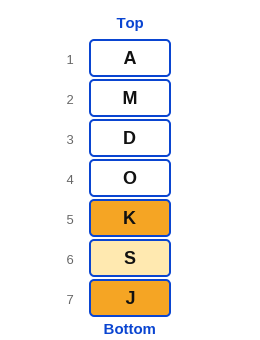
Seven boxes, A, D, J, K, M, O and S are kept one over the other but not necessarily in the same order. Only one box is kept between K and J. D is kept immediately above O. Only one box is kept between D and K. A is kept immediately above M. D is kept immediately below M. J is placed on one of the positions below M. A is placed at the top. Which box is kept between K and J?
सात बक्से A, D, J, K, M, O और S एक के ऊपर एक रखे हैं, परंतु आवश्यक नहीं कि इसी क्रम में हों। K और J के बीच केवल एक बक्सा रखा है। D को O के ठीक ऊपर रखा गया है। D और K के बीच केवल एक बक्सा रखा है। A को M के ठीक ऊपर रखा गया है। D को M के ठीक नीचे रखा गया है। J को M के नीचे वाले स्थानों में से किसी एक पर रखा गया है। A को सबसे ऊपर रखा गया है। K और J के बीच कौन-सा बक्सा रखा गया है?
  1. AD
  2. BA
  3. CS
  4. DO
Show answer

Concept: Start from the top box and chain the 'immediately' clues.

  1. A = 1, M = 2, D = 3, O = 4 (A over M over D over O).
  2. One box between D and K → K = 5.
  3. One box between K and J → J = 7 (3 is taken); S = 6 is between K and J.

Short trick: Once A-M-D-O fill 1–4, K and J must take 5 and 7 → the only leftover, S, sits between them.

Answer: (C) S

अवधारणा: सबसे ऊपर वाले बक्से से शुरू करके 'ठीक' वाले संकेत जोड़ें।

  1. A = 1, M = 2, D = 3, O = 4.
  2. D और K के बीच एक → K = 5.
  3. K और J के बीच एक → J = 7 (3 भरा है); S = 6, K और J के बीच।

शॉर्ट ट्रिक: A-M-D-O के 1–4 भरने पर K, J को 5 और 7 → बचा S उनके बीच।

उत्तर: (C) S

RRB ALP CBT 1General Intelligence and ReasoningBox stacking puzzleRRB ALP CBT 1 2025 · 11 Mar Shift 1 →
Q11935.
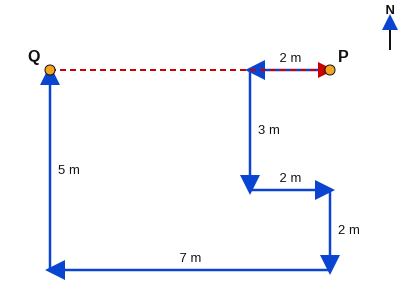
Kanika starts from point P and walks for 2 m towards the west. She takes a left turn and walks for 3 m. Then she takes a left turn again and walks for 2 m. Then she takes a right turn and walks for 2 m. Once more she takes a right turn and walks for 7 m. Then she takes a right turn and walks for 5 m and stops at point Q. Towards which direction should she walk in order to reach point P again? (All turns are 90-degree turns only unless specified.)
कनिका बिंदु P से शुरू करती है और पश्चिम की ओर 2 m चलती है। वह बाएँ मुड़ती है और 3 m चलती है। फिर वह फिर से बाएँ मुड़ती है और 2 m चलती है। फिर वह दाएँ मुड़ती है और 2 m चलती है। एक बार फिर वह दाएँ मुड़ती है और 7 m चलती है। फिर वह दाएँ मुड़ती है और 5 m चलकर बिंदु Q पर रुक जाती है। बिंदु P पर फिर से पहुँचने के लिए उसे किस दिशा में चलना चाहिए? (जब तक निर्दिष्ट न हो, सभी मोड़ केवल 90 डिग्री के हैं।)
  1. ASouthदक्षिण
  2. BNorthउत्तर
  3. CEastपूर्व
  4. DWestपश्चिम
Show answer

Concept: Track coordinates with P = (0, 0), East = +x, North = +y.

  1. West 2 → (−2, 0); left = South 3 → (−2, −3); left = East 2 → (0, −3).
  2. Right = South 2 → (0, −5); right = West 7 → (−7, −5); right = North 5 → Q (−7, 0).
  3. Q is 7 m west of P → she must walk East.

Short trick: Net N–S: −3 − 2 + 5 = 0; net E–W: −2 + 2 − 7 = −7 (west) → go East.

Answer: (C) East

अवधारणा: P = (0, 0), पूर्व = +x, उत्तर = +y लेकर निर्देशांक देखें।

  1. पश्चिम 2 → (−2, 0); बाएँ = दक्षिण 3 → (−2, −3); बाएँ = पूर्व 2 → (0, −3).
  2. दाएँ = दक्षिण 2 → (0, −5); दाएँ = पश्चिम 7 → (−7, −5); दाएँ = उत्तर 5 → Q (−7, 0).
  3. Q, P से 7 m पश्चिम → उसे पूर्व की ओर चलना होगा।

शॉर्ट ट्रिक: शुद्ध उ–द: −3 − 2 + 5 = 0; शुद्ध पू–प: −7 (पश्चिम) → पूर्व जाएँ।

उत्तर: (C) पूर्व

RRB ALP CBT 1General Intelligence and ReasoningDirection senseRRB ALP CBT 1 2025 · 11 Mar Shift 1 →
Q11936.
What should come in place of the question mark (?) in the given series based on the English alphabetical order?
RPE YWL FDS MKZ ?
अंग्रेज़ी वर्णमाला क्रम के आधार पर दी गई श्रृंखला में प्रश्न चिह्न (?) के स्थान पर क्या आना चाहिए?
RPE YWL FDS MKZ ?
  1. ATGR
  2. BTRG
  3. CTHY
  4. DTGU
Show answer

Concept: Each position moves +7 (cyclic).

  1. 1st letters: R, Y, F, M → T.
  2. 2nd letters: P, W, D, K → R.
  3. 3rd letters: E, L, S, Z → G. Answer TRG.

Short trick: Within each cluster, 1st − 2 = 2nd (R→P, Y→W): T − 2 = R → only TRG.

Answer: (B) TRG

अवधारणा: हर स्थान +7 (चक्रीय) बढ़ता है।

  1. पहले अक्षर: R, Y, F, M → T.
  2. दूसरे अक्षर: P, W, D, K → R.
  3. तीसरे अक्षर: E, L, S, Z → G. उत्तर TRG.

शॉर्ट ट्रिक: हर समूह में पहला − 2 = दूसरा: T − 2 = R → केवल TRG.

उत्तर: (B) TRG

RRB ALP CBT 1General Intelligence and ReasoningLetter seriesRRB ALP CBT 1 2025 · 11 Mar Shift 1 →
Q11937.
In the following number-pairs, the second number is obtained by applying certain mathematical operation(s) to the first number. Which numbers should replace X and Y, so that the pattern followed by the two numbers on the left side of :: is the same as that on the right side of ::?
(NOTE: Operations should be performed on the whole numbers, without breaking down the numbers into their constituent digits. E.g. 13 – Operations on 13 such as adding to/subtracting from/multiplying with 13 can be performed. Breaking down 13 into 1 and 3 and then performing mathematical operations on 1 and 3 is not allowed.)
X : 126 :: 21 : Y
निम्नलिखित संख्या-युग्मों में, दूसरी संख्या पहली संख्या पर कुछ गणितीय संक्रिया/संक्रियाएँ लागू करके प्राप्त की जाती है। X और Y के स्थान पर कौन-सी संख्याएँ आनी चाहिए ताकि :: के बाईं ओर की दो संख्याओं का पैटर्न :: के दाईं ओर के पैटर्न के समान हो?
(नोट: संख्याओं को उनके घटक अंकों में तोड़े बिना, संक्रियाएँ पूर्ण संख्याओं पर की जानी चाहिए। उदाहरण के लिए 13 – 13 पर संक्रियाएँ जैसे 13 में जोड़ना/से घटाना/से गुणा करना आदि किया जा सकता है। 13 को 1 और 3 में तोड़कर फिर 1 और 3 पर गणितीय संक्रियाएँ करने की अनुमति नहीं है।)
X : 126 :: 21 : Y
  1. AX = 16, Y = 574
  2. BX = 19, Y = 365
  3. CX = 14, Y = 441
  4. DX = 12, Y = 207
Show answer

Concept: Test each option for one common rule.

  1. Try X = 12, Y = 207: (12 + 2) × 9 = 126 and (21 + 2) × 9 = 207 ✔.
  2. Other options: (16 + 2) × 9 = 162, (19 + 2) × 9 = 189, (14 + 2) × 9 = 144 ≠ 126 ✘.

Short trick: 126 and 207 are both multiples of 9 (digit sum 9) → rule ×9 is natural: 126/9 = 14 = 12 + 2, 207/9 = 23 = 21 + 2.

Answer: (D) X = 12, Y = 207

अवधारणा: प्रत्येक विकल्प में एक समान नियम जाँचें।

  1. X = 12, Y = 207: (12 + 2) × 9 = 126 और (21 + 2) × 9 = 207 ✔.
  2. अन्य: 162, 189, 144 ≠ 126 ✘.

शॉर्ट ट्रिक: 126 और 207 दोनों 9 के गुणज → 126/9 = 14 = 12 + 2, 207/9 = 23 = 21 + 2.

उत्तर: (D) X = 12, Y = 207

RRB ALP CBT 1General Intelligence and ReasoningNumber analogyRRB ALP CBT 1 2025 · 11 Mar Shift 1 →
Q11938.
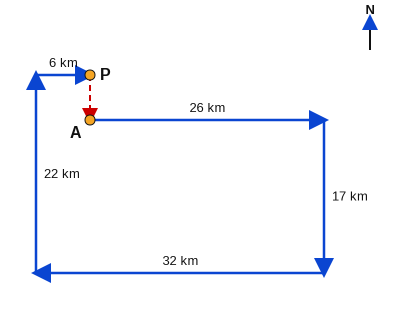
Farooque starts from Point A and drives 26 km towards East. He then takes a right turn, drives 17 km, turns right and drives 32 km. He then takes a right turn and drives 22 km. He takes a final right turn, drives 6 km and stops at Point P. How far (shortest distance) and towards which direction should he drive in order to reach Point A again? (All turns are 90-degree turns only, unless specified.)
फ़ारूक़ बिंदु A से शुरू करता है और पूर्व की ओर 26 km गाड़ी चलाता है। फिर वह दाएँ मुड़ता है, 17 km चलाता है, दाएँ मुड़ता है और 32 km चलाता है। फिर वह दाएँ मुड़ता है और 22 km चलाता है। वह अंतिम बार दाएँ मुड़ता है, 6 km चलाता है और बिंदु P पर रुक जाता है। बिंदु A पर फिर से पहुँचने के लिए उसे कितनी दूरी (न्यूनतम दूरी) और किस दिशा में गाड़ी चलानी चाहिए? (जब तक निर्दिष्ट न हो, सभी मोड़ केवल 90 डिग्री के हैं।)
  1. A6 km to the Southदक्षिण की ओर 6 km
  2. B5 km to the Southदक्षिण की ओर 5 km
  3. C5 km to the Northउत्तर की ओर 5 km
  4. D6 km to the Northउत्तर की ओर 6 km
Show answer

Concept: Add east–west and north–south moves separately.

  1. East 26 → (26, 0); right = South 17 → (26, −17); right = West 32 → (−6, −17).
  2. Right = North 22 → (−6, 5); right = East 6 → P (0, 5).
  3. P is 5 km north of A → drive 5 km to the South.

Short trick: E–W: 26 − 32 + 6 = 0; N–S: 22 − 17 = 5 north → 5 km South.

Answer: (B) 5 km to the South

अवधारणा: पूर्व–पश्चिम और उत्तर–दक्षिण गतियाँ अलग-अलग जोड़ें।

  1. पूर्व 26 → (26, 0); दाएँ = दक्षिण 17 → (26, −17); दाएँ = पश्चिम 32 → (−6, −17).
  2. दाएँ = उत्तर 22 → (−6, 5); दाएँ = पूर्व 6 → P (0, 5).
  3. P, A से 5 km उत्तर → दक्षिण की ओर 5 km चलाना होगा।

शॉर्ट ट्रिक: पू–प: 26 − 32 + 6 = 0; उ–द: 22 − 17 = 5 उत्तर → 5 km दक्षिण।

उत्तर: (B) दक्षिण की ओर 5 km

RRB ALP CBT 1General Intelligence and ReasoningDirection sense – distanceRRB ALP CBT 1 2025 · 11 Mar Shift 1 →
Q11939.
KK 8 is related to NH -5 in a certain way. In the same way, VO 3 is related to YL -10. To which of the given options is RT 12 related, following the same logic?
KK 8 एक निश्चित प्रकार से NH -5 से संबंधित है। उसी प्रकार, VO 3, YL -10 से संबंधित है। समान तर्क का अनुसरण करते हुए, RT 12 दिए गए विकल्पों में से किससे संबंधित है?
  1. AUR -1
  2. BUQ -1
  3. CVQ -1
  4. DVQ -3
Show answer

Concept: Handle letters and number separately.

  1. K → N (+3), K → H (−3), 8 → −5 (−13).
  2. V → Y (+3), O → L (−3), 3 → −10 (−13).
  3. R+3 = U, T−3 = Q, 12 − 13 = −1 → UQ -1.

Short trick: Number part −1 leaves UR, UQ, VQ; R+3 = U removes VQ; T−3 = Q picks UQ.

Answer: (B) UQ -1

अवधारणा: अक्षर और संख्या अलग-अलग देखें।

  1. K → N (+3), K → H (−3), 8 → −5 (−13).
  2. V → Y (+3), O → L (−3), 3 → −10 (−13).
  3. R+3 = U, T−3 = Q, 12 − 13 = −1 → UQ -1.

शॉर्ट ट्रिक: संख्या −1 से UR, UQ, VQ; R+3 = U से VQ बाहर; T−3 = Q → UQ.

उत्तर: (B) UQ -1

RRB ALP CBT 1General Intelligence and ReasoningAlphanumeric analogyRRB ALP CBT 1 2025 · 11 Mar Shift 1 →
Q11940.
A question is followed by two statements numbered (I) and (II). You have to decide whether the data provided in the statements are sufficient to answer the question. Read both the statements and select the most appropriate answer.
Question:
Among 5 poles, I, L, O, M and D each having a different height, which pole is the tallest?
Statements:
(I) L is taller than D. D is shorter than only one pole.
(II) I is shorter than O but taller than M.
एक प्रश्न के बाद दो कथन (I) और (II) दिए गए हैं। आपको यह तय करना है कि कथनों में दिए गए आँकड़े प्रश्न का उत्तर देने के लिए पर्याप्त हैं या नहीं। दोनों कथनों को पढ़ें और सबसे उपयुक्त उत्तर चुनें।
प्रश्न:
5 खंभों I, L, O, M और D में, जिनमें से प्रत्येक की ऊँचाई अलग-अलग है, कौन-सा खंभा सबसे ऊँचा है?
कथन:
(I) L, D से ऊँचा है। D केवल एक खंभे से छोटा है।
(II) I, O से छोटा है परंतु M से ऊँचा है।
  1. AData in both statements I and II together (and not statement I alone or statement II alone) are sufficient to answer the question.कथन I और II दोनों के आँकड़े मिलकर (न कि अकेले कथन I या अकेले कथन II) प्रश्न का उत्तर देने के लिए पर्याप्त हैं।
  2. BData in statement II alone is sufficient to answer the question while data in statement I is not.केवल कथन II के आँकड़े प्रश्न का उत्तर देने के लिए पर्याप्त हैं, जबकि कथन I के आँकड़े पर्याप्त नहीं हैं।
  3. CData in both statements I and II together are not sufficient to answer the question.कथन I और II दोनों के आँकड़े मिलकर भी प्रश्न का उत्तर देने के लिए पर्याप्त नहीं हैं।
  4. DData in statement I alone is sufficient to answer the question while data in statement II is not.केवल कथन I के आँकड़े प्रश्न का उत्तर देने के लिए पर्याप्त हैं, जबकि कथन II के आँकड़े पर्याप्त नहीं हैं।
Show answer

Concept: Check each statement alone first.

  1. I: D is shorter than only one pole → D is 2nd tallest; L is taller than D → L is the tallest ✔.
  2. II: O > I > M says nothing about L and D ✘.

Short trick: 'Shorter than only one' = 2nd; whoever is taller than it is 1st.

Answer: (D) Statement I alone is sufficient

अवधारणा: पहले प्रत्येक कथन अकेले जाँचें।

  1. I: D केवल एक से छोटा → D दूसरा सबसे ऊँचा; L, D से ऊँचा → L सबसे ऊँचा ✔.
  2. II: O > I > M से L और D के बारे में कुछ नहीं ✘.

शॉर्ट ट्रिक: 'केवल एक से छोटा' = दूसरा; जो उससे ऊँचा है वही पहला।

उत्तर: (D) केवल कथन I पर्याप्त

RRB ALP CBT 1General Intelligence and ReasoningData sufficiency – rankingRRB ALP CBT 1 2025 · 11 Mar Shift 1 →