Q41.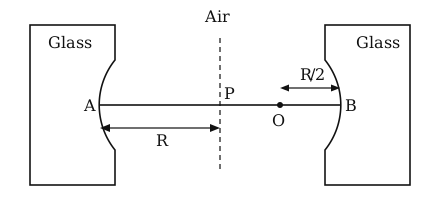
Two concave refracting surfaces of equal radii of curvature and refractive index 1.5 face each other in air as shown in figure. A point object O is placed midway, between P and B. The separation between the images of O, formed by each refracting surface is :
समान वक्रता त्रिज्या तथा 1.5 अपवर्तनांक वाले दो अवतल अपवर्तक पृष्ठ चित्रानुसार वायु में एक-दूसरे के सम्मुख हैं। एक बिंदु वस्तु O को P तथा B के ठीक बीच में रखा गया है। प्रत्येक अपवर्तक पृष्ठ द्वारा बनाए गए O के प्रतिबिंबों के बीच की दूरी है :
- A0.214 R
- B0.411 R
- C0.124 R
- D0.114 R
Show answer
Concept: Refraction at a spherical surface: . From the figure, the poles A and B are apart with P the midpoint (), and O lies midway between P and B, so and . For each surface the centre of curvature is on the object side, so the signed radius is .
- Surface B (): → , i.e. image at from B towards O.
- Surface A (): → , i.e. image at from A towards O.
- Taking A as origin (B at ): at , at .
- Separation .
Answer: (D) 0.114 R
अवधारणा: गोलीय पृष्ठ पर अपवर्तन: । चित्र से, ध्रुव A तथा B परस्पर दूरी पर हैं, P मध्यबिंदु है (), और O, P तथा B के बीचोबीच है, अतः तथा । प्रत्येक पृष्ठ का वक्रता केंद्र वस्तु की ओर है, अतः चिह्न सहित त्रिज्या है।
- पृष्ठ B (): → , अर्थात् प्रतिबिंब , B से O की ओर पर।
- पृष्ठ A (): → , अर्थात् प्रतिबिंब , A से O की ओर पर।
- A को मूलबिंदु लेने पर (B, पर): , पर; , पर।
- दूरी ।
उत्तर: (D) 0.114 R
JEE Main 2025 (January) – Paper 1 (B.E./B.Tech)PhysicsRay Optics – refraction at spherical surfaceJEE Main 2025 (January) – Paper 1 (B.E./B.Tech) 2025 · 29 Jan Shift 2
Q42.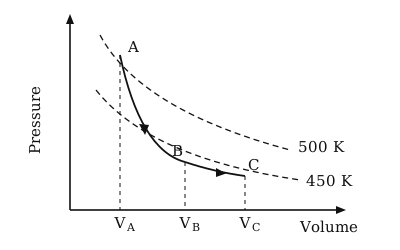
A poly-atomic molecule (
,
, where
is gas constant) goes from phase space point A
to point B
to point C
. A to B is an adiabatic path and B to C is an isothermal path. The net heat absorbed per unit mole by the system is :
एक बहुपरमाणुक अणु (
,
, जहाँ
गैस नियतांक है) कला समष्टि (phase space) बिंदु A
से बिंदु B
होते हुए बिंदु C
तक जाता है। A से B रुद्धोष्म पथ है तथा B से C समतापी पथ है। निकाय द्वारा प्रति मोल अवशोषित नेट ऊष्मा है :
- A
- B
- C
- D
Show answer
Concept: Adiabatic path: . Isothermal path: . From the diagram, B and C lie on the 450 K isotherm.
- (adiabatic).
- per mole .
- Net heat per mole .
Answer: (B)
अवधारणा: रुद्धोष्म पथ: । समतापी पथ: । आरेख से, B तथा C, 450 K समताप रेखा पर हैं।
- (रुद्धोष्म)।
- प्रति मोल ।
- प्रति मोल नेट ऊष्मा ।
उत्तर: (B)
JEE Main 2025 (January) – Paper 1 (B.E./B.Tech)PhysicsThermodynamics – heat in adiabatic & isothermal processesJEE Main 2025 (January) – Paper 1 (B.E./B.Tech) 2025 · 29 Jan Shift 2
Q43.Match List - I with List - II.
| List - I | List - II |
|---|
| (A) Magnetic induction | (I) Ampere meter2 |
| (B) Magnetic intensity | (II) Weber |
| (C) Magnetic flux | (III) Gauss |
| (D) Magnetic moment | (IV) Ampere/meter |
सूची - I का सूची - II से मिलान कीजिए।
| सूची - I | सूची - II |
|---|
| (A) चुंबकीय प्रेरण | (I) ऐम्पियर मीटर2 |
| (B) चुंबकीय तीव्रता | (II) वेबर |
| (C) चुंबकीय फ्लक्स | (III) गाउस |
| (D) चुंबकीय आघूर्ण | (IV) ऐम्पियर/मीटर |
- A(A)-(I), (B)-(II), (C)-(III), (D)-(IV)
- B(A)-(III), (B)-(IV), (C)-(I), (D)-(II)
- C(A)-(III), (B)-(II), (C)-(I), (D)-(IV)
- D(A)-(III), (B)-(IV), (C)-(II), (D)-(I)
Show answer
Concept: Recall the units of B, H, and m.
- Magnetic induction B: SI unit tesla; its CGS unit is the gauss (1 G = T) → (III).
- Magnetic intensity H: from , unit ampere/meter → (IV).
- Magnetic flux : unit weber → (II).
- Magnetic moment : unit ampere meter2 → (I).
Answer: (D) (A)-(III), (B)-(IV), (C)-(II), (D)-(I)
अवधारणा: B, H, तथा m के मात्रक याद करें।
- चुंबकीय प्रेरण B: SI मात्रक टेस्ला; CGS मात्रक गाउस (1 G = T) → (III)।
- चुंबकीय तीव्रता H: से, मात्रक ऐम्पियर/मीटर → (IV)।
- चुंबकीय फ्लक्स : मात्रक वेबर → (II)।
- चुंबकीय आघूर्ण : मात्रक ऐम्पियर मीटर2 → (I)।
उत्तर: (D) (A)-(III), (B)-(IV), (C)-(II), (D)-(I)
JEE Main 2025 (January) – Paper 1 (B.E./B.Tech)PhysicsMagnetism – units of magnetic quantitiesJEE Main 2025 (January) – Paper 1 (B.E./B.Tech) 2025 · 29 Jan Shift 2
Q44.A point charge causes an electric flux of to pass through a spherical Gaussian surface of 8.0 cm radius, centred on the charge. The value of the point charge is : (Given )
एक बिंदु आवेश, अपने पर केंद्रित 8.0 cm त्रिज्या के गोलीय गाउसीय पृष्ठ से का विद्युत फ्लक्स गुजारता है। बिंदु आवेश का मान है : (दिया है )
- A C
- B C
- C C
- D C
Show answer
Concept: Gauss's law: — the flux through a closed surface depends only on the enclosed charge, not on the radius.
- C.
- C.
- The 8.0 cm radius is extra information; negative flux correctly gives a negative charge.
Answer: (D) C
अवधारणा: गाउस का नियम: — बंद पृष्ठ से फ्लक्स केवल परिबद्ध आवेश पर निर्भर करता है, त्रिज्या पर नहीं।
- C।
- C।
- 8.0 cm त्रिज्या अतिरिक्त सूचना है; ऋणात्मक फ्लक्स से आवेश ऋणात्मक ही आता है।
उत्तर: (D) C
JEE Main 2025 (January) – Paper 1 (B.E./B.Tech)PhysicsElectric Charges and Fields – Gauss's lawJEE Main 2025 (January) – Paper 1 (B.E./B.Tech) 2025 · 29 Jan Shift 2
Q45.An electric dipole is placed at a distance of 2 cm from an infinite plane sheet having positive charge density
.
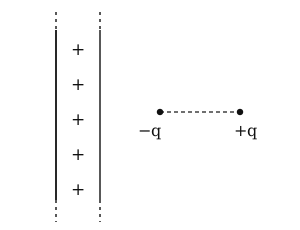
Choose the correct option from the following.
धनात्मक आवेश घनत्व
वाली एक अनंत समतल चादर से 2 cm की दूरी पर एक विद्युत द्विध्रुव रखा गया है।
निम्नलिखित में से सही विकल्प चुनिए।
- APotential energy and torque both are maximum.स्थितिज ऊर्जा तथा बल आघूर्ण दोनों अधिकतम हैं।
- BTorque on dipole is zero and net force is directed away from the sheet.द्विध्रुव पर बल आघूर्ण शून्य है तथा नेट बल चादर से दूर की ओर निर्देशित है।
- CTorque on dipole is zero and net force acts towards the sheet.द्विध्रुव पर बल आघूर्ण शून्य है तथा नेट बल चादर की ओर कार्य करता है।
- DPotential energy of dipole is minimum and torque is zero.द्विध्रुव की स्थितिज ऊर्जा न्यूनतम है तथा बल आघूर्ण शून्य है।
Show answer
Concept: The field of an infinite charged sheet is uniform: , directed away from the positive sheet. For a dipole in a uniform field: , , .
- From the figure, is nearer the sheet and farther, so (from to ) points away from the sheet, parallel to ().
- Torque: ; potential energy: , the minimum value.
- (B) and (C) are wrong because the field is uniform, so the net force on the dipole is zero; (A) is wrong since neither quantity is maximum.
Answer: (D)
अवधारणा: अनंत आवेशित चादर का क्षेत्र एकसमान होता है: , धनात्मक चादर से दूर की ओर। एकसमान क्षेत्र में द्विध्रुव के लिए: , , ।
- चित्र से, चादर के निकट तथा दूर है, अतः ( से की ओर) चादर से दूर, के समांतर है ()।
- बल आघूर्ण: ; स्थितिज ऊर्जा: , न्यूनतम मान।
- (B) तथा (C) गलत हैं क्योंकि क्षेत्र एकसमान है, अतः द्विध्रुव पर नेट बल शून्य है; (A) गलत है क्योंकि कोई भी राशि अधिकतम नहीं है।
उत्तर: (D)
JEE Main 2025 (January) – Paper 1 (B.E./B.Tech)PhysicsElectrostatics – dipole in a uniform fieldJEE Main 2025 (January) – Paper 1 (B.E./B.Tech) 2025 · 29 Jan Shift 2
Q46.The magnetic field inside a 200 turns solenoid of radius 10 cm is Tesla. If the solenoid carries a current of 0.29 A, then the length of the solenoid is _____ cm.
10 cm त्रिज्या की 200 फेरों वाली परिनालिका के भीतर चुंबकीय क्षेत्र टेस्ला है। यदि परिनालिका में 0.29 A की धारा प्रवाहित हो, तो परिनालिका की लंबाई _____ cm है।
Show answer
Concept: Field inside a long solenoid: .
- m.
- m.
- cm, so the required value is 8. (The radius is not needed.)
Answer: 8
अवधारणा: लंबी परिनालिका के भीतर क्षेत्र: ।
- m।
- m।
- cm, अतः अभीष्ट मान 8 है। (त्रिज्या की आवश्यकता नहीं है।)
उत्तर: 8
JEE Main 2025 (January) – Paper 1 (B.E./B.Tech)PhysicsMoving Charges and Magnetism – solenoidJEE Main 2025 (January) – Paper 1 (B.E./B.Tech) 2025 · 29 Jan Shift 2
Q47.A parallel plate capacitor consisting of two circular plates of radius 10 cm is being charged by a constant current of 0.15 A. If the rate of change of potential difference between the plates is V/s then the integer value of the distance between the parallel plates is _____ m.
10 cm त्रिज्या की दो वृत्ताकार पट्टिकाओं से बने समांतर पट्टिका संधारित्र को 0.15 A की नियत धारा से आवेशित किया जा रहा है। यदि पट्टिकाओं के बीच विभवांतर के परिवर्तन की दर V/s हो, तो समांतर पट्टिकाओं के बीच की दूरी का पूर्णांक मान _____ m है।
Show answer
Concept: For a capacitor being charged, with , so .
- m.
- m.
- Numerator ; so m.
- m.
Answer: 1320
अवधारणा: आवेशित होते संधारित्र के लिए तथा , अतः ।
- m।
- m।
- अंश ; अतः m।
- m।
उत्तर: 1320
JEE Main 2025 (January) – Paper 1 (B.E./B.Tech)PhysicsElectromagnetic Waves – charging capacitorJEE Main 2025 (January) – Paper 1 (B.E./B.Tech) 2025 · 29 Jan Shift 2
Q48.Two planets, and are orbiting a common star in circular orbits of radii and , respectively, with . The planet is times more massive than planet . The ratio of angular momentum of planet to that of planet is closest to integer _____.
दो ग्रह तथा एक ही तारे की परिक्रमा क्रमशः तथा त्रिज्याओं की वृत्तीय कक्षाओं में कर रहे हैं, जहाँ । ग्रह का द्रव्यमान ग्रह से गुना है। ग्रह के कोणीय संवेग तथा ग्रह के कोणीय संवेग का अनुपात निकटतम पूर्णांक _____ है।
Show answer
Concept: For a circular orbit of radius about a star of mass : , so , i.e. .
- .
- .
Answer: 8
अवधारणा: द्रव्यमान के तारे के चारों ओर त्रिज्या की वृत्तीय कक्षा के लिए: , अतः , अर्थात् ।
- ।
- ।
उत्तर: 8
JEE Main 2025 (January) – Paper 1 (B.E./B.Tech)PhysicsGravitation – angular momentum in circular orbitsJEE Main 2025 (January) – Paper 1 (B.E./B.Tech) 2025 · 29 Jan Shift 2
Q49.Two cars P and Q are moving on a road in the same direction. Accleration of car P increases linearly with time whereas car Q moves with a constant accleration. Both cars cross each other at time , for the first time. The maximum possible number of crossing(s) (including the crossing at ) is _____.
दो कारें P तथा Q एक सड़क पर एक ही दिशा में चल रही हैं। कार P का त्वरण समय के साथ रैखिक रूप से बढ़ता है जबकि कार Q नियत त्वरण से चलती है। दोनों कारें पहली बार समय पर एक-दूसरे को पार करती हैं। पार करने (crossing) की अधिकतम संभव संख्या ( वाले क्रॉसिंग सहित) _____ है।
Show answer
Concept: Count the roots of the relative displacement. P: gives a cubic position in ; Q: constant acceleration gives a quadratic position.
- and (same position at ).
- Relative displacement: .
- A crossing occurs at every root of : plus at most two more (positive) roots of the quadratic bracket.
- Hence the maximum possible number of crossings .
Short trick: Cubic relative displacement ⇒ at most 3 real roots ⇒ at most 3 crossings.
Answer: 3
अवधारणा: आपेक्षिक विस्थापन के मूलों (roots) की गिनती करें। P: से स्थिति में त्रिघाती; Q: नियत त्वरण से स्थिति द्विघाती।
- तथा ( पर समान स्थिति)।
- आपेक्षिक विस्थापन: ।
- के प्रत्येक मूल पर एक क्रॉसिंग होती है: तथा द्विघाती कोष्ठक के अधिकतम दो और (धनात्मक) मूल।
- अतः क्रॉसिंग की अधिकतम संभव संख्या ।
शॉर्ट ट्रिक: त्रिघाती आपेक्षिक विस्थापन ⇒ अधिकतम 3 वास्तविक मूल ⇒ अधिकतम 3 क्रॉसिंग।
उत्तर: 3
JEE Main 2025 (January) – Paper 1 (B.E./B.Tech)PhysicsKinematics – relative motionJEE Main 2025 (January) – Paper 1 (B.E./B.Tech) 2025 · 29 Jan Shift 2
Q50.A physical quantity is related to four observables as follows : where, ; ; and , then the percentage error in is , where = _____.
एक भौतिक राशि चार प्रेक्षणीय राशियों से इस प्रकार संबंधित है : , जहाँ ; ; तथा है। तब में प्रतिशत त्रुटि है, जहाँ = _____।
Show answer
Concept: For , the maximum fractional error is .
- ; ; ; .
- Percentage error in .
- Given this equals : .
Answer: 7700
अवधारणा: के लिए अधिकतम भिन्नात्मक त्रुटि होती है।
- ; ; ; ।
- में प्रतिशत त्रुटि ।
- दिया है कि यह के बराबर है: ।
उत्तर: 7700
JEE Main 2025 (January) – Paper 1 (B.E./B.Tech)PhysicsUnits and Measurements – error analysisJEE Main 2025 (January) – Paper 1 (B.E./B.Tech) 2025 · 29 Jan Shift 2
Q51.Consider the equilibrium CO(g) + 3H2(g) ⇌ CH4(g) + H2O(g)
If the pressure applied over the system increases by two fold at constant temperature then
(A) Concentration of reactants and products increases.
(B) Equilibrium will shift in forward direction.
(C) Equilibrium constant increases since concentration of products increases.
(D) Equilibrium constant remains unchanged as concentration of reactants and products remain same.
Choose the correct answer from the options given below :
साम्य CO(g) + 3H2(g) ⇌ CH4(g) + H2O(g) पर विचार कीजिए।
यदि स्थिर ताप पर निकाय पर लगाया गया दाब दोगुना कर दिया जाए, तो
(A) अभिकारकों तथा उत्पादों की सांद्रता बढ़ती है।
(B) साम्य अग्र दिशा में विस्थापित होगा।
(C) साम्य स्थिरांक बढ़ता है क्योंकि उत्पादों की सांद्रता बढ़ती है।
(D) साम्य स्थिरांक अपरिवर्तित रहता है क्योंकि अभिकारकों तथा उत्पादों की सांद्रता समान रहती है।
नीचे दिए गए विकल्पों में से सही उत्तर चुनिए :
- A(A), (B) and (C) onlyकेवल (A), (B) और (C)
- B(A) and (B) onlyकेवल (A) और (B)
- C(A), (B) and (D) onlyकेवल (A), (B) और (D)
- D(B) and (C) onlyकेवल (B) और (C)
Show answer
Concept: Doubling the pressure at constant temperature halves the volume, so every concentration (mol/V) rises. Le Chatelier then pushes the equilibrium toward the side with fewer gas moles; the equilibrium constant depends only on temperature.
- Volume is halved → concentration of every species doubles instantly → (A) is correct.
- Moles of gas: reactants , products . Fewer moles on the product side → equilibrium shifts forward → (B) is correct.
- (C) is wrong: never changes with pressure or concentration, only with temperature.
- (D) gives the right fact ( unchanged) but a wrong reason – the concentrations do not remain the same, they change until the ratio again equals . So (D) as a statement is incorrect.
Short trick: + pressure increase → forward shift; = f(T) only.
Answer: (B)
अवधारणा: स्थिर ताप पर दाब दोगुना करने से आयतन आधा हो जाता है, अतः प्रत्येक सांद्रता (mol/V) बढ़ जाती है। ला शातेलिए के अनुसार साम्य कम गैसीय मोल वाली दिशा में विस्थापित होता है; साम्य स्थिरांक केवल ताप पर निर्भर करता है।
- आयतन आधा → प्रत्येक स्पीशीज़ की सांद्रता तुरंत दोगुनी → (A) सही।
- गैसीय मोल: अभिकारक , उत्पाद । उत्पाद की ओर मोल कम → साम्य अग्र दिशा में → (B) सही।
- (C) गलत: दाब या सांद्रता से कभी नहीं बदलता, केवल ताप से बदलता है।
- (D) में तथ्य सही है ( अपरिवर्तित) पर कारण गलत है – सांद्रताएँ समान नहीं रहतीं, वे तब तक बदलती हैं जब तक अनुपात फिर से के बराबर न हो जाए। अतः कथन (D) गलत है।
शॉर्ट ट्रिक: + दाब वृद्धि → अग्र विस्थापन; केवल T का फलन।
उत्तर: (B)
JEE Main 2025 (January) – Paper 1 (B.E./B.Tech)ChemistryChemical Equilibrium – Le Chatelier's principleJEE Main 2025 (January) – Paper 1 (B.E./B.Tech) 2025 · 29 Jan Shift 2
Q52.Drug X becomes ineffective after 50% decomposition. The original concentration of drug in a bottle was 16 mg/mL which becomes 4 mg/mL in 12 months. The expiry time of the drug in months is __________. Assume that the decomposition of the drug follows first order kinetics.
औषधि X, 50% अपघटन के बाद अप्रभावी हो जाती है। एक बोतल में औषधि की प्रारंभिक सांद्रता 16 mg/mL थी जो 12 माह में 4 mg/mL हो जाती है। औषधि की समाप्ति अवधि (expiry time) महीनों में __________ है। मान लीजिए कि औषधि का अपघटन प्रथम कोटि की बलगतिकी का पालन करता है।
- A2
- B6
- C12
- D3
Show answer
Concept: For a first order reaction the half-life is constant. Expiry corresponds to 50% decomposition, i.e. exactly one half-life.
- mg/mL – the fall from 16 to 4 is two half-lives.
- Two half-lives take 12 months → months.
- The drug is usable until 50% has decomposed, i.e. for one half-life = 6 months.
Short trick: means left = 2 half-lives; expiry = 1 half-life = months.
Answer: (B)
अवधारणा: प्रथम कोटि अभिक्रिया के लिए अर्ध-आयु स्थिर होती है। समाप्ति (expiry) का अर्थ है 50% अपघटन, अर्थात् ठीक एक अर्ध-आयु।
- mg/mL – 16 से 4 तक गिरावट दो अर्ध-आयु है।
- दो अर्ध-आयु में 12 माह लगे → माह।
- औषधि 50% अपघटन तक, अर्थात् एक अर्ध-आयु = 6 माह तक प्रभावी रहती है।
शॉर्ट ट्रिक: अर्थात् शेष = 2 अर्ध-आयु; समाप्ति = 1 अर्ध-आयु = माह।
उत्तर: (B)
JEE Main 2025 (January) – Paper 1 (B.E./B.Tech)ChemistryChemical Kinetics – first order half-lifeJEE Main 2025 (January) – Paper 1 (B.E./B.Tech) 2025 · 29 Jan Shift 2
Q53.O2 gas will be evolved as a product of electrolysis of :
(A) an aqueous solution of AgNO3 using silver electrodes.
(B) an aqueous solution of AgNO3 using platinum electrodes.
(C) a dilute solution of H2SO4 using platinum electrodes.
(D) a high concentration solution of H2SO4 using platinum electrodes.
Choose the correct answer from the options given below :
निम्नलिखित के वैद्युत अपघटन के उत्पाद के रूप में O2 गैस निकलेगी :
(A) सिल्वर इलेक्ट्रोडों का उपयोग करके AgNO3 के जलीय विलयन का।
(B) प्लैटिनम इलेक्ट्रोडों का उपयोग करके AgNO3 के जलीय विलयन का।
(C) प्लैटिनम इलेक्ट्रोडों का उपयोग करके H2SO4 के तनु विलयन का।
(D) प्लैटिनम इलेक्ट्रोडों का उपयोग करके H2SO4 के उच्च सांद्रता वाले विलयन का।
नीचे दिए गए विकल्पों में से सही उत्तर चुनिए :
- A(A) and (C) onlyकेवल (A) और (C)
- B(B) and (C) onlyकेवल (B) और (C)
- C(A) and (D) onlyकेवल (A) और (D)
- D(B) and (D) onlyकेवल (B) और (D)
Show answer
Concept: O2 comes from anodic oxidation of water. It is evolved only when the anode is inert and no other species is oxidised more easily.
- (A) AgNO3 with silver (active) electrodes: the Ag anode itself dissolves (Ag → Ag+ + e−), so no O2 – wrong.
- (B) AgNO3 with Pt electrodes: NO3− is not oxidised; water is oxidised at the inert anode giving O2 – correct.
- (C) Dilute H2SO4 with Pt: water oxidation at the anode gives O2 (classic electrolysis of acidified water) – correct.
- (D) Concentrated H2SO4: SO42−/HSO4− itself is oxidised to peroxodisulphate (S2O82−), not O2 – wrong.
Short trick: Active anode → anode dissolves; conc. H2SO4 → Marshall's acid route, no O2.
Answer: (B)
अवधारणा: O2 ऐनोड पर जल के ऑक्सीकरण से बनती है। यह तभी निकलती है जब ऐनोड अक्रिय हो और कोई अन्य स्पीशीज़ अधिक आसानी से ऑक्सीकृत न होती हो।
- (A) सिल्वर (सक्रिय) इलेक्ट्रोडों के साथ AgNO3: Ag ऐनोड स्वयं घुलता है (Ag → Ag+ + e−), अतः O2 नहीं – गलत।
- (B) Pt इलेक्ट्रोडों के साथ AgNO3: NO3− ऑक्सीकृत नहीं होता; अक्रिय ऐनोड पर जल ऑक्सीकृत होकर O2 देता है – सही।
- (C) Pt के साथ तनु H2SO4: ऐनोड पर जल के ऑक्सीकरण से O2 (अम्लीकृत जल का प्रसिद्ध वैद्युत अपघटन) – सही।
- (D) सांद्र H2SO4: SO42−/HSO4− स्वयं ऑक्सीकृत होकर परॉक्सोडाइसल्फेट (S2O82−) बनाता है, O2 नहीं – गलत।
शॉर्ट ट्रिक: सक्रिय ऐनोड → ऐनोड घुलता है; सांद्र H2SO4 → मार्शल अम्ल मार्ग, O2 नहीं।
उत्तर: (B)
JEE Main 2025 (January) – Paper 1 (B.E./B.Tech)ChemistryElectrochemistry – products of electrolysisJEE Main 2025 (January) – Paper 1 (B.E./B.Tech) 2025 · 29 Jan Shift 2
Q54.Identify the homoleptic complexes with odd number of d electrons in the central metal :
(A) [FeO4]2− (B) [Fe(CN)6]3− (C) [Fe(CN)5NO]2− (D) [CoCl4]2− (E) [Co(H2O)3F3]
Choose the correct answer from the options given below :
केंद्रीय धातु में विषम संख्या में d इलेक्ट्रॉन वाले समलिगेंडी (homoleptic) संकुलों की पहचान कीजिए :
(A) [FeO4]2− (B) [Fe(CN)6]3− (C) [Fe(CN)5NO]2− (D) [CoCl4]2− (E) [Co(H2O)3F3]
नीचे दिए गए विकल्पों में से सही उत्तर चुनिए :
- A(A), (B) and (D) onlyकेवल (A), (B) और (D)
- B(C) and (E) onlyकेवल (C) और (E)
- C(B) and (D) onlyकेवल (B) और (D)
- D(A), (C) and (E) onlyकेवल (A), (C) और (E)
Show answer
Concept: A homoleptic complex has only one kind of ligand. Count d electrons from the metal oxidation state.
- (A) [FeO4]2−: homoleptic, but Fe is +6 → d2 – even → excluded.
- (B) [Fe(CN)6]3−: homoleptic, Fe3+ → d5 – odd → included.
- (C) [Fe(CN)5NO]2−: two kinds of ligands (CN− and NO) → heteroleptic → excluded.
- (D) [CoCl4]2−: homoleptic, Co2+ → d7 – odd → included.
- (E) [Co(H2O)3F3]: H2O and F− → heteroleptic → excluded.
Short trick: First throw out mixed-ligand complexes (C, E), then check parity of dn: d5 and d7 are odd.
Answer: (C)
अवधारणा: समलिगेंडी संकुल में केवल एक ही प्रकार का लिगेंड होता है। धातु की ऑक्सीकरण अवस्था से d इलेक्ट्रॉन गिनिए।
- (A) [FeO4]2−: समलिगेंडी, पर Fe की अवस्था +6 → d2 – सम → बाहर।
- (B) [Fe(CN)6]3−: समलिगेंडी, Fe3+ → d5 – विषम → शामिल।
- (C) [Fe(CN)5NO]2−: दो प्रकार के लिगेंड (CN− तथा NO) → विषमलिगेंडी → बाहर।
- (D) [CoCl4]2−: समलिगेंडी, Co2+ → d7 – विषम → शामिल।
- (E) [Co(H2O)3F3]: H2O तथा F− → विषमलिगेंडी → बाहर।
शॉर्ट ट्रिक: पहले मिश्रित-लिगेंड संकुल (C, E) हटाइए, फिर dn की सम-विषमता देखिए: d5 और d7 विषम हैं।
उत्तर: (C)
JEE Main 2025 (January) – Paper 1 (B.E./B.Tech)ChemistryCoordination Compounds – homoleptic complexes, d-electron countJEE Main 2025 (January) – Paper 1 (B.E./B.Tech) 2025 · 29 Jan Shift 2
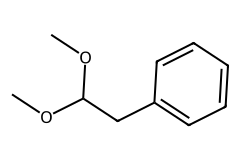
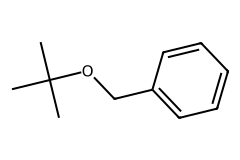
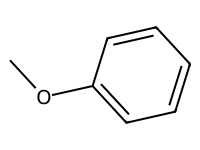
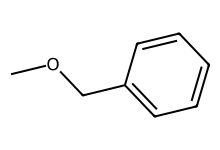
Q55.Which one of the following, with HBr will give a phenol?
निम्नलिखित में से कौन-सा, HBr के साथ एक फ़ीनॉल देगा?
- A
- B
- C
- D
Show answer
Concept: When an aryl alkyl ether (Ar–O–R) is cleaved by HX, the strong sp2 C(aryl)–O bond never breaks; the O–R(alkyl) bond breaks, giving ArOH (a phenol) + RX.
- (C) is anisole, C6H5–O–CH3. With HBr: protonation of O, then Br− attacks the methyl carbon (SN2) → C6H5OH (phenol) + CH3Br.
- (A) is an acetal PhCH2CH(OCH3)2: aqueous acid cleaves it to the aldehyde and CH3OH/CH3Br – no phenol.
- (B) PhCH2–O–C(CH3)3: cleavage gives benzyl alcohol/t-butyl bromide (via stable 3° carbocation) – no phenol.
- (D) PhCH2–O–CH3: both C–O bonds are to sp3 carbons; products are PhCH2Br + CH3OH (benzylic cleavage) – no phenol.
Short trick: Phenol can come only from a compound in which oxygen is attached directly to the ring – only (C) has Ar–O.
Answer: (C)
अवधारणा: जब ऐरिल ऐल्किल ईथर (Ar–O–R) का HX द्वारा विदलन होता है, तो प्रबल sp2 C(ऐरिल)–O आबंध कभी नहीं टूटता; O–R(ऐल्किल) आबंध टूटकर ArOH (फ़ीनॉल) + RX देता है।
- (C) ऐनिसोल है, C6H5–O–CH3। HBr के साथ: O का प्रोटॉनीकरण, फिर Br− मेथिल कार्बन पर आक्रमण (SN2) → C6H5OH (फ़ीनॉल) + CH3Br।
- (A) एक ऐसीटैल PhCH2CH(OCH3)2 है: जलीय अम्ल इसे ऐल्डिहाइड तथा CH3OH/CH3Br में विदलित करता है – फ़ीनॉल नहीं।
- (B) PhCH2–O–C(CH3)3: विदलन से बेंज़िल ऐल्कोहॉल/t-ब्यूटिल ब्रोमाइड (स्थायी 3° कार्बधनायन से) – फ़ीनॉल नहीं।
- (D) PhCH2–O–CH3: दोनों C–O आबंध sp3 कार्बन से हैं; उत्पाद PhCH2Br + CH3OH (बेंज़िलिक विदलन) – फ़ीनॉल नहीं।
शॉर्ट ट्रिक: फ़ीनॉल केवल उसी यौगिक से बन सकता है जिसमें ऑक्सीजन सीधे वलय से जुड़ी हो – केवल (C) में Ar–O है।
उत्तर: (C)
JEE Main 2025 (January) – Paper 1 (B.E./B.Tech)ChemistryEthers – cleavage with HBrJEE Main 2025 (January) – Paper 1 (B.E./B.Tech) 2025 · 29 Jan Shift 2
Q56.Given below are two statements :
Statement (I) : NaCl is added to the ice at 0°C, present in the ice cream box to prevent the melting of ice cream.
Statement (II) : On addition of NaCl to ice at 0°C, there is a depression in freezing point.
In the light of the above statements, choose the correct answer from the options given below :
नीचे दो कथन दिए गए हैं :
कथन (I) : आइसक्रीम के डिब्बे में उपस्थित 0°C वाली बर्फ में NaCl मिलाया जाता है ताकि आइसक्रीम को पिघलने से रोका जा सके।
कथन (II) : 0°C पर बर्फ में NaCl मिलाने पर हिमांक में अवनमन होता है।
उपर्युक्त कथनों के आलोक में, नीचे दिए गए विकल्पों में से सही उत्तर चुनिए :
- ABoth Statement I and Statement II are falseकथन I और कथन II दोनों असत्य हैं
- BStatement I is false but Statement II is trueकथन I असत्य है परंतु कथन II सत्य है
- CStatement I is true but Statement II is falseकथन I सत्य है परंतु कथन II असत्य है
- DBoth Statement I and Statement II are trueकथन I और कथन II दोनों सत्य हैं
Show answer
Concept: Freezing point depression is a colligative property: adding a non-volatile solute (NaCl) to ice/water lowers the freezing point, producing a freezing mixture well below 0°C.
- Statement II: NaCl dissolves in the water film on ice; the solution freezes below 0°C, i.e. – a clear depression in freezing point. True.
- Statement I: this ice-salt freezing mixture can reach about C, keeping the box much colder than 0°C, so the ice cream does not melt. This is exactly why salt is added. True.
- Statement II correctly explains Statement I, and the option asked only whether both are true.
Short trick: Salt + ice = freezing mixture (≈ C) – the classic kulfi/ice-cream vendor's trick.
Answer: (D)
अवधारणा: हिमांक अवनमन एक अणुसंख्यक गुणधर्म है: बर्फ/जल में अवाष्पशील विलेय (NaCl) मिलाने से हिमांक घटता है और 0°C से काफी नीचे का हिम-मिश्रण (freezing mixture) बनता है।
- कथन II: NaCl बर्फ पर जल की परत में घुलता है; विलयन 0°C से नीचे जमता है, अर्थात् – हिमांक में स्पष्ट अवनमन। सत्य।
- कथन I: यह बर्फ-नमक हिम-मिश्रण लगभग C तक पहुँच सकता है, जिससे डिब्बा 0°C से बहुत ठंडा रहता है और आइसक्रीम नहीं पिघलती। नमक इसीलिए मिलाया जाता है। सत्य।
- कथन II, कथन I की सही व्याख्या भी करता है; प्रश्न में केवल दोनों के सत्य होने के बारे में पूछा गया है।
शॉर्ट ट्रिक: नमक + बर्फ = हिम-मिश्रण (≈ C) – कुल्फी वाले की पुरानी तरकीब।
उत्तर: (D)
JEE Main 2025 (January) – Paper 1 (B.E./B.Tech)ChemistrySolutions – depression in freezing pointJEE Main 2025 (January) – Paper 1 (B.E./B.Tech) 2025 · 29 Jan Shift 2
Q57.Match List - I with List - II :
| List - I
Applications | | List - II
Batteries/Cell |
|---|
| (A) | Transistors | (I) | Anode - Zn/Hg ; Cathode - HgO + C |
| (B) | Hearing aids | (II) | Hydrogen fuel cell |
| (C) | Invertors | (III) | Anode - Zn ; Cathode - Carbon |
| (D) | Apollo space ship | (IV) | Anode - Pb ; Cathode - Pb|PbO2 |
Choose the correct answer from the options given below :
सूची - I का सूची - II से मिलान कीजिए :
| सूची - I
अनुप्रयोग | | सूची - II
बैटरियाँ/सेल |
|---|
| (A) | ट्रांज़िस्टर | (I) | ऐनोड - Zn/Hg ; कैथोड - HgO + C |
| (B) | श्रवण यंत्र (hearing aids) | (II) | हाइड्रोजन ईंधन सेल |
| (C) | इन्वर्टर | (III) | ऐनोड - Zn ; कैथोड - कार्बन |
| (D) | अपोलो अंतरिक्ष यान | (IV) | ऐनोड - Pb ; कैथोड - Pb|PbO2 |
नीचे दिए गए विकल्पों में से सही उत्तर चुनिए :
- A(A)-(III), (B)-(II), (C)-(IV), (D)-(I)
- B(A)-(II), (B)-(III), (C)-(IV), (D)-(I)
- C(A)-(III), (B)-(I), (C)-(IV), (D)-(II)
- D(A)-(IV), (B)-(III), (C)-(II), (D)-(I)
Show answer
Concept: Standard NCERT commercial cells: dry cell (Leclanché), mercury cell, lead storage battery and H2–O2 fuel cell.
- (A) Transistors (and clocks, torches) use the dry cell: anode Zn, cathode carbon (graphite) rod → (III).
- (B) Hearing aids and watches use the mercury button cell: anode Zn–Hg amalgam, cathode paste of HgO and carbon → (I).
- (C) Invertors and automobiles use the lead storage battery: anode Pb, cathode Pb coated/packed with PbO2 → (IV).
- (D) The Apollo space programme used the hydrogen–oxygen fuel cell (also gave drinking water) → (II).
Short trick: Hg → hearing aid; Pb → power backup; fuel cell → space flight; the dry cell is everything everyday.
Answer: (C)
अवधारणा: NCERT के मानक व्यावसायिक सेल: शुष्क सेल (लेक्लांशे), मर्करी सेल, लेड संचायक बैटरी तथा H2–O2 ईंधन सेल।
- (A) ट्रांज़िस्टर (तथा घड़ियाँ, टॉर्च) शुष्क सेल प्रयोग करते हैं: ऐनोड Zn, कैथोड कार्बन (ग्रेफ़ाइट) छड़ → (III)।
- (B) श्रवण यंत्र व घड़ियाँ मर्करी बटन सेल प्रयोग करते हैं: ऐनोड Zn–Hg अमलगम, कैथोड HgO व कार्बन का पेस्ट → (I)।
- (C) इन्वर्टर व वाहन लेड संचायक बैटरी प्रयोग करते हैं: ऐनोड Pb, कैथोड PbO2 युक्त Pb → (IV)।
- (D) अपोलो अंतरिक्ष कार्यक्रम में हाइड्रोजन–ऑक्सीजन ईंधन सेल (साथ में पेयजल भी) → (II)।
शॉर्ट ट्रिक: Hg → श्रवण यंत्र; Pb → पावर बैकअप; ईंधन सेल → अंतरिक्ष यात्रा; शुष्क सेल रोज़मर्रा की हर चीज़।
उत्तर: (C)
JEE Main 2025 (January) – Paper 1 (B.E./B.Tech)ChemistryElectrochemistry – commercial cells and batteriesJEE Main 2025 (January) – Paper 1 (B.E./B.Tech) 2025 · 29 Jan Shift 2
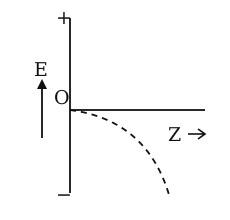
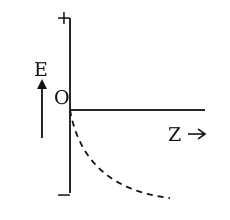
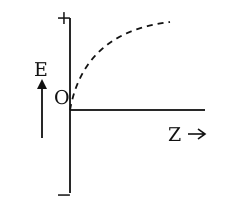
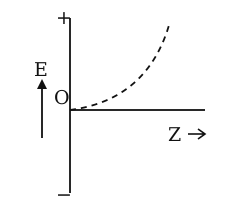
Q58.For hydrogen like species, which of the following graphs provides the most appropriate representation of E vs Z plot for a constant n ?
[E: Energy of the stationary state, Z : atomic number, n = principal quantum number]
हाइड्रोजन-सदृश स्पीशीज़ के लिए, स्थिर n पर E बनाम Z आलेख का सबसे उपयुक्त निरूपण निम्नलिखित में से कौन-सा ग्राफ़ देता है?
[E: स्थिर अवस्था की ऊर्जा, Z : परमाणु क्रमांक, n = मुख्य क्वांटम संख्या]
- A
- B
- C
- D
Show answer
Concept: For a hydrogen-like species, eV. For a fixed , .
- The energy is always negative (bound state), so the curve must lie below the Z-axis – this rules out (C) and (D).
- is a downward parabola: near the curve is almost flat, and it falls more and more steeply as increases.
- Graph (A) shows exactly this – flat at the origin, then plunging; graph (B) wrongly shows the steepest fall at small with flattening later (a -type shape).
Short trick: Negative quadrant + parabola getting steeper = .
Answer: (A)
अवधारणा: हाइड्रोजन-सदृश स्पीशीज़ के लिए eV। स्थिर पर ।
- ऊर्जा सदैव ऋणात्मक है (बद्ध अवस्था), अतः वक्र Z-अक्ष के नीचे होना चाहिए – इससे (C) तथा (D) निरस्त।
- एक अधोमुखी परवलय है: के पास वक्र लगभग समतल है और बढ़ने पर अधिकाधिक तीव्रता से गिरता है।
- ग्राफ़ (A) ठीक यही दर्शाता है – मूलबिंदु पर समतल, फिर तीव्र गिरावट; ग्राफ़ (B) गलत है क्योंकि उसमें छोटे पर सबसे तीव्र गिरावट और बाद में समतलता ( जैसी आकृति) दिखाई गई है।
शॉर्ट ट्रिक: ऋणात्मक चतुर्थांश + क्रमशः तीव्र होता परवलय = ।
उत्तर: (A)
JEE Main 2025 (January) – Paper 1 (B.E./B.Tech)ChemistryAtomic Structure – Bohr model, E vs ZJEE Main 2025 (January) – Paper 1 (B.E./B.Tech) 2025 · 29 Jan Shift 2
Q59.Which one of the following reaction sequences will give an azo dye?
निम्नलिखित में से कौन-सा अभिक्रिया अनुक्रम एक ऐज़ो रंजक (azo dye) देगा?
- A
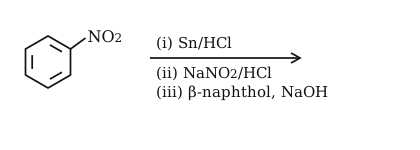
- B
- C
- D
Show answer
Concept: An azo dye (Ar–N=N–Ar′) needs (i) an arenediazonium salt and (ii) coupling with a strongly activated arene (phenol/naphthol/aniline) in mildly alkaline medium.
- (A): nitrobenzene aniline benzenediazonium chloride brilliant orange-red azo dye (coupling at C-1 of naphthol). Correct.
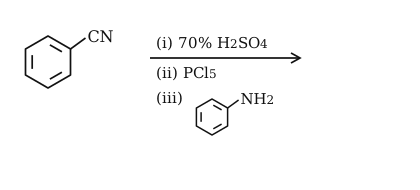
- (B): PhCN → (70% H2SO4) benzoic acid/amide → (PCl5) benzoyl chloride → (aniline) benzanilide – an amide, no N=N bond.
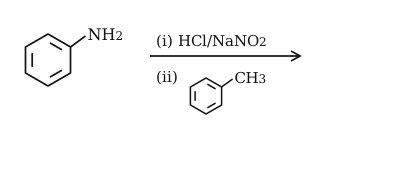
- (C): aniline gives the diazonium salt, but toluene is not activated enough for azo coupling – coupling needs –OH or –NH2 on the ring.
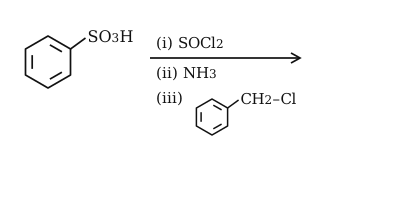
- (D): PhSO3H → sulphonyl chloride → sulphonamide → N-alkylation with benzyl chloride – a sulphonamide, no azo group.
Short trick: Azo dye = diazonium + naphthol/phenol in base. Only (A) has that pair.
Answer: (A)
अवधारणा: ऐज़ो रंजक (Ar–N=N–Ar′) के लिए चाहिए (i) ऐरीनडाइऐज़ोनियम लवण तथा (ii) हल्के क्षारीय माध्यम में प्रबल सक्रियित ऐरीन (फ़ीनॉल/नैफ़्थॉल/ऐनिलीन) से युग्मन।
- (A): नाइट्रोबेंज़ीन ऐनिलीन बेंज़ीनडाइऐज़ोनियम क्लोराइड चमकीला नारंगी-लाल ऐज़ो रंजक (नैफ़्थॉल के C-1 पर युग्मन)। सही।
- (B): PhCN → (70% H2SO4) बेंज़ोइक अम्ल/ऐमाइड → (PCl5) बेंज़ॉयल क्लोराइड → (ऐनिलीन) बेंज़ऐनिलाइड – एक ऐमाइड, N=N आबंध नहीं।
- (C): ऐनिलीन से डाइऐज़ोनियम लवण बनता है, पर टॉलूईन ऐज़ो युग्मन के लिए पर्याप्त सक्रियित नहीं है – युग्मन के लिए वलय पर –OH या –NH2 चाहिए।
- (D): PhSO3H → सल्फ़ोनिल क्लोराइड → सल्फ़ोनेमाइड → बेंज़िल क्लोराइड से N-ऐल्किलन – सल्फ़ोनेमाइड, ऐज़ो समूह नहीं।
शॉर्ट ट्रिक: ऐज़ो रंजक = डाइऐज़ोनियम + क्षार में नैफ़्थॉल/फ़ीनॉल। यह युग्म केवल (A) में है।
उत्तर: (A)
JEE Main 2025 (January) – Paper 1 (B.E./B.Tech)ChemistryDiazonium salts – azo dye formationJEE Main 2025 (January) – Paper 1 (B.E./B.Tech) 2025 · 29 Jan Shift 2
Q60.Identify the essential amino acids from below :
(A) Valine (B) Proline (C) Lysine (D) Threonine (E) Tyrosine
Choose the correct answer from the options given below :
नीचे दिए गए में से आवश्यक ऐमीनो अम्लों की पहचान कीजिए :
(A) वैलीन (B) प्रोलीन (C) लाइसीन (D) थ्रिओनीन (E) टाइरोसीन
नीचे दिए गए विकल्पों में से सही उत्तर चुनिए :
- A(A), (C) and (E) onlyकेवल (A), (C) और (E)
- B(A), (C) and (D) onlyकेवल (A), (C) और (D)
- C(C), (D) and (E) onlyकेवल (C), (D) और (E)
- D(B), (C) and (E) onlyकेवल (B), (C) और (E)
Show answer
Concept: Essential amino acids cannot be synthesised by the human body and must come from the diet. The ten include valine, leucine, isoleucine, lysine, threonine, methionine, phenylalanine, tryptophan, histidine and arginine.
- (A) Valine – essential (branched-chain).
- (C) Lysine and (D) Threonine – both essential.
- (B) Proline is synthesised from glutamate – non-essential.
- (E) Tyrosine is made in the body from phenylalanine – non-essential.
Short trick: Mnemonic “PVT TIM HALL” (Phe, Val, Thr, Trp, Ile, Met, His, Arg, Leu, Lys) – proline and tyrosine are not in it.
Answer: (B)
अवधारणा: आवश्यक ऐमीनो अम्ल मानव शरीर में संश्लेषित नहीं हो सकते और आहार से प्राप्त करने पड़ते हैं। इन दस में वैलीन, ल्यूसीन, आइसोल्यूसीन, लाइसीन, थ्रिओनीन, मेथिओनीन, फ़ेनिलऐलानीन, ट्रिप्टोफ़ैन, हिस्टिडीन तथा आर्जिनीन आते हैं।
- (A) वैलीन – आवश्यक (शाखित-श्रृंखला)।
- (C) लाइसीन तथा (D) थ्रिओनीन – दोनों आवश्यक।
- (B) प्रोलीन ग्लूटामेट से संश्लेषित होता है – अनावश्यक।
- (E) टाइरोसीन शरीर में फ़ेनिलऐलानीन से बनता है – अनावश्यक।
शॉर्ट ट्रिक: स्मृति-सूत्र “PVT TIM HALL” (Phe, Val, Thr, Trp, Ile, Met, His, Arg, Leu, Lys) – इसमें प्रोलीन व टाइरोसीन नहीं हैं।
उत्तर: (B)
JEE Main 2025 (January) – Paper 1 (B.E./B.Tech)ChemistryBiomolecules – essential amino acidsJEE Main 2025 (January) – Paper 1 (B.E./B.Tech) 2025 · 29 Jan Shift 2

