RRB NTPC Graduate CBT 1 · 4,700 questions

RRB NTPC Graduate CBT 1 2024 PYQs

Real previous year questions, subject-wise. Try the question, then open the answer and the explanation in Hindi & English – free, no login.

Courses – airGurukul

4,700 questions.

Q1941.
Find a single discount equal to three consecutive discounts of 20%, 13% and 20%.
20%, 13% और 20% की तीन क्रमिक छूटों के बराबर एकल छूट ज्ञात कीजिए।
  1. A44.95%
  2. B42.74%
  3. C48.08%
  4. D44.32%
Show answer

Concept: Successive discounts multiply: net price factor =∏(1−d).

  1. Factor =0.80×0.87×0.80
  2. =0.696×0.80=0.5568
  3. Single discount =1−0.5568=0.4432=44.32%

Trick: Two at a time: 20+20−20×20100=36%; then 36+13−36×13100=44.32%.

Answer: (D) 44.32%

अवधारणा: क्रमिक छूटें गुणा होती हैं: शुद्ध मूल्य गुणक =∏(1−d)।

  1. गुणक =0.80×0.87×0.80
  2. =0.696×0.80=0.5568
  3. एकल छूट =1−0.5568=0.4432=44.32%

ट्रिक: दो-दो करके: 20+20−20×20100=36%; फिर 36+13−36×13100=44.32%।

उत्तर: (D) 44.32%

RRB NTPC Graduate CBT 1MathematicsSuccessive DiscountRRB NTPC Graduate CBT 1 2024 · 17 Jun Shift 2
Q1942.
What positive value of X satisfies the equation X176=99X?
X का कौन-सा धनात्मक मान समीकरण X176=99X को संतुष्ट करता है?
  1. A132
  2. B133
  3. C135
  4. D130
Show answer

Concept: Cross-multiply a proportion: X176=99X⇒X2=176×99.

  1. X2=176×99=17424
  2. 176×99=16×11×9×11=(4×3×11)2
  3. X=4×3×11=132

Trick: Factor first: 16×9×112 is a perfect square → X=132.

Answer: (A) 132

अवधारणा: अनुपात में तिरछा गुणा: X176=99X⇒X2=176×99।

  1. X2=176×99=17424
  2. 176×99=16×11×9×11=(4×3×11)2
  3. X=4×3×11=132

ट्रिक: पहले गुणनखंड करें: 16×9×112 पूर्ण वर्ग → X=132।

उत्तर: (A) 132

RRB NTPC Graduate CBT 1MathematicsEquations / Square RootRRB NTPC Graduate CBT 1 2024 · 17 Jun Shift 2
Q1943.
What is the median of the following distribution?
Class140-190190-240240-290290-340340-390
Frequency2313242535
निम्नलिखित बंटन की माध्यिका क्या है?
वर्ग140-190190-240240-290290-340340-390
बारंबारता2313242535
  1. A301
  2. B278
  3. C290
  4. D304
Show answer

Concept: Grouped median =l+N2−cff×h.

  1. N=23+13+24+25+35=120, N2=60
  2. Cumulative frequencies: 23, 36, 60, 85, 120 → median class 240–290
  3. l=240, cf=36, f=24, h=50
  4. Median =240+60−3624×50=240+50=290

Trick: When N2 equals a cumulative frequency exactly, the median is that class's upper limit (here 290).

Answer: (C) 290

अवधारणा: वर्गीकृत माध्यिका =l+N2−cff×h।

  1. N=120, N2=60
  2. संचयी बारंबारता: 23, 36, 60, 85, 120 → माध्यिका वर्ग 240–290
  3. l=240, cf=36, f=24, h=50
  4. माध्यिका =240+2424×50=290

ट्रिक: यदि N2 किसी संचयी बारंबारता के बराबर हो, तो माध्यिका उस वर्ग की ऊपरी सीमा होती है।

उत्तर: (C) 290

RRB NTPC Graduate CBT 1MathematicsStatistics – MedianRRB NTPC Graduate CBT 1 2024 · 17 Jun Shift 2
Q1944.
If a : b :: b : c; c = 25a and b = 20, find the positive value of c.
यदि a : b :: b : c; c = 25a और b = 20 है, तो c का धनात्मक मान ज्ञात कीजिए।
  1. A99
  2. B98
  3. C100
  4. D101
Show answer

Concept: a:b::b:c⇒b2=ac.

  1. b2=a×25a=25a2⇒b=5a
  2. 20=5a⇒a=4
  3. c=25a=100

Trick: Check: 4:20=20:100 (both =15).

Answer: (C) 100

अवधारणा: a:b::b:c⇒b2=ac।

  1. b2=25a2⇒b=5a
  2. 20=5a⇒a=4
  3. c=25a=100

ट्रिक: जाँच: 4:20=20:100 (दोनों =15)।

उत्तर: (C) 100

RRB NTPC Graduate CBT 1MathematicsMean ProportionalRRB NTPC Graduate CBT 1 2024 · 17 Jun Shift 2
Q1945.
If secθ−tanθsecθ+tanθ=35, then 2sinθ is equal to:
यदि secθ−tanθsecθ+tanθ=35 है, तो 2sinθ किसके बराबर है?
  1. A12
  2. B14
  3. C18
  4. D1
Show answer

Concept: Multiply numerator and denominator by cosθ: secθ→1, tanθ→sinθ.

  1. 1−sinθ1+sinθ=35
  2. 5−5sinθ=3+3sinθ⇒8sinθ=2
  3. sinθ=14⇒2sinθ=12

Trick: Componendo-dividendo: sinθ=5−35+3=14.

Answer: (A) 12

अवधारणा: अंश व हर को cosθ से गुणा करें: secθ→1, tanθ→sinθ।

  1. 1−sinθ1+sinθ=35
  2. 5−5sinθ=3+3sinθ⇒sinθ=14
  3. 2sinθ=12

ट्रिक: योगांतरानुपात: sinθ=5−35+3=14।

उत्तर: (A) 12

RRB NTPC Graduate CBT 1MathematicsTrigonometryRRB NTPC Graduate CBT 1 2024 · 17 Jun Shift 2
Q1946.
On simple interest, a certain sum of money amounts to ₹1,250 in 2 years and to ₹2,000 in 4 years. Find the rate of interest per annum.
साधारण ब्याज पर, एक निश्चित धनराशि 2 वर्षों में ₹1,250 और 4 वर्षों में ₹2,000 हो जाती है। वार्षिक ब्याज दर ज्ञात कीजिए।
  1. A70%
  2. B75%
  3. C85%
  4. D80%
Show answer

Concept: Under SI, interest per year is constant, so the difference of amounts gives interest for the extra years.

  1. Interest for 2 years =2000−1250=750 → ₹375 per year
  2. Principal =1250−750=500
  3. Rate =375500×100=75%

Trick: R=A2−A1A1·t2−A2·t1×100=7501250×4−2000×2×100=75%.

Answer: (B) 75%

अवधारणा: साधारण ब्याज में हर वर्ष ब्याज समान रहता है, अतः राशियों का अंतर अतिरिक्त वर्षों का ब्याज है।

  1. 2 वर्ष का ब्याज =2000−1250=750 → ₹375 प्रति वर्ष
  2. मूलधन =1250−750=500
  3. दर =375500×100=75%

ट्रिक: R=7501250×4−2000×2×100=75%।

उत्तर: (B) 75%

RRB NTPC Graduate CBT 1MathematicsSimple InterestRRB NTPC Graduate CBT 1 2024 · 17 Jun Shift 2
Q1947.
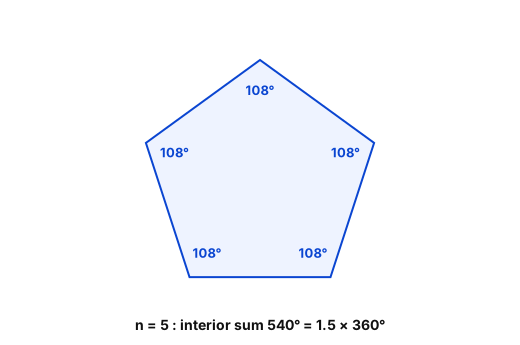
For a regular polygon, the sum of the interior angles is 50% more than the sum of its exterior angles. Each interior angle of the polygon measures x°. What is the value of x?
एक सम बहुभुज के अंतः कोणों का योग उसके बाह्य कोणों के योग से 50% अधिक है। बहुभुज का प्रत्येक अंतः कोण x° का है। x का मान क्या है?
  1. A88
  2. B96
  3. C112
  4. D108
Show answer

Concept: Sum of exterior angles of any polygon =360∘; sum of interior angles =(n−2)×180∘.

  1. Interior sum =1.5×360∘=540∘
  2. (n−2)×180=540⇒n=5
  3. Each interior angle =540∘5=108∘

Trick: Interior sum : exterior sum =(n−2):2 → 1.5=n−22⇒n=5.

Answer: (D) 108

अवधारणा: किसी भी बहुभुज के बाह्य कोणों का योग =360∘; अंतः कोणों का योग =(n−2)×180∘।

  1. अंतः योग =1.5×360∘=540∘
  2. (n−2)×180=540⇒n=5
  3. प्रत्येक अंतः कोण =540∘5=108∘

ट्रिक: अंतः योग : बाह्य योग =(n−2):2 → n=5।

उत्तर: (D) 108

RRB NTPC Graduate CBT 1MathematicsPolygonsRRB NTPC Graduate CBT 1 2024 · 17 Jun Shift 2
Q1948.
A company produces two products A and B with prices of ₹156 and ₹220, respectively. If 55% of the products sold are A and 45% of the products sold are B. Find the weighted average price?
एक कंपनी दो उत्पाद A और B बनाती है, जिनके मूल्य क्रमशः ₹156 और ₹220 हैं। यदि बेचे गए उत्पादों में से 55% उत्पाद A हैं और 45% उत्पाद B हैं, तो भारित औसत मूल्य ज्ञात कीजिए।
  1. A₹169.50
  2. B₹184.80
  3. C₹174.60
  4. D₹165.30
Show answer

Concept: Weighted average =∑(price×weight) with weights as fractions.

  1. 0.55×156=85.8
  2. 0.45×220=99
  3. Weighted average =85.8+99=184.8

Trick: 156+0.45×(220−156)=156+28.8=184.8.

Answer: (B) ₹184.80

अवधारणा: भारित औसत =∑(मूल्य×भार)।

  1. 0.55×156=85.8
  2. 0.45×220=99
  3. भारित औसत =85.8+99=184.8

ट्रिक: 156+0.45×(220−156)=156+28.8=184.8।

उत्तर: (B) ₹184.80

RRB NTPC Graduate CBT 1MathematicsWeighted AverageRRB NTPC Graduate CBT 1 2024 · 17 Jun Shift 2
Q1949.
The population of a town in 1930 was 3,48,000. If its population increased in two successive decades by 95% in each decade, the population of the town in 1950 was:
1930 में एक कस्बे की जनसंख्या 3,48,000 थी। यदि लगातार दो दशकों में इसकी जनसंख्या में प्रत्येक दशक में 95% की वृद्धि हुई, तो 1950 में कस्बे की जनसंख्या कितनी थी?
  1. A13,23,273
  2. B13,23,270
  3. C13,23,267
  4. D13,23,272
Show answer

Concept: Successive % growth works like compound interest: P(1+r100)n.

  1. Factor =1.952=3.8025
  2. Population 1950 =348000×3.8025
  3. =1323270 → 13,23,270

Trick: Last digits: 348000×3.8025 ends in …270 since 3.8025×1000=3802.5 and 348×3802.5=1323270.

Answer: (B) 13,23,270

अवधारणा: क्रमिक प्रतिशत वृद्धि चक्रवृद्धि जैसी: P(1+r100)n।

  1. गुणक =1.952=3.8025
  2. 1950 की जनसंख्या =348000×3.8025
  3. =1323270 → 13,23,270

ट्रिक: 348×3802.5=1323270 – सीधे गुणा करें।

उत्तर: (B) 13,23,270

RRB NTPC Graduate CBT 1MathematicsPopulation GrowthRRB NTPC Graduate CBT 1 2024 · 17 Jun Shift 2
Q1950.
Three persons X, Y, and Z started a business with their shares in the ratio 3 : 4 : 10. After 6 months, Y withdrew his 50% share, while Z withdrew his 40% share 9 months prior to completion of the year. If the total profit at the end of the year is ₹23,400, find the share of Z (in ₹) in the profit.
तीन व्यक्तियों X, Y और Z ने 3 : 4 : 10 के अनुपात में अपने अंशों के साथ एक व्यवसाय शुरू किया। 6 महीने बाद, Y ने अपना 50% अंश निकाल लिया, जबकि Z ने वर्ष पूरा होने से 9 महीने पहले अपना 40% अंश निकाल लिया। यदि वर्ष के अंत में कुल लाभ ₹23,400 है, तो लाभ में Z का हिस्सा (₹ में) ज्ञात कीजिए।
  1. A12,600
  2. B12,366
  3. C12,510
  4. D12,559
Show answer

Concept: Profit share ∝ capital × time (sum over each period).

  1. Take capitals 30, 40, 100. X: 30×12=360
  2. Y: 40×6+20×6=360
  3. Z withdraws 40% after 3 months: 100×3+60×9=840
  4. Ratio 360:360:840=3:3:7; Z =713×23400=12600

Trick: '9 months prior to completion' = after 3 months.

Answer: (A) 12,600

अवधारणा: लाभ हिस्सा ∝ पूँजी × समय।

  1. पूँजी 30, 40, 100 लें। X: 30×12=360
  2. Y: 40×6+20×6=360
  3. Z ने 3 माह बाद 40% निकाला: 100×3+60×9=840
  4. अनुपात 3:3:7; Z =713×23400=12600

ट्रिक: 'वर्ष पूरा होने से 9 माह पहले' = 3 माह बाद।

उत्तर: (A) 12,600

RRB NTPC Graduate CBT 1MathematicsPartnershipRRB NTPC Graduate CBT 1 2024 · 17 Jun Shift 2
Q1951.
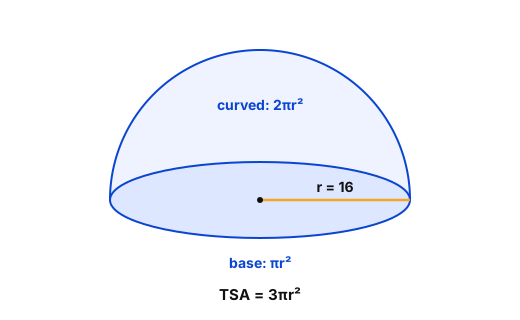
A solid hemisphere has a radius of 16 cm. Find its total surface area.
एक ठोस अर्धगोले की त्रिज्या 16 cm है। इसका संपूर्ण पृष्ठीय क्षेत्रफल ज्ञात कीजिए।
  1. A764π cm2
  2. B760π cm2
  3. C761π cm2
  4. D768π cm2
Show answer

Concept: Solid hemisphere TSA = curved 2πr2 + flat base πr2=3πr2.

  1. r=16cm, r2=256
  2. TSA =3π×256=768πcm2

Trick: Solid hemisphere → 3πr2; hollow (curved only) → 2πr2.

Answer: (D) 768πcm2

अवधारणा: ठोस अर्धगोले का कुल पृष्ठीय क्षेत्रफल = वक्र 2πr2 + समतल आधार πr2=3πr2।

  1. r=16cm, r2=256
  2. TSA =3π×256=768πcm2

ट्रिक: ठोस अर्धगोला → 3πr2; केवल वक्र → 2πr2।

उत्तर: (D) 768πcm2

RRB NTPC Graduate CBT 1MathematicsMensuration – HemisphereRRB NTPC Graduate CBT 1 2024 · 17 Jun Shift 2
Q1952.
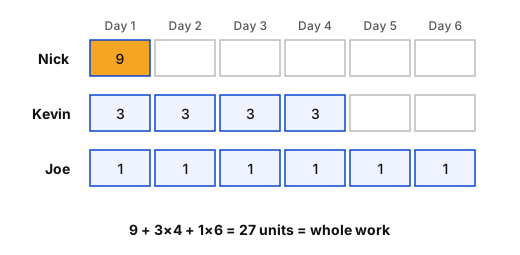
Nick, Kevin, and Joe can finish a certain piece of work in 3, 9, and 27 days respectively. All three of them started the work together. Nick left after working for 1 day, and Kevin left 2 days before the work was completed. Find the total number of days taken to complete the work.
निक, केविन और जो किसी कार्य को क्रमशः 3, 9 और 27 दिनों में पूरा कर सकते हैं। तीनों ने एक साथ कार्य शुरू किया। निक 1 दिन कार्य करने के बाद चला गया, और केविन कार्य पूरा होने से 2 दिन पहले चला गया। कार्य पूरा करने में लगे कुल दिनों की संख्या ज्ञात कीजिए।
  1. A7
  2. B5
  3. C4
  4. D6
Show answer

Concept: Take total work = LCM(3, 9, 27) = 27 units; efficiencies 9, 3, 1 units/day.

  1. Let total days =n. Nick works 1 day → 9 units.
  2. Kevin works n−2 days → 3(n−2); Joe works n days → n.
  3. 9+3(n−2)+n=27⇒4n=24⇒n=6

Trick: All three for n days =13n; subtract absences: 13n−9(n−1)−3×2=27⇒n=6.

Answer: (D) 6

अवधारणा: कुल कार्य = LCM(3, 9, 27) = 27 इकाई; क्षमता 9, 3, 1 इकाई/दिन।

  1. कुल दिन =n। Nick 1 दिन → 9 इकाई।
  2. Kevin n−2 दिन → 3(n−2); Joe n दिन → n।
  3. 9+3(n−2)+n=27⇒4n=24⇒n=6

ट्रिक: कौन कितने दिन काम करता है – उसी से एक-चर समीकरण बनाएँ।

उत्तर: (D) 6

RRB NTPC Graduate CBT 1MathematicsTime and WorkRRB NTPC Graduate CBT 1 2024 · 17 Jun Shift 2
Q1953.
The mode of the observations 8, 7, 4, 7, 9, 4, 5, 4, 7, 2, 4, 5, 8, 5, 4 and 5 is:
प्रेक्षणों 8, 7, 4, 7, 9, 4, 5, 4, 7, 2, 4, 5, 8, 5, 4 और 5 का बहुलक है:
  1. A8
  2. B7
  3. C2
  4. D4
Show answer

Concept: Mode = the value that occurs most often.

  1. Counts: 4 → 5 times, 5 → 4 times, 7 → 3 times, 8 → 2 times; 2 and 9 once.
  2. Highest frequency is for 4.

Trick: Tally quickly – mark each value once as you pass.

Answer: (D) 4

अवधारणा: बहुलक = सबसे अधिक बार आने वाला मान।

  1. गिनती: 4 → 5 बार, 5 → 4 बार, 7 → 3 बार, 8 → 2 बार; 2 व 9 एक-एक बार।
  2. सबसे अधिक बारंबारता 4 की।

ट्रिक: मिलान चिह्न (tally) से तेज़ी से गिनें।

उत्तर: (D) 4

RRB NTPC Graduate CBT 1MathematicsStatistics – ModeRRB NTPC Graduate CBT 1 2024 · 17 Jun Shift 2
Q1954.
Three numbers are in the ratio 2 : 7 : 13, and their LCM is 3094. Their HCF is ____.
तीन संख्याएँ 2 : 7 : 13 के अनुपात में हैं, और उनका LCM 3094 है। उनका HCF ____ है।
  1. A17
  2. B20
  3. C9
  4. D18
Show answer

Concept: Write the numbers as 2k,7k,13k; since 2, 7, 13 are pairwise co-prime, LCM =2×7×13×k.

  1. LCM =182k=3094
  2. k=3094182=17
  3. HCF =k=17

Trick: Co-prime ratio terms → HCF = the common multiplier k.

Answer: (A) 17

अवधारणा: संख्याएँ 2k,7k,13k; 2, 7, 13 परस्पर अभाज्य, अतः LCM =2×7×13×k।

  1. LCM =182k=3094
  2. k=3094182=17
  3. HCF =k=17

ट्रिक: अनुपात के पद सह-अभाज्य हों तो HCF = k।

उत्तर: (A) 17

RRB NTPC Graduate CBT 1MathematicsHCF and LCMRRB NTPC Graduate CBT 1 2024 · 17 Jun Shift 2
Q1955.
Govind bought two items at a total cost of ₹4,800. He sold one item at 34% profit and the other at 10% loss. If Govind sold both the items together for ₹5,442, then what is the difference between the cost price (in ₹) of both the items?
गोविंद ने ₹4,800 की कुल लागत पर दो वस्तुएँ खरीदीं। उसने एक वस्तु 34% लाभ पर और दूसरी 10% हानि पर बेची। यदि गोविंद ने दोनों वस्तुएँ एक साथ ₹5,442 में बेचीं, तो दोनों वस्तुओं के क्रय मूल्य (₹ में) के बीच का अंतर कितना है?
  1. A350
  2. B300
  3. C275
  4. D325
Show answer

Concept: Let one item cost x; the other costs 4800−x. Write the total selling price as an equation.

  1. 1.34x+0.90(4800−x)=5442
  2. 0.44x+4320=5442⇒0.44x=1122⇒x=2550
  3. Other item =4800−2550=2250
  4. Difference =2550−2250=300

Trick: If all were sold at 10% loss, SP would be ₹4320. Extra ₹1122 comes from 34%+10%=44% of item 1, so item 1 =11220.44=2550.

Answer: (B) ₹300

अवधारणा: एक वस्तु का क्रय मूल्य x मानें; दूसरी का 4800−x। कुल विक्रय मूल्य से समीकरण बनाएँ।

  1. 1.34x+0.90(4800−x)=5442
  2. 0.44x+4320=5442⇒0.44x=1122⇒x=2550
  3. दूसरी वस्तु =4800−2550=2250
  4. अंतर =2550−2250=300

ट्रिक: यदि दोनों 10% हानि पर बिकतीं तो विक्रय मूल्य ₹4320 होता। अतिरिक्त ₹1122 पहली वस्तु के 34%+10%=44% से आए, अतः पहली वस्तु =11220.44=2550।

उत्तर: (B) ₹300

RRB NTPC Graduate CBT 1MathematicsProfit and LossRRB NTPC Graduate CBT 1 2024 · 17 Jun Shift 2
Q1956.
A bank offers 1.1% compound interest per annum calculated on a half-yearly basis. A customer deposits ₹7,745 each on 1 January and 1 July of a year. At the end of the year, the amount he would have gained by way of interest is ________. (Rounded up to the 2 decimal places.)
एक बैंक अर्धवार्षिक आधार पर परिकलित 1.1% वार्षिक चक्रवृद्धि ब्याज प्रदान करता है। एक ग्राहक किसी वर्ष की 1 जनवरी और 1 जुलाई को प्रत्येक बार ₹7,745 जमा करता है। वर्ष के अंत में, उसे ब्याज के रूप में ________ राशि प्राप्त होगी। (2 दशमलव स्थानों तक पूर्णांकित।)
  1. A₹121.87
  2. B₹128.03
  3. C₹131.93
  4. D₹109.99
Show answer

Concept: Half-yearly compounding: rate per half-year =1.12=0.55%. The January deposit earns for 2 half-years, the July deposit for 1 half-year.

  1. Jan deposit: 7745[(1.0055)2−1]=7745×0.01103025=85.43
  2. July deposit: 7745×0.0055=42.60
  3. Total interest =85.43+42.60=128.03

Trick: CI for 2 periods at r% =2r+r2100=1.1+0.003025=1.103025%; add 0.55% for the second deposit: 1.653025% of 7745 ≈128.03.

Answer: (B) ₹128.03

अवधारणा: अर्धवार्षिक चक्रवृद्धि: प्रति छमाही दर =1.12=0.55%। जनवरी की जमा 2 छमाही, जुलाई की जमा 1 छमाही ब्याज कमाती है।

  1. जनवरी जमा: 7745[(1.0055)2−1]=7745×0.01103025=85.43
  2. जुलाई जमा: 7745×0.0055=42.60
  3. कुल ब्याज =85.43+42.60=128.03

ट्रिक: 2 अवधियों का CI =2r+r2100=1.103025%; दूसरी जमा का 0.55% जोड़ें: 7745 का 1.653025%≈128.03।

उत्तर: (B) ₹128.03

RRB NTPC Graduate CBT 1MathematicsCompound InterestRRB NTPC Graduate CBT 1 2024 · 17 Jun Shift 2
Q1957.
Which of the following numbers is divisible by 41?
निम्नलिखित में से कौन-सी संख्या 41 से विभाज्य है?
  1. A9430
  2. B9879
  3. C9249
  4. D10113
Show answer

Concept: Divide each option by 41 and check the remainder.

  1. 9430÷41=230 exactly, since 41×230=9430
  2. 9879=41×240+39; 9249=41×225+24; 10113=41×246+27 – not divisible

Trick: 9430=943×10 and 943=41×23 (since 41×23=943).

Answer: (A) 9430

अवधारणा: प्रत्येक विकल्प को 41 से भाग देकर शेषफल जाँचें।

  1. 9430÷41=230 पूर्णतः, क्योंकि 41×230=9430
  2. 9879=41×240+39; 9249=41×225+24; 10113=41×246+27 – विभाज्य नहीं

ट्रिक: 9430=943×10 और 943=41×23।

उत्तर: (A) 9430

RRB NTPC Graduate CBT 1MathematicsDivisibilityRRB NTPC Graduate CBT 1 2024 · 17 Jun Shift 2
Q1958.
The sum of two positive numbers x and y (where x>y) is 15 and their product is 36. Find the difference between the numbers x and y.
दो धनात्मक संख्याओं x और y (जहाँ x>y) का योग 15 है और उनका गुणनफल 36 है। संख्याओं x और y के बीच का अंतर ज्ञात कीजिए।
  1. A10
  2. B9
  3. C12
  4. D8
Show answer

Concept: Use (x−y)2=(x+y)2−4xy.

  1. (x−y)2=152−4×36=225−144=81
  2. x−y=81=9 (positive since x>y)
  3. Check: x=12, y=3 ⇒ 12+3=15, 12×3=36

Trick: Find two numbers with product 36 and sum 15 directly: 12 and 3.

Answer: (B) 9

अवधारणा: सूत्र (x−y)2=(x+y)2−4xy का प्रयोग करें।

  1. (x−y)2=152−4×36=225−144=81
  2. x−y=81=9 (क्योंकि x>y)
  3. जाँच: x=12, y=3 ⇒ 12+3=15, 12×3=36

ट्रिक: गुणनफल 36 और योग 15 वाली संख्याएँ सीधे सोचें: 12 और 3।

उत्तर: (B) 9

RRB NTPC Graduate CBT 1MathematicsAlgebra – Sum and ProductRRB NTPC Graduate CBT 1 2024 · 17 Jun Shift 2
Q1959.
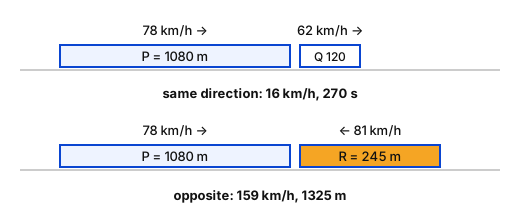
A train P going at the speed of 78 km/hr completely passes train Q of length 120 m, going in the same direction on parallel tracks, at 62 km/hr, in 4.5 minutes. How much time (in seconds) will P take to cross completely train R of length 245 m, going at 81 km/hr in the opposite direction?
78 km/hr की चाल से चल रही एक ट्रेन P, समानांतर पटरियों पर उसी दिशा में 62 km/hr की चाल से चल रही 120 m लंबी ट्रेन Q को 4.5 मिनट में पूरी तरह पार कर लेती है। विपरीत दिशा में 81 km/hr की चाल से चल रही 245 m लंबी ट्रेन R को पूरी तरह पार करने में P को कितना समय (सेकंड में) लगेगा?
  1. A49
  2. B28
  3. C30
  4. D15
Show answer

Concept: Crossing distance = sum of lengths; use relative speed (difference for same direction, sum for opposite).

  1. Same direction: 78−62=16km/h=409m/s; time =4.5×60=270s
  2. LP+120=409×270=1200⇒LP=1080m
  3. Opposite: 78+81=159km/h=159×518=2656m/s
  4. Time =1080+245265/6=1325×6265=30s

Trick: 1325=5×265, so time =5×6=30 s.

Answer: (C) 30

अवधारणा: पार करने की दूरी = दोनों लंबाइयों का योग; सापेक्ष चाल (एक ही दिशा में अंतर, विपरीत दिशा में योग)।

  1. एक ही दिशा: 78−62=16km/h=409m/s; समय =4.5×60=270s
  2. LP+120=409×270=1200⇒LP=1080m
  3. विपरीत दिशा: 78+81=159km/h=2656m/s
  4. समय =1080+245265/6=1325×6265=30s

ट्रिक: 1325=5×265, अतः समय =5×6=30 सेकंड।

उत्तर: (C) 30

RRB NTPC Graduate CBT 1MathematicsTrainsRRB NTPC Graduate CBT 1 2024 · 17 Jun Shift 2
Q1960.
A vendor sells 8, 12, 10, 14, and 6 mangoes over five days. What is the average number of mangoes sold per day?
एक विक्रेता पाँच दिनों में 8, 12, 10, 14 और 6 आम बेचता है। प्रति दिन बेचे गए आमों की औसत संख्या क्या है?
  1. A8
  2. B14
  3. C12
  4. D10
Show answer

Concept: Average =sumcount.

  1. Sum =8+12+10+14+6=50
  2. Average =505=10

Trick: Pair the deviations around 10: −2,+2,0,+4,−4 cancel out, so the average is 10.

Answer: (D) 10

अवधारणा: औसत =योगसंख्या।

  1. योग =8+12+10+14+6=50
  2. औसत =505=10

ट्रिक: 10 से विचलन −2,+2,0,+4,−4 आपस में कट जाते हैं, अतः औसत 10।

उत्तर: (D) 10

RRB NTPC Graduate CBT 1MathematicsAverageRRB NTPC Graduate CBT 1 2024 · 17 Jun Shift 2