Q941.The number 726179 is divisible by which of the following?
संख्या 726179 निम्नलिखित में से किससे विभाज्य है?
- A23
- B29
- C28
- D20
Show answer
Concept: Check each option by division or divisibility rules.
- : number must end in – ends in , so no. : an odd number cannot be divisible by .
- : , remainder .
- leaves remainder , .
Trick: Odd number → strike out every even divisor first (, ), then test only and .
Answer: (A)
अवधारणा: हर विकल्प को भाग देकर या विभाज्यता नियम से जाँचें।
- : संख्या पर समाप्त होनी चाहिए – का अंत है, अतः नहीं। : विषम संख्या से विभाज्य नहीं हो सकती।
- : , शेषफल ।
- : , ।
ट्रिक: विषम संख्या → पहले सभी सम भाजक (, ) हटाएँ, फिर केवल और जाँचें।
उत्तर: (A)
RRB NTPC Undergraduate CBT 1MathematicsNumber System – DivisibilityRRB NTPC Undergraduate CBT 1 2024 · 3 Sep Shift 3
Q942.ABCD is a quadrilateral such that , , and . What type of a quadrilateral is ABCD?
ABCD एक चतुर्भुज इस प्रकार है कि , , और है। ABCD किस प्रकार का चतुर्भुज है?
- ATrapeziumसमलंब
- BRhombusसमचतुर्भुज
- CCyclic quadrilateralचक्रीय चतुर्भुज
- DParallelogramसमांतर चतुर्भुज
Show answer
Concept: A quadrilateral is cyclic if its opposite angles are supplementary (sum ).
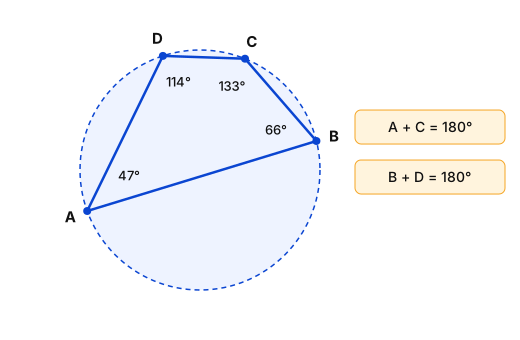
- and .
- Opposite angles are supplementary, so A, B, C, D lie on a circle – cyclic quadrilateral.
- Not a parallelogram/rhombus (opposite angles not equal); not a trapezium (adjacent pairs , etc. are not , so no sides parallel).
Trick: Add opposite angles: both pairs → cyclic.
Answer: (C) Cyclic quadrilateral
अवधारणा: यदि किसी चतुर्भुज के सम्मुख कोण संपूरक हों (योग ), तो वह चक्रीय (cyclic) चतुर्भुज होता है।
- और ।
- सम्मुख कोण संपूरक हैं, अतः A, B, C, D एक वृत्त पर हैं – चक्रीय चतुर्भुज।
- समांतर चतुर्भुज/समचतुर्भुज नहीं (सम्मुख कोण बराबर नहीं); समलंब नहीं (आसन्न कोण-युग्म जैसे , का योग नहीं)।
ट्रिक: सम्मुख कोण जोड़ें: दोनों युग्म → चक्रीय।
उत्तर: (C) चक्रीय चतुर्भुज
RRB NTPC Undergraduate CBT 1MathematicsGeometry – QuadrilateralsRRB NTPC Undergraduate CBT 1 2024 · 3 Sep Shift 3
Q943.If the radius of a sphere is 24 cm, then its surface area is:
यदि किसी गोले की त्रिज्या 24 cm है, तो उसका पृष्ठीय क्षेत्रफल है:
- A2374 π cm2
- B2280 π cm2
- C2304 π cm2
- D2330 π cm2
Show answer
Concept: Surface area of a sphere .
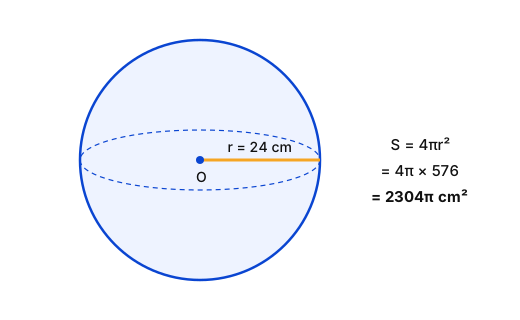
- , so .
- .
Trick: – square the diameter.
Answer: (C)
अवधारणा: गोले का पृष्ठीय क्षेत्रफल ।
- , अतः ।
- ।
ट्रिक: – व्यास का वर्ग करें।
उत्तर: (C)
RRB NTPC Undergraduate CBT 1MathematicsMensuration – SphereRRB NTPC Undergraduate CBT 1 2024 · 3 Sep Shift 3
Q944.If 3 times the mother's age is 29 years more than 5 times her daughter's age, and 2 times the daughter's age is 2 years less than the mother's age, then what is the difference (in years) between the ages of the mother and the daughter?
यदि माँ की आयु का 3 गुना, उसकी बेटी की आयु के 5 गुने से 29 वर्ष अधिक है, और बेटी की आयु का 2 गुना, माँ की आयु से 2 वर्ष कम है, तो माँ और बेटी की आयु के बीच का अंतर (वर्षों में) क्या है?
- A25
- B24
- C29
- D23
Show answer
Concept: Let mother's age and daughter's age ; form two linear equations.
- and .
- Substitute: .
- ; difference years.
Trick: Check: and ✓.
Answer: (A)
अवधारणा: माँ की आयु और बेटी की आयु मानकर दो रैखिक समीकरण बनाएँ।
- और ।
- प्रतिस्थापन: ।
- ; अंतर वर्ष।
ट्रिक: जाँच: और ✓।
उत्तर: (A)
RRB NTPC Undergraduate CBT 1MathematicsProblems on AgesRRB NTPC Undergraduate CBT 1 2024 · 3 Sep Shift 3
Q945.The LCM of 33 × 92 × 13, 32 × 132 × 18 and 93 × 132 × 182 is
33 × 92 × 13, 32 × 132 × 18 और 93 × 132 × 182 का LCM है
- A22 x 311 x 132
- B22 x 310 x 132
- C23 x 310 x 132
- D22 x 39 x 132
Show answer
Concept: Write each number in prime factors; LCM = highest power of every prime.
- .
- .
- .
- LCM .
Trick: Here the third number already contains the other two, so it is itself the LCM.
Answer: (B)
अवधारणा: हर संख्या को अभाज्य गुणनखंडों में लिखें; LCM = हर अभाज्य की सबसे बड़ी घात।
- ।
- ।
- ।
- LCM ।
ट्रिक: यहाँ तीसरी संख्या में बाकी दोनों समाहित हैं, इसलिए वही LCM है।
उत्तर: (B)
RRB NTPC Undergraduate CBT 1MathematicsLCM – Prime FactorisationRRB NTPC Undergraduate CBT 1 2024 · 3 Sep Shift 3
Q946.Simplify .
को सरल कीजिए।
- A−729
- B729
- C−81
- D81
Show answer
Concept: Use to pair the brackets in the denominator.
- .
- .
- Expression .
- Since , value .
Trick: Put : .
Answer: (A)
अवधारणा: हर में कोष्ठकों को से जोड़ें।
- ।
- ।
- व्यंजक ।
- चूँकि , मान ।
ट्रिक: रखें: ।
उत्तर: (A)
RRB NTPC Undergraduate CBT 1MathematicsAlgebra – SimplificationRRB NTPC Undergraduate CBT 1 2024 · 3 Sep Shift 3
Q947.The H.C.F. and the L.C.M. of two numbers are 8 and 4200, respectively. If one of the numbers is 168, find the other one.
दो संख्याओं का H.C.F. और L.C.M. क्रमशः 8 और 4200 है। यदि उनमें से एक संख्या 168 है, तो दूसरी संख्या ज्ञात कीजिए।
- A100
- B200
- C300
- D400
Show answer
Concept: For two numbers: Product of numbers .
- .
- .
Trick: Check: HCF ✓.
Answer: (B)
अवधारणा: दो संख्याओं के लिए: संख्याओं का गुणनफल ।
- ।
- ।
ट्रिक: जाँच: HCF ✓।
उत्तर: (B)
RRB NTPC Undergraduate CBT 1MathematicsHCF and LCMRRB NTPC Undergraduate CBT 1 2024 · 3 Sep Shift 3
Q948.A man driving a car at a speed of 48 km/hr crosses a bridge in 4.6 minutes. Find the length of the bridge.
48 km/hr की चाल से कार चला रहा एक व्यक्ति 4.6 मिनट में एक पुल पार करता है। पुल की लंबाई ज्ञात कीजिए।
- A4.35 km
- B3.92 km
- C2.75 km
- D3.68 km
Show answer
Concept: The car is treated as a point, so length of bridge = distance covered = speed × time (same units).
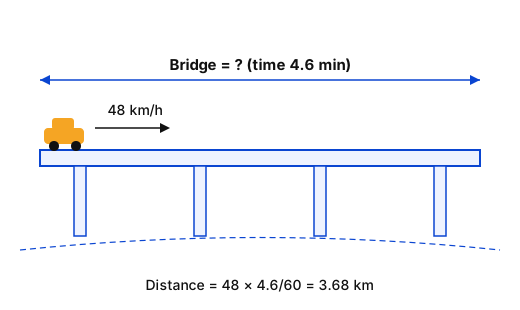
- Time .
- Distance .
Trick: per minute; .
Answer: (D)
अवधारणा: कार को बिंदु माना जाता है, अतः पुल की लंबाई = तय दूरी = चाल × समय (समान मात्रकों में)।
- समय ।
- दूरी ।
ट्रिक: प्रति मिनट; ।
उत्तर: (D)
RRB NTPC Undergraduate CBT 1MathematicsSpeed, Time and DistanceRRB NTPC Undergraduate CBT 1 2024 · 3 Sep Shift 3
Q949.The product of two positive numbers is 2000. If the first number is five times the second number, then the sum of the two numbers is:
दो धनात्मक संख्याओं का गुणनफल 2000 है। यदि पहली संख्या, दूसरी संख्या की पाँच गुनी है, तो दोनों संख्याओं का योग है:
- A120
- B133
- C121
- D125
Show answer
Concept: Let the second number be ; then the first is .
- .
- First number ; sum .
Trick: Sum , so it must be a multiple of – only fits.
Answer: (A)
अवधारणा: दूसरी संख्या मानें; तब पहली ।
- ।
- पहली संख्या ; योग ।
ट्रिक: योग , अतः का गुणज होना चाहिए – केवल उपयुक्त है।
उत्तर: (A)
RRB NTPC Undergraduate CBT 1MathematicsAlgebra – NumbersRRB NTPC Undergraduate CBT 1 2024 · 3 Sep Shift 3
Q950.Pipe P can fill part of a tank in 18 hours, and pipe Q can fill part of the same tank in 25 hours. Both P and Q were kept open for 3 hours, then both were closed. Pipe R alone was then opened and it emptied the water in the tank in 8 hours. Pipes P, Q and R together can fill the empty tank in:
पाइप P किसी टंकी का भाग 18 घंटे में भर सकता है, और पाइप Q उसी टंकी का भाग 25 घंटे में भर सकता है। P और Q दोनों को 3 घंटे के लिए खुला रखा गया, फिर दोनों को बंद कर दिया गया। इसके बाद केवल पाइप R को खोला गया और उसने टंकी का पानी 8 घंटे में खाली कर दिया। पाइप P, Q और R एक साथ खाली टंकी को कितने समय में भर सकते हैं?
- A25 hours25 घंटे
- B42 hours42 घंटे
- C38 hours38 घंटे
- D53 hours53 घंटे
Show answer
Concept: Find each pipe's full-tank time, then add filling rates and subtract the emptying rate.
- P: in → full in . Q: in → full in .
- In : of tank filled.
- R empties in → full tank in .
- Together: → hours.
Trick: Use LCM as total work: P , Q , R units/h → net ; .
Answer: (B) hours
अवधारणा: हर पाइप का पूरी टंकी का समय निकालें, फिर भरने की दरें जोड़ें और खाली करने की दर घटाएँ।
- P: भाग में → पूरी में। Q: भाग में → पूरी में।
- में: भाग भरा।
- R, भाग में खाली करता है → पूरी टंकी में।
- एक साथ: → घंटे।
ट्रिक: कुल कार्य LCM मानें: P , Q , R इकाई/घंटा → शुद्ध ; ।
उत्तर: (B) घंटे
RRB NTPC Undergraduate CBT 1MathematicsPipes and CisternsRRB NTPC Undergraduate CBT 1 2024 · 3 Sep Shift 3
Q951.The simple interest on a certain sum for years at the rate of 7.6% per annum is ₹8,778.
What will be the amount payable on the same sum at the rate of 4.8% per annum simple interest in years?
किसी निश्चित धनराशि पर वर्ष के लिए 7.6% वार्षिक दर से साधारण ब्याज ₹8,778 है।
उसी धनराशि पर 4.8% वार्षिक साधारण ब्याज की दर से वर्ष में देय मिश्रधन कितना होगा?
- A₹36,699
- B₹36,698
- C₹36,690
- D₹36,672
Show answer
Concept: ; first find the principal from the given interest, then use it with the new rate and time.
- years:
- , i.e. ₹26,250
- New SI
- Amount
Trick: Amount always ends in the same digit as ; here points straight to (C).
Answer: (C) ₹36,690
अवधारणा: ; पहले दिए गए ब्याज से मूलधन निकालें, फिर नई दर व समय लगाएँ।
- वर्ष:
- , अर्थात ₹26,250
- नया SI
- मिश्रधन
ट्रिक: मिश्रधन का अंतिम भाग से तुरंत (C) मिल जाता है।
उत्तर: (C) ₹36,690
RRB NTPC Undergraduate CBT 1MathematicsSimple InterestRRB NTPC Undergraduate CBT 1 2024 · 3 Sep Shift 3
Q952.₹35,200 were divided among A, B and C, such that 8 times the share of A = 6 times the share of B = 3 times the share of C. Find the share of A.
₹35,200 को A, B और C के बीच इस प्रकार विभाजित किया गया कि A के हिस्से का 8 गुना = B के हिस्से का 6 गुना = C के हिस्से का 3 गुना है। A का हिस्सा ज्ञात कीजिए।
- A₹7,040
- B₹7,220
- C₹7,197
- D₹6,872
Show answer
Concept: If , then .
- Multiply by LCM 24:
- Total parts
- Share of A
Trick: For , the ratio is — reciprocals of the multipliers.
Answer: (A) ₹7,040
अवधारणा: यदि , तो ।
- LCM 24 से गुणा:
- कुल भाग
- A का हिस्सा
ट्रिक: हो तो अनुपात गुणकों के व्युत्क्रम होता है।
उत्तर: (A) ₹7,040
RRB NTPC Undergraduate CBT 1MathematicsRatio and ProportionRRB NTPC Undergraduate CBT 1 2024 · 3 Sep Shift 3
Q953.86 light bulbs were purchased for ₹86, and 14 light bulbs broke in transit. The trader sold the remaining light bulbs at ₹3.20 each. Find his profit.
86 बल्ब ₹86 में खरीदे गए, और परिवहन के दौरान 14 बल्ब टूट गए। व्यापारी ने शेष बल्ब ₹3.20 प्रति बल्ब की दर से बेचे। उसका लाभ ज्ञात कीजिए।
- A₹144.40
- B₹141.30
- C₹137.10
- D₹141.10
Show answer
Concept: Profit = total selling price of the unbroken bulbs − total cost of all bulbs.
- Cost price of 86 bulbs = ₹86
- Bulbs left
- SP
- Profit
Trick: Broken items add nothing to SP but their cost stays in CP.
Answer: (A) ₹144.40
अवधारणा: लाभ = बचे (साबुत) बल्बों का कुल विक्रय मूल्य − सभी बल्बों का कुल क्रय मूल्य।
- 86 बल्बों का क्रय मूल्य = ₹86
- बचे बल्ब
- विक्रय मूल्य
- लाभ
ट्रिक: टूटे सामान से बिक्री नहीं होती पर उनकी लागत CP में जुड़ी रहती है।
उत्तर: (A) ₹144.40
RRB NTPC Undergraduate CBT 1MathematicsProfit and LossRRB NTPC Undergraduate CBT 1 2024 · 3 Sep Shift 3
Q954.A trader claims to sell fruits at a profit of 22%, but also dishonestly uses a weight which is 4% less than what is mentioned on it. Find the total percentage of profit earned by the trader. (Round off the answer to the nearest whole number.)
एक व्यापारी 22% लाभ पर फल बेचने का दावा करता है, परंतु साथ ही बेईमानी से ऐसे बाट का उपयोग करता है जो उस पर अंकित भार से 4% कम है। व्यापारी द्वारा अर्जित कुल लाभ प्रतिशत ज्ञात कीजिए। (उत्तर को निकटतम पूर्ण संख्या तक पूर्णांकित कीजिए।)
- A24%
- B28%
- C27%
- D25%
Show answer
Concept: Using a weight 4% less means he gives 96 g for every 100 g charged. Overall factor .
- Price factor (22% profit claimed)
- Goods given for 1 unit charged
- Overall factor
- Profit
Trick:
Answer: (C)
अवधारणा: 4% कम बाट का अर्थ है कि वह 100 g के पैसे लेकर 96 g देता है। कुल गुणक ।
- मूल्य गुणक (22% लाभ)
- दिया गया माल
- कुल गुणक
- लाभ
ट्रिक:
उत्तर: (C)
RRB NTPC Undergraduate CBT 1MathematicsDishonest DealerRRB NTPC Undergraduate CBT 1 2024 · 3 Sep Shift 3
Q955.The average weight of a family of five members whose weights are 40 kg, 49 kg, 56 kg, 75 kg and 38 kg is:
पाँच सदस्यों वाले एक परिवार, जिनके भार 40 kg, 49 kg, 56 kg, 75 kg और 38 kg हैं, का औसत भार है:
- A52.6 kg
- B51.6 kg
- C50.6 kg
- D53.6 kg
Show answer
Concept:
- Sum kg
- Average kg
Trick: Take 50 as base: deviations sum to ; .
Answer: (B) 51.6 kg
अवधारणा:
- योग kg
- औसत kg
ट्रिक: 50 को आधार लें: विचलन का योग ; ।
उत्तर: (B) 51.6 kg
RRB NTPC Undergraduate CBT 1MathematicsAverageRRB NTPC Undergraduate CBT 1 2024 · 3 Sep Shift 3
Q956.Find the surface area of a cube, whose each side measures 9 cm.
एक घन का पृष्ठीय क्षेत्रफल ज्ञात कीजिए, जिसकी प्रत्येक भुजा की माप 9 cm है।
- A364 cm2
- B324 cm2
- C486 cm2
- D729 cm2
Show answer
Concept: A cube has 6 equal square faces, so total surface area .
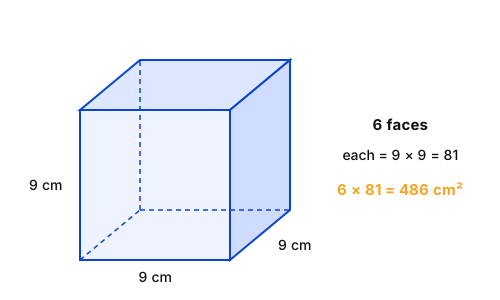
- cm, one face
- TSA
Trick: 729 is the volume and 324 is the lateral area — do not confuse them.
Answer: (C)
अवधारणा: घन के 6 बराबर वर्गाकार फलक होते हैं, अतः कुल पृष्ठीय क्षेत्रफल ।
- cm, एक फलक
- कुल पृष्ठीय क्षेत्रफल
ट्रिक: 729 आयतन () है और 324 पार्श्व क्षेत्रफल () — इनमें भ्रम न करें।
उत्तर: (C)
RRB NTPC Undergraduate CBT 1MathematicsMensuration – CubeRRB NTPC Undergraduate CBT 1 2024 · 3 Sep Shift 3
Q957.In an election between two candidates, 82% of the registered voters cast their vote and 4% of the votes polled were found invalid. The winning candidate got 60% of the valid votes and won the election by a margin of 1968 votes. How many voters were
registered?
दो उम्मीदवारों के बीच हुए एक चुनाव में, 82% पंजीकृत मतदाताओं ने अपना मत डाला और डाले गए मतों में से 4% मत अवैध पाए गए। विजयी उम्मीदवार को वैध मतों का 60% प्राप्त हुआ और उसने 1968 मतों के अंतर से चुनाव जीता। कितने मतदाता
पंजीकृत थे?
- A12502
- B12501
- C12500
- D12497
Show answer
Concept: Margin = (winner% − loser%) of valid votes; valid votes are a percentage of polled votes, which are a percentage of registered voters.
- Let registered voters ; polled
- Valid
- Margin of valid
Trick: Check options: only gives a whole number, 1968.
Answer: (C) 12500
अवधारणा: जीत का अंतर = वैध मतों का (विजेता% − पराजित%); वैध मत डाले गए मतों का प्रतिशत हैं और डाले गए मत पंजीकृत मतदाताओं का प्रतिशत।
- पंजीकृत मतदाता ; डाले गए मत
- वैध मत
- अंतर वैध का
ट्रिक: विकल्प जाँचें: केवल से पूर्णांक 1968 आता है।
उत्तर: (C) 12500
RRB NTPC Undergraduate CBT 1MathematicsPercentage – ElectionRRB NTPC Undergraduate CBT 1 2024 · 3 Sep Shift 3
Q958.Find the simple interest (in ₹) on ₹1,200 at an interest rate of 4% per month for 5 months.
₹1,200 पर 4% प्रति माह की ब्याज दर से 5 महीने का साधारण ब्याज (₹ में) ज्ञात कीजिए।
- A₹20
- B₹40
- C₹120
- D₹240
Show answer
Concept: , where rate and time must be in the same unit (here, months).
- , per month, months
- SI
Trick: 4% per month for 5 months = 20% in total; of 1200 = 240.
Answer: (D) ₹240
अवधारणा: , जहाँ दर और समय एक ही इकाई (यहाँ माह) में हों।
- , प्रति माह, माह
- SI
ट्रिक: 4% प्रति माह × 5 माह = कुल 20%; 1200 का = 240।
उत्तर: (D) ₹240
RRB NTPC Undergraduate CBT 1MathematicsSimple InterestRRB NTPC Undergraduate CBT 1 2024 · 3 Sep Shift 3
Q959.The marked price of a wet grinder is ₹6,500. It was sold at two successive discounts of 5% and 4%. Find its selling price.
एक वेट ग्राइंडर का अंकित मूल्य ₹6,500 है। इसे 5% और 4% की दो क्रमिक छूटों पर बेचा गया। इसका विक्रय मूल्य ज्ञात कीजिए।
- A₹5,630
- B₹5,500
- C₹5,928
- D₹5,850
Show answer
Concept: Successive discounts multiply: .
- After 5%:
- After 4%:
Trick: Net discount ; .
Answer: (C) ₹5,928
अवधारणा: क्रमागत छूटें गुणा होती हैं: ।
- 5% के बाद:
- 4% के बाद:
ट्रिक: कुल छूट ; ।
उत्तर: (C) ₹5,928
RRB NTPC Undergraduate CBT 1MathematicsSuccessive DiscountRRB NTPC Undergraduate CBT 1 2024 · 3 Sep Shift 3
Q960.A publisher gives 15% discount on the printed price of a book to booksellers. What does a book seller pay (in ₹) for a book whose printed price is ₹2,400?
एक प्रकाशक पुस्तक विक्रेताओं को किसी पुस्तक के मुद्रित मूल्य पर 15% छूट देता है। एक पुस्तक विक्रेता उस पुस्तक के लिए कितना भुगतान (₹ में) करता है जिसका मुद्रित मूल्य ₹2,400 है?
- A2,140
- B2,420
- C2,004
- D2,040
Show answer
Concept: Price paid = printed price − discount = printed price .
- Discount of 2400
- Price paid
Trick: ; note the trap 2,004 (digits swapped).
Answer: (D) ₹2,040
अवधारणा: चुकाया मूल्य = अंकित मूल्य − छूट = अंकित मूल्य ।
- छूट का
- चुकाया मूल्य
ट्रिक: ; 2,004 (अंक उलटे) वाले जाल से बचें।
उत्तर: (D) ₹2,040
RRB NTPC Undergraduate CBT 1MathematicsDiscountRRB NTPC Undergraduate CBT 1 2024 · 3 Sep Shift 3

