Q1961.A store offers a discount of 14% on a television marked at ₹78,000. During a sale, an additional 8% discount is offered on the already discounted price. What is the total discount percentage?
एक दुकान ₹78,000 अंकित मूल्य वाले एक टेलीविज़न पर 14% की छूट देती है। सेल के दौरान, पहले से छूट वाले मूल्य पर 8% की अतिरिक्त छूट दी जाती है। कुल छूट प्रतिशत कितना है?
- A18.23%
- B20.88%
- C22.48%
- D21.62%
Show answer
Concept: Two successive discounts and equal one discount of .
- ,
- Total
- (Marked price ₹78,000 is not needed.)
Trick: Successive discount is always a little less than – here less than .
Answer: (B)
अवधारणा: क्रमिक छूट व = एकल छूट ।
- ,
- कुल
- (अंकित मूल्य ₹78,000 की आवश्यकता नहीं।)
ट्रिक: क्रमिक छूट सदैव से थोड़ी कम होती है।
उत्तर: (B)
RRB NTPC Undergraduate CBT 1MathematicsSuccessive discountsRRB NTPC Undergraduate CBT 1 2024 · 29 Aug Shift 2
Q1962.If the sum of the measures of all the interior angles of a regular polygon is 2520°, then what is the exterior angle of the polygon?
यदि किसी सम बहुभुज के सभी अंतः कोणों के मापों का योग 2520° है, तो बहुभुज का बाह्य कोण क्या है?
- A42.5°
- B22.5°
- C37.5°
- D90°
Show answer
Concept: Sum of interior angles ; exterior angle .
- ⇒ ⇒
- Exterior angle
Trick: Exterior ; interior ⇒ .
Answer: (B)
अवधारणा: अंतः कोणों का योग ; बाह्य कोण ।
- ⇒
- बाह्य कोण
ट्रिक: बाह्य ; अंतः ।
उत्तर: (B)
RRB NTPC Undergraduate CBT 1MathematicsAngles of a regular polygonRRB NTPC Undergraduate CBT 1 2024 · 29 Aug Shift 2
Q1963.An amount of ₹570 is divided among three persons in the ratio of 2 : 12 : 11. The difference between the largest and the smallest shares (in ₹) in the distribution is:
₹570 की राशि को तीन व्यक्तियों में 2 : 12 : 11 के अनुपात में बाँटा जाता है। इस वितरण में सबसे बड़े और सबसे छोटे हिस्सों (₹ में) का अंतर है:
- A166
- B228
- C293
- D284
Show answer
Concept: Value of one ratio part .
- Sum of terms ; one part
- Largest − smallest parts
- Difference
Trick: Difference .
Answer: (B)
अवधारणा: एक भाग का मान ।
- पदों का योग ; एक भाग
- सबसे बड़ा − सबसे छोटा भाग
- अंतर
ट्रिक: अंतर ।
उत्तर: (B)
RRB NTPC Undergraduate CBT 1MathematicsRatio and proportionRRB NTPC Undergraduate CBT 1 2024 · 29 Aug Shift 2
Q1964.Find the surface area of a sphere with a radius of 5 cm.
(Use π = 3.14)
5 cm त्रिज्या वाले एक गोले का पृष्ठीय क्षेत्रफल ज्ञात कीजिए।
(π = 3.14 का प्रयोग कीजिए)
- A628 cm2
- B3140 cm2
- C31.4 cm2
- D314 cm2
Show answer
Concept: Surface area of a sphere .
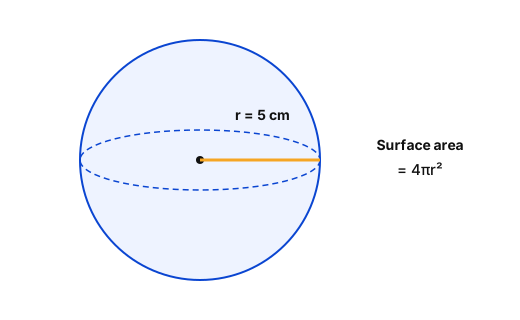
- ,
Trick: , so the answer is just .
Answer: (D)
अवधारणा: गोले का पृष्ठीय क्षेत्रफल ।
- ,
ट्रिक: , अतः उत्तर ही है।
उत्तर: (D)
RRB NTPC Undergraduate CBT 1MathematicsSurface area of sphereRRB NTPC Undergraduate CBT 1 2024 · 29 Aug Shift 2
Q1965.A sum of money triples itself at a certain rate of compound interest in 15 years. In how many years will it amount to 27 times of itself?
कोई धनराशि चक्रवृद्धि ब्याज की एक निश्चित दर पर 15 वर्षों में स्वयं की तीन गुनी हो जाती है। कितने वर्षों में यह स्वयं की 27 गुनी हो जाएगी?
- A39 years39 वर्ष
- B45 years45 वर्ष
- C55 years55 वर्ष
- D36 years36 वर्ष
Show answer
Concept: Under compound interest, if money becomes times in years, it becomes times in years.
- times in years
- ⇒ time years
Trick: CI multiplies: takes years. (In SI it would add, not multiply.)
Answer: (B) years
अवधारणा: चक्रवृद्धि ब्याज में यदि राशि वर्ष में गुना होती है, तो वर्ष में गुना होती है।
- वर्ष में गुना
- ⇒ समय वर्ष
ट्रिक: CI में गुणा होता है: , हर चरण वर्ष।
उत्तर: (B) वर्ष
RRB NTPC Undergraduate CBT 1MathematicsCompound interest – multiplesRRB NTPC Undergraduate CBT 1 2024 · 29 Aug Shift 2
Q1966.An article is sold at a profit of 57%. If the cost price is increased by ₹20 and the selling price is reduced by ₹18, then the profit would be 47.5%. What is the original cost price (in ₹) of the article?
एक वस्तु को 57% लाभ पर बेचा जाता है। यदि क्रय मूल्य में ₹20 की वृद्धि की जाए और विक्रय मूल्य में ₹18 की कमी की जाए, तो लाभ 47.5% होगा। वस्तु का मूल क्रय मूल्य (₹ में) क्या है?
- A200
- B500
- C300
- D400
Show answer
Concept: Let CP ; write the new SP new CP.
- SP
- New CP , new SP
- ⇒
Trick: Check: CP , SP ; new CP , new SP , profit ✓.
Answer: (B) ₹500
अवधारणा: क्रय मूल्य (CP) मानें; नया SP नया CP।
- SP
- नया CP , नया SP
- ⇒
ट्रिक: जाँच: CP , SP ; नया CP , नया SP , लाभ ✓।
उत्तर: (B) ₹500
RRB NTPC Undergraduate CBT 1MathematicsProfit and lossRRB NTPC Undergraduate CBT 1 2024 · 29 Aug Shift 2
Q1967.A number, when increased by 60%, gives 3610. The number is:
एक संख्या में 60% की वृद्धि करने पर 3610 प्राप्त होता है। वह संख्या है:
- A2256.25
- B4512.5
- C1128.125
- D6768.75
Show answer
Concept: If a number increased by gives , the number .
- Number
- Number
Trick: Increase by = multiply by , so reverse by : .
Answer: (A)
अवधारणा: यदि कोई संख्या बढ़कर होती है, तो संख्या ।
- संख्या
- संख्या
ट्रिक: वृद्धि ; उल्टा करें।
उत्तर: (A)
RRB NTPC Undergraduate CBT 1MathematicsPercentage – finding original numberRRB NTPC Undergraduate CBT 1 2024 · 29 Aug Shift 2
Q1968.88 tube lights were purchased for ₹88, and 46 tube lights broke in transit. The trader sold the remaining tube lights at ₹3.10 each. Find his profit.
88 ट्यूबलाइटें ₹88 में खरीदी गईं, और परिवहन के दौरान 46 ट्यूबलाइटें टूट गईं। व्यापारी ने शेष ट्यूबलाइटें ₹3.10 प्रति ट्यूबलाइट की दर से बेचीं। उसका लाभ ज्ञात कीजिए।
- A₹47.10
- B₹48.20
- C₹42.20
- D₹36.60
Show answer
Concept: Profit total SP of items actually sold total CP of all items bought.
- CP of lights ₹88
- Lights left
- SP ₹130.20
- Profit ₹42.20
Trick: Broken items add to cost but earn nothing – count only the sold.
Answer: (C) ₹42.20
अवधारणा: लाभ बेची गई वस्तुओं का कुल विक्रय मूल्य सभी खरीदी गई वस्तुओं का कुल क्रय मूल्य।
- ट्यूबलाइट का CP ₹88
- बचीं
- SP ₹130.20
- लाभ ₹42.20
ट्रिक: टूटी वस्तुएँ लागत में जुड़ती हैं, आय में नहीं – केवल बिकीं।
उत्तर: (C) ₹42.20
RRB NTPC Undergraduate CBT 1MathematicsProfit and lossRRB NTPC Undergraduate CBT 1 2024 · 29 Aug Shift 2
Q1969.Simplify the following.
निम्नलिखित को सरल कीजिए।
- A61x + 79
- B61x − 79
- C−61x + 79
- D−61x − 79
Show answer
Concept: Open brackets carefully (sign of the outside number multiplies every term), then combine like terms.
- Sum
Trick: The terms cancel (); only the signs of and constant decide the option.
Answer: (C)
अवधारणा: कोष्ठक ध्यान से खोलें (बाहर की संख्या का चिह्न हर पद से गुणा होता है), फिर समान पद मिलाएँ।
- योग
ट्रिक: वाले पद कट जाते हैं; केवल चिह्न देखकर विकल्प चुनें।
उत्तर: (C)
RRB NTPC Undergraduate CBT 1MathematicsAlgebraic simplificationRRB NTPC Undergraduate CBT 1 2024 · 29 Aug Shift 2
Q1970.Which of the following numbers divides 393064111?
निम्नलिखित में से कौन-सी संख्या 393064111 को विभाजित करती है?
- A11
- B14
- C15
- D10
Show answer
Concept: Divisible by if (sum of digits at odd places) (sum at even places) is or a multiple of .
- Digits of from right:
- Odd places: ; even places:
- Difference ⇒ divisible by
Trick: Last digit is odd ⇒ not divisible by , (even) or (needs at end) – only remains.
Answer: (A)
अवधारणा: से विभाज्य: (विषम स्थानों के अंकों का योग) (सम स्थानों का योग) या का गुणज।
- दाएँ से अंक:
- विषम स्थान: ; सम स्थान:
- अंतर ⇒ से विभाज्य
ट्रिक: अंतिम अंक विषम है ⇒ , , से विभाज्य नहीं – केवल बचता है।
उत्तर: (A)
RRB NTPC Undergraduate CBT 1MathematicsDivisibility rulesRRB NTPC Undergraduate CBT 1 2024 · 29 Aug Shift 2
Q1971.Read the given statements and conclusions carefully. Assuming that the information given in the statements is true, even if it appears to be at variance with commonly known facts, decide which of the given conclusions logically follow(s) from the statements.
Statements: All bricks are spoons. No brick is a game.
Conclusions (I): Some games are spoons.
Conclusions (II): All spoons are games.
दिए गए कथनों और निष्कर्षों को ध्यानपूर्वक पढ़िए। कथनों में दी गई जानकारी को सत्य मानते हुए, भले ही वह सामान्य रूप से ज्ञात तथ्यों से भिन्न प्रतीत होती हो, निर्णय कीजिए कि दिए गए निष्कर्षों में से कौन-सा/से निष्कर्ष तार्किक रूप से कथनों का अनुसरण करता है/करते हैं।
कथन: सभी ईंटें, चम्मच हैं। कोई ईंट, खेल नहीं है।
निष्कर्ष (I): कुछ खेल, चम्मच हैं।
निष्कर्ष (II): सभी चम्मच, खेल हैं।
- AOnly conclusion (II) follows.केवल निष्कर्ष (II) अनुसरण करता है।
- BBoth conclusions (I) and (II) follow.निष्कर्ष (I) और (II) दोनों अनुसरण करते हैं।
- CNeither conclusion (I) nor (II) follows.न तो निष्कर्ष (I) और न ही (II) अनुसरण करता है।
- DOnly conclusion (I) follows.केवल निष्कर्ष (I) अनुसरण करता है।
Show answer
Concept: Draw the least-overlap Venn diagram; a conclusion follows only if it is true in every possible diagram.
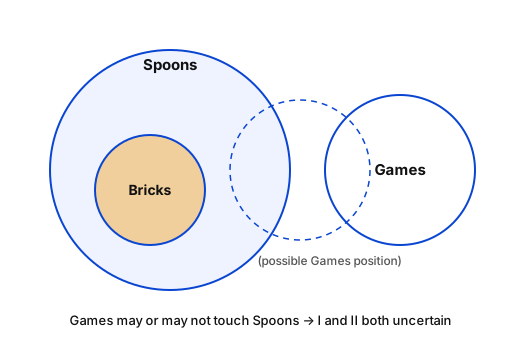
- Bricks lie inside Spoons; Games lie fully outside Bricks.
- I: Games may lie completely outside Spoons too ⇒ "Some games are spoons" is not certain.
- II: "All spoons are games" is impossible to prove (bricks are spoons but not games) ⇒ false.
Trick: "All A are B" + "No A is C" gives only "Some B are not C" – nothing positive about B and C.
Answer: (C) Neither conclusion (I) nor (II) follows.
अवधारणा: न्यूनतम ओवरलैप वाला वेन आरेख बनाएँ; निष्कर्ष तभी अनुसरण करता है जब वह हर संभव आरेख में सत्य हो।
- Bricks, Spoons के भीतर; Games, Bricks से पूर्णतः बाहर।
- I: Games, Spoons से भी पूरी तरह बाहर हो सकता है ⇒ निश्चित नहीं।
- II: Bricks spoons हैं पर games नहीं ⇒ "सभी spoons games हैं" गलत।
ट्रिक: "सभी A, B हैं" + "कोई A, C नहीं" से केवल "कुछ B, C नहीं हैं" निकलता है।
उत्तर: (C) न तो निष्कर्ष (I) और न ही (II) अनुसरण करता है।
RRB NTPC Undergraduate CBT 1General Intelligence and ReasoningSyllogismRRB NTPC Undergraduate CBT 1 2024 · 29 Aug Shift 2
Q1972.Read the given statements and conclusions carefully. Assuming that the information given in the statements is true, even if it appears to be at variance with commonly known facts, decide which of the given conclusions logically follow(s) from the statements.
Statements:
Some orchids are cacti.
No cactus is a marigold.
Conclusions:
(I) No marigold is a cactus.
(II) Some cacti are orchids.
दिए गए कथनों और निष्कर्षों को ध्यानपूर्वक पढ़िए। कथनों में दी गई जानकारी को सत्य मानते हुए, भले ही वह सामान्य रूप से ज्ञात तथ्यों से भिन्न प्रतीत होती हो, निर्णय कीजिए कि दिए गए निष्कर्षों में से कौन-सा/से निष्कर्ष तार्किक रूप से कथनों का अनुसरण करता है/करते हैं।
कथन:
कुछ ऑर्किड, कैक्टस हैं।
कोई कैक्टस, गेंदा नहीं है।
निष्कर्ष:
(I) कोई गेंदा, कैक्टस नहीं है।
(II) कुछ कैक्टस, ऑर्किड हैं।
- AOnly conclusion (II) follows.केवल निष्कर्ष (II) अनुसरण करता है।
- BNeither conclusion (I) nor (II) follows.न तो निष्कर्ष (I) और न ही (II) अनुसरण करता है।
- COnly conclusion (I) follows.केवल निष्कर्ष (I) अनुसरण करता है।
- DBoth conclusions (I) and (II) follow.निष्कर्ष (I) और (II) दोनों अनुसरण करते हैं।
Show answer
Concept: "Some A are B" converts to "Some B are A"; "No A is B" converts to "No B is A".
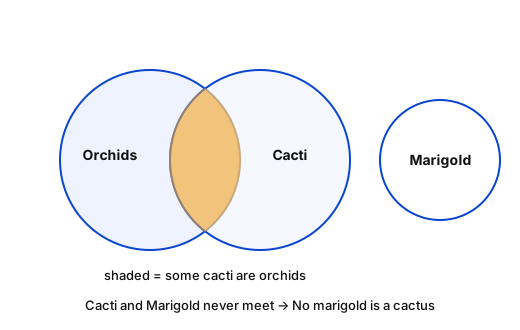
- Some orchids are cacti ⇒ Some cacti are orchids: II follows.
- No cactus is a marigold ⇒ No marigold is a cactus: I follows.
Yaad rakhein: Both conclusions are just the converses of the two statements – E and I type statements convert fully.
Answer: (D) Both conclusions (I) and (II) follow.
अवधारणा: "कुछ A, B हैं" का परिवर्तन "कुछ B, A हैं"; "कोई A, B नहीं" का परिवर्तन "कोई B, A नहीं"।
- कुछ orchids cacti हैं ⇒ कुछ cacti orchids हैं: II अनुसरण करता है।
- कोई cactus marigold नहीं ⇒ कोई marigold cactus नहीं: I अनुसरण करता है।
याद रखें: दोनों निष्कर्ष कथनों के सीधे परिवर्तन (converse) हैं।
उत्तर: (D) निष्कर्ष (I) और (II) दोनों अनुसरण करते हैं।
RRB NTPC Undergraduate CBT 1General Intelligence and ReasoningSyllogismRRB NTPC Undergraduate CBT 1 2024 · 29 Aug Shift 2
Q1973.If ‘A’ stands for ‘÷’, ‘B’ stands for ‘×’, ‘C’ stands for ‘+’ and ‘D’ stands for ‘−’, then the resultant of which of the following would be 9?
यदि 'A' का अर्थ '÷', 'B' का अर्थ '×', 'C' का अर्थ '+' और 'D' का अर्थ '−' है, तो निम्नलिखित में से किसका परिणाम 9 होगा?
- A41 C 13 B 3 A 35 D 5
- B41 B 13 C 3 D 35 A 5
- C41 D 13 B 3 C 35 A 5
- D41 A 13 C 3 B 35 D 5
Show answer
Concept: Replace letters by signs (A , B , C , D ) and apply BODMAS.
- (C):
- ✓
- (A) gives ; (B) gives
Trick: Look for the option where a big product nearly cancels : .
Answer: (C) 41 D 13 B 3 C 35 A 5
अवधारणा: अक्षरों को चिह्नों से बदलें (A , B , C , D ) और BODMAS लगाएँ।
- (C):
- ✓
- (B): – गलत
ट्रिक: वह विकल्प खोजें जहाँ गुणनफल के करीब हो: ।
उत्तर: (C) 41 D 13 B 3 C 35 A 5
RRB NTPC Undergraduate CBT 1General Intelligence and ReasoningMathematical operations (symbol substitution)RRB NTPC Undergraduate CBT 1 2024 · 29 Aug Shift 2
Q1974.Seven boxes, A, B, C, D, E, F and G, are kept one over the other but not necessarily in the same order.
Only two boxes are kept below B. Only one box is kept above F. Only one box is kept between F and D. A is kept immediately above G. C is kept at some place below E. Which box is kept at the top?
सात बक्से, A, B, C, D, E, F और G, एक के ऊपर एक रखे गए हैं, लेकिन आवश्यक नहीं कि इसी क्रम में हों।
B के नीचे केवल दो बक्से रखे गए हैं। F के ऊपर केवल एक बक्सा रखा गया है। F और D के बीच केवल एक बक्सा रखा गया है। A, G के ठीक ऊपर रखा गया है। C, E के नीचे किसी स्थान पर रखा गया है। सबसे ऊपर कौन-सा बक्सा रखा गया है?
- AC
- BE
- CG
- DA
Show answer
Concept: Number positions (top) to (bottom) and fix the definite clues first.
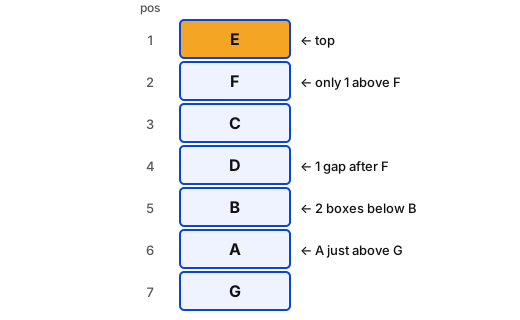
- Two below B ⇒ B at ; one above F ⇒ F at
- One box between F and D ⇒ D at
- A just above G: only free pair is ⇒ A , G
- C below E in ⇒ E , C
Trick: Fix "only above/below" clues first – they give exact positions.
Answer: (B) E
अवधारणा: स्थान (ऊपर) से (नीचे) तक मानें और पहले निश्चित संकेत लगाएँ।
- B के नीचे दो ⇒ B पर; F के ऊपर एक ⇒ F पर
- F और D के बीच एक ⇒ D पर
- A ठीक G के ऊपर: खाली जोड़ी ⇒ A , G
- C, E के नीचे ( में) ⇒ E , C
ट्रिक: "केवल ऊपर/नीचे" वाले संकेत पहले लगाएँ।
उत्तर: (B) E
RRB NTPC Undergraduate CBT 1General Intelligence and ReasoningVertical arrangement (boxes)RRB NTPC Undergraduate CBT 1 2024 · 29 Aug Shift 2
Q1975.H, I, J, P, Q, R and S are sitting around a circular table facing the centre of the table. Q sits to the immediate right of J. Only three people sit between Q and S when counted from the left of Q. Only three people sit between J and H. P sits to the immediate right of R.
How many people sit between J and R when counted from the right of R?
H, I, J, P, Q, R और S एक वृत्ताकार मेज़ के चारों ओर मेज़ के केंद्र की ओर मुख करके बैठे हैं। Q, J के ठीक दाईं ओर बैठा है। Q के बाईं ओर से गिनने पर Q और S के बीच केवल तीन व्यक्ति बैठे हैं। J और H के बीच केवल तीन व्यक्ति बैठे हैं। P, R के ठीक दाईं ओर बैठा है।
R के दाईं ओर से गिनने पर J और R के बीच कितने व्यक्ति बैठे हैं?
- AOneएक
- BTwoदो
- CThreeतीन
- DFourचार
Show answer
Concept: Facing the centre: right = anticlockwise, left = clockwise.
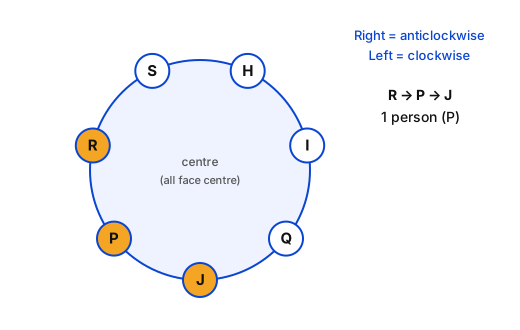
- Q is immediate right of J; going left from Q, S is after people (opposite side)
- H is places from J (other side of S)
- Remaining seats: R and P adjacent with P to R’s right; I takes the last seat
- From R going right: R → P → J ⇒ one person (P)
Trick: In a -seat circle, " between" from one side means between from the other side.
Answer: (A) One
अवधारणा: केंद्र की ओर मुख: दायाँ = वामावर्त (anticlockwise), बायाँ = दक्षिणावर्त (clockwise)।
- Q, J के ठीक दाएँ; Q के बाएँ से गिनने पर लोगों के बाद S
- H, J से स्थान दूर (S के दूसरी ओर)
- R और P पास-पास, P, R के दाएँ; I शेष स्थान पर
- R के दाएँ से: R → P → J ⇒ एक व्यक्ति (P)
ट्रिक: सीटों में एक ओर से " बीच में" = दूसरी ओर से बीच में।
उत्तर: (A) एक
RRB NTPC Undergraduate CBT 1General Intelligence and ReasoningCircular seating arrangementRRB NTPC Undergraduate CBT 1 2024 · 29 Aug Shift 2
Q1976.Each of the digits in the number 9823415 is arranged in ascending order from left to right. What will be the sum of the digits which are second from the left and second from the right in the new number thus formed?
संख्या 9823415 के प्रत्येक अंक को बाएँ से दाएँ आरोही क्रम में व्यवस्थित किया जाता है। इस प्रकार बनी नई संख्या में बाएँ से दूसरे और दाएँ से दूसरे अंकों का योग क्या होगा?
- A10
- B11
- C9
- D8
Show answer
Concept: Rewrite the digits in ascending order and read the required positions.
- Digits of ascending:
- Second from left ; second from right
- Sum
Trick: Second from left = second smallest digit; second from right = second largest digit.
Answer: (A)
अवधारणा: अंकों को आरोही क्रम में लिखें और माँगे गए स्थान पढ़ें।
- आरोही क्रम:
- बाएँ से दूसरा ; दाएँ से दूसरा
- योग
ट्रिक: बाएँ से दूसरा = दूसरा सबसे छोटा; दाएँ से दूसरा = दूसरा सबसे बड़ा अंक।
उत्तर: (A)
RRB NTPC Undergraduate CBT 1General Intelligence and ReasoningDigit arrangementRRB NTPC Undergraduate CBT 1 2024 · 29 Aug Shift 2
Q1977.In a certain code language, ‘GETS’ is coded as ‘8106’ and ‘EGIS’ is coded as ‘0167’. What is the code for ‘I’ in the given code language?
एक निश्चित कूट भाषा में, 'GETS' को '8106' और 'EGIS' को '0167' के रूप में कूटबद्ध किया जाता है। दी गई कूट भाषा में 'I' का कूट क्या है?
- A1
- B7
- C0
- D6
Show answer
Concept: Letters common to both words share the common digits; the unique letter takes the unique digit.
- GETS → ; EGIS →
- Common letters G, E, S ↔ common digits
- GETS: T ↔ ; EGIS: I ↔
Trick: Cancel the common part – what remains in EGIS is I and .
Answer: (B)
अवधारणा: दोनों शब्दों के साझा अक्षरों के कोड भी साझा होते हैं; अलग अक्षर का कोड अलग अंक।
- GETS → ; EGIS →
- साझा अक्षर G, E, S ↔ साझा अंक
- EGIS में बचा I ↔
ट्रिक: साझा भाग हटाएँ – EGIS में I और बचते हैं।
उत्तर: (B)
RRB NTPC Undergraduate CBT 1General Intelligence and ReasoningCoding-decoding (letter–digit)RRB NTPC Undergraduate CBT 1 2024 · 29 Aug Shift 2
Q1978.In a certain code language,
'A # B' means ‘A is the brother of B’,
'A % B' means ‘A is the daughter of B’,
'A = B' means ‘A is the wife of B’ and
'A ¥ B' means ‘A is the father of B’.
How is D related to S if 'D = O # M ¥ E % S'?
एक निश्चित कूट भाषा में,
'A # B' का अर्थ है 'A, B का भाई है',
'A % B' का अर्थ है 'A, B की पुत्री है',
'A = B' का अर्थ है 'A, B की पत्नी है' और
'A ¥ B' का अर्थ है 'A, B का पिता है'।
यदि 'D = O # M ¥ E % S' है, तो D का S से क्या संबंध है?
- AFather's brother's sonपिता के भाई का पुत्र
- BFather's brother's sisterपिता के भाई की बहन
- CHusband's brother's wifeपति के भाई की पत्नी
- DFather's brother's daughterपिता के भाई की पुत्री
Show answer
Concept: Decode each symbol from left to right and build a family tree.
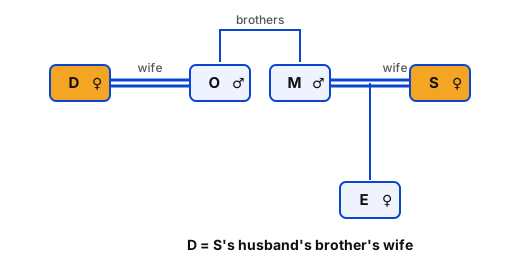
- D = O: D is wife of O
- O # M: O is brother of M
- M ¥ E: M is father of E; E % S: E is daughter of S ⇒ S is mother of E, i.e. wife of M
- So D is wife of the brother of S’s husband
Trick: Two brothers’ wives are each other’s "husband’s brother’s wife" (devrani/jethani).
Answer: (C) Husband's brother's wife
अवधारणा: हर प्रतीक को बाएँ से दाएँ खोलें और वंश-वृक्ष बनाएँ।
- D = O: D, O की पत्नी है
- O # M: O, M का भाई है
- M ¥ E: M, E का पिता; E % S: E, S की पुत्री ⇒ S, M की पत्नी
- अतः D, S के पति के भाई की पत्नी है
ट्रिक: दो भाइयों की पत्नियाँ आपस में देवरानी/जेठानी होती हैं।
उत्तर: (C) पति के भाई की पत्नी
RRB NTPC Undergraduate CBT 1General Intelligence and ReasoningBlood relations (coded)RRB NTPC Undergraduate CBT 1 2024 · 29 Aug Shift 2
Q1979.What should come in place of the question mark (?) in the given series based on the English alphabetical order?
SET DQE OCP ZOA ?
अंग्रेज़ी वर्णमाला क्रम के आधार पर दी गई शृंखला में प्रश्न चिह्न (?) के स्थान पर क्या आना चाहिए?
SET DQE OCP ZOA ?
- AKLA
- BKAL
- CLKA
- DLAK
Show answer
Concept: Track each letter position separately using place values (, wrap around after Z).
- 1st letters: S, D, O, Z, K (each )
- 2nd letters: E, Q, C, O, A (each )
- 3rd letters: T, E, P, A, L (each )
- Next term: KAL
Trick: Add = subtract after wrap: Z() = K.
Answer: (B) KAL
अवधारणा: हर स्थान के अक्षर को अलग देखें (, Z के बाद फिर A)।
- पहले अक्षर: S, D, O, Z, K ()
- दूसरे अक्षर: E, Q, C, O, A ()
- तीसरे अक्षर: T, E, P, A, L ()
- अगला पद: KAL
ट्रिक: Z() = K।
उत्तर: (B) KAL
RRB NTPC Undergraduate CBT 1General Intelligence and ReasoningLetter seriesRRB NTPC Undergraduate CBT 1 2024 · 29 Aug Shift 2
Q1980.In the following triads, each group of letters is related to the subsequent one following a certain logic. Select from the given options, the one which follows the same logic. LOPE - LEPO - EPOL
QUIT - QTIU - TIUQ
निम्नलिखित त्रिकों में, अक्षरों का प्रत्येक समूह एक निश्चित तर्क का अनुसरण करते हुए अपने बाद वाले समूह से संबंधित है। दिए गए विकल्पों में से उस विकल्प का चयन कीजिए जो उसी तर्क का अनुसरण करता है। LOPE - LEPO - EPOL
QUIT - QTIU - TIUQ
- ABANG - BGNA - GNAB
- BSLOP - SLPO - LOPS
- CFILE - IFLE - EILF
- DWAST - WSAT - TSAW
Show answer
Concept: Find how letter positions move from one cluster to the next.
- LOPE → LEPO: 2nd and 4th letters swap
- LEPO → EPOL: first letter moves to the end
- BANG → BGNA (swap A, G) → GNAB (B to end) ✓
Trick: Check step 2 quickly: the last cluster must end with the first letter of the word.
Answer: (A) BANG - BGNA - GNAB
अवधारणा: देखें कि अक्षरों के स्थान एक समूह से अगले में कैसे बदलते हैं।
- LOPE → LEPO: दूसरा और चौथा अक्षर अदला-बदली
- LEPO → EPOL: पहला अक्षर अंत में
- BANG → BGNA → GNAB ✓
ट्रिक: अंतिम समूह शब्द के पहले अक्षर से समाप्त होना चाहिए।
उत्तर: (A) BANG - BGNA - GNAB
RRB NTPC Undergraduate CBT 1General Intelligence and ReasoningLetter triads (position change)RRB NTPC Undergraduate CBT 1 2024 · 29 Aug Shift 2

