Q61.The reagent for effecting the following transformation is
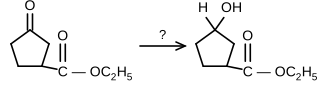
निम्न रूपान्तरण को प्रभावित करने के लिए अभिकर्मक है
- A
- B
- C
- D
Show answer
Concept: Only the ketone must be reduced; the ester must survive.
- is a mild hydride donor: reduces aldehydes/ketones but not esters (under normal conditions).
- would reduce both (ester → ).
- is an electrophilic reductant used mainly for acids/amides and it also hydroborates C=C; is a base, not a reductant.
Short trick: NaBH4: C=O of aldehyde/ketone only; LiAlH4: almost everything.
अवधारणा: केवल कीटोन का अपचयन करना है; एस्टर अप्रभावित रहना चाहिए।
- मृदु हाइड्राइड दाता है: ऐल्डिहाइड/कीटोन को अपचित करता है, सामान्य परिस्थिति में एस्टर को नहीं।
- दोनों को अपचित करेगा (एस्टर → )।
- मुख्यतः अम्ल/ऐमाइड व ऐल्कीन पर क्रिया करता है; क्षार है, अपचायक नहीं।
याद रखें: NaBH4: केवल ऐल्डिहाइड/कीटोन; LiAlH4: लगभग सब कुछ।
UPHESC Assistant Professor ChemistryChemistryChemoselective reductionUPHESC Assistant Professor Chemistry 2025 · 16 Apr Shift 2
Q62.Which one among the following product is formed after the reaction of with ?
एवं की अभिक्रिया के उपरान्त कौन-सा उत्पाद प्राप्त होता है ?
- A
- Btrans –
- C
- Dcis –
Show answer
Concept: In square-planar Pt(II), the ligand trans to the stronger trans-director is replaced; Cl− > NH3 in the trans-effect series.
- Step 1: .
- Step 2: the Cl trans to another Cl (not the one trans to NH3) is labilised → second NH3 enters cis to the first.
- Product: cis- (cisplatin). Starting from + Cl− gives the trans isomer.
Short trick: PtCl42− + NH3 → cis; Pt(NH3)42+ + Cl− → trans.
अवधारणा: वर्ग-समतलीय Pt(II) में प्रबल ट्रांस-निर्देशक के विपरीत स्थित लिगैंड प्रतिस्थापित होता है; ट्रांस-प्रभाव श्रेणी में Cl− > NH3।
- चरण 1: ।
- चरण 2: दूसरे Cl के विपरीत स्थित Cl अस्थिर होता है → दूसरा NH3 पहले के सिस स्थान पर आता है।
- उत्पाद: सिस- (सिसप्लैटिन)। + Cl− से ट्रांस समावयवी बनता है।
याद रखें: PtCl42− + NH3 → सिस; Pt(NH3)42+ + Cl− → ट्रांस।
UPHESC Assistant Professor ChemistryChemistryTrans effect – synthesis of cisplatinUPHESC Assistant Professor Chemistry 2025 · 16 Apr Shift 2
Q63.The expected value of spin-only magnetic moment for and respectively are
केवल स्पिन मैग्नेटिक मोमेंट का प्रत्याशित मान एवं के लिए क्रमश: है
- A1.73, 1.73 BM
- B1.73, 5.92 BM
- C0.0, 1.73 BM
- D0.0, 5.92 BM
Show answer
Concept: Strong-field CN− pairs electrons; weak-field F− does not.
- : Fe(II) , low spin → n = 0 → 0 BM (diamagnetic).
- : Fe(III) , high spin → n = 5 → = 5.92 BM.
Short trick: Ferrocyanide diamagnetic; d5 high spin = 5.92 BM.
अवधारणा: प्रबल-क्षेत्र CN− इलेक्ट्रॉनों को युग्मित करता है; दुर्बल-क्षेत्र F− नहीं।
- : Fe(II) , निम्न चक्रण → n = 0 → 0 BM (प्रतिचुम्बकीय)।
- : Fe(III) , उच्च चक्रण → n = 5 → = 5.92 BM।
याद रखें: फेरोसायनाइड प्रतिचुम्बकीय; d5 उच्च चक्रण = 5.92 BM।
UPHESC Assistant Professor ChemistryChemistryCrystal field – spin state and magnetic momentUPHESC Assistant Professor Chemistry 2025 · 16 Apr Shift 2
Q64.When electrolyte concentration cell functions, E.M.F. of the cell
जब विद्युत अपघट्य सान्द्रण सेल कार्य करता है, तो सेल का वि.वा.ब.
- Adoes not changeपरिवर्तित नहीं होता है
- Bincreasesबढ़ता है
- Cbecomes zeroशून्य हो जाता है
- Ddecreasesघटता है
Show answer
Concept: For , ($c_2 > c_1$).
- As the cell works, the dilute side becomes more concentrated (anode dissolves) and the concentrated side becomes more dilute (cathode deposits).
- So falls towards 1 and the EMF decreases continuously.
- It reaches zero only when the concentrations become equal (cell exhausted), not while it is functioning.
Short trick: Concentration cell runs to equalise concentrations → EMF ↓.
अवधारणा: के लिए ($c_2 > c_1$)।
- सेल कार्य करते समय तनु भाग सांद्र (ऐनोड घुलता है) तथा सांद्र भाग तनु (कैथोड पर निक्षेपण) होता जाता है।
- अतः घटकर 1 की ओर जाता है और वि.वा.ब. लगातार घटता है।
- शून्य केवल तब होता है जब सांद्रताएँ बराबर हो जाएँ (सेल समाप्त)।
याद रखें: सान्द्रण सेल सांद्रताएँ बराबर करने हेतु चलता है → EMF ↓।
UPHESC Assistant Professor ChemistryChemistryConcentration cellsUPHESC Assistant Professor Chemistry 2025 · 16 Apr Shift 2
Q65.Consider four non-interacting He atoms, each of which can occupy three energy levels O, E and 2E. The number of microstates having total energy = 3E is
चार गैर-अंत:क्रियात्मक He परमाणुओं पर विचार करें, जिनमें से प्रत्येक तीन ऊर्जा स्तरों O, E एवं 2E पर कब्जा कर सकता है । कुल ऊर्जा = 3E वाले माइक्रोस्टेट्स की संख्या है
- A4
- B12
- C2
- D16
Show answer
Concept: Find all distributions (configurations) with total energy 3E, then count arrangements for N = 4 atoms.
- Configuration 1: three atoms at E, one at 0 → .
- Configuration 2: one at 2E, one at E, two at 0 → .
- Total microstates = 4 + 12 = 16 (2 is only the number of configurations).
Short trick: Configurations first, then W = N!/∏ni! for each, then add.
अवधारणा: कुल ऊर्जा 3E वाले सभी वितरण (विन्यास) ज्ञात करें, फिर N = 4 परमाणुओं हेतु गिनें।
- विन्यास 1: तीन परमाणु E पर, एक 0 पर → ।
- विन्यास 2: एक 2E पर, एक E पर, दो 0 पर → ।
- कुल सूक्ष्म-अवस्थाएँ = 4 + 12 = 16 (2 केवल विन्यासों की संख्या है)।
याद रखें: पहले विन्यास, फिर प्रत्येक का W = N!/∏ni!, फिर जोड़ें।
UPHESC Assistant Professor ChemistryChemistryStatistical thermodynamics – counting microstatesUPHESC Assistant Professor Chemistry 2025 · 16 Apr Shift 2
Q66.Bose-Einstein statistics is for
बोस-आइंस्टीन सांख्यिकी है
- ADistinguishable particlesविभेद्य कणों के लिए
- BNon-symmetrical particlesगैर-सममित कणों के लिए
- CParticles with half-integral spinअर्ध-पूर्णांक स्पिन वाले कणों के लिए
- DParticles with integral spinपूर्णांक स्पिन वाले कणों के लिए
Show answer
Concept: Three statistics: Maxwell–Boltzmann (distinguishable), Bose–Einstein (bosons), Fermi–Dirac (fermions).
- Bosons have integral spin (0, 1, 2 …), symmetric wave functions and any number may occupy one state (photons, 4He).
- Half-integral spin particles (electrons, protons) are fermions → Fermi–Dirac, obey Pauli principle.
Short trick: Bose → integer spin; Fermi → half-integer spin.
अवधारणा: तीन सांख्यिकियाँ: मैक्सवेल–बोल्ट्ज़मान (विभेद्य), बोस–आइंस्टीन (बोसॉन), फर्मी–डिराक (फर्मिऑन)।
- बोसॉन का स्पिन पूर्णांक (0, 1, 2 …) होता है, तरंग फलन सममित होते हैं तथा एक अवस्था में कितने भी कण रह सकते हैं (फोटॉन, 4He)।
- अर्ध-पूर्णांक स्पिन वाले कण (इलेक्ट्रॉन, प्रोटॉन) फर्मिऑन हैं → फर्मी–डिराक, पाउली सिद्धांत।
याद रखें: बोस → पूर्णांक स्पिन; फर्मी → अर्ध-पूर्णांक स्पिन।
UPHESC Assistant Professor ChemistryChemistryQuantum statisticsUPHESC Assistant Professor Chemistry 2025 · 16 Apr Shift 2
Q67.Phosphorescence is represented as
स्फुरदीप्ति को प्रदर्शित करते हैं
- A
- B
- C
- D
Show answer
Concept: Phosphorescence is radiative emission between states of different multiplicity.
- : spin-forbidden emission → slow, long-lived glow = phosphorescence.
- = fluorescence; = intersystem crossing; = non-radiative ISC (heat).
Short trick: Fluorescence S→S (fast); phosphorescence T→S (slow).
अवधारणा: स्फुरदीप्ति भिन्न बहुलता वाली अवस्थाओं के बीच विकिरणी उत्सर्जन है।
- : चक्रण-निषिद्ध उत्सर्जन → धीमा, दीर्घजीवी प्रकाश = स्फुरदीप्ति।
- = प्रतिदीप्ति; = अंतर-तंत्र संक्रमण; = अविकिरणी (ऊष्मा)।
याद रखें: प्रतिदीप्ति S→S (तीव्र); स्फुरदीप्ति T→S (धीमी)।
UPHESC Assistant Professor ChemistryChemistryPhotophysical processes – Jablonski diagramUPHESC Assistant Professor Chemistry 2025 · 16 Apr Shift 2
Q68.Which of the following protein/enzyme does not contain iron metal ?
निम्न प्रोटीन/एन्जाएम में से किसमें लौह धातु नहीं है ?
- ACytochrome साइटोक्रोम
- BPyrocatechaseपाइरोकैटेकेस
- CTryptophane dioxygenaseट्रिप्टोफन डाइआक्सीजीनेज
- DCatalaseकैटेलेज
Show answer
Concept: All four listed proteins are iron enzymes, so no option fits the question as printed.
- Cytochrome P450 – heme Fe (cysteine-thiolate ligated) monooxygenase.
- Pyrocatechase (catechol 1,2-dioxygenase) – non-heme Fe(III) intradiol dioxygenase.
- Tryptophan 2,3-dioxygenase – heme Fe; catalase – heme Fe (Fe(III)/Fe(IV)=O).
- Typical non-iron examples would be carbonic anhydrase (Zn), tyrosinase (Cu) or nitrogenase's Mo site.
Short trick: P450, catalase, peroxidase, TDO → heme Fe; catechol dioxygenases → non-heme Fe.
अवधारणा: दिए गए चारों प्रोटीन लौह एन्ज़ाइम हैं, अतः छपे रूप में कोई विकल्प सही नहीं बैठता।
- साइटोक्रोम P450 – हीम Fe (सिस्टीन-थायोलेट से जुड़ा) मोनोऑक्सीजिनेज।
- पाइरोकैटेकेस (कैटेकॉल 1,2-डाइऑक्सीजिनेज) – नॉन-हीम Fe(III) डाइऑक्सीजिनेज।
- ट्रिप्टोफैन 2,3-डाइऑक्सीजिनेज – हीम Fe; कैटेलेज – हीम Fe।
- लौह-रहित उदाहरण: कार्बोनिक ऐनहाइड्रेज़ (Zn), टायरोसिनेज़ (Cu)।
याद रखें: P450, कैटेलेज, पेरॉक्सिडेज़, TDO → हीम Fe; कैटेकॉल डाइऑक्सीजिनेज़ → नॉन-हीम Fe।
UPHESC Assistant Professor ChemistryChemistryIron-containing enzymesUPHESC Assistant Professor Chemistry 2025 · 16 Apr Shift 2
Q69.For the following reaction
The relaxation time T in terms of rate constants and can be expressed as
निम्न अभिक्रिया के लिए
वेग स्थिरांक तथा के संदर्भ में विश्रांति काल T को प्रकट किया जाता है
- A
- B
- C
- D
Show answer
Concept: After a small perturbation, the deviation from equilibrium decays as .
- So with .
- Hence ; it has units of time, as required (the other forms do not).
Short trick: First-order ⇌ first-order: 1/τ = kf + kb.
अवधारणा: सूक्ष्म विक्षोभ के बाद साम्य से विचलन , के अनुसार घटता है।
- अतः जहाँ ।
- इसलिए ; इसकी इकाई समय है (अन्य रूपों की नहीं)।
याद रखें: प्रथम कोटि ⇌ प्रथम कोटि: 1/τ = kf + kb।
UPHESC Assistant Professor ChemistryChemistryRelaxation kineticsUPHESC Assistant Professor Chemistry 2025 · 16 Apr Shift 2
Q70.Which one of the following is ambident nucleophile ?
निम्नलिखित में से कौन-सा एम्बीडेन्ट न्यूक्लीयोफाइल है ?
- A
- B
- C
- D
Show answer
Concept: An ambident nucleophile has two different donor atoms through which it can attack.
- : attacks through C (→ nitriles, e.g. with KCN) or through N (→ isocyanides, e.g. with AgCN).
- , and each have only one nucleophilic site.
- Other examples: , , , enolates.
Short trick: KCN → R–CN; AgCN → R–NC.
अवधारणा: उभयदंती नाभिकस्नेही के दो भिन्न दाता परमाणु होते हैं जिनसे वह आक्रमण कर सकता है।
- : C से (→ नाइट्राइल, KCN) या N से (→ आइसोसायनाइड, AgCN) आक्रमण।
- , तथा में केवल एक नाभिकस्नेही केन्द्र है।
- अन्य उदाहरण: , , , ईनोलेट।
याद रखें: KCN → R–CN; AgCN → R–NC।
UPHESC Assistant Professor ChemistryChemistryAmbident nucleophilesUPHESC Assistant Professor Chemistry 2025 · 16 Apr Shift 2
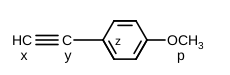
Q71.The decreasing order of
NMR chemical shifts of the marked carbon atoms x, y, z and p in compound (I) is
यौगिक (I) में चिन्हित कार्बन परमाणुओं x, y, z और p के
एन.एम.आर. में रासायनिक विस्तरण का घटता क्रम है
- Az > y > x > p
- Bz > x > y > p
- Cy > z > x > p
- Dy > p > z > x
Show answer
Concept: Typical (ppm): aromatic C 110–160 > alkyne C 65–90 > OCH3 ~55.
- z (aromatic C bearing the alkyne, para to OMe) ≈ 114 ppm.
- y (internal ≡C–Ar) ≈ 84 ppm; x (terminal ≡CH) ≈ 76 ppm – the substituted alkyne carbon is downfield.
- p (OCH3) ≈ 55 ppm. Order: z > y > x > p.
Short trick: 13C: C=O > aromatic/alkene > alkyne > O–CH3 > alkyl.
अवधारणा: सामान्य (ppm): ऐरोमैटिक C 110–160 > ऐल्काइन C 65–90 > OCH3 ~55।
- z (ऐल्काइन वहन करने वाला ऐरोमैटिक C, OMe के पैरा) ≈ 114 ppm।
- y (आंतरिक ≡C–Ar) ≈ 84 ppm; x (अंतस्थ ≡CH) ≈ 76 ppm – प्रतिस्थापित ऐल्काइन कार्बन अधिक निम्नक्षेत्र में।
- p (OCH3) ≈ 55 ppm। क्रम: z > y > x > p।
याद रखें: 13C: C=O > ऐरोमैटिक/ऐल्कीन > ऐल्काइन > O–CH3 > ऐल्किल।
UPHESC Assistant Professor ChemistryChemistry13C NMR chemical shiftsUPHESC Assistant Professor Chemistry 2025 · 16 Apr Shift 2
Q72.The metal ion present in the active site of nitrogenase enzyme co-factor are
नाइट्रोजिनेस एन्जाइम को-फैक्टर के सक्रिय साइट में मौजूद धातु आयन इस प्रकार है
- AFe, Mo
- BFe, W
- CFe, Cu
- DFe, Ni
Show answer
Concept: N2 is reduced to NH3 at the iron–molybdenum cofactor (FeMoco) of nitrogenase.
- FeMoco = cluster with homocitrate (central carbide).
- The Fe-protein supplies electrons (with ATP hydrolysis) to the MoFe-protein.
- Alternative nitrogenases use V or only Fe, but the classical cofactor is Fe–Mo; W, Cu, Ni are not involved.
Short trick: Nitrogenase = FeMo; N2 + 8H+ + 8e− + 16 ATP → 2NH3 + H2.
अवधारणा: नाइट्रोजिनेज़ के लौह–मॉलिब्डेनम सहकारक (FeMoco) पर N2 का NH3 में अपचयन होता है।
- FeMoco = समूह, होमोसाइट्रेट सहित (केन्द्रीय कार्बाइड)।
- Fe-प्रोटीन (ATP जलअपघटन के साथ) MoFe-प्रोटीन को इलेक्ट्रॉन देता है।
- वैकल्पिक नाइट्रोजिनेज़ में V या केवल Fe होता है, पर मानक सहकारक Fe–Mo है।
याद रखें: नाइट्रोजिनेज़ = FeMo।
UPHESC Assistant Professor ChemistryChemistryNitrogenase – FeMo cofactorUPHESC Assistant Professor Chemistry 2025 · 16 Apr Shift 2
Q73.The Clausius-Clapeyron equation for the applicability of this equation which one of the following statement is not correct ?
क्लासियस-क्लेपियरान समीकरण के अनुप्रयोज्य होने के लिए निम्नांकित कथनों में कौन-सा सही नहीं है ?
- AIt tells the effect of temperature on the vapour pressure of a liquidयह किसी द्रव के वाष्प दाब पर ताप का प्रभाव बतलाता है
- BIt tells the effect of pressure on the boiling point of a liquidयह किसी द्रव के क्वथनांक पर दाब का प्रभाव बतलाता है
- CIt is applicable in case of solid-liquid equilibriumयह ठोस-द्रव साम्यवस्था में अनुप्रयोज्य है
- DIt tells that as intermolecular forces increases, also increases which results in lowering the boiling pointयह बताता है कि जैसे अन्तरआणुविक बल बढ़ता है, भी बढ़ता है जिससे क्वथनांक में कमी होती है
Show answer
Concept: The integrated Clausius–Clapeyron equation assumes the vapour is an ideal gas and the condensed-phase volume is negligible; it applies to liquid ⇌ vapour (and solid ⇌ vapour).
- (A) and (B) are correct: it relates vapour pressure with temperature, i.e. boiling point with external pressure.
- (C) is not correct: for solid ⇌ liquid there is no vapour phase, so only the general Clapeyron equation applies.
- (D) is also not correct: stronger intermolecular forces raise and raise the boiling point.
- Since two statements are incorrect, the question has no single answer.
Short trick: Clausius–Clapeyron: liquid/solid ⇌ vapour only; higher ΔHvap → higher b.p.
अवधारणा: समाकलित क्लासियस–क्लेपेरॉन समीकरण वाष्प को आदर्श गैस मानता है तथा संघनित प्रावस्था का आयतन नगण्य मानता है; यह द्रव ⇌ वाष्प (तथा ठोस ⇌ वाष्प) पर लागू है।
- (A) व (B) सही: यह वाष्पदाब का ताप से, अर्थात क्वथनांक का बाह्य दाब से संबंध बताता है।
- (C) सही नहीं: ठोस ⇌ द्रव में वाष्प प्रावस्था नहीं होती, वहाँ केवल सामान्य क्लेपेरॉन समीकरण लागू होता है।
- (D) भी सही नहीं: प्रबल अन्तराअणुक बल बढ़ाते हैं और क्वथनांक को बढ़ाते हैं।
- दो कथन गलत होने से प्रश्न का एकल उत्तर नहीं बनता।
याद रखें: क्लासियस–क्लेपेरॉन: केवल द्रव/ठोस ⇌ वाष्प; अधिक ΔHvap → अधिक क्वथनांक।
UPHESC Assistant Professor ChemistryChemistryClausius–Clapeyron equationUPHESC Assistant Professor Chemistry 2025 · 16 Apr Shift 2
Q74.How many Bravai's lattices are present in the following crystals ?
a = Rhombohedral
b = Triclinic
c = Hexagonal
निम्नलिखित क्रिस्टल में कितने ब्रावैस लैटिस मौजूद है ?
a = रोम्बोहैड्रल
b = ट्राइक्लिनिक
c = षटकोणीय
- Aa = 2, b = 1, c = 3
- Ba = 1, b = 1, c = 1
- Ca = 1, b = 1, c = 3
- Da = 2, b = 1, c = 1
Show answer
Concept: 14 Bravais lattices are distributed among 7 crystal systems.
- Cubic 3 (P, I, F); tetragonal 2 (P, I); orthorhombic 4 (P, C, I, F); monoclinic 2 (P, C).
- Triclinic 1 (P); hexagonal 1 (P); rhombohedral/trigonal 1 (R).
- So a = 1, b = 1, c = 1.
Short trick: 3 + 2 + 4 + 2 + 1 + 1 + 1 = 14.
अवधारणा: 14 ब्रावे जालक 7 क्रिस्टल तंत्रों में बँटे हैं।
- घनीय 3 (P, I, F); चतुष्कोणीय 2 (P, I); विषमलंबाक्ष 4 (P, C, I, F); एकनताक्ष 2 (P, C)।
- त्रिनताक्ष 1 (P); षट्कोणीय 1 (P); त्रिसमनताक्ष 1 (R)।
- अतः a = 1, b = 1, c = 1।
याद रखें: 3 + 2 + 4 + 2 + 1 + 1 + 1 = 14।
UPHESC Assistant Professor ChemistryChemistryBravais latticesUPHESC Assistant Professor Chemistry 2025 · 16 Apr Shift 2
Q75.Debye's law is given by the following equation
डीबाई- नियम को निम्न समीकरण द्वारा दिया जाता है
- A
- B
- C
- D
Show answer
Concept: At the Debye model gives per mole.
- Dimensional check: must have units of R and must appear as a dimensionless ratio cubed – only (A) satisfies this.
- Numerically J K−1 mol−1 × ; used to extrapolate to 0 K for third-law entropies.
Short trick: Debye: Cv ∝ T3, constant 12π4R/5.
अवधारणा: पर डीबाई मॉडल से प्रति मोल ।
- विमीय जाँच: की इकाई R जैसी हो तथा विमाहीन अनुपात के घन रूप में हो – केवल (A) में ऐसा है।
- J K−1 mol−1 × ; तृतीय नियम एन्ट्रॉपी हेतु 0 K तक बहिर्वेशन में प्रयुक्त।
याद रखें: डीबाई: Cv ∝ T3, स्थिरांक 12π4R/5।
UPHESC Assistant Professor ChemistryChemistryHeat capacity of solids – Debye theoryUPHESC Assistant Professor Chemistry 2025 · 16 Apr Shift 2
Q76.The pH before and after the addition of 0.01 mole of NaOH to one litre of buffer solution that is 0.1 mole in acetic acid and 0.1 mole sodium acetate will be
The dissociation constant of acetic acid is
0.01 मोल NaOH को एक लीटर बफर विलयन में मिलाने पर जिसमें 0.1 मोल एसीटिक अम्ल और 0.1 मोल सोडियम एसीटेट मिलाने के पूर्व और बाद में pH मान होगा
एसिटिक अम्ल का वियोजन स्थिरांक है
- A4.76, 4.847
- B4.96, 5.012
- C4.64, 4.72
- D4.52, 4.60
Show answer
Concept: ; .
- Before: [A−] = [HA] = 0.1 → pH = 4.76.
- NaOH converts 0.01 mol HA to A−: [A−] = 0.11, [HA] = 0.09.
- pH = 4.757 + log(0.11/0.09) = 4.757 + 0.087 = 4.84 ≈ 4.847.
Short trick: Equal acid and salt → pH = pKa; base added shifts the ratio, not much the pH.
अवधारणा: ; ।
- पहले: [A−] = [HA] = 0.1 → pH = 4.76।
- NaOH 0.01 mol HA को A− में बदलता है: [A−] = 0.11, [HA] = 0.09।
- pH = 4.757 + log(0.11/0.09) = 4.757 + 0.087 = 4.84 ≈ 4.847।
याद रखें: अम्ल = लवण → pH = pKa।
UPHESC Assistant Professor ChemistryChemistryBuffer – Henderson equationUPHESC Assistant Professor Chemistry 2025 · 16 Apr Shift 2
Q77.The point group of molecule is
का बिन्दु समूह है
- A
- B
- C
- D
Show answer
Concept: (gas) is trigonal bipyramidal (, no lone pair).
- Principal axis through the two axial Cl; three axes along the equatorial P–Cl bonds (⊥ ) → D group.
- Horizontal mirror plane containing the three equatorial Cl → → .
- Same point group: (planar), .
Short trick: TBP = D3h; octahedral = Oh; square pyramid = C4v.
अवधारणा: (गैस) त्रिकोणीय द्विपिरामिडी है (, एकाकी युग्म नहीं)।
- मुख्य अक्ष दोनों अक्षीय Cl से होकर; विषुवतीय P–Cl बंधों के अनुदिश तीन अक्ष (⊥ ) → D समूह।
- तीनों विषुवतीय Cl वाला क्षैतिज दर्पण तल → → ।
- यही समूह: , ।
याद रखें: TBP = D3h; अष्टफलकीय = Oh; वर्ग पिरामिड = C4v।
UPHESC Assistant Professor ChemistryChemistryPoint groups – trigonal bipyramidUPHESC Assistant Professor Chemistry 2025 · 16 Apr Shift 2
Q78.The combination of two reflections about an intersecting mirror plane is equivalent to
दो रिफ्लेक्शन का संयोजन जो कि किसी इन्टरसेक्टिंग मिरर प्लेन के गिर्द हो वह इसके बराबर होता है
- A
- B
- C
- Di
Show answer
Concept: Two successive reflections in planes that intersect along a line at angle θ equal a rotation by 2θ about that line.
- Each reflection reverses handedness; two reflections restore it, so the result is a proper rotation.
- E.g. in : (planes at 90° → rotation by 180°).
- and i are improper operations (odd number of reflections).
Short trick: σ × σ (intersecting) = Cn; σh × Cn = Sn.
अवधारणा: रेखा पर θ कोण से प्रतिच्छेदी दो तलों में क्रमिक परावर्तन उस रेखा के परितः 2θ घूर्णन के तुल्य है।
- प्रत्येक परावर्तन हस्तता उलटता है; दो परावर्तन उसे पुनः स्थापित करते हैं, अतः परिणाम उचित घूर्णन है।
- उदा. में: (90° पर तल → 180° घूर्णन)।
- तथा i अनुचित संक्रियाएँ हैं (विषम संख्या में परावर्तन)।
याद रखें: σ × σ (प्रतिच्छेदी) = Cn; σh × Cn = Sn।
UPHESC Assistant Professor ChemistryChemistryProducts of symmetry operationsUPHESC Assistant Professor Chemistry 2025 · 16 Apr Shift 2
Q79.Which of the following electronic configuration gives kinetically inert octahedral complexes ?
निम्नलिखित में से कौन-सा इलैक्ट्रानिक विन्यास, गतिकी रूप से अक्रिय अष्टफलकीय यौगिक देता है ?
- A
- B
- C
- D
Show answer
Concept: Taube: octahedral complexes are inert when there are no eg electrons and no vacant t2g orbital, and CFAE is large.
- (low-spin , e.g. Co(III)) – very high CFSE, no eg electron → inert.
- (high-spin ) and () have eg electrons → labile.
- ( low spin) has a vacant t2g slot → comparatively labile.
Short trick: Inert: d3, low-spin d4–d6 (best d6 LS, e.g. Co3+, Cr3+).
अवधारणा: टाउबे: जब eg में इलेक्ट्रॉन न हों, t2g में रिक्त कक्षक न हो तथा CFAE अधिक हो, तब अष्टफलकीय संकुल अक्रिय होते हैं।
- (निम्न-चक्रण , जैसे Co(III)) – अति उच्च CFSE, eg रिक्त → अक्रिय।
- (उच्च-चक्रण ) व () में eg इलेक्ट्रॉन → अस्थिर।
- में एक t2g रिक्त स्थान → अपेक्षाकृत अस्थिर।
याद रखें: अक्रिय: d3, निम्न-चक्रण d4–d6 (Co3+, Cr3+)।
UPHESC Assistant Professor ChemistryChemistryLabile and inert complexes (Taube)UPHESC Assistant Professor Chemistry 2025 · 16 Apr Shift 2
Q80.Which one is the correct formula of simple silicate anion ?
सामान्य सिलिकेट ऋणायन का सही सूत्र कौन-सा है ?
- A
- B
- C
- D
Show answer
Concept: The basic unit of all silicates is the tetrahedron.
- Si (+4) with four O (−2 each) → net charge −4: (orthosilicate, e.g. in olivine, zircon).
- Sharing of corners gives , chains , sheets , 3-D .
Short trick: Simple silicate = orthosilicate SiO44−.
अवधारणा: सभी सिलिकेटों की मूल इकाई चतुष्फलक है।
- Si (+4) तथा चार O (प्रत्येक −2) → कुल आवेश −4: (ऑर्थोसिलिकेट, जैसे ज़िरकॉन)।
- कोनों के साझे से , श्रृंखला , परत , त्रिविम ।
याद रखें: सरल सिलिकेट = SiO44−।
UPHESC Assistant Professor ChemistryChemistrySilicates – orthosilicate unitUPHESC Assistant Professor Chemistry 2025 · 16 Apr Shift 2

