Question bank

Q&A: practice questions with answers

Search questions on any topic. Filter by exam category, exam, subject and topic, try the question, then open the answer and explanation.

Courses – airGurukul

8,495 questions found.

Q2381.
H, I, J, P, Q, R and S are sitting around a circular table facing the centre of the table. I is an immediate neighbour of both Q and H. H sits third to the left of P. R sits to the immediate left of P. J is not an immediate neighbour of H. Who sits third to the left of S?
H, I, J, P, Q, R और S एक वृत्ताकार मेज़ के चारों ओर मेज़ के केंद्र की ओर मुख करके बैठे हैं। I, Q और H दोनों का निकटतम पड़ोसी है। H, P के बाएँ से तीसरे स्थान पर बैठा है। R, P के ठीक बाएँ बैठा है। J, H का निकटतम पड़ोसी नहीं है। S के बाएँ से तीसरे स्थान पर कौन बैठा है?
  1. AJ
  2. BP
  3. CQ
  4. DH
Show answer

Concept: Facing the centre, 'left' is clockwise and 'right' is anticlockwise.
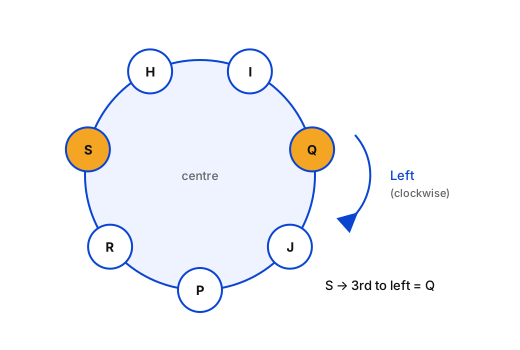
  1. Place P; R immediately left of P; H third to the left of P.
  2. I neighbours both H and Q; the seat between P-side and H is beside R, so I and Q go on H's other side.
  3. J is not next to H ⇒ J sits beside P, S between R and H.
  4. Third to the left of S: H, I, Q ⇒ Q

Trick: Fix the person named in most clues (P) first, then count seats.

Answer: (C) Q

अवधारणा: केंद्र की ओर मुँह होने पर 'बाएँ' = दक्षिणावर्त, 'दाएँ' = वामावर्त।

  1. P रखें; R, P के ठीक बाएँ; H, P के बाएँ तीसरे स्थान पर।
  2. I, H और Q दोनों का पड़ोसी; R की ओर वाली सीट पर Q नहीं आ सकता, अतः I और Q, H के दूसरी ओर।
  3. J, H का पड़ोसी नहीं ⇒ J, P के बगल में, S, R और H के बीच।
  4. S के बाएँ तीसरा: H, I, Q ⇒ Q

ट्रिक: सबसे अधिक संकेतों वाले व्यक्ति (P) को पहले रखें, फिर सीटें गिनें।

उत्तर: (C) Q
RRB NTPC Undergraduate CBT 1General Intelligence and ReasoningCircular SeatingRRB NTPC Undergraduate CBT 1 2024 · 13 Aug Shift 3 →
Q2382.
All 30 students in a class are standing in a row facing north. Alok is 12th from the right end while Aman is 16th from the left end. How many students stand between Alok and Aman?
एक कक्षा के सभी 30 विद्यार्थी उत्तर की ओर मुख करके एक पंक्ति में खड़े हैं। आलोक दाएँ छोर से 12वें स्थान पर है जबकि अमन बाएँ छोर से 16वें स्थान पर है। आलोक और अमन के बीच कितने विद्यार्थी खड़े हैं?
  1. A3
  2. B2
  3. C5
  4. D4
Show answer

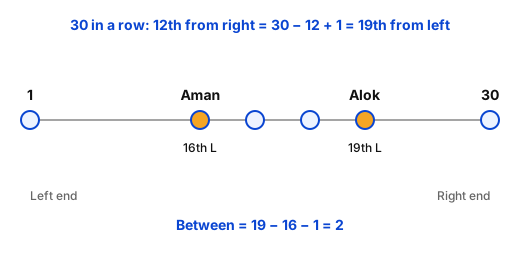
Concept: Position from left = Total − position from right +1.

  1. Alok from left =30−12+1=19
  2. Aman is 16th from left
  3. Between them =19−16−1=2

Trick: Between two people counted from the same end = difference −1.

Answer: (B) 2

अवधारणा: बाएँ से स्थान = कुल − दाएँ से स्थान +1।

  1. आलोक बाएँ से =30−12+1=19
  2. अमन बाएँ से 16वाँ
  3. बीच में =19−16−1=2

ट्रिक: एक ही सिरे से गिने दो लोगों के बीच = अंतर −1।

उत्तर: (B) 2

RRB NTPC Undergraduate CBT 1General Intelligence and ReasoningRanking and OrderRRB NTPC Undergraduate CBT 1 2024 · 13 Aug Shift 3 →
Q2383.
If 3 is added to each odd digit and 1 is subtracted from each even digit in the number 6243514, how many digits will appear more than once in the new number thus formed?
यदि संख्या 6243514 के प्रत्येक विषम अंक में 3 जोड़ दिया जाए और प्रत्येक सम अंक में से 1 घटा दिया जाए, तो इस प्रकार बनी नई संख्या में कितने अंक एक से अधिक बार आएँगे?
  1. ATwoदो
  2. BNoneकोई नहीं
  3. CThreeतीन
  4. DOneएक
Show answer

Concept: Apply the rule digit by digit (odd +3, even −1), then count repeated digits.

  1. 6 2 4 3 5 1 4 → 5 1 3 6 8 4 3
  2. Digit 3 appears twice; all others once
  3. Only one digit repeats

Trick: Repeats in the original (4 twice) may vanish or new ones appear – always recount after changing.

Answer: (D) One

अवधारणा: हर अंक पर नियम लगाएँ (विषम +3, सम −1), फिर दोहराए अंक गिनें।

  1. 6 2 4 3 5 1 4 → 5 1 3 6 8 4 3
  2. अंक 3 दो बार; बाकी सब एक बार
  3. केवल एक अंक दोहराया गया

ट्रिक: मूल संख्या की पुनरावृत्ति बदल सकती है – बदलने के बाद दोबारा गिनें।

उत्तर: (D) एक

RRB NTPC Undergraduate CBT 1General Intelligence and ReasoningNumber OperationsRRB NTPC Undergraduate CBT 1 2024 · 13 Aug Shift 3 →
Q2384.
Refer to the following number and symbol series and answer the question that follows. Counting to be done from left to right only.
(NOTE: All numbers are single digit numbers only.)
(Left) 1 $ 2 6 7 3 * & 4 β μ 2 5 % 9 0 2 3 6 # @ 8 (Right)
If all the symbols are dropped from the series, which of the following numbers will be the fifth from the left?
निम्नलिखित संख्या और प्रतीक शृंखला का संदर्भ लीजिए और उसके बाद दिए गए प्रश्न का उत्तर दीजिए। गिनती केवल बाएँ से दाएँ की जानी है।
(ध्यान दें: सभी संख्याएँ केवल एक अंक वाली संख्याएँ हैं।)
(बाएँ) 1 $ 2 6 7 3 * & 4 β μ 2 5 % 9 0 2 3 6 # @ 8 (दाएँ)
यदि शृंखला से सभी प्रतीक हटा दिए जाएँ, तो निम्नलिखित में से कौन-सी संख्या बाएँ से पाँचवीं होगी?
  1. A3
  2. B4
  3. C2
  4. D1
Show answer

Concept: Drop every symbol and re-index only the digits from the left.

  1. Digits only: 1, 2, 6, 7, 3, 4, 2, 5, 9, 0, 2, 3, 6, 8
  2. Fifth from left = 3

Trick: Only the stretch up to the 5th digit matters: 1 $ 2 6 7 3 → fifth digit is 3.

Answer: (A) 3

अवधारणा: सभी प्रतीक हटाकर केवल अंकों को बाएँ से गिनें।

  1. केवल अंक: 1, 2, 6, 7, 3, 4, 2, 5, 9, 0, 2, 3, 6, 8
  2. बाएँ से पाँचवाँ = 3

ट्रिक: पाँचवें अंक तक ही देखना है: 1 $ 2 6 7 3 → पाँचवाँ अंक 3।

उत्तर: (A) 3

RRB NTPC Undergraduate CBT 1General Intelligence and ReasoningNumber–Symbol SeriesRRB NTPC Undergraduate CBT 1 2024 · 13 Aug Shift 3 →
Q2385.
If 1 is added to each odd digit and 2 is subtracted from each even digit in the number 7431856, which of the following digits will be second from the right in the new number thus formed?
यदि संख्या 7431856 के प्रत्येक विषम अंक में 1 जोड़ दिया जाए और प्रत्येक सम अंक में से 2 घटा दिया जाए, तो इस प्रकार बनी नई संख्या में दाएँ से दूसरा अंक निम्नलिखित में से कौन-सा होगा?
  1. A2
  2. B8
  3. C4
  4. D6
Show answer

Concept: Odd digits +1, even digits −2, keeping positions.

  1. 7 4 3 1 8 5 6 → 8 2 4 2 6 6 4
  2. Second from right = 6

Trick: Only change the needed digit: second from right is 5 (odd) → 6.

Answer: (D) 6

अवधारणा: विषम अंक +1, सम अंक −2; स्थान वही रहें।

  1. 7 4 3 1 8 5 6 → 8 2 4 2 6 6 4
  2. दाएँ से दूसरा = 6

ट्रिक: केवल ज़रूरी अंक बदलें: दाएँ से दूसरा 5 (विषम) → 6।

उत्तर: (D) 6

RRB NTPC Undergraduate CBT 1General Intelligence and ReasoningNumber OperationsRRB NTPC Undergraduate CBT 1 2024 · 13 Aug Shift 3 →
Q2386.
What should come in place of the question mark (?) in the given series based on the English alphabetical order?
KPV RWC YDJ FKQ ?
अंग्रेज़ी वर्णमाला क्रम के आधार पर दी गई शृंखला में प्रश्न चिह्न (?) के स्थान पर क्या आना चाहिए?
KPV RWC YDJ FKQ ?
  1. AMXR
  2. BMYU
  3. CMRX
  4. DMUY
Show answer

Concept: Each letter moves forward by the same step in the next term.

  1. K→R→Y→F (+7, wrapping after Z); P→W→D→K (+7); V→C→J→Q (+7)
  2. Next: F+7 = M, K+7 = R, Q+7 = X
  3. Term = MRX

Trick: For wrap-around, subtract 26: Y(25)+7 = 32 − 26 = 6 = F.

Answer: (C) MRX

अवधारणा: अगले पद में हर अक्षर समान कदम आगे बढ़ता है।

  1. K→R→Y→F (+7, Z के बाद फिर A से); P→W→D→K (+7); V→C→J→Q (+7)
  2. अगला: F+7 = M, K+7 = R, Q+7 = X
  3. पद = MRX

ट्रिक: Z पार होने पर 26 घटाएँ: Y(25)+7 = 32 − 26 = 6 = F।

उत्तर: (C) MRX

RRB NTPC Undergraduate CBT 1General Intelligence and ReasoningLetter SeriesRRB NTPC Undergraduate CBT 1 2024 · 13 Aug Shift 3 →
Q2387.
In a certain code language, ‘FATE’ is coded as ‘2357’ and ‘TURN’ is coded as ‘4126’. What is the code for ‘T’ in that language?
एक निश्चित कूट भाषा में, ‘FATE’ को ‘2357’ के रूप में और ‘TURN’ को ‘4126’ के रूप में कूटबद्ध किया जाता है। उस भाषा में ‘T’ का कूट क्या है?
  1. A6
  2. B4
  3. C5
  4. D2
Show answer

Concept: With jumbled digit codes, the common letter gets the common digit.

  1. FATE → {2, 3, 5, 7}; TURN → {4, 1, 2, 6}
  2. Common letter: T; common digit: 2
  3. So T = 2

Trick: Common letter ↔ common digit.

Answer: (D) 2

अवधारणा: बिखरे अंक-कोड में उभयनिष्ठ अक्षर = उभयनिष्ठ अंक।

  1. FATE → {2, 3, 5, 7}; TURN → {4, 1, 2, 6}
  2. उभयनिष्ठ अक्षर: T; उभयनिष्ठ अंक: 2
  3. अतः T = 2

ट्रिक: उभयनिष्ठ अक्षर ↔ उभयनिष्ठ अंक।

उत्तर: (D) 2

RRB NTPC Undergraduate CBT 1General Intelligence and ReasoningCoding–DecodingRRB NTPC Undergraduate CBT 1 2024 · 13 Aug Shift 3 →
Q2388.
Select the triad that follows the same pattern as that followed by the two triads given below. Both triads follow the same pattern.
MT-OV-QS
OV-QX-SU
उस त्रयी का चयन कीजिए जो उसी पैटर्न का अनुसरण करती है जिसका अनुसरण नीचे दी गई दो त्रयियाँ करती हैं। दोनों त्रयियाँ एक ही पैटर्न का अनुसरण करती हैं।
MT-OV-QS
OV-QX-SU
  1. AHO-JQ-LM
  2. BGO-JQ-LM
  3. CHO-JQ-LN
  4. DGO-IQ-LM
Show answer

Concept: Track first letters and second letters of the three pairs separately.

  1. MT-OV-QS: first letters M→O→Q (+2, +2); second letters T→V→S (+2, −3)
  2. OV-QX-SU: O→Q→S (+2, +2); V→X→U (+2, −3)
  3. HO-JQ-LN: H→J→L (+2, +2); O→Q→N (+2, −3) ✓

Trick: Option A/B fail at the last letter (Q−3 = N, not M); D fails at G→I→L.

Answer: (C) HO-JQ-LN

अवधारणा: तीनों जोड़ियों के पहले और दूसरे अक्षरों को अलग-अलग देखें।

  1. MT-OV-QS: पहले अक्षर M→O→Q (+2, +2); दूसरे T→V→S (+2, −3)
  2. OV-QX-SU: O→Q→S (+2, +2); V→X→U (+2, −3)
  3. HO-JQ-LN: H→J→L (+2, +2); O→Q→N (+2, −3) ✓

ट्रिक: A/B अंतिम अक्षर पर विफल (Q−3 = N, M नहीं); D में G→I→L गलत।

उत्तर: (C) HO-JQ-LN

RRB NTPC Undergraduate CBT 1General Intelligence and ReasoningLetter TriadsRRB NTPC Undergraduate CBT 1 2024 · 13 Aug Shift 3 →
Q2389.
Based on the English alphabetical order, three of the following four letter-cluster pairs are alike in a certain way and thus form a group. Which letter-cluster pair DOES NOT belong to that group?
(Note: The odd one out is not based on the number of consonants/vowels or their position in the letter-cluster.)
अंग्रेज़ी वर्णमाला क्रम के आधार पर, निम्नलिखित चार अक्षर-समूह युग्मों में से तीन किसी निश्चित प्रकार से एकसमान हैं और इस प्रकार एक समूह बनाते हैं। कौन-सा अक्षर-समूह युग्म उस समूह से संबंधित नहीं है?
(ध्यान दें: असंगत अक्षर-समूह, व्यंजनों/स्वरों की संख्या या अक्षर-समूह में उनके स्थान पर आधारित नहीं है।)
  1. ATM-OS
  2. BSL-NQ
  3. CXQ-SV
  4. DVO-QT
Show answer

Concept: Compare 1st→3rd and 2nd→4th letters by position.

  1. SL-NQ: S−5 = N, L+5 = Q; XQ-SV: X−5 = S, Q+5 = V
  2. VO-QT: V−5 = Q, O+5 = T
  3. TM-OS: T−5 = O but M+6 = S (not +5) → odd

Trick: Rule −5 / +5; one gap breaking it marks the odd pair.

Answer: (A) TM-OS

अवधारणा: स्थान के आधार पर पहले→तीसरे और दूसरे→चौथे अक्षर की तुलना करें।

  1. SL-NQ: S−5 = N, L+5 = Q; XQ-SV: X−5 = S, Q+5 = V
  2. VO-QT: V−5 = Q, O+5 = T
  3. TM-OS: T−5 = O पर M+6 = S (+5 नहीं) → विषम

ट्रिक: नियम −5 / +5; जो इसे तोड़े वह विषम।

उत्तर: (A) TM-OS

RRB NTPC Undergraduate CBT 1General Intelligence and ReasoningOdd One Out – Letter PairsRRB NTPC Undergraduate CBT 1 2024 · 13 Aug Shift 3 →
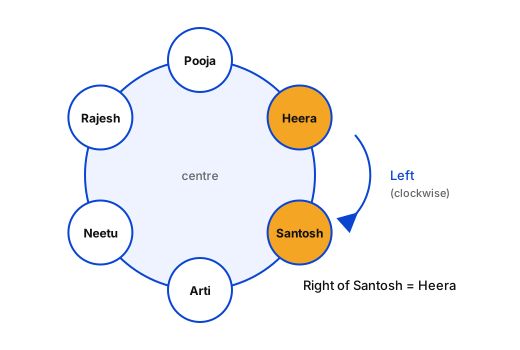
Q2390.
Rajesh, Heera, Neetu, Santosh, Pooja and Arti are sitting around a circle, facing the centre Rajesh sits second to the left of Arti. Arti sits third to the right of Pooja. Neetu sits second to the left of Santosh. Who sits to the immediate right of Santosh?
राजेश, हीरा, नीतू, संतोष, पूजा और आरती एक वृत्त के चारों ओर केंद्र की ओर मुख करके बैठे हैं। राजेश, आरती के बाएँ से दूसरे स्थान पर बैठा है। आरती, पूजा के दाएँ से तीसरे स्थान पर बैठी है। नीतू, संतोष के बाएँ से दूसरे स्थान पर बैठी है। संतोष के ठीक दाएँ कौन बैठा है?
  1. APoojaपूजा
  2. BArtiआरती
  3. CHeeraहीरा
  4. DRajeshराजेश
Show answer

Concept: Facing the centre, left = clockwise, right = anticlockwise. In a circle of 6, 'third to the right' is the opposite seat.

  1. Arti third to the right of Pooja ⇒ Arti opposite Pooja.
  2. Rajesh second to the left of Arti.
  3. Neetu second to the left of Santosh ⇒ only possible with Santosh next to Arti (on the side away from Rajesh) and Neetu beside Arti on the other side; Heera fills the last seat.
  4. Immediate right of Santosh = Heera

Trick: In 6 seats, 3rd left = 3rd right = opposite – place that pair first.

Answer: (C) Heera

अवधारणा: केंद्र की ओर मुँह: बाएँ = दक्षिणावर्त, दाएँ = वामावर्त। 6 सीटों में 'दाएँ तीसरा' = ठीक सामने।

  1. आरती, पूजा के दाएँ तीसरे ⇒ आरती पूजा के सामने।
  2. राजेश, आरती के बाएँ दूसरे स्थान पर।
  3. नीतू, संतोष के बाएँ दूसरे ⇒ यह तभी संभव जब संतोष आरती के बगल में (राजेश से दूर वाली ओर) और नीतू आरती के दूसरी ओर; हीरा बची सीट पर।
  4. संतोष के ठीक दाएँ = हीरा

ट्रिक: 6 सीटों में तीसरा बाएँ = तीसरा दाएँ = सामने – पहले वह जोड़ी रखें।

उत्तर: (C) हीरा

RRB NTPC Undergraduate CBT 1General Intelligence and ReasoningCircular SeatingRRB NTPC Undergraduate CBT 1 2024 · 13 Aug Shift 3 →
Q2391.
What should come in place of the question mark (?) in the given series?
35 50 70 95 125 ?
दी गई शृंखला में प्रश्न चिह्न (?) के स्थान पर क्या आना चाहिए?
35 50 70 95 125 ?
  1. A175
  2. B160
  3. C165
  4. D170
Show answer

Concept: Check consecutive differences.

  1. Differences: 15, 20, 25, 30 (increase by 5)
  2. Next difference =35
  3. 125+35=160

Trick: Differences in steps of 5 → next is 35.

Answer: (B) 160

अवधारणा: क्रमागत पदों के अंतर देखें।

  1. अंतर: 15, 20, 25, 30 (हर बार +5)
  2. अगला अंतर =35
  3. 125+35=160

ट्रिक: अंतर 5-5 बढ़ रहे हैं → अगला 35।

उत्तर: (B) 160

RRB NTPC Undergraduate CBT 1General Intelligence and ReasoningNumber SeriesRRB NTPC Undergraduate CBT 1 2024 · 13 Aug Shift 3 →
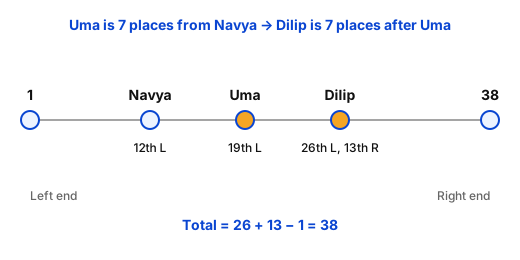
Q2392.
In a row of people all facing North, Navya is 12th from the left end. Uma is 19th from the left end. Uma is exactly between Navya and Dilip. If Dilip is 13th from the right end of the line, how many people are there in the row?
उत्तर की ओर मुख करके खड़े लोगों की एक पंक्ति में, नव्या बाएँ छोर से 12वें स्थान पर है। उमा बाएँ छोर से 19वें स्थान पर है। उमा, नव्या और दिलीप के ठीक मध्य में है। यदि दिलीप पंक्ति के दाएँ छोर से 13वें स्थान पर है, तो पंक्ति में कितने लोग हैं?
  1. A35
  2. B37
  3. C34
  4. D38
Show answer

Concept: Total = position from left + position from right −1.

  1. Uma is midway: Navya 12th, Uma 19th ⇒ gap 7, so Dilip =19+7=26th from left
  2. Dilip is 13th from right
  3. Total =26+13−1=38

Trick: Midpoint rule: Dilip =2×19−12=26.

Answer: (D) 38

अवधारणा: कुल = बाएँ से स्थान + दाएँ से स्थान −1।

  1. उमा बीच में: नव्या 12वीं, उमा 19वीं ⇒ अंतर 7, अतः दिलीप =19+7=26वाँ (बाएँ से)
  2. दिलीप दाएँ से 13वाँ
  3. कुल =26+13−1=38

ट्रिक: मध्य बिंदु नियम: दिलीप =2×19−12=26।

उत्तर: (D) 38

RRB NTPC Undergraduate CBT 1General Intelligence and ReasoningRanking and OrderRRB NTPC Undergraduate CBT 1 2024 · 13 Aug Shift 3 →
Q2393.
Refer to the following number and symbol series and answer the question that follows. Counting to be done from left to right only.
(Left) @ 7 8 % * Ω 2 1 # 4 3 0 π 9 μ 7 8 Ω # 9 β (Right)
How many such symbols are there, which are immediately preceded by an odd number and also immediately followed by an even number?
निम्नलिखित संख्या और प्रतीक शृंखला का संदर्भ लीजिए और उसके बाद दिए गए प्रश्न का उत्तर दीजिए। गिनती केवल बाएँ से दाएँ की जानी है।
(बाएँ) @ 7 8 % * Ω 2 1 # 4 3 0 π 9 μ 7 8 Ω # 9 β (दाएँ)
ऐसे कितने प्रतीक हैं जिनके ठीक पहले एक विषम संख्या है और ठीक बाद एक सम संख्या भी है?
  1. AThreeतीन
  2. BFourचार
  3. COneएक
  4. DNoneकोई नहीं
Show answer

Concept: Check every symbol: the element just before it must be odd and the one just after it even.

  1. % (8 before), * (% before), Ω (* before) – fail
  2. # : 1 before (odd), 4 after (even) ✓
  3. π (0 before), μ (9 before, 7 after – odd), Ω (8 before), # (Ω before), β (nothing after) – fail

Trick: Look for the pattern odd–symbol–even directly: only '1 # 4'.

Answer: (C) One

अवधारणा: हर प्रतीक जाँचें: ठीक पहले विषम संख्या और ठीक बाद सम संख्या हो।

  1. % (पहले 8), * (पहले %), Ω (पहले *) – नहीं
  2. # : पहले 1 (विषम), बाद में 4 (सम) ✓
  3. π (पहले 0), μ (पहले 9, बाद 7 – विषम), Ω (पहले 8), # (पहले Ω), β (बाद में कुछ नहीं) – नहीं

ट्रिक: सीधे विषम–प्रतीक–सम पैटर्न खोजें: केवल '1 # 4'।

उत्तर: (C) एक

RRB NTPC Undergraduate CBT 1General Intelligence and ReasoningNumber–Symbol SeriesRRB NTPC Undergraduate CBT 1 2024 · 13 Aug Shift 3 →
Q2394.
Based on the English alphabetical order, three of the following four letter-cluster pairs are alike in a certain way and thus form a group. Which letter-cluster pair DOES NOT belong to that group?
(Note: The odd one out is not based on the number of consonants/vowels or their position in the letter-cluster.)
अंग्रेज़ी वर्णमाला क्रम के आधार पर, निम्नलिखित चार अक्षर-समूह युग्मों में से तीन किसी निश्चित प्रकार से एकसमान हैं और इस प्रकार एक समूह बनाते हैं। कौन-सा अक्षर-समूह युग्म उस समूह से संबंधित नहीं है?
(ध्यान दें: असंगत अक्षर-समूह, व्यंजनों/स्वरों की संख्या या अक्षर-समूह में उनके स्थान पर आधारित नहीं है।)
  1. AFL - PG
  2. BHN - RI
  3. CDJ - NE
  4. DBH - LD
Show answer

Concept: Write letter positions: first→second (+6), first→third (+10), third→fourth (−9).

  1. FL-PG: 6, 12, 16, 7 → +6, +10, −9
  2. HN-RI: 8, 14, 18, 9 ✓; DJ-NE: 4, 10, 14, 5 ✓
  3. BH-LD: 2, 8, 12, 4 → last step −8 → odd

Trick: Check the last gap of each pair – three show −9, one shows −8.

Answer: (D) BH - LD

अवधारणा: अक्षरों की स्थिति लिखें: पहला→दूसरा (+6), पहला→तीसरा (+10), तीसरा→चौथा (−9)।

  1. FL-PG: 6, 12, 16, 7 → +6, +10, −9
  2. HN-RI: 8, 14, 18, 9 ✓; DJ-NE: 4, 10, 14, 5 ✓
  3. BH-LD: 2, 8, 12, 4 → अंतिम चरण −8 → विषम

ट्रिक: हर जोड़ी का अंतिम अंतर देखें – तीन में −9, एक में −8।

उत्तर: (D) BH - LD

RRB NTPC Undergraduate CBT 1General Intelligence and ReasoningOdd One Out – Letter PairsRRB NTPC Undergraduate CBT 1 2024 · 13 Aug Shift 3 →
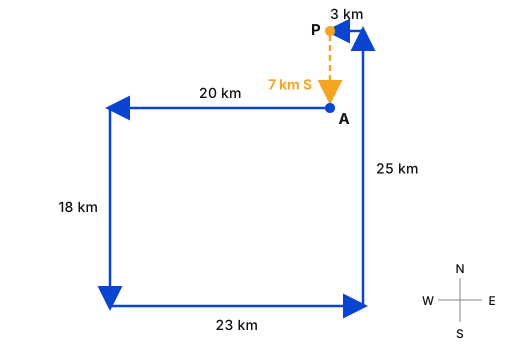
Q2395.
Gyamel starts from Point A and drives 20 km towards West. He then takes a left turn, drives 18 km, turns left and drives 23 km. He then takes a left turn and drives 25 km. He takes a final left turn, drives 3 km and stops at Point P. How far (shortest distance) and towards which direction should he drive in order to reach Point A again? (All turns are 90° turns only unless specified.)
ग्यामेल बिंदु A से चलना शुरू करता है और पश्चिम की ओर 20 km गाड़ी चलाता है। फिर वह बाएँ मुड़ता है, 18 km गाड़ी चलाता है, बाएँ मुड़ता है और 23 km गाड़ी चलाता है। फिर वह बाएँ मुड़ता है और 25 km गाड़ी चलाता है। वह अंतिम बार बाएँ मुड़ता है, 3 km गाड़ी चलाता है और बिंदु P पर रुक जाता है। बिंदु A पर फिर से पहुँचने के लिए उसे कितनी दूरी (न्यूनतम दूरी) और किस दिशा में गाड़ी चलानी चाहिए? (जब तक निर्दिष्ट न किया जाए, सभी मोड़ केवल 90° के मोड़ हैं।)
  1. A5 km to the Westपश्चिम की ओर 5 km
  2. B4 km to the Southदक्षिण की ओर 4 km
  3. C7 km to the Southदक्षिण की ओर 7 km
  4. D6 km to the Northउत्तर की ओर 6 km
Show answer

Concept: Plot each leg; facing west, a left turn means south; four left turns go W → S → E → N → W.

  1. A → 20 km W; left (S) 18 km; left (E) 23 km; left (N) 25 km; left (W) 3 km → P
  2. East–west: −20 + 23 − 3 = 0 ⇒ P is in line with A
  3. North–south: −18 + 25 = 7 km north ⇒ go 7 km south

Trick: Net each axis separately: horizontal cancels, vertical leaves 7 km north.

Answer: (C) 7 km to the South

अवधारणा: हर चाल अंकित करें; पश्चिम की ओर मुँह हो तो बायाँ मोड़ = दक्षिण; चार बाएँ मोड़: W → S → E → N → W।

  1. A → 20 km पश्चिम; बाएँ (दक्षिण) 18 km; बाएँ (पूर्व) 23 km; बाएँ (उत्तर) 25 km; बाएँ (पश्चिम) 3 km → P
  2. पूर्व–पश्चिम: −20 + 23 − 3 = 0 ⇒ P, A की सीध में
  3. उत्तर–दक्षिण: −18 + 25 = 7 km उत्तर ⇒ 7 km दक्षिण जाएँ

ट्रिक: दोनों अक्ष अलग जोड़ें: क्षैतिज शून्य, ऊर्ध्वाधर 7 km उत्तर।

उत्तर: (C) 7 km दक्षिण की ओर

RRB NTPC Undergraduate CBT 1General Intelligence and ReasoningDirection and DistanceRRB NTPC Undergraduate CBT 1 2024 · 13 Aug Shift 3 →
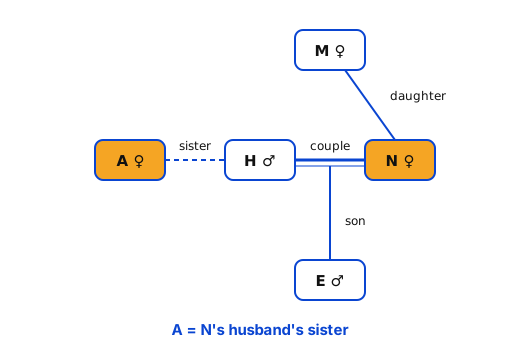
Q2396.
A is the sister of H. H is the father of E. E is the son of N. M is the mother of N. How is A related to N?
A, H की बहन है। H, E का पिता है। E, N का पुत्र है। M, N की माता है। A का N से क्या संबंध है?
  1. ADaughter's husband's motherपुत्री के पति की माता
  2. BDaughter's husband's sisterपुत्री के पति की बहन
  3. CHusband's motherपति की माता
  4. DHusband's sisterपति की बहन
Show answer

Concept: Build the family tree; parents of the same child are a couple.

  1. H is the father of E and E is the son of N ⇒ N is H's wife.
  2. A is H's sister.
  3. So A is N's husband's sister (M, N's mother, is extra information).

Trick: Husband's sister = 'nanad' – the common child links H and N as a couple.

Answer: (D) Husband's sister

अवधारणा: परिवार वृक्ष बनाएँ; एक ही संतान के माता-पिता पति-पत्नी होते हैं।

  1. H, E का पिता और E, N का पुत्र ⇒ N, H की पत्नी।
  2. A, H की बहन है।
  3. अतः A, N के पति की बहन (ननद) है; M (N की माँ) अतिरिक्त जानकारी है।

ट्रिक: पति की बहन = ननद – साझा संतान H और N को पति-पत्नी जोड़ती है।

उत्तर: (D) पति की बहन

RRB NTPC Undergraduate CBT 1General Intelligence and ReasoningBlood RelationsRRB NTPC Undergraduate CBT 1 2024 · 13 Aug Shift 3 →
Q2397.
In the following triad, each group of letters is related to the subsequent one following a certain logic. Select from the given options, the one which follows the same logic. GAIN - AIGN - NIAG
SINE - INSE - ENIS
निम्नलिखित त्रयी में, अक्षरों का प्रत्येक समूह एक निश्चित तर्क का अनुसरण करते हुए अपने अगले समूह से संबंधित है। दिए गए विकल्पों में से उसका चयन कीजिए जो उसी तर्क का अनुसरण करता है। GAIN - AIGN - NIAG
SINE - INSE - ENIS
  1. AGAME - AMGE - AMEG
  2. BMONK - OMNK - KONM
  3. CSEAT - SAET - TAES
  4. DRICE - ICRE - ECIR
Show answer

Concept: Step 1: letters 1, 2, 3, 4 → order 2, 3, 1, 4. Step 3: the original word reversed.

  1. GAIN → AIGN (A I G N) → NIAG (GAIN reversed)
  2. SINE → INSE → ENIS ✓
  3. RICE → ICRE (I C R E) → ECIR (RICE reversed) ✓

Trick: Check the third word first – it must be the first word reversed; only RICE–ECIR and SEAT–TAES pass, and SAET fails step 1.

Answer: (D) RICE - ICRE - ECIR

अवधारणा: चरण 1: अक्षर 1, 2, 3, 4 → क्रम 2, 3, 1, 4। तीसरा शब्द: मूल शब्द उल्टा।

  1. GAIN → AIGN (A I G N) → NIAG (GAIN उल्टा)
  2. SINE → INSE → ENIS ✓
  3. RICE → ICRE (I C R E) → ECIR (RICE उल्टा) ✓

ट्रिक: पहले तीसरा शब्द जाँचें – वह पहले शब्द का उल्टा हो; RICE–ECIR और SEAT–TAES बचते हैं, पर SAET चरण 1 में विफल।

उत्तर: (D) RICE - ICRE - ECIR

RRB NTPC Undergraduate CBT 1General Intelligence and ReasoningLetter Rearrangement TriadRRB NTPC Undergraduate CBT 1 2024 · 13 Aug Shift 3 →
Q2398.
In the following triad, each group of letters is related to the subsequent one following a certain logic. Select from the given options, the one that follows the same logic. MARK - MKRA - KRAM
PLAY - PYAL - YALP
निम्नलिखित त्रयी में, अक्षरों का प्रत्येक समूह एक निश्चित तर्क का अनुसरण करते हुए अपने अगले समूह से संबंधित है। दिए गए विकल्पों में से उसका चयन कीजिए जो उसी तर्क का अनुसरण करता है। MARK - MKRA - KRAM
PLAY - PYAL - YALP
  1. ATRAY - TRYA - RAYT
  2. BFIRE - IFRE - EIRF
  3. CGATE - GTAE - ETAG
  4. DBUSH - BHSU - HSUB
Show answer

Concept: Step 1: letters 1, 2, 3, 4 → order 1, 4, 3, 2. Step 3: the original word reversed.

  1. MARK → MKRA → KRAM (MARK reversed)
  2. PLAY → PYAL → YALP ✓
  3. BUSH → BHSU (B H S U) → HSUB (BUSH reversed) ✓

Trick: Third word = first word reversed; middle word keeps the first letter and swaps 2nd and 4th.

Answer: (D) BUSH - BHSU - HSUB

अवधारणा: चरण 1: अक्षर 1, 2, 3, 4 → क्रम 1, 4, 3, 2। तीसरा शब्द: मूल शब्द उल्टा।

  1. MARK → MKRA → KRAM (MARK उल्टा)
  2. PLAY → PYAL → YALP ✓
  3. BUSH → BHSU (B H S U) → HSUB (BUSH उल्टा) ✓

ट्रिक: तीसरा शब्द = पहला उल्टा; बीच वाले में पहला अक्षर वही, दूसरा और चौथा अदला-बदली।

उत्तर: (D) BUSH - BHSU - HSUB

RRB NTPC Undergraduate CBT 1General Intelligence and ReasoningLetter Rearrangement TriadRRB NTPC Undergraduate CBT 1 2024 · 13 Aug Shift 3 →
Q2399.
Which of the following is an impact of river meandering in plains?
मैदानों में नदी के विसर्पण (meandering) का निम्नलिखित में से कौन-सा प्रभाव है?
  1. AFormation of waterfallsजलप्रपातों का निर्माण
  2. BFormation of oxbow lakesगोखुर झीलों (oxbow lakes) का निर्माण
  3. CFormation of rift valleysभ्रंश घाटियों (rift valleys) का निर्माण
  4. DFormation of rapidsक्षिप्रिकाओं (rapids) का निर्माण
Show answer

Concept: In the plains a mature river flows slowly and swings in wide loops called meanders.

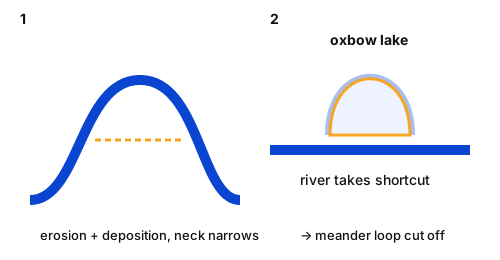
  1. Water erodes the outer bank (faster flow) and deposits on the inner bank, so the loops keep growing.
  2. The neck of a loop becomes very narrow; during a flood the river cuts straight across it.
  3. The abandoned loop is left as a crescent-shaped lake – an oxbow lake.
  4. Waterfalls and rapids form in the youthful (mountain) stage; rift valleys form by faulting, not by rivers.

Yaad rakhein: Meander → cut-off → oxbow lake: a typical landform of the lower course (e.g., Ganga plains).

Answer: (B) Formation of oxbow lakes

अवधारणा: मैदानों में परिपक्व नदी धीमी गति से बहती है और चौड़े घुमाव (meanders) बनाती है।

  1. बाहरी किनारे पर अपरदन और भीतरी किनारे पर निक्षेपण से घुमाव बढ़ता जाता है।
  2. घुमाव की गर्दन (neck) बहुत संकरी हो जाती है; बाढ़ के समय नदी सीधा रास्ता बना लेती है।
  3. छूटा हुआ घुमाव अर्धचंद्राकार झील बन जाता है – गोखुर झील (oxbow lake)।
  4. जलप्रपात व क्षिप्रिका (rapids) युवा अवस्था (पर्वतीय भाग) में बनते हैं; भ्रंश घाटी (rift valley) भ्रंशन से बनती है।

याद रखें: विसर्प (meander) → कट-ऑफ → गोखुर झील: नदी के निचले मार्ग (जैसे गंगा मैदान) की पहचान।

उत्तर: (B) गोखुर झीलों का निर्माण (Formation of oxbow lakes)

RRB NTPC Undergraduate CBT 1General AwarenessFluvial landformsRRB NTPC Undergraduate CBT 1 2024 · 13 Aug Shift 2 →
Q2400.
When was the Rural Landless Employment Guarantee Programme (RLEGP) launched?
ग्रामीण भूमिहीन रोज़गार गारंटी कार्यक्रम (RLEGP) कब शुरू किया गया था?
  1. A2 October 19852 अक्टूबर 1985
  2. B15 August 198315 अगस्त 1983
  3. C1 April 19801 अप्रैल 1980
  4. D26 January 198226 जनवरी 1982
Show answer

Concept: RLEGP was a centrally sponsored wage-employment programme for landless rural households.

  1. It was launched on 15 August 1983 to give guaranteed employment of up to 100 days to at least one member of every landless household.
  2. In 1989 RLEGP and NREP (1980) were merged into the Jawahar Rozgar Yojana (JRY).

Yaad rakhein: NREP – 1980, RLEGP – 1983, both merged into JRY – 1989.

Answer: (B) 15 August 1983

अवधारणा: RLEGP भूमिहीन ग्रामीण परिवारों के लिए केंद्र प्रायोजित मज़दूरी-रोज़गार कार्यक्रम था।

  1. इसे 15 अगस्त 1983 को शुरू किया गया; उद्देश्य हर भूमिहीन परिवार के कम से कम एक सदस्य को 100 दिन तक रोज़गार देना था।
  2. 1989 में RLEGP और NREP (1980) को मिलाकर जवाहर रोज़गार योजना (JRY) बनाई गई।

याद रखें: NREP – 1980, RLEGP – 1983, दोनों का विलय JRY – 1989 में।

उत्तर: (B) 15 अगस्त 1983

RRB NTPC Undergraduate CBT 1General AwarenessRural employment programmesRRB NTPC Undergraduate CBT 1 2024 · 13 Aug Shift 2 →