Question bank

Q&A: practice questions with answers

Search questions on any topic. Filter by exam category, exam, subject and topic, try the question, then open the answer and explanation.

Courses – airGurukul

8,495 questions found.

Q7981.
Anil ranked 27th from the top and 19th from the bottom in his class. How many students are there in his class?
अनिल अपनी कक्षा में ऊपर से 27वें और नीचे से 19वें स्थान पर है। उसकी कक्षा में कुल कितने विद्यार्थी हैं?
  1. A43
  2. B44
  3. C45
  4. D46
Show answer

Concept: When a person's rank is known from both ends, total = rank from top + rank from bottom − 1 (the person is counted twice).

  1. Total =27+19−1=45.
  2. Check: 26 students above Anil, 18 below him, plus Anil → 26+18+1=45.

Trick: Add the two ranks and subtract 1.

Answer: (C) 45

अवधारणा: जब किसी का स्थान दोनों सिरों से पता हो, कुल = ऊपर से स्थान + नीचे से स्थान − 1 (व्यक्ति दो बार गिना जाता है)।

  1. कुल =27+19−1=45।
  2. जाँच: अनिल से ऊपर 26, नीचे 18, और अनिल स्वयं → 26+18+1=45।

ट्रिक: दोनों स्थान जोड़ें और 1 घटाएँ।

उत्तर: (C) 45
RRB NTPC Undergraduate CBT 1General Intelligence and ReasoningRankingRRB NTPC Undergraduate CBT 1 2025 · 8 May Shift 3 →
Q7982.
Based on the English alphabetical order, three of the following four letter-cluster pairs are alike in a certain way and thus form a group. Which is the one that does not belong to that group?
(Note: The odd one out is not based on the number of consonants/vowels or their position in the letter-cluster.)
अंग्रेज़ी वर्णमाला क्रम के आधार पर, निम्नलिखित चार अक्षर-समूह युग्मों में से तीन एक निश्चित प्रकार से समान हैं और इस प्रकार एक समूह बनाते हैं। वह कौन-सा है जो उस समूह से संबंधित नहीं है?
(नोट: असंगत युग्म व्यंजनों/स्वरों की संख्या या अक्षर-समूह में उनकी स्थिति पर आधारित नहीं है।)
  1. AOH-KM
  2. BQJ-MO
  3. CLE-HJ
  4. DJC-FG
Show answer

Concept: Compare the shift of each letter from the first cluster to the second.

  1. OH–KM: O−4 = K, H+5 = M. QJ–MO: Q−4 = M, J+5 = O. LE–HJ: L−4 = H, E+5 = J. Pattern (−4,+5).
  2. JC–FG: J−4 = F, but C+4 = G → (−4,+4) – odd one.

Trick: The first letters all follow −4, so decide using the second letters: H→M, J→O, E→J are +5; C→G is +4.

Answer: (D) JC-FG

अवधारणा: पहले समूह से दूसरे समूह तक हर अक्षर का परिवर्तन देखें।

  1. OH–KM: O−4 = K, H+5 = M। QJ–MO: Q−4 = M, J+5 = O। LE–HJ: L−4 = H, E+5 = J। पैटर्न (−4,+5)।
  2. JC–FG: J−4 = F, पर C+4 = G → (−4,+4) – विषम।

ट्रिक: पहले अक्षर सबमें −4 हैं, इसलिए दूसरे अक्षर से तय करें: H→M, J→O, E→J +5; C→G +4।

उत्तर: (D) JC-FG

RRB NTPC Undergraduate CBT 1General Intelligence and ReasoningOdd one out (letter pairs)RRB NTPC Undergraduate CBT 1 2025 · 8 May Shift 3 →
Q7983.
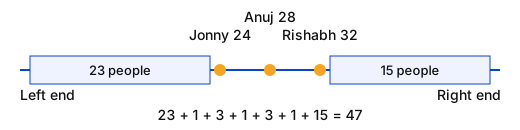
In a row of people all facing the north, Jonny is 24th from the left end. Anuj is 28th from the left end. Anuj is exactly between Jonny and Rishabh. If Rishabh is 16th from the right end of the line, how many people are there in the row?
उत्तर की ओर मुख किए हुए व्यक्तियों की एक पंक्ति में, जॉनी बाएँ छोर से 24वें स्थान पर है। अनुज बाएँ छोर से 28वें स्थान पर है। अनुज, जॉनी और ऋषभ के ठीक बीच में है। यदि ऋषभ पंक्ति के दाएँ छोर से 16वें स्थान पर है, तो पंक्ति में कुल कितने व्यक्ति हैं?
  1. A45
  2. B47
  3. C44
  4. D46
Show answer

Concept: Convert every position to "from the left", then use total = left rank + right rank − 1.

  1. Jonny = 24th, Anuj = 28th from the left. Anuj is exactly midway, so Rishabh is 28+(28−24)=32nd from the left.
  2. Rishabh is 16th from the right → total =32+16−1=47.

Trick: "Exactly between" ⇒ equal gaps: Jonny→Anuj = 4, so Anuj→Rishabh = 4.

Answer: (B) 47

अवधारणा: हर स्थान को "बाएँ से" में बदलें, फिर कुल = बाएँ से स्थान + दाएँ से स्थान − 1।

  1. जॉनी = 24वाँ, अनुज = 28वाँ बाएँ से। अनुज ठीक बीच में है, अतः ऋषभ बाएँ से 28+(28−24)=32वाँ।
  2. ऋषभ दाएँ से 16वाँ → कुल =32+16−1=47।

ट्रिक: "ठीक बीच में" ⇒ बराबर अंतर: जॉनी→अनुज = 4, तो अनुज→ऋषभ = 4।

उत्तर: (B) 47

RRB NTPC Undergraduate CBT 1General Intelligence and ReasoningRanking in a rowRRB NTPC Undergraduate CBT 1 2025 · 8 May Shift 3 →
Q7984.
In a certain code language,
A ≤ B means ‘A is the son of B’
A ¥ B means ‘A is the father of B’
A @ B means ‘A is the brother of B’
A - B means ‘A is the wife of B’
Based on the above, how is P related to X if 'P - Q @ S ≤ T ¥ X'?
एक निश्चित कूट भाषा में,
A ≤ B का अर्थ है ‘A, B का पुत्र है’
A ¥ B का अर्थ है ‘A, B का पिता है’
A @ B का अर्थ है ‘A, B का भाई है’
A - B का अर्थ है ‘A, B की पत्नी है’
उपरोक्त के आधार पर, यदि 'P - Q @ S ≤ T ¥ X' है, तो P, X से किस प्रकार संबंधित है?
  1. ASon's wifeपुत्र की पत्नी
  2. BFather's motherपिता की माता
  3. CFather's sisterपिता की बहन
  4. DBrother's wifeभाई की पत्नी
Show answer

Concept: Decode from the right end and build the family tree.

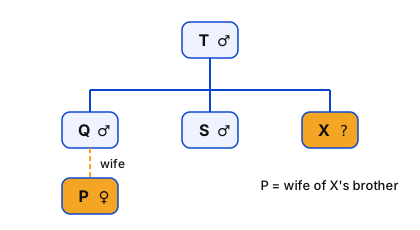
  1. T ¥ X → T is the father of X. S ≤ T → S is the son of T, so S and X are siblings.
  2. Q @ S → Q is the brother of S, hence Q is also X's brother.
  3. P − Q → P is the wife of Q.
  4. So P is the wife of X's brother → brother's wife (sister-in-law).

Trick: Siblings of a sibling are your siblings – Q, S and X are all children of T.

Answer: (D) Brother's wife

अवधारणा: दाएँ सिरे से decode करके वंश-वृक्ष बनाएँ।

  1. T ¥ X → T, X का पिता। S ≤ T → S, T का पुत्र, अतः S और X भाई-बहन।
  2. Q @ S → Q, S का भाई, इसलिए Q, X का भी भाई।
  3. P − Q → P, Q की पत्नी।
  4. अतः P, X के भाई की पत्नी → भाई की पत्नी (भाभी)।

ट्रिक: भाई-बहन के भाई-बहन आपके भी भाई-बहन – Q, S और X सब T की संतान हैं।

उत्तर: (D) Brother's wife

RRB NTPC Undergraduate CBT 1General Intelligence and ReasoningBlood relations (coded)RRB NTPC Undergraduate CBT 1 2025 · 8 May Shift 3 →
Q7985.
What should come in place of ‘?’ in the given series?
23 32 42 53 65 78 ?
दी गई शृंखला में ‘?’ के स्थान पर क्या आना चाहिए?
23 32 42 53 65 78 ?
  1. A90
  2. B85
  3. C87
  4. D92
Show answer

Concept: Look at the successive differences.

  1. 23→32→42→53→65→78: differences 9,10,11,12,13.
  2. Next difference is 14 → 78+14=92.

Trick: Differences increasing by 1 – the classic "second-level AP" series.

Answer: (D) 92

अवधारणा: क्रमागत अंतर देखें।

  1. 23→32→42→53→65→78: अंतर 9,10,11,12,13।
  2. अगला अंतर 14 → 78+14=92।

ट्रिक: अंतर 1-1 बढ़ रहे हैं – क्लासिक "दूसरे स्तर की AP" श्रृंखला।

उत्तर: (D) 92

RRB NTPC Undergraduate CBT 1General Intelligence and ReasoningNumber seriesRRB NTPC Undergraduate CBT 1 2025 · 8 May Shift 3 →
Q7986.
Which of the following letter-number clusters will replace the question mark (?) in the given series to make it logically complete?
ICX 9, LFZ 16, OIB 25, RLD 36, ?
निम्नलिखित में से कौन-सा अक्षर-संख्या समूह दी गई शृंखला में प्रश्नचिह्न (?) के स्थान पर आकर उसे तार्किक रूप से पूर्ण करेगा?
ICX 9, LFZ 16, OIB 25, RLD 36, ?
  1. AVOJ 48
  2. BUPI 48
  3. CVPJ 49
  4. DUOF 49
Show answer

Concept: Separate the three letter positions and the number.

  1. 1st letters: I→L→O→R (+3) → U. 2nd letters: C→F→I→L (+3) → O. 3rd letters: X→Z→B→D (+2) → F.
  2. Numbers: 9,16,25,36=32,42,52,62 → next 72=49.
  3. Required term: UOF 49.

Trick: The numbers are perfect squares → 49, which leaves (C) and (D); the third letter D+2 = F settles it.

Answer: (D) UOF 49

अवधारणा: तीनों अक्षर-स्थानों और संख्या को अलग-अलग देखें।

  1. पहले अक्षर: I→L→O→R (+3) → U। दूसरे: C→F→I→L (+3) → O। तीसरे: X→Z→B→D (+2) → F।
  2. संख्याएँ: 9,16,25,36=32,42,52,62 → अगली 72=49।
  3. अभीष्ट पद: UOF 49।

ट्रिक: संख्याएँ पूर्ण वर्ग हैं → 49, जिससे (C) और (D) बचते हैं; तीसरा अक्षर D+2 = F निर्णय कर देता है।

उत्तर: (D) UOF 49

RRB NTPC Undergraduate CBT 1General Intelligence and ReasoningLetter-number seriesRRB NTPC Undergraduate CBT 1 2025 · 8 May Shift 3 →
Q7987.
In a certain code language,
A x B means ‘A is the father of B’,
A ≠ B means ‘A is the son of B’,
A ÷ B means ‘A is the daughter of B’ and
A ₹ B means ‘A is the sister of B’.
Based on the above, how is C related to M if 'C ₹ D ≠ E ÷ L x M'?
एक निश्चित कूट भाषा में,
A x B का अर्थ है ‘A, B का पिता है’,
A ≠ B का अर्थ है ‘A, B का पुत्र है’,
A ÷ B का अर्थ है ‘A, B की पुत्री है’ और
A ₹ B का अर्थ है ‘A, B की बहन है’।
उपरोक्त के आधार पर, यदि 'C ₹ D ≠ E ÷ L x M' है, तो C, M से किस प्रकार संबंधित है?
  1. ADaughterपुत्री
  2. BSister's daughterबहन की पुत्री
  3. CMother's motherमाता की माता
  4. DSisterबहन
Show answer

Concept: Decode each symbol and draw the generations.

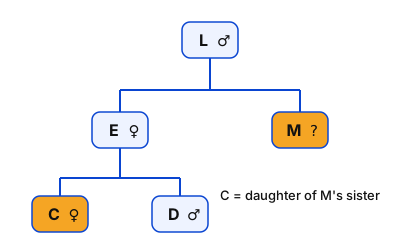
  1. L x M → L is the father of M. E ÷ L → E is the daughter of L, so E is M's sister.
  2. D ≠ E → D is the son of E. C ₹ D → C is the sister of D, so C is also E's daughter.
  3. Hence C is the daughter of M's sister → sister's daughter (niece).

Trick: Find the common ancestor (L): M and E are in one generation, C and D one generation below.

Answer: (B) Sister's daughter

अवधारणा: हर प्रतीक decode करके पीढ़ियाँ बनाएँ।

  1. L x M → L, M का पिता। E ÷ L → E, L की पुत्री, अतः E, M की बहन।
  2. D ≠ E → D, E का पुत्र। C ₹ D → C, D की बहन, अतः C भी E की पुत्री।
  3. इसलिए C, M की बहन की पुत्री → बहन की बेटी (भांजी)।

ट्रिक: साझा पूर्वज (L) खोजें: M और E एक पीढ़ी में, C और D एक पीढ़ी नीचे।

उत्तर: (B) Sister's daughter

RRB NTPC Undergraduate CBT 1General Intelligence and ReasoningBlood relations (coded)RRB NTPC Undergraduate CBT 1 2025 · 8 May Shift 3 →
Q7988.
Select the set in which the numbers are related in the same way as are the numbers of the following sets.
(NOTE: Operations should be performed on the whole numbers, without breaking down the numbers into their constituent digits. E.g. 13 – Operations on 13 such as
adding/subtracting/multiplying to 13 can be performed. Breaking down 13 into 1 and 3 and then performing mathematical operations on 1 and 3 is not allowed.)
(5, 120, 12)
(3, 84, 14)
उस समुच्चय का चयन कीजिए जिसमें संख्याएँ उसी प्रकार संबंधित हैं जिस प्रकार निम्नलिखित समुच्चयों की संख्याएँ संबंधित हैं।
(नोट: संक्रियाएँ पूर्ण संख्याओं पर की जानी चाहिए, संख्याओं को उनके घटक अंकों में तोड़े बिना। उदाहरण के लिए 13 – 13 पर संक्रियाएँ जैसे
13 में जोड़ना/घटाना/गुणा करना किया जा सकता है। 13 को 1 और 3 में तोड़कर फिर 1 और 3 पर गणितीय संक्रियाएँ करने की अनुमति नहीं है।)
(5, 120, 12)
(3, 84, 14)
  1. A(7, 155, 11)
  2. B(2, 78, 13)
  3. C(4, 150, 19)
  4. D(6, 216, 18)
Show answer

Concept: Find one operation linking the outer numbers to the middle number.

  1. (5, 120, 12): 5×12×2=120. (3, 84, 14): 3×14×2=84. Rule: middle =2× (first × third).
  2. (6, 216, 18): 6×18×2=216 ✓.
  3. Others: 7×11×2=154≠155; 2×13×2=52≠78; 4×19×2=152≠150.

Trick: Divide the middle by the product of the ends – if the quotient is the same (here 2) for both given sets, that is the rule.

Answer: (D) (6, 216, 18)

अवधारणा: बाहरी संख्याओं को बीच की संख्या से जोड़ने वाली एक संक्रिया खोजें।

  1. (5, 120, 12): 5×12×2=120। (3, 84, 14): 3×14×2=84। नियम: बीच =2× (पहली × तीसरी)।
  2. (6, 216, 18): 6×18×2=216 ✓।
  3. अन्य: 7×11×2=154≠155; 2×13×2=52≠78; 4×19×2=152≠150।

ट्रिक: बीच की संख्या को सिरों के गुणनफल से भाग दें – दोनों दिए सेटों में भागफल समान (यहाँ 2) हो तो वही नियम है।

उत्तर: (D) (6, 216, 18)

RRB NTPC Undergraduate CBT 1General Intelligence and ReasoningNumber analogy (triplets)RRB NTPC Undergraduate CBT 1 2025 · 8 May Shift 3 →
Q7989.
Each letter in the word JUMBLED is arranged in the English alphabetical order. How many letters are there in the English alphabetical order between the letter which is fourth from the left and the one which is first from the right in the new letter cluster thus formed?
शब्द JUMBLED के प्रत्येक अक्षर को अंग्रेज़ी वर्णमाला क्रम में व्यवस्थित किया जाता है। इस प्रकार बने नए अक्षर-समूह में बाएँ से चौथे अक्षर और दाएँ से पहले अक्षर के बीच अंग्रेज़ी वर्णमाला क्रम में कितने अक्षर हैं?
  1. A9
  2. B11
  3. C13
  4. D10
Show answer

Concept: Sort the letters, pick the two required letters, count the alphabet letters between them.

  1. JUMBLED → B D E J L M U.
  2. Fourth from left = J; first from right = U.
  3. Between J(10) and U(21): 21−10−1=10 letters (K to T).

Trick: Letters between = position difference − 1.

Answer: (D) 10

अवधारणा: अक्षर क्रम में लगाएँ, दोनों अभीष्ट अक्षर चुनें, वर्णमाला में उनके बीच के अक्षर गिनें।

  1. JUMBLED → B D E J L M U।
  2. बाएँ से चौथा = J; दाएँ से पहला = U।
  3. J(10) और U(21) के बीच: 21−10−1=10 अक्षर (K से T)।

ट्रिक: बीच के अक्षर = स्थानों का अंतर − 1।

उत्तर: (D) 10

RRB NTPC Undergraduate CBT 1General Intelligence and ReasoningAlphabetical arrangementRRB NTPC Undergraduate CBT 1 2025 · 8 May Shift 3 →
Q7990.
What should come in place of ‘?’ in the given series?
65 ? 24 15 11 10
दी गई शृंखला में ‘?’ के स्थान पर क्या आना चाहिए?
65 ? 24 15 11 10
  1. A38
  2. B40
  3. C42
  4. D44
Show answer

Concept: The series decreases; read it from the right to spot the pattern.

  1. 10→11 (+1), 11→15 (+4), 15→24 (+9) – the differences are 12,22,32.
  2. Next: 24+42=40, and check 40+52=65 ✓.

Trick: Differences 1,4,9,16,25 = perfect squares.

Answer: (B) 40

अवधारणा: श्रृंखला घट रही है; पैटर्न देखने के लिए दाएँ से पढ़ें।

  1. 10→11 (+1), 11→15 (+4), 15→24 (+9) – अंतर 12,22,32।
  2. अगला: 24+42=40, और जाँच 40+52=65 ✓।

ट्रिक: अंतर 1,4,9,16,25 = पूर्ण वर्ग।

उत्तर: (B) 40

RRB NTPC Undergraduate CBT 1General Intelligence and ReasoningNumber seriesRRB NTPC Undergraduate CBT 1 2025 · 8 May Shift 3 →
Q7991.
What should come in place of the question mark (?) in the given series to make it logically complete?
MV7 PT13 RR19 ?
दी गई शृंखला को तार्किक रूप से पूर्ण करने के लिए प्रश्नचिह्न (?) के स्थान पर क्या आना चाहिए?
MV7 PT13 RR19 ?
  1. ATR27
  2. BTP25
  3. CSP25
  4. DTQ26
Show answer

Concept: Treat each of the three positions as its own series.

  1. 1st letter: M→P→R: +3,+2 → next +1 → S.
  2. 2nd letter: V→T→R: −2 each → P.
  3. Number: 7→13→19: +6 each → 25.
  4. Term: SP25.

Trick: The second letter (−2 → P) and number (+6 → 25) together match only option (C).

Answer: (C) SP25

अवधारणा: तीनों स्थानों को अलग-अलग श्रृंखला मानें।

  1. पहला अक्षर: M→P→R: +3,+2 → अगला +1 → S।
  2. दूसरा अक्षर: V→T→R: हर बार −2 → P।
  3. संख्या: 7→13→19: हर बार +6 → 25।
  4. पद: SP25।

ट्रिक: दूसरा अक्षर (−2 → P) और संख्या (+6 → 25) मिलकर केवल विकल्प (C) से मेल खाते हैं।

उत्तर: (C) SP25

RRB NTPC Undergraduate CBT 1General Intelligence and ReasoningLetter-number seriesRRB NTPC Undergraduate CBT 1 2025 · 8 May Shift 3 →
Q7992.
Based on the alphabetical order, three of the following four are alike in a certain way and thus form a group. Which is the one that does not belong to that group?
(Note: The odd man out is not based on the number of consonants/vowels or their position in the letter cluster.)
वर्णमाला क्रम के आधार पर, निम्नलिखित चार में से तीन एक निश्चित प्रकार से समान हैं और इस प्रकार एक समूह बनाते हैं। वह कौन-सा है जो उस समूह से संबंधित नहीं है?
(नोट: असंगत विकल्प व्यंजनों/स्वरों की संख्या या अक्षर-समूह में उनकी स्थिति पर आधारित नहीं है।)
  1. ANPS
  2. BHJL
  3. CEGJ
  4. DQSV
Show answer

Concept: Find the gaps between consecutive letters in each cluster.

  1. NPS: N→P +2, P→S +3. EGJ: +2,+3. QSV: +2,+3.
  2. HJL: H→J +2, J→L +2 → pattern (+2,+2) – different.

Trick: Write the position differences under each cluster; the one with a different pair is the odd one.

Answer: (B) HJL

अवधारणा: हर समूह में क्रमागत अक्षरों का अंतर निकालें।

  1. NPS: N→P +2, P→S +3। EGJ: +2,+3। QSV: +2,+3।
  2. HJL: H→J +2, J→L +2 → पैटर्न (+2,+2) – भिन्न।

ट्रिक: हर समूह के नीचे स्थान-अंतर लिखें; अलग जोड़े वाला ही विषम है।

उत्तर: (B) HJL

RRB NTPC Undergraduate CBT 1General Intelligence and ReasoningOdd one out (letter clusters)RRB NTPC Undergraduate CBT 1 2025 · 8 May Shift 3 →
Q7993.
Read the given statement(s) and conclusions carefully. Assuming that the information given in the statements is true, even if it appears to be at variance with commonly known facts, decide which of the given conclusions logically follow(s) from the statement(s).
Statements:
All carpets are shoes.
All paintings are shoes.
Conclusions:
(I) Some carpets are paintings.
(II) Some shoes are paintings.
दिए गए कथन(कथनों) और निष्कर्षों को ध्यानपूर्वक पढ़िए। यह मानते हुए कि कथनों में दी गई जानकारी सत्य है, भले ही वह सामान्यतः ज्ञात तथ्यों से भिन्न प्रतीत होती हो, निर्णय कीजिए कि दिए गए निष्कर्षों में से कौन-सा/कौन-से निष्कर्ष कथन(कथनों) का तार्किक रूप से अनुसरण करता है/करते हैं।
कथन:
सभी कालीन जूते हैं।
सभी चित्र जूते हैं।
निष्कर्ष:
(I) कुछ कालीन चित्र हैं।
(II) कुछ जूते चित्र हैं।
  1. AOnly conclusion (I) followsकेवल निष्कर्ष (I) अनुसरण करता है
  2. BNeither conclusion (I) nor (II) followsन तो निष्कर्ष (I) और न ही (II) अनुसरण करता है
  3. CBoth conclusions (I) and (II) followनिष्कर्ष (I) और (II) दोनों अनुसरण करते हैं
  4. DOnly conclusion (II) followsकेवल निष्कर्ष (II) अनुसरण करता है
Show answer

Concept: Two "All … are shoes" statements share only the predicate; the subjects need not overlap.

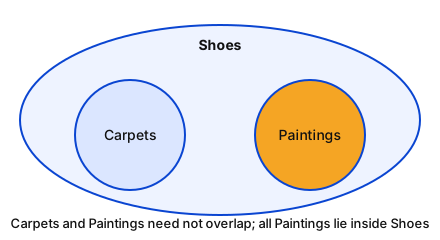
  1. Carpets and Paintings are both inside Shoes, but the diagram can be drawn with them separate – so "Some carpets are paintings" (I) does not necessarily follow.
  2. "All paintings are shoes" ⇒ "Some shoes are paintings" (II) – the converse always follows.

Trick: Middle term "shoes" is undistributed in both premises → no conclusion between carpets and paintings; only the direct converses follow.

Answer: (D) Only conclusion (II) follows

अवधारणा: दो "All … are shoes" कथनों में केवल विधेय साझा है; कर्ता (subjects) का overlap ज़रूरी नहीं।

  1. Carpets और Paintings दोनों Shoes के अंदर हैं, पर चित्र में उन्हें अलग-अलग भी खींचा जा सकता है – इसलिए "कुछ carpets, paintings हैं" (I) निश्चित रूप से नहीं निकलता।
  2. "सभी paintings, shoes हैं" ⇒ "कुछ shoes, paintings हैं" (II) – converse हमेशा सही।

ट्रिक: मध्य पद "shoes" दोनों कथनों में अव्याप्त है → carpets और paintings के बीच कोई निष्कर्ष नहीं; केवल सीधे converse निकलते हैं।

उत्तर: (D) Only conclusion (II) follows

RRB NTPC Undergraduate CBT 1General Intelligence and ReasoningSyllogismRRB NTPC Undergraduate CBT 1 2025 · 8 May Shift 3 →
Q7994.
Seven boxes A, B, C, D, E, F and G are kept one over the other but not necessarily in the same order. Only two boxes are kept between C and G. Only F is kept above B. No box is kept below G. E is kept at some place below A but at some place above D. How many boxes are kept between F and D?
सात बक्से A, B, C, D, E, F और G एक के ऊपर एक रखे गए हैं, लेकिन आवश्यक नहीं कि इसी क्रम में हों। C और G के बीच केवल दो बक्से रखे हैं। B के ऊपर केवल F रखा है। G के नीचे कोई बक्सा नहीं रखा है। E, A के नीचे किसी स्थान पर लेकिन D के ऊपर किसी स्थान पर रखा है। F और D के बीच कितने बक्से रखे हैं?
  1. A3
  2. B1
  3. C4
  4. D2
Show answer

Concept: Number positions 1 (bottom) to 7 (top) and place the fixed boxes first.

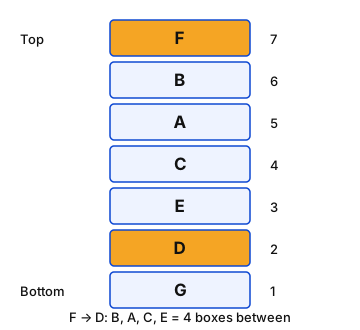
  1. No box below G → G = 1. Only two boxes between C and G → C = 4.
  2. Only F is above B → F = 7, B = 6.
  3. Remaining places 2, 3, 5 for A, E, D with A above E above D → A = 5, E = 3, D = 2.
  4. Top to bottom: F B A C E D G. Between F (7) and D (2): B, A, C, E = 4 boxes.

Trick: "Only X is above Y" pins the top two at once; "no box below" pins the bottom.

Answer: (C) 4

अवधारणा: स्थान 1 (नीचे) से 7 (ऊपर) तक मानें और पहले निश्चित बॉक्स रखें।

  1. G के नीचे कोई बॉक्स नहीं → G = 1। C और G के बीच केवल दो → C = 4।
  2. B के ऊपर केवल F → F = 7, B = 6।
  3. बचे स्थान 2, 3, 5 में A, E, D, जहाँ A ऊपर, फिर E, फिर D → A = 5, E = 3, D = 2।
  4. ऊपर से नीचे: F B A C E D G। F (7) और D (2) के बीच: B, A, C, E = 4 बॉक्स।

ट्रिक: "Y के ऊपर केवल X" ऊपर के दो स्थान तुरंत तय करता है; "नीचे कोई नहीं" सबसे नीचे वाला।

उत्तर: (C) 4

RRB NTPC Undergraduate CBT 1General Intelligence and ReasoningBox arrangement (stack)RRB NTPC Undergraduate CBT 1 2025 · 8 May Shift 3 →
Q7995.
SMAL is related to VQFR in a certain way based on the English alphabetical order. In the same way, ECUJ is related to HGZP. To which of the following options is NOJB related, following the same logic?
अंग्रेज़ी वर्णमाला क्रम के आधार पर SMAL, VQFR से एक निश्चित प्रकार से संबंधित है। उसी प्रकार, ECUJ, HGZP से संबंधित है। उसी तर्क का अनुसरण करते हुए, NOJB निम्नलिखित में से किस विकल्प से संबंधित है?
  1. AQSIO
  2. BQOSH
  3. CQSHO
  4. DQSOH
Show answer

Concept: Each letter of the word moves forward by an increasing amount.

  1. SMAL → VQFR: S+3 = V, M+4 = Q, A+5 = F, L+6 = R. Shifts +3,+4,+5,+6.
  2. ECUJ → HGZP: E+3 = H, C+4 = G, U+5 = Z, J+6 = P ✓.
  3. NOJB → N+3 = Q, O+4 = S, J+5 = O, B+6 = H → QSOH.

Trick: Options (A), (C), (D) all start with QS – decide by the third letter: J+5 = O.

Answer: (D) QSOH

अवधारणा: शब्द का हर अक्षर बढ़ते हुए अंतर से आगे बढ़ता है।

  1. SMAL → VQFR: S+3 = V, M+4 = Q, A+5 = F, L+6 = R। शिफ्ट +3,+4,+5,+6।
  2. ECUJ → HGZP: E+3 = H, C+4 = G, U+5 = Z, J+6 = P ✓।
  3. NOJB → N+3 = Q, O+4 = S, J+5 = O, B+6 = H → QSOH।

ट्रिक: विकल्प (A), (C), (D) सभी QS से शुरू होते हैं – तीसरे अक्षर से तय करें: J+5 = O।

उत्तर: (D) QSOH

RRB NTPC Undergraduate CBT 1General Intelligence and ReasoningLetter analogyRRB NTPC Undergraduate CBT 1 2025 · 8 May Shift 3 →
Q7996.
Which of the following is the most widely used irrigation method in India?
भारत में निम्नलिखित में से कौन-सी सिंचाई विधि सबसे अधिक व्यापक रूप से प्रयोग की जाती है?
  1. ASurface irrigationसतही सिंचाई (Surface irrigation)
  2. BSprinkler irrigationफव्वारा सिंचाई (Sprinkler irrigation)
  3. CDrip irrigationड्रिप (टपक) सिंचाई (Drip irrigation)
  4. DSubsurface irrigationउपसतही सिंचाई (Subsurface irrigation)
Show answer

Concept: Irrigation methods: surface (flood/furrow), sprinkler, drip and subsurface.

  1. Surface irrigation – water flows over the field by gravity through canals, wells and tube-wells – covers the overwhelming majority of India's irrigated area.
  2. Sprinkler and drip (micro-irrigation) are water-efficient but still cover only a small share, promoted under PMKSY "Per Drop More Crop".

Yaad rakhein: Most used = surface (flood); most efficient = drip.

Answer: (A) Surface irrigation

अवधारणा: सिंचाई विधियाँ: सतही (flood/furrow), फव्वारा (sprinkler), टपक (drip) और उप-सतही (subsurface)।

  1. सतही सिंचाई – नहर, कुएँ और नलकूप से पानी गुरुत्व द्वारा खेत में बहता है – भारत के सिंचित क्षेत्र के अधिकांश भाग में प्रयुक्त होती है।
  2. फव्वारा व टपक (सूक्ष्म सिंचाई) जल-कुशल हैं पर इनका हिस्सा अभी कम है; PMKSY "Per Drop More Crop" से प्रोत्साहित।

याद रखें: सबसे अधिक प्रयुक्त = सतही (flood); सबसे कुशल = टपक (drip)।

उत्तर: (A) सतही सिंचाई (Surface irrigation)

RRB NTPC Undergraduate CBT 1General AwarenessIrrigation methods in IndiaRRB NTPC Undergraduate CBT 1 2025 · 8 May Shift 2 →
Q7997.
Which category of beneficiaries is eligible for ₹1 lakh under Telangana’s Revanth Anna ka Sahara-Miskeen la Kosam scheme launched in September 2025?
सितंबर 2025 में शुरू की गई तेलंगाना की 'रेवंत अन्ना का सहारा-मिस्कीन ला कोसम' योजना के अंतर्गत लाभार्थियों की कौन-सी श्रेणी ₹1 लाख के लिए पात्र है?
  1. AEconomically weak Muslim familiesआर्थिक रूप से कमज़ोर मुस्लिम परिवार
  2. BMinority teachers in private institutionsनिजी संस्थानों में अल्पसंख्यक शिक्षक
  3. COverseas migrant workers from Telanganaतेलंगाना के विदेशी प्रवासी श्रमिक
  4. DTribal self-help groupsजनजातीय स्वयं सहायता समूह
Show answer

Concept: Telangana's minority-welfare scheme launched in September 2025.

  1. "Revanth Anna ka Sahara – Miskeen la Kosam" provides ₹1 lakh financial assistance to economically weak (poor) Muslim families of the state.
  2. It is a welfare grant for poor minority households, not for teachers, migrant workers or tribal SHGs.

Yaad rakhein: "Miskeen" (Urdu) = poor/needy ⇒ the scheme targets poor Muslim families.

Answer: (A) Economically weak Muslim families

अवधारणा: सितंबर 2025 में शुरू तेलंगाना की अल्पसंख्यक-कल्याण योजना।

  1. "रेवंत अन्ना का सहारा – मिस्कीन ला कोसम" योजना राज्य के आर्थिक रूप से कमज़ोर (गरीब) मुस्लिम परिवारों को ₹1 लाख की आर्थिक सहायता देती है।
  2. यह गरीब अल्पसंख्यक परिवारों के लिए कल्याण अनुदान है – शिक्षकों, प्रवासी श्रमिकों या आदिवासी SHG के लिए नहीं।

याद रखें: "मिस्कीन" (उर्दू) = गरीब/ज़रूरतमंद ⇒ योजना गरीब मुस्लिम परिवारों के लिए।

उत्तर: (A) आर्थिक रूप से कमज़ोर मुस्लिम परिवार

RRB NTPC Undergraduate CBT 1General AwarenessState schemes (Telangana)RRB NTPC Undergraduate CBT 1 2025 · 8 May Shift 2 →
Q7998.
The fibrous root system, in which the primary root is short-lived and replaced by numerous adventitious roots, is a characteristic feature of which group of plants?
झकड़ा जड़ तंत्र (fibrous root system), जिसमें प्राथमिक जड़ अल्पजीवी होती है और उसका स्थान अनेक अपस्थानिक जड़ें ले लेती हैं, पौधों के किस समूह का विशिष्ट लक्षण है?
  1. ADicotyledonousद्विबीजपत्री (Dicotyledonous)
  2. BMonocotyledonousएकबीजपत्री (Monocotyledonous)
  3. CGymnospermsअनावृतबीजी (Gymnosperms)
  4. DPteridophytesटेरिडोफाइट (Pteridophytes)
Show answer

Concept: Tap root vs fibrous root system.

  1. In monocots (wheat, rice, maize, grasses) the primary root is short-lived and is replaced by many adventitious roots from the stem base – a fibrous root system.
  2. Dicots (mustard, gram) keep the primary root as a tap root; gymnosperms also have tap roots.

Yaad rakhein: Monocot = parallel venation + fibrous roots; Dicot = reticulate venation + tap root.

Answer: (B) Monocotyledonous

अवधारणा: मूसला जड़ (tap root) बनाम झकड़ा जड़ (fibrous root) तंत्र।

  1. एकबीजपत्री (गेहूँ, धान, मक्का, घास) में प्राथमिक जड़ अल्पजीवी होती है और तने के आधार से निकली अनेक अपस्थानिक (adventitious) जड़ें उसकी जगह लेती हैं – झकड़ा जड़ तंत्र।
  2. द्विबीजपत्री (सरसों, चना) में प्राथमिक जड़ मूसला जड़ बनी रहती है; अनावृतबीजी में भी मूसला जड़।

याद रखें: Monocot = समानांतर शिराविन्यास + झकड़ा जड़; Dicot = जालिका शिराविन्यास + मूसला जड़।

उत्तर: (B) एकबीजपत्री (Monocotyledonous)

RRB NTPC Undergraduate CBT 1General AwarenessRoot systems (Biology)RRB NTPC Undergraduate CBT 1 2025 · 8 May Shift 2 →
Q7999.
Which memory is fastest and located very close to the CPU?
कौन-सी मेमोरी सबसे तेज़ होती है और CPU के बहुत निकट स्थित होती है?
  1. AHard Diskहार्ड डिस्क
  2. BCD-ROM
  3. CCache Memoryकैश मेमोरी (Cache Memory)
  4. DPen Driveपेन ड्राइव
Show answer

Concept: Memory hierarchy: registers → cache → RAM → secondary storage.

  1. Cache memory is a small, very fast SRAM placed on or next to the CPU to hold frequently used data/instructions.
  2. Hard disk, CD-ROM and pen drive are secondary storage – large but slow and far from the CPU.

Yaad rakhein: Closer to CPU ⇒ faster and smaller (L1 < L2 < L3 cache).

Answer: (C) Cache Memory

अवधारणा: मेमोरी पदानुक्रम: रजिस्टर → कैश → RAM → द्वितीयक भंडारण।

  1. कैश मेमोरी छोटी, बहुत तेज़ SRAM है जो CPU पर या उसके पास रहती है और बार-बार प्रयुक्त डेटा/निर्देश रखती है।
  2. हार्ड डिस्क, CD-ROM और पेन ड्राइव द्वितीयक भंडारण हैं – बड़े पर धीमे और CPU से दूर।

याद रखें: CPU के जितना पास ⇒ उतना तेज़ और छोटा (L1 < L2 < L3 कैश)।

उत्तर: (C) कैश मेमोरी (Cache Memory)

RRB NTPC Undergraduate CBT 1General AwarenessComputer memory hierarchyRRB NTPC Undergraduate CBT 1 2025 · 8 May Shift 2 →
Q8000.
'Effect of Proclamation of Emergency' is explicitly provided in which of the following provisions of the Constitution of India?
'आपात की उद्घोषणा का प्रभाव' भारत के संविधान के निम्नलिखित में से किस प्रावधान में स्पष्ट रूप से उपबंधित है?
  1. AArticle 353अनुच्छेद 353
  2. BArticle 256अनुच्छेद 256
  3. CArticle 350अनुच्छेद 350
  4. DArticle 252अनुच्छेद 252
Show answer

Concept: Part XVIII (Articles 352–360) of the Constitution deals with Emergency.

  1. Article 352 – Proclamation of Emergency; Article 353 – Effect of Proclamation of Emergency (Union executive power extends to directing states; Parliament may legislate on state subjects).
  2. Art. 256 – obligation of states to comply with Union laws; Art. 350 – language for grievance representation; Art. 252 – Parliament legislating for two or more states by consent.

Yaad rakhein: 352 proclaim → 353 effect → 354 financial effect → 356 President's rule → 360 financial emergency.

Answer: (A) Article 353

अवधारणा: संविधान का भाग XVIII (अनुच्छेद 352–360) आपातकाल से संबंधित है।

  1. अनुच्छेद 352 – आपात की उद्घोषणा; अनुच्छेद 353 – आपात की उद्घोषणा का प्रभाव (संघ की कार्यपालिका शक्ति राज्यों को निर्देश देने तक विस्तृत; संसद राज्य-सूची पर कानून बना सकती है)।
  2. अनु. 256 – संघ के कानूनों का पालन करने का राज्यों का दायित्व; अनु. 350 – शिकायत निवारण की भाषा; अनु. 252 – दो या अधिक राज्यों की सहमति से संसद का विधायन।

याद रखें: 352 उद्घोषणा → 353 प्रभाव → 354 वित्तीय प्रभाव → 356 राष्ट्रपति शासन → 360 वित्तीय आपात।

उत्तर: (A) अनुच्छेद 353

RRB NTPC Undergraduate CBT 1General AwarenessEmergency provisions (Polity)RRB NTPC Undergraduate CBT 1 2025 · 8 May Shift 2 →