Q2001.
For hydrogen atom, the orbital/s with lowest energy is/are :
(A) (B) (C) (D) (E)
Choose the correct answer from the options given below :
हाइड्रोजन परमाणु के लिए, न्यूनतम ऊर्जा वाला/वाले कक्षक है/हैं :
(A) (B) (C) (D) (E)
नीचे दिए गए विकल्पों में से सही उत्तर चुनिए :
- A(B), (C) and (D) onlyकेवल (B), (C) और (D)
- B(A) and (E) onlyकेवल (A) और (E)
- C(A) onlyकेवल (A)
- D(B) onlyकेवल (B)
Show answer
Concept: In a one-electron species such as the H atom, orbital energy depends only on the principal quantum number : eV. There is no -dependence.
- , and all have , so they are degenerate.
- and have , hence higher (less negative) energy.
- Lowest energy therefore belongs to the three orbitals: (B), (C) and (D).
Short trick: For hydrogen, just compare – smaller means lower energy; never matters.
Answer: (A)
अवधारणा: H परमाणु जैसी एक-इलेक्ट्रॉन स्पीशीज़ में कक्षक की ऊर्जा केवल मुख्य क्वांटम संख्या पर निर्भर करती है: eV। इसमें की कोई भूमिका नहीं होती।
- , और सभी के लिए है, अतः ये समभ्रंश (degenerate) हैं।
- और के लिए है, अतः इनकी ऊर्जा अधिक है।
- अतः न्यूनतम ऊर्जा वाले तीनों कक्षकों की है: (B), (C) और (D)।
शॉर्ट ट्रिक: हाइड्रोजन के लिए केवल की तुलना कीजिए – छोटा अर्थात् कम ऊर्जा; का कोई महत्व नहीं।
उत्तर: (A)
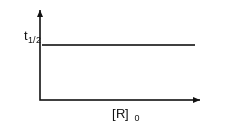 is valid for first order reaction.
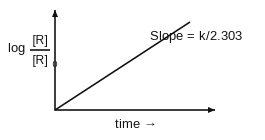 is valid for first order reaction.
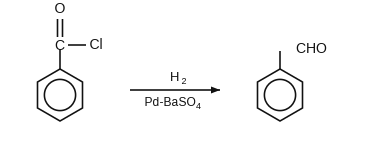
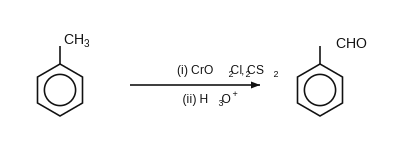
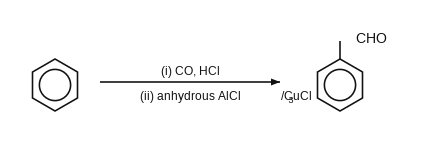
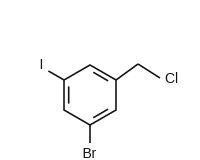 major product