Question bank

Q&A: practice questions with answers

Search questions on any topic. Filter by exam category, exam, subject and topic, try the question, then open the answer and explanation.

Courses – airGurukul

53,050 questions in the question bank.

Q2841.
Which of the following is correctly matched for the product produced by them?
उनके द्वारा उत्पादित उत्पाद के लिए निम्नलिखित में से कौन-सा सही सुमेलित है?
  1. AAcetobacter aceti : AntibioticsAcetobacter aceti : प्रतिजैविक (एंटीबायोटिक)
  2. BMethanobacterium : Lactic acidMethanobacterium : लैक्टिक अम्ल
  3. CPenicillium notatum : Acetic acidPenicillium notatum : ऐसीटिक अम्ल
  4. DSaccharomyces cerevisiae : EthanolSaccharomyces cerevisiae : एथेनॉल
Show answer

Concept: Saccharomyces cerevisiae (brewer’s/baker’s yeast) ferments sugars to ethanol and CO2 – used in making beer, wine and industrial ethanol.

  1. (A) ✘ Acetobacter aceti produces acetic acid (vinegar), not antibiotics.
  2. (B) ✘ Methanobacterium is a methanogen – produces methane (biogas); lactic acid is made by Lactobacillus.
  3. (C) ✘ Penicillium notatum gives the antibiotic penicillin, not acetic acid.
  4. (D) ✔ Saccharomyces cerevisiae → ethanol.

Short trick: The first three are a “shuffle”: Acetobacter ↔ acetic acid, Penicillium ↔ penicillin (antibiotic), Methano ↔ methane. Only yeast–ethanol is untouched.

Answer: (D) Saccharomyces cerevisiae : Ethanol

अवधारणा: Saccharomyces cerevisiae (ब्रूअर/बेकर यीस्ट) शर्कराओं का किण्वन कर एथेनॉल और CO2 बनाता है – बियर, वाइन तथा औद्योगिक एथेनॉल बनाने में प्रयुक्त।

  1. (A) ✘ Acetobacter aceti ऐसीटिक अम्ल (सिरका) बनाता है, प्रतिजैविक नहीं।
  2. (B) ✘ Methanobacterium मेथैनोजन है – मेथेन (बायोगैस) बनाता है; लैक्टिक अम्ल Lactobacillus बनाता है।
  3. (C) ✘ Penicillium notatum से प्रतिजैविक पेनिसिलिन मिलता है, ऐसीटिक अम्ल नहीं।
  4. (D) ✔ Saccharomyces cerevisiae → एथेनॉल।

शॉर्ट ट्रिक: पहले तीन जोड़े आपस में उलझाए गए हैं: Acetobacter ↔ ऐसीटिक अम्ल, Penicillium ↔ पेनिसिलिन, Methano ↔ मेथेन। केवल यीस्ट–एथेनॉल सही बचा।

उत्तर: (D) Saccharomyces cerevisiae : एथेनॉल
NEET UGBiologyMicrobes in human welfare – microbial productsNEET UG 2017 · 7 May Shift 1 →
Q2842.
Frog's heart when taken out of the body continues to beat for some time
Select the best option from the following statements
(a) Frog is a poikilotherm
(b) Frog does not have any coronary circulation
(c) Heart is "myogenic" in nature
(d) Heart is autoexcitable
Options
मेंढक का हृदय शरीर से बाहर निकालने पर भी कुछ समय तक धड़कता रहता है
निम्नलिखित कथनों में से सर्वोत्तम विकल्प चुनिए
(a) मेंढक असमतापी (poikilotherm) है
(b) मेंढक में कोई कोरोनरी परिसंचरण नहीं होता
(c) हृदय "पेशीजनक" (myogenic) प्रकृति का है
(d) हृदय स्वउत्तेजनशील (autoexcitable) है
विकल्प
  1. AOnly (c)केवल (c)
  2. BOnly (d)केवल (d)
  3. C(a) & (b)(a) तथा (b)
  4. D(c) & (d)(c) तथा (d)
Show answer

Concept: A myogenic heart generates its own impulses in specialised muscle (SA node / sinus venosus pacemaker) – it is autoexcitable, so it keeps beating without nerve supply as long as it is kept moist and oxygenated.

  1. (c) ✔ Heart beat originates in the cardiac muscle itself (myogenic).
  2. (d) ✔ Being self-excitable, the pacemaker keeps firing even outside the body.
  3. (a) ✘ Being cold-blooded explains body temperature, not why an isolated heart beats.
  4. (b) ✘ The presence or absence of coronary circulation does not generate the heartbeat – the impulse arises in the heart muscle itself.
  5. Hence (c) and (d) together are the best explanation.

Short trick: Isolated heart beats = “self-starter”: myogenic + autoexcitable always go together.

Answer: (D) (c) & (d)

अवधारणा: पेशीजनक (myogenic) हृदय अपने विशेष पेशी-ऊतक (SA नोड / साइनस वेनोसस पेसमेकर) में स्वयं आवेग उत्पन्न करता है – यह स्वउत्तेजनशील है, इसलिए नम और ऑक्सीजन युक्त रखने पर तंत्रिका-आपूर्ति के बिना भी धड़कता रहता है।

  1. (c) ✔ हृदय-स्पंदन स्वयं हृदय-पेशी में उत्पन्न होता है (पेशीजनक)।
  2. (d) ✔ स्वउत्तेजनशील होने से पेसमेकर शरीर के बाहर भी आवेग देता रहता है।
  3. (a) ✘ असमतापी होना शरीर-ताप को समझाता है, पृथक हृदय के धड़कने को नहीं।
  4. (b) ✘ कोरोनरी परिसंचरण का होना या न होना हृदय-स्पंदन उत्पन्न नहीं करता – आवेग स्वयं हृदय-पेशी में उत्पन्न होता है।
  5. अतः (c) और (d) मिलकर सर्वोत्तम व्याख्या हैं।

शॉर्ट ट्रिक: शरीर से बाहर धड़कता हृदय = “सेल्फ-स्टार्टर”: पेशीजनक + स्वउत्तेजनशील हमेशा साथ-साथ।

उत्तर: (D) (c) तथा (d)

NEET UGBiologyBody fluids and circulation – myogenic heartNEET UG 2017 · 7 May Shift 1 →
Q2843.
Which statement is wrong for Krebs' cycle?
क्रेब्स चक्र के लिए कौन-सा कथन गलत है?
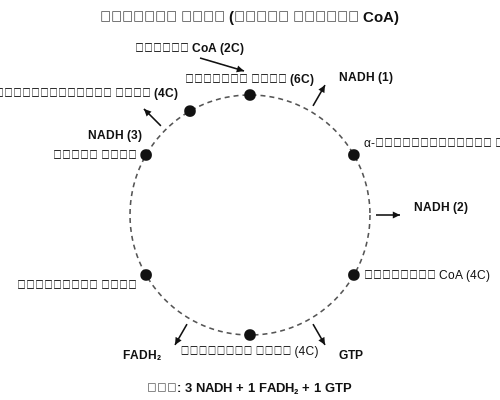
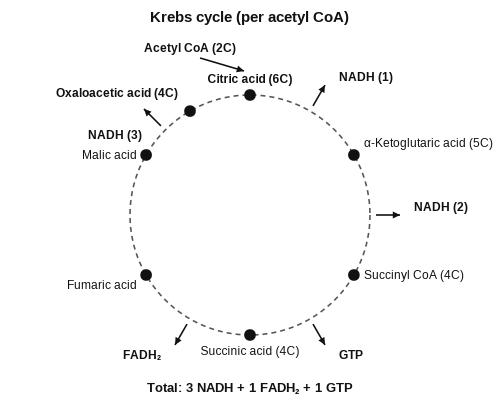
  1. AThere are three points in the cycle where NAD+ is reduced to NADH + H+चक्र में तीन बिंदु ऐसे हैं जहाँ NAD+ अपचयित होकर NADH + H+ बनता है
  2. BThere is one point in the cycle where FAD+ is reduced to FADH2चक्र में एक बिंदु ऐसा है जहाँ FAD+ अपचयित होकर FADH2 बनता है
  3. CDuring conversion of succinyl CoA to succinic acid, a molecule of GTP is synthesisedसक्सिनिल CoA के सक्सिनिक अम्ल में परिवर्तन के समय GTP का एक अणु संश्लेषित होता है
  4. DThe cycle starts with condensation of acetyl group (acetyl CoA) with pyruvic acid to yield citric acidचक्र ऐसीटिल समूह (ऐसीटिल CoA) के पाइरुविक अम्ल के साथ संघनन से सिट्रिक अम्ल बनने से आरम्भ होता है
Show answer

Concept: The TCA cycle begins when acetyl CoA (2C) condenses with oxaloacetic acid (OAA, 4C) and water to form citric acid (6C), catalysed by citrate synthase.

  1. (A) ✔ NADH is formed at three steps: isocitrate → α-ketoglutarate, α-ketoglutarate → succinyl CoA, malate → OAA.
  2. (B) ✔ One FADH2: succinate → fumarate (succinate dehydrogenase).
  3. (C) ✔ Substrate-level phosphorylation: succinyl CoA → succinic acid gives one GTP.
  4. (D) ✘ The acceptor is OAA, not pyruvic acid – pyruvate is first converted to acetyl CoA by oxidative decarboxylation. So (D) is the wrong statement.

Short trick: Count per turn “3-1-1”: 3 NADH, 1 FADH2, 1 GTP. Citric acid = 2C + 4C (OAA) = 6C; 2C + 3C (pyruvate) would give 5C – impossible.

Answer: (D) condensation with pyruvic acid is wrong

अवधारणा: TCA चक्र तब आरम्भ होता है जब ऐसीटिल CoA (2C) ऑक्सैलोऐसीटिक अम्ल (OAA, 4C) और जल के साथ संघनित होकर सिट्रिक अम्ल (6C) बनाता है; यह सिट्रेट सिन्थेज़ द्वारा उत्प्रेरित होता है।

  1. (A) ✔ NADH तीन चरणों में बनता है: आइसोसिट्रेट → α-कीटोग्लूटैरेट, α-कीटोग्लूटैरेट → सक्सिनिल CoA, मैलेट → OAA।
  2. (B) ✔ एक FADH2: सक्सिनेट → फ्यूमैरेट (सक्सिनेट डीहाइड्रोजिनेज़)।
  3. (C) ✔ क्रियाधार-स्तरीय फॉस्फोरिलीकरण: सक्सिनिल CoA → सक्सिनिक अम्ल में एक GTP बनता है।
  4. (D) ✘ ग्राही OAA है, पाइरुविक अम्ल नहीं – पाइरुवेट पहले ऑक्सीकारी विकार्बोक्सिलन द्वारा ऐसीटिल CoA में बदलता है। अतः (D) गलत कथन है।

शॉर्ट ट्रिक: प्रति चक्र “3-1-1” गिनें: 3 NADH, 1 FADH2, 1 GTP। सिट्रिक अम्ल = 2C + 4C (OAA) = 6C; 2C + 3C (पाइरुवेट) से 5C बनेगा – असंभव।

उत्तर: (D) पाइरुविक अम्ल के साथ संघनन गलत है

NEET UGBiologyRespiration in plants – Krebs cycleNEET UG 2017 · 7 May Shift 1 →
Q2844.
In case of poriferans the spongocoel is lined with flagellated cells called :
पोरीफेरा में स्पंजगुहा (spongocoel) जिन कशाभी कोशिकाओं से आस्तरित होती है, वे कहलाती हैं :
  1. AOstiaऑस्टिया (Ostia)
  2. BOsculaऑस्कुला (Oscula)
  3. CChoanocytesकोएनोसाइट (Choanocytes)
  4. DMesenchymal cellsमीसेनकाइमी कोशिकाएँ (Mesenchymal cells)
Show answer

Concept: Sponges have a water canal system; the spongocoel and canals are lined by choanocytes (collar cells) whose flagella drive water current, help in food capture and gas exchange.

  1. (A) ✘ Ostia – minute pores in the body wall through which water enters.
  2. (B) ✘ Osculum – the large opening through which water leaves.
  3. (C) ✔ Choanocytes – flagellated collar cells lining spongocoel/canals.
  4. (D) ✘ Mesenchymal cells lie in the mesohyl (jelly layer), not lining the spongocoel.

Short trick: Water path: Ostia (in) → spongocoel (choanocytes) → Osculum (out). “Collar” cells sit in the “cavity”.

Answer: (C) Choanocytes

अवधारणा: स्पंजों में जल नाल तंत्र होता है; स्पंजगुहा और नालें कोएनोसाइट (कॉलर कोशिकाएँ) से आस्तरित होती हैं जिनके कशाभ जलधारा चलाते हैं तथा भोजन पकड़ने और गैस-विनिमय में सहायक हैं।

  1. (A) ✘ ऑस्टिया – देहभित्ति के सूक्ष्म छिद्र जिनसे जल प्रवेश करता है।
  2. (B) ✘ ऑस्कुलम – बड़ा छिद्र जिससे जल बाहर निकलता है।
  3. (C) ✔ कोएनोसाइट – स्पंजगुहा/नालों को आस्तरित करने वाली कशाभी कॉलर कोशिकाएँ।
  4. (D) ✘ मीसेनकाइमी कोशिकाएँ मीसोहिल (जेली स्तर) में होती हैं, स्पंजगुहा को आस्तरित नहीं करतीं।

शॉर्ट ट्रिक: जल का मार्ग: ऑस्टिया (अंदर) → स्पंजगुहा (कोएनोसाइट) → ऑस्कुलम (बाहर)। “कॉलर” कोशिकाएँ “गुहा” में।

उत्तर: (C) कोएनोसाइट

NEET UGBiologyAnimal kingdom – PoriferaNEET UG 2017 · 7 May Shift 1 →
Q2845.
Which of the following RNAs should be most abundant in animal cell?
निम्नलिखित में से कौन-सा RNA जंतु कोशिका में सबसे अधिक मात्रा में होना चाहिए?
  1. Ar-RNA
  2. Bt-RNA
  3. Cm-RNA
  4. Dmi-RNA
Show answer

Concept: Ribosomes are present in enormous numbers and each is made largely of rRNA, so rRNA forms about 80% of the total cellular RNA.

  1. (A) ✔ rRNA ≈ 80% – structural + catalytic (ribozyme) part of ribosomes.
  2. (B) ✘ tRNA ≈ 10–15% – small adapter molecules.
  3. (C) ✘ mRNA ≈ 3–5% – short-lived, continuously degraded.
  4. (D) ✘ miRNA – tiny regulatory RNAs, present in very small amounts.

Short trick: Order of abundance “R > T > M” – Ribosome, Transfer, Messenger (80 : 15 : 5).

Answer: (A) r-RNA

अवधारणा: कोशिका में राइबोसोम अत्यधिक संख्या में होते हैं और प्रत्येक मुख्यतः rRNA से बना होता है, अतः rRNA कुल कोशिकीय RNA का लगभग 80% होता है।

  1. (A) ✔ rRNA ≈ 80% – राइबोसोम का संरचनात्मक एवं उत्प्रेरक (राइबोज़ाइम) भाग।
  2. (B) ✘ tRNA ≈ 10–15% – छोटे अनुकूलक (adapter) अणु।
  3. (C) ✘ mRNA ≈ 3–5% – अल्पजीवी, लगातार विघटित होता है।
  4. (D) ✘ miRNA – बहुत छोटे नियामक RNA, अत्यल्प मात्रा में।

शॉर्ट ट्रिक: प्रचुरता का क्रम “R > T > M” – राइबोसोमी, ट्रांसफर, मैसेंजर (80 : 15 : 5)।

उत्तर: (A) r-RNA

NEET UGBiologyMolecular basis of inheritance – types of RNANEET UG 2017 · 7 May Shift 1 →
Q2846.
Which among these is the correct combination of aquatic mammals?
इनमें से कौन-सा जलीय स्तनधारियों का सही संयोजन है?
  1. ASeals, Dolphins, Sharksसील, डॉल्फ़िन, शार्क
  2. BDolphins, Seals, Trygonडॉल्फ़िन, सील, ट्राइगॉन
  3. CWhales, Dolphins, Sealsव्हेल, डॉल्फ़िन, सील
  4. DTrygon, Whales, Sealsट्राइगॉन, व्हेल, सील
Show answer

Concept: Aquatic mammals breathe by lungs, are warm-blooded and suckle their young: whale (Balaenoptera), dolphin (Delphinus), seal, walrus, etc.

  1. (A) ✘ Shark (Scoliodon) is a cartilaginous fish (Chondrichthyes).
  2. (B) ✘ Trygon (sting ray) is a cartilaginous fish.
  3. (C) ✔ Whales, dolphins and seals are all mammals.
  4. (D) ✘ Again contains Trygon.

Short trick: Eliminate any option with a “fish” name – Shark or Trygon – only (C) remains.

Answer: (C) Whales, Dolphins, Seals

अवधारणा: जलीय स्तनधारी फेफड़ों से श्वसन करते हैं, नियततापी होते हैं और शिशुओं को दूध पिलाते हैं: व्हेल (Balaenoptera), डॉल्फ़िन (Delphinus), सील, वॉलरस आदि।

  1. (A) ✘ शार्क (Scoliodon) उपास्थिल मछली (कॉन्ड्रिक्थीज़) है।
  2. (B) ✘ Trygon (स्टिंग रे) उपास्थिल मछली है।
  3. (C) ✔ व्हेल, डॉल्फ़िन और सील तीनों स्तनधारी हैं।
  4. (D) ✘ इसमें भी Trygon है।

शॉर्ट ट्रिक: “मछली” वाले नाम – शार्क या ट्राइगॉन – वाला हर विकल्प हटा दें; केवल (C) बचता है।

उत्तर: (C) व्हेल, डॉल्फ़िन, सील

NEET UGBiologyAnimal kingdom – Mammalia vs ChondrichthyesNEET UG 2017 · 7 May Shift 1 →
Q2847.
With reference to factors affecting the rate of photosynthesis, which of the following statements is not correct?
प्रकाश-संश्लेषण की दर को प्रभावित करने वाले कारकों के संदर्भ में, निम्नलिखित में से कौन-सा कथन सही नहीं है?
  1. ALight saturation for CO2 fixation occurs at 10% of full sunlightCO2 स्थिरीकरण के लिए प्रकाश संतृप्ति पूर्ण सूर्य-प्रकाश के 10% पर होती है
  2. BIncreasing atmospheric CO2 concentration upto 0.05% can enhance CO2 fixation rateवायुमंडलीय CO2 की सांद्रता 0.05% तक बढ़ाने से CO2 स्थिरीकरण की दर बढ़ सकती है
  3. CC3 plants responds to higher temperatures with enhanced photosynthesis while C4 plants have much lower temperature optimumC3 पादप उच्च तापमान पर बढ़े हुए प्रकाश-संश्लेषण से प्रतिक्रिया करते हैं जबकि C4 पादपों का इष्टतम तापमान बहुत कम होता है
  4. DTomato is a greenhouse crop which can be grown in CO2 - enriched atmosphere for higher yieldटमाटर एक ग्रीनहाउस फसल है जिसे अधिक उपज के लिए CO2-समृद्ध वातावरण में उगाया जा सकता है
Show answer

Concept: NCERT: C4 plants respond to higher temperatures and show a higher rate of photosynthesis, while C3 plants have a much lower temperature optimum.

  1. (A) ✔ Light saturation occurs at about 10% of full sunlight, so light is rarely limiting except in shade.
  2. (B) ✔ Raising CO2 up to ~0.05% increases fixation; beyond that it can become damaging over long periods.
  3. (C) ✘ It reverses the fact – it is C4 plants that have the higher temperature optimum (no photorespiration; PEPcase works well in heat). C3 plants suffer more photorespiration at high temperature.
  4. (D) ✔ Tomato and bell pepper are grown in CO2-enriched greenhouses for higher yield.

Short trick: C4 = tropical “hot-weather” plants (maize, sugarcane) → high temperature optimum. Any statement giving C3 the heat advantage is wrong.

Answer: (C)

अवधारणा: NCERT: C4 पादप उच्च तापमान पर प्रतिक्रिया कर अधिक दर से प्रकाश-संश्लेषण करते हैं, जबकि C3 पादपों का इष्टतम तापमान बहुत कम होता है।

  1. (A) ✔ प्रकाश संतृप्ति लगभग 10% पूर्ण सूर्य-प्रकाश पर होती है, अतः छाया को छोड़कर प्रकाश प्रायः सीमाकारी नहीं होता।
  2. (B) ✔ CO2 को ~0.05% तक बढ़ाने से स्थिरीकरण बढ़ता है; इससे अधिक लंबे समय तक हानिकारक हो सकता है।
  3. (C) ✘ यह तथ्य को उलट देता है – उच्च इष्टतम तापमान C4 पादपों का होता है (प्रकाश-श्वसन नहीं; PEPcase गर्मी में भी कार्य करता है)। C3 पादपों में उच्च ताप पर प्रकाश-श्वसन बढ़ जाता है।
  4. (D) ✔ टमाटर और शिमला मिर्च को अधिक उपज हेतु CO2-समृद्ध ग्रीनहाउस में उगाया जाता है।

शॉर्ट ट्रिक: C4 = उष्णकटिबंधीय “गर्मी-प्रिय” पादप (मक्का, गन्ना) → उच्च इष्टतम तापमान। जो कथन C3 को गर्मी का लाभ दे, वह गलत है।

उत्तर: (C)

NEET UGBiologyPhotosynthesis – factors affecting rateNEET UG 2017 · 7 May Shift 1 →
Q2848.
Asymptote in a logistic growth curve is obtained when
लॉजिस्टिक वृद्धि वक्र में अनन्तस्पर्शी (asymptote) तब प्राप्त होता है जब
  1. AThe value of 'r' approaches zero'r' का मान शून्य की ओर पहुँचता है
  2. BK = N
  3. CK > N
  4. DK < N
Show answer

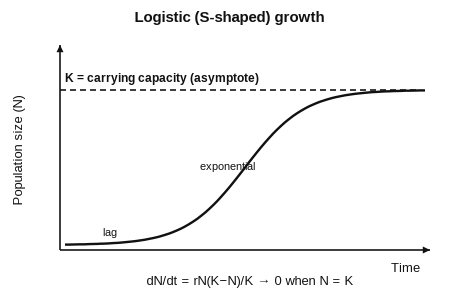
Concept: Verhulst–Pearl logistic equation: dN/dt = rN (K − N)/K. The curve levels off (asymptote) when growth rate dN/dt becomes zero.

  1. dN/dt = 0 requires (K − N)/K = 0, i.e. N = K (population reaches carrying capacity).
  2. (A) ✘ r is the intrinsic rate of natural increase – a constant for the species; it does not become zero.
  3. (C) ✘ K > N: (K − N) is positive, population is still growing.
  4. (D) ✘ K < N: population overshoots and declines – not the plateau.

Short trick: Asymptote = plateau = “population fills the habitat” = N reaches K.

Answer: (B) K = N

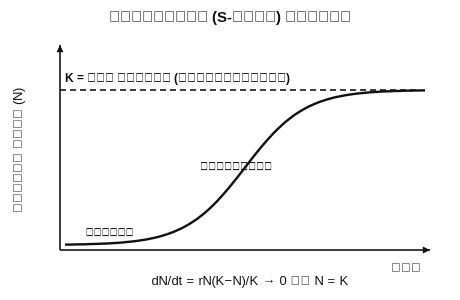
अवधारणा: वरहुल्स्ट–पर्ल लॉजिस्टिक समीकरण: dN/dt = rN (K − N)/K। वक्र तब समतल (अनन्तस्पर्शी) होता है जब वृद्धि दर dN/dt शून्य हो जाती है।

  1. dN/dt = 0 के लिए (K − N)/K = 0, अर्थात् N = K (समष्टि वहन क्षमता तक पहुँच जाती है)।
  2. (A) ✘ r प्राकृतिक वृद्धि की नैज दर (intrinsic rate) है – जाति के लिए स्थिरांक; यह शून्य नहीं होती।
  3. (C) ✘ K > N: (K − N) धनात्मक है, समष्टि अभी बढ़ रही है।
  4. (D) ✘ K < N: समष्टि सीमा से अधिक होकर घटती है – यह पठार नहीं है।

शॉर्ट ट्रिक: अनन्तस्पर्शी = पठार = “आवास भर गया” = N, K के बराबर।

उत्तर: (B) K = N

NEET UGBiologyOrganisms and populations – logistic growthNEET UG 2017 · 7 May Shift 1 →
Q2849.
Out of 'X' pairs of ribs in humans only 'Y' pairs are true ribs. Select the option that correctly represents values of X and Y and provides their explanation :
मनुष्य में 'X' जोड़ी पसलियों में से केवल 'Y' जोड़ी वास्तविक पसलियाँ (true ribs) हैं। वह विकल्प चुनिए जो X और Y के मान सही दर्शाता है तथा उनकी व्याख्या देता है :
  1. AX = 12, Y = 7
    True ribs are attached dorsally to vertebral column and ventrally to the sternum
    X = 12, Y = 7
    वास्तविक पसलियाँ पृष्ठ ओर कशेरुक दंड से तथा अधर ओर उरोस्थि से जुड़ी होती हैं
  2. BX = 12, Y = 5
    True ribs are attached dorsally to vertebral column and sternum on the two ends
    X = 12, Y = 5
    वास्तविक पसलियाँ दोनों सिरों पर पृष्ठ ओर कशेरुक दंड और उरोस्थि से जुड़ी होती हैं
  3. CX = 24, Y = 7
    True ribs are dorsally attached to vertebral column but are free on ventral side
    X = 24, Y = 7
    वास्तविक पसलियाँ पृष्ठ ओर कशेरुक दंड से जुड़ी होती हैं परंतु अधर ओर स्वतंत्र होती हैं
  4. DX = 24, Y = 12
    True ribs are dorsally attached to vertebral column but are free on ventral side
    X = 24, Y = 12
    वास्तविक पसलियाँ पृष्ठ ओर कशेरुक दंड से जुड़ी होती हैं परंतु अधर ओर स्वतंत्र होती हैं
Show answer

Concept: Humans have 12 pairs of ribs. The first 7 pairs are true ribs – attached dorsally to thoracic vertebrae and ventrally to the sternum by hyaline cartilage.

  1. 8th–10th pairs: false (vertebrochondral) ribs – join the 7th rib cartilage, not the sternum directly.
  2. 11th–12th pairs: floating ribs – free ventrally.
  3. (B) ✘ Y = 5 is wrong. (C), (D) ✘ X = 24 counts ribs, not pairs; and “free ventrally” describes floating ribs.
  4. So X = 12, Y = 7 with correct explanation → (A).

Short trick: Ribs “7-3-2”: 7 true + 3 false + 2 floating = 12 pairs.

Answer: (A) X = 12, Y = 7

अवधारणा: मनुष्य में 12 जोड़ी पसलियाँ होती हैं। पहली 7 जोड़ी वास्तविक पसलियाँ हैं – पृष्ठ ओर वक्षीय कशेरुकाओं से तथा अधर ओर काचाभ उपास्थि द्वारा उरोस्थि से जुड़ी।

  1. 8वीं–10वीं जोड़ी: कूट (वर्टीब्रोकॉन्ड्रल) पसलियाँ – सीधे उरोस्थि से नहीं, 7वीं पसली की उपास्थि से जुड़ती हैं।
  2. 11वीं–12वीं जोड़ी: प्लावी (floating) पसलियाँ – अधर ओर स्वतंत्र।
  3. (B) ✘ Y = 5 गलत है। (C), (D) ✘ X = 24 पसलियों की संख्या है, जोड़ियों की नहीं; और “अधर ओर स्वतंत्र” प्लावी पसलियों का वर्णन है।
  4. अतः X = 12, Y = 7 और सही व्याख्या → (A)।

शॉर्ट ट्रिक: पसलियाँ “7-3-2”: 7 वास्तविक + 3 कूट + 2 प्लावी = 12 जोड़ी।

उत्तर: (A) X = 12, Y = 7

NEET UGBiologyLocomotion and movement – ribsNEET UG 2017 · 7 May Shift 1 →
Q2850.
The DNA fragments separated on an agarose gel can be visualised after staining with
ऐगारोज़ जेल पर पृथक किए गए DNA खंडों को किससे अभिरंजित करने के बाद देखा जा सकता है?
  1. ABromophenol blueब्रोमोफीनॉल ब्लू
  2. BAcetocarmineऐसीटोकार्मिन
  3. CAniline blueऐनिलीन ब्लू
  4. DEthidium bromideएथिडियम ब्रोमाइड
Show answer

Concept: Separated DNA is invisible; it is stained with ethidium bromide (intercalates between bases) and viewed under UV light – bright orange bands are seen.

  1. (A) ✘ Bromophenol blue – tracking (loading) dye that shows how far the run has progressed.
  2. (B) ✘ Acetocarmine – stains chromosomes in squash preparations.
  3. (C) ✘ Aniline blue – stains callose/fungal walls.
  4. (D) ✔ Ethidium bromide + UV → orange DNA bands, then elution.

Short trick: “EtBr + UV = Orange” – the classic NCERT line for gel electrophoresis.

Answer: (D) Ethidium bromide

अवधारणा: पृथक DNA दिखाई नहीं देता; इसे एथिडियम ब्रोमाइड (क्षारकों के बीच अंतर्वेशित होता है) से अभिरंजित कर पराबैंगनी (UV) प्रकाश में देखा जाता है – चमकीली नारंगी पट्टियाँ दिखती हैं।

  1. (A) ✘ ब्रोमोफीनॉल ब्लू – ट्रैकिंग (लोडिंग) रंजक, जो बताता है कि रन कितना आगे बढ़ा।
  2. (B) ✘ ऐसीटोकार्मिन – स्क्वैश में गुणसूत्रों को अभिरंजित करता है।
  3. (C) ✘ ऐनिलीन ब्लू – कैलोज़/कवक भित्ति को अभिरंजित करता है।
  4. (D) ✔ एथिडियम ब्रोमाइड + UV → नारंगी DNA पट्टियाँ, फिर निक्षालन (elution)।

शॉर्ट ट्रिक: “EtBr + UV = नारंगी” – जेल वैद्युतकणसंचलन की प्रसिद्ध NCERT पंक्ति।

उत्तर: (D) एथिडियम ब्रोमाइड

NEET UGBiologyBiotechnology – gel electrophoresisNEET UG 2017 · 7 May Shift 1 →
Q2851.
Functional megaspore in an angiosperm develops into
आवृतबीजी में क्रियाशील गुरुबीजाणु किसमें विकसित होता है?
  1. AOvuleबीजांड
  2. BEndospermभ्रूणपोष
  3. CEmbryo sacभ्रूणकोष
  4. DEmbryoभ्रूण
Show answer

Concept: Megaspore mother cell (2n) → meiosis → 4 megaspores; 3 degenerate and the functional megaspore (first cell of the female gametophyte) undergoes 3 free-nuclear mitoses to form the 8-nucleate, 7-celled embryo sac.

  1. (A) ✘ Ovule is the megasporangium – it contains the megaspore, not formed from it.
  2. (B) ✘ Endosperm forms from the primary endosperm nucleus after triple fusion.
  3. (C) ✔ Embryo sac = female gametophyte.
  4. (D) ✘ Embryo develops from the zygote.

Short trick: Megaspore → female gametophyte = embryo sac (just as microspore → pollen = male gametophyte).

Answer: (C) Embryo sac

अवधारणा: गुरुबीजाणु मातृ कोशिका (2n) → अर्धसूत्री विभाजन → 4 गुरुबीजाणु; 3 नष्ट हो जाते हैं और क्रियाशील गुरुबीजाणु (मादा युग्मकोद्भिद् की पहली कोशिका) 3 मुक्त-केन्द्रकी समसूत्री विभाजनों से 8-केन्द्रकी, 7-कोशिकीय भ्रूणकोष बनाता है।

  1. (A) ✘ बीजांड गुरुबीजाणुधानी है – इसमें गुरुबीजाणु होता है, यह उससे नहीं बनता।
  2. (B) ✘ भ्रूणपोष त्रिसंलयन के बाद प्राथमिक भ्रूणपोष केन्द्रक से बनता है।
  3. (C) ✔ भ्रूणकोष = मादा युग्मकोद्भिद्।
  4. (D) ✘ भ्रूण युग्मनज से विकसित होता है।

शॉर्ट ट्रिक: गुरुबीजाणु → मादा युग्मकोद्भिद् = भ्रूणकोष (जैसे लघुबीजाणु → परागकण = नर युग्मकोद्भिद्)।

उत्तर: (C) भ्रूणकोष

NEET UGBiologySexual reproduction in flowering plants – megasporogenesisNEET UG 2017 · 7 May Shift 1 →
Q2852.
Among the following characters, which one was not considered by Mendel in his experiments on pea?
निम्नलिखित लक्षणों में से किसे मेंडल ने मटर पर अपने प्रयोगों में नहीं लिया था?
  1. AStem – Tall or Dwarfतना – लंबा या बौना
  2. BTrichomes – Glandular or non-glandularत्वचारोम (ट्राइकोम) – ग्रंथिल या अग्रंथिल
  3. CSeed – Green or Yellowबीज – हरा या पीला
  4. DPod – Inflated or Constrictedफली – फूली हुई या सिकुड़ी हुई
Show answer

Concept: Mendel studied 7 pairs of contrasting traits: stem height (tall/dwarf), flower colour (violet/white), flower position (axial/terminal), pod shape (inflated/constricted), pod colour (green/yellow), seed shape (round/wrinkled), seed colour (yellow/green).

  1. (A), (C), (D) ✔ are among the seven characters.
  2. (B) ✘ Trichomes (glandular/non-glandular) were never studied by Mendel – hence the answer.

Short trick: Mnemonic for the 7: “Stem, 2 Flower, 2 Pod, 2 Seed” – no hair (trichome) anywhere.

Answer: (B) Trichomes – Glandular or non-glandular

अवधारणा: मेंडल ने 7 जोड़ी विपरीत लक्षण लिए: तने की लंबाई (लंबा/बौना), पुष्प रंग (बैंगनी/सफ़ेद), पुष्प स्थिति (अक्षीय/शीर्षस्थ), फली आकार (फूली/सिकुड़ी), फली रंग (हरा/पीला), बीज आकार (गोल/झुर्रीदार), बीज रंग (पीला/हरा)।

  1. (A), (C), (D) ✔ सात लक्षणों में शामिल हैं।
  2. (B) ✘ त्वचारोम (ग्रंथिल/अग्रंथिल) का अध्ययन मेंडल ने कभी नहीं किया – अतः यही उत्तर है।

शॉर्ट ट्रिक: 7 लक्षणों का सूत्र: “तना 1, पुष्प 2, फली 2, बीज 2” – रोम (ट्राइकोम) कहीं नहीं।

उत्तर: (B) त्वचारोम – ग्रंथिल या अग्रंथिल

NEET UGBiologyPrinciples of inheritance – Mendel's charactersNEET UG 2017 · 7 May Shift 1 →
Q2853.
Lungs are made up of air-filled sacs the alveoli. They do not collapse even after forceful expiration, because of :
फेफड़े वायु से भरी कूपिकाओं (alveoli) से बने होते हैं। बलपूर्वक निःश्वसन के बाद भी ये पिचकती नहीं, इसका कारण है :
  1. AResidual Volumeअवशिष्ट आयतन (Residual Volume)
  2. BInspiratory Reserve Volumeअंतःश्वसन आरक्षित आयतन (IRV)
  3. CTidal Volumeज्वारीय आयतन (Tidal Volume)
  4. DExpiratory Reserve Volumeनिःश्वसन आरक्षित आयतन (ERV)
Show answer

Concept: Residual volume (RV, 1100–1200 mL) is the air that remains in the lungs even after a forcible expiration; it keeps alveoli partly inflated and prevents their collapse.

  1. (A) ✔ RV – can never be expelled.
  2. (B) ✘ IRV (2500–3000 mL) – extra air that can be inspired forcibly.
  3. (C) ✘ TV (≈500 mL) – air in a normal breath.
  4. (D) ✘ ERV (1000–1100 mL) – extra air that can be expired forcibly; it is expelled, so it cannot keep alveoli open after forceful expiration.

Short trick: “Residual = Remains”. After forceful expiration everything except RV has gone out.

Answer: (A) Residual Volume

अवधारणा: अवशिष्ट आयतन (RV, 1100–1200 mL) वह वायु है जो बलपूर्वक निःश्वसन के बाद भी फेफड़ों में शेष रहती है; यह कूपिकाओं को आंशिक रूप से फुलाए रखती है और उन्हें पिचकने से रोकती है।

  1. (A) ✔ RV – कभी बाहर नहीं निकाली जा सकती।
  2. (B) ✘ IRV (2500–3000 mL) – बलपूर्वक अतिरिक्त अंतःश्वसित वायु।
  3. (C) ✘ TV (≈500 mL) – सामान्य श्वास की वायु।
  4. (D) ✘ ERV (1000–1100 mL) – बलपूर्वक अतिरिक्त निःश्वसित वायु; यह बाहर निकल जाती है, अतः बलपूर्वक निःश्वसन के बाद कूपिकाओं को खुला नहीं रख सकती।

शॉर्ट ट्रिक: “अवशिष्ट = बचा हुआ”। बलपूर्वक निःश्वसन के बाद RV के अतिरिक्त सब बाहर निकल जाता है।

उत्तर: (A) अवशिष्ट आयतन

NEET UGBiologyBreathing and exchange of gases – respiratory volumesNEET UG 2017 · 7 May Shift 1 →
Q2854.
GnRH, a hypothalamic hormone, needed in reproduction, acts on
GnRH, जनन के लिए आवश्यक एक हाइपोथैलेमिक हॉर्मोन, किस पर कार्य करता है?
  1. AAnterior pituitary gland and stimulates secretion of LH and oxytocinअग्र पीयूष ग्रंथि पर तथा LH और ऑक्सीटोसिन के स्रावण को उद्दीपित करता है
  2. BAnterior pituitary gland and stimulates secretion of LH and FSHअग्र पीयूष ग्रंथि पर तथा LH और FSH के स्रावण को उद्दीपित करता है
  3. CPosterior pituitary gland and stimulates secretion of oxytocin and FSHपश्च पीयूष ग्रंथि पर तथा ऑक्सीटोसिन और FSH के स्रावण को उद्दीपित करता है
  4. DPosterior pituitary gland and stimulates secretion of LH and relaxinपश्च पीयूष ग्रंथि पर तथा LH और रिलैक्सिन के स्रावण को उद्दीपित करता है
Show answer

Concept: Gonadotropin-releasing hormone from the hypothalamus reaches the anterior pituitary (adenohypophysis) via the portal system and stimulates release of the gonadotropins LH and FSH.

  1. (A) ✘ Oxytocin is made by the hypothalamus and released from the posterior pituitary – not under GnRH.
  2. (B) ✔ Anterior pituitary → LH + FSH.
  3. (C) ✘ Posterior pituitary only stores/releases oxytocin and ADH; it does not respond to GnRH or make FSH.
  4. (D) ✘ Relaxin is secreted by the corpus luteum/placenta, not the pituitary.

Short trick: “Gonadotropin-RH” releases gonadotropins (FSH, LH) – both made only in the anterior lobe.

Answer: (B) Anterior pituitary gland – LH and FSH

अवधारणा: हाइपोथैलेमस से निकला गोनैडोट्रॉपिन-मोचक हॉर्मोन निवाहिका तंत्र द्वारा अग्र पीयूष (एडिनोहाइपोफाइसिस) तक पहुँचकर गोनैडोट्रॉपिन LH और FSH के स्रावण को उद्दीपित करता है।

  1. (A) ✘ ऑक्सीटोसिन हाइपोथैलेमस में बनता है और पश्च पीयूष से मुक्त होता है – GnRH के नियंत्रण में नहीं।
  2. (B) ✔ अग्र पीयूष → LH + FSH।
  3. (C) ✘ पश्च पीयूष केवल ऑक्सीटोसिन और ADH का संग्रह/मोचन करता है; यह GnRH पर प्रतिक्रिया नहीं करता न FSH बनाता है।
  4. (D) ✘ रिलैक्सिन पीतपिंड/अपरा से स्रावित होता है, पीयूष से नहीं।

शॉर्ट ट्रिक: “गोनैडोट्रॉपिन-RH” गोनैडोट्रॉपिन (FSH, LH) मुक्त कराता है – दोनों केवल अग्र पालि में बनते हैं।

उत्तर: (B) अग्र पीयूष ग्रंथि – LH और FSH

NEET UGBiologyHuman reproduction – GnRHNEET UG 2017 · 7 May Shift 1 →
Q2855.
In Bougainvillea thorns are the modifications of
Bougainvillea में कंटक (थॉर्न) किसके रूपांतरण हैं?
  1. AStipulesअनुपर्ण
  2. BAdventitious rootअपस्थानिक मूल
  3. CStemतना
  4. DLeafपत्ती
Show answer

Concept: Thorns of Bougainvillea and Citrus are modified axillary buds/stems – they arise in the axil of leaves and are hard, woody, pointed and protective.

  1. (C) ✔ Axillary position proves stem origin.
  2. (A) ✘ Stipules form spines in some plants (e.g. Zizyphus), not in Bougainvillea.
  3. (B) ✘ Roots do not form axillary thorns.
  4. (D) ✘ Leaf spines occur in cacti/Opuntia.

Short trick: Thorn = stem (axillary, woody, has vascular link); Spine = leaf (cactus). Remember “Bougainvillea & Citrus = Thorn = Stem”.

Answer: (C) Stem

अवधारणा: Bougainvillea और Citrus के कंटक रूपांतरित कक्षस्थ कलिकाएँ/तने हैं – ये पत्ती के कक्ष में उत्पन्न होते हैं तथा कठोर, काष्ठीय, नुकीले और सुरक्षा हेतु होते हैं।

  1. (C) ✔ कक्षस्थ स्थिति तने की उत्पत्ति सिद्ध करती है।
  2. (A) ✘ कुछ पादपों (जैसे Zizyphus) में अनुपर्ण शूल बनाते हैं, Bougainvillea में नहीं।
  3. (B) ✘ जड़ें कक्षस्थ कंटक नहीं बनातीं।
  4. (D) ✘ पत्ती के शूल कैक्टस/Opuntia में होते हैं।

शॉर्ट ट्रिक: कंटक (थॉर्न) = तना (कक्षस्थ, काष्ठीय); शूल (स्पाइन) = पत्ती (कैक्टस)। याद रखें “Bougainvillea व Citrus = कंटक = तना”।

उत्तर: (C) तना

NEET UGBiologyMorphology of flowering plants – stem modificationsNEET UG 2017 · 7 May Shift 1 →
Q2856.
Which one from those given below is the period for Mendel's hybridization experiments?
नीचे दिए गए में से कौन-सी अवधि मेंडल के संकरण प्रयोगों की है?
  1. A1856 - 1863
  2. B1840 - 1850
  3. C1857 - 1869
  4. D1870 - 1877
Show answer

Concept: NCERT: Mendel conducted hybridization experiments on garden pea for seven years (1856–1863) and published his results in 1865 (1866 in print).

  1. (A) ✔ 1856–1863 = 7 years.
  2. (B) ✘ Before he began work at the monastery garden.
  3. (C) ✘ Wrong span; his paper was already out in 1865.
  4. (D) ✘ After publication – he had become abbot by then.

Short trick: “7 years ending in ’63, published ’65” – 56→63.

Answer: (A) 1856 - 1863

अवधारणा: NCERT: मेंडल ने उद्यान मटर पर सात वर्ष (1856–1863) तक संकरण प्रयोग किए और 1865 में परिणाम प्रस्तुत किए (1866 में प्रकाशित)।

  1. (A) ✔ 1856–1863 = 7 वर्ष।
  2. (B) ✘ मठ के बगीचे में कार्य शुरू करने से पहले की अवधि।
  3. (C) ✘ गलत अवधि; 1865 में उनका शोध-पत्र आ चुका था।
  4. (D) ✘ प्रकाशन के बाद की अवधि – तब तक वे मठाधीश बन चुके थे।

शॉर्ट ट्रिक: “7 वर्ष, अंत ’63 में, प्रकाशन ’65 में” – 56→63।

उत्तर: (A) 1856 - 1863

NEET UGBiologyPrinciples of inheritance – Mendel's workNEET UG 2017 · 7 May Shift 1 →
Q2857.
Good vision depends on adequate intake of carotene rich food
Select the best option from the following statements
(a) Vitamin A derivatives are formed from carotene
(b) The photopigments are embedded in the membrane discs of the inner segment
(c) Retinal is a derivative of vitamin A
(d) Retinal is a light absorbing part of all the visual photopigments
अच्छी दृष्टि कैरोटीन-समृद्ध भोजन के पर्याप्त सेवन पर निर्भर करती है
निम्नलिखित कथनों में से सर्वोत्तम विकल्प चुनिए
(a) विटामिन A के व्युत्पन्न कैरोटीन से बनते हैं
(b) प्रकाशवर्णक (photopigments) आंतरिक खंड की झिल्ली-डिस्कों में धँसे रहते हैं
(c) रेटिनल विटामिन A का व्युत्पन्न है
(d) रेटिनल सभी दृष्टि प्रकाशवर्णकों का प्रकाश-अवशोषी भाग है
  1. A(a) & (b)(a) तथा (b)
  2. B(a), (c) & (d)(a), (c) तथा (d)
  3. C(a) & (c)(a) तथा (c)
  4. D(b), (c) & (d)(b), (c) तथा (d)
Show answer

Concept: β-carotene is split into vitamin A (retinol); its aldehyde retinal combines with opsin to form rhodopsin (rods) and photopsins (cones) – retinal is the light-absorbing part of every visual pigment.

  1. (a) ✔ Carotene → vitamin A and its derivatives.
  2. (b) ✘ Photopigments lie in the membrane discs of the outer segment of rods/cones; the inner segment holds mitochondria and the nucleus.
  3. (c) ✔ Retinal is the aldehyde of vitamin A.
  4. (d) ✔ Retinal absorbs light (11-cis → all-trans) in all visual pigments.
  5. Correct set = (a), (c), (d) → option (B).

Short trick: Only one statement mentions a location – check it: pigments are in the OUTER segment. Drop (b) → (a), (c), (d).

Answer: (B) (a), (c) & (d)

अवधारणा: β-कैरोटीन विखंडित होकर विटामिन A (रेटिनॉल) बनाता है; इसका ऐल्डिहाइड रेटिनल ऑप्सिन से जुड़कर रोडॉप्सिन (शलाका) तथा फोटोप्सिन (शंकु) बनाता है – रेटिनल हर दृष्टि वर्णक का प्रकाश-अवशोषी भाग है।

  1. (a) ✔ कैरोटीन → विटामिन A और उसके व्युत्पन्न।
  2. (b) ✘ प्रकाशवर्णक शलाका/शंकु के बाह्य खंड की झिल्ली-डिस्कों में होते हैं; आंतरिक खंड में माइटोकॉन्ड्रिया और केन्द्रक होते हैं।
  3. (c) ✔ रेटिनल विटामिन A का ऐल्डिहाइड है।
  4. (d) ✔ सभी दृष्टि वर्णकों में रेटिनल प्रकाश अवशोषित करता है (11-सिस → ऑल-ट्रांस)।
  5. सही समूह = (a), (c), (d) → विकल्प (B)।

शॉर्ट ट्रिक: केवल एक कथन में स्थान बताया है – उसे जाँचें: वर्णक बाह्य खंड में होते हैं। (b) हटाएँ → (a), (c), (d)।

उत्तर: (B) (a), (c) तथा (d)

NEET UGBiologyNeural control – photoreceptors and vitamin ANEET UG 2017 · 7 May Shift 1 →
Q2858.
Which one of the following statements is not valid for aerosols?
ऐरोसॉल के लिए निम्नलिखित में से कौन-सा कथन मान्य नहीं है?
  1. AThey are harmful to human healthये मानव स्वास्थ्य के लिए हानिकारक हैं
  2. BThey alter rainfall and monsoon patternsये वर्षा और मानसून के प्रतिरूप को बदल देते हैं
  3. CThey cause increased agricultural productivityये कृषि उत्पादकता में वृद्धि करते हैं
  4. DThey have negative impact on agricultural landइनका कृषि भूमि पर नकारात्मक प्रभाव पड़ता है
Show answer

Concept: Aerosols are fine solid/liquid particles suspended in air (smoke, dust, soot, sprays). They are pollutants – they damage lungs, scatter/absorb sunlight, change cloud formation and harm crops.

  1. (A) ✔ Fine particles (PM 2.5) cause respiratory and cardiac disease.
  2. (B) ✔ They act as cloud nuclei and reduce surface heating, altering rainfall and the monsoon.
  3. (C) ✘ They reduce sunlight reaching crops and deposit on leaves – productivity falls, not rises. Hence not valid.
  4. (D) ✔ Deposition of pollutants degrades agricultural land.

Short trick: A pollutant is never a “benefit” – the only positive-sounding option is the invalid one.

Answer: (C) They cause increased agricultural productivity

अवधारणा: ऐरोसॉल वायु में निलंबित सूक्ष्म ठोस/द्रव कण हैं (धुआँ, धूल, कालिख, स्प्रे)। ये प्रदूषक हैं – फेफड़ों को हानि पहुँचाते हैं, सूर्य-प्रकाश को प्रकीर्णित/अवशोषित करते हैं, बादल-निर्माण बदलते हैं और फसलों को हानि पहुँचाते हैं।

  1. (A) ✔ सूक्ष्म कण (PM 2.5) श्वसन एवं हृदय रोग उत्पन्न करते हैं।
  2. (B) ✔ ये मेघ-नाभिक बनते हैं और सतह का तापन घटाते हैं, जिससे वर्षा और मानसून बदलता है।
  3. (C) ✘ ये फसलों तक पहुँचने वाला प्रकाश घटाते हैं और पत्तियों पर जमते हैं – उत्पादकता घटती है, बढ़ती नहीं। अतः यह कथन मान्य नहीं।
  4. (D) ✔ प्रदूषकों के निक्षेपण से कृषि भूमि का निम्नीकरण होता है।

शॉर्ट ट्रिक: प्रदूषक कभी “लाभ” नहीं देता – जो एकमात्र सकारात्मक विकल्प है वही अमान्य है।

उत्तर: (C) ये कृषि उत्पादकता में वृद्धि करते हैं

NEET UGBiologyEnvironmental issues – air pollution (aerosols)NEET UG 2017 · 7 May Shift 1 →
Q2859.
A decrease in blood pressure/volume will not cause the release of
रक्तदाब/रक्त आयतन में कमी किसके मोचन (release) का कारण नहीं बनेगी?
  1. AReninरेनिन
  2. BAtrial Natriuretic Factorएट्रियल नेट्रियूरेटिक कारक (ANF)
  3. CAldosteroneऐल्डोस्टेरॉन
  4. DADH
Show answer

Concept: A fall in BP/volume triggers mechanisms that raise it (renin–angiotensin–aldosterone, ADH). ANF does the opposite and is released when the atria are stretched by increased BP/volume.

  1. (A) ✔ Released: JG cells secrete renin → angiotensin II (vasoconstriction).
  2. (B) ✘ Not released: ANF causes vasodilation, natriuresis and lowers BP – a check on RAAS.
  3. (C) ✔ Released: aldosterone increases Na+ and water reabsorption.
  4. (D) ✔ Released: ADH increases water reabsorption.

Short trick: Three hormones “save water” (Renin, Aldosterone, ADH); ANF “dumps salt” – it is the odd one out.

Answer: (B) Atrial Natriuretic Factor

अवधारणा: रक्तदाब/आयतन घटने पर वे क्रियाविधियाँ सक्रिय होती हैं जो इसे बढ़ाती हैं (रेनिन–एंजियोटेंसिन–ऐल्डोस्टेरॉन, ADH)। ANF इसका उल्टा कार्य करता है और तब मुक्त होता है जब बढ़े रक्तदाब/आयतन से अलिंद खिंचते हैं।

  1. (A) ✔ मुक्त होता है: JG कोशिकाएँ रेनिन स्रावित करती हैं → एंजियोटेंसिन II (वाहिका-संकीर्णन)।
  2. (B) ✘ मुक्त नहीं होता: ANF वाहिका-विस्फारण, सोडियम-मूत्रलता करता है और रक्तदाब घटाता है – RAAS पर नियंत्रण।
  3. (C) ✔ मुक्त होता है: ऐल्डोस्टेरॉन Na+ और जल का पुनरवशोषण बढ़ाता है।
  4. (D) ✔ मुक्त होता है: ADH जल का पुनरवशोषण बढ़ाता है।

शॉर्ट ट्रिक: तीन हॉर्मोन “जल बचाते” हैं (रेनिन, ऐल्डोस्टेरॉन, ADH); ANF “लवण बाहर फेंकता” है – वही भिन्न है।

उत्तर: (B) एट्रियल नेट्रियूरेटिक कारक

NEET UGBiologyExcretory products – regulation of kidney functionNEET UG 2017 · 7 May Shift 1 →
Q2860.
Homozygous purelines in cattle can be obtained by
मवेशियों में समयुग्मजी शुद्ध वंशक्रम (purelines) किसके द्वारा प्राप्त किए जा सकते हैं?
  1. Amating of related individuals of same breedसमान नस्ल के संबंधित (सजातीय) जीवों के संगम द्वारा
  2. Bmating of unrelated individuals of same breedसमान नस्ल के असंबंधित जीवों के संगम द्वारा
  3. Cmating of individuals of different breedभिन्न नस्लों के जीवों के संगम द्वारा
  4. Dmating of individuals of different speciesभिन्न जातियों के जीवों के संगम द्वारा
Show answer

Concept: Inbreeding – mating of more closely related individuals within the same breed for 4–6 generations – increases homozygosity and helps develop pure lines.

  1. (A) ✔ Inbreeding → homozygosity → pure line.
  2. (B) ✘ Out-crossing (unrelated, same breed) – used to overcome inbreeding depression; increases heterozygosity.
  3. (C) ✘ Cross-breeding (different breeds, e.g. Hisardale) – produces hybrids.
  4. (D) ✘ Interspecific hybridisation (e.g. mule) – maximum heterozygosity.

Short trick: In-breeding → In-creases homozygosity. Every “out/cross/inter” mating mixes genes.

Answer: (A) mating of related individuals of same breed

अवधारणा: अंतःप्रजनन – समान नस्ल के अधिक निकट-संबंधी जीवों का 4–6 पीढ़ियों तक संगम – समयुग्मजता बढ़ाता है और शुद्ध वंशक्रम विकसित करने में सहायक है।

  1. (A) ✔ अंतःप्रजनन → समयुग्मजता → शुद्ध वंशक्रम।
  2. (B) ✘ बहिःसंकरण (out-crossing; असंबंधित, समान नस्ल) – अंतःप्रजनन अवसादन दूर करने हेतु; विषमयुग्मजता बढ़ाता है।
  3. (C) ✘ संकरप्रजनन (भिन्न नस्लें, जैसे हिसारडेल) – संकर बनते हैं।
  4. (D) ✘ अंतरजातीय संकरण (जैसे खच्चर) – अधिकतम विषमयुग्मजता।

शॉर्ट ट्रिक: अंतः-प्रजनन → समयुग्मजता में वृद्धि। हर “बहिः/संकर/अंतरजातीय” संगम जीनों को मिलाता है।

उत्तर: (A) समान नस्ल के संबंधित जीवों का संगम

NEET UGBiologyStrategies for enhancement in food production – inbreedingNEET UG 2017 · 7 May Shift 1 →