Question bank

Q&A: practice questions with answers

Search questions on any topic. Filter by exam category, exam, subject and topic, try the question, then open the answer and explanation.

Courses – airGurukul

53,050 questions in the question bank.

Q3341.
For irreversible expansion of an ideal gas under isothermal condition, the correct option is:
समतापी स्थिति में आदर्श गैस के अनुत्क्रमणीय प्रसार के लिए सही विकल्प है:
  1. AΔU = 0, ΔStotal ≠ 0
  2. BΔU ≠ 0, ΔStotal = 0
  3. CΔU = 0, ΔStotal = 0
  4. DΔU ≠ 0, ΔStotal ≠ 0
Show answer

Concept: For an ideal gas U depends only on T; for any irreversible (spontaneous) process ΔStotal = ΔSsys + ΔSsurr > 0.

  1. Isothermal → ΔT = 0 → ΔU = nCVΔT = 0.
  2. Irreversible → entropy of universe increases → ΔStotal > 0, i.e. ≠ 0.
  3. Hence ΔU = 0, ΔStotal ≠ 0. (C) is true only for a reversible process; (B), (D) wrongly make ΔU ≠ 0.

Short trick: Ideal gas + isothermal ⇒ ΔU = 0 always. Reversible ⇒ ΔStotal = 0; irreversible ⇒ ΔStotal > 0.

Answer: (A) ΔU = 0, ΔStotal ≠ 0

अवधारणा: आदर्श गैस के लिए U केवल T पर निर्भर है; किसी भी अनुत्क्रमणीय (स्वतः) प्रक्रम के लिए ΔStotal = ΔSनिकाय + ΔSपरिवेश > 0।

  1. समतापी → ΔT = 0 → ΔU = nCVΔT = 0।
  2. अनुत्क्रमणीय → ब्रह्मांड की एन्ट्रॉपी बढ़ती है → ΔStotal > 0, अर्थात ≠ 0।
  3. अतः ΔU = 0, ΔStotal ≠ 0। (C) केवल उत्क्रमणीय प्रक्रम के लिए सही है; (B), (D) गलत रूप से ΔU ≠ 0 मानते हैं।

शॉर्ट ट्रिक: आदर्श गैस + समतापी ⇒ सदैव ΔU = 0। उत्क्रमणीय ⇒ ΔStotal = 0; अनुत्क्रमणीय ⇒ ΔStotal > 0।

उत्तर: (A) ΔU = 0, ΔStotal ≠ 0
NEET UGChemistryThermodynamics – entropy and internal energyNEET UG 2021 · 12 Sep Shift 1 →
Q3342.
The molar conductivity of 0.007 M acetic acid is 20 S cm2 mol-1. What is the dissociation constant of acetic acid? Choose the correct option.
λ°H = 350 S cm2 mol-1
λ° = 50 S cm2 mol-1
0.007 M ऐसीटिक अम्ल की मोलर चालकता 20 S cm2 mol-1 है। ऐसीटिक अम्ल का वियोजन स्थिरांक क्या है? सही विकल्प चुनिए।
λ°H = 350 S cm2 mol-1
λ° = 50 S cm2 mol-1
  1. A1.75 × 10-5 mol L-1
  2. B2.50 × 10-5 mol L-1
  3. C1.75 × 10-4 mol L-1
  4. D2.50 × 10-4 mol L-1
Show answer

Concept: Λ°m(CH3COOH) = λ°(H+) + λ°(CH3COO−); α = Λm/Λ°m; Ka = Cα2/(1 − α) ≈ Cα2. (The given 350 is for H+ and 50 for the acetate ion.)

  1. Λ°m = 350 + 50 = 400 S cm2 mol−1
  2. α = 20/400 = 0.05
  3. Ka ≈ Cα2 = 0.007 × (0.05)2 = 0.007 × 0.0025 = 1.75 × 10⁻⁵ mol L−1

Short trick: 1.75 × 10⁻⁵ is the textbook Ka of acetic acid – a quick sanity check.

Answer: (A) 1.75 × 10⁻⁵ mol L-1

अवधारणा: Λ°m(CH3COOH) = λ°(H+) + λ°(CH3COO−); α = Λm/Λ°m; Ka = Cα2/(1 − α) ≈ Cα2। (दिया गया 350 H+ का तथा 50 ऐसीटेट आयन का है।)

  1. Λ°m = 350 + 50 = 400 S cm2 mol−1
  2. α = 20/400 = 0.05
  3. Ka ≈ Cα2 = 0.007 × (0.05)2 = 0.007 × 0.0025 = 1.75 × 10⁻⁵ mol L−1

शॉर्ट ट्रिक: 1.75 × 10⁻⁵ ऐसीटिक अम्ल का पाठ्यपुस्तकीय Ka है – तुरन्त जाँच।

उत्तर: (A) 1.75 × 10⁻⁵ mol L-1

NEET UGChemistryElectrochemistry – degree of dissociation and KaNEET UG 2021 · 12 Sep Shift 1 →
Q3343.
The slope of Arrhenius Plot (ln k v/s 1/T) of first order reaction is −5 × 10³ K. The value of Ea of the reaction is. Choose the correct option for your answer.
[Given R = 8.314 JK-1 mol-1]
प्रथम कोटि की अभिक्रिया के आरेनियस आलेख (ln k बनाम 1/T) का ढाल −5 × 10³ K है। अभिक्रिया के Ea का मान है। अपने उत्तर के लिए सही विकल्प चुनिए।
[दिया है R = 8.314 JK-1 mol-1]
  1. A166 kJ mol-1
  2. B-83 kJ mol-1
  3. C41.5 kJ mol-1
  4. D83.0 kJ mol-1
Show answer

Concept: ln⁡k=ln⁡A−EaR⋅1T → slope of ln k vs 1/T = −Ea/R.

  1. −Ea/R = −5 × 10³ K
  2. Ea = 5 × 103 × 8.314 = 41 570 J mol−1 ≈ 41.5 kJ mol−1
  3. 83 kJ and 166 kJ are 2× and 4× the correct value; Ea can never be negative, so −83 kJ is out.

Short trick: For ln plot: Ea = −slope × R. For log10 plot: Ea = −slope × 2.303R.

Answer: (C) 41.5 kJ mol-1

अवधारणा: ln⁡k=ln⁡A−EaR⋅1T → ln k बनाम 1/T का ढाल = −Ea/R।

  1. −Ea/R = −5 × 10³ K
  2. Ea = 5 × 103 × 8.314 = 41 570 J mol−1 ≈ 41.5 kJ mol−1
  3. 83 kJ तथा 166 kJ सही मान के 2 गुने व 4 गुने हैं; Ea कभी ऋणात्मक नहीं होती, अतः −83 kJ गलत है।

शॉर्ट ट्रिक: ln आलेख के लिए: Ea = −ढाल × R। log10 आलेख के लिए: Ea = −ढाल × 2.303R।

उत्तर: (C) 41.5 kJ mol-1

NEET UGChemistryChemical kinetics – Arrhenius plotNEET UG 2021 · 12 Sep Shift 1 →
Q3344.
CH3CH2COO-Na+ NaOH, + ?Heat CH3CH3 + Na2CO3.
Consider the above reaction and identify the missing reagent/chemical
CH3CH2COO-Na+ NaOH, + ?ऊष्मा CH3CH3 + Na2CO3.
उपर्युक्त अभिक्रिया पर विचार कीजिए और लुप्त अभिकर्मक/रसायन पहचानिए
  1. ACaO
  2. BDIBAL-H
  3. CB2H6
  4. DRed Phosphorusलाल फॉस्फोरस
Show answer

Concept: Decarboxylation: sodium salt of a carboxylic acid heated with soda lime (NaOH + CaO) loses CO2 → alkane with one carbon less.

  1. CH3CH2COONa + NaOH CaO, Δ​ CH3CH3 + Na2CO3
  2. CaO keeps NaOH dry/non-deliquescent and prevents it from attacking the glass – soda lime = NaOH + CaO.
  3. DIBAL-H reduces esters/nitriles to aldehydes; B2H6 is for hydroboration; red P is used with HI or X2 (HVZ).

Short trick: NaOH + ? + heat with RCOONa → R–H ⇒ ? = CaO (soda lime). Sodium propanoate → ethane.

Answer: (A) CaO

अवधारणा: विकार्बोक्सिलन: कार्बोक्सिलिक अम्ल के सोडियम लवण को सोडा लाइम (NaOH + CaO) के साथ गर्म करने पर CO2 निकलती है → एक कार्बन कम वाला ऐल्केन।

  1. CH3CH2COONa + NaOH CaO, Δ​ CH3CH3 + Na2CO3
  2. CaO, NaOH को शुष्क/अप्रस्वेद्य रखता है और उसे काँच पर आक्रमण करने से रोकता है – सोडा लाइम = NaOH + CaO।
  3. DIBAL-H एस्टर/नाइट्राइल को ऐल्डिहाइड में अपचयित करता है; B2H6 हाइड्रोबोरॉनन के लिए; लाल P, HI या X2 (HVZ) के साथ प्रयुक्त होता है।

शॉर्ट ट्रिक: RCOONa के साथ NaOH + ? + ऊष्मा → R–H ⇒ ? = CaO (सोडा लाइम)। सोडियम प्रोपेनोएट → एथेन।

उत्तर: (A) CaO

NEET UGChemistryHydrocarbons – decarboxylation (soda lime)NEET UG 2021 · 12 Sep Shift 1 →
Q3345.
In which one of the following arrangements the given sequence is not strictly according to the properties indicated against it?
निम्नलिखित में से किस व्यवस्था में दिया गया क्रम उसके सामने दर्शाए गए गुणधर्म के अनुसार पूर्णतः सही नहीं है?
  1. ANH3 < PH3 < AsH3 < SbH3 : Increasing acidic characterNH3 < PH3 < AsH3 < SbH3 : बढ़ता अम्लीय गुण
  2. BCO2 < SiO2 < SnO2 < PbO2 : Increasing oxidizing powerCO2 < SiO2 < SnO2 < PbO2 : बढ़ती ऑक्सीकारक क्षमता
  3. CHF < HCl < HBr < HI : Increasing acidic strengthHF < HCl < HBr < HI : बढ़ती अम्ल प्रबलता
  4. DH2O < H2S < H2Se < H2Te : Increasing pKa valuesH2O < H2S < H2Se < H2Te : बढ़ते pKa मान
Show answer

Concept: Down a group the E–H bond becomes longer and weaker → hydrides lose H+ more easily (more acidic); inert-pair effect makes +4 oxides of heavier elements better oxidants.

  1. (A) Correct – acidic character NH3 < PH3 < AsH3 < SbH3 (weaker E–H bond down the group).
  2. (B) Correct – +4 state becomes less stable down group 14 (inert pair), so PbO2 is the strongest oxidant.
  3. (C) Correct – HF < HCl < HBr < HI acid strength.
  4. (D) Wrong – acid strength H2O < H2S < H2Se < H2Te, so Ka increases and pKa decreases; the order shown is of increasing acidity, not increasing pKa.

Short trick: pKa = −log Ka: stronger acid ⇒ smaller pKa. Any “increasing pKa” label on an increasing-acidity sequence is the trap.

Answer: (D) H2O < H2S < H2Se < H2Te : Increasing pKa values

अवधारणा: वर्ग में नीचे E–H आबंध लम्बा व दुर्बल होता है → हाइड्राइड आसानी से H+ देते हैं (अधिक अम्लीय); अक्रिय युग्म प्रभाव से भारी तत्वों के +4 ऑक्साइड अधिक प्रबल ऑक्सीकारक होते हैं।

  1. (A) सही – अम्लीय गुण NH3 < PH3 < AsH3 < SbH3 (वर्ग में नीचे E–H आबंध दुर्बल)।
  2. (B) सही – वर्ग 14 में नीचे +4 अवस्था कम स्थायी (अक्रिय युग्म), अतः PbO2 सबसे प्रबल ऑक्सीकारक।
  3. (C) सही – अम्ल प्रबलता HF < HCl < HBr < HI।
  4. (D) गलत – अम्ल प्रबलता H2O < H2S < H2Se < H2Te है, अतः Ka बढ़ता है और pKa घटता है; दर्शाया गया क्रम बढ़ती अम्लता का है, बढ़ते pKa का नहीं।

शॉर्ट ट्रिक: pKa = −log Ka: प्रबल अम्ल ⇒ छोटा pKa। बढ़ती अम्लता वाले क्रम पर “बढ़ता pKa” लिखा हो तो वही जाल है।

उत्तर: (D) H2O < H2S < H2Se < H2Te : बढ़ते pKa मान

NEET UGChemistryp-Block elements – periodic trends of hydrides and oxidesNEET UG 2021 · 12 Sep Shift 1 →
Q3346.
During the purification process for recombinant DNA technology, addition of chilled ethanol precipitates out:
पुनर्योगज DNA प्रौद्योगिकी के लिए शोधन (purification) प्रक्रिया के दौरान, द्रुतशीतित (chilled) एथेनॉल मिलाने पर कौन-सा अवक्षेपित होता है?
  1. AHistonesहिस्टोन
  2. BPolysaccharidesपॉलीसैकेराइड
  3. CRNA
  4. DDNA
Show answer

Concept: Isolation of DNA: cells are lysed, RNA is removed by ribonuclease, proteins by protease; finally chilled ethanol is added and purified DNA precipitates out.

  1. Histones (proteins) are removed earlier by protease treatment – (A) wrong.
  2. Polysaccharides/cell wall are broken by lysozyme, cellulase, chitinase – (B) wrong.
  3. RNA is digested by ribonuclease – (C) wrong.
  4. Addition of chilled ethanol → DNA appears as a collection of fine threads in suspension, which can be spooled out – (D) correct.

Short trick: Enzyme order: “L-C-C-R-P” (lysozyme, cellulase, chitinase, RNase, protease) → ethanol last = DNA out (spooling of DNA threads).

Answer: (D) DNA

अवधारणा: DNA का पृथक्करण: कोशिकाओं का लयन किया जाता है, RNA को राइबोन्यूक्लिएज़ द्वारा तथा प्रोटीन को प्रोटिएज़ द्वारा हटाया जाता है; अंत में द्रुतशीतित एथेनॉल मिलाने पर शुद्ध DNA अवक्षेपित हो जाता है।

  1. हिस्टोन (प्रोटीन) पहले ही प्रोटिएज़ उपचार से हटा दिए जाते हैं – (A) गलत।
  2. पॉलीसैकेराइड/कोशिका भित्ति लाइसोज़ाइम, सेल्युलेज़, काइटिनेज़ द्वारा तोड़ी जाती है – (B) गलत।
  3. RNA का पाचन राइबोन्यूक्लिएज़ द्वारा होता है – (C) गलत।
  4. द्रुतशीतित एथेनॉल मिलाने पर DNA निलंबन में महीन धागों के समूह के रूप में दिखाई देता है, जिसे स्पूलिंग द्वारा बाहर निकाला जाता है – (D) सही।

शॉर्ट ट्रिक: एंजाइम क्रम: “L-C-C-R-P” (लाइसोज़ाइम, सेल्युलेज़, काइटिनेज़, RNase, प्रोटिएज़) → अंत में एथेनॉल = DNA बाहर (DNA धागों की स्पूलिंग)।

उत्तर: (D) DNA

NEET UGBotanyBiotechnology – isolation of DNANEET UG 2021 · 12 Sep Shift 1 →
Q3347.
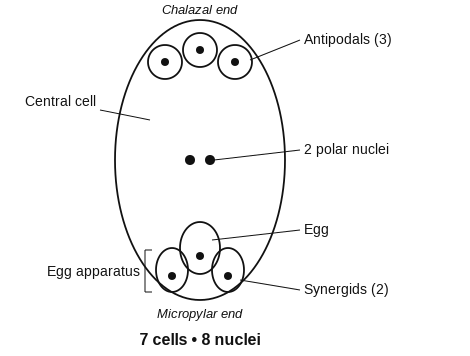
A typical angiosperm embryo sac at maturity is
परिपक्व अवस्था में एक प्रारूपिक आवृतबीजी भ्रूणकोष होता है
  1. A7-nucleate and 7-celled7-केन्द्रकीय तथा 7-कोशिकीय
  2. B8-nucleate and 8-celled8-केन्द्रकीय तथा 8-कोशिकीय
  3. C8-nucleate and 7-celled8-केन्द्रकीय तथा 7-कोशिकीय
  4. D7-nucleate and 8-celled7-केन्द्रकीय तथा 8-कोशिकीय
Show answer

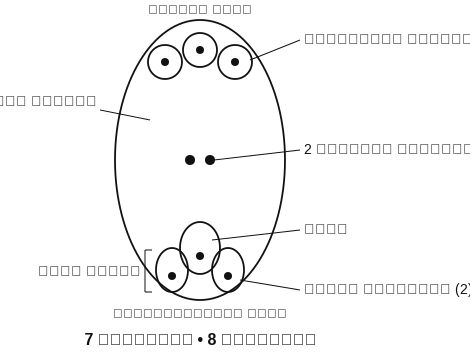
Concept: The functional megaspore divides mitotically three times (free nuclear) → 8 nuclei; 6 of them get walls, while 2 polar nuclei stay in one large central cell.

  1. Micropylar end: egg apparatus = 1 egg + 2 synergids → 3 cells, 3 nuclei.
  2. Chalazal end: 3 antipodals → 3 cells, 3 nuclei.
  3. Central cell: 1 cell with 2 polar nuclei.
  4. Total = 3 + 3 + 1 = 7 cells and 3 + 3 + 2 = 8 nuclei; (A), (B), (D) do not fit this count.

Short trick: “7–8 rule”: 8 nuclei but only 7 cells – the central cell is the only binucleate cell.

Answer: (C) 8-nucleate and 7-celled

अवधारणा: क्रियाशील गुरुबीजाणु में तीन बार समसूत्री (मुक्त केन्द्रकीय) विभाजन → 8 केन्द्रक; इनमें से 6 के चारों ओर भित्ति बनती है, जबकि 2 ध्रुवीय केन्द्रक एक बड़ी केन्द्रीय कोशिका में रहते हैं।

  1. बीजाण्डद्वारी (micropylar) सिरा: अण्ड उपकरण = 1 अण्ड + 2 सहायक कोशिकाएँ → 3 कोशिकाएँ, 3 केन्द्रक।
  2. निभागी (chalazal) सिरा: 3 प्रतिमुखी (antipodal) कोशिकाएँ → 3 कोशिकाएँ, 3 केन्द्रक।
  3. केन्द्रीय कोशिका: 2 ध्रुवीय केन्द्रकों वाली 1 कोशिका।
  4. कुल = 3 + 3 + 1 = 7 कोशिकाएँ तथा 3 + 3 + 2 = 8 केन्द्रक; (A), (B), (D) इस गणना में ठीक नहीं बैठते।

शॉर्ट ट्रिक: “7–8 नियम”: 8 केन्द्रक पर केवल 7 कोशिकाएँ – केन्द्रीय कोशिका ही एकमात्र द्विकेन्द्रकीय कोशिका है।

उत्तर: (C) 8-केन्द्रकीय तथा 7-कोशिकीय

NEET UGBotanySexual reproduction in flowering plants – embryo sacNEET UG 2021 · 12 Sep Shift 1 →
Q3348.
Which of the following is an incorrect statement ?
निम्नलिखित में से कौन-सा कथन गलत है?
  1. AThe perinuclear space forms a barrier between the materials present inside the nucleus and that of the cytoplasmपरिकेन्द्रकीय अवकाश (perinuclear space) केन्द्रक के भीतर उपस्थित पदार्थों तथा कोशिकाद्रव्य के पदार्थों के बीच अवरोध बनाता है
  2. BNuclear pores act as passages for proteins and RNA molecules in both directions between nucleus and cytoplasmकेन्द्रक छिद्र, केन्द्रक तथा कोशिकाद्रव्य के बीच दोनों दिशाओं में प्रोटीन तथा RNA अणुओं के आवागमन के मार्ग का कार्य करते हैं
  3. CMature sieve tube elements possess a conspicuous nucleus and usual cytoplasmic organellesपरिपक्व चालनी नलिका तत्वों में एक सुस्पष्ट केन्द्रक तथा सामान्य कोशिकाद्रव्यी अंगक होते हैं
  4. DMicrobodies are present both in plant and animal cellsसूक्ष्मकाय (microbodies) पादप तथा जन्तु दोनों कोशिकाओं में पाए जाते हैं
Show answer

Concept: NCERT (Anatomy): a mature sieve tube element has a peripheral cytoplasm and a large vacuole but lacks a nucleus; its functions are controlled by the companion cell.

  1. (A) correct – the 10–50 nm perinuclear space between the two nuclear membranes forms a barrier between nucleoplasm and cytoplasm.
  2. (B) correct – nuclear pores allow two-way movement of RNA and proteins.
  3. (C) incorrect – mature sieve tube elements are enucleate.
  4. (D) correct – microbodies (peroxisomes, glyoxysomes) occur in both plant and animal cells.

Short trick: Sieve tube = “living but nucleus-less”; its “brain” is the companion cell.

Answer: (C) Mature sieve tube elements possess a conspicuous nucleus…

अवधारणा: NCERT (शारीरिकी): परिपक्व चालनी नलिका तत्व में परिधीय कोशिकाद्रव्य तथा एक बड़ी रिक्तिका होती है परन्तु केन्द्रक नहीं होता; इसके कार्य सहकोशिका (companion cell) द्वारा नियंत्रित होते हैं।

  1. (A) सही – दोनों केन्द्रक झिल्लियों के बीच 10–50 nm का परिकेन्द्रकीय अवकाश केन्द्रकद्रव्य और कोशिकाद्रव्य के बीच अवरोध बनाता है।
  2. (B) सही – केन्द्रक छिद्र RNA तथा प्रोटीन का दोनों दिशाओं में आवागमन होने देते हैं।
  3. (C) गलत – परिपक्व चालनी नलिका तत्व केन्द्रकविहीन होते हैं।
  4. (D) सही – सूक्ष्मकाय (परऑक्सीसोम, ग्लाइऑक्सीसोम) पादप तथा जन्तु दोनों कोशिकाओं में मिलते हैं।

शॉर्ट ट्रिक: चालनी नलिका = “जीवित पर केन्द्रकविहीन”; इसका “मस्तिष्क” सहकोशिका है।

उत्तर: (C) परिपक्व चालनी नलिका तत्वों में सुस्पष्ट केन्द्रक…

NEET UGBotanyCell – nucleus, sieve tubes and microbodiesNEET UG 2021 · 12 Sep Shift 1 →
Q3349.
The plant hormone used to destroy weeds in a field is
खेत में खरपतवारों को नष्ट करने के लिए प्रयुक्त पादप हॉर्मोन है
  1. A2, 4-D
  2. BIBA
  3. CIAA
  4. DNAA
Show answer

Concept: NCERT: the synthetic auxin 2,4-D (2,4-dichlorophenoxyacetic acid) is widely used to kill dicotyledonous weeds; it does not affect mature monocot crops.

  1. IBA (indole-3-butyric acid) – natural auxin, used for rooting of stem cuttings – (B) wrong.
  2. IAA (indole-3-acetic acid) – natural auxin, growth – (C) wrong.
  3. NAA (naphthalene acetic acid) – synthetic auxin, used for rooting / preventing fruit drop – (D) wrong.
  4. 2,4-D – selective weedicide (herbicide), used in lawns and cereal fields – (A) correct.

Short trick: “2,4-D = D for Destroy (dicot weeds)”.

Answer: (A) 2, 4-D

अवधारणा: NCERT: संश्लेषित ऑक्सिन 2,4-D (2,4-डाइक्लोरोफीनॉक्सीऐसीटिक अम्ल) का व्यापक उपयोग द्विबीजपत्री खरपतवारों को नष्ट करने में होता है; यह परिपक्व एकबीजपत्री फसलों को प्रभावित नहीं करता।

  1. IBA (इंडोल-3-ब्यूटिरिक अम्ल) – प्राकृतिक ऑक्सिन, तना कलमों में जड़ निकालने हेतु – (B) गलत।
  2. IAA (इंडोल-3-ऐसीटिक अम्ल) – प्राकृतिक ऑक्सिन, वृद्धि हेतु – (C) गलत।
  3. NAA (नैफ्थेलीन ऐसीटिक अम्ल) – संश्लेषित ऑक्सिन, जड़ निकालने / फल-झड़न रोकने हेतु – (D) गलत।
  4. 2,4-D – चयनात्मक खरपतवारनाशी (शाकनाशी), लॉन तथा अनाज के खेतों में प्रयुक्त – (A) सही।

शॉर्ट ट्रिक: “2,4-D = D for Destroy (द्विबीजपत्री खरपतवार)”।

उत्तर: (A) 2, 4-D

NEET UGBotanyPlant growth regulators – auxinsNEET UG 2021 · 12 Sep Shift 1 →
Q3350.
Match list I with list II.
List IList II
(a) Cells with active cell division capacity(i) Vascular Tissues
(b) Tissue having all cells similar in structure and function(ii) Meristematic tissues
(c) Tissue having different type of cells(iii) Sclereids
(d) Dead cells with highly thickened walls and narrow lumen(iv) Simple Tissue
सूची I का सूची II से मिलान कीजिए।
सूची Iसूची II
(a) सक्रिय कोशिका विभाजन क्षमता वाली कोशिकाएँ(i) संवहनी ऊतक
(b) संरचना तथा कार्य में समान सभी कोशिकाओं वाला ऊतक(ii) विभज्योतकी ऊतक
(c) विभिन्न प्रकार की कोशिकाओं वाला ऊतक(iii) स्क्लेरीड (दृढ़कोशिकाएँ)
(d) अत्यधिक मोटी भित्ति तथा संकीर्ण अवकाशिका वाली मृत कोशिकाएँ(iv) सरल ऊतक
  1. A(a)-(i); (b)-(ii); (c)-(iii); (d)-(iv)
  2. B(a)-(iii); (b)-(ii); (c)-(iv); (d)-(i)
  3. C(a)-(ii); (b)-(iv); (c)-(i); (d)-(iii)
  4. D(a)-(iv); (b)-(iii); (c)-(ii); (d)-(i)
Show answer

Concept: Meristems divide actively; simple tissues have one cell type; complex tissues (xylem, phloem = vascular) have several cell types; sclereids are dead sclerenchyma cells with very thick walls and narrow lumen.

  1. (a) active division → meristematic tissue (ii).
  2. (b) all cells alike → simple tissue (iv).
  3. (c) different types of cells → complex = vascular tissue (i).
  4. (d) dead, thick-walled, narrow lumen → sclereids (iii).
  5. So a-ii, b-iv, c-i, d-iii = option (C); (A), (B), (D) mismatch at least (a).

Short trick: Just fix (a) = meristem (ii) → only option (C) starts with (a)-(ii).

Answer: (C) (a)-(ii); (b)-(iv); (c)-(i); (d)-(iii)

अवधारणा: विभज्योतक सक्रिय रूप से विभाजित होते हैं; सरल ऊतक में एक प्रकार की कोशिकाएँ होती हैं; जटिल ऊतक (जाइलम, फ्लोएम = संवहनी) में कई प्रकार की कोशिकाएँ होती हैं; स्क्लेरीड अत्यधिक मोटी भित्ति तथा संकीर्ण अवकाशिका वाली मृत दृढ़ोतक कोशिकाएँ हैं।

  1. (a) सक्रिय विभाजन → विभज्योतकी ऊतक (ii)।
  2. (b) सभी कोशिकाएँ समान → सरल ऊतक (iv)।
  3. (c) विभिन्न प्रकार की कोशिकाएँ → जटिल = संवहनी ऊतक (i)।
  4. (d) मृत, मोटी भित्ति, संकीर्ण अवकाशिका → स्क्लेरीड (iii)।
  5. अतः a-ii, b-iv, c-i, d-iii = विकल्प (C); (A), (B), (D) कम से कम (a) में ही गलत हैं।

शॉर्ट ट्रिक: केवल (a) = विभज्योतक (ii) तय कीजिए → केवल विकल्प (C) ही (a)-(ii) से शुरू होता है।

उत्तर: (C) (a)-(ii); (b)-(iv); (c)-(i); (d)-(iii)

NEET UGBotanyAnatomy – plant tissuesNEET UG 2021 · 12 Sep Shift 1 →
Q3351.
Which of the following is not an application of PCR (Polymerase Chain Reaction)
निम्नलिखित में से कौन-सा PCR (पॉलिमरेज़ शृंखला अभिक्रिया) का अनुप्रयोग नहीं है?
  1. APurification of isolated proteinपृथक्कृत प्रोटीन का शोधन
  2. BDetection of gene mutationजीन उत्परिवर्तन का पता लगाना
  3. CMolecular diagnosisआण्विक निदान
  4. DGene amplificationजीन प्रवर्धन
Show answer

Concept: PCR amplifies DNA (nucleic acid) in vitro using primers and thermostable Taq polymerase; it cannot act on proteins.

  1. Gene amplification – the basic use of PCR – (D) is an application.
  2. Molecular diagnosis – very low amounts of pathogen DNA/RNA (e.g. HIV) detected by amplification – (C) is an application.
  3. Detection of gene mutations (e.g. in suspected cancer patients) – (B) is an application.
  4. Protein purification is done by chromatography/precipitation, not PCR – (A) is not an application.

Short trick: PCR = “Photocopier for DNA” – anything that is not DNA (protein) is outside its job.

Answer: (A) Purification of isolated protein

अवधारणा: PCR प्राइमर तथा तापस्थायी Taq पॉलिमरेज़ की सहायता से पात्रे (in vitro) DNA (न्यूक्लिक अम्ल) का प्रवर्धन करता है; यह प्रोटीन पर कार्य नहीं कर सकता।

  1. जीन प्रवर्धन – PCR का मूल उपयोग – (D) अनुप्रयोग है।
  2. आण्विक निदान – रोगजनक के बहुत कम DNA/RNA (जैसे HIV) का प्रवर्धन द्वारा पता लगाना – (C) अनुप्रयोग है।
  3. जीन उत्परिवर्तन का पता लगाना (जैसे संदिग्ध कैंसर रोगियों में) – (B) अनुप्रयोग है।
  4. प्रोटीन का शोधन क्रोमैटोग्राफी/अवक्षेपण द्वारा होता है, PCR द्वारा नहीं – (A) अनुप्रयोग नहीं है।

शॉर्ट ट्रिक: PCR = “DNA की फोटोकॉपी मशीन” – जो DNA नहीं है (प्रोटीन), वह इसका कार्य नहीं।

उत्तर: (A) पृथक्कृत प्रोटीन का शोधन

NEET UGBotanyBiotechnology – applications of PCRNEET UG 2021 · 12 Sep Shift 1 →
Q3352.
Which of the following is a correct sequence of steps in a PCR (Polymerase Chain Reaction) ?
निम्नलिखित में से कौन-सा PCR (पॉलिमरेज़ शृंखला अभिक्रिया) के चरणों का सही क्रम है?
  1. AExtension, Denaturation, Annealingप्रसार (Extension), विकृतीकरण (Denaturation), तापानुशीतन (Annealing)
  2. BAnnealing, Denaturation, Extensionतापानुशीतन (Annealing), विकृतीकरण (Denaturation), प्रसार (Extension)
  3. CDenaturation, Annealing, Extensionविकृतीकरण (Denaturation), तापानुशीतन (Annealing), प्रसार (Extension)
  4. DDenaturation, Extension, Annealingविकृतीकरण (Denaturation), प्रसार (Extension), तापानुशीतन (Annealing)
Show answer

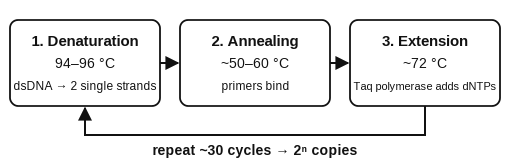
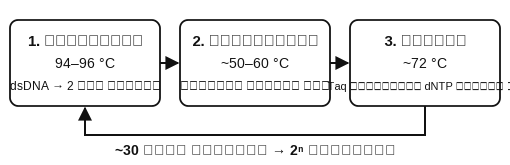
Concept: Each PCR cycle has three steps in fixed order: Denaturation → Annealing → Extension.

  1. Denaturation (~94 °C): double-stranded DNA separates into two single strands.
  2. Annealing (~50–60 °C): two primers bind to complementary ends of the single strands.
  3. Extension (~72 °C): Taq polymerase extends the primers using dNTPs.
  4. Strands must separate before primers can bind, and primers must bind before extension – so (A), (B), (D) are impossible orders.

Short trick: “D-A-E” – “Do Again Every cycle”; 30 cycles ≈ 230 copies.

Answer: (C) Denaturation, Annealing, Extension

अवधारणा: प्रत्येक PCR चक्र में तीन चरण निश्चित क्रम में होते हैं: विकृतीकरण (Denaturation) → तापानुशीतन (Annealing) → प्रसार (Extension)।

  1. विकृतीकरण (~94 °C): द्विरज्जुकी DNA दो एकल रज्जुकों में अलग हो जाता है।
  2. तापानुशीतन (~50–60 °C): दो प्राइमर एकल रज्जुकों के पूरक सिरों से जुड़ते हैं।
  3. प्रसार (~72 °C): Taq पॉलिमरेज़ dNTP का उपयोग कर प्राइमरों को आगे बढ़ाता है।
  4. प्राइमर जुड़ने से पहले रज्जुकों का अलग होना आवश्यक है, और प्रसार से पहले प्राइमरों का जुड़ना – अतः (A), (B), (D) असंभव क्रम हैं।

शॉर्ट ट्रिक: “D-A-E” – “Do Again Every cycle”; 30 चक्र ≈ 230 प्रतियाँ।

उत्तर: (C) विकृतीकरण, तापानुशीतन, प्रसार

NEET UGBotanyBiotechnology – steps of PCRNEET UG 2021 · 12 Sep Shift 1 →
Q3353.
When gene targetting involving gene amplification is attempted in an individual's tissue to treat disease, it is known as:
जब रोग के उपचार हेतु किसी व्यक्ति के ऊतक में जीन प्रवर्धन से सम्बद्ध जीन लक्ष्यीकरण (gene targetting) का प्रयास किया जाता है, तो इसे कहा जाता है:
  1. AMolecular diagnosisआण्विक निदान
  2. BSafety testingसुरक्षा परीक्षण
  3. CBiopiracyजैवदस्युता (बायोपाइरेसी)
  4. DGene therapyजीन चिकित्सा
Show answer

Concept: Gene therapy = correction of a gene defect by delivering a normal gene into the cells/tissues of a patient to treat the disease (first case: ADA deficiency, 1990).

  1. Molecular diagnosis = early detection of disease (PCR, ELISA, probes), not treatment – (A) wrong.
  2. Safety testing = checking a new drug/GMO before release – (B) wrong.
  3. Biopiracy = use of bio-resources of a nation without authorisation/compensation – (C) wrong.
  4. Targeting a gene in a person’s tissue to treat disease = gene therapy – (D) correct.

Short trick: Key words “to treat disease” + “individual’s tissue” → therapy.

Answer: (D) Gene therapy

अवधारणा: जीन चिकित्सा = रोगी की कोशिकाओं/ऊतकों में सामान्य जीन पहुँचाकर जीन दोष को ठीक करना, ताकि रोग का उपचार हो (पहला उदाहरण: ADA न्यूनता, 1990)।

  1. आण्विक निदान = रोग का शीघ्र पता लगाना (PCR, ELISA, प्रोब), उपचार नहीं – (A) गलत।
  2. सुरक्षा परीक्षण = किसी नई औषधि/GMO को जारी करने से पहले जाँच – (B) गलत।
  3. जैवदस्युता = किसी राष्ट्र के जैव-संसाधनों का बिना अनुमति/क्षतिपूर्ति के उपयोग – (C) गलत।
  4. रोग के उपचार हेतु व्यक्ति के ऊतक में जीन को लक्षित करना = जीन चिकित्सा – (D) सही।

शॉर्ट ट्रिक: मुख्य शब्द “रोग का उपचार” + “व्यक्ति का ऊतक” → चिकित्सा।

उत्तर: (D) जीन चिकित्सा

NEET UGBotanyBiotechnology – gene therapyNEET UG 2021 · 12 Sep Shift 1 →
Q3354.
Mutations in plant cells can be induced by:
पादप कोशिकाओं में उत्परिवर्तन किसके द्वारा प्रेरित किए जा सकते हैं?
  1. AGamma raysगामा किरणें
  2. BZeatinज़ीऐटिन
  3. CKinetinकाइनेटिन
  4. DInfrared raysअवरक्त किरणें
Show answer

Concept: NCERT: mutations are artificially induced by chemicals or radiations like gamma rays; selected mutants are used as a source of disease resistance (e.g. mung bean resistant to yellow mosaic virus).

  1. Gamma rays are ionising, high-energy radiation that break/alter DNA – (A) correct.
  2. Zeatin – natural cytokinin (from maize) promoting cell division – (B) wrong.
  3. Kinetin – cytokinin (from autoclaved herring sperm DNA) – (C) wrong.
  4. Infrared rays carry low energy (heat), not mutagenic – (D) wrong.

Short trick: Mutagenic radiation = short wavelength: γ, X-rays, UV; zeatin/kinetin are just cytokinins.

Answer: (A) Gamma rays

अवधारणा: NCERT: रसायनों या गामा किरणों जैसे विकिरणों द्वारा कृत्रिम रूप से उत्परिवर्तन प्रेरित किए जाते हैं; चुने गए उत्परिवर्ती रोग-प्रतिरोध के स्रोत के रूप में प्रयुक्त होते हैं (जैसे पीत मोज़ेक विषाणु प्रतिरोधी मूँग)।

  1. गामा किरणें आयनकारी, उच्च-ऊर्जा विकिरण हैं जो DNA को तोड़ती/बदलती हैं – (A) सही।
  2. ज़ीऐटिन – कोशिका विभाजन बढ़ाने वाला प्राकृतिक साइटोकाइनिन (मक्का से) – (B) गलत।
  3. काइनेटिन – साइटोकाइनिन (ऑटोक्लेव किए गए हेरिंग शुक्राणु DNA से) – (C) गलत।
  4. अवरक्त किरणें कम ऊर्जा (ऊष्मा) वाली होती हैं, उत्परिवर्तजन नहीं – (D) गलत।

शॉर्ट ट्रिक: उत्परिवर्तजन विकिरण = कम तरंगदैर्ध्य: γ, X-किरणें, UV; ज़ीऐटिन/काइनेटिन केवल साइटोकाइनिन हैं।

उत्तर: (A) गामा किरणें

NEET UGBotanyPlant breeding – mutation breedingNEET UG 2021 · 12 Sep Shift 1 →
Q3355.
Which of the following algae produce Carrageen?
निम्नलिखित में से कौन-से शैवाल कैराजीन (Carrageen) उत्पन्न करते हैं?
  1. ARed Algaeलाल शैवाल
  2. BBlue-Green Algaeनील-हरित शैवाल
  3. CGreen Algaeहरे शैवाल
  4. DBrown Algaeभूरे शैवाल
Show answer

Concept: NCERT: hydrocolloids – algin from brown algae and carrageen from red algae – are used commercially; agar is from Gelidium and Gracilaria (red algae).

  1. Red algae (Rhodophyceae) produce carrageen – (A) correct.
  2. Blue-green algae are cyanobacteria (prokaryotes); used as biofertilisers – (B) wrong.
  3. Green algae (e.g. Chlorella) – food supplement, starch reserve – (C) wrong.
  4. Brown algae produce algin, not carrageen – (D) wrong.

Short trick: “Red → caRRageen & agar; Brown → algin”.

Answer: (A) Red Algae

अवधारणा: NCERT: हाइड्रोकोलॉइड – भूरे शैवाल से एल्जिन तथा लाल शैवाल से कैराजीन – का व्यावसायिक उपयोग होता है; अगर Gelidium तथा Gracilaria (लाल शैवाल) से प्राप्त होता है।

  1. लाल शैवाल (रोडोफाइसी) कैराजीन उत्पन्न करते हैं – (A) सही।
  2. नील-हरित शैवाल सायनोबैक्टीरिया (प्रोकैरियोट) हैं; जैव-उर्वरक के रूप में प्रयुक्त – (B) गलत।
  3. हरे शैवाल (जैसे Chlorella) – खाद्य पूरक, स्टार्च संचय – (C) गलत।
  4. भूरे शैवाल एल्जिन बनाते हैं, कैराजीन नहीं – (D) गलत।

शॉर्ट ट्रिक: “Red → caRRageen व अगर; Brown (भूरा) → एल्जिन”।

उत्तर: (A) लाल शैवाल

NEET UGBotanyPlant kingdom – algae (Rhodophyceae)NEET UG 2021 · 12 Sep Shift 1 →
Q3356.
Diadelphous stamens are found in:
द्विसंघी (Diadelphous) पुंकेसर पाए जाते हैं:
  1. APeaमटर में
  2. BChina rose and citrusगुड़हल (चाइना रोज़) तथा सिट्रस में
  3. CChina roseगुड़हल (चाइना रोज़) में
  4. DCitrusसिट्रस में
Show answer

Concept: Stamens united by filaments into bundles: monadelphous – one bundle (China rose); diadelphous – two bundles (pea); polyadelphous – more than two bundles (citrus).

  1. Pea (Fabaceae): (9) + 1 – nine fused, one free → diadelphous – (A) correct.
  2. China rose: monadelphous (staminal tube) – (C) wrong.
  3. Citrus: polyadelphous – (D) wrong.
  4. (B) combines two non-diadelphous plants – wrong.

Short trick: “Mono-China, Di-Pea, Poly-Citrus” (1-2-many bundles).

Answer: (A) Pea

अवधारणा: पुंकेसर तंतुओं द्वारा गुच्छों में जुड़े हों: एकसंघी – एक गुच्छा (गुड़हल); द्विसंघी – दो गुच्छे (मटर); बहुसंघी – दो से अधिक गुच्छे (सिट्रस)।

  1. मटर (फैबेसी): (9) + 1 – नौ जुड़े हुए, एक स्वतंत्र → द्विसंघी – (A) सही।
  2. गुड़हल: एकसंघी (पुंकेसरी नलिका) – (C) गलत।
  3. सिट्रस: बहुसंघी – (D) गलत।
  4. (B) दो गैर-द्विसंघी पौधों को जोड़ता है – गलत।

शॉर्ट ट्रिक: “एक-गुड़हल, द्वि-मटर, बहु-सिट्रस” (1-2-अनेक गुच्छे)।

उत्तर: (A) मटर में

NEET UGBotanyMorphology – androecium (cohesion of stamens)NEET UG 2021 · 12 Sep Shift 1 →
Q3357.
Which of the following statements is not correct?
निम्नलिखित में से कौन-सा कथन सही नहीं है?
  1. APyramid of energy is always uprightऊर्जा का पिरैमिड सदैव सीधा होता है
  2. BPyramid of numbers in a grassland ecosystem is uprightघास-स्थल पारितंत्र में संख्या का पिरैमिड सीधा होता है
  3. CPyramid of biomass in sea is generally inverted.समुद्र में जैवभार का पिरैमिड सामान्यतः उल्टा होता है।
  4. DPyramid of biomass in sea is generally uprightसमुद्र में जैवभार का पिरैमिड सामान्यतः सीधा होता है
Show answer

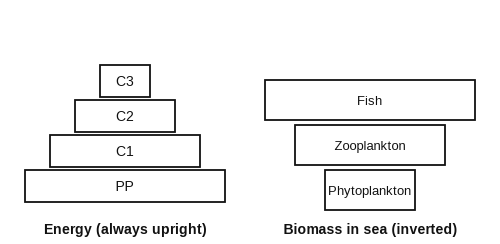
Concept: Energy decreases at every trophic level (10 % law), so the energy pyramid is always upright. In the sea, the small standing biomass of phytoplankton supports a larger biomass of fish → inverted biomass pyramid.

  1. (A) correct – energy pyramid can never be inverted.
  2. (B) correct – grassland: many grasses > fewer herbivores > fewer carnivores (upright).
  3. (C) correct – sea biomass pyramid is generally inverted.
  4. (D) not correct – it directly contradicts (C).

Short trick: When two options are exact opposites (C vs D), one of them is the answer; remember “sea = inverted biomass, energy = never inverted”.

Answer: (D) Pyramid of biomass in sea is generally upright

अवधारणा: प्रत्येक पोषी स्तर पर ऊर्जा घटती है (10 % नियम), इसलिए ऊर्जा का पिरैमिड सदैव सीधा होता है। समुद्र में पादपप्लवकों का कम खड़ा जैवभार मछलियों के अधिक जैवभार का पोषण करता है → उल्टा जैवभार पिरैमिड।

  1. (A) सही – ऊर्जा पिरैमिड कभी उल्टा नहीं हो सकता।
  2. (B) सही – घास-स्थल: बहुत अधिक घास > कम शाकाहारी > और कम मांसाहारी (सीधा)।
  3. (C) सही – समुद्र में जैवभार पिरैमिड सामान्यतः उल्टा होता है।
  4. (D) सही नहीं – यह सीधे (C) का विरोधी है।

शॉर्ट ट्रिक: जब दो विकल्प एकदम विपरीत हों (C बनाम D), उनमें से एक उत्तर होता है; याद रखें “समुद्र = उल्टा जैवभार, ऊर्जा = कभी उल्टा नहीं”।

उत्तर: (D) समुद्र में जैवभार का पिरैमिड सामान्यतः सीधा होता है

NEET UGBotanyEcosystem – ecological pyramidsNEET UG 2021 · 12 Sep Shift 1 →
Q3358.
Which of the following are not secondary metabolites in plants?
निम्नलिखित में से कौन-से पादपों में द्वितीयक उपापचयज नहीं हैं?
  1. AVinblastin, curcuminविनब्लास्टिन, करक्यूमिन
  2. BRubber, gumsरबर, गोंद
  3. CMorphine, codeineमॉर्फीन, कोडीन
  4. DAmino acids, glucoseअमीनो अम्ल, ग्लूकोज़
Show answer

Concept: Primary metabolites (sugars, amino acids, nucleotides, fatty acids) have identifiable roles in normal physiology; secondary metabolites (alkaloids, drugs, pigments, rubber, gums…) are not part of routine metabolism.

  1. Vinblastin (drug) and curcumin (drug/pigment) – secondary – (A) wrong.
  2. Rubber and gums (polymeric substances) – secondary – (B) wrong.
  3. Morphine and codeine (alkaloids) – secondary – (C) wrong.
  4. Amino acids and glucose – primary metabolites – (D) correct.

Short trick: If you find it in every cell’s routine metabolism (glucose, amino acids) → primary.

Answer: (D) Amino acids, glucose

अवधारणा: प्राथमिक उपापचयजों (शर्करा, अमीनो अम्ल, न्यूक्लियोटाइड, वसा अम्ल) की सामान्य कार्यिकी में पहचानी जाने योग्य भूमिका होती है; द्वितीयक उपापचयज (ऐल्कलॉइड, औषधियाँ, वर्णक, रबर, गोंद…) सामान्य उपापचय का भाग नहीं होते।

  1. विनब्लास्टिन (औषधि) तथा करक्यूमिन (औषधि/वर्णक) – द्वितीयक – (A) गलत।
  2. रबर तथा गोंद (बहुलकीय पदार्थ) – द्वितीयक – (B) गलत।
  3. मॉर्फीन तथा कोडीन (ऐल्कलॉइड) – द्वितीयक – (C) गलत।
  4. अमीनो अम्ल तथा ग्लूकोज़ – प्राथमिक उपापचयज – (D) सही।

शॉर्ट ट्रिक: जो हर कोशिका के सामान्य उपापचय में मिले (ग्लूकोज़, अमीनो अम्ल) → प्राथमिक।

उत्तर: (D) अमीनो अम्ल, ग्लूकोज़

NEET UGBotanyBiomolecules – primary and secondary metabolitesNEET UG 2021 · 12 Sep Shift 1 →
Q3359.
Gemmae are present in:
जेमी (Gemmae) पाए जाते हैं:
  1. ASome Gymnospermsकुछ अनावृतबीजियों में
  2. BSome Liverwortsकुछ लिवरवर्ट में
  3. CMossesमॉस में
  4. DPteridophytesटेरिडोफाइट में
Show answer

Concept: NCERT: liverworts (e.g. Marchantia) reproduce asexually by fragmentation or by gemmae – green, multicellular asexual buds formed in small cup-like gemma cups on the thallus.

  1. Some liverworts bear gemmae – (B) correct.
  2. Gymnosperms reproduce by seeds – (A) wrong.
  3. Mosses reproduce vegetatively by fragmentation and budding in the secondary protonema – (C) wrong.
  4. Pteridophytes reproduce by spores – (D) wrong.

Short trick: “Gemma cup = Marchantia” (liverwort).

Answer: (B) Some Liverworts

अवधारणा: NCERT: लिवरवर्ट (जैसे Marchantia) अलैंगिक जनन विखण्डन या जेमी द्वारा करते हैं – जेमी हरी, बहुकोशिकीय अलैंगिक कलिकाएँ हैं जो सूकाय (thallus) पर छोटे प्याले-जैसे जेमा कप में बनती हैं।

  1. कुछ लिवरवर्ट में जेमी होते हैं – (B) सही।
  2. अनावृतबीजी बीजों द्वारा जनन करते हैं – (A) गलत।
  3. मॉस विखण्डन तथा द्वितीयक प्रथमतंतु (protonema) में मुकुलन द्वारा कायिक जनन करते हैं – (C) गलत।
  4. टेरिडोफाइट बीजाणुओं द्वारा जनन करते हैं – (D) गलत।

शॉर्ट ट्रिक: “जेमा कप = मार्केन्शिया” (लिवरवर्ट)।

उत्तर: (B) कुछ लिवरवर्ट में

NEET UGBotanyPlant kingdom – bryophytes (liverworts)NEET UG 2021 · 12 Sep Shift 1 →
Q3360.
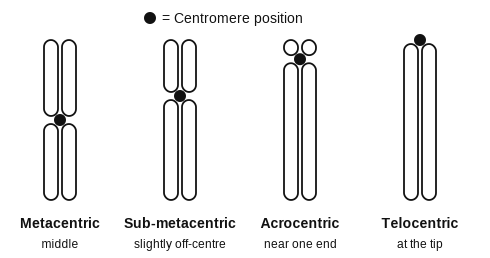
When the centromere is situated in the middle of two equal arms of chromosomes, the chromosome is referred as:
जब गुणसूत्रबिन्दु (centromere) गुणसूत्र की दो समान भुजाओं के मध्य में स्थित होता है, तो गुणसूत्र कहलाता है:
  1. ASub-metacentricउप-मध्यकेन्द्री (Sub-metacentric)
  2. BAcrocentricअग्रबिन्दु (Acrocentric)
  3. CMetacentricमध्यकेन्द्री (Metacentric)
  4. DTelocentricअंतकेन्द्री (Telocentric)
Show answer

Concept: Chromosomes are classified by the position of the centromere (primary constriction).

  1. Metacentric – centromere in the middle, two equal arms – (C) correct.
  2. Sub-metacentric – centromere slightly away from the middle, one arm shorter – (A) wrong.
  3. Acrocentric – centromere close to one end, one very short arm – (B) wrong.
  4. Telocentric – centromere at the terminal end – (D) wrong.

Short trick: Metacentric = Middle; Telocentric = Tip; Acrocentric = Almost at tip.

Answer: (C) Metacentric

अवधारणा: गुणसूत्रों का वर्गीकरण गुणसूत्रबिन्दु (प्राथमिक संकीर्णन) की स्थिति के आधार पर किया जाता है।

  1. मध्यकेन्द्री – गुणसूत्रबिन्दु बीच में, दो समान भुजाएँ – (C) सही।
  2. उप-मध्यकेन्द्री – गुणसूत्रबिन्दु बीच से थोड़ा हटकर, एक भुजा छोटी – (A) गलत।
  3. अग्रबिन्दु (acrocentric) – गुणसूत्रबिन्दु एक सिरे के पास, एक भुजा बहुत छोटी – (B) गलत।
  4. अंतकेन्द्री (telocentric) – गुणसूत्रबिन्दु बिल्कुल अंतिम सिरे पर – (D) गलत।

शॉर्ट ट्रिक: Metacentric = Middle (मध्य); Telocentric = Tip (सिरा); Acrocentric = Almost at tip (लगभग सिरे पर)।

उत्तर: (C) मध्यकेन्द्री (Metacentric)

NEET UGBotanyCell – chromosome types by centromereNEET UG 2021 · 12 Sep Shift 1 →