Question bank

Q&A: practice questions with answers

Search questions on any topic. Filter by exam category, exam, subject and topic, try the question, then open the answer and explanation.

Courses – airGurukul

53,050 questions in the question bank.

Q3481.
Match the following with respect to meiosis:
(a) Zygotene(i) Terminalization
(b) Pachytene(ii) Chiasmata
(c) Diplotene(iii) Crossing over
(d) Diakinesis(iv) Synapsis
Select the correct option from the following:
अर्धसूत्रण के संदर्भ में निम्नलिखित का मिलान कीजिए:
(a) ज़ाइगोटीन(i) उपांतीभवन (terminalization)
(b) पैकिटीन(ii) काइऐज़्मेटा
(c) डिप्लोटीन(iii) जीन-विनिमय (crossing over)
(d) डायाकाइनेसिस(iv) सूत्रयुग्मन (synapsis)
नीचे दिए गए विकल्पों में से सही उत्तर चुनिए:
  1. Aa-(i), b-(ii), c-(iv), d-(iii)
  2. Ba-(ii), b-(iv), c-(iii), d-(i)
  3. Ca-(iii), b-(iv), c-(i), d-(ii)
  4. Da-(iv), b-(iii), c-(ii), d-(i)
Show answer

Concept: Each sub-stage of prophase I has one key event (NCERT).

  1. Zygotene – pairing of homologues = synapsis (iv).
  2. Pachytene – exchange of segments = crossing over (iii).
  3. Diplotene – SC dissolves, X-shaped chiasmata seen (ii).
  4. Diakinesis – terminalisation of chiasmata (i).
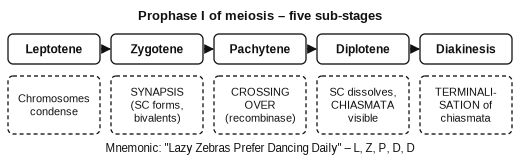
  5. a-iv, b-iii, c-ii, d-i = (D). The other options shift events to wrong stages.

Short trick: Events follow the stage order: Synapsis → Crossing over → Chiasmata → Terminalisation = (iv) (iii) (ii) (i) – just a reverse count!

Answer: (D) a-(iv), b-(iii), c-(ii), d-(i)

अवधारणा: पूर्वावस्था I के प्रत्येक उप-चरण की एक मुख्य घटना है (NCERT)।

  1. ज़ाइगोटीन – समजातों का युग्मन = सूत्रयुग्मन (iv)।
  2. पैकिटीन – खंडों का आदान-प्रदान = जीन-विनिमय (iii)।
  3. डिप्लोटीन – SC विघटित, X-आकार के काइऐज़्मेटा दिखते हैं (ii)।
  4. डायाकाइनेसिस – काइऐज़्मेटा का उपांतीभवन (i)।
  5. a-iv, b-iii, c-ii, d-i = (D)। अन्य विकल्प घटनाओं को गलत चरणों में रखते हैं।

शॉर्ट ट्रिक: घटनाएँ चरणों के क्रम में: सूत्रयुग्मन → जीन-विनिमय → काइऐज़्मेटा → उपांतीभवन = (iv) (iii) (ii) (i) – बस उलटी गिनती!

उत्तर: (D) a-(iv), b-(iii), c-(ii), d-(i)
NEET UGBiologyCell cycle and cell division – prophase INEET UG 2020 · 13 Sep Shift 1 →
Q3482.
Which of the following statements about inclusion bodies is incorrect?
अंतर्विष्ट पिंडों (inclusion bodies) के बारे में निम्नलिखित में से कौन-सा कथन गलत है?
  1. AThey lie free in the cytoplasmये कोशिकाद्रव्य में स्वतंत्र रूप से पड़े रहते हैं
  2. BThese represent reserve material in cytoplasmये कोशिकाद्रव्य में संचित पदार्थ को दर्शाते हैं
  3. CThey are not bound by any membraneये किसी झिल्ली से घिरे नहीं होते
  4. DThese are involved in ingestion of food particlesये भोजन कणों के अंतर्ग्रहण में सम्मिलित होते हैं
Show answer

Concept: NCERT (prokaryotic cell): "Reserve material in prokaryotic cells are stored in the cytoplasm in the form of inclusion bodies. These are not bounded by any membrane system and lie free in the cytoplasm, e.g. phosphate granules, cyanophycean granules and glycogen granules."

  1. (A), (B), (C) are exactly the NCERT description ✔.
  2. (D) Inclusion bodies are inert stores; they play no role in ingestion of food (that is phagocytosis/food vacuoles) → incorrect → answer.

Short trick: Inclusion bodies = "pantry", not "mouth" – store food, never eat it.

Answer: (D) These are involved in ingestion of food particles

अवधारणा: NCERT (प्रोकैरियोटिक कोशिका): "प्रोकैरियोटिक कोशिकाओं में संचित पदार्थ कोशिकाद्रव्य में अंतर्विष्ट पिंडों के रूप में रहता है। ये किसी झिल्ली तंत्र से घिरे नहीं होते और कोशिकाद्रव्य में स्वतंत्र रूप से पड़े रहते हैं, जैसे फॉस्फेट कणिकाएँ, सायनोफाइसी कणिकाएँ और ग्लाइकोजन कणिकाएँ।"

  1. (A), (B), (C) बिल्कुल NCERT का वर्णन हैं ✔।
  2. (D) अंतर्विष्ट पिंड निष्क्रिय भंडार हैं; भोजन के अंतर्ग्रहण में इनकी कोई भूमिका नहीं (वह भक्षकाणुक्रिया/खाद्य रिक्तिका का कार्य है) → गलत → उत्तर।

शॉर्ट ट्रिक: अंतर्विष्ट पिंड = "भंडार-घर", "मुँह" नहीं – भोजन संचित करते हैं, खाते नहीं।

उत्तर: (D) ये भोजन कणों के अंतर्ग्रहण में सम्मिलित होते हैं

NEET UGBiologyCell: the unit of life – inclusion bodiesNEET UG 2020 · 13 Sep Shift 1 →
Q3483.
Which of the following would help in prevention of diuresis?
निम्नलिखित में से कौन-सा मूत्रलता (diuresis) को रोकने में सहायता करेगा?
  1. AAtrial natriuretic factor causes vasoconstrictionआलिंद नेट्रियूरेटिक कारक वाहिकासंकीर्णन करता है
  2. BDecrease in secretion of renin by JG cellsJG कोशिकाओं द्वारा रेनिन स्राव में कमी
  3. CMore water reabsorption due to undersecretion of ADHADH के अल्पस्राव के कारण अधिक जल पुनरवशोषण
  4. DReabsorption of Na+ and water from renal tubules due to aldosteroneऐल्डोस्टेरॉन के कारण वृक्क नलिकाओं से Na+ और जल का पुनरवशोषण
Show answer

Concept: Diuresis = excess urine output. It is prevented by anything that increases reabsorption of water – ADH and the RAAS (aldosterone).

  1. Aldosterone causes reabsorption of Na+ and water from the distal parts of the tubule → less urine → prevents diuresis ✔ (D).
  2. ANF causes vasodilation (not vasoconstriction) and promotes Na+/water loss – (A) wrong on both counts.
  3. Less renin → less angiotensin II and aldosterone → more urine – (B) wrong.
  4. Under-secretion of ADH reduces water reabsorption (diabetes insipidus) – the statement contradicts itself – (C) wrong.

Short trick: ADH ↑, Aldosterone ↑ → urine ↓; ANF is the "check" on RAAS (urine ↑).

Answer: (D) Reabsorption of Na+ and water from renal tubules due to aldosterone

अवधारणा: मूत्रलता = अत्यधिक मूत्र उत्सर्जन। जल का पुनरवशोषण बढ़ाने वाला कोई भी कारक – ADH और RAAS (ऐल्डोस्टेरॉन) – इसे रोकता है।

  1. ऐल्डोस्टेरॉन नलिका के दूरस्थ भागों से Na+ और जल का पुनरवशोषण कराता है → कम मूत्र → मूत्रलता रुकती है ✔ (D)।
  2. ANF वाहिकाविस्फारण करता है (संकीर्णन नहीं) और Na+/जल की हानि बढ़ाता है – (A) दोनों प्रकार से गलत।
  3. कम रेनिन → कम ऐंजियोटेंसिन II और ऐल्डोस्टेरॉन → अधिक मूत्र – (B) गलत।
  4. ADH का अल्पस्राव जल पुनरवशोषण घटाता है (डायबिटीज़ इन्सिपिडस) – कथन स्वयं-विरोधी है – (C) गलत।

शॉर्ट ट्रिक: ADH ↑, ऐल्डोस्टेरॉन ↑ → मूत्र ↓; ANF, RAAS पर "रोक" है (मूत्र ↑)।

उत्तर: (D) ऐल्डोस्टेरॉन के कारण वृक्क नलिकाओं से Na+ और जल का पुनरवशोषण

NEET UGBiologyExcretory products – regulation of kidney functionNEET UG 2020 · 13 Sep Shift 1 →
Q3484.
The transverse section of a plant shows following anatomical features:
(a) Large number of scattered vascular bundles surrounded by bundle sheath
(b) Large conspicuous parenchymatous ground tissues
(c) Vascular bundles conjoint and closed
(d) Phloem parenchyma absent
किसी पादप के अनुप्रस्थ काट में निम्नलिखित शारीरिक लक्षण दिखते हैं:
(a) पूलाच्छद (bundle sheath) से घिरे अनेक बिखरे संवहन पूल
(b) बड़ा, स्पष्ट मृदूतकी भरण ऊतक
(c) संवहन पूल संयुक्त और बंद (conjoint and closed)
(d) फ्लोएम मृदूतक अनुपस्थित
  1. ADicotyledonous stemद्विबीजपत्री तना
  2. BDicotyledonous rootद्विबीजपत्री मूल
  3. CMonocotyledonous stemएकबीजपत्री तना
  4. DMonocotyledonous rootएकबीजपत्री मूल
Show answer

Concept: NCERT: "The monocot stem has… a large number of scattered vascular bundles, each surrounded by a sclerenchymatous bundle sheath, and a large, conspicuous parenchymatous ground tissue. Vascular bundles are conjoint and closed… Phloem parenchyma is absent."

  1. All four features are textbook features of monocot stem ✔ (C).
  2. Dicot stem – bundles in a ring, open (with cambium) – (A) wrong.
  3. Roots (dicot or monocot) have radial vascular bundles, not conjoint – (B), (D) wrong.

Short trick: Scattered + closed + no phloem parenchyma = monocot stem (e.g. maize).

Answer: (C) Monocotyledonous stem

अवधारणा: NCERT: "एकबीजपत्री तने में… अनेक बिखरे संवहन पूल होते हैं, प्रत्येक दृढ़ोतकी पूलाच्छद से घिरा, तथा बड़ा, स्पष्ट मृदूतकी भरण ऊतक होता है। संवहन पूल संयुक्त और बंद होते हैं… फ्लोएम मृदूतक अनुपस्थित होता है।"

  1. चारों लक्षण एकबीजपत्री तने के पाठ्यपुस्तकीय लक्षण हैं ✔ (C)।
  2. द्विबीजपत्री तना – पूल वलय में, खुले (एधा सहित) – (A) गलत।
  3. मूलों (द्विबीजपत्री या एकबीजपत्री) में अरीय संवहन पूल होते हैं, संयुक्त नहीं – (B), (D) गलत।

शॉर्ट ट्रिक: बिखरे + बंद + फ्लोएम मृदूतक नहीं = एकबीजपत्री तना (जैसे मक्का)।

उत्तर: (C) एकबीजपत्री तना

NEET UGBiologyAnatomy of flowering plants – monocot stemNEET UG 2020 · 13 Sep Shift 1 →
Q3485.
Which of the following statements is correct?
निम्नलिखित में से कौन-सा कथन सही है?
  1. AAdenine pairs with thymine through three H-bondsऐडेनीन, थाइमीन से तीन H-बंधों द्वारा युग्मित होता है
  2. BAdenine does not pair with thymineऐडेनीन, थाइमीन से युग्मित नहीं होता
  3. CAdenine pairs with thymine through two H-bondsऐडेनीन, थाइमीन से दो H-बंधों द्वारा युग्मित होता है
  4. DAdenine pairs with thymine through one H-bondऐडेनीन, थाइमीन से एक H-बंध द्वारा युग्मित होता है
Show answer

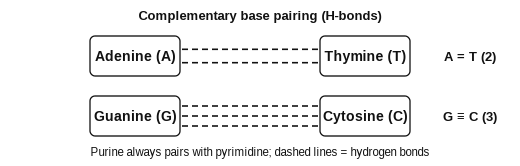
Concept: NCERT (Watson–Crick model): "Adenine forms two hydrogen bonds with Thymine from opposite strand and vice-versa. Similarly, Guanine is bonded with Cytosine with three H-bonds."

  1. A = T through 2 H-bonds ✔ (C).
  2. Three H-bonds are between G and C – (A) wrong.
  3. A always pairs with T in DNA (Chargaff: A = T) – (B) wrong.
  4. One H-bond is not the A–T pairing – (D) wrong.

Short trick: Count the letters' "arms": A = T (two lines), G ≡ C (three lines) – more GC = higher melting point.

Answer: (C) Adenine pairs with thymine through two H-bonds

अवधारणा: NCERT (वॉटसन–क्रिक मॉडल): "ऐडेनीन विपरीत रज्जुक के थाइमीन के साथ दो हाइड्रोजन बंध बनाता है और इसका उल्टा भी। इसी प्रकार ग्वानीन, साइटोसीन से तीन H-बंधों द्वारा जुड़ा होता है।"

  1. A = T दो H-बंधों द्वारा ✔ (C)।
  2. तीन H-बंध G और C के बीच होते हैं – (A) गलत।
  3. DNA में A सदैव T से युग्मित होता है (शारगाफ: A = T) – (B) गलत।
  4. एक H-बंध A–T युग्मन नहीं है – (D) गलत।

शॉर्ट ट्रिक: रेखाएँ गिनें: A = T (दो रेखाएँ), G ≡ C (तीन रेखाएँ) – अधिक GC = उच्च गलनांक।

उत्तर: (C) ऐडेनीन, थाइमीन से दो H-बंधों द्वारा युग्मित होता है

NEET UGBiologyMolecular basis of inheritance – DNA structureNEET UG 2020 · 13 Sep Shift 1 →
Q3486.
Match the following columns and select the correct option.
Column-IColumn-II
(a) Bt cotton(i) Gene therapy
(b) Adenosine deaminase deficiency(ii) Cellular defence
(c) RNAi(iii) Detection of HIV infection
(d) PCR(iv) Bacillus thuringiensis
निम्नलिखित स्तंभों का मिलान कीजिए और सही विकल्प चुनिए।
स्तंभ-Iस्तंभ-II
(a) Bt कपास(i) जीन चिकित्सा
(b) ऐडेनोसिन डीऐमिनेज़ न्यूनता(ii) कोशिकीय सुरक्षा
(c) RNAi(iii) HIV संक्रमण का संसूचन
(d) PCR(iv) Bacillus thuringiensis
  1. A(a)-(ii), (b)-(iii), c-(iv), d-(i)
  2. B(a)-(i), (b)-(ii), c-(iii), d-(iv)
  3. C(a)-(iv), (b)-(i), c-(ii), d-(iii)
  4. D(a)-(iii), (b)-(ii), c-(i), d-(iv)
Show answer

Concept: NCERT – applications of biotechnology in agriculture and medicine.

  1. Bt cotton – carries cry genes from Bacillus thuringiensis = (iv).
  2. ADA deficiency – first clinical gene therapy (1990, a 4-year-old girl) = (i).
  3. RNAi – RNA interference, a method of cellular defence in eukaryotes (used against nematode Meloidogyne) = (ii).
  4. PCR – early detection of HIV in suspected AIDS patients = (iii).
  5. a-iv, b-i, c-ii, d-iii = (C).

Short trick: Read Column-II as a story: Bt → Bacillus, ADA → gene therapy, RNAi → defence, PCR → detection.

Answer: (C) (a)-(iv), (b)-(i), c-(ii), d-(iii)

अवधारणा: NCERT – कृषि और चिकित्सा में जैव प्रौद्योगिकी के अनुप्रयोग।

  1. Bt कपास – Bacillus thuringiensis के cry जीन युक्त = (iv)।
  2. ADA न्यूनता – प्रथम नैदानिक जीन चिकित्सा (1990, 4 वर्षीय बालिका) = (i)।
  3. RNAi – RNA अंतरक्षेप, सुकेंद्रकियों में कोशिकीय सुरक्षा की विधि (सूत्रकृमि Meloidogyne के विरुद्ध प्रयुक्त) = (ii)।
  4. PCR – संदिग्ध एड्स रोगियों में HIV का शीघ्र संसूचन = (iii)।
  5. a-iv, b-i, c-ii, d-iii = (C)।

शॉर्ट ट्रिक: स्तंभ-II को कहानी की तरह पढ़ें: Bt → Bacillus, ADA → जीन चिकित्सा, RNAi → सुरक्षा, PCR → संसूचन।

उत्तर: (C) (a)-(iv), (b)-(i), c-(ii), d-(iii)

NEET UGBiologyBiotechnology – applicationsNEET UG 2020 · 13 Sep Shift 1 →
Q3487.
Flippers of Penguins and Dolphins are examples of:
पेंगुइन और डॉल्फ़िन के फ्लिपर किसके उदाहरण हैं?
  1. AIndustrial melanismऔद्योगिक मेलेनिनता
  2. BNatural selectionप्राकृतिक वरण
  3. CAdaptive radiationअनुकूली विकिरण
  4. DConvergent evolutionअभिसारी विकास
Show answer

Concept: NCERT: Analogous structures (similar function, different origin) are the result of convergent evolution – "flippers of Penguins and Dolphins" is an NCERT example.

  1. Penguin (bird) and dolphin (mammal) are unrelated but evolved similar flippers for swimming → convergent evolution ✔ (D).
  2. Industrial melanism – dark peppered moths in polluted England – (A) wrong.
  3. Natural selection is the general mechanism, not the specific pattern asked – (B) wrong.
  4. Adaptive radiation – one ancestor diverging into many forms (Darwin’s finches) – divergent, opposite idea – (C) wrong.

Short trick: Analogy → Convergent (wings of bird & butterfly, eyes of octopus & mammal); Homology → Divergent.

Answer: (D) Convergent evolution

अवधारणा: NCERT: समरूप संरचनाएँ (समान कार्य, भिन्न उद्भव) अभिसारी विकास का परिणाम हैं – "पेंगुइन और डॉल्फ़िन के फ्लिपर" NCERT का उदाहरण है।

  1. पेंगुइन (पक्षी) और डॉल्फ़िन (स्तनधारी) संबंधित नहीं हैं, फिर भी तैरने हेतु समान फ्लिपर विकसित हुए → अभिसारी विकास ✔ (D)।
  2. औद्योगिक मेलेनिनता – प्रदूषित इंग्लैंड में गहरे रंग के पेपर्ड मॉथ – (A) गलत।
  3. प्राकृतिक वरण सामान्य क्रियाविधि है, पूछा गया विशिष्ट प्रतिरूप नहीं – (B) गलत।
  4. अनुकूली विकिरण – एक पूर्वज से अनेक रूपों का विकास (डार्विन की फिंच) – अपसारी, विपरीत विचार – (C) गलत।

शॉर्ट ट्रिक: समरूपता → अभिसारी (पक्षी व तितली के पंख, ऑक्टोपस व स्तनधारी की आँख); समजातता → अपसारी।

उत्तर: (D) अभिसारी विकास

NEET UGBiologyEvolution – convergent evolution (analogy)NEET UG 2020 · 13 Sep Shift 1 →
Q3488.
The oxygenation activity of RuBisCO enzyme in photorespiration leads to the formation of:
प्रकाश-श्वसन में RuBisCO एंजाइम की ऑक्सीजनीकरण सक्रियता से किसका निर्माण होता है?
  1. A1 molecule of 6-C compound6-C यौगिक का 1 अणु
  2. B1 molecule of 4-C compound and 1 molecule of 2-C compound4-C यौगिक का 1 अणु और 2-C यौगिक का 1 अणु
  3. C2 molecules of 3-C compound3-C यौगिक के 2 अणु
  4. D1 molecule of 3-C compound3-C यौगिक का 1 अणु
Show answer

Concept: NCERT: "In the photorespiratory pathway, RuBP instead of being converted to 2 molecules of PGA binds with O2 to form one molecule of PGA and phosphoglycolate."

  1. Oxygenation: RuBP (5C) + O2 → 1 PGA (3C) + 1 phosphoglycolate (2C).
  2. Of the options, only "1 molecule of 3-C compound" (PGA) matches the product of oxygenation → (D) ✔ (the 2-C phosphoglycolate is the by-product).
  3. "2 molecules of 3-C compound" is the carboxylation (Calvin cycle) product – (C) wrong.
  4. No 6-C or 4-C compound is formed – (A), (B) wrong.

Short trick: RuBisCO: CO2 → 2 PGA; O2 → 1 PGA (+ 2-C glycolate) – O for "One".

Answer: (D) 1 molecule of 3-C compound

अवधारणा: NCERT: "प्रकाश-श्वसन पथ में RuBP, PGA के 2 अणुओं में बदलने के बजाय O2 से जुड़कर PGA का एक अणु और फॉस्फोग्लाइकोलेट बनाता है।"

  1. ऑक्सीजनीकरण: RuBP (5C) + O2 → 1 PGA (3C) + 1 फॉस्फोग्लाइकोलेट (2C)।
  2. विकल्पों में केवल "3-C यौगिक का 1 अणु" (PGA) ऑक्सीजनीकरण के उत्पाद से मेल खाता है → (D) ✔ (2-C फॉस्फोग्लाइकोलेट उप-उत्पाद है)।
  3. "3-C यौगिक के 2 अणु" कार्बोक्सिलीकरण (केल्विन चक्र) का उत्पाद है – (C) गलत।
  4. कोई 6-C या 4-C यौगिक नहीं बनता – (A), (B) गलत।

शॉर्ट ट्रिक: RuBisCO: CO2 → 2 PGA; O2 → 1 PGA (+ 2-C ग्लाइकोलेट) – O यानी "One"।

उत्तर: (D) 3-C यौगिक का 1 अणु

NEET UGBiologyPhotosynthesis – photorespirationNEET UG 2020 · 13 Sep Shift 1 →
Q3489.
The infectious stage of Plasmodium that enters the human body is:
Plasmodium की वह संक्रामक अवस्था जो मानव शरीर में प्रवेश करती है:
  1. AFemale gametocytesमादा युग्मकजनक
  2. BMale gametocytesनर युग्मकजनक
  3. CTrophozoitesपोषाणु (ट्रोफोज़ॉइट)
  4. DSporozoitesबीजाणुज (स्पोरोज़ॉइट)
Show answer

Concept: NCERT: "Plasmodium enters the human body as sporozoites (infectious form) through the bite of infected female Anopheles mosquito."

  1. Sporozoites are injected with mosquito saliva → multiply in liver cells, then RBCs ✔ (D).
  2. Male and female gametocytes develop in human RBCs and are taken up by the mosquito – they are the stage infective to the mosquito – (A), (B) wrong.
  3. Trophozoites are the feeding stage inside RBCs – (C) wrong.

Short trick: Sporozoite = "Spear" into human; Gametocyte = "Gift" to mosquito.

Answer: (D) Sporozoites

अवधारणा: NCERT: "Plasmodium संक्रमित मादा Anopheles मच्छर के काटने से बीजाणुज (संक्रामक रूप) के रूप में मानव शरीर में प्रवेश करता है।"

  1. बीजाणुज मच्छर की लार के साथ अंतःक्षेपित होते हैं → यकृत कोशिकाओं में, फिर RBC में गुणन ✔ (D)।
  2. नर व मादा युग्मकजनक मानव RBC में बनते हैं और मच्छर द्वारा ग्रहण किए जाते हैं – ये मच्छर के लिए संक्रामक अवस्था हैं – (A), (B) गलत।
  3. पोषाणु RBC के भीतर पोषण करने वाली अवस्था है – (C) गलत।

शॉर्ट ट्रिक: स्पोरोज़ॉइट = मनुष्य में "भाला"; गैमीटोसाइट = मच्छर को "उपहार"।

उत्तर: (D) बीजाणुज (स्पोरोज़ॉइट)

NEET UGBiologyHuman health and disease – malariaNEET UG 2020 · 13 Sep Shift 1 →
Q3490.
Identify the incorrect statement.
गलत कथन को पहचानिए।
  1. ASapwood is the innermost secondary xylem and is lighter in colourरसदारु (sapwood) सबसे भीतरी द्वितीयक जाइलम है और हल्के रंग का होता है
  2. BDue to deposition of tannins, resins, oils etc heart wood is dark in colourटैनिन, रेज़िन, तेल आदि के जमाव के कारण अंतःकाष्ठ (heartwood) गहरे रंग का होता है
  3. CHeart wood does not conduct water but gives mechanical supportअंतःकाष्ठ जल का संवहन नहीं करता पर यांत्रिक सहारा देता है
  4. DSapwood is involved in conduction of water and minerals from root to leafरसदारु जड़ से पत्ती तक जल और खनिजों के संवहन में सम्मिलित है
Show answer

Concept: NCERT: "The peripheral region of the secondary xylem is lighter in colour and is known as the sapwood or alburnum. It is involved in the conduction of water and minerals from root to leaf." Heartwood is the central, dark, non-conducting part.

  1. Sapwood is the outer (peripheral), not innermost, secondary xylem → (A) incorrect → answer.
  2. (B) Tannins, resins, oils, gums, aromatic substances make heartwood dark ✔.
  3. (C) Heartwood (duramen) has tracheary elements filled with these deposits – does not conduct water, gives mechanical support ✔.
  4. (D) Sapwood conducts water and minerals ✔.

Short trick: Heart is inside and dark; Sap flows outside and light.

Answer: (A) Sapwood is the innermost secondary xylem and is lighter in colour

अवधारणा: NCERT: "द्वितीयक जाइलम का परिधीय भाग हल्के रंग का होता है और रसदारु या ऐल्बर्नम कहलाता है। यह जड़ से पत्ती तक जल और खनिजों के संवहन में सम्मिलित है।" अंतःकाष्ठ केंद्रीय, गहरे रंग का, असंवाहक भाग है।

  1. रसदारु बाहरी (परिधीय) द्वितीयक जाइलम है, सबसे भीतरी नहीं → (A) गलत → उत्तर।
  2. (B) टैनिन, रेज़िन, तेल, गोंद, सुगंधित पदार्थ अंतःकाष्ठ को गहरा बनाते हैं ✔।
  3. (C) अंतःकाष्ठ (ड्यूरामेन) की वाहिनिकाएँ इन पदार्थों से भरी होती हैं – जल संवहन नहीं करता, यांत्रिक सहारा देता है ✔।
  4. (D) रसदारु जल और खनिजों का संवहन करता है ✔।

शॉर्ट ट्रिक: अंतःकाष्ठ भीतर और गहरा; रसदारु बाहर बहता और हल्का।

उत्तर: (A) रसदारु (sapwood) सबसे भीतरी द्वितीयक जाइलम है और हल्के रंग का होता है

NEET UGBiologyAnatomy of flowering plants – secondary growth (wood)NEET UG 2020 · 13 Sep Shift 1 →
Q3491.
Which of the following is correct about viroids?
वाइरॉइड (viroids) के संबंध में निम्नलिखित में से कौन-सा सही है?
  1. AThey have DNA with protein coatइनमें प्रोटीन आवरण सहित DNA होता है
  2. BThey have free DNA without protein coatइनमें प्रोटीन आवरण रहित मुक्त DNA होता है
  3. CThey have RNA with protein coatइनमें प्रोटीन आवरण सहित RNA होता है
  4. DThey have free RNA without protein coatइनमें प्रोटीन आवरण रहित मुक्त RNA होता है
Show answer

Concept: Viroids (discovered by T.O. Diener, 1971, as the cause of potato spindle tuber disease) are infectious agents smaller than viruses, made only of a free, low-molecular-weight RNA with no protein coat.

  1. (A) and (B) are wrong – viroids have no DNA at all.
  2. (C) RNA with a protein coat (capsid) describes many viruses (e.g. TMV), not viroids.
  3. (D) Free RNA lacking the protein coat – exactly the NCERT definition of a viroid.

Short trick: Viroid = "naked RNA"; Prion = "only protein". The two opposites of a virus.

Answer: (D) They have free RNA without protein coat

अवधारणा: वाइरॉइड (T.O. डायनर, 1971 – आलू का स्पिंडल ट्यूबर रोग) विषाणु से भी छोटे संक्रामक कारक हैं, जो केवल मुक्त, कम आण्विक भार वाले RNA से बने होते हैं; इनमें प्रोटीन आवरण नहीं होता।

  1. (A) और (B) गलत – वाइरॉइड में DNA होता ही नहीं।
  2. (C) प्रोटीन आवरण (कैप्सिड) सहित RNA कई विषाणुओं (जैसे TMV) का लक्षण है, वाइरॉइड का नहीं।
  3. (D) प्रोटीन आवरण रहित मुक्त RNA – यही NCERT की वाइरॉइड परिभाषा है।

शॉर्ट ट्रिक: वाइरॉइड = "नग्न RNA"; प्रिऑन = "केवल प्रोटीन" – विषाणु के दो विपरीत रूप।

उत्तर: (D) इनमें प्रोटीन आवरण रहित मुक्त RNA होता है

NEET UGBiologyBiological classification – viroidsNEET UG 2020 · 13 Sep Shift 1 →
Q3492.
Match the following diseases with the causative organism and select the correct option.
Column-IColumn-II
(a) Typhoid(i) Wuchereria
(b) Pneumonia(ii) Plasmodium
(c) Filariasis(iii) Salmonella
(d) Malaria(iv) Haemophilus
निम्नलिखित रोगों का उनके रोगकारक जीवों से मिलान कीजिए और सही विकल्प चुनिए।
स्तम्भ-Iस्तम्भ-II
(a) टाइफॉइड (मोतीझरा)(i) Wuchereria
(b) न्यूमोनिया(ii) Plasmodium
(c) फाइलेरियता (फीलपाँव)(iii) Salmonella
(d) मलेरिया(iv) Haemophilus
  1. A(a)-(ii), (b)-(i), (c)-(iii), (d)-(iv)
  2. B(a)-(iv), (b)-(i), (c)-(ii), (d)-(iii)
  3. C(a)-(i), (b)-(iii), (c)-(ii), (d)-(iv)
  4. D(a)-(iii), (b)-(iv), (c)-(i), (d)-(ii)
Show answer

Concept: Each disease has a fixed pathogen (NCERT, Human Health and Disease).

  1. Typhoid → Salmonella typhi (bacterium) → (iii).
  2. Pneumonia → Streptococcus pneumoniae and Haemophilus influenzae → (iv).
  3. Filariasis (elephantiasis) → Wuchereria bancrofti / W. malayi (nematode) → (i).
  4. Malaria → Plasmodium (protozoan) → (ii).
  5. Only (D) a-iii, b-iv, c-i, d-ii fits.

Short trick: Malaria–Plasmodium is the surest pair: only (D) has d-(ii); confirm with Typhoid–Salmonella (a-iii).

Answer: (D) (a)-(iii), (b)-(iv), (c)-(i), (d)-(ii)

अवधारणा: प्रत्येक रोग का एक निश्चित रोगजनक होता है (NCERT, मानव स्वास्थ्य एवं रोग)।

  1. टाइफॉइड → Salmonella typhi (जीवाणु) → (iii)।
  2. न्यूमोनिया → Streptococcus pneumoniae तथा Haemophilus influenzae → (iv)।
  3. फाइलेरियता (फीलपाँव) → Wuchereria bancrofti / W. malayi (सूत्रकृमि) → (i)।
  4. मलेरिया → Plasmodium (प्रोटोज़ोआ) → (ii)।
  5. केवल (D) a-iii, b-iv, c-i, d-ii सही बैठता है।

शॉर्ट ट्रिक: मलेरिया–Plasmodium सबसे पक्का जोड़ा है: केवल (D) में d-(ii) है; टाइफॉइड–Salmonella (a-iii) से पुष्टि करें।

उत्तर: (D) (a)-(iii), (b)-(iv), (c)-(i), (d)-(ii)

NEET UGBiologyHuman health and disease – pathogensNEET UG 2020 · 13 Sep Shift 1 →
Q3493.
Identify the wrong statement with reference to the gene ‘I’ that controls ABO blood groups.
ABO रुधिर वर्गों को नियंत्रित करने वाले जीन ‘I’ के संदर्भ में गलत कथन को पहचानिए।
  1. AWhen IA and IB are present together, they express same type of sugarजब IA और IB एक साथ उपस्थित होते हैं, तो वे एक ही प्रकार की शर्करा अभिव्यक्त करते हैं
  2. BAllele ‘i’ does not produce any sugarयुग्मविकल्पी ‘i’ कोई शर्करा उत्पन्न नहीं करता
  3. CThe gene (I) has three allelesजीन (I) के तीन युग्मविकल्पी होते हैं
  4. DA person will have only two of the three allelesकिसी व्यक्ति में तीन में से केवल दो युग्मविकल्पी होते हैं
Show answer

Concept: Gene I has three alleles IA, IB, i; IA and IB make two different sugars on the RBC surface and are co-dominant.

  1. (A) Wrong – in IAIB both alleles express their own sugar (A and B), giving blood group AB (co-dominance).
  2. (B) Correct – i is recessive and adds no sugar (group O).
  3. (C) Correct – three alleles (multiple allelism).
  4. (D) Correct – a diploid person carries only two of the three alleles.

Short trick: AB blood group = "A and B both shown" → two different sugars, never "same".

Answer: (A) When IA and IB are present together, they express same type of sugar

अवधारणा: जीन I के तीन युग्मविकल्पी IA, IB, i हैं; IA और IB RBC की सतह पर दो भिन्न शर्कराएँ बनाते हैं और सहप्रभावी हैं।

  1. (A) गलत – IAIB में दोनों युग्मविकल्पी अपनी-अपनी शर्करा (A और B) अभिव्यक्त करते हैं, जिससे रुधिर वर्ग AB बनता है (सहप्रभाविता)।
  2. (B) सही – i अप्रभावी है और कोई शर्करा नहीं जोड़ता (वर्ग O)।
  3. (C) सही – तीन युग्मविकल्पी (बहुविकल्पता)।
  4. (D) सही – द्विगुणित व्यक्ति में तीन में से केवल दो युग्मविकल्पी होते हैं।

शॉर्ट ट्रिक: AB रुधिर वर्ग = "A और B दोनों दिखते हैं" → दो भिन्न शर्कराएँ, कभी "एक ही" नहीं।

उत्तर: (A) जब IA और IB एक साथ उपस्थित होते हैं, तो वे एक ही प्रकार की शर्करा अभिव्यक्त करते हैं

NEET UGBiologyPrinciples of inheritance – multiple alleles (ABO)NEET UG 2020 · 13 Sep Shift 1 →
Q3494.
According to Robert May, the global species diversity is about
रॉबर्ट मे के अनुसार, वैश्विक जाति विविधता लगभग कितनी है?
  1. A50 million50 मिलियन
  2. B7 million7 मिलियन
  3. C1.5 million1.5 मिलियन
  4. D20 million20 मिलियन
Show answer

Concept: Robert May's ecologically sound estimate of total global species diversity is about 7 million (NCERT, Biodiversity and Conservation).

  1. (B) 7 million – Robert May's estimate.
  2. (C) 1.5 million – approx. number of species already described (IUCN 2004 ≈ 1.5 million), not total diversity.
  3. (A) 50 million and (D) 20 million – extreme/upper estimates (range 20–50 million), not May's figure.

Short trick: "May = 7" – both short; described species "1.5 M", estimated by May "7 M".

Answer: (B) 7 million

अवधारणा: रॉबर्ट मे के पारिस्थितिक रूप से उचित अनुमान के अनुसार कुल वैश्विक जाति विविधता लगभग 7 मिलियन है (NCERT, जैव विविधता एवं संरक्षण)।

  1. (B) 7 मिलियन – रॉबर्ट मे का अनुमान।
  2. (C) 1.5 मिलियन – अब तक वर्णित जातियों की लगभग संख्या (IUCN 2004 ≈ 1.5 मिलियन), कुल विविधता नहीं।
  3. (A) 50 मिलियन और (D) 20 मिलियन – अतिरंजित/ऊपरी अनुमान (20–50 मिलियन की सीमा), मे का आँकड़ा नहीं।

शॉर्ट ट्रिक: "मे = 7" – दोनों छोटे; वर्णित जातियाँ "1.5 M", मे का अनुमान "7 M"।

उत्तर: (B) 7 मिलियन

NEET UGBiologyBiodiversity – global species diversityNEET UG 2020 · 13 Sep Shift 1 →
Q3495.
Which of the following is not an attribute of a population?
निम्नलिखित में से कौन-सा समष्टि (population) का गुण नहीं है?
  1. AMortalityमृत्यु दर (mortality)
  2. BSpecies interactionजातीय पारस्परिक क्रिया
  3. CSex ratioलिंग अनुपात
  4. DNatalityजन्म दर (natality)
Show answer

Concept: A population (individuals of one species) has group attributes that an individual lacks: birth rate (natality), death rate (mortality), sex ratio, age distribution and density.

  1. Mortality, sex ratio and natality are all population attributes.
  2. Species interaction (predation, competition, mutualism …) needs two or more species – it is a property of a community, not of a single population.

Short trick: "Population = one species" → anything that needs another species (interaction) belongs to community.

Answer: (B) Species interaction

अवधारणा: समष्टि (एक ही जाति के जीव) में कुछ ऐसे गुण होते हैं जो एक अकेले जीव में नहीं होते: जन्म दर, मृत्यु दर, लिंग अनुपात, आयु वितरण और घनत्व।

  1. मृत्यु दर, लिंग अनुपात और जन्म दर – तीनों समष्टि के गुण हैं।
  2. जातीय पारस्परिक क्रिया (परभक्षण, स्पर्धा, सहोपकारिता …) के लिए दो या अधिक जातियाँ चाहिए – यह समुदाय का गुण है, एक समष्टि का नहीं।

शॉर्ट ट्रिक: "समष्टि = एक जाति" → जिस गुण के लिए दूसरी जाति चाहिए (पारस्परिक क्रिया) वह समुदाय का है।

उत्तर: (B) जातीय पारस्परिक क्रिया

NEET UGBiologyOrganisms and populations – population attributesNEET UG 2020 · 13 Sep Shift 1 →
Q3496.
In water hyacinth and water lily, pollination takes place by:
जलकुंभी (water hyacinth) और कुमुदिनी (water lily) में परागण किसके द्वारा होता है?
  1. AWind and waterवायु और जल
  2. BInsects and waterकीट और जल
  3. CInsects or windकीट अथवा वायु
  4. DWater currents onlyकेवल जल धाराएँ
Show answer

Concept: NCERT: in most aquatic plants such as water hyacinth and water lily, the flowers emerge above the water surface and are pollinated by insects or wind, as in most land plants.

  1. Water pollination (hydrophily) is limited to about 30 genera, mostly monocots – Vallisneria, Hydrilla, Zostera.
  2. Flowers of water hyacinth/water lily stand above water, so water plays no role → (A), (B), (D) wrong.
  3. Hence insects or wind → (C).

Short trick: "Not all aquatic plants are water-pollinated" – flowers above water = insect/wind; flowers at/below water = Vallisneria, Zostera.

Answer: (C) Insects or wind

अवधारणा: NCERT: अधिकांश जलीय पादपों जैसे जलकुंभी और कुमुदिनी में पुष्प जल की सतह से ऊपर निकलते हैं और अधिकांश स्थलीय पादपों की तरह कीटों अथवा वायु द्वारा परागित होते हैं।

  1. जल-परागण (hydrophily) लगभग 30 वंशों तक सीमित है, अधिकतर एकबीजपत्री – Vallisneria, Hydrilla, Zostera।
  2. जलकुंभी/कुमुदिनी के पुष्प जल के ऊपर रहते हैं, अतः जल की कोई भूमिका नहीं → (A), (B), (D) गलत।
  3. अतः कीट अथवा वायु → (C)।

शॉर्ट ट्रिक: "हर जलीय पादप जल-परागित नहीं" – पुष्प जल के ऊपर = कीट/वायु; जल पर/भीतर = Vallisneria, Zostera।

उत्तर: (C) कीट अथवा वायु

NEET UGBiologySexual reproduction in flowering plants – pollinationNEET UG 2020 · 13 Sep Shift 1 →
Q3497.
The QRS complex in a standard ECG represents:
मानक ECG में QRS सम्मिश्र (complex) किसे निरूपित करता है?
  1. ADepolarisation of ventriclesनिलयों का विध्रुवण
  2. BRepolarisation of ventriclesनिलयों का पुनर्ध्रुवण
  3. CRepolarisation of auriclesअलिंदों का पुनर्ध्रुवण
  4. DDepolarisation of auriclesअलिंदों का विध्रुवण
Show answer

Concept: ECG waves: P = atrial depolarisation, QRS = ventricular depolarisation (start of ventricular systole), T = ventricular repolarisation.

  1. QRS complex → depolarisation of ventricles → (A).
  2. (B) Repolarisation of ventricles is the T-wave.
  3. (C) Atrial repolarisation is hidden inside QRS and is not a separate wave.
  4. (D) Atrial depolarisation is the P-wave.

Short trick: "P-Q-R-S-T": P = auricles start, QRS = ventricles start (contract), T = ventricles "Take rest" (repolarise).

Answer: (A) Depolarisation of ventricles

अवधारणा: ECG तरंगें: P = अलिंद विध्रुवण, QRS = निलय विध्रुवण (निलय प्रकुंचन की शुरुआत), T = निलय पुनर्ध्रुवण।

  1. QRS सम्मिश्र → निलयों का विध्रुवण → (A)।
  2. (B) निलयों का पुनर्ध्रुवण T-तरंग है।
  3. (C) अलिंद पुनर्ध्रुवण QRS के भीतर छिप जाता है, अलग तरंग नहीं दिखती।
  4. (D) अलिंद विध्रुवण P-तरंग है।

शॉर्ट ट्रिक: "P-Q-R-S-T": P = अलिंद शुरू, QRS = निलय शुरू (संकुचन), T = निलय "थककर आराम" (पुनर्ध्रुवण)।

उत्तर: (A) निलयों का विध्रुवण

NEET UGBiologyBody fluids and circulation – ECGNEET UG 2020 · 13 Sep Shift 1 →
Q3498.
Select the correct match.
सही सुमेलित को चुनिए।
  1. ASickle cell anaemia - Autosomal recessive trait, chromosome-11सिकल सेल अरक्तता - अलिंगसूत्री अप्रभावी लक्षण, गुणसूत्र-11
  2. BThalassemia - X linkedथैलेसीमिया - X सहलग्न
  3. CHaemophilia - Y linkedहीमोफीलिया - Y सहलग्न
  4. DPhenylketonuria - Autosomal dominant traitफीनाइलकीटोनूरिया - अलिंगसूत्री प्रभावी लक्षण
Show answer

Concept: Mendelian disorders and their inheritance pattern (NCERT).

  1. (A) Correct – sickle-cell anaemia is autosomal recessive; the β-globin gene (HBB) lies on chromosome 11 (Glu → Val at 6th position).
  2. (B) Wrong – thalassemia is autosomal recessive (α: chr 16, β: chr 11), not X-linked.
  3. (C) Wrong – haemophilia is X-linked recessive, not Y-linked.
  4. (D) Wrong – phenylketonuria is autosomal recessive.

Short trick: Only two NCERT X-linked recessive disorders: Haemophilia and Colour-blindness; the rest (sickle cell, thalassemia, PKU) are autosomal recessive.

Answer: (A) Sickle cell anaemia - Autosomal recessive trait, chromosome-11

अवधारणा: मेंडलीय विकार और उनकी वंशागति का प्रकार (NCERT)।

  1. (A) सही – सिकल सेल अरक्तता अलिंगसूत्री अप्रभावी है; β-ग्लोबिन जीन (HBB) गुणसूत्र 11 पर है (6वें स्थान पर Glu → Val)।
  2. (B) गलत – थैलेसीमिया अलिंगसूत्री अप्रभावी है (α: गुणसूत्र 16, β: गुणसूत्र 11), X सहलग्न नहीं।
  3. (C) गलत – हीमोफीलिया X सहलग्न अप्रभावी है, Y सहलग्न नहीं।
  4. (D) गलत – फीनाइलकीटोनूरिया अलिंगसूत्री अप्रभावी है।

शॉर्ट ट्रिक: NCERT में केवल दो X सहलग्न अप्रभावी विकार: हीमोफीलिया और वर्णान्धता; बाकी (सिकल सेल, थैलेसीमिया, PKU) अलिंगसूत्री अप्रभावी हैं।

उत्तर: (A) सिकल सेल अरक्तता - अलिंगसूत्री अप्रभावी लक्षण, गुणसूत्र-11

NEET UGBiologyPrinciples of inheritance – genetic disordersNEET UG 2020 · 13 Sep Shift 1 →
Q3499.
The number of substrate level phosphorylations in one turn of citric acid cycle is:
सिट्रिक अम्ल चक्र के एक चक्कर में क्रियाधार स्तरीय फॉस्फोरिलीकरण (substrate level phosphorylation) की संख्या है:
  1. ATwoदो
  2. BThreeतीन
  3. CZeroशून्य
  4. DOneएक
Show answer

Concept: Substrate-level phosphorylation = direct transfer of phosphate to ADP/GDP from a high-energy substrate, without the ETS.

  1. In one turn of the Krebs cycle: succinyl-CoA → succinic acid, coupled with GDP → GTP (→ ATP).
  2. This is the only substrate-level phosphorylation in the cycle.
  3. The other energy yield (3 NADH + 1 FADH2) is used in oxidative phosphorylation.
  4. So the number is one → (D).

Short trick: Krebs per turn: "3-1-1" = 3 NADH, 1 FADH2, 1 GTP (the single substrate-level step).

Answer: (D) One

अवधारणा: क्रियाधार स्तरीय फॉस्फोरिलीकरण = ETS के बिना, उच्च-ऊर्जा क्रियाधार से फॉस्फेट का सीधे ADP/GDP पर स्थानांतरण।

  1. क्रेब्स चक्र के एक चक्कर में: सक्सिनिल-CoA → सक्सिनिक अम्ल, साथ में GDP → GTP (→ ATP)।
  2. चक्र में यही एकमात्र क्रियाधार स्तरीय फॉस्फोरिलीकरण है।
  3. शेष ऊर्जा (3 NADH + 1 FADH2) ऑक्सीकारी फॉस्फोरिलीकरण में प्रयुक्त होती है।
  4. अतः संख्या एक है → (D)।

शॉर्ट ट्रिक: क्रेब्स प्रति चक्कर: "3-1-1" = 3 NADH, 1 FADH2, 1 GTP (एकमात्र क्रियाधार स्तरीय चरण)।

उत्तर: (D) एक

NEET UGBiologyRespiration in plants – Krebs cycleNEET UG 2020 · 13 Sep Shift 1 →
Q3500.
Match the following:
Column-IColumn-II
(a) Inhibitor of catalytic activity(i) Ricin
(b) Possess peptide bonds(ii) Malonate
(c) Cell wall material in fungi(iii) Chitin
(d) Secondary metabolite(iv) Collagen
Choose the correct option from the following:
निम्नलिखित का मिलान कीजिए:
स्तम्भ-Iस्तम्भ-II
(a) उत्प्रेरक सक्रियता का संदमक(i) रिसिन
(b) पेप्टाइड बंध युक्त(ii) मैलोनेट
(c) कवकों की कोशिका भित्ति का पदार्थ(iii) काइटिन
(d) द्वितीयक उपापचयज(iv) कोलैजन
नीचे दिए गए विकल्पों में से सही उत्तर चुनिए:
  1. A(a)-(iii), (b)-(iv), (c)-(i), (d)-(ii)
  2. B(a)-(ii), (b)-(iii), (c)-(i), (d)-(iv)
  3. C(a)-(ii), (b)-(iv), (c)-(iii), (d)-(i)
  4. D(a)-(iii), (b)-(i), (c)-(iv), (d)-(ii)
Show answer

Concept: Recall each molecule's class from NCERT Biomolecules.

  1. Malonate competitively inhibits succinic dehydrogenase (resembles succinate) → (a)-(ii).
  2. Collagen is a protein (most abundant animal protein) → peptide bonds → (b)-(iv).
  3. Chitin (N-acetylglucosamine polymer) forms the fungal cell wall → (c)-(iii).
  4. Ricin (toxin of castor) is listed in NCERT among secondary metabolites (toxins) → (d)-(i).
  5. Combination a-ii, b-iv, c-iii, d-i = (C).

Short trick: Malonate–"Mimics succinate" (inhibitor); Chitin–fungi; then only (C) is left.

Answer: (C) (a)-(ii), (b)-(iv), (c)-(iii), (d)-(i)

अवधारणा: NCERT जैव अणु अध्याय से प्रत्येक अणु का वर्ग याद कीजिए।

  1. मैलोनेट सक्सिनिक डिहाइड्रोजिनेज का प्रतिस्पर्धी संदमक है (सक्सिनेट जैसा दिखता है) → (a)-(ii)।
  2. कोलैजन एक प्रोटीन है (प्राणियों में सबसे प्रचुर प्रोटीन) → पेप्टाइड बंध → (b)-(iv)।
  3. काइटिन (N-ऐसीटिलग्लूकोसैमीन का बहुलक) कवक कोशिका भित्ति बनाता है → (c)-(iii)।
  4. रिसिन (अरंडी का विष) NCERT में द्वितीयक उपापचयजों (विष) में सूचीबद्ध है → (d)-(i)।
  5. संयोजन a-ii, b-iv, c-iii, d-i = (C)।

शॉर्ट ट्रिक: मैलोनेट – "सक्सिनेट की नकल" (संदमक); काइटिन – कवक; फिर केवल (C) बचता है।

उत्तर: (C) (a)-(ii), (b)-(iv), (c)-(iii), (d)-(i)

NEET UGBiologyBiomolecules – classification of biomoleculesNEET UG 2020 · 13 Sep Shift 1 →