Question bank

Q&A: practice questions with answers

Search questions on any topic. Filter by exam category, exam, subject and topic, try the question, then open the answer and explanation.

Courses – airGurukul

53,050 questions in the question bank.

Q3461.
Choose the correct pair from the following:
निम्नलिखित में से सही युग्म चुनिए:
  1. ANuclease - Separate the two strands of DNAन्यूक्लिएज़ – DNA के दोनों रज्जुकों को अलग करता है
  2. BExonuclease - Make cuts at specific positions within DNAएक्सोन्यूक्लिएज़ – DNA के भीतर विशिष्ट स्थानों पर काटता है
  3. CLigases - Join the two DNA moleculesलाइगेज़ – दो DNA अणुओं को जोड़ता है
  4. DPolymerases - Break the DNA into fragmentsपॉलिमरेज़ – DNA को खंडों में तोड़ता है
Show answer

Concept: Enzymes of genetic engineering each do one job: nucleases cut, ligases join, polymerases synthesise.

  1. Ligases join DNA fragments/molecules by forming phosphodiester bonds ✔ → (C).
  2. Nucleases break phosphodiester bonds (cut DNA); strand separation is by helicase/heat – (A) wrong.
  3. Exonucleases remove nucleotides from the ends; endonucleases cut at specific positions within DNA – (B) wrong.
  4. Polymerases build DNA/RNA, they do not fragment it – (D) wrong.

Short trick: Exo = ends, Endo = inside; Ligase = "glue".

Answer: (C) Ligases - Join the two DNA molecules

अवधारणा: आनुवंशिक इंजीनियरी के एंजाइम प्रत्येक एक कार्य करते हैं: न्यूक्लिएज़ काटते हैं, लाइगेज़ जोड़ते हैं, पॉलिमरेज़ संश्लेषण करते हैं।

  1. लाइगेज़ फॉस्फोडाइएस्टर बंध बनाकर DNA खंडों/अणुओं को जोड़ता है ✔ → (C)।
  2. न्यूक्लिएज़ फॉस्फोडाइएस्टर बंध तोड़ते हैं (DNA काटते हैं); रज्जुक पृथक्करण हेलिकेज़/ऊष्मा से होता है – (A) गलत।
  3. एक्सोन्यूक्लिएज़ सिरों से न्यूक्लियोटाइड हटाते हैं; DNA के भीतर विशिष्ट स्थानों पर एंडोन्यूक्लिएज़ काटते हैं – (B) गलत।
  4. पॉलिमरेज़ DNA/RNA बनाते हैं, उसे खंडित नहीं करते – (D) गलत।

शॉर्ट ट्रिक: Exo = सिरे, Endo = भीतर; लाइगेज़ = "गोंद"।

उत्तर: (C) लाइगेज़ – दो DNA अणुओं को जोड़ता है
NEET UGBiologyBiotechnology – tools of rDNA technologyNEET UG 2020 · 13 Sep Shift 1 →
Q3462.
Ray florets have
रश्मि पुष्पकों (ray florets) में होता है
  1. AHypogenous ovaryअधोजायांगी अंडाशय
  2. BHalf inferior ovaryअर्ध-अधोवर्ती अंडाशय
  3. CInferior ovaryअधोवर्ती अंडाशय
  4. DSuperior ovaryऊर्ध्ववर्ती अंडाशय
Show answer

Concept: NCERT: in epigynous flowers the thalamus encloses the ovary and other parts arise above it – "the ovary is said to be inferior, e.g. ray florets of sunflower, guava, cucumber".

  1. Ray florets (sunflower, Asteraceae) are epigynous → inferior ovary ✔ (C).
  2. Hypogynous / superior ovary – mustard, china rose, brinjal – (A), (D) wrong.
  3. Half-inferior ovary – perigynous flowers like plum, rose, peach – (B) wrong.

Short trick: "Sunflower, Guava, Cucumber sit on top (epigynous) – ovary below (inferior)".

Answer: (C) Inferior ovary

अवधारणा: NCERT: अधिजायांगी पुष्पों में पुष्पासन अंडाशय को घेर लेता है और अन्य भाग उसके ऊपर निकलते हैं – "अंडाशय अधोवर्ती कहलाता है, जैसे सूरजमुखी के रश्मि पुष्पक, अमरूद, खीरा"।

  1. रश्मि पुष्पक (सूरजमुखी, ऐस्टरेसी) अधिजायांगी हैं → अधोवर्ती अंडाशय ✔ (C)।
  2. अधोजायांगी / ऊर्ध्ववर्ती अंडाशय – सरसों, गुड़हल, बैंगन – (A), (D) गलत।
  3. अर्ध-अधोवर्ती अंडाशय – परिजायांगी पुष्प जैसे आलूबुखारा, गुलाब, आड़ू – (B) गलत।

शॉर्ट ट्रिक: "सूरजमुखी, अमरूद, खीरा – अंडाशय नीचे (अधोवर्ती)"।

उत्तर: (C) अधोवर्ती अंडाशय

NEET UGBiologyMorphology of flowering plants – position of ovaryNEET UG 2020 · 13 Sep Shift 1 →
Q3463.
Match the organism with its use in biotechnology
(a) Bacillus thuringiensis(i) Cloning vector
(b) Thermus aquaticus(ii) Construction of first rDNA molecule
(c) Agrobacterium tumefaciens(iii) DNA polymerase
(d) Salmonella typhimurium(iv) Cry proteins
Select the correct option from the following:
जीव का जैव प्रौद्योगिकी में उसके उपयोग से मिलान कीजिए
(a) Bacillus thuringiensis(i) क्लोनिंग संवाहक
(b) Thermus aquaticus(ii) प्रथम पुनर्योगज DNA (rDNA) अणु का निर्माण
(c) Agrobacterium tumefaciens(iii) DNA पॉलिमरेज़
(d) Salmonella typhimurium(iv) Cry प्रोटीन
नीचे दिए गए विकल्पों में से सही उत्तर चुनिए:
  1. A(a) - (iii); (b) - (ii); (c) - (iv); (d) - (i)
  2. B(a) - (iii); (b) - (iv); (c) - (i); (d) - (ii)
  3. C(a) - (ii); (b) - (iv); (c) - (iii); (d) - (i)
  4. D(a) - (iv); (b) - (iii); (c) - (i); (d) - (ii)
Show answer

Concept: NCERT facts on organisms in rDNA technology.

  1. Bacillus thuringiensis → Cry proteins (Bt toxin) = (iv).
  2. Thermus aquaticus → thermostable Taq DNA polymerase for PCR = (iii).
  3. Agrobacterium tumefaciens → Ti plasmid used as a cloning vector = (i).
  4. Salmonella typhimurium → Cohen and Boyer (1972) linked an antibiotic-resistance gene to its native plasmid – first rDNA = (ii).
  5. a-iv, b-iii, c-i, d-ii = (D). (A), (B), (C) all give Bacillus thuringiensis a wrong use.

Short trick: Bt = Bug-toxin (Cry), Taq = Thermal enzyme, Agro = Ti-vector, Salmonella = first rDNA.

Answer: (D) (a) - (iv); (b) - (iii); (c) - (i); (d) - (ii)

अवधारणा: पुनर्योगज DNA तकनीक में प्रयुक्त जीवों के NCERT तथ्य।

  1. Bacillus thuringiensis → Cry प्रोटीन (Bt विष) = (iv)।
  2. Thermus aquaticus → PCR के लिए ऊष्मा-स्थायी Taq DNA पॉलिमरेज़ = (iii)।
  3. Agrobacterium tumefaciens → Ti प्लाज़्मिड क्लोनिंग संवाहक के रूप में = (i)।
  4. Salmonella typhimurium → कोहेन व बॉयर (1972) ने प्रतिजैविक-प्रतिरोधी जीन को इसके मूल प्लाज़्मिड से जोड़ा – प्रथम rDNA = (ii)।
  5. a-iv, b-iii, c-i, d-ii = (D)। (A), (B), (C) सभी Bacillus का गलत उपयोग देते हैं।

शॉर्ट ट्रिक: Bt = कीट-विष (Cry), Taq = ऊष्मा-स्थायी एंजाइम, Agro = Ti-संवाहक, Salmonella = प्रथम rDNA।

उत्तर: (D) (a) - (iv); (b) - (iii); (c) - (i); (d) - (ii)

NEET UGBiologyBiotechnology – organisms used in biotechnologyNEET UG 2020 · 13 Sep Shift 1 →
Q3464.
The product(s) of reaction catalyzed by nitrogenase in root nodules of leguminous plants is/are:
लेग्युमिनस पादपों की मूल ग्रंथिकाओं में नाइट्रोजिनेज़ द्वारा उत्प्रेरित अभिक्रिया का/के उत्पाद है/हैं:
  1. AAmmonia and oxygenअमोनिया और ऑक्सीजन
  2. BAmmonia and hydrogenअमोनिया और हाइड्रोजन
  3. CAmmonia aloneकेवल अमोनिया
  4. DNitrate aloneकेवल नाइट्रेट
Show answer

Concept: Nitrogenase reduces N2 to NH3; the reaction obligatorily also releases H2.

  1. Overall: N2 + 8e− + 8H+ + 16ATP → 2NH3 + H2 + 16ADP + 16Pi.
  2. So the products are ammonia and hydrogen → (B) ✔.
  3. O2 is not produced – in fact nitrogenase is inactivated by O2 (leghaemoglobin scavenges it) – (A) wrong.
  4. "Ammonia alone" ignores the H2 formed – (C) wrong; nitrate is made by nitrifying bacteria in soil, not by nitrogenase – (D) wrong.

Short trick: Count from the NCERT equation: 2NH3 + H2 on the product side.

Answer: (B) Ammonia and hydrogen

अवधारणा: नाइट्रोजिनेज़ N2 को NH3 में अपचयित करता है; इस अभिक्रिया में अनिवार्य रूप से H2 भी मुक्त होती है।

  1. समग्र: N2 + 8e− + 8H+ + 16ATP → 2NH3 + H2 + 16ADP + 16Pi।
  2. अतः उत्पाद अमोनिया और हाइड्रोजन हैं → (B) ✔।
  3. O2 नहीं बनती – बल्कि नाइट्रोजिनेज़ O2 से निष्क्रिय होता है (लेगहीमोग्लोबिन उसे हटाता है) – (A) गलत।
  4. "केवल अमोनिया" बनी H2 को अनदेखा करता है – (C) गलत; नाइट्रेट मृदा के नाइट्रीकारी जीवाणु बनाते हैं, नाइट्रोजिनेज़ नहीं – (D) गलत।

शॉर्ट ट्रिक: NCERT समीकरण से गिनें: उत्पाद पक्ष में 2NH3 + H2।

उत्तर: (B) अमोनिया और हाइड्रोजन

NEET UGBiologyMineral nutrition – biological nitrogen fixationNEET UG 2020 · 13 Sep Shift 1 →
Q3465.
Name the plant growth regulator which upon spraying on sugarcane crop, increases the length of stem, thus increasing the yield of sugarcane crop
उस पादप वृद्धि नियामक का नाम बताइए जिसका गन्ने की फसल पर छिड़काव करने से तने की लंबाई बढ़ती है और इस प्रकार गन्ने की उपज बढ़ती है
  1. AEthyleneएथिलीन
  2. BAbscisic acidऐब्सिसिक अम्ल
  3. CCytokininसाइटोकाइनिन
  4. DGibberellinजिबरेलिन
Show answer

Concept: NCERT: "Spraying sugarcane crop with gibberellins increases the length of the stem, thus increasing the yield by as much as 20 tonnes per acre."

  1. Gibberellins cause internode elongation (stores sucrose in the stem) → (D) ✔.
  2. Ethylene – fruit ripening, abscission; it inhibits stem elongation – (A) wrong.
  3. Abscisic acid – growth inhibitor, stomatal closure, dormancy – (B) wrong.
  4. Cytokinin – cell division, delays senescence – (C) wrong.

Short trick: GA = Gets Abundant length: sugarcane +20 t/acre, bolting in cabbage, grape stalk elongation.

Answer: (D) Gibberellin

अवधारणा: NCERT: "गन्ने की फसल पर जिबरेलिन के छिड़काव से तने की लंबाई बढ़ती है, जिससे उपज प्रति एकड़ 20 टन तक बढ़ जाती है।"

  1. जिबरेलिन पर्वों का दीर्घीकरण करता है (तने में सुक्रोस संचित होता है) → (D) ✔।
  2. एथिलीन – फल पकना, विलगन; यह तने के दीर्घीकरण को रोकता है – (A) गलत।
  3. ऐब्सिसिक अम्ल – वृद्धि अवरोधक, रंध्र बंद करना, प्रसुप्ति – (B) गलत।
  4. साइटोकाइनिन – कोशिका विभाजन, जीर्णता में विलंब – (C) गलत।

शॉर्ट ट्रिक: GA = लंबाई बढ़ाए: गन्ना +20 टन/एकड़, पत्तागोभी में बोल्टिंग, अंगूर के डंठल का दीर्घीकरण।

उत्तर: (D) जिबरेलिन

NEET UGBiologyPlant growth and development – gibberellinsNEET UG 2020 · 13 Sep Shift 1 →
Q3466.
The body of the ovule is fused within the funicle at
बीजांड का काय बीजांडवृंत (funicle) से किस स्थान पर संगलित होता है?
  1. ANucellusबीजांडकाय
  2. BChalazaनिभाग (चैलाज़ा)
  3. CHilumनाभिका (हाइलम)
  4. DMicropyleबीजांडद्वार
Show answer

Concept: NCERT: "The body of the ovule fuses with funicle in the region called hilum. Thus, hilum represents the junction between ovule and funicle."

  1. Hilum – junction of ovule body and funicle ✔ (C).
  2. Nucellus – mass of cells inside the integuments that has the embryo sac – (A) wrong.
  3. Chalaza – basal part opposite the micropyle where integuments arise – (B) wrong.
  4. Micropyle – small opening at the tip of integuments – (D) wrong.

Short trick: Hilum = "scar" seen on a seed (e.g. bean) – the place where the stalk was attached.

Answer: (C) Hilum

अवधारणा: NCERT: "बीजांड का काय बीजांडवृंत से नाभिका (hilum) नामक क्षेत्र में संगलित होता है। अतः नाभिका बीजांड और बीजांडवृंत का संधि-स्थल है।"

  1. नाभिका – बीजांड काय और बीजांडवृंत का संधि-स्थल ✔ (C)।
  2. बीजांडकाय – अध्यावरणों के भीतर कोशिकाओं का पुंज जिसमें भ्रूणकोष होता है – (A) गलत।
  3. निभाग – बीजांडद्वार के विपरीत आधारी भाग जहाँ से अध्यावरण निकलते हैं – (B) गलत।
  4. बीजांडद्वार – अध्यावरणों के शीर्ष पर छोटा छिद्र – (D) गलत।

शॉर्ट ट्रिक: नाभिका = बीज (जैसे सेम) पर दिखने वाला "निशान" – जहाँ डंठल जुड़ा था।

उत्तर: (C) नाभिका (हाइलम)

NEET UGBiologySexual reproduction in flowering plants – ovuleNEET UG 2020 · 13 Sep Shift 1 →
Q3467.
The process of growth is maximum during
वृद्धि की प्रक्रिया अधिकतम किसके दौरान होती है?
  1. ASenescenceजीर्णता
  2. BDormancyप्रसुप्ति
  3. CLog phaseलॉग प्रावस्था
  4. DLag phaseलैग प्रावस्था
Show answer

Concept: The sigmoid growth curve has a lag phase (slow), a log/exponential phase (fastest) and a stationary phase.

  1. Log (exponential) phase – all cells divide, growth rate is maximum ✔ (C).
  2. Lag phase – initial slow growth – (D) wrong.
  3. Senescence – ageing, growth stops and decline begins – (A) wrong.
  4. Dormancy – temporary suspension of growth – (B) wrong.

Short trick: Sigmoid "S": Lag = Lazy, Log = Leap, Stationary = Stop.

Answer: (C) Log phase

अवधारणा: सिग्मॉइड वृद्धि वक्र में लैग प्रावस्था (धीमी), लॉग/चरघातांकी प्रावस्था (सबसे तीव्र) और स्थिर प्रावस्था होती है।

  1. लॉग (चरघातांकी) प्रावस्था – सभी कोशिकाएँ विभाजित होती हैं, वृद्धि दर अधिकतम ✔ (C)।
  2. लैग प्रावस्था – प्रारंभिक धीमी वृद्धि – (D) गलत।
  3. जीर्णता – वृद्धावस्था, वृद्धि रुककर ह्रास आरंभ – (A) गलत।
  4. प्रसुप्ति – वृद्धि का अस्थायी स्थगन – (B) गलत।

शॉर्ट ट्रिक: सिग्मॉइड "S": Lag = सुस्त, Log = छलाँग, Stationary = ठहराव।

उत्तर: (C) लॉग प्रावस्था

NEET UGBiologyPlant growth and development – phases of growthNEET UG 2020 · 13 Sep Shift 1 →
Q3468.
Bilaterally symmetrical and acoelomate animals are exemplified by
द्विपार्श्व सममित और अप्रगुही (acoelomate) जंतुओं का उदाहरण है
  1. AAschelminthesऐस्केल्मिंथीज़
  2. BAnnelidaऐनेलिडा
  3. CCtenophoraटीनोफोरा
  4. DPlatyhelminthesप्लैटिहेल्मिंथीज़
Show answer

Concept: NCERT: Platyhelminthes (flatworms) are "bilaterally symmetrical, triploblastic and acoelomate animals with organ level of organisation".

  1. Platyhelminthes – bilateral + acoelomate ✔ (D).
  2. Aschelminthes – bilateral but pseudocoelomate – (A) wrong.
  3. Annelida – bilateral, true coelomate – (B) wrong.
  4. Ctenophora – radially symmetrical, diploblastic – (C) wrong.

Short trick: Coelom ladder: Flat = none, Round = pseudo, Ring (Annelida) onwards = true.

Answer: (D) Platyhelminthes

अवधारणा: NCERT: प्लैटिहेल्मिंथीज़ (चपटे कृमि) "द्विपार्श्व सममित, त्रिकोरकी और अप्रगुही जंतु हैं, जिनमें अंग स्तर का संगठन है"।

  1. प्लैटिहेल्मिंथीज़ – द्विपार्श्व + अप्रगुही ✔ (D)।
  2. ऐस्केल्मिंथीज़ – द्विपार्श्व पर कूटप्रगुही – (A) गलत।
  3. ऐनेलिडा – द्विपार्श्व, वास्तविक प्रगुही – (B) गलत।
  4. टीनोफोरा – अरीय सममित, द्विकोरकी – (C) गलत।

शॉर्ट ट्रिक: प्रगुहा सीढ़ी: चपटे = कोई नहीं, गोल = कूट, ऐनेलिडा से आगे = वास्तविक।

उत्तर: (D) प्लैटिहेल्मिंथीज़

NEET UGBiologyAnimal kingdom – basis of classificationNEET UG 2020 · 13 Sep Shift 1 →
Q3469.
Which of the following is put into Anaerobic sludge digester for further sewage treatment?
आगे के वाहित मल उपचार के लिए निम्नलिखित में से किसे अवायवीय आपंक संपाचित्र (anaerobic sludge digester) में डाला जाता है?
  1. AEffluents of primary treatmentप्राथमिक उपचार का बहिःस्राव
  2. BActivated sludgeसक्रियित आपंक (activated sludge)
  3. CPrimary sludgeप्राथमिक आपंक
  4. DFloating debrisतैरता मलबा
Show answer

Concept: NCERT: "A small part of the activated sludge is pumped back into the aeration tank to serve as the inoculum. The remaining major part of the sludge is pumped into large tanks called anaerobic sludge digesters."

  1. After secondary (biological) treatment, the settled activated sludge goes to the anaerobic digester, where anaerobic bacteria digest it and produce biogas → (B) ✔.
  2. Primary effluent goes to the aeration tank for secondary treatment – (A) wrong.
  3. Primary sludge and floating debris are removed by sedimentation/filtration in primary treatment – (C), (D) wrong.

Short trick: Order: Primary (physical) → effluent → aeration tank (flocs) → activated sludge → anaerobic digester → biogas.

Answer: (B) Activated sludge

अवधारणा: NCERT: "सक्रियित आपंक का एक छोटा भाग निवेश द्रव्य (inoculum) के रूप में वायवीय टैंक में वापस पंप किया जाता है। आपंक का शेष बड़ा भाग अवायवीय आपंक संपाचित्र नामक बड़े टैंकों में पंप किया जाता है।"

  1. द्वितीयक (जैविक) उपचार के बाद, बैठा हुआ सक्रियित आपंक अवायवीय संपाचित्र में जाता है, जहाँ अवायवीय जीवाणु उसे पचाकर जैव गैस बनाते हैं → (B) ✔।
  2. प्राथमिक बहिःस्राव द्वितीयक उपचार हेतु वायवीय टैंक में जाता है – (A) गलत।
  3. प्राथमिक आपंक और तैरता मलबा प्राथमिक उपचार में अवसादन/निस्यंदन से हटाए जाते हैं – (C), (D) गलत।

शॉर्ट ट्रिक: क्रम: प्राथमिक (भौतिक) → बहिःस्राव → वायवीय टैंक (फ्लॉक) → सक्रियित आपंक → अवायवीय संपाचित्र → जैव गैस।

उत्तर: (B) सक्रियित आपंक (activated sludge)

NEET UGBiologyMicrobes in human welfare – sewage treatmentNEET UG 2020 · 13 Sep Shift 1 →
Q3470.
Match the following columns and select the correct option.
Column IColumn-II
(a) Floating Ribs(i) Located between second & seventh ribs
(b) Acromion(ii) Head of the Humerus
(c) Scapula(iii) Clavicle
(d) Glenoid cavity(iv) Do not connect with the sternum
निम्नलिखित स्तंभों का मिलान कीजिए और सही विकल्प चुनिए।
स्तंभ-Iस्तंभ-II
(a) प्लावी पसलियाँ (floating ribs)(i) दूसरी और सातवीं पसलियों के बीच स्थित
(b) ऐक्रोमियन(ii) ह्यूमरस का सिर
(c) स्कैपुला(iii) क्लैविकल (हँसली)
(d) ग्लीनॉइड गुहा(iv) उरोस्थि (sternum) से नहीं जुड़तीं
  1. A(a) - (iii); (b) - (ii); (c) - (iv); (d) - (i)
  2. B(a) - (iv); (b) - (iii); (c) - (i); (d) - (ii)
  3. C(a) - (ii); (b) - (iv); (c) - (i); (d) - (iii)
  4. D(a) - (i); (b) - (iii); (c) - (ii); (d) - (iv)
Show answer

Concept: NCERT – ribs and pectoral girdle.

  1. Floating ribs (11th, 12th pairs) are not connected ventrally to the sternum = (iv).
  2. Acromion – flat expanded process of the scapula that articulates with the clavicle = (iii).
  3. Scapula – large triangular flat bone situated in the dorsal part of the thorax between the second and seventh ribs = (i).
  4. Glenoid cavity – depression below the acromion that articulates with the head of the humerus (shoulder joint) = (ii).
  5. a-iv, b-iii, c-i, d-ii = (B). (A) and (C) mismatch floating ribs; (D) gives scapula the head of humerus – all wrong.

Short trick: Shoulder chain: clavicle ↔ acromion; humerus head ↔ glenoid; scapula spans ribs 2–7.

Answer: (B) (a) - (iv); (b) - (iii); (c) - (i); (d) - (ii)

अवधारणा: NCERT – पसलियाँ और अंस मेखला।

  1. प्लावी पसलियाँ (11वीं, 12वीं जोड़ी) अधर रूप से उरोस्थि से नहीं जुड़तीं = (iv)।
  2. ऐक्रोमियन – स्कैपुला का चपटा विस्तारित प्रवर्ध जो क्लैविकल से संधि बनाता है = (iii)।
  3. स्कैपुला – वक्ष के पृष्ठ भाग में दूसरी और सातवीं पसलियों के बीच स्थित बड़ी त्रिभुजाकार चपटी अस्थि = (i)।
  4. ग्लीनॉइड गुहा – ऐक्रोमियन के नीचे का गर्त जो ह्यूमरस के सिर से संधि बनाता है (कंधे का जोड़) = (ii)।
  5. a-iv, b-iii, c-i, d-ii = (B)। (A) और (C) में प्लावी पसलियों का मिलान गलत है; (D) स्कैपुला को ह्यूमरस का सिर देता है – सभी गलत।

शॉर्ट ट्रिक: कंधे की शृंखला: क्लैविकल ↔ ऐक्रोमियन; ह्यूमरस सिर ↔ ग्लीनॉइड; स्कैपुला पसली 2–7 तक फैली।

उत्तर: (B) (a) - (iv); (b) - (iii); (c) - (i); (d) - (ii)

NEET UGBiologyLocomotion and movement – skeletal systemNEET UG 2020 · 13 Sep Shift 1 →
Q3471.
Identify the wrong statement with regard to Restriction Enzymes.
प्रतिबंधन एंजाइमों के संबंध में गलत कथन को पहचानिए।
  1. AThey are useful in genetic engineeringये आनुवंशिक इंजीनियरी में उपयोगी हैं
  2. BSticky ends can be joined by using DNA ligasesचिपचिपे सिरों को DNA लाइगेज़ द्वारा जोड़ा जा सकता है
  3. CEach restriction enzyme functions by inspecting the length of a DNA sequenceप्रत्येक प्रतिबंधन एंजाइम DNA अनुक्रम की लंबाई का "निरीक्षण" करके कार्य करता है
  4. DThey cut the strand of DNA at palindromic sitesये DNA रज्जुक को पैलिंड्रोमिक स्थलों पर काटते हैं
Show answer

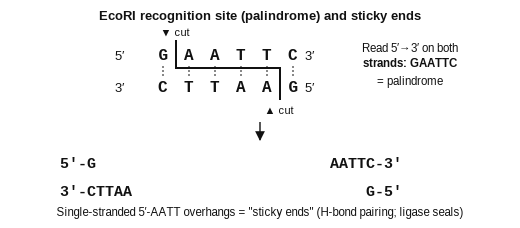
Concept: NCERT lines on restriction enzymes: "Each restriction endonuclease functions by 'inspecting' the length of a DNA sequence"; they "cut the strand of DNA a little away from the centre of the palindrome sites"; and they are the key tools of genetic engineering. Sticky ends are called so because they form hydrogen bonds with their complementary cut counterparts – DNA ligase only seals the sugar-phosphate backbone afterwards.

  1. (A) Restriction enzymes are the 'molecular scissors' of genetic engineering – correct.
  2. (C) Is the NCERT sentence word-for-word ('inspecting' the length of DNA until the recognition sequence is found) – correct.
  3. (D) The cut is made within the palindromic recognition site (a little away from its centre) – correct.
  4. (B) Sticky ends join with complementary sticky ends by themselves through hydrogen bonding (that is their 'stickiness'); DNA ligase does not join the sticky ends – it only seals the nicks by phosphodiester bonds, and it is not a property of restriction enzymes at all. Hence (B) is the statement taken as wrong.

Short trick: In 'wrong statement' questions on restriction enzymes, keep the three NCERT lines (useful tool, 'inspecting the length', cuts palindromes) as true; the odd one out talks about a different enzyme (ligase) – sticky ends stick by H-bonds, ligase only seals.

Answer: (B) Sticky ends can be joined by using DNA ligases

अवधारणा: प्रतिबंधन एंजाइमों पर NCERT की पंक्तियाँ: "प्रत्येक प्रतिबंधन एंडोन्यूक्लिएज़ DNA अनुक्रम की लंबाई का 'निरीक्षण' करके कार्य करता है"; वे "DNA रज्जुक को पैलिंड्रोम स्थलों के केंद्र से थोड़ा हटकर काटते हैं"; और वे आनुवंशिक इंजीनियरी के मुख्य उपकरण हैं। चिपचिपे सिरे इसलिए कहलाते हैं क्योंकि वे अपने पूरक कटे सिरों से हाइड्रोजन बंध बनाते हैं – DNA लाइगेज़ बाद में केवल शर्करा-फॉस्फेट आधार-रज्जु को सील करता है।

  1. (A) प्रतिबंधन एंजाइम आनुवंशिक इंजीनियरी की 'आणविक कैंचियाँ' हैं – सही।
  2. (C) यह NCERT का शब्दशः वाक्य है (पहचान अनुक्रम मिलने तक DNA की लंबाई का 'निरीक्षण') – सही।
  3. (D) कटाव पैलिंड्रोमिक पहचान स्थल के भीतर (उसके केंद्र से थोड़ा हटकर) होता है – सही।
  4. (B) चिपचिपे सिरे पूरक चिपचिपे सिरों से स्वयं हाइड्रोजन बंधों द्वारा जुड़ते हैं (यही उनकी 'चिपचिपाहट' है); DNA लाइगेज़ चिपचिपे सिरों को नहीं जोड़ता – वह केवल फॉस्फोडाइएस्टर बंधों द्वारा खाँचों (nicks) को सील करता है, और यह प्रतिबंधन एंजाइमों का गुण भी नहीं है। अतः (B) गलत माना गया कथन है।

शॉर्ट ट्रिक: प्रतिबंधन एंजाइमों के 'गलत कथन' प्रश्नों में NCERT की तीन पंक्तियाँ (उपयोगी उपकरण, 'लंबाई का निरीक्षण', पैलिंड्रोम पर काटना) सही मानें; अलग कथन किसी दूसरे एंजाइम (लाइगेज़) की बात करता है – चिपचिपे सिरे H-बंधों से चिपकते हैं, लाइगेज़ केवल सील करता है।

उत्तर: (B) चिपचिपे सिरों को DNA लाइगेज़ द्वारा जोड़ा जा सकता है

NEET UGBiologyBiotechnology – restriction enzymesNEET UG 2020 · 13 Sep Shift 1 →
Q3472.
Match the following columns and select the correct option.
Column-IColumn-II
(a) Gregarious, polyphagous pest(i) Asterias
(b) Adult with radial symmetry & larva with bilateral symmetry(ii) Scorpion
(c) Book lungs(iii) Ctenoplana
(d) Bioluminescence(iv) Locusta
निम्नलिखित स्तंभों का मिलान कीजिए और सही विकल्प चुनिए।
स्तंभ-Iस्तंभ-II
(a) यूथचारी (gregarious), बहुभक्षी पीड़क(i) Asterias
(b) अरीय सममित वयस्क और द्विपार्श्व सममित लार्वा(ii) बिच्छू
(c) पुस्त फुप्फुस (book lungs)(iii) Ctenoplana
(d) जैवदीप्ति (bioluminescence)(iv) Locusta
  1. A(a) - (iii); (b) - (ii); (c) - (i); (d) - (iv)
  2. B(a) - (ii); (b) - (i); (c) - (iii); (d) - (iv)
  3. C(a) - (i); (b) - (iii); (c) - (ii); (d) - (iv)
  4. D(a) - (iv); (b) - (i); (c) - (ii); (d) - (iii)
Show answer

Concept: NCERT, Animal Kingdom – characteristic examples.

  1. Locusta (locust) – gregarious, polyphagous pest (Arthropoda) = (iv).
  2. Asterias (starfish, Echinodermata) – adult radially symmetrical, larva bilaterally symmetrical = (i).
  3. Scorpion (Arachnida) – respires by book lungs = (ii).
  4. Ctenoplana (Ctenophora) – bioluminescence is well marked = (iii).
  5. a-iv, b-i, c-ii, d-iii = (D); others put Locusta or Ctenoplana wrong.

Short trick: Comb jellies glow, starfish larvae are bilateral, scorpions read "book" lungs, locusts swarm.

Answer: (D) (a) - (iv); (b) - (i); (c) - (ii); (d) - (iii)

अवधारणा: NCERT, प्राणि जगत – विशिष्ट उदाहरण।

  1. Locusta (टिड्डी) – यूथचारी, बहुभक्षी पीड़क (आर्थ्रोपोडा) = (iv)।
  2. Asterias (तारामीन, इकाइनोडर्मेटा) – वयस्क अरीय सममित, लार्वा द्विपार्श्व सममित = (i)।
  3. बिच्छू (ऐरेक्निडा) – पुस्त फुप्फुसों से श्वसन = (ii)।
  4. Ctenoplana (टीनोफोरा) – जैवदीप्ति स्पष्ट = (iii)।
  5. a-iv, b-i, c-ii, d-iii = (D); अन्य विकल्पों में Locusta या Ctenoplana गलत है।

शॉर्ट ट्रिक: कंकत जेली चमकती है, तारामीन का लार्वा द्विपार्श्व, बिच्छू के "पुस्त" फुप्फुस, टिड्डी झुंड में।

उत्तर: (D) (a) - (iv); (b) - (i); (c) - (ii); (d) - (iii)

NEET UGBiologyAnimal kingdom – examples and featuresNEET UG 2020 · 13 Sep Shift 1 →
Q3473.
If the head of cockroach is removed, it may live for few days because:
यदि कॉकरोच का सिर हटा दिया जाए, तो वह कुछ दिनों तक जीवित रह सकता है, क्योंकि:
  1. AThe head holds a small proportion of a nervous system while the rest is situated along the ventral part of its bodyसिर में तंत्रिका तंत्र का एक छोटा भाग होता है जबकि शेष भाग शरीर के अधर भाग के साथ स्थित होता है
  2. BThe head holds a 1/3rd of a nervous system while the rest is situated along the dorsal part of its bodyसिर में तंत्रिका तंत्र का 1/3 भाग होता है जबकि शेष भाग शरीर के पृष्ठ भाग के साथ स्थित होता है
  3. CThe supra-oesophageal ganglia of the cockroach are situated in ventral part of abdomenकॉकरोच के अधिग्रसनी (supra-oesophageal) गुच्छिका उदर के अधर भाग में स्थित होते हैं
  4. DThe cockroach does not have nervous systemकॉकरोच में तंत्रिका तंत्र नहीं होता
Show answer

Concept: NCERT: "The nervous system of cockroach is spread throughout the body. The head holds a bit of a nervous system while the rest is situated along the ventral (belly-side) part of its body. So… if the head of a cockroach is cut off, it will still live for as long as one week."

  1. Ganglia joined by paired ventral nerve cords run through thorax and abdomen → most of the nervous system is ventral and outside the head → (A) ✔.
  2. Nerve cord is ventral, not dorsal – (B) wrong.
  3. Supra-oesophageal ganglia (the "brain") lie in the head, above the oesophagus – (C) wrong.
  4. Cockroach does have a well-developed nervous system – (D) wrong.

Short trick: Insects: ventral, solid, ganglionated nerve cord (opposite of chordates: dorsal, hollow).

Answer: (A) The head holds a small proportion of a nervous system while the rest is situated along the ventral part of its body

अवधारणा: NCERT: "कॉकरोच का तंत्रिका तंत्र पूरे शरीर में फैला होता है। सिर में तंत्रिका तंत्र का थोड़ा-सा भाग होता है जबकि शेष शरीर के अधर (पेट की ओर) भाग में स्थित होता है। अतः… कॉकरोच का सिर कट जाने पर भी वह लगभग एक सप्ताह तक जीवित रहता है।"

  1. युग्मित अधर तंत्रिका रज्जु से जुड़ी गुच्छिकाएँ वक्ष और उदर में फैली होती हैं → अधिकांश तंत्रिका तंत्र अधर और सिर से बाहर है → (A) ✔।
  2. तंत्रिका रज्जु अधर है, पृष्ठ नहीं – (B) गलत।
  3. अधिग्रसनी गुच्छिका ("मस्तिष्क") सिर में ग्रसिका के ऊपर स्थित होती है – (C) गलत।
  4. कॉकरोच में सुविकसित तंत्रिका तंत्र होता है – (D) गलत।

शॉर्ट ट्रिक: कीट: अधर, ठोस, गुच्छिकायुक्त तंत्रिका रज्जु (कॉर्डेटों के विपरीत: पृष्ठ, खोखली)।

उत्तर: (A) सिर में तंत्रिका तंत्र का एक छोटा भाग होता है जबकि शेष भाग शरीर के अधर भाग के साथ स्थित होता है

NEET UGBiologyStructural organisation in animals – cockroach nervous systemNEET UG 2020 · 13 Sep Shift 1 →
Q3474.
Which of the following regions of the globe exhibits highest species diversity?
विश्व के निम्नलिखित में से किस क्षेत्र में सर्वाधिक जाति विविधता पाई जाती है?
  1. AHimalayasहिमालय
  2. BAmazon forestsअमेज़न वन
  3. CWestern Ghats of Indiaभारत के पश्चिमी घाट
  4. DMadagascarमेडागास्कर
Show answer

Concept: NCERT: "The largely tropical Amazonian rain forest in South America has the greatest biodiversity on earth – it is home to more than 40,000 species of plants, 3,000 of fishes, 1,300 of birds, 427 of mammals…"

  1. Amazon rain forest – highest species diversity on the earth ✔ (B).
  2. Western Ghats, Himalayas (Indo-Burma), Madagascar – biodiversity hotspots, rich in endemics, but less total diversity than the Amazon – (A), (C), (D) wrong.

Short trick: Latitudinal gradient: diversity rises towards the equator – Amazon = "lungs of the planet", maximum biodiversity.

Answer: (B) Amazon forests

अवधारणा: NCERT: "दक्षिण अमेरिका के अधिकांशतः उष्णकटिबंधीय अमेज़न वर्षा वन में पृथ्वी पर सबसे अधिक जैव विविधता है – यहाँ पादपों की 40,000 से अधिक, मछलियों की 3,000, पक्षियों की 1,300, स्तनधारियों की 427 जातियाँ हैं…"

  1. अमेज़न वर्षा वन – पृथ्वी पर सर्वाधिक जाति विविधता ✔ (B)।
  2. पश्चिमी घाट, हिमालय (इंडो-बर्मा), मेडागास्कर – जैव विविधता हॉटस्पॉट, स्थानिक जातियों से समृद्ध, पर कुल विविधता अमेज़न से कम – (A), (C), (D) गलत।

शॉर्ट ट्रिक: अक्षांशीय प्रवणता: भूमध्य रेखा की ओर विविधता बढ़ती है – अमेज़न = "पृथ्वी के फेफड़े", अधिकतम जैव विविधता।

उत्तर: (B) अमेज़न वन

NEET UGBiologyBiodiversity and conservation – patterns of diversityNEET UG 2020 · 13 Sep Shift 1 →
Q3475.
Which is the important site of formation of glycoproteins and glycolipids in eukaryotic cells?
सुकेंद्रकी कोशिकाओं में ग्लाइकोप्रोटीन और ग्लाइकोलिपिड के निर्माण का महत्त्वपूर्ण स्थल कौन-सा है?
  1. AGolgi bodiesगॉल्जी काय
  2. BPolysomesपॉलीसोम
  3. CEndoplasmic reticulumअंतर्द्रव्यी जालिका
  4. DPeroxisomesपरॉक्सीसोम
Show answer

Concept: NCERT: "Golgi apparatus is the important site of formation of glycoproteins and glycolipids."

  1. Proteins and lipids from the ER are glycosylated in the Golgi cisternae → (A) ✔.
  2. Polysomes – many ribosomes on one mRNA, make proteins – (B) wrong.
  3. ER – synthesises proteins (RER) and lipids/steroids (SER), but glycoprotein/glycolipid formation is the Golgi’s role – (C) wrong.
  4. Peroxisomes – contain catalase, photorespiration/β-oxidation – (D) wrong.

Short trick: Golgi = "Glyco-factory + packing & dispatch" (cis = forming face, trans = maturing face).

Answer: (A) Golgi bodies

अवधारणा: NCERT: "गॉल्जी उपकरण ग्लाइकोप्रोटीन और ग्लाइकोलिपिड के निर्माण का महत्त्वपूर्ण स्थल है।"

  1. ER से आए प्रोटीन और लिपिड गॉल्जी कुंडिकाओं में ग्लाइकोसिलीकृत होते हैं → (A) ✔।
  2. पॉलीसोम – एक mRNA पर अनेक राइबोसोम, प्रोटीन बनाते हैं – (B) गलत।
  3. ER – प्रोटीन (RER) और लिपिड/स्टेरॉइड (SER) बनाता है, पर ग्लाइकोप्रोटीन/ग्लाइकोलिपिड निर्माण गॉल्जी का कार्य है – (C) गलत।
  4. परॉक्सीसोम – केटेलेज़ युक्त, प्रकाश-श्वसन/β-ऑक्सीकरण – (D) गलत।

शॉर्ट ट्रिक: गॉल्जी = "ग्लाइको-कारखाना + पैकिंग व प्रेषण" (cis = निर्माण सतह, trans = परिपक्व सतह)।

उत्तर: (A) गॉल्जी काय

NEET UGBiologyCell: the unit of life – Golgi apparatusNEET UG 2020 · 13 Sep Shift 1 →
Q3476.
Which of the following pairs is of unicellular algae?
निम्नलिखित में से कौन-सा युग्म एककोशिक शैवालों का है?
  1. AAnabaena and VolvoxAnabaena और Volvox
  2. BChlorella and SpirulinaChlorella और Spirulina
  3. CLaminaria and SargassumLaminaria और Sargassum
  4. DGelidium and GracilariaGelidium और Gracilaria
Show answer

Concept: NCERT: "Certain unicellular algae like Chlorella and Spirulina are rich in proteins and are used as food supplements even by space travellers."

  1. Chlorella (green alga) and Spirulina (cyanobacterium/blue-green alga) – unicellular ✔ (B).
  2. Anabaena – filamentous; Volvox – colonial – (A) wrong.
  3. Laminaria, Sargassum – large multicellular brown algae (kelps) – (C) wrong.
  4. Gelidium, Gracilaria – multicellular red algae, sources of agar – (D) wrong.

Short trick: "Space food" = Chlorella + Spirulina (SCP); agar = Gelidium + Gracilaria; kelps = Laminaria.

Answer: (B) Chlorella and Spirulina

अवधारणा: NCERT: "कुछ एककोशिक शैवाल जैसे Chlorella और Spirulina प्रोटीन से भरपूर हैं और अंतरिक्ष यात्री भी इन्हें खाद्य पूरक के रूप में लेते हैं।"

  1. Chlorella (हरा शैवाल) और Spirulina (सायनोबैक्टीरिया/नील-हरित शैवाल) – एककोशिक ✔ (B)।
  2. Anabaena – तंतुमय; Volvox – निवही (colonial) – (A) गलत।
  3. Laminaria, Sargassum – बड़े बहुकोशिक भूरे शैवाल (केल्प) – (C) गलत।
  4. Gelidium, Gracilaria – बहुकोशिक लाल शैवाल, ऐगार के स्रोत – (D) गलत।

शॉर्ट ट्रिक: "अंतरिक्ष भोजन" = Chlorella + Spirulina (SCP); ऐगार = Gelidium + Gracilaria; केल्प = Laminaria।

उत्तर: (B) Chlorella और Spirulina

NEET UGBiologyBiological classification / Plant kingdom – unicellular algaeNEET UG 2020 · 13 Sep Shift 1 →
Q3477.
Which one of the following is the most abundant protein in the animals?
निम्नलिखित में से कौन-सा जंतुओं में सर्वाधिक प्रचुर प्रोटीन है?
  1. ALectinलेक्टिन
  2. BInsulinइंसुलिन
  3. CHaemoglobinहीमोग्लोबिन
  4. DCollagenकोलेजन
Show answer

Concept: NCERT: "Collagen is the most abundant protein in animal world and Ribulose bisphosphate Carboxylase-Oxygenase (RuBisCO) is the most abundant protein in the whole of the biosphere."

  1. Collagen – structural protein of connective tissue, bone, tendon, skin → most abundant in animals ✔ (D).
  2. Lectin – carbohydrate-binding protein (in plants mainly) – (A) wrong.
  3. Insulin – hormone, needed only in small amounts – (B) wrong.
  4. Haemoglobin – abundant in blood but far less than collagen – (C) wrong.

Short trick: Animals → Collagen; Biosphere → RuBisCO.

Answer: (D) Collagen

अवधारणा: NCERT: "कोलेजन जंतु जगत में सर्वाधिक प्रचुर प्रोटीन है और राइबुलोस बिसफॉस्फेट कार्बोक्सिलेज़-ऑक्सीजिनेज़ (RuBisCO) पूरे जीवमंडल में सर्वाधिक प्रचुर प्रोटीन है।"

  1. कोलेजन – संयोजी ऊतक, अस्थि, कंडरा, त्वचा का संरचनात्मक प्रोटीन → जंतुओं में सर्वाधिक प्रचुर ✔ (D)।
  2. लेक्टिन – कार्बोहाइड्रेट से जुड़ने वाला प्रोटीन (मुख्यतः पादपों में) – (A) गलत।
  3. इंसुलिन – हॉर्मोन, बहुत कम मात्रा में आवश्यक – (B) गलत।
  4. हीमोग्लोबिन – रक्त में प्रचुर, पर कोलेजन से बहुत कम – (C) गलत।

शॉर्ट ट्रिक: जंतु → कोलेजन; जीवमंडल → RuBisCO।

उत्तर: (D) कोलेजन

NEET UGBiologyBiomolecules – proteinsNEET UG 2020 · 13 Sep Shift 1 →
Q3478.
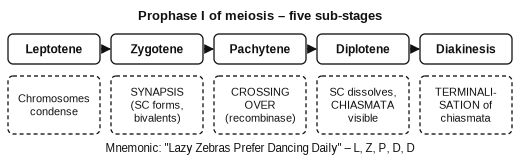
Dissolution of the synaptonemal complex occurs during:
सिनैप्टोनीमल सम्मिश्र (synaptonemal complex) का विघटन कब होता है?
  1. ADiploteneडिप्लोटीन
  2. BLeptoteneलेप्टोटीन
  3. CPachyteneपैकिटीन
  4. DZygoteneज़ाइगोटीन
Show answer

Concept: NCERT: "The beginning of diplotene is recognised by the dissolution of the synaptonemal complex and the tendency of the recombined homologous chromosomes of the bivalents to separate from each other except at the sites of crossovers (chiasmata)."

  1. Diplotene – SC dissolves, chiasmata become visible ✔ (A).
  2. Leptotene – chromosomes become visible and compact; no SC yet – (B) wrong.
  3. Zygotene – SC forms during synapsis – (D) wrong.
  4. Pachytene – SC present; crossing over occurs – (C) wrong.

Short trick: SC: born in Zygotene, works in Pachytene, dies in Diplotene.

Answer: (A) Diplotene

अवधारणा: NCERT: "डिप्लोटीन की शुरुआत सिनैप्टोनीमल सम्मिश्र के विघटन से पहचानी जाती है और द्विसंयोजकों के पुनर्योजित समजात गुणसूत्र जीन-विनिमय स्थलों (काइऐज़्मेटा) को छोड़कर एक-दूसरे से अलग होने लगते हैं।"

  1. डिप्लोटीन – SC का विघटन, काइऐज़्मेटा दिखाई देने लगते हैं ✔ (A)।
  2. लेप्टोटीन – गुणसूत्र दिखाई देने और संघनित होने लगते हैं; SC अभी नहीं – (B) गलत।
  3. ज़ाइगोटीन – सूत्रयुग्मन (synapsis) में SC बनता है – (D) गलत।
  4. पैकिटीन – SC उपस्थित; जीन-विनिमय होता है – (C) गलत।

शॉर्ट ट्रिक: SC: ज़ाइगोटीन में जन्म, पैकिटीन में कार्य, डिप्लोटीन में विघटन।

उत्तर: (A) डिप्लोटीन

NEET UGBiologyCell cycle and cell division – meiosis INEET UG 2020 · 13 Sep Shift 1 →
Q3479.
How many true breeding pea plant varieties did Mendel select as pairs, which were similar except in one character with contrasting traits?
मेंडल ने मटर के कितने शुद्ध प्रजनन (true breeding) पादप किस्मों को युग्मों के रूप में चुना, जो विपरीत लक्षणों वाले एक गुण को छोड़कर समान थीं?
  1. A14
  2. B8
  3. C4
  4. D2
Show answer

Concept: NCERT: "Mendel selected 14 true-breeding pea plant varieties, as pairs which were similar except for one character with contrasting traits."

  1. Mendel studied 7 characters, each with 2 contrasting traits → 7 pairs × 2 = 14 varieties ✔ (A).
  2. 8, 4 and 2 do not match 7 × 2 – (B), (C), (D) wrong.

Short trick: 7 characters × 2 contrasting forms = 14 true-breeding varieties.

Answer: (A) 14

अवधारणा: NCERT: "मेंडल ने मटर की 14 शुद्ध प्रजनन किस्मों को युग्मों के रूप में चुना, जो विपरीत लक्षणों वाले एक गुण को छोड़कर समान थीं।"

  1. मेंडल ने 7 गुणों का अध्ययन किया, प्रत्येक के 2 विपरीत लक्षण → 7 युग्म × 2 = 14 किस्में ✔ (A)।
  2. 8, 4 और 2, 7 × 2 से मेल नहीं खाते – (B), (C), (D) गलत।

शॉर्ट ट्रिक: 7 गुण × 2 विपरीत रूप = 14 शुद्ध प्रजनन किस्में।

उत्तर: (A) 14

NEET UGBiologyPrinciples of inheritance – Mendel’s experimentsNEET UG 2020 · 13 Sep Shift 1 →
Q3480.
Cuboidal epithelium with brush border of microvilli is found in:
सूक्ष्मांकुरों (microvilli) की ब्रश बॉर्डर वाली घनाकार उपकला कहाँ पाई जाती है?
  1. AProximal convoluted tubule of nephronवृक्काणु (नेफ्रॉन) की समीपस्थ संवलित नलिका
  2. BEustachian tubeयूस्टेकियन नलिका
  3. CLining of intestineआंत्र का अस्तर
  4. DDucts of salivary glandsलार ग्रंथियों की वाहिनियाँ
Show answer

Concept: NCERT: "Cuboidal epithelium is commonly found in ducts of glands and tubular parts of nephrons in kidneys… In proximal convoluted tubule (PCT) of nephron, cells have microvilli."

  1. PCT – cuboidal cells with brush border of microvilli for reabsorption ✔ (A).
  2. Lining of intestine – columnar epithelium with microvilli – (C) wrong.
  3. Eustachian tube – ciliated epithelium – (B) wrong.
  4. Salivary gland ducts – cuboidal but without brush border – (D) wrong.

Short trick: Cuboidal + brush border = PCT; Columnar + microvilli = intestine.

Answer: (A) Proximal convoluted tubule of nephron

अवधारणा: NCERT: "घनाकार उपकला सामान्यतः ग्रंथियों की वाहिनियों और वृक्क के वृक्काणुओं के नलिकाकार भागों में पाई जाती है… वृक्काणु की समीपस्थ संवलित नलिका (PCT) की कोशिकाओं में सूक्ष्मांकुर होते हैं।"

  1. PCT – पुनरवशोषण हेतु सूक्ष्मांकुरों की ब्रश बॉर्डर वाली घनाकार कोशिकाएँ ✔ (A)।
  2. आंत्र का अस्तर – सूक्ष्मांकुर युक्त स्तंभाकार उपकला – (C) गलत।
  3. यूस्टेकियन नलिका – पक्ष्माभी उपकला – (B) गलत।
  4. लार ग्रंथि वाहिनियाँ – घनाकार पर ब्रश बॉर्डर रहित – (D) गलत।

शॉर्ट ट्रिक: घनाकार + ब्रश बॉर्डर = PCT; स्तंभाकार + सूक्ष्मांकुर = आंत्र।

उत्तर: (A) वृक्काणु (नेफ्रॉन) की समीपस्थ संवलित नलिका

NEET UGBiologyStructural organisation in animals – epitheliumNEET UG 2020 · 13 Sep Shift 1 →