Question bank

Q&A: practice questions with answers

Search questions on any topic. Filter by exam category, exam, subject and topic, try the question, then open the answer and explanation.

Courses – airGurukul

53,050 questions in the question bank.

Q3421.
Which stage of meiotic prophase shows terminalisation of chiasmata as its distinctive feature?
अर्धसूत्री पूर्वावस्था की कौन-सी अवस्था काएज़्मेटा का उपांतीभवन (terminalisation of chiasmata) अपने विशिष्ट लक्षण के रूप में दर्शाती है?
  1. ADiakinesisडायाकाइनेसिस
  2. BPachyteneपैकीटीन
  3. CLeptoteneलेप्टोटीन
  4. DZygoteneज़ाइगोटीन
Show answer

Concept: NCERT: diakinesis is marked by terminalisation of chiasmata; chromosomes are fully condensed and the spindle assembles.

  1. Leptotene – chromosomes become visible.
  2. Zygotene – synapsis, synaptonemal complex forms.
  3. Pachytene – crossing over (recombination nodules).
  4. Diplotene – chiasmata appear; diakinesis – chiasmata terminalise.

Short trick: Order "Lazy Zebras Prefer Dancing Daily": L-Z-P-D-D; the last D (Diakinesis) pushes chiasmata to the ends.

Answer: (A) Diakinesis

अवधारणा: NCERT: डायाकाइनेसिस काएज़्मेटा के उपांतीभवन से चिह्नित है; गुणसूत्र पूर्णतः संघनित होते हैं और तर्कु बनने लगता है।

  1. लेप्टोटीन – गुणसूत्र दिखाई देने लगते हैं।
  2. ज़ाइगोटीन – सूत्रयुग्मन, सिनैप्टोनीमल सम्मिश्र बनता है।
  3. पैकीटीन – जीन विनिमय (पुनर्योजन ग्रंथिकाएँ)।
  4. डिप्लोटीन – काएज़्मेटा प्रकट; डायाकाइनेसिस – काएज़्मेटा का उपांतीभवन।

शॉर्ट ट्रिक: क्रम L-Z-P-D-D; अंतिम D (डायाकाइनेसिस) काएज़्मेटा को सिरों की ओर धकेलता है।

उत्तर: (A) डायाकाइनेसिस
NEET UGZoologyCell cycle – meiosis I prophaseNEET UG 2021 · 12 Sep Shift 1 →
Q3422.
Dobson units are used to measure thickness of:
डॉब्सन इकाई का उपयोग किसकी मोटाई मापने में होता है?
  1. AOzoneओज़ोन
  2. BTroposphereक्षोभमंडल
  3. CCFCs
  4. DStratosphereसमतापमंडल
Show answer

Concept: NCERT: the thickness of the ozone layer in a column of air from the ground to the top of the atmosphere is measured in Dobson units (DU).

  1. Ozone (in stratosphere) – measured in DU; correct.
  2. Troposphere and stratosphere are atmospheric layers measured in km, not DU.
  3. CFCs are ozone-depleting gases, measured as concentration.

Short trick: D-U = "Dobson for O-zone (the ozone UMBRELLA)".

Answer: (A) Ozone

अवधारणा: NCERT: भूमि से वायुमंडल के शीर्ष तक वायु स्तंभ में ओज़ोन परत की मोटाई डॉब्सन इकाई (DU) में मापी जाती है।

  1. ओज़ोन (समतापमंडल में) – DU में मापी जाती है; सही।
  2. क्षोभमंडल व समतापमंडल वायुमंडलीय परतें हैं, जिन्हें km में मापा जाता है, DU में नहीं।
  3. CFCs ओज़ोन-क्षयकारी गैसें हैं, इनकी सांद्रता मापी जाती है।

शॉर्ट ट्रिक: D-U = "डॉब्सन से ओज़ोन (ओज़ोन छतरी)"।

उत्तर: (A) ओज़ोन

NEET UGZoologyEnvironmental issues – ozone depletionNEET UG 2021 · 12 Sep Shift 1 →
Q3423.
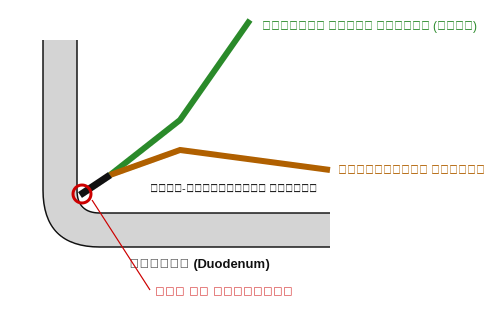
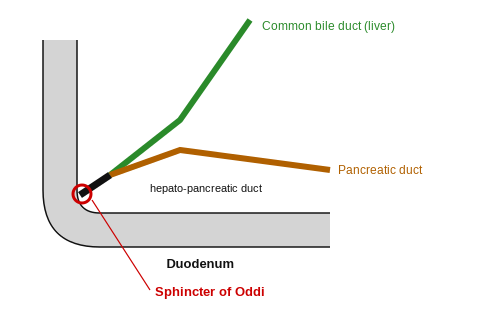
Sphincter of oddi is present at:
ओडी की संकोचिनी (Sphincter of Oddi) कहाँ उपस्थित होती है?
  1. AGastro-oesophageal junctionजठर-ग्रसिका संधि
  2. BJunction of jejunum and duodenumमध्यांत्र (जेजुनम) तथा ग्रहणी की संधि
  3. CIleo-caecal junctionशेषांत्र-अंधनाल संधि
  4. DJunction of hepato-pancreatic duct and duodenumयकृत-अग्न्याशयी वाहिनी तथा ग्रहणी की संधि
Show answer

Concept: NCERT: the bile duct and the pancreatic duct open together into the duodenum as the common hepato-pancreatic duct, which is guarded by the sphincter of Oddi.

  1. (A) Gastro-oesophageal junction – guarded by the gastro-oesophageal (cardiac) sphincter.
  2. (B) Duodeno-jejunal junction – no named sphincter in NCERT.
  3. (C) Ileo-caecal junction – ileo-caecal valve.
  4. (D) Hepato-pancreatic duct opening into duodenum – sphincter of Oddi; correct.

Short trick: "Oddi guards the Odd duct" – the only duct with two sources (liver + pancreas).

Answer: (D) Junction of hepato-pancreatic duct and duodenum

अवधारणा: NCERT: पित्त वाहिनी तथा अग्न्याशयी वाहिनी मिलकर उभयनिष्ठ यकृत-अग्न्याशयी वाहिनी के रूप में ग्रहणी में खुलती हैं, जिसकी रक्षा ओडी की संकोचिनी करती है।

  1. (A) जठर-ग्रसिका संधि – जठर-ग्रसिका (कार्डियक) संकोचिनी द्वारा रक्षित।
  2. (B) ग्रहणी-मध्यांत्र संधि – NCERT में कोई नामित संकोचिनी नहीं।
  3. (C) शेषांत्र-अंधनाल संधि – शेषांत्र-अंधनाल कपाट।
  4. (D) ग्रहणी में खुलने वाली यकृत-अग्न्याशयी वाहिनी – ओडी की संकोचिनी; सही।

शॉर्ट ट्रिक: "ओडी दो स्रोतों वाली वाहिनी की रक्षक" – यकृत + अग्न्याशय की एकमात्र साझा वाहिनी।

उत्तर: (D) यकृत-अग्न्याशयी वाहिनी तथा ग्रहणी की संधि

NEET UGZoologyDigestion and absorption – digestive glandsNEET UG 2021 · 12 Sep Shift 1 →
Q3424.
In a cross between a male and female, both heterozygous for sickle cell anaemia gene, what percentage of the progeny will be diseased?
दात्र कोशिका अरक्तता जीन के लिए विषमयुग्मजी नर तथा मादा के बीच संकरण में कितने प्रतिशत संतति रोगग्रस्त होगी?
  1. A25%
  2. B100%
  3. C50%
  4. D75%
Show answer

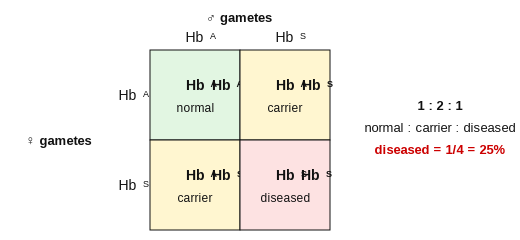
Concept: Sickle-cell anaemia is autosomal recessive; only HbSHbS individuals are diseased, HbAHbS are carriers.

  1. Cross: HbAHbS × HbAHbS.
  2. Progeny: 1 HbAHbA : 2 HbAHbS : 1 HbSHbS.
  3. Diseased = 1/4 = 25%; carriers 50%; normal 25%.

Short trick: Carrier × carrier for any recessive disease → 25% affected, 50% carriers.

Answer: (A) 25%

अवधारणा: दात्र कोशिका अरक्तता अलिंगसूत्री अप्रभावी विकार है; केवल HbSHbS व्यक्ति रोगी होते हैं, HbAHbS वाहक होते हैं।

  1. संकरण: HbAHbS × HbAHbS।
  2. संतति: 1 HbAHbA : 2 HbAHbS : 1 HbSHbS।
  3. रोगी = 1/4 = 25%; वाहक 50%; सामान्य 25%।

शॉर्ट ट्रिक: किसी भी अप्रभावी रोग के लिए वाहक × वाहक → 25% रोगी, 50% वाहक।

उत्तर: (A) 25%

NEET UGZoologyPrinciples of inheritance – sickle-cell anaemiaNEET UG 2021 · 12 Sep Shift 1 →
Q3425.
Persons with “AB” blood group are called as “Universal recipients”. This is due to:
"AB" रुधिर वर्ग वाले व्यक्तियों को "सर्वआदाता" (Universal recipients) कहा जाता है। इसका कारण है:
  1. APresence of antibodies, anti-A and anti-B, on RBCsRBCs पर प्रतिरक्षी, anti-A तथा anti-B, की उपस्थिति
  2. BAbsence of antibodies, anti-A and anti-B, in plasmaप्लाज़्मा में प्रतिरक्षी, anti-A तथा anti-B, की अनुपस्थिति
  3. CAbsence of antigens A and B on the surface of RBCsRBCs की सतह पर प्रतिजन A तथा B की अनुपस्थिति
  4. DAbsence of antigens A and B in plasmaप्लाज़्मा में प्रतिजन A तथा B की अनुपस्थिति
Show answer

Concept: AB group: RBCs carry both antigens A and B; plasma has no anti-A or anti-B antibodies, so donor RBCs of any ABO group are not agglutinated.

  1. (A) Antibodies are in plasma, never on RBCs.
  2. (B) Correct – no anti-A/anti-B in plasma.
  3. (C) AB RBCs have both A and B antigens (absence of both = group O).
  4. (D) A and B antigens are on RBCs, not in plasma.

Short trick: Recipient status depends on the recipient's ANTIBODIES (plasma); donor status depends on ANTIGENS (RBC).

Answer: (B) No anti-A, anti-B antibodies in plasma

अवधारणा: AB वर्ग: RBCs पर A व B दोनों प्रतिजन होते हैं; प्लाज़्मा में anti-A या anti-B प्रतिरक्षी नहीं होते, अतः किसी भी ABO वर्ग के दाता RBCs का समूहन नहीं होता।

  1. (A) प्रतिरक्षी प्लाज़्मा में होते हैं, RBCs पर कभी नहीं।
  2. (B) सही – प्लाज़्मा में anti-A/anti-B नहीं।
  3. (C) AB की RBCs पर A व B दोनों प्रतिजन होते हैं (दोनों की अनुपस्थिति = O वर्ग)।
  4. (D) A व B प्रतिजन RBCs पर होते हैं, प्लाज़्मा में नहीं।

शॉर्ट ट्रिक: आदाता की स्थिति उसके प्रतिरक्षियों (प्लाज़्मा) पर निर्भर करती है; दाता की स्थिति प्रतिजनों (RBC) पर।

उत्तर: (B) प्लाज़्मा में anti-A, anti-B प्रतिरक्षी नहीं

NEET UGZoologyBody fluids and circulation – blood groupsNEET UG 2021 · 12 Sep Shift 1 →
Q3426.
Which of the following characteristics is incorrect with respect to cockroach ?
तिलचट्टे के संबंध में निम्नलिखित में से कौन-सा लक्षण गलत है?
  1. AIn females, 7th-9th sterna together form a genital pouchमादाओं में 7वीं-9वीं स्टर्ना मिलकर जनन कोष्ठ (genital pouch) बनाती हैं
  2. B10th abdominal segment in both sexes, bears a pair of anal cerciदोनों लिंगों में 10वाँ उदरीय खंड एक जोड़ी गुदा लूम (anal cerci) धारण करता है
  3. CA ring of gastric caeca is present at the junction of midgut and hind gutमध्यांत्र तथा पश्चांत्र की संधि पर अंधनालों (gastric caeca) का एक वलय होता है
  4. DHypopharynx lies within the cavity enclosed by the mouth parts.अधोग्रसनी (hypopharynx) मुखांगों द्वारा घिरी गुहा के भीतर स्थित होती है।
Show answer

Concept: NCERT: a ring of 6–8 blind tubules called hepatic or gastric caeca is present at the junction of FOREGUT and MIDGUT; the Malpighian tubules lie at the junction of midgut and hindgut.

  1. (A) Correct – 7th sternum is boat-shaped and with 8th and 9th forms the genital pouch.
  2. (B) Correct – 10th segment bears a pair of jointed anal cerci in both sexes.
  3. (C) Incorrect – gastric caeca are at the foregut–midgut junction.
  4. (D) Correct – hypopharynx is a tongue-like structure within the cavity enclosed by mouth parts.

Short trick: Caeca at the START of midgut (digestive help); Malpighian tubules at the END of midgut (excretion).

Answer: (C) Gastric caeca at junction of midgut and hindgut

अवधारणा: NCERT: अग्रांत्र तथा मध्यांत्र की संधि पर 6–8 अंधनलिकाओं का वलय होता है जिन्हें यकृतीय या जठर अंधनाल कहते हैं; मैल्पीगी नलिकाएँ मध्यांत्र व पश्चांत्र की संधि पर होती हैं।

  1. (A) सही – 7वीं स्टर्नम नौकाकार होती है और 8वीं व 9वीं के साथ जनन कोष्ठ बनाती है।
  2. (B) सही – दोनों लिंगों में 10वाँ खंड एक जोड़ी संधित गुदा लूम धारण करता है।
  3. (C) गलत – जठर अंधनाल अग्रांत्र–मध्यांत्र संधि पर होते हैं।
  4. (D) सही – अधोग्रसनी मुखांगों से घिरी गुहा में स्थित जीभ जैसी संरचना है।

शॉर्ट ट्रिक: अंधनाल मध्यांत्र के आरंभ में (पाचन सहायक); मैल्पीगी नलिकाएँ मध्यांत्र के अंत में (उत्सर्जन)।

उत्तर: (C) मध्यांत्र व पश्चांत्र संधि पर जठर अंधनाल

NEET UGZoologyStructural organisation in animals – cockroachNEET UG 2021 · 12 Sep Shift 1 →
Q3427.
Erythropoietin hormone which stimulates R.B.C. formation is produced by
R.B.C. निर्माण को उद्दीपित करने वाला हॉर्मोन एरिथ्रोपोइटिन किसके द्वारा उत्पन्न होता है?
  1. AThe cells of bone marrowअस्थि मज्जा की कोशिकाएँ
  2. BJuxtaglomerular cells of the kidneyवृक्क की जक्स्टाग्लोमेरुलर (JG) कोशिकाएँ
  3. CAlpha cells of pancreasअग्न्याशय की ऐल्फ़ा कोशिकाएँ
  4. DThe cells of rostral adenohypophysisअग्र एडीनोहाइपोफ़ाइसिस की कोशिकाएँ
Show answer

Concept: NCERT: the juxtaglomerular cells of the kidney produce a peptide hormone called erythropoietin which stimulates erythropoiesis (RBC formation).

  1. (A) Bone marrow is where RBCs are formed – the target, not the source.
  2. (B) JG cells of kidney – correct.
  3. (C) α-cells of pancreas secrete glucagon.
  4. (D) Adenohypophysis secretes GH, TSH, ACTH, etc. – not erythropoietin.

Short trick: Kidney = "EPO factory": JG cells → EPO (and renin).

Answer: (B) Juxtaglomerular cells of the kidney

अवधारणा: NCERT: वृक्क की जक्स्टाग्लोमेरुलर कोशिकाएँ एरिथ्रोपोइटिन नामक पेप्टाइड हॉर्मोन बनाती हैं जो रक्ताणु-उत्पादन (RBC निर्माण) को उद्दीपित करता है।

  1. (A) अस्थि मज्जा में RBCs बनती हैं – यह लक्ष्य है, स्रोत नहीं।
  2. (B) वृक्क की JG कोशिकाएँ – सही।
  3. (C) अग्न्याशय की α-कोशिकाएँ ग्लूकैगॉन स्रावित करती हैं।
  4. (D) एडीनोहाइपोफ़ाइसिस GH, TSH, ACTH आदि स्रावित करती है – एरिथ्रोपोइटिन नहीं।

शॉर्ट ट्रिक: वृक्क = "EPO कारखाना": JG कोशिकाएँ → EPO (और रेनिन)।

उत्तर: (B) वृक्क की जक्स्टाग्लोमेरुलर कोशिकाएँ

NEET UGZoologyChemical coordination – hormones of kidneyNEET UG 2021 · 12 Sep Shift 1 →
Q3428.
Match list I with list II.
List IList II
(a) Aspergillus niger(i) Acetic Acid
(b) Acetobacter aceti(ii) Lactic Acid
(c) Clostridium butylicum(iii) Citric Acid
(d) Lactobacillus(iv) Butyric Acid
सूची I का सूची II से मिलान कीजिए।
सूची Iसूची II
(a) Aspergillus niger(i) ऐसीटिक अम्ल
(b) Acetobacter aceti(ii) लैक्टिक अम्ल
(c) Clostridium butylicum(iii) साइट्रिक अम्ल
(d) Lactobacillus(iv) ब्यूटिरिक अम्ल
  1. A(a)-(ii); (b)-(iii); (c)-(i); (d)-(iv)
  2. B(a)-(iv); (b)-(ii); (c)-(i); (d)-(iii)
  3. C(a)-(iii); (b)-(i); (c)-(iv); (d)-(ii)
  4. D(a)-(i); (b)-(ii); (c)-(iii); (d)-(iv)
Show answer

Concept: NCERT: microbes used for commercial production of organic acids.

  1. Aspergillus niger (fungus) → citric acid (iii).
  2. Acetobacter aceti (bacterium) → acetic acid (i).
  3. Clostridium butylicum (bacterium) → butyric acid (iv).
  4. Lactobacillus (bacterium) → lactic acid (ii).

Short trick: Names give it away: Acetobacter → acetic, butylicum → butyric, Lactobacillus → lactic; the leftover citric goes to Aspergillus.

Answer: (C) (a)-(iii); (b)-(i); (c)-(iv); (d)-(ii)

अवधारणा: NCERT: कार्बनिक अम्लों के व्यावसायिक उत्पादन में प्रयुक्त सूक्ष्मजीव।

  1. Aspergillus niger (कवक) → साइट्रिक अम्ल (iii)।
  2. Acetobacter aceti (जीवाणु) → ऐसीटिक अम्ल (i)।
  3. Clostridium butylicum (जीवाणु) → ब्यूटिरिक अम्ल (iv)।
  4. Lactobacillus (जीवाणु) → लैक्टिक अम्ल (ii)।

शॉर्ट ट्रिक: नाम ही उत्तर हैं: Acetobacter → ऐसीटिक, butylicum → ब्यूटिरिक, Lactobacillus → लैक्टिक; बचा साइट्रिक Aspergillus को।

उत्तर: (C) (a)-(iii); (b)-(i); (c)-(iv); (d)-(ii)

NEET UGZoologyMicrobes in human welfare – organic acidsNEET UG 2021 · 12 Sep Shift 1 →
Q3429.
Receptors for sperm binding in mammals are present on
स्तनधारियों में शुक्राणु बंधन के लिए ग्राही (receptors) कहाँ उपस्थित होते हैं?
  1. APerivitelline spaceपरिपीतक अवकाश (Perivitelline space)
  2. BZona pellucidaज़ोना पेलुसिडा
  3. CCorona radiataकोरोना रेडिएटा
  4. DVitelline membraneपीतक झिल्ली (Vitelline membrane)
Show answer

Concept: The zona pellucida of the mammalian ovum bears species-specific sperm receptors (ZP3 glycoprotein); sperm contact with it induces changes in the membrane that block entry of additional sperm.

  1. (A) Perivitelline space is a gap between oocyte membrane and zona – no receptors.
  2. (B) Zona pellucida – carries sperm receptors; correct.
  3. (C) Corona radiata – follicle cells that sperm must pass through using enzymes; no specific receptors.
  4. (D) Vitelline membrane is the term for the egg envelope of non-mammals.

Short trick: ZP = "Zona = Parking-lot for sperm" (ZP3 receptor).

Answer: (B) Zona pellucida

अवधारणा: स्तनधारी अंडाणु की ज़ोना पेलुसिडा पर जाति-विशिष्ट शुक्राणु ग्राही (ZP3 ग्लाइकोप्रोटीन) होते हैं; शुक्राणु के इससे संपर्क से झिल्ली में ऐसे परिवर्तन होते हैं जो अतिरिक्त शुक्राणुओं का प्रवेश रोकते हैं।

  1. (A) परिपीतक अवकाश अंडक झिल्ली व ज़ोना के बीच का अंतराल है – ग्राही नहीं।
  2. (B) ज़ोना पेलुसिडा – शुक्राणु ग्राही युक्त; सही।
  3. (C) कोरोना रेडिएटा – पुटक कोशिकाएँ जिन्हें शुक्राणु एंजाइमों से पार करता है; विशिष्ट ग्राही नहीं।
  4. (D) पीतक झिल्ली गैर-स्तनधारियों के अंड आवरण का नाम है।

शॉर्ट ट्रिक: ZP = "ज़ोना = शुक्राणु की पार्किंग" (ZP3 ग्राही)।

उत्तर: (B) ज़ोना पेलुसिडा

NEET UGZoologyHuman reproduction – fertilisationNEET UG 2021 · 12 Sep Shift 1 →
Q3430.
For effective treatment of the disease, early diagnosis and understanding its pathophysiology is very important. Which of the following molecular diagnostic techniques is very useful for early detection?
रोग के प्रभावी उपचार के लिए शीघ्र निदान तथा उसकी रोग-क्रियाविज्ञान (pathophysiology) को समझना अत्यंत महत्वपूर्ण है। निम्नलिखित में से कौन-सी आणविक निदान तकनीक शीघ्र पहचान के लिए अत्यंत उपयोगी है?
  1. AELISA TechniqueELISA तकनीक
  2. BHybridization Techniqueसंकरण (Hybridization) तकनीक
  3. CWestern Blotting Techniqueवेस्टर्न ब्लॉटिंग तकनीक
  4. DSouthern Blotting Techniqueसदर्न ब्लॉटिंग तकनीक
Show answer

Concept: NCERT: "Some of the techniques that serve the purpose of early diagnosis are Recombinant DNA technology, Polymerase Chain Reaction (PCR) and Enzyme Linked Immuno-sorbent Assay (ELISA)."

  1. ELISA works on antigen–antibody interaction and detects infection (e.g. HIV) by the presence of antigens or antibodies – named by NCERT for early diagnosis.
  2. Hybridisation, Western and Southern blotting are laboratory/analytical techniques, not listed for early detection.

Short trick: Early diagnosis trio in NCERT: rDNA, PCR, ELISA – only ELISA is among the options.

Answer: (A) ELISA Technique

अवधारणा: NCERT: "शीघ्र निदान के लिए प्रयुक्त कुछ तकनीकें हैं – पुनर्योगज DNA तकनीक, पॉलीमरेज़ शृंखला अभिक्रिया (PCR) तथा एंजाइम सहलग्न प्रतिरक्षा-शोषक आमापन (ELISA)।"

  1. ELISA प्रतिजन–प्रतिरक्षी अन्योन्यक्रिया पर आधारित है और प्रतिजन या प्रतिरक्षी की उपस्थिति से संक्रमण (जैसे HIV) का पता लगाती है – NCERT में शीघ्र निदान हेतु वर्णित।
  2. संकरण, वेस्टर्न व सदर्न ब्लॉटिंग प्रयोगशाला/विश्लेषणात्मक तकनीकें हैं, शीघ्र पहचान के लिए सूचीबद्ध नहीं।

शॉर्ट ट्रिक: NCERT की शीघ्र निदान तिकड़ी: rDNA, PCR, ELISA – विकल्पों में केवल ELISA है।

उत्तर: (A) ELISA तकनीक

NEET UGZoologyBiotechnology applications – molecular diagnosisNEET UG 2021 · 12 Sep Shift 1 →
Q3431.
Statement I: The codon ‘AUG’ codes for methionine and phenylalanine.
Statement II: ‘AAA’ and ‘AAG’ both codons code for the amino acid lysine.
कथन I: कोडॉन ‘AUG’ मेथियोनीन तथा फ़ेनिलऐलेनीन का कूटलेखन करता है।
कथन II: ‘AAA’ तथा ‘AAG’ दोनों कोडॉन अमीनो अम्ल लाइसीन का कूटलेखन करते हैं।
  1. AStatement I is correct but statement II is falseकथन I सही है परंतु कथन II असत्य है
  2. BStatement I is incorrect but statement II is trueकथन I गलत है परंतु कथन II सत्य है
  3. CBoth Statement I and Statement II are trueकथन I तथा कथन II दोनों सत्य हैं
  4. DBoth Statement I and Statement II are falseकथन I तथा कथन II दोनों असत्य हैं
Show answer

Concept: The genetic code is unambiguous (one codon → one amino acid) and degenerate (one amino acid → several codons).

  1. Statement I false – AUG codes only for methionine (and acts as start codon); phenylalanine is UUU/UUC.
  2. Statement II true – AAA and AAG both code for lysine (degeneracy).

Short trick: Unambiguous kills I, degenerate saves II.

Answer: (B) I incorrect, II true

अवधारणा: आनुवंशिक कूट असंदिग्ध (एक कोडॉन → एक अमीनो अम्ल) तथा अपह्रासित (एक अमीनो अम्ल → कई कोडॉन) होता है।

  1. कथन I असत्य – AUG केवल मेथियोनीन का कूट है (और प्रारंभन कोडॉन है); फ़ेनिलऐलेनीन के कोडॉन UUU/UUC हैं।
  2. कथन II सत्य – AAA तथा AAG दोनों लाइसीन के कूट हैं (अपह्रासिता)।

शॉर्ट ट्रिक: असंदिग्धता कथन I को गलत करती है, अपह्रासिता कथन II को सही।

उत्तर: (B) I गलत, II सत्य

NEET UGZoologyMolecular basis of inheritance – genetic codeNEET UG 2021 · 12 Sep Shift 1 →
Q3432.
Match list I with list II.
List IList II
(a) Scapula(i) Cartilaginous joints
(b) Cranium(ii) Flat bones
(c) Sternum(iii) Fibrous joints
(d) Vertebral column(iv) Triangular flat bone
सूची I का सूची II से मिलान कीजिए।
सूची Iसूची II
(a) अंसफलक (Scapula)(i) उपास्थियुक्त संधियाँ
(b) कपाल (Cranium)(ii) चपटी अस्थियाँ
(c) उरोस्थि (Sternum)(iii) रेशीय संधियाँ
(d) कशेरुक दंड (Vertebral column)(iv) त्रिकोणीय चपटी अस्थि
  1. A(a)-(iv); (b)-(ii); (c)-(iii); (d)-(i)
  2. B(a)-(iv); (b)-(iii); (c)-(ii); (d)-(i)
  3. C(a)-(i); (b)-(iii); (c)-(ii); (d)-(iv)
  4. D(a)-(ii); (b)-(iii); (c)-(iv); (d)-(i)
Show answer

Concept: NCERT, Locomotion and Movement.

  1. Scapula – large triangular flat bone on the dorsal side of thorax (iv).
  2. Cranium – its flat bones are joined by sutures = fibrous joints (iii).
  3. Sternum – flat bone on the ventral midline of thorax (ii).
  4. Vertebral column – adjacent vertebrae are joined by cartilaginous joints (i).

Short trick: Scapula is THE triangular bone → (a)-(iv); skull sutures = fibrous → (b)-(iii); only (B) has both.

Answer: (B) (a)-(iv); (b)-(iii); (c)-(ii); (d)-(i)

अवधारणा: NCERT, गमन एवं संचलन।

  1. अंसफलक – वक्ष के पृष्ठ भाग पर स्थित बड़ी त्रिकोणीय चपटी अस्थि (iv)।
  2. कपाल – इसकी चपटी अस्थियाँ सीवनों से जुड़ी हैं = रेशीय संधियाँ (iii)।
  3. उरोस्थि – वक्ष की अधर मध्य रेखा पर चपटी अस्थि (ii)।
  4. कशेरुक दंड – निकटवर्ती कशेरुक उपास्थियुक्त संधियों से जुड़े हैं (i)।

शॉर्ट ट्रिक: अंसफलक ही त्रिकोणीय अस्थि है → (a)-(iv); कपाल सीवन = रेशीय → (b)-(iii); दोनों केवल (B) में।

उत्तर: (B) (a)-(iv); (b)-(iii); (c)-(ii); (d)-(i)

NEET UGZoologyLocomotion and movement – skeleton and jointsNEET UG 2021 · 12 Sep Shift 1 →
Q3433.
Which of the following is not a step in Multiple Ovulation Embryo Transfer Technology (MOET) ?
निम्नलिखित में से कौन-सा बहु-अंडोत्सर्ग भ्रूण स्थानांतरण प्रौद्योगिकी (MOET) का चरण नहीं है?
  1. ACow is fertilized by artificial inseminationगाय का कृत्रिम वीर्यसेचन द्वारा निषेचन किया जाता है
  2. BFertilized eggs are transferred to surrogate mothers at 8-32 cell stageनिषेचित अंडों को 8-32 कोशिका अवस्था पर प्रतिनियुक्त (surrogate) माताओं में स्थानांतरित किया जाता है
  3. CCow is administered hormone having LH like activity for super ovulationअति-अंडोत्सर्ग हेतु गाय को LH जैसी सक्रियता वाला हॉर्मोन दिया जाता है
  4. DCow yields about 6-8 eggs at a timeगाय एक बार में लगभग 6-8 अंडे उत्पन्न करती है
Show answer

Concept: NCERT MOET: a cow is given hormones with FSH-like activity to induce follicular maturation and super-ovulation (6–8 eggs instead of one), then mated or artificially inseminated; embryos at 8–32 cell stage are recovered non-surgically and transferred to surrogate mothers.

  1. (A), (B), (D) are genuine steps.
  2. (C) is wrong – the hormone has FSH-like, not LH-like, activity.

Short trick: Super-ovulation needs many Follicles → FSH (Follicle Stimulating Hormone).

Answer: (C) LH-like hormone for super-ovulation

अवधारणा: NCERT MOET: गाय को पुटक परिपक्वन तथा अति-अंडोत्सर्ग (एक के बजाय 6–8 अंडे) हेतु FSH जैसी सक्रियता वाले हॉर्मोन दिए जाते हैं, फिर संगम या कृत्रिम वीर्यसेचन कराया जाता है; 8–32 कोशिका अवस्था के भ्रूण बिना शल्यक्रिया निकालकर प्रतिनियुक्त माताओं में स्थानांतरित किए जाते हैं।

  1. (A), (B), (D) वास्तविक चरण हैं।
  2. (C) गलत – हॉर्मोन में FSH जैसी सक्रियता होती है, LH जैसी नहीं।

शॉर्ट ट्रिक: अति-अंडोत्सर्ग के लिए अनेक पुटक चाहिए → FSH (पुटक उद्दीपक हॉर्मोन)।

उत्तर: (C) अति-अंडोत्सर्ग हेतु LH जैसा हॉर्मोन

NEET UGZoologyFood production – animal husbandry (MOET)NEET UG 2021 · 12 Sep Shift 1 →
Q3434.
Which of the following secretes the hormone, relaxin, during the later phase of pregnancy?
सगर्भता की अंतिम प्रावस्था में निम्नलिखित में से कौन रिलैक्सिन हॉर्मोन स्रावित करता है?
  1. AFoetusभ्रूण (गर्भस्थ शिशु)
  2. BUterusगर्भाशय
  3. CGraafian follicleग्राफ़ी पुटक
  4. DCorpus luteumपीत पिंड (कॉर्पस ल्यूटियम)
Show answer

Concept: NCERT (Chemical coordination): the ovary secretes relaxin; it is produced by the corpus luteum, especially in the later phase of pregnancy, and relaxes the pubic symphysis and softens the cervix for parturition.

  1. (D) Corpus luteum – correct.
  2. (A) Foetus signals parturition via the foetal ejection reflex but does not secrete relaxin.
  3. (B) Uterus – target of relaxin, not the source.
  4. (C) Graafian follicle mainly secretes estrogens.

Short trick: Relaxin "relaxes" the birth canal – made by the ovary's corpus luteum.

Answer: (D) Corpus luteum

अवधारणा: NCERT (रासायनिक समन्वय): अंडाशय रिलैक्सिन स्रावित करता है; यह पीत पिंड द्वारा, विशेषकर सगर्भता की अंतिम प्रावस्था में बनता है और प्रसव हेतु जघन संधानक को शिथिल तथा ग्रीवा को कोमल करता है।

  1. (D) पीत पिंड – सही।
  2. (A) भ्रूण भ्रूण-उत्क्षेपण प्रतिवर्त द्वारा प्रसव का संकेत देता है, परंतु रिलैक्सिन स्रावित नहीं करता।
  3. (B) गर्भाशय – रिलैक्सिन का लक्ष्य है, स्रोत नहीं।
  4. (C) ग्राफ़ी पुटक मुख्यतः एस्ट्रोजन स्रावित करता है।

शॉर्ट ट्रिक: रिलैक्सिन जन्म-नाल को "रिलैक्स" करता है – अंडाशय के पीत पिंड द्वारा निर्मित।

उत्तर: (D) पीत पिंड

NEET UGZoologyHuman reproduction – hormones of pregnancyNEET UG 2021 · 12 Sep Shift 1 →
Q3435.
Which one Of the following statements about Histones is wrong ?
हिस्टोन के संबंध में निम्नलिखित में से कौन-सा कथन गलत है?
  1. AHistones are rich in amino acids - Lysine and Arginineहिस्टोन अमीनो अम्ल लाइसीन तथा आर्जिनीन से समृद्ध होते हैं
  2. BHistones carry positive charge in the side chain.हिस्टोन की पार्श्व शृंखला पर धनात्मक आवेश होता है।
  3. CHistones are organized to form a unit of 8 molecules.हिस्टोन 8 अणुओं की एक इकाई बनाने हेतु संगठित होते हैं।
  4. DThe pH of histones is slightly acidicहिस्टोन का pH हल्का अम्लीय होता है
Show answer

Concept: NCERT: histones are positively charged, basic proteins rich in the basic amino acids lysine and arginine; eight histones form the histone octamer.

  1. (A) True – rich in lysine and arginine.
  2. (B) True – positive charges on side chains bind negatively charged DNA.
  3. (C) True – histone octamer (8 molecules).
  4. (D) Wrong – histones are basic, not acidic.

Short trick: Basic amino acids → basic protein → "+" charge → hugs "−" DNA.

Answer: (D) pH of histones is slightly acidic

अवधारणा: NCERT: हिस्टोन धनावेशित, क्षारकीय प्रोटीन हैं जो क्षारकीय अमीनो अम्ल लाइसीन व आर्जिनीन से समृद्ध होते हैं; आठ हिस्टोन मिलकर हिस्टोन अष्टक बनाते हैं।

  1. (A) सत्य – लाइसीन व आर्जिनीन से समृद्ध।
  2. (B) सत्य – पार्श्व शृंखला के धनावेश ऋणावेशित DNA से बंधते हैं।
  3. (C) सत्य – हिस्टोन अष्टक (8 अणु)।
  4. (D) गलत – हिस्टोन क्षारकीय होते हैं, अम्लीय नहीं।

शॉर्ट ट्रिक: क्षारकीय अमीनो अम्ल → क्षारकीय प्रोटीन → "+" आवेश → "−" DNA से लिपटता है।

उत्तर: (D) हिस्टोन का pH हल्का अम्लीय

NEET UGZoologyMolecular basis of inheritance – packaging of DNANEET UG 2021 · 12 Sep Shift 1 →
Q3436.
Identify the types of cell junctions that help to stop the leakage of the substances across a tissue and facilitation of communication with neighbouring cells via rapid transfer of ions and molecules
उन कोशिका संधियों के प्रकार पहचानिए जो क्रमशः ऊतक के आर-पार पदार्थों के रिसाव को रोकने में तथा आयनों व अणुओं के तीव्र स्थानांतरण द्वारा पड़ोसी कोशिकाओं के साथ संचार में सहायता करती हैं
  1. AAdhering junctions and Tight junctions, respectivelyक्रमशः आसंजी संधियाँ तथा दृढ़ संधियाँ
  2. BAdhering junctions and Gap junctions, respectivelyक्रमशः आसंजी संधियाँ तथा अंतराली संधियाँ
  3. CGap junctions and Adhering junctions, respectivelyक्रमशः अंतराली संधियाँ तथा आसंजी संधियाँ
  4. DTight junctions and Gap junctions, respectivelyक्रमशः दृढ़ संधियाँ तथा अंतराली संधियाँ
Show answer

Concept: NCERT: tight junctions stop substances from leaking across a tissue; adhering junctions cement neighbouring cells together; gap junctions connect cytoplasm of adjoining cells for rapid transfer of ions, small molecules and sometimes big molecules.

  1. Stop leakage → tight junction.
  2. Rapid transfer of ions/molecules → gap junction.
  3. Adhering junctions only perform cementing – so (A), (B), (C) are wrong.

Short trick: Tight = "seal"; Gap = "gate"; Adhering = "glue".

Answer: (D) Tight junctions and Gap junctions, respectively

अवधारणा: NCERT: दृढ़ संधियाँ ऊतक के आर-पार पदार्थों का रिसाव रोकती हैं; आसंजी संधियाँ पड़ोसी कोशिकाओं को आपस में जोड़ती हैं; अंतराली संधियाँ आयनों, छोटे व कभी-कभी बड़े अणुओं के तीव्र स्थानांतरण हेतु निकटवर्ती कोशिकाओं के कोशिकाद्रव्य को जोड़ती हैं।

  1. रिसाव रोकना → दृढ़ संधि।
  2. आयनों/अणुओं का तीव्र स्थानांतरण → अंतराली संधि।
  3. आसंजी संधियाँ केवल जोड़ने (सीमेंट) का कार्य करती हैं – अतः (A), (B), (C) गलत।

शॉर्ट ट्रिक: दृढ़ = "सील"; अंतराली = "द्वार"; आसंजी = "गोंद"।

उत्तर: (D) क्रमशः दृढ़ संधियाँ तथा अंतराली संधियाँ

NEET UGZoologyStructural organisation in animals – cell junctionsNEET UG 2021 · 12 Sep Shift 1 →
Q3437.
Following are the statements with reference to 'lipids'.
(a) Lipids having only single bonds are called unsaturated fatty acids.
(b) Lecithin is a phospholipid
(c) Trihydroxy propane is glycerol.
(d) Palmitic acid has 20 carbon atoms including carboxyl carbon
(e) Arachidonic acid has 16 carbon atoms
Choose the correct answer from the options given below
'लिपिड' के संदर्भ में निम्नलिखित कथन हैं।
(a) केवल एकल बंध वाले लिपिड असंतृप्त वसा अम्ल कहलाते हैं।
(b) लेसिथिन एक फ़ॉस्फ़ोलिपिड है
(c) ट्राइहाइड्रॉक्सी प्रोपेन ग्लिसरॉल है।
(d) पामिटिक अम्ल में कार्बॉक्सिल कार्बन सहित 20 कार्बन परमाणु होते हैं
(e) ऐरेकिडोनिक अम्ल में 16 कार्बन परमाणु होते हैं
नीचे दिए गए विकल्पों में से सही उत्तर चुनिए
  1. A(b) and (c) onlyकेवल (b) तथा (c)
  2. B(b) and (e) onlyकेवल (b) तथा (e)
  3. C(a) and (b) onlyकेवल (a) तथा (b)
  4. D(c) and (d) onlyकेवल (c) तथा (d)
Show answer

Concept: NCERT (Biomolecules): palmitic acid has 16 C including the carboxyl carbon, arachidonic acid has 20 C; fatty acids without C=C are saturated; glycerol is trihydroxy propane; lecithin is a phospholipid.

  1. (a) False – only single bonds = saturated (unsaturated have one or more C=C).
  2. (b) True – lecithin is a phospholipid.
  3. (c) True – glycerol = trihydroxy propane.
  4. (d) False – palmitic acid has 16 carbons.
  5. (e) False – arachidonic acid has 20 carbons.
  6. Correct = (b) and (c).

Short trick: The carbon numbers of (d) and (e) are swapped: Palmitic 16, Arachidonic 20.

Answer: (A) (b) and (c) only

अवधारणा: NCERT (जैव अणु): पामिटिक अम्ल में कार्बॉक्सिल कार्बन सहित 16 C तथा ऐरेकिडोनिक अम्ल में 20 C होते हैं; C=C रहित वसा अम्ल संतृप्त होते हैं; ग्लिसरॉल ट्राइहाइड्रॉक्सी प्रोपेन है; लेसिथिन एक फ़ॉस्फ़ोलिपिड है।

  1. (a) असत्य – केवल एकल बंध = संतृप्त (असंतृप्त में एक या अधिक C=C होते हैं)।
  2. (b) सत्य – लेसिथिन एक फ़ॉस्फ़ोलिपिड है।
  3. (c) सत्य – ग्लिसरॉल = ट्राइहाइड्रॉक्सी प्रोपेन।
  4. (d) असत्य – पामिटिक अम्ल में 16 कार्बन होते हैं।
  5. (e) असत्य – ऐरेकिडोनिक अम्ल में 20 कार्बन होते हैं।
  6. सही = (b) तथा (c)।

शॉर्ट ट्रिक: (d) व (e) की कार्बन संख्याएँ आपस में बदली गई हैं: पामिटिक 16, ऐरेकिडोनिक 20।

उत्तर: (A) केवल (b) तथा (c)

NEET UGZoologyBiomolecules – lipidsNEET UG 2021 · 12 Sep Shift 1 →
Q3438.
Match list I with list II.
List IList II
(a) Filariasis(i) Haemophilus influenzae
(b) Amoebiasis(ii) Trichophyton
(c) Pneumonia(iii) Wuchereria bancrofti
(d) Ringworm(iv) Entamoeba histolytica
सूची I का सूची II से मिलान कीजिए।
सूची Iसूची II
(a) फ़ाइलेरिया (Filariasis)(i) Haemophilus influenzae
(b) अमीबता (Amoebiasis)(ii) Trichophyton
(c) न्यूमोनिया(iii) Wuchereria bancrofti
(d) दाद (Ringworm)(iv) Entamoeba histolytica
  1. A(a)-(i); (b)-(ii); (c)-(iv); (d)-(iii)
  2. B(a)-(ii); (b)-(iii); (c)-(i); (d)-(iv)
  3. C(a)-(iv); (b)-(i); (c)-(iii); (d)-(ii)
  4. D(a)-(iii); (b)-(iv); (c)-(i); (d)-(ii)
Show answer

Concept: NCERT, Human Health and Disease – causative organisms.

  1. Filariasis (elephantiasis) → Wuchereria bancrofti (iii).
  2. Amoebiasis → Entamoeba histolytica (iv).
  3. Pneumonia → Streptococcus pneumoniae and Haemophilus influenzae (i).
  4. Ringworm → fungi Microsporum, Trichophyton, Epidermophyton (ii).

Short trick: Amoebiasis ↔ Entamoeba – instant (b)-(iv); only (D) has it.

Answer: (D) (a)-(iii); (b)-(iv); (c)-(i); (d)-(ii)

अवधारणा: NCERT, मानव स्वास्थ्य एवं रोग – रोगकारक जीव।

  1. फ़ाइलेरिया (फ़ीलपाँव) → Wuchereria bancrofti (iii)।
  2. अमीबता → Entamoeba histolytica (iv)।
  3. न्यूमोनिया → Streptococcus pneumoniae तथा Haemophilus influenzae (i)।
  4. दाद → कवक Microsporum, Trichophyton, Epidermophyton (ii)।

शॉर्ट ट्रिक: अमीबता ↔ Entamoeba – तुरंत (b)-(iv); यह केवल (D) में।

उत्तर: (D) (a)-(iii); (b)-(iv); (c)-(i); (d)-(ii)

NEET UGZoologyHuman health and disease – pathogensNEET UG 2021 · 12 Sep Shift 1 →
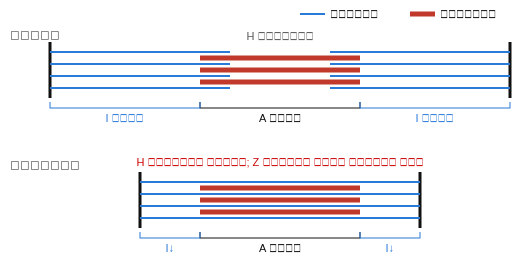
Q3439.
During the muscular contraction which of the following events occur?
(a) ‘H’ zone disappears
(b) ‘A’ band widens
(c) ‘I’ band reduces in width
(d) Myosine hydrolyzes ATP, releasing the ADP and Pi.
(e) Z-lines attached to actins are pulled inwards.
Choose the correct answer from the options given below.
पेशीय संकुचन के दौरान निम्नलिखित में से कौन-सी घटनाएँ होती हैं?
(a) ‘H’ क्षेत्र लुप्त हो जाता है
(b) ‘A’ बैंड चौड़ा हो जाता है
(c) ‘I’ बैंड की चौड़ाई घट जाती है
(d) मायोसिन ATP का जल-अपघटन कर ADP तथा Pi मुक्त करता है।
(e) एक्टिन से जुड़ी Z-रेखाएँ अंदर की ओर खिंचती हैं।
नीचे दिए गए विकल्पों में से सही उत्तर चुनिए।
  1. A(b),(c),(d),(e) onlyकेवल (b),(c),(d),(e)
  2. B(b),(d),(e),(a) onlyकेवल (b),(d),(e),(a)
  3. C(a),(c),(d),(e) onlyकेवल (a),(c),(d),(e)
  4. D(a),(b),(c),(d) onlyकेवल (a),(b),(c),(d)
Show answer

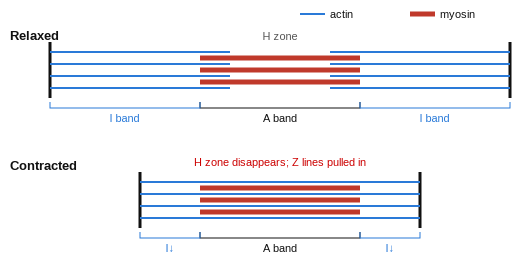
Concept: Sliding filament theory: thin (actin) filaments slide over thick (myosin) filaments; the A band (length of myosin) stays the same.

  1. (a) True – H zone (actin-free centre of A band) disappears as actins slide in.
  2. (b) False – the A band retains its length.
  3. (c) True – I band shortens.
  4. (d) True – myosin head (ATPase) hydrolyses ATP and releases ADP + Pi during the cross-bridge cycle.
  5. (e) True – Z lines attached to actins are pulled inwards, shortening the sarcomere.
  6. Correct = (a), (c), (d), (e).

Short trick: Only (b) is false ("A stays Always") – pick the option without (b).

Answer: (C) (a),(c),(d),(e) only

अवधारणा: सर्पी तंतु सिद्धांत: पतले (एक्टिन) तंतु मोटे (मायोसिन) तंतुओं पर सरकते हैं; A बैंड (मायोसिन की लंबाई) अपरिवर्तित रहता है।

  1. (a) सत्य – एक्टिन के अंदर सरकने से H क्षेत्र (A बैंड का एक्टिन-रहित केंद्र) लुप्त हो जाता है।
  2. (b) असत्य – A बैंड की लंबाई अपरिवर्तित रहती है।
  3. (c) सत्य – I बैंड छोटा होता है।
  4. (d) सत्य – सेतु-चक्र के दौरान मायोसिन शीर्ष (ATPase) ATP का जल-अपघटन कर ADP + Pi मुक्त करता है।
  5. (e) सत्य – एक्टिन से जुड़ी Z रेखाएँ अंदर खिंचती हैं, जिससे सार्कोमियर छोटा होता है।
  6. सही = (a), (c), (d), (e)।

शॉर्ट ट्रिक: केवल (b) असत्य है ("A सदा स्थिर") – वह विकल्प चुनिए जिसमें (b) न हो।

उत्तर: (C) केवल (a),(c),(d),(e)

NEET UGZoologyLocomotion and movement – sliding filament theoryNEET UG 2021 · 12 Sep Shift 1 →
Q3440.
Assertion (A): A person goes to high altitude and experiences 'altitude sickness' with symptoms like breathing difficulty and heart palpitations.
Reason (R): Due to low atmospheric pressure at high altitude, the body does not get sufficient oxygen.
In the light of the above statements, choose the correct answer from the options given below
अभिकथन (A): कोई व्यक्ति अधिक ऊँचाई पर जाता है और श्वास लेने में कठिनाई तथा हृदय की धड़कन बढ़ने जैसे लक्षणों के साथ 'तुंगता बीमारी' (altitude sickness) का अनुभव करता है।
कारण (R): अधिक ऊँचाई पर निम्न वायुमंडलीय दाब के कारण शरीर को पर्याप्त ऑक्सीजन नहीं मिलती।
उपर्युक्त कथनों के आलोक में नीचे दिए गए विकल्पों में से सही उत्तर चुनिए
  1. A(A) is true but (R) is false(A) सत्य है परंतु (R) असत्य है
  2. B(A) is false but (R) is true(A) असत्य है परंतु (R) सत्य है
  3. CBoth (A) and (R) are true and (R) is the correct explanation of (A)(A) तथा (R) दोनों सत्य हैं और (R), (A) की सही व्याख्या है
  4. DBoth (A) and (R) are true but (R) is not the correct explanation of (A)(A) तथा (R) दोनों सत्य हैं परंतु (R), (A) की सही व्याख्या नहीं है
Show answer

Concept: NCERT (Organisms and Populations): at high altitude the low atmospheric pressure means the body does not get enough oxygen, causing altitude sickness – nausea, fatigue and heart palpitations; the body compensates by making more RBCs and breathing faster.

  1. (A) True – breathing difficulty and palpitations are typical symptoms.
  2. (R) True – low pressure → low pO2 → less O2 loads on haemoglobin.
  3. The hypoxia in (R) is exactly what causes (A) → (R) explains (A).

Short trick: Low pressure → low pO2 → hypoxia → sickness: one causal chain, so option (C).

Answer: (C) Both true; R explains A

अवधारणा: NCERT (जीव और समष्टियाँ): अधिक ऊँचाई पर निम्न वायुमंडलीय दाब के कारण शरीर को पर्याप्त ऑक्सीजन नहीं मिलती, जिससे तुंगता बीमारी होती है – मिचली, थकान तथा हृदय की धड़कन बढ़ना; शरीर अधिक RBC बनाकर तथा तेज़ श्वास लेकर इसकी क्षतिपूर्ति करता है।

  1. (A) सत्य – श्वास में कठिनाई तथा धड़कन बढ़ना इसके विशिष्ट लक्षण हैं।
  2. (R) सत्य – निम्न दाब → निम्न pO2 → हीमोग्लोबिन से कम O2 बंधती है।
  3. (R) में बताई गई ऑक्सीजन की कमी ही (A) का कारण है → (R), (A) की व्याख्या करता है।

शॉर्ट ट्रिक: निम्न दाब → निम्न pO2 → ऑक्सीजन की कमी → बीमारी: एक ही कारण-शृंखला, अतः विकल्प (C)।

उत्तर: (C) दोनों सत्य; R, A की व्याख्या करता है

NEET UGZoologyBreathing and exchange of gases – altitude sicknessNEET UG 2021 · 12 Sep Shift 1 →