Question bank

Q&A: practice questions with answers

Search questions on any topic. Filter by exam category, exam, subject and topic, try the question, then open the answer and explanation.

Courses – airGurukul

53,050 questions in the question bank.

Q4081.
Mitochondrial inner membrane encloses _____.
माइटोकॉन्ड्रिया की आंतरिक झिल्ली _____ को घेरती है।
  1. Amatrixमैट्रिक्स (matrix)
  2. Bcytosolकोशिकाद्रव्य (cytosol)
  3. Cmucusश्लेष्मा (mucus)
  4. Daqueous humorनेत्रोद (aqueous humor)
Show answer

Concept: Mitochondria have two membranes and two compartments: the outer compartment (between membranes) and the inner compartment filled with matrix.

  1. The inner membrane (folded into cristae) encloses the dense homogeneous matrix containing circular DNA, 70S ribosomes and Krebs-cycle enzymes.
  2. Cytosol lies outside the mitochondrion; mucus is a secretion of goblet cells; aqueous humor is fluid of the eye.

Short trick: Inner membrane → matrix (Krebs cycle); cristae (on inner membrane) → ETS/ATP synthase.

Answer: (A) matrix

अवधारणा: माइटोकॉन्ड्रिया में दो झिल्लियाँ और दो कक्ष होते हैं: बाहरी कक्ष (दोनों झिल्लियों के बीच) और मैट्रिक्स से भरा आंतरिक कक्ष।

  1. आंतरिक झिल्ली (जो क्रिस्टी में वलित होती है) घने समांगी मैट्रिक्स को घेरती है, जिसमें वृत्ताकार DNA, 70S राइबोसोम और क्रेब्स चक्र के एंजाइम होते हैं।
  2. कोशिकाद्रव्य माइटोकॉन्ड्रिया के बाहर होता है; श्लेष्मा गॉब्लेट कोशिकाओं का स्राव है; नेत्रोद आँख का द्रव है।

शॉर्ट ट्रिक: आंतरिक झिल्ली → मैट्रिक्स (क्रेब्स चक्र); क्रिस्टी (आंतरिक झिल्ली पर) → ETS/ATP सिंथेज़।

उत्तर: (A) मैट्रिक्स
NEET UGBiologyCell – mitochondriaNEET UG 2026 · 21 Jun Shift 1 →
Q4082.
Match List-I with List-II.
List-IList-II
A. CristaeI. Flat membrane sacs in stroma of chloroplast
B. CisternaeII. Infoldings in mitochondria
C. ThylakoidsIII. Cell membrane
D. PhospholipidIV. Disc shaped sacs in the Golgi apparatus
Choose the correct answer from the options given below :
सूची-I का सूची-II से मिलान कीजिए।
सूची-Iसूची-II
A. क्रिस्टी (Cristae)I. हरितलवक के पीठिका (stroma) में चपटी झिल्लीमय थैलियाँ
B. सिस्टर्नी (Cisternae)II. माइटोकॉन्ड्रिया में अंतर्वलन
C. थाइलेकॉइड (Thylakoids)III. कोशिका झिल्ली
D. फॉस्फोलिपिड (Phospholipid)IV. गॉल्जी उपकरण में चक्रिका-आकार की थैलियाँ
नीचे दिए गए विकल्पों में से सही उत्तर चुनिए :
  1. AA-III, B-IV, C-I, D-II
  2. BA-II, B-IV, C-I, D-III
  3. CA-II, B-IV, C-III, D-I
  4. DA-IV, B-III, C-I, D-II
Show answer

Concept: Each organelle has a characteristic membrane structure (NCERT, Cell: The Unit of Life).

  1. A. Cristae – infoldings of inner mitochondrial membrane → II.
  2. B. Cisternae – flat, disc-shaped sacs stacked in Golgi apparatus → IV.
  3. C. Thylakoids – flat membranous sacs in the stroma of chloroplast (stacked as grana) → I.
  4. D. Phospholipid – lipid bilayer forms the cell membrane → III.

Short trick: Only option (B) begins with A-II and has C-I; (A) and (D) put cristae wrong, (C) puts thylakoid in cell membrane.

Answer: (B) A-II, B-IV, C-I, D-III

अवधारणा: प्रत्येक कोशिकांग की एक विशिष्ट झिल्लीमय संरचना होती है (NCERT, कोशिका: जीवन की इकाई)।

  1. A. क्रिस्टी – माइटोकॉन्ड्रिया की आंतरिक झिल्ली के अंतर्वलन → II।
  2. B. सिस्टर्नी – गॉल्जी उपकरण में ढेर के रूप में व्यवस्थित चपटी चक्रिका-आकार थैलियाँ → IV।
  3. C. थाइलेकॉइड – हरितलवक की पीठिका में चपटी झिल्लीमय थैलियाँ (ग्रैना के रूप में ढेर) → I।
  4. D. फॉस्फोलिपिड – लिपिड द्विपरत कोशिका झिल्ली बनाती है → III।

शॉर्ट ट्रिक: केवल विकल्प (B) A-II से शुरू होता है और उसमें C-I है; (A) और (D) में क्रिस्टी गलत है, (C) में थाइलेकॉइड को कोशिका झिल्ली से मिलाया गया है।

उत्तर: (B) A-II, B-IV, C-I, D-III

NEET UGBiologyCell – cell organellesNEET UG 2026 · 21 Jun Shift 1 →
Q4083.
The plastid that stores xanthophyll is known as _____.
ज़ैंथोफिल का संचय करने वाला लवक _____ कहलाता है।
  1. Achloroplastहरितलवक (chloroplast)
  2. Bchromoplastवर्णीलवक (chromoplast)
  3. Caleuroplastएल्यूरोप्लास्ट (aleuroplast)
  4. Damyloplastएमाइलोप्लास्ट (amyloplast)
Show answer

Concept: Chromoplasts contain fat-soluble carotenoid pigments like carotene and xanthophylls, giving yellow, orange or red colour.

  1. Chromoplast – stores carotene and xanthophyll (colour of petals, ripe fruits).
  2. Chloroplast – mainly chlorophyll; its yellow pigments are only accessory pigments for photosynthesis, not stored.
  3. Aleuroplast stores proteins; amyloplast stores starch (both are colourless leucoplasts).

Short trick: Leucoplasts: "AAE" – Amyloplast (starch), Aleuroplast (protein), Elaioplast (oil). Coloured non-green = Chromoplast.

Answer: (B) chromoplast

अवधारणा: वर्णीलवक में वसा-विलेय कैरोटिनॉइड वर्णक जैसे कैरोटीन और ज़ैंथोफिल होते हैं, जो पीला, नारंगी या लाल रंग देते हैं।

  1. वर्णीलवक – कैरोटीन और ज़ैंथोफिल का संचय (पंखुड़ियों, पके फलों का रंग)।
  2. हरितलवक – मुख्यतः क्लोरोफिल; इसके पीले वर्णक केवल प्रकाश-संश्लेषण के सहायक वर्णक हैं, संचित नहीं होते।
  3. एल्यूरोप्लास्ट प्रोटीन संचित करता है; एमाइलोप्लास्ट मंड (स्टार्च) संचित करता है (दोनों रंगहीन अवर्णीलवक हैं)।

शॉर्ट ट्रिक: अवर्णीलवक: "AAE" – एमाइलोप्लास्ट (मंड), एल्यूरोप्लास्ट (प्रोटीन), इलायोप्लास्ट (तेल)। रंगीन पर हरा नहीं = वर्णीलवक।

उत्तर: (B) वर्णीलवक (chromoplast)

NEET UGBiologyCell – plastidsNEET UG 2026 · 21 Jun Shift 1 →
Q4084.
Which of the following statements related to pituitary gland are correct ?
(a) It is divided anatomically into adenohypophysis and neurohypophysis
(b) It secretes follicle stimulating hormone
(c) It secretes melanocyte stimulating hormone
(d) It does not secrete prolactin
Choose the correct answer from the options given below :
पीयूष ग्रंथि से संबंधित निम्नलिखित में से कौन-से कथन सही हैं ?
(a) यह शारीरिक रूप से एडिनोहाइपोफाइसिस और न्यूरोहाइपोफाइसिस में विभाजित है
(b) यह पुटिका उद्दीपक हॉर्मोन (FSH) स्रावित करती है
(c) यह मेलानोसाइट उद्दीपक हॉर्मोन (MSH) स्रावित करती है
(d) यह प्रोलैक्टिन स्रावित नहीं करती
नीचे दिए गए विकल्पों में से सही उत्तर चुनिए :
  1. A(a) and (b) onlyकेवल (a) और (b)
  2. B(a), (b) and (c) onlyकेवल (a), (b) और (c)
  3. C(c) and (d) onlyकेवल (c) और (d)
  4. D(b) and (c) onlyकेवल (b) और (c)
Show answer

Concept: Pituitary (hypophysis) has adenohypophysis (pars distalis + pars intermedia) and neurohypophysis (pars nervosa).

  1. (a) Correct – anatomical division into adenohypophysis and neurohypophysis.
  2. (b) Correct – pars distalis secretes GH, PRL, TSH, ACTH, LH and FSH.
  3. (c) Correct – pars intermedia secretes melanocyte stimulating hormone (MSH).
  4. (d) Incorrect – prolactin (PRL) is secreted by pars distalis.

Short trick: Pars distalis hormones: "GPA-TLF" – GH, PRL, ACTH, TSH, LH, FSH; pars intermedia → MSH; neurohypophysis stores oxytocin & vasopressin.

Answer: (B) (a), (b) and (c) only

अवधारणा: पीयूष ग्रंथि (हाइपोफाइसिस) में एडिनोहाइपोफाइसिस (पार्स डिस्टेलिस + पार्स इंटरमीडिया) और न्यूरोहाइपोफाइसिस (पार्स नर्वोसा) होते हैं।

  1. (a) सही – एडिनोहाइपोफाइसिस और न्यूरोहाइपोफाइसिस में शारीरिक विभाजन।
  2. (b) सही – पार्स डिस्टेलिस GH, PRL, TSH, ACTH, LH और FSH स्रावित करता है।
  3. (c) सही – पार्स इंटरमीडिया मेलानोसाइट उद्दीपक हॉर्मोन (MSH) स्रावित करता है।
  4. (d) गलत – प्रोलैक्टिन (PRL) पार्स डिस्टेलिस द्वारा स्रावित होता है।

शॉर्ट ट्रिक: पार्स डिस्टेलिस के हॉर्मोन: "GPA-TLF" – GH, PRL, ACTH, TSH, LH, FSH; पार्स इंटरमीडिया → MSH; न्यूरोहाइपोफाइसिस ऑक्सीटोसिन व वैसोप्रेसिन का संचय करता है।

उत्तर: (B) केवल (a), (b) और (c)

NEET UGBiologyChemical coordination – pituitary glandNEET UG 2026 · 21 Jun Shift 1 →
Q4085.
Photorespiration reaction catalyzed by RuBisCo is shown below :
RuBP + O2 → 3-Phosphoglycerate + X
Identify "X" from the given options :
RuBisCo द्वारा उत्प्रेरित प्रकाश-श्वसन अभिक्रिया नीचे दी गई है :
RuBP + O2 → 3-Phosphoglycerate + X
दिए गए विकल्पों में से "X" को पहचानिए :
  1. APhosphoenolpyruvateफॉस्फोईनॉलपाइरुवेट (Phosphoenolpyruvate)
  2. B2-Phosphoglycolate2-फॉस्फोग्लाइकोलेट (2-Phosphoglycolate)
  3. COxaloacetateऑक्सैलोएसीटेट (Oxaloacetate)
  4. DMalateमैलेट (Malate)
Show answer

Concept: When RuBisCo acts as an oxygenase, RuBP (5C) + O2 gives one PGA (3C) and one phosphoglycolate (2C).

  1. Carbon balance: 5C (RuBP) → 3C (PGA) + 2C → X is the 2-carbon compound 2-phosphoglycolate.
  2. PEP is the primary CO2 acceptor in C4 plants; oxaloacetate (4C) is the first product of C4 fixation; malate is the 4C acid sent to bundle sheath – none are photorespiration products.

Short trick: Count carbons: 5 − 3 = 2 → "glycolate" (2C). Photorespiration = C2 cycle.

Answer: (B) 2-Phosphoglycolate

अवधारणा: जब RuBisCo ऑक्सीजिनेज़ की तरह कार्य करता है, तो RuBP (5C) + O2 से एक PGA (3C) और एक फॉस्फोग्लाइकोलेट (2C) बनता है।

  1. कार्बन संतुलन: 5C (RuBP) → 3C (PGA) + 2C → X दो-कार्बन यौगिक 2-फॉस्फोग्लाइकोलेट है।
  2. PEP, C4 पादपों में प्राथमिक CO2 ग्राही है; ऑक्सैलोएसीटेट (4C) C4 स्थिरीकरण का प्रथम उत्पाद है; मैलेट पूलाच्छद (bundle sheath) में भेजा जाने वाला 4C अम्ल है – इनमें से कोई भी प्रकाश-श्वसन का उत्पाद नहीं।

शॉर्ट ट्रिक: कार्बन गिनें: 5 − 3 = 2 → "ग्लाइकोलेट" (2C)। प्रकाश-श्वसन = C2 चक्र।

उत्तर: (B) 2-फॉस्फोग्लाइकोलेट

NEET UGBiologyPhotosynthesis – photorespirationNEET UG 2026 · 21 Jun Shift 1 →
Q4086.
Mad cow disease is caused by _____.
मैड काउ रोग _____ के कारण होता है।
  1. Aprionsप्रिऑन (prions)
  2. Bviroidsविरॉइड (viroids)
  3. CAspergillus sp.
  4. DMycoplasma sp.
Show answer

Concept: Prions are infectious agents made of abnormally folded protein (similar in size to viruses).

  1. Bovine spongiform encephalopathy (BSE) – "mad cow disease" in cattle – and its human analogue Creutzfeldt–Jakob disease (CJD) are caused by prions.
  2. Viroids are free RNA without protein coat (e.g. potato spindle tuber disease).
  3. Aspergillus is a fungus; Mycoplasma is a wall-less bacterium – neither causes BSE.

Short trick: Prion = PROteinaceous INfectious particle → protein only; Viroid = RNA only.

Answer: (A) prions

अवधारणा: प्रिऑन असामान्य रूप से वलित प्रोटीन से बने संक्रामक कारक हैं (आकार में विषाणु के समान)।

  1. गायों में बोवाइन स्पंजीफॉर्म एनसेफैलोपैथी (BSE) – "मैड काउ रोग" – और मनुष्य में इसका समरूप क्रूट्ज़फेल्ट-जैकब रोग (CJD) प्रिऑन से होते हैं।
  2. विरॉइड प्रोटीन आवरण रहित मुक्त RNA हैं (जैसे आलू का स्पिंडल ट्यूबर रोग)।
  3. Aspergillus एक कवक है; Mycoplasma भित्ति-रहित जीवाणु है – इनमें से कोई BSE नहीं करता।

शॉर्ट ट्रिक: प्रिऑन = PROteinaceous INfectious कण → केवल प्रोटीन; विरॉइड = केवल RNA।

उत्तर: (A) प्रिऑन

NEET UGBiologyBiological classification – prionsNEET UG 2026 · 21 Jun Shift 1 →
Q4087.
Which pigment has absorption peak at 700 nm in the photosynthetic reaction centre PS I (P700) ?
प्रकाश-संश्लेषी अभिक्रिया केंद्र PS I (P700) में कौन-से वर्णक का अवशोषण शिखर 700 nm पर होता है ?
  1. AChlorophyll bक्लोरोफिल b
  2. BChlorophyll aक्लोरोफिल a
  3. CXanthophyllsज़ैंथोफिल
  4. DCarotenoidsकैरोटिनॉइड
Show answer

Concept: The reaction centre of each photosystem is a special chlorophyll a molecule.

  1. PS I reaction centre chlorophyll a absorbs maximally at 700 nm (P700); PS II reaction centre chlorophyll a at 680 nm (P680).
  2. Chlorophyll b, xanthophylls and carotenoids are accessory pigments of the light-harvesting complex (antenna) – they pass energy to the reaction centre but are not the reaction centre.

Short trick: Reaction centre is always "a" (chlorophyll a – the chief pigment); PS I → 700, PS II → 680 (numbered by discovery, not order).

Answer: (B) Chlorophyll a

अवधारणा: प्रत्येक वर्णक तंत्र का अभिक्रिया केंद्र एक विशेष क्लोरोफिल a अणु होता है।

  1. PS I का अभिक्रिया केंद्र क्लोरोफिल a 700 nm पर अधिकतम अवशोषण करता है (P700); PS II का अभिक्रिया केंद्र क्लोरोफिल a 680 nm पर (P680)।
  2. क्लोरोफिल b, ज़ैंथोफिल और कैरोटिनॉइड प्रकाश-संग्राही संकुल (एंटीना) के सहायक वर्णक हैं – ये ऊर्जा अभिक्रिया केंद्र को देते हैं पर स्वयं अभिक्रिया केंद्र नहीं हैं।

शॉर्ट ट्रिक: अभिक्रिया केंद्र सदा "a" (क्लोरोफिल a – मुख्य वर्णक); PS I → 700, PS II → 680 (खोज के क्रम से नामकरण)।

उत्तर: (B) क्लोरोफिल a

NEET UGBiologyPhotosynthesis – photosystemsNEET UG 2026 · 21 Jun Shift 1 →
Q4088.
In water, frogs respire using _____.
जल में मेंढक _____ द्वारा श्वसन करते हैं।
  1. Askinत्वचा
  2. Bbuccal cavityमुख गुहा
  3. Clungsफेफड़े
  4. Dtracheaश्वासनली (trachea)
Show answer

Concept: Frogs show cutaneous respiration in water: the moist, highly vascular skin exchanges gases by diffusion.

  1. In water – skin (cutaneous respiration) only.
  2. On land – buccal cavity, skin and lungs are used; lungs (pulmonary respiration) are used on land.
  3. Trachea is the respiratory organ of insects; frogs do not have a tracheal system of respiration.
  4. During hibernation/aestivation also the frog respires through skin.

Short trick: Frog: "Water → Skin; Land → Skin + Buccal + Lungs".

Answer: (A) skin

अवधारणा: जल में मेंढक त्वचीय श्वसन करता है: नम, अत्यधिक रुधिर-वाहिकायुक्त त्वचा विसरण द्वारा गैसों का आदान-प्रदान करती है।

  1. जल में – केवल त्वचा (त्वचीय श्वसन)।
  2. स्थल पर – मुख गुहा, त्वचा और फेफड़े प्रयुक्त होते हैं; फेफड़े (फुप्फुसीय श्वसन) स्थल पर ही काम आते हैं।
  3. श्वासनली (trachea) कीटों का श्वसन अंग है; मेंढक में श्वासनलिकीय श्वसन तंत्र नहीं होता।
  4. शीतनिद्रा/ग्रीष्मनिद्रा में भी मेंढक त्वचा से श्वसन करता है।

शॉर्ट ट्रिक: मेंढक: "जल → त्वचा; स्थल → त्वचा + मुख गुहा + फेफड़े"।

उत्तर: (A) त्वचा

NEET UGBiologyAnimal kingdom – frog respirationNEET UG 2026 · 21 Jun Shift 1 →
Q4089.
Which of the following represents the correct sequence of arrangement of bones in the lower limb of humans ?
निम्नलिखित में से कौन-सा मनुष्य के निचले पाद (lower limb) में अस्थियों की व्यवस्था का सही क्रम दर्शाता है ?
  1. AFemur-tibia-patella-tarsalफीमर-टिबिया-पटेला-टार्सल
  2. BPatella-femur-tibia-tarsalपटेला-फीमर-टिबिया-टार्सल
  3. CFemur-patella-tibia-tarsalफीमर-पटेला-टिबिया-टार्सल
  4. DFemur-tarsal-patella-tibiaफीमर-टार्सल-पटेला-टिबिया
Show answer

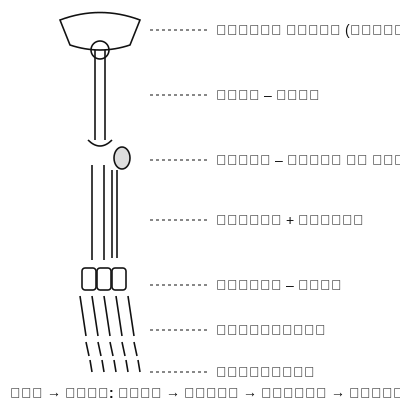
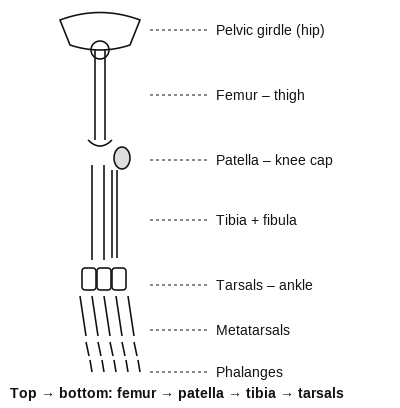
Concept: Each lower limb has 30 bones: femur 1, patella 1, tibia and fibula 2, tarsals 7, metatarsals 5, phalanges 14.

  1. Going from hip downwards: femur (thigh bone, longest bone) → patella (knee cap, at the knee joint between femur and tibia) → tibia (with fibula) in the leg → tarsals (ankle).
  2. Option (A) puts the patella below the tibia; (B) starts with the patella above the femur; (D) puts tarsals (ankle) before the knee – all wrong.

Short trick: Walk down your own leg: thigh → knee → shin → ankle = F → P → T → T.

Answer: (C) Femur-patella-tibia-tarsal

अवधारणा: प्रत्येक निचले पाद में 30 अस्थियाँ होती हैं: फीमर 1, पटेला 1, टिबिया और फिबुला 2, टार्सल 7, मेटाटार्सल 5, फैलेन्जेस 14।

  1. कूल्हे से नीचे की ओर: फीमर (जाँघ की अस्थि, सबसे लंबी अस्थि) → पटेला (घुटने की टोपी, फीमर और टिबिया के बीच घुटने के जोड़ पर) → टाँग में टिबिया (फिबुला के साथ) → टार्सल (टखना)।
  2. विकल्प (A) पटेला को टिबिया के नीचे रखता है; (B) पटेला को फीमर से ऊपर रखता है; (D) टखने (टार्सल) को घुटने से पहले रखता है – सभी गलत।

शॉर्ट ट्रिक: अपनी टाँग पर नीचे चलिए: जाँघ → घुटना → पिंडली → टखना = F → P → T → T।

उत्तर: (C) फीमर-पटेला-टिबिया-टार्सल

NEET UGBiologyLocomotion and movement – appendicular skeletonNEET UG 2026 · 21 Jun Shift 1 →
Q4090.
Phyllotaxy is the pattern of arrangement of ____.
पर्णविन्यास (phyllotaxy) ____ की व्यवस्था का प्रतिरूप है।
  1. Aleavesपत्तियों
  2. Bflowersपुष्पों
  3. Cfruitsफलों
  4. Dsepalsबाह्यदलों
Show answer

Concept: Phyllotaxy is the pattern of arrangement of leaves on the stem or branch.

  1. Types: alternate (china rose, mustard, sunflower), opposite (Calotropis, guava) and whorled (Alstonia).
  2. Arrangement of flowers on the floral axis = inflorescence; arrangement of sepals/petals in bud = aestivation; fruits have no such term.

Short trick: Phyllo = leaf (Greek), taxis = arrangement. Compare: Aestivation – floral bud; Inflorescence – flowers; Venation – veins.

Answer: (A) leaves

अवधारणा: पर्णविन्यास तने या शाखा पर पत्तियों की व्यवस्था का प्रतिरूप है।

  1. प्रकार: एकांतर (गुड़हल, सरसों, सूरजमुखी), सम्मुख (आक/Calotropis, अमरूद) और चक्करदार (Alstonia)।
  2. पुष्पी अक्ष पर पुष्पों की व्यवस्था = पुष्पक्रम; कली में बाह्यदल/दल की व्यवस्था = पुष्पदल विन्यास (aestivation); फलों के लिए ऐसा कोई पद नहीं।

शॉर्ट ट्रिक: Phyllo = पत्ती (ग्रीक), taxis = व्यवस्था। तुलना: पुष्पदल विन्यास – पुष्प कली; पुष्पक्रम – पुष्प; शिराविन्यास – शिराएँ।

उत्तर: (A) पत्तियों

NEET UGBiologyMorphology of flowering plants – phyllotaxyNEET UG 2026 · 21 Jun Shift 1 →
Q4091.
Match List-I with List-II
List-IList-II
A. StarchI. Fights infection
B. AntibodyII. Energy storage
C. ConcanavalinIII. Glucose transport
D. Glut-4IV. Lectin
Choose the correct answer from the options given below :
सूची-I का सूची-II से मिलान कीजिए।
सूची-Iसूची-II
A. मंड (Starch)I. संक्रमण से लड़ना
B. प्रतिरक्षी (Antibody)II. ऊर्जा संचय
C. कॉन्कैनावेलिन (Concanavalin)III. ग्लूकोज़ परिवहन
D. Glut-4IV. लेक्टिन
नीचे दिए गए विकल्पों में से सही उत्तर चुनिए :
  1. AA-I, B-II, C-IV, D-III
  2. BA-II, B-I, C-IV, D-III
  3. CA-II, B-I, C-III, D-IV
  4. DA-I, B-II, C-III, D-IV
Show answer

Concept: NCERT table of protein functions: collagen – intercellular ground substance, trypsin – enzyme, insulin – hormone, antibody – fights infection, receptor – sensory reception, GLUT-4 – enables glucose transport into cells.

  1. A. Starch – storage polysaccharide of plants → energy storage (II).
  2. B. Antibody – immunoglobulin that fights infection (I).
  3. C. Concanavalin A – a plant lectin (secondary metabolite, binds sugars) (IV).
  4. D. GLUT-4 – membrane transporter protein for glucose (III).

Short trick: A-II and B-I are obvious → only (B) and (C) remain; Concanavalin is a lectin, so C-IV → (B).

Answer: (B) A-II, B-I, C-IV, D-III

अवधारणा: NCERT की प्रोटीन कार्य तालिका: कोलैजन – अंतरकोशिकीय आधार पदार्थ, ट्रिप्सिन – एंजाइम, इंसुलिन – हॉर्मोन, प्रतिरक्षी – संक्रमण से लड़ना, ग्राही – संवेदी ग्रहण, GLUT-4 – कोशिकाओं में ग्लूकोज़ परिवहन।

  1. A. मंड – पादपों का संचयी पॉलिसैकेराइड → ऊर्जा संचय (II)।
  2. B. प्रतिरक्षी – संक्रमण से लड़ने वाला इम्यूनोग्लोबुलिन (I)।
  3. C. कॉन्कैनावेलिन A – एक पादप लेक्टिन (द्वितीयक उपापचयज, शर्कराओं से बंधता है) (IV)।
  4. D. GLUT-4 – ग्लूकोज़ का झिल्ली परिवाहक प्रोटीन (III)।

शॉर्ट ट्रिक: A-II और B-I स्पष्ट हैं → केवल (B) और (C) बचते हैं; कॉन्कैनावेलिन लेक्टिन है, अतः C-IV → (B)।

उत्तर: (B) A-II, B-I, C-IV, D-III

NEET UGBiologyBiomolecules – functions of proteins and polysaccharidesNEET UG 2026 · 21 Jun Shift 1 →
Q4092.
Given below are two statements:
Statement I : When any plane passing through the central axis of the body divides the organism into two identical halves, it is called radial symmetry.
Statement II : In phylum Echinodermata, both adults and larvae are radially symmetrical.
In the light of the above statements, choose the most appropriate answer from the options given below:
नीचे दो कथन दिए गए हैं :
कथन I : जब शरीर के केंद्रीय अक्ष से गुजरने वाला कोई भी तल जीव को दो समरूप अर्धांशों में विभाजित करता है, तो उसे अरीय सममिति कहते हैं।
कथन II : संघ इकाइनोडर्मेटा में वयस्क और लार्वा दोनों अरीय सममित होते हैं।
उपर्युक्त कथनों के आलोक में, नीचे दिए गए विकल्पों में से सबसे उपयुक्त उत्तर चुनिए :
  1. ABoth Statement I and Statement II are correctकथन I और कथन II दोनों सही हैं
  2. BBoth Statement I and Statement II are incorrectकथन I और कथन II दोनों गलत हैं
  3. CStatement I is correct but Statement II is incorrectकथन I सही है लेकिन कथन II गलत है
  4. DStatement I is incorrect but Statement II is correctकथन I गलत है लेकिन कथन II सही है
Show answer

Concept: Radial symmetry: any plane through the central axis gives identical halves (coelenterates, ctenophores, adult echinoderms).

  1. Statement I – correct; it is the NCERT definition of radial symmetry.
  2. Statement II – incorrect; adult echinoderms are radially (pentamerous) symmetrical but their larvae are bilaterally symmetrical.

Short trick: Echinoderm = "Radial adult, Bilateral baby" – the bilateral larva shows they evolved from bilateral ancestors.

Answer: (C) Statement I is correct but Statement II is incorrect

अवधारणा: अरीय सममिति: केंद्रीय अक्ष से गुजरने वाला कोई भी तल समरूप अर्धांश देता है (सीलेंट्रेट, टीनोफोर, वयस्क इकाइनोडर्म)।

  1. कथन I – सही; यह अरीय सममिति की NCERT परिभाषा है।
  2. कथन II – गलत; वयस्क इकाइनोडर्म अरीय (पंचतयी) सममित होते हैं, परंतु उनके लार्वा द्विपार्श्व सममित होते हैं।

शॉर्ट ट्रिक: इकाइनोडर्म = "वयस्क अरीय, शिशु द्विपार्श्व" – द्विपार्श्व लार्वा बताता है कि ये द्विपार्श्व पूर्वजों से विकसित हुए।

उत्तर: (C) कथन I सही है लेकिन कथन II गलत है

NEET UGBiologyAnimal kingdom – symmetryNEET UG 2026 · 21 Jun Shift 1 →
Q4093.
Endomembrane system includes __________.
अंतःझिल्ली तंत्र में __________ सम्मिलित हैं।
  1. Aendoplasmic reticulum, Golgi complex, lysosomes and vacuoleअंतर्द्रव्यी जालिका, गॉल्जी सम्मिश्र, लयनकाय और रिक्तिका
  2. Bendoplasmic reticulum, chloroplast, peroxisomes and vacuoleअंतर्द्रव्यी जालिका, हरितलवक, परऑक्सीसोम और रिक्तिका
  3. Cmitochondria, chloroplast, peroxisomes and vacuoleमाइटोकॉन्ड्रिया, हरितलवक, परऑक्सीसोम और रिक्तिका
  4. DGolgi complex, chloroplast, peroxisomes and vacuoleगॉल्जी सम्मिश्र, हरितलवक, परऑक्सीसोम और रिक्तिका
Show answer

Concept: Organelles whose functions are coordinated are grouped as the endomembrane system: ER, Golgi complex, lysosomes and vacuoles.

  1. These four work together (synthesis → packaging → transport/digestion/storage).
  2. Mitochondria, chloroplasts and peroxisomes are not part of it because their functions are not coordinated with the above.
  3. Every wrong option contains chloroplast and/or peroxisome/mitochondria.

Short trick: Endomembrane = "ER-GoLV" – ER, Golgi, Lysosome, Vacuole; never M-C-P (Mitochondria, Chloroplast, Peroxisome).

Answer: (A) endoplasmic reticulum, Golgi complex, lysosomes and vacuole

अवधारणा: जिन कोशिकांगों के कार्य समन्वित होते हैं उन्हें अंतःझिल्ली तंत्र में रखा जाता है: ER, गॉल्जी सम्मिश्र, लयनकाय और रिक्तिकाएँ।

  1. ये चारों मिलकर कार्य करते हैं (संश्लेषण → पैकेजिंग → परिवहन/पाचन/संचय)।
  2. माइटोकॉन्ड्रिया, हरितलवक और परऑक्सीसोम इसका भाग नहीं हैं क्योंकि इनके कार्य उपर्युक्त के साथ समन्वित नहीं हैं।
  3. प्रत्येक गलत विकल्प में हरितलवक और/या परऑक्सीसोम/माइटोकॉन्ड्रिया है।

शॉर्ट ट्रिक: अंतःझिल्ली = "ER-GoLV" – ER, गॉल्जी, लयनकाय, रिक्तिका; कभी नहीं M-C-P (माइटोकॉन्ड्रिया, हरितलवक, परऑक्सीसोम)।

उत्तर: (A) अंतर्द्रव्यी जालिका, गॉल्जी सम्मिश्र, लयनकाय और रिक्तिका

NEET UGBiologyCell – endomembrane systemNEET UG 2026 · 21 Jun Shift 1 →
Q4094.
How many molecules of pyruvic acid are produced at the end of glycolysis from 206 molecules of glucose ?
ग्लूकोज़ के 206 अणुओं से ग्लाइकोलिसिस के अंत में पाइरुविक अम्ल के कितने अणु बनते हैं ?
  1. A206
  2. B309
  3. C103
  4. D412
Show answer

Concept: In glycolysis one glucose (6C) is partially oxidised to two molecules of pyruvic acid (3C each).

  1. 1 glucose → 2 pyruvic acid.
  2. 206 glucose → 206 × 2 = 412 pyruvic acid.

Short trick: Glycolysis doubles the count (6C → 2 × 3C): just multiply by 2.

Answer: (D) 412

अवधारणा: ग्लाइकोलिसिस में एक ग्लूकोज़ (6C) आंशिक रूप से ऑक्सीकृत होकर पाइरुविक अम्ल के दो अणु (प्रत्येक 3C) बनाता है।

  1. 1 ग्लूकोज़ → 2 पाइरुविक अम्ल।
  2. 206 ग्लूकोज़ → 206 × 2 = 412 पाइरुविक अम्ल।

शॉर्ट ट्रिक: ग्लाइकोलिसिस संख्या दोगुनी कर देता है (6C → 2 × 3C): बस 2 से गुणा करें।

उत्तर: (D) 412

NEET UGBiologyRespiration in plants – glycolysisNEET UG 2026 · 21 Jun Shift 1 →
Q4095.
Which of the following plant growth regulators is used as herbicide ?
निम्नलिखित में से कौन-सा पादप वृद्धि नियामक शाकनाशी (herbicide) के रूप में प्रयुक्त होता है ?
  1. A2,4-D
  2. BKinetinकाइनेटिन (Kinetin)
  3. CAbscisic acidएब्सिसिक अम्ल (Abscisic acid)
  4. DGibberellinजिबरेलिन (Gibberellin)
Show answer

Concept: 2,4-D (2,4-dichlorophenoxyacetic acid) is a synthetic auxin widely used to kill dicotyledonous weeds.

  1. It does not affect mature monocots, so it is used to prepare weed-free lawns and cereal fields.
  2. Kinetin – cytokinin (cell division); ABA – stress hormone (stomatal closure, dormancy); gibberellin – stem elongation, bolting – none used as herbicide.

Short trick: "2,4-D = Dicot Destroyer" – kills Dicot weeds, spares monocots (grass/lawn).

Answer: (A) 2,4-D

अवधारणा: 2,4-D (2,4-डाइक्लोरोफीनॉक्सीऐसिटिक अम्ल) एक संश्लेषित ऑक्सिन है जो द्विबीजपत्री खरपतवारों को नष्ट करने के लिए व्यापक रूप से प्रयुक्त होता है।

  1. यह परिपक्व एकबीजपत्री पादपों को प्रभावित नहीं करता, इसलिए खरपतवार-मुक्त लॉन और अनाज के खेत बनाने में प्रयुक्त होता है।
  2. काइनेटिन – साइटोकाइनिन (कोशिका विभाजन); ABA – प्रतिबल हॉर्मोन (रंध्र बंद होना, प्रसुप्ति); जिबरेलिन – तना दीर्घीकरण, बोल्टिंग – कोई भी शाकनाशी नहीं।

शॉर्ट ट्रिक: "2,4-D = Dicot Destroyer" – द्विबीजपत्री खरपतवार नष्ट, एकबीजपत्री (घास/लॉन) सुरक्षित।

उत्तर: (A) 2,4-D

NEET UGBiologyPlant growth regulators – auxinsNEET UG 2026 · 21 Jun Shift 1 →
Q4096.
Given below are two statements :
Statement I : In gymnosperms, the male and female gametophytes remain within the sporangia.
Statement II : In gymnosperms, seeds are not covered.
In the light of the above statements, choose the most appropriate answer from the options given below:
नीचे दो कथन दिए गए हैं :
कथन I : अनावृतबीजी में नर और मादा युग्मकोद्भिद बीजाणुधानियों के भीतर ही रहते हैं।
कथन II : अनावृतबीजी में बीज ढके नहीं होते।
उपर्युक्त कथनों के आलोक में, नीचे दिए गए विकल्पों में से सबसे उपयुक्त उत्तर चुनिए :
  1. ABoth Statement I and Statement II are correctकथन I और कथन II दोनों सही हैं
  2. BBoth Statement I and Statement II are incorrectकथन I और कथन II दोनों गलत हैं
  3. CStatement I is correct but Statement II is incorrectकथन I सही है लेकिन कथन II गलत है
  4. DStatement I is incorrect but Statement II is correctकथन I गलत है लेकिन कथन II सही है
Show answer

Concept: In gymnosperms the gametophytes are highly reduced and do not have an independent free-living existence.

  1. Statement I – correct; NCERT: male and female gametophytes remain within the sporangia retained on the sporophytes (pollen grain in microsporangium, female gametophyte in ovule/megasporangium).
  2. Statement II – correct; gymnosperms (gymnos = naked, sperma = seed) have naked ovules and seeds – there is no ovary wall/fruit.

Short trick: Gymnosperm = "naked seed + dependent gametophyte" – both statements are textbook lines.

Answer: (A) Both Statement I and Statement II are correct

अवधारणा: अनावृतबीजी में युग्मकोद्भिद अत्यधिक ह्रासित होते हैं और उनका स्वतंत्र मुक्तजीवी अस्तित्व नहीं होता।

  1. कथन I – सही; NCERT: नर और मादा युग्मकोद्भिद बीजाणुद्भिद पर स्थित बीजाणुधानियों के भीतर ही रहते हैं (परागकण लघुबीजाणुधानी में, मादा युग्मकोद्भिद बीजांड/गुरुबीजाणुधानी में)।
  2. कथन II – सही; अनावृतबीजी (gymnos = नग्न, sperma = बीज) में बीजांड और बीज नग्न होते हैं – अंडाशय भित्ति/फल नहीं होता।

शॉर्ट ट्रिक: अनावृतबीजी = "नग्न बीज + आश्रित युग्मकोद्भिद" – दोनों कथन पाठ्यपुस्तक की पंक्तियाँ हैं।

उत्तर: (A) कथन I और कथन II दोनों सही हैं

NEET UGBiologyPlant kingdom – gymnospermsNEET UG 2026 · 21 Jun Shift 1 →
Q4097.
Match List-I with List-II.
List-IList-II
A. SphericalI. Vibrio
B. RodII. Cocci
C. CommaIII. Spirilla
D. SpirillumIV. Bacilli
Choose the correct answer from the options given below :
सूची-I का सूची-II से मिलान कीजिए।
सूची-Iसूची-II
A. गोलाकार (Spherical)I. विब्रियो (Vibrio)
B. छड़ (Rod)II. कोकाई (Cocci)
C. कॉमा (Comma)III. स्पाइरिला (Spirilla)
D. स्पाइरिलम (Spirillum)IV. बैसिलाई (Bacilli)
नीचे दिए गए विकल्पों में से सही उत्तर चुनिए :
  1. AA-I, B-III, C-II, D-IV
  2. BA-III, B-II, C-I, D-IV
  3. CA-II, B-I, C-IV, D-III
  4. DA-II, B-IV, C-I, D-III
Show answer

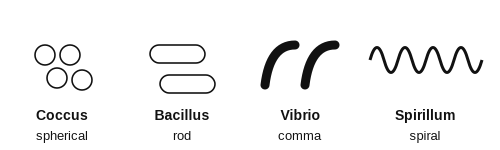
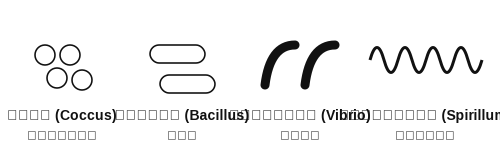
Concept: Bacteria are grouped into four types by shape: coccus, bacillus, vibrium and spirillum.

  1. A. Spherical → coccus (pl. cocci) – II.
  2. B. Rod-shaped → bacillus (pl. bacilli) – IV.
  3. C. Comma-shaped → vibrio – I.
  4. D. Spiral → spirillum (pl. spirilla) – III.

Short trick: Spherical = cocci is obvious → only (C) and (D); rod = bacilli → (D).

Answer: (D) A-II, B-IV, C-I, D-III

अवधारणा: आकृति के आधार पर जीवाणु चार प्रकार के होते हैं: कोकस, बैसिलस, विब्रियो और स्पाइरिलम।

  1. A. गोलाकार → कोकस (बहुवचन कोकाई) – II।
  2. B. छड़ाकार → बैसिलस (बहुवचन बैसिलाई) – IV।
  3. C. कॉमा-आकार → विब्रियो – I।
  4. D. सर्पिल → स्पाइरिलम (बहुवचन स्पाइरिला) – III।

शॉर्ट ट्रिक: गोलाकार = कोकाई स्पष्ट है → केवल (C) और (D); छड़ = बैसिलाई → (D)।

उत्तर: (D) A-II, B-IV, C-I, D-III

NEET UGBiologyBiological classification – bacterial shapesNEET UG 2026 · 21 Jun Shift 1 →
Q4098.
Which of the following are characteristic features of Solanaceae family ?
(a) Flowers are bisexual and actinomorphic
(b) Calyx have five sepals and are united
(c) Androecium have five stamens and are epipetalous
(d) Ovary is inferior
Choose the correct answer from the options given below :
निम्नलिखित में से कौन-से सोलेनेसी कुल के अभिलक्षण हैं ?
(a) पुष्प द्विलिंगी और त्रिज्यासममित (actinomorphic) होते हैं
(b) बाह्यदलपुंज में पाँच बाह्यदल होते हैं जो संयुक्त होते हैं
(c) पुमंग में पाँच पुंकेसर होते हैं जो दललग्न (epipetalous) होते हैं
(d) अंडाशय अधोवर्ती (inferior) होता है
नीचे दिए गए विकल्पों में से सही उत्तर चुनिए :
  1. A(a), (b) and (c) onlyकेवल (a), (b) और (c)
  2. B(d) onlyकेवल (d)
  3. C(a) and (b) onlyकेवल (a) और (b)
  4. D(b), (c) and (d) onlyकेवल (b), (c) और (d)
Show answer

Concept: Solanaceae (potato family) floral formula: ⊕ ⚥ K(5) C(5) A5 G(2) with superior ovary.

  1. (a) Correct – flowers bisexual and actinomorphic.
  2. (b) Correct – calyx: five sepals, united (gamosepalous), persistent.
  3. (c) Correct – five stamens, epipetalous.
  4. (d) Incorrect – gynoecium bicarpellary, syncarpous with superior ovary, swollen placenta with axile placentation.

Short trick: Solanaceae ovary is superior and obliquely placed – the bar is drawn under G(2) in the floral formula.

Answer: (A) (a), (b) and (c) only

अवधारणा: सोलेनेसी (आलू कुल) का पुष्प सूत्र: ⊕ ⚥ K(5) C(5) A5 G(2), ऊर्ध्ववर्ती अंडाशय के साथ।

  1. (a) सही – पुष्प द्विलिंगी और त्रिज्यासममित।
  2. (b) सही – बाह्यदलपुंज: पाँच बाह्यदल, संयुक्त (युक्तबाह्यदली), चिरस्थायी।
  3. (c) सही – पाँच पुंकेसर, दललग्न।
  4. (d) गलत – जायांग द्विअंडपी, युक्तांडपी तथा ऊर्ध्ववर्ती अंडाशय, फूला हुआ बीजांडासन और स्तंभीय बीजांडन्यास।

शॉर्ट ट्रिक: सोलेनेसी में अंडाशय ऊर्ध्ववर्ती और तिरछा स्थित होता है – पुष्प सूत्र में रेखा G(2) के नीचे खींची जाती है।

उत्तर: (A) केवल (a), (b) और (c)

NEET UGBiologyMorphology of flowering plants – SolanaceaeNEET UG 2026 · 21 Jun Shift 1 →
Q4099.
Select the correct sequence of experiments that led to a gradual understanding of photosynthesis in green plants.
उन प्रयोगों का सही क्रम चुनिए जिनसे हरे पादपों में प्रकाश-संश्लेषण की क्रमिक समझ विकसित हुई।
  1. AAbsorption spectra of chlorophyll a and b → production of glucose → release of oxygen → role of airक्लोरोफिल a और b का अवशोषण स्पेक्ट्रम → ग्लूकोज़ का उत्पादन → ऑक्सीजन का मुक्त होना → वायु की भूमिका
  2. BRole of air → release of oxygen → production of glucose → absorption spectra of chlorophyll a and bवायु की भूमिका → ऑक्सीजन का मुक्त होना → ग्लूकोज़ का उत्पादन → क्लोरोफिल a और b का अवशोषण स्पेक्ट्रम
  3. CRelease of oxygen → production of glucose → absorption spectra of chlorophyll a and b → role of airऑक्सीजन का मुक्त होना → ग्लूकोज़ का उत्पादन → क्लोरोफिल a और b का अवशोषण स्पेक्ट्रम → वायु की भूमिका
  4. DProduction of glucose → role of air → release of oxygen → absorption spectra of chlorophyll a and bग्लूकोज़ का उत्पादन → वायु की भूमिका → ऑक्सीजन का मुक्त होना → क्लोरोफिल a और b का अवशोषण स्पेक्ट्रम
Show answer

Concept: NCERT "Early experiments" are described in historical order.

  1. Joseph Priestley (1770) – bell-jar with candle/mouse and mint plant: plants restore the air ("role of air").
  2. Jan Ingenhousz (1730–1799) – only green parts in sunlight release oxygen (bubbles from aquatic plant).
  3. Julius von Sachs (1854) – green parts produce glucose, usually stored as starch.
  4. T.W. Engelmann (1843–1909) – prism + green alga Cladophora + aerobic bacteria: action spectrum resembles the absorption spectra of chlorophyll a and b.

Short trick: Mnemonic "P-I-S-E" (Priestley → Ingenhousz → Sachs → Engelmann) = air → O2 → glucose → spectrum.

Answer: (B) Role of air → release of oxygen → production of glucose → absorption spectra of chlorophyll a and b

अवधारणा: NCERT के "प्रारंभिक प्रयोग" ऐतिहासिक क्रम में वर्णित हैं।

  1. जोसेफ प्रीस्टले (1770) – बेल-जार में मोमबत्ती/चूहा और पुदीने का पौधा: पौधे वायु को शुद्ध करते हैं ("वायु की भूमिका")।
  2. जान इंजेनहाउज़ (1730–1799) – केवल हरे भाग सूर्य-प्रकाश में ऑक्सीजन मुक्त करते हैं (जलीय पौधे से बुलबुले)।
  3. जूलियस वॉन सैक्स (1854) – हरे भाग ग्लूकोज़ बनाते हैं, जो प्रायः मंड के रूप में संचित होता है।
  4. टी.डब्ल्यू. एंगलमान (1843–1909) – प्रिज़्म + हरा शैवाल Cladophora + वायवीय जीवाणु: क्रिया स्पेक्ट्रम क्लोरोफिल a और b के अवशोषण स्पेक्ट्रम जैसा है।

शॉर्ट ट्रिक: स्मृति-सूत्र "P-I-S-E" (प्रीस्टले → इंजेनहाउज़ → सैक्स → एंगलमान) = वायु → O2 → ग्लूकोज़ → स्पेक्ट्रम।

उत्तर: (B) वायु की भूमिका → ऑक्सीजन का मुक्त होना → ग्लूकोज़ का उत्पादन → क्लोरोफिल a और b का अवशोषण स्पेक्ट्रम

NEET UGBiologyPhotosynthesis – early experimentsNEET UG 2026 · 21 Jun Shift 1 →
Q4100.
The number of action potentials generated by sino-arterial node (SAN) in a healthy human is ________ per minute.
एक स्वस्थ मनुष्य में शिरा-अलिंद पर्व (SAN) द्वारा प्रति मिनट ________ क्रिया विभव उत्पन्न होते हैं।
  1. A28 - 30
  2. B70 - 75
  3. C100 - 110
  4. D120 - 140
Show answer

Concept: The SA node is the pacemaker; it generates the maximum number of action potentials, i.e. 70–75 min−1, which sets the heart rate.

  1. Each action potential from the SAN starts one cardiac cycle (≈ 0.8 s).
  2. Heart rate = 60 / 0.8 ≈ 72–75 beats per minute → 70–75 action potentials per minute.
  3. 28–30 is too low (bradycardia); 100–110 and 120–140 are tachycardia values (or fetal rates), not a healthy adult resting rate.

Short trick: Cardiac cycle 0.8 s ⇒ 60/0.8 = 75 → "SAN = 72-ish".

Answer: (B) 70 - 75

अवधारणा: SA पर्व गति-प्रेरक (pacemaker) है; यह अधिकतम क्रिया विभव, अर्थात 70–75 प्रति मिनट उत्पन्न करता है, जो हृदय दर निर्धारित करता है।

  1. SAN से प्रत्येक क्रिया विभव एक हृद् चक्र (≈ 0.8 s) आरंभ करता है।
  2. हृदय दर = 60 / 0.8 ≈ 72–75 स्पंदन प्रति मिनट → 70–75 क्रिया विभव प्रति मिनट।
  3. 28–30 बहुत कम है (ब्रैडीकार्डिया); 100–110 और 120–140 टैकीकार्डिया (या भ्रूणीय दर) के मान हैं, स्वस्थ वयस्क की विश्राम दर नहीं।

शॉर्ट ट्रिक: हृद् चक्र 0.8 s ⇒ 60/0.8 = 75 → "SAN ≈ 72"।

उत्तर: (B) 70 - 75

NEET UGBiologyBody fluids and circulation – SA nodeNEET UG 2026 · 21 Jun Shift 1 →