Question bank

Q&A: practice questions with answers

Search questions on any topic. Filter by exam category, exam, subject and topic, try the question, then open the answer and explanation.

Courses – airGurukul

53,050 questions in the question bank.

Q4101.
How many turns of Calvin cycle are required for the formation of three molecules of glucose ?
ग्लूकोज़ के तीन अणुओं के निर्माण के लिए केल्विन चक्र के कितने चक्करों (turns) की आवश्यकता होती है ?
  1. A6
  2. B3
  3. C1
  4. D18
Show answer

Concept: Each turn of the Calvin cycle fixes one CO2; glucose has 6 carbons, so 6 turns make one glucose.

  1. 1 glucose (C6H12O6) needs 6 CO2 fixed = 6 turns (using 18 ATP and 12 NADPH).
  2. 3 glucose → 3 × 6 = 18 turns.

Short trick: Turns = carbons in product: 3 × 6C = 18.

Answer: (D) 18

अवधारणा: केल्विन चक्र का प्रत्येक चक्कर एक CO2 स्थिर करता है; ग्लूकोज़ में 6 कार्बन होते हैं, अतः एक ग्लूकोज़ के लिए 6 चक्कर।

  1. 1 ग्लूकोज़ (C6H12O6) के लिए 6 CO2 का स्थिरीकरण = 6 चक्कर (18 ATP और 12 NADPH का उपयोग)।
  2. 3 ग्लूकोज़ → 3 × 6 = 18 चक्कर।

शॉर्ट ट्रिक: चक्कर = उत्पाद में कार्बन: 3 × 6C = 18।

उत्तर: (D) 18
NEET UGBiologyPhotosynthesis – Calvin cycleNEET UG 2026 · 21 Jun Shift 1 →
Q4102.
Which of the following statements is incorrect ?
निम्नलिखित में से कौन-सा कथन गलत है ?
  1. ABlood coagulates in response to an injuryचोट की अनुक्रिया में रक्त का स्कंदन होता है
  2. BBlood clot consists of fibrinsरक्त का थक्का फाइब्रिन से बना होता है
  3. CFibrin is produced from fibrinogenफाइब्रिन, फाइब्रिनोजन से बनता है
  4. DFibrinogen is produced from fibrinफाइब्रिनोजन, फाइब्रिन से बनता है
Show answer

Concept: Clotting: thrombokinase → prothrombin to thrombin; thrombin converts soluble plasma protein fibrinogen into insoluble fibrin threads.

  1. (A) Correct – coagulation is a response to injury/trauma to prevent blood loss.
  2. (B) Correct – a clot is a mesh of fibrin threads with trapped formed elements.
  3. (C) Correct – fibrinogen → fibrin (by thrombin).
  4. (D) Incorrect – the reaction is reversed; fibrinogen is the precursor, made in the liver.

Short trick: Precursors end in "-ogen" (fibrinogen, prothrombin...) → the "-ogen" form always comes first.

Answer: (D) Fibrinogen is produced from fibrin

अवधारणा: स्कंदन: थ्रोम्बोकाइनेज़ → प्रोथ्रोम्बिन से थ्रोम्बिन; थ्रोम्बिन विलेय प्लाज्मा प्रोटीन फाइब्रिनोजन को अविलेय फाइब्रिन धागों में बदलता है।

  1. (A) सही – रक्त-हानि रोकने हेतु स्कंदन चोट/आघात की अनुक्रिया है।
  2. (B) सही – थक्का फाइब्रिन धागों का जाल है जिसमें संगठित पदार्थ फँसे होते हैं।
  3. (C) सही – फाइब्रिनोजन → फाइब्रिन (थ्रोम्बिन द्वारा)।
  4. (D) गलत – अभिक्रिया उलटी लिखी है; फाइब्रिनोजन पूर्ववर्ती है, जो यकृत में बनता है।

शॉर्ट ट्रिक: पूर्ववर्ती के नाम "-ogen" पर समाप्त होते हैं (फाइब्रिनोजन…) → "-ogen" रूप सदा पहले आता है।

उत्तर: (D) फाइब्रिनोजन, फाइब्रिन से बनता है

NEET UGBiologyBody fluids and circulation – coagulationNEET UG 2026 · 21 Jun Shift 1 →
Q4103.
Match List-I with List-II.
List-IList-II
A. FamilyI. Sapindales
B. GenusII. Dicotyledonae
C. ClassIII. Anacardiaceae
D. PhylumIV. Angiospermae
E. OrderV. Mangifera
Choose the correct answer from the options given below :
सूची-I का सूची-II से मिलान कीजिए।
सूची-Iसूची-II
A. कुल (Family)I. Sapindales
B. वंश (Genus)II. Dicotyledonae
C. वर्ग (Class)III. Anacardiaceae
D. संघ (Phylum)IV. Angiospermae
E. गण (Order)V. Mangifera
नीचे दिए गए विकल्पों में से सही उत्तर चुनिए :
  1. AA-I, B-V, C-II, D-IV, E-III
  2. BA-II, B-I, C-III, D-IV, E-V
  3. CA-II, B-III, C-V, D-I, E-IV
  4. DA-III, B-V, C-II, D-IV, E-I
Show answer

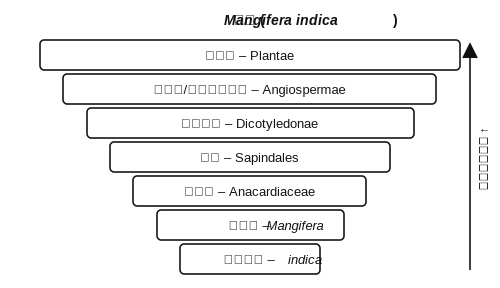
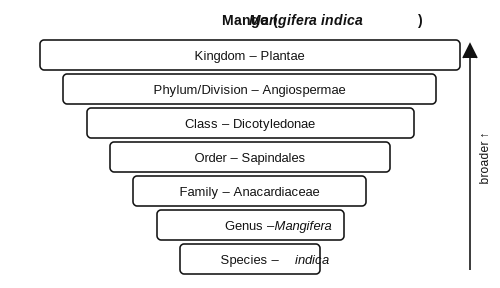
Concept: Mango: Kingdom Plantae → Division Angiospermae → Class Dicotyledonae → Order Sapindales → Family Anacardiaceae → Genus Mangifera → species indica.

  1. Family ends in "-aceae" → Anacardiaceae (III).
  2. Genus → Mangifera (V, italic).
  3. Class → Dicotyledonae (II).
  4. Phylum/Division → Angiospermae (IV).
  5. Order ends in "-ales" → Sapindales (I).

Short trick: Suffix trick: "-ales" = order, "-aceae" = family. Family = -aceae alone gives A-III → only option (D).

Answer: (D) A-III, B-V, C-II, D-IV, E-I

अवधारणा: आम: जगत Plantae → प्रभाग Angiospermae → वर्ग Dicotyledonae → गण Sapindales → कुल Anacardiaceae → वंश Mangifera → जाति indica।

  1. कुल का अंत "-aceae" से → Anacardiaceae (III)।
  2. वंश → Mangifera (V, तिरछा)।
  3. वर्ग → Dicotyledonae (II)।
  4. संघ/प्रभाग → Angiospermae (IV)।
  5. गण का अंत "-ales" से → Sapindales (I)।

शॉर्ट ट्रिक: प्रत्यय ट्रिक: "-ales" = गण, "-aceae" = कुल। केवल कुल = -aceae से A-III मिलता है → केवल विकल्प (D)।

उत्तर: (D) A-III, B-V, C-II, D-IV, E-I

NEET UGBiologyThe living world – taxonomic categories (mango)NEET UG 2026 · 21 Jun Shift 1 →
Q4104.
Arrange the following taxonomic categories in ascending order.
(a) Genus   (b) Class
(c) Order   (d) Phylum
(e) Family   (f) Kingdom
(g) Species
Choose the correct answer from the options given below :
निम्नलिखित वर्गिकी संवर्गों को आरोही क्रम में व्यवस्थित कीजिए।
(a) वंश (Genus)   (b) वर्ग (Class)
(c) गण (Order)   (d) संघ (Phylum)
(e) कुल (Family)   (f) जगत (Kingdom)
(g) जाति (Species)
नीचे दिए गए विकल्पों में से सही उत्तर चुनिए :
  1. A(g), (a), (e), (c), (b), (d), (f)
  2. B(a), (c), (d), (g), (f), (b), (e)
  3. C(g), (c), (d), (b), (e), (a), (f)
  4. D(f), (c), (b), (g), (d), (e), (a)
Show answer

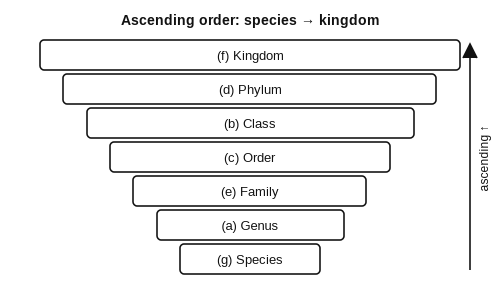
Concept: Taxonomic hierarchy (lowest to highest): Species → Genus → Family → Order → Class → Phylum → Kingdom.

  1. Ascending = from the lowest (most specific) to the highest (broadest) category.
  2. Species (g) → Genus (a) → Family (e) → Order (c) → Class (b) → Phylum (d) → Kingdom (f).
  3. Only option (A) starts with (g), (a) and ends with (f).

Short trick: Reverse of "King Philip Came Over For Good Soup" (Kingdom, Phylum, Class, Order, Family, Genus, Species).

Answer: (A) (g), (a), (e), (c), (b), (d), (f)

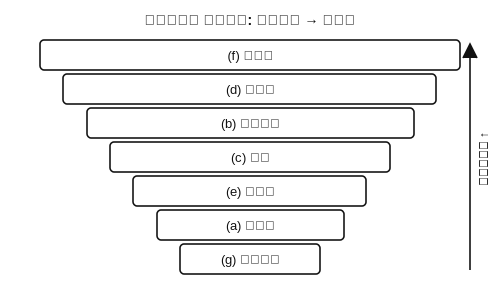
अवधारणा: वर्गिकी पदानुक्रम (निम्नतम से उच्चतम): जाति → वंश → कुल → गण → वर्ग → संघ → जगत।

  1. आरोही = निम्नतम (सबसे विशिष्ट) से उच्चतम (सबसे व्यापक) संवर्ग की ओर।
  2. जाति (g) → वंश (a) → कुल (e) → गण (c) → वर्ग (b) → संघ (d) → जगत (f)।
  3. केवल विकल्प (A) (g), (a) से आरंभ होकर (f) पर समाप्त होता है।

शॉर्ट ट्रिक: "King Philip Came Over For Good Soup" (जगत, संघ, वर्ग, गण, कुल, वंश, जाति) का उलटा।

उत्तर: (A) (g), (a), (e), (c), (b), (d), (f)

NEET UGBiologyThe living world – taxonomic hierarchyNEET UG 2026 · 21 Jun Shift 1 →
Q4105.
Match List-I with List-II.
List-IList-II
A. Marginal placentationI. Argemone
B. Axile placentationII. Tomato
C. Parietal placentationIII. Primrose
D. Free central placentationIV. Pea
Choose the correct answer from the options given below :
सूची-I का सूची-II से मिलान कीजिए।
सूची-Iसूची-II
A. सीमांत बीजांडन्यास (Marginal)I. Argemone
B. स्तंभीय बीजांडन्यास (Axile)II. टमाटर
C. भित्तीय बीजांडन्यास (Parietal)III. Primrose
D. मुक्त स्तंभीय बीजांडन्यास (Free central)IV. मटर
नीचे दिए गए विकल्पों में से सही उत्तर चुनिए :
  1. AA-II, B-IV, C-I, D-III
  2. BA-IV, B-II, C-III, D-I
  3. CA-IV, B-III, C-I, D-II
  4. DA-IV, B-II, C-I, D-III
Show answer

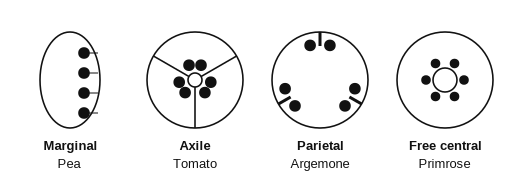
Concept: Placentation is the arrangement of ovules within the ovary.

  1. Marginal – placenta forms a ridge along the ventral suture of a monocarpellary ovary: pea (IV).
  2. Axile – placenta is axial, ovules attached to it in a multilocular ovary: china rose, tomato, lemon (II).
  3. Parietal – ovules on the inner wall/periphery of a unilocular ovary: mustard, Argemone (I).
  4. Free central – ovules on a central axis, septa absent: Dianthus, Primrose (III).

Short trick: "Pea-Tomato-Argemone-Primrose" = M-A-P-F; pea is marginal → A-IV, tomato axile → B-II, leaving only (B) vs (D); Argemone parietal → (D).

Answer: (D) A-IV, B-II, C-I, D-III

अवधारणा: अंडाशय के भीतर बीजांडों की व्यवस्था को बीजांडन्यास कहते हैं।

  1. सीमांत – एकांडपी अंडाशय में अधर सीवन पर बीजांडासन कटक बनाता है: मटर (IV)।
  2. स्तंभीय – बहुकोष्ठी अंडाशय में बीजांडासन अक्षीय होता है और बीजांड उस पर लगे होते हैं: गुड़हल, टमाटर, नींबू (II)।
  3. भित्तीय – एककोष्ठी अंडाशय की भीतरी भित्ति/परिधि पर बीजांड: सरसों, Argemone (I)।
  4. मुक्त स्तंभीय – केंद्रीय अक्ष पर बीजांड, पट अनुपस्थित: Dianthus, Primrose (III)।

शॉर्ट ट्रिक: "मटर-टमाटर-आर्जिमोन-प्रिमरोज़" = सीमांत-स्तंभीय-भित्तीय-मुक्त; मटर सीमांत → A-IV, टमाटर स्तंभीय → B-II, केवल (B) व (D) बचे; आर्जिमोन भित्तीय → (D)।

उत्तर: (D) A-IV, B-II, C-I, D-III

NEET UGBiologyMorphology of flowering plants – placentationNEET UG 2026 · 21 Jun Shift 1 →
Q4106.
Sphenopsida class belongs to _______ .
स्फीनोप्सिडा वर्ग _______ से संबंधित है।
  1. Abryophytesब्रायोफाइट
  2. Bangiospermsआवृतबीजी
  3. Cgymnospermsअनावृतबीजी
  4. Dpteridophytesटेरिडोफाइट
Show answer

Concept: Pteridophytes are classified into four classes: Psilopsida, Lycopsida, Sphenopsida and Pteropsida.

  1. Psilopsida – Psilotum; Lycopsida – Selaginella, Lycopodium; Sphenopsida – Equisetum (horsetail); Pteropsida – Dryopteris, Pteris, Adiantum.
  2. Bryophytes are divided into liverworts and mosses; angiosperms into dicots and monocots – no "Sphenopsida" there.

Short trick: Pteridophyte classes = "PLSP" (Psilo, Lyco, Spheno, Ptero) – all end in "-opsida".

Answer: (D) pteridophytes

अवधारणा: टेरिडोफाइट को चार वर्गों में बाँटा गया है: साइलोप्सिडा, लाइकोप्सिडा, स्फीनोप्सिडा और टेरोप्सिडा।

  1. साइलोप्सिडा – Psilotum; लाइकोप्सिडा – Selaginella, Lycopodium; स्फीनोप्सिडा – Equisetum (हॉर्सटेल); टेरोप्सिडा – Dryopteris, Pteris, Adiantum।
  2. ब्रायोफाइट लिवरवर्ट और मॉस में तथा आवृतबीजी द्विबीजपत्री और एकबीजपत्री में विभाजित हैं – वहाँ "स्फीनोप्सिडा" नहीं है।

शॉर्ट ट्रिक: टेरिडोफाइट के वर्ग = "PLSP" (साइलो, लाइको, स्फीनो, टेरो) – सभी "-opsida" पर समाप्त।

उत्तर: (D) टेरिडोफाइट

NEET UGBiologyPlant kingdom – pteridophytesNEET UG 2026 · 21 Jun Shift 1 →
Q4107.
Which of the following statements regarding photorespiration are correct ?
(a) Do not occur in C3 plants
(b) CO2 is consumed and O2 is generated
(c) Phosphoglycolate is formed
(d) No synthesis of ATP and NADPH
Choose the correct answer from the options given below :
प्रकाश-श्वसन के संबंध में निम्नलिखित में से कौन-से कथन सही हैं ?
(a) C3 पादपों में नहीं होता
(b) CO2 उपभुक्त होती है और O2 उत्पन्न होती है
(c) फॉस्फोग्लाइकोलेट बनता है
(d) ATP और NADPH का संश्लेषण नहीं होता
नीचे दिए गए विकल्पों में से सही उत्तर चुनिए :
  1. A(a) and (d) onlyकेवल (a) और (d)
  2. B(c) and (d) onlyकेवल (c) और (d)
  3. C(b) and (d) onlyकेवल (b) और (d)
  4. D(a) and (b) onlyकेवल (a) और (b)
Show answer

Concept: In photorespiration RuBisCo binds O2 instead of CO2: RuBP + O2 → PGA + phosphoglycolate; it is a wasteful process.

  1. (a) Incorrect – photorespiration occurs in C3 plants; it is absent (negligible) in C4 plants.
  2. (b) Incorrect – it is the reverse: O2 is consumed and CO2 is released.
  3. (c) Correct – 2-phosphoglycolate is formed.
  4. (d) Correct – NCERT: there is neither synthesis of sugars nor of ATP (or NADPH); instead ATP is used up.

Short trick: Photorespiration = "light-dependent respiration": like respiration it takes O2 and gives CO2, but makes no ATP.

Answer: (B) (c) and (d) only

अवधारणा: प्रकाश-श्वसन में RuBisCo, CO2 के स्थान पर O2 से बंधता है: RuBP + O2 → PGA + फॉस्फोग्लाइकोलेट; यह एक व्यर्थ प्रक्रिया है।

  1. (a) गलत – प्रकाश-श्वसन C3 पादपों में होता है; C4 पादपों में अनुपस्थित (नगण्य) होता है।
  2. (b) गलत – यह उलटा है: O2 उपभुक्त होती है और CO2 मुक्त होती है।
  3. (c) सही – 2-फॉस्फोग्लाइकोलेट बनता है।
  4. (d) सही – NCERT: इसमें न तो शर्करा का और न ही ATP (या NADPH) का संश्लेषण होता है; बल्कि ATP का उपयोग होता है।

शॉर्ट ट्रिक: प्रकाश-श्वसन = "प्रकाश-आश्रित श्वसन": श्वसन की तरह O2 लेता है और CO2 देता है, पर ATP नहीं बनाता।

उत्तर: (B) केवल (c) और (d)

NEET UGBiologyPhotosynthesis – photorespirationNEET UG 2026 · 21 Jun Shift 1 →
Q4108.
Smooth endoplasmic reticulum ________ .
चिकनी अंतर्द्रव्यी जालिका (SER) ________ ।
  1. Ahas ribosomes attached to its surfaceकी सतह पर राइबोसोम लगे होते हैं
  2. Bis the major site for the synthesis of lipidsलिपिड संश्लेषण का प्रमुख स्थल है
  3. Cis actively involved in protein synthesisप्रोटीन संश्लेषण में सक्रिय रूप से संलग्न है
  4. Dis a site for the synthesis of carbohydratesकार्बोहाइड्रेट संश्लेषण का स्थल है
Show answer

Concept: SER is the major site for synthesis of lipids; in animal cells lipid-like steroidal hormones are synthesised in SER.

  1. (A) Wrong – ribosomes are attached to rough ER; SER lacks them.
  2. (B) Correct – lipids and steroid hormones are made on SER.
  3. (C) Wrong – protein synthesis and secretion is the function of RER.
  4. (D) Wrong – carbohydrates (glycoproteins/glycolipids, cell-wall polysaccharides) are formed mainly in the Golgi; SER is not the stated site.

Short trick: Smooth = "S" for Steroids/lipids; Rough = Ribosomes → pRoteins.

Answer: (B) is the major site for the synthesis of lipids

अवधारणा: SER लिपिड संश्लेषण का प्रमुख स्थल है; जंतु कोशिकाओं में लिपिड जैसे स्टेरॉइडी हॉर्मोन SER में संश्लेषित होते हैं।

  1. (A) गलत – राइबोसोम खुरदरी ER पर लगे होते हैं; SER पर नहीं।
  2. (B) सही – लिपिड और स्टेरॉइड हॉर्मोन SER पर बनते हैं।
  3. (C) गलत – प्रोटीन संश्लेषण और स्राव RER का कार्य है।
  4. (D) गलत – कार्बोहाइड्रेट (ग्लाइकोप्रोटीन/ग्लाइकोलिपिड, भित्ति पॉलिसैकेराइड) मुख्यतः गॉल्जी में बनते हैं; SER इसका बताया गया स्थल नहीं है।

शॉर्ट ट्रिक: Smooth = "S" अर्थात स्टेरॉइड/लिपिड; Rough = राइबोसोम → प्रोटीन।

उत्तर: (B) लिपिड संश्लेषण का प्रमुख स्थल है

NEET UGBiologyCell – endoplasmic reticulumNEET UG 2026 · 21 Jun Shift 1 →
Q4109.
Which one of the following statements is incorrect ?
निम्नलिखित में से कौन-सा कथन गलत है ?
  1. Aα-cells of pancreas secrete glucagonअग्न्याशय की α-कोशिकाएँ ग्लूकैगॉन स्रावित करती हैं
  2. Bα-cells of pancreas secrete insulinअग्न्याशय की α-कोशिकाएँ इंसुलिन स्रावित करती हैं
  3. CGlucagon stimulates glycogenolysisग्लूकैगॉन ग्लाइकोजेनोलिसिस को उद्दीपित करता है
  4. Dβ-cells of pancreas secrete insulinअग्न्याशय की β-कोशिकाएँ इंसुलिन स्रावित करती हैं
Show answer

Concept: Islets of Langerhans: α-cells (~25%) secrete glucagon; β-cells (~60%) secrete insulin.

  1. (A) Correct – α-cells → glucagon (hyperglycaemic hormone).
  2. (B) Incorrect – insulin is secreted by β-cells, not α-cells.
  3. (C) Correct – glucagon acts on liver cells, stimulates glycogenolysis and gluconeogenesis → raises blood glucose.
  4. (D) Correct – β-cells → insulin (hypoglycaemic hormone).

Short trick: "α → Glucagon (A-G), β → Insulin (B-I)"; options (B) and (D) contradict each other, so one must be wrong.

Answer: (B) α-cells of pancreas secrete insulin

अवधारणा: लैंगरहैंस द्वीप: α-कोशिकाएँ (~25%) ग्लूकैगॉन स्रावित करती हैं; β-कोशिकाएँ (~60%) इंसुलिन स्रावित करती हैं।

  1. (A) सही – α-कोशिकाएँ → ग्लूकैगॉन (अतिग्लूकोज़रक्तता हॉर्मोन)।
  2. (B) गलत – इंसुलिन β-कोशिकाओं द्वारा स्रावित होता है, α-कोशिकाओं द्वारा नहीं।
  3. (C) सही – ग्लूकैगॉन यकृत कोशिकाओं पर कार्य कर ग्लाइकोजेनोलिसिस और ग्लूकोनियोजेनेसिस उद्दीपित करता है → रक्त ग्लूकोज़ बढ़ता है।
  4. (D) सही – β-कोशिकाएँ → इंसुलिन (अल्पग्लूकोज़रक्तता हॉर्मोन)।

शॉर्ट ट्रिक: "α → ग्लूकैगॉन, β → इंसुलिन"; विकल्प (B) और (D) परस्पर विरोधी हैं, अतः इनमें से एक गलत होगा।

उत्तर: (B) अग्न्याशय की α-कोशिकाएँ इंसुलिन स्रावित करती हैं

NEET UGBiologyChemical coordination – pancreasNEET UG 2026 · 21 Jun Shift 1 →
Q4110.
Genus represents _______ .
वंश (Genus) _______ को निरूपित करता है।
  1. Aan individual plant or animalएक अकेले पादप या जंतु
  2. Ba population of plants and animalsपादपों और जंतुओं की एक समष्टि
  3. Ca group of closely related speciesनिकट संबंधी जातियों के एक समूह
  4. Da group of closely related familiesनिकट संबंधी कुलों के एक समूह
Show answer

Concept: NCERT: Genus comprises a group of related species which has more characters in common in comparison to species of other genera.

  1. Example: potato, tomato and brinjal are three species of genus Solanum; lion, tiger, leopard are species of Panthera.
  2. An individual is not a taxon; a population is an ecological unit; a group of related families is an order.

Short trick: Each rank groups the rank just below it: genus ⊃ species, family ⊃ genera, order ⊃ families.

Answer: (C) a group of closely related species

अवधारणा: NCERT: वंश संबंधित जातियों का एक समूह है, जिनमें अन्य वंशों की जातियों की तुलना में अधिक लक्षण समान होते हैं।

  1. उदाहरण: आलू, टमाटर और बैंगन वंश Solanum की तीन जातियाँ हैं; शेर, बाघ, तेंदुआ Panthera की जातियाँ हैं।
  2. एक अकेला जीव वर्गक (taxon) नहीं है; समष्टि पारिस्थितिक इकाई है; संबंधित कुलों का समूह गण है।

शॉर्ट ट्रिक: प्रत्येक संवर्ग अपने ठीक नीचे वाले संवर्ग का समूह है: वंश ⊃ जाति, कुल ⊃ वंश, गण ⊃ कुल।

उत्तर: (C) निकट संबंधी जातियों के एक समूह

NEET UGBiologyThe living world – taxonomic categoriesNEET UG 2026 · 21 Jun Shift 1 →
Q4111.
Which of the following is not a prokaryote ?
निम्नलिखित में से कौन-सा प्रोकैरियोट नहीं है ?
  1. ABacteriaजीवाणु (Bacteria)
  2. BBlue green algaeनील-हरित शैवाल (Blue green algae)
  3. CMycoplasmaमाइकोप्लाज्मा (Mycoplasma)
  4. DFungiकवक (Fungi)
Show answer

Concept: Prokaryotes (kingdom Monera) lack a well-defined nucleus and membrane-bound organelles.

  1. Bacteria, blue-green algae (cyanobacteria) and mycoplasma (PPLO) are all prokaryotes of Monera.
  2. Fungi have a true nucleus and membrane-bound organelles → eukaryotes (kingdom Fungi).

Short trick: "Blue-green ALGAE" are actually cyanobacteria – prokaryotic despite the name; fungi are eukaryotic despite being "simple".

Answer: (D) Fungi

अवधारणा: प्रोकैरियोट (जगत मोनेरा) में सुस्पष्ट केंद्रक और झिल्ली-आबद्ध कोशिकांग नहीं होते।

  1. जीवाणु, नील-हरित शैवाल (सायनोबैक्टीरिया) और माइकोप्लाज्मा (PPLO) सभी मोनेरा के प्रोकैरियोट हैं।
  2. कवक में वास्तविक केंद्रक और झिल्ली-आबद्ध कोशिकांग होते हैं → यूकैरियोट (जगत कवक)।

शॉर्ट ट्रिक: "नील-हरित शैवाल" वास्तव में सायनोबैक्टीरिया हैं – नाम के बावजूद प्रोकैरियोट; कवक "सरल" होते हुए भी यूकैरियोट।

उत्तर: (D) कवक (Fungi)

NEET UGBiologyBiological classification – prokaryotesNEET UG 2026 · 21 Jun Shift 1 →
Q4112.
Which of the following plant growth regulators promotes internode elongation prior to flowering in cabbage ?
निम्नलिखित में से कौन-सा पादप वृद्धि नियामक पत्तागोभी में पुष्पन से पूर्व पर्वों (internode) के दीर्घीकरण को बढ़ावा देता है ?
  1. AAbscisic acidएब्सिसिक अम्ल (Abscisic acid)
  2. BGibberellinजिबरेलिन (Gibberellin)
  3. CIndole butyric acidइंडोल ब्यूटिरिक अम्ल (Indole butyric acid)
  4. DEthephonइथेफॉन (Ethephon)
Show answer

Concept: Gibberellins promote bolting – internode elongation just prior to flowering – in rosette plants like cabbage and beet.

  1. ABA is a growth inhibitor (dormancy, stomatal closure).
  2. IBA is an auxin used for rooting of stem cuttings.
  3. Ethephon releases ethylene (fruit ripening, flowering in pineapple, abscission) – ethylene actually promotes rapid internode elongation in deep-water rice, not bolting in cabbage.

Short trick: Bolting = GA ("Gibberellin makes the cabbage Go up").

Answer: (B) Gibberellin

अवधारणा: जिबरेलिन रोज़ेट पादपों जैसे पत्तागोभी और चुकंदर में बोल्टिंग – पुष्पन से ठीक पहले पर्व दीर्घीकरण – को बढ़ावा देते हैं।

  1. ABA वृद्धि-संदमक है (प्रसुप्ति, रंध्र बंद होना)।
  2. IBA एक ऑक्सिन है जो तने की कलमों में जड़ निकालने हेतु प्रयुक्त होता है।
  3. इथेफॉन एथिलीन मुक्त करता है (फल पकना, अनन्नास में पुष्पन, विलगन) – एथिलीन गहरे पानी वाले धान में तीव्र पर्व दीर्घीकरण करता है, पत्तागोभी में बोल्टिंग नहीं।

शॉर्ट ट्रिक: बोल्टिंग = GA ("जिबरेलिन पत्तागोभी को ऊपर ले जाता है")।

उत्तर: (B) जिबरेलिन

NEET UGBiologyPlant growth regulators – gibberellinsNEET UG 2026 · 21 Jun Shift 1 →
Q4113.
The correct sequence of adult cell cycle phases is ______ .
वयस्क कोशिका चक्र की प्रावस्थाओं का सही क्रम ______ है।
  1. AG1-G2-S-M
  2. BG1-M-G2-S
  3. CG1-S-G2-M
  4. DS-M-G2-G1
Show answer

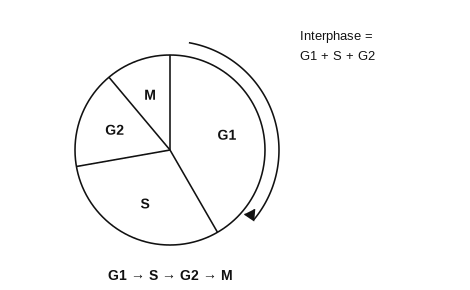
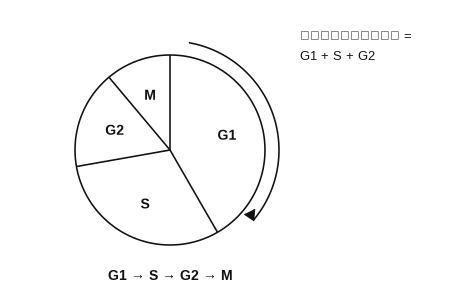
Concept: Cell cycle = interphase (G1 → S → G2) followed by M phase (karyokinesis + cytokinesis).

  1. G1 (gap 1) – cell grows, metabolically active, no DNA replication.
  2. S (synthesis) – DNA replicates (2C → 4C); centriole duplicates in animal cells.
  3. G2 (gap 2) – proteins for mitosis are made, growth continues.
  4. M – mitosis/division; then daughter cells re-enter G1.

Short trick: Alphabet-like flow "G1 → S → G2 → M": a Gap before and after Synthesis, then Mitosis.

Answer: (C) G1-S-G2-M

अवधारणा: कोशिका चक्र = अंतरावस्था (G1 → S → G2) तत्पश्चात M प्रावस्था (केंद्रक विभाजन + कोशिकाद्रव्य विभाजन)।

  1. G1 (अंतराल 1) – कोशिका वृद्धि करती है, उपापचयी रूप से सक्रिय, DNA प्रतिकृति नहीं।
  2. S (संश्लेषण) – DNA प्रतिकृति (2C → 4C); जंतु कोशिकाओं में तारककेंद्र का द्विगुणन।
  3. G2 (अंतराल 2) – सूत्री विभाजन हेतु प्रोटीन बनते हैं, वृद्धि जारी रहती है।
  4. M – सूत्री विभाजन; फिर संतति कोशिकाएँ पुनः G1 में प्रवेश करती हैं।

शॉर्ट ट्रिक: प्रवाह "G1 → S → G2 → M": संश्लेषण के पहले और बाद में अंतराल, फिर विभाजन।

उत्तर: (C) G1-S-G2-M

NEET UGBiologyCell cycle and cell division – phasesNEET UG 2026 · 21 Jun Shift 1 →
Q4114.
Match List-I with List-II.
List-IList-II
A. Fusion of protoplasms between gametesI. Meiosis
B. Fusion of two nucleiII. Plasmogamy
C. Generation of haploid sporesIII. Karyogamy
Choose the correct answer from the options given below :
सूची-I का सूची-II से मिलान कीजिए।
सूची-Iसूची-II
A. युग्मकों के जीवद्रव्यों का संलयनI. अर्धसूत्री विभाजन (Meiosis)
B. दो केंद्रकों का संलयनII. जीवद्रव्य संलयन (Plasmogamy)
C. अगुणित बीजाणुओं का निर्माणIII. केंद्रक संलयन (Karyogamy)
नीचे दिए गए विकल्पों में से सही उत्तर चुनिए :
  1. AA-II, B-III, C-I
  2. BA-II, B-I, C-III
  3. CA-III, B-II, C-I
  4. DA-I, B-III, C-II
Show answer

Concept: Sexual cycle in fungi has three steps: plasmogamy → karyogamy → meiosis in the zygote.

  1. A. Fusion of protoplasms of two motile/non-motile gametes = plasmogamy (II).
  2. B. Fusion of two nuclei = karyogamy (III).
  3. C. Meiosis in the zygote produces haploid spores (I).

Short trick: Plasma first, then Karyon (nucleus), then Meiosis – "P-K-M" = A-II, B-III, C-I.

Answer: (A) A-II, B-III, C-I

अवधारणा: कवकों में लैंगिक चक्र के तीन चरण हैं: जीवद्रव्य संलयन → केंद्रक संलयन → युग्मनज में अर्धसूत्री विभाजन।

  1. A. दो चल/अचल युग्मकों के जीवद्रव्य का संलयन = जीवद्रव्य संलयन (II)।
  2. B. दो केंद्रकों का संलयन = केंद्रक संलयन (III)।
  3. C. युग्मनज में अर्धसूत्री विभाजन से अगुणित बीजाणु बनते हैं (I)।

शॉर्ट ट्रिक: पहले प्लाज्मा, फिर केरियॉन (केंद्रक), फिर अर्धसूत्री – "P-K-M" = A-II, B-III, C-I।

उत्तर: (A) A-II, B-III, C-I

NEET UGBiologyBiological classification – sexual cycle in fungiNEET UG 2026 · 21 Jun Shift 1 →
Q4115.
Given below are two statements :
Statement I : The class name Reptilia refers to creeping or crawling mode of locomotion.
Statement II : All organisms belonging to Reptilia have three chambered heart.
In the light of the above statements, choose the most appropriate answer from the options given below :
नीचे दो कथन दिए गए हैं :
कथन I : वर्ग का नाम रेप्टीलिया रेंगने या सरकने वाले गमन के तरीके को दर्शाता है।
कथन II : रेप्टीलिया वर्ग के सभी जीवों में तीन-कक्षीय हृदय होता है।
उपर्युक्त कथनों के आलोक में, नीचे दिए गए विकल्पों में से सबसे उपयुक्त उत्तर चुनिए :
  1. ABoth Statement I and Statement II are correctकथन I और कथन II दोनों सही हैं
  2. BBoth Statement I and Statement II are incorrectकथन I और कथन II दोनों गलत हैं
  3. CStatement I is correct but Statement II is incorrectकथन I सही है लेकिन कथन II गलत है
  4. DStatement I is incorrect but Statement II is correctकथन I गलत है लेकिन कथन II सही है
Show answer

Concept: Reptilia (Latin repere/reptum = to creep or crawl); heart is usually three-chambered but four-chambered in crocodiles.

  1. Statement I – correct; NCERT: the class name refers to their creeping or crawling mode of locomotion.
  2. Statement II – incorrect because of the word "All": crocodiles (Crocodilus, Alligator) have a four-chambered heart.

Short trick: Absolute words like "all/only/never" in a biology statement → look for the exception (here, the crocodile).

Answer: (C) Statement I is correct but Statement II is incorrect

अवधारणा: रेप्टीलिया (लैटिन repere/reptum = रेंगना या सरकना); हृदय प्रायः तीन-कक्षीय होता है पर मगरमच्छ में चार-कक्षीय।

  1. कथन I – सही; NCERT: वर्ग का नाम उनके रेंगने या सरकने वाले गमन को दर्शाता है।
  2. कथन II – "सभी" शब्द के कारण गलत: मगरमच्छ (Crocodilus, Alligator) में चार-कक्षीय हृदय होता है।

शॉर्ट ट्रिक: जीवविज्ञान के कथन में "सभी/केवल/कभी नहीं" जैसे निरपेक्ष शब्द → अपवाद खोजें (यहाँ मगरमच्छ)।

उत्तर: (C) कथन I सही है लेकिन कथन II गलत है

NEET UGBiologyAnimal kingdom – ReptiliaNEET UG 2026 · 21 Jun Shift 1 →
Q4116.
Given below are two statements :
Statement I : Chromosomes are fully condensed at the end of prophase I.
Statement II : Meiosis I resembles mitosis.
In the light of the above statements, choose the most appropriate answer from the options given below :
नीचे दो कथन दिए गए हैं :
कथन I : पूर्वावस्था I के अंत में गुणसूत्र पूर्णतः संघनित हो जाते हैं।
कथन II : अर्धसूत्री विभाजन I, समसूत्री विभाजन के समान होता है।
उपर्युक्त कथनों के आलोक में, नीचे दिए गए विकल्पों में से सबसे उपयुक्त उत्तर चुनिए :
  1. ABoth Statement I and Statement II are trueकथन I और कथन II दोनों सत्य हैं
  2. BBoth Statement I and Statement II are falseकथन I और कथन II दोनों असत्य हैं
  3. CStatement I is correct, but Statement II is falseकथन I सही है, लेकिन कथन II असत्य है
  4. DStatement I is incorrect, but Statement II is trueकथन I गलत है, लेकिन कथन II सत्य है
Show answer

Concept: Prophase I ends with diakinesis; meiosis II (not I) is like mitosis.

  1. Statement I – true; NCERT: by the end of diakinesis (last sub-stage of prophase I) the chromosomes are fully condensed and the meiotic spindle is assembled.
  2. Statement II – false; meiosis I is a reductional division (homologues pair, cross over and separate). Meiosis II is equational and resembles a normal mitosis (sister chromatids separate).

Short trick: Meiosis "I = Reduction, II = Mitosis-like" (M-II ≈ Mitosis).

Answer: (C) Statement I is correct, but Statement II is false

अवधारणा: पूर्वावस्था I डायकाइनेसिस के साथ समाप्त होती है; अर्धसूत्री विभाजन II (I नहीं) समसूत्री विभाजन जैसा होता है।

  1. कथन I – सत्य; NCERT: डायकाइनेसिस (पूर्वावस्था I की अंतिम उप-अवस्था) के अंत तक गुणसूत्र पूर्णतः संघनित हो जाते हैं और अर्धसूत्री तर्कु बन जाता है।
  2. कथन II – असत्य; अर्धसूत्री I न्यूनकारी विभाजन है (समजात गुणसूत्र युग्मन, जीन विनिमय और पृथक्करण)। अर्धसूत्री II समीकरणी है और सामान्य समसूत्री विभाजन जैसा होता है (सिस्टर क्रोमैटिड अलग होते हैं)।

शॉर्ट ट्रिक: अर्धसूत्री "I = न्यूनकारी, II = समसूत्री-जैसा" (M-II ≈ Mitosis)।

उत्तर: (C) कथन I सही है, लेकिन कथन II असत्य है

NEET UGBiologyCell cycle and cell division – meiosisNEET UG 2026 · 21 Jun Shift 1 →
Q4117.
Which of the following is not a characteristic of chordates ?
निम्नलिखित में से कौन-सा कॉर्डेट का लक्षण नहीं है ?
  1. APresence of notochordपृष्ठरज्जु (notochord) की उपस्थिति
  2. BCentral nervous system is dorsalकेंद्रीय तंत्रिका तंत्र पृष्ठीय होता है
  3. CAbsence of gillsक्लोम (gills) की अनुपस्थिति
  4. DPresence of post anal part (tail)गुदा-पश्च भाग (पूँछ) की उपस्थिति
Show answer

Concept: Fundamental chordate characters: notochord, dorsal hollow single nerve cord, paired pharyngeal gill slits and post-anal tail.

  1. (A), (B), (D) – all are basic chordate features.
  2. (C) Absence of gills is not a chordate feature; chordates have pharyngeal gill slits (at least in embryonic stage), and fishes have gills. Absence of gill slits is a non-chordate character.

Short trick: Chordate "big four" = N-D-G-T: Notochord, Dorsal nerve cord, Gill slits, Tail.

Answer: (C) Absence of gills

अवधारणा: कॉर्डेट के मूलभूत लक्षण: पृष्ठरज्जु, पृष्ठीय खोखली एकल तंत्रिका रज्जु, युग्मित ग्रसनी क्लोम छिद्र और गुदा-पश्च पूँछ।

  1. (A), (B), (D) – सभी मूल कॉर्डेट लक्षण हैं।
  2. (C) क्लोम (gills) की अनुपस्थिति कॉर्डेट का लक्षण नहीं है; कॉर्डेट में ग्रसनी क्लोम छिद्र (कम से कम भ्रूणावस्था में) होते हैं, और मछलियों में क्लोम (gills) होते हैं। क्लोम छिद्रों की अनुपस्थिति अकॉर्डेट का लक्षण है।

शॉर्ट ट्रिक: कॉर्डेट के "चार मुख्य" = N-D-G-T: पृष्ठरज्जु, पृष्ठीय तंत्रिका रज्जु, क्लोम छिद्र, पूँछ।

उत्तर: (C) क्लोम (gills) की अनुपस्थिति

NEET UGBiologyAnimal kingdom – chordate featuresNEET UG 2026 · 21 Jun Shift 1 →
Q4118.
Length of the stem at time 0 is 20 cm. The arithmetic growth rate is 30 cm per day. What is the length of the stem at the end of the 7th day ?
समय 0 पर तने की लंबाई 20 cm है। अंकगणितीय वृद्धि दर 30 cm प्रति दिन है। 7वें दिन के अंत में तने की लंबाई कितनी होगी ?
  1. A50 cm
  2. B170 cm
  3. C230 cm
  4. D460 cm
Show answer

Concept: Arithmetic growth: Lt=L0+rt (only one daughter cell keeps dividing; growth is linear).

  1. L0 = 20 cm, r = 30 cm day−1, t = 7 days.
  2. L7 = 20 + 30 × 7 = 20 + 210 = 230 cm.

Short trick: Linear growth = start + (rate × time). 50 cm is just 20 + 30 (one day); 460 is double the answer.

Answer: (C) 230 cm

अवधारणा: अंकगणितीय वृद्धि: Lt=L0+rt (केवल एक संतति कोशिका विभाजन करती रहती है; वृद्धि रैखिक होती है)।

  1. L0 = 20 cm, r = 30 cm प्रति दिन, t = 7 दिन।
  2. L7 = 20 + 30 × 7 = 20 + 210 = 230 cm।

शॉर्ट ट्रिक: रैखिक वृद्धि = प्रारंभिक + (दर × समय)। 50 cm केवल 20 + 30 (एक दिन) है; 460 उत्तर का दोगुना है।

उत्तर: (C) 230 cm

NEET UGBiologyPlant growth – arithmetic growthNEET UG 2026 · 21 Jun Shift 1 →
Q4119.
Arrange the following elements in descending order of their contribution to percentage weight of the human body.
(a) Oxygen   (b) Carbon
(c) Hydrogen   (d) Nitrogen
Choose the correct answer from the options given below :
मानव शरीर के प्रतिशत भार में योगदान के आधार पर निम्नलिखित तत्वों को अवरोही क्रम में व्यवस्थित कीजिए।
(a) ऑक्सीजन   (b) कार्बन
(c) हाइड्रोजन   (d) नाइट्रोजन
नीचे दिए गए विकल्पों में से सही उत्तर चुनिए :
  1. A(a), (b), (c), (d)
  2. B(c), (a), (b), (d)
  3. C(b), (c), (d), (a)
  4. D(b), (a), (c), (d)
Show answer

Concept: NCERT table – % weight of elements in the human body: O 65.0, C 18.5, H 9.5, N 3.3.

  1. Oxygen (65%) > Carbon (18.5%) > Hydrogen (9.5%) > Nitrogen (3.3%).
  2. So the order is (a) > (b) > (c) > (d).
  3. In the earth's crust the order is different (O > Si > Al…; carbon only 0.03%).

Short trick: "O-C-H-N" in the human body (by weight); body is ~60–70% water, so oxygen tops.

Answer: (A) (a), (b), (c), (d)

अवधारणा: NCERT तालिका – मानव शरीर में तत्वों का भार %: O 65.0, C 18.5, H 9.5, N 3.3।

  1. ऑक्सीजन (65%) > कार्बन (18.5%) > हाइड्रोजन (9.5%) > नाइट्रोजन (3.3%)।
  2. अतः क्रम (a) > (b) > (c) > (d) है।
  3. भूपर्पटी में क्रम अलग है (O > Si > Al…; कार्बन केवल 0.03%)।

शॉर्ट ट्रिक: मानव शरीर में (भार से) "O-C-H-N"; शरीर में ~60–70% जल होता है, इसलिए ऑक्सीजन सबसे ऊपर।

उत्तर: (A) (a), (b), (c), (d)

NEET UGBiologyBiomolecules – elemental compositionNEET UG 2026 · 21 Jun Shift 1 →
Q4120.
In frogs, the number of pairs of cranial nerves arising from the brain are ______ .
मेंढक में मस्तिष्क से निकलने वाली कपाल तंत्रिकाओं के युग्मों की संख्या ______ है।
  1. A6
  2. B9
  3. C10
  4. D12
Show answer

Concept: NCERT: the brain of the frog gives rise to ten pairs of cranial nerves.

  1. Frog (amphibian), like fishes, has 10 pairs of cranial nerves.
  2. Reptiles, birds and mammals (including humans) have 12 pairs.
  3. Frog also has 10 pairs of spinal nerves – do not confuse.

Short trick: Anamniotes (fish, amphibians) = 10 pairs; amniotes (reptiles, birds, mammals) = 12 pairs.

Answer: (C) 10

अवधारणा: NCERT: मेंढक के मस्तिष्क से दस जोड़ी कपाल तंत्रिकाएँ निकलती हैं।

  1. मेंढक (उभयचर) में, मछलियों की तरह, 10 जोड़ी कपाल तंत्रिकाएँ होती हैं।
  2. सरीसृप, पक्षी और स्तनधारी (मनुष्य सहित) में 12 जोड़ी होती हैं।
  3. मेंढक में 10 जोड़ी मेरु तंत्रिकाएँ भी होती हैं – भ्रमित न हों।

शॉर्ट ट्रिक: एम्नियन-रहित (मछली, उभयचर) = 10 जोड़ी; एम्नियोट (सरीसृप, पक्षी, स्तनधारी) = 12 जोड़ी।

उत्तर: (C) 10

NEET UGBiologyStructural organisation in animals – frog nervous systemNEET UG 2026 · 21 Jun Shift 1 →