Question bank

Q&A: practice questions with answers

Search questions on any topic. Filter by exam category, exam, subject and topic, try the question, then open the answer and explanation.

Courses – airGurukul

53,050 questions in the question bank.

Q4161.
Given below are two statements : one is labelled as Assertion A and the other is labelled as Reason R.
Assertion A : In recombinant DNA technology, lysozyme is used for disrupting bacterial cells while cellulase is for plant cells.
Reason R : Isolation of genetic material needs disruption of cells.
In the light of the above statements, choose the most appropriate answer from the options given below :
नीचे दो कथन दिए गए हैं : एक को अभिकथन A तथा दूसरे को कारण R कहा गया है।
अभिकथन A : पुनर्योगज DNA प्रौद्योगिकी में जीवाणु कोशिकाओं को तोड़ने के लिए लाइसोज़ाइम का उपयोग किया जाता है जबकि पादप कोशिकाओं के लिए सेलुलेज़ का।
कारण R : आनुवंशिक पदार्थ के पृथक्करण के लिए कोशिकाओं को तोड़ना आवश्यक है।
उपरोक्त कथनों के आलोक में, नीचे दिए गए विकल्पों में से सबसे उपयुक्त उत्तर चुनिए :
  1. ABoth A and R are correct and R is the correct explanation of AA और R दोनों सही हैं तथा R, A की सही व्याख्या है
  2. BBoth A and R are correct but R is not the correct explanation of AA और R दोनों सही हैं लेकिन R, A की सही व्याख्या नहीं है
  3. CA is correct but R is not correctA सही है लेकिन R सही नहीं है
  4. DA is not correct but R is correctA सही नहीं है लेकिन R सही है
Show answer

Concept: NCERT: to isolate DNA, the cell must be broken open to release DNA with other macromolecules – bacterial cells with lysozyme, plant cells with cellulase, fungus with chitinase.

  1. A – correct: lysozyme digests the bacterial cell wall (peptidoglycan); cellulase digests the plant cell wall (cellulose).
  2. R – correct: DNA is enclosed within membranes, so cells must be disrupted first.
  3. The need to disrupt cells is why these wall-digesting enzymes are used → R explains A.

Short trick: Match the enzyme to the wall: bacteria – lysozyme, plant – cellulase, fungus – chitinase. Then RNase, protease, chilled ethanol.

Answer: (A) Both A and R are correct and R is the correct explanation of A

अवधारणा: NCERT: DNA पृथक करने के लिए कोशिका को तोड़ना पड़ता है ताकि DNA अन्य वृहद् अणुओं के साथ मुक्त हो – जीवाणु कोशिका लाइसोज़ाइम से, पादप कोशिका सेलुलेज़ से, कवक काइटिनेज़ से।

  1. A – सही: लाइसोज़ाइम जीवाणु कोशिका भित्ति (पेप्टिडोग्लाइकन) को पचाता है; सेलुलेज़ पादप कोशिका भित्ति (सेलुलोज़) को।
  2. R – सही: DNA झिल्लियों से घिरा होता है, अतः पहले कोशिकाओं को तोड़ना आवश्यक है।
  3. कोशिकाओं को तोड़ने की आवश्यकता ही कारण है कि ये भित्ति-पाचक एंज़ाइम प्रयुक्त होते हैं → R, A की व्याख्या करता है।

शॉर्ट ट्रिक: एंज़ाइम को भित्ति से मिलाएँ: जीवाणु – लाइसोज़ाइम, पादप – सेलुलेज़, कवक – काइटिनेज़। फिर RNase, प्रोटिएज़, ठंडा एथेनॉल।

उत्तर: (A) A और R दोनों सही हैं तथा R, A की सही व्याख्या है
NEET UGBiologyBiotechnology – isolation of genetic materialNEET UG 2026 · 21 Jun Shift 1 →
Q4162.
Which of the following is used as an effective sedative and painkiller for treating post-surgery patients ?
शल्यक्रिया के बाद रोगियों के उपचार में निम्नलिखित में से किसका उपयोग प्रभावी शामक (sedative) और पीड़ाहारी के रूप में किया जाता है?
  1. AInterferonइंटरफेरॉन
  2. BAntibioticsप्रतिजैविक
  3. CMorphineमॉर्फीन
  4. DAnti-retroviral drugsप्रति-रेट्रोवायरल औषधियाँ
Show answer

Concept: NCERT: morphine, an opioid extracted from the latex of poppy (Papaver somniferum), is a very effective sedative and painkiller and is very useful in patients who have undergone surgery.

  1. Morphine – binds opioid receptors in CNS and GI tract → sedation + pain relief.
  2. Interferons – antiviral proteins from virus-infected cells.
  3. Antibiotics – kill/inhibit bacteria; no sedation.
  4. Anti-retroviral drugs – used in HIV/AIDS treatment.

Short trick: "Morpheus" = Greek god of dreams → Morphine makes you sleep, kills pain.

Answer: (C) Morphine

अवधारणा: NCERT: पोस्त (Papaver somniferum) के लेटेक्स से निष्कर्षित ओपिऑइड मॉर्फीन एक अत्यंत प्रभावी शामक और पीड़ाहारी है तथा शल्यक्रिया करा चुके रोगियों के लिए बहुत उपयोगी है।

  1. मॉर्फीन – CNS तथा जठरांत्र पथ के ओपिऑइड ग्राहियों से बंधती है → शमन + पीड़ा निवारण।
  2. इंटरफेरॉन – विषाणु-संक्रमित कोशिकाओं से स्रावित प्रति-विषाणु प्रोटीन।
  3. प्रतिजैविक – जीवाणुओं को मारते/रोकते हैं; शामक नहीं।
  4. प्रति-रेट्रोवायरल औषधियाँ – HIV/AIDS के उपचार में।

शॉर्ट ट्रिक: "मॉर्फियस" = स्वप्नों के यूनानी देवता → मॉर्फीन नींद लाती है, दर्द मिटाती है।

उत्तर: (C) मॉर्फीन

NEET UGBiologyDrugs and alcohol abuse – opioidsNEET UG 2026 · 21 Jun Shift 1 →
Q4163.
Which of the following statements are correct ?
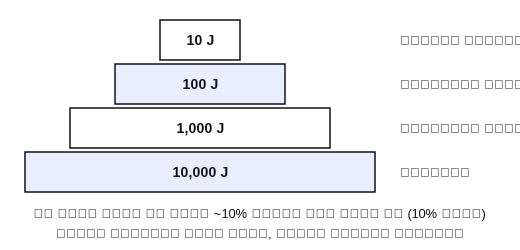
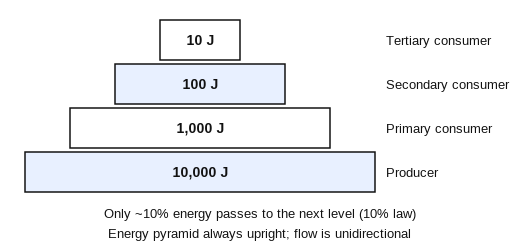
(a) Energy flow from producers to consumers is unidirectional
(b) Energy pyramid can never be inverted
(c) Transfer of energy follows the 1% law
Choose the correct answer from the options given below :
निम्नलिखित में से कौन-से कथन सही हैं?
(a) उत्पादकों से उपभोक्ताओं की ओर ऊर्जा प्रवाह एकदिशीय होता है
(b) ऊर्जा पिरामिड कभी उल्टा नहीं हो सकता
(c) ऊर्जा का स्थानांतरण 1% नियम का पालन करता है
नीचे दिए गए विकल्पों में से सही उत्तर चुनिए :
  1. A(a), (b) and (c)(a), (b) और (c)
  2. B(a) and (b) onlyकेवल (a) और (b)
  3. C(a) and (c) onlyकेवल (a) और (c)
  4. D(b) and (c) onlyकेवल (b) और (c)
Show answer

Concept: Energy flows one way (sun → producers → consumers) and only about 10% of energy passes from one trophic level to the next (Lindeman's 10 per cent law).

  1. (a) Correct – energy is not recycled; flow is unidirectional.
  2. (b) Correct – energy pyramid is always upright because energy is lost as heat at each step.
  3. (c) Incorrect – energy transfer follows the 10% law (1% is roughly the share of incident sunlight/PAR captured in photosynthesis, not trophic transfer).
  4. Hence (a) and (b) only.

Short trick: Energy: "one way, always upright, ten per cent".

Answer: (B) (a) and (b) only

अवधारणा: ऊर्जा एक दिशा में प्रवाहित होती है (सूर्य → उत्पादक → उपभोक्ता) और एक पोषी स्तर से अगले में केवल लगभग 10% ऊर्जा जाती है (लिंडमैन का 10 प्रतिशत नियम)।

  1. (a) सही – ऊर्जा का पुनर्चक्रण नहीं होता; प्रवाह एकदिशीय है।
  2. (b) सही – प्रत्येक चरण पर ऊष्मा के रूप में ऊर्जा क्षय के कारण ऊर्जा पिरामिड सदैव सीधा होता है।
  3. (c) गलत – ऊर्जा स्थानांतरण 10% नियम का पालन करता है (1% लगभग आपतित सूर्य प्रकाश/PAR का प्रकाश-संश्लेषण में ग्रहण किया गया अंश है, पोषी स्थानांतरण नहीं)।
  4. अतः केवल (a) और (b)।

शॉर्ट ट्रिक: ऊर्जा: "एक दिशा, सदा सीधा पिरामिड, दस प्रतिशत"।

उत्तर: (B) केवल (a) और (b)

NEET UGBiologyEcosystem – energy flow and pyramidsNEET UG 2026 · 21 Jun Shift 1 →
Q4164.
Which of the following statements is correct about Plasmodium?
Plasmodium के बारे में निम्नलिखित में से कौन-सा कथन सही है?
  1. AReproduces sexually in liver cellsयकृत कोशिकाओं में लैंगिक जनन करता है
  2. BReproduces sexually in RBCsRBC में लैंगिक जनन करता है
  3. CGametocytes develop in mosquito gutयुग्मकजनक (gametocytes) मच्छर की आहारनाल में विकसित होते हैं
  4. DFertilization takes place in mosquito gutनिषेचन मच्छर की आहारनाल में होता है
Show answer

Concept: NCERT life cycle: in humans Plasmodium multiplies asexually (liver cells, then RBCs) and forms gametocytes in RBCs; in the female Anopheles fertilisation and development take place in the stomach (gut) wall.

  1. (A), (B) Wrong – in liver cells and RBCs the parasite reproduces asexually.
  2. (C) Wrong – gametocytes develop in human RBCs; the mosquito takes them up with blood.
  3. (D) Correct – gametes fuse (fertilisation) in the mosquito gut; zygote → oocyst → sporozoites → salivary glands.

Short trick: Human = intermediate host (asexual); mosquito = definitive host (sexual phase). "Sex in the stomach of the mosquito."

Answer: (D) Fertilization takes place in mosquito gut

अवधारणा: NCERT जीवन चक्र: मनुष्य में Plasmodium अलैंगिक रूप से गुणन करता है (यकृत कोशिकाएँ, फिर RBC) तथा RBC में युग्मकजनक बनाता है; मादा Anopheles में निषेचन और विकास आमाशय (आहारनाल) की भित्ति में होता है।

  1. (A), (B) गलत – यकृत कोशिकाओं और RBC में परजीवी अलैंगिक जनन करता है।
  2. (C) गलत – युग्मकजनक मनुष्य की RBC में विकसित होते हैं; मच्छर उन्हें रक्त के साथ ग्रहण करता है।
  3. (D) सही – युग्मकों का संलयन (निषेचन) मच्छर की आहारनाल में होता है; युग्मनज → ऊसिस्ट → स्पोरोज़ॉइट → लार ग्रंथियाँ।

शॉर्ट ट्रिक: मनुष्य = मध्यस्थ परपोषी (अलैंगिक); मच्छर = निश्चित परपोषी (लैंगिक प्रावस्था)। "लैंगिक जनन मच्छर के पेट में"।

उत्तर: (D) निषेचन मच्छर की आहारनाल में होता है

NEET UGBiologyHuman health and disease – malariaNEET UG 2026 · 21 Jun Shift 1 →
Q4165.
Match List-I with List-II.
List-IList-II
A. TransformationI. Restriction enzyme
B. Cloning siteII. Transfer DNA to host bacteria
C. SelectionIII. Replication
D. OriIV. Antibiotic

Choose the correct answer from the options given below :
सूची-I का सूची-II से मिलान कीजिए।
सूची-Iसूची-II
A. रूपांतरणI. प्रतिबंधन एंज़ाइम
B. क्लोनिंग स्थलII. परपोषी जीवाणु में DNA का स्थानांतरण
C. चयनIII. प्रतिकृतीयन
D. OriIV. प्रतिजैविक

नीचे दिए गए विकल्पों में से सही उत्तर चुनिए :
  1. AA-II, B-I, C-IV, D-III
  2. BA-I, B-II, C-IV, D-III
  3. CA-III, B-IV, C-II, D-I
  4. DA-IV, B-I, C-III, D-II
Show answer

Concept: Features of a cloning vector (e.g. pBR322): ori, selectable marker, cloning (recognition) sites.

  1. A. Transformation – procedure by which DNA is introduced into a host bacterium → II.
  2. B. Cloning site – recognition site for a restriction enzyme where foreign DNA is ligated → I.
  3. C. Selection – selectable markers such as antibiotic-resistance genes (ampR, tetR) → IV.
  4. D. Ori – origin of replication, where replication starts and controls copy number → III.

Short trick: Ori = Origin of Replication; selection = antibiotic; once D-III and C-IV are fixed only (A) and (B) remain – transformation is entry of DNA → (A).

Answer: (A) A-II, B-I, C-IV, D-III

अवधारणा: क्लोनिंग वाहक (जैसे pBR322) के लक्षण: ori, वरण योग्य चिह्नक, क्लोनिंग (पहचान) स्थल।

  1. A. रूपांतरण – वह प्रक्रिया जिससे DNA परपोषी जीवाणु में प्रविष्ट कराया जाता है → II।
  2. B. क्लोनिंग स्थल – प्रतिबंधन एंज़ाइम का पहचान स्थल जहाँ विजातीय DNA जोड़ा जाता है → I।
  3. C. चयन – प्रतिजैविक-प्रतिरोधी जीन (ampR, tetR) जैसे वरण योग्य चिह्नक → IV।
  4. D. Ori – प्रतिकृतीयन का उद्भव स्थल, जहाँ से प्रतिकृतीयन शुरू होता है और प्रति संख्या नियंत्रित होती है → III।

शॉर्ट ट्रिक: Ori = प्रतिकृतीयन का उद्भव; चयन = प्रतिजैविक; D-III और C-IV तय होने पर केवल (A) और (B) बचते हैं – रूपांतरण = DNA का प्रवेश → (A)।

उत्तर: (A) A-II, B-I, C-IV, D-III

NEET UGBiologyBiotechnology – cloning vectorsNEET UG 2026 · 21 Jun Shift 1 →
Q4166.
At any instant of time t, the displacement of any particle is given by 2t−1 (SI unit) under the influence of force of 5 N. The value of instantaneous power is (in SI unit):
किसी भी क्षण t पर, 5 N के बल के प्रभाव में किसी कण का विस्थापन 2t−1 (SI मात्रक) द्वारा दिया जाता है। तात्क्षणिक शक्ति (instantaneous power) का मान (SI मात्रक में) है:
  1. A5
  2. B7
  3. C6
  4. D10
Show answer

Concept: Instantaneous power P=F→⋅v→=Fv (force along the motion).

  1. x=2t−1⇒v=dxdt=2 m s−1 (constant).
  2. P=Fv=5×2=10 W.

Short trick: Only the coefficient of t matters (the –1 is just the starting position): P = F × (coefficient of t).

Answer: (D) 10

अवधारणा: तात्क्षणिक शक्ति P=F→⋅v→=Fv (बल गति की दिशा में)।

  1. x=2t−1⇒v=dxdt=2 m s−1 (नियत)।
  2. P=Fv=5×2=10 W।

शॉर्ट ट्रिक: केवल t का गुणांक मायने रखता है (–1 केवल प्रारंभिक स्थिति है): P = F × (t का गुणांक)।

उत्तर: (D) 10

NEET UGPhysicsWork, energy and power – instantaneous powerNEET UG 2024 · 5 May Shift 1 →
Q4167.
If the monochromatic source in Young’s double slit experiment is replaced by white light, then
यदि यंग के द्विझिरी प्रयोग (YDSE) में एकवर्णी (monochromatic) स्रोत को श्वेत प्रकाश से प्रतिस्थापित कर दिया जाए, तो
  1. AThere will be a central dark fringe surrounded by a few coloured fringesकेंद्र में एक अदीप्त (dark) फ्रिंज होगी जिसके चारों ओर कुछ रंगीन फ्रिंजें होंगी
  2. BThere will be a central bright fringe surrounded by a few coloured fringes.केंद्र में एक दीप्त (bright) फ्रिंज होगी जिसके चारों ओर कुछ रंगीन फ्रिंजें होंगी।
  3. CAll bright fringes will be of equal widthसभी दीप्त फ्रिंजों की चौड़ाई समान होगी
  4. DInterference pattern will disappear.व्यतिकरण पैटर्न लुप्त हो जाएगा।
Show answer

Concept: At the centre the path difference is zero for every wavelength, so all colours form a maximum there; fringe width β=λDd depends on λ.

  1. Central point: Δx = 0 for all colours → all overlap → central white bright fringe (A wrong).
  2. Away from the centre, maxima of different colours separate (violet closest, red farthest) → a few coloured fringes, then uniform illumination.
  3. Since β ∝ λ, widths differ (C wrong); a pattern is still seen near the centre (D wrong).

Short trick: White light YDSE = “white centre, coloured edges, washes out quickly”.

Answer: (B) Central bright fringe with a few coloured fringes

अवधारणा: केंद्र पर प्रत्येक तरंगदैर्ध्य के लिए पथांतर शून्य होता है, अतः वहाँ सभी रंगों का उच्चिष्ठ बनता है; फ्रिंज चौड़ाई β=λDd, λ पर निर्भर है।

  1. केंद्रीय बिंदु: सभी रंगों के लिए Δx = 0 → सभी अध्यारोपित → केंद्रीय श्वेत दीप्त फ्रिंज (A गलत)।
  2. केंद्र से दूर विभिन्न रंगों के उच्चिष्ठ अलग हो जाते हैं (बैंगनी सबसे पास, लाल सबसे दूर) → कुछ रंगीन फ्रिंजें, फिर एकसमान प्रकाश।
  3. चूँकि β ∝ λ, चौड़ाइयाँ भिन्न होंगी (C गलत); केंद्र के पास पैटर्न अब भी दिखता है (D गलत)।

शॉर्ट ट्रिक: श्वेत प्रकाश YDSE = “केंद्र श्वेत, किनारे रंगीन, जल्दी धुंधला”।

उत्तर: (B) केंद्रीय दीप्त फ्रिंज तथा कुछ रंगीन फ्रिंजें

NEET UGPhysicsWave optics – YDSE with white lightNEET UG 2024 · 5 May Shift 1 →
Q4168.
82290X α​ Y e+​ Z β−​ P e−​ Q
In the nuclear emission stated above, the mass number and atomic number of the product Q respectively, are:
82290X α​ Y e+​ Z β−​ P e−​ Q
ऊपर दिए गए नाभिकीय उत्सर्जन में उत्पाद Q की द्रव्यमान संख्या और परमाणु क्रमांक क्रमशः हैं:
  1. A286, 80
  2. B288, 82
  3. C286, 81
  4. D280, 81
Show answer

Concept: α-emission: A − 4, Z − 2; positron (e+, β⁺) emission: Z − 1; electron (e−, β⁻) emission: Z + 1; β-emissions do not change A.

  1. α: 82290X→80286Y
  2. e+: 80286Y→79286Z
  3. β−: 79286Z→80286P
  4. e− (another β⁻): 80286P→81286Q

Short trick: Only α changes A (290 − 4 = 286, so B and D go). Z: 82 − 2 − 1 + 1 + 1 = 81.

Answer: (C) 286, 81

अवधारणा: α-उत्सर्जन: A − 4, Z − 2; पॉज़िट्रॉन (e+, β⁺) उत्सर्जन: Z − 1; इलेक्ट्रॉन (e−, β⁻) उत्सर्जन: Z + 1; β-उत्सर्जन में A नहीं बदलता।

  1. α: 82290X→80286Y
  2. e+: 80286Y→79286Z
  3. β−: 79286Z→80286P
  4. e− (एक और β⁻): 80286P→81286Q

शॉर्ट ट्रिक: केवल α से A बदलता है (290 − 4 = 286, अतः B और D हटे)। Z: 82 − 2 − 1 + 1 + 1 = 81।

उत्तर: (C) 286, 81

NEET UGPhysicsNuclei – radioactive decay chainNEET UG 2024 · 5 May Shift 1 →
Q4169.
Match List – I with List – II.
List – I (Material)List – II (Susceptibility) (χ)
A. DiamagneticI. χ=0
B. FerromagneticII. 0>χ≥−1
C. ParamagneticIII. χ>>1
D. Non-magneticIV. 0<χ<ε (a small positive number)
Choose the correct answer from the options given below
सूची – I का सूची – II से मिलान कीजिए।
सूची – I (पदार्थ)सूची – II (प्रवृत्ति / susceptibility) (χ)
A. प्रतिचुंबकीय (Diamagnetic)I. χ=0
B. लौहचुंबकीय (Ferromagnetic)II. 0>χ≥−1
C. अनुचुंबकीय (Paramagnetic)III. χ>>1
D. अचुंबकीय (Non-magnetic)IV. 0<χ<ε (एक छोटी धनात्मक संख्या)
नीचे दिए गए विकल्पों में से सही उत्तर चुनिए
  1. AA – II, B – I, C – III, D – IV
  2. BA – III, B – II, C – I, D – IV
  3. CA – IV, B – III, C – II, D – I
  4. DA – II, B – III, C – IV, D – I
Show answer

Concept: Diamagnetic: small negative χ (−1 ≤ χ < 0, −1 for a superconductor); paramagnetic: small positive χ; ferromagnetic: very large positive χ; non-magnetic: χ = 0.

  1. A Diamagnetic → 0>χ≥−1 → II
  2. B Ferromagnetic → χ>>1 → III
  3. C Paramagnetic → 0<χ<ε → IV
  4. D Non-magnetic → χ=0 → I

Short trick: Sign of χ: Dia = minus, Para = plus (small), Ferro = PLUS (huge). A–II alone leaves only (A) and (D); B–III picks (D).

Answer: (D) A – II, B – III, C – IV, D – I

अवधारणा: प्रतिचुंबकीय: छोटा ऋणात्मक χ (−1 ≤ χ < 0, अतिचालक के लिए −1); अनुचुंबकीय: छोटा धनात्मक χ; लौहचुंबकीय: बहुत बड़ा धनात्मक χ; अचुंबकीय: χ = 0।

  1. A प्रतिचुंबकीय → 0>χ≥−1 → II
  2. B लौहचुंबकीय → χ>>1 → III
  3. C अनुचुंबकीय → 0<χ<ε → IV
  4. D अचुंबकीय → χ=0 → I

शॉर्ट ट्रिक: χ का चिह्न: प्रति = ऋण, अनु = धन (छोटा), लौह = धन (बहुत बड़ा)। A–II से केवल (A) व (D) बचते हैं; B–III से (D)।

उत्तर: (D) A – II, B – III, C – IV, D – I

NEET UGPhysicsMagnetism and matter – magnetic susceptibilityNEET UG 2024 · 5 May Shift 1 →
Q4170.
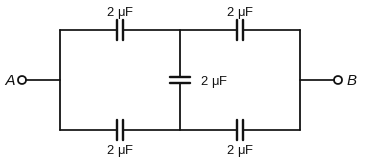
In the following circuit, the equivalent capacitance between terminal A and terminal B is:
निम्नलिखित परिपथ में टर्मिनल A और टर्मिनल B के बीच तुल्य धारिता है:
  1. A1 μF
  2. B0.5 μF
  3. C4 μF
  4. D2 μF
Show answer

Concept: A capacitor bridge is balanced when C1C2=C3C4; then the middle capacitor has no charge and can be removed.

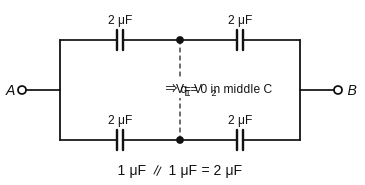
  1. All four arms are 2 μF → ratio 2/2 = 2/2 → bridge balanced, middle 2 μF drops out.
  2. Upper branch: 2 μF and 2 μF in series = 1 μF; lower branch = 1 μF.
  3. Two branches in parallel: CAB=1+1=2 μF.

Short trick: Symmetric bridge of identical capacitors: CAB = C (same as one capacitor).

Answer: (D) 2 μF

अवधारणा: संधारित्र सेतु तब संतुलित होता है जब C1C2=C3C4; तब बीच वाले संधारित्र पर कोई आवेश नहीं होता और उसे हटा सकते हैं।

  1. चारों भुजाएँ 2 μF → अनुपात 2/2 = 2/2 → सेतु संतुलित, बीच वाला 2 μF हट जाता है।
  2. ऊपरी शाखा: 2 μF व 2 μF श्रेणी में = 1 μF; निचली शाखा = 1 μF।
  3. दोनों शाखाएँ समांतर में: CAB=1+1=2 μF।

शॉर्ट ट्रिक: समान संधारित्रों का सममित सेतु: CAB = C (एक संधारित्र के बराबर)।

उत्तर: (D) 2 μF

NEET UGPhysicsCapacitance – balanced Wheatstone bridgeNEET UG 2024 · 5 May Shift 1 →
Q4171.
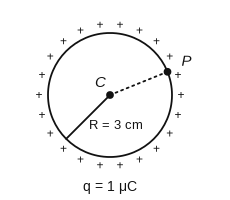
A thin spherical shell is charged by some source. The potential difference between the two points C and P (in V) shown in the figure is
(Take 14πϵ0=9×10⁹ SI units)
एक पतले गोलीय कोश को किसी स्रोत द्वारा आवेशित किया गया है। चित्र में दर्शाए गए दो बिंदुओं C और P के बीच विभवांतर (V में) है
(14πϵ0=9×10⁹ SI मात्रक लीजिए)
  1. A1×105
  2. B0.5×105
  3. CZeroशून्य
  4. D3×105
Show answer

Concept: For a charged conducting/thin shell, all charge sits on the surface; E = 0 inside, so the potential is the same at every point inside and on the shell.

  1. Inside the shell E=0⇒dVdr=0 → V is constant from the centre C up to the surface.
  2. P lies on the shell and C is the centre → VC=VP=kqR=9×109×10−60.03=3×10⁵ V each.
  3. VC−VP=0.

Short trick: “Inside a shell, potential is flat” – any two points inside/on the shell: ΔV = 0. Option (D) is the trap value of V itself.

Answer: (C) Zero

अवधारणा: आवेशित पतले कोश पर संपूर्ण आवेश सतह पर रहता है; अंदर E = 0, अतः कोश के अंदर और सतह पर प्रत्येक बिंदु पर विभव समान होता है।

  1. कोश के अंदर E=0⇒dVdr=0 → केंद्र C से सतह तक V नियत है।
  2. P कोश पर है और C केंद्र है → VC=VP=kqR=9×109×10−60.03=3×10⁵ V (प्रत्येक)।
  3. VC−VP=0।

शॉर्ट ट्रिक: “कोश के अंदर विभव समतल (नियत)” – अंदर/सतह के किन्हीं दो बिंदुओं पर ΔV = 0। विकल्प (D) स्वयं V का मान है – जाल।

उत्तर: (C) शून्य

NEET UGPhysicsElectrostatic potential – charged spherical shellNEET UG 2024 · 5 May Shift 1 →
Q4172.
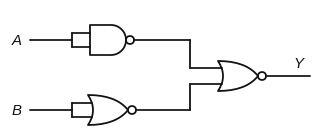
The output (Y) of the given logic gate is similar to the output of an/a:
दिए गए लॉजिक गेट परिपथ का निर्गत (Y) किसके निर्गत के समान है?
  1. ANOR gateNOR गेट
  2. BOR gateOR गेट
  3. CAND gateAND गेट
  4. DNAND gateNAND गेट
Show answer

Concept: A NAND or NOR gate with its inputs joined acts as a NOT gate; De Morgan: A¯+B¯―=A⋅B.

  1. First NAND (inputs tied to A): output A¯. NOR (inputs tied to B): output B¯.
  2. Final NOR: Y=A¯+B¯―.
  3. By De Morgan: Y=A¯¯⋅B¯¯=A⋅B → AND gate.

Short trick: NOR with inverted inputs = AND; NAND with inverted inputs = OR (“bubbles cancel, symbol flips”).

Answer: (C) AND gate

अवधारणा: जिस NAND या NOR गेट के निवेश जोड़ दिए जाएँ वह NOT गेट की तरह कार्य करता है; डी मॉर्गन: A¯+B¯―=A⋅B।

  1. पहला NAND (दोनों निवेश A से जुड़े): निर्गत A¯। NOR (दोनों निवेश B से जुड़े): निर्गत B¯।
  2. अंतिम NOR: Y=A¯+B¯―।
  3. डी मॉर्गन से: Y=A¯¯⋅B¯¯=A⋅B → AND गेट।

शॉर्ट ट्रिक: उलटे (inverted) निवेशों वाला NOR = AND; उलटे निवेशों वाला NAND = OR (“बबल कटे, चिह्न बदले”)।

उत्तर: (C) AND गेट

NEET UGPhysicsSemiconductor electronics – logic gatesNEET UG 2024 · 5 May Shift 1 →
Q4173.
An unpolarized light beam strikes a glass surface at Brewster’s angle. Then
एक अध्रुवित प्रकाश किरणपुंज काँच की सतह पर ब्रूस्टर कोण पर आपतित होता है। तब
  1. AThe refracted light will be completely polarisedअपवर्तित प्रकाश पूर्णतः ध्रुवित होगा
  2. BBoth the reflected and refracted light will be completely polarisedपरावर्तित और अपवर्तित दोनों प्रकाश पूर्णतः ध्रुवित होंगे
  3. CThe reflected light will be completely polarized but the refracted light will be partially polarizedपरावर्तित प्रकाश पूर्णतः ध्रुवित होगा परंतु अपवर्तित प्रकाश आंशिक रूप से ध्रुवित होगा
  4. DThe reflected light will be partially polarized.परावर्तित प्रकाश आंशिक रूप से ध्रुवित होगा।
Show answer

Concept: At Brewster’s angle (tan⁡iB=μ) the reflected and refracted rays are perpendicular; the component of E in the plane of incidence is not reflected at all.

  1. Reflected light contains only the vibration perpendicular to the plane of incidence → completely (plane) polarised.
  2. Refracted light carries all of the parallel component plus the rest of the perpendicular one → only partially polarised.
  3. So (A), (B) and (D) are wrong.

Short trick: Brewster: “Reflected = Fully, Refracted = Partly”. Also iB+r=90∘.

Answer: (C) Reflected completely polarised, refracted partially polarised

अवधारणा: ब्रूस्टर कोण (tan⁡iB=μ) पर परावर्तित और अपवर्तित किरणें परस्पर लंबवत होती हैं; आपतन तल में E का घटक बिल्कुल परावर्तित नहीं होता।

  1. परावर्तित प्रकाश में केवल आपतन तल के लंबवत कंपन होते हैं → पूर्णतः (समतल) ध्रुवित।
  2. अपवर्तित प्रकाश में संपूर्ण समांतर घटक तथा लंबवत घटक का शेष भाग होता है → केवल आंशिक ध्रुवित।
  3. अतः (A), (B) और (D) गलत हैं।

शॉर्ट ट्रिक: ब्रूस्टर: “परावर्तित = पूर्ण, अपवर्तित = आंशिक”। साथ ही iB+r=90∘।

उत्तर: (C) परावर्तित पूर्णतः ध्रुवित, अपवर्तित आंशिक ध्रुवित

NEET UGPhysicsWave optics – polarisation by reflection (Brewster)NEET UG 2024 · 5 May Shift 1 →
Q4174.
A tightly wound 100 turns coil of radius 10 cm carries a current of 7 A. The magnitude of the magnetic field at the centre of the coil is (Take permeability of free space as 4π×10−7 SI units):
10 cm त्रिज्या की 100 फेरों वाली एक कसकर लपेटी गई कुंडली में 7 A धारा प्रवाहित है। कुंडली के केंद्र पर चुंबकीय क्षेत्र का परिमाण है (मुक्त आकाश की चुंबकशीलता 4π×10−7 SI मात्रक लीजिए):
  1. A4.4 T
  2. B4.4 mT
  3. C44 T
  4. D44 mT
Show answer

Concept: Field at the centre of a circular coil of N turns: B=μ0NI2R.

  1. B=4π×10−7×100×72×0.1
  2. =1400π×10−6=4.398×10⁻³ T
  3. ≈4.4×10⁻³ T = 4.4 mT

Short trick: μ0NI/2R=2π×10−7⋅NI/R = 2π × 10⁻⁷ × 700/0.1 = 1400π × 10⁻⁶ ≈ 4.4 mT.

Answer: (B) 4.4 mT

अवधारणा: N फेरों वाली वृत्ताकार कुंडली के केंद्र पर क्षेत्र: B=μ0NI2R।

  1. B=4π×10−7×100×72×0.1
  2. =1400π×10−6=4.398×10⁻³ T
  3. ≈4.4×10⁻³ T = 4.4 mT

शॉर्ट ट्रिक: μ0NI/2R=2π×10−7⋅NI/R = 2π × 10⁻⁷ × 700/0.1 = 1400π × 10⁻⁶ ≈ 4.4 mT।

उत्तर: (B) 4.4 mT

NEET UGPhysicsMoving charges and magnetism – field at centre of a coilNEET UG 2024 · 5 May Shift 1 →
Q4175.

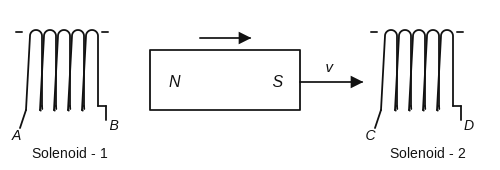
In the above diagram, a strong bar magnet is moving towards solenoid – 2 from solenoid – 1. The direction of induced current in solenoid – 1 and that in solenoid – 2, respectively, are through the directions:

उपर्युक्त चित्र में एक प्रबल छड़ चुंबक परिनालिका – 1 से परिनालिका – 2 की ओर गतिमान है। परिनालिका – 1 तथा परिनालिका – 2 में प्रेरित धारा की दिशाएँ क्रमशः हैं:
  1. ABA and CDBA तथा CD
  2. BAB and CDAB तथा CD
  3. CBA and DCBA तथा DC
  4. DAB and DCAB तथा DC
Show answer

Concept: Lenz’s law: the induced current makes a pole that opposes the motion – a receding pole is attracted (opposite pole formed), an approaching pole is repelled (like pole formed).

  1. Solenoid – 1: the N-end of the magnet moves away from its right face → that face must become an S-pole (to attract the magnet back) → seen from the magnet, current is clockwise.
  2. Solenoid – 2: the S-end approaches its left face → that face must also become an S-pole (to repel) → seen from the magnet, current is again clockwise.
  3. Both coils are viewed from opposite ends (one from its right end, the other from its left end) with the same winding, so the same “clockwise” sense means opposite terminal order: current flows A → B in solenoid – 1 and D → C in solenoid – 2.

Short trick: Faces nearest the magnet both become S here (N leaving → S, S coming → S); “S face = clockwise seen from outside”. Then read terminals off the winding.

Answer: (D) AB and DC

अवधारणा: लेंज़ का नियम: प्रेरित धारा ऐसा ध्रुव बनाती है जो गति का विरोध करे – दूर जाते ध्रुव को आकर्षित करती है (विपरीत ध्रुव बनता है), पास आते ध्रुव को प्रतिकर्षित करती है (समान ध्रुव बनता है)।

  1. परिनालिका – 1: चुंबक का N-सिरा इसके दाएँ फलक से दूर जा रहा है → यह फलक S-ध्रुव बनेगा (चुंबक को वापस खींचने हेतु) → चुंबक की ओर से देखने पर धारा दक्षिणावर्त।
  2. परिनालिका – 2: चुंबक का S-सिरा इसके बाएँ फलक की ओर आ रहा है → यह फलक भी S-ध्रुव बनेगा (प्रतिकर्षण हेतु) → चुंबक की ओर से देखने पर धारा फिर दक्षिणावर्त।
  3. दोनों कुंडलियाँ समान लपेटन की हैं पर विपरीत सिरों से देखी जा रही हैं (एक दाएँ सिरे से, दूसरी बाएँ सिरे से), अतः समान “दक्षिणावर्त” का अर्थ टर्मिनलों का विपरीत क्रम है: परिनालिका – 1 में धारा A → B तथा परिनालिका – 2 में D → C।

शॉर्ट ट्रिक: यहाँ चुंबक के निकटतम दोनों फलक S बनते हैं (N जा रहा → S, S आ रहा → S); “S फलक = बाहर से देखने पर दक्षिणावर्त”। फिर लपेटन से टर्मिनल पढ़ें।

उत्तर: (D) AB तथा DC

NEET UGPhysicsElectromagnetic induction – Lenz’s lawNEET UG 2024 · 5 May Shift 1 →
Q4176.
Two bodies A and B of same mass undergo completely inelastic one-dimensional collision. The body A moves with velocity v1 while body B is at rest before collision. The velocity of the system after collision is v2. The ratio v1:v2 is:
समान द्रव्यमान की दो वस्तुएँ A और B पूर्णतः अप्रत्यास्थ एकविमीय संघट्ट करती हैं। संघट्ट से पहले वस्तु A वेग v1 से गतिमान है जबकि वस्तु B विरामावस्था में है। संघट्ट के बाद निकाय का वेग v2 है। अनुपात v1:v2 है:
  1. A2 : 1
  2. B4 : 1
  3. C1 : 4
  4. D1 : 2
Show answer

Concept: In a perfectly inelastic collision the bodies stick together; linear momentum is conserved.

  1. mv1+m(0)=(m+m)v2
  2. v2=v12
  3. v1:v2=2:1

Short trick: Equal masses, one at rest, sticking together → common velocity is half.

Answer: (A) 2 : 1

अवधारणा: पूर्णतः अप्रत्यास्थ संघट्ट में वस्तुएँ आपस में चिपक जाती हैं; रैखिक संवेग संरक्षित रहता है।

  1. mv1+m(0)=(m+m)v2
  2. v2=v12
  3. v1:v2=2:1

शॉर्ट ट्रिक: समान द्रव्यमान, एक विराम में, चिपक जाएँ → उभयनिष्ठ वेग आधा।

उत्तर: (A) 2 : 1

NEET UGPhysicsLaws of motion – perfectly inelastic collisionNEET UG 2024 · 5 May Shift 1 →
Q4177.
Given below are two statements: One is labelled as Assertion A and the other is labelled as Reason R.
Assertion A: The potential (V) at any axial point, at 2 m distance (r) from the centre of the dipole of dipole moment vector P→ of magnitude, 4×10⁻⁶ C m, is ±9×10³ V
(Take 14πϵ0=9×10⁹ SI units)
Reason R: V=±2P4πϵ0r2, where r is the distance of any axial point, situated at 2 m from the centre of the dipole.
In the light of the above statements, choose the correct answer from the options given below:
नीचे दो कथन दिए गए हैं: एक को अभिकथन A और दूसरे को कारण R कहा गया है।
अभिकथन A: द्विध्रुव आघूर्ण सदिश P→, जिसका परिमाण 4×10⁻⁶ C m है, वाले द्विध्रुव के केंद्र से 2 m दूरी (r) पर किसी अक्षीय बिंदु पर विभव (V) ±9×10³ V है
(14πϵ0=9×10⁹ SI मात्रक लीजिए)
कारण R: V=±2P4πϵ0r2, जहाँ r द्विध्रुव के केंद्र से 2 m पर स्थित किसी अक्षीय बिंदु की दूरी है।
उपर्युक्त कथनों के आलोक में नीचे दिए गए विकल्पों में से सही उत्तर चुनिए:
  1. ABoth A and R are true and R is NOT the correct explanation of A.A और R दोनों सत्य हैं तथा R, A की सही व्याख्या नहीं है।
  2. BA is true but R is falseA सत्य है परंतु R असत्य है
  3. CA is false but R is trueA असत्य है परंतु R सत्य है
  4. DBoth A and R are true and R is the correct explanation of A.A और R दोनों सत्य हैं तथा R, A की सही व्याख्या है।
Show answer

Concept: Potential of a short dipole: V=14πϵ0Pcos⁡θr2; on the axis θ = 0° or 180°, so V=±14πϵ0Pr2 (no factor 2).

  1. V=±9×109×4×10−622=±9×10³ V → A is true.
  2. R uses 2P4πϵ0r2 – the factor 2 belongs to the axial field E=2P4πϵ0r3, not to potential → R is false.
  3. (With R’s formula V would be ±1.8 × 10⁴ V, which contradicts A.)

Short trick: Dipole on axis: E has “2P/r³”, V has “P/r²”. Mixing them is the usual trap.

Answer: (B) A is true but R is false

अवधारणा: लघु द्विध्रुव का विभव: V=14πϵ0Pcos⁡θr2; अक्ष पर θ = 0° या 180°, अतः V=±14πϵ0Pr2 (गुणक 2 नहीं)।

  1. V=±9×109×4×10−622=±9×10³ V → A सत्य है।
  2. R में 2P4πϵ0r2 लिया है – गुणक 2 अक्षीय क्षेत्र E=2P4πϵ0r3 में आता है, विभव में नहीं → R असत्य है।
  3. (R के सूत्र से V = ±1.8 × 10⁴ V आता, जो A के विपरीत है।)

शॉर्ट ट्रिक: अक्ष पर द्विध्रुव: E में “2P/r³”, V में “P/r²”। इन्हें मिलाना सामान्य जाल है।

उत्तर: (B) A सत्य है परंतु R असत्य है

NEET UGPhysicsElectric dipole – axial potential (Assertion–Reason)NEET UG 2024 · 5 May Shift 1 →
Q4178.
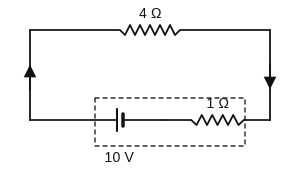
The terminal voltage of the battery, whose emf is 10 V and internal resistance 1 Ω, when connected through an external resistance of 4 Ω as shown in the figure is:
जिस बैटरी का विद्युत वाहक बल (emf) 10 V तथा आंतरिक प्रतिरोध 1 Ω है, उसे चित्रानुसार 4 Ω के बाह्य प्रतिरोध से जोड़ने पर उसकी टर्मिनल वोल्टता है:
  1. A6 V
  2. B8 V
  3. C10 V
  4. D4 V
Show answer

Concept: I=εR+r and terminal voltage V=ε−Ir=IR (while discharging).

  1. I=104+1=2 A
  2. V=ε−Ir=10−2×1=8 V
  3. Check: V=IR=2×4=8 V.

Short trick: Voltage divides in ratio of resistances: V = ε·R/(R + r) = 10 × 4/5 = 8 V.

Answer: (B) 8 V

अवधारणा: I=εR+r तथा टर्मिनल वोल्टता V=ε−Ir=IR (निरावेशन के समय)।

  1. I=104+1=2 A
  2. V=ε−Ir=10−2×1=8 V
  3. जाँच: V=IR=2×4=8 V।

शॉर्ट ट्रिक: वोल्टता प्रतिरोधों के अनुपात में बँटती है: V = ε·R/(R + r) = 10 × 4/5 = 8 V।

उत्तर: (B) 8 V

NEET UGPhysicsCurrent electricity – terminal voltageNEET UG 2024 · 5 May Shift 1 →
Q4179.
A particle moving with uniform speed in a circular path maintains:
वृत्तीय पथ पर एकसमान चाल से गतिमान कोई कण बनाए रखता है:
  1. AConstant accelerationनियत त्वरण
  2. BConstant velocity but varying accelerationनियत वेग परंतु परिवर्ती त्वरण
  3. CVarying velocity and varying accelerationपरिवर्ती वेग और परिवर्ती त्वरण
  4. DConstant velocity.नियत वेग।
Show answer

Concept: In uniform circular motion speed is constant but the velocity is always tangential and the acceleration v2r always points to the centre.

  1. Velocity direction keeps turning → velocity varies (B, D wrong).
  2. Centripetal acceleration has constant magnitude but rotating direction → acceleration varies (A wrong).
  3. Hence both velocity and acceleration vary.

Short trick: Vectors change if only their direction changes. In UCM only the magnitudes (speed, v2/r) are constant.

Answer: (C) Varying velocity and varying acceleration

अवधारणा: एकसमान वृत्तीय गति में चाल नियत रहती है परंतु वेग सदैव स्पर्शरेखीय होता है और त्वरण v2r सदैव केंद्र की ओर होता है।

  1. वेग की दिशा लगातार बदलती है → वेग परिवर्ती (B, D गलत)।
  2. अभिकेंद्र त्वरण का परिमाण नियत पर दिशा घूमती है → त्वरण परिवर्ती (A गलत)।
  3. अतः वेग और त्वरण दोनों परिवर्ती हैं।

शॉर्ट ट्रिक: केवल दिशा बदलने पर भी सदिश बदल जाता है। UCM में केवल परिमाण (चाल, v2/r) नियत हैं।

उत्तर: (C) परिवर्ती वेग और परिवर्ती त्वरण

NEET UGPhysicsMotion in a plane – uniform circular motionNEET UG 2024 · 5 May Shift 1 →
Q4180.
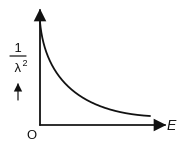
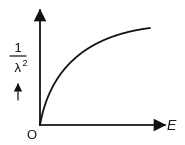
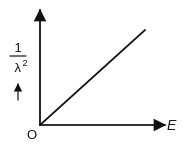
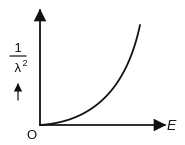
The graph which shows the variation of (1λ2) and its kinetic energy, E is (where λ is de Broglie wavelength of a free particle):
वह ग्राफ जो (1λ2) तथा गतिज ऊर्जा E के बीच परिवर्तन दर्शाता है (जहाँ λ किसी मुक्त कण की दे ब्रॉग्ली तरंगदैर्ध्य है):
  1. A
  2. B
  3. C
  4. D
Show answer

Concept: λ=hp=h2mE for a free (non-relativistic) particle.

  1. λ2=h22mE⇒1λ2=2mh2E
  2. This is of the form y = kx → a straight line through the origin with positive slope.
  3. (A) is a 1/x-type curve, (B) a √x-type curve, (D) an x²-type curve – all wrong.

Short trick: λ ∝ 1/√E → 1/λ² ∝ E: “square the relation and it becomes linear”.

Answer: (C) Straight line through the origin

अवधारणा: मुक्त (अनापेक्षिकीय) कण के लिए λ=hp=h2mE।

  1. λ2=h22mE⇒1λ2=2mh2E
  2. यह y = kx के रूप में है → मूलबिंदु से गुजरती धनात्मक ढाल वाली सरल रेखा।
  3. (A) 1/x प्रकार का वक्र, (B) √x प्रकार का वक्र, (D) x² प्रकार का वक्र – सभी गलत।

शॉर्ट ट्रिक: λ ∝ 1/√E → 1/λ² ∝ E: “संबंध का वर्ग करो, रैखिक बन जाएगा”।

उत्तर: (C) मूलबिंदु से गुजरती सरल रेखा

NEET UGPhysicsDual nature – de Broglie wavelength vs kinetic energyNEET UG 2024 · 5 May Shift 1 →