NEET UG · 2,240 questions

NEET UG 2015, 2016, 2017, 2018, 2019, 2020, 2021, 2022, 2023, 2024, 2025, 2026 PYQs

Real previous year questions, subject-wise. Try the question, then open the answer and the explanation in Hindi & English – free, no login.

Courses – airGurukul

2,240 questions.

Q661.
Given below are two statements:
Statement I: The forces generated by transpiration can lift a xylem-sized column of water over 130 meters height.
Statement II: Transpiration cools leaf surfaces sometimes 10 to 15 degrees, by evaporating cooling.
In the light of the above statements, choose the most appropriate answer from the options given below:
नीचे दो कथन दिए गए हैं:
कथन I: वाष्पोत्सर्जन द्वारा उत्पन्न बल जाइलम-आकार के जल स्तंभ को 130 मीटर से अधिक ऊँचाई तक उठा सकते हैं।
कथन II: वाष्पोत्सर्जन, वाष्पीकरणीय शीतलन (evaporative cooling) द्वारा पत्ती की सतहों को कभी-कभी 10 से 15 डिग्री तक ठंडा कर देता है।
उपर्युक्त कथनों के आलोक में, नीचे दिए गए विकल्पों में से सबसे उपयुक्त उत्तर चुनिए:
  1. ABoth Statement I and Statement II are correct.कथन I और कथन II दोनों सही हैं।
  2. BBoth Statement I and Statement II are not correct.कथन I और कथन II दोनों सही नहीं हैं।
  3. CStatement I is correct but Statement II is incorrect.कथन I सही है परंतु कथन II गलत है।
  4. DStatement I is incorrect but Statement II is correct.कथन I गलत है परंतु कथन II सही है।
Show answer

Concept: NCERT lists the purposes of transpiration: it creates transpiration pull, supplies water for photosynthesis, carries minerals and cools the leaf.

  1. Statement I – NCERT: "the forces generated by transpiration can create pressures sufficient to lift a xylem-sized column of water over 130 metres high" → correct.
  2. Statement II – NCERT: transpiration "cools leaf surfaces, sometimes 10 to 15 degrees, by evaporative cooling" → correct.
  3. So both statements are correct.

Short trick: Two numbers to remember from the transpiration page: 130 m lift and 10–15 degrees cooling – both are NCERT lines, so both statements are true.

Answer: (A) Both Statement I and Statement II are correct.

अवधारणा: NCERT में वाष्पोत्सर्जन के उद्देश्य दिए हैं: यह वाष्पोत्सर्जन खिंचाव बनाता है, प्रकाश-संश्लेषण के लिए जल देता है, खनिज पहुँचाता है और पत्ती को ठंडा करता है।

  1. कथन I – NCERT: "वाष्पोत्सर्जन द्वारा उत्पन्न बल इतना दाब बना सकते हैं कि जाइलम-आकार का जल स्तंभ 130 मीटर से अधिक ऊँचाई तक उठ सके" → सही।
  2. कथन II – NCERT: वाष्पोत्सर्जन वाष्पीकरणीय शीतलन द्वारा पत्ती की सतह को "कभी-कभी 10 से 15 डिग्री" तक ठंडा करता है → सही।
  3. अतः दोनों कथन सही हैं।

शॉर्ट ट्रिक: वाष्पोत्सर्जन वाले पृष्ठ की दो संख्याएँ याद रखें: 130 मीटर उठान और 10–15 डिग्री शीतलन – दोनों NCERT की पंक्तियाँ हैं, इसलिए दोनों कथन सत्य हैं।

उत्तर: (A) कथन I और कथन II दोनों सही हैं।
NEET UGBotanyTransport in plants – transpirationNEET UG 2023 · 7 May Shift 1
Q662.
In gene gun method used to introduce alien DNA into host cells, microparticles of _______ metal are used.
परपोषी कोशिकाओं में विजातीय DNA प्रवेश कराने के लिए प्रयुक्त जीन गन विधि में _______ धातु के सूक्ष्मकण प्रयोग किए जाते हैं।
  1. ACopperताँबा (Copper)
  2. BZincजस्ता (Zinc)
  3. CTungsten or goldटंगस्टन या स्वर्ण (Tungsten or gold)
  4. DSilverचाँदी (Silver)
Show answer

Concept: Biolistics (gene gun): cells are bombarded with high-velocity micro-particles of gold or tungsten coated with DNA.

  1. The metal must be dense (to penetrate the cell wall) and chemically inert (not toxic to the cell).
  2. Gold and tungsten satisfy both, so NCERT names them.
  3. Copper, zinc and silver are reactive/toxic to cells – not used.

Short trick: Gene Gun uses Gold (or Tungsten) – "G for G".

Answer: (C) Tungsten or gold

अवधारणा: बायोलिस्टिक्स (जीन गन): कोशिकाओं पर DNA से लेपित स्वर्ण या टंगस्टन के उच्च वेग वाले सूक्ष्मकणों की बौछार की जाती है।

  1. धातु भारी (कोशिका भित्ति भेदने हेतु) तथा रासायनिक रूप से निष्क्रिय (कोशिका के लिए विषैली न हो) होनी चाहिए।
  2. स्वर्ण और टंगस्टन दोनों शर्तें पूरी करते हैं, इसलिए NCERT इन्हीं का नाम देती है।
  3. ताँबा, जस्ता और चाँदी क्रियाशील/कोशिका के लिए विषैले हैं – प्रयोग नहीं होते।

शॉर्ट ट्रिक: जीन Gun में Gold (या टंगस्टन) – "G के साथ G"।

उत्तर: (C) टंगस्टन या स्वर्ण

NEET UGBotanyBiotechnology – gene transfer methodsNEET UG 2023 · 7 May Shift 1
Q663.
Given below are two statements: One is labelled as Assertion A and the other is labelled as Reason R:
Assertion A: The first stage of gametophyte in the life cycle of moss is protonema stage.
Reason R: Protonema develops directly from spores produced in capsule.
In the light of the above statements, choose the most appropriate answer from the options given below:
नीचे दो कथन दिए गए हैं: एक को अभिकथन (Assertion) A और दूसरे को कारण (Reason) R के रूप में अंकित किया गया है:
अभिकथन A: मॉस के जीवन चक्र में युग्मकोद्भिद् की प्रथम अवस्था प्रोटोनिमा (protonema) अवस्था है।
कारण R: प्रोटोनिमा, संपुटिका (capsule) में बने बीजाणुओं से सीधे विकसित होता है।
उपर्युक्त कथनों के आलोक में, नीचे दिए गए विकल्पों में से सबसे उपयुक्त उत्तर चुनिए:
  1. ABoth A and R are correct and R is the correct explanation of A.A और R दोनों सही हैं तथा R, A की सही व्याख्या है।
  2. BBoth A and R are correct but R is NOT the correct explanation of A.A और R दोनों सही हैं परंतु R, A की सही व्याख्या नहीं है।
  3. CA is correct but R is not correct.A सही है परंतु R सही नहीं है।
  4. DA is not correct but R is correct.A सही नहीं है परंतु R सही है।
Show answer

Concept: Moss gametophyte has two stages – protonema (first) and leafy stage (second); NCERT: "the first stage is the protonema stage, which develops directly from a spore".

  1. A is true – protonema is the first, creeping, green, branched filamentous stage.
  2. R is true – the haploid spore formed by meiosis in the capsule germinates straight into protonema.
  3. Because the spore germinates directly into protonema, protonema is the first gametophytic stage → R explains A.

Short trick: Moss: Spore → Protonema → Leafy stage (bud from protonema). The very first thing a spore makes is protonema.

Answer: (A) Both A and R are correct and R is the correct explanation of A.

अवधारणा: मॉस के युग्मकोद्भिद् की दो अवस्थाएँ होती हैं – प्रोटोनिमा (प्रथम) और पर्णिल अवस्था (द्वितीय); NCERT: "प्रथम अवस्था प्रोटोनिमा है, जो सीधे बीजाणु से विकसित होती है"।

  1. A सत्य – प्रोटोनिमा प्रथम, रेंगने वाली, हरी, शाखित तंतुमय अवस्था है।
  2. R सत्य – संपुटिका में अर्धसूत्रण से बना अगुणित बीजाणु सीधे प्रोटोनिमा में अंकुरित होता है।
  3. चूँकि बीजाणु सीधे प्रोटोनिमा बनाता है, इसलिए प्रोटोनिमा प्रथम युग्मकोद्भिद् अवस्था है → R, A की व्याख्या करता है।

शॉर्ट ट्रिक: मॉस: बीजाणु → प्रोटोनिमा → पर्णिल अवस्था (प्रोटोनिमा की कलिका से)। बीजाणु सबसे पहले प्रोटोनिमा ही बनाता है।

उत्तर: (A) A और R दोनों सही हैं तथा R, A की सही व्याख्या है।

NEET UGBotanyPlant kingdom – bryophytes (moss)NEET UG 2023 · 7 May Shift 1
Q664.
Unequivocal proof that DNA is the genetic material was first proposed by
DNA ही आनुवंशिक पदार्थ है, इसका असंदिग्ध (unequivocal) प्रमाण सर्वप्रथम किसने दिया?
  1. AFrederick Griffithफ्रेडरिक ग्रिफिथ
  2. BAlfred Hershey and Martha Chaseअल्फ्रेड हर्शे और मार्था चेज़
  3. CAvery, MacLeod and McCartyएवरी, मैकलॉयड और मैकार्टी
  4. DWilkins and Franklinविल्किन्स और फ्रैंकलिन
Show answer

Concept: NCERT: "The unequivocal proof that DNA is the genetic material came from the experiments of Alfred Hershey and Martha Chase (1952)" using radioactive bacteriophages.

  1. Hershey–Chase: phage with 32P-DNA gave radioactive bacteria; 35S-protein did not → DNA enters and is the genetic material.
  2. Griffith (1928) – only showed a "transforming principle"; did not identify it.
  3. Avery, MacLeod, McCarty (1933–44) – showed DNA is the transforming principle, but not all biologists were convinced.
  4. Wilkins and Franklin – X-ray diffraction data of DNA structure.

Short trick: Griffith = transformation; Avery = "it is DNA"; Hershey–Chase = unequivocal proof (Blender experiment).

Answer: (B) Alfred Hershey and Martha Chase

अवधारणा: NCERT: "DNA के आनुवंशिक पदार्थ होने का असंदिग्ध प्रमाण अल्फ्रेड हर्शे और मार्था चेज़ (1952) के प्रयोगों से मिला", जिन्होंने रेडियोधर्मी जीवाणुभोजी प्रयोग किए।

  1. हर्शे–चेज़: 32P-DNA वाले फेज से जीवाणु रेडियोधर्मी हुए; 35S-प्रोटीन वाले से नहीं → DNA भीतर जाता है और वही आनुवंशिक पदार्थ है।
  2. ग्रिफिथ (1928) – केवल "रूपांतरण सिद्धांत" दिखाया; उसकी पहचान नहीं की।
  3. एवरी, मैकलॉयड, मैकार्टी (1933–44) – दिखाया कि रूपांतरण कारक DNA है, पर सभी जीववैज्ञानिक आश्वस्त नहीं हुए।
  4. विल्किन्स और फ्रैंकलिन – DNA संरचना के X-किरण विवर्तन आँकड़े।

शॉर्ट ट्रिक: ग्रिफिथ = रूपांतरण; एवरी = "यह DNA है"; हर्शे–चेज़ = असंदिग्ध प्रमाण (ब्लेंडर प्रयोग)।

उत्तर: (B) अल्फ्रेड हर्शे और मार्था चेज़

NEET UGBotanyMolecular basis of inheritance – DNA as genetic materialNEET UG 2023 · 7 May Shift 1
Q665.
The thickness of ozone in a column of air in the atmosphere is measured in terms of:
वायुमंडल में वायु के एक स्तंभ में ओज़ोन की मोटाई किस इकाई में मापी जाती है?
  1. ADobson unitsडॉबसन इकाई (Dobson units)
  2. BDecibelsडेसिबल (Decibels)
  3. CDecameterडेकामीटर (Decameter)
  4. DKilobaseकिलोबेस (Kilobase)
Show answer

Concept: NCERT: "The thickness of the ozone in a column of air from the ground to the top of the atmosphere is measured in terms of Dobson units (DU)."

  1. Dobson unit – ozone column thickness → correct.
  2. Decibel – unit of sound (noise) level.
  3. Decameter – unit of length (10 m).
  4. Kilobase – length of nucleic acid (1000 bases).

Short trick: Dobson for the Dome of ozone; dB is for noise, kb for DNA.

Answer: (A) Dobson units

अवधारणा: NCERT: "भूमि से वायुमंडल के शीर्ष तक वायु के एक स्तंभ में ओज़ोन की मोटाई डॉबसन इकाई (DU) में मापी जाती है।"

  1. डॉबसन इकाई – ओज़ोन स्तंभ की मोटाई → सही।
  2. डेसिबल – ध्वनि (शोर) स्तर की इकाई।
  3. डेकामीटर – लंबाई की इकाई (10 m)।
  4. किलोबेस – न्यूक्लिक अम्ल की लंबाई (1000 क्षारक)।

शॉर्ट ट्रिक: ओज़ोन के Dome के लिए Dobson; dB शोर के लिए, kb DNA के लिए।

उत्तर: (A) डॉबसन इकाई

NEET UGBotanyEnvironmental issues – ozone depletionNEET UG 2023 · 7 May Shift 1
Q666.
In tissue experiments, leaf mesophyll cells are put in a culture medium to form callus. This phenomenon may be called as:
ऊतक प्रयोगों में, पत्ती की पर्णमध्योतक (mesophyll) कोशिकाओं को संवर्धन माध्यम में रखकर कैलस बनाया जाता है। इस परिघटना को कहा जा सकता है:
  1. ADifferentiationविभेदन (Differentiation)
  2. BDedifferentiationनिर्विभेदन (Dedifferentiation)
  3. CDevelopmentपरिवर्धन (Development)
  4. DSenescenceजीर्णता (Senescence)
Show answer

Concept: Differentiated living cells that have lost the capacity to divide can regain it – this is dedifferentiation (NCERT, Plant Growth and Development).

  1. Mesophyll cells are mature, differentiated, non-dividing cells.
  2. In culture they start dividing again and form an undifferentiated mass – callus → regaining division = dedifferentiation.
  3. Differentiation – cells mature to perform a specific function (opposite process).
  4. Development – all changes in the life cycle; senescence – ageing.

Short trick: Mature cell → callus = DE-differentiation (going back); callus → plantlet = RE-differentiation.

Answer: (B) Dedifferentiation

अवधारणा: विभेदित जीवित कोशिकाएँ, जिनकी विभाजन क्षमता समाप्त हो चुकी है, पुनः विभाजन क्षमता प्राप्त कर सकती हैं – यह निर्विभेदन है (NCERT, पादप वृद्धि एवं परिवर्धन)।

  1. पर्णमध्योतक कोशिकाएँ परिपक्व, विभेदित, अविभाजी कोशिकाएँ हैं।
  2. संवर्धन में ये पुनः विभाजित होकर अविभेदित पिंड – कैलस – बनाती हैं → विभाजन क्षमता लौटना = निर्विभेदन।
  3. विभेदन – कोशिकाएँ विशिष्ट कार्य हेतु परिपक्व होती हैं (उल्टी प्रक्रिया)।
  4. परिवर्धन – जीवन चक्र के सभी परिवर्तन; जीर्णता – बुढ़ापा।

शॉर्ट ट्रिक: परिपक्व कोशिका → कैलस = निर्विभेदन (वापस जाना); कैलस → पादपक = पुनःविभेदन।

उत्तर: (B) निर्विभेदन

NEET UGBotanyPlant growth – dedifferentiationNEET UG 2023 · 7 May Shift 1
Q667.
Large, colourful, fragrant flowers with nectar are seen in:
बड़े, रंगीन, सुगंधित तथा मकरंद युक्त पुष्प किनमें देखे जाते हैं?
  1. Ainsect pollinated plantsकीट परागित पौधों में
  2. Bbird pollinated plantsपक्षी परागित पौधों में
  3. Cbat pollinated plantsचमगादड़ परागित पौधों में
  4. Dwind pollinated plantsवायु परागित पौधों में
Show answer

Concept: NCERT: "Majority of insect-pollinated flowers are large, colourful, fragrant and rich in nectar" – rewards and signals for insects.

  1. Insects are attracted by colour and fragrance and rewarded with nectar/pollen → correct.
  2. Bird-pollinated flowers are bright (often red) but usually not fragrant (birds have poor smell).
  3. Bat-pollinated flowers are dull/whitish, open at night, with strong musty odour.
  4. Wind-pollinated flowers are small, inconspicuous, without colour, scent or nectar.

Short trick: All four features (large + colour + fragrance + nectar) together = insects (entomophily).

Answer: (A) insect pollinated plants

अवधारणा: NCERT: "अधिकांश कीट-परागित पुष्प बड़े, रंगीन, सुगंधित तथा मकरंद से भरपूर होते हैं" – ये कीटों के लिए संकेत और पुरस्कार हैं।

  1. कीट रंग व सुगंध से आकर्षित होते हैं और मकरंद/पराग पुरस्कार में पाते हैं → सही।
  2. पक्षी-परागित पुष्प चमकीले (प्रायः लाल) होते हैं पर सामान्यतः सुगंधित नहीं (पक्षियों की घ्राण शक्ति कम)।
  3. चमगादड़-परागित पुष्प फीके/सफेद, रात में खिलने वाले तथा तीव्र बासी गंध वाले होते हैं।
  4. वायु-परागित पुष्प छोटे, अप्रकट, बिना रंग, गंध या मकरंद के होते हैं।

शॉर्ट ट्रिक: चारों लक्षण एक साथ (बड़ा + रंग + सुगंध + मकरंद) = कीट (कीटपरागण)।

उत्तर: (A) कीट परागित पौधों में

NEET UGBotanySexual reproduction in flowering plants – pollinationNEET UG 2023 · 7 May Shift 1
Q668.
Frequency of recombination between gene pairs on some chromosome as a measure of the distance between genes to map their position on chromosome, was used for the first time by
एक ही गुणसूत्र पर जीन युग्मों के बीच पुनर्योजन की आवृत्ति को जीनों के बीच की दूरी के माप के रूप में प्रयोग कर गुणसूत्र पर उनकी स्थिति का मानचित्रण सर्वप्रथम किसने किया?
  1. AThomas Hunt Morganथॉमस हंट मॉर्गन
  2. BSutton and Boveriसटन और बोवेरी
  3. CAlfred Sturtevantअल्फ्रेड स्टुरटेवेंट
  4. DHenkingहेंकिंग
Show answer

Concept: NCERT: "Alfred Sturtevant used the frequency of recombination between gene pairs on the same chromosome as a measure of the distance between genes and 'mapped' their position on the chromosome."

  1. Sturtevant (Morgan's student) made the first genetic map → correct.
  2. Morgan – discovered linkage and coined "recombination" in Drosophila, but did not map.
  3. Sutton and Boveri – chromosomal theory of inheritance.
  4. Henking – discovered the X-body during spermatogenesis in insects.

Short trick: Sturtevant = Started mapping; 1% recombination = 1 map unit (centiMorgan).

Answer: (C) Alfred Sturtevant

अवधारणा: NCERT: "अल्फ्रेड स्टुरटेवेंट ने एक ही गुणसूत्र पर जीन युग्मों के बीच पुनर्योजन आवृत्ति को जीनों के बीच की दूरी के माप के रूप में प्रयोग कर उनकी स्थिति का 'मानचित्रण' किया।"

  1. स्टुरटेवेंट (मॉर्गन के शिष्य) ने प्रथम आनुवंशिक मानचित्र बनाया → सही।
  2. मॉर्गन – ड्रोसोफिला में सहलग्नता खोजी और "पुनर्योजन" शब्द दिया, पर मानचित्रण नहीं किया।
  3. सटन और बोवेरी – वंशागति का गुणसूत्रीय सिद्धांत।
  4. हेंकिंग – कीटों के शुक्राणुजनन में X-काय की खोज।

शॉर्ट ट्रिक: Sturtevant = मानचित्रण Start; 1% पुनर्योजन = 1 मानचित्र इकाई (सेंटीमॉर्गन)।

उत्तर: (C) अल्फ्रेड स्टुरटेवेंट

NEET UGBotanyPrinciples of inheritance – linkage and gene mappingNEET UG 2023 · 7 May Shift 1
Q669.
Which of the following stages of meiosis involves division of centromere?
अर्धसूत्री विभाजन की निम्नलिखित में से किस अवस्था में गुणसूत्रबिंदु (centromere) का विभाजन होता है?
  1. AMetaphase Iमध्यावस्था I
  2. BMetaphase IIमध्यावस्था II
  3. CAnaphase IIपश्चावस्था II
  4. DTelophaseअंत्यावस्था
Show answer

Concept: NCERT: "Anaphase II begins with the simultaneous splitting of the centromere of each chromosome (which was holding the sister chromatids together)."

  1. Meiosis I (anaphase I) separates homologous chromosomes – centromeres do NOT split; sister chromatids stay together.
  2. Metaphase I and II – chromosomes only align at the equator.
  3. In anaphase II the centromere splits and sister chromatids move to opposite poles → correct.
  4. Telophase – nuclear envelope re-forms; no centromere division.

Short trick: Centromere splits only when sister chromatids separate: anaphase of mitosis and anaphase II of meiosis.

Answer: (C) Anaphase II

अवधारणा: NCERT: "पश्चावस्था II का आरंभ प्रत्येक गुणसूत्र के गुणसूत्रबिंदु (जो संतति अर्धगुणसूत्रों को जोड़े रखता है) के एक साथ विभाजन से होता है।"

  1. अर्धसूत्रण I (पश्चावस्था I) में समजात गुणसूत्र अलग होते हैं – गुणसूत्रबिंदु नहीं टूटते; संतति अर्धगुणसूत्र साथ रहते हैं।
  2. मध्यावस्था I और II – गुणसूत्र केवल मध्यरेखा पर संरेखित होते हैं।
  3. पश्चावस्था II में गुणसूत्रबिंदु विभाजित होकर संतति अर्धगुणसूत्र विपरीत ध्रुवों पर जाते हैं → सही।
  4. अंत्यावस्था – केंद्रक आवरण पुनः बनता है; गुणसूत्रबिंदु विभाजन नहीं।

शॉर्ट ट्रिक: गुणसूत्रबिंदु तभी टूटता है जब संतति अर्धगुणसूत्र अलग हों: समसूत्रण की पश्चावस्था और अर्धसूत्रण की पश्चावस्था II।

उत्तर: (C) पश्चावस्था II

NEET UGBotanyCell cycle – meiosisNEET UG 2023 · 7 May Shift 1
Q670.
What is the role of RNA polymerase III in the process of transcription in Eukaryotes?
यूकैरियोट में अनुलेखन (transcription) की प्रक्रिया में RNA पॉलीमरेज़ III की क्या भूमिका है?
  1. ATranscription of rRNAs (28S, 18S and 5.8S)rRNAs (28S, 18S और 5.8S) का अनुलेखन
  2. BTranscription of tRNA, 5S rRNA and snRNAtRNA, 5S rRNA और snRNA का अनुलेखन
  3. CTranscription of precursor of mRNAmRNA के पूर्ववर्ती (precursor) का अनुलेखन
  4. DTranscription of only snRNAsकेवल snRNAs का अनुलेखन
Show answer

Concept: Eukaryotes have three RNA polymerases in the nucleus (NCERT): Pol I – rRNAs (28S, 18S, 5.8S); Pol II – hnRNA (precursor of mRNA); Pol III – tRNA, 5S rRNA and snRNAs.

  1. Option (A) is the job of RNA polymerase I.
  2. Option (C) is the job of RNA polymerase II (hnRNA).
  3. Option (D) is incomplete – Pol III makes snRNAs but also tRNA and 5S rRNA.
  4. Option (B) is the full role of RNA polymerase III → correct.

Short trick: "1-2-3 = r-m-t": Pol I → rRNA, Pol II → mRNA (hnRNA), Pol III → tRNA (+5S rRNA, snRNA). Small RNAs go to the biggest number.

Answer: (B) Transcription of tRNA, 5S rRNA and snRNA

अवधारणा: यूकैरियोट के केंद्रक में तीन RNA पॉलीमरेज़ होते हैं (NCERT): Pol I – rRNAs (28S, 18S, 5.8S); Pol II – hnRNA (mRNA का पूर्ववर्ती); Pol III – tRNA, 5S rRNA और snRNAs।

  1. विकल्प (A) RNA पॉलीमरेज़ I का कार्य है।
  2. विकल्प (C) RNA पॉलीमरेज़ II (hnRNA) का कार्य है।
  3. विकल्प (D) अधूरा है – Pol III snRNAs के साथ tRNA और 5S rRNA भी बनाता है।
  4. विकल्प (B) RNA पॉलीमरेज़ III की पूर्ण भूमिका है → सही।

शॉर्ट ट्रिक: "1-2-3 = r-m-t": Pol I → rRNA, Pol II → mRNA (hnRNA), Pol III → tRNA (+5S rRNA, snRNA)। छोटे RNA सबसे बड़ी संख्या को।

उत्तर: (B) tRNA, 5S rRNA और snRNA का अनुलेखन

NEET UGBotanyMolecular basis of inheritance – transcription in eukaryotesNEET UG 2023 · 7 May Shift 1
Q671.
Among ‘The Evil Quartet’ which one is considered the most important cause driving extinction of species?
‘द ईविल क्वार्टेट’ (Evil Quartet) में से किसे जातियों के विलोपन का सबसे महत्त्वपूर्ण कारण माना जाता है?
  1. AHabitat loss and fragmentationआवास क्षति और विखंडन
  2. BOver exploitation for economic gainआर्थिक लाभ हेतु अति-दोहन
  3. CAlien species invasionsविदेशी जातियों का आक्रमण
  4. DCo-extinctionsसह-विलोपन
Show answer

Concept: NCERT: the four causes of biodiversity loss are the "Evil Quartet"; "habitat loss and fragmentation – this is the most important cause driving animals and plants to extinction".

  1. Habitat loss – e.g. tropical rain forests once covered 14% of land surface, now no more than 6% → most important cause.
  2. Over-exploitation (Steller's sea cow, passenger pigeon), alien invasions (Nile perch, Parthenium) and co-extinctions are real but secondary causes.

Short trick: Evil Quartet = H-O-A-C (Habitat loss, Over-exploitation, Alien species, Co-extinction) – the first letter H is the first (biggest) cause.

Answer: (A) Habitat loss and fragmentation

अवधारणा: NCERT: जैव विविधता ह्रास के चार कारण "ईविल क्वार्टेट" कहलाते हैं; "आवास क्षति और विखंडन – यह जंतुओं और पौधों के विलोपन का सबसे महत्त्वपूर्ण कारण है"।

  1. आवास क्षति – उदा. उष्णकटिबंधीय वर्षा वन कभी भू-सतह के 14% भाग पर थे, अब 6% से अधिक नहीं → सबसे महत्त्वपूर्ण कारण।
  2. अति-दोहन (स्टेलर समुद्री गाय, यात्री कबूतर), विदेशी जातियों का आक्रमण (नाइल पर्च, पार्थेनियम) और सह-विलोपन वास्तविक पर गौण कारण हैं।

शॉर्ट ट्रिक: ईविल क्वार्टेट = H-O-A-C (Habitat loss, Over-exploitation, Alien species, Co-extinction) – पहला अक्षर H ही पहला (सबसे बड़ा) कारण।

उत्तर: (A) आवास क्षति और विखंडन

NEET UGBotanyBiodiversity – causes of lossNEET UG 2023 · 7 May Shift 1
Q672.
Given below are two statements:
Statement I: Endarch and exarch are the terms often used for describing the position of secondary xylem in the plant body.
Statement II: Exarch condition is the most common feature of the root system
In the light of the above statements, choose the correct answer from the options given below:
नीचे दो कथन दिए गए हैं:
कथन I: मध्यादिदारुक (endarch) और बाह्यादिदारुक (exarch) शब्द प्रायः पादप शरीर में द्वितीयक जाइलम की स्थिति बताने के लिए प्रयुक्त होते हैं।
कथन II: बाह्यादिदारुक अवस्था मूल तंत्र का सबसे सामान्य लक्षण है।
उपर्युक्त कथनों के आलोक में, नीचे दिए गए विकल्पों में से सही उत्तर चुनिए:
  1. ABoth Statement I and Statement II are true.कथन I और कथन II दोनों सत्य हैं।
  2. BBoth Statement I and Statement II are false.कथन I और कथन II दोनों असत्य हैं।
  3. CStatement I is correct but Statement II is false.कथन I सही है परंतु कथन II असत्य है।
  4. DStatement I is incorrect but Statement II is true.कथन I गलत है परंतु कथन II सत्य है।
Show answer

Concept: Endarch/exarch describe the relative position of primary xylem – protoxylem towards the centre (endarch, stems) or towards the periphery (exarch, roots).

  1. Statement I is incorrect – the terms refer to protoxylem and metaxylem of primary xylem, not secondary xylem.
  2. Statement II is true – in roots protoxylem lies towards the periphery and metaxylem towards the centre (exarch).

Short trick: Root = Exarch ("R-E"), Stem = Endarch ("S-E… Stem-Endarch"); both are about primary xylem.

Answer: (D) Statement I is incorrect but Statement II is true.

अवधारणा: मध्यादिदारुक/बाह्यादिदारुक प्राथमिक जाइलम की सापेक्ष स्थिति बताते हैं – आदिदारु केंद्र की ओर (मध्यादिदारुक, तना) या परिधि की ओर (बाह्यादिदारुक, मूल)।

  1. कथन I गलत है – ये शब्द प्राथमिक जाइलम के आदिदारु (protoxylem) व अनुदारु (metaxylem) की स्थिति के लिए हैं, द्वितीयक जाइलम के लिए नहीं।
  2. कथन II सत्य है – मूल में आदिदारु परिधि की ओर और अनुदारु केंद्र की ओर होता है (बाह्यादिदारुक)।

शॉर्ट ट्रिक: मूल = बाह्यादिदारुक, तना = मध्यादिदारुक; दोनों प्राथमिक जाइलम की बात है।

उत्तर: (D) कथन I गलत है परंतु कथन II सत्य है।

NEET UGBotanyAnatomy – xylem (endarch/exarch)NEET UG 2023 · 7 May Shift 1
Q673.
Axile placentation is observed in
स्तंभीय (axile) बीजांडन्यास किनमें देखा जाता है?
  1. AMustard, Cucumber and Primroseसरसों, खीरा और प्रिमरोज़
  2. BChina rose, Beans and Lupinगुड़हल, सेम और ल्यूपिन
  3. CTomato, Dianthus and Peaटमाटर, डायन्थस और मटर
  4. DChina rose, Petunia and Lemonगुड़हल, पिटूनिया और नींबू
Show answer

Concept: Axile placentation: ovary is multilocular and ovules are attached to a central axis (NCERT examples: China rose, tomato, lemon; Petunia of Solanaceae also has axile placentation on a swollen placenta).

  1. (A) Mustard – parietal; cucumber – parietal; primrose – free central → wrong.
  2. (B) Beans and lupin (Fabaceae) – marginal → wrong.
  3. (C) Tomato – axile, but Dianthus – free central and pea – marginal → wrong.
  4. (D) China rose, Petunia and lemon – all axile → correct.

Short trick: Axile = "C-T-L-P" (China rose, Tomato, Lemon, Petunia/Solanaceae). Pea/beans = marginal; mustard/argemone = parietal; Dianthus/primrose = free central; sunflower/marigold = basal.

Answer: (D) China rose, Petunia and Lemon

अवधारणा: स्तंभीय बीजांडन्यास: अंडाशय बहुकोष्ठी होता है और बीजांड केंद्रीय अक्ष से जुड़े होते हैं (NCERT उदाहरण: गुड़हल, टमाटर, नींबू; सोलैनेसी का पिटूनिया भी फूले हुए बीजांडासन पर स्तंभीय)।

  1. (A) सरसों – भित्तीय; खीरा – भित्तीय; प्रिमरोज़ – मुक्त स्तंभीय → गलत।
  2. (B) सेम और ल्यूपिन (फैबेसी) – सीमांत → गलत।
  3. (C) टमाटर – स्तंभीय, पर डायन्थस – मुक्त स्तंभीय और मटर – सीमांत → गलत।
  4. (D) गुड़हल, पिटूनिया और नींबू – सभी स्तंभीय → सही।

शॉर्ट ट्रिक: स्तंभीय = "C-T-L-P" (China rose, Tomato, Lemon, Petunia/सोलैनेसी)। मटर/सेम = सीमांत; सरसों/आर्जिमोन = भित्तीय; डायन्थस/प्रिमरोज़ = मुक्त स्तंभीय; सूरजमुखी/गेंदा = आधारी।

उत्तर: (D) गुड़हल, पिटूनिया और नींबू

NEET UGBotanyMorphology – placentationNEET UG 2023 · 7 May Shift 1
Q674.
Expressed Sequence Tags (ESTs) refers to
अभिव्यक्त अनुक्रम टैग (Expressed Sequence Tags, ESTs) से तात्पर्य है
  1. AAll genes that are expressed as RNA.वे सभी जीन जो RNA के रूप में अभिव्यक्त होते हैं।
  2. BAll genes that are expressed as proteins.वे सभी जीन जो प्रोटीन के रूप में अभिव्यक्त होते हैं।
  3. CAll genes whether expressed or unexpressed.सभी जीन, चाहे अभिव्यक्त हों या अनभिव्यक्त।
  4. DCertain important expressed genes.कुछ महत्त्वपूर्ण अभिव्यक्त जीन।
Show answer

Concept: NCERT (HGP methodologies): one approach "focused on identifying all the genes that are expressed as RNA (referred to as Expressed Sequence Tags, ESTs)"; the other was sequence annotation.

  1. ESTs = all genes expressed as RNA → (A) correct.
  2. (B) expression as protein is not the criterion – ESTs come from RNA (cDNA).
  3. (C) "expressed or unexpressed" describes sequence annotation (whole genome sequencing).
  4. (D) "certain important" is wrong – the aim was all expressed genes.

Short trick: The name itself says it: Expressed (as RNA) Sequence Tags. HGP: ESTs vs Sequence Annotation (everything, coding + non-coding).

Answer: (A) All genes that are expressed as RNA.

अवधारणा: NCERT (HGP की विधियाँ): एक विधि "उन सभी जीनों की पहचान पर केंद्रित थी जो RNA के रूप में अभिव्यक्त होते हैं (अभिव्यक्त अनुक्रम टैग, ESTs)"; दूसरी विधि अनुक्रम टिप्पणीकरण (sequence annotation) थी।

  1. ESTs = RNA के रूप में अभिव्यक्त सभी जीन → (A) सही।
  2. (B) प्रोटीन के रूप में अभिव्यक्ति मापदंड नहीं है – ESTs RNA (cDNA) से प्राप्त होते हैं।
  3. (C) "अभिव्यक्त या अनभिव्यक्त" अनुक्रम टिप्पणीकरण (पूरे जीनोम का अनुक्रमण) का वर्णन है।
  4. (D) "कुछ महत्त्वपूर्ण" गलत – उद्देश्य सभी अभिव्यक्त जीन थे।

शॉर्ट ट्रिक: नाम ही उत्तर है: Expressed (RNA के रूप में) Sequence Tags। HGP: ESTs बनाम अनुक्रम टिप्पणीकरण (सब कुछ, कोडिंग + नॉन-कोडिंग)।

उत्तर: (A) वे सभी जीन जो RNA के रूप में अभिव्यक्त होते हैं।

NEET UGBotanyMolecular basis of inheritance – Human Genome Project (ESTs)NEET UG 2023 · 7 May Shift 1
Q675.
What is the function of tassels in the corn cob?
मक्के के भुट्टे (corn cob) में टैसल (tassels) का क्या कार्य है?
  1. ATo attract insectsकीटों को आकर्षित करना
  2. BTo trap pollen grainsपरागकणों को पकड़ना
  3. CTo disperse pollen grainsपरागकणों का प्रकीर्णन करना
  4. DTo protect seedsबीजों की रक्षा करना
Show answer

Concept: NCERT: "The corn cob tassels are nothing but the stigma and style which wave in the wind to trap pollen grains."

  1. Maize is wind-pollinated; its female inflorescence (cob) has long feathery styles + stigmas = tassels (silk).
  2. They wave in the wind and trap air-borne pollen → (B) correct.
  3. (A) wind-pollinated flowers do not attract insects; (C) dispersal is done by anthers of male flowers; (D) seeds are protected by husk, not tassels.

Short trick: Cob tassels = stigma + style; stigmas receive pollen, they never disperse it.

Answer: (B) To trap pollen grains

अवधारणा: NCERT: "मक्के के भुट्टे के टैसल और कुछ नहीं बल्कि वर्तिकाग्र और वर्तिका हैं, जो परागकणों को पकड़ने के लिए हवा में लहराते हैं।"

  1. मक्का वायु-परागित है; इसके मादा पुष्पक्रम (भुट्टा) में लंबी पंखिल वर्तिकाएँ + वर्तिकाग्र = टैसल (सिल्क) होते हैं।
  2. ये हवा में लहराकर वायु में उड़ते परागकणों को पकड़ते हैं → (B) सही।
  3. (A) वायु-परागित पुष्प कीटों को आकर्षित नहीं करते; (C) प्रकीर्णन नर पुष्पों के परागकोश करते हैं; (D) बीजों की रक्षा छिलका करता है, टैसल नहीं।

शॉर्ट ट्रिक: भुट्टे के टैसल = वर्तिकाग्र + वर्तिका; वर्तिकाग्र पराग ग्रहण करता है, कभी प्रकीर्णन नहीं करता।

उत्तर: (B) परागकणों को पकड़ना

NEET UGBotanySexual reproduction in flowering plants – wind pollinationNEET UG 2023 · 7 May Shift 1
Q676.
Spraying of which of the following phytohormone on juvenile conifers helps in hastening the maturity period, that leads to early seed production?
किशोर शंकुधारी (conifers) पौधों पर निम्नलिखित में से किस पादप हार्मोन का छिड़काव परिपक्वता अवधि को शीघ्र करने में सहायक होता है, जिससे बीज उत्पादन जल्दी होता है?
  1. AIndole-3-butyric Acidइंडोल-3-ब्यूटिरिक अम्ल
  2. BGibberellic Acidजिबरेलिक अम्ल
  3. CZeatinज़ियाटिन
  4. DAbscisic Acidएब्सिसिक अम्ल
Show answer

Concept: NCERT (gibberellins): "Gibberellins also promote bolting… Spraying juvenile conifers with GAs hastens the maturity period, thus leading to early seed production."

  1. GA → early maturity in conifers, also increases length of grape stalks, sugarcane yield, malting in brewing → correct.
  2. IBA – auxin, used for rooting of stem cuttings.
  3. Zeatin – natural cytokinin (cell division, delays senescence).
  4. ABA – growth inhibitor, induces dormancy and stomatal closure.

Short trick: GA = "Grow up fast" – bolting, early maturity in conifers, longer grape stalks.

Answer: (B) Gibberellic Acid

अवधारणा: NCERT (जिबरेलिन): "जिबरेलिन बोल्टिंग को भी बढ़ाते हैं… किशोर शंकुधारी पौधों पर GA का छिड़काव परिपक्वता अवधि को शीघ्र करता है, जिससे बीज उत्पादन जल्दी होता है।"

  1. GA → शंकुधारियों में शीघ्र परिपक्वता; अंगूर के डंठल की लंबाई, गन्ने की उपज और मद्य निर्माण में माल्टिंग भी बढ़ाता है → सही।
  2. IBA – ऑक्सिन, तने की कलमों में जड़ निकालने हेतु।
  3. ज़ियाटिन – प्राकृतिक साइटोकाइनिन (कोशिका विभाजन, जीर्णता में देरी)।
  4. ABA – वृद्धि निरोधक, प्रसुप्ति और रंध्र बंद करना।

शॉर्ट ट्रिक: GA = "जल्दी बड़ा करो" – बोल्टिंग, शंकुधारियों में शीघ्र परिपक्वता, अंगूर के लंबे डंठल।

उत्तर: (B) जिबरेलिक अम्ल

NEET UGBotanyPlant growth regulators – gibberellinsNEET UG 2023 · 7 May Shift 1
Q677.
In the equation
GPP − R = NPP
GPP is Gross Primary Productivity
NPP is Net Primary Productivity
R here is ______.
समीकरण
GPP − R = NPP
में GPP सकल प्राथमिक उत्पादकता है
NPP नेट (शुद्ध) प्राथमिक उत्पादकता है
यहाँ R ______ है।
  1. APhotosynthetically active radiationप्रकाश-संश्लेषणीय सक्रिय विकिरण (PAR)
  2. BRespiratory quotientश्वसन गुणांक (RQ)
  3. CRespiratory lossश्वसन हानि
  4. DReproductive allocationजनन आवंटन
Show answer

Concept: NCERT: "A considerable amount of GPP is utilised by plants in respiration. Gross primary productivity minus respiration losses (R) is the net primary productivity (NPP)."

  1. GPP = rate of production of organic matter during photosynthesis.
  2. Part of it is burnt in the plant's own respiration = R (respiratory loss).
  3. NPP = GPP − R is the biomass available to heterotrophs.
  4. PAR, RQ and reproductive allocation are unrelated terms.

Short trick: Gross salary − tax = net salary; here the "tax" a plant pays is its own respiration.

Answer: (C) Respiratory loss

अवधारणा: NCERT: "GPP का काफी भाग पौधे श्वसन में उपयोग कर लेते हैं। सकल प्राथमिक उत्पादकता में से श्वसन हानि (R) घटाने पर नेट प्राथमिक उत्पादकता (NPP) प्राप्त होती है।"

  1. GPP = प्रकाश-संश्लेषण के दौरान कार्बनिक पदार्थ बनने की दर।
  2. इसका कुछ भाग पौधे के अपने श्वसन में जल जाता है = R (श्वसन हानि)।
  3. NPP = GPP − R, विषमपोषियों को उपलब्ध जैवभार है।
  4. PAR, RQ और जनन आवंटन असंबंधित पद हैं।

शॉर्ट ट्रिक: सकल वेतन − कर = शुद्ध वेतन; यहाँ पौधे का "कर" उसका अपना श्वसन है।

उत्तर: (C) श्वसन हानि

NEET UGBotanyEcosystem – productivityNEET UG 2023 · 7 May Shift 1
Q678.
Family Fabaceae differs from Solanaceae and Liliaceae. With respect to the stamens, pick out the characteristics specific to family Fabaceae but not found in Solanaceae or Liliaceae.
कुल फैबेसी, सोलैनेसी और लिलिएसी से भिन्न है। पुंकेसरों के संदर्भ में, वे लक्षण चुनिए जो कुल फैबेसी के विशिष्ट हैं परंतु सोलैनेसी या लिलिएसी में नहीं पाए जाते।
  1. ADiadelphous and Dithecous anthersद्विसंघी (diadelphous) तथा द्विकोष्ठी (dithecous) परागकोश
  2. BPolyadelphous and epipetalous stamensबहुसंघी (polyadelphous) तथा दललग्न (epipetalous) पुंकेसर
  3. CMonoadelphous and Monothecous anthersएकसंघी (monoadelphous) तथा एककोष्ठी (monothecous) परागकोश
  4. DEpiphyllous and Dithecous anthersपरिदललग्न (epiphyllous) तथा द्विकोष्ठी परागकोश
Show answer

Concept: NCERT floral features – Fabaceae: stamens ten, diadelphous (9+1), anthers dithecous. Solanaceae: five, epipetalous, free. Liliaceae: six, epiphyllous (attached to tepals), free.

  1. Diadelphous condition occurs only in Fabaceae among the three → (A) correct (anthers dithecous).
  2. (B) Polyadelphous – citrus; epipetalous – Solanaceae.
  3. (C) Monoadelphous + monothecous – Malvaceae (china rose), not Fabaceae.
  4. (D) Epiphyllous – Liliaceae.

Short trick: Pea flower: (9)+1 stamens = diadelphous – the "odd one out" stamen is the Fabaceae signature.

Answer: (A) Diadelphous and Dithecous anthers

अवधारणा: NCERT पुष्पी लक्षण – फैबेसी: पुंकेसर दस, द्विसंघी (9+1), परागकोश द्विकोष्ठी। सोलैनेसी: पाँच, दललग्न, स्वतंत्र। लिलिएसी: छह, परिदललग्न (टेपल से जुड़े), स्वतंत्र।

  1. तीनों में द्विसंघी अवस्था केवल फैबेसी में है → (A) सही (परागकोश द्विकोष्ठी)।
  2. (B) बहुसंघी – सिट्रस; दललग्न – सोलैनेसी।
  3. (C) एकसंघी + एककोष्ठी – मालवेसी (गुड़हल), फैबेसी नहीं।
  4. (D) परिदललग्न – लिलिएसी।

शॉर्ट ट्रिक: मटर का पुष्प: (9)+1 पुंकेसर = द्विसंघी – यही "एक अलग" पुंकेसर फैबेसी की पहचान है।

उत्तर: (A) द्विसंघी तथा द्विकोष्ठी परागकोश

NEET UGBotanyMorphology – families (Fabaceae androecium)NEET UG 2023 · 7 May Shift 1
Q679.
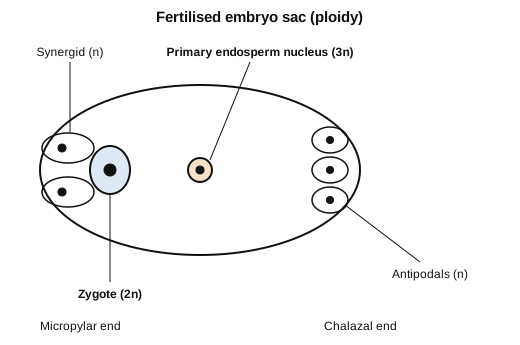
In angiosperm, the haploid, diploid and triploid structures of a fertilized embryo sac sequentially are:
आवृतबीजी में, निषेचित भ्रूणकोष की अगुणित, द्विगुणित और त्रिगुणित संरचनाएँ क्रमशः हैं:
  1. ASynergids, Primary endosperm nucleus and zygoteसहायक कोशिकाएँ, प्राथमिक भ्रूणपोष केंद्रक और युग्मनज
  2. BAntipodals, synergids, and primary endosperm nucleusप्रतिव्यासांत कोशिकाएँ, सहायक कोशिकाएँ और प्राथमिक भ्रूणपोष केंद्रक
  3. CSynergids, Zygote and Primary endosperm nucleusसहायक कोशिकाएँ, युग्मनज और प्राथमिक भ्रूणपोष केंद्रक
  4. DSynergids, antipodals and Polar nucleiसहायक कोशिकाएँ, प्रतिव्यासांत कोशिकाएँ और ध्रुवीय केंद्रक
Show answer

Concept: Double fertilisation: male gamete (n) + egg (n) = zygote (2n) – syngamy; male gamete (n) + two polar nuclei (n + n) = PEN (3n) – triple fusion. Synergids and antipodals stay haploid.

  1. Haploid: synergids (and antipodals).
  2. Diploid: zygote.
  3. Triploid: primary endosperm nucleus.
  4. Order haploid → diploid → triploid = synergids, zygote, PEN → (C).
  5. (A) puts PEN as diploid and zygote as triploid; (B) synergids are not diploid; (D) antipodals and polar nuclei are not 2n/3n.

Short trick: Count gametes fused: zygote = 2 sets, PEN = 3 sets (1 male + 2 polar); everything unfused = n.

Answer: (C) Synergids, Zygote and Primary endosperm nucleus

अवधारणा: द्विनिषेचन: नर युग्मक (n) + अंड (n) = युग्मनज (2n) – युग्मक संलयन; नर युग्मक (n) + दो ध्रुवीय केंद्रक (n + n) = PEN (3n) – त्रिसंलयन। सहायक व प्रतिव्यासांत कोशिकाएँ अगुणित रहती हैं।

  1. अगुणित: सहायक कोशिकाएँ (और प्रतिव्यासांत कोशिकाएँ)।
  2. द्विगुणित: युग्मनज।
  3. त्रिगुणित: प्राथमिक भ्रूणपोष केंद्रक।
  4. क्रम अगुणित → द्विगुणित → त्रिगुणित = सहायक कोशिकाएँ, युग्मनज, PEN → (C)।
  5. (A) में PEN को द्विगुणित व युग्मनज को त्रिगुणित बताया है; (B) सहायक कोशिकाएँ द्विगुणित नहीं; (D) प्रतिव्यासांत व ध्रुवीय केंद्रक 2n/3n नहीं हैं।

शॉर्ट ट्रिक: संलयित समुच्चय गिनें: युग्मनज = 2 समुच्चय, PEN = 3 समुच्चय (1 नर + 2 ध्रुवीय); बाकी सब = n।

उत्तर: (C) सहायक कोशिकाएँ, युग्मनज और प्राथमिक भ्रूणपोष केंद्रक

NEET UGBotanySexual reproduction in flowering plants – ploidy of embryo sacNEET UG 2023 · 7 May Shift 1
Q680.
Which hormone promotes internode/petiole elongation in deep water rice?
गहरे जल वाले धान (deep water rice) में पर्व/पर्णवृंत के दीर्घीकरण को कौन-सा हार्मोन बढ़ावा देता है?
  1. AGA3
  2. BKinetinकाइनेटिन
  3. CEthyleneएथिलीन
  4. D2, 4-D
Show answer

Concept: NCERT (ethylene): "Ethylene promotes rapid internode/petiole elongation in deep water rice plants. It helps leaves/upper parts of the shoot to remain above water."

  1. Ethylene (gaseous PGR) → correct; it also causes horizontal growth of seedlings, swelling of axis, apical hook in dicots, fruit ripening.
  2. GA3 – stem elongation/bolting in general, not the deep-water-rice example.
  3. Kinetin – cytokinin (cell division).
  4. 2,4-D – synthetic auxin, weedicide.

Short trick: Deep water rice "snorkels" out of water with ethylene – flooding traps ethylene in submerged tissue.

Answer: (C) Ethylene

अवधारणा: NCERT (एथिलीन): "एथिलीन गहरे जल वाले धान के पौधों में पर्व/पर्णवृंत के तीव्र दीर्घीकरण को बढ़ाता है, जिससे पत्तियाँ/प्ररोह के ऊपरी भाग जल के ऊपर बने रहते हैं।"

  1. एथिलीन (गैसीय PGR) → सही; यह नवोद्भिदों की क्षैतिज वृद्धि, अक्ष का फूलना, द्विबीजपत्रियों में शीर्षस्थ हुक और फल पकना भी कराता है।
  2. GA3 – सामान्य तना दीर्घीकरण/बोल्टिंग, गहरे जल वाले धान का उदाहरण नहीं।
  3. काइनेटिन – साइटोकाइनिन (कोशिका विभाजन)।
  4. 2,4-D – संश्लेषित ऑक्सिन, खरपतवारनाशी।

शॉर्ट ट्रिक: गहरे जल वाला धान एथिलीन से पानी के ऊपर "स्नॉर्कल" करता है – बाढ़ में डूबे ऊतक में एथिलीन फँस जाती है।

उत्तर: (C) एथिलीन

NEET UGBotanyPlant growth regulators – ethyleneNEET UG 2023 · 7 May Shift 1