NEET UG · 2,240 questions

NEET UG 2015, 2016, 2017, 2018, 2019, 2020, 2021, 2022, 2023, 2024, 2025, 2026 PYQs

Real previous year questions, subject-wise. Try the question, then open the answer and the explanation in Hindi & English – free, no login.

Courses – airGurukul

2,240 questions.

Q741.
In which blood corpuscles, the HIV undergoes replication and produces progeny viruses?
किन रुधिर कणिकाओं में HIV प्रतिकृतीयन करता है और संतति विषाणु उत्पन्न करता है?
  1. ATH cellsTH कोशिकाएँ
  2. BB-lymphocytesB-लसीकाणु
  3. CBasophilsबेसोफिल
  4. DEosinophilsइओसिनोफिल
Show answer

Concept: NCERT: HIV enters macrophages, where its RNA is reverse-transcribed (macrophages act as an HIV factory); the virus then enters helper T-lymphocytes (TH), replicates and produces progeny viruses, which attack other TH cells → TH count falls.

  1. TH cells – HIV replicates and produces progeny here ✔.
  2. B-lymphocytes – produce antibodies; not HIV targets ✘.
  3. Basophils and eosinophils – granulocytes; not the HIV replication site ✘.

Short trick: HIV attacks the ‘captain’ of immunity – the helper T cell (CD4+).

Answer: (A) TH cells

अवधारणा: NCERT: HIV महाभक्षकाणुओं (macrophages) में प्रवेश करता है, जहाँ इसका RNA व्युत्क्रम अनुलेखित होता है (महाभक्षकाणु HIV फैक्टरी); फिर विषाणु सहायक T-लसीकाणुओं (TH) में प्रवेश कर प्रतिकृतीयन करता है और संतति विषाणु बनाता है, जो अन्य TH कोशिकाओं पर आक्रमण करते हैं → TH संख्या घटती है।

  1. TH कोशिकाएँ – यहाँ HIV प्रतिकृतीयन कर संतति बनाता है ✔।
  2. B-लसीकाणु – प्रतिरक्षी बनाते हैं; HIV के लक्ष्य नहीं ✘।
  3. बेसोफिल व इओसिनोफिल – कणिकाणु; HIV प्रतिकृतीयन स्थल नहीं ✘।

शॉर्ट ट्रिक: HIV प्रतिरक्षा के ‘कप्तान’ – सहायक T कोशिका (CD4+) पर आक्रमण करता है।

उत्तर: (A) TH कोशिकाएँ
NEET UGZoologyHuman health – AIDSNEET UG 2023 · 7 May Shift 1
Q742.
Given below are two statements:
Statement I: RNA mutates at a faster rate.
Statement II: Viruses having RNA genome and shorter life span mutate and evolve faster.
In the light of the above statements, choose the correct answer from the options given below:
नीचे दो कथन दिए गए हैं:
कथन I: RNA तीव्र दर से उत्परिवर्तित होता है।
कथन II: RNA जीनोम वाले तथा कम जीवनकाल वाले विषाणु तेज़ी से उत्परिवर्तित और विकसित होते हैं।
उपर्युक्त कथनों के आलोक में, नीचे दिए गए विकल्पों में से सही उत्तर चुनिए:
  1. ABoth Statements 1 and 2 are trueकथन 1 और 2 दोनों सत्य हैं
  2. BBoth statements 1 and 2 are falseकथन 1 और 2 दोनों असत्य हैं
  3. CStatement 1 is true, but Statement 2 is falseकथन 1 सत्य है, परन्तु कथन 2 असत्य है
  4. DStatement 1 is false, but Statement 2 is trueकथन 1 असत्य है, परन्तु कथन 2 सत्य है
Show answer

Concept: NCERT (Molecular Basis of Inheritance): ‘RNA being a catalyst was reactive and hence unstable … DNA is more stable. RNA mutates at a faster rate. Consequently, viruses having RNA genome and having shorter life span mutate and evolve faster.’

  1. Statement I – true: the 2′-OH makes RNA reactive and unstable.
  2. Statement II – true: direct NCERT consequence (e.g., influenza, HIV evolve rapidly).
  3. Both true.

Short trick: 2′-OH → reactive → unstable → fast mutation → fast-evolving RNA viruses.

Answer: (A) Both Statements 1 and 2 are true

अवधारणा: NCERT (वंशागति का आणविक आधार): ‘RNA उत्प्रेरक होने के कारण अभिक्रियाशील और अतः अस्थायी था … DNA अधिक स्थायी है। RNA तीव्र दर से उत्परिवर्तित होता है। परिणामस्वरूप RNA जीनोम वाले और कम जीवनकाल वाले विषाणु तेज़ी से उत्परिवर्तित और विकसित होते हैं।’

  1. कथन I – सत्य: 2′-OH समूह RNA को अभिक्रियाशील और अस्थायी बनाता है।
  2. कथन II – सत्य: सीधा NCERT परिणाम (जैसे इन्फ्लुएंज़ा, HIV तेज़ी से विकसित होते हैं)।
  3. दोनों सत्य।

शॉर्ट ट्रिक: 2′-OH → अभिक्रियाशील → अस्थायी → तीव्र उत्परिवर्तन → तेज़ी से विकसित RNA विषाणु।

उत्तर: (A) कथन 1 और 2 दोनों सत्य हैं

NEET UGZoologyMolecular basis of inheritance – RNA worldNEET UG 2023 · 7 May Shift 1
Q743.
Given below are two statements: one is labelled as Assertion A and other is labelled as Reason R.
Assertion A: Endometrium is necessary for implantation of blastocyst.
Reason R: In the absence of fertilization, the corpus luteum degenerates that causes disintegration of endometrium.
In the light of the above statements, choose the correct answer from the options given below:
नीचे दो कथन दिए गए हैं: एक को अभिकथन A तथा दूसरे को कारण R के रूप में चिह्नित किया गया है।
अभिकथन A: कोरकपुटी (blastocyst) के रोपण के लिए गर्भाशय अंतःस्तर (endometrium) आवश्यक है।
कारण R: निषेचन न होने पर पीत पिंड (corpus luteum) का अपह्रास हो जाता है जिससे गर्भाशय अंतःस्तर विघटित हो जाता है।
उपर्युक्त कथनों के आलोक में, नीचे दिए गए विकल्पों में से सही उत्तर चुनिए:
  1. ABoth A and R are true and R is the correct explanation of A.A और R दोनों सत्य हैं तथा R, A की सही व्याख्या है।
  2. BBoth A and R are true but R is NOT the correct explanation of A.A और R दोनों सत्य हैं, परन्तु R, A की सही व्याख्या नहीं है।
  3. CA is true but R is false.A सत्य है, परन्तु R असत्य है।
  4. DA is false but R is true.A असत्य है, परन्तु R सत्य है।
Show answer

Concept: Implantation = attachment of the blastocyst (trophoblast) to the endometrium – so a thick, progesterone-maintained endometrium is essential. Separately, if no fertilisation occurs, the corpus luteum degenerates → progesterone falls → endometrium disintegrates → menstruation.

  1. A – true: the blastocyst gets embedded in the endometrium (implantation).
  2. R – true: NCERT – in absence of fertilisation, corpus luteum degenerates causing disintegration of the endometrium leading to menstruation.
  3. R explains menstruation, not why the endometrium is needed for implantation → R is not the correct explanation of A.

Short trick: Ask ‘A because R?’ – ‘Endometrium is needed for implantation BECAUSE it breaks down when there is no fertilisation’ makes no sense → option (B).

Answer: (B) Both A and R are true but R is NOT the correct explanation of A.

अवधारणा: रोपण = कोरकपुटी (पोषकोरक) का गर्भाशय अंतःस्तर से जुड़ना – अतः प्रोजेस्टेरॉन द्वारा बनाए रखा मोटा अंतःस्तर आवश्यक है। अलग से, निषेचन न होने पर पीत पिंड का अपह्रास → प्रोजेस्टेरॉन घटता है → अंतःस्तर विघटित → आर्तव।

  1. A – सत्य: कोरकपुटी गर्भाशय अंतःस्तर में धँस जाती है (रोपण)।
  2. R – सत्य: NCERT – निषेचन न होने पर पीत पिंड का अपह्रास होता है, जिससे अंतःस्तर विघटित होकर आर्तव होता है।
  3. R आर्तव की व्याख्या करता है, न कि रोपण हेतु अंतःस्तर की आवश्यकता की → R, A की सही व्याख्या नहीं।

शॉर्ट ट्रिक: पूछें ‘A क्योंकि R?’ – ‘रोपण हेतु अंतःस्तर आवश्यक है क्योंकि निषेचन न होने पर वह टूट जाता है’ – तर्कहीन → विकल्प (B)।

उत्तर: (B) A और R दोनों सत्य हैं, परन्तु R, A की सही व्याख्या नहीं है।

NEET UGZoologyHuman reproduction – implantation and menstrual cycleNEET UG 2023 · 7 May Shift 1
Q744.
Match List I with List II.
List IList II
A. CCKI. Kidney
B. GIPII. Heart
C. ANFIII. Gastric gland
D. ADHIV. Pancreas
Choose the correct answer from the options given below:
सूची-I का सूची-II से मिलान कीजिए।
सूची-Iसूची-II
A. CCKI. वृक्क
B. GIPII. हृदय
C. ANFIII. जठर ग्रंथि
D. ADHIV. अग्न्याशय
नीचे दिए गए विकल्पों में से सही उत्तर चुनिए:
  1. AA-IV, B-III, C-II, D-I
  2. BA-III, B-II, C-IV, D-I
  3. CA-II, B-IV, C-I, D-III
  4. DA-IV, B-II, C-III, D-I
Show answer

Concept: NCERT: CCK (cholecystokinin) acts on pancreas and gall bladder (pancreatic enzymes, bile); GIP inhibits gastric secretion and motility; ANF is secreted by atrial walls of the heart; ADH acts on kidney tubules (water reabsorption).

  1. A. CCK → pancreas (IV).
  2. B. GIP → gastric gland (III).
  3. C. ANF → heart (II) – Atrial Natriuretic Factor.
  4. D. ADH → kidney (I).

Short trick: ‘Atrial’ NF → heart; ‘Anti-Diuretic’ → kidney; ‘Gastric’ Inhibitory Peptide → gastric gland. Only (A) fits.

Answer: (A) A-IV, B-III, C-II, D-I

अवधारणा: NCERT: CCK (कोलेसिस्टोकाइनिन) अग्न्याशय और पित्ताशय पर कार्य करता है (अग्न्याशयी एंज़ाइम, पित्त); GIP जठर स्राव और गतिशीलता को संदमित करता है; ANF हृदय की अलिंद भित्ति से स्रावित होता है; ADH वृक्क नलिकाओं पर कार्य करता है (जल पुनरवशोषण)।

  1. A. CCK → अग्न्याशय (IV)।
  2. B. GIP → जठर ग्रंथि (III)।
  3. C. ANF → हृदय (II) – एट्रियल नैट्रियूरेटिक फैक्टर।
  4. D. ADH → वृक्क (I)।

शॉर्ट ट्रिक: ‘Atrial’ NF → हृदय; ‘Anti-Diuretic’ → वृक्क; ‘Gastric’ Inhibitory Peptide → जठर ग्रंथि। केवल (A) सही बैठता है।

उत्तर: (A) A-IV, B-III, C-II, D-I

NEET UGZoologyChemical coordination – hormones and targetsNEET UG 2023 · 7 May Shift 1
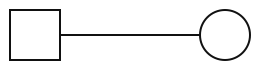
Q745.
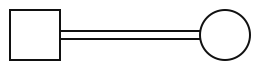
Which of the following symbols represents mating between relatives in human pedigree analysis?
मानव वंशावली विश्लेषण में निम्नलिखित में से कौन-सा प्रतीक संबंधियों के बीच संगम (mating between relatives) को दर्शाता है?
  1. A
  2. B
  3. C
  4. D
Show answer

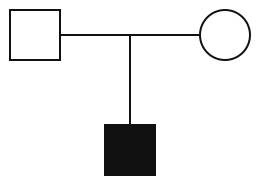
Concept: Standard pedigree symbols (NCERT): square = male, circle = female, diamond = sex unspecified, filled symbol = affected individual, single horizontal line = mating, double horizontal line = consanguineous mating (mating between relatives), vertical line from the mating line = offspring.

  1. (A) single line joining male and female → ordinary mating.
  2. (B) double line → consanguineous mating ✔.
  3. (C) mating with an affected son below → parents and offspring.
  4. (D) filled square, circle and diamond → affected male, affected female, affected individual of unspecified sex.

Short trick: Double line = ‘double bond of blood’ → relatives.

Answer: (B) the double-line symbol

अवधारणा: मानक वंशावली प्रतीक (NCERT): वर्ग = नर, वृत्त = मादा, हीरा (diamond) = लिंग अनिर्दिष्ट, भरा प्रतीक = प्रभावित व्यक्ति, एकल क्षैतिज रेखा = संगम, दोहरी क्षैतिज रेखा = सगोत्र संगम (संबंधियों के बीच संगम), संगम रेखा से नीचे ऊर्ध्व रेखा = संतति।

  1. (A) नर और मादा को जोड़ती एकल रेखा → सामान्य संगम।
  2. (B) दोहरी रेखा → सगोत्र संगम ✔।
  3. (C) नीचे प्रभावित पुत्र सहित संगम → माता-पिता और संतति।
  4. (D) भरे वर्ग, वृत्त और हीरा → प्रभावित नर, प्रभावित मादा, अनिर्दिष्ट लिंग का प्रभावित व्यक्ति।

शॉर्ट ट्रिक: दोहरी रेखा = ‘खून का दोहरा रिश्ता’ → संबंधी।

उत्तर: (B) दोहरी रेखा वाला प्रतीक

NEET UGZoologyPrinciples of inheritance – pedigree symbolsNEET UG 2023 · 7 May Shift 1
Q746.
The unique mammalian characteristics are:
स्तनधारियों के अद्वितीय (unique) लक्षण हैं:
  1. AHairs, tympanic membrane and mammary glandबाल, कर्णपटह (tympanic membrane) और स्तन ग्रंथि
  2. Bhairs, pinna and mammary glandsबाल, कर्णपल्लव (pinna) और स्तन ग्रंथियाँ
  3. Chairs, pinna and indirect developmentबाल, कर्णपल्लव और अप्रत्यक्ष परिवर्धन
  4. Dpinna, monocondylic skull and mammary glandsकर्णपल्लव, एककंदीय (monocondylic) खोपड़ी और स्तन ग्रंथियाँ
Show answer

Concept: NCERT: ‘The most unique mammalian characteristic is the presence of milk-producing glands (mammary glands)… They have two pairs of limbs… The skin is unique in possessing hair. External ears or pinnae are present.’

  1. Tympanic membrane – also in amphibians, reptiles and birds → not unique ✘.
  2. Hairs, pinna and mammary glands – all three found only in mammals ✔.
  3. Indirect development – mammals show direct development ✘.
  4. Monocondylic skull – found in reptiles and birds; mammals are dicondylic ✘.

Short trick: Mammal ID card = ‘3 H’s’: Hair, Hearing flap (pinna), Huge milk glands.

Answer: (B) hairs, pinna and mammary glands

अवधारणा: NCERT: ‘स्तनधारियों का सबसे अद्वितीय लक्षण दुग्ध उत्पन्न करने वाली ग्रंथियों (स्तन ग्रंथियों) की उपस्थिति है… इनकी त्वचा बालों की उपस्थिति में अद्वितीय है। बाह्य कर्ण या कर्णपल्लव उपस्थित होते हैं।’

  1. कर्णपटह – उभयचर, सरीसृप और पक्षियों में भी → अद्वितीय नहीं ✘।
  2. बाल, कर्णपल्लव और स्तन ग्रंथियाँ – तीनों केवल स्तनधारियों में ✔।
  3. अप्रत्यक्ष परिवर्धन – स्तनधारियों में प्रत्यक्ष परिवर्धन ✘।
  4. एककंदीय खोपड़ी – सरीसृपों और पक्षियों में; स्तनधारी द्विकंदीय ✘।

शॉर्ट ट्रिक: स्तनधारी पहचान पत्र = बाल, कर्णपल्लव, स्तन ग्रंथि।

उत्तर: (B) बाल, कर्णपल्लव और स्तन ग्रंथियाँ

NEET UGZoologyAnimal kingdom – MammaliaNEET UG 2023 · 7 May Shift 1
Q747.
Which of the following statements are correct ?
A. Basophils are most abundant cells of the total WBCs.
B. Basophils secrete histamine, serotonin and heparin.
C. Basophils are involved in inflammatory response.
D. Basophils have kidney shaped nucleus
E. Basophils are agranulocytes.
निम्नलिखित में से कौन-से कथन सही हैं?
A. बेसोफिल कुल श्वेताणुओं (WBCs) में सर्वाधिक संख्या वाली कोशिकाएँ हैं।
B. बेसोफिल हिस्टामिन, सेरोटोनिन और हिपेरिन स्रावित करते हैं।
C. बेसोफिल शोथ (inflammatory) अनुक्रिया में भाग लेते हैं।
D. बेसोफिल का केंद्रक वृक्काकार होता है।
E. बेसोफिल कणिकाविहीन (agranulocytes) हैं।
  1. AD and E onlyकेवल D और E
  2. BC and E onlyकेवल C और E
  3. CB and C onlyकेवल B और C
  4. DA and B onlyकेवल A और B
Show answer

Concept: NCERT: ‘Basophils secrete histamine, serotonin, heparin, etc., and are involved in inflammatory reactions.’ Neutrophils are most abundant (60–65%); basophils are the least (0.5–1%). Monocytes have kidney-shaped nucleus.

  1. A – false: neutrophils are most abundant; basophils least.
  2. B – true.
  3. C – true.
  4. D – false: kidney-shaped nucleus is of monocytes (basophils have bilobed/S-shaped nucleus).
  5. E – false: basophils are granulocytes.
  6. Correct: B and C.

Short trick: ‘Never Let Monkeys Eat Bananas’ – Neutrophils > Lymphocytes > Monocytes > Eosinophils > Basophils (least).

Answer: (C) B and C only

अवधारणा: NCERT: ‘बेसोफिल हिस्टामिन, सेरोटोनिन, हिपेरिन आदि स्रावित करते हैं और शोथ अभिक्रियाओं में भाग लेते हैं।’ न्यूट्रोफिल सर्वाधिक (60–65%); बेसोफिल सबसे कम (0.5–1%)। वृक्काकार केंद्रक मोनोसाइट का होता है।

  1. A – असत्य: न्यूट्रोफिल सर्वाधिक; बेसोफिल सबसे कम।
  2. B – सत्य।
  3. C – सत्य।
  4. D – असत्य: वृक्काकार केंद्रक मोनोसाइट में (बेसोफिल का केंद्रक द्विपालित/S-आकार)।
  5. E – असत्य: बेसोफिल कणिकाणु (granulocytes) हैं।
  6. सही: B और C।

शॉर्ट ट्रिक: ‘Never Let Monkeys Eat Bananas’ – न्यूट्रोफिल > लिम्फोसाइट > मोनोसाइट > इओसिनोफिल > बेसोफिल (सबसे कम)।

उत्तर: (C) केवल B और C

NEET UGZoologyBody fluids – WBCs (basophils)NEET UG 2023 · 7 May Shift 1
Q748.
Select the correct statements with reference to chordates.
A. Presence of a mid-dorsal, solid and double nerve cord.
B. Presence of closed circulatory system.
C. Presence of paired pharyngeal gillslits.
D. Presence of dorsal heart
E. Triploblastic pseudocoelomate animals.
Choose the correct answer from the options given below:
कॉर्डेटों के संदर्भ में सही कथन चुनिए।
A. मध्य-पृष्ठीय, ठोस और दोहरी तंत्रिका रज्जु की उपस्थिति।
B. बंद परिसंचरण तंत्र की उपस्थिति।
C. युग्मित ग्रसनी क्लोम छिद्रों (gill slits) की उपस्थिति।
D. पृष्ठीय हृदय की उपस्थिति।
E. त्रिकोरकी कूटप्रगुही (pseudocoelomate) प्राणी।
नीचे दिए गए विकल्पों में से सही उत्तर चुनिए:
  1. AA, C and D onlyकेवल A, C और D
  2. BB and C onlyकेवल B और C
  3. CB, D and E onlyकेवल B, D और E
  4. DC, D and E onlyकेवल C, D और E
Show answer

Concept: Chordates: notochord, dorsal hollow single nerve cord, paired pharyngeal gill slits (at some stage), ventral heart, closed circulatory system, triploblastic and coelomate, post-anal tail.

  1. A – false: nerve cord is dorsal, hollow and single (solid, double, ventral = non-chordates).
  2. B – true: closed circulatory system.
  3. C – true: paired pharyngeal gill slits.
  4. D – false: chordates have a ventral heart.
  5. E – false: chordates are coelomates.
  6. Correct: B and C.

Short trick: Chordate vs non-chordate is a mirror: dorsal hollow single cord ↔ ventral solid double cord; ventral heart ↔ dorsal heart.

Answer: (B) B and C only

अवधारणा: कॉर्डेट: पृष्ठरज्जु, पृष्ठीय खोखली एकल तंत्रिका रज्जु, युग्मित ग्रसनी क्लोम छिद्र (किसी अवस्था में), अधरीय हृदय, बंद परिसंचरण तंत्र, त्रिकोरकी व प्रगुही, पश्च-गुदा पूँछ।

  1. A – असत्य: तंत्रिका रज्जु पृष्ठीय, खोखली और एकल होती है (ठोस, दोहरी, अधरीय = अकॉर्डेट)।
  2. B – सत्य: बंद परिसंचरण तंत्र।
  3. C – सत्य: युग्मित ग्रसनी क्लोम छिद्र।
  4. D – असत्य: कॉर्डेटों में अधरीय हृदय होता है।
  5. E – असत्य: कॉर्डेट प्रगुही हैं।
  6. सही: B और C।

शॉर्ट ट्रिक: कॉर्डेट बनाम अकॉर्डेट दर्पण-प्रतिबिंब हैं: पृष्ठीय खोखली एकल रज्जु ↔ अधरीय ठोस दोहरी रज्जु; अधरीय हृदय ↔ पृष्ठीय हृदय।

उत्तर: (B) केवल B और C

NEET UGZoologyAnimal kingdom – ChordataNEET UG 2023 · 7 May Shift 1
Q749.
Which of the following are NOT under the control of thyroid hormone?
A. Maintenance of water and electrolyte balance
B. Regulation of basal metabolic rate
C. Normal rhythm of sleep-wake cycle
D. Development of immune system
E. Support the process of R.B.Cs formation
Choose the correct answer from the options given below:
निम्नलिखित में से कौन-से थायरॉइड हॉर्मोन के नियंत्रण में नहीं हैं?
A. जल और विद्युत-अपघट्य संतुलन बनाए रखना
B. आधारी उपापचय दर (BMR) का नियमन
C. निद्रा-जागरण चक्र की सामान्य लय
D. प्रतिरक्षा तंत्र का विकास
E. लाल रुधिर कणिकाओं (RBCs) के निर्माण की प्रक्रिया में सहायता
नीचे दिए गए विकल्पों में से सही उत्तर चुनिए:
  1. AA and D onlyकेवल A और D
  2. BB and C onlyकेवल B और C
  3. CC and D onlyकेवल C और D
  4. DD and E onlyकेवल D और E
Show answer

Concept: NCERT: thyroid hormones regulate BMR, support RBC formation, control metabolism of carbohydrates, proteins and fats, and maintain water and electrolyte balance. Sleep-wake cycle (diurnal rhythm) is regulated by melatonin (pineal); development of the immune system by thymosins (thymus).

  1. A – under thyroid control.
  2. B – under thyroid control.
  3. C – NOT (melatonin, pineal gland).
  4. D – NOT (thymosins, thymus).
  5. E – under thyroid control.
  6. NOT controlled: C and D.

Short trick: Sleep → Pineal (‘pillow’); Immunity → Thymus (‘T’ for T-cells). Everything metabolic → Thyroid.

Answer: (C) C and D only

अवधारणा: NCERT: थायरॉइड हॉर्मोन BMR का नियमन, RBC निर्माण में सहायता, कार्बोहाइड्रेट, प्रोटीन व वसा के उपापचय का नियंत्रण तथा जल व विद्युत-अपघट्य संतुलन बनाए रखते हैं। निद्रा-जागरण चक्र (दैनिक लय) का नियमन मेलाटोनिन (पीनियल) द्वारा; प्रतिरक्षा तंत्र का विकास थाइमोसिन (थाइमस) द्वारा।

  1. A – थायरॉइड नियंत्रण में।
  2. B – थायरॉइड नियंत्रण में।
  3. C – नहीं (मेलाटोनिन, पीनियल ग्रंथि)।
  4. D – नहीं (थाइमोसिन, थाइमस)।
  5. E – थायरॉइड नियंत्रण में।
  6. नियंत्रण में नहीं: C और D।

शॉर्ट ट्रिक: नींद → पीनियल (‘तकिया’); प्रतिरक्षा → थाइमस (‘T’ से T-कोशिका)। सब उपापचयी → थायरॉइड।

उत्तर: (C) केवल C और D

NEET UGZoologyChemical coordination – thyroid hormonesNEET UG 2023 · 7 May Shift 1
Q750.
In cockroach, excretion is brought about by
A. Phallic gland
B. Urecose gland
C. Nephrocytes
D. Fat body
E. Collaterial glands
Choose the correct answer from the options given below:
कॉकरोच में उत्सर्जन किसके द्वारा होता है?
A. फैलिक ग्रंथि
B. यूरिकोज़ ग्रंथि (Urecose gland)
C. नेफ्रोसाइट
D. वसा पिंड (Fat body)
E. कोलैटेरियल ग्रंथियाँ
नीचे दिए गए विकल्पों में से सही उत्तर चुनिए:
  1. AA and E onlyकेवल A और E
  2. BA, B and E onlyकेवल A, B और E
  3. CB, C and D onlyकेवल B, C और D
  4. DB and D onlyकेवल B और D
Show answer

Concept: NCERT (cockroach): ‘Excretion is performed by Malpighian tubules. In addition, the fat body, nephrocytes and urecose glands also help in excretion.’ Cockroach is uricotelic.

  1. A – phallic (mushroom) gland: male accessory reproductive gland ✘.
  2. B – urecose gland: excretory ✔.
  3. C – nephrocytes: excretory ✔.
  4. D – fat body: excretory (stores uric acid) ✔.
  5. E – collaterial glands: female glands forming the ootheca ✘.
  6. Correct: B, C and D.

Short trick: Excretion team = ‘MFNU’ (Malpighian tubules, Fat body, Nephrocytes, Urecose glands); phallic & collaterial are sex glands.

Answer: (C) B, C and D only

अवधारणा: NCERT (कॉकरोच): ‘उत्सर्जन मैल्पीघी नलिकाओं द्वारा होता है। इसके अतिरिक्त वसा पिंड, नेफ्रोसाइट और यूरिकोज़ ग्रंथियाँ भी उत्सर्जन में सहायता करती हैं।’ कॉकरोच यूरिकोटेलिक है।

  1. A – फैलिक (छत्रक) ग्रंथि: नर सहायक जनन ग्रंथि ✘।
  2. B – यूरिकोज़ ग्रंथि: उत्सर्जी ✔।
  3. C – नेफ्रोसाइट: उत्सर्जी ✔।
  4. D – वसा पिंड: उत्सर्जी (यूरिक अम्ल का संचय) ✔।
  5. E – कोलैटेरियल ग्रंथियाँ: मादा ग्रंथियाँ जो अंडकवच (ootheca) बनाती हैं ✘।
  6. सही: B, C और D।

शॉर्ट ट्रिक: उत्सर्जन टीम = ‘MFNU’ (मैल्पीघी नलिकाएँ, वसा पिंड, नेफ्रोसाइट, यूरिकोज़ ग्रंथि); फैलिक व कोलैटेरियल जनन ग्रंथियाँ हैं।

उत्तर: (C) केवल B, C और D

NEET UGZoologyStructural organisation – cockroach excretionNEET UG 2023 · 7 May Shift 1
Q751.
The parts of human brain that helps in regulation of sexual behaviour, expression of excitement, pleasure, rage, fear etc. are :
मानव मस्तिष्क के वे भाग जो यौन व्यवहार, उत्तेजना, आनंद, क्रोध, भय आदि की अभिव्यक्ति के नियमन में सहायता करते हैं, हैं:
  1. ALimbic system & hypothalamusलिम्बिक तंत्र और हाइपोथैलेमस
  2. BCorpora quadrigemina & hippocampusकॉर्पोरा क्वाड्रिजेमिना और हिप्पोकैम्पस
  3. CBrain stem & epithalamusमस्तिष्क स्तंभ और एपिथैलेमस
  4. DCorpus callosum and thalamusकॉर्पस कैलोसम और थैलेमस
Show answer

Concept: NCERT: ‘The inner parts of cerebral hemispheres and a group of associated deep structures like amygdala, hippocampus, etc., form a complex structure called the limbic lobe or limbic system. Along with the hypothalamus, it is involved in the regulation of sexual behaviour, expression of emotional reactions (e.g., excitement, pleasure, rage and fear), and motivation.’

  1. Limbic system + hypothalamus – exact NCERT pair ✔.
  2. Corpora quadrigemina – midbrain reflex centres for vision/hearing ✘.
  3. Brain stem – controls respiration, cardiovascular reflexes ✘.
  4. Corpus callosum – connects the two cerebral hemispheres; thalamus – relay centre ✘.

Short trick: Limbic = ‘emotional brain’; hypothalamus = its partner for drives (hunger, thirst, sex).

Answer: (A) Limbic system & hypothalamus

अवधारणा: NCERT: ‘प्रमस्तिष्क गोलार्धों के आंतरिक भाग तथा प्रमस्तिष्क-अमिग्डला, हिप्पोकैम्पस आदि गहरी संरचनाएँ मिलकर एक जटिल संरचना बनाती हैं जिसे लिम्बिक लोब या लिम्बिक तंत्र कहते हैं। हाइपोथैलेमस के साथ यह यौन व्यवहार, भावनात्मक प्रतिक्रियाओं (जैसे उत्तेजना, आनंद, क्रोध, भय) की अभिव्यक्ति तथा अभिप्रेरण के नियमन में भाग लेता है।’

  1. लिम्बिक तंत्र + हाइपोथैलेमस – सटीक NCERT जोड़ा ✔।
  2. कॉर्पोरा क्वाड्रिजेमिना – दृष्टि/श्रवण के मध्यमस्तिष्क प्रतिवर्त केंद्र ✘।
  3. मस्तिष्क स्तंभ – श्वसन, हृदवाहिका प्रतिवर्त नियंत्रित ✘।
  4. कॉर्पस कैलोसम – दोनों प्रमस्तिष्क गोलार्धों को जोड़ता है; थैलेमस – प्रसारण केंद्र ✘।

शॉर्ट ट्रिक: लिम्बिक = ‘भावनात्मक मस्तिष्क’; हाइपोथैलेमस = प्रेरणाओं (भूख, प्यास, यौन) में उसका साथी।

उत्तर: (A) लिम्बिक तंत्र और हाइपोथैलेमस

NEET UGZoologyNeural control – limbic systemNEET UG 2023 · 7 May Shift 1
Q752.
Match List 1 and List 2.
List 1List 2
A. Mast cellsI. Ciliated epithelium
B. Inner surface of bronchioleII. Areolar connective tissue
C. BloodIII. Cuboidal epithelium
D. Tubular parts of nephronIV. Specialised connective tissue
Choose the correct answer from the options given below:
सूची 1 का सूची 2 से मिलान कीजिए।
सूची 1सूची 2
A. मास्ट कोशिकाएँI. पक्ष्माभी उपकला
B. श्वसनिका (bronchiole) की भीतरी सतहII. अंतराली (areolar) संयोजी ऊतक
C. रक्तIII. घनाकार उपकला
D. वृक्काणु के नलिकाकार भागIV. विशिष्ट संयोजी ऊतक
नीचे दिए गए विकल्पों में से सही उत्तर चुनिए:
  1. AA-I, B-II, C-IV, D-III
  2. BA-II, B-III, C-I, D-IV
  3. CA-II, B-I, C-IV, D-III
  4. DA-III, B-IV, C-II, D-I
Show answer

Concept: NCERT (Structural Organisation): areolar tissue contains fibroblasts, macrophages and mast cells; ciliated epithelium lines bronchioles and fallopian tubes; cuboidal epithelium in tubular parts of nephrons (PCT with microvilli); blood is a fluid specialised connective tissue.

  1. A. Mast cells → areolar connective tissue (II).
  2. B. Inner surface of bronchiole → ciliated epithelium (I).
  3. C. Blood → specialised connective tissue (IV).
  4. D. Nephron tubules → cuboidal epithelium (III).

Short trick: Bronchiole cilia sweep mucus → ciliated; Blood/bone/cartilage = specialised connective tissue.

Answer: (C) A-II, B-I, C-IV, D-III

अवधारणा: NCERT (संरचनात्मक संगठन): अंतराली ऊतक में तंतुकोरक, महाभक्षकाणु और मास्ट कोशिकाएँ होती हैं; पक्ष्माभी उपकला श्वसनिकाओं और डिंबवाहिनियों को आस्तरित करती है; घनाकार उपकला वृक्काणु के नलिकाकार भागों में (सूक्ष्मांकुर युक्त PCT); रक्त एक तरल विशिष्ट संयोजी ऊतक है।

  1. A. मास्ट कोशिकाएँ → अंतराली संयोजी ऊतक (II)।
  2. B. श्वसनिका की भीतरी सतह → पक्ष्माभी उपकला (I)।
  3. C. रक्त → विशिष्ट संयोजी ऊतक (IV)।
  4. D. वृक्काणु नलिकाएँ → घनाकार उपकला (III)।

शॉर्ट ट्रिक: श्वसनिका के पक्ष्माभ श्लेष्मा को आगे धकेलते हैं → पक्ष्माभी; रक्त/अस्थि/उपास्थि = विशिष्ट संयोजी ऊतक।

उत्तर: (C) A-II, B-I, C-IV, D-III

NEET UGZoologyAnimal tissues – types and locationNEET UG 2023 · 7 May Shift 1
Q753.
Match List 1 and List 2.
List 1List 2
A. Logistic growthI. Unlimited resource availability condition
B. Exponential growthII. Limited resource availability condition
C. Expanding age pyramidIII. The percent individuals of pre-reproductive age is largest followed by reproductive and post reproductive age groups
D. Stable age pyramidIV. The percent individuals of pre-reproductives and reproductive age group are same
Choose the correct answer from the options given below:
सूची 1 का सूची 2 से मिलान कीजिए।
सूची 1सूची 2
A. संभार तंत्री (Logistic) वृद्धिI. असीमित संसाधन उपलब्धता की स्थिति
B. चरघातांकी (Exponential) वृद्धिII. सीमित संसाधन उपलब्धता की स्थिति
C. प्रसारी (Expanding) आयु पिरैमिडIII. जनन-पूर्व आयु वर्ग के व्यक्तियों का प्रतिशत सर्वाधिक, उसके बाद जननक्षम और जनन-पश्च आयु वर्ग
D. स्थिर (Stable) आयु पिरैमिडIV. जनन-पूर्व और जननक्षम आयु वर्ग के व्यक्तियों का प्रतिशत समान
नीचे दिए गए विकल्पों में से सही उत्तर चुनिए:
  1. AA-II, B-I, C-III, D-IV
  2. BA-II, B-III, C-I, D-IV
  3. CA-II, B-IV, C-I, D-III
  4. DA-II, B-IV, C-III, D-I
Show answer

Concept: Exponential (J-shaped) growth occurs when resources are unlimited; logistic (S-shaped, Verhulst–Pearl) growth when resources are limited (carrying capacity K). Age pyramids: expanding (triangular, broad base – many pre-reproductives), stable (bell-shaped – pre-reproductive ≈ reproductive), declining (urn-shaped).

  1. A. Logistic → limited resources (II).
  2. B. Exponential → unlimited resources (I).
  3. C. Expanding pyramid → pre-reproductive largest (III).
  4. D. Stable pyramid → pre-reproductive ≈ reproductive (IV).

Short trick: J = ‘Jackpot’ (unlimited); S = ‘Saturated’ (limited, K). Triangle = expanding, Bell = stable, Urn = declining.

Answer: (A) A-II, B-I, C-III, D-IV

अवधारणा: चरघातांकी (J-आकार) वृद्धि तब होती है जब संसाधन असीमित हों; संभार तंत्री (S-आकार, वरहुल्स्ट–पर्ल) वृद्धि जब संसाधन सीमित हों (पोषण क्षमता K)। आयु पिरैमिड: प्रसारी (त्रिभुजाकार, चौड़ा आधार – अधिक जनन-पूर्व), स्थिर (घंटाकार – जनन-पूर्व ≈ जननक्षम), ह्रासमान (कलशाकार)।

  1. A. संभार तंत्री → सीमित संसाधन (II)।
  2. B. चरघातांकी → असीमित संसाधन (I)।
  3. C. प्रसारी पिरैमिड → जनन-पूर्व सर्वाधिक (III)।
  4. D. स्थिर पिरैमिड → जनन-पूर्व ≈ जननक्षम (IV)।

शॉर्ट ट्रिक: J = ‘जैकपॉट’ (असीमित); S = ‘संतृप्त’ (सीमित, K)। त्रिभुज = प्रसारी, घंटा = स्थिर, कलश = ह्रासमान।

उत्तर: (A) A-II, B-I, C-III, D-IV

NEET UGZoologyOrganisms and populations – growth models and age pyramidsNEET UG 2023 · 7 May Shift 1
Q754.
Which of the following statements are correct?
A. An excessive loss of body fluid from the body switches off osmoreceptors.
B. ADH facilitates water reabsorption to prevent diuresis.
C. ANF causes vasodilation.
D. ADH causes increase in blood pressure.
E. ADH is responsible for decrease in GFR.
Choose the correct answer from the options given below:
निम्नलिखित में से कौन-से कथन सही हैं?
A. शरीर से शरीर-द्रव की अत्यधिक हानि परासरणग्राहियों (osmoreceptors) को निष्क्रिय (switch off) कर देती है।
B. ADH मूत्रलता (diuresis) रोकने के लिए जल पुनरवशोषण को सुगम बनाता है।
C. ANF वाहिकाविस्फारण (vasodilation) करता है।
D. ADH रक्तचाप में वृद्धि करता है।
E. ADH, GFR में कमी के लिए उत्तरदायी है।
नीचे दिए गए विकल्पों में से सही उत्तर चुनिए:
  1. AA and B onlyकेवल A और B
  2. BB, C and D onlyकेवल B, C और D
  3. CA, B and E onlyकेवल A, B और E
  4. DC, D and E onlyकेवल C, D और E
Show answer

Concept: NCERT (Regulation of kidney function): ‘An excessive loss of fluid from the body can activate osmoreceptors which stimulate the hypothalamus to release ADH… ADH facilitates water reabsorption, thereby preventing diuresis. ADH can also affect kidney function by its constrictory effects on blood vessels. This causes an increase in blood pressure. An increase in blood pressure can increase the glomerular blood flow and thereby the GFR.’ ‘ANF can cause vasodilation.’

  1. A – false: fluid loss switches on (activates) osmoreceptors.
  2. B – true.
  3. C – true: ANF dilates blood vessels and lowers BP (check on RAAS).
  4. D – true: ADH (vasopressin) constricts vessels → BP rises.
  5. E – false: by raising BP, ADH tends to increase GFR, not decrease it.
  6. Correct set: B, C and D → option (B).

Short trick: Dehydration = alarm ON (osmoreceptors fire → ADH ↑). ADH = ‘vaso-pressin’ → pressure ↑ → GFR ↑. ANF = ‘anti-RAAS’ → vasodilation.

Answer: (B) B, C and D only

अवधारणा: NCERT (वृक्क कार्य का नियमन): ‘शरीर से द्रव की अत्यधिक हानि परासरणग्राहियों को सक्रिय कर देती है जो हाइपोथैलेमस को ADH मुक्त करने हेतु उद्दीप्त करते हैं… ADH जल पुनरवशोषण को सुगम बनाकर मूत्रलता को रोकता है। ADH रुधिर वाहिकाओं पर संकुचनकारी प्रभाव द्वारा भी वृक्क कार्य को प्रभावित करता है। इससे रक्तचाप बढ़ता है। रक्तचाप में वृद्धि गुच्छीय रक्त प्रवाह और फलस्वरूप GFR बढ़ा सकती है।’ ‘ANF वाहिकाविस्फारण कर सकता है।’

  1. A – असत्य: द्रव हानि परासरणग्राहियों को सक्रिय (switch on) करती है।
  2. B – सत्य।
  3. C – सत्य: ANF रुधिर वाहिकाओं को फैलाकर रक्तचाप घटाता है (RAAS पर नियंत्रण)।
  4. D – सत्य: ADH (वैसोप्रेसिन) वाहिकाओं को संकुचित करता है → रक्तचाप बढ़ता है।
  5. E – असत्य: रक्तचाप बढ़ाकर ADH, GFR को बढ़ाता है, घटाता नहीं।
  6. सही समुच्चय: B, C और D → विकल्प (B)।

शॉर्ट ट्रिक: निर्जलीकरण = अलार्म ON (परासरणग्राही सक्रिय → ADH ↑)। ADH = ‘वैसो-प्रेसिन’ → दाब ↑ → GFR ↑। ANF = ‘RAAS-विरोधी’ → वाहिकाविस्फारण।

उत्तर: (B) केवल B, C और D

NEET UGZoologyExcretion – regulation of kidney functionNEET UG 2023 · 7 May Shift 1
Q755.
Given are two statements.
Statement 1: During G0 phase of cell cycle, the cell is metabolically inactive.
Statement 2: The centrosome undergoes duplication during S phase of interphase.
In the light of the above statements, choose the most appropriate answer from the options given below:
दो कथन दिए गए हैं।
कथन 1: कोशिका चक्र की G0 प्रावस्था के दौरान कोशिका उपापचयी रूप से निष्क्रिय होती है।
कथन 2: अंतरावस्था की S प्रावस्था के दौरान तारककाय (centrosome) का द्विगुणन होता है।
उपर्युक्त कथनों के आलोक में, नीचे दिए गए विकल्पों में से सबसे उपयुक्त उत्तर चुनिए:
  1. ABoth Statements 1 and 2 are correctकथन 1 और 2 दोनों सही हैं
  2. BBoth statements 1 and 2 are incorrectकथन 1 और 2 दोनों गलत हैं
  3. CStatement 1 is correct, but Statement 2 is incorrectकथन 1 सही है, परन्तु कथन 2 गलत है
  4. DStatement 1 is incorrect, but Statement 2 is correctकथन 1 गलत है, परन्तु कथन 2 सही है
Show answer

Concept: NCERT: ‘Cells in the quiescent stage (G0) remain metabolically active but no longer proliferate unless called on to do so.’ ‘In animal cells, during the S phase, DNA replication begins in the nucleus, and the centriole duplicates in the cytoplasm.’

  1. Statement 1 – incorrect: G0 cells are metabolically active; they only stop dividing.
  2. Statement 2 – correct: centriole/centrosome duplication occurs in S phase.
  3. Statement 1 incorrect, 2 correct.

Short trick: G0 = ‘working but not dividing’ (like neurons, heart cells). S phase = DNA doubles in nucleus + centriole doubles in cytoplasm.

Answer: (D) Statement 1 is incorrect, but Statement 2 is correct

अवधारणा: NCERT: ‘शांत अवस्था (G0) की कोशिकाएँ उपापचयी रूप से सक्रिय रहती हैं परन्तु आवश्यकता होने तक विभाजित नहीं होतीं।’ ‘प्राणी कोशिकाओं में S प्रावस्था के दौरान केंद्रक में DNA प्रतिकृतीयन आरंभ होता है और कोशिकाद्रव्य में तारककेंद्र (centriole) का द्विगुणन होता है।’

  1. कथन 1 – गलत: G0 कोशिकाएँ उपापचयी रूप से सक्रिय होती हैं; केवल विभाजन रुकता है।
  2. कथन 2 – सही: तारककेंद्र/तारककाय का द्विगुणन S प्रावस्था में होता है।
  3. कथन 1 गलत, 2 सही।

शॉर्ट ट्रिक: G0 = ‘काम कर रही, विभाजित नहीं’ (जैसे तंत्रिका, हृदय कोशिकाएँ)। S प्रावस्था = केंद्रक में DNA दोगुना + कोशिकाद्रव्य में तारककेंद्र दोगुना।

उत्तर: (D) कथन 1 गलत है, परन्तु कथन 2 सही है

NEET UGZoologyCell cycle – interphaseNEET UG 2023 · 7 May Shift 1
Q756.
Select the correct statements.
A. Tetrad formation is seen during Leptotene.
B. During Anaphase, the centromeres split and chromatids separate.
C. Terminalization takes place during Pachytene.
D. Nucleolus, Golgi complex and ER are reformed during Telophase.
E. Crossing over takes place between sister chromatids of homologous chromosome.
Choose the correct answer from the options given below:
सही कथन चुनिए।
A. चतुष्क (tetrad) निर्माण लेप्टोटीन के दौरान दिखाई देता है।
B. पश्चावस्था (Anaphase) के दौरान गुणसूत्रबिंदु विभाजित होते हैं और अर्धगुणसूत्र अलग होते हैं।
C. उपांतीभवन (Terminalization) पैकीटीन के दौरान होता है।
D. अंत्यावस्था (Telophase) के दौरान केंद्रिका, गॉल्जी सम्मिश्र और ER पुनः बनते हैं।
E. जीन विनिमय (crossing over) समजात गुणसूत्र के सहोदर अर्धगुणसूत्रों के बीच होता है।
नीचे दिए गए विकल्पों में से सही उत्तर चुनिए:
  1. AA and C onlyकेवल A और C
  2. BB and D onlyकेवल B और D
  3. CA, C and E onlyकेवल A, C और E
  4. DB and E onlyकेवल B और E
Show answer

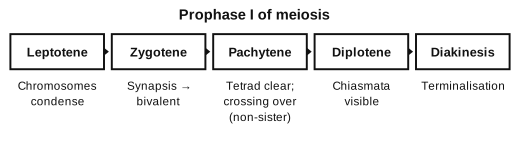
Concept: Prophase I sequence: leptotene (condensation) → zygotene (synapsis, bivalent) → pachytene (tetrad clearly visible, crossing over between non-sister chromatids) → diplotene (chiasmata) → diakinesis (terminalisation of chiasmata). Mitotic anaphase: centromeres split, chromatids separate; telophase: nucleolus, Golgi and ER reform.

  1. A – false: tetrad/bivalent becomes clear in pachytene (synapsis starts in zygotene), not leptotene.
  2. B – true (mitotic anaphase).
  3. C – false: terminalisation occurs in diakinesis.
  4. D – true (telophase).
  5. E – false: crossing over is between non-sister chromatids of homologous chromosomes.
  6. Correct: B and D.

Short trick: ‘Lazy Zebras Pack Dinner Daily’ – L, Z, P, D, D; T(erminalisation) at the very end = Diakinesis.

Answer: (B) B and D only

अवधारणा: प्रोफेज़ I का क्रम: लेप्टोटीन (संघनन) → जाइगोटीन (सूत्रयुग्मन, युगली) → पैकीटीन (चतुष्क स्पष्ट, असहोदर अर्धगुणसूत्रों के बीच जीन विनिमय) → डिप्लोटीन (काएज्मेटा) → डायाकाइनेसिस (काएज्मेटा का उपांतीभवन)। समसूत्री पश्चावस्था: गुणसूत्रबिंदु विभाजित, अर्धगुणसूत्र अलग; अंत्यावस्था: केंद्रिका, गॉल्जी और ER पुनः बनते हैं।

  1. A – असत्य: चतुष्क/युगली पैकीटीन में स्पष्ट होता है (सूत्रयुग्मन जाइगोटीन में आरंभ), लेप्टोटीन में नहीं।
  2. B – सत्य (समसूत्री पश्चावस्था)।
  3. C – असत्य: उपांतीभवन डायाकाइनेसिस में होता है।
  4. D – सत्य (अंत्यावस्था)।
  5. E – असत्य: जीन विनिमय समजात गुणसूत्रों के असहोदर अर्धगुणसूत्रों के बीच होता है।
  6. सही: B और D।

शॉर्ट ट्रिक: ‘Lazy Zebras Pack Dinner Daily’ – L, Z, P, D, D; उपांतीभवन बिल्कुल अंत में = डायाकाइनेसिस।

उत्तर: (B) केवल B और D

NEET UGZoologyCell cycle – meiosis and mitosisNEET UG 2023 · 7 May Shift 1
Q757.
Which one of the following is NOT an advantage of inbreeding?
निम्नलिखित में से कौन-सा अंतःप्रजनन (inbreeding) का लाभ नहीं है?
  1. AIt decreases homozygosity.यह समयुग्मजता (homozygosity) को घटाता है।
  2. BIt exposes harmful recessive genes that are eliminated by selection.यह हानिकारक अप्रभावी जीनों को उजागर करता है जिन्हें वरण द्वारा हटा दिया जाता है।
  3. CElimination of less desirable genes and accumulation of superior genes takes place due to it.इसके कारण कम वांछनीय जीनों का निष्कासन और श्रेष्ठ जीनों का संचय होता है।
  4. DIt decreases the productivity of inbred population, after continuous inbreeding.लगातार अंतःप्रजनन के बाद यह अंतःप्रजात समष्टि की उत्पादकता घटाता है।
Show answer

Concept: NCERT: ‘Inbreeding increases homozygosity… it exposes harmful recessive genes that are eliminated by selection. It also helps in accumulation of superior genes and elimination of less desirable genes. However, continued inbreeding, especially close inbreeding, usually reduces fertility and even productivity (inbreeding depression).’

  1. (A) – the claim itself is false: inbreeding increases homozygosity; so ‘decreasing homozygosity’ cannot be its advantage ✔ (answer).
  2. (B) – NCERT-listed advantage.
  3. (C) – NCERT-listed advantage.
  4. (D) – a factually correct NCERT statement (inbreeding depression after continued close inbreeding). It is a drawback, but it describes inbreeding correctly; (A) is the only option that states something inbreeding does not do at all, so it can never be an advantage.

Short trick: Inbreeding → homozygosity ↑ (pure lines); Outbreeding/out-crossing → heterozygosity ↑ and removes inbreeding depression.

Answer: (A) It decreases homozygosity.

अवधारणा: NCERT: ‘अंतःप्रजनन समयुग्मजता बढ़ाता है… यह हानिकारक अप्रभावी जीनों को उजागर करता है जिन्हें वरण द्वारा हटाया जाता है। यह श्रेष्ठ जीनों के संचय और कम वांछनीय जीनों के निष्कासन में भी सहायक है। परन्तु लगातार, विशेषकर निकट अंतःप्रजनन, प्रायः जनन क्षमता और उत्पादकता भी घटा देता है (अंतःप्रजनन अवसाद)।’

  1. (A) – कथन स्वयं असत्य है: अंतःप्रजनन समयुग्मजता बढ़ाता है; अतः ‘समयुग्मजता घटाना’ इसका लाभ नहीं हो सकता ✔ (उत्तर)।
  2. (B) – NCERT में सूचीबद्ध लाभ।
  3. (C) – NCERT में सूचीबद्ध लाभ।
  4. (D) – तथ्यतः सही NCERT कथन (लगातार निकट अंतःप्रजनन के बाद अंतःप्रजनन अवसाद)। यह एक हानि है, परन्तु अंतःप्रजनन का सही वर्णन करता है; केवल (A) ऐसा प्रभाव बताता है जो अंतःप्रजनन करता ही नहीं, अतः वह कभी लाभ नहीं हो सकता।

शॉर्ट ट्रिक: अंतःप्रजनन → समयुग्मजता ↑ (शुद्ध वंशक्रम); बहिःप्रजनन/बहिःसंकरण → विषमयुग्मजता ↑ और अंतःप्रजनन अवसाद दूर।

उत्तर: (A) यह समयुग्मजता को घटाता है।

NEET UGZoologyAnimal husbandry – inbreedingNEET UG 2023 · 7 May Shift 1
Q758.
Which of the following is characteristic feature of cockroach regarding sexual dimorphism ?
लैंगिक द्विरूपता (sexual dimorphism) के संबंध में कॉकरोच का विशिष्ट लक्षण निम्नलिखित में से कौन-सा है?
  1. ADark brown body colour and anal cerciगहरा भूरा शरीर रंग और गुदा लूम (anal cerci)
  2. BPresence of anal stylesगुदा कंटिकाओं (anal styles) की उपस्थिति
  3. CPresence of scleritesकठक (sclerites) की उपस्थिति
  4. DPresence of anal cerciगुदा लूम की उपस्थिति
Show answer

Concept: Sexual dimorphism = a feature that differs between male and female. NCERT: in males, the 9th sternum bears a pair of short, thread-like anal styles which are absent in females; both sexes have a pair of jointed anal cerci on the 10th segment.

  1. Dark brown colour and anal cerci – present in both sexes ✘.
  2. Anal styles – present only in males ✔.
  3. Sclerites (tergites, sternites, pleurites) – exoskeletal plates in both sexes ✘.
  4. Anal cerci – present in both sexes ✘.

Short trick: ‘Styles’ = ‘Stylish male’ only; ‘Cerci’ = common to both.

Answer: (B) Presence of anal styles

अवधारणा: लैंगिक द्विरूपता = ऐसा लक्षण जो नर और मादा में भिन्न हो। NCERT: नर में 9वें स्टर्नम पर छोटी, धागे जैसी एक जोड़ी गुदा कंटिकाएँ (anal styles) होती हैं जो मादा में अनुपस्थित हैं; दोनों लिंगों में 10वें खंड पर एक जोड़ी संधित गुदा लूम (cerci) होते हैं।

  1. गहरा भूरा रंग और गुदा लूम – दोनों लिंगों में ✘।
  2. गुदा कंटिकाएँ – केवल नर में ✔।
  3. कठक (टर्गाइट, स्टर्नाइट, प्लूराइट) – दोनों लिंगों में बाह्यकंकाली प्लेटें ✘।
  4. गुदा लूम – दोनों लिंगों में ✘।

शॉर्ट ट्रिक: ‘Styles’ = केवल ‘स्टाइलिश नर’ में; ‘Cerci’ = दोनों में।

उत्तर: (B) गुदा कंटिकाओं की उपस्थिति

NEET UGZoologyStructural organisation – cockroach sexual dimorphismNEET UG 2023 · 7 May Shift 1
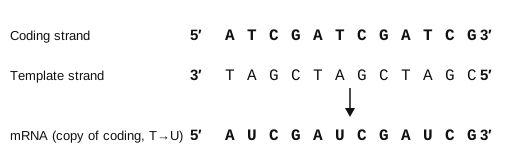
Q759.
Which one of the following is the sequence on corresponding coding strand, if the sequence on mRNA formed is as follows
5′ AUCGAUCGAUCGAUCGAUCG AUCG AUCG 3′?
यदि बने mRNA का अनुक्रम निम्नानुसार है, तो संगत कोडिंग रज्जुक (coding strand) पर अनुक्रम निम्नलिखित में से कौन-सा होगा?
5′ AUCGAUCGAUCGAUCGAUCG AUCG AUCG 3′
  1. A5′ UAGCUAGCUAGCUAGCUA GCUAGC UAGC 3′
  2. B3′ UAGCUAGCUAGCUAGCUA GCUAGCUAGC 5′
  3. C5′ ATCGATCGATCGATCGATCG ATCGATCG 3′
  4. D3′ ATCGATCGATCGATCGATCG ATCGATCG 5′
Show answer

Concept: The mRNA is complementary to the template strand, so it has the same sequence and the same 5′→3′ polarity as the coding strand – except that T in DNA is replaced by U in RNA.

  1. Coding strand = mRNA sequence with U → T, same polarity.
  2. mRNA 5′ AUCG AUCG … 3′ → coding strand 5′ ATCG ATCG … 3′.
  3. (A), (B) contain U – they are RNA, not DNA ✘; (D) has the right letters but reversed polarity (3′→5′) ✘.

Short trick: Coding strand = ‘photocopy’ of mRNA: same direction, just U → T.

Answer: (C) 5′ ATCGATCGATCGATCGATCG ATCGATCG 3′

अवधारणा: mRNA टेम्पलेट रज्जुक का पूरक होता है, अतः इसका अनुक्रम और 5′→3′ ध्रुवता कोडिंग रज्जुक के समान होती है – केवल DNA का T, RNA में U से प्रतिस्थापित होता है।

  1. कोडिंग रज्जुक = mRNA अनुक्रम में U → T, ध्रुवता समान।
  2. mRNA 5′ AUCG AUCG … 3′ → कोडिंग रज्जुक 5′ ATCG ATCG … 3′।
  3. (A), (B) में U है – वे RNA हैं, DNA नहीं ✘; (D) में अक्षर सही पर ध्रुवता उल्टी (3′→5′) ✘।

शॉर्ट ट्रिक: कोडिंग रज्जुक = mRNA की ‘फोटोकॉपी’: वही दिशा, केवल U → T।

उत्तर: (C) 5′ ATCGATCGATCGATCGATCG ATCGATCG 3′

NEET UGZoologyMolecular basis of inheritance – transcriptionNEET UG 2023 · 7 May Shift 1
Q760.
Which of the following statements are correct regarding skeletal muscle?
A. Muscle bundles are held together by collagenous connective tissue layer called fascicle.
B. Sarcoplasmic reticulum of muscle fibre is a store house of calcium ions.
C. Striated appearance of skeletal muscle fibre is due to distribution pattern of actin and myosin proteins.
D. M line is considered as functional unit of contraction called sarcomere.
Choose the most appropriate answer from the options given below:
कंकाल पेशी के संबंध में निम्नलिखित में से कौन-से कथन सही हैं?
A. पेशी बंडल एक कोलेजनी संयोजी ऊतक परत द्वारा एक साथ बँधे रहते हैं जिसे पूलिका (fascicle) कहते हैं।
B. पेशी तंतु का पेशीद्रव्यी जालिका (sarcoplasmic reticulum) कैल्सियम आयनों का भंडार है।
C. कंकाल पेशी तंतु की रेखित आकृति ऐक्टिन और मायोसिन प्रोटीनों के वितरण प्रतिरूप के कारण है।
D. M रेखा को संकुचन की क्रियात्मक इकाई, सार्कोमियर, माना जाता है।
नीचे दिए गए विकल्पों में से सबसे उपयुक्त उत्तर चुनिए:
  1. AA, B and C onlyकेवल A, B और C
  2. BB and C onlyकेवल B और C
  3. CA, C and D onlyकेवल A, C और D
  4. DC and D onlyकेवल C और D
Show answer

Concept: NCERT: ‘Each organised skeletal muscle is made of a number of muscle bundles or fascicles held together by a common collagenous connective tissue layer called fascia.’ The SR is the store house of Ca2+. Striations are due to the distribution pattern of actin and myosin. The portion of myofibril between two successive Z lines is the sarcomere.

  1. A – false: the bundles themselves are fascicles; the binding collagenous layer is the fascia.
  2. B – true.
  3. C – true.
  4. D – false: sarcomere lies between two Z lines; the M line is the thin fibrous membrane in the middle of the A-band holding thick filaments.
  5. Correct: B and C only → option (B).

Short trick: Fascia = ‘wrapper’, fascicles = ‘bundles inside’. Sarcomere = Z to Z.

Answer: (B) B and C only

अवधारणा: NCERT: ‘प्रत्येक संगठित कंकाल पेशी अनेक पेशी बंडलों या पूलिकाओं (fascicles) से बनी है जो एक उभयनिष्ठ कोलेजनी संयोजी ऊतक परत द्वारा बँधे रहते हैं जिसे संपट्ट (fascia) कहते हैं।’ पेशीद्रव्यी जालिका Ca2+ का भंडार है। रेखन ऐक्टिन और मायोसिन के वितरण प्रतिरूप के कारण है। दो क्रमागत Z रेखाओं के बीच का पेशीतंतुक भाग सार्कोमियर है।

  1. A – असत्य: बंडल स्वयं पूलिकाएँ हैं; उन्हें बाँधने वाली कोलेजनी परत संपट्ट (fascia) है।
  2. B – सत्य।
  3. C – सत्य।
  4. D – असत्य: सार्कोमियर दो Z रेखाओं के बीच है; M रेखा A-पट्ट के मध्य की पतली तंतुमय झिल्ली है जो मोटे तंतुओं को साधे रखती है।
  5. सही: केवल B और C → विकल्प (B)।

शॉर्ट ट्रिक: संपट्ट (fascia) = ‘आवरण’, पूलिकाएँ = ‘अंदर के बंडल’। सार्कोमियर = Z से Z।

उत्तर: (B) केवल B और C

NEET UGZoologyLocomotion – skeletal muscleNEET UG 2023 · 7 May Shift 1