Q941.At which stage of life the oogenesis process is initiated?
जीवन की किस अवस्था में अंडजनन (oogenesis) प्रक्रिया प्रारंभ होती है?
- APubertyयौवनारंभ
- BEmbryonic development stageभ्रूणीय परिवर्धन अवस्था
- CBirthजन्म
- DAdultवयस्क
Show answer
Concept: NCERT: oogenesis is initiated during the embryonic development stage, when a couple of million gamete mother cells (oogonia) are formed in each foetal ovary; no more oogonia are formed or added after birth.
- Oogonia enter meiosis I and get arrested at prophase I as primary oocytes before birth.
- At puberty only the resumption/maturation of follicles begins – not the initiation of oogenesis.
- Spermatogenesis, by contrast, starts at puberty.
Short trick: Girls are born with all their eggs – so oogenesis must start before birth (embryo).
Answer: (B) Embryonic development stage
अवधारणा: NCERT: अंडजनन भ्रूणीय परिवर्धन के दौरान प्रारंभ होता है, जब प्रत्येक भ्रूणीय अंडाशय में लगभग 20 लाख युग्मक मातृ कोशिकाएँ (अंडजन) बनती हैं; जन्म के बाद कोई नया अंडजन नहीं बनता।
- अंडजन अर्धसूत्री I में प्रवेश कर जन्म से पहले ही प्रोफ़ेज़ I पर प्राथमिक अंडकोशिका के रूप में रुक जाते हैं।
- यौवनारंभ पर केवल पुटिकाओं का पुनः विकास/परिपक्वन शुरू होता है – अंडजनन का प्रारंभ नहीं।
- इसके विपरीत, शुक्राणुजनन यौवनारंभ पर शुरू होता है।
शॉर्ट ट्रिक: लड़कियाँ अपने सभी अंडों के साथ जन्म लेती हैं – अतः अंडजनन जन्म से पहले (भ्रूण में) ही शुरू होना चाहिए।
उत्तर: (B) भ्रूणीय परिवर्धन अवस्था
NEET UGZoologyHuman reproduction – oogenesisNEET UG 2022 · 17 Jul Shift 1
Q942.Lippes loop is a type of contraceptive used as:
लिप्पेस लूप (Lippes loop) एक प्रकार का गर्भनिरोधक है जिसका उपयोग किस रूप में होता है?
- ACervical barrierग्रीवा रोध (Cervical barrier)
- BVault barrierवॉल्ट रोध (Vault barrier)
- CNon-Medicated IUDअऔषधीय IUD (Non-medicated IUD)
- DCopper releasing IUDकॉपर मोचक IUD
Show answer
Concept: NCERT: IUDs are non-medicated (e.g. Lippes loop), copper-releasing (CuT, Cu7, Multiload 375) and hormone-releasing (Progestasert, LNG-20).
- Lippes loop is a non-medicated IUD – it increases phagocytosis of sperms within the uterus ✔.
- Cervical caps and vaults are barrier methods, not IUDs.
- Copper-releasing IUDs are CuT, Cu7, Multiload 375 – copper ions suppress sperm motility.
Short trick: "Lippes = Loop with Less (no) medicine".
Answer: (C) Non-Medicated IUD
अवधारणा: NCERT: IUD तीन प्रकार की होती हैं – अऔषधीय (जैसे लिप्पेस लूप), कॉपर मोचक (CuT, Cu7, मल्टीलोड 375) और हॉर्मोन मोचक (प्रोजेस्टासर्ट, LNG-20)।
- लिप्पेस लूप अऔषधीय IUD है – यह गर्भाशय में शुक्राणुओं की भक्षकाणुक्रिया (phagocytosis) बढ़ाता है ✔।
- ग्रीवा टोपी (cervical cap) और वॉल्ट रोध विधियाँ हैं, IUD नहीं।
- कॉपर मोचक IUD हैं CuT, Cu7, मल्टीलोड 375 – कॉपर आयन शुक्राणुओं की गतिशीलता घटाते हैं।
शॉर्ट ट्रिक: "Lippes = Loop बिना दवा के"।
उत्तर: (C) अऔषधीय IUD
NEET UGZoologyReproductive health – contraceptive methodsNEET UG 2022 · 17 Jul Shift 1
Q943.Which of the following functions is not performed by secretions from salivary glands?
निम्नलिखित में से कौन-सा कार्य लार ग्रंथियों के स्राव द्वारा नहीं किया जाता?
- AControl bacterial population in mouthमुख में जीवाणु समष्टि का नियंत्रण
- BDigestion of complex carbohydratesजटिल कार्बोहाइड्रेटों का पाचन
- CLubrication of oral cavityमुख गुहा का स्नेहन
- DDigestion of disaccharidesडाइसैकेराइडों का पाचन
Show answer
Concept: Saliva contains water, electrolytes, salivary amylase (ptyalin), lysozyme and mucus.
- (A) Lysozyme acts as an antibacterial agent – controls bacteria ✔ performed.
- (B) Salivary amylase hydrolyses about 30% of starch (a complex carbohydrate) into maltose at pH 6.8 ✔ performed.
- (C) Mucus lubricates the oral cavity and the bolus ✔ performed.
- (D) Disaccharides (maltose, lactose, sucrose) are digested by maltase, lactase, sucrase of intestinal juice – not by saliva.
Short trick: Saliva stops at maltose – "amylase makes the disaccharide, the intestine breaks it".
Answer: (D) Digestion of disaccharides
अवधारणा: लार में जल, विद्युत-अपघट्य, लार एमाइलेज़ (टायलिन), लाइसोज़ाइम और श्लेष्मा होते हैं।
- (A) लाइसोज़ाइम जीवाणुरोधी कारक है – जीवाणुओं का नियंत्रण ✔ होता है।
- (B) लार एमाइलेज़ pH 6.8 पर लगभग 30% स्टार्च (जटिल कार्बोहाइड्रेट) को माल्टोस में बदलता है ✔ होता है।
- (C) श्लेष्मा मुख गुहा और ग्रास (bolus) का स्नेहन करता है ✔ होता है।
- (D) डाइसैकेराइड (माल्टोस, लैक्टोस, सुक्रोस) का पाचन आंत्र रस के माल्टेज़, लैक्टेज़, सुक्रेज़ करते हैं – लार नहीं।
शॉर्ट ट्रिक: लार माल्टोस पर रुक जाती है – "एमाइलेज़ डाइसैकेराइड बनाता है, आंत उसे तोड़ती है"।
उत्तर: (D) डाइसैकेराइडों का पाचन
NEET UGZoologyDigestion and absorption – salivaNEET UG 2022 · 17 Jul Shift 1
Q944.If ‘8’ Drosophila in a laboratory population of ‘80’ died during a week, the death rate in the population is ___ individuals per Drosophila per week.
यदि प्रयोगशाला में ‘80’ की समष्टि में से ‘8’ Drosophila एक सप्ताह में मर गईं, तो समष्टि में मृत्यु दर ___ सदस्य प्रति Drosophila प्रति सप्ताह है।
- A0.1
- B10
- C1.0
- DZeroशून्य
Show answer
Concept: Death rate = number of deaths ÷ number of individuals in the population, per unit time.
- Death rate = 8 ÷ 80 = 0.1 individual per Drosophila per week.
- 10 is the percentage (10%), not the per-capita rate asked.
Short trick: Per-capita rate is always a fraction of the population – 8/80 = 1/10.
Answer: (A) 0.1
अवधारणा: मृत्यु दर = मृत सदस्यों की संख्या ÷ समष्टि में सदस्यों की संख्या, प्रति इकाई समय।
- मृत्यु दर = 8 ÷ 80 = 0.1 सदस्य प्रति Drosophila प्रति सप्ताह।
- 10 प्रतिशत (10%) है, पूछी गई प्रति-व्यक्ति दर नहीं।
शॉर्ट ट्रिक: प्रति-व्यक्ति दर सदा समष्टि का एक भिन्न होती है – 8/80 = 1/10।
उत्तर: (A) 0.1
NEET UGZoologyOrganisms and populations – population attributesNEET UG 2022 · 17 Jul Shift 1
Q945.Given below are two statements:
Statement I: Restriction endonucleases recognise specific sequences to cut DNA known as palindromic nucleotide sequences.
Statement II: Restriction endonucleases cut the DNA strand a little away from the centre of the palindromic site.
In the light of the above statements, choose the most appropriate answer from the options given below:
नीचे दो कथन दिए गए हैं:
कथन I: प्रतिबंधन एंडोन्यूक्लिएज़ DNA को काटने के लिए विशिष्ट अनुक्रमों को पहचानते हैं जिन्हें पैलिंड्रोमी न्यूक्लियोटाइड अनुक्रम कहते हैं।
कथन II: प्रतिबंधन एंडोन्यूक्लिएज़ DNA रज्जुक को पैलिंड्रोमी स्थल के केंद्र से थोड़ा हटकर काटते हैं।
उपर्युक्त कथनों के आलोक में, नीचे दिए गए विकल्पों में से सबसे उपयुक्त उत्तर चुनिए:
- ABoth Statement I and Statement II are correctकथन I और कथन II दोनों सही हैं
- BBoth Statement I and Statement II are incorrectकथन I और कथन II दोनों गलत हैं
- CStatement I is correct but Statement II is incorrectकथन I सही है लेकिन कथन II गलत है
- DStatement I is incorrect but Statement II is correctकथन I गलत है लेकिन कथन II सही है
Show answer
Concept: NCERT: each restriction endonuclease recognises a specific palindromic nucleotide sequence in DNA and cuts each strand a little away from the centre of the palindrome, but between the same two bases on the opposite strands.
- Statement I – correct (e.g. EcoRI recognises 5′-GAATTC-3′, which reads the same on both strands 5′→3′).
- Statement II – correct: EcoRI cuts between G and A, away from the centre, leaving single-stranded sticky ends.
Short trick: Off-centre cut ⇒ overhangs ⇒ sticky ends – the reason recombinant DNA joins easily.
Answer: (A) Both Statement I and Statement II are correct
अवधारणा: NCERT: प्रत्येक प्रतिबंधन एंडोन्यूक्लिएज़ DNA में एक विशिष्ट पैलिंड्रोमी न्यूक्लियोटाइड अनुक्रम पहचानता है और प्रत्येक रज्जुक को पैलिंड्रोम के केंद्र से थोड़ा हटकर, किंतु विपरीत रज्जुकों पर समान दो क्षारकों के बीच, काटता है।
- कथन I – सही (जैसे EcoRI 5′-GAATTC-3′ पहचानता है, जो दोनों रज्जुकों पर 5′→3′ दिशा में एक-सा पढ़ा जाता है)।
- कथन II – सही: EcoRI, G और A के बीच, केंद्र से हटकर काटता है, जिससे एकल-रज्जुक चिपचिपे सिरे (sticky ends) बनते हैं।
शॉर्ट ट्रिक: केंद्र से हटकर कटाव ⇒ उभरे सिरे ⇒ चिपचिपे सिरे – इसी से पुनर्योगज DNA आसानी से जुड़ता है।
उत्तर: (A) कथन I और कथन II दोनों सही हैं
NEET UGZoologyBiotechnology: principles and processes – restriction enzymesNEET UG 2022 · 17 Jul Shift 1
Q946.Which of the following is a correct statement?
निम्नलिखित में से कौन-सा कथन सही है?
- ACyanobacteria are a group of autotrophic organisms classified under Kingdom Monera.सायनोबैक्टीरिया स्वपोषी जीवों का एक समूह है जिसे मोनेरा जगत में वर्गीकृत किया गया है।
- BBacteria are exclusively heterotrophic organismsजीवाणु पूर्णतः परपोषी जीव हैं
- CSlime moulds are saprophytic organisms classified under Kingdom Monera.अवपंक कवक (slime moulds) मृतोपजीवी जीव हैं जिन्हें मोनेरा जगत में वर्गीकृत किया गया है।
- DMycoplasma have DNA, Ribosome and cell wallमाइकोप्लाज़्मा में DNA, राइबोसोम और कोशिका भित्ति होती है
Show answer
Concept: Kingdom Monera = all prokaryotes (bacteria, cyanobacteria, mycoplasma).
- (A) Correct – cyanobacteria (blue-green algae) have chlorophyll a and are photosynthetic autotrophs in Monera.
- (B) Wrong – bacteria may be autotrophic (photosynthetic/chemosynthetic) or heterotrophic.
- (C) Wrong – slime moulds are saprophytic protists (Kingdom Protista).
- (D) Wrong – Mycoplasma have DNA and ribosomes but no cell wall.
Short trick: Words like "exclusively" usually signal a false statement in biology.
Answer: (A) Cyanobacteria are a group of autotrophic organisms classified under Kingdom Monera.
अवधारणा: मोनेरा जगत = सभी प्रोकैरियोट (जीवाणु, सायनोबैक्टीरिया, माइकोप्लाज़्मा)।
- (A) सही – सायनोबैक्टीरिया (नील-हरित शैवाल) में क्लोरोफ़िल a होता है और ये मोनेरा के प्रकाश-संश्लेषी स्वपोषी हैं।
- (B) गलत – जीवाणु स्वपोषी (प्रकाश-संश्लेषी/रसायन-संश्लेषी) या परपोषी दोनों हो सकते हैं।
- (C) गलत – अवपंक कवक मृतोपजीवी प्रोटिस्ट हैं (प्रोटिस्टा जगत)।
- (D) गलत – माइकोप्लाज़्मा में DNA और राइबोसोम होते हैं, कोशिका भित्ति नहीं।
शॉर्ट ट्रिक: जीव-विज्ञान में "पूर्णतः/केवल" जैसे शब्द प्रायः गलत कथन का संकेत होते हैं।
उत्तर: (A) सायनोबैक्टीरिया स्वपोषी जीवों का एक समूह है जिसे मोनेरा जगत में वर्गीकृत किया गया है।
NEET UGZoologyBiological classification – Kingdom MoneraNEET UG 2022 · 17 Jul Shift 1
Q947.Statements related to human insulin are given below:
Which statement(s) is/are correct about genetically engineered Insulin?
(a) Pro-hormone insulin contain extra stretch of C-peptide
(b) A peptide and B-peptide chains of insulin were produced separately in E. coli, extracted and combined by creating a disulphide bond between them.
(c) Insulin used for treating Diabetes was extracted from Cattles and Pigs.
(d) Pro-hormone insulin needs to be processed for converting into a mature and functional hormone.
(e) Some patients develop allergic reactions to the foreign insulin.
Choose the most appropriate answer from the options given below:
मानव इंसुलिन से संबंधित कथन नीचे दिए गए हैं:
आनुवंशिक रूप से निर्मित इंसुलिन के बारे में कौन-सा/से कथन सही है/हैं?
(a) प्रो-हॉर्मोन इंसुलिन में C-पेप्टाइड का अतिरिक्त खंड होता है
(b) इंसुलिन की A-पेप्टाइड और B-पेप्टाइड श्रृंखलाओं को E. coli में अलग-अलग बनाया गया, निष्कर्षित किया गया और उनके बीच डाइसल्फ़ाइड बंध बनाकर जोड़ा गया।
(c) मधुमेह के उपचार में प्रयुक्त इंसुलिन मवेशियों और सूअरों से निष्कर्षित किया गया था।
(d) प्रो-हॉर्मोन इंसुलिन को परिपक्व और कार्यात्मक हॉर्मोन में बदलने के लिए प्रसंस्कृत करना पड़ता है।
(e) कुछ रोगियों में बाहरी इंसुलिन के प्रति एलर्जी अभिक्रिया होती है।
नीचे दिए गए विकल्पों में से सबसे उपयुक्त उत्तर चुनिए:
- A(a), (b) and (d) onlyकेवल (a), (b) और (d)
- B(b) onlyकेवल (b)
- C(c) and (d) onlyकेवल (c) और (d)
- D(c), (d) and (e) onlyकेवल (c), (d) और (e)
Show answer
Concept: In 1983, Eli Lilly prepared two DNA sequences for chains A and B of human insulin, expressed them separately in E. coli, and joined the chains by disulphide bonds to form human insulin – no pro-insulin step is involved.
- (b) Correct – exactly how genetically engineered insulin was made ✔.
- (a) and (d) describe natural pro-insulin made in the pancreas (with C-peptide, needing processing) – not the genetically engineered product, which has no C-peptide.
- (c) and (e) describe the older animal insulin from slaughtered cattle and pigs, which caused allergy in some patients – again not genetically engineered insulin.
Short trick: GE insulin = "A + B made apart, joined by S–S"; everything about C-peptide or cattle/pigs refers to other insulin.
Answer: (B) (b) only
अवधारणा: 1983 में एली लिली ने मानव इंसुलिन की A और B श्रृंखलाओं के दो DNA अनुक्रम तैयार किए, उन्हें E. coli में अलग-अलग अभिव्यक्त कराया और डाइसल्फ़ाइड बंधों से जोड़कर मानव इंसुलिन बनाया – इसमें प्रो-इंसुलिन चरण नहीं होता।
- (b) सही – आनुवंशिक रूप से निर्मित इंसुलिन ठीक इसी प्रकार बना ✔।
- (a) और (d) अग्न्याशय में बनने वाले प्राकृतिक प्रो-इंसुलिन का वर्णन हैं (C-पेप्टाइड युक्त, प्रसंस्करण आवश्यक) – आनुवंशिक रूप से निर्मित उत्पाद में C-पेप्टाइड नहीं होता।
- (c) और (e) वध किए गए मवेशियों व सूअरों से प्राप्त पुराने जंतु इंसुलिन का वर्णन हैं, जिससे कुछ रोगियों में एलर्जी होती थी – यह भी आनुवंशिक रूप से निर्मित इंसुलिन नहीं है।
शॉर्ट ट्रिक: GE इंसुलिन = "A + B अलग-अलग बने, S–S से जुड़े"; C-पेप्टाइड या मवेशी/सूअर वाली बातें अन्य इंसुलिन की हैं।
उत्तर: (B) केवल (b)
NEET UGZoologyBiotechnology and its applications – genetically engineered insulinNEET UG 2022 · 17 Jul Shift 1
Q948.Given below are two statements:
Statement I: In a scrubber, exhaust from the thermal plant is passed through the electric wires to charge the dust particles.
Statement II: Particular matter (PM 2.5) can not be removed by scrubber but can be removed by an electrostatic precipitator.
In the light of the above statements, choose the most appropriate answer from the options given below:
नीचे दो कथन दिए गए हैं:
कथन I: स्क्रबर में, तापीय संयंत्र से निकली निष्कास गैस को धूल कणों को आवेशित करने के लिए विद्युत तारों से गुज़ारा जाता है।
कथन II: कणिकीय पदार्थ (PM 2.5) को स्क्रबर द्वारा नहीं हटाया जा सकता, परंतु स्थिरवैद्युत अवक्षेपित्र (electrostatic precipitator) द्वारा हटाया जा सकता है।
उपर्युक्त कथनों के आलोक में, नीचे दिए गए विकल्पों में से सबसे उपयुक्त उत्तर चुनिए:
- ABoth Statement I and Statement II are correctकथन I और कथन II दोनों सही हैं
- BBoth Statement I and Statement II are incorrectकथन I और कथन II दोनों गलत हैं
- CStatement I is correct but Statement II is incorrectकथन I सही है लेकिन कथन II गलत है
- DStatement I is incorrect but Statement II is correctकथन I गलत है लेकिन कथन II सही है
Show answer
Concept: Electrostatic precipitator (ESP): electrode wires kept at several thousand volts produce a corona that releases electrons; these charge the dust particles, which are attracted to and collected on grounded plates – an ESP removes over 99% of the particulate matter in thermal-plant exhaust. Scrubber: the exhaust is passed through a spray of water or lime, which removes gases like SO2.
- Statement I – incorrect: passing exhaust through electric wires to charge dust particles is the working of an ESP, not of a scrubber.
- Statement II – correct: a scrubber is meant for gases (SO2), so it does not remove fine particulate matter such as PM 2.5, whereas the ESP is the device for removing particulate matter.
- So (D). (A) and (C) wrongly accept Statement I; (B) wrongly rejects Statement II.
Short trick: ESP → Particles (wires + plates); Scrubber → Sulphur dioxide (water/lime spray). "Wires in a scrubber" = wrong at once.
Answer: (D) Statement I is incorrect but Statement II is correct
अवधारणा: स्थिरवैद्युत अवक्षेपित्र (ESP): कई हज़ार वोल्ट पर रखे इलेक्ट्रोड तार कोरोना उत्पन्न करते हैं जो इलेक्ट्रॉन मुक्त करता है; ये धूल कणों को आवेशित करते हैं, जो भूसंपर्कित प्लेटों की ओर आकर्षित होकर उन पर एकत्र हो जाते हैं – ESP तापीय संयंत्र के निष्कास में उपस्थित 99% से अधिक कणिकीय पदार्थ हटा देता है। स्क्रबर: निष्कास को जल या चूने की फुहार से गुज़ारा जाता है, जो SO2 जैसी गैसें हटाती है।
- कथन I – गलत: धूल कणों को आवेशित करने के लिए निष्कास को विद्युत तारों से गुज़ारना ESP की कार्यविधि है, स्क्रबर की नहीं।
- कथन II – सही: स्क्रबर गैसों (SO2) के लिए होता है, अतः वह PM 2.5 जैसे सूक्ष्म कणिकीय पदार्थ को नहीं हटाता, जबकि कणिकीय पदार्थ हटाने का उपकरण ESP है।
- अतः (D)। (A) और (C) कथन I को गलत रूप से सही मानते हैं; (B) कथन II को गलत रूप से अस्वीकार करता है।
शॉर्ट ट्रिक: ESP → कण (तार + प्लेटें); स्क्रबर → सल्फ़र डाइऑक्साइड (जल/चूने की फुहार)। "स्क्रबर में तार" = तुरंत गलत।
उत्तर: (D) कथन I गलत है लेकिन कथन II सही है
NEET UGZoologyEnvironmental issues – air pollution controlNEET UG 2022 · 17 Jul Shift 1
Q949.The recombination frequency between the genes a & c is 5%, b & c is 15%, b & d is 9%, a & b is 20%, c & d is 24% and a & d is 29%. What will be the sequence of these genes on a linear chromosome?
जीन a व c के बीच पुनर्योजन आवृत्ति 5%, b व c के बीच 15%, b व d के बीच 9%, a व b के बीच 20%, c व d के बीच 24% तथा a व d के बीच 29% है। एक रैखिक गुणसूत्र पर इन जीनों का अनुक्रम क्या होगा?
- Aa, d, b, c
- Bd, b, a, c
- Ca, b, c, d
- Da, c, b, d
Show answer
Concept: Recombination frequency is proportional to the distance between genes (1% = 1 map unit); distances of adjacent genes add up.
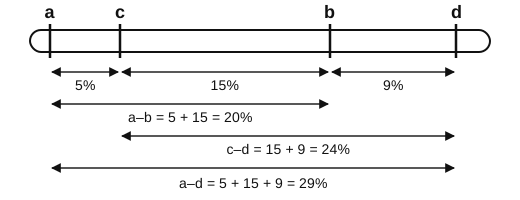
- The largest value, a–d = 29%, means a and d are the two ends.
- a–c = 5% (closest to a) and b–d = 9% (closest to d) ⇒ order a – c – b – d.
- Check: a–b = 5 + 15 = 20 ✔; c–d = 15 + 9 = 24 ✔; a–d = 5 + 15 + 9 = 29 ✔ (see map).
Short trick: Largest % = two ends; then place the smallest pairs next to their ends and verify additivity.
Answer: (D) a, c, b, d
अवधारणा: पुनर्योजन आवृत्ति जीनों के बीच की दूरी के समानुपाती होती है (1% = 1 मानचित्र इकाई); आसन्न जीनों की दूरियाँ जुड़ती हैं।
- सबसे बड़ा मान, a–d = 29%, अर्थात् a और d दोनों सिरों पर हैं।
- a–c = 5% (a के सबसे निकट) तथा b–d = 9% (d के सबसे निकट) ⇒ क्रम a – c – b – d।
- जाँच: a–b = 5 + 15 = 20 ✔; c–d = 15 + 9 = 24 ✔; a–d = 5 + 15 + 9 = 29 ✔ (मानचित्र देखें)।
शॉर्ट ट्रिक: सबसे बड़ा % = दोनों सिरे; फिर सबसे छोटे युग्मों को उनके सिरों के पास रखें और योग की जाँच करें।
उत्तर: (D) a, c, b, d
NEET UGZoologyPrinciples of inheritance – linkage and gene mappingNEET UG 2022 · 17 Jul Shift 1
Q950.Match list I with list II. Choose the correct answer from the options given below:
| List I | List II |
|---|
| (a) Glycogen | (i) Hormone |
| (b) Globulin | (ii) Biocatalyst |
| (c) Steroids | (iii) Antibody |
| (d) Thrombin | (iv) Storage product |
सूची I का सूची II से मिलान कीजिए। नीचे दिए गए विकल्पों में से सही उत्तर चुनिए:
| सूची I | सूची II |
|---|
| (a) ग्लाइकोजन | (i) हॉर्मोन |
| (b) ग्लोबुलिन | (ii) जैव-उत्प्रेरक |
| (c) स्टेरॉयड | (iii) प्रतिरक्षी (Antibody) |
| (d) थ्रोम्बिन | (iv) संचित उत्पाद |
- A(a)- (iii); (b) - (ii); (c) - (iv); (d) - (i)
- B(a)- (iv); (b) - (ii); (c) - (i); (d) - (iii)
- C(a)- (ii); (b) - (iv); (c) - (iii); (d) - (i)
- D(a)- (iv); (b) - (iii); (c) - (i); (d) - (ii)
Show answer
Concept: Match each biomolecule with its role.
- Glycogen – storage polysaccharide of animals → (iv) storage product.
- Globulin – immunoglobulins (antibodies) are globulins → (iii) antibody.
- Steroids – many hormones (testosterone, oestrogen, cortisol) are steroids → (i) hormone.
- Thrombin – enzyme converting fibrinogen to fibrin → (ii) biocatalyst.
Short trick: Glycogen = storage is certain (a-iv) → only (B) and (D) remain; thrombin is an enzyme (d-ii) → (D).
Answer: (D) (a)- (iv); (b) - (iii); (c) - (i); (d) - (ii)
अवधारणा: प्रत्येक जैव-अणु का उसके कार्य से मिलान करें।
- ग्लाइकोजन – जंतुओं का संचित पॉलीसैकेराइड → (iv) संचित उत्पाद।
- ग्लोबुलिन – इम्युनोग्लोबुलिन (प्रतिरक्षी) ग्लोबुलिन हैं → (iii) प्रतिरक्षी।
- स्टेरॉयड – अनेक हॉर्मोन (टेस्टोस्टेरोन, एस्ट्रोजन, कॉर्टिसोल) स्टेरॉयड हैं → (i) हॉर्मोन।
- थ्रोम्बिन – फ़ाइब्रिनोजन को फ़ाइब्रिन में बदलने वाला एंजाइम → (ii) जैव-उत्प्रेरक।
शॉर्ट ट्रिक: ग्लाइकोजन = संचय निश्चित (a-iv) → केवल (B) और (D) बचते हैं; थ्रोम्बिन एंजाइम है (d-ii) → (D)।
उत्तर: (D) (a)- (iv); (b) - (iii); (c) - (i); (d) - (ii)
NEET UGZoologyBiomolecules – functions of biomoleculesNEET UG 2022 · 17 Jul Shift 1
Q951.Match list I with list II with respect to methods of contraception and their respective actions. Choose the correct answer from the options given below:
| List I | List II |
|---|
| (a) Diaphragms | (i) Inhibit ovulation and Implantation |
| (b) Contraception Pills | (ii) Increase phagocytosis of sperm within Uterus |
| (c) Intrauterine Devices | (iii) Absences of Menstrual cycle and ovulation following parturition |
| (d) Lactational Amenorrhea | (iv) They cover the cervix blocking the entry of sperms |
गर्भनिरोध की विधियों और उनकी संबंधित क्रियाओं के संदर्भ में सूची I का सूची II से मिलान कीजिए। नीचे दिए गए विकल्पों में से सही उत्तर चुनिए:
| सूची I | सूची II |
|---|
| (a) डायाफ्राम | (i) अंडोत्सर्ग और रोपण (implantation) का संदमन |
| (b) गर्भनिरोधक गोलियाँ | (ii) गर्भाशय में शुक्राणुओं की भक्षकाणुक्रिया में वृद्धि |
| (c) अंतर्गर्भाशयी युक्तियाँ (IUDs) | (iii) प्रसव के बाद आर्तव चक्र और अंडोत्सर्ग का अभाव |
| (d) दुग्धस्रवण अनार्तव (Lactational Amenorrhea) | (iv) ये गर्भाशय ग्रीवा को ढककर शुक्राणुओं का प्रवेश रोकते हैं |
- A(a)- (iv); (b) - (i); (c) - (iii); (d) - (ii)
- B(a)- (iv); (b) - (i); (c) - (ii); (d) - (iii)
- C(a)- (ii); (b) - (iv); (c) - (i); (d) - (iii)
- D(a)- (iii); (b) - (ii); (c) - (i); (d) - (iv)
Show answer
Concept: Match each contraceptive method with how it works (NCERT, Reproductive Health).
- Diaphragms, cervical caps, vaults – rubber barriers that cover the cervix and block sperm entry → (iv).
- Oral pills (progestogens or progestogen–oestrogen) – inhibit ovulation and implantation → (i).
- IUDs – increase phagocytosis of sperms within the uterus (Cu ions also suppress sperm motility) → (ii).
- Lactational amenorrhoea – absence of menstruation and ovulation during intense lactation after parturition → (iii).
Short trick: a-iv and b-i are common to (A) and (B); IUD = phagocytosis (ii) decides (B).
Answer: (B) (a)- (iv); (b) - (i); (c) - (ii); (d) - (iii)
अवधारणा: प्रत्येक गर्भनिरोधक विधि का उसकी क्रिया-विधि से मिलान करें (NCERT, जनन स्वास्थ्य)।
- डायाफ्राम, ग्रीवा टोपी, वॉल्ट – रबर के रोध जो गर्भाशय ग्रीवा को ढककर शुक्राणु प्रवेश रोकते हैं → (iv)।
- मुखीय गोलियाँ (प्रोजेस्टोजन या प्रोजेस्टोजन–एस्ट्रोजन) – अंडोत्सर्ग और रोपण का संदमन → (i)।
- IUD – गर्भाशय में शुक्राणुओं की भक्षकाणुक्रिया बढ़ाते हैं (Cu आयन शुक्राणु गतिशीलता भी घटाते हैं) → (ii)।
- दुग्धस्रवण अनार्तव – प्रसव के बाद तीव्र स्तनपान काल में आर्तव और अंडोत्सर्ग का अभाव → (iii)।
शॉर्ट ट्रिक: a-iv और b-i, (A) व (B) दोनों में हैं; IUD = भक्षकाणुक्रिया (ii) से (B) तय होता है।
उत्तर: (B) (a)- (iv); (b) - (i); (c) - (ii); (d) - (iii)
NEET UGZoologyReproductive health – methods of contraceptionNEET UG 2022 · 17 Jul Shift 1
Q952.Which of the following are not the effects of Parathyroid hormone?
a. Stimulates the process of bone resorption,
b. Decreases Ca2+ level in blood,
c. Reabsorption of Ca2+ by renal tubules,
d. Decreases the absorption of Ca2+ from digested food,
e. Increases metabolism of carbohydrates.
Choose the most appropriate answer from the options given below
निम्नलिखित में से कौन-से पैराथाइरॉइड हॉर्मोन के प्रभाव नहीं हैं?
a. अस्थि पुनर्शोषण (bone resorption) की प्रक्रिया को उद्दीपित करता है,
b. रुधिर में Ca2+ का स्तर घटाता है,
c. वृक्क नलिकाओं द्वारा Ca2+ का पुनरवशोषण,
d. पचे हुए भोजन से Ca2+ का अवशोषण घटाता है,
e. कार्बोहाइड्रेटों के उपापचय को बढ़ाता है।
नीचे दिए गए विकल्पों में से सबसे उपयुक्त उत्तर चुनिए
- A(a) and (c) onlyकेवल (a) और (c)
- B(b), (d) and (e) onlyकेवल (b), (d) और (e)
- C(a) and (e) onlyकेवल (a) और (e)
- D(b) and (c) onlyकेवल (b) और (c)
Show answer
Concept: PTH is a hypercalcaemic hormone – it raises blood Ca2+ by acting on bone, kidney and gut.
- a – effect ✔: stimulates bone resorption (demineralisation).
- b – NOT an effect: PTH increases, not decreases, blood Ca2+ (lowering is done by thyrocalcitonin).
- c – effect ✔: stimulates reabsorption of Ca2+ by renal tubules.
- d – NOT an effect: PTH increases Ca2+ absorption from digested food.
- e – NOT an effect: carbohydrate metabolism is mainly regulated by thyroid hormones, insulin, glucagon, glucocorticoids.
Short trick: PTH = "Puts The calcium High" – anything that lowers Ca2+ is not PTH.
Answer: (B) (b), (d) and (e) only
अवधारणा: PTH अतिकैल्शियमरक्तता (hypercalcaemic) हॉर्मोन है – यह अस्थि, वृक्क और आंत पर कार्य करके रुधिर Ca2+ बढ़ाता है।
- a – प्रभाव ✔: अस्थि पुनर्शोषण (विखनिजीकरण) को उद्दीपित करता है।
- b – प्रभाव नहीं: PTH रुधिर Ca2+ को बढ़ाता है, घटाता नहीं (घटाने का कार्य थायरोकैल्सिटोनिन करता है)।
- c – प्रभाव ✔: वृक्क नलिकाओं द्वारा Ca2+ का पुनरवशोषण उद्दीपित करता है।
- d – प्रभाव नहीं: PTH पचे भोजन से Ca2+ का अवशोषण बढ़ाता है।
- e – प्रभाव नहीं: कार्बोहाइड्रेट उपापचय मुख्यतः थायरॉइड हॉर्मोन, इंसुलिन, ग्लूकागॉन, ग्लूकोकॉर्टिकॉइड नियंत्रित करते हैं।
शॉर्ट ट्रिक: PTH = "Puts The calcium High" – Ca2+ घटाने वाला कोई भी प्रभाव PTH का नहीं।
उत्तर: (B) केवल (b), (d) और (e)
NEET UGZoologyChemical coordination – parathyroid hormoneNEET UG 2022 · 17 Jul Shift 1
Q953.Select the incorrect statement with respect to acquired immunity:
उपार्जित प्रतिरक्षा के संबंध में गलत कथन चुनिए:
- APrimary response is produced when our body encounters a pathogen for the first time.जब हमारा शरीर पहली बार किसी रोगजनक से मिलता है तब प्राथमिक अनुक्रिया उत्पन्न होती है।
- BAnamnestic response is elicited on subsequent encounters with the same pathogenउसी रोगजनक से बाद में मिलने पर स्मरण (anamnestic) अनुक्रिया उत्पन्न होती है
- CAnamnestic response is due to memory of first encounterस्मरण अनुक्रिया पहली भेंट की स्मृति के कारण होती है
- DAcquired immunity is non-specific type of defense present at the time of birthउपार्जित प्रतिरक्षा जन्म के समय उपस्थित अविशिष्ट प्रकार की रक्षा है
Show answer
Concept: Acquired immunity is pathogen-specific and is characterised by memory; innate immunity is non-specific and present at birth.
- (A) Correct – first encounter gives a low-intensity primary response.
- (B), (C) Correct – later encounters give a highly intensified secondary (anamnestic) response, because the body remembers the first encounter.
- (D) Incorrect – this describes innate immunity, not acquired immunity.
Short trick: Innate = "In-born, non-specific"; Acquired = "Acquired later, specific + memory".
Answer: (D) Acquired immunity is non-specific type of defense present at the time of birth
अवधारणा: उपार्जित प्रतिरक्षा रोगजनक-विशिष्ट होती है और इसकी विशेषता स्मृति है; सहज प्रतिरक्षा अविशिष्ट होती है और जन्म से उपस्थित रहती है।
- (A) सही – पहली भेंट में कम तीव्रता की प्राथमिक अनुक्रिया होती है।
- (B), (C) सही – बाद की भेंटों में अत्यधिक तीव्र द्वितीयक (स्मरण) अनुक्रिया होती है, क्योंकि शरीर पहली भेंट को याद रखता है।
- (D) गलत – यह सहज प्रतिरक्षा का वर्णन है, उपार्जित प्रतिरक्षा का नहीं।
शॉर्ट ट्रिक: सहज = "जन्मजात, अविशिष्ट"; उपार्जित = "बाद में प्राप्त, विशिष्ट + स्मृति"।
उत्तर: (D) उपार्जित प्रतिरक्षा जन्म के समय उपस्थित अविशिष्ट प्रकार की रक्षा है
NEET UGZoologyHuman health and disease – immunityNEET UG 2022 · 17 Jul Shift 1
Q954.Ten E. coli cells with 15N- dsDNA are incubated in a medium containing 14N nucleotides. After 60 minutes, how many E. coli cells will have DNA totally free from 15N?
15N-dsDNA वाली दस E. coli कोशिकाओं को 14N न्यूक्लियोटाइड वाले माध्यम में ऊष्मायित किया जाता है। 60 मिनट के बाद कितनी E. coli कोशिकाओं का DNA 15N से पूर्णतः मुक्त होगा?
- A20 cells20 कोशिकाएँ
- B40 cells40 कोशिकाएँ
- C60 cells60 कोशिकाएँ
- D80 cells80 कोशिकाएँ
Show answer
Concept: Replication is semiconservative (Meselson–Stahl), and E. coli divides every 20 minutes ⇒ 60 min = 3 generations.
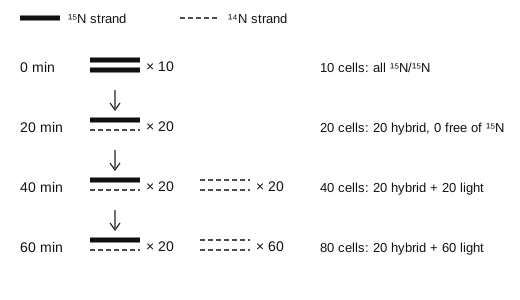
- Total cells = 10 × 23 = 80.
- The 2 heavy strands of each original DNA are never destroyed; they end up in 2 hybrid (15N/14N) molecules ⇒ 10 × 2 = 20 hybrid cells in every generation after the first.
- Cells free of 15N = 80 − 20 = 60 (generation-wise: 10 → 20 hybrid → 20 hybrid + 20 light → 20 hybrid + 60 light).
Short trick: Light-only cells = N·2n − 2N = 10·8 − 20 = 60.
Answer: (C) 60 cells
अवधारणा: प्रतिकृतियन अर्धसंरक्षी होता है (मेसेल्सन–स्टाल), और E. coli प्रत्येक 20 मिनट में विभाजित होता है ⇒ 60 मिनट = 3 पीढ़ियाँ।
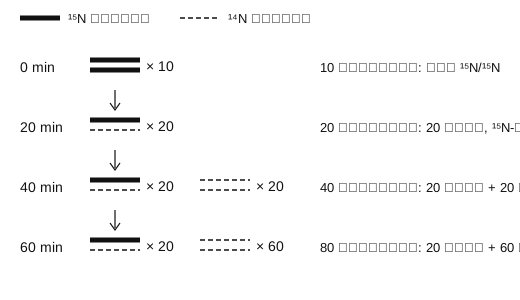
- कुल कोशिकाएँ = 10 × 23 = 80।
- प्रत्येक मूल DNA के 2 भारी रज्जुक कभी नष्ट नहीं होते; वे 2 संकर (15N/14N) अणुओं में पहुँचते हैं ⇒ पहली पीढ़ी के बाद हर पीढ़ी में 10 × 2 = 20 संकर कोशिकाएँ।
- 15N-मुक्त कोशिकाएँ = 80 − 20 = 60 (पीढ़ीवार: 10 → 20 संकर → 20 संकर + 20 हल्की → 20 संकर + 60 हल्की)।
शॉर्ट ट्रिक: केवल हल्की कोशिकाएँ = N·2n − 2N = 10·8 − 20 = 60।
उत्तर: (C) 60 कोशिकाएँ
NEET UGZoologyMolecular basis of inheritance – semiconservative replicationNEET UG 2022 · 17 Jul Shift 1
Q955.If a colour blind female marries a man whose mother was also colour blind, what are the chances of her progeny having colour blindness?
यदि एक वर्णान्ध स्त्री ऐसे पुरुष से विवाह करती है जिसकी माता भी वर्णान्ध थी, तो उसकी संतति में वर्णान्धता होने की संभावना क्या है?
- A25%
- B50%
- C75%
- D100%
Show answer
Concept: Colour blindness is an X-linked recessive trait; a son always receives his X chromosome from his mother.
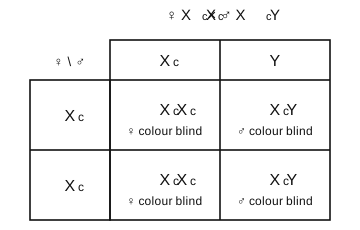
- Colour-blind female = XcXc.
- The man’s mother was colour blind (XcXc), so she gave him Xc ⇒ the man is XcY (colour blind).
- Cross XcXc × XcY: daughters XcXc, sons XcY – every child is colour blind = 100%.
Short trick: Colour-blind mother ⇒ all sons affected; colour-blind father too ⇒ all daughters affected as well.
Answer: (D) 100%
अवधारणा: वर्णान्धता X-सहलग्न अप्रभावी लक्षण है; पुत्र को X गुणसूत्र सदा माता से ही मिलता है।
- वर्णान्ध स्त्री = XcXc।
- पुरुष की माता वर्णान्ध (XcXc) थी, अतः उसने पुत्र को Xc दिया ⇒ पुरुष XcY (वर्णान्ध) है।
- संकरण XcXc × XcY: पुत्रियाँ XcXc, पुत्र XcY – प्रत्येक संतान वर्णान्ध = 100%।
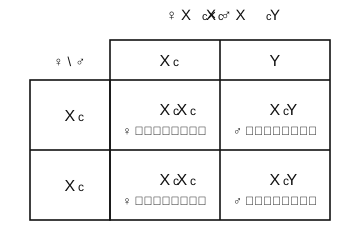
शॉर्ट ट्रिक: वर्णान्ध माता ⇒ सभी पुत्र प्रभावित; पिता भी वर्णान्ध ⇒ सभी पुत्रियाँ भी प्रभावित।
उत्तर: (D) 100%
NEET UGZoologyPrinciples of inheritance – sex-linked inheritanceNEET UG 2022 · 17 Jul Shift 1
Q956.Which of the following is not a desirable feature of a cloning vector?
निम्नलिखित में से कौन-सा एक क्लोनिंग वाहक का वांछनीय लक्षण नहीं है?
- APresence of origin of replicationप्रतिकृतियन उद्भव (origin of replication) की उपस्थिति
- BPresence of a marker geneचिह्नक (marker) जीन की उपस्थिति
- CPresence of single restriction enzyme siteएकल प्रतिबंधन एंजाइम स्थल की उपस्थिति
- DPresence of two or more recognition sitesदो या अधिक पहचान स्थलों की उपस्थिति
Show answer
Concept: A cloning vector needs: ori (to replicate and control copy number), a selectable marker, and very few – preferably single – recognition sites for the commonly used restriction enzymes.
- (A), (B), (C) are desirable features.
- (D) Two or more recognition sites for the same enzyme would cut the vector into several fragments and complicate gene cloning – not desirable.
Short trick: Vector should open at ONE door only – "one cut, one insert".
Answer: (D) Presence of two or more recognition sites
अवधारणा: क्लोनिंग वाहक में होना चाहिए: ori (प्रतिकृतियन और प्रति-संख्या नियंत्रण हेतु), वरणयोग्य चिह्नक, और सामान्यतः प्रयुक्त प्रतिबंधन एंजाइमों के बहुत कम – अधिमानतः एकल – पहचान स्थल।
- (A), (B), (C) वांछनीय लक्षण हैं।
- (D) एक ही एंजाइम के दो या अधिक पहचान स्थल वाहक को कई खंडों में काट देंगे और जीन क्लोनिंग को जटिल बना देंगे – वांछनीय नहीं।
शॉर्ट ट्रिक: वाहक केवल एक दरवाज़े से खुले – "एक कट, एक प्रवेश"।
उत्तर: (D) दो या अधिक पहचान स्थलों की उपस्थिति
NEET UGZoologyBiotechnology: principles and processes – cloning vectorsNEET UG 2022 · 17 Jul Shift 1
Q957.Match list I with list II.
| List I | List II |
|---|
| (a) Bronchioles | (i) Dense Regular Connective Tissue |
| (b) Goblet Cell | (ii) Loose Connective Tissue |
| (c) Tendons | (iii) Glandular Tissue |
| (d) Adipose Tissue | (iv) Ciliated Epithelium |
सूची I का सूची II से मिलान कीजिए।
| सूची I | सूची II |
|---|
| (a) श्वसनिकाएँ (Bronchioles) | (i) सघन नियमित संयोजी ऊतक |
| (b) कलश कोशिका (Goblet cell) | (ii) शिथिल संयोजी ऊतक |
| (c) कंडराएँ (Tendons) | (iii) ग्रंथिल ऊतक |
| (d) वसा ऊतक | (iv) पक्ष्माभी उपकला (Ciliated epithelium) |
- A(a)- (iv); (b) - (iii); (c) - (i); (d) - (ii)
- B(a)- (i); (b) - (ii); (c) - (iii); (d) - (iv)
- C(a)- (ii); (b) - (i); (c) - (iv); (d) - (iii)
- D(a)- (iii); (b) - (iv); (c) - (ii); (d) - (i)
Show answer
Concept: NCERT examples of animal tissues.
- Bronchioles – lined by ciliated epithelium that moves mucus → (iv).
- Goblet cells of the alimentary canal – unicellular glandular epithelium → (iii).
- Tendons – dense regular connective tissue (parallel collagen fibres) attaching muscle to bone → (i).
- Adipose tissue – loose connective tissue storing fat beneath the skin → (ii).
Short trick: Tendon = dense regular (i) appears only in option (A) – done in one step.
Answer: (A) (a)- (iv); (b) - (iii); (c) - (i); (d) - (ii)
अवधारणा: NCERT में दिए जंतु ऊतकों के उदाहरण।
- श्वसनिकाएँ – पक्ष्माभी उपकला से आस्तरित, जो श्लेष्मा को आगे बढ़ाती है → (iv)।
- आहार नाल की कलश कोशिकाएँ – एककोशिकीय ग्रंथिल उपकला → (iii)।
- कंडराएँ – सघन नियमित संयोजी ऊतक (समानांतर कोलेजन तंतु), जो पेशी को अस्थि से जोड़ती हैं → (i)।
- वसा ऊतक – त्वचा के नीचे वसा संचित करने वाला शिथिल संयोजी ऊतक → (ii)।
शॉर्ट ट्रिक: कंडरा = सघन नियमित (i) केवल विकल्प (A) में है – एक ही चरण में उत्तर।
उत्तर: (A) (a)- (iv); (b) - (iii); (c) - (i); (d) - (ii)
NEET UGZoologyStructural organisation in animals – animal tissuesNEET UG 2022 · 17 Jul Shift 1
Q958.Which one of the following statements is correct?
निम्नलिखित में से कौन-सा एक कथन सही है?
- AThe atrioventricular node (AVN) generates an action potential to stimulate atrial contractionअलिंद-निलय पर्व (AVN) अलिंद संकुचन को उद्दीपित करने के लिए क्रिया विभव उत्पन्न करता है
- BThe tricuspid and the bicuspid valves open due to the pressure exerted by the simultaneous contraction of the atriaत्रिवलनी और द्विवलनी कपाट अलिंदों के एक साथ संकुचन से उत्पन्न दबाव के कारण खुलते हैं
- CBlood moves freely from atrium to the ventricle during joint diastoleसंयुक्त अनुशिथिलन (joint diastole) के दौरान रुधिर अलिंद से निलय में स्वतंत्र रूप से जाता है
- DIncreased ventricular pressure causes closing of the semilunar valvesनिलय दाब में वृद्धि से अर्धचंद्र कपाट बंद हो जाते हैं
Show answer
Concept: NCERT cardiac cycle: during joint diastole all four chambers are relaxed; AV valves are open, semilunar valves closed, so blood flows from veins through the atria into the ventricles.
- (A) Wrong – the SA node (pacemaker) generates the action potential that stimulates atrial systole.
- (B) Wrong – tricuspid and bicuspid valves open when ventricular pressure falls below atrial pressure (blood filling the atria from veins), not because of atrial contraction; atrial systole only adds about 30% more blood.
- (C) Correct ✔.
- (D) Wrong – decreasing ventricular pressure (ventricular diastole) makes the semilunar valves close; increased pressure opens them.
Short trick: Valves obey pressure: high pressure behind a valve opens it, high pressure in front shuts it.
Answer: (C) Blood moves freely from atrium to the ventricle during joint diastole
अवधारणा: NCERT हृद् चक्र: संयुक्त अनुशिथिलन में चारों कक्ष शिथिल रहते हैं; अलिंद-निलय कपाट खुले और अर्धचंद्र कपाट बंद रहते हैं, अतः रुधिर शिराओं से अलिंदों से होते हुए निलयों में जाता है।
- (A) गलत – शिराअलिंद पर्व (SAN, गति-प्रेरक) क्रिया विभव उत्पन्न करता है जो अलिंद प्रकुंचन को उद्दीपित करता है।
- (B) गलत – त्रिवलनी व द्विवलनी कपाट तब खुलते हैं जब निलय दाब अलिंद दाब से कम हो जाता है (शिराओं से अलिंदों में भरता रुधिर), अलिंद संकुचन से नहीं; अलिंद प्रकुंचन केवल लगभग 30% अतिरिक्त रुधिर भेजता है।
- (C) सही ✔।
- (D) गलत – निलय दाब घटने (निलय अनुशिथिलन) से अर्धचंद्र कपाट बंद होते हैं; दाब बढ़ने पर वे खुलते हैं।
शॉर्ट ट्रिक: कपाट दाब का पालन करते हैं: पीछे अधिक दाब कपाट खोलता है, आगे अधिक दाब उसे बंद करता है।
उत्तर: (C) संयुक्त अनुशिथिलन के दौरान रुधिर अलिंद से निलय में स्वतंत्र रूप से जाता है
NEET UGZoologyBody fluids and circulation – cardiac cycleNEET UG 2022 · 17 Jul Shift 1
Q959.Select the incorrect statement regarding synapses:
सिनैप्स (synapses) के संबंध में गलत कथन चुनिए:
- AThe membranes of presynaptic and postsynaptic neurons are in close proximity in an electrical synapse.विद्युत सिनैप्स में पूर्व-सिनैप्टिक और पश्च-सिनैप्टिक न्यूरॉनों की झिल्लियाँ अत्यंत निकट होती हैं।
- BElectrical current can flow directly from one neuron into the other across the electrical synapse.विद्युत सिनैप्स के पार विद्युत धारा सीधे एक न्यूरॉन से दूसरे में प्रवाहित हो सकती है।
- CChemical synapse use neurotransmittersरासायनिक सिनैप्स तंत्रिकाप्रेषकों (neurotransmitters) का उपयोग करते हैं
- DImpulse transmission across a chemical synapse is always faster than that across an electrical synapseरासायनिक सिनैप्स के पार आवेग का संचरण सदा विद्युत सिनैप्स की अपेक्षा तेज़ होता है
Show answer
Concept: NCERT: at electrical synapses the membranes are very close and current flows directly; transmission is very similar to conduction along a single axon and is always faster than across a chemical synapse.
- (A), (B) Correct – features of electrical synapses.
- (C) Correct – chemical synapses release neurotransmitters (e.g. acetylcholine) into the synaptic cleft.
- (D) Incorrect – it is the reverse: electrical synapse is faster (no synaptic delay of transmitter release and diffusion).
Short trick: Electric = "wire" (instant); chemical = "courier" (release–diffuse–bind) ⇒ slower.
Answer: (D) Impulse transmission across a chemical synapse is always faster than that across an electrical synapse
अवधारणा: NCERT: विद्युत सिनैप्स में झिल्लियाँ अत्यंत निकट होती हैं और धारा सीधे प्रवाहित होती है; संचरण एकल तंत्रिकाक्ष के साथ चालन जैसा ही होता है और रासायनिक सिनैप्स की अपेक्षा सदा तेज़ होता है।
- (A), (B) सही – विद्युत सिनैप्स के लक्षण।
- (C) सही – रासायनिक सिनैप्स सिनैप्टिक दरार में तंत्रिकाप्रेषक (जैसे ऐसीटिलकोलीन) मुक्त करते हैं।
- (D) गलत – बात उलटी है: विद्युत सिनैप्स तेज़ होता है (प्रेषक के मोचन और विसरण की सिनैप्टिक देरी नहीं होती)।
शॉर्ट ट्रिक: विद्युत = "तार" (तत्काल); रासायनिक = "कूरियर" (मोचन–विसरण–बंधन) ⇒ धीमा।
उत्तर: (D) रासायनिक सिनैप्स के पार आवेग का संचरण सदा विद्युत सिनैप्स की अपेक्षा तेज़ होता है
NEET UGZoologyNeural control and coordination – synapseNEET UG 2022 · 17 Jul Shift 1
Q960.Which of the following statements is not true?
निम्नलिखित में से कौन-सा कथन सत्य नहीं है?
- AAnalogous structures are a result of convergent evolutionसमरूप (analogous) संरचनाएँ अभिसारी विकास का परिणाम हैं
- BSweet potato and potato is an example of analogyशकरकंद और आलू समरूपता का उदाहरण हैं
- CHomology indicates common ancestryसमजातता (homology) उभयनिष्ठ पूर्वज का संकेत देती है
- DFlippers of penguins and dolphins are a pair of homologous organsपेंगुइन और डॉल्फ़िन के फ्लिपर समजात अंगों का युग्म हैं
Show answer
Concept: Homologous organs = same origin/structure, different function (divergent evolution); analogous organs = different origin, similar function (convergent evolution).
- (A) True – analogy results from convergent evolution.
- (B) True – sweet potato (root modification) and potato (stem modification) are analogous.
- (C) True – homology indicates common ancestry.
- (D) Not true – flippers of penguin (bird) and dolphin (mammal) evolved independently for swimming – they are analogous.
Short trick: NCERT analogy list: wings of butterfly & bird, eyes of octopus & mammals, flippers of penguins & dolphins, sweet potato & potato.
Answer: (D) Flippers of penguins and dolphins are a pair of homologous organs
अवधारणा: समजात अंग = समान उत्पत्ति/संरचना, भिन्न कार्य (अपसारी विकास); समरूप अंग = भिन्न उत्पत्ति, समान कार्य (अभिसारी विकास)।
- (A) सत्य – समरूपता अभिसारी विकास का परिणाम है।
- (B) सत्य – शकरकंद (जड़ रूपांतरण) और आलू (तना रूपांतरण) समरूप हैं।
- (C) सत्य – समजातता उभयनिष्ठ पूर्वज का संकेत देती है।
- (D) सत्य नहीं – पेंगुइन (पक्षी) और डॉल्फ़िन (स्तनधारी) के फ्लिपर तैरने हेतु स्वतंत्र रूप से विकसित हुए – ये समरूप हैं।
शॉर्ट ट्रिक: NCERT समरूपता सूची: तितली व पक्षी के पंख, ऑक्टोपस व स्तनधारी की आँखें, पेंगुइन व डॉल्फ़िन के फ्लिपर, शकरकंद व आलू।
उत्तर: (D) पेंगुइन और डॉल्फ़िन के फ्लिपर समजात अंगों का युग्म हैं
NEET UGZoologyEvolution – homology and analogyNEET UG 2022 · 17 Jul Shift 1

