NEET UG · 2,240 questions

NEET UG 2015, 2016, 2017, 2018, 2019, 2020, 2021, 2022, 2023, 2024, 2025, 2026 PYQs

Real previous year questions, subject-wise. Try the question, then open the answer and the explanation in Hindi & English – free, no login.

Courses – airGurukul

2,240 questions.

Q141.
Natural selection can lead to ________.
(a) stabilisation
(b) genetic drift
(c) directional change
(d) disruption
Choose the correct answer from the options given below :
प्राकृतिक वरण ________ की ओर ले जा सकता है।
(a) स्थायीकरण (stabilisation)
(b) आनुवंशिक विचलन (genetic drift)
(c) दिशात्मक परिवर्तन
(d) विदारण (disruption)
नीचे दिए गए विकल्पों में से सही उत्तर चुनिए :
  1. A(a) onlyकेवल (a)
  2. B(a), (c) and (d) onlyकेवल (a), (c) और (d)
  3. C(a), (b), (c) and (d)(a), (b), (c) और (d)
  4. D(a) and (c) onlyकेवल (a) और (c)
Show answer

Concept: NCERT: natural selection can lead to stabilisation (more individuals acquire mean character value), directional change (more individuals acquire value other than the mean) or disruption (more individuals acquire peripheral values at both ends).

  1. (a), (c), (d) – the three types of natural selection – correct.
  2. (b) Genetic drift is a separate factor of evolution: a chance change in allele frequency (founder effect) – it is not an outcome of natural selection.
  3. Hence (a), (c) and (d) only.

Short trick: Selection = "S-D-D": Stabilising, Directional, Disruptive. Drift is random, selection is not.

Answer: (B) (a), (c) and (d) only

अवधारणा: NCERT: प्राकृतिक वरण से स्थायीकरण (अधिक जीव माध्य लक्षण-मान प्राप्त करते हैं), दिशात्मक परिवर्तन (अधिक जीव माध्य से भिन्न मान प्राप्त करते हैं) या विदारण (अधिक जीव वितरण के दोनों छोरों के मान प्राप्त करते हैं) हो सकता है।

  1. (a), (c), (d) – प्राकृतिक वरण के तीन प्रकार – सही।
  2. (b) आनुवंशिक विचलन विकास का एक अलग कारक है: अलील आवृत्ति में संयोगवश परिवर्तन (संस्थापक प्रभाव) – यह प्राकृतिक वरण का परिणाम नहीं है।
  3. अतः केवल (a), (c) और (d)।

शॉर्ट ट्रिक: वरण = "स्थायीकारी, दिशात्मक, विदारक" (S-D-D)। विचलन यादृच्छिक है, वरण नहीं।

उत्तर: (B) केवल (a), (c) और (d)
NEET UGBiologyEvolution – natural selectionNEET UG 2026 · 21 Jun Shift 1
Q142.
The method of directly injecting a sperm into ovum in assisted reproductive technology is called :
सहायक जनन प्रौद्योगिकी में शुक्राणु को सीधे अंडाणु में अंतःक्षेपित करने की विधि कहलाती है :
  1. AGamete intra fallopian transfer (GIFT)युग्मक अंतः फैलोपियन स्थानांतरण (GIFT)
  2. BZygote intra fallopian transfer (ZIFT)युग्मनज अंतः फैलोपियन स्थानांतरण (ZIFT)
  3. CIntra cytoplasmic sperm injection (ICSI)अंतः कोशिकाद्रव्यी शुक्राणु निक्षेपण (ICSI)
  4. DEmbryo transfer (ET)भ्रूण स्थानांतरण (ET)
Show answer

Concept: ICSI is a specialised procedure to form an embryo in the laboratory in which a sperm is directly injected into the ovum.

  1. GIFT – transfer of an ovum collected from a donor into the fallopian tube of a female who cannot produce ova.
  2. ZIFT – zygote or early embryo (up to 8 blastomeres) transferred into the fallopian tube.
  3. ICSI – sperm injected directly into the cytoplasm of the ovum → correct.
  4. ET – general term for transfer of embryo (IUT for embryo with more than 8 blastomeres into uterus).

Short trick: Read the full form: Intra-Cytoplasmic Sperm Injection = injection of sperm into the ovum's cytoplasm.

Answer: (C) Intra cytoplasmic sperm injection (ICSI)

अवधारणा: ICSI एक विशेष प्रक्रिया है जिसमें प्रयोगशाला में भ्रूण बनाने के लिए शुक्राणु को सीधे अंडाणु में अंतःक्षेपित किया जाता है।

  1. GIFT – दाता से लिया गया अंडाणु उस स्त्री की फैलोपियन नलिका में स्थानांतरित किया जाता है जो अंडाणु नहीं बना सकती।
  2. ZIFT – युग्मनज या प्रारंभिक भ्रूण (8 कोरकखंडों तक) फैलोपियन नलिका में स्थानांतरित।
  3. ICSI – शुक्राणु सीधे अंडाणु के कोशिकाद्रव्य में अंतःक्षेपित → सही।
  4. ET – भ्रूण स्थानांतरण का सामान्य नाम (8 से अधिक कोरकखंडों वाला भ्रूण गर्भाशय में – IUT)।

शॉर्ट ट्रिक: पूरा नाम पढ़ें: अंतः-कोशिकाद्रव्यी शुक्राणु निक्षेपण = अंडाणु के कोशिकाद्रव्य में शुक्राणु का इंजेक्शन।

उत्तर: (C) अंतः कोशिकाद्रव्यी शुक्राणु निक्षेपण (ICSI)

NEET UGBiologyReproductive health – ARTNEET UG 2026 · 21 Jun Shift 1
Q143.
Which of the following structure is not a part of the male reproductive system ?
निम्नलिखित में से कौन-सी संरचना नर जनन तंत्र का भाग नहीं है?
  1. ARete testisवृषण जालिका (rete testis)
  2. BEpididymisअधिवृषण (epididymis)
  3. CVasa efferentiaशुक्रवाहिकाएँ (vasa efferentia)
  4. DInfundibulumकीपक (infundibulum)
Show answer

Concept: Male accessory ducts: rete testis → vasa efferentia → epididymis → vas deferens → ejaculatory duct → urethra.

  1. Rete testis, vasa efferentia and epididymis are all male accessory ducts.
  2. Infundibulum is the funnel-shaped part of the fallopian tube (oviduct) closest to the ovary, with finger-like fimbriae – female structure.

Short trick: Male duct order "Red Van Enters Village" – Rete, Vasa efferentia, Epididymis, Vas deferens. Infundibulum–ampulla–isthmus = oviduct.

Answer: (D) Infundibulum

अवधारणा: नर सहायक नलिकाएँ: वृषण जालिका → शुक्रवाहिकाएँ → अधिवृषण → शुक्रवाहक → स्खलनीय वाहिनी → मूत्रमार्ग।

  1. वृषण जालिका, शुक्रवाहिकाएँ और अधिवृषण सभी नर सहायक नलिकाएँ हैं।
  2. कीपक (infundibulum) फैलोपियन नलिका (अंडवाहिनी) का अंडाशय के निकट कीप-आकार का भाग है, जिसमें अंगुली-सदृश झालर (fimbriae) होती है – मादा संरचना।

शॉर्ट ट्रिक: नर नलिका क्रम: वृषण जालिका → शुक्रवाहिकाएँ → अधिवृषण → शुक्रवाहक। कीपक–तुंबिका–संकीर्ण पथ = अंडवाहिनी।

उत्तर: (D) कीपक (infundibulum)

NEET UGBiologyHuman reproduction – male reproductive systemNEET UG 2026 · 21 Jun Shift 1
Q144.
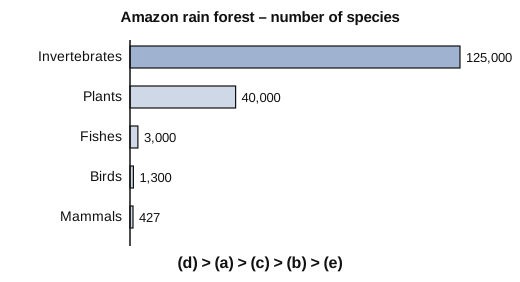
Arrange the following in descending order of number of species in the Amazonian rain forest.
(a) Plants
(b) Birds
(c) Fishes
(d) Invertebrates
(e) Mammals
Choose the correct answer from the options given below :
अमेज़न वर्षा वन में जातियों की संख्या के घटते क्रम में निम्नलिखित को व्यवस्थित कीजिए।
(a) पादप
(b) पक्षी
(c) मछलियाँ
(d) अकशेरुकी
(e) स्तनधारी
नीचे दिए गए विकल्पों में से सही उत्तर चुनिए :
  1. A(c) > (b) > (d) > (e) > (a)
  2. B(d) > (a) > (c) > (b) > (e)
  3. C(e) > (b) > (a) > (c) > (d)
  4. D(b) > (a) > (d) > (c) > (e)
Show answer

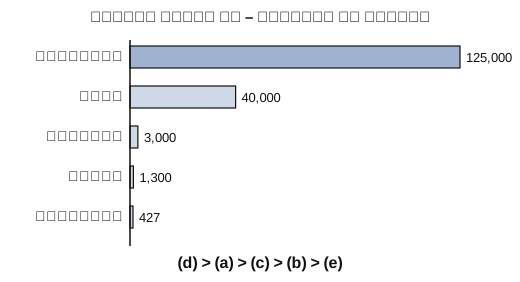
Concept: NCERT: the Amazonian rain forest has ~40,000 species of plants, 3,000 of fishes, 1,300 of birds, 427 of mammals, 427 of amphibians, 378 of reptiles and more than 1,25,000 invertebrates.

  1. Invertebrates (1,25,000+) > Plants (40,000) > Fishes (3,000) > Birds (1,300) > Mammals (427).
  2. i.e. (d) > (a) > (c) > (b) > (e).

Short trick: Invertebrates always top any species count; among vertebrates fishes > birds > mammals. Only option (B) starts with (d).

Answer: (B) (d) > (a) > (c) > (b) > (e)

अवधारणा: NCERT: अमेज़न वर्षा वन में लगभग 40,000 पादप जातियाँ, 3,000 मछलियाँ, 1,300 पक्षी, 427 स्तनधारी, 427 उभयचर, 378 सरीसृप तथा 1,25,000 से अधिक अकशेरुकी जातियाँ हैं।

  1. अकशेरुकी (1,25,000+) > पादप (40,000) > मछलियाँ (3,000) > पक्षी (1,300) > स्तनधारी (427)।
  2. अर्थात (d) > (a) > (c) > (b) > (e)।

शॉर्ट ट्रिक: जातियों की गिनती में अकशेरुकी सदैव सबसे ऊपर; कशेरुकियों में मछलियाँ > पक्षी > स्तनधारी। केवल विकल्प (B) (d) से शुरू होता है।

उत्तर: (B) (d) > (a) > (c) > (b) > (e)

NEET UGBiologyBiodiversity – Amazon rain forestNEET UG 2026 · 21 Jun Shift 1
Q145.
Given below are two statements :
Statement I : Ovulation is caused by LH surge leading to rupture of Graafian follicles.
Statement II : Graafian follicle remaining after ovulation transform into corpus luteum and secretes large amount of estrogen.
In the light of the above statements, choose the most appropriate answer from the options given below :
नीचे दो कथन दिए गए हैं :
कथन I : अंडोत्सर्ग LH प्रवाह (surge) के कारण होता है जिससे ग्राफी पुटक फट जाते हैं।
कथन II : अंडोत्सर्ग के बाद शेष ग्राफी पुटक पीत पिंड (corpus luteum) में बदल जाता है और बड़ी मात्रा में एस्ट्रोजन स्रावित करता है।
उपरोक्त कथनों के आलोक में, नीचे दिए गए विकल्पों में से सबसे उपयुक्त उत्तर चुनिए :
  1. ABoth Statement I and Statement II are correctकथन I और कथन II दोनों सही हैं
  2. BBoth Statement I and Statement II are incorrectकथन I और कथन II दोनों गलत हैं
  3. CStatement I is correct but Statement II is incorrectकथन I सही है लेकिन कथन II गलत है
  4. DStatement I is incorrect but Statement II is correctकथन I गलत है लेकिन कथन II सही है
Show answer

Concept: Mid-cycle LH surge induces rupture of the Graafian follicle → ovulation (~14th day). The remaining follicle becomes the corpus luteum, which secretes large amounts of progesterone.

  1. Statement I – correct (LH surge → ovulation).
  2. Statement II – incorrect: corpus luteum mainly secretes progesterone (essential to maintain the endometrium), not "large amount of estrogen".

Short trick: Corpus luteum = "Pregnancy Protector" → Progesterone. Follicle (follicular phase) = estrogen.

Answer: (C) Statement I is correct but Statement II is incorrect

अवधारणा: चक्र के मध्य में LH प्रवाह ग्राफी पुटक को फाड़ देता है → अंडोत्सर्ग (~14वाँ दिन)। शेष पुटक पीत पिंड बनता है जो बड़ी मात्रा में प्रोजेस्टेरॉन स्रावित करता है।

  1. कथन I – सही (LH प्रवाह → अंडोत्सर्ग)।
  2. कथन II – गलत: पीत पिंड मुख्यतः प्रोजेस्टेरॉन स्रावित करता है (गर्भाशय अंतःस्तर को बनाए रखने हेतु आवश्यक), "बड़ी मात्रा में एस्ट्रोजन" नहीं।

शॉर्ट ट्रिक: पीत पिंड = "गर्भ रक्षक" → प्रोजेस्टेरॉन। पुटक (पुटकीय प्रावस्था) = एस्ट्रोजन।

उत्तर: (C) कथन I सही है लेकिन कथन II गलत है

NEET UGBiologyMenstrual cycle – ovulation and corpus luteumNEET UG 2026 · 21 Jun Shift 1
Q146.
Which of the following are primary consumers in a food chain ?
खाद्य श्रृंखला में निम्नलिखित में से कौन प्राथमिक उपभोक्ता हैं?
  1. AParasitesपरजीवी
  2. BPredatorsपरभक्षी
  3. CHerbivoresशाकाहारी
  4. DCarnivoresमांसाहारी
Show answer

Concept: Producers (plants) → primary consumers (herbivores) → secondary consumers (primary carnivores) → tertiary consumers.

  1. Herbivores feed directly on producers → primary consumers (2nd trophic level).
  2. Carnivores feed on herbivores → secondary/tertiary consumers.
  3. Predators are mostly carnivores (higher consumers).
  4. Parasites may live on any host – not a defined trophic level for primary consumers.

Short trick: Primary = first eater of plants = herbivore (grasshopper, cow, deer).

Answer: (C) Herbivores

अवधारणा: उत्पादक (पादप) → प्राथमिक उपभोक्ता (शाकाहारी) → द्वितीयक उपभोक्ता (प्राथमिक मांसाहारी) → तृतीयक उपभोक्ता।

  1. शाकाहारी सीधे उत्पादकों को खाते हैं → प्राथमिक उपभोक्ता (दूसरा पोषी स्तर)।
  2. मांसाहारी शाकाहारियों को खाते हैं → द्वितीयक/तृतीयक उपभोक्ता।
  3. परभक्षी अधिकतर मांसाहारी होते हैं (उच्च उपभोक्ता)।
  4. परजीवी किसी भी परपोषी पर रह सकते हैं – प्राथमिक उपभोक्ता का निश्चित पोषी स्तर नहीं।

शॉर्ट ट्रिक: प्राथमिक = पौधों का पहला भक्षक = शाकाहारी (टिड्डा, गाय, हिरण)।

उत्तर: (C) शाकाहारी

NEET UGBiologyEcosystem – food chainNEET UG 2026 · 21 Jun Shift 1
Q147.
A population of diploid organisms is at Hardy-Weinberg equilibrium. If the frequency of allele A is 0.1, the frequency of AA is ________.
द्विगुणित जीवों की एक समष्टि हार्डी-वेनबर्ग साम्य में है। यदि अलील A की आवृत्ति 0.1 है, तो AA की आवृत्ति ________ है।
  1. A0.01
  2. B0.02
  3. C0.10
  4. D0.99
Show answer

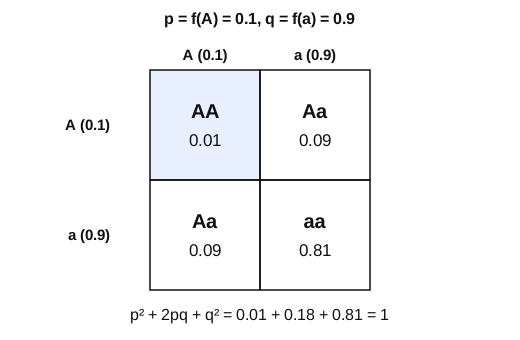
Concept: At Hardy-Weinberg equilibrium p2+2pq+q2=1, where p2 = frequency of homozygous dominant genotype AA.

  1. p=0.1, so q=1−0.1=0.9.
  2. Frequency of AA =p2=(0.1)2=0.01.
  3. Check: Aa =2pq=0.18, aa =q2=0.81; total =1.

Short trick: Genotype AA needs two A gametes: 0.1×0.1=0.01. 0.10 is the allele, not the genotype – a common trap.

Answer: (A) 0.01

अवधारणा: हार्डी-वेनबर्ग साम्य में p2+2pq+q2=1, जहाँ p2 = समयुग्मजी प्रभावी जीनोटाइप AA की आवृत्ति।

  1. p=0.1, अतः q=1−0.1=0.9।
  2. AA की आवृत्ति =p2=(0.1)2=0.01।
  3. जाँच: Aa =2pq=0.18, aa =q2=0.81; योग =1।

शॉर्ट ट्रिक: AA के लिए दो A युग्मक चाहिए: 0.1×0.1=0.01। 0.10 अलील आवृत्ति है, जीनोटाइप की नहीं – आम जाल।

उत्तर: (A) 0.01

NEET UGBiologyEvolution – Hardy-Weinberg principleNEET UG 2026 · 21 Jun Shift 1
Q148.
Match List-I with List-II.
List-IList-II
A. Excess growth hormoneI. Reabsorption of water and electrolytes in kidney
B. Luteinizing hormoneII. Contraction of uterus during child birth
C. VasopressinIII. Acromegaly
D. OxytocinIV. Ovulation

Choose the correct answer from the options given below :
सूची-I का सूची-II से मिलान कीजिए।
सूची-Iसूची-II
A. अतिरिक्त वृद्धि हॉर्मोनI. वृक्क में जल और विद्युत-अपघट्यों का पुनरावशोषण
B. ल्यूटिनाइज़िंग हॉर्मोनII. प्रसव के समय गर्भाशय का संकुचन
C. वैसोप्रेसिनIII. एक्रोमेगाली (अतिकायता)
D. ऑक्सीटोसिनIV. अंडोत्सर्ग

नीचे दिए गए विकल्पों में से सही उत्तर चुनिए :
  1. AA-III, B-IV, C-II, D-I
  2. BA-III, B-IV, C-I, D-II
  3. CA-II, B-IV, C-I, D-III
  4. DA-IV, B-III, C-I, D-II
Show answer

Concept: Pituitary hormones and their actions (NCERT, Chemical Coordination).

  1. A – Excess GH in adults (especially middle age) → acromegaly (III).
  2. B – LH surge induces ovulation (IV).
  3. C – Vasopressin (ADH) → reabsorption of water and electrolytes by distal tubules (I).
  4. D – Oxytocin → contraction of uterus during child birth (II).

Short trick: Only options (A), (B) have A-III with B-IV; ADH = "Anti-Diuretic" = water back to blood → C-I fixes option (B).

Answer: (B) A-III, B-IV, C-I, D-II

अवधारणा: पीयूष ग्रंथि के हॉर्मोन और उनके कार्य (NCERT, रासायनिक समन्वय)।

  1. A – वयस्कों (विशेषकर मध्य आयु) में अतिरिक्त GH → एक्रोमेगाली (III)।
  2. B – LH प्रवाह अंडोत्सर्ग प्रेरित करता है (IV)।
  3. C – वैसोप्रेसिन (ADH) → दूरस्थ नलिकाओं द्वारा जल व विद्युत-अपघट्यों का पुनरावशोषण (I)।
  4. D – ऑक्सीटोसिन → प्रसव के समय गर्भाशय का संकुचन (II)।

शॉर्ट ट्रिक: केवल विकल्प (A), (B) में A-III तथा B-IV है; ADH = "प्रतिमूत्रल" = जल वापस रक्त में → C-I से विकल्प (B) तय।

उत्तर: (B) A-III, B-IV, C-I, D-II

NEET UGBiologyChemical coordination – hormonesNEET UG 2026 · 21 Jun Shift 1
Q149.
The opening between the right atrium and the right ventricle is guarded by ________.
दाएँ अलिंद और दाएँ निलय के बीच का छिद्र ________ द्वारा रक्षित होता है।
  1. Abicuspid valveद्विवलनी कपाट (bicuspid valve)
  2. Btricuspid valveत्रिवलनी कपाट (tricuspid valve)
  3. Csemilunar valveअर्धचंद्र कपाट
  4. Dsino-atrial nodeशिरा-अलिंद पर्व (SA node)
Show answer

Concept: NCERT: the opening between right atrium and right ventricle is guarded by a valve formed of three muscular flaps or cusps – the tricuspid valve.

  1. Right AV opening → tricuspid valve (3 cusps).
  2. Bicuspid (mitral) valve – between left atrium and left ventricle.
  3. Semilunar valves – at the openings of pulmonary artery and aorta from the ventricles.
  4. SA node – pacemaker tissue in the right atrial wall, not a valve.

Short trick: "RighT = Tricuspid" ; "Left = bicuspid / mitraL".

Answer: (B) tricuspid valve

अवधारणा: NCERT: दाएँ अलिंद और दाएँ निलय के बीच का छिद्र तीन पेशीय पल्लों (cusps) से बने कपाट – त्रिवलनी कपाट – द्वारा रक्षित होता है।

  1. दायाँ अलिंद-निलय छिद्र → त्रिवलनी कपाट (3 पल्ले)।
  2. द्विवलनी (मिट्रल) कपाट – बाएँ अलिंद और बाएँ निलय के बीच।
  3. अर्धचंद्र कपाट – निलयों से फुफ्फुस धमनी और महाधमनी के निकास पर।
  4. SA नोड – दाएँ अलिंद की भित्ति में गति-प्रेरक ऊतक, कपाट नहीं।

शॉर्ट ट्रिक: "दायाँ = त्रि (तीन)" ; "बायाँ = द्वि (मिट्रल)"।

उत्तर: (B) त्रिवलनी कपाट

NEET UGBiologyCirculation – human heartNEET UG 2026 · 21 Jun Shift 1
Q150.
Sponges exchange O2 with CO2 by ________.
स्पंज O2 का CO2 के साथ विनिमय ________ द्वारा करते हैं।
  1. Asimple diffusion over their entire body surfacesअपनी संपूर्ण शरीर सतह पर सरल विसरण
  2. Bmoist cuticleनम उपचर्म (moist cuticle)
  3. Ctracheal tubesश्वासनलिकाएँ (tracheal tubes)
  4. Dgillsक्लोम (gills)
Show answer

Concept: NCERT: lower invertebrates like sponges, coelenterates and flatworms exchange O2 with CO2 by simple diffusion over their entire body surface.

  1. Sponges → simple diffusion over the whole body surface.
  2. Moist cuticle – earthworms.
  3. Tracheal tubes – insects.
  4. Gills – most aquatic arthropods and molluscs, fishes.

Short trick: Body-surface diffusion = "Sponge, Cnidaria, Flatworm" (simple, small, thin bodies).

Answer: (A) simple diffusion over their entire body surfaces

अवधारणा: NCERT: स्पंज, सीलेंटरेट और चपटे कृमि जैसे निम्न अकशेरुकी अपनी संपूर्ण शरीर सतह पर सरल विसरण द्वारा O2 का CO2 से विनिमय करते हैं।

  1. स्पंज → संपूर्ण शरीर सतह पर सरल विसरण।
  2. नम उपचर्म – केंचुआ।
  3. श्वासनलिकाएँ – कीट।
  4. क्लोम – अधिकांश जलीय आर्थ्रोपोड, मोलस्क तथा मछलियाँ।

शॉर्ट ट्रिक: शरीर-सतह विसरण = "स्पंज, नाइडेरिया, चपटे कृमि" (सरल, छोटे, पतले शरीर)।

उत्तर: (A) अपनी संपूर्ण शरीर सतह पर सरल विसरण

NEET UGBiologyBreathing – respiratory organsNEET UG 2026 · 21 Jun Shift 1
Q151.
How many theca are present in each lobe of a typical bilobed angiosperm anther ?
एक प्रारूपिक द्विपालित आवृतबीजी परागकोश की प्रत्येक पालि में कितने कोष्ठ (theca) होते हैं?
  1. A2
  2. B6
  3. C8
  4. D12
Show answer

Concept: A typical angiosperm anther is bilobed and each lobe has two theca, i.e., it is dithecous (NCERT).

  1. Anther = 2 lobes.
  2. Each lobe = 2 theca → anther is dithecous (4 theca in all).
  3. Each theca has a microsporangium → anther is tetrasporangiate (4 microsporangia).

Short trick: "2-2-4": 2 lobes × 2 theca = 4 microsporangia (tetrasporangiate).

Answer: (A) 2

अवधारणा: एक प्रारूपिक आवृतबीजी परागकोश द्विपालित होता है और प्रत्येक पालि में दो कोष्ठ होते हैं, अर्थात यह द्विकोष्ठी (dithecous) होता है (NCERT)।

  1. परागकोश = 2 पालियाँ।
  2. प्रत्येक पालि = 2 कोष्ठ → परागकोश द्विकोष्ठी (कुल 4 कोष्ठ)।
  3. प्रत्येक कोष्ठ में एक लघुबीजाणुधानी → परागकोश चतुर्बीजाणुधानीय (4 लघुबीजाणुधानियाँ)।

शॉर्ट ट्रिक: "2-2-4": 2 पालियाँ × 2 कोष्ठ = 4 लघुबीजाणुधानियाँ।

उत्तर: (A) 2

NEET UGBiologySexual reproduction in flowering plants – antherNEET UG 2026 · 21 Jun Shift 1
Q152.
Muscle contraction is initiated by a signal sent by the central nervous system by the release of ________.
पेशी संकुचन केंद्रीय तंत्रिका तंत्र द्वारा भेजे गए संकेत से ________ के मोचन द्वारा प्रारंभ होता है।
  1. Aacetyl cholineऐसीटिल कोलीन
  2. Bacetyl coenzyme Aऐसीटिल कोएंज़ाइम A
  3. Ccyclic guanine monophosphateचक्रीय ग्वानीन मोनोफॉस्फेट
  4. Dcyclic adenine monophosphateचक्रीय एडेनीन मोनोफॉस्फेट
Show answer

Concept: NCERT: a neural signal reaching the neuromuscular junction releases the neurotransmitter acetylcholine, which generates an action potential in the sarcolemma.

  1. Motor neuron signal → neuromuscular junction → acetylcholine released.
  2. Action potential spreads → Ca2+ released from sarcoplasmic reticulum → binds troponin → actin sites exposed → cross bridges → contraction.
  3. Acetyl CoA – metabolic intermediate (Krebs cycle).
  4. cGMP and cAMP – second messengers of hormones, not the neuromuscular signal.

Short trick: Neuromuscular junction = "ACh-junction". Signal chain: ACh → AP → Ca2+ → troponin → sliding.

Answer: (A) acetyl choline

अवधारणा: NCERT: तंत्रिका-पेशी संधि पर पहुँचा तंत्रिका संकेत तंत्रिकाप्रेषी ऐसीटिल कोलीन मुक्त करता है, जो सार्कोलेमा में क्रिया विभव उत्पन्न करता है।

  1. प्रेरक तंत्रिका का संकेत → तंत्रिका-पेशी संधि → ऐसीटिल कोलीन मुक्त।
  2. क्रिया विभव फैलता है → सार्कोप्लाज़्मिक जालिका से Ca2+ मुक्त → ट्रोपोनिन से बंधन → ऐक्टिन स्थल अनावृत → क्रॉस ब्रिज → संकुचन।
  3. ऐसीटिल CoA – उपापचयी मध्यवर्ती (क्रेब्स चक्र)।
  4. cGMP और cAMP – हॉर्मोनों के द्वितीयक संदेशवाहक, तंत्रिका-पेशी संकेत नहीं।

शॉर्ट ट्रिक: तंत्रिका-पेशी संधि = "ACh संधि"। क्रम: ACh → क्रिया विभव → Ca2+ → ट्रोपोनिन → सर्पण।

उत्तर: (A) ऐसीटिल कोलीन

NEET UGBiologyLocomotion – mechanism of muscle contractionNEET UG 2026 · 21 Jun Shift 1
Q153.
Which of the following statements about lac-operon is correct?
लैक-ओपेरॉन के बारे में निम्नलिखित में से कौन-सा कथन सही है?
  1. AGene i is constitutively expressedजीन i निर्बाध रूप से (constitutively) अभिव्यक्त होता है
  2. BLactose activates repressor to bind to the operatorलैक्टोज़ दमनकर्ता को ऑपरेटर से बंधने हेतु सक्रिय करता है
  3. CGenes i, z, y and a share single common promoterजीन i, z, y और a एक ही उभयनिष्ठ उन्नायक (promoter) साझा करते हैं
  4. DGalactose can act as an inducer of lac operonगैलेक्टोज़ लैक ओपेरॉन के प्रेरक के रूप में कार्य कर सकता है
Show answer

Concept: In the lac operon the regulatory gene i codes for the repressor and is expressed constitutively (always); lactose (allolactose) is the inducer that inactivates the repressor.

  1. (A) Correct – i gene has its own promoter and is transcribed all the time.
  2. (B) Wrong – lactose binds the repressor and inactivates it, so it cannot bind the operator.
  3. (C) Wrong – z, y, a share one promoter (polycistronic); i is a separate unit with its own promoter.
  4. (D) Wrong – the inducer is lactose (allolactose), not galactose.

Short trick: "i = inhibitor gene, always ON"; inducer lactose switches the operon ON by switching the repressor OFF.

Answer: (A) Gene i is constitutively expressed

अवधारणा: लैक ओपेरॉन में नियामक जीन i दमनकर्ता (repressor) का कूटन करता है और निर्बाध रूप से (constitutively, हर समय) अभिव्यक्त होता है; लैक्टोज़ (एलोलैक्टोज़) प्रेरक है जो दमनकर्ता को निष्क्रिय करता है।

  1. (A) सही – i जीन का अपना उन्नायक होता है और यह हर समय अनुलेखित होता है।
  2. (B) गलत – लैक्टोज़ दमनकर्ता से बंधकर उसे निष्क्रिय करता है, जिससे वह ऑपरेटर से नहीं बंध पाता।
  3. (C) गलत – z, y, a एक उन्नायक साझा करते हैं (बहुसिस्ट्रॉनी); i अपने उन्नायक वाली अलग इकाई है।
  4. (D) गलत – प्रेरक लैक्टोज़ (एलोलैक्टोज़) है, गैलेक्टोज़ नहीं।

शॉर्ट ट्रिक: "i = निरोधक जीन, सदा चालू"; प्रेरक लैक्टोज़ दमनकर्ता को बंद करके ओपेरॉन को चालू करता है।

उत्तर: (A) जीन i निर्बाध रूप से (constitutively) अभिव्यक्त होता है

NEET UGBiologyMolecular basis of inheritance – lac operonNEET UG 2026 · 21 Jun Shift 1
Q154.
Which of the following in female gametophyte of an angiosperm helps in guiding the pollen tube for fertilizing the eggs ?
आवृतबीजी के मादा युग्मकोद्भिद में निम्नलिखित में से कौन अंडों के निषेचन हेतु पराग नलिका के मार्गदर्शन में सहायता करता है?
  1. AAntipodalsप्रतिमुखी कोशिकाएँ
  2. BSynergidsसहायक कोशिकाएँ (synergids)
  3. CCentral cellsकेंद्रीय कोशिकाएँ
  4. DPolar nucleusध्रुवीय केंद्रक
Show answer

Concept: Synergids have a special cellular thickening at the micropylar tip called the filiform apparatus, which guides the pollen tube into the synergid.

  1. Synergids (2, at micropylar end with the egg) → filiform apparatus → guide pollen tube.
  2. Antipodals – 3 cells at chalazal end, no role in guidance.
  3. Central cell with polar nuclei – fuses with second male gamete to form PEN (endosperm).

Short trick: Synergid = Satellite navigator – filiform apparatus = "GPS" for the pollen tube.

Answer: (B) Synergids

अवधारणा: सहायक कोशिकाओं के बीजांडद्वारी सिरे पर एक विशेष कोशिकीय स्थूलन होता है जिसे तंतुरूप समुच्चय (filiform apparatus) कहते हैं; यह पराग नलिका को सहायक कोशिका में मार्गदर्शित करता है।

  1. सहायक कोशिकाएँ (2, अंड के साथ बीजांडद्वारी सिरे पर) → तंतुरूप समुच्चय → पराग नलिका का मार्गदर्शन।
  2. प्रतिमुखी कोशिकाएँ – निभागीय सिरे पर 3 कोशिकाएँ, मार्गदर्शन में भूमिका नहीं।
  3. ध्रुवीय केंद्रकों वाली केंद्रीय कोशिका – दूसरे नर युग्मक से संलयन कर PEN (भ्रूणपोष) बनाती है।

शॉर्ट ट्रिक: सहायक कोशिका = पराग नलिका का "GPS" – तंतुरूप समुच्चय।

उत्तर: (B) सहायक कोशिकाएँ

NEET UGBiologySexual reproduction in flowering plants – embryo sacNEET UG 2026 · 21 Jun Shift 1
Q155.
Which of the following plant produces non-albuminous seeds ?
निम्नलिखित में से कौन-सा पादप अभ्रूणपोषी (non-albuminous) बीज उत्पन्न करता है?
  1. AWheatगेहूँ
  2. BMaizeमक्का
  3. CBarleyजौ
  4. DPeaमटर
Show answer

Concept: Non-albuminous (exalbuminous) seeds have no residual endosperm – it is consumed during embryo development (e.g. pea, groundnut). Albuminous seeds retain endosperm (wheat, maize, barley, castor).

  1. Wheat, maize, barley – cereals with persistent endosperm → albuminous.
  2. Pea – food stored in cotyledons, endosperm fully used → non-albuminous.

Short trick: Cereals + castor = albuminous; "Pea and Groundnut" (pulses) = non-albuminous.

Answer: (D) Pea

अवधारणा: अभ्रूणपोषी बीजों में अवशिष्ट भ्रूणपोष नहीं होता – यह भ्रूण विकास के दौरान पूरी तरह उपयोग हो जाता है (जैसे मटर, मूँगफली)। भ्रूणपोषी बीजों में भ्रूणपोष शेष रहता है (गेहूँ, मक्का, जौ, अरंड)।

  1. गेहूँ, मक्का, जौ – स्थायी भ्रूणपोष वाले अनाज → भ्रूणपोषी।
  2. मटर – भोजन बीजपत्रों में संचित, भ्रूणपोष पूरी तरह प्रयुक्त → अभ्रूणपोषी।

शॉर्ट ट्रिक: अनाज + अरंड = भ्रूणपोषी; "मटर और मूँगफली" (दालें) = अभ्रूणपोषी।

उत्तर: (D) मटर

NEET UGBiologySeed – albuminous and non-albuminousNEET UG 2026 · 21 Jun Shift 1
Q156.
If the diploid chromosome number of typical angiosperm is 36, what would be the chromosome number in its endosperm ?
यदि किसी प्रारूपिक आवृतबीजी का द्विगुणित गुणसूत्र संख्या 36 है, तो उसके भ्रूणपोष में गुणसूत्र संख्या क्या होगी?
  1. A18
  2. B36
  3. C54
  4. D72
Show answer

Concept: Endosperm is triploid (3n): formed by fusion of a male gamete (n) with two polar nuclei (n + n) – triple fusion.

  1. 2n = 36 → n = 18.
  2. Endosperm = 3n = 3 × 18 = 54.

Short trick: Endosperm = diploid number × 1.5 → 36 × 1.5 = 54.

Answer: (C) 54

अवधारणा: भ्रूणपोष त्रिगुणित (3n) होता है: नर युग्मक (n) का दो ध्रुवीय केंद्रकों (n + n) से संलयन – त्रिक संलयन।

  1. 2n = 36 → n = 18।
  2. भ्रूणपोष = 3n = 3 × 18 = 54।

शॉर्ट ट्रिक: भ्रूणपोष = द्विगुणित संख्या × 1.5 → 36 × 1.5 = 54।

उत्तर: (C) 54

NEET UGBiologyDouble fertilisation – endosperm ploidyNEET UG 2026 · 21 Jun Shift 1
Q157.
Which of the following statements about the reabsorption process in Henle's loop are correct?
(a) The descending limb of Henle's loop is permeable to water but almost impermeable to electrolytes.
(b) Urine gets concentrated in Henle's loop.
(c) Reabsorption of Na+ and water takes place in Henle's loop.
(d) Active or passive transport of electrolytes occurs in the ascending limb of Henle's loop.
Choose the correct answer from the options given below :
हेनले लूप में पुनरावशोषण प्रक्रिया के बारे में निम्नलिखित में से कौन-से कथन सही हैं?
(a) हेनले लूप की अवरोही भुजा जल के लिए पारगम्य परंतु विद्युत-अपघट्यों के लिए लगभग अपारगम्य है।
(b) हेनले लूप में मूत्र सांद्रित होता है।
(c) हेनले लूप में Na+ और जल का पुनरावशोषण होता है।
(d) हेनले लूप की आरोही भुजा में विद्युत-अपघट्यों का सक्रिय या निष्क्रिय परिवहन होता है।
नीचे दिए गए विकल्पों में से सही उत्तर चुनिए :
  1. A(a) and (b) onlyकेवल (a) और (b)
  2. B(b), (c) and (d) onlyकेवल (b), (c) और (d)
  3. C(a), (b) and (c) onlyकेवल (a), (b) और (c)
  4. D(a), (b) and (d) onlyकेवल (a), (b) और (d)
Show answer

Concept: NCERT: reabsorption in Henle's loop is minimum. The descending limb is permeable to water but almost impermeable to electrolytes – this concentrates the filtrate as it moves down. The ascending limb is impermeable to water but allows transport of electrolytes actively or passively.

  1. (a) Correct – NCERT line.
  2. (b) Correct – water leaves the descending limb into the hyperosmotic medulla, so the filtrate (urine) becomes concentrated in the loop.
  3. (c) Incorrect as framed – NCERT says reabsorption in Henle's loop is minimum; major Na+ + water reabsorption is in PCT (and DCT/collecting duct).
  4. (d) Correct – NCERT line for the ascending limb.

Short trick: Descending = "Drinks water out", Ascending = "All salts out". Loop = minimum reabsorption → drop (c).

Answer: (D) (a), (b) and (d) only

अवधारणा: NCERT: हेनले लूप में पुनरावशोषण न्यूनतम होता है। अवरोही भुजा जल के लिए पारगम्य परंतु विद्युत-अपघट्यों के लिए लगभग अपारगम्य है – इससे नीचे जाते समय निस्यंद सांद्रित होता है। आरोही भुजा जल के लिए अपारगम्य है परंतु विद्युत-अपघट्यों का सक्रिय या निष्क्रिय परिवहन होने देती है।

  1. (a) सही – NCERT पंक्ति।
  2. (b) सही – अवरोही भुजा से जल अतिपरासरी मध्यांश में निकल जाता है, अतः लूप में निस्यंद (मूत्र) सांद्रित होता है।
  3. (c) दिए गए रूप में गलत – NCERT के अनुसार हेनले लूप में पुनरावशोषण न्यूनतम है; Na+ + जल का मुख्य पुनरावशोषण PCT (तथा DCT/संग्राहक नलिका) में होता है।
  4. (d) सही – आरोही भुजा के लिए NCERT पंक्ति।

शॉर्ट ट्रिक: अवरोही = "जल बाहर", आरोही = "लवण बाहर"। लूप = न्यूनतम पुनरावशोषण → (c) हटाएँ।

उत्तर: (D) केवल (a), (b) और (d)

NEET UGBiologyExcretion – Henle's loopNEET UG 2026 · 21 Jun Shift 1
Q158.
Which of the following is the correct order of arrangement of vertebrate column from the head to toe?
सिर से पैर की ओर कशेरुक दंड की व्यवस्था का सही क्रम निम्नलिखित में से कौन-सा है?
  1. ACervical vertebra, thoracic vertebra, sacrum, lumbar vertebraग्रीवा कशेरुका, वक्षीय कशेरुका, त्रिक, कटि कशेरुका
  2. BSacrum, lumbar vertebra, thoracic vertebra, cervical vertebraत्रिक, कटि कशेरुका, वक्षीय कशेरुका, ग्रीवा कशेरुका
  3. CCervical vertebra, lumbar vertebra, thoracic vertebra, sacrumग्रीवा कशेरुका, कटि कशेरुका, वक्षीय कशेरुका, त्रिक
  4. DCervical vertebra, thoracic vertebra, lumbar vertebra, sacrumग्रीवा कशेरुका, वक्षीय कशेरुका, कटि कशेरुका, त्रिक
Show answer

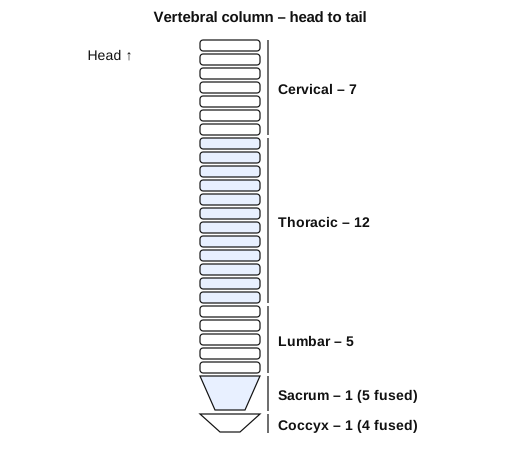
Concept: Human vertebral column: 26 serially arranged units – cervical (7), thoracic (12), lumbar (5), sacral (1, fused) and coccygeal (1, fused) from the skull downwards.

  1. Neck → cervical; chest (rib-bearing) → thoracic; lower back → lumbar; pelvis → sacrum.
  2. Option (B) is the reverse (toe to head); (A) and (C) mix up lumbar/thoracic/sacrum positions.

Short trick: Formula "C7 T12 L5 S1 C1" – "Breakfast at 7, lunch at 12, dinner at 5".

Answer: (D) Cervical vertebra, thoracic vertebra, lumbar vertebra, sacrum

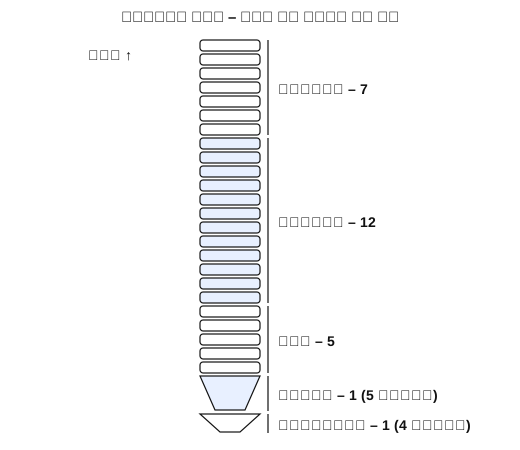
अवधारणा: मानव कशेरुक दंड: खोपड़ी से नीचे की ओर 26 क्रमिक इकाइयाँ – ग्रीवा (7), वक्षीय (12), कटि (5), त्रिक (1, जुड़ी हुई) तथा अनुत्रिक (1, जुड़ी हुई)।

  1. गर्दन → ग्रीवा; वक्ष (पसलियाँ जुड़ी) → वक्षीय; पीठ का निचला भाग → कटि; श्रोणि → त्रिक।
  2. विकल्प (B) उल्टा क्रम (पैर से सिर) है; (A) और (C) में कटि/वक्षीय/त्रिक की स्थिति गड़बड़ है।

शॉर्ट ट्रिक: सूत्र "C7 T12 L5 S1 C1" – "नाश्ता 7 बजे, दोपहर का भोजन 12 बजे, रात्रि भोजन 5 बजे"।

उत्तर: (D) ग्रीवा कशेरुका, वक्षीय कशेरुका, कटि कशेरुका, त्रिक

NEET UGBiologyLocomotion – vertebral columnNEET UG 2026 · 21 Jun Shift 1
Q159.
Which of the following is not evidence for evolution?
निम्नलिखित में से कौन विकास का प्रमाण नहीं है?
  1. AConvergent evolution of traits like wings of birds and butterfliesपक्षियों और तितलियों के पंखों जैसे लक्षणों का अभिसारी विकास
  2. BPaleontological evidence from fossil recordsजीवाश्म अभिलेखों से प्राप्त जीवाश्मिकीय प्रमाण
  3. CEmbryological support for evolution as proposed by Ernst Heckelअर्नस्ट हेकल द्वारा प्रस्तावित विकास का भ्रूणविज्ञानीय समर्थन
  4. DDivergent evolution of anatomical structures such as forelimbsअग्रपाद जैसी शारीरिक संरचनाओं का अपसारी विकास
Show answer

Concept: NCERT: embryological support for evolution proposed by Ernst Heckel (all vertebrate embryos pass through a vestigial gill-slit stage) was disapproved on careful study by Karl Ernst von Baer – so it is not accepted evidence.

  1. (A) Analogous organs (wings of birds and butterflies) – convergent evolution – accepted evidence.
  2. (B) Fossils in rock strata – paleontological evidence – accepted.
  3. (C) Heckel's embryological support – rejected by von Baer (embryos never pass through adult stages of other animals) → not evidence.
  4. (D) Homologous forelimbs – divergent evolution – accepted.

Short trick: NCERT keyword: "Heckel – disapproved by von Baer".

Answer: (C) Embryological support for evolution as proposed by Ernst Heckel

अवधारणा: NCERT: अर्नस्ट हेकल द्वारा प्रस्तावित विकास का भ्रूणविज्ञानीय समर्थन (सभी कशेरुकी भ्रूण अवशेषी क्लोम-दरार अवस्था से गुजरते हैं) को कार्ल अर्नस्ट वॉन बेयर ने सावधानीपूर्वक अध्ययन के बाद अस्वीकार कर दिया – अतः यह मान्य प्रमाण नहीं है।

  1. (A) समरूप अंग (पक्षियों और तितलियों के पंख) – अभिसारी विकास – मान्य प्रमाण।
  2. (B) शैल स्तरों में जीवाश्म – जीवाश्मिकीय प्रमाण – मान्य।
  3. (C) हेकल का भ्रूणविज्ञानीय समर्थन – वॉन बेयर द्वारा अस्वीकृत (भ्रूण कभी अन्य जंतुओं की वयस्क अवस्थाओं से नहीं गुजरते) → प्रमाण नहीं।
  4. (D) समजात अग्रपाद – अपसारी विकास – मान्य।

शॉर्ट ट्रिक: NCERT मुख्य शब्द: "हेकल – वॉन बेयर द्वारा अस्वीकृत"।

उत्तर: (C) अर्नस्ट हेकल द्वारा प्रस्तावित विकास का भ्रूणविज्ञानीय समर्थन

NEET UGBiologyEvolution – evidencesNEET UG 2026 · 21 Jun Shift 1
Q160.
Given below are two statements :
Statement I : Modern Homo sapiens arose in Australia and moved across continents.
Statement II : Homo sapiens arose around 75000 to 10000 years ago.
In the light of the above statements, choose the most appropriate answer from the options given below :
नीचे दो कथन दिए गए हैं :
कथन I : आधुनिक Homo sapiens ऑस्ट्रेलिया में उत्पन्न हुआ और महाद्वीपों में फैल गया।
कथन II : Homo sapiens लगभग 75000 से 10000 वर्ष पहले उत्पन्न हुआ।
उपरोक्त कथनों के आलोक में, नीचे दिए गए विकल्पों में से सबसे उपयुक्त उत्तर चुनिए :
  1. ABoth Statement I and Statement II are correctकथन I और कथन II दोनों सही हैं
  2. BBoth Statement I and Statement II are incorrectकथन I और कथन II दोनों गलत हैं
  3. CStatement I is correct but Statement II is incorrectकथन I सही है लेकिन कथन II गलत है
  4. DStatement I is incorrect but Statement II is correctकथन I गलत है लेकिन कथन II सही है
Show answer

Concept: NCERT: Homo sapiens arose in Africa and moved across continents; during the ice age between 75,000–10,000 years ago modern Homo sapiens arose.

  1. Statement I – incorrect: the place of origin is Africa, not Australia.
  2. Statement II – correct as per NCERT (75,000–10,000 years ago, during the ice age).

Short trick: "Out of Africa" – not Australia. Cave paintings ~18,000 years ago; agriculture ~10,000 years ago.

Answer: (D) Statement I is incorrect but Statement II is correct

अवधारणा: NCERT: Homo sapiens अफ्रीका में उत्पन्न हुआ और महाद्वीपों में फैल गया; हिमयुग के दौरान 75,000–10,000 वर्ष पहले आधुनिक Homo sapiens का उद्भव हुआ।

  1. कथन I – गलत: उत्पत्ति स्थान अफ्रीका है, ऑस्ट्रेलिया नहीं।
  2. कथन II – NCERT के अनुसार सही (75,000–10,000 वर्ष पहले, हिमयुग के दौरान)।

शॉर्ट ट्रिक: "अफ्रीका से बाहर" – ऑस्ट्रेलिया नहीं। गुफा चित्र ~18,000 वर्ष पहले; कृषि ~10,000 वर्ष पहले।

उत्तर: (D) कथन I गलत है लेकिन कथन II सही है

NEET UGBiologyEvolution – origin of modern manNEET UG 2026 · 21 Jun Shift 1