NEET UG · 2,240 questions

NEET UG 2015, 2016, 2017, 2018, 2019, 2020, 2021, 2022, 2023, 2024, 2025, 2026 PYQs

Real previous year questions, subject-wise. Try the question, then open the answer and the explanation in Hindi & English – free, no login.

Courses – airGurukul

2,240 questions.

Q161.
Consider a population of 10 million cells. Given the per-capita birth rate of 0.002 (per unit time) and the per-capita death rate of 0.002 (per unit time), the expected number of cells after 10 generations is ________.
10 मिलियन कोशिकाओं की एक समष्टि पर विचार कीजिए। प्रति व्यक्ति जन्म दर 0.002 (प्रति इकाई समय) और प्रति व्यक्ति मृत्यु दर 0.002 (प्रति इकाई समय) दी गई है, 10 पीढ़ियों के बाद कोशिकाओं की अपेक्षित संख्या ________ है।
  1. A1 million1 मिलियन
  2. B5 million5 मिलियन
  3. C10 million10 मिलियन
  4. D100 million100 मिलियन
Show answer

Concept: Exponential growth: dNdt=rN, where intrinsic rate r=b−d.

  1. r=0.002−0.002=0.
  2. dNdt=0×N=0 → no change in population size.
  3. After 10 generations N = 10 million (zero population growth).

Short trick: Birth rate = death rate → population stays constant, whatever the time.

Answer: (C) 10 million

अवधारणा: चरघातांकी वृद्धि: dNdt=rN, जहाँ स्वाभाविक वृद्धि दर r=b−d।

  1. r=0.002−0.002=0।
  2. dNdt=0×N=0 → समष्टि आकार में कोई परिवर्तन नहीं।
  3. 10 पीढ़ियों के बाद N = 10 मिलियन (शून्य समष्टि वृद्धि)।

शॉर्ट ट्रिक: जन्म दर = मृत्यु दर → समय कितना भी हो, समष्टि स्थिर रहती है।

उत्तर: (C) 10 मिलियन
NEET UGBiologyOrganisms and populations – population growthNEET UG 2026 · 21 Jun Shift 1
Q162.
During PCR, primers bind to the DNA strands in the ______ step.
PCR के दौरान, प्राइमर DNA रज्जुकों से ______ चरण में बंधते हैं।
  1. Adenaturationविकृतीकरण (denaturation)
  2. Bextensionप्रसार (extension)
  3. Cannealingतापानुशीतन (annealing)
  4. Dligationबंधन (ligation)
Show answer

Concept: PCR has three steps per cycle: denaturation (~94 °C, strands separate) → annealing (~50–60 °C, primers bind to complementary sequences) → extension (~72 °C, Taq polymerase extends primers).

  1. Denaturation – heat separates the two DNA strands.
  2. Annealing – primers hybridise (bind) to the single strands → answer.
  3. Extension – Taq polymerase synthesises new strand.
  4. Ligation – joining by DNA ligase; not a PCR step.

Short trick: "D-A-E" = Denature, Attach primers (Anneal), Extend.

Answer: (C) annealing

अवधारणा: PCR के प्रत्येक चक्र में तीन चरण: विकृतीकरण (~94 °C, रज्जुक अलग) → तापानुशीतन (~50–60 °C, प्राइमर पूरक अनुक्रमों से बंधते हैं) → प्रसार (~72 °C, Taq पॉलीमरेज़ प्राइमरों को बढ़ाता है)।

  1. विकृतीकरण – ताप से DNA के दोनों रज्जुक अलग होते हैं।
  2. तापानुशीतन – प्राइमर एकल रज्जुकों से संकरित (बंधित) होते हैं → उत्तर।
  3. प्रसार – Taq पॉलीमरेज़ नया रज्जुक संश्लेषित करता है।
  4. बंधन – DNA लाइगेज़ द्वारा जोड़ना; PCR का चरण नहीं।

शॉर्ट ट्रिक: "D-A-E" = विकृतीकरण (Denature), प्राइमर जोड़ना (Anneal), प्रसार (Extend)।

उत्तर: (C) तापानुशीतन (annealing)

NEET UGBiologyBiotechnology – PCRNEET UG 2026 · 21 Jun Shift 1
Q163.
Given below are two statements : one is labelled as Assertion A and the other is labelled as Reason R.
Assertion A : The logistic growth model of populations is considered more realistic than the exponential growth model.
Reason R : Resources are finite.
In the light of the above statements, choose the most appropriate answer from the options given below :
नीचे दो कथन दिए गए हैं : एक को अभिकथन A तथा दूसरे को कारण R कहा गया है।
अभिकथन A : समष्टियों का संभार तंत्र (logistic) वृद्धि मॉडल चरघातांकी वृद्धि मॉडल की तुलना में अधिक यथार्थवादी माना जाता है।
कारण R : संसाधन सीमित हैं।
उपरोक्त कथनों के आलोक में, नीचे दिए गए विकल्पों में से सबसे उपयुक्त उत्तर चुनिए :
  1. ABoth A and R are correct and R is the correct explanation of AA और R दोनों सही हैं तथा R, A की सही व्याख्या है
  2. BBoth A and R are correct but R is not the correct explanation of AA और R दोनों सही हैं लेकिन R, A की सही व्याख्या नहीं है
  3. CA is correct but R is not correctA सही है लेकिन R सही नहीं है
  4. DA is not correct but R is correctA सही नहीं है लेकिन R सही है
Show answer

Concept: Exponential growth assumes unlimited resources (J-curve). In nature resources are finite, so growth levels off at carrying capacity K – logistic (Verhulst-Pearl) S-curve: dNdt=rN(K−NK).

  1. A – correct: NCERT calls logistic growth "a more realistic one".
  2. R – correct: no population has unlimited resources; this limits growth.
  3. Finite resources are exactly why the logistic model (with K) is more realistic → R explains A.

Short trick: Finite resources → K → S-curve → realistic. Unlimited → J-curve → unrealistic.

Answer: (A) Both A and R are correct and R is the correct explanation of A

अवधारणा: चरघातांकी वृद्धि असीमित संसाधन मानती है (J-वक्र)। प्रकृति में संसाधन सीमित हैं, अतः वृद्धि वहन क्षमता K पर स्थिर हो जाती है – संभार तंत्र (वरहुल्स्ट-पर्ल) S-वक्र: dNdt=rN(K−NK)।

  1. A – सही: NCERT संभार तंत्र वृद्धि को "अधिक यथार्थवादी" कहता है।
  2. R – सही: किसी समष्टि के पास असीमित संसाधन नहीं होते; यह वृद्धि को सीमित करता है।
  3. संसाधनों का सीमित होना ही कारण है कि संभार तंत्र मॉडल (K सहित) अधिक यथार्थवादी है → R, A की व्याख्या करता है।

शॉर्ट ट्रिक: सीमित संसाधन → K → S-वक्र → यथार्थवादी। असीमित → J-वक्र → अयथार्थवादी।

उत्तर: (A) A और R दोनों सही हैं तथा R, A की सही व्याख्या है

NEET UGBiologyOrganisms and populations – growth modelsNEET UG 2026 · 21 Jun Shift 1
Q164.
Adaptive radiation in placental mammals and Australian Marsupials leading to similarity between distant species is an example of ________.
अपरा स्तनधारियों और ऑस्ट्रेलियाई मार्सुपियलों में अनुकूली विकिरण, जिससे दूरस्थ जातियों के बीच समानता उत्पन्न होती है, ________ का उदाहरण है।
  1. Adivergent evolutionअपसारी विकास
  2. Bconvergent evolutionअभिसारी विकास
  3. Cfounder effectसंस्थापक प्रभाव
  4. Dgenetic driftआनुवंशिक विचलन
Show answer

Concept: NCERT: when more than one adaptive radiation appears to have occurred in an isolated geographical area (representing different habitats), one can call this convergent evolution – e.g. placental mammals in Australia resembling corresponding marsupials (placental wolf vs Tasmanian wolf).

  1. Unrelated (distant) lineages becoming similar → convergent evolution.
  2. Divergent evolution – related forms become different (e.g. Darwin's finches, homologous forelimbs).
  3. Founder effect and genetic drift – chance changes in allele frequency, not adaptive similarity.

Short trick: Similar look, different ancestry = convergent ("come together"); same ancestry, different look = divergent.

Answer: (B) convergent evolution

अवधारणा: NCERT: जब किसी पृथक भौगोलिक क्षेत्र (विभिन्न आवासों) में एक से अधिक अनुकूली विकिरण हुए प्रतीत हों, तो इसे अभिसारी विकास कहा जा सकता है – जैसे ऑस्ट्रेलिया के अपरा स्तनधारी, संबंधित मार्सुपियलों के समान (अपरा भेड़िया बनाम तस्मानियाई भेड़िया)।

  1. असंबंधित (दूरस्थ) वंशक्रमों का समान हो जाना → अभिसारी विकास।
  2. अपसारी विकास – संबंधित रूप भिन्न हो जाते हैं (जैसे डार्विन की फिंच, समजात अग्रपाद)।
  3. संस्थापक प्रभाव और आनुवंशिक विचलन – अलील आवृत्ति में संयोगवश परिवर्तन, अनुकूली समानता नहीं।

शॉर्ट ट्रिक: रूप समान, पूर्वज भिन्न = अभिसारी ("पास आना"); पूर्वज समान, रूप भिन्न = अपसारी।

उत्तर: (B) अभिसारी विकास

NEET UGBiologyEvolution – adaptive radiationNEET UG 2026 · 21 Jun Shift 1
Q165.
Which of the following are secondary lymphoid organs ?
(a) Bone marrow
(b) Tonsils
(c) Spleen
(d) Thymus
Choose the correct answer from the options given below :
निम्नलिखित में से कौन-से द्वितीयक लसीकाभ अंग हैं?
(a) अस्थि मज्जा
(b) टॉन्सिल
(c) प्लीहा
(d) थाइमस
नीचे दिए गए विकल्पों में से सही उत्तर चुनिए :
  1. A(a) and (b) onlyकेवल (a) और (b)
  2. B(b) and (c) onlyकेवल (b) और (c)
  3. C(b) and (d) onlyकेवल (b) और (d)
  4. D(a) and (d) onlyकेवल (a) और (d)
Show answer

Concept: Primary lymphoid organs (where lymphocytes are produced/mature): bone marrow and thymus. Secondary lymphoid organs (where lymphocytes meet antigens and proliferate): spleen, lymph nodes, tonsils, Peyer's patches, appendix, MALT.

  1. (a) Bone marrow – primary.
  2. (b) Tonsils – secondary.
  3. (c) Spleen – secondary.
  4. (d) Thymus – primary.
  5. Hence (b) and (c) only.

Short trick: Primary = "Bone & Thymus" (make B and T cells). Everything else is secondary.

Answer: (B) (b) and (c) only

अवधारणा: प्राथमिक लसीकाभ अंग (जहाँ लसीकाणु बनते/परिपक्व होते हैं): अस्थि मज्जा और थाइमस। द्वितीयक लसीकाभ अंग (जहाँ लसीकाणु प्रतिजनों से मिलते और प्रचुरोद्भवन करते हैं): प्लीहा, लसीका ग्रंथियाँ, टॉन्सिल, पेयर पैच, परिशेषिका, MALT।

  1. (a) अस्थि मज्जा – प्राथमिक।
  2. (b) टॉन्सिल – द्वितीयक।
  3. (c) प्लीहा – द्वितीयक।
  4. (d) थाइमस – प्राथमिक।
  5. अतः केवल (b) और (c)।

शॉर्ट ट्रिक: प्राथमिक = "अस्थि मज्जा (B) और थाइमस (T)" – B और T कोशिकाएँ बनाते हैं। शेष सब द्वितीयक।

उत्तर: (B) केवल (b) और (c)

NEET UGBiologyHuman health and disease – lymphoid organsNEET UG 2026 · 21 Jun Shift 1
Q166.
Which of the following hormone is not secreted by human placenta ?
निम्नलिखित में से कौन-सा हॉर्मोन मानव अपरा द्वारा स्रावित नहीं होता?
  1. AhCG
  2. BEstrogenएस्ट्रोजन
  3. CProgesteroneप्रोजेस्टेरॉन
  4. DLH
Show answer

Concept: NCERT: placenta acts as an endocrine tissue and produces human chorionic gonadotropin (hCG), human placental lactogen (hPL), estrogens, progestogens, etc.

  1. hCG, estrogen and progesterone – all secreted by the placenta.
  2. LH is secreted by the anterior pituitary, not by the placenta.

Short trick: Placenta list "C-L-E-P": hCG, hPL, Estrogen, Progestogen (+ relaxin by ovary late in pregnancy). LH = pituitary.

Answer: (D) LH

अवधारणा: NCERT: अपरा एक अंतःस्रावी ऊतक के रूप में कार्य करती है और ह्यूमन कोरियोनिक गोनैडोट्रॉपिन (hCG), ह्यूमन अपरा लैक्टोजन (hPL), एस्ट्रोजन, प्रोजेस्टोजन आदि उत्पन्न करती है।

  1. hCG, एस्ट्रोजन और प्रोजेस्टेरॉन – तीनों अपरा द्वारा स्रावित।
  2. LH अग्र पीयूष ग्रंथि द्वारा स्रावित होता है, अपरा द्वारा नहीं।

शॉर्ट ट्रिक: अपरा सूची: hCG, hPL, एस्ट्रोजन, प्रोजेस्टोजन (+ गर्भावस्था के अंत में अंडाशय से रिलैक्सिन)। LH = पीयूष ग्रंथि।

उत्तर: (D) LH

NEET UGBiologyHuman reproduction – placental hormonesNEET UG 2026 · 21 Jun Shift 1
Q167.
Which of the following enzymes synthesizes precursor mRNA ?
निम्नलिखित में से कौन-सा एंज़ाइम पूर्ववर्ती mRNA का संश्लेषण करता है?
  1. ARNA polymerase IRNA पॉलीमरेज़ I
  2. BRNA polymerase IIRNA पॉलीमरेज़ II
  3. CRNA polymerase IIIRNA पॉलीमरेज़ III
  4. DDNA polymeraseDNA पॉलीमरेज़
Show answer

Concept: In eukaryotes there are three RNA polymerases in the nucleus (NCERT).

  1. RNA polymerase I – rRNAs (28S, 18S, 5.8S).
  2. RNA polymerase II – precursor of mRNA, the heterogeneous nuclear RNA (hnRNA) → answer.
  3. RNA polymerase III – tRNA, 5S rRNA and snRNAs.
  4. DNA polymerase – DNA replication, not transcription.

Short trick: "I-II-III = r-m-t" – "1 ribosomal, 2 messenger, 3 transfer" (pol II = the only one making mRNA/hnRNA).

Answer: (B) RNA polymerase II

अवधारणा: यूकैरियोट्स के केंद्रक में तीन RNA पॉलीमरेज़ होते हैं (NCERT)।

  1. RNA पॉलीमरेज़ I – rRNA (28S, 18S, 5.8S)।
  2. RNA पॉलीमरेज़ II – mRNA का पूर्ववर्ती, विषमांगी केंद्रकीय RNA (hnRNA) → उत्तर।
  3. RNA पॉलीमरेज़ III – tRNA, 5S rRNA तथा snRNA।
  4. DNA पॉलीमरेज़ – DNA प्रतिकृतीयन, अनुलेखन नहीं।

शॉर्ट ट्रिक: "I-II-III = r-m-t" – "1 राइबोसोमल, 2 मैसेंजर, 3 ट्रांसफर" याद रखें।

उत्तर: (B) RNA पॉलीमरेज़ II

NEET UGBiologyMolecular basis of inheritance – transcriptionNEET UG 2026 · 21 Jun Shift 1
Q168.
Given below are two statements :
Statement I : Plasmids are autonomously replicating DNA.
Statement II : Plasmids are extrachromosomal DNA.
In the light of the above statements, choose the most appropriate answer from the options given below :
नीचे दो कथन दिए गए हैं :
कथन I : प्लाज़्मिड स्वायत्त रूप से प्रतिकृति बनाने वाले DNA हैं।
कथन II : प्लाज़्मिड गुणसूत्रबाह्य (extrachromosomal) DNA हैं।
उपरोक्त कथनों के आलोक में, नीचे दिए गए विकल्पों में से सबसे उपयुक्त उत्तर चुनिए :
  1. ABoth Statement I and Statement II are correctकथन I और कथन II दोनों सही हैं
  2. BBoth Statement I and Statement II are incorrectकथन I और कथन II दोनों गलत हैं
  3. CStatement I is correct but Statement II is incorrectकथन I सही है लेकिन कथन II गलत है
  4. DStatement I is incorrect but Statement II is correctकथन I गलत है लेकिन कथन II सही है
Show answer

Concept: NCERT: plasmids are autonomously replicating circular extra-chromosomal DNA found in bacteria.

  1. Statement I – correct: plasmids have their own ori and replicate independently of the chromosomal DNA.
  2. Statement II – correct: they lie outside the bacterial chromosome (extrachromosomal).

Short trick: One NCERT line covers both: "autonomously replicating circular extra-chromosomal DNA".

Answer: (A) Both statements are correct

अवधारणा: NCERT: प्लाज़्मिड जीवाणुओं में पाए जाने वाले स्वायत्त रूप से प्रतिकृति बनाने वाले वृत्ताकार गुणसूत्रबाह्य DNA हैं।

  1. कथन I – सही: प्लाज़्मिड में अपना ori होता है और वे गुणसूत्री DNA से स्वतंत्र रूप से प्रतिकृति बनाते हैं।
  2. कथन II – सही: वे जीवाणु गुणसूत्र के बाहर होते हैं (गुणसूत्रबाह्य)।

शॉर्ट ट्रिक: एक ही NCERT पंक्ति दोनों को सही बताती है: "स्वायत्त प्रतिकृतीयन करने वाला वृत्ताकार गुणसूत्रबाह्य DNA"।

उत्तर: (A) दोनों कथन सही हैं

NEET UGBiologyBiotechnology – plasmidsNEET UG 2026 · 21 Jun Shift 1
Q169.
For a person with blood group 'O', which of the following is not a possible combination of parents' blood group genotypes ?
रक्त समूह 'O' वाले व्यक्ति के लिए, निम्नलिखित में से कौन-सा माता-पिता के रक्त समूह जीनोटाइप का संभव संयोजन नहीं है?
  1. AFather : IAi and Mother : IBiपिता : IAi और माता : IBi
  2. BFather : IAi and Mother : IAiपिता : IAi और माता : IAi
  3. CFather : IBi and Mother : IBiपिता : IBi और माता : IBi
  4. DFather : IAIB and Mother : IAiपिता : IAIB और माता : IAi
Show answer

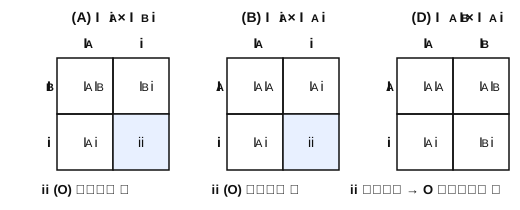
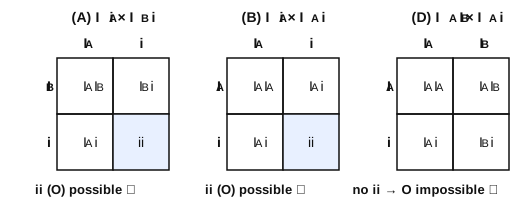
Concept: Blood group O has genotype ii – the child must receive one recessive i allele from each parent.

  1. (A) IAi × IBi → ¼ ii possible.
  2. (B) IAi × IAi → ¼ ii possible.
  3. (C) IBi × IBi → ¼ ii possible.
  4. (D) Father IAIB has no i allele → children can only be IAIA, IAi, IAIB, IBi → never O.

Short trick: An AB parent can never have an O child (and an O parent can never have an AB child).

Answer: (D) Father : IAIB and Mother : IAi

अवधारणा: रक्त समूह O का जीनोटाइप ii है – संतान को प्रत्येक जनक से एक अप्रभावी i अलील मिलना आवश्यक है।

  1. (A) IAi × IBi → ¼ ii संभव।
  2. (B) IAi × IAi → ¼ ii संभव।
  3. (C) IBi × IBi → ¼ ii संभव।
  4. (D) पिता IAIB में i अलील नहीं है → संतानें केवल IAIA, IAi, IAIB, IBi हो सकती हैं → कभी O नहीं।

शॉर्ट ट्रिक: AB जनक की संतान कभी O नहीं हो सकती (और O जनक की संतान कभी AB नहीं)।

उत्तर: (D) पिता : IAIB और माता : IAi

NEET UGBiologyPrinciples of inheritance – ABO blood groupsNEET UG 2026 · 21 Jun Shift 1
Q170.
Given below are two statements : one is labelled as Assertion A and the other is labelled as Reason R.
Assertion A : Forelimbs of human and bats are homologous.
Reason R : Forelimbs of humans and bats have similar anatomical structure.
In the light of the above statements, choose the most appropriate answer from the options given below :
नीचे दो कथन दिए गए हैं : एक को अभिकथन A तथा दूसरे को कारण R कहा गया है।
अभिकथन A : मनुष्य और चमगादड़ के अग्रपाद समजात हैं।
कारण R : मनुष्यों और चमगादड़ों के अग्रपादों की शारीरिक संरचना समान है।
उपरोक्त कथनों के आलोक में, नीचे दिए गए विकल्पों में से सबसे उपयुक्त उत्तर चुनिए :
  1. ABoth A and R are correct and R is the correct explanation of AA और R दोनों सही हैं तथा R, A की सही व्याख्या है
  2. BBoth A and R are true, but R is not the correct explanation of AA और R दोनों सत्य हैं, लेकिन R, A की सही व्याख्या नहीं है
  3. CA is true but R is falseA सत्य है लेकिन R असत्य है
  4. DA is false but R is trueA असत्य है लेकिन R सत्य है
Show answer

Concept: Homologous organs have the same basic anatomical structure and origin but may perform different functions (divergent evolution).

  1. A – correct: forelimbs of whales, bats, cheetah and human are homologous (NCERT).
  2. R – correct: they share the same bones – humerus, radius, ulna, carpals, metacarpals, phalanges.
  3. Similar anatomical structure is the very basis of calling them homologous → R explains A.

Short trick: Homologous = Have same Hardware (bones), different job. Analogous = same job, different hardware.

Answer: (A) Both A and R are correct and R is the correct explanation of A

अवधारणा: समजात अंगों की मूल शारीरिक संरचना और उत्पत्ति समान होती है परंतु वे भिन्न कार्य कर सकते हैं (अपसारी विकास)।

  1. A – सही: व्हेल, चमगादड़, चीता और मनुष्य के अग्रपाद समजात हैं (NCERT)।
  2. R – सही: इनमें समान अस्थियाँ होती हैं – ह्यूमरस, रेडियस, अल्ना, कार्पल, मेटाकार्पल, फैलेंजेस।
  3. समान शारीरिक संरचना ही इन्हें समजात कहने का आधार है → R, A की व्याख्या करता है।

शॉर्ट ट्रिक: समजात = समान "हार्डवेयर" (अस्थियाँ), भिन्न कार्य। समरूप = समान कार्य, भिन्न "हार्डवेयर"।

उत्तर: (A) A और R दोनों सही हैं तथा R, A की सही व्याख्या है

NEET UGBiologyEvolution – homologous organsNEET UG 2026 · 21 Jun Shift 1
Q171.
Colostrum, secreted by mother during initial days of lactation, is abundant in ________.
स्तनपान के प्रारंभिक दिनों में माता द्वारा स्रावित खीस (colostrum) में ________ प्रचुर मात्रा में होता है।
  1. AIgG
  2. BIgM
  3. CIgA
  4. DIgD
Show answer

Concept: NCERT: the yellowish fluid colostrum secreted by the mother during the initial days of lactation has abundant antibodies (IgA) to protect the infant – natural passive immunity.

  1. IgA – in colostrum, saliva, tears, mucus → answer.
  2. IgG – crosses the placenta (foetus gets it in utero).
  3. IgM – first antibody in primary response (largest, pentamer).
  4. IgD – on B-cell surface, receptor role.

Short trick: "A for Amrit (colostrum)": IgA in milk; IgG "Goes across placenta".

Answer: (C) IgA

अवधारणा: NCERT: स्तनपान के प्रारंभिक दिनों में माता द्वारा स्रावित पीला द्रव खीस शिशु की रक्षा हेतु प्रचुर प्रतिरक्षी (IgA) युक्त होता है – प्राकृतिक निष्क्रिय प्रतिरक्षा।

  1. IgA – खीस, लार, आँसू, श्लेष्मा में → उत्तर।
  2. IgG – अपरा को पार करता है (भ्रूण को गर्भ में मिलता है)।
  3. IgM – प्राथमिक अनुक्रिया में पहला प्रतिरक्षी (सबसे बड़ा, पेंटामर)।
  4. IgD – B-कोशिका की सतह पर, ग्राही भूमिका।

शॉर्ट ट्रिक: "A से अमृत (खीस)": दूध में IgA; IgG "अपरा पार जाता है"।

उत्तर: (C) IgA

NEET UGBiologyImmunity – passive immunityNEET UG 2026 · 21 Jun Shift 1
Q172.
Given below are two statements : one is labelled as Assertion A and the other is labelled as Reason R.
Assertion A : Abingdon tortoise in Galapagos islands became extinct within a decade after goats were introduced.
Reason R : Goats were more efficient at browsing than Abingdon tortoise.
In the light of the above statements, choose the most appropriate answer from the options given below :
नीचे दो कथन दिए गए हैं : एक को अभिकथन A तथा दूसरे को कारण R कहा गया है।
अभिकथन A : गैलापेगोस द्वीप में बकरियों के लाए जाने के एक दशक के भीतर एबिंग्डन कछुआ विलुप्त हो गया।
कारण R : बकरियाँ एबिंग्डन कछुए की तुलना में चरने में अधिक दक्ष थीं।
उपरोक्त कथनों के आलोक में, नीचे दिए गए विकल्पों में से सबसे उपयुक्त उत्तर चुनिए :
  1. ABoth A and R are correct and R is the correct explanation of AA और R दोनों सही हैं तथा R, A की सही व्याख्या है
  2. BBoth A and R are correct but R is not the correct explanation of AA और R दोनों सही हैं लेकिन R, A की सही व्याख्या नहीं है
  3. CA is correct but R is not correctA सही है लेकिन R सही नहीं है
  4. DA is not correct but R is correctA सही नहीं है लेकिन R सही है
Show answer

Concept: NCERT (Organisms and Populations): the Abingdon tortoise in Galapagos Islands became extinct within a decade after goats were introduced on the island, apparently due to the greater browsing efficiency of the goats – interspecific competition.

  1. A – correct: NCERT example.
  2. R – correct: goats out-competed the tortoise for food.
  3. Greater browsing efficiency (competition) is the stated cause of extinction → R explains A.

Short trick: Galapagos + goats = competition (Abingdon tortoise). Lake Victoria + Nile perch = alien species (cichlid fish).

Answer: (A) Both A and R are correct and R is the correct explanation of A

अवधारणा: NCERT (जीव और समष्टियाँ): गैलापेगोस द्वीप में बकरियों के लाए जाने के एक दशक के भीतर एबिंग्डन कछुआ विलुप्त हो गया, स्पष्टतः बकरियों की अधिक चरने की दक्षता के कारण – अंतरजातीय स्पर्धा।

  1. A – सही: NCERT का उदाहरण।
  2. R – सही: भोजन हेतु स्पर्धा में बकरियों ने कछुए को पछाड़ दिया।
  3. अधिक चरने की दक्षता (स्पर्धा) ही विलुप्ति का बताया गया कारण है → R, A की व्याख्या करता है।

शॉर्ट ट्रिक: गैलापेगोस + बकरियाँ = स्पर्धा (एबिंग्डन कछुआ)। विक्टोरिया झील + नील पर्च = विदेशी जाति (सिक्लिड मछली)।

उत्तर: (A) A और R दोनों सही हैं तथा R, A की सही व्याख्या है

NEET UGBiologyBiodiversity – causes of loss (alien species)NEET UG 2026 · 21 Jun Shift 1
Q173.
The covering of ovum at ovulation is ________.
अंडोत्सर्ग के समय अंडाणु का आवरण ________ है।
  1. Aendometriumगर्भाशय अंतःस्तर (endometrium)
  2. Bzona radiataज़ोना रेडिएटा
  3. Czona pellucidaज़ोना पेल्यूसिडा (पारदर्शी अंडावरण)
  4. Dchorionजरायु (chorion)
Show answer

Concept: The secondary oocyte released at ovulation is surrounded by a new membrane called the zona pellucida, outside which lie the corona radiata (follicle) cells.

  1. Zona pellucida – non-cellular glycoprotein layer of the ovum → answer.
  2. Endometrium – inner lining of the uterus, not of the ovum.
  3. "Zona radiata" is not the NCERT term for the human ovum covering (the cell layer is the corona radiata).
  4. Chorion – extra-embryonic membrane formed after implantation.

Short trick: Sperm must cross "Corona → Zona" (C before Z); the ovum's own coat is zona pellucida.

Answer: (C) zona pellucida

अवधारणा: अंडोत्सर्ग के समय मुक्त द्वितीयक अंडक एक नई झिल्ली ज़ोना पेल्यूसिडा से घिरा होता है, जिसके बाहर कोरोना रेडिएटा (पुटक) कोशिकाएँ होती हैं।

  1. ज़ोना पेल्यूसिडा – अंडाणु की अकोशिकीय ग्लाइकोप्रोटीन परत → उत्तर।
  2. गर्भाशय अंतःस्तर – गर्भाशय की भीतरी परत, अंडाणु की नहीं।
  3. "ज़ोना रेडिएटा" मानव अंडाणु आवरण के लिए NCERT शब्द नहीं है (कोशिका परत कोरोना रेडिएटा है)।
  4. जरायु – रोपण के बाद बनने वाली बाह्य-भ्रूणीय झिल्ली।

शॉर्ट ट्रिक: शुक्राणु को "कोरोना → ज़ोना" पार करना होता है (C पहले, Z बाद में); अंडाणु का अपना आवरण ज़ोना पेल्यूसिडा है।

उत्तर: (C) ज़ोना पेल्यूसिडा

NEET UGBiologyHuman reproduction – ovumNEET UG 2026 · 21 Jun Shift 1
Q174.
Match List-I with List-II.
List-IList-II
A. Both species are harmedI. Predation
B. One species is harmed and the other is benefitedII. Mutualism
C. Both species are benefitedIII. Competition
D. One is benefited while the other has no effectIV. Commensalism

Choose the correct answer from the options given below :
सूची-I का सूची-II से मिलान कीजिए।
सूची-Iसूची-II
A. दोनों जातियों को हानिI. परभक्षण
B. एक जाति को हानि और दूसरी को लाभII. सहोपकारिता
C. दोनों जातियों को लाभIII. स्पर्धा
D. एक को लाभ जबकि दूसरी अप्रभावितIV. सहभोजिता

नीचे दिए गए विकल्पों में से सही उत्तर चुनिए :
  1. AA-III, B-IV, C-II, D-I
  2. BA-I, B-II, C-III, D-IV
  3. CA-II, B-I, C-IV, D-III
  4. DA-III, B-I, C-II, D-IV
Show answer

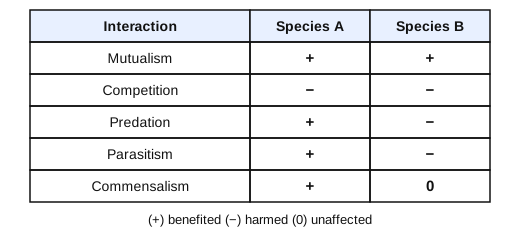
Concept: Population interactions by sign (+ benefit, − harm, 0 no effect).

  1. A. (−, −) Competition → III.
  2. B. (+, −) Predation (also parasitism) → I.
  3. C. (+, +) Mutualism → II.
  4. D. (+, 0) Commensalism → IV.

Short trick: Count the plus signs: 0 plus = competition, 1 plus 1 minus = predation/parasitism, 2 plus = mutualism, 1 plus 1 zero = commensalism.

Answer: (D) A-III, B-I, C-II, D-IV

अवधारणा: चिह्नों द्वारा समष्टि पारस्परिक क्रियाएँ (+ लाभ, − हानि, 0 कोई प्रभाव नहीं)।

  1. A. (−, −) स्पर्धा → III।
  2. B. (+, −) परभक्षण (परजीविता भी) → I।
  3. C. (+, +) सहोपकारिता → II।
  4. D. (+, 0) सहभोजिता → IV।

शॉर्ट ट्रिक: धन चिह्न गिनें: 0 धन = स्पर्धा, 1 धन 1 ऋण = परभक्षण/परजीविता, 2 धन = सहोपकारिता, 1 धन 1 शून्य = सहभोजिता।

उत्तर: (D) A-III, B-I, C-II, D-IV

NEET UGBiologyOrganisms and populations – population interactionsNEET UG 2026 · 21 Jun Shift 1
Q175.
Given below are two statements : one is labelled as Assertion A and the other is labelled as Reason R.
Assertion A : In an experiment, Mendel observed that the F1 progeny plants are all tall and none are dwarf.
Reason R : Stem height is a contrasting trait, with tall being dominant and dwarf being recessive.
In the light of the above statements, choose the most appropriate answer from the options given below :
नीचे दो कथन दिए गए हैं : एक को अभिकथन A तथा दूसरे को कारण R कहा गया है।
अभिकथन A : एक प्रयोग में मेंडल ने देखा कि F1 संतति के सभी पादप लंबे हैं और कोई भी बौना नहीं है।
कारण R : तने की ऊँचाई एक विपर्यासी लक्षण है, जिसमें लंबापन प्रभावी और बौनापन अप्रभावी है।
उपरोक्त कथनों के आलोक में, नीचे दिए गए विकल्पों में से सबसे उपयुक्त उत्तर चुनिए :
  1. ABoth A and R are correct and R is the correct explanation of AA और R दोनों सही हैं तथा R, A की सही व्याख्या है
  2. BBoth A and R are correct but R is not the correct explanation of AA और R दोनों सही हैं लेकिन R, A की सही व्याख्या नहीं है
  3. CA is correct but R is not correctA सही है लेकिन R सही नहीं है
  4. DA is not correct but R is correctA सही नहीं है लेकिन R सही है
Show answer

Concept: Law of dominance: in a cross between true-breeding tall (TT) and dwarf (tt) pea plants, the F1 (Tt) expresses only the dominant trait.

  1. A – correct: TT × tt → all Tt → all tall in F1.
  2. R – correct: stem height (tall/dwarf) is one of Mendel's 7 contrasting traits; tall (T) is dominant over dwarf (t).
  3. Dominance of tall over dwarf is exactly why no dwarf appears in F1 → R explains A.

Short trick: F1 shows only the dominant trait; the recessive "hides" and reappears in F2 in 3 : 1.

Answer: (A) Both A and R are correct and R is the correct explanation of A

अवधारणा: प्रभाविता का नियम: शुद्ध लंबे (TT) और बौने (tt) मटर पादपों के संकरण में F1 (Tt) केवल प्रभावी लक्षण प्रदर्शित करती है।

  1. A – सही: TT × tt → सभी Tt → F1 में सभी लंबे।
  2. R – सही: तने की ऊँचाई (लंबा/बौना) मेंडल के 7 विपर्यासी लक्षणों में से एक है; लंबा (T) बौने (t) पर प्रभावी है।
  3. लंबेपन की बौनेपन पर प्रभाविता ही कारण है कि F1 में कोई बौना नहीं दिखता → R, A की व्याख्या करता है।

शॉर्ट ट्रिक: F1 केवल प्रभावी लक्षण दिखाती है; अप्रभावी "छिप" जाता है और F2 में 3 : 1 में पुनः प्रकट होता है।

उत्तर: (A) A और R दोनों सही हैं तथा R, A की सही व्याख्या है

NEET UGBiologyPrinciples of inheritance – monohybrid crossNEET UG 2026 · 21 Jun Shift 1
Q176.
Given below are two statements : one is labelled as Assertion A and the other is labelled as Reason R.
Assertion A : In recombinant DNA technology, lysozyme is used for disrupting bacterial cells while cellulase is for plant cells.
Reason R : Isolation of genetic material needs disruption of cells.
In the light of the above statements, choose the most appropriate answer from the options given below :
नीचे दो कथन दिए गए हैं : एक को अभिकथन A तथा दूसरे को कारण R कहा गया है।
अभिकथन A : पुनर्योगज DNA प्रौद्योगिकी में जीवाणु कोशिकाओं को तोड़ने के लिए लाइसोज़ाइम का उपयोग किया जाता है जबकि पादप कोशिकाओं के लिए सेलुलेज़ का।
कारण R : आनुवंशिक पदार्थ के पृथक्करण के लिए कोशिकाओं को तोड़ना आवश्यक है।
उपरोक्त कथनों के आलोक में, नीचे दिए गए विकल्पों में से सबसे उपयुक्त उत्तर चुनिए :
  1. ABoth A and R are correct and R is the correct explanation of AA और R दोनों सही हैं तथा R, A की सही व्याख्या है
  2. BBoth A and R are correct but R is not the correct explanation of AA और R दोनों सही हैं लेकिन R, A की सही व्याख्या नहीं है
  3. CA is correct but R is not correctA सही है लेकिन R सही नहीं है
  4. DA is not correct but R is correctA सही नहीं है लेकिन R सही है
Show answer

Concept: NCERT: to isolate DNA, the cell must be broken open to release DNA with other macromolecules – bacterial cells with lysozyme, plant cells with cellulase, fungus with chitinase.

  1. A – correct: lysozyme digests the bacterial cell wall (peptidoglycan); cellulase digests the plant cell wall (cellulose).
  2. R – correct: DNA is enclosed within membranes, so cells must be disrupted first.
  3. The need to disrupt cells is why these wall-digesting enzymes are used → R explains A.

Short trick: Match the enzyme to the wall: bacteria – lysozyme, plant – cellulase, fungus – chitinase. Then RNase, protease, chilled ethanol.

Answer: (A) Both A and R are correct and R is the correct explanation of A

अवधारणा: NCERT: DNA पृथक करने के लिए कोशिका को तोड़ना पड़ता है ताकि DNA अन्य वृहद् अणुओं के साथ मुक्त हो – जीवाणु कोशिका लाइसोज़ाइम से, पादप कोशिका सेलुलेज़ से, कवक काइटिनेज़ से।

  1. A – सही: लाइसोज़ाइम जीवाणु कोशिका भित्ति (पेप्टिडोग्लाइकन) को पचाता है; सेलुलेज़ पादप कोशिका भित्ति (सेलुलोज़) को।
  2. R – सही: DNA झिल्लियों से घिरा होता है, अतः पहले कोशिकाओं को तोड़ना आवश्यक है।
  3. कोशिकाओं को तोड़ने की आवश्यकता ही कारण है कि ये भित्ति-पाचक एंज़ाइम प्रयुक्त होते हैं → R, A की व्याख्या करता है।

शॉर्ट ट्रिक: एंज़ाइम को भित्ति से मिलाएँ: जीवाणु – लाइसोज़ाइम, पादप – सेलुलेज़, कवक – काइटिनेज़। फिर RNase, प्रोटिएज़, ठंडा एथेनॉल।

उत्तर: (A) A और R दोनों सही हैं तथा R, A की सही व्याख्या है

NEET UGBiologyBiotechnology – isolation of genetic materialNEET UG 2026 · 21 Jun Shift 1
Q177.
Which of the following is used as an effective sedative and painkiller for treating post-surgery patients ?
शल्यक्रिया के बाद रोगियों के उपचार में निम्नलिखित में से किसका उपयोग प्रभावी शामक (sedative) और पीड़ाहारी के रूप में किया जाता है?
  1. AInterferonइंटरफेरॉन
  2. BAntibioticsप्रतिजैविक
  3. CMorphineमॉर्फीन
  4. DAnti-retroviral drugsप्रति-रेट्रोवायरल औषधियाँ
Show answer

Concept: NCERT: morphine, an opioid extracted from the latex of poppy (Papaver somniferum), is a very effective sedative and painkiller and is very useful in patients who have undergone surgery.

  1. Morphine – binds opioid receptors in CNS and GI tract → sedation + pain relief.
  2. Interferons – antiviral proteins from virus-infected cells.
  3. Antibiotics – kill/inhibit bacteria; no sedation.
  4. Anti-retroviral drugs – used in HIV/AIDS treatment.

Short trick: "Morpheus" = Greek god of dreams → Morphine makes you sleep, kills pain.

Answer: (C) Morphine

अवधारणा: NCERT: पोस्त (Papaver somniferum) के लेटेक्स से निष्कर्षित ओपिऑइड मॉर्फीन एक अत्यंत प्रभावी शामक और पीड़ाहारी है तथा शल्यक्रिया करा चुके रोगियों के लिए बहुत उपयोगी है।

  1. मॉर्फीन – CNS तथा जठरांत्र पथ के ओपिऑइड ग्राहियों से बंधती है → शमन + पीड़ा निवारण।
  2. इंटरफेरॉन – विषाणु-संक्रमित कोशिकाओं से स्रावित प्रति-विषाणु प्रोटीन।
  3. प्रतिजैविक – जीवाणुओं को मारते/रोकते हैं; शामक नहीं।
  4. प्रति-रेट्रोवायरल औषधियाँ – HIV/AIDS के उपचार में।

शॉर्ट ट्रिक: "मॉर्फियस" = स्वप्नों के यूनानी देवता → मॉर्फीन नींद लाती है, दर्द मिटाती है।

उत्तर: (C) मॉर्फीन

NEET UGBiologyDrugs and alcohol abuse – opioidsNEET UG 2026 · 21 Jun Shift 1
Q178.
Which of the following statements are correct ?
(a) Energy flow from producers to consumers is unidirectional
(b) Energy pyramid can never be inverted
(c) Transfer of energy follows the 1% law
Choose the correct answer from the options given below :
निम्नलिखित में से कौन-से कथन सही हैं?
(a) उत्पादकों से उपभोक्ताओं की ओर ऊर्जा प्रवाह एकदिशीय होता है
(b) ऊर्जा पिरामिड कभी उल्टा नहीं हो सकता
(c) ऊर्जा का स्थानांतरण 1% नियम का पालन करता है
नीचे दिए गए विकल्पों में से सही उत्तर चुनिए :
  1. A(a), (b) and (c)(a), (b) और (c)
  2. B(a) and (b) onlyकेवल (a) और (b)
  3. C(a) and (c) onlyकेवल (a) और (c)
  4. D(b) and (c) onlyकेवल (b) और (c)
Show answer

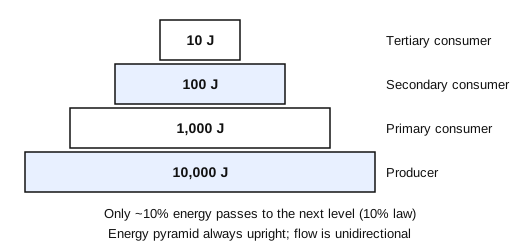
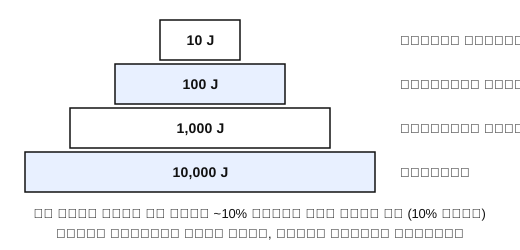
Concept: Energy flows one way (sun → producers → consumers) and only about 10% of energy passes from one trophic level to the next (Lindeman's 10 per cent law).

  1. (a) Correct – energy is not recycled; flow is unidirectional.
  2. (b) Correct – energy pyramid is always upright because energy is lost as heat at each step.
  3. (c) Incorrect – energy transfer follows the 10% law (1% is roughly the share of incident sunlight/PAR captured in photosynthesis, not trophic transfer).
  4. Hence (a) and (b) only.

Short trick: Energy: "one way, always upright, ten per cent".

Answer: (B) (a) and (b) only

अवधारणा: ऊर्जा एक दिशा में प्रवाहित होती है (सूर्य → उत्पादक → उपभोक्ता) और एक पोषी स्तर से अगले में केवल लगभग 10% ऊर्जा जाती है (लिंडमैन का 10 प्रतिशत नियम)।

  1. (a) सही – ऊर्जा का पुनर्चक्रण नहीं होता; प्रवाह एकदिशीय है।
  2. (b) सही – प्रत्येक चरण पर ऊष्मा के रूप में ऊर्जा क्षय के कारण ऊर्जा पिरामिड सदैव सीधा होता है।
  3. (c) गलत – ऊर्जा स्थानांतरण 10% नियम का पालन करता है (1% लगभग आपतित सूर्य प्रकाश/PAR का प्रकाश-संश्लेषण में ग्रहण किया गया अंश है, पोषी स्थानांतरण नहीं)।
  4. अतः केवल (a) और (b)।

शॉर्ट ट्रिक: ऊर्जा: "एक दिशा, सदा सीधा पिरामिड, दस प्रतिशत"।

उत्तर: (B) केवल (a) और (b)

NEET UGBiologyEcosystem – energy flow and pyramidsNEET UG 2026 · 21 Jun Shift 1
Q179.
Which of the following statements is correct about Plasmodium?
Plasmodium के बारे में निम्नलिखित में से कौन-सा कथन सही है?
  1. AReproduces sexually in liver cellsयकृत कोशिकाओं में लैंगिक जनन करता है
  2. BReproduces sexually in RBCsRBC में लैंगिक जनन करता है
  3. CGametocytes develop in mosquito gutयुग्मकजनक (gametocytes) मच्छर की आहारनाल में विकसित होते हैं
  4. DFertilization takes place in mosquito gutनिषेचन मच्छर की आहारनाल में होता है
Show answer

Concept: NCERT life cycle: in humans Plasmodium multiplies asexually (liver cells, then RBCs) and forms gametocytes in RBCs; in the female Anopheles fertilisation and development take place in the stomach (gut) wall.

  1. (A), (B) Wrong – in liver cells and RBCs the parasite reproduces asexually.
  2. (C) Wrong – gametocytes develop in human RBCs; the mosquito takes them up with blood.
  3. (D) Correct – gametes fuse (fertilisation) in the mosquito gut; zygote → oocyst → sporozoites → salivary glands.

Short trick: Human = intermediate host (asexual); mosquito = definitive host (sexual phase). "Sex in the stomach of the mosquito."

Answer: (D) Fertilization takes place in mosquito gut

अवधारणा: NCERT जीवन चक्र: मनुष्य में Plasmodium अलैंगिक रूप से गुणन करता है (यकृत कोशिकाएँ, फिर RBC) तथा RBC में युग्मकजनक बनाता है; मादा Anopheles में निषेचन और विकास आमाशय (आहारनाल) की भित्ति में होता है।

  1. (A), (B) गलत – यकृत कोशिकाओं और RBC में परजीवी अलैंगिक जनन करता है।
  2. (C) गलत – युग्मकजनक मनुष्य की RBC में विकसित होते हैं; मच्छर उन्हें रक्त के साथ ग्रहण करता है।
  3. (D) सही – युग्मकों का संलयन (निषेचन) मच्छर की आहारनाल में होता है; युग्मनज → ऊसिस्ट → स्पोरोज़ॉइट → लार ग्रंथियाँ।

शॉर्ट ट्रिक: मनुष्य = मध्यस्थ परपोषी (अलैंगिक); मच्छर = निश्चित परपोषी (लैंगिक प्रावस्था)। "लैंगिक जनन मच्छर के पेट में"।

उत्तर: (D) निषेचन मच्छर की आहारनाल में होता है

NEET UGBiologyHuman health and disease – malariaNEET UG 2026 · 21 Jun Shift 1
Q180.
Match List-I with List-II.
List-IList-II
A. TransformationI. Restriction enzyme
B. Cloning siteII. Transfer DNA to host bacteria
C. SelectionIII. Replication
D. OriIV. Antibiotic

Choose the correct answer from the options given below :
सूची-I का सूची-II से मिलान कीजिए।
सूची-Iसूची-II
A. रूपांतरणI. प्रतिबंधन एंज़ाइम
B. क्लोनिंग स्थलII. परपोषी जीवाणु में DNA का स्थानांतरण
C. चयनIII. प्रतिकृतीयन
D. OriIV. प्रतिजैविक

नीचे दिए गए विकल्पों में से सही उत्तर चुनिए :
  1. AA-II, B-I, C-IV, D-III
  2. BA-I, B-II, C-IV, D-III
  3. CA-III, B-IV, C-II, D-I
  4. DA-IV, B-I, C-III, D-II
Show answer

Concept: Features of a cloning vector (e.g. pBR322): ori, selectable marker, cloning (recognition) sites.

  1. A. Transformation – procedure by which DNA is introduced into a host bacterium → II.
  2. B. Cloning site – recognition site for a restriction enzyme where foreign DNA is ligated → I.
  3. C. Selection – selectable markers such as antibiotic-resistance genes (ampR, tetR) → IV.
  4. D. Ori – origin of replication, where replication starts and controls copy number → III.

Short trick: Ori = Origin of Replication; selection = antibiotic; once D-III and C-IV are fixed only (A) and (B) remain – transformation is entry of DNA → (A).

Answer: (A) A-II, B-I, C-IV, D-III

अवधारणा: क्लोनिंग वाहक (जैसे pBR322) के लक्षण: ori, वरण योग्य चिह्नक, क्लोनिंग (पहचान) स्थल।

  1. A. रूपांतरण – वह प्रक्रिया जिससे DNA परपोषी जीवाणु में प्रविष्ट कराया जाता है → II।
  2. B. क्लोनिंग स्थल – प्रतिबंधन एंज़ाइम का पहचान स्थल जहाँ विजातीय DNA जोड़ा जाता है → I।
  3. C. चयन – प्रतिजैविक-प्रतिरोधी जीन (ampR, tetR) जैसे वरण योग्य चिह्नक → IV।
  4. D. Ori – प्रतिकृतीयन का उद्भव स्थल, जहाँ से प्रतिकृतीयन शुरू होता है और प्रति संख्या नियंत्रित होती है → III।

शॉर्ट ट्रिक: Ori = प्रतिकृतीयन का उद्भव; चयन = प्रतिजैविक; D-III और C-IV तय होने पर केवल (A) और (B) बचते हैं – रूपांतरण = DNA का प्रवेश → (A)।

उत्तर: (A) A-II, B-I, C-IV, D-III

NEET UGBiologyBiotechnology – cloning vectorsNEET UG 2026 · 21 Jun Shift 1