NEET UG · 2,240 questions

NEET UG 2015, 2016, 2017, 2018, 2019, 2020, 2021, 2022, 2023, 2024, 2025, 2026 PYQs

Real previous year questions, subject-wise. Try the question, then open the answer and the explanation in Hindi & English – free, no login.

Courses – airGurukul

2,240 questions.

Q1641.
Which of the following is true for nucleolus?
केंद्रिका (nucleolus) के लिए निम्नलिखित में से कौन-सा सत्य है?
  1. AIt takes part in spindle formationयह तर्कु निर्माण में भाग लेती है
  2. BIt is a membrane-bound structureयह एक झिल्ली-बद्ध संरचना है
  3. CLarger nucleoli are present in dividing cellsविभाजित होती कोशिकाओं में बड़ी केंद्रिकाएँ होती हैं
  4. DIt is a site for active ribosomal RNA synthesisयह सक्रिय राइबोसोमल RNA संश्लेषण का स्थल है
Show answer

Concept: NCERT: the nucleolus is a spherical structure in the nucleoplasm, not membrane-bound; it is the site for active ribosomal RNA synthesis. Larger and more numerous nucleoli are present in cells actively carrying out protein synthesis.

  1. (A) Spindle is formed by centrioles/microtubules – nucleolus disappears in prophase.
  2. (B) Its content is continuous with the nucleoplasm – no membrane.
  3. (C) Large nucleoli occur in cells active in protein synthesis; in dividing cells the nucleolus disappears.

Short trick: Nucleolus = rRNA factory, membrane-less, vanishes in prophase.

Answer: (D) It is a site for active ribosomal RNA synthesis

अवधारणा: NCERT: केंद्रिका केंद्रकद्रव्य में एक गोलाकार संरचना है, झिल्ली-बद्ध नहीं; यह सक्रिय राइबोसोमल RNA संश्लेषण का स्थल है। सक्रिय रूप से प्रोटीन संश्लेषण करने वाली कोशिकाओं में अधिक बड़ी व अधिक संख्या में केंद्रिकाएँ होती हैं।

  1. (A) तर्कु तारककेंद्रों/सूक्ष्मनलिकाओं से बनता है – पूर्वावस्था में केंद्रिका लुप्त हो जाती है।
  2. (B) इसका पदार्थ केंद्रकद्रव्य से सतत है – कोई झिल्ली नहीं।
  3. (C) बड़ी केंद्रिकाएँ प्रोटीन संश्लेषण में सक्रिय कोशिकाओं में होती हैं; विभाजित कोशिकाओं में केंद्रिका लुप्त हो जाती है।

शॉर्ट ट्रिक: केंद्रिका = rRNA कारखाना, झिल्ली-रहित, पूर्वावस्था में लुप्त।

उत्तर: (D) यह सक्रिय राइबोसोमल RNA संश्लेषण का स्थल है
NEET UGBiologyCell: the unit of life – nucleolusNEET UG 2018 · 6 May Shift 1
Q1642.
Stomatal movement is not affected by
रंध्रीय गति किससे प्रभावित नहीं होती?
  1. AO2 concentrationO2 सांद्रता
  2. BLightप्रकाश
  3. CTemperatureताप
  4. DCO2 concentrationCO2 सांद्रता
Show answer

Concept: Opening and closing of stomata is controlled by light, CO2 concentration, temperature, water status and ABA – not by O2 concentration.

  1. (B) Light → guard-cell photosynthesis/K+ uptake → stomata open.
  2. (D) Low internal CO2 → open; high CO2 → close.
  3. (C) Temperature affects transpiration and stomatal aperture (high temperature/water stress → closure).

Short trick: Stomata respond to “L-C-T-W-A” (Light, CO2, Temperature, Water, ABA) – O2 is not in the list.

Answer: (A) O2 concentration

अवधारणा: रंध्रों का खुलना-बंद होना प्रकाश, CO2 सांद्रता, ताप, जल स्थिति और ABA द्वारा नियंत्रित होता है – O2 सांद्रता द्वारा नहीं।

  1. (B) प्रकाश → द्वार कोशिका में प्रकाश-संश्लेषण/K+ अवशोषण → रंध्र खुलते हैं।
  2. (D) कम आंतरिक CO2 → खुलते हैं; अधिक CO2 → बंद।
  3. (C) ताप वाष्पोत्सर्जन और रंध्र-छिद्र को प्रभावित करता है (उच्च ताप/जल प्रतिबल → बंद होना)।

शॉर्ट ट्रिक: रंध्र “प्रकाश-CO2-ताप-जल-ABA” पर प्रतिक्रिया करते हैं – O2 इस सूची में नहीं है।

उत्तर: (A) O2 सांद्रता

NEET UGBiologyTransport in plants – stomatal movementNEET UG 2018 · 6 May Shift 1
Q1643.
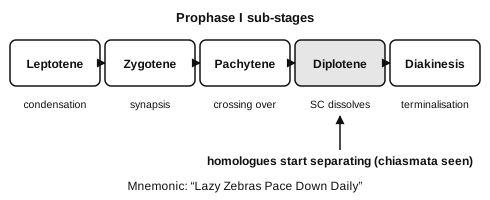
The stage during which separation of the paired homologous chromosomes begins is
वह अवस्था जिसके दौरान युग्मित समजात गुणसूत्रों का पृथक्करण आरंभ होता है
  1. ADiakinesisडायकाइनेसिस
  2. BDiploteneडिप्लोटीन
  3. CPachyteneपैकीटीन
  4. DZygoteneज़ाइगोटीन
Show answer

Concept: NCERT: diplotene is recognised by dissolution of the synaptonemal complex and the tendency of the recombined homologous chromosomes of the bivalents to separate from each other except at the sites of crossovers (chiasmata).

  1. (D) Zygotene – pairing (synapsis) begins, synaptonemal complex forms.
  2. (C) Pachytene – crossing over between non-sister chromatids (recombination nodules).
  3. (A) Diakinesis – terminalisation of chiasmata, nucleolus and nuclear envelope disappear; separation has already begun.

Short trick: Diplotene – Divorce begins (homologues pull apart, X-shaped chiasmata seen).

Answer: (B) Diplotene

अवधारणा: NCERT: डिप्लोटीन की पहचान सिनैप्टोनीमल सम्मिश्र के विघटन तथा द्विसंयोजकों के पुनर्योजित समजात गुणसूत्रों के, विनिमय स्थलों (काइएज़्मेटा) को छोड़कर, एक-दूसरे से अलग होने की प्रवृत्ति से होती है।

  1. (D) ज़ाइगोटीन – युग्मन (सूत्रयुग्मन) आरंभ, सिनैप्टोनीमल सम्मिश्र बनता है।
  2. (C) पैकीटीन – असहोदर अर्धगुणसूत्रों के बीच जीन विनिमय (पुनर्योजन ग्रंथिकाएँ)।
  3. (A) डायकाइनेसिस – काइएज़्मेटा का उपांतीभवन, केंद्रिका व केंद्रक आवरण लुप्त; पृथक्करण पहले ही आरंभ हो चुका होता है।

शॉर्ट ट्रिक: डिप्लोटीन – “डिवोर्स” आरंभ (समजात अलग होने लगते हैं, X-आकार के काइएज़्मेटा दिखते हैं)।

उत्तर: (B) डिप्लोटीन

NEET UGBiologyCell cycle and cell division – prophase I of meiosisNEET UG 2018 · 6 May Shift 1
Q1644.
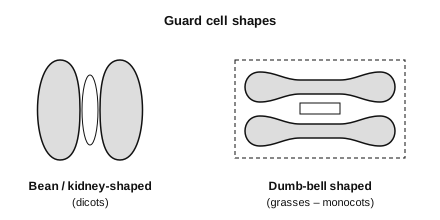
Stomata in grass leaf are
घास की पत्ती में रंध्र होते हैं
  1. ARectangularआयताकार
  2. BKidney shapedवृक्काकार (kidney shaped)
  3. CDumb-bell shapedडम्बल आकार
  4. DBarrel shapedबैरल आकार
Show answer

Concept: NCERT: in grasses the guard cells are dumb-bell shaped, whereas in dicots (and most other monocots) they are bean/kidney shaped.

  1. Grass guard cells have thick-walled narrow middle and thin-walled bulbous ends; swelling of the ends pulls the walls apart to open the pore.
  2. (B) Kidney shape – dicot leaves.
  3. (A), (D) – not the guard-cell shape of any standard example.

Short trick: Grass = Gym → dumb-bell.

Answer: (C) Dumb-bell shaped

अवधारणा: NCERT: घासों में द्वार कोशिकाएँ डम्बल आकार की होती हैं, जबकि द्विबीजपत्रियों (और अधिकांश अन्य एकबीजपत्रियों) में सेम/वृक्क आकार की।

  1. घास की द्वार कोशिकाओं का मध्य भाग संकरा व मोटी भित्ति वाला तथा सिरे फूले हुए व पतली भित्ति वाले होते हैं; सिरों के फूलने से भित्तियाँ दूर खिंचती हैं और छिद्र खुलता है।
  2. (B) वृक्क आकार – द्विबीजपत्री पत्तियाँ।
  3. (A), (D) – किसी मानक उदाहरण की द्वार कोशिका का आकार नहीं।

शॉर्ट ट्रिक: घास = जिम → डम्बल।

उत्तर: (C) डम्बल आकार

NEET UGBiologyAnatomy of flowering plants – stomataNEET UG 2018 · 6 May Shift 1
Q1645.
Secondary xylem and phloem in dicot stem are produced by
द्विबीजपत्री तने में द्वितीयक जाइलम और फ्लोएम किसके द्वारा उत्पन्न होते हैं?
  1. APhellogenकागजन (Phellogen)
  2. BVascular cambiumसंवहन एधा (Vascular cambium)
  3. CApical meristemsशीर्षस्थ विभज्योतक
  4. DAxillary meristemsकक्षस्थ विभज्योतक
Show answer

Concept: The vascular cambium (intrafascicular + interfascicular cambium ring) cuts off secondary xylem towards the pith (inside) and secondary phloem towards the periphery (outside).

  1. It is more active on the inner side, so secondary xylem is produced more than secondary phloem.
  2. (A) Phellogen (cork cambium) forms cork (phellem) outside and secondary cortex (phelloderm) inside.
  3. (C) Apical meristems cause primary growth in length.
  4. (D) Axillary meristems form branches/flowers.

Short trick: Vascular cambium → Vessels (xylem) + sieve tubes; cork cambium → bark.

Answer: (B) Vascular cambium

अवधारणा: संवहन एधा (अंतःपूलीय + अंतरपूलीय एधा का वलय) मज्जा की ओर (भीतर) द्वितीयक जाइलम और परिधि की ओर (बाहर) द्वितीयक फ्लोएम बनाती है।

  1. यह भीतरी ओर अधिक सक्रिय होती है, इसलिए द्वितीयक जाइलम द्वितीयक फ्लोएम से अधिक बनता है।
  2. (A) कागजन (कॉर्क एधा) बाहर कॉर्क (फेलम) और भीतर द्वितीयक वल्कुट (फेलोडर्म) बनाती है।
  3. (C) शीर्षस्थ विभज्योतक लंबाई में प्राथमिक वृद्धि करते हैं।
  4. (D) कक्षस्थ विभज्योतक शाखाएँ/पुष्प बनाते हैं।

शॉर्ट ट्रिक: संवहन एधा → वाहिकाएँ (जाइलम) + चालनी नलिकाएँ; कॉर्क एधा → छाल।

उत्तर: (B) संवहन एधा

NEET UGBiologyAnatomy of flowering plants – secondary growthNEET UG 2018 · 6 May Shift 1
Q1646.
Pneumatophores occur in
श्वसन मूल (Pneumatophores) किसमें पाई जाती हैं?
  1. ACarnivorous plantsकीटभक्षी पादप
  2. BFree-floating hydrophytesमुक्त-प्लावी जलोद्भिद
  3. CHalophytesलवणोद्भिद (Halophytes)
  4. DSubmerged hydrophytesनिमग्न जलोद्भिद
Show answer

Concept: NCERT: in plants growing in swampy areas like Rhizophora (mangroves – halophytes), many roots come out of the ground and grow vertically upwards; these pneumatophores help to get oxygen for respiration.

  1. Mangrove soil is saline and water-logged → anaerobic; negatively geotropic roots with lenticels (pneumathodes) take in air.
  2. (A) Carnivorous plants – leaves modified as traps.
  3. (B), (D) Hydrophytes have aerenchyma for internal aeration; they do not form pneumatophores.

Short trick: Pneumatophore = Pneumo (air) roots in salty mangrove mud.

Answer: (C) Halophytes

अवधारणा: NCERT: दलदली क्षेत्रों में उगने वाले पादपों जैसे Rhizophora (मैंग्रोव – लवणोद्भिद) में अनेक जड़ें भूमि से बाहर निकलकर ऊर्ध्वाधर ऊपर की ओर बढ़ती हैं; ये श्वसन मूल श्वसन के लिए ऑक्सीजन प्राप्त करने में सहायक होती हैं।

  1. मैंग्रोव की मृदा लवणीय व जलाक्रांत होती है → अवायवीय; वातरंध्र (न्यूमैथोड) युक्त ऋणात्मक गुरुत्वानुवर्ती जड़ें वायु ग्रहण करती हैं।
  2. (A) कीटभक्षी पादप – पत्तियाँ जाल में रूपांतरित।
  3. (B), (D) जलोद्भिदों में आंतरिक वातन हेतु वायूतक (aerenchyma) होता है; वे श्वसन मूल नहीं बनाते।

शॉर्ट ट्रिक: न्यूमैटोफोर = न्यूमो (वायु) जड़ें – लवणीय मैंग्रोव कीचड़ में।

उत्तर: (C) लवणोद्भिद

NEET UGBiologyMorphology of flowering plants – modified rootsNEET UG 2018 · 6 May Shift 1
Q1647.
Casparian strips occur in
कैस्पेरी पट्टियाँ (Casparian strips) किसमें पाई जाती हैं?
  1. ACortexवल्कुट
  2. BPericycleपरिरंभ
  3. CEpidermisबाह्यत्वचा
  4. DEndodermisअंतस्त्वचा
Show answer

Concept: NCERT: the endodermis is the innermost layer of the cortex; its radial and tangential walls have a deposition of water-impermeable, waxy suberin in the form of Casparian strips.

  1. The strips block the apoplast path, forcing water and minerals to enter the stele through the symplast – selective uptake.
  2. (A) Cortex – parenchyma, apoplast flow is free here.
  3. (B) Pericycle – gives rise to lateral roots, no strips.
  4. (C) Epidermis – bears root hairs, no strips.

Short trick: Casparian = Check-post at Endodermis (entry gate to stele).

Answer: (D) Endodermis

अवधारणा: NCERT: अंतस्त्वचा वल्कुट की सबसे भीतरी परत है; इसकी अरीय व स्पर्शरेखीय भित्तियों पर जल-अपारगम्य, मोमी सुबेरिन का जमाव कैस्पेरी पट्टियों के रूप में होता है।

  1. ये पट्टियाँ एपोप्लास्ट पथ को रोकती हैं, जिससे जल व खनिज सिमप्लास्ट द्वारा ही रंभ में प्रवेश करते हैं – चयनात्मक अवशोषण।
  2. (A) वल्कुट – मृदूतक, यहाँ एपोप्लास्ट प्रवाह मुक्त है।
  3. (B) परिरंभ – पार्श्व जड़ें बनाता है, पट्टियाँ नहीं।
  4. (C) बाह्यत्वचा – मूलरोम धारण करती है, पट्टियाँ नहीं।

शॉर्ट ट्रिक: कैस्पेरी पट्टी = अंतस्त्वचा पर “चेक-पोस्ट” (रंभ का प्रवेश द्वार)।

उत्तर: (D) अंतस्त्वचा

NEET UGBiologyAnatomy of flowering plants – endodermisNEET UG 2018 · 6 May Shift 1
Q1648.
Plants having little or no secondary growth are
अल्प या बिना द्वितीयक वृद्धि वाले पादप हैं
  1. AConifersशंकुधारी (Conifers)
  2. BDeciduous angiospermsपर्णपाती आवृतबीजी
  3. CGrassesघासें
  4. DCycadsसाइकैड
Show answer

Concept: Secondary growth needs a vascular cambium. Monocots such as grasses have closed vascular bundles (no cambium) and therefore little or no secondary growth.

  1. (A) Conifers (e.g. Pinus, Cedrus) – woody trees with extensive secondary growth.
  2. (B) Deciduous angiosperms (dicot trees) – annual rings formed by cambium.
  3. (D) Cycads – gymnosperms with secondary growth (though slow).

Short trick: Monocot = closed bundles = no cambium = no wood (palms show only anomalous growth).

Answer: (C) Grasses

अवधारणा: द्वितीयक वृद्धि के लिए संवहन एधा आवश्यक है। घासों जैसे एकबीजपत्रियों में बंद संवहन पूल (एधा रहित) होते हैं, इसलिए उनमें अल्प या कोई द्वितीयक वृद्धि नहीं होती।

  1. (A) शंकुधारी (जैसे Pinus, Cedrus) – व्यापक द्वितीयक वृद्धि वाले काष्ठीय वृक्ष।
  2. (B) पर्णपाती आवृतबीजी (द्विबीजपत्री वृक्ष) – एधा द्वारा वार्षिक वलय बनते हैं।
  3. (D) साइकैड – द्वितीयक वृद्धि वाले अनावृतबीजी (यद्यपि धीमी)।

शॉर्ट ट्रिक: एकबीजपत्री = बंद पूल = एधा नहीं = काष्ठ नहीं (ताड़ में केवल असंगत वृद्धि)।

उत्तर: (C) घासें

NEET UGBiologyAnatomy of flowering plants – secondary growthNEET UG 2018 · 6 May Shift 1
Q1649.
Sweet potato is a modified
शकरकंद (sweet potato) किसका रूपांतरित रूप है?
  1. ATap rootमूसला जड़
  2. BAdventitious rootअपस्थानिक जड़
  3. CStemतना
  4. DRhizomeप्रकंद (Rhizome)
Show answer

Concept: NCERT: adventitious roots of sweet potato get swollen and store food; tap roots of carrot, turnip are swollen for storage.

  1. Sweet potato grows from nodes of a creeping stem → adventitious; tuberous root, no nodes/buds on its surface like a stem.
  2. (A) Tap root storage – carrot, radish, turnip.
  3. (C), (D) Stem tuber – potato; rhizome – ginger, turmeric (have nodes and buds).

Short trick: Sweet potato = Secondary/adventitious; Potato = Plain stem tuber.

Answer: (B) Adventitious root

अवधारणा: NCERT: शकरकंद की अपस्थानिक जड़ें फूलकर भोजन संचित करती हैं; गाजर, शलजम की मूसला जड़ें भंडारण हेतु फूलती हैं।

  1. शकरकंद रेंगने वाले तने की पर्वसंधियों से निकलता है → अपस्थानिक; कंदिल जड़, तने की तरह इसकी सतह पर पर्वसंधियाँ/कलिकाएँ नहीं।
  2. (A) मूसला जड़ भंडारण – गाजर, मूली, शलजम।
  3. (C), (D) तना कंद – आलू; प्रकंद – अदरक, हल्दी (पर्वसंधियाँ व कलिकाएँ होती हैं)।

शॉर्ट ट्रिक: शकरकंद = अपस्थानिक जड़; आलू = तना कंद।

उत्तर: (B) अपस्थानिक जड़

NEET UGBiologyMorphology of flowering plants – modified rootsNEET UG 2018 · 6 May Shift 1
Q1650.
Which of the following statements is correct?
निम्नलिखित में से कौन-सा कथन सही है?
  1. AHorsetails are gymnospermsहॉर्सटेल अनावृतबीजी हैं
  2. BSelaginella is heterosporous, while Salvinia is homosporousSelaginella विषमबीजाणुक है, जबकि Salvinia समबीजाणुक है
  3. COvules are not enclosed by ovary wall in gymnospermsअनावृतबीजियों में बीजांड अंडाशय भित्ति से घिरे नहीं होते
  4. DStems are usually unbranched in both Cycas and CedrusCycas और Cedrus दोनों में तने सामान्यतः अशाखित होते हैं
Show answer

Concept: NCERT: gymnosperms are plants in which the ovules are not enclosed by any ovary wall and remain exposed before and after fertilisation (naked seeds).

  1. (A) Horsetails (Equisetum) are pteridophytes.
  2. (B) Both Selaginella and Salvinia are heterosporous.
  3. (D) Cycas stem is unbranched, but Pinus/Cedrus stems are branched.

Short trick: Gymno = naked → ovule without ovary. Heterosporous pteridophytes: “Salvinia, Selaginella” – both S = both hetero.

Answer: (C) Ovules are not enclosed by ovary wall in gymnosperms

अवधारणा: NCERT: अनावृतबीजी वे पादप हैं जिनमें बीजांड किसी अंडाशय भित्ति से घिरे नहीं होते और निषेचन से पहले व बाद में अनावृत रहते हैं (नग्न बीज)।

  1. (A) हॉर्सटेल (Equisetum) टेरिडोफाइट हैं।
  2. (B) Selaginella व Salvinia दोनों विषमबीजाणुक हैं।
  3. (D) Cycas का तना अशाखित है, परंतु Pinus/Cedrus के तने शाखित होते हैं।

शॉर्ट ट्रिक: जिम्नो = नग्न → अंडाशय-रहित बीजांड। विषमबीजाणुक: “Salvinia, Selaginella” – दोनों S = दोनों विषम।

उत्तर: (C) अनावृतबीजियों में बीजांड अंडाशय भित्ति से घिरे नहीं होते

NEET UGBiologyPlant kingdom – pteridophytes and gymnospermsNEET UG 2018 · 6 May Shift 1
Q1651.
Select the wrong statement :
गलत कथन चुनिए :
  1. APseudopodia are locomotory and feeding structures in Sporozoansस्पोरोज़ोआ में पादाभ (pseudopodia) गमन और भोजन ग्रहण की संरचनाएँ हैं
  2. BMushrooms belong to Basidiomycetesछत्रक (mushrooms) बेसिडियोमाइसिटीज़ से संबंधित हैं
  3. CCell wall is present in members of Fungi and Plantaeकवक और पादप जगत के सदस्यों में कोशिका भित्ति उपस्थित होती है
  4. DMitochondria are the powerhouse of the cell in all kingdoms except Moneraमोनेरा को छोड़कर सभी जगतों में माइटोकॉन्ड्रिया कोशिका के ऊर्जा-गृह हैं
Show answer

Concept: Pseudopodia (false feet) are the locomotory and food-capturing organs of amoeboid protozoans (Sarcodina), e.g. Amoeba. Sporozoans (e.g. Plasmodium) have no locomotory organelles – hence statement (A) is wrong.

  1. (B) Mushroom (Agaricus) – Basidiomycetes – correct.
  2. (C) Fungi (chitin) and Plantae (cellulose) have cell walls – correct.
  3. (D) Monera are prokaryotes without mitochondria; all eukaryotic kingdoms have them – correct.

Short trick: Protozoa groups: Amoeboid – pseudopodia; Flagellated – flagella; Ciliated – cilia; Sporozoans – none.

Answer: (A) Pseudopodia are locomotory and feeding structures in Sporozoans

अवधारणा: पादाभ (कूटपाद) अमीबीय प्रोटोज़ोआ (सार्कोडिना), जैसे Amoeba, के गमन व भोजन ग्रहण के अंग हैं। स्पोरोज़ोआ (जैसे Plasmodium) में कोई गमन अंगक नहीं होता – अतः कथन (A) गलत है।

  1. (B) छत्रक (Agaricus) – बेसिडियोमाइसिटीज़ – सही।
  2. (C) कवक (काइटिन) और पादप (सेलुलोस) में कोशिका भित्ति होती है – सही।
  3. (D) मोनेरा माइटोकॉन्ड्रिया-रहित प्रोकैरियोट हैं; सभी यूकैरियोटी जगतों में ये होते हैं – सही।

शॉर्ट ट्रिक: प्रोटोज़ोआ समूह: अमीबीय – पादाभ; कशाभी – कशाभ; पक्ष्माभी – पक्ष्माभ; स्पोरोज़ोआ – कोई नहीं।

उत्तर: (A) स्पोरोज़ोआ में पादाभ (pseudopodia) गमन और भोजन ग्रहण की संरचनाएँ हैं

NEET UGBiologyBiological classification – kingdom characteristicsNEET UG 2018 · 6 May Shift 1
Q1652.
After karyogamy followed by meiosis, spores are produced exogenously in
केंद्रक संलयन (karyogamy) के पश्चात अर्धसूत्री विभाजन होकर बीजाणु बहिर्जात (exogenously) रूप से किसमें उत्पन्न होते हैं?
  1. AAgaricus
  2. BAlternaria
  3. CNeurospora
  4. DSaccharomyces
Show answer

Concept: In Basidiomycetes karyogamy and meiosis take place in the basidium, and four basidiospores are produced exogenously on sterigmata of the basidium.

  1. Agaricus (mushroom) – basidiomycete → exogenous basidiospores.
  2. (B) Alternaria – Deuteromycetes; sexual stage unknown, only conidia.
  3. (C) Neurospora and (D) Saccharomyces – Ascomycetes; ascospores are formed endogenously inside the ascus.

Short trick: Ascus = a sac → spores inside; Basidium = a club → spores outside.

Answer: (A) Agaricus

अवधारणा: बेसिडियोमाइसिटीज़ में केंद्रक संलयन और अर्धसूत्री विभाजन बेसिडियम में होते हैं, और चार बेसिडियोबीजाणु बेसिडियम के स्टेरिग्मेटा पर बहिर्जात रूप से बनते हैं।

  1. Agaricus (छत्रक) – बेसिडियोमाइसिटीज़ → बहिर्जात बेसिडियोबीजाणु।
  2. (B) Alternaria – ड्यूटेरोमाइसिटीज़; लैंगिक अवस्था अज्ञात, केवल कोनिडिया।
  3. (C) Neurospora और (D) Saccharomyces – ऐस्कोमाइसिटीज़; ऐस्कोबीजाणु ऐस्कस के भीतर अंतर्जात रूप से बनते हैं।

शॉर्ट ट्रिक: ऐस्कस = थैली → बीजाणु भीतर; बेसिडियम = मुगदर → बीजाणु बाहर।

उत्तर: (A) Agaricus

NEET UGBiologyBiological classification – fungiNEET UG 2018 · 6 May Shift 1
Q1653.
Match the items given in Column I with those in Column II and select the correct option given below:
Column IColumn II
a. Herbarium(i) It is a place having a collection of preserved plants and animals
b. Key(ii) A list that enumerates methodically all the species found in an area with brief description aiding identification
c. Museum(iii) Is a place where dried and pressed plant specimens mounted on sheets are kept
d. Catalogue(iv) A booklet containing a list of characters and their alternates which are helpful in identification of various taxa.
स्तंभ I में दिए गए मदों का स्तंभ II के मदों से मिलान कीजिए और नीचे दिए गए विकल्पों में से सही विकल्प चुनिए:
स्तंभ Iस्तंभ II
a. हर्बेरियम (पादपालय)(i) यह एक स्थान है जहाँ परिरक्षित पादपों और जंतुओं का संग्रह होता है
b. कुंजी (Key)(ii) एक सूची जो किसी क्षेत्र में पाई जाने वाली सभी जातियों को पहचान में सहायक संक्षिप्त विवरण सहित क्रमबद्ध रूप से गिनाती है
c. संग्रहालय(iii) एक स्थान है जहाँ शीटों पर आरोपित सुखाए और दबाए गए पादप नमूने रखे जाते हैं
d. सूचीपत्र (Catalogue)(iv) एक पुस्तिका जिसमें लक्षणों और उनके विकल्पों की सूची होती है जो विभिन्न टैक्सॉन की पहचान में सहायक होती है।
  1. Aa-(ii), b-(iv), c-(iii), d-(i)
  2. Ba-(iii), b-(ii), c-(i), d-(iv)
  3. Ca-(i), b-(iv), c-(iii), d-(ii)
  4. Da-(iii), b-(iv), c-(i), d-(ii)
Show answer

Concept: Taxonomical aids (NCERT, The Living World).

  1. a. Herbarium – store-house of dried, pressed, preserved plant specimens on sheets → (iii).
  2. b. Key – taxonomical aid using contrasting characters in pairs (couplets) for identification → (iv).
  3. c. Museum – collections of preserved plant and animal specimens → (i).
  4. d. Catalogue – a list enumerating species of an area with brief descriptions (Flora/manual/catalogue) → (ii).
  5. So a-(iii), b-(iv), c-(i), d-(ii). (A) and (C) put a = (ii)/(i) – wrong; (B) puts b = (ii) – wrong.

Short trick: Fix the sure ones: Herbarium = dried sheets (iii), Key = couplets (iv) → only (D) has both.

Answer: (D) a-(iii), b-(iv), c-(i), d-(ii)

अवधारणा: वर्गिकी सहायक साधन (NCERT, जीव जगत)।

  1. a. हर्बेरियम – शीटों पर सुखाए, दबाए व परिरक्षित पादप नमूनों का भंडार → (iii)।
  2. b. कुंजी – पहचान हेतु युग्मों (couplets) में विपरीत लक्षणों पर आधारित वर्गिकी साधन → (iv)।
  3. c. संग्रहालय – परिरक्षित पादप और जंतु नमूनों का संग्रह → (i)।
  4. d. सूचीपत्र – किसी क्षेत्र की जातियों को संक्षिप्त विवरण सहित गिनाने वाली सूची → (ii)।
  5. अतः a-(iii), b-(iv), c-(i), d-(ii)। (A) और (C) में a = (ii)/(i) – गलत; (B) में b = (ii) – गलत।

शॉर्ट ट्रिक: पक्के मिलान पहले: हर्बेरियम = सूखी शीटें (iii), कुंजी = युग्म (iv) → केवल (D) में दोनों हैं।

उत्तर: (D) a-(iii), b-(iv), c-(i), d-(ii)

NEET UGBiologyThe living world – taxonomical aidsNEET UG 2018 · 6 May Shift 1
Q1654.
Winged pollen grains are present in
पंखयुक्त परागकण किसमें पाए जाते हैं?
  1. AMangoआम
  2. BCycas
  3. CMustardसरसों
  4. DPinus
Show answer

Concept: In Pinus the exine expands on two sides into air-filled wings (sacci), which help wind dispersal (anemophily).

  1. (A) Mango and (C) mustard – angiosperms with ordinary non-winged pollen (insect-pollinated).
  2. (B) Cycas – wind-pollinated gymnosperm but its pollen has no wings.

Short trick: Pinus pilot – pollen with two wings like a plane.

Answer: (D) Pinus

अवधारणा: Pinus में बाह्यचोल दो ओर फैलकर वायु से भरे पंख (सैकी) बनाता है, जो वायु द्वारा प्रकीर्णन (वायु-परागण) में सहायक होते हैं।

  1. (A) आम और (C) सरसों – सामान्य पंखरहित परागकण वाले आवृतबीजी (कीट-परागित)।
  2. (B) Cycas – वायु-परागित अनावृतबीजी, परंतु इसके परागकणों में पंख नहीं होते।

शॉर्ट ट्रिक: Pinus पायलट – हवाई जहाज़ जैसे दो पंखों वाला परागकण।

उत्तर: (D) Pinus

NEET UGBiologyPlant kingdom – gymnosperms (pollen)NEET UG 2018 · 6 May Shift 1
Q1655.
Which one is wrongly matched?
कौन-सा गलत सुमेलित है?
  1. AGemma cups – Marchantiaजेमा कप – Marchantia
  2. BBiflagellate zoospores – Brown algaeद्विकशाभी चलबीजाणु – भूरे शैवाल
  3. CUniflagellate gametes – Polysiphoniaएककशाभी युग्मक – Polysiphonia
  4. DUnicellular organism – Chlorellaएककोशिकीय जीव – Chlorella
Show answer

Concept: Polysiphonia is a red alga (Rhodophyceae). Red algae have no flagellated stages – spores and gametes are non-motile.

  1. (A) Marchantia (liverwort) reproduces asexually by gemmae formed in gemma cups – correct.
  2. (B) Brown algae (Phaeophyceae) – pear-shaped biflagellate zoospores with two unequal laterally attached flagella – correct.
  3. (D) Chlorella – unicellular green alga (single-cell protein) – correct.

Short trick: Red algae = “red light, no motion” – no flagella anywhere in the life cycle.

Answer: (C) Uniflagellate gametes – Polysiphonia

अवधारणा: Polysiphonia एक लाल शैवाल (रोडोफाइसी) है। लाल शैवालों में कोई कशाभी अवस्था नहीं होती – बीजाणु और युग्मक अचल होते हैं।

  1. (A) Marchantia (लिवरवर्ट) जेमा कपों में बने जेमी द्वारा अलैंगिक जनन करता है – सही।
  2. (B) भूरे शैवाल (फियोफाइसी) – पार्श्व से जुड़े दो असमान कशाभों वाले नाशपाती-आकार के द्विकशाभी चलबीजाणु – सही।
  3. (D) Chlorella – एककोशिकीय हरा शैवाल (एकल कोशिका प्रोटीन) – सही।

शॉर्ट ट्रिक: लाल शैवाल = “लाल बत्ती, कोई गति नहीं” – जीवन-चक्र में कहीं कशाभ नहीं।

उत्तर: (C) एककशाभी युग्मक – Polysiphonia

NEET UGBiologyPlant kingdom – algae and bryophytesNEET UG 2018 · 6 May Shift 1
Q1656.
Which of the following options correctly represents the lung conditions in asthma and emphysema, respectively?
निम्नलिखित में से कौन-सा विकल्प क्रमशः दमा (asthma) और वातस्फीति (emphysema) में फेफड़ों की स्थिति को सही रूप से दर्शाता है?
  1. AIncreased respiratory surface; Inflammation of bronchiolesश्वसन सतह में वृद्धि; श्वसनिकाओं में सूजन
  2. BIncreased number of bronchioles; Increased respiratory surfaceश्वसनिकाओं की संख्या में वृद्धि; श्वसन सतह में वृद्धि
  3. CInflammation of bronchioles; Decreased respiratory surfaceश्वसनिकाओं में सूजन; श्वसन सतह में कमी
  4. DDecreased respiratory surface; Inflammation of bronchiolesश्वसन सतह में कमी; श्वसनिकाओं में सूजन
Show answer

Concept: Asthma = difficulty in breathing with wheezing due to inflammation of bronchi and bronchioles. Emphysema = chronic disorder in which alveolar walls are damaged, so respiratory surface decreases (NCERT).

  1. Asthma → inflammation of bronchioles (first blank).
  2. Emphysema → alveolar walls break down → decreased respiratory surface (second blank).
  3. (A) and (B) say "increased respiratory surface" – never true in either disease; (D) has the right pair in the wrong order ("respectively").

Short trick: Asthma = Airways inflamed; Emphysema = alveoli Empty/Eroded → surface down. Watch the word "respectively".

Answer: (C) Inflammation of bronchioles; Decreased respiratory surface

अवधारणा: दमा = श्वसनी और श्वसनिकाओं में सूजन के कारण घरघराहट के साथ साँस लेने में कठिनाई। वातस्फीति = दीर्घकालिक विकार जिसमें कूपिकाओं की भित्तियाँ क्षतिग्रस्त हो जाती हैं, अतः श्वसन सतह घट जाती है (NCERT)।

  1. दमा → श्वसनिकाओं में सूजन (पहला भाग)।
  2. वातस्फीति → कूपिका-भित्तियाँ टूटती हैं → श्वसन सतह में कमी (दूसरा भाग)।
  3. (A) और (B) में "श्वसन सतह में वृद्धि" है – किसी भी रोग में सत्य नहीं; (D) में सही युग्म उलटे क्रम में है ("क्रमशः")।

शॉर्ट ट्रिक: दमा = वायुमार्ग में सूजन; वातस्फीति = कूपिकाएँ नष्ट → सतह घटी। "क्रमशः" शब्द पर ध्यान दें।

उत्तर: (C) श्वसनिकाओं में सूजन; श्वसन सतह में कमी

NEET UGBiologyBreathing and exchange of gases – respiratory disordersNEET UG 2018 · 6 May Shift 1
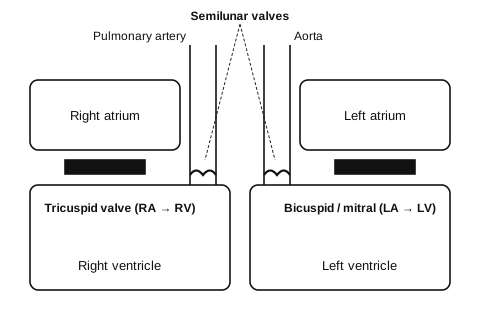
Q1657.
Match the items given in Column I with those in Column II and select the correct option given below:
Column IColumn II
a. Tricuspid valvei. Between left atrium and left ventricle
b. Bicuspid valveii. Between right ventricle and pulmonary artery
c. Semilunar valveiii. Between right atrium and right ventricle
स्तंभ I में दी गई मदों का स्तंभ II की मदों से मिलान कीजिए और नीचे दिए गए विकल्पों में से सही विकल्प चुनिए:
स्तंभ Iस्तंभ II
a. त्रिवलनी कपाट (Tricuspid valve)i. बाएँ अलिंद और बाएँ निलय के बीच
b. द्विवलनी कपाट (Bicuspid valve)ii. दाएँ निलय और फुफ्फुसीय धमनी के बीच
c. अर्धचंद्राकार कपाट (Semilunar valve)iii. दाएँ अलिंद और दाएँ निलय के बीच
  1. Aa-i, b-ii, c-iii
  2. Ba-i, b-iii, c-ii
  3. Ca-iii, b-i, c-ii
  4. Da-ii, b-i, c-iii
Show answer

Concept: The right atrio-ventricular opening is guarded by the tricuspid valve, the left one by the bicuspid (mitral) valve; semilunar valves guard the openings of the pulmonary artery and aorta.

  1. a. Tricuspid → between right atrium and right ventricle → iii.
  2. b. Bicuspid → between left atrium and left ventricle → i.
  3. c. Semilunar → between right ventricle and pulmonary artery (and left ventricle–aorta) → ii.
  4. Only option (C) gives a-iii, b-i, c-ii.

Short trick: "Tricuspid on the Right – Try before you Bi" (Right side tricuspid, left side bicuspid). Semilunar = exits of ventricles.

Answer: (C) a-iii, b-i, c-ii

अवधारणा: दायाँ अलिंद-निलय छिद्र त्रिवलनी कपाट से, बायाँ द्विवलनी (मिट्रल) कपाट से सुरक्षित होता है; अर्धचंद्राकार कपाट फुफ्फुसीय धमनी और महाधमनी के छिद्रों पर होते हैं।

  1. a. त्रिवलनी → दाएँ अलिंद और दाएँ निलय के बीच → iii।
  2. b. द्विवलनी → बाएँ अलिंद और बाएँ निलय के बीच → i।
  3. c. अर्धचंद्राकार → दाएँ निलय और फुफ्फुसीय धमनी के बीच (तथा बाएँ निलय–महाधमनी) → ii।
  4. केवल विकल्प (C) में a-iii, b-i, c-ii है।

शॉर्ट ट्रिक: त्रिवलनी = दायाँ (Tri–Right), द्विवलनी = बायाँ; अर्धचंद्राकार = निलयों से निकलने वाली धमनियों के द्वार पर।

उत्तर: (C) a-iii, b-i, c-ii

NEET UGBiologyBody fluids and circulation – heart valvesNEET UG 2018 · 6 May Shift 1
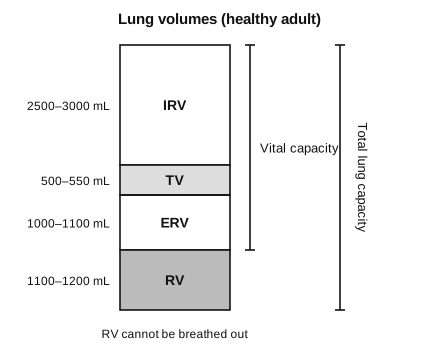
Q1658.
Match the items given in Column I with those in Column II and select the correct option given below:
Column IColumn II
a. Tidal volumei. 2500 – 3000 mL
b. Inspiratory Reserve volumeii. 1100 – 1200 mL
c. Expiratory Reserve volumeiii. 500 – 550 mL
d. Residual volumeiv. 1000 – 1100 mL
स्तंभ I में दी गई मदों का स्तंभ II की मदों से मिलान कीजिए और नीचे दिए गए विकल्पों में से सही विकल्प चुनिए:
स्तंभ Iस्तंभ II
a. ज्वारीय आयतन (Tidal volume)i. 2500 – 3000 mL
b. अंतःश्वसन आरक्षित आयतन (Inspiratory Reserve volume)ii. 1100 – 1200 mL
c. निःश्वसन आरक्षित आयतन (Expiratory Reserve volume)iii. 500 – 550 mL
d. अवशिष्ट आयतन (Residual volume)iv. 1000 – 1100 mL
  1. Aa-i, b-iv, c-ii, d-iii
  2. Ba-iii, b-i, c-iv, d-ii
  3. Ca-iii, b-ii, c-i, d-iv
  4. Da-iv, b-iii, c-ii, d-i
Show answer

Concept: NCERT values: TV ≈ 500 mL, IRV ≈ 2500–3000 mL, ERV ≈ 1000–1100 mL, RV ≈ 1100–1200 mL.

  1. a. Tidal volume (normal breath) → 500–550 mL → iii.
  2. b. IRV (extra air by forcible inspiration) → 2500–3000 mL → i.
  3. c. ERV (extra air by forcible expiration) → 1000–1100 mL → iv.
  4. d. RV (air left after forcible expiration) → 1100–1200 mL → ii.
  5. a-iii, b-i, c-iv, d-ii = option (B).

Short trick: Order by size: IRV (≈3000) > RV (≈1200) > ERV (≈1100) > TV (500). TV is the smallest – a must be iii, which leaves only (B) and (C); ERV < RV picks (B).

Answer: (B) a-iii, b-i, c-iv, d-ii

अवधारणा: NCERT मान: TV ≈ 500 mL, IRV ≈ 2500–3000 mL, ERV ≈ 1000–1100 mL, RV ≈ 1100–1200 mL।

  1. a. ज्वारीय आयतन (सामान्य श्वास) → 500–550 mL → iii।
  2. b. IRV (बलपूर्वक अंतःश्वसन से अतिरिक्त वायु) → 2500–3000 mL → i।
  3. c. ERV (बलपूर्वक निःश्वसन से अतिरिक्त वायु) → 1000–1100 mL → iv।
  4. d. RV (बलपूर्वक निःश्वसन के बाद शेष वायु) → 1100–1200 mL → ii।
  5. a-iii, b-i, c-iv, d-ii = विकल्प (B)।

शॉर्ट ट्रिक: आकार का क्रम: IRV (≈3000) > RV (≈1200) > ERV (≈1100) > TV (500)। TV सबसे छोटा – a = iii, अतः केवल (B) व (C) बचते हैं; ERV < RV से (B)।

उत्तर: (B) a-iii, b-i, c-iv, d-ii

NEET UGBiologyBreathing and exchange of gases – respiratory volumesNEET UG 2018 · 6 May Shift 1
Q1659.
The transparent lens in the human eye is held in its place by
मानव नेत्र में पारदर्शी लेंस अपने स्थान पर किसके द्वारा टिका रहता है?
  1. Asmooth muscles attached to the irisपरितारिका (iris) से जुड़ी चिकनी पेशियों द्वारा
  2. Bligaments attached to the irisपरितारिका से जुड़े स्नायुओं (ligaments) द्वारा
  3. Cligaments attached to the ciliary bodyपक्ष्माभी काय (ciliary body) से जुड़े स्नायुओं द्वारा
  4. Dsmooth muscles attached to the ciliary bodyपक्ष्माभी काय से जुड़ी चिकनी पेशियों द्वारा
Show answer

Concept: NCERT: "The lens is held in place by ligaments attached to the ciliary body."

  1. The ciliary body is the forward thickening of the choroid; suspensory ligaments (zonules) run from it to the lens.
  2. The iris only controls pupil size – it does not hold the lens, so (A) and (B) are wrong.
  3. Ciliary muscles change lens curvature but the lens is suspended by ligaments, not muscles – (D) is wrong.

Short trick: Lens hangs on "suspensory LIGAMENTS" from the CILIARY body – both key words must appear.

Answer: (C) ligaments attached to the ciliary body

अवधारणा: NCERT: "लेंस पक्ष्माभी काय से जुड़े स्नायुओं द्वारा अपने स्थान पर टिका रहता है।"

  1. पक्ष्माभी काय रक्तक पटल (choroid) का अग्र मोटा भाग है; इससे निलंबन स्नायु (zonules) लेंस तक जाते हैं।
  2. परितारिका केवल पुतली का आकार नियंत्रित करती है – लेंस को नहीं थामती, अतः (A) और (B) गलत।
  3. पक्ष्माभी पेशियाँ लेंस की वक्रता बदलती हैं, पर लेंस स्नायुओं से लटका होता है, पेशियों से नहीं – (D) गलत।

शॉर्ट ट्रिक: लेंस "निलंबन स्नायुओं" द्वारा "पक्ष्माभी काय" से लटका है – दोनों मुख्य शब्द होने चाहिए।

उत्तर: (C) पक्ष्माभी काय से जुड़े स्नायुओं द्वारा

NEET UGBiologyNeural control and coordination – human eyeNEET UG 2018 · 6 May Shift 1
Q1660.
Which of the following is an amino acid derived hormone?
निम्नलिखित में से कौन-सा अमीनो अम्ल व्युत्पन्न हॉर्मोन है?
  1. AEstradiolएस्ट्राडिऑल
  2. BEcdysoneएक्डाइसोन
  3. CEpinephrineएपिनेफ्रीन
  4. DEstriolएस्ट्रिऑल
Show answer

Concept: NCERT groups hormones as peptide/protein, steroids, iodothyronines and amino-acid derivatives (epinephrine).

  1. Epinephrine (adrenaline) is a catecholamine made from the amino acid tyrosine → amino-acid derivative.
  2. Estradiol and estriol are estrogens – steroids (from cholesterol).
  3. Ecdysone (insect moulting hormone) is also a steroid.

Short trick: Three "Es"-trogens/ecdysone are steroids; the odd one, Epinephrine, comes from tyrosine (as does thyroxine).

Answer: (C) Epinephrine

अवधारणा: NCERT हॉर्मोनों को पेप्टाइड/प्रोटीन, स्टेरॉयड, आयोडोथायरोनीन और अमीनो-अम्ल व्युत्पन्न (एपिनेफ्रीन) में बाँटता है।

  1. एपिनेफ्रीन (एड्रीनेलीन) अमीनो अम्ल टाइरोसीन से बनने वाला कैटेकोलामीन है → अमीनो-अम्ल व्युत्पन्न।
  2. एस्ट्राडिऑल और एस्ट्रिऑल एस्ट्रोजन हैं – स्टेरॉयड (कोलेस्ट्रॉल से)।
  3. एक्डाइसोन (कीटों का निर्मोचन हॉर्मोन) भी स्टेरॉयड है।

शॉर्ट ट्रिक: एस्ट्रोजन/एक्डाइसोन स्टेरॉयड हैं; अलग वाला एपिनेफ्रीन टाइरोसीन से बनता है।

उत्तर: (C) एपिनेफ्रीन

NEET UGBiologyChemical coordination – classification of hormonesNEET UG 2018 · 6 May Shift 1