Question bank

Q&A: practice questions with answers

Search questions on any topic. Filter by exam category, exam, subject and topic, try the question, then open the answer and explanation.

Courses – airGurukul

53,050 questions in the question bank.

Q2141.
A light hollow cube of side length 10 cm and mass 10 g, is floating in water. It is pushed down and released to execute simple harmonic oscillations. The time period of oscillations is yπ×10−2 s, where the value of y is (Acceleration due to gravity, g=10m/s2, density of water =103kg/m3)
10 cm भुजा तथा 10 g द्रव्यमान का एक हल्का खोखला घन पानी में तैर रहा है। इसे नीचे दबाकर छोड़ने पर यह सरल आवर्त दोलन करता है। दोलनों का आवर्तकाल yπ×10−2 s है, जहाँ y का मान है (गुरुत्वीय त्वरण g=10m/s2, पानी का घनत्व =103kg/m3)
  1. A6
  2. B2
  3. C4
  4. D1
Show answer

Concept: A floating body pushed down by x feels an extra buoyant restoring force F=−ρAgx, giving SHM with T=2πmρAg.

  1. m=10 g =0.01 kg; cross-sectional area A=(0.10)2=0.01m2; ρ=103kg/m3.
  2. ρAg=103×0.01×10=100 N/m.
  3. T=2π0.01100=2π10−4=2π×10−2 s.
  4. Comparing with yπ×10−2 s: y=2.

Short trick: m/(ρAg)=10−4=10−2 — the whole answer is just 2π×10−2.

Answer: (B) 2

अवधारणा: तैरते पिंड को x नीचे दबाने पर अतिरिक्त उत्प्लावन प्रत्यानयन बल F=−ρAgx लगता है, जिससे सरल आवर्त गति होती है: T=2πmρAg।

  1. m=10 g =0.01 kg; अनुप्रस्थ काट क्षेत्रफल A=(0.10)2=0.01m2; ρ=103kg/m3।
  2. ρAg=103×0.01×10=100 N/m।
  3. T=2π0.01100=2π10−4=2π×10−2 s।
  4. yπ×10−2 s से तुलना करने पर: y=2।

शॉर्ट ट्रिक: m/(ρAg)=10−4=10−2 — पूरा उत्तर बस 2π×10−2 है।

उत्तर: (B) 2

JEE Main 2025 (January) – Paper 1 (B.E./B.Tech)PhysicsOscillations – SHM of floating bodyJEE Main 2025 (January) – Paper 1 (B.E./B.Tech) 2025 · 23 Jan Shift 1 →
Q2142.
Regarding self-inductance:
A. The self-inductance of the coil depends on its geometry.
B. Self-inductance does not depend on the permeability of the medium.
C. Self-induced e.m.f. opposes any change in the current in a circuit.
D. Self-inductance is electromagnetic analogue of mass in mechanics.
E. Work needs to be done against self-induced e.m.f. in establishing the current.
Choose the correct answer from the options given below:
स्वप्रेरकत्व (self-inductance) के संबंध में:
A. कुंडली का स्वप्रेरकत्व उसकी ज्यामिति पर निर्भर करता है।
B. स्वप्रेरकत्व माध्यम की चुंबकशीलता (permeability) पर निर्भर नहीं करता।
C. स्वप्रेरित विद्युत वाहक बल (e.m.f.) परिपथ में धारा के किसी भी परिवर्तन का विरोध करता है।
D. स्वप्रेरकत्व, यांत्रिकी में द्रव्यमान का विद्युतचुंबकीय अनुरूप (analogue) है।
E. धारा स्थापित करने में स्वप्रेरित e.m.f. के विरुद्ध कार्य करना पड़ता है।
नीचे दिए गए विकल्पों में से सही उत्तर चुनिए:
  1. AA, B, C, E onlyकेवल A, B, C, E
  2. BB, C, D, E onlyकेवल B, C, D, E
  3. CA, C, D, E onlyकेवल A, C, D, E
  4. DA, B, C, D onlyकेवल A, B, C, D
Show answer

Concept: For a solenoid-like coil L=μn2V — it depends on geometry and on the permeability μ of the medium; self-induced e.m.f. follows Lenz's law.

  1. A: L depends on turns, length, area — geometry — true.
  2. B: L∝μ (e.g. an iron core raises L enormously) — false.
  3. C: By Lenz's law the self-induced e.m.f. opposes any change of current — true.
  4. D: L opposes change of current just as mass (inertia) opposes change of velocity; energy 12LI2↔12mv2 — true.
  5. E: Establishing a current requires work against the back e.m.f., stored as 12LI2 — true.
  6. Correct: A, C, D, E.

Short trick: Spot the single false statement (B — permeability definitely matters) and pick the option that omits only B.

Answer: (C) A, C, D, E only

अवधारणा: परिनालिका-सदृश कुंडली के लिए L=μn2V — यह ज्यामिति और माध्यम की चुंबकशीलता μ दोनों पर निर्भर है; स्वप्रेरित e.m.f. लेंज़ के नियम का पालन करता है।

  1. A: L फेरों, लंबाई, क्षेत्रफल — अर्थात ज्यामिति — पर निर्भर है — सत्य।
  2. B: L∝μ (जैसे लोहे की क्रोड L को बहुत बढ़ा देती है) — असत्य।
  3. C: लेंज़ के नियम से स्वप्रेरित e.m.f. धारा के हर परिवर्तन का विरोध करता है — सत्य।
  4. D: जैसे द्रव्यमान (जड़त्व) वेग-परिवर्तन का विरोध करता है, वैसे L धारा-परिवर्तन का; ऊर्जा 12LI2↔12mv2 — सत्य।
  5. E: धारा स्थापित करने में विरोधी e.m.f. के विरुद्ध कार्य करना पड़ता है, जो 12LI2 के रूप में संचित होता है — सत्य।
  6. सही: A, C, D, E।

शॉर्ट ट्रिक: एकमात्र असत्य कथन (B — चुंबकशीलता निश्चित रूप से प्रभाव डालती है) पहचानें और वही विकल्प चुनें जिसमें केवल B नहीं है।

उत्तर: (C) केवल A, C, D, E

JEE Main 2025 (January) – Paper 1 (B.E./B.Tech)PhysicsElectromagnetic induction – self-inductanceJEE Main 2025 (January) – Paper 1 (B.E./B.Tech) 2025 · 23 Jan Shift 1 →
Q2143.
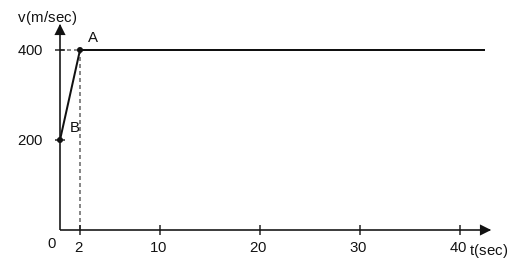
The motion of an airplane is represented by velocity-time graph as shown below. The distance covered by airplane in the first 30.5 second is ______ km.
एक वायुयान की गति नीचे दर्शाए गए वेग-समय ग्राफ द्वारा निरूपित है। पहले 30.5 सेकंड में वायुयान द्वारा तय की गई दूरी ______ km है।
  1. A12
  2. B3
  3. C6
  4. D9
Show answer

Concept: Distance = area under the velocity-time graph.

  1. From t=0 to t=2 s the velocity rises linearly from 200 m/s (B) to 400 m/s (A): area = (200+400)2×2=600 m.
  2. From t=2 s to t=30.5 s the velocity is constant at 400 m/s: area = 400×28.5=11400 m.
  3. Total distance =600+11400=12000 m =12 km.

Short trick: Nearly the whole time is at 400 m/s: 400×30.5≈12.2 km; the small trapezoidal correction brings it to exactly 12 km — only option (A) is close.

Answer: (A) 12

अवधारणा: दूरी = वेग-समय ग्राफ के नीचे का क्षेत्रफल।

  1. t=0 से t=2 s तक वेग 200 m/s (B) से 400 m/s (A) तक रैखिक बढ़ता है: क्षेत्रफल = (200+400)2×2=600 m।
  2. t=2 s से t=30.5 s तक वेग 400 m/s पर नियत है: क्षेत्रफल = 400×28.5=11400 m।
  3. कुल दूरी =600+11400=12000 m =12 km।

शॉर्ट ट्रिक: लगभग पूरा समय 400 m/s पर है: 400×30.5≈12.2 km; छोटे समलंब संशोधन से ठीक 12 km — केवल विकल्प (A) निकट है।

उत्तर: (A) 12

JEE Main 2025 (January) – Paper 1 (B.E./B.Tech)PhysicsKinematics – velocity-time graphJEE Main 2025 (January) – Paper 1 (B.E./B.Tech) 2025 · 23 Jan Shift 1 →
Q2144.
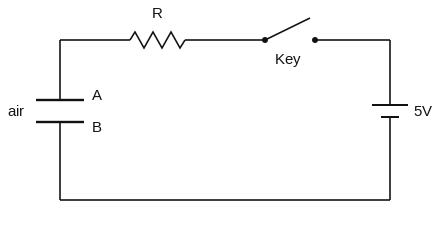
Identify the valid statements relevant to the given circuit at the instant when the key is closed.

A. There will be no current through resistor R.
B. There will be maximum current in the connecting wires.
C. Potential difference between the capacitor plates A and B is minimum.
D. Charge on the capacitor plates is minimum.
Choose the correct answer from the options given below:
कुंजी (key) बंद करने के क्षण पर, दिए गए परिपथ से संबंधित मान्य कथनों की पहचान कीजिए।

A. प्रतिरोध R से कोई धारा नहीं बहेगी।
B. संयोजक तारों में अधिकतम धारा होगी।
C. संधारित्र की प्लेटों A तथा B के बीच विभवांतर न्यूनतम है।
D. संधारित्र की प्लेटों पर आवेश न्यूनतम है।
नीचे दिए गए विकल्पों में से सही उत्तर चुनिए:
  1. AA, C Onlyकेवल A, C
  2. BA, B, D Onlyकेवल A, B, D
  3. CC, D Onlyकेवल C, D
  4. DB, C, D Onlyकेवल B, C, D
Show answer

Concept: At the instant of switching on, an uncharged capacitor behaves like a plain conducting wire (q=0, VC=q/C=0), so the charging current is maximum: i0=ER.

  1. B: At t=0 the current everywhere in the series loop is maximum (E/R) — true.
  2. C: VAB=q/C=0, its minimum value — true.
  3. D: q=0, minimum — true.
  4. A: The same maximum current flows through R too (R is in series with the capacitor), so "no current through R" is false.

Short trick: Capacitor at t=0 → short circuit; capacitor at t→∞ → open circuit. "Key just closed" means short circuit: maximum current, zero charge, zero voltage.

Answer: (D) B, C, D Only

अवधारणा: कुंजी बंद करने के क्षण पर अनावेशित संधारित्र सीधे चालक तार की तरह व्यवहार करता है (q=0, VC=q/C=0), अतः आवेशन धारा अधिकतम होती है: i0=ER।

  1. B: t=0 पर श्रेणी लूप में हर जगह धारा अधिकतम (E/R) है — सत्य।
  2. C: VAB=q/C=0, न्यूनतम मान — सत्य।
  3. D: q=0, न्यूनतम — सत्य।
  4. A: वही अधिकतम धारा R से होकर भी बहती है (R संधारित्र के श्रेणीक्रम में है), अतः "R से कोई धारा नहीं" असत्य है।

शॉर्ट ट्रिक: t=0 पर संधारित्र → लघु पथ (short); t→∞ पर → खुला परिपथ। "कुंजी अभी बंद हुई" का अर्थ short: अधिकतम धारा, शून्य आवेश, शून्य वोल्टता।

उत्तर: (D) केवल B, C, D

JEE Main 2025 (January) – Paper 1 (B.E./B.Tech)PhysicsCapacitors – transient at switch-onJEE Main 2025 (January) – Paper 1 (B.E./B.Tech) 2025 · 23 Jan Shift 1 →
Q2145.
A solid sphere of mass 'm' and radius 'r' is allowed to roll without slipping from the highest point of an inclined plane of length 'L' and makes an angle 30∘ with the horizontal. The speed of the particle at the bottom of the plane is v1. If the angle of inclination is increased to 45∘ while keeping L constant. Then the new speed of the sphere at the bottom of the plane is v2. The ratio v12:v22 is
'm' द्रव्यमान तथा 'r' त्रिज्या का एक ठोस गोला, क्षैतिज से 30∘ कोण बनाने वाले 'L' लंबाई के नत समतल के उच्चतम बिंदु से बिना फिसले लुढ़कने दिया जाता है। समतल की तली पर इसकी चाल v1 है। L को नियत रखते हुए नति कोण 45∘ कर देने पर तली पर गोले की नई चाल v2 है। अनुपात v12:v22 है
  1. A1:2
  2. B1:3
  3. C1:3
  4. D1:2
Show answer

Concept: Rolling without slipping down an incline of length L: energy conservation gives v2=2gLsin⁡θ1+k2r2; for a solid sphere k2r2=25, so v2=107gLsin⁡θ.

  1. v2∝sin⁡θ (same L, same sphere).
  2. v12v22=sin⁡30∘sin⁡45∘=1/21/2=22=12.
  3. So v12:v22=1:2.

Short trick: Height fallen =Lsin⁡θ, so v2∝sin⁡θ — the moment of inertia factor cancels in the ratio.

Answer: (A) 1:2

अवधारणा: L लंबाई के नत समतल पर बिना फिसले लुढ़कने में ऊर्जा संरक्षण से v2=2gLsin⁡θ1+k2r2; ठोस गोले के लिए k2r2=25, अतः v2=107gLsin⁡θ।

  1. v2∝sin⁡θ (समान L, समान गोला)।
  2. v12v22=sin⁡30∘sin⁡45∘=1/21/2=12।
  3. अतः v12:v22=1:2।

शॉर्ट ट्रिक: गिरी ऊँचाई =Lsin⁡θ, अतः v2∝sin⁡θ — जड़त्व आघूर्ण वाला गुणक अनुपात में कट जाता है।

उत्तर: (A) 1:2

JEE Main 2025 (January) – Paper 1 (B.E./B.Tech)PhysicsRotational motion – rolling on inclineJEE Main 2025 (January) – Paper 1 (B.E./B.Tech) 2025 · 23 Jan Shift 1 →
Q2146.
A positive ion A and a negative ion B has charges 6.67×10⁻¹⁹ C and 9.6×10⁻¹⁰ C, and masses 19.2×10⁻²⁷ kg and 9×10⁻²⁷ kg respectively. At an instant, the ions are separated by a certain distance r. At that instant the ratio of the magnitudes of electrostatic force to gravitational force is P×1045, where the value of 10P is ______. (Take 14πε0=9×10⁹Nm2C−1 and universal gravitational constant as 6.67×10⁻¹¹Nm2kg−2)
Assume that charge may not be an integral multiple of electrons.
एक धनायन A तथा एक ऋणायन B पर क्रमशः 6.67×10⁻¹⁹ C तथा 9.6×10⁻¹⁰ C आवेश और 19.2×10⁻²⁷ kg तथा 9×10⁻²⁷ kg द्रव्यमान हैं। किसी क्षण दोनों आयन एक निश्चित दूरी r से पृथक हैं। उस क्षण स्थिरवैद्युत बल तथा गुरुत्वाकर्षण बल के परिमाणों का अनुपात P×1045 है, जहाँ 10P का मान ______ है। (14πε0=9×10⁹Nm2C−1 तथा सार्वत्रिक गुरुत्वाकर्षण नियतांक 6.67×10⁻¹¹Nm2kg−2 लीजिए)
मान लीजिए कि आवेश, इलेक्ट्रॉन आवेश का पूर्णांक गुणज नहीं भी हो सकता है।
Show answer

Concept: Both forces follow inverse-square laws, so r cancels in the ratio: FeFg=kq1q2Gm1m2.

  1. Numerator: kq1q2=9×109×6.67×10−19×9.6×10−10=5.763×10⁻¹⁸Nm2.
  2. Denominator: Gm1m2=6.67×10−11×19.2×10−27×9×10−27=1.1526×10−62Nm2.
  3. FeFg=5.763×10−181.1526×10−62=0.5×1045.
  4. So P=0.5 and 10P=5.

Short trick: 9×6.67×9.66.67×19.2×9=9.619.2=12; powers: 109−19−10−(−11−27−27)=1045.

Answer: 5

अवधारणा: दोनों बल व्युत्क्रम-वर्ग नियम का पालन करते हैं, अतः अनुपात में r कट जाता है: FeFg=kq1q2Gm1m2।

  1. अंश: kq1q2=9×109×6.67×10−19×9.6×10−10=5.763×10⁻¹⁸Nm2।
  2. हर: Gm1m2=6.67×10−11×19.2×10−27×9×10−27=1.1526×10−62Nm2।
  3. FeFg=5.763×10−181.1526×10−62=0.5×1045।
  4. अतः P=0.5 तथा 10P=5।

शॉर्ट ट्रिक: 9×6.67×9.66.67×19.2×9=9.619.2=12; घातें: 109−19−10−(−11−27−27)=1045।

उत्तर: 5

JEE Main 2025 (January) – Paper 1 (B.E./B.Tech)PhysicsElectrostatics – Coulomb vs gravitational forceJEE Main 2025 (January) – Paper 1 (B.E./B.Tech) 2025 · 23 Jan Shift 1 →
Q2147.

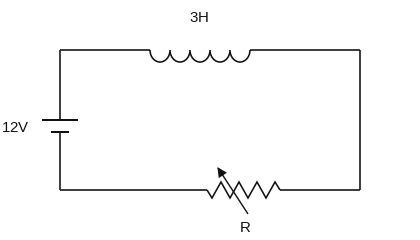
In the given circuit the sliding contact is pulled outwards such that electric current in the circuit changes at the rate of 8 A/s. At an instant when R is 12Ω, the value of the current in the circuit will be ______ A.

दिए गए परिपथ में सर्पी संपर्क (sliding contact) को बाहर की ओर इस प्रकार खींचा जाता है कि परिपथ में विद्युत धारा 8 A/s की दर से बदलती है। जिस क्षण R का मान 12Ω है, उस क्षण परिपथ में धारा का मान ______ A होगा।
Show answer

Concept: Kirchhoff's voltage law for an L-R circuit: E=Ldidt+iR. Pulling the rheostat contact outwards increases R, so the current is decreasing: didt=−8 A/s.

  1. 12=3×(−8)+i×12
  2. 12=−24+12i
  3. 12i=36⇒i=3 A.

Short trick: i=E+L|di/dt|R=12+2412=3 A — the inductor's e.m.f. aids the battery while the current falls.

Answer: 3

अवधारणा: L-R परिपथ के लिए किरचॉफ का वोल्टता नियम: E=Ldidt+iR। धारा नियंत्रक (rheostat) का संपर्क बाहर खींचने से R बढ़ता है, अतः धारा घट रही है: didt=−8 A/s।

  1. 12=3×(−8)+i×12
  2. 12=−24+12i
  3. 12i=36⇒i=3 A।

शॉर्ट ट्रिक: i=E+L|di/dt|R=12+2412=3 A — धारा घटते समय प्रेरक का e.m.f. बैटरी की सहायता करता है।

उत्तर: 3

JEE Main 2025 (January) – Paper 1 (B.E./B.Tech)PhysicsElectromagnetic induction – L-R circuitJEE Main 2025 (January) – Paper 1 (B.E./B.Tech) 2025 · 23 Jan Shift 1 →
Q2148.
Two particles are located at equal distance from origin. The position vectors of those are represented by A→=2i^+3nj^+2k^ and B→=2i^−2j^+4pk^, respectively. If both the vectors are at right angle to each other, the value of n−1 is ______.
दो कण मूल बिंदु से समान दूरी पर स्थित हैं। उनके स्थिति सदिश क्रमशः A→=2i^+3nj^+2k^ तथा B→=2i^−2j^+4pk^ द्वारा निरूपित हैं। यदि दोनों सदिश परस्पर लंबवत हैं, तो n−1 का मान ______ है।
Show answer

Concept: Equal distances give |A→|=|B→|; perpendicularity gives A→⋅B→=0. Two equations, two unknowns (n, p).

  1. |A→|2=|B→|2: 4+9n2+4=4+4+16p2⇒9n2=16p2⇒p=±3n4.
  2. A→⋅B→=0: 4−6n+8p=0.
  3. With p=+3n4: 4−6n+6n=4≠0 — rejected. With p=−3n4: 4−6n−6n=0⇒n=13.
  4. n−1=3.

Short trick: The 8p term must combine with −6n to kill the constant 4; only p=−3n4 works, giving 12n=4 at once.

Answer: 3

अवधारणा: समान दूरी से |A→|=|B→|; लंबवतता से A→⋅B→=0। दो समीकरण, दो अज्ञात (n, p)।

  1. |A→|2=|B→|2: 4+9n2+4=4+4+16p2⇒9n2=16p2⇒p=±3n4।
  2. A→⋅B→=0: 4−6n+8p=0।
  3. p=+3n4 लेने पर: 4−6n+6n=4≠0 — अस्वीकार्य। p=−3n4 लेने पर: 4−6n−6n=0⇒n=13।
  4. n−1=3।

शॉर्ट ट्रिक: नियतांक 4 को समाप्त करने के लिए 8p पद को −6n के साथ मिलना होगा; केवल p=−3n4 से यह संभव है, जिससे तुरंत 12n=4।

उत्तर: 3

JEE Main 2025 (January) – Paper 1 (B.E./B.Tech)PhysicsVectors – perpendicular vectorsJEE Main 2025 (January) – Paper 1 (B.E./B.Tech) 2025 · 23 Jan Shift 1 →
Q2149.
An ideal gas initially at 0∘C temperature, is compressed suddenly to one fourth of its volume. If the ratio of specific heat at constant pressure to that at constant volume is 3/2, the change in temperature due to the thermodynamic process is ______ K.
प्रारंभ में 0∘C ताप पर स्थित एक आदर्श गैस को अचानक संपीडित कर उसके आयतन का एक-चौथाई कर दिया जाता है। यदि नियत दाब पर विशिष्ट ऊष्मा का नियत आयतन पर विशिष्ट ऊष्मा से अनुपात 3/2 है, तो इस ऊष्मागतिक प्रक्रम के कारण ताप में परिवर्तन ______ K है।
Show answer

Concept: A sudden compression is adiabatic: TVγ−1= constant, with γ=32.

  1. T1=0∘C=273 K; V2=V14.
  2. T2=T1(V1V2)γ−1=273×(4)1/2=273×2=546 K.
  3. ΔT=546−273=273 K.

Short trick: γ−1=12 and 41/2=2 — the temperature simply doubles, so the rise equals the initial 273 K.

Answer: 273

अवधारणा: अचानक संपीडन रुद्धोष्म होता है: TVγ−1= नियत, जहाँ γ=32।

  1. T1=0∘C=273 K; V2=V14।
  2. T2=T1(V1V2)γ−1=273×(4)1/2=273×2=546 K।
  3. ΔT=546−273=273 K।

शॉर्ट ट्रिक: γ−1=12 तथा 41/2=2 — ताप बस दुगुना हो जाता है, अतः वृद्धि प्रारंभिक 273 K के बराबर है।

उत्तर: 273

JEE Main 2025 (January) – Paper 1 (B.E./B.Tech)PhysicsThermodynamics – adiabatic processJEE Main 2025 (January) – Paper 1 (B.E./B.Tech) 2025 · 23 Jan Shift 1 →
Q2150.
A force f=x2yi^+y2j^ acts on a particle in a plane x+y=10. The work done by this force during a displacement from (0,0) to (4m,2m) is ______ Joule (round off to the nearest integer)
एक बल f=x2yi^+y2j^ किसी कण पर समतल x+y=10 में कार्य करता है। (0,0) से (4m,2m) तक विस्थापन के दौरान इस बल द्वारा किया गया कार्य ______ जूल है (निकटतम पूर्णांक तक सन्निकटित कीजिए)
Show answer

Concept: Work by a variable force: W=∫f→⋅dr→=∫fxdx+∫fydy. The given plane supplies the constraint y=10−x to be used in the x-integration.

  1. W=∫04x2ydx+∫02y2dy, with y=10−x in the first integral.
  2. ∫04x2(10−x)dx=[10x33−x44]04=6403−64=4483 J.
  3. ∫02y2dy=83 J.
  4. W=4483+83=4563=152 J.

Short trick: The y-part is tiny (8/3); almost all the work comes from ∫x2(10−x)dx — compute that first and add 8/3.

Answer: 152

अवधारणा: परिवर्ती बल द्वारा कार्य: W=∫f→⋅dr→=∫fxdx+∫fydy। दिया गया समतल x-समाकलन में प्रयुक्त होने वाला बंधन y=10−x देता है।

  1. W=∫04x2ydx+∫02y2dy, जहाँ पहले समाकल में y=10−x।
  2. ∫04x2(10−x)dx=[10x33−x44]04=6403−64=4483 J।
  3. ∫02y2dy=83 J।
  4. W=4483+83=4563=152 J।

शॉर्ट ट्रिक: y-वाला भाग बहुत छोटा (8/3) है; लगभग पूरा कार्य ∫x2(10−x)dx से आता है — पहले वही निकालें और 8/3 जोड़ दें।

उत्तर: 152

JEE Main 2025 (January) – Paper 1 (B.E./B.Tech)PhysicsWork, energy and power – work by variable forceJEE Main 2025 (January) – Paper 1 (B.E./B.Tech) 2025 · 23 Jan Shift 1 →
Q2151.
Given below are two statements:
Statement I: Fructose does not contain an aldehydic group but still reduces Tollen's reagent
Statement II: In the presence of base, fructose undergoes rearrangement to give glucose.
In the light of the above statements, choose the correct answer from the options given below
नीचे दो कथन दिए गए हैं:
कथन I: फ्रक्टोस में ऐल्डिहाइडिक समूह नहीं होता, फिर भी यह टॉलेन अभिकर्मक (Tollen's reagent) को अपचयित करता है।
कथन II: क्षार की उपस्थिति में फ्रक्टोस पुनर्विन्यास (rearrangement) द्वारा ग्लूकोस देता है।
उपर्युक्त कथनों के आलोक में, नीचे दिए गए विकल्पों में से सही उत्तर चुनिए
  1. ABoth Statement I and Statement II are trueकथन I और कथन II दोनों सत्य हैं
  2. BBoth Statement I and Statement II are falseकथन I और कथन II दोनों असत्य हैं
  3. CStatement I is true but Statement II is falseकथन I सत्य है परन्तु कथन II असत्य है
  4. DStatement I is false but Statement II is trueकथन I असत्य है परन्तु कथन II सत्य है
Show answer

Concept: Tollen's test is done in an alkaline medium; in base, ketoses isomerise to aldoses (Lobry de Bruyn–van Ekenstein rearrangement).

  1. Fructose is a ketohexose – it has a ketonic C=O, no –CHO group.
  2. In the basic medium of Tollen's reagent, fructose tautomerises through an enediol intermediate to glucose (and mannose), which contain the –CHO group.
  3. The aldose so formed reduces Ag(NH3)2+ to a silver mirror, so fructose is a reducing sugar.
  4. Hence Statement I is true, and Statement II correctly explains it – both are true.

Short trick: All monosaccharides (even ketoses) are reducing sugars – base converts ketose → aldose.

Answer: (A)

अवधारणा: टॉलेन परीक्षण क्षारीय माध्यम में होता है; क्षार में कीटोस, ऐल्डोस में समावयवित हो जाते हैं (लोब्री डी ब्रुइन–वान एकेन्स्टाइन पुनर्विन्यास)।

  1. फ्रक्टोस एक कीटोहेक्सोस है – इसमें कीटोनिक C=O है, –CHO समूह नहीं।
  2. टॉलेन अभिकर्मक के क्षारीय माध्यम में फ्रक्टोस ईनडाइऑल (enediol) मध्यवर्ती से होकर ग्लूकोस (तथा मैनोस) में बदल जाता है, जिनमें –CHO समूह होता है।
  3. इस प्रकार बना ऐल्डोस Ag(NH3)2+ को रजत दर्पण में अपचयित करता है, अतः फ्रक्टोस अपचायक शर्करा है।
  4. अतः कथन I सत्य है और कथन II उसकी सही व्याख्या करता है – दोनों सत्य हैं।

शॉर्ट ट्रिक: सभी मोनोसैकेराइड (कीटोस भी) अपचायक शर्कराएँ हैं – क्षार कीटोस → ऐल्डोस बदल देता है।

उत्तर: (A)

JEE Main 2025 (January) – Paper 1 (B.E./B.Tech)ChemistryBiomolecules – carbohydrates (fructose)JEE Main 2025 (January) – Paper 1 (B.E./B.Tech) 2025 · 23 Jan Shift 1 →
Q2152.
The complex that shows Facial - Meridional isomerism is:
वह संकुल जो फलकीय–रेखांशिक (Facial–Meridional) समावयवता दर्शाता है:
  1. A[Co(en)2Cl2]+
  2. B[Co(en)3]3+
  3. C[Co(NH3)3Cl3]
  4. D[Co(NH3)4Cl2]+
Show answer

Concept: Facial (fac) and meridional (mer) isomerism arises only in octahedral complexes of the type [Ma3b3].

  1. [Co(NH3)3Cl3] is of the [Ma3b3] type: the three Cl− may occupy one triangular face (fac) or lie on a meridian (mer).
  2. (A) [Co(en)2Cl2]+ shows cis–trans (and optical) isomerism, not fac–mer.
  3. (B) [Co(en)3]3+ shows only optical isomerism.
  4. (D) [Co(NH3)4Cl2]+ ([Ma4b2]) shows cis–trans isomerism.

Short trick: fac–mer ⇔ [Ma3b3] only.

Answer: (C)

अवधारणा: फलकीय (fac) तथा रेखांशिक (mer) समावयवता केवल [Ma3b3] प्रकार के अष्टफलकीय संकुलों में होती है।

  1. [Co(NH3)3Cl3], [Ma3b3] प्रकार का है: तीनों Cl− एक त्रिभुजाकार फलक पर (fac) या एक मध्याह्न रेखा पर (mer) स्थित हो सकते हैं।
  2. (A) [Co(en)2Cl2]+ समपक्ष–विपक्ष (तथा ध्रुवण) समावयवता दर्शाता है, fac–mer नहीं।
  3. (B) [Co(en)3]3+ केवल ध्रुवण (optical) समावयवता दर्शाता है।
  4. (D) [Co(NH3)4Cl2]+ ([Ma4b2]) समपक्ष–विपक्ष समावयवता दर्शाता है।

शॉर्ट ट्रिक: fac–mer ⇔ केवल [Ma3b3]।

उत्तर: (C)

JEE Main 2025 (January) – Paper 1 (B.E./B.Tech)ChemistryCoordination compounds – isomerismJEE Main 2025 (January) – Paper 1 (B.E./B.Tech) 2025 · 23 Jan Shift 1 →
Q2153.
FeO42− →+2.0V Fe3+ →0.8V Fe2+ →−0.5V Fe0
In the above diagram, the standard electrode potentials are given in volts (over the arrow). The value of EFeO42−/Fe2+0 is
FeO42− →+2.0V Fe3+ →0.8V Fe2+ →−0.5V Fe0
उपर्युक्त आरेख में मानक इलेक्ट्रोड विभव वोल्ट में (तीर के ऊपर) दिए गए हैं। EFeO42−/Fe2+0 का मान है
  1. A2.1 V
  2. B1.7 V
  3. C1.4 V
  4. D1.2 V
Show answer

Concept: Electrode potentials are not additive, but ΔG0=−nFE0 is. For successive steps, Eoverall0=n1E10+n2E20n1+n2.

  1. FeO42− (Fe in +6) → Fe3+: n1=3, E10=+2.0 V.
  2. Fe3+ → Fe2+: n2=1, E20=+0.8 V.
  3. FeO42− → Fe2+ involves n=3+1=4 electrons.
  4. E0=3(2.0)+1(0.8)4=6.84=1.7 V.

Short trick: Weight each step's potential by its electron count and divide by total electrons.

Answer: (B)

अवधारणा: इलेक्ट्रोड विभव योगशील नहीं होते, परन्तु ΔG0=−nFE0 योगशील है। क्रमिक पदों के लिए Eoverall0=n1E10+n2E20n1+n2।

  1. FeO42− (Fe, +6 अवस्था) → Fe3+: n1=3, E10=+2.0 V।
  2. Fe3+ → Fe2+: n2=1, E20=+0.8 V।
  3. FeO42− → Fe2+ में कुल n=3+1=4 इलेक्ट्रॉन लगते हैं।
  4. E0=3(2.0)+1(0.8)4=6.84=1.7 V।

शॉर्ट ट्रिक: प्रत्येक पद के विभव को उसके इलेक्ट्रॉनों की संख्या से भारित कर कुल इलेक्ट्रॉनों से भाग दीजिए।

उत्तर: (B)

JEE Main 2025 (January) – Paper 1 (B.E./B.Tech)ChemistryElectrochemistry – electrode potentials (Latimer diagram)JEE Main 2025 (January) – Paper 1 (B.E./B.Tech) 2025 · 23 Jan Shift 1 →
Q2154.
The element that does not belong to the same period of the remaining elements (modern periodic table) is:
वह तत्त्व जो (आधुनिक आवर्त सारणी में) शेष तत्त्वों के आवर्त से सम्बन्धित नहीं है:
  1. AIridiumइरीडियम (Iridium)
  2. BPlatinumप्लैटिनम (Platinum)
  3. COsmiumऑस्मियम (Osmium)
  4. DPalladiumपैलेडियम (Palladium)
Show answer

Concept: Os, Ir, Pt are consecutive 5d-series elements, while Pd belongs to the 4d series.

  1. Osmium (Z = 76), Iridium (Z = 77) and Platinum (Z = 78) all lie in period 6 (5d transition series).
  2. Palladium (Z = 46) lies in period 5 (4d transition series), in the same group (10) as platinum.
  3. Hence palladium is the odd one out.

Short trick: Fe–Ru–Os, Co–Rh–Ir, Ni–Pd–Pt are vertical triads; Os, Ir, Pt sit side-by-side in period 6, Pd one row above.

Answer: (D)

अवधारणा: Os, Ir, Pt क्रमागत 5d-श्रेणी के तत्त्व हैं, जबकि Pd 4d-श्रेणी का तत्त्व है।

  1. ऑस्मियम (Z = 76), इरीडियम (Z = 77) तथा प्लैटिनम (Z = 78) तीनों आवर्त 6 (5d संक्रमण श्रेणी) में हैं।
  2. पैलेडियम (Z = 46) आवर्त 5 (4d संक्रमण श्रेणी) में है, प्लैटिनम के ही वर्ग (10) में।
  3. अतः पैलेडियम भिन्न है।

शॉर्ट ट्रिक: Fe–Ru–Os, Co–Rh–Ir, Ni–Pd–Pt ऊर्ध्वाधर त्रिक हैं; Os, Ir, Pt आवर्त 6 में साथ-साथ हैं, Pd एक आवर्त ऊपर।

उत्तर: (D)

JEE Main 2025 (January) – Paper 1 (B.E./B.Tech)ChemistryPeriodic table – d-block periodsJEE Main 2025 (January) – Paper 1 (B.E./B.Tech) 2025 · 23 Jan Shift 1 →
Q2155.
Match the LIST-I with LIST-II
LIST-I
(Classification of molecules based on octet rule)
LIST-II
(Example)
A.Molecules obeying octet ruleI.NO, NO2
B.Molecules with incomplete octetII.BCl3, AlCl3
C.Molecules with incomplete octet with odd electronIII.H2SO4, PCl5
D.Molecules with expanded octetIV.CCl4, CO2
Choose the correct answer from the options given below:
सूची-I का सूची-II से मिलान कीजिए
सूची-I
(अष्टक नियम के आधार पर अणुओं का वर्गीकरण)
सूची-II
(उदाहरण)
A.अष्टक नियम का पालन करने वाले अणुI.NO, NO2
B.अपूर्ण अष्टक वाले अणुII.BCl3, AlCl3
C.विषम इलेक्ट्रॉन सहित अपूर्ण अष्टक वाले अणुIII.H2SO4, PCl5
D.प्रसारित अष्टक वाले अणुIV.CCl4, CO2
नीचे दिए गए विकल्पों में से सही उत्तर चुनिए:
  1. AA-IV, B-I, C-III, D-II
  2. BA-IV, B-II, C-I, D-III
  3. CA-II, B-IV, C-III, D-I
  4. DA-III, B-II, C-I, D-IV
Show answer

Concept: Octet rule – central atom with 8 electrons; exceptions: incomplete octet (electron-deficient), odd-electron species, expanded octet (more than 8 electrons).

  1. A → IV: in CCl4 and CO2, carbon has exactly 8 electrons – octet obeyed.
  2. B → II: BCl3 (6 e− on B) and AlCl3 (6 e− on Al) have incomplete octets.
  3. C → I: NO (11 valence e−) and NO2 (17 valence e−) are odd-electron molecules with incomplete octet on N.
  4. D → III: in H2SO4 (12 e− on S) and PCl5 (10 e− on P) the octet is expanded.

Short trick: Group 13 halides → incomplete; NO/NO2/ClO2 → odd electron; period-3 onwards (S, P) → expansion possible.

Answer: (B)

अवधारणा: अष्टक नियम – केन्द्रीय परमाणु पर 8 इलेक्ट्रॉन; अपवाद: अपूर्ण अष्टक (इलेक्ट्रॉन-न्यून), विषम-इलेक्ट्रॉन स्पीशीज़, प्रसारित अष्टक (8 से अधिक इलेक्ट्रॉन)।

  1. A → IV: CCl4 तथा CO2 में कार्बन पर ठीक 8 इलेक्ट्रॉन हैं – अष्टक नियम का पालन।
  2. B → II: BCl3 (B पर 6 e−) तथा AlCl3 (Al पर 6 e−) में अपूर्ण अष्टक है।
  3. C → I: NO (11 संयोजी e−) तथा NO2 (17 संयोजी e−) विषम-इलेक्ट्रॉन अणु हैं, N पर अपूर्ण अष्टक।
  4. D → III: H2SO4 (S पर 12 e−) तथा PCl5 (P पर 10 e−) में प्रसारित अष्टक है।

शॉर्ट ट्रिक: वर्ग 13 के हैलाइड → अपूर्ण; NO/NO2/ClO2 → विषम इलेक्ट्रॉन; आवर्त-3 से आगे (S, P) → अष्टक प्रसार सम्भव।

उत्तर: (B)

JEE Main 2025 (January) – Paper 1 (B.E./B.Tech)ChemistryChemical bonding – octet rule and its exceptionsJEE Main 2025 (January) – Paper 1 (B.E./B.Tech) 2025 · 23 Jan Shift 1 →
Q2156.
What amount of bromine will be required to convert 2 g of phenol into 2,4,6-tribromophenol? (Given molar mass in gmol−1 of C, H, O, Br are 12, 1, 16, 80 respectively )
2 g फीनॉल को 2,4,6-ट्राइब्रोमोफीनॉल में परिवर्तित करने के लिए कितनी ब्रोमीन की आवश्यकता होगी? (C, H, O, Br के मोलर द्रव्यमान gmol−1 में क्रमशः 12, 1, 16, 80 दिए गए हैं)
  1. A20.44 g
  2. B4.0 g
  3. C6.0 g
  4. D10.22
Show answer

Concept: Phenol + 3Br2 (aq) → 2,4,6-tribromophenol + 3HBr; 1 mol phenol needs 3 mol Br2.

  1. Molar mass of phenol C6H5OH = 6(12) + 6(1) + 16 = 94 g mol−1.
  2. Moles of phenol = 294 = 0.0213 mol.
  3. Moles of Br2 needed = 3 × 0.0213 = 0.0638 mol.
  4. Mass of Br2 = 0.0638 × 160 = 10.21 ≈ 10.22 g.

Short trick: Mass of Br2 = 294×3×160 ≈ 10.2 g.

Answer: (D)

अवधारणा: फीनॉल + 3Br2 (जलीय) → 2,4,6-ट्राइब्रोमोफीनॉल + 3HBr; 1 मोल फीनॉल को 3 मोल Br2 चाहिए।

  1. फीनॉल C6H5OH का मोलर द्रव्यमान = 6(12) + 6(1) + 16 = 94 g mol−1।
  2. फीनॉल के मोल = 294 = 0.0213 मोल।
  3. आवश्यक Br2 के मोल = 3 × 0.0213 = 0.0638 मोल।
  4. Br2 का द्रव्यमान = 0.0638 × 160 = 10.21 ≈ 10.22 g।

शॉर्ट ट्रिक: Br2 का द्रव्यमान = 294×3×160 ≈ 10.2 g।

उत्तर: (D)

JEE Main 2025 (January) – Paper 1 (B.E./B.Tech)ChemistryPhenols – bromination stoichiometryJEE Main 2025 (January) – Paper 1 (B.E./B.Tech) 2025 · 23 Jan Shift 1 →
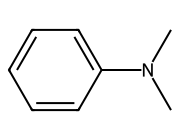
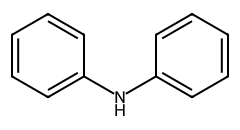
Q2157.

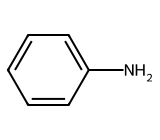
A.
B.
C. CH3–NH2
D. N(CH3)3
E.

Which among the following react with Hinsberg's reagent?

Choose the correct answer from the options given below:

A.
B.
C. CH3–NH2
D. N(CH3)3
E.

निम्नलिखित में से कौन हिन्सबर्ग अभिकर्मक (Hinsberg's reagent) के साथ अभिक्रिया करते हैं?

नीचे दिए गए विकल्पों में से सही उत्तर चुनिए:

  1. AA, B and E Onlyकेवल A, B और E
  2. BA, C and E Onlyकेवल A, C और E
  3. CC and D Onlyकेवल C और D
  4. DB and D Onlyकेवल B और D
Show answer

Concept: Hinsberg's reagent is benzenesulphonyl chloride, C6H5SO2Cl. It reacts only with amines having an N–H bond, i.e. primary and secondary amines; tertiary amines do not react.

  1. A (aniline) – 1° amine → reacts (gives KOH-soluble sulphonamide).
  2. B (N,N-dimethylaniline) – 3° amine, no N–H → does not react.
  3. C (methylamine, CH3NH2) – 1° amine → reacts.
  4. D (trimethylamine, N(CH3)3) – 3° amine → does not react.
  5. E (diphenylamine) – 2° amine → reacts (gives KOH-insoluble sulphonamide).
  6. Hence A, C and E only.

Short trick: No N–H ⇒ no reaction with C6H5SO2Cl.

Answer: (B)

अवधारणा: हिन्सबर्ग अभिकर्मक बेन्जीनसल्फोनिल क्लोराइड, C6H5SO2Cl है। यह केवल उन ऐमीनों से अभिक्रिया करता है जिनमें N–H आबंध है, अर्थात् प्राथमिक एवं द्वितीयक ऐमीन; तृतीयक ऐमीन अभिक्रिया नहीं करते।

  1. A (ऐनिलीन) – 1° ऐमीन → अभिक्रिया करता है (KOH में विलेय सल्फोनामाइड देता है)।
  2. B (N,N-डाइमेथिलऐनिलीन) – 3° ऐमीन, N–H नहीं → अभिक्रिया नहीं।
  3. C (मेथिलऐमीन, CH3NH2) – 1° ऐमीन → अभिक्रिया करता है।
  4. D (ट्राइमेथिलऐमीन, N(CH3)3) – 3° ऐमीन → अभिक्रिया नहीं।
  5. E (डाइफेनिलऐमीन) – 2° ऐमीन → अभिक्रिया करता है (KOH में अविलेय सल्फोनामाइड)।
  6. अतः केवल A, C और E।

शॉर्ट ट्रिक: N–H नहीं ⇒ C6H5SO2Cl से अभिक्रिया नहीं।

उत्तर: (B)

JEE Main 2025 (January) – Paper 1 (B.E./B.Tech)ChemistryAmines – Hinsberg testJEE Main 2025 (January) – Paper 1 (B.E./B.Tech) 2025 · 23 Jan Shift 1 →
Q2158.
The correct set of ions (aqueous solution) with same colour from the following is:
निम्नलिखित में से समान रंग वाले (जलीय विलयन में) आयनों का सही समुच्चय है:
  1. ASc3+, Ti3+, Cr2+
  2. BV2+, Cr3+, Mn3+
  3. CTi4+, V4+, Mn2+
  4. DZn2+, V3+, Fe3+
Show answer

Concept: Colour of aquated 3d-ions arises from d–d transitions; ions with d0/d10 configuration are colourless.

  1. (B) V2+ (d3) – violet, Cr3+ (d3) – violet, Mn3+ (d4) – violet: all three are violet.
  2. (A) Sc3+ (d0) colourless, Ti3+ purple, Cr2+ blue – different.
  3. (C) Ti4+ (d0) colourless, V4+ blue, Mn2+ pale pink – different.
  4. (D) Zn2+ (d10) colourless, V3+ green, Fe3+ yellow – different.

Short trick: Any set containing a d0/d10 ion (Sc3+, Ti4+, Zn2+) can be rejected at once.

Answer: (B)

अवधारणा: जलयोजित 3d-आयनों का रंग d–d संक्रमण से आता है; d0/d10 विन्यास वाले आयन रंगहीन होते हैं।

  1. (B) V2+ (d3) – बैंगनी, Cr3+ (d3) – बैंगनी, Mn3+ (d4) – बैंगनी: तीनों बैंगनी हैं।
  2. (A) Sc3+ (d0) रंगहीन, Ti3+ बैंगनी-जामुनी, Cr2+ नीला – भिन्न।
  3. (C) Ti4+ (d0) रंगहीन, V4+ नीला, Mn2+ हल्का गुलाबी – भिन्न।
  4. (D) Zn2+ (d10) रंगहीन, V3+ हरा, Fe3+ पीला – भिन्न।

शॉर्ट ट्रिक: जिस समुच्चय में d0/d10 आयन (Sc3+, Ti4+, Zn2+) हो, उसे तुरन्त हटा दीजिए।

उत्तर: (B)

JEE Main 2025 (January) – Paper 1 (B.E./B.Tech)Chemistryd-block – colours of aqueous ionsJEE Main 2025 (January) – Paper 1 (B.E./B.Tech) 2025 · 23 Jan Shift 1 →
Q2159.
Given below are two statements:
Statement I: In Lassaigne's test, the covalent organic molecules are transformed into ionic compounds.
Statement II: The sodium fusion extract of an organic compound having N and S gives prussian blue colour with FeSO4 and Na4[Fe(CN)6]
In the light of the above statements, choose the correct answer from the options given below.
नीचे दो कथन दिए गए हैं:
कथन I: लैसें परीक्षण (Lassaigne's test) में सहसंयोजक कार्बनिक अणु आयनिक यौगिकों में परिवर्तित हो जाते हैं।
कथन II: N तथा S युक्त कार्बनिक यौगिक का सोडियम संगलन निष्कर्ष FeSO4 तथा Na4[Fe(CN)6] के साथ प्रशियन नीला रंग देता है।
उपर्युक्त कथनों के आलोक में, नीचे दिए गए विकल्पों में से सही उत्तर चुनिए।
  1. AStatement I is true but Statement II is falseकथन I सत्य है परन्तु कथन II असत्य है
  2. BBoth Statement I and Statement II are falseकथन I और कथन II दोनों असत्य हैं
  3. CBoth Statement I and Statement II are trueकथन I और कथन II दोनों सत्य हैं
  4. DStatement I is false but Statement II is trueकथन I असत्य है परन्तु कथन II सत्य है
Show answer

Concept: Na fusion converts covalently bound N, S, X into ionic NaCN, Na2S, NaX; when N and S are both present, NaSCN is formed.

  1. Statement I: fusion with sodium converts covalent organic molecules into ionic salts (NaCN, Na2S, NaSCN, NaX) – true.
  2. Statement II: with both N and S present, the extract contains SCN−, which gives blood-red [Fe(SCN)]2+ with Fe3+ – not prussian blue.
  3. Prussian blue Fe4[Fe(CN)6]3 is obtained from CN− (N without S) by boiling the extract with FeSO4 and acidifying – Na4[Fe(CN)6] is formed in the test, not added.
  4. So Statement II is false.

Short trick: N + S together ⇒ SCN− ⇒ blood-red colour, not prussian blue.

Answer: (A)

अवधारणा: सोडियम संगलन, सहसंयोजी रूप से बंधे N, S, X को आयनिक NaCN, Na2S, NaX में बदल देता है; N और S दोनों होने पर NaSCN बनता है।

  1. कथन I: सोडियम के साथ संगलन से सहसंयोजक कार्बनिक अणु आयनिक लवणों (NaCN, Na2S, NaSCN, NaX) में बदल जाते हैं – सत्य।
  2. कथन II: N तथा S दोनों उपस्थित होने पर निष्कर्ष में SCN− होता है, जो Fe3+ के साथ रक्त-लाल [Fe(SCN)]2+ देता है – प्रशियन नीला नहीं।
  3. प्रशियन नीला Fe4[Fe(CN)6]3 केवल CN− (S रहित N) से बनता है – निष्कर्ष को FeSO4 के साथ उबालकर अम्लीकृत करने पर; Na4[Fe(CN)6] परीक्षण में बनता है, बाहर से नहीं मिलाया जाता।
  4. अतः कथन II असत्य है।

शॉर्ट ट्रिक: N + S साथ-साथ ⇒ SCN− ⇒ रक्त-लाल रंग, प्रशियन नीला नहीं।

उत्तर: (A)

JEE Main 2025 (January) – Paper 1 (B.E./B.Tech)ChemistryOrganic analysis – Lassaigne's testJEE Main 2025 (January) – Paper 1 (B.E./B.Tech) 2025 · 23 Jan Shift 1 →
Q2160.
Propane molecule on chlorination under photochemical condition gives two di-chloro products, " x " and " y ". Amongst " x " and " y ", " x " is an optically active molecule. How many tri-chloro products (consider only structural isomers) will be obtained from " x " when it is further treated with chlorine under the photochemical condition?
प्रकाश-रासायनिक परिस्थितियों में प्रोपेन अणु के क्लोरीनीकरण से दो डाइ-क्लोरो उत्पाद " x " तथा " y " प्राप्त होते हैं। " x " तथा " y " में से " x " एक ध्रुवण-सक्रिय (optically active) अणु है। प्रकाश-रासायनिक परिस्थितियों में " x " की क्लोरीन से आगे अभिक्रिया करने पर कितने ट्राइ-क्लोरो उत्पाद (केवल संरचनात्मक समावयव लीजिए) प्राप्त होंगे?
  1. A2
  2. B5
  3. C4
  4. D3
Show answer

Concept: The optically active dichloropropane is 1,2-dichloropropane (chiral C-2); count the structurally different positions for the third Cl.

  1. x = CH3–CHCl–CH2Cl (1,2-dichloropropane), with a chiral carbon at C-2.
  2. Third chlorination at C-1 → CH3–CHCl–CHCl2 (1,1,2-trichloropropane).
  3. At C-2 → CH3–CCl2–CH2Cl (1,2,2-trichloropropane).
  4. At C-3 → CH2Cl–CHCl–CH2Cl (1,2,3-trichloropropane).
  5. So 3 structural isomers are obtained.

Short trick: Number of monosubstitution products = number of structurally distinct H positions; x has 3 kinds of H (C1, C2, C3).

Answer: (D)

अवधारणा: ध्रुवण-सक्रिय डाइक्लोरोप्रोपेन 1,2-डाइक्लोरोप्रोपेन है (C-2 किरैल); तीसरे Cl के लिए संरचनात्मक रूप से भिन्न स्थितियाँ गिनिए।

  1. x = CH3–CHCl–CH2Cl (1,2-डाइक्लोरोप्रोपेन), जिसमें C-2 किरैल कार्बन है।
  2. C-1 पर तीसरा क्लोरीनीकरण → CH3–CHCl–CHCl2 (1,1,2-ट्राइक्लोरोप्रोपेन)।
  3. C-2 पर → CH3–CCl2–CH2Cl (1,2,2-ट्राइक्लोरोप्रोपेन)।
  4. C-3 पर → CH2Cl–CHCl–CH2Cl (1,2,3-ट्राइक्लोरोप्रोपेन)।
  5. अतः 3 संरचनात्मक समावयव प्राप्त होते हैं।

शॉर्ट ट्रिक: एकल-प्रतिस्थापन उत्पादों की संख्या = संरचनात्मक रूप से भिन्न H स्थितियों की संख्या; x में 3 प्रकार के H हैं (C1, C2, C3)।

उत्तर: (D)

JEE Main 2025 (January) – Paper 1 (B.E./B.Tech)ChemistryHaloalkanes – free-radical chlorination, isomer countingJEE Main 2025 (January) – Paper 1 (B.E./B.Tech) 2025 · 23 Jan Shift 1 →