Question bank

Q&A: practice questions with answers

Search questions on any topic. Filter by exam category, exam, subject and topic, try the question, then open the answer and explanation.

Courses – airGurukul

53,050 questions in the question bank.

Q2161.
CrCl3·xNH3 can exist as a complex. 0.1 molal aqueous solution of this complex shows a depression in freezing point of 0.558°C. Assuming 100% ionisation of this complex and coordination number of Cr is 6 , the complex will be (Given Kf = 1.86 K kg mol−1 )
CrCl3·xNH3 एक संकुल के रूप में रह सकता है। इस संकुल का 0.1 मोलल जलीय विलयन हिमांक में 0.558°C का अवनमन दर्शाता है। संकुल का 100% आयनन तथा Cr की उपसहसंयोजन संख्या 6 मानते हुए, संकुल होगा (दिया है Kf = 1.86 K kg mol−1)
  1. A[Cr(NH3)5Cl]Cl2
  2. B[Cr(NH3)6]Cl3
  3. C[Cr(NH3)3Cl3]
  4. D[Cr(NH3)4Cl2]Cl
Show answer

Concept: ΔTf=iKfm; the van't Hoff factor i equals the number of ions produced on 100% ionisation.

  1. i=ΔTfKfm=0.5581.86×0.1=3.
  2. So the complex gives 3 ions in solution.
  3. [Cr(NH3)5Cl]Cl2 → [Cr(NH3)5Cl]2+ + 2Cl− = 3 ions ✓ (CN = 6 satisfied).
  4. (B) gives 4 ions, (C) gives no ions, (D) gives 2 ions – all inconsistent with i = 3.

Short trick: i = ΔTf/(Kfm) directly counts the ions; pick the complex releasing that many ions.

Answer: (A)

अवधारणा: ΔTf=iKfm; 100% आयनन पर वान्ट हॉफ गुणांक i = बनने वाले आयनों की संख्या।

  1. i=ΔTfKfm=0.5581.86×0.1=3।
  2. अतः संकुल विलयन में 3 आयन देता है।
  3. [Cr(NH3)5Cl]Cl2 → [Cr(NH3)5Cl]2+ + 2Cl− = 3 आयन ✓ (उपसहसंयोजन संख्या 6 भी सही)।
  4. (B) 4 आयन, (C) कोई आयन नहीं, (D) 2 आयन देता है – कोई भी i = 3 से मेल नहीं खाता।

शॉर्ट ट्रिक: i = ΔTf/(Kfm) सीधे आयनों की संख्या देता है; उतने ही आयन देने वाला संकुल चुनिए।

उत्तर: (A)
JEE Main 2025 (January) – Paper 1 (B.E./B.Tech)ChemistryCoordination compounds – colligative propertiesJEE Main 2025 (January) – Paper 1 (B.E./B.Tech) 2025 · 23 Jan Shift 1 →
Q2162.
Which of the following happens when NH4OH is added gradually to the solution containing 1 M A2+ and 1 M B3+ ions? Given : Ksp[A(OH)2] = 9 × 10⁻¹⁰ and Ksp[B(OH)3] = 27 × 10−18 at 298 K .
1 M A2+ तथा 1 M B3+ आयनों वाले विलयन में NH4OH धीरे-धीरे मिलाने पर निम्नलिखित में से क्या होता है? दिया है: 298 K पर Ksp[A(OH)2] = 9 × 10⁻¹⁰ तथा Ksp[B(OH)3] = 27 × 10−18।
  1. ABoth A(OH)2 and B(OH)3 do not show precipitation with NH4OHA(OH)2 तथा B(OH)3 दोनों NH4OH के साथ अवक्षेपण नहीं दर्शाते
  2. BA(OH)2 will precipitate before B(OH)3A(OH)2, B(OH)3 से पहले अवक्षेपित होगा
  3. CB(OH)3 will precipitate before A(OH)2B(OH)3, A(OH)2 से पहले अवक्षेपित होगा
  4. DA(OH)2 and B(OH)3 will precipitate togetherA(OH)2 तथा B(OH)3 साथ-साथ अवक्षेपित होंगे
Show answer

Concept: Precipitation begins when the ionic product just exceeds Ksp; the hydroxide needing the lower [OH−] precipitates first.

  1. For A(OH)2: [OH−]=Ksp[A2+]=9×10−10=3×10⁻⁵ M.
  2. For B(OH)3: [OH−]=(Ksp[B3+])1/3=(27×10−18)1/3=3×10−6 M.
  3. B(OH)3 needs ten times less OH−, so it precipitates first as NH4OH is added gradually.

Short trick: Compare the [OH−] thresholds, not the raw Ksp values – the formulae differ (MX2 vs MX3).

Answer: (C)

अवधारणा: अवक्षेपण तब आरम्भ होता है जब आयनिक गुणनफल Ksp से अधिक हो जाता है; जिस हाइड्रॉक्साइड को कम [OH−] चाहिए, वह पहले अवक्षेपित होता है।

  1. A(OH)2 के लिए: [OH−]=Ksp[A2+]=9×10−10=3×10⁻⁵ M।
  2. B(OH)3 के लिए: [OH−]=(Ksp[B3+])1/3=(27×10−18)1/3=3×10−6 M।
  3. B(OH)3 को दस गुना कम OH− चाहिए, अतः NH4OH धीरे-धीरे मिलाने पर वह पहले अवक्षेपित होगा।

शॉर्ट ट्रिक: सीधे Ksp नहीं, [OH−] की सीमाएँ तुलना कीजिए – सूत्र भिन्न हैं (MX2 बनाम MX3)।

उत्तर: (C)

JEE Main 2025 (January) – Paper 1 (B.E./B.Tech)ChemistryIonic equilibrium – selective precipitation (Ksp)JEE Main 2025 (January) – Paper 1 (B.E./B.Tech) 2025 · 23 Jan Shift 1 →
Q2163.
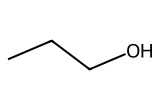
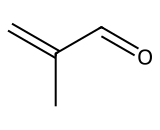
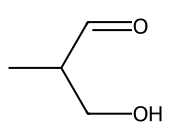
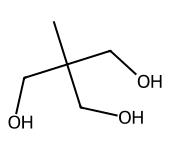
The major product of the following reaction is: CH3CH2CH=O →refluxexcess HCHOalkali ?
निम्नलिखित अभिक्रिया का मुख्य उत्पाद है: CH3CH2CH=O →refluxexcess HCHOalkali ?
  1. A
  2. B
  3. C
  4. D
Show answer

Concept: With excess HCHO and alkali, an aldehyde having α-hydrogens undergoes repeated crossed aldol additions, and the remaining –CHO is finally reduced by crossed Cannizzaro reaction (HCHO is oxidised to formate).

  1. Propanal CH3CH2CHO has two α-H on C-2.
  2. Two successive crossed aldol additions with HCHO replace both α-H by –CH2OH: CH3C(CH2OH)2CHO.
  3. No α-H is left, so excess HCHO does a crossed Cannizzaro: the –CHO of the product is reduced to –CH2OH while HCHO → HCOO−.
  4. Major product = CH3C(CH2OH)3, a triol – structure (A).

Short trick: Excess HCHO/base replaces every α-H by CH2OH and finally converts –CHO → –CH2OH (like pentaerythritol from acetaldehyde).

Answer: (A)

अवधारणा: आधिक्य HCHO और क्षार के साथ, α-हाइड्रोजन वाला ऐल्डिहाइड बार-बार क्रॉस ऐल्डॉल योग करता है, और शेष –CHO अन्त में क्रॉस कैनिज़ारो अभिक्रिया द्वारा अपचयित हो जाता है (HCHO फॉर्मेट में ऑक्सीकृत होता है)।

  1. प्रोपेनैल CH3CH2CHO के C-2 पर दो α-H हैं।
  2. HCHO के साथ दो क्रमिक क्रॉस ऐल्डॉल योग दोनों α-H को –CH2OH से प्रतिस्थापित कर देते हैं: CH3C(CH2OH)2CHO।
  3. अब कोई α-H नहीं बचता, अतः आधिक्य HCHO क्रॉस कैनिज़ारो करता है: उत्पाद का –CHO अपचयित होकर –CH2OH बनता है जबकि HCHO → HCOO−।
  4. मुख्य उत्पाद = CH3C(CH2OH)3, एक ट्राइऑल – संरचना (A)।

शॉर्ट ट्रिक: आधिक्य HCHO/क्षार प्रत्येक α-H को CH2OH से बदल देता है और अन्त में –CHO → –CH2OH कर देता है (जैसे ऐसीटैल्डिहाइड से पेन्टाएरिथ्रिटॉल)।

उत्तर: (A)

JEE Main 2025 (January) – Paper 1 (B.E./B.Tech)ChemistryAldehydes – crossed aldol and Cannizzaro reactionsJEE Main 2025 (January) – Paper 1 (B.E./B.Tech) 2025 · 23 Jan Shift 1 →
Q2164.
Ice at −5°C is heated to become vapor with temperature of 110°C at atmospheric pressure. The entropy change associated with this process can be obtained from
−5°C की बर्फ को वायुमण्डलीय दाब पर गर्म करके 110°C ताप की वाष्प बनाया जाता है। इस प्रक्रम से सम्बद्ध एन्ट्रॉपी परिवर्तन निम्न से प्राप्त किया जा सकता है
  1. A∫268K273KCp,mdT+ΔHm,fusionTf+ΔHm,vaporisationTb+∫273K373KCp,mdT+∫373K383KCp,mdT
  2. B∫268K273KCp,mTdT+ΔHm,fusionTf+ΔHm,vaporisationTb+∫273K373KCp,mTdT+∫373K383KCp,mTdT
  3. C∫268K383KCpdT+qrevT
  4. D∫268K383KCpdT+ΔHmelting273+ΔHboiling373
Show answer

Concept: For heating at constant pressure ΔS=∫Cp,mTdT; for a phase change at its transition temperature ΔS=ΔHmTtransition.

  1. Ice 268 K → 273 K: ∫268273Cp,mTdT.
  2. Melting at Tf = 273 K: ΔHm,fusionTf.
  3. Water 273 K → 373 K: ∫273373Cp,mTdT.
  4. Vaporisation at Tb = 373 K: ΔHm,vaporisationTb.
  5. Steam 373 K → 383 K: ∫373383Cp,mTdT. Option (B) is the only one with every heating term as ∫Cp,mTdT.
  6. (A) uses ∫Cp,mdT (that is enthalpy, not entropy); (C) ignores the phase changes and mixes qrev/T at one T; (D) also uses ∫CpdT.

Short trick: Every entropy term must carry a division by T – reject options whose integrals lack 1/T.

Answer: (B)

अवधारणा: स्थिर दाब पर गर्म करने के लिए ΔS=∫Cp,mTdT; संक्रमण ताप पर प्रावस्था परिवर्तन के लिए ΔS=ΔHmTtransition।

  1. बर्फ 268 K → 273 K: ∫268273Cp,mTdT।
  2. Tf = 273 K पर गलन: ΔHm,fusionTf।
  3. जल 273 K → 373 K: ∫273373Cp,mTdT।
  4. Tb = 373 K पर वाष्पन: ΔHm,vaporisationTb।
  5. भाप 373 K → 383 K: ∫373383Cp,mTdT। केवल विकल्प (B) में प्रत्येक तापन पद ∫Cp,mTdT रूप में है।
  6. (A) में ∫Cp,mdT है (यह एन्थैल्पी है, एन्ट्रॉपी नहीं); (C) प्रावस्था परिवर्तनों की उपेक्षा करता है; (D) में भी ∫CpdT है।

शॉर्ट ट्रिक: एन्ट्रॉपी के हर पद में T से भाग अवश्य होता है – जिन समाकलनों में 1/T नहीं, उन्हें हटा दीजिए।

उत्तर: (B)

JEE Main 2025 (January) – Paper 1 (B.E./B.Tech)ChemistryThermodynamics – entropy change with phase transitionsJEE Main 2025 (January) – Paper 1 (B.E./B.Tech) 2025 · 23 Jan Shift 1 →
Q2165.
The incorrect statement among the following is
निम्नलिखित में से असत्य कथन है
  1. APH3 shows lower proton affinity than NH3.PH3 की प्रोटॉन बन्धुता NH3 से कम है।
  2. BSO2 can act as an oxidizing agent, but not as a reducing agent.SO2 ऑक्सीकारक के रूप में कार्य कर सकता है, परन्तु अपचायक के रूप में नहीं।
  3. CPF3 exists but NF5 does not.PF3 अस्तित्व में है परन्तु NF5 नहीं।
  4. DNO2 can dimerise easily.NO2 आसानी से द्वितयन (डाइमराइज़) कर सकता है।
Show answer

Concept: In SO2, sulphur is in the +4 state – intermediate between −2 and +6 – so SO2 can be both oxidised and reduced.

  1. (B) is incorrect: SO2 acts as a reducing agent too (S+4 → S+6), e.g. it decolourises acidified KMnO4 and reduces Fe3+ to Fe2+; it is an oxidising agent only towards stronger reductants (e.g. with H2S it gives S).
  2. (A) is correct: the lone pair of P in PH3 lies in a large, diffuse (more s-character) orbital, so its proton affinity is lower than that of NH3.
  3. (C) is correct: PF3 exists; NF5 does not because nitrogen (period 2) cannot expand its octet.
  4. (D) is correct: NO2 has an odd electron on N and readily dimerises to N2O4.

Short trick: Intermediate oxidation state ⇒ both oxidant and reductant (SO2, H2O2, HNO2).

Answer: (B)

अवधारणा: SO2 में सल्फर +4 अवस्था में है – −2 और +6 के बीच – अतः SO2 ऑक्सीकृत और अपचयित दोनों हो सकता है।

  1. (B) असत्य है: SO2 अपचायक के रूप में भी कार्य करता है (S+4 → S+6), जैसे यह अम्लीकृत KMnO4 को रंगहीन करता है तथा Fe3+ को Fe2+ में अपचयित करता है; प्रबल अपचायकों (जैसे H2S) के प्रति ही यह ऑक्सीकारक है।
  2. (A) सत्य है: PH3 में P का एकाकी युग्म बड़े, विसरित (अधिक s-लक्षण) कक्षक में है, अतः इसकी प्रोटॉन बन्धुता NH3 से कम है।
  3. (C) सत्य है: PF3 अस्तित्व में है; NF5 नहीं, क्योंकि नाइट्रोजन (आवर्त 2) अपना अष्टक प्रसारित नहीं कर सकता।
  4. (D) सत्य है: NO2 में N पर विषम इलेक्ट्रॉन है और यह सरलता से N2O4 में द्वितयित हो जाता है।

शॉर्ट ट्रिक: मध्यवर्ती ऑक्सीकरण अवस्था ⇒ ऑक्सीकारक और अपचायक दोनों (SO2, H2O2, HNO2)।

उत्तर: (B)

JEE Main 2025 (January) – Paper 1 (B.E./B.Tech)Chemistryp-block – properties of N, P, S compoundsJEE Main 2025 (January) – Paper 1 (B.E./B.Tech) 2025 · 23 Jan Shift 1 →
Q2166.
2.8 × 10⁻³ mol of CO2 is left after removing 1021 molecules from its ' x ' mg sample. The mass of CO2 taken initially is Given: NA = 6.02 × 10²³ mol−1
CO2 के ' x ' mg प्रतिदर्श में से 1021 अणु निकालने के बाद 2.8 × 10⁻³ मोल CO2 शेष रहता है। प्रारम्भ में लिए गए CO2 का द्रव्यमान है (दिया है: NA = 6.02 × 10²³ mol−1)
  1. A98.3 mg
  2. B48.2 mg
  3. C196.2 mg
  4. D150.4 mg
Show answer

Concept: Initial moles = moles left + moles removed; mass = moles × molar mass (CO2 = 44 g mol−1).

  1. Moles removed = 10216.02×1023 = 1.66 × 10⁻³ mol.
  2. Initial moles = 2.8 × 10⁻³ + 1.66 × 10−3 = 4.46 × 10⁻³ mol.
  3. Initial mass = 4.46 × 10−3 × 44 = 0.1963 g ≈ 196.2 mg.

Short trick: 1021 molecules ≈ 1/600 mol ≈ 1.66 mmol – add to what is left, then ×44.

Answer: (C)

अवधारणा: प्रारम्भिक मोल = शेष मोल + निकाले गए मोल; द्रव्यमान = मोल × मोलर द्रव्यमान (CO2 = 44 g mol−1)।

  1. निकाले गए मोल = 10216.02×1023 = 1.66 × 10⁻³ मोल।
  2. प्रारम्भिक मोल = 2.8 × 10⁻³ + 1.66 × 10−3 = 4.46 × 10⁻³ मोल।
  3. प्रारम्भिक द्रव्यमान = 4.46 × 10−3 × 44 = 0.1963 g ≈ 196.2 mg।

शॉर्ट ट्रिक: 1021 अणु ≈ 1/600 मोल ≈ 1.66 mmol – शेष में जोड़िए, फिर ×44।

उत्तर: (C)

JEE Main 2025 (January) – Paper 1 (B.E./B.Tech)ChemistryMole concept – molecules and massJEE Main 2025 (January) – Paper 1 (B.E./B.Tech) 2025 · 23 Jan Shift 1 →
Q2167.
Match the LIST-I with LIST-II
LIST-I
Name reaction
LIST-II
Product obtainable
A.Swarts reactionI.Ethyl benzene
B.Sandmeyer's reactionII.Ethyl iodide
C.Wurtz Fittig reactionIII.Cyanobenzene
D.Finkelstein reactionIV.Ethyl fluoride
Choose the correct answer from the options given below:
सूची-I का सूची-II से मिलान कीजिए
सूची-I
नामाभिक्रिया
सूची-II
प्राप्त हो सकने वाला उत्पाद
A.स्वार्ट्स अभिक्रियाI.एथिल बेन्जीन
B.सैण्डमायर अभिक्रियाII.एथिल आयोडाइड
C.वुर्ट्ज़ फिटिग अभिक्रियाIII.सायनोबेन्जीन
D.फिंकेलस्टाइन अभिक्रियाIV.एथिल फ्लुओराइड
नीचे दिए गए विकल्पों में से सही उत्तर चुनिए:
  1. AA-II, B-I, C-III, D-IV
  2. BA-II, B-III, C-I, D-IV
  3. CA-IV, B-I, C-III, D-II
  4. DA-IV, B-III, C-I, D-II
Show answer

Concept: Identify the product type of each classical name reaction.

  1. A → IV: Swarts reaction – alkyl chloride/bromide + AgF (or Hg2F2) → alkyl fluoride, e.g. ethyl fluoride.
  2. B → III: Sandmeyer's reaction – benzenediazonium salt + CuCN/KCN → cyanobenzene.
  3. C → I: Wurtz–Fittig reaction – aryl halide + alkyl halide + Na/dry ether → ethyl benzene.
  4. D → II: Finkelstein reaction – R–Cl/Br + NaI in dry acetone → ethyl iodide.

Short trick: Swarts = F, Finkelstein = I; Sandmeyer works on diazonium salts, Wurtz–Fittig joins aryl + alkyl.

Answer: (D)

अवधारणा: प्रत्येक प्रसिद्ध नामाभिक्रिया के उत्पाद का प्रकार पहचानिए।

  1. A → IV: स्वार्ट्स अभिक्रिया – ऐल्किल क्लोराइड/ब्रोमाइड + AgF (या Hg2F2) → ऐल्किल फ्लुओराइड, जैसे एथिल फ्लुओराइड।
  2. B → III: सैण्डमायर अभिक्रिया – बेन्जीनडाइऐज़ोनियम लवण + CuCN/KCN → सायनोबेन्जीन।
  3. C → I: वुर्ट्ज़–फिटिग अभिक्रिया – ऐरिल हैलाइड + ऐल्किल हैलाइड + Na/शुष्क ईथर → एथिल बेन्जीन।
  4. D → II: फिंकेलस्टाइन अभिक्रिया – R–Cl/Br + NaI शुष्क ऐसीटोन में → एथिल आयोडाइड।

शॉर्ट ट्रिक: स्वार्ट्स = F, फिंकेलस्टाइन = I; सैण्डमायर डाइऐज़ोनियम लवणों पर चलती है, वुर्ट्ज़–फिटिग ऐरिल + ऐल्किल जोड़ती है।

उत्तर: (D)

JEE Main 2025 (January) – Paper 1 (B.E./B.Tech)ChemistryHaloalkanes/haloarenes – name reactionsJEE Main 2025 (January) – Paper 1 (B.E./B.Tech) 2025 · 23 Jan Shift 1 →
Q2168.
Heat treatment of muscular pain involves radiation of wavelength of about 900 nm . Which spectral line of H atom is suitable for this? Given : Rydberg constant RH = 105 cm−1, h = 6.6 × 10⁻³⁴ J s, c = 3 × 10⁸ m/s )
पेशीय दर्द के ऊष्मा उपचार में लगभग 900 nm तरंगदैर्घ्य का विकिरण प्रयुक्त होता है। इसके लिए H परमाणु की कौन-सी स्पेक्ट्रमी रेखा उपयुक्त है? (दिया है: रिडबर्ग स्थिरांक RH = 105 cm−1, h = 6.6 × 10⁻³⁴ J s, c = 3 × 10⁸ m/s)
  1. ABalmer series, ∞ → 2बामर श्रेणी, ∞ → 2
  2. BLyman series, ∞ → 1लाइमन श्रेणी, ∞ → 1
  3. CPaschen series, ∞ → 3पाशन श्रेणी, ∞ → 3
  4. DPaschen series, 5 → 3पाशन श्रेणी, 5 → 3
Show answer

Concept: 1λ=RH(1n12−1n22); for a series limit n2=∞, so λlimit=n12RH.

  1. Paschen limit (∞ → 3): λ=9105 cm = 9 × 10⁻⁵ cm = 900 nm ✓.
  2. (A) Balmer limit: λ=4105 cm = 400 nm – too short.
  3. (B) Lyman limit: λ=1105 cm = 100 nm – far too short.
  4. (D) Paschen 5 → 3: 1λ=105(19−125) gives λ ≈ 1406 nm – not 900 nm.

Short trick: With RH = 105 cm−1, series limits are n12 × 100 nm: 100, 400, 900 nm for Lyman, Balmer, Paschen.

Answer: (C)

अवधारणा: 1λ=RH(1n12−1n22); श्रेणी सीमा के लिए n2=∞, अतः λlimit=n12RH।

  1. पाशन सीमा (∞ → 3): λ=9105 cm = 9 × 10⁻⁵ cm = 900 nm ✓।
  2. (A) बामर सीमा: λ=4105 cm = 400 nm – बहुत छोटी।
  3. (B) लाइमन सीमा: λ=1105 cm = 100 nm – अत्यधिक छोटी।
  4. (D) पाशन 5 → 3: 1λ=105(19−125) से λ ≈ 1406 nm – 900 nm नहीं।

शॉर्ट ट्रिक: RH = 105 cm−1 होने पर श्रेणी सीमाएँ n12 × 100 nm होती हैं: लाइमन, बामर, पाशन के लिए 100, 400, 900 nm।

उत्तर: (C)

JEE Main 2025 (January) – Paper 1 (B.E./B.Tech)ChemistryAtomic structure – hydrogen spectrumJEE Main 2025 (January) – Paper 1 (B.E./B.Tech) 2025 · 23 Jan Shift 1 →
Q2169.
The d- electronic configuration of an octahedral Co(II) complex having magnetic moment of 3.95 BM is:
3.95 BM चुम्बकीय आघूर्ण वाले अष्टफलकीय Co(II) संकुल का d-इलेक्ट्रॉनिक विन्यास है:
  1. At2g3eg0
  2. Bt2g6eg1
  3. Ct2g5eg2
  4. De4t23
Show answer

Concept: μ=n(n+2) BM gives the number of unpaired electrons n; Co(II) is d7.

  1. μ=3.95≈15 BM ⇒ n(n+2)=15 ⇒ n = 3 unpaired electrons.
  2. Co2+: [Ar]3d7. High-spin octahedral d7 = t2g5eg2 → 3 unpaired electrons ✓.
  3. (A) t2g3eg0 is d3, not d7; (B) t2g6eg1 (low spin) has only 1 unpaired e− (μ ≈ 1.73 BM); (D) e4t23 is a tetrahedral configuration, not octahedral.

Short trick: μ ≈ 4 BM ⇒ 3 unpaired; d7 high-spin octahedral is always t2g5eg2.

Answer: (C)

अवधारणा: μ=n(n+2) BM से अयुग्मित इलेक्ट्रॉनों की संख्या n मिलती है; Co(II) d7 है।

  1. μ=3.95≈15 BM ⇒ n(n+2)=15 ⇒ n = 3 अयुग्मित इलेक्ट्रॉन।
  2. Co2+: [Ar]3d7। उच्च-चक्रण अष्टफलकीय d7 = t2g5eg2 → 3 अयुग्मित इलेक्ट्रॉन ✓।
  3. (A) t2g3eg0 d3 है, d7 नहीं; (B) t2g6eg1 (निम्न-चक्रण) में केवल 1 अयुग्मित e− है (μ ≈ 1.73 BM); (D) e4t23 चतुष्फलकीय विन्यास है, अष्टफलकीय नहीं।

शॉर्ट ट्रिक: μ ≈ 4 BM ⇒ 3 अयुग्मित; उच्च-चक्रण d7 अष्टफलकीय सदैव t2g5eg2।

उत्तर: (C)

JEE Main 2025 (January) – Paper 1 (B.E./B.Tech)ChemistryCoordination compounds – CFT and magnetic momentJEE Main 2025 (January) – Paper 1 (B.E./B.Tech) 2025 · 23 Jan Shift 1 →
Q2170.
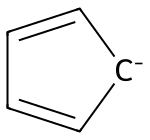
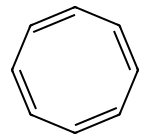
The correct stability order of the following species/molecules is:
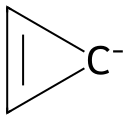
p:   q:   r: 
निम्नलिखित स्पीशीज़/अणुओं का सही स्थायित्व क्रम है:
p:   q:   r: 
  1. Aq > r > p
  2. Br > q > p
  3. Cq > p > r
  4. Dp > q > r
Show answer

Concept: Aromatic (4n+2 π e−, planar, cyclic conjugation) > non-aromatic > antiaromatic (4n π e−, planar).

  1. q = cyclopentadienyl anion: 6 π electrons (4n+2, n = 1), planar – aromatic, most stable.
  2. r = cyclooctatetraene: 8 π electrons, but it adopts a non-planar tub shape, so it is simply non-aromatic (not antiaromatic).
  3. p = cyclopropenyl anion: 4 π electrons in a planar three-membered ring – antiaromatic, least stable.
  4. Hence q > r > p.

Short trick: Aromatic > non-aromatic > antiaromatic; COT escapes antiaromaticity by puckering.

Answer: (A)

अवधारणा: ऐरोमैटिक (4n+2 π e−, समतलीय, चक्रीय संयुग्मन) > अन-ऐरोमैटिक > प्रति-ऐरोमैटिक (4n π e−, समतलीय)।

  1. q = साइक्लोपेन्टाडाइईनिल ऋणायन: 6 π इलेक्ट्रॉन (4n+2, n = 1), समतलीय – ऐरोमैटिक, सर्वाधिक स्थायी।
  2. r = साइक्लोऑक्टाटेट्राईन: 8 π इलेक्ट्रॉन, परन्तु यह असमतलीय टब (tub) आकृति अपनाता है, अतः यह केवल अन-ऐरोमैटिक है (प्रति-ऐरोमैटिक नहीं)।
  3. p = साइक्लोप्रोपीनिल ऋणायन: समतलीय त्रिसदस्यीय वलय में 4 π इलेक्ट्रॉन – प्रति-ऐरोमैटिक, न्यूनतम स्थायी।
  4. अतः q > r > p।

शॉर्ट ट्रिक: ऐरोमैटिक > अन-ऐरोमैटिक > प्रति-ऐरोमैटिक; COT मुड़कर (puckering) प्रति-ऐरोमैटिकता से बच जाता है।

उत्तर: (A)

JEE Main 2025 (January) – Paper 1 (B.E./B.Tech)ChemistryGOC – aromaticity and stabilityJEE Main 2025 (January) – Paper 1 (B.E./B.Tech) 2025 · 23 Jan Shift 1 →
Q2171.
The standard enthalpy and standard entropy of decomposition of N2O4 to NO2 are 55.0 kJ mol−1 and 175.0 J/K/mol respectively. The standard free energy change for this reaction at 25°C in J mol−1 is ______ (Nearest integer)
N2O4 के NO2 में अपघटन की मानक एन्थैल्पी तथा मानक एन्ट्रॉपी क्रमशः 55.0 kJ mol−1 तथा 175.0 J/K/mol हैं। 25°C पर इस अभिक्रिया के लिए मानक मुक्त ऊर्जा परिवर्तन J mol−1 में ______ है (निकटतम पूर्णांक)
Show answer

Concept: ΔG0=ΔH0−TΔS0, with all quantities in the same units.

  1. ΔH0 = 55.0 kJ mol−1 = 55000 J mol−1; T = 25°C = 298 K.
  2. TΔS0 = 298 × 175.0 = 52150 J mol−1.
  3. ΔG0 = 55000 − 52150 = 2850 J mol−1.

Short trick: Convert kJ → J first; most errors here are unit slips.

Answer: 2850

अवधारणा: ΔG0=ΔH0−TΔS0, सभी राशियाँ समान मात्रकों में।

  1. ΔH0 = 55.0 kJ mol−1 = 55000 J mol−1; T = 25°C = 298 K।
  2. TΔS0 = 298 × 175.0 = 52150 J mol−1।
  3. ΔG0 = 55000 − 52150 = 2850 J mol−1।

शॉर्ट ट्रिक: पहले kJ → J बदलिए; यहाँ अधिकांश गलतियाँ मात्रक की होती हैं।

उत्तर: 2850

JEE Main 2025 (January) – Paper 1 (B.E./B.Tech)ChemistryThermodynamics – Gibbs free energyJEE Main 2025 (January) – Paper 1 (B.E./B.Tech) 2025 · 23 Jan Shift 1 →
Q2172.
For the thermal decomposition of N2O5(g) at constant volume, the following table can be formed, for the reaction mentioned below. 2 N2O5(g) → 2 N2O4(g) + O2(g)
Sr.NoTime/sTotal pressure/(atm)
100.6
2100'x'
x = … × 10−3 atm [nearest integer] Given : Rate constant for the reaction is 4.606 × 10⁻² s−1.
स्थिर आयतन पर N2O5(g) के तापीय अपघटन के लिए, नीचे दी गई अभिक्रिया हेतु निम्न सारणी बनाई जा सकती है। 2 N2O5(g) → 2 N2O4(g) + O2(g)
क्र.सं.समय/sकुल दाब/(atm)
100.6
2100'x'
x = … × 10−3 atm [निकटतम पूर्णांक] दिया है: अभिक्रिया का वेग स्थिरांक 4.606 × 10⁻² s−1 है।
Show answer

Concept: Decomposition of N2O5 is first order: kt=2.303log⁡P0Pt (P = partial pressure of N2O5); total pressure follows from stoichiometry.

  1. kt=4.606×10−2×100=4.606, so log⁡P0Pt=4.6062.303=2 ⇒ Pt=0.6100=0.006 atm.
  2. Fall in N2O5 pressure: y = 0.6 − 0.006 = 0.594 atm.
  3. From 2N2O5 → 2N2O4 + O2: N2O4 formed = y, O2 formed = y/2.
  4. Total pressure = (0.6 − y) + y + y/2 = 0.6 + 0.297 = 0.897 atm = 897 × 10−3 atm.

Short trick: kt = 4.606 ⇒ log(ratio) = 2 ⇒ only 1% N2O5 left; total = P0 + (drop)/2.

Answer: 897

अवधारणा: N2O5 का अपघटन प्रथम कोटि का है: kt=2.303log⁡P0Pt (P = N2O5 का आंशिक दाब); कुल दाब रससमीकरणमिति से निकलता है।

  1. kt=4.606×10−2×100=4.606, अतः log⁡P0Pt=4.6062.303=2 ⇒ Pt=0.6100=0.006 atm।
  2. N2O5 के दाब में कमी: y = 0.6 − 0.006 = 0.594 atm।
  3. 2N2O5 → 2N2O4 + O2 से: बना N2O4 = y, बना O2 = y/2।
  4. कुल दाब = (0.6 − y) + y + y/2 = 0.6 + 0.297 = 0.897 atm = 897 × 10−3 atm।

शॉर्ट ट्रिक: kt = 4.606 ⇒ log(अनुपात) = 2 ⇒ केवल 1% N2O5 शेष; कुल = P0 + (कमी)/2।

उत्तर: 897

JEE Main 2025 (January) – Paper 1 (B.E./B.Tech)ChemistryChemical kinetics – first-order gas reactionJEE Main 2025 (January) – Paper 1 (B.E./B.Tech) 2025 · 23 Jan Shift 1 →
Q2173.
During " S " estimation, 160 mg of an organic compound gives 466 mg of barium sulphate. The percentage of Sulphur in the given compound is _______ %. (Given molar mass in gmol−1 of Ba : 137, S : 32, O : 16 )
" S " आकलन में, 160 mg कार्बनिक यौगिक से 466 mg बेरियम सल्फेट प्राप्त होता है। दिए गए यौगिक में सल्फर का प्रतिशत _______ % है। (Ba, S, O के मोलर द्रव्यमान gmol−1 में क्रमशः 137, 32, 16 दिए गए हैं)
Show answer

Concept: Carius method: %S = 32233×mass of BaSO4mass of compound×100 (M of BaSO4 = 137 + 32 + 64 = 233 g mol−1).

  1. Moles of BaSO4 = 466233 = 2.0 mmol, so mass of S = 2.0 × 32 = 64 mg.
  2. %S = 64160×100 = 40%.

Short trick: 466 is exactly 2 × 233 – spot it and S = 64 mg instantly.

Answer: 40

अवधारणा: कैरिअस विधि: %S = 32233×BaSO4 का द्रव्यमानयौगिक का द्रव्यमान×100 (BaSO4 का M = 137 + 32 + 64 = 233 g mol−1)।

  1. BaSO4 के मोल = 466233 = 2.0 mmol, अतः S का द्रव्यमान = 2.0 × 32 = 64 mg।
  2. %S = 64160×100 = 40%।

शॉर्ट ट्रिक: 466 ठीक 2 × 233 है – इसे पहचानते ही S = 64 mg।

उत्तर: 40

JEE Main 2025 (January) – Paper 1 (B.E./B.Tech)ChemistryOrganic analysis – estimation of sulphurJEE Main 2025 (January) – Paper 1 (B.E./B.Tech) 2025 · 23 Jan Shift 1 →
Q2174.
If 1 mM solution of ethylamine produces pH = 9, then the ionization constant (Kb) of ethylamine is 10−x. The value of x is ______ (nearest integer). [The degree of ionization of ethylamine can be neglected with respect to unity.]
यदि एथिलऐमीन का 1 mM विलयन pH = 9 देता है, तो एथिलऐमीन का आयनन स्थिरांक (Kb) 10−x है। x का मान ______ है (निकटतम पूर्णांक)। [एथिलऐमीन की आयनन की मात्रा को इकाई की तुलना में नगण्य माना जा सकता है।]
Show answer

Concept: For a weak base of concentration c with small α: Kb=[OH−]2c.

  1. pH = 9 ⇒ pOH = 14 − 9 = 5 ⇒ [OH−] = 10−5 M.
  2. c = 1 mM = 10−3 M.
  3. Kb=(10−5)210−3=10−1010−3=10−7.
  4. So x = 7.

Short trick: x = 2·pOH − pC = 2(5) − 3 = 7.

Answer: 7

अवधारणा: सान्द्रता c वाले दुर्बल क्षार के लिए, α छोटा होने पर: Kb=[OH−]2c।

  1. pH = 9 ⇒ pOH = 14 − 9 = 5 ⇒ [OH−] = 10−5 M।
  2. c = 1 mM = 10−3 M।
  3. Kb=(10−5)210−3=10−1010−3=10−7।
  4. अतः x = 7।

शॉर्ट ट्रिक: x = 2·pOH − pC = 2(5) − 3 = 7।

उत्तर: 7

JEE Main 2025 (January) – Paper 1 (B.E./B.Tech)ChemistryIonic equilibrium – ionization constant of a weak baseJEE Main 2025 (January) – Paper 1 (B.E./B.Tech) 2025 · 23 Jan Shift 1 →
Q2175.
Consider the following sequence of reactions to produce major product (A)

i) Br2, Fe  ii) Sn, HCl  iii) NaNO2, HCl, 273 K  iv) H3PO2, H2O  → (A) Major Product
Molar mass of product (A) is ______ gmol−1. (Given molar mass in gmol−1 of C : 12, H : 1, O : 16, Br : 80, N : 14, P : 31 )
मुख्य उत्पाद (A) बनाने हेतु निम्नलिखित अभिक्रिया अनुक्रम पर विचार कीजिए

i) Br2, Fe  ii) Sn, HCl  iii) NaNO2, HCl, 273 K  iv) H3PO2, H2O  → (A) मुख्य उत्पाद
उत्पाद (A) का मोलर द्रव्यमान ______ gmol−1 है। (C, H, O, Br, N, P के मोलर द्रव्यमान gmol−1 में क्रमशः 12, 1, 16, 80, 14, 31 दिए गए हैं)
Show answer

Concept: Track the functional groups: bromination → reduction of –NO2 → diazotisation → deamination with H3PO2.

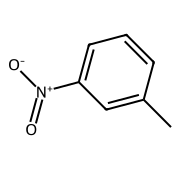
  1. i) Br2/Fe: electrophilic bromination of m-nitrotoluene; orientation is controlled by the activating –CH3, so Br enters para to CH3, giving bromo-nitrotoluene (C7H6BrNO2).
  2. ii) Sn/HCl reduces –NO2 to –NH2.
  3. iii) NaNO2/HCl at 273 K converts –NH2 to the diazonium salt –N2+Cl−.
  4. iv) H3PO2/H2O replaces –N2+ by –H (reductive deamination).
  5. Product (A) = bromotoluene, CH3C6H4Br = C7H7Br.
  6. Molar mass = 7(12) + 7(1) + 80 = 84 + 7 + 80 = 171 g mol−1.

Short trick: Sn/HCl → NaNO2/HCl → H3PO2 simply deletes the –NO2 group; A = toluene + Br = 92 − 1 + 80 = 171.

Answer: 171

अवधारणा: क्रियात्मक समूहों का अनुगमन कीजिए: ब्रोमीनीकरण → –NO2 का अपचयन → डाइऐज़ोटीकरण → H3PO2 से विऐमीनीकरण।

  1. i) Br2/Fe: m-नाइट्रोटॉलूईन का इलेक्ट्रॉनस्नेही ब्रोमीनीकरण; अभिविन्यास सक्रियकारी –CH3 द्वारा नियन्त्रित होता है, अतः Br, CH3 के पैरा स्थान पर जुड़ता है और ब्रोमो-नाइट्रोटॉलूईन (C7H6BrNO2) बनता है।
  2. ii) Sn/HCl, –NO2 को –NH2 में अपचयित करता है।
  3. iii) 273 K पर NaNO2/HCl, –NH2 को डाइऐज़ोनियम लवण –N2+Cl− में बदलता है।
  4. iv) H3PO2/H2O, –N2+ को –H से प्रतिस्थापित करता है (अपचयी विऐमीनीकरण)।
  5. उत्पाद (A) = ब्रोमोटॉलूईन, CH3C6H4Br = C7H7Br।
  6. मोलर द्रव्यमान = 7(12) + 7(1) + 80 = 84 + 7 + 80 = 171 g mol−1।

शॉर्ट ट्रिक: Sn/HCl → NaNO2/HCl → H3PO2 का अर्थ है –NO2 समूह हटाना; A = टॉलूईन + Br = 92 − 1 + 80 = 171।

उत्तर: 171

JEE Main 2025 (January) – Paper 1 (B.E./B.Tech)ChemistryAromatic compounds – reaction sequence (diazonium chemistry)JEE Main 2025 (January) – Paper 1 (B.E./B.Tech) 2025 · 23 Jan Shift 1 →
Q2176.
For a 3×3 matrix M, let trace (M) denote the sum of all the diagonal elements of M. Let A be a 3×3 matrix such that |A|=12 and trace (A)=3. If B=adj(adj(2A)), then the value of |B|+trace(B) equals :
किसी 3×3 आव्यूह M के लिए, trace (M), M के सभी विकर्ण अवयवों का योग दर्शाता है। माना A एक ऐसा 3×3 आव्यूह है कि |A|=12 तथा trace (A)=3 है। यदि B=adj(adj(2A)) है, तो |B|+trace(B) का मान है :
  1. A56
  2. B132
  3. C174
  4. D280
Show answer

Concept: For an n×n matrix M, adj(adjM)=|M|n−2M, and |kM|=kn|M|.

  1. |2A|=23|A|=8×12=4.
  2. With n=3: B=adj(adj(2A))=|2A|3−2(2A)=4(2A)=8A.
  3. |B|=|8A|=83|A|=512×12=256.
  4. trace(B)=8trace(A)=8×3=24.
  5. |B|+trace(B)=256+24=280.

Short trick: For 3×3: adj(adjM)=|M|M — one line kills the whole question.

Answer: (D) 280

अवधारणा: किसी n×n आव्यूह M के लिए adj(adjM)=|M|n−2M तथा |kM|=kn|M|।

  1. |2A|=23|A|=8×12=4।
  2. n=3 लेने पर: B=adj(adj(2A))=|2A|3−2(2A)=4(2A)=8A।
  3. |B|=|8A|=83|A|=512×12=256।
  4. trace(B)=8trace(A)=8×3=24।
  5. |B|+trace(B)=256+24=280।

शॉर्ट ट्रिक: 3×3 के लिए adj(adjM)=|M|M — एक पंक्ति में पूरा प्रश्न हल।

उत्तर: (D) 280

JEE Main 2025 (January) – Paper 1 (B.E./B.Tech)MathematicsMatrices & Determinants – adjoint of adjointJEE Main 2025 (January) – Paper 1 (B.E./B.Tech) 2025 · 22 Jan Shift 2 →
Q2177.
In a group of 3 girls and 4 boys, there are two boys B1 and B2. The number of ways, in which these girls and boys can stand in a queue such that all the girls stand together, all the boys stand together, but B1 and B2 are not adjacent to each other, is :
3 लड़कियों और 4 लड़कों के एक समूह में दो लड़के B1 तथा B2 हैं। इन लड़कियों और लड़कों को एक पंक्ति (queue) में इस प्रकार खड़ा करने के तरीकों की संख्या, कि सभी लड़कियाँ एक साथ खड़ी हों, सभी लड़के एक साथ खड़े हों, परन्तु B1 और B2 एक-दूसरे के आसन्न (adjacent) न हों, है :
  1. A96
  2. B144
  3. C120
  4. D72
Show answer

Concept: Treat each group as a block; subtract the adjacent cases for the restricted pair.

  1. The girls' block and the boys' block can be ordered in the queue in 2!=2 ways.
  2. Girls among themselves: 3!=6 ways.
  3. Boys with B1,B2 not adjacent: total 4!=24; adjacent cases =2!×3!=12; so 24−12=12 ways.
  4. Total =2×6×12=144.

Answer: (B) 144

अवधारणा: प्रत्येक समूह को एक ब्लॉक मानिए; प्रतिबंधित युग्म के आसन्न मामलों को घटाइए।

  1. लड़कियों का ब्लॉक तथा लड़कों का ब्लॉक पंक्ति में 2!=2 तरीकों से व्यवस्थित हो सकते हैं।
  2. लड़कियाँ आपस में: 3!=6 तरीके।
  3. लड़के, जिनमें B1,B2 आसन्न न हों: कुल 4!=24; आसन्न मामले =2!×3!=12; अतः 24−12=12 तरीके।
  4. कुल =2×6×12=144।

उत्तर: (B) 144

JEE Main 2025 (January) – Paper 1 (B.E./B.Tech)MathematicsPermutations & Combinations – arrangements with restrictionsJEE Main 2025 (January) – Paper 1 (B.E./B.Tech) 2025 · 22 Jan Shift 2 →
Q2178.
Let α,β,γ and δ be the coefficients of x7,x5,x3 and x respectively in the expansion of (x+x3−1)5+(x−x3−1)5, x>1. If u and v satisfy the equations αu+βv=18, γu+δv=20, then u+v equals :
माना (x+x3−1)5+(x−x3−1)5, x>1 के विस्तार में क्रमशः x7,x5,x3 तथा x के गुणांक α,β,γ तथा δ हैं। यदि u तथा v समीकरणों αu+βv=18, γu+δv=20 को संतुष्ट करते हैं, तो u+v बराबर है :
  1. A5
  2. B3
  3. C4
  4. D8
Show answer

Concept: (a+b)n+(a−b)n=2[nC0an+nC2an−2b2+…] — only even powers of b survive.

  1. With a=x, b=x3−1, n=5: sum =2[x5+10x3(x3−1)+5x(x3−1)2].
  2. Expand: 2[x5+10x6−10x3+5x7−10x4+5x]=10x7+20x6+2x5−20x4−20x3+10x.
  3. So α=10, β=2, γ=−20, δ=10.
  4. Equations: 10u+2v=18⇒5u+v=9; and −20u+10v=20⇒−2u+v=2.
  5. Subtracting: 7u=7⇒u=1, v=4, hence u+v=5.

Answer: (A) 5

अवधारणा: (a+b)n+(a−b)n=2[nC0an+nC2an−2b2+…] — केवल b की सम घातें बचती हैं।

  1. a=x, b=x3−1, n=5 लेने पर: योग =2[x5+10x3(x3−1)+5x(x3−1)2]।
  2. विस्तार करने पर: 2[x5+10x6−10x3+5x7−10x4+5x]=10x7+20x6+2x5−20x4−20x3+10x।
  3. अतः α=10, β=2, γ=−20, δ=10।
  4. समीकरण: 10u+2v=18⇒5u+v=9; तथा −20u+10v=20⇒−2u+v=2।
  5. घटाने पर: 7u=7⇒u=1, v=4, अतः u+v=5।

उत्तर: (A) 5

JEE Main 2025 (January) – Paper 1 (B.E./B.Tech)MathematicsBinomial Theorem – even terms expansionJEE Main 2025 (January) – Paper 1 (B.E./B.Tech) 2025 · 22 Jan Shift 2 →
Q2179.
Let a line pass through two distinct points P(−2,−1,3) and Q, and be parallel to the vector 3i^+2j^+2k^. If the distance of the point Q from the point R(1,3,3) is 5, then the square of the area of △PQR is equal to :
माना एक रेखा दो भिन्न बिंदुओं P(−2,−1,3) तथा Q से होकर जाती है और सदिश 3i^+2j^+2k^ के समान्तर है। यदि बिंदु Q की बिंदु R(1,3,3) से दूरी 5 है, तो △PQR के क्षेत्रफल का वर्ग बराबर है :
  1. A148
  2. B136
  3. C144
  4. D140
Show answer

Concept: Parametrise the line; area of a triangle =12|PQ→×PR→|.

  1. Q=(−2+3t, −1+2t, 3+2t) for some t≠0 (P,Q distinct).
  2. QR2=(3−3t)2+(4−2t)2+(2t)2=17t2−34t+25=25⇒17t(t−2)=0⇒t=2.
  3. Q=(4,3,7), so PQ→=(6,4,4), PR→=(3,4,0).
  4. PQ→×PR→=(−16, 12, 12), |PQ→×PR→|2=256+144+144=544.
  5. (Area)2=5444=136.

Answer: (B) 136

अवधारणा: रेखा का प्राचलिक रूप लीजिए; त्रिभुज का क्षेत्रफल =12|PQ→×PR→|।

  1. किसी t≠0 के लिए Q=(−2+3t, −1+2t, 3+2t) (P,Q भिन्न हैं)।
  2. QR2=(3−3t)2+(4−2t)2+(2t)2=17t2−34t+25=25⇒17t(t−2)=0⇒t=2।
  3. Q=(4,3,7), अतः PQ→=(6,4,4), PR→=(3,4,0)।
  4. PQ→×PR→=(−16, 12, 12), |PQ→×PR→|2=256+144+144=544।
  5. (क्षेत्रफल)2=5444=136।

उत्तर: (B) 136

JEE Main 2025 (January) – Paper 1 (B.E./B.Tech)Mathematics3D Geometry – line & area of triangleJEE Main 2025 (January) – Paper 1 (B.E./B.Tech) 2025 · 22 Jan Shift 2 →
Q2180.
If A and B are two events such that P(A∩B)=0.1, and P(A∣B) and P(B∣A) are the roots of the equation 12x2−7x+1=0, then the value of P(A¯∪B¯)P(A¯∩B¯) is :
यदि A तथा B दो ऐसी घटनाएँ हैं कि P(A∩B)=0.1 है, तथा P(A∣B) और P(B∣A) समीकरण 12x2−7x+1=0 के मूल हैं, तो P(A¯∪B¯)P(A¯∩B¯) का मान है :
  1. A43
  2. B74
  3. C53
  4. D94
Show answer

Concept: P(A∣B)=P(A∩B)P(B); De Morgan: A¯∪B¯=A∩B―, A¯∩B¯=A∪B―.

  1. 12x2−7x+1=0⇒x=13,14.
  2. Take P(A∣B)=13⇒P(B)=0.11/3=0.3; P(B∣A)=14⇒P(A)=0.11/4=0.4 (the other assignment just swaps P(A),P(B)).
  3. P(A∪B)=0.4+0.3−0.1=0.6.
  4. P(A¯∪B¯)=1−P(A∩B)=0.9 and P(A¯∩B¯)=1−P(A∪B)=0.4.
  5. Ratio =0.90.4=94.

Answer: (D) 94

अवधारणा: P(A∣B)=P(A∩B)P(B); डी-मॉर्गन नियम: A¯∪B¯=A∩B―, A¯∩B¯=A∪B―।

  1. 12x2−7x+1=0⇒x=13,14।
  2. P(A∣B)=13⇒P(B)=0.11/3=0.3; P(B∣A)=14⇒P(A)=0.11/4=0.4 (दूसरा विकल्प लेने पर केवल P(A),P(B) आपस में बदलते हैं)।
  3. P(A∪B)=0.4+0.3−0.1=0.6।
  4. P(A¯∪B¯)=1−P(A∩B)=0.9 तथा P(A¯∩B¯)=1−P(A∪B)=0.4।
  5. अनुपात =0.90.4=94।

उत्तर: (D) 94

JEE Main 2025 (January) – Paper 1 (B.E./B.Tech)MathematicsProbability – conditional probabilityJEE Main 2025 (January) – Paper 1 (B.E./B.Tech) 2025 · 22 Jan Shift 2 →