Question bank

Q&A: practice questions with answers

Search questions on any topic. Filter by exam category, exam, subject and topic, try the question, then open the answer and explanation.

Courses – airGurukul

53,050 questions in the question bank.

Q1921.
A double slit interference experiment performed with a light of wavelength 600 nm forms an interference fringe pattern on a screen with 10th bright fringe having its centre at a distance of 10 mm from the central maximum. Distance of the centre of the same 10th bright fringe from the central maximum when the source of light is replaced by another source of wavelength 660 nm would be _________ mm.
600 nm तरंगदैर्घ्य के प्रकाश से किया गया एक द्विझिरी व्यतिकरण प्रयोग, पर्दे पर ऐसा व्यतिकरण फ्रिंज पैटर्न बनाता है जिसमें 10वीं दीप्त फ्रिंज का केंद्र, केंद्रीय उच्चिष्ठ से 10 mm दूरी पर है। यदि प्रकाश स्रोत को 660 nm तरंगदैर्घ्य के दूसरे स्रोत से बदल दिया जाए, तो उसी 10वीं दीप्त फ्रिंज के केंद्र की केंद्रीय उच्चिष्ठ से दूरी _________ mm होगी।
Show answer

Concept: Position of the nth bright fringe: yn=nλDd∝λ for fixed n, D, d.

  1. y′y=λ′λ=660 nm600 nm=1.1
  2. y′=1.1×10 mm=11 mm

Answer: 11

अवधारणा: nवीं दीप्त फ्रिंज की स्थिति: yn=nλDd∝λ (नियत n, D, d के लिए)।

  1. y′y=λ′λ=660 nm600 nm=1.1
  2. y′=1.1×10 mm=11 mm

उत्तर: 11

JEE Main 2025 (January) – Paper 1 (B.E./B.Tech)PhysicsWave Optics – Young's double slit experimentJEE Main 2025 (January) – Paper 1 (B.E./B.Tech) 2025 · 28 Jan Shift 1 →
Q1922.
In a measurement, it is asked to find modulus of elasticity per unit torque applied on the system. The measured quantity has dimension of [MaLbTc]. If b=−3, the value of c is ________
एक मापन में, निकाय पर आरोपित प्रति एकांक बल-आघूर्ण (torque) पर प्रत्यास्थता गुणांक ज्ञात करने को कहा गया है। मापी गई राशि की विमा [MaLbTc] है। यदि b=−3 हो, तो c का मान ________ है
Show answer

Concept: Divide the dimensions: modulus of elasticity [ML−1T−2], torque [ML2T−2].

  1. [E][τ]=[ML−1T−2][ML2T−2]=[M0L−3T0]
  2. So a=0, b=−3 (as given) and c=0.

Answer: 0

अवधारणा: विमाओं का भाग कीजिए: प्रत्यास्थता गुणांक [ML−1T−2], बल-आघूर्ण [ML2T−2]।

  1. [E][τ]=[ML−1T−2][ML2T−2]=[M0L−3T0]
  2. अतः a=0, b=−3 (दिया है) तथा c=0।

उत्तर: 0

JEE Main 2025 (January) – Paper 1 (B.E./B.Tech)PhysicsUnits and Dimensions – dimensional analysisJEE Main 2025 (January) – Paper 1 (B.E./B.Tech) 2025 · 28 Jan Shift 1 →
Q1923.
A tiny metallic rectangular sheet has length and breadth of 5 mm and 2.5 mm, respectively. Using a specially designed screw gauge which has pitch of 0.75 mm and 15 divisions in the circular scale, you are asked to find the area of the sheet. In this measurement, the maximum fractional error will be x100 where x is _________.
एक छोटी धात्विक आयताकार चादर की लंबाई तथा चौड़ाई क्रमशः 5 mm तथा 2.5 mm है। 0.75 mm चूड़ी अंतराल (pitch) तथा वृत्ताकार पैमाने पर 15 भाग वाले एक विशेष रूप से बनाए गए स्क्रू गेज का उपयोग करके आपको चादर का क्षेत्रफल ज्ञात करना है। इस मापन में अधिकतम भिन्नात्मक त्रुटि x100 होगी, जहाँ x _________ है।
Show answer

Concept: Least count =pitchnumber of circular divisions; for A=l×b, ΔAA=Δll+Δbb.

  1. LC =0.75 mm15=0.05 mm (=Δl=Δb).
  2. ΔAA=0.055+0.052.5=0.01+0.02=0.03=3100
  3. x=3.

Answer: 3

अवधारणा: अल्पतमांक =चूड़ी अंतरालवृत्ताकार पैमाने के भागों की संख्या; A=l×b के लिए ΔAA=Δll+Δbb।

  1. अल्पतमांक =0.75 mm15=0.05 mm (=Δl=Δb)।
  2. ΔAA=0.055+0.052.5=0.01+0.02=0.03=3100
  3. x=3।

उत्तर: 3

JEE Main 2025 (January) – Paper 1 (B.E./B.Tech)PhysicsError Analysis – screw gaugeJEE Main 2025 (January) – Paper 1 (B.E./B.Tech) 2025 · 28 Jan Shift 1 →
Q1924.
Two iron solid discs of negligible thickness have radii R1 and R2 and moment of inertia I1 and I2, respectively. For R2=2R1, the ratio of I1 and I2 would be 1/x, where x = ________
नगण्य मोटाई की दो ठोस लोहे की चकतियों की त्रिज्याएँ क्रमशः R1 तथा R2 और जड़त्व आघूर्ण क्रमशः I1 तथा I2 हैं। R2=2R1 के लिए, I1 तथा I2 का अनुपात 1/x होगा, जहाँ x = ________
Show answer

Concept: Both discs are of iron (same density ρ) with the same (negligible) thickness t, so mass M=ρtπR2∝R2 and I=12MR2∝R4.

  1. I1I2=(R1R2)4=(12)4=116
  2. So x=16.

Answer: 16

अवधारणा: दोनों चकतियाँ लोहे की हैं (समान घनत्व ρ) तथा समान (नगण्य) मोटाई t की हैं, अतः द्रव्यमान M=ρtπR2∝R2 तथा I=12MR2∝R4।

  1. I1I2=(R1R2)4=(12)4=116
  2. अतः x=16।

उत्तर: 16

JEE Main 2025 (January) – Paper 1 (B.E./B.Tech)PhysicsRotational Motion – moment of inertia of discsJEE Main 2025 (January) – Paper 1 (B.E./B.Tech) 2025 · 28 Jan Shift 1 →
Q1925.
The moment of inertia of a solid disc rotating along its diameter is 2.5 times higher than the moment of inertia of a ring rotating in similar way. The moment of inertia of a solid sphere which has same radius as the disc and rotating in similar way, is n times higher than the moment of inertia of the given ring. Here, n = ________. Consider all the bodies have equal masses.
अपने व्यास के परितः घूर्णन करती एक ठोस चकती का जड़त्व आघूर्ण, उसी प्रकार घूर्णन करती एक वलय (ring) के जड़त्व आघूर्ण का 2.5 गुना है। चकती के समान त्रिज्या वाले तथा उसी प्रकार घूर्णन करते एक ठोस गोले का जड़त्व आघूर्ण, दी गई वलय के जड़त्व आघूर्ण का n गुना है। यहाँ n = ________। सभी पिंडों के द्रव्यमान समान मानिए।
Show answer

Concept: About a diameter: disc Id=MR24, ring Ir=Mr22, solid sphere Is=25MR2 (equal masses M).

  1. Given MR24=2.5×Mr22⇒R2=5r2.
  2. Sphere (radius R, same as disc): Is=25MR2=25M(5r2)=2Mr2.
  3. n=IsIr=2Mr2Mr2/2=4.

Answer: 4

अवधारणा: व्यास के परितः: चकती Id=MR24, वलय Ir=Mr22, ठोस गोला Is=25MR2 (समान द्रव्यमान M)।

  1. दिया है MR24=2.5×Mr22⇒R2=5r2।
  2. गोला (त्रिज्या R, चकती के समान): Is=25MR2=25M(5r2)=2Mr2।
  3. n=IsIr=2Mr2Mr2/2=4।

उत्तर: 4

JEE Main 2025 (January) – Paper 1 (B.E./B.Tech)PhysicsRotational Motion – moment of inertia about diameterJEE Main 2025 (January) – Paper 1 (B.E./B.Tech) 2025 · 28 Jan Shift 1 →
Q1926.
Given below are two statements:
Statement I : D-glucose pentaacetate reacts with 2, 4-dinitrophenylhydrazine.
Statement II : Starch, on heating with concentrated sulfuric acid at 100 ∘C and 2-3 atmosphere pressure produces glucose.
In the light of the above statements, choose the correct answer from the options given below
नीचे दो कथन दिए गए हैं:
कथन I : D-ग्लूकोस पेन्टाऐसीटेट, 2, 4-डाइनाइट्रोफेनिलहाइड्राज़ीन से अभिक्रिया करता है।
कथन II : स्टार्च को सांद्र सल्फ्यूरिक अम्ल के साथ 100 ∘C तथा 2-3 वायुमंडल दाब पर गर्म करने पर ग्लूकोस बनता है।
उपर्युक्त कथनों के आलोक में, नीचे दिए गए विकल्पों में से सही उत्तर चुनिए
  1. AStatement I is false but Statement II is trueकथन I असत्य है परन्तु कथन II सत्य है
  2. BBoth Statement I and Statement II are falseकथन I और कथन II दोनों असत्य हैं
  3. CBoth Statement I and Statement II are trueकथन I और कथन II दोनों सत्य हैं
  4. DStatement I is true but Statement II is falseकथन I सत्य है परन्तु कथन II असत्य है
Show answer

Concept: 2,4-DNP test needs a free carbonyl (–CHO) group; in glucose pentaacetate the ring cannot open, so no free –CHO is available.

  1. In D-glucose pentaacetate all five –OH groups, including the anomeric –OH, are acetylated. The cyclic hemiacetal is locked as an acetal, so the open-chain aldehyde form cannot be generated — it gives no reaction with 2,4-dinitrophenylhydrazine. Statement I is false.
  2. Starch is a polymer of α-D-glucose. On heating with sulfuric acid under pressure (about 100 ∘C, 2–3 atm) it undergoes complete hydrolysis to glucose — this is the commercial preparation of glucose. Statement II is true.

Short trick: Any derivative of glucose in which the anomeric position is blocked (pentaacetate, glycosides) fails all free-aldehyde tests.

Answer: (A)

अवधारणा: 2,4-DNP परीक्षण के लिए मुक्त कार्बोनिल (–CHO) समूह चाहिए; ग्लूकोस पेन्टाऐसीटेट में वलय खुल नहीं सकती, अतः मुक्त –CHO उपलब्ध नहीं होता।

  1. D-ग्लूकोस पेन्टाऐसीटेट में पाँचों –OH समूह, जिनमें ऐनोमेरिक –OH भी है, ऐसीटिलित हो जाते हैं। चक्रीय हेमीऐसीटैल, ऐसीटैल के रूप में बंद हो जाता है, अतः विवृत-श्रृंखला ऐल्डिहाइड रूप नहीं बन पाता — यह 2,4-डाइनाइट्रोफेनिलहाइड्राज़ीन से अभिक्रिया नहीं देता। कथन I असत्य है।
  2. स्टार्च α-D-ग्लूकोस का बहुलक है। सल्फ्यूरिक अम्ल के साथ दाब पर (लगभग 100 ∘C, 2–3 atm) गर्म करने पर इसका पूर्ण जल-अपघटन होकर ग्लूकोस बनता है — यही ग्लूकोस का व्यावसायिक निर्माण है। कथन II सत्य है।

शॉर्ट ट्रिक: ग्लूकोस का कोई भी व्युत्पन्न जिसमें ऐनोमेरिक स्थान अवरुद्ध हो (पेन्टाऐसीटेट, ग्लाइकोसाइड), मुक्त-ऐल्डिहाइड वाले सभी परीक्षण नहीं देता।

उत्तर: (A)

JEE Main 2025 (January) – Paper 1 (B.E./B.Tech)ChemistryBiomolecules – carbohydratesJEE Main 2025 (January) – Paper 1 (B.E./B.Tech) 2025 · 28 Jan Shift 1 →
Q1927.
Both acetaldehyde and acetone (individually) undergo which of the following reactions?
A. Iodoform Reaction
B. Cannizaro Reaction
C. Aldol Condensation
D. Tollen's Test
E. Clemmensen Reduction
Choose the correct answer from the options given below:
ऐसीटैल्डिहाइड तथा ऐसीटोन दोनों (अलग-अलग) निम्नलिखित में से कौन-सी अभिक्रियाएँ देते हैं?
A. आयोडोफॉर्म अभिक्रिया
B. कैनिज़ारो अभिक्रिया
C. ऐल्डॉल संघनन
D. टॉलेन परीक्षण
E. क्लीमेन्सन अपचयन
नीचे दिए गए विकल्पों में से सही उत्तर चुनिए:
  1. AA, B and D Onlyकेवल A, B और D
  2. BC and E Onlyकेवल C और E
  3. CA, C and E Onlyकेवल A, C और E
  4. DB, C and D Onlyकेवल B, C और D
Show answer

Concept: CH3CHO and CH3COCH3 both contain a CH3–CO– group and α-hydrogens.

  1. A. Iodoform reaction: both have the CH3CO– group, so both give yellow CHI3. ✓
  2. B. Cannizzaro reaction occurs only for carbonyl compounds without α-H; both have α-H. ✗
  3. C. Aldol condensation needs α-H — both undergo it. ✓
  4. D. Tollens' test is given only by aldehydes; acetone fails. ✗
  5. E. Clemmensen reduction (Zn–Hg/HCl) converts C=O of both to CH2. ✓

Short trick: For "both aldehyde and ketone" questions, strike out oxidation-based tests (Tollens, Fehling) and no-α-H reactions (Cannizzaro) at once.

Answer: (C)

अवधारणा: CH3CHO तथा CH3COCH3 दोनों में CH3–CO– समूह तथा α-हाइड्रोजन उपस्थित हैं।

  1. A. आयोडोफॉर्म अभिक्रिया: दोनों में CH3CO– समूह है, अतः दोनों पीला CHI3 देते हैं। ✓
  2. B. कैनिज़ारो अभिक्रिया केवल उन कार्बोनिल यौगिकों में होती है जिनमें α-H नहीं होता; दोनों में α-H है। ✗
  3. C. ऐल्डॉल संघनन के लिए α-H चाहिए — दोनों देते हैं। ✓
  4. D. टॉलेन परीक्षण केवल ऐल्डिहाइड देते हैं; ऐसीटोन नहीं देता। ✗
  5. E. क्लीमेन्सन अपचयन (Zn–Hg/HCl) दोनों के C=O को CH2 में बदल देता है। ✓

शॉर्ट ट्रिक: "ऐल्डिहाइड और कीटोन दोनों" वाले प्रश्नों में ऑक्सीकरण-आधारित परीक्षण (टॉलेन, फेहलिंग) तथा बिना α-H वाली अभिक्रियाएँ (कैनिज़ारो) तुरंत काट दीजिए।

उत्तर: (C)

JEE Main 2025 (January) – Paper 1 (B.E./B.Tech)ChemistryAldehydes & Ketones – common reactionsJEE Main 2025 (January) – Paper 1 (B.E./B.Tech) 2025 · 28 Jan Shift 1 →
Q1928.
Which of the following oxidation reactions are carried out by both K2Cr2O7 and KMnO4 in acidic medium?
A. I− → I2
B. S2− → S
C. Fe2+ → Fe3+
D. I− → IO3−
E. S2O32− → SO42−
Choose the correct answer from the options given below:
अम्लीय माध्यम में K2Cr2O7 तथा KMnO4 दोनों द्वारा निम्नलिखित में से कौन-सी ऑक्सीकरण अभिक्रियाएँ कराई जाती हैं?
A. I− → I2
B. S2− → S
C. Fe2+ → Fe3+
D. I− → IO3−
E. S2O32− → SO42−
नीचे दिए गए विकल्पों में से सही उत्तर चुनिए:
  1. AC, D and E Onlyकेवल C, D और E
  2. BB, C and D Onlyकेवल B, C और D
  3. CA, D and E Onlyकेवल A, D और E
  4. DA, B and C Onlyकेवल A, B और C
Show answer

Concept: In acidic medium both Cr2O72− (→ Cr3+) and MnO4− (→ Mn2+) are strong oxidants with a common set of substrates.

  1. A. Both oxidise iodide: I− → I2. ✓
  2. B. Both oxidise sulphide: S2− → S. ✓
  3. C. Both oxidise ferrous ion: Fe2+ → Fe3+. ✓
  4. D. I− → IO3− is the action of KMnO4 in neutral/faintly alkaline medium, not of acidified dichromate. ✗
  5. E. Thiosulphate is oxidised to sulphate by neutral KMnO4; acidified K2Cr2O7 does not give S2O32− → SO42−. ✗

Short trick: I− → IO3− and S2O32− → SO42− are the two "neutral/alkaline KMnO4" conversions of NCERT — cross them out in any "acidic medium, both oxidants" question.

Answer: (D)

अवधारणा: अम्लीय माध्यम में Cr2O72− (→ Cr3+) तथा MnO4− (→ Mn2+) दोनों प्रबल ऑक्सीकारक हैं और कई समान पदार्थों का ऑक्सीकरण करते हैं।

  1. A. दोनों आयोडाइड का ऑक्सीकरण करते हैं: I− → I2। ✓
  2. B. दोनों सल्फाइड का ऑक्सीकरण करते हैं: S2− → S। ✓
  3. C. दोनों फेरस आयन का ऑक्सीकरण करते हैं: Fe2+ → Fe3+। ✓
  4. D. I− → IO3− उदासीन/हल्के क्षारीय माध्यम में KMnO4 की क्रिया है, अम्लीय डाइक्रोमेट की नहीं। ✗
  5. E. थायोसल्फेट का सल्फेट में ऑक्सीकरण उदासीन KMnO4 करता है; अम्लीय K2Cr2O7 यह अभिक्रिया (S2O32− → SO42−) नहीं देता। ✗

शॉर्ट ट्रिक: I− → IO3− तथा S2O32− → SO42− NCERT की "उदासीन/क्षारीय KMnO4" वाली अभिक्रियाएँ हैं — "अम्लीय माध्यम, दोनों ऑक्सीकारक" वाले प्रश्न में इन्हें काट दीजिए।

उत्तर: (D)

JEE Main 2025 (January) – Paper 1 (B.E./B.Tech)Chemistryd-block – oxidising action of KMnO4 and K2Cr2O7JEE Main 2025 (January) – Paper 1 (B.E./B.Tech) 2025 · 28 Jan Shift 1 →
Q1929.
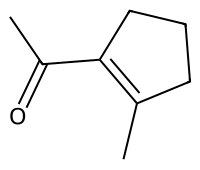
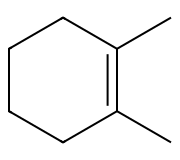
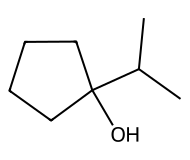
A molecule ("P") on treatment with acid undergoes rearrangement and gives ("Q"). ("Q") on ozonolysis followed by reflux under alkaline condition gives ("R"). The structure of ("R") is given below.

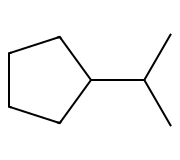
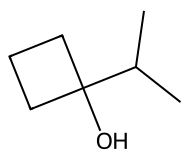
The structure of ("P") is
एक अणु ("P") अम्ल से उपचारित करने पर पुनर्विन्यास के साथ ("Q") देता है। ("Q") के ओज़ोनी-अपघटन (ozonolysis) तथा उसके बाद क्षारीय परिस्थिति में प्रतिवाह (reflux) करने पर ("R") प्राप्त होता है। ("R") की संरचना नीचे दी गई है।

("P") की संरचना है
  1. A
  2. B
  3. C
  4. D
Show answer

Concept: Work backwards: R (an α,β-unsaturated cyclic ketone) comes from intramolecular aldol condensation of a 1,6-diketone, which comes from ozonolysis of a tetrasubstituted cycloalkene.

  1. R = 1-acetyl-2-methylcyclopentene. Its retro-aldol precursor is octane-2,7-dione (a 1,6-diketone that cyclises to a 5-membered ring on alkaline reflux).
  2. Octane-2,7-dione is the ozonolysis product of 1,2-dimethylcyclohexene, so Q = 1,2-dimethylcyclohexene.
  3. P must rearrange to Q with acid. For 1-isopropylcyclopentan-1-ol (option D): –OH is protonated and leaves, giving a 3° cyclopentyl cation; hydride shift places the charge on the exocyclic carbon, ring expansion (C–C bond migration) gives a six-membered cation, and a methyl/hydride shift followed by loss of H+ gives the most substituted alkene, 1,2-dimethylcyclohexene.
  4. Option (A) is Q itself (no rearrangement involved); option (B) has no leaving group for acid treatment; option (C) would ring-expand only to a five-membered ring, giving 1,2-dimethylcyclopentene, not Q.

Short trick: Count carbons: R has C8, so Q is a C8 cycloalkene and P a C8 alcohol whose dehydration-rearrangement enlarges the ring by one.

Answer: (D)

अवधारणा: उल्टा चलिए: R (एक α,β-असंतृप्त चक्रीय कीटोन) किसी 1,6-डाइकीटोन के अंतराअणुक ऐल्डॉल संघनन से बनता है, और वह डाइकीटोन किसी चतुः-प्रतिस्थापित साइक्लोऐल्कीन के ओज़ोनी-अपघटन से।

  1. R = 1-ऐसीटिल-2-मेथिलसाइक्लोपेन्टीन। इसका पूर्ववर्ती ऑक्टेन-2,7-डाइओन है (1,6-डाइकीटोन, जो क्षारीय प्रतिवाह पर 5-सदस्यीय वलय बनाता है)।
  2. ऑक्टेन-2,7-डाइओन, 1,2-डाइमेथिलसाइक्लोहेक्सीन के ओज़ोनी-अपघटन से मिलता है, अतः Q = 1,2-डाइमेथिलसाइक्लोहेक्सीन।
  3. P को अम्ल के साथ पुनर्विन्यासित होकर Q देना चाहिए। 1-आइसोप्रोपिलसाइक्लोपेन्टेन-1-ऑल (विकल्प D) में –OH प्रोटॉनित होकर निकलता है और 3° साइक्लोपेन्टिल धनायन बनता है; हाइड्राइड विस्थापन से आवेश बाह्य कार्बन पर आता है, वलय-विस्तार (C–C आबंध प्रवास) से छह-सदस्यीय धनायन बनता है, और मेथिल/हाइड्राइड विस्थापन के बाद H+ के निष्कासन से सर्वाधिक प्रतिस्थापित ऐल्कीन 1,2-डाइमेथिलसाइक्लोहेक्सीन बनता है।
  4. विकल्प (A) स्वयं Q है (कोई पुनर्विन्यास नहीं); विकल्प (B) में अम्ल के लिए कोई निर्गमन समूह नहीं है; विकल्प (C) वलय-विस्तार से केवल पाँच-सदस्यीय वलय देगा, अर्थात् 1,2-डाइमेथिलसाइक्लोपेन्टीन, Q नहीं।

शॉर्ट ट्रिक: कार्बन गिनिए: R में C8 है, अतः Q एक C8 साइक्लोऐल्कीन और P एक C8 ऐल्कोहॉल है जिसके निर्जलीकरण-पुनर्विन्यास में वलय एक कार्बन बड़ी होती है।

उत्तर: (D)

JEE Main 2025 (January) – Paper 1 (B.E./B.Tech)ChemistryAlcohols – carbocation rearrangement & ozonolysis-aldolJEE Main 2025 (January) – Paper 1 (B.E./B.Tech) 2025 · 28 Jan Shift 1 →
Q1930.
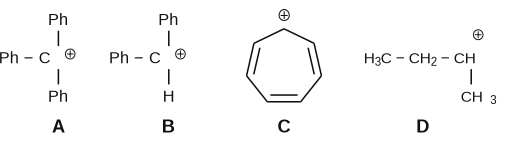
The correct order of stability of following carbocations is :
निम्नलिखित कार्बधनायनों के स्थायित्व का सही क्रम है :
  1. AC > B > A > D
  2. BA > B > C > D
  3. CB > C > A > D
  4. DC > A > B > D
Show answer

Concept: Aromatic carbocations are the most stable; among others, stability increases with the number of resonating phenyl groups, and simple 2° alkyl cations are least stable.

  1. C is the tropylium (cycloheptatrienyl) cation: 6π electrons, aromatic — most stable.
  2. A = Ph3C+ (resonance with three rings) > B = Ph2CH+ (two rings).
  3. D is a secondary butyl cation stabilised only by +I/hyperconjugation — least stable.
  4. Order: C > A > B > D.

Short trick: Aromatic > more Ph > fewer Ph > plain alkyl — tropylium beats even trityl.

Answer: (D)

अवधारणा: ऐरोमैटिक कार्बधनायन सर्वाधिक स्थायी होते हैं; उसके बाद अनुनादी फेनिल समूहों की संख्या जितनी अधिक, स्थायित्व उतना अधिक, तथा साधारण 2° ऐल्किल धनायन सबसे कम स्थायी होते हैं।

  1. C ट्रोपिलियम (साइक्लोहेप्टाट्राइईनिल) धनायन है: 6π इलेक्ट्रॉन, ऐरोमैटिक — सर्वाधिक स्थायी।
  2. A = Ph3C+ (तीन वलयों से अनुनाद) > B = Ph2CH+ (दो वलय)।
  3. D एक द्वितीयक ब्यूटिल धनायन है, जो केवल +I/अतिसंयुग्मन से स्थायी होता है — सबसे कम स्थायी।
  4. क्रम: C > A > B > D।

शॉर्ट ट्रिक: ऐरोमैटिक > अधिक Ph > कम Ph > साधारण ऐल्किल — ट्रोपिलियम, ट्राइटिल से भी आगे है।

उत्तर: (D)

JEE Main 2025 (January) – Paper 1 (B.E./B.Tech)ChemistryGOC – carbocation stabilityJEE Main 2025 (January) – Paper 1 (B.E./B.Tech) 2025 · 28 Jan Shift 1 →
Q1931.
The products A and B in the following reactions, respectively are
A←Ag−NO2CH3−CH2−CH2−Br→AgCNB
निम्नलिखित अभिक्रियाओं में उत्पाद A तथा B क्रमशः हैं
A←Ag−NO2CH3−CH2−CH2−Br→AgCNB
  1. ACH3−CH2−CH2−NO2, CH3−CH2−CH2−CN
  2. BCH3−CH2−CH2−ONO, CH3−CH2−CH2−NC
  3. CCH3−CH2−CH2−ONO, CH3−CH2−CH2−CN
  4. DCH3−CH2−CH2−NO2, CH3−CH2−CH2−NC
Show answer

Concept: With silver salts of ambident nucleophiles, the covalent Ag–X bond forces attack through the atom bearing the lone pair of higher electron density: AgNO2 attacks through N, AgCN through N.

  1. AgNO2 + n-propyl bromide → nitrogen attacks carbon → A = CH3CH2CH2–NO2 (1-nitropropane), not the nitrite ester.
  2. AgCN + n-propyl bromide → nitrogen end attacks → B = CH3CH2CH2–NC (propyl isocyanide), not the nitrile.
  3. (KNO2/KCN, being ionic, would instead give R–ONO and R–CN.)

Short trick: "Ag binds O/C, so N attacks": silver salts give the N-products (R–NO2, R–NC); potassium salts give R–ONO, R–CN.

Answer: (D)

अवधारणा: उभयदंती नाभिकरागियों के सिल्वर लवणों में सहसंयोजक Ag–X आबंध के कारण आक्रमण उस परमाणु से होता है जिस पर इलेक्ट्रॉन घनत्व अधिक है: AgNO2 में N से, AgCN में N से।

  1. AgNO2 + n-प्रोपिल ब्रोमाइड → नाइट्रोजन कार्बन पर आक्रमण करता है → A = CH3CH2CH2–NO2 (1-नाइट्रोप्रोपेन), नाइट्राइट एस्टर नहीं।
  2. AgCN + n-प्रोपिल ब्रोमाइड → नाइट्रोजन सिरे से आक्रमण → B = CH3CH2CH2–NC (प्रोपिल आइसोसायनाइड), नाइट्राइल नहीं।
  3. (KNO2/KCN आयनिक होने से R–ONO तथा R–CN देते।)

शॉर्ट ट्रिक: "Ag, O/C को बाँध लेता है, अतः N आक्रमण करता है": सिल्वर लवण N-उत्पाद (R–NO2, R–NC) देते हैं; पोटैशियम लवण R–ONO, R–CN देते हैं।

उत्तर: (D)

JEE Main 2025 (January) – Paper 1 (B.E./B.Tech)ChemistryHaloalkanes – ambident nucleophiles (AgNO2/AgCN)JEE Main 2025 (January) – Paper 1 (B.E./B.Tech) 2025 · 28 Jan Shift 1 →
Q1932.
In a multielectron atom, which of the following orbitals described by three quantum numbers will have same energy in absence of electric and magnetic fields?
A. n=1,l=0,ml=0
B. n=2,l=0,ml=0
C. n=2,l=1,ml=1
D. n=3,l=2,ml=1
E. n=3,l=2,ml=0
Choose the correct answer from the options given below:
एक बहु-इलेक्ट्रॉन परमाणु में, तीन क्वांटम संख्याओं से वर्णित निम्नलिखित कक्षकों में से किनकी ऊर्जा, विद्युत तथा चुंबकीय क्षेत्रों की अनुपस्थिति में, समान होगी?
A. n=1,l=0,ml=0
B. n=2,l=0,ml=0
C. n=2,l=1,ml=1
D. n=3,l=2,ml=1
E. n=3,l=2,ml=0
नीचे दिए गए विकल्पों में से सही उत्तर चुनिए:
  1. AB and C Onlyकेवल B और C
  2. BA and B Onlyकेवल A और B
  3. CC and D Onlyकेवल C और D
  4. DD and E Onlyकेवल D और E
Show answer

Concept: In a multielectron atom the orbital energy depends on both n and l; orbitals with the same n and l (differing only in ml) are degenerate.

  1. D: n=3,l=2 (3d) and E: n=3,l=2 (3d) — same subshell, different ml → same energy. ✓
  2. A (1s) and B (2s) differ in n — different energies.
  3. B (2s) and C (2p) have the same n but different l — in a multielectron atom 2s < 2p, so not degenerate.

Short trick: Degenerate in a multielectron atom ⇔ identical (n,l) pair; only D and E share (3,2).

Answer: (D)

अवधारणा: बहु-इलेक्ट्रॉन परमाणु में कक्षक की ऊर्जा n तथा l दोनों पर निर्भर करती है; समान n व l (केवल ml भिन्न) वाले कक्षक समभ्रंश (degenerate) होते हैं।

  1. D: n=3,l=2 (3d) तथा E: n=3,l=2 (3d) — समान उपकोश, भिन्न ml → समान ऊर्जा। ✓
  2. A (1s) तथा B (2s) में n भिन्न है — ऊर्जाएँ भिन्न।
  3. B (2s) तथा C (2p) में n समान पर l भिन्न है — बहु-इलेक्ट्रॉन परमाणु में 2s < 2p, अतः समभ्रंश नहीं।

शॉर्ट ट्रिक: बहु-इलेक्ट्रॉन परमाणु में समभ्रंश ⇔ (n,l) युग्म समान; केवल D और E में (3,2) समान है।

उत्तर: (D)

JEE Main 2025 (January) – Paper 1 (B.E./B.Tech)ChemistryAtomic structure – quantum numbers & degeneracyJEE Main 2025 (January) – Paper 1 (B.E./B.Tech) 2025 · 28 Jan Shift 1 →
Q1933.
A weak acid HA has degree of dissociation x. Which option gives the correct expression of (pH−pKa)?
एक दुर्बल अम्ल HA की वियोजन की मात्रा x है। कौन-सा विकल्प (pH−pKa) का सही व्यंजक देता है?
  1. A0
  2. Blog⁡(1+2x)
  3. Clog⁡(1−xx)
  4. Dlog⁡(x1−x)
Show answer

Concept: Henderson–Hasselbalch relation: pH=pKa+log⁡[A−][HA].

  1. For HA of initial concentration c with degree of dissociation x: [A−]=cx, [HA]=c(1−x).
  2. pH−pKa=log⁡cxc(1−x)=log⁡(x1−x).

Short trick: Dissociated over undissociated: the ratio inside the log is always x1−x, concentration cancels.

Answer: (D)

अवधारणा: हेंडरसन–हैसलबाल्च संबंध: pH=pKa+log⁡[A−][HA]।

  1. प्रारंभिक सांद्रता c तथा वियोजन की मात्रा x वाले HA के लिए: [A−]=cx, [HA]=c(1−x)।
  2. pH−pKa=log⁡cxc(1−x)=log⁡(x1−x)।

शॉर्ट ट्रिक: वियोजित/अवियोजित: log के अंदर का अनुपात सदैव x1−x होता है, सांद्रता कट जाती है।

उत्तर: (D)

JEE Main 2025 (January) – Paper 1 (B.E./B.Tech)ChemistryIonic equilibrium – pH of weak acidJEE Main 2025 (January) – Paper 1 (B.E./B.Tech) 2025 · 28 Jan Shift 1 →
Q1934.
The molecules having square pyramidal geometry are
वर्ग पिरैमिडी (square pyramidal) ज्यामिति वाले अणु हैं
  1. ABrF5 & PCl5
  2. BSbF5 & PCl5
  3. CSbF5 & XeOF4
  4. DBrF5 & XeOF4
Show answer

Concept: Square pyramidal shape arises from six electron domains with one lone pair (AX5E type).

  1. BrF5: Br has 5 bond pairs + 1 lone pair → octahedral electron geometry, square pyramidal shape. ✓
  2. XeOF4: Xe has 4 Xe–F bonds + 1 Xe=O + 1 lone pair → square pyramidal. ✓
  3. PCl5 and SbF5: 5 bond pairs, no lone pair → trigonal bipyramidal, not square pyramidal.

Short trick: AX5E (or AX4YE like XeOF4) = square pyramid; plain AX5 = trigonal bipyramid.

Answer: (D)

अवधारणा: वर्ग पिरैमिडी आकृति छह इलेक्ट्रॉन क्षेत्रों में एक एकाकी युग्म होने पर बनती है (AX5E प्रकार)।

  1. BrF5: Br पर 5 आबंध युग्म + 1 एकाकी युग्म → अष्टफलकीय इलेक्ट्रॉन ज्यामिति, वर्ग पिरैमिडी आकृति। ✓
  2. XeOF4: Xe पर 4 Xe–F आबंध + 1 Xe=O + 1 एकाकी युग्म → वर्ग पिरैमिडी। ✓
  3. PCl5 तथा SbF5: 5 आबंध युग्म, कोई एकाकी युग्म नहीं → त्रिकोणीय द्विपिरैमिडी, वर्ग पिरैमिडी नहीं।

शॉर्ट ट्रिक: AX5E (या XeOF4 जैसा AX4YE) = वर्ग पिरैमिड; केवल AX5 = त्रिकोणीय द्विपिरैमिड।

उत्तर: (D)

JEE Main 2025 (January) – Paper 1 (B.E./B.Tech)ChemistryChemical bonding – VSEPR geometryJEE Main 2025 (January) – Paper 1 (B.E./B.Tech) 2025 · 28 Jan Shift 1 →
Q1935.
Consider the following elements In, Tl, Al, Pb, Sn and Ge. The most stable oxidation states of elements with highest and lowest first ionisation enthalpies, respectively, are
निम्नलिखित तत्वों In, Tl, Al, Pb, Sn तथा Ge पर विचार कीजिए। उच्चतम तथा निम्नतम प्रथम आयनन एन्थैल्पी वाले तत्वों की सर्वाधिक स्थायी ऑक्सीकरण अवस्थाएँ क्रमशः हैं
  1. A+4 and +1+4 और +1
  2. B+1 and +4+1 और +4
  3. C+4 and +3+4 और +3
  4. D+2 and +3+2 और +3
Show answer

Concept: Compare first ionisation enthalpies (kJ mol−1): group 13 — Al 577, In 558, Tl 589; group 14 — Ge 762, Sn 708, Pb 715.

  1. Highest ΔiH1: Ge (762 kJ mol−1). For Ge the inert pair effect is weak, so its most stable oxidation state is +4.
  2. Lowest ΔiH1: In (558 kJ mol−1). Indium is most stable in the +3 state (only Tl prefers +1 in group 13).
  3. Hence +4 and +3 respectively.

Short trick: Group 14 members have higher IE1 than group 13 of the same period; within these six, Ge is top, In is bottom.

Answer: (C)

अवधारणा: प्रथम आयनन एन्थैल्पियाँ (kJ mol−1) तुलना कीजिए: वर्ग 13 — Al 577, In 558, Tl 589; वर्ग 14 — Ge 762, Sn 708, Pb 715।

  1. उच्चतम ΔiH1: Ge (762 kJ mol−1)। Ge में निष्क्रिय युग्म प्रभाव (inert pair effect) दुर्बल है, अतः इसकी सर्वाधिक स्थायी ऑक्सीकरण अवस्था +4 है।
  2. निम्नतम ΔiH1: In (558 kJ mol−1)। इंडियम +3 अवस्था में सर्वाधिक स्थायी है (वर्ग 13 में केवल Tl, +1 पसंद करता है)।
  3. अतः क्रमशः +4 तथा +3।

शॉर्ट ट्रिक: समान आवर्त में वर्ग 14 के तत्वों की IE1 वर्ग 13 से अधिक होती है; इन छह में Ge शीर्ष पर, In सबसे नीचे।

उत्तर: (C)

JEE Main 2025 (January) – Paper 1 (B.E./B.Tech)Chemistryp-block – ionisation enthalpy & oxidation statesJEE Main 2025 (January) – Paper 1 (B.E./B.Tech) 2025 · 28 Jan Shift 1 →
Q1936.
[A]0/mol L−1t1/2/min
0.100200
0.025100
For a given reaction R → P, t1/2 is related to [A]0 as given in table. Given: log 2 = 0.30. Which of the following is true?
A. The order of the reaction is 1/2.
B. If [A]0 is 1 M, then t1/2 is 20010 min
C. The order of the reaction changes to 1 if the concentration of reactant changes from 0.100 M to 0.500 M.
D. t1/2 is 800 min for [A]0 = 1.6 M
Choose the correct answer from the options given below:
[A]0/mol L−1t1/2/min
0.100200
0.025100
किसी अभिक्रिया R → P के लिए t1/2 का [A]0 से संबंध सारणी में दिया गया है। दिया है: log 2 = 0.30। निम्नलिखित में से कौन-सा सत्य है?
A. अभिक्रिया की कोटि 1/2 है।
B. यदि [A]0, 1 M है, तो t1/2, 20010 min है
C. यदि अभिकारक की सांद्रता 0.100 M से 0.500 M हो जाए, तो अभिक्रिया की कोटि बदलकर 1 हो जाती है।
D. [A]0 = 1.6 M के लिए t1/2, 800 min है
नीचे दिए गए विकल्पों में से सही उत्तर चुनिए:
  1. AA and C Onlyकेवल A और C
  2. BA, B and D Onlyकेवल A, B और D
  3. CC and D Onlyकेवल C और D
  4. DA and B Onlyकेवल A और B
Show answer

Concept: For an nth-order reaction, t1/2∝[A]01−n.

  1. 200100=(0.1000.025)1−n⇒2=41−n⇒1−n=12⇒n=12. Statement A is true.
  2. So t1/2∝[A]0. For [A]0=1 M: t1/2=20010.100=20010 min. Statement B is true.
  3. Order is a constant of the reaction; it does not change with concentration. Statement C is false.
  4. For [A]0=1.6 M: t1/2=2001.60.1=200×4=800 min. Statement D is true.

Short trick: Conc. ×4 but t1/2 only ×2 ⇒ t1/2∝[A]0 ⇒ order 1/2 instantly.

Answer: (B)

अवधारणा: n कोटि की अभिक्रिया के लिए t1/2∝[A]01−n।

  1. 200100=(0.1000.025)1−n⇒2=41−n⇒1−n=12⇒n=12। कथन A सत्य है।
  2. अतः t1/2∝[A]0। [A]0=1 M के लिए: t1/2=20010.100=20010 min। कथन B सत्य है।
  3. कोटि अभिक्रिया का स्थिरांक है; यह सांद्रता के साथ नहीं बदलती। कथन C असत्य है।
  4. [A]0=1.6 M के लिए: t1/2=2001.60.1=200×4=800 min। कथन D सत्य है।

शॉर्ट ट्रिक: सांद्रता ×4 पर t1/2 केवल ×2 ⇒ t1/2∝[A]0 ⇒ कोटि 1/2 तुरंत।

उत्तर: (B)

JEE Main 2025 (January) – Paper 1 (B.E./B.Tech)ChemistryChemical kinetics – order from half-lifeJEE Main 2025 (January) – Paper 1 (B.E./B.Tech) 2025 · 28 Jan Shift 1 →
Q1937.
Match the LIST-I with LIST-II
LIST-I
(Redox Reaction)
LIST-II
(Type of Redox Reaction)
A.CH4(g) + 2O2(g) →Δ CO2(g) + 2H2O(l)I.Disproportionation reaction
B.2NaH(s) →Δ 2Na(s) + H2(g)II.Combination reaction
C.V2O5(s) + 5Ca(s) →Δ 2V(s) + 5CaO(s)III.Decomposition reaction
D.2H2O2(aq) →Δ 2H2O(l) + O2(g)IV.Displacement reaction
Choose the correct answer from the options given below:
सूची-I का सूची-II से मिलान कीजिए
सूची-I
(रेडॉक्स अभिक्रिया)
सूची-II
(रेडॉक्स अभिक्रिया का प्रकार)
A.CH4(g) + 2O2(g) →Δ CO2(g) + 2H2O(l)I.असमानुपातन (disproportionation) अभिक्रिया
B.2NaH(s) →Δ 2Na(s) + H2(g)II.संयोजन (combination) अभिक्रिया
C.V2O5(s) + 5Ca(s) →Δ 2V(s) + 5CaO(s)III.अपघटन (decomposition) अभिक्रिया
D.2H2O2(aq) →Δ 2H2O(l) + O2(g)IV.विस्थापन (displacement) अभिक्रिया
नीचे दिए गए विकल्पों में से सही उत्तर चुनिए:
  1. AA-II, B-III, C-I, D-IV
  2. BA-III, B-IV, C-I, D-II
  3. CA-IV, B-I, C-II, D-III
  4. DA-II, B-III, C-IV, D-I
Show answer

Concept: Classify each redox change: combination (two or more substances → one product set by direct union), decomposition (one substance breaks up), displacement (one element displaces another), disproportionation (same element oxidised and reduced).

  1. A. Combustion of CH4 with O2 is a redox combination reaction → II.
  2. B. NaH alone breaks into Na and H2 → decomposition → III.
  3. C. Ca displaces V from V2O5 → displacement → IV.
  4. D. In H2O2, oxygen (−1) goes to −2 (H2O) and 0 (O2) → disproportionation → I.
  5. Thus A-II, B-III, C-IV, D-I; the other options misplace C and D.

Short trick: H2O2 is the classic disproportionation example — lock D-I first and only one option survives.

Answer: (D)

अवधारणा: प्रत्येक रेडॉक्स परिवर्तन को वर्गीकृत कीजिए: संयोजन (दो या अधिक पदार्थ मिलकर उत्पाद बनाएँ), अपघटन (एक पदार्थ टूटे), विस्थापन (एक तत्व दूसरे को विस्थापित करे), असमानुपातन (एक ही तत्व का ऑक्सीकरण और अपचयन दोनों)।

  1. A. CH4 का O2 के साथ दहन एक रेडॉक्स संयोजन अभिक्रिया है → II।
  2. B. NaH अकेले टूटकर Na और H2 देता है → अपघटन → III।
  3. C. Ca, V2O5 से V को विस्थापित करता है → विस्थापन → IV।
  4. D. H2O2 में ऑक्सीजन (−1) से −2 (H2O) तथा 0 (O2) में जाती है → असमानुपातन → I।
  5. अतः A-II, B-III, C-IV, D-I; शेष विकल्पों में C और D गलत मिलाए गए हैं।

शॉर्ट ट्रिक: H2O2 असमानुपातन का क्लासिक उदाहरण है — पहले D-I पक्का कीजिए, केवल एक विकल्प बचेगा।

उत्तर: (D)

JEE Main 2025 (January) – Paper 1 (B.E./B.Tech)ChemistryRedox reactions – typesJEE Main 2025 (January) – Paper 1 (B.E./B.Tech) 2025 · 28 Jan Shift 1 →
Q1938.
Given below are two statements:
Statement I: In the oxalic acid vs KMnO4 (in the presence of dil H2SO4) titration the solution needs to be heated initially to 60 ∘C, but no heating is required in Ferrous ammonium sulphate (FAS) vs KMnO4 titration (in the presence of dil H2SO4)
Statement II: In oxalic acid vs KMnO4 titration, the initial formation of MnSO4 takes place at high temperature, which then acts as catalyst for further reaction. In the case of FAS vs KMnO4, heating oxidizes Fe2+ into Fe3+ by oxygen of air and error may be introduced in the experiment.
In the light of the above statements, choose the correct answer from the options given below
नीचे दो कथन दिए गए हैं:
कथन I: ऑक्सैलिक अम्ल व KMnO4 (तनु H2SO4 की उपस्थिति में) अनुमापन में विलयन को प्रारंभ में 60 ∘C तक गर्म करना पड़ता है, परन्तु फेरस अमोनियम सल्फेट (FAS) व KMnO4 अनुमापन (तनु H2SO4 की उपस्थिति में) में गर्म करने की आवश्यकता नहीं होती।
कथन II: ऑक्सैलिक अम्ल व KMnO4 अनुमापन में, उच्च ताप पर प्रारंभ में MnSO4 बनता है, जो आगे की अभिक्रिया के लिए उत्प्रेरक का कार्य करता है। FAS व KMnO4 के प्रकरण में, गर्म करने पर वायु की ऑक्सीजन द्वारा Fe2+ का Fe3+ में ऑक्सीकरण हो जाता है और प्रयोग में त्रुटि आ सकती है।
उपर्युक्त कथनों के आलोक में, नीचे दिए गए विकल्पों में से सही उत्तर चुनिए
  1. ABoth Statement I and Statement II are falseकथन I और कथन II दोनों असत्य हैं
  2. BBoth Statement I and Statement II are trueकथन I और कथन II दोनों सत्य हैं
  3. CStatement I is false but Statement II is trueकथन I असत्य है परन्तु कथन II सत्य है
  4. DStatement I is true but Statement II is falseकथन I सत्य है परन्तु कथन II असत्य है
Show answer

Concept: The oxalic acid–permanganate reaction is slow at room temperature and is autocatalysed by Mn2+; the Fe2+–permanganate reaction is fast at room temperature.

  1. Oxalic acid titration: the mixture is warmed to about 60 ∘C because the first few drops of KMnO4 react slowly; once Mn2+ (as MnSO4) forms, it autocatalyses the reaction. Statement I correctly says heating is needed here and not in the FAS titration.
  2. FAS titration is never heated: on warming, dissolved/aerial O2 would oxidise Fe2+ to Fe3+, lowering the apparent strength and introducing error. This is exactly what Statement II says.
  3. Both statements are therefore true.

Short trick: "Heat oxalic, never heat ferrous" — Mn2+ autocatalysis in one, aerial oxidation error in the other.

Answer: (B)

अवधारणा: ऑक्सैलिक अम्ल–परमैंगनेट अभिक्रिया कक्ष ताप पर धीमी होती है और Mn2+ द्वारा स्व-उत्प्रेरित होती है; Fe2+–परमैंगनेट अभिक्रिया कक्ष ताप पर ही तीव्र होती है।

  1. ऑक्सैलिक अम्ल अनुमापन: मिश्रण को लगभग 60 ∘C तक गर्म करते हैं क्योंकि KMnO4 की प्रारंभिक बूँदें धीरे अभिक्रिया करती हैं; जैसे ही Mn2+ (MnSO4 रूप में) बनता है, वह अभिक्रिया को स्व-उत्प्रेरित करता है। कथन I सही कहता है कि यहाँ गर्म करना आवश्यक है और FAS अनुमापन में नहीं।
  2. FAS अनुमापन कभी गर्म नहीं करते: गर्म करने पर घुली/वायवीय O2, Fe2+ को Fe3+ में ऑक्सीकृत कर देगी, जिससे प्रयोग में त्रुटि आएगी। यही कथन II कहता है।
  3. अतः दोनों कथन सत्य हैं।

शॉर्ट ट्रिक: "ऑक्सैलिक गर्म करो, फेरस कभी नहीं" — एक में Mn2+ स्व-उत्प्रेरण, दूसरे में वायवीय ऑक्सीकरण की त्रुटि।

उत्तर: (B)

JEE Main 2025 (January) – Paper 1 (B.E./B.Tech)ChemistryPractical chemistry – KMnO4 titrationsJEE Main 2025 (January) – Paper 1 (B.E./B.Tech) 2025 · 28 Jan Shift 1 →
Q1939.
The metal ion whose electronic configuration is not affected by the nature of the ligand and which gives a violet colour in non-luminous flame under hot condition in borax bead test is
वह धातु आयन जिसका इलेक्ट्रॉनिक विन्यास लिगन्ड की प्रकृति से प्रभावित नहीं होता तथा जो बोरेक्स मनका परीक्षण (borax bead test) में अदीप्त ज्वाला में गर्म अवस्था में बैंगनी रंग देता है, है
  1. AMn2+
  2. BCr3+
  3. CNi2+
  4. DTi3+
Show answer

Concept: In an octahedral field a d8 ion always has the configuration t2g6eg2, whether the ligand is strong or weak; borax bead colours identify the metal.

  1. Ni2+ (3d8): t2g6eg2 with 2 unpaired electrons for every ligand — configuration independent of ligand nature. ✓
  2. In the borax bead test (bead held in the hot, non-luminous oxidising flame) nickel gives a violet bead when hot (brown on cooling). ✓
  3. Mn2+ (d5) changes from high-spin to low-spin with strong ligands, so its configuration depends on the ligand. Cr3+ (d3) has a fixed configuration but its borax bead is green, not violet; Ti3+ (d1) does not give a violet bead under these conditions.

Short trick: d3 and d8 are the two "ligand-proof" octahedral configurations; of these only Ni2+ (d8) matches the hot violet bead.

Answer: (C)

अवधारणा: अष्टफलकीय क्षेत्र में d8 आयन का विन्यास सदैव t2g6eg2 रहता है, लिगन्ड प्रबल हो या दुर्बल; बोरेक्स मनके के रंग धातु की पहचान कराते हैं।

  1. Ni2+ (3d8): प्रत्येक लिगन्ड के लिए t2g6eg2, 2 अयुग्मित इलेक्ट्रॉन — विन्यास लिगन्ड की प्रकृति से स्वतंत्र। ✓
  2. बोरेक्स मनका परीक्षण में (मनका गर्म, अदीप्त ऑक्सीकारी ज्वाला में) निकैल गर्म अवस्था में बैंगनी मनका देता है (ठंडा होने पर भूरा)। ✓
  3. Mn2+ (d5) प्रबल लिगन्डों के साथ उच्च-चक्रण से निम्न-चक्रण में बदल जाता है, अतः उसका विन्यास लिगन्ड पर निर्भर है। Cr3+ (d3) का विन्यास निश्चित है पर उसका मनका हरा होता है, बैंगनी नहीं; Ti3+ (d1) इन परिस्थितियों में बैंगनी मनका नहीं देता।

शॉर्ट ट्रिक: d3 और d8 ही दो "लिगन्ड-निरपेक्ष" अष्टफलकीय विन्यास हैं; इनमें से केवल Ni2+ (d8) गर्म बैंगनी मनके से मेल खाता है।

उत्तर: (C)

JEE Main 2025 (January) – Paper 1 (B.E./B.Tech)Chemistryd-block – CFT & borax bead testJEE Main 2025 (January) – Paper 1 (B.E./B.Tech) 2025 · 28 Jan Shift 1 →
Q1940.
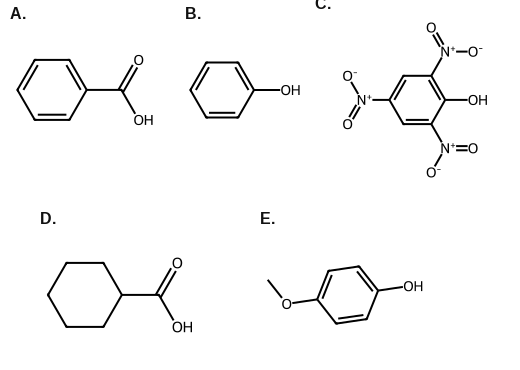
The compounds that produce CO2 with aqueous NaHCO3 solution are:

Choose the correct answer from the options given below:
वे यौगिक जो जलीय NaHCO3 विलयन के साथ CO2 उत्पन्न करते हैं, हैं:

नीचे दिए गए विकल्पों में से सही उत्तर चुनिए:
  1. AA, C and D Onlyकेवल A, C और D
  2. BA, B and E Onlyकेवल A, B और E
  3. CA and C Onlyकेवल A और C
  4. DA and B Onlyकेवल A और B
Show answer

Concept: NaHCO3 liberates CO2 only with acids stronger than carbonic acid (pKa ≈ 6.4): carboxylic acids and exceptionally acidic phenols.

  1. A. Benzoic acid (pKa ≈ 4.2) — reacts, gives CO2. ✓
  2. B. Phenol (pKa ≈ 10) — weaker than H2CO3, no CO2. ✗
  3. C. 2,4,6-Trinitrophenol (picric acid, pKa ≈ 0.4) — three –NO2 groups make it stronger than carbonic acid; gives CO2. ✓
  4. D. Cyclohexanecarboxylic acid — a carboxylic acid; gives CO2. ✓
  5. E. 4-Methoxyphenol — the +M methoxy group makes it even weaker than phenol; no CO2. ✗

Short trick: –COOH always fizzes with NaHCO3; among phenols only the nitro-loaded ones (picric acid type) do.

Answer: (A)

अवधारणा: NaHCO3 केवल कार्बोनिक अम्ल (pKa ≈ 6.4) से प्रबल अम्लों के साथ CO2 मुक्त करता है: कार्बोक्सिलिक अम्ल तथा असाधारण रूप से अम्लीय फ़िनॉल।

  1. A. बेंज़ोइक अम्ल (pKa ≈ 4.2) — अभिक्रिया कर CO2 देता है। ✓
  2. B. फ़िनॉल (pKa ≈ 10) — H2CO3 से दुर्बल, CO2 नहीं। ✗
  3. C. 2,4,6-ट्राइनाइट्रोफ़िनॉल (पिक्रिक अम्ल, pKa ≈ 0.4) — तीन –NO2 समूह इसे कार्बोनिक अम्ल से प्रबल बना देते हैं; CO2 देता है। ✓
  4. D. साइक्लोहेक्सेनकार्बोक्सिलिक अम्ल — कार्बोक्सिलिक अम्ल; CO2 देता है। ✓
  5. E. 4-मेथॉक्सीफ़िनॉल — +M मेथॉक्सी समूह इसे फ़िनॉल से भी दुर्बल बनाता है; CO2 नहीं। ✗

शॉर्ट ट्रिक: –COOH सदैव NaHCO3 से बुदबुदाहट देता है; फ़िनॉलों में केवल नाइट्रो-युक्त (पिक्रिक अम्ल जैसे) ही देते हैं।

उत्तर: (A)

JEE Main 2025 (January) – Paper 1 (B.E./B.Tech)ChemistryCarboxylic acids & phenols – acidity (NaHCO3 test)JEE Main 2025 (January) – Paper 1 (B.E./B.Tech) 2025 · 28 Jan Shift 1 →