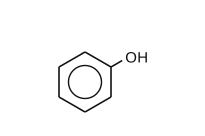
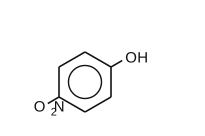
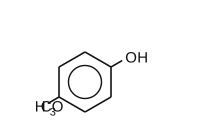
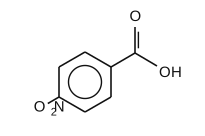
Q441.The descending order of acidity among the following compounds is:
A.
B.
C.
D.
E.
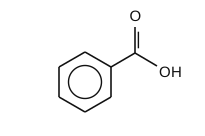
Choose the correct answer from the options given below:
निम्नलिखित यौगिकों में अम्लता का अवरोही क्रम है:
A.
B.
C.
D.
E.
नीचे दिए गए विकल्पों में से सही उत्तर चुनिए:
- AB > D > E > A > C
- BD > B > E > A > C
- CC > A > B > D > E
- DD > E > B > A > C
Show answer
Concept: Carboxylic acids (pKa ≈ 3.4–4.2) are much stronger than phenols (pKa ≈ 7–10). Electron-withdrawing groups (–NO2) increase acidity; electron-donating groups (–OCH3 at para, +R) decrease it.
- D (4-nitrobenzoic acid, pKa 3.4) > E (benzoic acid, 4.2).
- B (4-nitrophenol, 7.1) – strongest phenol, –NO2 stabilises phenoxide by −R.
- A (phenol, 10.0) > C (4-methoxyphenol, 10.2), as para –OCH3 destabilises the phenoxide.
- Order D > E > B > A > C. (A) and (B) place 4-nitrophenol above benzoic acid; (C) is the reverse order.
Short trick: Acids first (nitro-acid, then plain acid), then phenols (nitro, plain, methoxy).
Answer: (D) D > E > B > A > C
अवधारणा: कार्बोक्सिलिक अम्ल (pKa ≈ 3.4–4.2) फ़ीनॉलों (pKa ≈ 7–10) से बहुत प्रबल होते हैं। इलेक्ट्रॉन-आकर्षी समूह (–NO2) अम्लता बढ़ाते हैं; इलेक्ट्रॉन-दाता समूह (पैरा पर –OCH3, +R) घटाते हैं।
- D (4-नाइट्रोबेंज़ोइक अम्ल, pKa 3.4) > E (बेंज़ोइक अम्ल, 4.2)।
- B (4-नाइट्रोफ़ीनॉल, 7.1) – सबसे प्रबल फ़ीनॉल, –NO2 −R द्वारा फ़ीनॉक्साइड को स्थायी करता है।
- A (फ़ीनॉल, 10.0) > C (4-मेथॉक्सीफ़ीनॉल, 10.2), क्योंकि पैरा –OCH3 फ़ीनॉक्साइड को अस्थायी करता है।
- क्रम D > E > B > A > C। (A) और (B) में 4-नाइट्रोफ़ीनॉल को बेंज़ोइक अम्ल से ऊपर रखा गया है; (C) उल्टा क्रम है।
शॉर्ट ट्रिक: पहले अम्ल (नाइट्रो-अम्ल, फिर साधारण अम्ल), फिर फ़ीनॉल (नाइट्रो, साधारण, मेथॉक्सी)।
उत्तर: (D) D > E > B > A > C
JEE Main 2026 (April) – Paper 1 (B.E./B.Tech)ChemistryAcidity of phenols and carboxylic acidsJEE Main 2026 (April) – Paper 1 (B.E./B.Tech) 2026 · 4 Apr Shift 2
Q442.The strongest conjugate acid will result from:
सबसे प्रबल संयुग्मी अम्ल किससे बनेगा:
- A
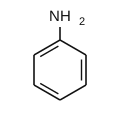
- B
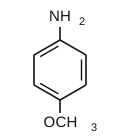
- C
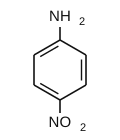
- D
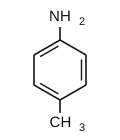
Show answer
Concept: The weaker the base, the stronger its conjugate acid. Electron-withdrawing groups reduce the availability of the N lone pair in aniline.
- (C) p-Nitroaniline: –NO2 (−I, −R) pulls the lone pair into the ring → weakest base (pKb ≈ 13) → its anilinium ion is the strongest acid.
- (A) Aniline (pKb 9.4) is a stronger base than (C).
- (B) p-Anisidine (+R of –OCH3) and (D) p-toluidine (+I, hyperconjugation of –CH3) are even stronger bases, giving weaker conjugate acids.
Short trick: Strongest conjugate acid ↔ weakest base ↔ strongest electron-withdrawing substituent (–NO2).
Answer: (C) p-nitroaniline
अवधारणा: क्षारक जितना दुर्बल, उसका संयुग्मी अम्ल उतना प्रबल। इलेक्ट्रॉन-आकर्षी समूह ऐनिलीन में N के एकाकी युग्म की उपलब्धता घटाते हैं।
- (C) p-नाइट्रोऐनिलीन: –NO2 (−I, −R) एकाकी युग्म को वलय में खींचता है → सबसे दुर्बल क्षारक (pKb ≈ 13) → इसका ऐनिलीनियम आयन सबसे प्रबल अम्ल।
- (A) ऐनिलीन (pKb 9.4), (C) से प्रबल क्षारक है।
- (B) p-ऐनिसिडीन (–OCH3 का +R) और (D) p-टॉलूइडीन (–CH3 का +I, अतिसंयुग्मन) और भी प्रबल क्षारक हैं, अतः इनके संयुग्मी अम्ल दुर्बल हैं।
शॉर्ट ट्रिक: सबसे प्रबल संयुग्मी अम्ल ↔ सबसे दुर्बल क्षारक ↔ सबसे प्रबल इलेक्ट्रॉन-आकर्षी प्रतिस्थापी (–NO2)।
उत्तर: (C) p-नाइट्रोऐनिलीन
JEE Main 2026 (April) – Paper 1 (B.E./B.Tech)ChemistryAmines – basicity of substituted anilinesJEE Main 2026 (April) – Paper 1 (B.E./B.Tech) 2026 · 4 Apr Shift 2
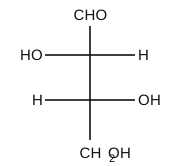
Q443.A D-aldotetrose on oxidation with concentrated HNO3 resulted in optically inactive dicarboxylic acid. The structure of the D-aldotetrose is:
एक D-ऐल्डोटेट्रोस का सांद्र HNO3 से ऑक्सीकरण करने पर प्रकाशिक रूप से निष्क्रिय डाइकार्बोक्सिलिक अम्ल प्राप्त हुआ। D-ऐल्डोटेट्रोस की संरचना है:
- A
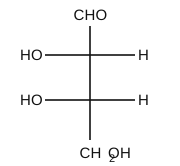
- B
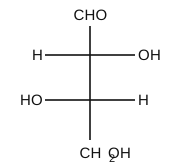
- C
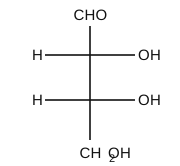
- D
Show answer
Concept: Conc. HNO3 oxidises both CHO and CH2OH to COOH, giving tartaric acid. It is optically inactive (meso) only if both OH groups are on the same side in the Fischer projection (erythro). D-configuration: OH of the lowest stereocentre (C-3) on the right.
- (A) Both OH on the left → L-erythrose (gives meso acid but is L) ✘.
- (B) C-2 OH right, C-3 OH left → L-threose; gives optically active tartaric acid ✘.
- (C) Both OH on the right → D-erythrose; oxidation gives meso-tartaric acid (internal plane of symmetry) ✔.
- (D) C-2 OH left, C-3 OH right → D-threose; gives optically active (−)-tartaric acid ✘.
Short trick: D + meso product ⇒ all OH on the right ⇒ D-erythrose.
Answer: (C)
अवधारणा: सांद्र HNO3, CHO तथा CH2OH दोनों को COOH में ऑक्सीकृत करता है, जिससे टार्टरिक अम्ल बनता है। यह प्रकाशिक रूप से निष्क्रिय (मीसो) तभी होता है जब फिशर प्रक्षेप में दोनों OH एक ही ओर हों (एरिथ्रो)। D-विन्यास: सबसे नीचे के त्रिविम केंद्र (C-3) का OH दाईं ओर।
- (A) दोनों OH बाईं ओर → L-एरिथ्रोस (मीसो अम्ल देता है पर L है) ✘।
- (B) C-2 OH दाईं ओर, C-3 OH बाईं ओर → L-थ्रियोस; प्रकाशिक सक्रिय टार्टरिक अम्ल देता है ✘।
- (C) दोनों OH दाईं ओर → D-एरिथ्रोस; ऑक्सीकरण से मीसो-टार्टरिक अम्ल (आंतरिक सममिति तल) ✔।
- (D) C-2 OH बाईं ओर, C-3 OH दाईं ओर → D-थ्रियोस; प्रकाशिक सक्रिय (−)-टार्टरिक अम्ल देता है ✘।
शॉर्ट ट्रिक: D + मीसो उत्पाद ⇒ सभी OH दाईं ओर ⇒ D-एरिथ्रोस।
उत्तर: (C)
JEE Main 2026 (April) – Paper 1 (B.E./B.Tech)ChemistryBiomolecules – aldotetroses, D/L, meso acidJEE Main 2026 (April) – Paper 1 (B.E./B.Tech) 2026 · 4 Apr Shift 2
Q444.Among Fe3+, Pb2+, Cu2+ and Mn2+, identify the one that gets precipitated out while passing H2S in presence of NH4OH as group reagent. The highest possible oxidation state of the corresponding metal is
Fe3+, Pb2+, Cu2+ तथा Mn2+ में से उसे पहचानिए जो समूह अभिकर्मक के रूप में NH4OH की उपस्थिति में H2S प्रवाहित करने पर अवक्षेपित होता है। संगत धातु की उच्चतम संभव ऑक्सीकरण अवस्था है
- A+3
- B+4
- C+2
- D+7
Show answer
Concept: H2S in presence of NH4OH is the group-IV reagent (high [S2−]); it precipitates Zn2+, Mn2+, Co2+, Ni2+ as sulphides.
- Pb2+, Cu2+ → group II (H2S in dil. HCl); Fe3+ → group III (as Fe(OH)3 by NH4OH/NH4Cl), removed earlier.
- Mn2+ precipitates as buff/flesh-coloured MnS in group IV.
- Mn (3d54s2) can use all 7 valence electrons → highest oxidation state +7 (e.g. KMnO4, Mn2O7).
Short trick: Group IV → Mn; Mn max = group number 7.
Answer: (D) +7
अवधारणा: NH4OH की उपस्थिति में H2S वर्ग-IV का समूह अभिकर्मक है (उच्च [S2−]); यह Zn2+, Mn2+, Co2+, Ni2+ को सल्फ़ाइड के रूप में अवक्षेपित करता है।
- Pb2+, Cu2+ → वर्ग II (तनु HCl में H2S); Fe3+ → वर्ग III (NH4OH/NH4Cl द्वारा Fe(OH)3 के रूप में), पहले ही पृथक।
- Mn2+ वर्ग IV में हल्के गुलाबी (buff) रंग के MnS के रूप में अवक्षेपित होता है।
- Mn (3d54s2) सभी 7 संयोजकता इलेक्ट्रॉनों का उपयोग कर सकता है → उच्चतम ऑक्सीकरण अवस्था +7 (जैसे KMnO4, Mn2O7)।
शॉर्ट ट्रिक: वर्ग IV → Mn; Mn की अधिकतम = वर्ग संख्या 7।
उत्तर: (D) +7
JEE Main 2026 (April) – Paper 1 (B.E./B.Tech)ChemistryQualitative analysis – group IV cations; oxidation states of MnJEE Main 2026 (April) – Paper 1 (B.E./B.Tech) 2026 · 4 Apr Shift 2
Q445.Match the
LIST-I with
LIST-IIList-I
Compound | List-II
Test |
|---|
A. 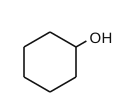 | I. Hinsberg's reagent test |
B. 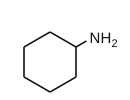 | II. Phthalein dye test |
C. 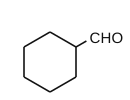 | III. Lucas test |
D. 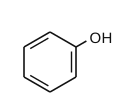 | IV. Tollen's test |
Choose the
correct answer from the options given below:
सूची-I का
सूची-II से मिलान कीजिए
सूची-I
यौगिक | सूची-II
परीक्षण |
|---|
| A. | I. हिंसबर्ग अभिकर्मक परीक्षण |
| B. | II. थैलीन रंजक परीक्षण |
| C. | III. ल्यूकास परीक्षण |
| D. | IV. टॉलेन परीक्षण |
नीचे दिए गए विकल्पों में से
सही उत्तर चुनिए:
- AA-III, B-I, C-IV, D-II
- BA-III, B-IV, C-I, D-II
- CA-I, B-III, C-II, D-IV
- DA-I, B-II, C-III, D-IV
Show answer
Concept: Match each functional group with its characteristic test.
- A. Cyclohexanol – a secondary alcohol → Lucas test (turbidity in ~5 min) → III.
- B. Cyclohexylamine – a primary amine → Hinsberg's reagent (C6H5SO2Cl) gives an alkali-soluble sulphonamide → I.
- C. Cyclohexanecarbaldehyde – an aldehyde → Tollens' test (silver mirror) → IV.
- D. Phenol – phthalein dye test (fused with phthalic anhydride/conc. H2SO4, pink in alkali) → II.
- A-III, B-I, C-IV, D-II. (B) swaps B and C; (C) and (D) give Hinsberg to the alcohol, which is wrong.
Short trick: Alcohol–Lucas, amine–Hinsberg, aldehyde–Tollens, phenol–phthalein.
Answer: (A) A-III, B-I, C-IV, D-II
अवधारणा: प्रत्येक क्रियात्मक समूह को उसके अभिलाक्षणिक परीक्षण से मिलाइए।
- A. साइक्लोहेक्सेनॉल – द्वितीयक ऐल्कोहॉल → ल्यूकास परीक्षण (~5 min में आविलता) → III।
- B. साइक्लोहेक्सिलऐमीन – प्राथमिक ऐमीन → हिंसबर्ग अभिकर्मक (C6H5SO2Cl) क्षार-विलेय सल्फ़ोनैमाइड देता है → I।
- C. साइक्लोहेक्सेनकार्बैल्डिहाइड – ऐल्डिहाइड → टॉलेन परीक्षण (रजत दर्पण) → IV।
- D. फ़ीनॉल – थैलीन रंजक परीक्षण (थैलिक ऐनहाइड्राइड/सांद्र H2SO4 के साथ गलन, क्षार में गुलाबी) → II।
- A-III, B-I, C-IV, D-II। (B) में B और C बदले हुए हैं; (C) और (D) में ऐल्कोहॉल को हिंसबर्ग दिया गया है, जो गलत है।
शॉर्ट ट्रिक: ऐल्कोहॉल–ल्यूकास, ऐमीन–हिंसबर्ग, ऐल्डिहाइड–टॉलेन, फ़ीनॉल–थैलीन।
उत्तर: (A) A-III, B-I, C-IV, D-II
JEE Main 2026 (April) – Paper 1 (B.E./B.Tech)ChemistryOrganic qualitative tests – match the listJEE Main 2026 (April) – Paper 1 (B.E./B.Tech) 2026 · 4 Apr Shift 2
Q446.If 3.365g of ethanol (l) is burnt completely in a bomb calorimeter at 298.15 K, the heat produced is 99.472 kJ. The |ΔHf°| of ethanol at 298.15 K is ___________ ×102 kJ mol−1. (Nearest integer)
Given: Standard enthalpy for combustion of graphite = −393.5 kJ mol−1
Standard enthalpy of formation of water (l) = −285.8 kJ mol−1
Molar mass in g mol−1 of C, H, O are 12 , 1 and 16 respectively
यदि 298.15 K पर बम कैलोरीमीटर में 3.365 g एथेनॉल (l) को पूर्णतः जलाया जाता है, तो उत्पन्न ऊष्मा 99.472 kJ है। 298.15 K पर एथेनॉल का |ΔHf°| ___________ ×102 kJ mol−1 है। (निकटतम पूर्णांक)
दिया है: ग्रेफ़ाइट के दहन की मानक एन्थैल्पी = −393.5 kJ mol−1
जल (l) के संभवन की मानक एन्थैल्पी = −285.8 kJ mol−1
C, H, O के मोलर द्रव्यमान g mol−1 में क्रमशः 12, 1 तथा 16 हैं
Show answer
Concept: A bomb calorimeter (constant volume) gives ; convert with , then use Hess's law for .
- Moles of C2H5OH () mol.
- kJ mol−1.
- C2H5OH(l) + 3O2(g) → 2CO2(g) + 3H2O(l): .
- kJ mol−1.
- → kJ mol−1.
- kJ mol−1 → nearest integer 3.
Short trick: ; → 2.82 × 10² ≈ 3 × 10².
Answer: 3
अवधारणा: बम कैलोरीमीटर (स्थिर आयतन) देता है; से रूपांतरित कीजिए, फिर के लिए हेस नियम लगाइए।
- C2H5OH () के मोल mol।
- kJ mol−1।
- C2H5OH(l) + 3O2(g) → 2CO2(g) + 3H2O(l): ।
- kJ mol−1।
- → kJ mol−1।
- kJ mol−1 → निकटतम पूर्णांक 3।
शॉर्ट ट्रिक: ; → 2.82 × 10² ≈ 3 × 10²।
उत्तर: 3
JEE Main 2026 (April) – Paper 1 (B.E./B.Tech)ChemistryThermochemistry – bomb calorimetry, enthalpy of formationJEE Main 2026 (April) – Paper 1 (B.E./B.Tech) 2026 · 4 Apr Shift 2
Q447.For the following reaction at 50 °C and at 2 atm pressure,
2N2O5(g) ⇌ 2N2O4(g) + O2(g)
N2O5 is 50% dissociated.
The magnitude of standard free energy change at this temperature is x.
x = ________ J mol−1 [Nearest integer].
Given : R = 8.314 J mol−1 K−1, log 2 = 0.30, log 3 = 0.48, ln10 = 2.303, °C + 273 = K
50 °C तथा 2 atm दाब पर निम्नलिखित अभिक्रिया के लिए,
2N2O5(g) ⇌ 2N2O4(g) + O2(g)
N2O5 50% वियोजित है।
इस ताप पर मानक मुक्त ऊर्जा परिवर्तन का परिमाण x है।
x = ________ J mol−1 [निकटतम पूर्णांक]।
दिया है : R = 8.314 J mol−1 K−1, log 2 = 0.30, log 3 = 0.48, ln10 = 2.303, °C + 273 = K
Show answer
Concept: Find equilibrium partial pressures from the degree of dissociation, get Kp, then .
- Start with 2 mol N2O5; 50% dissociates: N2O5 = 1, N2O4 = 1, O2 = 0.5; total = 2.5 mol.
- Mole fractions 0.4, 0.4, 0.2; at P = 2 atm: , , atm.
- ; .
- T = 50 + 273 = 323 K: J mol−1.
- J mol−1.
Short trick: Here Kp = pO2 (the N2O4/N2O5 terms cancel) = 0.2 × 2 = 0.4 atm.
Answer: 2474
अवधारणा: वियोजन मात्रा से साम्य आंशिक दाब ज्ञात कीजिए, Kp निकालिए, फिर ।
- 2 mol N2O5 से प्रारंभ; 50% वियोजित: N2O5 = 1, N2O4 = 1, O2 = 0.5; कुल = 2.5 mol।
- मोल अंश 0.4, 0.4, 0.2; P = 2 atm पर: , , atm।
- ; ।
- T = 50 + 273 = 323 K: J mol−1।
- J mol−1।
शॉर्ट ट्रिक: यहाँ Kp = pO2 (N2O4/N2O5 पद कट जाते हैं) = 0.2 × 2 = 0.4 atm।
उत्तर: 2474
JEE Main 2026 (April) – Paper 1 (B.E./B.Tech)ChemistryChemical equilibrium – K<sub>p</sub> and ΔG°JEE Main 2026 (April) – Paper 1 (B.E./B.Tech) 2026 · 4 Apr Shift 2
Q448.An electrochemical cell, consist of the following two redox couples, Mx+(aq)/M(s) [ V] and Fe3+(aq)/Fe(s) [ V]. The cell EMF (Ecell) is recorded to be 0.2057 V. If the reaction quotient of the electrochemical reaction is found to be 10−2, then the value of x is ___________.(Nearest integer)
[Given : M is a p-block metal and V]
एक वैद्युतरासायनिक सेल निम्नलिखित दो रेडॉक्स युग्मों से बना है, Mx+(aq)/M(s) [ V] तथा Fe3+(aq)/Fe(s) [ V]। सेल का EMF (Ecell) 0.2057 V दर्ज किया गया। यदि वैद्युतरासायनिक अभिक्रिया का अभिक्रिया भागफल 10−2 पाया जाता है, तो x का मान ___________ है। (निकटतम पूर्णांक)
[दिया है : M एक p-ब्लॉक धातु है तथा V]
Show answer
Concept: The couple with higher reduction potential is the cathode. Nernst: , with n = electrons transferred in the balanced reaction.
- Cathode Mx+/M (+0.15 V), anode Fe/Fe3+ (−0.036 V): V.
- Balanced reaction: , so .
- .
- → → .
- So M is a p-block metal in the +2 state (e.g. Sn2+, Pb2+ type).
Short trick: → n = 6 = 3x → x = 2.
Answer: 2
अवधारणा: अधिक अपचयन विभव वाला युग्म कैथोड होता है। नेर्न्स्ट: , जहाँ n संतुलित अभिक्रिया में स्थानांतरित इलेक्ट्रॉन हैं।
- कैथोड Mx+/M (+0.15 V), ऐनोड Fe/Fe3+ (−0.036 V): V।
- संतुलित अभिक्रिया: , अतः ।
- ।
- → → ।
- अतः M, +2 अवस्था में एक p-ब्लॉक धातु है (जैसे Sn2+, Pb2+ प्रकार)।
शॉर्ट ट्रिक: → n = 6 = 3x → x = 2।
उत्तर: 2
JEE Main 2026 (April) – Paper 1 (B.E./B.Tech)ChemistryElectrochemistry – Nernst equationJEE Main 2026 (April) – Paper 1 (B.E./B.Tech) 2026 · 4 Apr Shift 2
Q449.For a first order reaction A → B
| t/min | [A]/M |
|---|
| 0 | 0.6500 |
| x | 0.0650 |
| 20 | 0.00065 |
x = ____________ min. (Nearest integer)
एक प्रथम कोटि अभिक्रिया A → B के लिए
| t/min | [A]/M |
|---|
| 0 | 0.6500 |
| x | 0.0650 |
| 20 | 0.00065 |
x = ____________ min। (निकटतम पूर्णांक)
Show answer
Concept: For a first-order reaction , so the time taken is proportional to the logarithm of the factor by which [A] falls.
- From t = 0 to 20 min: → min−1.
- From t = 0 to x: → min.
- Nearest integer: x = 7 min.
Short trick: A 1000-fold fall (3 decades) takes 20 min, so one 10-fold fall takes min ≈ 7.
Answer: 7
अवधारणा: प्रथम कोटि अभिक्रिया के लिए , अतः लगा समय उस गुणक के लघुगणक के समानुपाती है जितने गुना [A] घटता है।
- t = 0 से 20 min तक: → min−1।
- t = 0 से x तक: → min।
- निकटतम पूर्णांक: x = 7 min।
शॉर्ट ट्रिक: 1000 गुना ह्रास (3 दशक) में 20 min लगते हैं, अतः एक 10 गुना ह्रास में min ≈ 7।
उत्तर: 7
JEE Main 2026 (April) – Paper 1 (B.E./B.Tech)ChemistryChemical kinetics – first-order reactionJEE Main 2026 (April) – Paper 1 (B.E./B.Tech) 2026 · 4 Apr Shift 2
Q450.In sulphur estimation, 2.0 × 10⁻³ mol of an organic compound (X) (molar mass 76 g mol−1) gave 0.4813 g of barium sulphate (molar mass 233 g mol−1). The percentage of sulphur in the compound (X) is ___________ ×10−1 % (Nearest integer)
सल्फ़र आकलन में, एक कार्बनिक यौगिक (X) (मोलर द्रव्यमान 76 g mol−1) के 2.0 × 10⁻³ mol से 0.4813 g बेरियम सल्फ़ेट (मोलर द्रव्यमान 233 g mol−1) प्राप्त हुआ। यौगिक (X) में सल्फ़र की प्रतिशतता ___________ ×10−1 % है (निकटतम पूर्णांक)
Show answer
Concept: Carius method: all S → BaSO4; mass of S mass of BaSO4.
- Mass of compound g.
- Mass of S g.
- % S .
- → nearest integer 435.
Short trick: Moles of BaSO4 ≈ moles of S; % S .
Answer: 435
अवधारणा: कैरिअस विधि: सम्पूर्ण S → BaSO4; S का द्रव्यमान BaSO4 का द्रव्यमान।
- यौगिक का द्रव्यमान g।
- S का द्रव्यमान g।
- % S ।
- → निकटतम पूर्णांक 435।
शॉर्ट ट्रिक: BaSO4 के मोल ≈ S के मोल; % S ।
उत्तर: 435
JEE Main 2026 (April) – Paper 1 (B.E./B.Tech)ChemistryQuantitative analysis – estimation of sulphurJEE Main 2026 (April) – Paper 1 (B.E./B.Tech) 2026 · 4 Apr Shift 2
Q451.Let denote the greatest integer function. If the domain of the function is , then is equal to:
माना महत्तम पूर्णांक फलन को दर्शाता है। यदि फलन का प्रान्त है, तो बराबर है:
- A
- B
- C
- D
Show answer
Concept: is defined for , so we need . Handle it interval-by-interval, since is constant on each .
- For : , so . The condition gives , so works.
- For : , so . The condition gives , so works (at , is allowed).
- For : , and for in : – no further points.
- Domain , so and .
Short trick: is increasing, so just locate where and : and .
Answer: (A)
अवधारणा: केवल के लिए परिभाषित है, अतः चाहिए। प्रत्येक अंतराल पर अचर है, अतः अंतराल-दर-अंतराल जाँच कीजिए।
- के लिए: , अतः । शर्त से , अर्थात् मान्य है।
- के लिए: , अतः । शर्त से , अर्थात् मान्य है ( पर स्वीकार्य है)।
- के लिए , तथा में के लिए – और कोई बिंदु नहीं।
- प्रान्त , अतः और ।
शॉर्ट ट्रिक: वर्धमान है, अतः केवल और के स्थान ज्ञात कीजिए: तथा ।
उत्तर: (A)
JEE Main 2026 (April) – Paper 1 (B.E./B.Tech)MathematicsFunctions – domain with greatest integerJEE Main 2026 (April) – Paper 1 (B.E./B.Tech) 2026 · 4 Apr Shift 1
Q452.If the set of all solutions of is , then is equal to:
यदि के सभी हलों का समुच्चय है, तो बराबर है:
- A
- B
- C
- D
Show answer
Concept: holds if and only if (the two numbers have the same sign or one is zero).
- Take , . Then the given equation is exactly , i.e. .
- : by the sign scheme (wavy-curve) the solution is .
- So and .
Short trick: Spotting the split converts the whole equation into one sign condition in a single line.
Answer: (B)
अवधारणा: तभी सत्य है जब (दोनों संख्याएँ समान चिह्न की हों या कोई एक शून्य हो)।
- , लीजिए। तब दिया गया समीकरण ठीक है, अर्थात् ।
- : चिह्न-विश्लेषण (wavy-curve) से हल ।
- अतः और ।
शॉर्ट ट्रिक: विभाजन पहचानते ही पूरा समीकरण एक पंक्ति में केवल एक चिह्न-शर्त बन जाता है।
उत्तर: (B)
JEE Main 2026 (April) – Paper 1 (B.E./B.Tech)MathematicsModulus equationsJEE Main 2026 (April) – Paper 1 (B.E./B.Tech) 2026 · 4 Apr Shift 1
Q453.Let be a complex number such that and . Then is equal to:
माना एक ऐसी सम्मिश्र संख्या है कि तथा है। तब बराबर है:
- A
- B
- C
- D
Show answer
Concept: means is equidistant from and , i.e. lies on the imaginary axis. Then impose the argument condition.
- Let , .
- . Multiplying numerator and denominator by : .
- For the argument to be we need real part imaginary part : .
- Check : , whose argument is . ✓
- .
Short trick: Perpendicular-bisector loci like should instantly reduce the unknown to one real parameter.
Answer: (A)
अवधारणा: का अर्थ है कि बिंदुओं और से समदूरस्थ है, अर्थात् काल्पनिक अक्ष पर स्थित है। फिर कोणांक (argument) की शर्त लगाइए।
- माना , ।
- । अंश व हर को से गुणा करने पर: ।
- कोणांक होने के लिए वास्तविक भाग काल्पनिक भाग चाहिए: ।
- जाँच : , जिसका कोणांक है। ✓
- ।
शॉर्ट ट्रिक: जैसा लम्ब-समद्विभाजक बिन्दुपथ अज्ञात को तुरंत एक वास्तविक प्राचल तक सीमित कर देता है।
उत्तर: (A)
JEE Main 2026 (April) – Paper 1 (B.E./B.Tech)MathematicsComplex numbers – locus and argumentJEE Main 2026 (April) – Paper 1 (B.E./B.Tech) 2026 · 4 Apr Shift 1
Q454.The number of functions , which are not onto, is:
फलनों , जो आच्छादक (onto) नहीं हैं, की संख्या है:
- A
- B
- C
- D
Show answer
Concept: Count all functions, subtract the onto ones (inclusion–exclusion).
- Total functions from a 4-element set to a 3-element set: .
- Onto functions .
- Not onto .
Short trick: Not-onto count directly (functions missing at least one element, by inclusion–exclusion).
Answer: (B)
अवधारणा: कुल फलनों में से आच्छादक फलनों को घटाइए (समावेशन–अपवर्जन सिद्धांत)।
- 4 अवयवों वाले समुच्चय से 3 अवयवों वाले समुच्चय तक कुल फलन: ।
- आच्छादक फलन ।
- आच्छादक नहीं ।
शॉर्ट ट्रिक: सीधे गणना: कम-से-कम एक अवयव छूटने वाले फलन ।
उत्तर: (B)
JEE Main 2026 (April) – Paper 1 (B.E./B.Tech)MathematicsFunctions – counting onto functionsJEE Main 2026 (April) – Paper 1 (B.E./B.Tech) 2026 · 4 Apr Shift 1
Q455.Let be a set of matrices. Then the number of matrices in S, for which the sum of the diagonal elements is equal to 4, is:
माना , आव्यूहों का एक समुच्चय है। तब S में उन आव्यूहों की संख्या, जिनके विकर्ण अवयवों का योग 4 है, है:
- A
- B
- C
- D
Show answer
Concept: By Cayley–Hamilton, . For a non-scalar matrix this is the only quadratic it satisfies, so forces trace and . (Scalar solutions are or , with traces 2 and 6 – not 4.)
- We need and with all entries in .
- or : – impossible for non-negative .
- or : : (5 choices of ) or (5 choices of ), minus the double count: pairs each, so .
- : : matrix.
- Total .
Short trick: Trace 4 with eigenvalues from means exactly trace , – no need to multiply matrices at all.
Answer: (D)
अवधारणा: केली–हैमिल्टन प्रमेय से । अदिश-रहित (non-scalar) आव्यूह के लिए यही एकमात्र द्विघात संबंध है, अतः से अनुरेख (trace) तथा सारणिक अनिवार्य है। (अदिश हल या हैं, जिनके अनुरेख 2 व 6 हैं – 4 नहीं।)
- हमें और चाहिए, सभी अवयव में।
- या : – अऋणात्मक के लिए असंभव।
- या : : ( के 5 विकल्प) या ( के 5 विकल्प), दोहरी गणना घटाकर: प्रत्येक के लिए युग्म, कुल ।
- : : आव्यूह।
- कुल ।
शॉर्ट ट्रिक: आइगेनमान और अनुरेख 4 का अर्थ सीधे अनुरेख , सारणिक – आव्यूह गुणा करने की आवश्यकता ही नहीं।
उत्तर: (D)
JEE Main 2026 (April) – Paper 1 (B.E./B.Tech)MathematicsMatrices – Cayley–Hamilton countingJEE Main 2026 (April) – Paper 1 (B.E./B.Tech) 2026 · 4 Apr Shift 1
Q456.Let . Then the sum of all elements of the matrix is equal to:
माना है। तब आव्यूह के सभी अवयवों का योग बराबर है:
- A
- B
- C
- D
Show answer
Concept: For a matrix : and .
- .
- , so and .
- .
- .
- Sum of elements of is , so the required sum .
Short trick: Never compute an adjoint entry-wise here – the identities and reduce everything to scalars times .
Answer: (D)
अवधारणा: आव्यूह के लिए: तथा ।
- ।
- , अतः और ।
- ।
- ।
- के अवयवों का योग , अतः अभीष्ट योग ।
शॉर्ट ट्रिक: यहाँ सहखण्डज को अवयव-दर-अवयव कभी न निकालें – सर्वसमिकाएँ तथा सब कुछ के अदिश गुणज में बदल देती हैं।
उत्तर: (D)
JEE Main 2026 (April) – Paper 1 (B.E./B.Tech)MathematicsMatrices – adjoint propertiesJEE Main 2026 (April) – Paper 1 (B.E./B.Tech) 2026 · 4 Apr Shift 1
Q457.The first term of an A.P. of 30 non-negative terms is . If the sum of this A.P. is the cube of its last term, then its common difference is:
30 अऋणात्मक पदों वाली एक समान्तर श्रेढ़ी (A.P.) का प्रथम पद है। यदि इस A.P. का योग इसके अंतिम पद के घन के बराबर है, तो इसका सार्व अंतर है:
- A
- B
- C
- D
Show answer
Concept: For an A.P., where is the last term. Writing the sum in terms of gives a cubic in alone.
- Here , , .
- .
- Given : .
- works: . Factoring, and the quadratic has negative discriminant, so is the only real root.
- (positive, so all terms are non-negative ✓).
Short trick: Using instead of the -formula turns the condition into a one-variable cubic with an obvious integer root.
Answer: (A)
अवधारणा: A.P. के लिए , जहाँ अंतिम पद है। योग को के रूप में लिखने पर केवल में एक त्रिघात समीकरण मिलता है।
- यहाँ , , ।
- ।
- दिया है : ।
- संतुष्ट करता है: । गुणनखंडन से और द्विघात का विविक्तकर ऋणात्मक है, अतः ही एकमात्र वास्तविक मूल है।
- (धनात्मक, अतः सभी पद अऋणात्मक ✓)।
शॉर्ट ट्रिक: वाले सूत्र की जगह लेने से शर्त एक-चर त्रिघात बन जाती है जिसका पूर्णांक मूल तुरंत दिखता है।
उत्तर: (A)
JEE Main 2026 (April) – Paper 1 (B.E./B.Tech)MathematicsSequences & series – A.P.JEE Main 2026 (April) – Paper 1 (B.E./B.Tech) 2026 · 4 Apr Shift 1
Q458.The number of ways, of forming a queue of 4 boys and 3 girls such that all the girls are not together, is:
4 लड़कों और 3 लड़कियों की एक पंक्ति (queue) बनाने के तरीकों की संख्या, जबकि सभी लड़कियाँ एक साथ न हों, है:
- A
- B
- C
- D
Show answer
Concept: "All the girls are not together" means we exclude only the arrangements in which all three girls form one block. Use complementary counting.
- Total arrangements of 7 distinct people: .
- All 3 girls together: treat them as one block arrangements of (block + 4 boys) internal orders .
- Required .
Short trick: Do not confuse this with "no two girls together" (which would use the gap method and give ) – here only the all-three-together case is forbidden.
Answer: (D)
अवधारणा: "सभी लड़कियाँ एक साथ न हों" का अर्थ है केवल वे विन्यास हटाने हैं जिनमें तीनों लड़कियाँ एक ही खंड (block) में हों। पूरक गणना कीजिए।
- 7 भिन्न व्यक्तियों के कुल विन्यास: ।
- तीनों लड़कियाँ साथ: उन्हें एक खंड मानिए (खंड + 4 लड़के) के विन्यास आंतरिक क्रम ।
- अभीष्ट ।
शॉर्ट ट्रिक: इसे "कोई दो लड़कियाँ साथ न हों" (रिक्त-स्थान विधि, ) से भ्रमित न करें – यहाँ केवल तीनों के एक साथ होने वाले विन्यास वर्जित हैं।
उत्तर: (D)
JEE Main 2026 (April) – Paper 1 (B.E./B.Tech)MathematicsPermutations & combinationsJEE Main 2026 (April) – Paper 1 (B.E./B.Tech) 2026 · 4 Apr Shift 1
Q459.Let the smallest value of , for which the coefficient of in , , is for some , be . Then the value of is:
माना का वह न्यूनतम मान, जिसके लिए , , में का गुणांक, किसी के लिए है, है। तब का मान है:
- A
- B
- C
- D
Show answer
Concept: Hockey-stick identity: ; and the coefficient of in is .
- Coefficient of .
- , so the coefficient .
- Equate: .
- Need the smallest with and . gives . Checking: , , , – none divisible by 43; ✓.
- So , and .
Short trick: explains the odd in the target – everything then reduces to .
Answer: (B)
अवधारणा: हॉकी-स्टिक सर्वसमिका: ; तथा में का गुणांक है।
- का गुणांक ।
- , अतः गुणांक ।
- बराबर रखने पर: ।
- न्यूनतम चाहिए जिसके लिए तथा । से । जाँच: , , , – कोई भी 43 से विभाज्य नहीं; ✓।
- अतः , और ।
शॉर्ट ट्रिक: ही लक्ष्य में विचित्र का कारण है – फिर पूरा प्रश्न तक सिमट जाता है।
उत्तर: (B)
JEE Main 2026 (April) – Paper 1 (B.E./B.Tech)MathematicsBinomial theorem – coefficient and hockey stickJEE Main 2026 (April) – Paper 1 (B.E./B.Tech) 2026 · 4 Apr Shift 1
Q460.Suppose that the mean and median of the non-negative numbers 21, 8, 17, , 51, 103, , 13, 67, , are 40 and 21, respectively. If the mean deviation about the median is 26, then is equal to:
माना अऋणात्मक संख्याओं 21, 8, 17, , 51, 103, , 13, 67, के माध्य तथा माध्यिका क्रमशः 40 और 21 हैं। यदि माध्यिका के सापेक्ष माध्य विचलन 26 है, तो बराबर है:
- A
- B
- C
- D
Show answer
Concept: Use mean sum, and mean deviation about the median , then split cases by position of relative to 21.
- Mean of 9 numbers total . Known seven numbers add to , so .
- M.D. about median . For the known numbers: , so .
- If both : ; both is impossible since . So : .
- , , . Sorted data has median ✓.
- .
Short trick: With fixed, exceeding immediately tells you the two values straddle the median.
Answer: (D)
अवधारणा: माध्य से योग निकालिए, और माध्यिका के सापेक्ष माध्य विचलन से ; फिर की 21 के सापेक्ष स्थिति के अनुसार स्थितियाँ लीजिए।
- 9 संख्याओं का माध्य योग । ज्ञात सात संख्याओं का योग , अतः ।
- माध्यिका के सापेक्ष माध्य विचलन । ज्ञात संख्याओं के लिए: , अतः ।
- यदि दोनों : ; दोनों असंभव क्योंकि । अतः : ।
- , , । क्रमित आँकड़े की माध्यिका ✓।
- ।
शॉर्ट ट्रिक: नियत होने पर यदि का मान से अधिक है, तो दोनों मान माध्यिका के दोनों ओर होंगे।
उत्तर: (D)
JEE Main 2026 (April) – Paper 1 (B.E./B.Tech)MathematicsStatistics – mean deviation about medianJEE Main 2026 (April) – Paper 1 (B.E./B.Tech) 2026 · 4 Apr Shift 1

