Q501.Number of moles and number of molecules in 1.4187 L of SO2 at STP respectively are
STP पर 1.4187 L SO2 में मोलों की संख्या तथा अणुओं की संख्या क्रमशः हैं
- A0.1266;
- B0.0633;
- C0.1266;
- D0.0633;
Show answer
Concept: At STP one mole of any gas occupies 22.4 L; molecules = moles × .
- mol
- Molecules
- Options (A) and (C) double the moles; (C) and (D) double the molecules – both wrong.
Short trick: 1.4187/22.4 ≈ 0.063, and 0.063 × 6 ≈ 0.38 → 3.8 × 10²².
Answer: (B) 0.0633;
अवधारणा: STP पर किसी भी गैस का एक मोल 22.4 L आयतन घेरता है; अणुओं की संख्या = मोल × ।
- mol
- अणु
- विकल्प (A) और (C) में मोल दोगुने हैं; (C) और (D) में अणु दोगुने हैं – दोनों गलत।
शॉर्ट ट्रिक: 1.4187/22.4 ≈ 0.063, तथा 0.063 × 6 ≈ 0.38 → 3.8 × 10²²।
उत्तर: (B) 0.0633;
JEE Main 2026 (April) – Paper 1 (B.E./B.Tech)ChemistryMole concept – molar volume at STPJEE Main 2026 (April) – Paper 1 (B.E./B.Tech) 2026 · 4 Apr Shift 1
Q502.What is the ratio of wave number of first line (lowest energy line) of Balmer series of H atomic spectrum to first line of its Brackett series?
H परमाणु स्पेक्ट्रम की बामर श्रेणी की प्रथम रेखा (न्यूनतम ऊर्जा वाली रेखा) की तरंग संख्या का उसकी ब्रैकेट श्रेणी की प्रथम रेखा की तरंग संख्या से अनुपात क्या है?
- A5:1
- B5:0.81
- C5:1.75
- D5:27
Show answer
Concept: ; first line of a series means . Balmer: ; Brackett: .
- Balmer first line:
- Brackett first line:
- Ratio . Writing it as :
- So ratio = 5 : 0.81 (≈ 6.17 : 1); none of the other ratios equals 6.17.
Short trick: Multiply both terms by 36: Balmer → 5, Brackett → 36 × 9/400 = 0.81.
Answer: (B) 5:0.81
अवधारणा: ; किसी श्रेणी की प्रथम रेखा के लिए । बामर: ; ब्रैकेट: ।
- बामर प्रथम रेखा:
- ब्रैकेट प्रथम रेखा:
- अनुपात ; इसे के रूप में लिखने पर
- अतः अनुपात = 5 : 0.81 (≈ 6.17 : 1); अन्य कोई अनुपात 6.17 के बराबर नहीं है।
शॉर्ट ट्रिक: दोनों पदों को 36 से गुणा करें: बामर → 5, ब्रैकेट → 36 × 9/400 = 0.81।
उत्तर: (B) 5:0.81
JEE Main 2026 (April) – Paper 1 (B.E./B.Tech)ChemistryAtomic structure – hydrogen spectrumJEE Main 2026 (April) – Paper 1 (B.E./B.Tech) 2026 · 4 Apr Shift 1
Q503.Which of the following is correct set of 4 quantum numbers of 19th electron in Chromium (Atomic number = 24) in accordance with Aufbau principle?
आफबाऊ सिद्धांत के अनुसार क्रोमियम (परमाणु क्रमांक = 24) के 19वें इलेक्ट्रॉन के लिए 4 क्वांटम संख्याओं का सही समुच्चय निम्नलिखित में से कौन-सा है?
- A
- B
- C
- D
Show answer
Concept: Aufbau filling order: 1s 2s 2p 3s 3p 4s 3d … Electrons 1–18 complete the argon core.
- The 19th electron enters 4s (4s is filled before 3d).
- 4s: , and the first electron in it has .
- (A), (B) are 3d electrons (filled after 4s); (C) is a 4p electron – not reached in Cr.
Short trick: 19th electron of any element from K onwards = first 4s electron → (4, 0, 0, +½).
Answer: (D)
अवधारणा: आफबाऊ भरण क्रम: 1s 2s 2p 3s 3p 4s 3d … इलेक्ट्रॉन 1–18 आर्गन कोर पूर्ण करते हैं।
- 19वाँ इलेक्ट्रॉन 4s में जाता है (4s, 3d से पहले भरता है)।
- 4s: , तथा इसमें पहले इलेक्ट्रॉन के लिए ।
- (A), (B) 3d इलेक्ट्रॉन हैं (4s के बाद भरते हैं); (C) 4p इलेक्ट्रॉन है – Cr में 4p भरता ही नहीं।
शॉर्ट ट्रिक: K के बाद किसी भी तत्व का 19वाँ इलेक्ट्रॉन = प्रथम 4s इलेक्ट्रॉन → (4, 0, 0, +½)।
उत्तर: (D)
JEE Main 2026 (April) – Paper 1 (B.E./B.Tech)ChemistryAtomic structure – quantum numbersJEE Main 2026 (April) – Paper 1 (B.E./B.Tech) 2026 · 4 Apr Shift 1
Q504.Given below are two statements:
Statement I: For an ideal gas, heat capacity at constant volume is always greater than the heat capacity at constant pressure.
Statement II: In a constant volume process, no work is produced and all the heat withdrawn goes into the chaotic motion and is reflected by a temperature increase of the ideal gas.
In the light of the above statements, choose the correct answer from the options given below
नीचे दो कथन दिए गए हैं:
कथन I: एक आदर्श गैस के लिए, स्थिर आयतन पर ऊष्मा धारिता सदैव स्थिर दाब पर ऊष्मा धारिता से अधिक होती है।
कथन II: स्थिर आयतन प्रक्रम में कोई कार्य नहीं होता तथा ली गई सम्पूर्ण ऊष्मा अव्यवस्थित (chaotic) गति में जाती है और आदर्श गैस के ताप में वृद्धि के रूप में परिलक्षित होती है।
उपर्युक्त कथनों के आलोक में, नीचे दिए गए विकल्पों में से सही उत्तर चुनिए
- ABoth Statement I and Statement II are trueकथन I और कथन II दोनों सत्य हैं
- BBoth Statement I and Statement II are falseकथन I और कथन II दोनों असत्य हैं
- CStatement I is true but Statement II is falseकथन I सत्य है परन्तु कथन II असत्य है
- DStatement I is false but Statement II is trueकथन I असत्य है परन्तु कथन II सत्य है
Show answer
Concept: For an ideal gas , so .
- Statement I says – false. At constant pressure part of the heat does expansion work, so more heat is needed per kelvin.
- Statement II: at constant volume , so ; all heat raises the internal (random/chaotic) energy and hence the temperature – true.
Short trick: – is always the bigger one.
Answer: (D) Statement I is false but Statement II is true
अवधारणा: आदर्श गैस के लिए , अतः ।
- कथन I के अनुसार – असत्य। स्थिर दाब पर ऊष्मा का कुछ भाग प्रसार कार्य में लगता है, इसलिए प्रति केल्विन अधिक ऊष्मा चाहिए।
- कथन II: स्थिर आयतन पर , अतः ; सम्पूर्ण ऊष्मा आंतरिक (अव्यवस्थित) ऊर्जा और इसलिए ताप बढ़ाती है – सत्य।
शॉर्ट ट्रिक: – सदैव बड़ा होता है।
उत्तर: (D) कथन I असत्य है परन्तु कथन II सत्य है
JEE Main 2026 (April) – Paper 1 (B.E./B.Tech)ChemistryThermodynamics – heat capacitiesJEE Main 2026 (April) – Paper 1 (B.E./B.Tech) 2026 · 4 Apr Shift 1
Q505.At T(K), the equilibrium constant of A2(g) + B2(g) ⇌ C(g) is 2.7 × 10⁻⁵. What is the equilibrium constant for A2(g) + B2(g) ⇌ C(g) at the same temperature?
T(K) पर, A2(g) + B2(g) ⇌ C(g) का साम्य स्थिरांक 2.7 × 10⁻⁵ है। उसी ताप पर A2(g) + B2(g) ⇌ C(g) के लिए साम्य स्थिरांक क्या है?
- A
- B
- C
- D
Show answer
Concept: Multiplying a balanced equation by raises to the power .
- Here the equation is multiplied by : .
- (A) is for ×3, (C) is for ×½, (B) wrongly divides by 3 after taking the root.
Short trick: Rewrite as – a perfect cube.
Answer: (D)
अवधारणा: संतुलित समीकरण को से गुणा करने पर की घात हो जाती है।
- यहाँ समीकरण को से गुणा किया गया है: ।
- (A) ×3 के लिए है, (C) ×½ के लिए है, (B) गलत गणना है।
शॉर्ट ट्रिक: को लिखें – पूर्ण घन।
उत्तर: (D)
JEE Main 2026 (April) – Paper 1 (B.E./B.Tech)ChemistryChemical equilibrium – manipulating KJEE Main 2026 (April) – Paper 1 (B.E./B.Tech) 2026 · 4 Apr Shift 1
Q506.In order to oxidise a mixture of 1 mole each of FeC2O4, Fe2(C2O4)3, FeSO4 and Fe2(SO4)3 in acidic medium, the number of moles of KMnO4 required is
अम्लीय माध्यम में FeC2O4, Fe2(C2O4)3, FeSO4 तथा Fe2(SO4)3 प्रत्येक के 1 मोल के मिश्रण को ऑक्सीकृत करने के लिए आवश्यक KMnO4 के मोलों की संख्या है
- A3
- B2
- C5
- D7
Show answer
Concept: Equivalents of reductant = equivalents of KMnO4; in acid MnO4− → Mn2+ takes 5 e−. Fe2+ → Fe3+ gives 1 e−, C2O42− → 2CO2 gives 2 e−; Fe3+ and SO42− cannot be oxidised.
- FeC2O4: 1 + 2 = 3 e−
- Fe2(C2O4)3: only oxalate, 3 × 2 = 6 e−
- FeSO4: 1 e−; Fe2(SO4)3: 0
- Total = 10 e− → moles KMnO4 = 10/5 = 2
Short trick: Count only Fe2+ (1 each) and C2O42− (2 each): 2×1 + 4×2 = 10 → ÷5 = 2.
Answer: (B) 2
अवधारणा: अपचायक के तुल्यांक = KMnO4 के तुल्यांक; अम्ल में MnO4− → Mn2+ में 5 e− लगते हैं। Fe2+ → Fe3+ 1 e− देता है, C2O42− → 2CO2 2 e− देता है; Fe3+ और SO42− ऑक्सीकृत नहीं होते।
- FeC2O4: 1 + 2 = 3 e−
- Fe2(C2O4)3: केवल ऑक्सेलेट, 3 × 2 = 6 e−
- FeSO4: 1 e−; Fe2(SO4)3: 0
- कुल = 10 e− → KMnO4 के मोल = 10/5 = 2
शॉर्ट ट्रिक: केवल Fe2+ (प्रत्येक 1) और C2O42− (प्रत्येक 2) गिनें: 2×1 + 4×2 = 10 → ÷5 = 2।
उत्तर: (B) 2
JEE Main 2026 (April) – Paper 1 (B.E./B.Tech)ChemistryRedox – n-factor and KMnO₄JEE Main 2026 (April) – Paper 1 (B.E./B.Tech) 2026 · 4 Apr Shift 1
Q507.Consider the first order reaction R → P.
The fraction of molecules decomposed in the given first order reaction can be expressed as
प्रथम कोटि अभिक्रिया R → P पर विचार कीजिए।
दी गई प्रथम कोटि अभिक्रिया में विघटित अणुओं के अंश को व्यक्त किया जा सकता है
- A
- B
- C
- D
Show answer
Concept: First order: .
- Fraction remaining
- Fraction decomposed (lies between 0 and 1)
- (A) is negative for , (B) and (C) exceed 1 – impossible for a fraction.
Short trick: At the decomposed fraction must be 0 and tend to 1 as – only does this.
Answer: (D)
अवधारणा: प्रथम कोटि: ।
- शेष अंश
- विघटित अंश (0 और 1 के बीच)
- (A) के लिए ऋणात्मक है, (B) और (C) 1 से अधिक हैं – अंश के लिए असंभव।
शॉर्ट ट्रिक: पर विघटित अंश 0 होना चाहिए और पर 1 की ओर – केवल ऐसा करता है।
उत्तर: (D)
JEE Main 2026 (April) – Paper 1 (B.E./B.Tech)ChemistryChemical kinetics – first order reactionJEE Main 2026 (April) – Paper 1 (B.E./B.Tech) 2026 · 4 Apr Shift 1
Q508.A monoatomic anion (A−) has 45 neutrons and 36 electrons. Atomic mass, group in the periodic table and physical state at room temperature of the element (A) respectively are
एक एकपरमाणुक ऋणायन (A−) में 45 न्यूट्रॉन तथा 36 इलेक्ट्रॉन हैं। तत्व (A) का परमाणु द्रव्यमान, आवर्त सारणी में वर्ग तथा कमरे के ताप पर भौतिक अवस्था क्रमशः हैं
- A80, 17, liquid80, 17, द्रव
- B81, 16, solid81, 16, ठोस
- C80, 16, gas80, 16, गैस
- D81, 15, gas81, 15, गैस
Show answer
Concept: For A−: electrons = Z + 1; mass number = Z + neutrons.
- Z = 36 − 1 = 35 → bromine
- Mass = 35 + 45 = 80
- Br is a halogen – group 17 – and a liquid at room temperature.
- (B), (C), (D) give a wrong group (16/15) and/or wrong mass.
Short trick: 36 e− = Kr configuration; a uninegative ion with Kr configuration is Br−.
Answer: (A) 80, 17, liquid
अवधारणा: A− के लिए: इलेक्ट्रॉन = Z + 1; द्रव्यमान संख्या = Z + न्यूट्रॉन।
- Z = 36 − 1 = 35 → ब्रोमीन
- द्रव्यमान = 35 + 45 = 80
- Br एक हैलोजन है – वर्ग 17 – तथा कमरे के ताप पर द्रव है।
- (B), (C), (D) में वर्ग (16/15) और/या द्रव्यमान गलत है।
शॉर्ट ट्रिक: 36 e− = Kr विन्यास; Kr विन्यास वाला एकऋणी आयन Br− है।
उत्तर: (A) 80, 17, द्रव
JEE Main 2026 (April) – Paper 1 (B.E./B.Tech)ChemistryPeriodic table – identifying elementJEE Main 2026 (April) – Paper 1 (B.E./B.Tech) 2026 · 4 Apr Shift 1
Q509.Given below are two statements:
Statement I: The covalency of oxygen is generally two but it can exceed upto four. The oxidation state of oxygen in SO2 is −2 and in OF2 it is +2.
Statement II: The anomalous behaviour of oxygen when compared to the other elements of group 16 is due to its small size and high electronegativity.
In the light of the above statements, choose the correct answer from the options given below
नीचे दो कथन दिए गए हैं:
कथन I: ऑक्सीजन की सहसंयोजकता सामान्यतः दो होती है परन्तु यह चार तक हो सकती है। SO2 में ऑक्सीजन की ऑक्सीकरण अवस्था −2 तथा OF2 में +2 है।
कथन II: वर्ग 16 के अन्य तत्वों की तुलना में ऑक्सीजन का असामान्य व्यवहार इसके छोटे आकार तथा उच्च विद्युतऋणात्मकता के कारण है।
उपर्युक्त कथनों के आलोक में, नीचे दिए गए विकल्पों में से सही उत्तर चुनिए
- ABoth Statement I and Statement II are trueकथन I और कथन II दोनों सत्य हैं
- BBoth Statement I and Statement II are falseकथन I और कथन II दोनों असत्य हैं
- CStatement I is true but Statement II is falseकथन I सत्य है परन्तु कथन II असत्य है
- DStatement I is false but Statement II is trueकथन I असत्य है परन्तु कथन II सत्य है
Show answer
Concept: Oxygen has no d-orbitals, so its maximum covalency is four (e.g. in some complexes/oxonium species), though it is usually two.
- In SO2, O is more electronegative than S → −2. In OF2, F is more electronegative → O is +2. Statement I is true.
- Anomalous behaviour of O (H-bonding in water, O2 diatomic, etc.) arises from its small size, high electronegativity and absence of d-orbitals. Statement II is true.
Short trick: OF2 is the classic case of positive oxidation state of oxygen.
Answer: (A) Both Statement I and Statement II are true
अवधारणा: ऑक्सीजन में d-कक्षक नहीं होते, अतः इसकी अधिकतम सहसंयोजकता चार है, यद्यपि सामान्यतः यह दो होती है।
- SO2 में O, S से अधिक विद्युतऋणात्मक है → −2। OF2 में F अधिक विद्युतऋणात्मक है → O की +2। कथन I सत्य है।
- O का असामान्य व्यवहार (जल में H-बंध, O2 द्विपरमाणुक आदि) उसके छोटे आकार, उच्च विद्युतऋणात्मकता तथा d-कक्षकों की अनुपस्थिति के कारण है। कथन II सत्य है।
शॉर्ट ट्रिक: OF2 ऑक्सीजन की धनात्मक ऑक्सीकरण अवस्था का प्रमुख उदाहरण है।
उत्तर: (A) कथन I और कथन II दोनों सत्य हैं
JEE Main 2026 (April) – Paper 1 (B.E./B.Tech)Chemistryp-Block – group 16 (oxygen)JEE Main 2026 (April) – Paper 1 (B.E./B.Tech) 2026 · 4 Apr Shift 1
Q510.The correct statements among the following are,
A. Mo(VI) and W(VI) are less stable than Cr(VI).
B. Ce4+ and Tb4+ are oxidant while Eu2+ and Yb2+ are reductant.
C. Cm and Am have seven unpaired electrons.
D. Actinoid contraction is greater from element to element than lanthanoid contraction.
Choose the correct answer from the options given below:
निम्नलिखित में से सही कथन हैं,
A. Mo(VI) तथा W(VI), Cr(VI) से कम स्थायी हैं।
B. Ce4+ तथा Tb4+ ऑक्सीकारक हैं जबकि Eu2+ तथा Yb2+ अपचायक हैं।
C. Cm तथा Am में सात अयुग्मित इलेक्ट्रॉन होते हैं।
D. एक तत्व से दूसरे तत्व तक एक्टिनॉयड आकुंचन, लैन्थेनॉयड आकुंचन से अधिक होता है।
नीचे दिए गए विकल्पों में से सही उत्तर चुनिए:
- AA and B Onlyकेवल A और B
- BC and D Onlyकेवल C और D
- CB and D Onlyकेवल B और D
- DA and C Onlyकेवल A और C
Show answer
Concept: In d-block groups the higher oxidation state becomes more stable down the group; Ln3+ is the stable state for lanthanoids.
- A – false: Mo(VI) and W(VI) are more stable than Cr(VI) (Cr(VI) in dichromate is a strong oxidant; MoO3, WO3 are not).
- B – true: Ce4+, Tb4+ tend to go to +3 (oxidants); Eu2+, Yb2+ tend to go to +3 (reductants).
- C – false: Am = [Rn]5f77s2 has 7 unpaired electrons, but Cm = [Rn]5f76d17s2 has 8.
- D – true: poor shielding by 5f electrons makes actinoid contraction greater from element to element.
- Correct: B and D. (A) and (D) include A; (B) and (D) include C.
Short trick: Cm (Z = 96) has 5f76d1 → 8 unpaired; that kills C.
Answer: (C) B and D Only
अवधारणा: d-ब्लॉक वर्गों में नीचे जाने पर उच्च ऑक्सीकरण अवस्था अधिक स्थायी होती है; लैन्थेनॉयडों की स्थायी अवस्था +3 है।
- A – असत्य: Mo(VI) तथा W(VI), Cr(VI) से अधिक स्थायी हैं (डाइक्रोमेट में Cr(VI) प्रबल ऑक्सीकारक है; MoO3, WO3 नहीं)।
- B – सत्य: Ce4+, Tb4+ +3 में जाना चाहते हैं (ऑक्सीकारक); Eu2+, Yb2+ +3 में जाना चाहते हैं (अपचायक)।
- C – असत्य: Am = [Rn]5f77s2 में 7 अयुग्मित इलेक्ट्रॉन, परन्तु Cm = [Rn]5f76d17s2 में 8।
- D – सत्य: 5f इलेक्ट्रॉनों के दुर्बल परिरक्षण के कारण एक्टिनॉयड आकुंचन अधिक होता है।
- सही: B और D। (A) और (D) में A है; (B) और (D) में C है।
शॉर्ट ट्रिक: Cm (Z = 96) में 5f76d1 → 8 अयुग्मित; इससे C गलत।
उत्तर: (C) केवल B और D
JEE Main 2026 (April) – Paper 1 (B.E./B.Tech)Chemistryd- and f-Block elementsJEE Main 2026 (April) – Paper 1 (B.E./B.Tech) 2026 · 4 Apr Shift 1
Q511.Correct statements from the following are
A. Potassium dichromate is an oxidising agent and it oxidises FeSO4 to Fe2(SO4)3 in acidic medium.
B. Sodium dichromate can be used as primary standard in volumetric estimation.
C. CrO42− and Cr2O72− are interconvertible in aqueous solution by varying the pH of the solution.
D. Cr-O-Cr bond angle in Cr2O72− is 126°.
Choose the correct answer from the options given below:
निम्नलिखित में से सही कथन हैं
A. पोटैशियम डाइक्रोमेट एक ऑक्सीकारक है तथा यह अम्लीय माध्यम में FeSO4 को Fe2(SO4)3 में ऑक्सीकृत करता है।
B. आयतनमितीय आकलन में सोडियम डाइक्रोमेट को प्राथमिक मानक के रूप में प्रयुक्त किया जा सकता है।
C. विलयन का pH बदलकर जलीय विलयन में CrO42− तथा Cr2O72− परस्पर परिवर्तनीय हैं।
D. Cr2O72− में Cr-O-Cr बंध कोण 126° है।
नीचे दिए गए विकल्पों में से सही उत्तर चुनिए:
- AA, B and C Onlyकेवल A, B और C
- BA, C and D Onlyकेवल A, C और D
- CA and C Onlyकेवल A और C
- DB and D Onlyकेवल B और D
Show answer
Concept: Properties of K2Cr2O7 and the chromate–dichromate equilibrium.
- A – true: Cr2O72− + 14H+ + 6Fe2+ → 2Cr3+ + 6Fe3+ + 7H2O.
- B – false: sodium dichromate is deliquescent (hygroscopic), so it cannot be weighed accurately; potassium dichromate is the primary standard.
- C – true: 2CrO42− + 2H+ ⇌ Cr2O72− + H2O; acid gives dichromate, alkali gives chromate.
- D – true: the bridging Cr–O–Cr angle is 126°.
- Correct: A, C, D. (A) and (D) include the false statement B; (C) misses D.
Short trick: Na2Cr2O7 absorbs moisture – never a primary standard.
Answer: (B) A, C and D Only
अवधारणा: K2Cr2O7 के गुण तथा क्रोमेट–डाइक्रोमेट साम्य।
- A – सत्य: Cr2O72− + 14H+ + 6Fe2+ → 2Cr3+ + 6Fe3+ + 7H2O।
- B – असत्य: सोडियम डाइक्रोमेट प्रस्वेद्य (आर्द्रताग्राही) है, अतः इसे सही-सही तौला नहीं जा सकता; प्राथमिक मानक पोटैशियम डाइक्रोमेट है।
- C – सत्य: 2CrO42− + 2H+ ⇌ Cr2O72− + H2O; अम्ल में डाइक्रोमेट, क्षार में क्रोमेट।
- D – सत्य: सेतु Cr–O–Cr कोण 126° है।
- सही: A, C, D। (A) और (D) में असत्य कथन B है; (C) में D छूट गया।
शॉर्ट ट्रिक: Na2Cr2O7 नमी सोखता है – कभी प्राथमिक मानक नहीं।
उत्तर: (B) केवल A, C और D
JEE Main 2026 (April) – Paper 1 (B.E./B.Tech)Chemistryd-Block – dichromates and chromatesJEE Main 2026 (April) – Paper 1 (B.E./B.Tech) 2026 · 4 Apr Shift 1
Q512.Match the
LIST-I with
LIST-IIList-I
Complex ion | List-II
Calculated spin only magnetic moment (BM) |
|---|
| A. [Cr(H2O)6]2+ | I. 3.87 |
| B. [Co(H2O)6]2+ | II. 5.92 |
| C. [Cu(H2O)6]2+ | III. 4.90 |
| D. [Mn(H2O)6]2+ | IV. 1.73 |
Choose the
correct answer from the options given below:
सूची-I का
सूची-II से मिलान कीजिए
सूची-I
संकुल आयन | सूची-II
परिकलित प्रचक्रण-मात्र चुंबकीय आघूर्ण (BM) |
|---|
| A. [Cr(H2O)6]2+ | I. 3.87 |
| B. [Co(H2O)6]2+ | II. 5.92 |
| C. [Cu(H2O)6]2+ | III. 4.90 |
| D. [Mn(H2O)6]2+ | IV. 1.73 |
नीचे दिए गए विकल्पों में से
सही उत्तर चुनिए:
- AA-I, B-III, C-IV, D-II
- BA-II, B-I, C-III, D-IV
- CA-IV, B-II, C-I, D-III
- DA-III, B-I, C-IV, D-II
Show answer
Concept: H2O is a weak-field ligand → high spin; BM.
- A: Cr2+ d4, n = 4 → → III
- B: Co2+ d7, n = 3 → → I
- C: Cu2+ d9, n = 1 → → IV
- D: Mn2+ d5, n = 5 → → II
- Only (D) has A-III, B-I, C-IV, D-II; the others mismatch A.
Short trick: 1.73, 2.83, 3.87, 4.90, 5.92 ↔ n = 1, 2, 3, 4, 5.
Answer: (D) A-III, B-I, C-IV, D-II
अवधारणा: H2O दुर्बल क्षेत्र लिगैंड है → उच्च प्रचक्रण; BM।
- A: Cr2+ d4, n = 4 → → III
- B: Co2+ d7, n = 3 → → I
- C: Cu2+ d9, n = 1 → → IV
- D: Mn2+ d5, n = 5 → → II
- केवल (D) में A-III, B-I, C-IV, D-II है; अन्य में A का मिलान गलत है।
शॉर्ट ट्रिक: 1.73, 2.83, 3.87, 4.90, 5.92 ↔ n = 1, 2, 3, 4, 5।
उत्तर: (D) A-III, B-I, C-IV, D-II
JEE Main 2026 (April) – Paper 1 (B.E./B.Tech)ChemistryCoordination compounds – spin-only magnetic momentJEE Main 2026 (April) – Paper 1 (B.E./B.Tech) 2026 · 4 Apr Shift 1
Q513.Increasing order of electron withdrawing power of following functional groups is:
a. − CN
b. − COOH
c. − NO2
d. − I
निम्नलिखित क्रियात्मक समूहों की इलेक्ट्रॉन अपनयन (withdrawing) क्षमता का बढ़ता क्रम है:
a. − CN
b. − COOH
c. − NO2
d. − I
- Ac < b < d < a
- Bc < a < b < d
- Cd < b < a < c
- Da < b < c < d
Show answer
Concept: −I effect order: −NO2 > −CN > −COOH > −F > −Cl > −Br > −I.
- −I is the weakest (low electronegativity of iodine).
- −COOH < −CN < −NO2 (positively polarised N in NO2 is the strongest).
- Increasing order: d < b < a < c. (A), (B) put NO2 lowest; (D) puts I highest – wrong.
Short trick: Remember “NO2 > CN > COOH > halogens”.
Answer: (C) d < b < a < c
अवधारणा: −I प्रभाव का क्रम: −NO2 > −CN > −COOH > −F > −Cl > −Br > −I।
- −I सबसे दुर्बल है (आयोडीन की कम विद्युतऋणात्मकता)।
- −COOH < −CN < −NO2 (NO2 में धनावेशित N सबसे प्रबल)।
- बढ़ता क्रम: d < b < a < c। (A), (B) में NO2 सबसे कम है; (D) में I सबसे अधिक है – गलत।
शॉर्ट ट्रिक: याद रखें “NO2 > CN > COOH > हैलोजन”।
उत्तर: (C) d < b < a < c
JEE Main 2026 (April) – Paper 1 (B.E./B.Tech)ChemistryGOC – electron withdrawing groupsJEE Main 2026 (April) – Paper 1 (B.E./B.Tech) 2026 · 4 Apr Shift 1
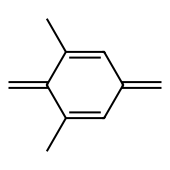
Q514.An alkene (X) on ozonolysis followed by reduction gives following products.
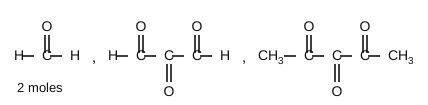
The alkene (X) is:
एक ऐल्कीन (X) ओज़ोनी अपघटन तथा उसके पश्चात् अपचयन पर निम्नलिखित उत्पाद देती है।
ऐल्कीन (X) है:
- A
- B
- C
- D
Show answer
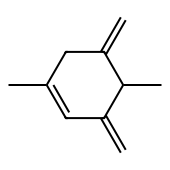
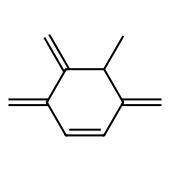
Concept: Reductive ozonolysis cuts every C=C into two C=O groups. Join the carbonyl carbons back in pairs.
- Products: 2 HCHO, OHC–CO–CHO and CH3CO–CO–COCH3 → 8 C=O → 4 C=C; 2 + 3 + 5 = 10 C.
- The two HCHO must be exocyclic =CH2 groups; they sit on the central C of each 3-carbon fragment (the C=O flanked by two others).
- The two fragments join end-to-end through two ring C=C bonds: CHO ends pair with C(=O)CH3 ends → CH=C(CH3).
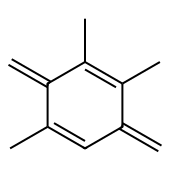
- Ring: C(CH3)=CH–C(=CH2)–CH=C(CH3)–C(=CH2)– (a 6-ring, each methyl-carbon next to an exocyclic carbon) = structure (D).
- (A) has a ring CH2 (would give no glyoxal), (B) has one methyl only (would give 3 HCHO) and (C) has three methyls (11 C) – all wrong.
Short trick: Count: 2 exocyclic =CH2, 2 CH3, 6 ring C, no sp3 ring carbon – only (D) fits.
Answer: (D) (structure D)
अवधारणा: अपचायी ओज़ोनी अपघटन प्रत्येक C=C को दो C=O समूहों में तोड़ देता है। कार्बोनिल कार्बनों को जोड़ों में वापस जोड़ें।
- उत्पाद: 2 HCHO, OHC–CO–CHO तथा CH3CO–CO–COCH3 → 8 C=O → 4 C=C; 2 + 3 + 5 = 10 C।
- दोनों HCHO बाह्यचक्रीय =CH2 समूह होने चाहिए; ये प्रत्येक 3-कार्बन खंड के मध्य C (दो C=O के बीच वाला) पर होते हैं।
- दोनों खंड सिरे-से-सिरा दो वलय C=C बंधों द्वारा जुड़ते हैं: CHO सिरे C(=O)CH3 सिरों से → CH=C(CH3)।
- वलय: C(CH3)=CH–C(=CH2)–CH=C(CH3)–C(=CH2)– (6-वलय, प्रत्येक मेथिल-कार्बन बाह्यचक्रीय कार्बन के बगल में) = संरचना (D)।
- (A) में वलय CH2 है (ग्लाइऑक्सल नहीं बनेगा), (B) में केवल एक मेथिल है (3 HCHO बनेंगे) तथा (C) में तीन मेथिल हैं (11 C) – सभी गलत।
शॉर्ट ट्रिक: गिनें: 2 बाह्यचक्रीय =CH2, 2 CH3, 6 वलय C, कोई sp3 वलय कार्बन नहीं – केवल (D) उपयुक्त।
उत्तर: (D) (संरचना D)
JEE Main 2026 (April) – Paper 1 (B.E./B.Tech)ChemistryHydrocarbons – ozonolysis (reverse)JEE Main 2026 (April) – Paper 1 (B.E./B.Tech) 2026 · 4 Apr Shift 1
Q515.Match the
LIST-I with
LIST-IIList-I
Name of reaction | List-II
Reagent or catalyst used |
|---|
| A. Finkelstein reaction | I. SbF3 |
| B. Swarts reaction | II. Na, dry ether |
| C. Sandmeyer's reaction | III. NaI |
| D. Fittig reaction | IV. Cu2Cl2 |
Choose the
correct answer from the options given below:
सूची-I का
सूची-II से मिलान कीजिए
सूची-I
अभिक्रिया का नाम | सूची-II
प्रयुक्त अभिकर्मक या उत्प्रेरक |
|---|
| A. फिंकेल्स्टाइन अभिक्रिया | I. SbF3 |
| B. स्वार्ट्स अभिक्रिया | II. Na, शुष्क ईथर |
| C. सैन्डमेयर अभिक्रिया | III. NaI |
| D. फिटिग अभिक्रिया | IV. Cu2Cl2 |
नीचे दिए गए विकल्पों में से
सही उत्तर चुनिए:
- AA-I, B-IV, C-III, D-II
- BA-III, B-I, C-IV, D-II
- CA-IV, B-II, C-I, D-III
- DA-I, B-III, C-II, D-IV
Show answer
Concept: Reagents of standard halogen reactions.
- Finkelstein: R–Cl/Br + NaI (acetone) → R–I → III
- Swarts: R–Cl/Br + SbF3 (or AgF, Hg2F2) → R–F → I
- Sandmeyer: ArN2+ + Cu2Cl2/HCl → Ar–Cl → IV
- Fittig: 2Ar–X + 2Na (dry ether) → Ar–Ar → II
- Only (B) matches; (A), (C), (D) mix up Finkelstein/Swarts.
Short trick: FinkelsteIn → I; SwarFs → F.
Answer: (B) A-III, B-I, C-IV, D-II
अवधारणा: मानक हैलोजन अभिक्रियाओं के अभिकर्मक।
- फिंकेल्स्टाइन: R–Cl/Br + NaI (ऐसीटोन) → R–I → III
- स्वार्ट्स: R–Cl/Br + SbF3 (या AgF, Hg2F2) → R–F → I
- सैन्डमेयर: ArN2+ + Cu2Cl2/HCl → Ar–Cl → IV
- फिटिग: 2Ar–X + 2Na (शुष्क ईथर) → Ar–Ar → II
- केवल (B) मेल खाता है; (A), (C), (D) में फिंकेल्स्टाइन/स्वार्ट्स गड़बड़ हैं।
शॉर्ट ट्रिक: फिंकेल्स्टाइन → I (आयोडो); स्वार्ट्स → F (फ्लुओरो)।
उत्तर: (B) A-III, B-I, C-IV, D-II
JEE Main 2026 (April) – Paper 1 (B.E./B.Tech)ChemistryHaloalkanes and haloarenes – named reactionsJEE Main 2026 (April) – Paper 1 (B.E./B.Tech) 2026 · 4 Apr Shift 1
Q516.Amongst the following, the total number of compounds soluble in aqueous NaOH at room temperature is:
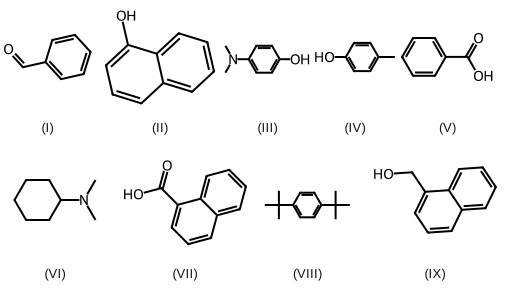
निम्नलिखित में से कमरे के ताप पर जलीय NaOH में विलेय यौगिकों की कुल संख्या है:
- A5
- B4
- C6
- D3
Show answer
Concept: NaOH dissolves compounds acidic enough to form salts: carboxylic acids (pKa ≈ 4–5) and phenols (pKa ≈ 10). Aldehydes, amines, hydrocarbons and alcohols (pKa ≈ 16) do not dissolve.
- Soluble: II (1-naphthol), III (4-dimethylaminophenol), IV (p-cresol) – phenols; V (benzoic acid), VII (1-naphthoic acid) – acids.
- Insoluble: I (benzaldehyde), VI (N,N-dimethylcyclohexylamine, basic), VIII (1,4-di-tert-butylbenzene), IX (1-naphthylmethanol – an alcohol, not a phenol).
- Total = 5.
Short trick: Count OH directly on a ring + all COOH: 3 + 2 = 5. CH2OH (IX) is a trap.
Answer: (A) 5
अवधारणा: NaOH उन यौगिकों को घोलता है जो लवण बनाने योग्य अम्लीय हों: कार्बोक्सिलिक अम्ल (pKa ≈ 4–5) तथा फ़ीनॉल (pKa ≈ 10)। ऐल्डिहाइड, ऐमीन, हाइड्रोकार्बन तथा ऐल्कोहॉल (pKa ≈ 16) नहीं घुलते।
- विलेय: II (1-नैफ़्थॉल), III (4-डाइमेथिलऐमीनोफ़ीनॉल), IV (p-क्रीसॉल) – फ़ीनॉल; V (बेन्ज़ोइक अम्ल), VII (1-नैफ़्थोइक अम्ल) – अम्ल।
- अविलेय: I (बेन्ज़ैल्डिहाइड), VI (N,N-डाइमेथिलसाइक्लोहेक्सिलऐमीन, क्षारीय), VIII (1,4-डाइ-tert-ब्यूटिलबेन्ज़ीन), IX (1-नैफ़्थिलमेथेनॉल – ऐल्कोहॉल, फ़ीनॉल नहीं)।
- कुल = 5।
शॉर्ट ट्रिक: वलय पर सीधे जुड़े OH + सभी COOH गिनें: 3 + 2 = 5। CH2OH (IX) एक जाल है।
उत्तर: (A) 5
JEE Main 2026 (April) – Paper 1 (B.E./B.Tech)ChemistryAcidity – solubility in aqueous NaOHJEE Main 2026 (April) – Paper 1 (B.E./B.Tech) 2026 · 4 Apr Shift 1
Q517.Product C of the following reaction sequence will be
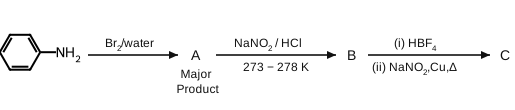
निम्नलिखित अभिक्रिया अनुक्रम का उत्पाद C होगा
- A1-Bromo-4-nitrobenzene1-ब्रोमो-4-नाइट्रोबेन्ज़ीन
- B1, 3, 5-Tribromo-2-nitrobenzene1, 3, 5-ट्राइब्रोमो-2-नाइट्रोबेन्ज़ीन
- C4-Bromo-1-nitrobenzene4-ब्रोमो-1-नाइट्रोबेन्ज़ीन
- D1, 3, 5-Tribromobenzene1, 3, 5-ट्राइब्रोमोबेन्ज़ीन
Show answer
Concept: –NH2 is strongly activating; diazonium fluoroborate with NaNO2/Cu on heating replaces –N2+ by –NO2.
- Aniline + Br2/water → 2,4,6-tribromoaniline (A).
- NaNO2/HCl, 273–278 K → 2,4,6-tribromobenzenediazonium chloride (B).
- (i) HBF4 → ArN2+BF4−; (ii) NaNO2, Cu, Δ → Ar–NO2.
- C = 2,4,6-tribromonitrobenzene = 1,3,5-tribromo-2-nitrobenzene.
- (A)/(C) keep only one Br (bromine water gives tribromination); (D) is the product of H3PO2 reduction, not of NaNO2/Cu.
Short trick: Bromine water + aniline → always three Br; the N2+ spot becomes NO2.
Answer: (B) 1, 3, 5-Tribromo-2-nitrobenzene
अवधारणा: –NH2 प्रबल सक्रियक है; डाइऐज़ोनियम फ्लुओरोबोरेट को NaNO2/Cu के साथ गर्म करने पर –N2+ का स्थान –NO2 ले लेता है।
- ऐनिलीन + Br2/जल → 2,4,6-ट्राइब्रोमोऐनिलीन (A)।
- NaNO2/HCl, 273–278 K → 2,4,6-ट्राइब्रोमोबेन्ज़ीनडाइऐज़ोनियम क्लोराइड (B)।
- (i) HBF4 → ArN2+BF4−; (ii) NaNO2, Cu, Δ → Ar–NO2।
- C = 2,4,6-ट्राइब्रोमोनाइट्रोबेन्ज़ीन = 1,3,5-ट्राइब्रोमो-2-नाइट्रोबेन्ज़ीन।
- (A)/(C) में केवल एक Br है (ब्रोमीन जल त्रिब्रोमीनन करता है); (D) H3PO2 अपचयन का उत्पाद है, NaNO2/Cu का नहीं।
शॉर्ट ट्रिक: ब्रोमीन जल + ऐनिलीन → सदैव तीन Br; N2+ का स्थान NO2 लेता है।
उत्तर: (B) 1, 3, 5-ट्राइब्रोमो-2-नाइट्रोबेन्ज़ीन
JEE Main 2026 (April) – Paper 1 (B.E./B.Tech)ChemistryAmines – diazonium salt reactionsJEE Main 2026 (April) – Paper 1 (B.E./B.Tech) 2026 · 4 Apr Shift 1
Q518.Given below are two statements:
Statement I: The structure of Maltose is given below:
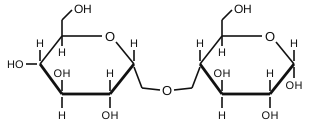
Maltose is a non-reducing sugar.
Statement II: The structure of Lactose is given below:
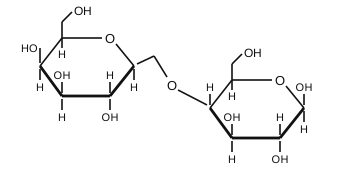
Lactose is a reducing sugar.
In the light of the above statements, choose the
correct answer from the options given below
नीचे दो कथन दिए गए हैं:
कथन I: माल्टोस की संरचना नीचे दी गई है:
माल्टोस एक अनपचायी (non-reducing) शर्करा है।
कथन II: लैक्टोस की संरचना नीचे दी गई है:
लैक्टोस एक अपचायी (reducing) शर्करा है।
उपर्युक्त कथनों के आलोक में, नीचे दिए गए विकल्पों में से
सही उत्तर चुनिए
- ABoth Statement I and Statement II are trueकथन I और कथन II दोनों सत्य हैं
- BBoth Statement I and Statement II are falseकथन I और कथन II दोनों असत्य हैं
- CStatement I is true but Statement II is falseकथन I सत्य है परन्तु कथन II असत्य है
- DStatement I is false but Statement II is trueकथन I असत्य है परन्तु कथन II सत्य है
Show answer
Concept: A disaccharide is reducing if one anomeric carbon (C1) is free (hemiacetal OH), so the ring can open to an aldehyde.
- Maltose = α-D-glucose C1 – O – C4 of a second glucose. The C1 of the second glucose carries a free OH → it is a reducing sugar. Statement I (non-reducing) is false.
- Lactose = β-D-galactose C1 – O – C4 of glucose; C1 of the glucose unit is free → reducing. Statement II is true.
Short trick: Among common disaccharides only sucrose (C1–C2 link) is non-reducing.
Answer: (D) Statement I is false but Statement II is true
अवधारणा: डाइसैकेराइड अपचायी होती है यदि एक ऐनोमरी कार्बन (C1) मुक्त हो (हेमीऐसीटल OH), जिससे वलय खुलकर ऐल्डिहाइड बन सके।
- माल्टोस = α-D-ग्लूकोस का C1 – O – दूसरे ग्लूकोस का C4। दूसरे ग्लूकोस के C1 पर मुक्त OH है → यह अपचायी शर्करा है। कथन I (अनपचायी) असत्य है।
- लैक्टोस = β-D-गैलेक्टोस का C1 – O – ग्लूकोस का C4; ग्लूकोस इकाई का C1 मुक्त है → अपचायी। कथन II सत्य है।
शॉर्ट ट्रिक: सामान्य डाइसैकेराइडों में केवल सुक्रोस (C1–C2 बंध) अनपचायी है।
उत्तर: (D) कथन I असत्य है परन्तु कथन II सत्य है
JEE Main 2026 (April) – Paper 1 (B.E./B.Tech)ChemistryBiomolecules – disaccharidesJEE Main 2026 (April) – Paper 1 (B.E./B.Tech) 2026 · 4 Apr Shift 1
Q519.Match the
LIST-I with
LIST-IIList-I
Name of amino acid | List-II
One letter symbol/type |
|---|
| A. Arginine | I. D/Non-essential |
| B. Aspartic acid | II. R/Essential |
| C. Lysine | III. E/Non-essential |
| D. Glutamic acid | IV. K/Essential |
Choose the
correct answer from the options given below:
सूची-I का
सूची-II से मिलान कीजिए
सूची-I
ऐमीनो अम्ल का नाम | सूची-II
एक अक्षर प्रतीक/प्रकार |
|---|
| A. आर्जिनीन | I. D/अनावश्यक |
| B. ऐस्पार्टिक अम्ल | II. R/आवश्यक |
| C. लाइसीन | III. E/अनावश्यक |
| D. ग्लूटैमिक अम्ल | IV. K/आवश्यक |
नीचे दिए गए विकल्पों में से
सही उत्तर चुनिए:
- AA-II, B-I, C-IV, D-III
- BA-IV, B-III, C-II, D-I
- CA-III, B-IV, C-I, D-II
- DA-II, B-IV, C-I, D-III
Show answer
Concept: One-letter codes and essential/non-essential classification (NCERT table).
- Arginine – R, essential → II
- Aspartic acid – D, non-essential → I
- Lysine – K, essential → IV
- Glutamic acid – E, non-essential → III
- (B), (C), (D) assign K or R to an acid – wrong.
Short trick: Acidic amino acids: AsparDic = D, GlutEmic = E; basic: aRginine = R, lysine = K.
Answer: (A) A-II, B-I, C-IV, D-III
अवधारणा: एक-अक्षर कोड तथा आवश्यक/अनावश्यक वर्गीकरण (NCERT सारणी)।
- आर्जिनीन – R, आवश्यक → II
- ऐस्पार्टिक अम्ल – D, अनावश्यक → I
- लाइसीन – K, आवश्यक → IV
- ग्लूटैमिक अम्ल – E, अनावश्यक → III
- (B), (C), (D) किसी अम्ल को K या R देते हैं – गलत।
शॉर्ट ट्रिक: अम्लीय ऐमीनो अम्ल: ऐस्पार्टिक = D, ग्लूटैमिक = E; क्षारीय: आर्जिनीन = R, लाइसीन = K।
उत्तर: (A) A-II, B-I, C-IV, D-III
JEE Main 2026 (April) – Paper 1 (B.E./B.Tech)ChemistryBiomolecules – amino acidsJEE Main 2026 (April) – Paper 1 (B.E./B.Tech) 2026 · 4 Apr Shift 1
Q520.Identify the colour of compound 'X' in the sequence of the reaction.
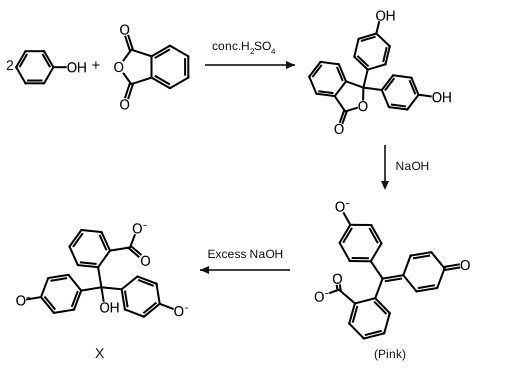
अभिक्रिया के अनुक्रम में यौगिक 'X' का रंग पहचानिए।
- AVioletबैंगनी
- BGreenहरा
- CRedलाल
- DColourlessरंगहीन
Show answer
Concept: Colour of phenolphthalein comes from the extended conjugation of the quinonoid dianion; breaking that conjugation removes colour.
- Phenol + phthalic anhydride (conc. H2SO4) → phenolphthalein (colourless lactone).
- NaOH → quinonoid dianion with C=C conjugated across all rings → pink.
- Excess NaOH: OH− adds to the central carbon → sp3 carbinol trianion X; conjugation is broken → colourless.
Short trick: sp3 central carbon = no extended conjugation = no colour.
Answer: (D) Colourless
अवधारणा: फ़ीनॉल्फ़्थेलीन का रंग क्विनोनॉयड द्विऋणायन के विस्तारित संयुग्मन से आता है; संयुग्मन टूटने पर रंग चला जाता है।
- फ़ीनॉल + थैलिक ऐनहाइड्राइड (सांद्र H2SO4) → फ़ीनॉल्फ़्थेलीन (रंगहीन लैक्टोन)।
- NaOH → क्विनोनॉयड द्विऋणायन जिसमें C=C सभी वलयों में संयुग्मित है → गुलाबी।
- अधिक NaOH: OH− केन्द्रीय कार्बन पर जुड़ता है → sp3 कार्बिनॉल त्रिऋणायन X; संयुग्मन टूट जाता है → रंगहीन।
शॉर्ट ट्रिक: sp3 केन्द्रीय कार्बन = विस्तारित संयुग्मन नहीं = रंग नहीं।
उत्तर: (D) रंगहीन
JEE Main 2026 (April) – Paper 1 (B.E./B.Tech)ChemistryPhenols – phenolphthalein indicatorJEE Main 2026 (April) – Paper 1 (B.E./B.Tech) 2026 · 4 Apr Shift 1

