Q261.A wire of resistance R is bent into an equilateral triangle and an identical wire is bent into a square. The ratio of resistance between the two end points of an edge of the triangle to that of the square is
प्रतिरोध R के एक तार को समबाहु त्रिभुज के आकार में तथा एक सर्वसम तार को वर्ग के आकार में मोड़ा गया है। त्रिभुज की एक भुजा के दोनों सिरों के बीच के प्रतिरोध का, वर्ग की एक भुजा के दोनों सिरों के बीच के प्रतिरोध से अनुपात है
- A8/9
- B27/32
- C32/27
- D9/8
Show answer
Concept: Across one edge, the edge resistance is in parallel with the rest of the loop.
- Triangle: each side . Across one edge: .
- Square: each side . Across one edge: .
- Ratio .
Short trick: For an -sided loop of total , resistance across one side : triangle , square .
Answer: (C) 32/27
अवधारणा: किसी एक भुजा के सिरों के बीच, उस भुजा का प्रतिरोध शेष लूप के समांतर होता है।
- त्रिभुज: प्रत्येक भुजा । एक भुजा के सिरों के बीच: ।
- वर्ग: प्रत्येक भुजा । एक भुजा के सिरों के बीच: ।
- अनुपात ।
शॉर्ट ट्रिक: कुल प्रतिरोध वाले -भुजा लूप में एक भुजा के सिरों के बीच प्रतिरोध : त्रिभुज , वर्ग ।
उत्तर: (C) 32/27
JEE Main 2025 (January) – Paper 1 (B.E./B.Tech)PhysicsCurrent Electricity – equivalent resistanceJEE Main 2025 (January) – Paper 1 (B.E./B.Tech) 2025 · 28 Jan Shift 1
Q262.In the experiment for measurement of viscosity '' of given liquid with a ball having radius R, consider following statements.
A. Graph between terminal velocity V and R will be a parabola.
B. The terminal velocities of different diameter balls are constant for a given liquid.
C. Measurement of terminal velocity is dependent on the temperature.
D. This experiment can be utilized to assess the density of a given liquid.
E. If balls are dropped with some initial speed, the value of will change.
Choose the correct answer from the options given below:
त्रिज्या R वाली गेंद से किसी दिए गए द्रव की श्यानता '' मापने के प्रयोग में, निम्नलिखित कथनों पर विचार कीजिए।
A. सीमांत वेग V तथा R के बीच ग्राफ एक परवलय होगा।
B. दिए गए द्रव के लिए विभिन्न व्यासों की गेंदों के सीमांत वेग नियत होते हैं।
C. सीमांत वेग का मापन ताप पर निर्भर करता है।
D. इस प्रयोग का उपयोग दिए गए द्रव का घनत्व ज्ञात करने में किया जा सकता है।
E. यदि गेंदों को कुछ प्रारंभिक चाल से गिराया जाए, तो का मान बदल जाएगा।
नीचे दिए गए विकल्पों में से सही उत्तर चुनिए:
- AA, B and E Onlyकेवल A, B तथा E
- BB, D and E Onlyकेवल B, D तथा E
- CA, C and D Onlyकेवल A, C तथा D
- DC, D and E Onlyकेवल C, D तथा E
Show answer
Concept: Terminal velocity .
- A: , so the V–R graph is a parabola — correct.
- B: depends on , so balls of different diameters have different terminal velocities — wrong.
- C: (and hence ) changes strongly with temperature — correct.
- D: The formula contains the liquid density , so measuring lets us assess it — correct.
- E: Terminal velocity (and hence the measured ) does not depend on the initial speed; the ball always settles to the same — wrong.
Answer: (C) A, C and D Only
अवधारणा: सीमांत वेग ।
- A: , अतः V–R ग्राफ परवलय है — सही।
- B: , पर निर्भर करता है, अतः भिन्न व्यास की गेंदों के सीमांत वेग भिन्न होते हैं — गलत।
- C: (और इसलिए ) ताप के साथ तेज़ी से बदलता है — सही।
- D: सूत्र में द्रव का घनत्व आता है, अतः मापकर इसे ज्ञात किया जा सकता है — सही।
- E: सीमांत वेग (और इसलिए मापा गया ) प्रारंभिक चाल पर निर्भर नहीं करता; गेंद सदैव उसी पर पहुँचती है — गलत।
उत्तर: (C) केवल A, C तथा D
JEE Main 2025 (January) – Paper 1 (B.E./B.Tech)PhysicsViscosity – terminal velocity experimentJEE Main 2025 (January) – Paper 1 (B.E./B.Tech) 2025 · 28 Jan Shift 1
Q263.Due to presence of an em-wave whose electric component is given by , a cylinder of length 200 cm holds certain amount of em-energy inside it. If another cylinder of same length but half diameter than previous one holds same amount of em-energy, the magnitude of the electric field of the corresponding em-wave should be modified as
एक विद्युतचुंबकीय तरंग, जिसका विद्युत घटक है, की उपस्थिति के कारण 200 cm लंबाई का एक बेलन अपने भीतर कुछ विद्युतचुंबकीय ऊर्जा रखता है। यदि समान लंबाई परंतु पहले से आधे व्यास वाला दूसरा बेलन उतनी ही विद्युतचुंबकीय ऊर्जा रखे, तो संगत विद्युतचुंबकीय तरंग के विद्युत क्षेत्र का परिमाण परिवर्तित करके होना चाहिए
- A
- B
- C
- D
Show answer
Concept: Average em-energy density ; energy inside the cylinder volume, and volume for fixed length.
- Half diameter volume becomes of the earlier volume.
- Same energy energy density must become 4 times: .
- .
Short trick: for equal energy in equal length.
Answer: (B)
अवधारणा: औसत विद्युतचुंबकीय ऊर्जा घनत्व ; बेलन के भीतर ऊर्जा आयतन, तथा नियत लंबाई पर आयतन ।
- आधा व्यास आयतन पहले का हो जाता है।
- समान ऊर्जा ऊर्जा घनत्व 4 गुना होना चाहिए: ।
- ।
शॉर्ट ट्रिक: समान लंबाई में समान ऊर्जा के लिए ।
उत्तर: (B)
JEE Main 2025 (January) – Paper 1 (B.E./B.Tech)PhysicsElectromagnetic Waves – energy densityJEE Main 2025 (January) – Paper 1 (B.E./B.Tech) 2025 · 28 Jan Shift 1
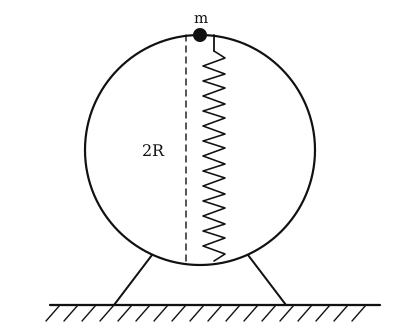
Q264.A bead of mass '
' slides without friction on the wall of a vertical circular hoop of radius '
' as shown in figure. The bead moves under the combined action of gravity and a massless spring (
) attached to the bottom of the hoop. The equilibrium length of the spring is '
'. If the bead is released from top of the hoop with (negligible) zero initial speed, velocity of bead, when the length of spring becomes '
', would be (spring constant is '
', g is acceleration due to gravity)
द्रव्यमान '
' का एक मनका (bead), चित्रानुसार त्रिज्या '
' के ऊर्ध्वाधर वृत्ताकार हूप की दीवार पर बिना घर्षण फिसलता है। मनका, गुरुत्व तथा हूप के निचले बिंदु से जुड़ी द्रव्यमानहीन स्प्रिंग (
) की संयुक्त क्रिया में गति करता है। स्प्रिंग की साम्यावस्था लंबाई '
' है। यदि मनके को हूप के शीर्ष से (नगण्य) शून्य प्रारंभिक चाल से छोड़ा जाए, तो स्प्रिंग की लंबाई '
' हो जाने पर मनके का वेग होगा (स्प्रिंग नियतांक '
' है, g गुरुत्वीय त्वरण है)
- A
- B
- C
- D
Show answer
Concept: Energy conservation: spring PE (initial extension ) and the fall in height both convert into kinetic energy.
- At the top, spring length (diameter), so extension and spring PE .
- Spring length means the bead is at chord distance from the bottom point: from the bottom. Its height above the bottom .
- Fall in height ; final extension , so all spring PE is released.
- .
Answer: (A)
अवधारणा: ऊर्जा संरक्षण: स्प्रिंग की स्थितिज ऊर्जा (प्रारंभिक विस्तार ) तथा ऊँचाई में गिरावट, दोनों गतिज ऊर्जा में बदलते हैं।
- शीर्ष पर स्प्रिंग की लंबाई (व्यास), अतः विस्तार तथा स्प्रिंग स्थितिज ऊर्जा ।
- स्प्रिंग की लंबाई का अर्थ है मनका निचले बिंदु से जीवा-दूरी पर है: निचले बिंदु से । निचले बिंदु से उसकी ऊँचाई ।
- ऊँचाई में गिरावट ; अंतिम विस्तार , अतः पूरी स्प्रिंग ऊर्जा मुक्त होती है।
- ।
उत्तर: (A)
JEE Main 2025 (January) – Paper 1 (B.E./B.Tech)PhysicsWork, Energy and Power – energy conservation with springJEE Main 2025 (January) – Paper 1 (B.E./B.Tech) 2025 · 28 Jan Shift 1
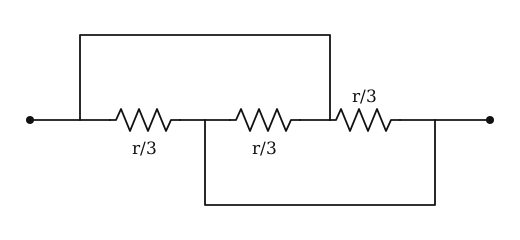
Q265.Find the equivalent resistance between two ends of the following circuit
निम्नलिखित परिपथ के दोनों सिरों के बीच तुल्य प्रतिरोध ज्ञात कीजिए
- A
- B
- C
- D
Show answer
Concept: Plain connecting wires have zero resistance, so points joined by them are the same node — redraw the circuit by labelling nodes.
- Call the left terminal P and the right terminal Q.
- The top wire connects P directly to the junction between the 2nd and 3rd resistors; the bottom wire connects the junction between the 1st and 2nd resistors directly to Q.
- So each resistor has one end at P and the other at Q: all three are in parallel.
- .
Short trick: Shorting wires collapse the chain into three parallel 's.
Answer: (A)
अवधारणा: सादे जोड़ने वाले तारों का प्रतिरोध शून्य होता है, अतः उनसे जुड़े बिंदु एक ही नोड हैं — नोड नामांकित कर परिपथ पुनः बनाइए।
- बाएँ सिरे को P तथा दाएँ सिरे को Q कहें।
- ऊपरी तार P को सीधे दूसरे व तीसरे प्रतिरोधों के बीच के संधि-बिंदु से जोड़ता है; निचला तार पहले व दूसरे प्रतिरोधों के बीच के संधि-बिंदु को सीधे Q से जोड़ता है।
- अतः प्रत्येक प्रतिरोध का एक सिरा P पर तथा दूसरा Q पर है: तीनों समांतर क्रम में हैं।
- ।
शॉर्ट ट्रिक: शॉर्ट करने वाले तार श्रेणी को तीन समांतर में बदल देते हैं।
उत्तर: (A)
JEE Main 2025 (January) – Paper 1 (B.E./B.Tech)PhysicsCurrent Electricity – equivalent resistanceJEE Main 2025 (January) – Paper 1 (B.E./B.Tech) 2025 · 28 Jan Shift 1
Q266.Consider following statements:
A. Surface tension arises due to extra energy of the molecules at the interior as compared to the molecules at the surface, of a liquid.
B. As the temperature of liquid rises, the coefficient of viscosity increases.
C. As the temperature of gas increases, the coefficient of viscosity increases.
D. The onset of turbulence is determined by Reynold's number.
E. In a steady flow two stream lines never intersect.
Choose the correct answer from the options given below:
निम्नलिखित कथनों पर विचार कीजिए:
A. पृष्ठ तनाव, द्रव के पृष्ठ के अणुओं की तुलना में आंतरिक अणुओं की अतिरिक्त ऊर्जा के कारण उत्पन्न होता है।
B. द्रव का ताप बढ़ने पर श्यानता गुणांक बढ़ता है।
C. गैस का ताप बढ़ने पर श्यानता गुणांक बढ़ता है।
D. विक्षुब्धता (turbulence) का प्रारंभ रेनॉल्ड संख्या से निर्धारित होता है।
E. धारारेखीय प्रवाह में दो धारारेखाएँ कभी नहीं काटतीं।
नीचे दिए गए विकल्पों में से सही उत्तर चुनिए:
- AC, D, E Onlyकेवल C, D, E
- BA, D, E Onlyकेवल A, D, E
- CB, C, D Onlyकेवल B, C, D
- DA, B, C Onlyकेवल A, B, C
Show answer
Concept: Facts about surface tension, viscosity-temperature dependence and streamline flow.
- A: It is the surface molecules that have extra energy (unbalanced cohesive forces), not the interior ones — wrong.
- B: Viscosity of liquids decreases with temperature (cohesive forces weaken) — wrong.
- C: Viscosity of gases increases with temperature (faster molecular momentum transfer) — correct.
- D: Turbulence sets in when Reynold's number exceeds its critical value — correct.
- E: Two streamlines can never intersect, else velocity at the crossing point would have two directions — correct.
Answer: (A) C, D, E Only
अवधारणा: पृष्ठ तनाव, श्यानता की ताप-निर्भरता तथा धारारेखीय प्रवाह के तथ्य।
- A: अतिरिक्त ऊर्जा पृष्ठ के अणुओं में होती है (असंतुलित ससंजक बल), आंतरिक अणुओं में नहीं — गलत।
- B: द्रवों की श्यानता ताप बढ़ने पर घटती है (ससंजक बल दुर्बल होते हैं) — गलत।
- C: गैसों की श्यानता ताप बढ़ने पर बढ़ती है (तेज़ आण्विक संवेग स्थानांतरण) — सही।
- D: रेनॉल्ड संख्या क्रांतिक मान से बढ़ने पर विक्षुब्धता प्रारंभ होती है — सही।
- E: दो धारारेखाएँ कभी नहीं काट सकतीं, अन्यथा कटान-बिंदु पर वेग की दो दिशाएँ होतीं — सही।
उत्तर: (A) केवल C, D, E
JEE Main 2025 (January) – Paper 1 (B.E./B.Tech)PhysicsFluid Mechanics – surface tension and viscosityJEE Main 2025 (January) – Paper 1 (B.E./B.Tech) 2025 · 28 Jan Shift 1
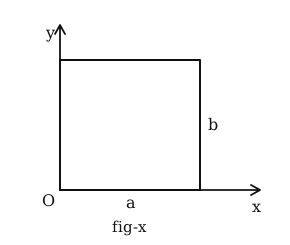
Q267.The center of mass of a thin rectangular plate (fig - x) with sides of length
and
, whose mass per unit area (
) varies as
(where
is a constant), would be
भुजाओं
तथा
वाली एक पतली आयताकार प्लेट (चित्र-x), जिसका प्रति एकांक क्षेत्रफल द्रव्यमान (
),
(जहाँ
एक नियतांक है) के अनुसार बदलता है, का द्रव्यमान केंद्र होगा
- A
- B
- C
- D
Show answer
Concept: with strips ; density depends only on , so the coordinate stays at the middle.
- .
- By symmetry in (σ independent of ): .
Short trick: For over to , (triangle-like distribution).
Answer: (A)
अवधारणा: पट्टियाँ लेकर ; घनत्व केवल पर निर्भर है, अतः निर्देशांक बीच में ही रहता है।
- ।
- में सममिति से (, से स्वतंत्र): ।
शॉर्ट ट्रिक: से तक के लिए (त्रिभुज-सदृश वितरण)।
उत्तर: (A)
JEE Main 2025 (January) – Paper 1 (B.E./B.Tech)PhysicsCentre of Mass – continuous body with variable densityJEE Main 2025 (January) – Paper 1 (B.E./B.Tech) 2025 · 28 Jan Shift 1
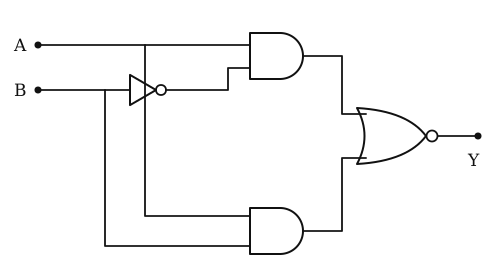
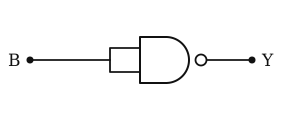
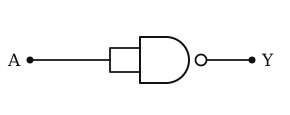
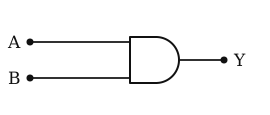
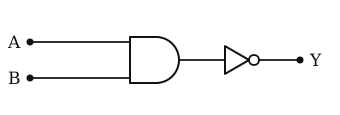
Q268.Which of the following circuits has the same output as that of the given circuit?
निम्नलिखित में से किस परिपथ का निर्गत (output), दिए गए परिपथ के निर्गत के समान है?
- A
- B
- C
- D
Show answer
Concept: Write the Boolean expression of the given circuit and simplify.
- Top AND gate: inputs and → . Bottom AND gate: inputs and → .
- Both feed a NOR gate: .
- So the circuit is simply a NOT gate on . Option (B) — a NAND with both inputs tied to — gives : same output.
- Option (A) gives , option (C) gives , option (D) gives — all different.
Answer: (B) NAND gate with both inputs tied to A (i.e. )
अवधारणा: दिए गए परिपथ का बूलीय व्यंजक लिखकर सरल कीजिए।
- ऊपरी AND गेट: निवेश तथा → । निचला AND गेट: निवेश तथा → ।
- दोनों एक NOR गेट में जाते हैं: ।
- अतः परिपथ पर केवल एक NOT गेट है। विकल्प (B) — दोनों निवेश से जुड़ा NAND — देता है: समान निर्गत।
- विकल्प (A) देता है, विकल्प (C) , विकल्प (D) — सभी भिन्न हैं।
उत्तर: (B) दोनों निवेश A से जुड़ा NAND गेट (अर्थात )
JEE Main 2025 (January) – Paper 1 (B.E./B.Tech)PhysicsSemiconductors – logic gatesJEE Main 2025 (January) – Paper 1 (B.E./B.Tech) 2025 · 28 Jan Shift 1
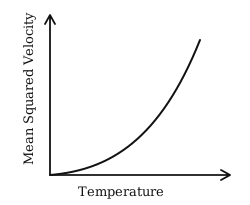
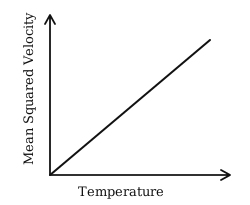
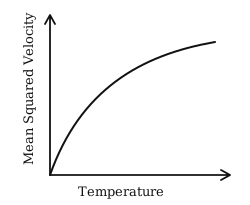
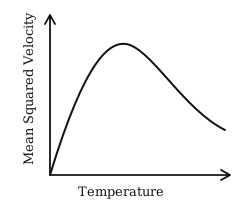
Q269.For a particular ideal gas which of the following graphs represents the variation of mean squared velocity of the gas molecules with temperature?
किसी विशेष आदर्श गैस के लिए निम्नलिखित में से कौन-सा ग्राफ, गैस अणुओं के माध्य वर्ग वेग (mean squared velocity) का ताप के साथ परिवर्तन दर्शाता है?
- A
- B
- C
- D
Show answer
Concept: From kinetic theory, , so .
- : the mean squared velocity is directly proportional to absolute temperature.
- So the graph is a straight line passing through the origin — graph (B).
- (A) and (C) show non-linear growth and (D) shows a maximum — none follows .
Short trick: , hence : straight line through origin.
Answer: (B) the straight line through the origin
अवधारणा: अणुगति सिद्धांत से, , अतः ।
- : माध्य वर्ग वेग परम ताप के अनुक्रमानुपाती है।
- अतः ग्राफ मूलबिंदु से गुज़रती सरल रेखा है — ग्राफ (B)।
- (A) तथा (C) अरेखीय वृद्धि दर्शाते हैं और (D) एक उच्चिष्ठ — कोई भी का पालन नहीं करता।
शॉर्ट ट्रिक: , अतः : मूलबिंदु से सरल रेखा।
उत्तर: (B) मूलबिंदु से गुज़रती सरल रेखा
JEE Main 2025 (January) – Paper 1 (B.E./B.Tech)PhysicsKinetic Theory of Gases – mean squared velocity vs temperatureJEE Main 2025 (January) – Paper 1 (B.E./B.Tech) 2025 · 28 Jan Shift 1
Q270.A proton of mass '' has same energy as that of a photon of wavelength ''. If the proton is moving at non-relativistic speed, then ratio of its de Broglie wavelength to the wavelength of photon is.
द्रव्यमान '' के एक प्रोटॉन की ऊर्जा, तरंगदैर्घ्य '' वाले फ़ोटॉन की ऊर्जा के बराबर है। यदि प्रोटॉन अनापेक्षिकीय (non-relativistic) चाल से गतिमान है, तो उसके डी ब्रॉग्ली तरंगदैर्घ्य का फ़ोटॉन के तरंगदैर्घ्य से अनुपात है
- A
- B
- C
- D
Show answer
Concept: For the proton (non-relativistic, KE ); for the photon .
- .
- .
Answer: (D)
अवधारणा: प्रोटॉन के लिए (अनापेक्षिकीय, गतिज ऊर्जा ); फ़ोटॉन के लिए ।
- ।
- ।
उत्तर: (D)
JEE Main 2025 (January) – Paper 1 (B.E./B.Tech)PhysicsDual Nature of Matter – de Broglie wavelengthJEE Main 2025 (January) – Paper 1 (B.E./B.Tech) 2025 · 28 Jan Shift 1
Q271.A double slit interference experiment performed with a light of wavelength 600 nm forms an interference fringe pattern on a screen with 10th bright fringe having its centre at a distance of 10 mm from the central maximum. Distance of the centre of the same 10th bright fringe from the central maximum when the source of light is replaced by another source of wavelength 660 nm would be _________ mm.
600 nm तरंगदैर्घ्य के प्रकाश से किया गया एक द्विझिरी व्यतिकरण प्रयोग, पर्दे पर ऐसा व्यतिकरण फ्रिंज पैटर्न बनाता है जिसमें 10वीं दीप्त फ्रिंज का केंद्र, केंद्रीय उच्चिष्ठ से 10 mm दूरी पर है। यदि प्रकाश स्रोत को 660 nm तरंगदैर्घ्य के दूसरे स्रोत से बदल दिया जाए, तो उसी 10वीं दीप्त फ्रिंज के केंद्र की केंद्रीय उच्चिष्ठ से दूरी _________ mm होगी।
Show answer
Concept: Position of the th bright fringe: for fixed , , .
Answer: 11
अवधारणा: वीं दीप्त फ्रिंज की स्थिति: (नियत , , के लिए)।
उत्तर: 11
JEE Main 2025 (January) – Paper 1 (B.E./B.Tech)PhysicsWave Optics – Young's double slit experimentJEE Main 2025 (January) – Paper 1 (B.E./B.Tech) 2025 · 28 Jan Shift 1
Q272.In a measurement, it is asked to find modulus of elasticity per unit torque applied on the system. The measured quantity has dimension of . If , the value of is ________
एक मापन में, निकाय पर आरोपित प्रति एकांक बल-आघूर्ण (torque) पर प्रत्यास्थता गुणांक ज्ञात करने को कहा गया है। मापी गई राशि की विमा है। यदि हो, तो का मान ________ है
Show answer
Concept: Divide the dimensions: modulus of elasticity , torque .
- So , (as given) and .
Answer: 0
अवधारणा: विमाओं का भाग कीजिए: प्रत्यास्थता गुणांक , बल-आघूर्ण ।
- अतः , (दिया है) तथा ।
उत्तर: 0
JEE Main 2025 (January) – Paper 1 (B.E./B.Tech)PhysicsUnits and Dimensions – dimensional analysisJEE Main 2025 (January) – Paper 1 (B.E./B.Tech) 2025 · 28 Jan Shift 1
Q273.A tiny metallic rectangular sheet has length and breadth of 5 mm and 2.5 mm, respectively. Using a specially designed screw gauge which has pitch of 0.75 mm and 15 divisions in the circular scale, you are asked to find the area of the sheet. In this measurement, the maximum fractional error will be where is _________.
एक छोटी धात्विक आयताकार चादर की लंबाई तथा चौड़ाई क्रमशः 5 mm तथा 2.5 mm है। 0.75 mm चूड़ी अंतराल (pitch) तथा वृत्ताकार पैमाने पर 15 भाग वाले एक विशेष रूप से बनाए गए स्क्रू गेज का उपयोग करके आपको चादर का क्षेत्रफल ज्ञात करना है। इस मापन में अधिकतम भिन्नात्मक त्रुटि होगी, जहाँ _________ है।
Show answer
Concept: Least count ; for , .
- LC ().
- .
Answer: 3
अवधारणा: अल्पतमांक ; के लिए ।
- अल्पतमांक ()।
- ।
उत्तर: 3
JEE Main 2025 (January) – Paper 1 (B.E./B.Tech)PhysicsError Analysis – screw gaugeJEE Main 2025 (January) – Paper 1 (B.E./B.Tech) 2025 · 28 Jan Shift 1
Q274.Two iron solid discs of negligible thickness have radii and and moment of inertia and , respectively. For , the ratio of and would be , where = ________
नगण्य मोटाई की दो ठोस लोहे की चकतियों की त्रिज्याएँ क्रमशः तथा और जड़त्व आघूर्ण क्रमशः तथा हैं। के लिए, तथा का अनुपात होगा, जहाँ = ________
Show answer
Concept: Both discs are of iron (same density ) with the same (negligible) thickness , so mass and .
- So .
Answer: 16
अवधारणा: दोनों चकतियाँ लोहे की हैं (समान घनत्व ) तथा समान (नगण्य) मोटाई की हैं, अतः द्रव्यमान तथा ।
- अतः ।
उत्तर: 16
JEE Main 2025 (January) – Paper 1 (B.E./B.Tech)PhysicsRotational Motion – moment of inertia of discsJEE Main 2025 (January) – Paper 1 (B.E./B.Tech) 2025 · 28 Jan Shift 1
Q275.The moment of inertia of a solid disc rotating along its diameter is 2.5 times higher than the moment of inertia of a ring rotating in similar way. The moment of inertia of a solid sphere which has same radius as the disc and rotating in similar way, is times higher than the moment of inertia of the given ring. Here, = ________. Consider all the bodies have equal masses.
अपने व्यास के परितः घूर्णन करती एक ठोस चकती का जड़त्व आघूर्ण, उसी प्रकार घूर्णन करती एक वलय (ring) के जड़त्व आघूर्ण का 2.5 गुना है। चकती के समान त्रिज्या वाले तथा उसी प्रकार घूर्णन करते एक ठोस गोले का जड़त्व आघूर्ण, दी गई वलय के जड़त्व आघूर्ण का गुना है। यहाँ = ________। सभी पिंडों के द्रव्यमान समान मानिए।
Show answer
Concept: About a diameter: disc , ring , solid sphere (equal masses ).
- Given .
- Sphere (radius , same as disc): .
- .
Answer: 4
अवधारणा: व्यास के परितः: चकती , वलय , ठोस गोला (समान द्रव्यमान )।
- दिया है ।
- गोला (त्रिज्या , चकती के समान): ।
- ।
उत्तर: 4
JEE Main 2025 (January) – Paper 1 (B.E./B.Tech)PhysicsRotational Motion – moment of inertia about diameterJEE Main 2025 (January) – Paper 1 (B.E./B.Tech) 2025 · 28 Jan Shift 1
Q276.Given below are two statements:
Statement I : D-glucose pentaacetate reacts with 2, 4-dinitrophenylhydrazine.
Statement II : Starch, on heating with concentrated sulfuric acid at 100 ∘C and 2-3 atmosphere pressure produces glucose.
In the light of the above statements, choose the correct answer from the options given below
नीचे दो कथन दिए गए हैं:
कथन I : D-ग्लूकोस पेन्टाऐसीटेट, 2, 4-डाइनाइट्रोफेनिलहाइड्राज़ीन से अभिक्रिया करता है।
कथन II : स्टार्च को सांद्र सल्फ्यूरिक अम्ल के साथ 100 ∘C तथा 2-3 वायुमंडल दाब पर गर्म करने पर ग्लूकोस बनता है।
उपर्युक्त कथनों के आलोक में, नीचे दिए गए विकल्पों में से सही उत्तर चुनिए
- AStatement I is false but Statement II is trueकथन I असत्य है परन्तु कथन II सत्य है
- BBoth Statement I and Statement II are falseकथन I और कथन II दोनों असत्य हैं
- CBoth Statement I and Statement II are trueकथन I और कथन II दोनों सत्य हैं
- DStatement I is true but Statement II is falseकथन I सत्य है परन्तु कथन II असत्य है
Show answer
Concept: 2,4-DNP test needs a free carbonyl (–CHO) group; in glucose pentaacetate the ring cannot open, so no free –CHO is available.
- In D-glucose pentaacetate all five –OH groups, including the anomeric –OH, are acetylated. The cyclic hemiacetal is locked as an acetal, so the open-chain aldehyde form cannot be generated — it gives no reaction with 2,4-dinitrophenylhydrazine. Statement I is false.
- Starch is a polymer of α-D-glucose. On heating with sulfuric acid under pressure (about 100 ∘C, 2–3 atm) it undergoes complete hydrolysis to glucose — this is the commercial preparation of glucose. Statement II is true.
Short trick: Any derivative of glucose in which the anomeric position is blocked (pentaacetate, glycosides) fails all free-aldehyde tests.
Answer: (A)
अवधारणा: 2,4-DNP परीक्षण के लिए मुक्त कार्बोनिल (–CHO) समूह चाहिए; ग्लूकोस पेन्टाऐसीटेट में वलय खुल नहीं सकती, अतः मुक्त –CHO उपलब्ध नहीं होता।
- D-ग्लूकोस पेन्टाऐसीटेट में पाँचों –OH समूह, जिनमें ऐनोमेरिक –OH भी है, ऐसीटिलित हो जाते हैं। चक्रीय हेमीऐसीटैल, ऐसीटैल के रूप में बंद हो जाता है, अतः विवृत-श्रृंखला ऐल्डिहाइड रूप नहीं बन पाता — यह 2,4-डाइनाइट्रोफेनिलहाइड्राज़ीन से अभिक्रिया नहीं देता। कथन I असत्य है।
- स्टार्च α-D-ग्लूकोस का बहुलक है। सल्फ्यूरिक अम्ल के साथ दाब पर (लगभग 100 ∘C, 2–3 atm) गर्म करने पर इसका पूर्ण जल-अपघटन होकर ग्लूकोस बनता है — यही ग्लूकोस का व्यावसायिक निर्माण है। कथन II सत्य है।
शॉर्ट ट्रिक: ग्लूकोस का कोई भी व्युत्पन्न जिसमें ऐनोमेरिक स्थान अवरुद्ध हो (पेन्टाऐसीटेट, ग्लाइकोसाइड), मुक्त-ऐल्डिहाइड वाले सभी परीक्षण नहीं देता।
उत्तर: (A)
JEE Main 2025 (January) – Paper 1 (B.E./B.Tech)ChemistryBiomolecules – carbohydratesJEE Main 2025 (January) – Paper 1 (B.E./B.Tech) 2025 · 28 Jan Shift 1
Q277.Both acetaldehyde and acetone (individually) undergo which of the following reactions?
A. Iodoform Reaction
B. Cannizaro Reaction
C. Aldol Condensation
D. Tollen's Test
E. Clemmensen Reduction
Choose the correct answer from the options given below:
ऐसीटैल्डिहाइड तथा ऐसीटोन दोनों (अलग-अलग) निम्नलिखित में से कौन-सी अभिक्रियाएँ देते हैं?
A. आयोडोफॉर्म अभिक्रिया
B. कैनिज़ारो अभिक्रिया
C. ऐल्डॉल संघनन
D. टॉलेन परीक्षण
E. क्लीमेन्सन अपचयन
नीचे दिए गए विकल्पों में से सही उत्तर चुनिए:
- AA, B and D Onlyकेवल A, B और D
- BC and E Onlyकेवल C और E
- CA, C and E Onlyकेवल A, C और E
- DB, C and D Onlyकेवल B, C और D
Show answer
Concept: CH3CHO and CH3COCH3 both contain a CH3–CO– group and α-hydrogens.
- A. Iodoform reaction: both have the CH3CO– group, so both give yellow CHI3. ✓
- B. Cannizzaro reaction occurs only for carbonyl compounds without α-H; both have α-H. ✗
- C. Aldol condensation needs α-H — both undergo it. ✓
- D. Tollens' test is given only by aldehydes; acetone fails. ✗
- E. Clemmensen reduction (Zn–Hg/HCl) converts C=O of both to CH2. ✓
Short trick: For "both aldehyde and ketone" questions, strike out oxidation-based tests (Tollens, Fehling) and no-α-H reactions (Cannizzaro) at once.
Answer: (C)
अवधारणा: CH3CHO तथा CH3COCH3 दोनों में CH3–CO– समूह तथा α-हाइड्रोजन उपस्थित हैं।
- A. आयोडोफॉर्म अभिक्रिया: दोनों में CH3CO– समूह है, अतः दोनों पीला CHI3 देते हैं। ✓
- B. कैनिज़ारो अभिक्रिया केवल उन कार्बोनिल यौगिकों में होती है जिनमें α-H नहीं होता; दोनों में α-H है। ✗
- C. ऐल्डॉल संघनन के लिए α-H चाहिए — दोनों देते हैं। ✓
- D. टॉलेन परीक्षण केवल ऐल्डिहाइड देते हैं; ऐसीटोन नहीं देता। ✗
- E. क्लीमेन्सन अपचयन (Zn–Hg/HCl) दोनों के C=O को CH2 में बदल देता है। ✓
शॉर्ट ट्रिक: "ऐल्डिहाइड और कीटोन दोनों" वाले प्रश्नों में ऑक्सीकरण-आधारित परीक्षण (टॉलेन, फेहलिंग) तथा बिना α-H वाली अभिक्रियाएँ (कैनिज़ारो) तुरंत काट दीजिए।
उत्तर: (C)
JEE Main 2025 (January) – Paper 1 (B.E./B.Tech)ChemistryAldehydes & Ketones – common reactionsJEE Main 2025 (January) – Paper 1 (B.E./B.Tech) 2025 · 28 Jan Shift 1
Q278.Which of the following oxidation reactions are carried out by both K2Cr2O7 and KMnO4 in acidic medium?
A. I− → I2
B. S2− → S
C. Fe2+ → Fe3+
D. I− → IO3−
E. S2O32− → SO42−
Choose the correct answer from the options given below:
अम्लीय माध्यम में K2Cr2O7 तथा KMnO4 दोनों द्वारा निम्नलिखित में से कौन-सी ऑक्सीकरण अभिक्रियाएँ कराई जाती हैं?
A. I− → I2
B. S2− → S
C. Fe2+ → Fe3+
D. I− → IO3−
E. S2O32− → SO42−
नीचे दिए गए विकल्पों में से सही उत्तर चुनिए:
- AC, D and E Onlyकेवल C, D और E
- BB, C and D Onlyकेवल B, C और D
- CA, D and E Onlyकेवल A, D और E
- DA, B and C Onlyकेवल A, B और C
Show answer
Concept: In acidic medium both Cr2O72− (→ Cr3+) and MnO4− (→ Mn2+) are strong oxidants with a common set of substrates.
- A. Both oxidise iodide: I− → I2. ✓
- B. Both oxidise sulphide: S2− → S. ✓
- C. Both oxidise ferrous ion: Fe2+ → Fe3+. ✓
- D. I− → IO3− is the action of KMnO4 in neutral/faintly alkaline medium, not of acidified dichromate. ✗
- E. Thiosulphate is oxidised to sulphate by neutral KMnO4; acidified K2Cr2O7 does not give S2O32− → SO42−. ✗
Short trick: I− → IO3− and S2O32− → SO42− are the two "neutral/alkaline KMnO4" conversions of NCERT — cross them out in any "acidic medium, both oxidants" question.
Answer: (D)
अवधारणा: अम्लीय माध्यम में Cr2O72− (→ Cr3+) तथा MnO4− (→ Mn2+) दोनों प्रबल ऑक्सीकारक हैं और कई समान पदार्थों का ऑक्सीकरण करते हैं।
- A. दोनों आयोडाइड का ऑक्सीकरण करते हैं: I− → I2। ✓
- B. दोनों सल्फाइड का ऑक्सीकरण करते हैं: S2− → S। ✓
- C. दोनों फेरस आयन का ऑक्सीकरण करते हैं: Fe2+ → Fe3+। ✓
- D. I− → IO3− उदासीन/हल्के क्षारीय माध्यम में KMnO4 की क्रिया है, अम्लीय डाइक्रोमेट की नहीं। ✗
- E. थायोसल्फेट का सल्फेट में ऑक्सीकरण उदासीन KMnO4 करता है; अम्लीय K2Cr2O7 यह अभिक्रिया (S2O32− → SO42−) नहीं देता। ✗
शॉर्ट ट्रिक: I− → IO3− तथा S2O32− → SO42− NCERT की "उदासीन/क्षारीय KMnO4" वाली अभिक्रियाएँ हैं — "अम्लीय माध्यम, दोनों ऑक्सीकारक" वाले प्रश्न में इन्हें काट दीजिए।
उत्तर: (D)
JEE Main 2025 (January) – Paper 1 (B.E./B.Tech)Chemistryd-block – oxidising action of KMnO4 and K2Cr2O7JEE Main 2025 (January) – Paper 1 (B.E./B.Tech) 2025 · 28 Jan Shift 1
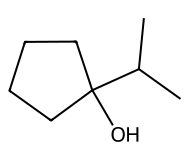
Q279.A molecule ("P") on treatment with acid undergoes rearrangement and gives ("Q"). ("Q") on ozonolysis followed by reflux under alkaline condition gives ("R"). The structure of ("R") is given below.
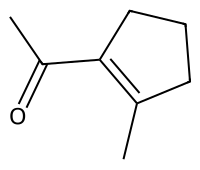
The structure of ("P") is
एक अणु ("P") अम्ल से उपचारित करने पर पुनर्विन्यास के साथ ("Q") देता है। ("Q") के ओज़ोनी-अपघटन (ozonolysis) तथा उसके बाद क्षारीय परिस्थिति में प्रतिवाह (reflux) करने पर ("R") प्राप्त होता है। ("R") की संरचना नीचे दी गई है।
("P") की संरचना है
- A
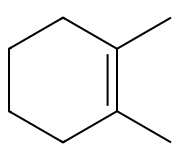
- B
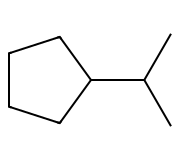
- C
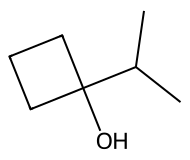
- D
Show answer
Concept: Work backwards: R (an α,β-unsaturated cyclic ketone) comes from intramolecular aldol condensation of a 1,6-diketone, which comes from ozonolysis of a tetrasubstituted cycloalkene.
- R = 1-acetyl-2-methylcyclopentene. Its retro-aldol precursor is octane-2,7-dione (a 1,6-diketone that cyclises to a 5-membered ring on alkaline reflux).
- Octane-2,7-dione is the ozonolysis product of 1,2-dimethylcyclohexene, so Q = 1,2-dimethylcyclohexene.
- P must rearrange to Q with acid. For 1-isopropylcyclopentan-1-ol (option D): –OH is protonated and leaves, giving a 3° cyclopentyl cation; hydride shift places the charge on the exocyclic carbon, ring expansion (C–C bond migration) gives a six-membered cation, and a methyl/hydride shift followed by loss of H+ gives the most substituted alkene, 1,2-dimethylcyclohexene.
- Option (A) is Q itself (no rearrangement involved); option (B) has no leaving group for acid treatment; option (C) would ring-expand only to a five-membered ring, giving 1,2-dimethylcyclopentene, not Q.
Short trick: Count carbons: R has C8, so Q is a C8 cycloalkene and P a C8 alcohol whose dehydration-rearrangement enlarges the ring by one.
Answer: (D)
अवधारणा: उल्टा चलिए: R (एक α,β-असंतृप्त चक्रीय कीटोन) किसी 1,6-डाइकीटोन के अंतराअणुक ऐल्डॉल संघनन से बनता है, और वह डाइकीटोन किसी चतुः-प्रतिस्थापित साइक्लोऐल्कीन के ओज़ोनी-अपघटन से।
- R = 1-ऐसीटिल-2-मेथिलसाइक्लोपेन्टीन। इसका पूर्ववर्ती ऑक्टेन-2,7-डाइओन है (1,6-डाइकीटोन, जो क्षारीय प्रतिवाह पर 5-सदस्यीय वलय बनाता है)।
- ऑक्टेन-2,7-डाइओन, 1,2-डाइमेथिलसाइक्लोहेक्सीन के ओज़ोनी-अपघटन से मिलता है, अतः Q = 1,2-डाइमेथिलसाइक्लोहेक्सीन।
- P को अम्ल के साथ पुनर्विन्यासित होकर Q देना चाहिए। 1-आइसोप्रोपिलसाइक्लोपेन्टेन-1-ऑल (विकल्प D) में –OH प्रोटॉनित होकर निकलता है और 3° साइक्लोपेन्टिल धनायन बनता है; हाइड्राइड विस्थापन से आवेश बाह्य कार्बन पर आता है, वलय-विस्तार (C–C आबंध प्रवास) से छह-सदस्यीय धनायन बनता है, और मेथिल/हाइड्राइड विस्थापन के बाद H+ के निष्कासन से सर्वाधिक प्रतिस्थापित ऐल्कीन 1,2-डाइमेथिलसाइक्लोहेक्सीन बनता है।
- विकल्प (A) स्वयं Q है (कोई पुनर्विन्यास नहीं); विकल्प (B) में अम्ल के लिए कोई निर्गमन समूह नहीं है; विकल्प (C) वलय-विस्तार से केवल पाँच-सदस्यीय वलय देगा, अर्थात् 1,2-डाइमेथिलसाइक्लोपेन्टीन, Q नहीं।
शॉर्ट ट्रिक: कार्बन गिनिए: R में C8 है, अतः Q एक C8 साइक्लोऐल्कीन और P एक C8 ऐल्कोहॉल है जिसके निर्जलीकरण-पुनर्विन्यास में वलय एक कार्बन बड़ी होती है।
उत्तर: (D)
JEE Main 2025 (January) – Paper 1 (B.E./B.Tech)ChemistryAlcohols – carbocation rearrangement & ozonolysis-aldolJEE Main 2025 (January) – Paper 1 (B.E./B.Tech) 2025 · 28 Jan Shift 1
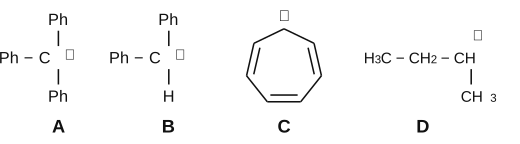
Q280.The correct order of stability of following carbocations is :
निम्नलिखित कार्बधनायनों के स्थायित्व का सही क्रम है :
- AC > B > A > D
- BA > B > C > D
- CB > C > A > D
- DC > A > B > D
Show answer
Concept: Aromatic carbocations are the most stable; among others, stability increases with the number of resonating phenyl groups, and simple 2° alkyl cations are least stable.
- C is the tropylium (cycloheptatrienyl) cation: 6π electrons, aromatic — most stable.
- A = Ph3C+ (resonance with three rings) > B = Ph2CH+ (two rings).
- D is a secondary butyl cation stabilised only by +I/hyperconjugation — least stable.
- Order: C > A > B > D.
Short trick: Aromatic > more Ph > fewer Ph > plain alkyl — tropylium beats even trityl.
Answer: (D)
अवधारणा: ऐरोमैटिक कार्बधनायन सर्वाधिक स्थायी होते हैं; उसके बाद अनुनादी फेनिल समूहों की संख्या जितनी अधिक, स्थायित्व उतना अधिक, तथा साधारण 2° ऐल्किल धनायन सबसे कम स्थायी होते हैं।
- C ट्रोपिलियम (साइक्लोहेप्टाट्राइईनिल) धनायन है: 6π इलेक्ट्रॉन, ऐरोमैटिक — सर्वाधिक स्थायी।
- A = Ph3C+ (तीन वलयों से अनुनाद) > B = Ph2CH+ (दो वलय)।
- D एक द्वितीयक ब्यूटिल धनायन है, जो केवल +I/अतिसंयुग्मन से स्थायी होता है — सबसे कम स्थायी।
- क्रम: C > A > B > D।
शॉर्ट ट्रिक: ऐरोमैटिक > अधिक Ph > कम Ph > साधारण ऐल्किल — ट्रोपिलियम, ट्राइटिल से भी आगे है।
उत्तर: (D)
JEE Main 2025 (January) – Paper 1 (B.E./B.Tech)ChemistryGOC – carbocation stabilityJEE Main 2025 (January) – Paper 1 (B.E./B.Tech) 2025 · 28 Jan Shift 1

