Q141.Choose the correct statements.
(A) Weight of a substance is the amount of matter present in it.
(B) Mass is the force exerted by gravity on an object.
(C) Volume is the amount of space occupied by a substance.
(D) Temperatures below 0°C are possible in Celsius scale, but in Kelvin scale negative temperature is not possible.
(E) Precision refers to the closeness of various measurements for the same quantity.
Choose the correct answer from the options given below :
सही कथन चुनिए।
(A) किसी पदार्थ का भार उसमें उपस्थित द्रव्य की मात्रा है।
(B) द्रव्यमान किसी वस्तु पर गुरुत्व द्वारा लगाया गया बल है।
(C) आयतन किसी पदार्थ द्वारा घेरा गया स्थान है।
(D) सेल्सियस पैमाने पर 0°C से नीचे के ताप संभव हैं, परन्तु केल्विन पैमाने पर ऋणात्मक ताप संभव नहीं है।
(E) परिशुद्धता (precision) एक ही राशि के विभिन्न मापनों की परस्पर निकटता को दर्शाती है।
नीचे दिए गए विकल्पों में से सही उत्तर चुनिए:
- A(A), (D) and (E) Onlyकेवल (A), (D) तथा (E)
- B(C), (D) and (E) Onlyकेवल (C), (D) तथा (E)
- C(A), (B) and (C) Onlyकेवल (A), (B) तथा (C)
- D(B), (C) and (D) Onlyकेवल (B), (C) तथा (D)
Show answer
Concept: Mass = amount of matter; weight = gravitational force on that mass; the definitions in (A) and (B) are swapped.
- (A) Wrong – the amount of matter is the mass, not the weight.
- (B) Wrong – the force exerted by gravity is the weight, not the mass.
- (C) Correct – volume is the space occupied by a substance.
- (D) Correct – 0 K is the absolute zero; negative kelvin temperatures are not possible, while negative °C values are.
- (E) Correct – precision is the closeness of repeated measurements to one another (accuracy is closeness to the true value).
Short trick: Spot the classic mass–weight swap in (A) and (B) – the answer must contain C, D, E.
Answer: (B)
अवधारणा: द्रव्यमान = द्रव्य की मात्रा; भार = उस द्रव्यमान पर गुरुत्वीय बल; कथन (A) और (B) में परिभाषाएँ आपस में बदली हुई हैं।
- (A) गलत – द्रव्य की मात्रा द्रव्यमान है, भार नहीं।
- (B) गलत – गुरुत्व द्वारा लगाया गया बल भार है, द्रव्यमान नहीं।
- (C) सही – आयतन पदार्थ द्वारा घेरा गया स्थान है।
- (D) सही – 0 K परम शून्य है; केल्विन में ऋणात्मक ताप संभव नहीं, जबकि °C में ऋणात्मक मान संभव हैं।
- (E) सही – परिशुद्धता बार-बार किए गए मापनों की परस्पर निकटता है (यथार्थता सत्य मान से निकटता है)।
शॉर्ट ट्रिक: (A) और (B) में द्रव्यमान–भार की अदला-बदली पहचानिए – उत्तर में C, D, E होने ही चाहिए।
उत्तर: (B)
JEE Main 2025 (January) – Paper 1 (B.E./B.Tech)ChemistryBasic concepts – measurementJEE Main 2025 (January) – Paper 1 (B.E./B.Tech) 2025 · 29 Jan Shift 1
Q142.The correct option with order of melting points of the pairs (Mn, Fe), (Tc, Ru) and (Re, Os) is :
(Mn, Fe), (Tc, Ru) तथा (Re, Os) युग्मों के गलनांकों के क्रम वाला सही विकल्प है:
- AFe < Mn, Ru < Tc and Re < OsFe < Mn, Ru < Tc तथा Re < Os
- BMn < Fe, Tc < Ru and Os < ReMn < Fe, Tc < Ru तथा Os < Re
- CMn < Fe, Tc < Ru and Re < OsMn < Fe, Tc < Ru तथा Re < Os
- DFe < Mn, Ru < Tc and Os < ReFe < Mn, Ru < Tc तथा Os < Re
Show answer
Concept: Melting point of transition metals depends on the strength of metallic bonding (number of unpaired d electrons available for bonding).
- Mn (3d54s2): the stable half-filled 3d5 keeps electrons localised, weakening metallic bonding → Mn (1519 K) < Fe (1811 K).
- Similarly in the 4d series Tc melts below Ru: Tc < Ru.
- In the 5d series the maximum is at W and melting points then fall steadily: Re (3459 K) > Os (3306 K), i.e. Os < Re.
- Hence Mn < Fe, Tc < Ru and Os < Re.
Short trick: Group 7 < group 8 in the 3d and 4d rows (Mn, Tc anomaly), but in 5d the order flips: Re > Os.
Answer: (B)
अवधारणा: संक्रमण धातुओं का गलनांक धात्विक आबंधन की प्रबलता (आबंधन हेतु उपलब्ध अयुग्मित d इलेक्ट्रॉनों की संख्या) पर निर्भर करता है।
- Mn (3d54s2): स्थायी अर्ध-पूरित 3d5 इलेक्ट्रॉनों को स्थानीकृत रखता है, जिससे धात्विक आबंधन दुर्बल होता है → Mn (1519 K) < Fe (1811 K)।
- इसी प्रकार 4d श्रेणी में Tc का गलनांक Ru से कम है: Tc < Ru।
- 5d श्रेणी में अधिकतम W पर है और उसके बाद गलनांक लगातार घटते हैं: Re (3459 K) > Os (3306 K), अर्थात् Os < Re।
- अतः Mn < Fe, Tc < Ru तथा Os < Re।
शॉर्ट ट्रिक: 3d व 4d पंक्तियों में समूह 7 < समूह 8 (Mn, Tc विसंगति), पर 5d में क्रम उलट जाता है: Re > Os।
उत्तर: (B)
JEE Main 2025 (January) – Paper 1 (B.E./B.Tech)Chemistryd-block – melting point trendsJEE Main 2025 (January) – Paper 1 (B.E./B.Tech) 2025 · 29 Jan Shift 1
Q143.For a Mg | Mg2+(aq) || Ag+(aq) | Ag the correct Nernst Equation is :
एक Mg | Mg2+(aq) || Ag+(aq) | Ag सेल के लिए सही नर्न्स्ट समीकरण है:
- A
- B
- C
- D
Show answer
Concept: , where for the cell reaction.
- Cell reaction: , with .
- (solids omitted).
- – option (B).
- (A)/(D) miss the square on ; (C) has the square but the wrong sign (its log term is inverted).
Short trick: 2 electrons → must be squared; flipping the fraction flips the sign.
Answer: (B)
अवधारणा: , जहाँ सेल अभिक्रिया के लिए ।
- सेल अभिक्रिया: , जिसमें ।
- (ठोस छोड़ दिए जाते हैं)।
- – विकल्प (B)।
- (A)/(D) में पर वर्ग नहीं है; (C) में वर्ग तो है पर चिह्न गलत है (log पद उल्टा है)।
शॉर्ट ट्रिक: 2 इलेक्ट्रॉन → पर वर्ग अनिवार्य; भिन्न पलटने पर चिह्न पलटता है।
उत्तर: (B)
JEE Main 2025 (January) – Paper 1 (B.E./B.Tech)ChemistryElectrochemistry – Nernst equationJEE Main 2025 (January) – Paper 1 (B.E./B.Tech) 2025 · 29 Jan Shift 1
Q144.In the following substitution reaction:
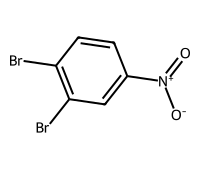
P (Product)
product 'P' formed is :
निम्नलिखित प्रतिस्थापन अभिक्रिया में:
P (उत्पाद)
बनने वाला उत्पाद 'P' है:
- A
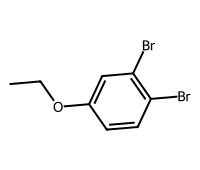
- B
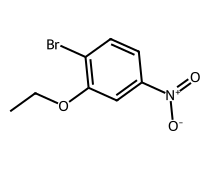
- C
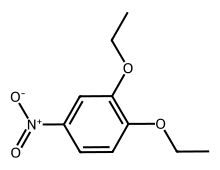
- D
Show answer
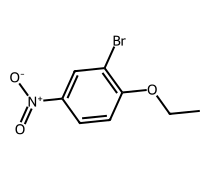
Concept: In nucleophilic aromatic substitution the −NO2 group activates only the halogens ortho/para to it (the Meisenheimer intermediate is stabilised by resonance with −NO2).
- The substrate is 1,2-dibromo-4-nitrobenzene: one Br is para to −NO2, the other Br is meta.
- C2H5O− displaces only the para-Br; the meta-Br is not activated and stays.
- P = 2-bromo-1-ethoxy-4-nitrobenzene – option (D).
- (A) wrongly replaces −NO2; (B) replaces the unactivated meta-Br; (C) replaces both bromines.
Short trick: In SNAr, count positions from NO2: only ortho/para halogen leaves.
Answer: (D)
अवधारणा: नाभिकस्नेही ऐरोमैटिक प्रतिस्थापन में −NO2 समूह केवल अपने ortho/para हैलोजनों को सक्रिय करता है (माइज़ेनहाइमर मध्यवर्ती −NO2 से अनुनाद द्वारा स्थायी होता है)।
- क्रियाधार 1,2-डाइब्रोमो-4-नाइट्रोबेंजीन है: एक Br, −NO2 के para में तथा दूसरा Br meta में है।
- C2H5O− केवल para-Br को विस्थापित करता है; meta-Br सक्रिय नहीं है, वह बना रहता है।
- P = 2-ब्रोमो-1-एथॉक्सी-4-नाइट्रोबेंजीन – विकल्प (D)।
- (A) में गलत ढंग से −NO2 प्रतिस्थापित है; (B) में असक्रिय meta-Br प्रतिस्थापित है; (C) में दोनों ब्रोमीन प्रतिस्थापित हैं।
शॉर्ट ट्रिक: SNAr में NO2 से स्थिति गिनिए: केवल ortho/para हैलोजन ही निकलता है।
उत्तर: (D)
JEE Main 2025 (January) – Paper 1 (B.E./B.Tech)ChemistryHaloarenes – nucleophilic aromatic substitutionJEE Main 2025 (January) – Paper 1 (B.E./B.Tech) 2025 · 29 Jan Shift 1
Q145.The correct increasing order of stability of the complexes based on Δo value is :
I. [Mn(CN)6]3− II. [Co(CN)6]4− III. [Fe(CN)6]4− IV. [Fe(CN)6]3−
Δo मान के आधार पर संकुलों के स्थायित्व का सही बढ़ता क्रम है:
I. [Mn(CN)6]3− II. [Co(CN)6]4− III. [Fe(CN)6]4− IV. [Fe(CN)6]3−
- AIV III II I
- BI II IV III
- CIII II IV I
- DII III I IV
Show answer
Concept: CN− is a strong-field ligand → all complexes are low spin; stability follows the crystal-field stabilisation energy (in units of Δo).
- I. [Mn(CN)6]3−: Mn3+ d4 → t2g4 → CFSE = −1.6 Δo.
- II. [Co(CN)6]4−: Co2+ d7 → t2g6eg1 → CFSE = −1.8 Δo.
- IV. [Fe(CN)6]3−: Fe3+ d5 → t2g5 → CFSE = −2.0 Δo.
- III. [Fe(CN)6]4−: Fe2+ d6 → t2g6 → CFSE = −2.4 Δo (maximum).
- More negative CFSE = more stable → I II IV III.
Short trick: Low-spin CFSE (−0.4 × number of t2g electrons + 0.6 × eg): d6 (t2g6) is always the champion.
Answer: (B)
अवधारणा: CN− प्रबल क्षेत्र लिगन्ड है → सभी संकुल निम्न-चक्रण हैं; स्थायित्व क्रिस्टल-क्षेत्र स्थायीकरण ऊर्जा (Δo इकाई में) के अनुसार होता है।
- I. [Mn(CN)6]3−: Mn3+ d4 → t2g4 → CFSE = −1.6 Δo।
- II. [Co(CN)6]4−: Co2+ d7 → t2g6eg1 → CFSE = −1.8 Δo।
- IV. [Fe(CN)6]3−: Fe3+ d5 → t2g5 → CFSE = −2.0 Δo।
- III. [Fe(CN)6]4−: Fe2+ d6 → t2g6 → CFSE = −2.4 Δo (अधिकतम)।
- जितनी अधिक ऋणात्मक CFSE, उतना अधिक स्थायित्व → I II IV III।
शॉर्ट ट्रिक: निम्न-चक्रण CFSE (−0.4 × t2g इलेक्ट्रॉन + 0.6 × eg): d6 (t2g6) सदैव सबसे आगे।
उत्तर: (B)
JEE Main 2025 (January) – Paper 1 (B.E./B.Tech)ChemistryCoordination compounds – CFSE & stabilityJEE Main 2025 (January) – Paper 1 (B.E./B.Tech) 2025 · 29 Jan Shift 1
Q146.The molar mass of the water insoluble product formed from the fusion of chromite ore (FeCr2O4) with Na2CO3 in presence of O2 is _______ g mol−1.
क्रोमाइट अयस्क (FeCr2O4) के Na2CO3 के साथ O2 की उपस्थिति में संगलन से बनने वाले जल में अविलेय उत्पाद का मोलर द्रव्यमान _______ g mol−1 है।
Show answer
Concept: The first step of chromium extraction/dichromate manufacture is alkaline oxidative fusion of chromite.
- 4FeCr2O4 + 8Na2CO3 + 7O2 → 8Na2CrO4 + 2Fe2O3 + 8CO2.
- Na2CrO4 (yellow) is water soluble and is leached out; Fe2O3 is the water-insoluble residue.
- M(Fe2O3) = 2 × 56 + 3 × 16 = 112 + 48 = 160 g mol−1.
Short trick: Chromite fusion → soluble chromate + insoluble Fe2O3; remember Fe2O3 = 160.
Answer: 160
अवधारणा: क्रोमियम निष्कर्षण/डाइक्रोमेट निर्माण का पहला चरण क्रोमाइट का क्षारीय ऑक्सीकारी संगलन है।
- 4FeCr2O4 + 8Na2CO3 + 7O2 → 8Na2CrO4 + 2Fe2O3 + 8CO2।
- Na2CrO4 (पीला) जल में विलेय है और निक्षालित हो जाता है; Fe2O3 जल में अविलेय अवशेष है।
- M(Fe2O3) = 2 × 56 + 3 × 16 = 112 + 48 = 160 g mol−1।
शॉर्ट ट्रिक: क्रोमाइट संगलन → विलेय क्रोमेट + अविलेय Fe2O3; Fe2O3 = 160 याद रखिए।
उत्तर: 160
JEE Main 2025 (January) – Paper 1 (B.E./B.Tech)Chemistryd- & f-block – chromite ore chemistryJEE Main 2025 (January) – Paper 1 (B.E./B.Tech) 2025 · 29 Jan Shift 1
Q147.Given below are some nitrogen containing compounds
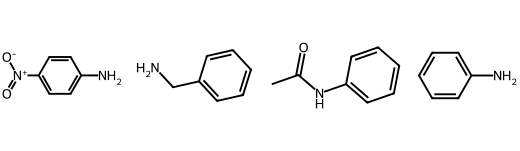
Each of them is treated with HCl separately. 1.0 g of the most basic compound will consume _______ mg of HCl.
(Given molar mass in g mol
−1 C : 12, H : 1, O : 16, Cl : 35.5)
नीचे कुछ नाइट्रोजन युक्त यौगिक दिए गए हैं
प्रत्येक को अलग-अलग HCl से उपचारित किया जाता है। सबसे अधिक क्षारकीय यौगिक का 1.0 g _______ mg HCl का उपभोग करेगा।
(मोलर द्रव्यमान g mol
−1 में दिए हैं: C : 12, H : 1, O : 16, Cl : 35.5)
Show answer
Concept: An sp3 benzylic amine is far more basic than aryl amines (lone pair delocalised into the ring) or an amide (lone pair tied up with C=O).
- Basicity: PhCH2NH2 > aniline > 4-nitroaniline > acetanilide. The most basic compound is benzylamine, C6H5CH2NH2.
- M(C7H9N) = 7 × 12 + 9 × 1 + 14 = 107 g mol−1; moles in 1.0 g = .
- 1 mol amine neutralises 1 mol HCl (M = 36.5): mass of HCl = .
Short trick: mg of HCl per gram = ; with M = 107 → 341 mg.
Answer: 341
अवधारणा: sp3 बेंज़िलिक ऐमीन, ऐरिल ऐमीनों (एकाकी युग्म वलय में विस्थानीकृत) या ऐमाइड (एकाकी युग्म C=O से बँधा) की तुलना में कहीं अधिक क्षारकीय होती है।
- क्षारकता: PhCH2NH2 > ऐनिलीन > 4-नाइट्रोऐनिलीन > ऐसीटैनिलाइड। सबसे अधिक क्षारकीय यौगिक बेंज़िलऐमीन, C6H5CH2NH2 है।
- M(C7H9N) = 7 × 12 + 9 × 1 + 14 = 107 g mol−1; 1.0 g में मोल = ।
- 1 mol ऐमीन 1 mol HCl (M = 36.5) को उदासीन करती है: HCl का द्रव्यमान = ।
शॉर्ट ट्रिक: प्रति ग्राम HCl (mg में) = ; M = 107 → 341 mg।
उत्तर: 341
JEE Main 2025 (January) – Paper 1 (B.E./B.Tech)ChemistryAmines – basicityJEE Main 2025 (January) – Paper 1 (B.E./B.Tech) 2025 · 29 Jan Shift 1
Q148.The sum of sigma (σ) and pi (π) bonds in Hex-1,3-dien-5-yne is _______.
हेक्स-1,3-डाईन-5-आइन (Hex-1,3-dien-5-yne) में सिग्मा (σ) तथा पाई (π) आबंधों का योग _______ है।
Show answer
Concept: Every single bond = 1 σ; a double bond = 1 σ + 1 π; a triple bond = 1 σ + 2 π.
- Hex-1,3-dien-5-yne: CH2=CH−CH=CH−C≡CH.
- σ bonds: 5 C−C + 6 C−H = 11.
- π bonds: 2 (from the two C=C) + 2 (from C≡C) = 4.
- Total = 11 + 4 = 15.
Short trick: For C6H6 chains: σ = atoms − 1 = 11; π = degree of unsaturation = 4 → 15.
Answer: 15
अवधारणा: प्रत्येक एकल आबंध = 1 σ; द्विआबंध = 1 σ + 1 π; त्रिआबंध = 1 σ + 2 π।
- हेक्स-1,3-डाईन-5-आइन: CH2=CH−CH=CH−C≡CH।
- σ आबंध: 5 C−C + 6 C−H = 11।
- π आबंध: 2 (दोनों C=C से) + 2 (C≡C से) = 4।
- योग = 11 + 4 = 15।
शॉर्ट ट्रिक: C6H6 शृंखला में: σ = परमाणु − 1 = 11; π = असंतृप्तता की मात्रा = 4 → 15।
उत्तर: 15
JEE Main 2025 (January) – Paper 1 (B.E./B.Tech)ChemistryChemical bonding – σ and π bond countJEE Main 2025 (January) – Paper 1 (B.E./B.Tech) 2025 · 29 Jan Shift 1
Q149.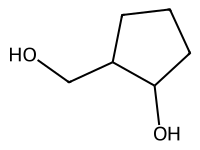
P
Q
R
'S'
0.1 mole of compound ' S ' will weigh _______ g. (Given molar mass in g mol
−1 C : 12, H : 1, O : 16)
P
Q
R
'S'
यौगिक ' S ' के 0.1 मोल का भार _______ g होगा। (मोलर द्रव्यमान g mol
−1 में दिए हैं: C : 12, H : 1, O : 16)
Show answer
Concept: Excess CrO3 oxidises a 2° alcohol to a ketone and a 1° alcohol all the way to a carboxylic acid; ethylene glycol protects only the ketone; a Grignard reagent is simply destroyed (as CH4) by the acidic –COOH proton.
- Substrate = 2-(hydroxymethyl)cyclopentan-1-ol (C6H12O2). CrO3 (excess): ring −OH → C=O, −CH2OH → −COOH; P = 2-oxocyclopentane-1-carboxylic acid.
- One mole HO−CH2−CH2−OH/H+ converts the ketone into its cyclic acetal (1,3-dioxolane); the −COOH does not form an acetal → Q.
- CH3MgI only removes the acidic proton of −COOH (CH4 is evolved, −COO−MgI+ is not attacked); H3O+ workup regenerates −COOH and hydrolyses the acetal → R = 2-oxocyclopentane-1-carboxylic acid again.
- NaBH4 reduces the ketone (not the acid) → S = 2-hydroxycyclopentane-1-carboxylic acid, C6H10O3.
- M(S) = 6 × 12 + 10 × 1 + 3 × 16 = 72 + 10 + 48 = 130 g mol−1; 0.1 mol weighs 0.1 × 130 = 13 g.
Short trick: Grignard + free –COOH = just an acid–base reaction; the sequence only turns –CH2OH into –COOH: C6H12O2 (116) − 2H + O → C6H10O3 (130) → 13 g.
Answer: 13
अवधारणा: आधिक्य CrO3 द्वितीयक ऐल्कोहॉल को कीटोन में तथा प्राथमिक ऐल्कोहॉल को सीधे कार्बोक्सिलिक अम्ल तक ऑक्सीकृत करता है; एथिलीन ग्लाइकॉल केवल कीटोन को संरक्षित करता है; –COOH का अम्लीय प्रोटॉन ग्रिग्नार्ड अभिकर्मक को (CH4 के रूप में) नष्ट कर देता है।
- क्रियाधार = 2-(हाइड्रॉक्सीमेथिल)साइक्लोपेन्टेन-1-ऑल (C6H12O2)। CrO3 (आधिक्य): वलय −OH → C=O, −CH2OH → −COOH; P = 2-ऑक्सोसाइक्लोपेन्टेन-1-कार्बोक्सिलिक अम्ल।
- एक मोल HO−CH2−CH2−OH/H+ कीटोन को उसके चक्रीय ऐसीटैल (1,3-डाइऑक्सोलेन) में बदलता है; −COOH ऐसीटैल नहीं बनाता → Q।
- CH3MgI केवल −COOH का अम्लीय प्रोटॉन हटाता है (CH4 मुक्त होती है, −COO−MgI+ पर आक्रमण नहीं होता); H3O+ कार्य-उपचार −COOH को पुनः बनाता है तथा ऐसीटैल का जल-अपघटन करता है → R = पुनः 2-ऑक्सोसाइक्लोपेन्टेन-1-कार्बोक्सिलिक अम्ल।
- NaBH4 कीटोन को (अम्ल को नहीं) अपचयित करता है → S = 2-हाइड्रॉक्सीसाइक्लोपेन्टेन-1-कार्बोक्सिलिक अम्ल, C6H10O3।
- M(S) = 6 × 12 + 10 × 1 + 3 × 16 = 72 + 10 + 48 = 130 g mol−1; 0.1 mol का भार = 0.1 × 130 = 13 g।
शॉर्ट ट्रिक: ग्रिग्नार्ड + मुक्त –COOH = केवल अम्ल–क्षार अभिक्रिया; पूरा क्रम केवल –CH2OH को –COOH में बदलता है: C6H12O2 (116) − 2H + O → C6H10O3 (130) → 13 g।
उत्तर: 13
JEE Main 2025 (January) – Paper 1 (B.E./B.Tech)ChemistryAlcohols & carbonyls – multistep synthesisJEE Main 2025 (January) – Paper 1 (B.E./B.Tech) 2025 · 29 Jan Shift 1
Q150.If is 30% ionised in an aqueous solution, then the value of van't Hoff factor () is ______ .
यदि जलीय विलयन में 30% आयनित होता है, तो वान्ट हॉफ गुणांक () का मान ______ है।
Show answer
Concept: For dissociation into particles, .
- gives particles.
- , so .
- → required value is 16.
Short trick: for any AB2/A2B type salt.
Answer: 16
अवधारणा: कणों में वियोजन के लिए ।
- से कण मिलते हैं।
- , अतः ।
- → अभीष्ट मान 16।
शॉर्ट ट्रिक: किसी भी AB2/A2B प्रकार के लवण के लिए ।
उत्तर: 16
JEE Main 2025 (January) – Paper 1 (B.E./B.Tech)ChemistrySolutions – van't Hoff factorJEE Main 2025 (January) – Paper 1 (B.E./B.Tech) 2025 · 29 Jan Shift 1
Q151.Let and , . If , and the sum of the diagonal elements of is , where , then is :
माना तथा , हैं। यदि , तथा के विकर्ण अवयवों का योग है, जहाँ , तो है :
- A
- B
- C
- D
Show answer
Concept: is a rotation matrix, so ; conjugation by disappears when we undo it.
- , since all the inner factors collapse to .
- Hence .
- is upper triangular, so is upper triangular with diagonal entries and .
- Sum of diagonal elements of , with .
- .
Short trick: For a triangular matrix, the diagonal of any power is just the power of the diagonal – never multiply the whole matrix.
Answer: (C)
अवधारणा: एक घूर्णन आव्यूह (rotation matrix) है, अतः ; द्वारा समरूपता उलटने पर समाप्त हो जाती है।
- , क्योंकि बीच के सभी गुणनखंड बन जाते हैं।
- अतः ।
- ऊपरी त्रिभुजाकार (upper triangular) है, अतः भी ऊपरी त्रिभुजाकार है जिसके विकर्ण अवयव तथा हैं।
- के विकर्ण अवयवों का योग , जहाँ ।
- ।
शॉर्ट ट्रिक: त्रिभुजाकार आव्यूह की किसी भी घात का विकर्ण, विकर्ण अवयवों की वही घात होता है – पूरा आव्यूह गुणा करने की आवश्यकता नहीं।
उत्तर: (C)
JEE Main 2025 (January) – Paper 1 (B.E./B.Tech)MathematicsMatrices – powers and orthogonal similarityJEE Main 2025 (January) – Paper 1 (B.E./B.Tech) 2025 · 28 Jan Shift 2
Q152.If the components of along and perpendicular to respectively, are and , then is equal to :
यदि के, के अनुदिश तथा लंबवत घटक क्रमशः तथा हैं, तो बराबर है :
- A
- B
- C
- D
Show answer
Concept: A vector is the sum of its components along and perpendicular to any vector: .
- .
- .
- So (check: , consistent with ).
- .
Short trick: No projection formula needed – just add the two given components to recover .
Answer: (A)
अवधारणा: कोई सदिश, किसी सदिश के अनुदिश तथा लंबवत घटकों का योग होता है: ।
- ।
- ।
- अतः (जाँच: , जो से संगत है)।
- ।
शॉर्ट ट्रिक: प्रक्षेप सूत्र की आवश्यकता नहीं – दिए गए दोनों घटकों को जोड़कर सीधे प्राप्त कर लीजिए।
उत्तर: (A)
JEE Main 2025 (January) – Paper 1 (B.E./B.Tech)MathematicsVector algebra – projection of a vectorJEE Main 2025 (January) – Paper 1 (B.E./B.Tech) 2025 · 28 Jan Shift 2
Q153.Let A, B, C be three points in -plane, whose position vector are given by , and respectively with respect to the origin O. If the distance of the point C from the line bisecting the angle between the vectors and is , then the sum of all the possible values of is :
माना -समतल में तीन बिंदु A, B, C हैं, जिनके मूलबिंदु O के सापेक्ष स्थिति सदिश क्रमशः , तथा हैं। यदि सदिशों तथा के बीच के कोण को समद्विभाजित करने वाली रेखा से बिंदु C की दूरी है, तो के सभी संभव मानों का योग है :
- A
- B
- C
- D
Show answer
Concept: The internal bisector of the angle between two vectors of equal magnitude is along their sum.
- and , equal magnitudes.
- Bisector direction , i.e. the line .
- Distance of from : .
- or .
- Sum of all possible values .
Short trick: Equal-length vectors bisector is simply along ; here both have length 2, giving the line instantly.
Answer: (C)
अवधारणा: समान परिमाण वाले दो सदिशों के बीच के कोण का आंतरिक समद्विभाजक उनके योग के अनुदिश होता है।
- तथा , अर्थात परिमाण समान हैं।
- समद्विभाजक की दिशा , अर्थात रेखा ।
- की से दूरी: ।
- अथवा ।
- सभी संभव मानों का योग ।
शॉर्ट ट्रिक: समान लंबाई के सदिश समद्विभाजक सीधे के अनुदिश; यहाँ दोनों की लंबाई 2 है, अतः तुरंत रेखा मिलती है।
उत्तर: (C)
JEE Main 2025 (January) – Paper 1 (B.E./B.Tech)MathematicsVector algebra – angle bisector and distanceJEE Main 2025 (January) – Paper 1 (B.E./B.Tech) 2025 · 28 Jan Shift 2
Q154.Let the coefficients of three consecutive terms , and in the binomial expansion of be in a G.P. and let be the number of all possible values of . Let be the sum of all rational terms in the binomial expansion of . Then is equal to :
माना के द्विपद प्रसार में तीन क्रमागत पदों , तथा के गुणांक गुणोत्तर श्रेणी (G.P.) में हैं तथा के सभी संभव मानों की संख्या है। माना के द्विपद प्रसार के सभी परिमेय पदों का योग है। तब बराबर है :
- A
- B
- C
- D
Show answer
Concept: Consecutive binomial coefficients satisfy ; a term of is rational when all surd exponents become integers.
- Coefficients of are . G.P. needs , i.e. .
- Cross-multiplying: , impossible. So .
- General term of : — rational when and , i.e. and , so or .
- : ; : . Hence .
- .
Short trick: Binomial coefficients can never be in G.P. ( always), so without solving.
Answer: (A)
अवधारणा: क्रमागत द्विपद गुणांकों के लिए ; का कोई पद परिमेय होता है जब सभी करणी घातें पूर्णांक बन जाएँ।
- के गुणांक हैं। G.P. के लिए , अर्थात ।
- वज्र-गुणन से: , जो असंभव है। अतः ।
- का व्यापक पद: — यह परिमेय होगा जब तथा , अर्थात तथा , अतः या ।
- : ; : । अतः ।
- ।
शॉर्ट ट्रिक: द्विपद गुणांक कभी G.P. में नहीं हो सकते ( सदैव), अतः बिना हल किए ।
उत्तर: (A)
JEE Main 2025 (January) – Paper 1 (B.E./B.Tech)MathematicsBinomial theorem – G.P. coefficients and rational termsJEE Main 2025 (January) – Paper 1 (B.E./B.Tech) 2025 · 28 Jan Shift 2
Q155.Let denote the greatest integer less than or equal to . Then the domain of is :
माना , से छोटे या बराबर महत्तम पूर्णांक को दर्शाता है। तब का प्रांत (domain) है :
- A
- B
- C
- D
Show answer
Concept: is defined for , i.e. or .
- Need or .
- , which holds for every .
- , which holds for every .
- Every real number satisfies one of the two, so the domain is .
Short trick: is always an odd integer, and every odd integer has modulus – so the domain is all of at sight.
Answer: (C)
अवधारणा: केवल के लिए परिभाषित है, अर्थात या ।
- आवश्यक है: अथवा ।
- , जो प्रत्येक के लिए सत्य है।
- , जो प्रत्येक के लिए सत्य है।
- प्रत्येक वास्तविक संख्या इनमें से किसी एक को संतुष्ट करती है, अतः प्रांत है।
शॉर्ट ट्रिक: सदैव एक विषम पूर्णांक है और प्रत्येक विषम पूर्णांक का मापांक होता है – अतः प्रांत तुरंत संपूर्ण ।
उत्तर: (C)
JEE Main 2025 (January) – Paper 1 (B.E./B.Tech)MathematicsFunctions – domain with greatest integer functionJEE Main 2025 (January) – Paper 1 (B.E./B.Tech) 2025 · 28 Jan Shift 2
Q156.Let S be the set of all the words that can be formed by arranging all the letters of the word GARDEN. From the set S, one word is selected at random. The probability that the selected word will NOT have vowels in alphabetical order is :
माना शब्द GARDEN के सभी अक्षरों को व्यवस्थित करके बनने वाले सभी शब्दों का समुच्चय S है। समुच्चय S में से एक शब्द यादृच्छया चुना जाता है। चुने गए शब्द में स्वरों (vowels) के वर्णमाला-क्रम में नहीं होने की प्रायिकता है :
- A
- B
- C
- D
Show answer
Concept: By symmetry, among all arrangements of distinct letters, any fixed set of letters appears in a given relative order in an equal share of the arrangements.
- GARDEN has 6 distinct letters; vowels are A and E, so there are possible relative orders of the vowels.
- In exactly half of the words A comes before E (alphabetical order), and in the other half E comes before A.
- P(vowels NOT in alphabetical order) .
Short trick: For distinct letters, each of the relative orders is equally likely; here gives probability at once.
Answer: (A)
अवधारणा: सममिति से, भिन्न-भिन्न अक्षरों के सभी विन्यासों में, किसी निश्चित अक्षर-समूह का कोई दिया हुआ सापेक्ष क्रम बराबर अनुपात में आता है।
- GARDEN में 6 भिन्न अक्षर हैं; स्वर A तथा E हैं, अतः स्वरों के सापेक्ष क्रम संभव हैं।
- शब्दों में से ठीक आधे में A, E से पहले आता है (वर्णमाला-क्रम) तथा शेष आधे में E, A से पहले।
- P(स्वर वर्णमाला-क्रम में नहीं) ।
शॉर्ट ट्रिक: भिन्न अक्षरों के सापेक्ष क्रम समसंभाव्य होते हैं; यहाँ से प्रायिकता तुरंत ।
उत्तर: (A)
JEE Main 2025 (January) – Paper 1 (B.E./B.Tech)MathematicsProbability – arrangements with order conditionJEE Main 2025 (January) – Paper 1 (B.E./B.Tech) 2025 · 28 Jan Shift 2
Q157.If , , then is equal to :
यदि , , तो बराबर है :
- A
- B
- C
- D
Show answer
Concept: When the two angles differ by a constant , , which telescopes.
- Here , and .
- .
- Sum telescopes: ; since , the last angle is .
- , so the sum .
- .
Short trick: in the numerator as instantly produces .
Answer: (D)
अवधारणा: जब दोनों कोणों का अंतर अचर हो, तो , जो दूरबीनी (telescoping) योग देता है।
- यहाँ , तथा ।
- ।
- योग दूरबीनी रूप में सिमटता है: ; चूँकि , अंतिम कोण है।
- , अतः योग ।
- ।
शॉर्ट ट्रिक: अंश में को लिखते ही मिल जाता है।
उत्तर: (D)
JEE Main 2025 (January) – Paper 1 (B.E./B.Tech)MathematicsTrigonometry – telescoping sum with cotangentsJEE Main 2025 (January) – Paper 1 (B.E./B.Tech) 2025 · 28 Jan Shift 2
Q158.Let be a real valued continuous function defined on the positive real axis such that . If , then value of is :
माना धनात्मक वास्तविक अक्ष पर परिभाषित एक वास्तविक मान सतत फलन इस प्रकार है कि है। यदि , तो का मान है :
- A
- B
- C
- D
Show answer
Concept: Differentiate using the chain rule with .
- .
- RHS derivative: . Hence .
- .
- .
Short trick: Never find itself – the sum needs only , which the derivative gives directly as .
Answer: (D)
अवधारणा: के साथ शृंखला नियम (chain rule) से का अवकलन कीजिए।
- ।
- दाएँ पक्ष का अवकलज: । अतः ।
- ।
- ।
शॉर्ट ट्रिक: स्वयं निकालने की आवश्यकता नहीं – योग में केवल चाहिए, जो अवकलन से सीधे मिलता है।
उत्तर: (D)
JEE Main 2025 (January) – Paper 1 (B.E./B.Tech)MathematicsDefinite integration – Leibniz ruleJEE Main 2025 (January) – Paper 1 (B.E./B.Tech) 2025 · 28 Jan Shift 2
Q159.Let be defined by and be defined by . If both the functions are onto and , then is equal to :
माना , द्वारा परिभाषित है तथा , द्वारा परिभाषित है। यदि दोनों फलन आच्छादक (onto) हैं तथा या , तो बराबर है :
- A
- B
- C
- D
Show answer
Concept: Onto means the codomains , are exactly the ranges; find each range and count the integers in their union.
- : increases on , decreases on .
- , , . So .
- ; is increasing on and but never reaches 1, so .
- Integers in : , i.e. integers; integer in : only .
- .
Short trick: The minimum of on is at an end point (), max at the interior critical point – just three values decide .
Answer: (B)
अवधारणा: आच्छादक का अर्थ है कि सहप्रांत , ठीक परिसर (range) हैं; प्रत्येक परिसर निकालकर उनके सम्मिलन के पूर्णांक गिनिए।
- : , पर वर्धमान तथा पर ह्रासमान है।
- , , । अतः ।
- ; , पर वर्धमान है तथा परंतु कभी 1 नहीं होता, अतः ।
- के पूर्णांक: , अर्थात पूर्णांक; का पूर्णांक: केवल ।
- ।
शॉर्ट ट्रिक: पर का निम्निष्ठ किसी छोर पर है () और उच्चिष्ठ आंतरिक क्रांतिक बिंदु पर – केवल तीन मान तय कर देते हैं।
उत्तर: (B)
JEE Main 2025 (January) – Paper 1 (B.E./B.Tech)MathematicsFunctions – range of onto functionsJEE Main 2025 (January) – Paper 1 (B.E./B.Tech) 2025 · 28 Jan Shift 2
Q160.Bag contains 6 white and 4 blue balls, Bag contains 4 white and 6 blue balls, and Bag contains 5 white and 5 blue balls. One of the bags is selected at random and a ball is drawn from it. If the ball is white, then the probability, that the ball is drawn from Bag , is :
थैले में 6 सफेद तथा 4 नीली गेंदें, थैले में 4 सफेद तथा 6 नीली गेंदें और थैले में 5 सफेद तथा 5 नीली गेंदें हैं। थैलों में से एक थैला यादृच्छया चुना जाता है और उसमें से एक गेंद निकाली जाती है। यदि गेंद सफेद है, तो इस गेंद के थैले से निकाले जाने की प्रायिकता है :
- A
- B
- C
- D
Show answer
Concept: Bayes' theorem: .
- Each bag is chosen with probability ; , , .
- .
- .
Short trick: Equal priors and equal bag sizes – the posterior is just the white-ball counts ratio: .
Answer: (A)
अवधारणा: बेज़ प्रमेय: ।
- प्रत्येक थैला प्रायिकता से चुना जाता है; , , ।
- ।
- ।
शॉर्ट ट्रिक: समान पूर्व-प्रायिकताएँ तथा समान आकार के थैले – उत्तर सीधे सफेद गेंदों की संख्या का अनुपात: ।
उत्तर: (A)
JEE Main 2025 (January) – Paper 1 (B.E./B.Tech)MathematicsProbability – Bayes' theoremJEE Main 2025 (January) – Paper 1 (B.E./B.Tech) 2025 · 28 Jan Shift 2

