NEET UG · 2,240 questions

NEET UG 2015, 2016, 2017, 2018, 2019, 2020, 2021, 2022, 2023, 2024, 2025, 2026 PYQs

Real previous year questions, subject-wise. Try the question, then open the answer and the explanation in Hindi & English – free, no login.

Courses – airGurukul

2,240 questions.

Q1981.
Mitochondria and chloroplast are:
(i) Semi – autonomous organelles
(ii) Formed by division of pre – existing organelles and they contain DNA but lack protein synthesizing machinery
Which one of the following options is correct?
माइटोकॉन्ड्रिया तथा हरितलवक:
(i) अर्ध-स्वायत्त अंगक हैं
(ii) पूर्व-स्थित अंगकों के विभाजन से बनते हैं तथा इनमें DNA होता है परंतु प्रोटीन संश्लेषण तंत्र नहीं होता
निम्नलिखित में से कौन-सा विकल्प सही है?
  1. ABoth (i) and (ii) are correct(i) और (ii) दोनों सही हैं
  2. B(ii) is true but (i) is false(ii) सत्य है परंतु (i) असत्य है
  3. C(i) is true but (ii) is false(i) सत्य है परंतु (ii) असत्य है
  4. DBoth (i) and (ii) are false(i) और (ii) दोनों असत्य हैं
Show answer

Concept: NCERT: mitochondria and chloroplasts are semi-autonomous – they have their own circular DNA, RNA and 70S ribosomes, so they can make some of their own proteins; they arise by division of pre-existing ones.

  1. (i) Semi-autonomous – true.
  2. (ii) First half (division of pre-existing organelles, contain DNA) is true, but “lack protein synthesizing machinery” is false – they have 70S ribosomes. So (ii) as a whole is false.
  3. Hence (i) true, (ii) false → (C).

Short trick: Semi-autonomous = own DNA + own 70S ribosomes; a statement is false if any part is false.

Answer: (C) (i) is true but (ii) is false

अवधारणा: NCERT: माइटोकॉन्ड्रिया और हरितलवक अर्ध-स्वायत्त हैं – इनमें अपना वृत्ताकार DNA, RNA और 70S राइबोसोम होते हैं, अतः ये अपने कुछ प्रोटीन स्वयं बना सकते हैं; ये पूर्व-स्थित अंगकों के विभाजन से बनते हैं।

  1. (i) अर्ध-स्वायत्त – सत्य।
  2. (ii) पहला भाग (पूर्व-स्थित अंगकों का विभाजन, DNA उपस्थित) सत्य है, पर “प्रोटीन संश्लेषण तंत्र नहीं होता” असत्य है – इनमें 70S राइबोसोम होते हैं। अतः (ii) पूर्ण रूप से असत्य है।
  3. अतः (i) सत्य, (ii) असत्य → (C)।

शॉर्ट ट्रिक: अर्ध-स्वायत्त = अपना DNA + अपने 70S राइबोसोम; कथन का कोई भी भाग गलत हो तो पूरा कथन गलत।

उत्तर: (C) (i) सत्य है परंतु (ii) असत्य है
NEET UGBiologyCell – mitochondria and plastidsNEET UG 2016 · 1 May Shift 1
Q1982.
In context of Amniocentesis, which of the following statement is incorrect?
उल्ववेधन (Amniocentesis) के संदर्भ में निम्नलिखित में से कौन-सा कथन गलत है?
  1. AIt is usually done when a woman is between 14 – 16 weeks pregnantयह सामान्यतः तब किया जाता है जब स्त्री 14 – 16 सप्ताह की गर्भवती हो
  2. BIt is used for prenatal sex determinationइसका उपयोग प्रसवपूर्व लिंग निर्धारण के लिए होता है
  3. CIt can be used for detection of Down syndromeइसका उपयोग डाउन सिंड्रोम की पहचान के लिए किया जा सकता है
  4. DIt can be used for detection of Cleft palateइसका उपयोग कटे तालु (Cleft palate) की पहचान के लिए किया जा सकता है
Show answer

Concept: Amniocentesis: a little amniotic fluid (with foetal cells) is drawn, usually at 14–16 weeks, and the cells are karyotyped/tested – it detects chromosomal and some genetic disorders and reveals foetal sex.

  1. (A) Correct – done around 14–16 weeks.
  2. (B) Correct – it reveals sex (hence statutory ban on its misuse for sex determination).
  3. (C) Correct – trisomy 21 is seen in the karyotype.
  4. (D) Incorrect – cleft palate is a structural (developmental) defect, not detected by analysing amniotic cells; it is seen on ultrasound → answer.

Short trick: Amniocentesis tests cells/chromosomes, not shape – shape defects need imaging.

Answer: (D) It can be used for detection of Cleft palate

अवधारणा: उल्ववेधन: सामान्यतः 14–16 सप्ताह पर थोड़ा उल्व द्रव (भ्रूण कोशिकाओं सहित) निकालकर कोशिकाओं का कैरियोटाइप/परीक्षण किया जाता है – इससे गुणसूत्रीय व कुछ आनुवंशिक विकारों का तथा भ्रूण के लिंग का पता चलता है।

  1. (A) सही – लगभग 14–16 सप्ताह पर किया जाता है।
  2. (B) सही – इससे लिंग ज्ञात होता है (इसीलिए लिंग निर्धारण हेतु इसके दुरुपयोग पर वैधानिक प्रतिबंध है)।
  3. (C) सही – कैरियोटाइप में ट्राइसोमी 21 दिखाई देती है।
  4. (D) गलत – कटा तालु एक संरचनात्मक (परिवर्धनीय) दोष है, उल्व कोशिकाओं के विश्लेषण से नहीं पहचाना जाता; यह अल्ट्रासाउंड में दिखता है → उत्तर।

शॉर्ट ट्रिक: उल्ववेधन कोशिकाएँ/गुणसूत्र जाँचता है, आकृति नहीं – आकृति दोषों के लिए इमेजिंग चाहिए।

उत्तर: (D) इसका उपयोग कटे तालु की पहचान के लिए किया जा सकता है

NEET UGBiologyReproductive health – amniocentesisNEET UG 2016 · 1 May Shift 1
Q1983.
In a chloroplast the highest number of protons are found in:
हरितलवक में सर्वाधिक प्रोटॉन कहाँ पाए जाते हैं?
  1. AStromaस्ट्रोमा
  2. BLumen of thylakoidsथाइलेकॉइड की अवकाशिका (lumen)
  3. CInter membrane spaceअंतराझिल्ली अवकाश
  4. DAntennae complexएंटेना सम्मिश्र
Show answer

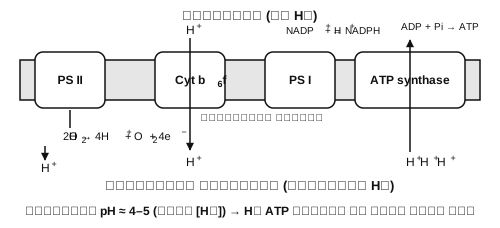
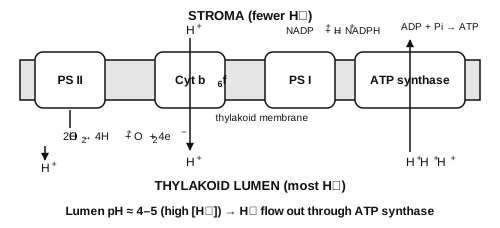
Concept: Chemiosmotic hypothesis (NCERT): during the light reaction protons accumulate inside the thylakoid lumen, creating a proton gradient across the thylakoid membrane that drives ATP synthase.

  1. Splitting of water (PS II) occurs on the lumen side → H+ released into the lumen.
  2. Electron transport through the cytochrome b6f complex pumps H+ from stroma into the lumen.
  3. NADP reductase on the stroma side removes H+ from the stroma.
  4. So H+ concentration is highest in the thylakoid lumen → (B).
  5. (A) Stroma becomes H+-poor; (C) the intermembrane space is the high-H+ site in mitochondria; (D) the antenna complex is a pigment array, not a proton store.

Short trick: Chloroplast: H+ pile up inside (lumen) and flow out to stroma to make ATP; mitochondria: H+ pile up in the intermembrane space.

Answer: (B) Lumen of thylakoids

अवधारणा: रसोपरासरणी परिकल्पना (NCERT): प्रकाश अभिक्रिया के दौरान प्रोटॉन थाइलेकॉइड अवकाशिका के भीतर एकत्र होते हैं, जिससे थाइलेकॉइड झिल्ली के आर-पार प्रोटॉन प्रवणता बनती है जो ATP सिंथेज को चलाती है।

  1. जल का विघटन (PS II) अवकाशिका की ओर होता है → H+ अवकाशिका में मुक्त होते हैं।
  2. साइटोक्रोम b6f सम्मिश्र से इलेक्ट्रॉन परिवहन H+ को स्ट्रोमा से अवकाशिका में पंप करता है।
  3. स्ट्रोमा की ओर स्थित NADP रिडक्टेज स्ट्रोमा से H+ हटाता है।
  4. अतः H+ सांद्रता थाइलेकॉइड अवकाशिका में सर्वाधिक होती है → (B)।
  5. (A) स्ट्रोमा में H+ कम हो जाते हैं; (C) अंतराझिल्ली अवकाश माइटोकॉन्ड्रिया में उच्च H+ का स्थान है; (D) एंटेना सम्मिश्र वर्णकों का समूह है, प्रोटॉन भंडार नहीं।

शॉर्ट ट्रिक: हरितलवक: H+ भीतर (अवकाशिका) जमा होकर ATP बनाने के लिए बाहर स्ट्रोमा में बहते हैं; माइटोकॉन्ड्रिया: H+ अंतराझिल्ली अवकाश में जमा होते हैं।

उत्तर: (B) थाइलेकॉइड की अवकाशिका

NEET UGBiologyPhotosynthesis – chemiosmotic hypothesisNEET UG 2016 · 1 May Shift 1
Q1984.
Photosensitive compound in human eye is made up of:
मानव नेत्र का प्रकाश-संवेदी यौगिक किससे बना होता है?
  1. AGuanosine and Retinolग्वानोसीन और रेटिनॉल
  2. BOpsin and Retinalऑप्सिन और रेटिनल
  3. COpsin and Retinolऑप्सिन और रेटिनॉल
  4. DTransducin and Retineneट्रांसड्यूसिन और रेटिनीन
Show answer

Concept: NCERT (Neural Control): rods and cones contain light-sensitive proteins called photopigments, composed of opsin (a protein) and retinal (an aldehyde of vitamin A).

  1. Rhodopsin (visual purple) = opsin + 11-cis retinal → (B).
  2. (A) Guanosine is a nucleoside – not part of the pigment.
  3. (C) Retinol is vitamin A (alcohol); it must be oxidised to retinal before joining opsin.
  4. (D) Transducin is the G-protein activated after light hits rhodopsin; it is not a part of the pigment.

Short trick: Pigment = Opsin + Retin-AL (aldehyde) – “AL” not “OL”. Light: 11-cis → all-trans retinal.

Answer: (B) Opsin and Retinal

अवधारणा: NCERT (तंत्रिकीय नियंत्रण): शलाकाओं और शंकुओं में प्रकाश-संवेदी प्रोटीन (प्रकाश-वर्णक) होते हैं, जो ऑप्सिन (एक प्रोटीन) तथा रेटिनल (विटामिन A का एल्डिहाइड) से बने होते हैं।

  1. रोडॉप्सिन (दृष्टि-बैंगनी) = ऑप्सिन + 11-cis रेटिनल → (B)।
  2. (A) ग्वानोसीन एक न्यूक्लिओसाइड है – वर्णक का भाग नहीं।
  3. (C) रेटिनॉल विटामिन A (ऐल्कोहॉल) है; ऑप्सिन से जुड़ने से पहले इसका रेटिनल में ऑक्सीकरण होना आवश्यक है।
  4. (D) ट्रांसड्यूसिन वह G-प्रोटीन है जो रोडॉप्सिन पर प्रकाश पड़ने के बाद सक्रिय होता है; यह वर्णक का भाग नहीं।

शॉर्ट ट्रिक: वर्णक = ऑप्सिन + रेटिन-AL (एल्डिहाइड) – “AL”, “OL” नहीं। प्रकाश: 11-cis → all-trans रेटिनल।

उत्तर: (B) ऑप्सिन और रेटिनल

NEET UGBiologyNeural control – photoreceptor pigmentNEET UG 2016 · 1 May Shift 1
Q1985.
Spindle fibres attach on to:
तर्कु तंतु (spindle fibres) किससे जुड़ते हैं?
  1. ATelomere of the chromosomeगुणसूत्र के टीलोमियर से
  2. BKinetochore of the chromosomeगुणसूत्र के काइनेटोकोर से
  3. CCentromere of the chromosomeगुणसूत्र के गुणसूत्रबिंदु (सेंट्रोमियर) से
  4. DKinetosome of the chromosomeगुणसूत्र के काइनेटोसोम से
Show answer

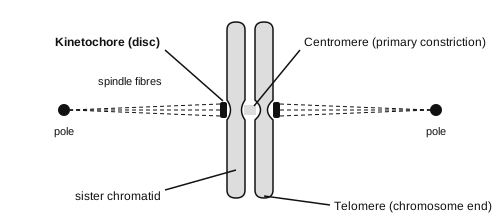
Concept: NCERT (Cell): the centromere carries disc-shaped structures on its sides called kinetochores; spindle fibres (chromosomal fibres) attach to the kinetochores.

  1. Attachment point of spindle fibre = kinetochore → (B).
  2. (C) Centromere is the primary constriction that holds sister chromatids; it bears the kinetochore but the fibres bind the kinetochore itself – the more precise answer.
  3. (A) Telomeres are the chromosome ends – no spindle attachment.
  4. (D) Kinetosome (basal body) is at the base of cilia/flagella, not on chromosomes.

Short trick: Kineto-CHORE does the “chore” of pulling; Kineto-SOME sits under cilia.

Answer: (B) Kinetochore of the chromosome

अवधारणा: NCERT (कोशिका): गुणसूत्रबिंदु के दोनों ओर बिंब-आकार की संरचनाएँ होती हैं जिन्हें काइनेटोकोर कहते हैं; तर्कु तंतु (गुणसूत्रीय तंतु) काइनेटोकोर से जुड़ते हैं।

  1. तर्कु तंतु के जुड़ने का स्थान = काइनेटोकोर → (B)।
  2. (C) गुणसूत्रबिंदु प्राथमिक संकीर्णन है जो सहोदर अर्धगुणसूत्रों को जोड़े रखता है; इस पर काइनेटोकोर होता है, पर तंतु स्वयं काइनेटोकोर से जुड़ते हैं – अधिक सटीक उत्तर यही है।
  3. (A) टीलोमियर गुणसूत्र के सिरे हैं – वहाँ तर्कु नहीं जुड़ता।
  4. (D) काइनेटोसोम (आधार काय) पक्ष्माभ/कशाभ के आधार पर होता है, गुणसूत्र पर नहीं।

शॉर्ट ट्रिक: काइनेटो-कोर खींचने का काम करता है; काइनेटो-सोम पक्ष्माभ के नीचे होता है।

उत्तर: (B) गुणसूत्र के काइनेटोकोर से

NEET UGBiologyCell cycle – chromosome and spindleNEET UG 2016 · 1 May Shift 1
Q1986.
Which is the National Aquatic Animal of India?
भारत का राष्ट्रीय जलीय जीव कौन-सा है?
  1. AGangetic sharkगंगा शार्क
  2. BRiver dolphinनदी डॉल्फ़िन
  3. CBlue whaleनीली व्हेल
  4. DSea – horseसमुद्री घोड़ा (Sea-horse)
Show answer

Concept: The Gangetic river dolphin (Platanista gangetica) was declared the National Aquatic Animal of India in 2009.

  1. It lives only in clean freshwater of the Ganga–Brahmaputra system → indicator of river health → (B).
  2. (A) Gangetic shark – a rare, endangered fish, not the national aquatic animal.
  3. (C) Blue whale – largest animal, marine; not India’s national aquatic animal.
  4. (D) Sea-horse – a marine fish, no national status.

Short trick: Ganga’s mascot = “Susu”, the blind river dolphin (2009).

Answer: (B) River dolphin

अवधारणा: गंगा नदी डॉल्फ़िन (Platanista gangetica) को 2009 में भारत का राष्ट्रीय जलीय जीव घोषित किया गया।

  1. यह केवल गंगा–ब्रह्मपुत्र तंत्र के स्वच्छ मीठे पानी में रहती है → नदी के स्वास्थ्य की सूचक → (B)।
  2. (A) गंगा शार्क – एक दुर्लभ, संकटग्रस्त मछली, राष्ट्रीय जलीय जीव नहीं।
  3. (C) नीली व्हेल – सबसे बड़ा प्राणी, समुद्री; भारत का राष्ट्रीय जलीय जीव नहीं।
  4. (D) समुद्री घोड़ा – समुद्री मछली, कोई राष्ट्रीय दर्जा नहीं।

शॉर्ट ट्रिक: गंगा का शुभंकर = “सूँस”, अंधी नदी डॉल्फ़िन (2009)।

उत्तर: (B) नदी डॉल्फ़िन

NEET UGBiologyBiodiversity – national animalsNEET UG 2016 · 1 May Shift 1
Q1987.
Which of the following is required as inducer(s) for the expression of Lac operon?
Lac ओपेरॉन की अभिव्यक्ति के लिए निम्नलिखित में से किसकी प्रेरक (inducer) के रूप में आवश्यकता होती है?
  1. AGlucoseग्लूकोज़
  2. BGalactoseगैलेक्टोज़
  3. CLactoseलैक्टोज़
  4. DLactose and galactoseलैक्टोज़ और गैलेक्टोज़
Show answer

Concept: NCERT: lactose (or allolactose) is the inducer of the lac operon – it binds the repressor, inactivates it, and lets RNA polymerase transcribe z, y, a.

  1. Substrate of β-galactosidase = lactose = inducer → (C).
  2. (A) Glucose does not induce; when glucose is present the operon is kept low (catabolite repression).
  3. (B) Galactose is a product of lactose hydrolysis, not the inducer.
  4. (D) Galactose is not required – lactose alone induces.

Short trick: Lac operon is “switched ON by its own food” – lactose (inducible operon).

Answer: (C) Lactose

अवधारणा: NCERT: लैक्टोज़ (या एलोलैक्टोज़) lac ओपेरॉन का प्रेरक है – यह दमनकारी (repressor) से जुड़कर उसे निष्क्रिय करता है, जिससे RNA पॉलिमरेज़ z, y, a का अनुलेखन करता है।

  1. β-गैलेक्टोसाइडेज़ का क्रियाधार = लैक्टोज़ = प्रेरक → (C)।
  2. (A) ग्लूकोज़ प्रेरित नहीं करता; ग्लूकोज़ उपस्थित होने पर ओपेरॉन की क्रिया कम रहती है (कैटाबोलाइट दमन)।
  3. (B) गैलेक्टोज़ लैक्टोज़ के जल-अपघटन का उत्पाद है, प्रेरक नहीं।
  4. (D) गैलेक्टोज़ आवश्यक नहीं – केवल लैक्टोज़ ही प्रेरित करता है।

शॉर्ट ट्रिक: Lac ओपेरॉन “अपने ही भोजन से चालू” होता है – लैक्टोज़ (प्रेरणीय ओपेरॉन)।

उत्तर: (C) लैक्टोज़

NEET UGBiologyMolecular basis of inheritance – lac operonNEET UG 2016 · 1 May Shift 1
Q1988.
Which of the following pairs of hormones are not antagonistic (having opposite effects) to each other?
हॉर्मोनों के निम्नलिखित युग्मों में से कौन-सा युग्म एक-दूसरे का प्रतिपक्षी (विपरीत प्रभाव वाला) नहीं है?
  1. AParathormone - Calcitoninपैराथॉर्मोन - कैल्सिटोनिन
  2. BInsulin - Glucagonइंसुलिन - ग्लूकागॉन
  3. CAldosterone - Atrial Natriuretic Factorएल्डोस्टेरॉन - एट्रियल नेट्रियूरेटिक कारक
  4. DRelaxin - Inhibinरिलैक्सिन - इनहिबिन
Show answer

Concept: Antagonistic hormones act on the same parameter in opposite directions.

  1. (A) PTH ↑ blood Ca2+; calcitonin ↓ blood Ca2+ – antagonistic.
  2. (B) Insulin ↓ blood glucose; glucagon ↑ blood glucose – antagonistic.
  3. (C) Aldosterone ↑ Na+/water reabsorption (↑ BP); ANF causes vasodilation and ↓ BP – antagonistic.
  4. (D) Relaxin softens pelvic ligaments/cervix at parturition; inhibin inhibits FSH – they act on unrelated targets, so not antagonistic → answer.

Short trick: Check “same target?” – if the two hormones act on different things, they cannot be antagonists.

Answer: (D) Relaxin - Inhibin

अवधारणा: प्रतिपक्षी हॉर्मोन एक ही प्राचल (parameter) पर विपरीत दिशाओं में कार्य करते हैं।

  1. (A) PTH रक्त Ca2+ ↑; कैल्सिटोनिन रक्त Ca2+ ↓ – प्रतिपक्षी।
  2. (B) इंसुलिन रक्त ग्लूकोज़ ↓; ग्लूकागॉन रक्त ग्लूकोज़ ↑ – प्रतिपक्षी।
  3. (C) एल्डोस्टेरॉन Na+/जल पुनरवशोषण ↑ (BP ↑); ANF वाहिका-विस्फारण द्वारा BP ↓ – प्रतिपक्षी।
  4. (D) रिलैक्सिन प्रसव के समय श्रोणि स्नायुओं/गर्भाशय-ग्रीवा को शिथिल करता है; इनहिबिन FSH को रोकता है – दोनों भिन्न लक्ष्यों पर कार्य करते हैं, अतः प्रतिपक्षी नहीं → उत्तर।

शॉर्ट ट्रिक: जाँचें “एक ही लक्ष्य?” – यदि दोनों हॉर्मोन भिन्न चीजों पर कार्य करते हैं, तो वे प्रतिपक्षी नहीं हो सकते।

उत्तर: (D) रिलैक्सिन - इनहिबिन

NEET UGBiologyChemical coordination – hormone antagonismNEET UG 2016 · 1 May Shift 1
Q1989.
Microtubules are the constituents of:
सूक्ष्मनलिकाएँ (Microtubules) किसके घटक हैं?
  1. ACilia, Flagella and Peroxisomesपक्ष्माभ, कशाभ और परऑक्सीसोम
  2. BSpindle fibres, centrioles and ciliaतर्कु तंतु, तारककेंद्रक और पक्ष्माभ
  3. CCentrioles, spindle fibres and chromatinतारककेंद्रक, तर्कु तंतु और क्रोमैटिन
  4. DCentrosome, Nucleosome and Centriolesतारककाय, न्यूक्लियोसोम और तारककेंद्रक
Show answer

Concept: NCERT: microtubules (tubulin polymers) form the axoneme of cilia/flagella (9+2), the triplets of centrioles (9+0) and the spindle fibres.

  1. Spindle fibres, centrioles and cilia – all three are microtubular → (B).
  2. (A) Peroxisomes are membrane-bound microbodies – not microtubules.
  3. (C) Chromatin = DNA + histones – not microtubules.
  4. (D) Nucleosome = DNA wrapped round a histone octamer – not microtubules.

Short trick: Microtubule family = “C-C-S-F”: Cilia, Centrioles, Spindle, Flagella. Any option with a DNA or membrane body is out.

Answer: (B) Spindle fibres, centrioles and cilia

अवधारणा: NCERT: सूक्ष्मनलिकाएँ (ट्यूबुलिन बहुलक) पक्ष्माभ/कशाभ का अक्षसूत्र (9+2), तारककेंद्रक के त्रिक (9+0) तथा तर्कु तंतु बनाती हैं।

  1. तर्कु तंतु, तारककेंद्रक और पक्ष्माभ – तीनों सूक्ष्मनलिका-निर्मित → (B)।
  2. (A) परऑक्सीसोम झिल्ली-बद्ध सूक्ष्मकाय हैं – सूक्ष्मनलिका नहीं।
  3. (C) क्रोमैटिन = DNA + हिस्टोन – सूक्ष्मनलिका नहीं।
  4. (D) न्यूक्लियोसोम = हिस्टोन अष्टक पर लिपटा DNA – सूक्ष्मनलिका नहीं।

शॉर्ट ट्रिक: सूक्ष्मनलिका परिवार = “C-C-S-F”: पक्ष्माभ, तारककेंद्रक, तर्कु, कशाभ। DNA या झिल्ली-काय वाला कोई भी विकल्प बाहर।

उत्तर: (B) तर्कु तंतु, तारककेंद्रक और पक्ष्माभ

NEET UGBiologyCell – cytoskeletonNEET UG 2016 · 1 May Shift 1
Q1990.
A complex of ribosomes attached to single strand of RNA is known as:
RNA के एकल रज्जुक से जुड़े राइबोसोमों का सम्मिश्र कहलाता है:
  1. APolysomeपॉलीसोम
  2. BPolymerबहुलक (Polymer)
  3. CPolypeptideपॉलिपेप्टाइड
  4. DOkazaki fragmentओकाज़ाकी खंड
Show answer

Concept: NCERT: several ribosomes may attach to a single mRNA and translate it simultaneously; such a chain is called a polysome (polyribosome).

  1. Many ribosomes on one mRNA = polysome → (A).
  2. (B) Polymer – any large molecule of repeating units; a general term.
  3. (C) Polypeptide – the product of translation, not the ribosome–mRNA complex.
  4. (D) Okazaki fragments – short DNA pieces of the lagging strand in replication.

Short trick: Poly-SOME = many ribo-somes on one mRNA → many copies of the same protein at once.

Answer: (A) Polysome

अवधारणा: NCERT: एक ही mRNA पर कई राइबोसोम जुड़कर एक साथ उसका अनुवादन (translation) कर सकते हैं; ऐसी शृंखला पॉलीसोम (पॉलीराइबोसोम) कहलाती है।

  1. एक mRNA पर कई राइबोसोम = पॉलीसोम → (A)।
  2. (B) बहुलक – पुनरावृत्त इकाइयों वाला कोई भी बड़ा अणु; सामान्य शब्द।
  3. (C) पॉलिपेप्टाइड – अनुवादन का उत्पाद, राइबोसोम–mRNA सम्मिश्र नहीं।
  4. (D) ओकाज़ाकी खंड – प्रतिकृतियन में पश्चगामी रज्जुक के छोटे DNA टुकड़े।

शॉर्ट ट्रिक: पॉली-सोम = एक mRNA पर अनेक राइबो-सोम → एक ही प्रोटीन की अनेक प्रतियाँ एक साथ।

उत्तर: (A) पॉलीसोम

NEET UGBiologyMolecular basis of inheritance – translationNEET UG 2016 · 1 May Shift 1
Q1991.
Fertilization in humans is practically feasible only if:
मनुष्यों में निषेचन व्यावहारिक रूप से तभी संभव है जब:
  1. AThe sperms are transported into vagina just after the release of ovum in fallopian tubeअंडवाहिनी (फैलोपियन नलिका) में अंडाणु मुक्त होने के ठीक बाद शुक्राणु योनि में पहुँचाए जाएँ
  2. BThe ovum and sperms are transported simultaneously to ampullary – isthmic junction of the fallopian tubeअंडाणु और शुक्राणु एक साथ फैलोपियन नलिका के तुंबिका–संकीर्ण पथ संधि (ampullary–isthmic junction) तक पहुँचें
  3. CThe ovum and sperms are transported simultaneously to ampullary – isthmic junction of the cervixअंडाणु और शुक्राणु एक साथ गर्भाशय-ग्रीवा के तुंबिका–संकीर्ण पथ संधि तक पहुँचें
  4. DThe sperms are transported into cervix within 48 hrs. of release of ovum in uterusगर्भाशय में अंडाणु मुक्त होने के 48 घंटे के भीतर शुक्राणु गर्भाशय-ग्रीवा में पहुँचाए जाएँ
Show answer

Concept: NCERT (Human Reproduction): fertilisation can only occur if the ovum and sperms are transported simultaneously to the ampullary–isthmic junction of the fallopian tube.

  1. NCERT line, word for word → (B).
  2. (A) Timing alone in vagina is not enough; both gametes must meet at the ampullary–isthmic junction.
  3. (C) Ampulla and isthmus are parts of the fallopian tube, not of the cervix.
  4. (D) The ovum is released from the ovary into the fallopian tube, not into the uterus.

Short trick: Fertilisation site = ampullary–isthmic junction of the oviduct; ampulla & isthmus belong only to the tube.

Answer: (B) The ovum and sperms are transported simultaneously to ampullary – isthmic junction of the fallopian tube

अवधारणा: NCERT (मानव जनन): निषेचन तभी हो सकता है जब अंडाणु और शुक्राणु एक साथ फैलोपियन नलिका के तुंबिका–संकीर्ण पथ संधि तक पहुँचें।

  1. NCERT की पंक्ति, शब्दशः → (B)।
  2. (A) केवल योनि में समय पर पहुँचना पर्याप्त नहीं; दोनों युग्मकों का तुंबिका–संकीर्ण पथ संधि पर मिलना आवश्यक है।
  3. (C) तुंबिका और संकीर्ण पथ फैलोपियन नलिका के भाग हैं, गर्भाशय-ग्रीवा के नहीं।
  4. (D) अंडाणु अंडाशय से फैलोपियन नलिका में मुक्त होता है, गर्भाशय में नहीं।

शॉर्ट ट्रिक: निषेचन स्थल = अंडवाहिनी की तुंबिका–संकीर्ण पथ संधि; तुंबिका व संकीर्ण पथ केवल नलिका के भाग हैं।

उत्तर: (B) अंडाणु और शुक्राणु एक साथ फैलोपियन नलिका के तुंबिका–संकीर्ण पथ संधि तक पहुँचें

NEET UGBiologyHuman reproduction – fertilisationNEET UG 2016 · 1 May Shift 1
Q1992.
Asthma may be attributed to:
दमा (Asthma) का कारण हो सकता है:
  1. ABacterial infection of the lungsफुफ्फुसों का जीवाणु संक्रमण
  2. BAllergic reaction of the mast cells in the lungsफुफ्फुसों में मास्ट कोशिकाओं की एलर्जी अभिक्रिया
  3. CInflammation of the tracheaश्वासनली की सूजन
  4. DAccumulation of fluid in the lungफुफ्फुस में द्रव का संचय
Show answer

Concept: NCERT: asthma is difficulty in breathing causing wheezing due to inflammation of bronchi and bronchioles; it is an allergy – allergens trigger mast cells to release histamine and serotonin.

  1. Allergen + IgE on mast cells → histamine → bronchial smooth-muscle spasm → asthma → (B).
  2. (A) Bacterial infection of lungs = pneumonia.
  3. (C) Asthma involves bronchi/bronchioles, not primarily the trachea.
  4. (D) Fluid in lungs = pulmonary oedema (or pneumonia exudate).

Short trick: Allergy = mast cells + histamine + IgE; asthma is a respiratory allergy.

Answer: (B) Allergic reaction of the mast cells in the lungs

अवधारणा: NCERT: दमा में श्वसनी और श्वसनिकाओं की सूजन के कारण साँस लेने में कठिनाई और घरघराहट होती है; यह एक एलर्जी है – एलर्जन मास्ट कोशिकाओं से हिस्टामिन व सेरोटोनिन मुक्त कराते हैं।

  1. एलर्जन + मास्ट कोशिकाओं पर IgE → हिस्टामिन → श्वसनी की चिकनी पेशियों में ऐंठन → दमा → (B)।
  2. (A) फुफ्फुसों का जीवाणु संक्रमण = न्यूमोनिया।
  3. (C) दमा मुख्यतः श्वसनी/श्वसनिकाओं में होता है, श्वासनली में नहीं।
  4. (D) फुफ्फुस में द्रव = फुफ्फुसीय शोफ (या न्यूमोनिया का स्राव)।

शॉर्ट ट्रिक: एलर्जी = मास्ट कोशिकाएँ + हिस्टामिन + IgE; दमा श्वसन तंत्र की एलर्जी है।

उत्तर: (B) फुफ्फुसों में मास्ट कोशिकाओं की एलर्जी अभिक्रिया

NEET UGBiologyBreathing and exchange of gases – asthmaNEET UG 2016 · 1 May Shift 1
Q1993.
The avena curvature is used for bioassay of:
एवेना (Avena) वक्रता परीक्षण का उपयोग किसके जैव-आमापन (bioassay) के लिए किया जाता है?
  1. AABA
  2. BGA3
  3. CIAA
  4. DEthyleneएथिलीन
Show answer

Concept: Avena curvature test (F.W. Went, 1928): an agar block containing auxin placed on one side of a decapitated oat coleoptile causes curvature proportional to auxin concentration – the classic bioassay of auxin (IAA).

  1. Avena coleoptile curvature ∝ auxin → IAA → (C).
  2. (A) ABA – bioassay e.g. stomatal closure / inhibition of seed germination.
  3. (B) GA3 – bioassay e.g. dwarf maize/pea elongation, α-amylase in barley endosperm.
  4. (D) Ethylene – triple response of pea seedlings.

Short trick: Went → Avena → Auxin (all “A”-words; IAA is the natural auxin).

Answer: (C) IAA

अवधारणा: एवेना वक्रता परीक्षण (एफ.डब्ल्यू. वेन्ट, 1928): ऑक्सिन युक्त ऐगार ब्लॉक को कटे हुए जई प्रांकुरचोल के एक ओर रखने पर ऑक्सिन की सांद्रता के अनुपात में वक्रता होती है – यह ऑक्सिन (IAA) का पारंपरिक जैव-आमापन है।

  1. एवेना प्रांकुरचोल की वक्रता ∝ ऑक्सिन → IAA → (C)।
  2. (A) ABA – जैव-आमापन, जैसे रंध्र बंद होना / बीज अंकुरण का निरोध।
  3. (B) GA3 – जैव-आमापन, जैसे बौने मक्का/मटर का दीर्घीकरण, जौ भ्रूणपोष में α-एमाइलेज़।
  4. (D) एथिलीन – मटर नवोद्भिद की त्रिक अनुक्रिया।

शॉर्ट ट्रिक: वेन्ट → एवेना → ऑक्सिन (सब “A”-शब्द; IAA प्राकृतिक ऑक्सिन है)।

उत्तर: (C) IAA

NEET UGBiologyPlant growth regulators – bioassayNEET UG 2016 · 1 May Shift 1
Q1994.
The standard petal of papilionaceous corolla is also called:
पैपिलियोनेसी दलपुंज के मानक (standard) दल को और किस नाम से जाना जाता है?
  1. ACarinaकैरिना (Carina)
  2. BPappusपैपस (Pappus)
  3. CVexillumवेक्सिलम (Vexillum)
  4. DCoronaकोरोना (Corona)
Show answer

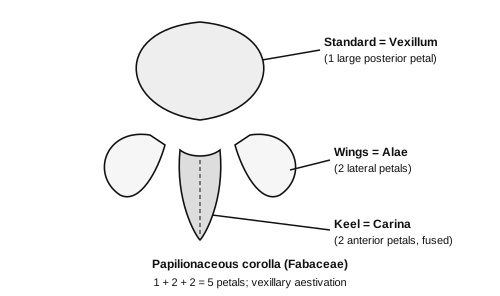
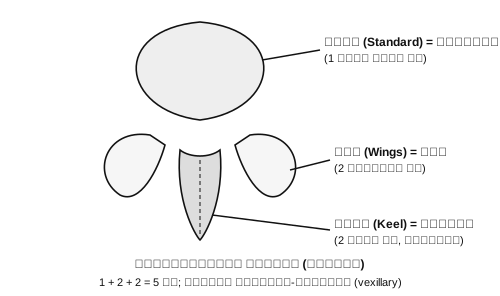
Concept: NCERT (Fabaceae): papilionaceous corolla has five petals – one large posterior standard (vexillum), two lateral wings (alae) and two anterior petals fused to form the keel (carina); aestivation is vexillary.

  1. Standard = vexillum → (C).
  2. (A) Carina = keel (two anterior fused petals).
  3. (B) Pappus = hairy/scaly modified calyx of Asteraceae (sunflower family).
  4. (D) Corona = crown-like outgrowth of perianth (e.g. Narcissus, passion flower).

Short trick: Vexillum = Very big top petal; Alae = Arms (wings); Carina = Canoe-shaped keel.

Answer: (C) Vexillum

अवधारणा: NCERT (फैबेसी): पैपिलियोनेसी दलपुंज में पाँच दल होते हैं – एक बड़ा पश्च ध्वज (वेक्सिलम), दो पार्श्व पंख (एली) तथा दो अग्र दल जो जुड़कर नौतल (कैरिना) बनाते हैं; पुष्पदल-विन्यास ध्वजिक (vexillary) होता है।

  1. मानक/ध्वज = वेक्सिलम → (C)।
  2. (A) कैरिना = नौतल (दो अग्र संयुक्त दल)।
  3. (B) पैपस = ऐस्टरेसी (सूरजमुखी कुल) का रोमिल/शल्की रूपांतरित बाह्यदलपुंज।
  4. (D) कोरोना = परिदलपुंज का मुकुट-समान उद्वर्ध (जैसे Narcissus, कृष्णकमल)।

शॉर्ट ट्रिक: Vexillum = Very बड़ा ऊपरी दल; Alae = भुजाएँ (पंख); Carina = नाव-आकार नौतल।

उत्तर: (C) वेक्सिलम

NEET UGBiologyMorphology of flowering plants – Fabaceae corollaNEET UG 2016 · 1 May Shift 1
Q1995.
Tricarpellary, syncarpous gynoecium is found in flowers of:
त्रिअंडपी, युक्तांडपी जायांग किसके पुष्पों में पाया जाता है?
  1. ALiliaceaeलिलिएसी
  2. BSolanaceaeसोलैनेसी
  3. CFabaceaeफैबेसी
  4. DPoaceaeपोएसी
Show answer

Concept: NCERT (Liliaceae): gynoecium tricarpellary, syncarpous, ovary superior, trilocular with axile placentation – floral formula Br ⊕ ⚥ P(3+3) A3+3 G(3).

  1. Monocot family → parts in threes → tricarpellary syncarpous → Liliaceae → (A).
  2. (B) Solanaceae – bicarpellary, syncarpous, obliquely placed ovary.
  3. (C) Fabaceae – monocarpellary.
  4. (D) Poaceae – usually described as monocarpellary (or tricarpellary with one functional carpel), unilocular ovary with a single ovule – not the NCERT example.

Short trick: Floral formula carpels: Fabaceae G1, Solanaceae G(2), Liliaceae G(3) – “1-2-3: Pea, Potato, Lily”.

Answer: (A) Liliaceae

अवधारणा: NCERT (लिलिएसी): जायांग त्रिअंडपी, युक्तांडपी, अंडाशय ऊर्ध्ववर्ती, त्रिकोष्ठकी तथा स्तंभीय बीजांडन्यास – पुष्प सूत्र Br ⊕ ⚥ P(3+3) A3+3 G(3)।

  1. एकबीजपत्री कुल → भाग तीन-तीन में → त्रिअंडपी युक्तांडपी → लिलिएसी → (A)।
  2. (B) सोलैनेसी – द्विअंडपी, युक्तांडपी, तिरछा स्थित अंडाशय।
  3. (C) फैबेसी – एकाअंडपी।
  4. (D) पोएसी – सामान्यतः एकाअंडपी (या एक क्रियाशील अंडप वाला त्रिअंडपी), एककोष्ठकी अंडाशय, एक बीजांड – NCERT का उदाहरण नहीं।

शॉर्ट ट्रिक: पुष्प सूत्र में अंडप: फैबेसी G1, सोलैनेसी G(2), लिलिएसी G(3) – “1-2-3: मटर, आलू, लिली”।

उत्तर: (A) लिलिएसी

NEET UGBiologyMorphology of flowering plants – familiesNEET UG 2016 · 1 May Shift 1
Q1996.
One of the major components of cell wall of most fungi is:
अधिकांश कवकों की कोशिका भित्ति का एक प्रमुख घटक है:
  1. AChitinकाइटिन
  2. BPeptidoglycanपेप्टिडोग्लाइकन
  3. CCelluloseसेलुलोज़
  4. DHemicelluloseहेमीसेलुलोज़
Show answer

Concept: NCERT (Biological Classification): the cell wall of fungi is composed of chitin and polysaccharides.

  1. Fungal wall = chitin (polymer of N-acetylglucosamine) → (A).
  2. (B) Peptidoglycan (murein) – bacterial cell wall.
  3. (C) Cellulose – cell wall of plants and most algae.
  4. (D) Hemicellulose – plant cell-wall matrix.

Short trick: Fungi and insects share chitin (N-acetylglucosamine); bacteria – peptidoglycan; plants – cellulose.

Answer: (A) Chitin

अवधारणा: NCERT (जीव जगत का वर्गीकरण): कवकों की कोशिका भित्ति काइटिन और पॉलिसैकेराइडों की बनी होती है।

  1. कवक भित्ति = काइटिन (N-ऐसीटिलग्लूकोसैमीन का बहुलक) → (A)।
  2. (B) पेप्टिडोग्लाइकन (म्यूरिन) – जीवाणु कोशिका भित्ति।
  3. (C) सेलुलोज़ – पादपों और अधिकांश शैवालों की कोशिका भित्ति।
  4. (D) हेमीसेलुलोज़ – पादप कोशिका भित्ति का आधात्री पदार्थ।

शॉर्ट ट्रिक: कवक और कीट दोनों में काइटिन (N-ऐसीटिलग्लूकोसैमीन); जीवाणु – पेप्टिडोग्लाइकन; पादप – सेलुलोज़।

उत्तर: (A) काइटिन

NEET UGBiologyBiological classification – fungiNEET UG 2016 · 1 May Shift 1
Q1997.
Select the incorrect statement:
गलत कथन का चयन कीजिए:
  1. AFSH stimulates the sertoli cells which help in spermiogenesisFSH सर्टोली कोशिकाओं को उद्दीप्त करता है जो शुक्राणुजनन (spermiogenesis) में सहायता करती हैं
  2. BLH triggers ovulation in ovaryLH अंडाशय में अंडोत्सर्ग को प्रेरित करता है
  3. CLH and FSH decrease gradually during the follicular phaseपुटकीय प्रावस्था के दौरान LH और FSH धीरे-धीरे कम होते हैं
  4. DLH triggers secretion of androgens from the Leydig cellsLH लेडिग कोशिकाओं से एंड्रोजन के स्रावण को प्रेरित करता है
Show answer

Concept: NCERT (Menstrual cycle): during the follicular phase the secretion of gonadotropins (LH and FSH) increases gradually, reaching an LH surge at mid-cycle (≈ 14th day) that induces ovulation.

  1. (A) Correct – FSH acts on Sertoli cells, which help in spermiogenesis.
  2. (B) Correct – the LH surge triggers ovulation.
  3. (C) Incorrect – LH and FSH rise, not fall, during the follicular phase → answer.
  4. (D) Correct – LH (ICSH) stimulates Leydig cells to secrete androgens.

Short trick: Follicular phase = “build-up” – FSH, LH and oestrogen all climb to the mid-cycle peak.

Answer: (C) LH and FSH decrease gradually during the follicular phase

अवधारणा: NCERT (आर्तव चक्र): पुटकीय प्रावस्था में गोनैडोट्रॉपिनों (LH और FSH) का स्रावण धीरे-धीरे बढ़ता है और चक्र के मध्य (≈ 14वें दिन) LH का उछाल (surge) अंडोत्सर्ग को प्रेरित करता है।

  1. (A) सही – FSH सर्टोली कोशिकाओं पर कार्य करता है, जो शुक्राणुजनन में सहायता करती हैं।
  2. (B) सही – LH उछाल अंडोत्सर्ग को प्रेरित करता है।
  3. (C) गलत – पुटकीय प्रावस्था में LH और FSH बढ़ते हैं, घटते नहीं → उत्तर।
  4. (D) सही – LH (ICSH) लेडिग कोशिकाओं को एंड्रोजन स्रावित करने हेतु उद्दीप्त करता है।

शॉर्ट ट्रिक: पुटकीय प्रावस्था = “बढ़त” – FSH, LH और एस्ट्रोजन सभी मध्य-चक्र शिखर तक बढ़ते हैं।

उत्तर: (C) पुटकीय प्रावस्था के दौरान LH और FSH धीरे-धीरे कम होते हैं

NEET UGBiologyHuman reproduction – hormonesNEET UG 2016 · 1 May Shift 1
Q1998.
In meiosis crossing over is initiated at:
अर्धसूत्री विभाजन में जीन विनिमय (crossing over) किस अवस्था में प्रारंभ होता है?
  1. APachyteneपैकीटीन
  2. BLeptoteneलेप्टोटीन
  3. CZygoteneजाइगोटीन
  4. DDiploteneडिप्लोटीन
Show answer

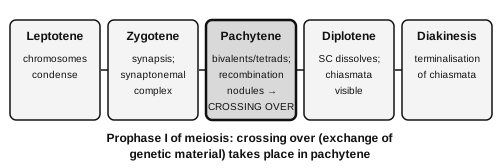
Concept: NCERT: in pachytene, bivalents appear as tetrads, recombination nodules appear, and crossing over (exchange of genetic material between non-sister chromatids of homologous chromosomes) occurs.

  1. Crossing over takes place in pachytene → (A).
  2. (B) Leptotene – chromosomes only begin to condense.
  3. (C) Zygotene – synapsis and formation of the synaptonemal complex (pairing, not exchange).
  4. (D) Diplotene – the synaptonemal complex dissolves and chiasmata, the result of crossing over, become visible.

Short trick: Order “Lady Zebra Pays Daily Dues” (Lepto-Zygo-Pachy-Diplo-Diakinesis): Zygo = pairing, Pachy = crossing over, Diplo = chiasmata seen.

Answer: (A) Pachytene

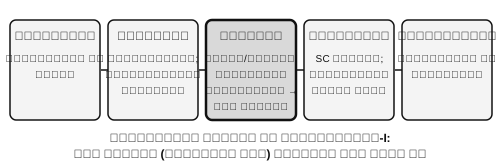
अवधारणा: NCERT: पैकीटीन में युगली चतुष्क के रूप में दिखाई देते हैं, पुनर्योजन ग्रंथिकाएँ प्रकट होती हैं तथा जीन विनिमय (समजात गुणसूत्रों के असहोदर अर्धगुणसूत्रों के बीच आनुवंशिक पदार्थ का आदान-प्रदान) होता है।

  1. जीन विनिमय पैकीटीन में होता है → (A)।
  2. (B) लेप्टोटीन – गुणसूत्रों का संघनन केवल प्रारंभ होता है।
  3. (C) जाइगोटीन – सूत्रयुग्मन तथा सिनैप्टोनीमल सम्मिश्र का निर्माण (युग्मन, विनिमय नहीं)।
  4. (D) डिप्लोटीन – सिनैप्टोनीमल सम्मिश्र विघटित होता है और जीन विनिमय का परिणाम, काएज़्मेटा, दिखाई देते हैं।

शॉर्ट ट्रिक: क्रम “Lady Zebra Pays Daily Dues” (लेप्टो-जाइगो-पैकी-डिप्लो-डायकाइनेसिस): जाइगो = युग्मन, पैकी = जीन विनिमय, डिप्लो = काएज़्मेटा दिखाई देते हैं।

उत्तर: (A) पैकीटीन

NEET UGBiologyCell cycle – meiosis prophase INEET UG 2016 · 1 May Shift 1
Q1999.
A tall true breeding garden pea plant is crossed with a dwarf true breeding garden pea plant. When the F1 plants were selfed the resulting genotypes were in the ratio
एक लंबे शुद्ध प्रजनन (true breeding) उद्यान मटर पौधे का एक बौने शुद्ध प्रजनन उद्यान मटर पौधे से संकरण कराया गया। जब F1 पौधों का स्वपरागण कराया गया तो प्राप्त जीनप्ररूप किस अनुपात में थे?
  1. A1 : 2 : 1 :: Tall homozygous : Tall heterozygous : Dwarf1 : 2 : 1 :: लंबा समयुग्मजी : लंबा विषमयुग्मजी : बौना
  2. B1 : 2 : 1 :: Tall heterozygous : Tall homozygous : Dwarf1 : 2 : 1 :: लंबा विषमयुग्मजी : लंबा समयुग्मजी : बौना
  3. C3 : 1 :: Tall : Dwarf3 : 1 :: लंबा : बौना
  4. D3 : 1 :: Dwarf : Tall3 : 1 :: बौना : लंबा
Show answer

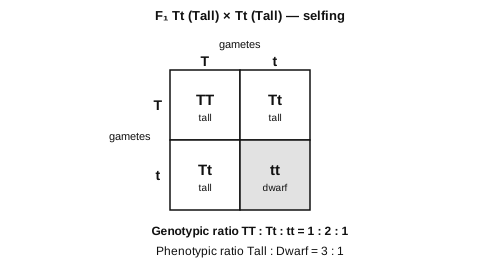
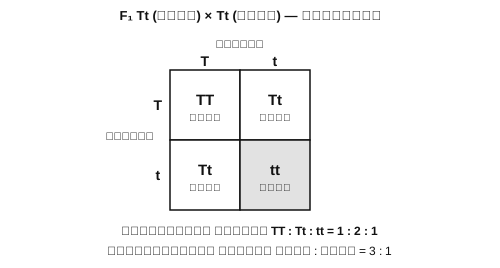
Concept: Monohybrid cross: TT × tt → F1 all Tt (tall). Selfing Tt × Tt gives F2 genotypes TT : Tt : tt = 1 : 2 : 1.

  1. Gametes of each F1 parent: T and t (½ each).
  2. Punnett square → 1 TT (tall homozygous) : 2 Tt (tall heterozygous) : 1 tt (dwarf) → (A).
  3. (B) Swaps the classes – it is the heterozygous tall that occurs twice, not the homozygous.
  4. (C) 3 : 1 is the phenotypic ratio, but the question asks for genotypes.
  5. (D) Wrong direction even for phenotypes – tall is dominant.

Short trick: Monohybrid: genotype 1 : 2 : 1 (middle “2” is always the heterozygote), phenotype 3 : 1.

Answer: (A) 1 : 2 : 1 :: Tall homozygous : Tall heterozygous : Dwarf

अवधारणा: एकसंकर संकरण: TT × tt → F1 सभी Tt (लंबे)। Tt × Tt स्वपरागण से F2 जीनप्ररूप TT : Tt : tt = 1 : 2 : 1 मिलते हैं।

  1. प्रत्येक F1 जनक के युग्मक: T और t (प्रत्येक ½)।
  2. पनेट वर्ग → 1 TT (लंबा समयुग्मजी) : 2 Tt (लंबा विषमयुग्मजी) : 1 tt (बौना) → (A)।
  3. (B) वर्गों को उलट देता है – दो बार विषमयुग्मजी लंबा आता है, समयुग्मजी नहीं।
  4. (C) 3 : 1 लक्षणप्ररूपी अनुपात है, जबकि प्रश्न जीनप्ररूप पूछता है।
  5. (D) लक्षणप्ररूप के लिए भी उलटा – लंबापन प्रभावी है।

शॉर्ट ट्रिक: एकसंकर: जीनप्ररूप 1 : 2 : 1 (बीच का “2” सदैव विषमयुग्मजी), लक्षणप्ररूप 3 : 1।

उत्तर: (A) 1 : 2 : 1 :: लंबा समयुग्मजी : लंबा विषमयुग्मजी : बौना

NEET UGBiologyPrinciples of inheritance – monohybrid crossNEET UG 2016 · 1 May Shift 1
Q2000.
Which of the following is the most important cause of animals and plants being driven to extinction ?
प्राणियों और पादपों के विलुप्त होने का सबसे महत्वपूर्ण कारण निम्नलिखित में से कौन-सा है?
  1. AOver – exploitationअति-दोहन
  2. BAlien species invasionविदेशी जातियों का आक्रमण
  3. CHabitat loss and fragmentationआवास की क्षति तथा विखंडन
  4. DCo – extinctionsसह-विलुप्तता
Show answer

Concept: NCERT (Biodiversity and Conservation): of the “Evil Quartet”, habitat loss and fragmentation is the most important cause driving animals and plants to extinction.

  1. Example: tropical rain forests once covered 14% of land, now no more than 6% → (C).
  2. (A) Over-exploitation (Steller’s sea cow, passenger pigeon) – important, but not the most important.
  3. (B) Alien species invasion (Nile perch in Lake Victoria, Parthenium, Lantana) – a cause, not the chief one.
  4. (D) Co-extinction (host–parasite, plant–pollinator) – the least of the four.

Short trick: Evil Quartet = “HOAC”: Habitat loss (No. 1), Over-exploitation, Alien species, Co-extinction.

Answer: (C) Habitat loss and fragmentation

अवधारणा: NCERT (जैव विविधता एवं संरक्षण): “दुष्ट चौकड़ी” (Evil Quartet) में आवास की क्षति तथा विखंडन प्राणियों और पादपों को विलुप्ति की ओर ले जाने का सबसे महत्वपूर्ण कारण है।

  1. उदाहरण: उष्णकटिबंधीय वर्षा वन कभी 14% स्थल पर थे, अब 6% से अधिक नहीं → (C)।
  2. (A) अति-दोहन (स्टेलर समुद्री गाय, यात्री कबूतर) – महत्वपूर्ण, पर सबसे महत्वपूर्ण नहीं।
  3. (B) विदेशी जातियों का आक्रमण (विक्टोरिया झील में नील पर्च, Parthenium, Lantana) – एक कारण, प्रमुख नहीं।
  4. (D) सह-विलुप्तता (परपोषी–परजीवी, पादप–परागणकर्ता) – चारों में सबसे कम।

शॉर्ट ट्रिक: दुष्ट चौकड़ी = “HOAC”: H आवास क्षति (नंबर 1), O अति-दोहन, A विदेशी जातियाँ, C सह-विलुप्तता।

उत्तर: (C) आवास की क्षति तथा विखंडन

NEET UGBiologyBiodiversity – causes of lossNEET UG 2016 · 1 May Shift 1