NEET UG · 2,240 questions

NEET UG 2015, 2016, 2017, 2018, 2019, 2020, 2021, 2022, 2023, 2024, 2025, 2026 PYQs

Real previous year questions, subject-wise. Try the question, then open the answer and the explanation in Hindi & English – free, no login.

Courses – airGurukul

2,240 questions.

Q521.
Match List I with List II:
List IList II
A. Fibrous jointsI. Adjacent vertebrae, limited movement
B. Cartilaginous jointsII. Humerus and Pectoral girdle, rotational movement
C. HingeIII. Skull, don’t allow any movement
D. Ball and socket jointsIV. Knee, help in locomotion
Choose the correct answer from the options given below:
सूची-I का सूची-II से मिलान कीजिए :
सूची Iसूची II
A. रेशीय संधियाँI. आसन्न कशेरुकाएँ, सीमित गति
B. उपास्थि संधियाँII. ह्यूमरस एवं अंस मेखला, घूर्णन गति
C. कब्जा संधि (Hinge)III. खोपड़ी, कोई गति नहीं होने देतीं
D. कंदुक-खल्लिका संधियाँ (Ball and socket)IV. घुटना, गमन में सहायक
नीचे दिए गए विकल्पों में से सही उत्तर चुनिए :
  1. AA-I, B-III, C-II, D-IV
  2. BA-II, B-III, C-I, D-IV
  3. CA-III, B-I, C-IV, D-II
  4. DA-IV, B-II, C-III, D-I
Show answer

Concept: Joints are classified by movement: fibrous (none), cartilaginous (limited), synovial (considerable).

  1. A. Fibrous – sutures of flat skull bones, no movement → III.
  2. B. Cartilaginous – between adjacent vertebrae, limited movement → I.
  3. C. Hinge (synovial) – knee joint, helps locomotion → IV.
  4. D. Ball and socket (synovial) – humerus and pectoral girdle, rotation → II.

Short trick: Movement increases Fibrous → Cartilaginous → Synovial; skull = no movement is the anchor (A-III only in (C)).

Answer: (C) A-III, B-I, C-IV, D-II

अवधारणा: संधियों का वर्गीकरण गति के आधार पर: रेशीय (कोई गति नहीं), उपास्थि (सीमित), साइनोवियल (पर्याप्त)।

  1. A. रेशीय – खोपड़ी की चपटी अस्थियों के सीवन (suture), कोई गति नहीं → III।
  2. B. उपास्थि – आसन्न कशेरुकाओं के बीच, सीमित गति → I।
  3. C. कब्जा (साइनोवियल) – घुटने की संधि, गमन में सहायक → IV।
  4. D. कंदुक-खल्लिका (साइनोवियल) – ह्यूमरस व अंस मेखला, घूर्णन → II।

शॉर्ट ट्रिक: गति बढ़ती है रेशीय → उपास्थि → साइनोवियल; खोपड़ी = कोई गति नहीं (A-III केवल (C) में)।

उत्तर: (C) A-III, B-I, C-IV, D-II
NEET UGZoologyLocomotion and movement – jointsNEET UG 2024 · 5 May Shift 1
Q522.
Which of the following is not a steroid hormone?
निम्नलिखित में से कौन-सा स्टेरॉइड हॉर्मोन नहीं है?
  1. ATestosteroneटेस्टोस्टेरॉन
  2. BProgesteroneप्रोजेस्टेरॉन
  3. CGlucagonग्लूकैगॉन
  4. DCortisolकॉर्टिसॉल
Show answer

Concept: Steroid hormones are derived from cholesterol; peptide hormones are chains of amino acids.

  1. Testosterone (androgen), progesterone and cortisol (glucocorticoid) are steroids.
  2. Glucagon is a peptide hormone secreted by α-cells of the islets of Langerhans.
  3. So glucagon is not a steroid.

Short trick: Sex hormones and adrenal-cortex hormones end in "-one/-ol" and are steroids; pancreatic hormones (insulin, glucagon) are peptides.

Answer: (C) Glucagon

अवधारणा: स्टेरॉइड हॉर्मोन कोलेस्टेरॉल से बनते हैं; पेप्टाइड हॉर्मोन ऐमीनो अम्लों की शृंखलाएँ हैं।

  1. टेस्टोस्टेरॉन (ऐंड्रोजन), प्रोजेस्टेरॉन तथा कॉर्टिसॉल (ग्लूकोकॉर्टिकॉइड) स्टेरॉइड हैं।
  2. ग्लूकैगॉन लैंगरहैंस द्वीपों की α-कोशिकाओं द्वारा स्रावित पेप्टाइड हॉर्मोन है।
  3. अतः ग्लूकैगॉन स्टेरॉइड नहीं है।

शॉर्ट ट्रिक: लिंग हॉर्मोन व अधिवृक्क वल्कुट हॉर्मोन ("-one/-ol") स्टेरॉइड हैं; अग्न्याशयी हॉर्मोन (इंसुलिन, ग्लूकैगॉन) पेप्टाइड हैं।

उत्तर: (C) ग्लूकैगॉन

NEET UGZoologyChemical coordination – steroid and peptide hormonesNEET UG 2024 · 5 May Shift 1
Q523.
In both sexes of cockroach, a pair of jointed filamentous structures called anal cerci are present on:
कॉकरोच के दोनों लिंगों में गुदा लूम (anal cerci) नामक संधित तंतुमय संरचनाओं का एक युग्म किस पर उपस्थित होता है?
  1. A10th segment10वें खंड पर
  2. B8th and 9th segment8वें और 9वें खंड पर
  3. C11th segment11वें खंड पर
  4. D5th segment5वें खंड पर
Show answer

Concept: Abdomen of cockroach has 10 segments; terminal structures differ by sex.

  1. In both sexes the 10th segment bears a pair of jointed anal cerci.
  2. Males additionally have a pair of short, unjointed anal styles (on the 9th sternum), absent in females.
  3. In females, 7th sternum is boat-shaped and with 8th and 9th sterna forms the genital pouch – not cerci.
  4. There is no 11th abdominal segment, and the 5th has no appendage.

Short trick: "Cerci on the last (10th) segment in both; styles only in males."

Answer: (A) 10th segment

अवधारणा: कॉकरोच के उदर में 10 खंड होते हैं; अंतिम संरचनाएँ लिंग के अनुसार भिन्न हैं।

  1. दोनों लिंगों में 10वाँ खंड संधित गुदा लूमों का एक युग्म धारण करता है।
  2. नरों में इसके अतिरिक्त छोटे, असंधित गुदा कंटिकाओं (anal styles) का युग्म (9वें स्टर्नम पर) होता है, जो मादाओं में नहीं होता।
  3. मादा में 7वाँ स्टर्नम नाव के आकार का होता है और 8वें व 9वें स्टर्नम के साथ जनन कोष्ठ बनाता है – लूम नहीं।
  4. 11वाँ उदरीय खंड होता ही नहीं, और 5वें खंड पर कोई उपांग नहीं।

शॉर्ट ट्रिक: "लूम दोनों में अंतिम (10वें) खंड पर; कंटिकाएँ केवल नर में।"

उत्तर: (A) 10वें खंड पर

NEET UGZoologyStructural organisation in animals – cockroachNEET UG 2024 · 5 May Shift 1
Q524.
Given below are two statements: one is labelled as Assertion A and the other is labelled as Reason R :
Assertion A : FSH acts upon ovarian follicles in female and Leydig cells in male.
Reason R : Growing ovarian follicles secrete estrogen in female while interstitial cells secrete androgen in male human being.
In the light of the above statements, choose the correct answer from the options given below :
नीचे दो कथन दिए गए हैं: एक को अभिकथन A तथा दूसरे को कारण R कहा गया है :
अभिकथन A : FSH मादा में अंडाशयी पुटकों पर तथा नर में लीडिग कोशिकाओं पर कार्य करता है।
कारण R : मानव में मादा के वर्धमान अंडाशयी पुटक एस्ट्रोजन स्रावित करते हैं जबकि नर में अंतराली कोशिकाएँ ऐंड्रोजन स्रावित करती हैं।
उपर्युक्त कथनों के आलोक में, नीचे दिए गए विकल्पों में से सही उत्तर चुनिए :
  1. ABoth A and R true but R is NOT the correct explanation of A.A और R दोनों सत्य हैं परन्तु R, A की सही व्याख्या नहीं है।
  2. BA is true but R is falseA सत्य है परन्तु R असत्य है
  3. CA is false but R is trueA असत्य है परन्तु R सत्य है
  4. DBoth A and R are true and R is the correct explanation of A.A और R दोनों सत्य हैं तथा R, A की सही व्याख्या है।
Show answer

Concept: FSH acts on ovarian follicles (female) and Sertoli cells (male); LH/ICSH acts on Leydig cells.

  1. Assertion A: FSH acts on ovarian follicles ✔, but in males it acts on Sertoli cells, not Leydig cells → A is false.
  2. Reason R: growing follicles secrete estrogen and Leydig (interstitial) cells secrete androgens → R is true.
  3. Hence "A is false but R is true".

Short trick: "L for L" – LH stimulates Leydig cells; FSH goes to Sertoli cells ("S for Sperm-making").

Answer: (C) A is false but R is true

अवधारणा: FSH मादा में अंडाशयी पुटकों पर तथा नर में सर्टोली कोशिकाओं पर कार्य करता है; LH/ICSH लीडिग कोशिकाओं पर।

  1. अभिकथन A: FSH अंडाशयी पुटकों पर कार्य करता है ✔, किंतु नर में सर्टोली कोशिकाओं पर, लीडिग पर नहीं → A असत्य।
  2. कारण R: वर्धमान पुटक एस्ट्रोजन तथा लीडिग (अंतराली) कोशिकाएँ ऐंड्रोजन स्रावित करती हैं → R सत्य।
  3. अतः "A असत्य है परन्तु R सत्य है"।

शॉर्ट ट्रिक: "L से L" – LH लीडिग कोशिकाओं को; FSH सर्टोली कोशिकाओं को ("S = Sperm बनाना")।

उत्तर: (C) A असत्य है परन्तु R सत्य है

NEET UGZoologyChemical coordination – gonadotropinsNEET UG 2024 · 5 May Shift 1
Q525.
Match List I with List II:
List IList II
A. Expiratory capacityI. Expiratory reserve volume + Tidal volume + Inspiratory reserve volume
B. Functional residual capacityII. Tidal volume + Expiratory reserve volume
C. Vital capacityIII. Tidal volume + Inspiratory reserve volume
D. Inspiratory capacityIV. Expiratory reserve volume + Residual volume
Choose the correct answer from the options given below:
सूची-I का सूची-II से मिलान कीजिए :
सूची Iसूची II
A. निःश्वसन क्षमताI. निःश्वसन सुरक्षित आयतन + ज्वारीय आयतन + अंतःश्वसन सुरक्षित आयतन
B. क्रियात्मक अवशिष्ट क्षमताII. ज्वारीय आयतन + निःश्वसन सुरक्षित आयतन
C. जैव क्षमता (Vital capacity)III. ज्वारीय आयतन + अंतःश्वसन सुरक्षित आयतन
D. अंतःश्वसन क्षमताIV. निःश्वसन सुरक्षित आयतन + अवशिष्ट आयतन
नीचे दिए गए विकल्पों में से सही उत्तर चुनिए :
  1. AA-III, B-II, C-IV, D-I
  2. BA-II, B-I, C-IV, D-III
  3. CA-I, B-III, C-II, D-IV
  4. DA-II, B-IV, C-I, D-III
Show answer

Concept: Capacities are sums of volumes (TV, IRV, ERV, RV).

  1. Expiratory capacity EC = TV + ERV → A-II.
  2. Functional residual capacity FRC = ERV + RV → B-IV.
  3. Vital capacity VC = ERV + TV + IRV → C-I.
  4. Inspiratory capacity IC = TV + IRV → D-III.

Short trick: "Inspiratory" capacity takes the inspiratory reserve; "Expiratory" capacity takes the expiratory reserve; "Residual" capacity must contain RV.

Answer: (D) A-II, B-IV, C-I, D-III

अवधारणा: क्षमताएँ आयतनों (TV, IRV, ERV, RV) का योग होती हैं।

  1. निःश्वसन क्षमता EC = TV + ERV → A-II।
  2. क्रियात्मक अवशिष्ट क्षमता FRC = ERV + RV → B-IV।
  3. जैव क्षमता VC = ERV + TV + IRV → C-I।
  4. अंतःश्वसन क्षमता IC = TV + IRV → D-III।

शॉर्ट ट्रिक: "अंतःश्वसन" क्षमता में अंतःश्वसन सुरक्षित आयतन; "निःश्वसन" क्षमता में निःश्वसन सुरक्षित आयतन; "अवशिष्ट" क्षमता में RV अवश्य।

उत्तर: (D) A-II, B-IV, C-I, D-III

NEET UGZoologyBreathing – respiratory volumes and capacitiesNEET UG 2024 · 5 May Shift 1
Q526.
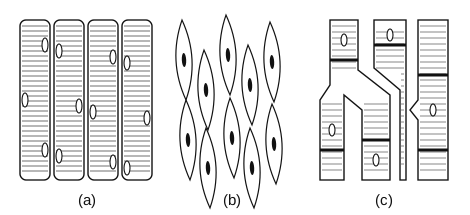
Three types of muscles are given as a, b and c. Identify the correct matching pair along with their location in human body.

Name of muscle/location
तीन प्रकार की पेशियाँ a, b और c के रूप में दी गई हैं। मानव शरीर में उनकी स्थिति सहित सही सुमेलित युग्म पहचानिए।

पेशी का नाम/स्थिति
  1. A(a) Skeletal - Triceps, (b) Smooth – Stomach, (c) Cardiac – Heart(a) कंकाल – ट्राइसेप्स, (b) चिकनी – आमाशय, (c) हृद – हृदय
  2. B(a) Skeletal - Biceps, (b) Involuntary – Intestine, (c) Smooth – Heart(a) कंकाल – बाइसेप्स, (b) अनैच्छिक – आँत, (c) चिकनी – हृदय
  3. C(a) Involuntary – Nose tip, (b) Skeletal – Bone, (c) Cardiac - Heart(a) अनैच्छिक – नाक का सिरा, (b) कंकाल – अस्थि, (c) हृद – हृदय
  4. D(a) Smooth – Toes, (b) Skeletal – Legs, (c) Cardiac - Heart(a) चिकनी – पैर की उँगलियाँ, (b) कंकाल – टाँगें, (c) हृद – हृदय
Show answer

Concept: Identify muscle by shape: long striated multinucleate fibres (skeletal), spindle-shaped unstriated (smooth), branched striated with intercalated discs (cardiac).

  1. (a) Long, cylindrical, striated, multinucleate parallel fibres → skeletal muscle, e.g. triceps/biceps of the arm.
  2. (b) Fusiform (spindle) cells, no striations, single central nucleus → smooth muscle, found in the wall of stomach, intestine, blood vessels.
  3. (c) Branched striated cells joined by intercalated discs → cardiac muscle, only in the heart.
  4. (B) calls the heart muscle "smooth" – wrong; (C) calls (a) involuntary and (b) skeletal – wrong; (D) calls (a) smooth and (b) skeletal – wrong.

Short trick: Look at (b): spindle cells = smooth. Only option (A) names (b) as smooth with a correct location.

Answer: (A) (a) Skeletal – Triceps, (b) Smooth – Stomach, (c) Cardiac – Heart

अवधारणा: आकृति से पेशी पहचानें: लंबे, रेखित, बहुकेंद्रकी तंतु (कंकाल), तर्कुरूप अरेखित (चिकनी), शाखित रेखित व अंतर्विष्ट डिस्क युक्त (हृद)।

  1. (a) लंबे, बेलनाकार, रेखित, बहुकेंद्रकी, समानांतर तंतु → कंकाल पेशी, जैसे भुजा की ट्राइसेप्स/बाइसेप्स।
  2. (b) तर्कुरूप (fusiform) कोशिकाएँ, रेखाएँ नहीं, एक केंद्रीय केंद्रक → चिकनी पेशी, आमाशय, आँत, रक्त वाहिकाओं की भित्ति में।
  3. (c) अंतर्विष्ट डिस्कों से जुड़ी शाखित रेखित कोशिकाएँ → हृद पेशी, केवल हृदय में।
  4. (B) हृदय पेशी को "चिकनी" कहता है – गलत; (C) (a) को अनैच्छिक व (b) को कंकाल कहता है – गलत; (D) (a) को चिकनी व (b) को कंकाल कहता है – गलत।

शॉर्ट ट्रिक: (b) देखें: तर्कुरूप कोशिकाएँ = चिकनी। केवल विकल्प (A) में (b) चिकनी है और स्थिति भी सही है।

उत्तर: (A) (a) कंकाल – ट्राइसेप्स, (b) चिकनी – आमाशय, (c) हृद – हृदय

NEET UGZoologyStructural organisation – muscle tissueNEET UG 2024 · 5 May Shift 1
Q527.
Match List I with List II:
List IList II
A. LipaseI. Peptide bond
B. NucleaseII. Ester bond
C. ProteaseIII. Glycosidic bond
D. AmylaseIV. Phosphodiester bond
Choose the correct answer from the options given below:
सूची-I का सूची-II से मिलान कीजिए :
सूची Iसूची II
A. लाइपेज़I. पेप्टाइड आबंध
B. न्यूक्लिएज़II. एस्टर आबंध
C. प्रोटिएज़III. ग्लाइकोसिडिक आबंध
D. ऐमिलेज़IV. फॉस्फोडाइएस्टर आबंध
नीचे दिए गए विकल्पों में से सही उत्तर चुनिए :
  1. AA-III, B-II, C-I, D-IV
  2. BA-II, B-IV, C-I, D-III
  3. CA-IV, B-I, C-III, D-II
  4. DA-IV, B-II, C-III, D-I
Show answer

Concept: Each hydrolase breaks the bond that links the monomers of its substrate.

  1. Lipase – fats: ester bond between fatty acid and glycerol → A-II.
  2. Nuclease – nucleic acids: phosphodiester bonds → B-IV.
  3. Protease – proteins: peptide bonds → C-I.
  4. Amylase – starch: glycosidic bonds between sugars → D-III.

Short trick: Fat–Ester, Nucleic–Phosphodiester, Protein–Peptide, Sugar–Glycosidic: the bond is named after the polymer.

Answer: (B) A-II, B-IV, C-I, D-III

अवधारणा: प्रत्येक जल-अपघटक एंजाइम अपने क्रियाधार के एकलकों को जोड़ने वाला आबंध तोड़ता है।

  1. लाइपेज़ – वसा: वसा अम्ल व ग्लिसरॉल के बीच एस्टर आबंध → A-II।
  2. न्यूक्लिएज़ – न्यूक्लिक अम्ल: फॉस्फोडाइएस्टर आबंध → B-IV।
  3. प्रोटिएज़ – प्रोटीन: पेप्टाइड आबंध → C-I।
  4. ऐमिलेज़ – स्टार्च: शर्कराओं के बीच ग्लाइकोसिडिक आबंध → D-III।

शॉर्ट ट्रिक: वसा–एस्टर, न्यूक्लिक–फॉस्फोडाइएस्टर, प्रोटीन–पेप्टाइड, शर्करा–ग्लाइकोसिडिक।

उत्तर: (B) A-II, B-IV, C-I, D-III

NEET UGZoologyBiomolecules/digestion – enzymes and bondsNEET UG 2024 · 5 May Shift 1
Q528.
The flippers of the Penguins and Dolphins are the example of the
पेंग्विन और डॉल्फ़िन के फ्लिपर (पक्षक) किसके उदाहरण हैं?
  1. ANatural selectionप्राकृतिक वरण
  2. BConvergent evolutionअभिसारी विकास
  3. CDivergent evolutionअपसारी विकास
  4. DAdaptive radiationअनुकूली विकिरण
Show answer

Concept: Analogous organs: different structure/origin, same function → result of convergent evolution.

  1. Penguin (bird) flipper is a modified wing; dolphin (mammal) flipper is a modified forelimb – different lineages, same swimming function.
  2. Similar habitat selected similar features → convergent evolution (analogy).
  3. Divergent evolution/adaptive radiation produce homologous organs from a common ancestor; natural selection is the general mechanism, not the specific pattern.

Short trick: Same job, different origin = "Converge". Same origin, different job = "Diverge".

Answer: (B) Convergent evolution

अवधारणा: समरूप (analogous) अंग: भिन्न संरचना/उत्पत्ति, समान कार्य → अभिसारी विकास का परिणाम।

  1. पेंग्विन (पक्षी) का फ्लिपर रूपांतरित पंख है; डॉल्फ़िन (स्तनधारी) का फ्लिपर रूपांतरित अग्रपाद – भिन्न वंश, तैरने का समान कार्य।
  2. समान आवास ने समान लक्षणों का वरण किया → अभिसारी विकास (समरूपता)।
  3. अपसारी विकास/अनुकूली विकिरण एक ही पूर्वज से समजात अंग बनाते हैं; प्राकृतिक वरण सामान्य क्रियाविधि है, यह विशिष्ट प्रतिरूप नहीं।

शॉर्ट ट्रिक: समान कार्य, भिन्न उत्पत्ति = "अभिसारी"। समान उत्पत्ति, भिन्न कार्य = "अपसारी"।

उत्तर: (B) अभिसारी विकास

NEET UGZoologyEvolution – analogous organsNEET UG 2024 · 5 May Shift 1
Q529.
Following are the stages of cell division:
A. Gap 2 phase
B. Cytokinesis
C. Synthesis phase
D. Karyokinesis
E. Gap 1 phase
Choose the correct sequence of stages from the options given below:
कोशिका विभाजन की अवस्थाएँ नीचे दी गई हैं:
A. अंतराल 2 प्रावस्था (G2)
B. कोशिकाद्रव्य विभाजन (Cytokinesis)
C. संश्लेषण प्रावस्था (S)
D. केंद्रक विभाजन (Karyokinesis)
E. अंतराल 1 प्रावस्था (G1)
नीचे दिए गए विकल्पों में से अवस्थाओं का सही क्रम चुनिए:
  1. AE-B-D-A-C
  2. BB-D-E-A-C
  3. CE-C-A-D-B
  4. DC-E-D-A-B
Show answer

Concept: Cell cycle = Interphase (G1 → S → G2) followed by M phase (karyokinesis → cytokinesis).

  1. G1 (E) – cell grows.
  2. S (C) – DNA replicates.
  3. G2 (A) – proteins for mitosis made.
  4. Karyokinesis (D) – nuclear division.
  5. Cytokinesis (B) – division of cytoplasm.
  6. Sequence: E-C-A-D-B.

Short trick: "Go Sit Go, Kids Cry" – G1, S, G2, Karyokinesis, Cytokinesis.

Answer: (C) E-C-A-D-B

अवधारणा: कोशिका चक्र = अंतरावस्था (G1 → S → G2) तत्पश्चात M प्रावस्था (केंद्रक विभाजन → कोशिकाद्रव्य विभाजन)।

  1. G1 (E) – कोशिका वृद्धि।
  2. S (C) – DNA प्रतिकृतिकरण।
  3. G2 (A) – सूत्री विभाजन हेतु प्रोटीन संश्लेषण।
  4. केंद्रक विभाजन (D)।
  5. कोशिकाद्रव्य विभाजन (B)।
  6. क्रम: E-C-A-D-B।

शॉर्ट ट्रिक: "Go Sit Go, Kids Cry" – G1, S, G2, Karyokinesis, Cytokinesis।

उत्तर: (C) E-C-A-D-B

NEET UGZoologyCell cycle – sequence of phasesNEET UG 2024 · 5 May Shift 1
Q530.
Which of the following factors will not affect the Hardy-Weinberg equilibrium?
निम्नलिखित में से कौन-सा कारक हार्डी-वाइनबर्ग साम्य को प्रभावित नहीं करेगा?
  1. AGenetic driftआनुवंशिक विचलन (Genetic drift)
  2. BGene migrationजीन प्रवास (Gene migration)
  3. CConstant gene poolस्थिर जीन कोश (Constant gene pool)
  4. DGenetic recombinationआनुवंशिक पुनर्योजन
Show answer

Concept: Hardy-Weinberg: allele frequencies stay constant (p2 + 2pq + q2 = 1) unless disturbed.

  1. Five disturbing factors: gene migration (gene flow), genetic drift, mutation, genetic recombination and natural selection.
  2. So (A), (B) and (D) do affect the equilibrium.
  3. A constant gene pool is the equilibrium itself – it does not disturb it.

Short trick: Remember "MMDRS" (Mutation, Migration, Drift, Recombination, Selection) – anything "constant" is the equilibrium, not a factor.

Answer: (C) Constant gene pool

अवधारणा: हार्डी-वाइनबर्ग: विक्षोभ न हो तो युग्मविकल्पी आवृत्तियाँ स्थिर रहती हैं (p2 + 2pq + q2 = 1)।

  1. पाँच विक्षोभकारी कारक: जीन प्रवास (जीन प्रवाह), आनुवंशिक विचलन, उत्परिवर्तन, आनुवंशिक पुनर्योजन तथा प्राकृतिक वरण।
  2. अतः (A), (B) और (D) साम्य को प्रभावित करते हैं।
  3. स्थिर जीन कोश स्वयं साम्य की अवस्था है – यह उसे विक्षुब्ध नहीं करता।

शॉर्ट ट्रिक: "MMDRS" याद रखें (उत्परिवर्तन, प्रवास, विचलन, पुनर्योजन, वरण) – "स्थिर" कुछ भी साम्य है, कारक नहीं।

उत्तर: (C) स्थिर जीन कोश

NEET UGZoologyEvolution – Hardy-Weinberg principleNEET UG 2024 · 5 May Shift 1
Q531.
Given below are two statements:
Statement I: The presence or absence of hymen is not a reliable indicator of virginity.
Statement II: The hymen is torn during the first coitus only.
In the light of the above statements, choose the correct answer from the options given below:
नीचे दो कथन दिए गए हैं:
कथन I: योनिच्छद (hymen) की उपस्थिति या अनुपस्थिति कौमार्य का विश्वसनीय सूचक नहीं है।
कथन II: योनिच्छद केवल प्रथम संभोग के दौरान ही फटता है।
उपर्युक्त कथनों के आलोक में, नीचे दिए गए विकल्पों में से सही उत्तर चुनिए:
  1. ABoth statement I and statement II are falseकथन I और कथन II दोनों असत्य हैं
  2. BStatement I is true but statement II is falseकथन I सत्य है परन्तु कथन II असत्य है
  3. CStatement I is false but statement II is trueकथन I असत्य है परन्तु कथन II सत्य है
  4. DBoth statement I and statement II are trueकथन I और कथन II दोनों सत्य हैं
Show answer

Concept: NCERT: the hymen is often torn during first coitus, but can also break otherwise or persist.

  1. Statement I – presence/absence of hymen is not a reliable indicator of virginity or sexual experience → true.
  2. Statement II – "only" is wrong: hymen can also break by a sudden fall or jolt, insertion of a tampon, sports like horse-riding or cycling, and may persist even after coitus → false.

Short trick: Words like "only/always" in a biology statement are usually the trap.

Answer: (B) Statement I is true but statement II is false

अवधारणा: NCERT: योनिच्छद प्रायः प्रथम संभोग में फटता है, परंतु अन्य कारणों से भी फट सकता है या बना रह सकता है।

  1. कथन I – योनिच्छद की उपस्थिति/अनुपस्थिति कौमार्य या लैंगिक अनुभव का विश्वसनीय सूचक नहीं → सत्य।
  2. कथन II – "केवल" गलत है: योनिच्छद अचानक गिरने या झटके, टैम्पोन लगाने, घुड़सवारी या साइकिल चलाने जैसे खेलों से भी फट सकता है, और संभोग के बाद भी बना रह सकता है → असत्य।

शॉर्ट ट्रिक: जीवविज्ञान के कथनों में "केवल/हमेशा" जैसे शब्द प्रायः जाल होते हैं।

उत्तर: (B) कथन I सत्य है परन्तु कथन II असत्य है

NEET UGZoologyHuman reproduction – female reproductive systemNEET UG 2024 · 5 May Shift 1
Q532.
Match List I with List II:
List IList II
A. TyphoidI. Fungus
B. LeishmaniasisII. Nematode
C. RingwormIII. Protozoa
D. FilariasisIV. Bacteria
Choose the correct answer from the options given below:
सूची-I का सूची-II से मिलान कीजिए :
सूची Iसूची II
A. टाइफॉइडI. कवक
B. लीशमैनियता (Leishmaniasis)II. सूत्रकृमि
C. दाद (Ringworm)III. प्रोटोज़ोआ
D. फाइलेरियता (Filariasis)IV. जीवाणु
नीचे दिए गए विकल्पों में से सही उत्तर चुनिए :
  1. AA-IV, B-III, C-I, D-II
  2. BA-III, B-I, C-IV, D-II
  3. CA-II, B-IV, C-III, D-I
  4. DA-I, B-III, C-II, D-IV
Show answer

Concept: Causative organisms of common human diseases.

  1. Typhoid – Salmonella typhi, a bacterium → A-IV.
  2. Leishmaniasis – Leishmania, a protozoan → B-III.
  3. Ringworm – fungi Microsporum, Trichophyton, Epidermophyton → C-I.
  4. Filariasis (elephantiasis) – Wuchereria, a nematode → D-II.

Short trick: "Ringworm" is not a worm – it is a fungus; "Filaria" is the real worm.

Answer: (A) A-IV, B-III, C-I, D-II

अवधारणा: सामान्य मानव रोगों के रोगकारक जीव।

  1. टाइफॉइड – साल्मोनेला टाइफी, एक जीवाणु → A-IV।
  2. लीशमैनियता – लीशमैनिया, एक प्रोटोज़ोआ → B-III।
  3. दाद – कवक माइक्रोस्पोरम, ट्राइकोफाइटॉन, एपिडर्मोफाइटॉन → C-I।
  4. फाइलेरियता (हाथीपाँव) – वुचेरेरिया, एक सूत्रकृमि → D-II।

शॉर्ट ट्रिक: "रिंगवर्म" कृमि नहीं – कवक है; "फाइलेरिया" असली कृमि है।

उत्तर: (A) A-IV, B-III, C-I, D-II

NEET UGZoologyHuman health and disease – causative organismsNEET UG 2024 · 5 May Shift 1
Q533.
Given below are some stages of human evolution. Arrange them in correct sequence. (Past to Recent)
A. Homo habilis
B. Homo sapiens
C. Homo neanderthalensis
D. Homo erectus
Choose the correct sequence of human evolution from the options given below:
मानव विकास की कुछ अवस्थाएँ नीचे दी गई हैं। इन्हें सही क्रम में व्यवस्थित कीजिए। (प्राचीन से नवीन)
A. होमो हैबिलिस
B. होमो सेपियंस
C. होमो निएंडरथैलेंसिस
D. होमो इरेक्टस
नीचे दिए गए विकल्पों में से मानव विकास का सही क्रम चुनिए:
  1. AB-A-D-C
  2. BC-B-D-A
  3. CA-D-C-B
  4. DD-A-C-B
Show answer

Concept: Order follows increasing brain capacity and time.

  1. Homo habilis – first human-like hominid, 650–800 cc, did not eat meat.
  2. Homo erectus – about 1.5 mya, ~900 cc, probably ate meat.
  3. Neanderthal man – 1400 cc, 1,00,000–40,000 years ago, buried their dead.
  4. Homo sapiens – arose in Africa, modern man.
  5. Sequence: A-D-C-B.

Short trick: Brain grows "Handy → Erect → Neanderthal → Sapiens" (650 → 900 → 1400 cc).

Answer: (C) A-D-C-B

अवधारणा: क्रम मस्तिष्क क्षमता व समय के बढ़ने के अनुसार।

  1. होमो हैबिलिस – प्रथम मानव-सदृश होमिनिड, 650–800 cc, मांस नहीं खाते थे।
  2. होमो इरेक्टस – लगभग 15 लाख वर्ष पूर्व, ~900 cc, संभवतः मांस खाते थे।
  3. निएंडरथल मानव – 1400 cc, 1,00,000–40,000 वर्ष पूर्व, मृतकों को दफ़नाते थे।
  4. होमो सेपियंस – अफ्रीका में उत्पन्न, आधुनिक मानव।
  5. क्रम: A-D-C-B।

शॉर्ट ट्रिक: मस्तिष्क बढ़ा "हैबिलिस → इरेक्टस → निएंडरथल → सेपियंस" (650 → 900 → 1400 cc)।

उत्तर: (C) A-D-C-B

NEET UGZoologyEvolution – human evolutionNEET UG 2024 · 5 May Shift 1
Q534.
Which of the following is not a component of Fallopian tube?
निम्नलिखित में से कौन-सा फैलोपियन नलिका का घटक नहीं है?
  1. AIsthmusसंकीर्ण पथ (Isthmus)
  2. BInfundibulumकीपक (Infundibulum)
  3. CAmpullaतुंबिका (Ampulla)
  4. DUterine fundusगर्भाशय बुध्न (Uterine fundus)
Show answer

Concept: Each oviduct (10–12 cm) has infundibulum → ampulla → isthmus, from ovary to uterus.

  1. Infundibulum – funnel-shaped part near the ovary with fimbriae.
  2. Ampulla – wider middle part (site of fertilisation).
  3. Isthmus – narrow last part joining the uterus.
  4. Fundus is the dome-shaped top part of the uterus (uterus = fundus, body, cervix), not of the tube.

Short trick: Tube from ovary: "I Am Iron" – Infundibulum, Ampulla, Isthmus.

Answer: (D) Uterine fundus

अवधारणा: प्रत्येक अंडवाहिनी (10–12 cm) अंडाशय से गर्भाशय तक कीपक → तुंबिका → संकीर्ण पथ से बनी है।

  1. कीपक – अंडाशय के पास कीप-आकार भाग जिस पर झालर (fimbriae) होती है।
  2. तुंबिका – चौड़ा मध्य भाग (निषेचन स्थल)।
  3. संकीर्ण पथ – संकरा अंतिम भाग जो गर्भाशय से जुड़ता है।
  4. बुध्न (fundus) गर्भाशय का गुंबदनुमा ऊपरी भाग है (गर्भाशय = बुध्न, काय, ग्रीवा), नलिका का नहीं।

शॉर्ट ट्रिक: अंडाशय से नलिका: "I Am Iron" – Infundibulum, Ampulla, Isthmus।

उत्तर: (D) गर्भाशय बुध्न

NEET UGZoologyHuman reproduction – Fallopian tubeNEET UG 2024 · 5 May Shift 1
Q535.
Consider the following statement:
A. Annelids are true coelomates
B. Poriferans are pseudocoelomates
C. Aschelminthes are acoelomates
D. Platyhelminthes are pseudocoelomates
Choose the correct answer from the options given below:
निम्नलिखित कथनों पर विचार कीजिए:
A. ऐनेलिड वास्तविक प्रगुही (true coelomates) हैं
B. पोरिफेरा कूटप्रगुही (pseudocoelomates) हैं
C. ऐस्केल्मिंथीज़ अप्रगुही (acoelomates) हैं
D. प्लेटीहेल्मिंथीज़ कूटप्रगुही हैं
नीचे दिए गए विकल्पों में से सही उत्तर चुनिए:
  1. AA onlyकेवल A
  2. BC onlyकेवल C
  3. CD onlyकेवल D
  4. DB onlyकेवल B
Show answer

Concept: Coelom lined by mesoderm = true coelom; scattered mesoderm pouches = pseudocoelom; no cavity = acoelom.

  1. A. Annelids – true coelomates ✔.
  2. B. Poriferans – cellular level, no true germ layers/body cavity → not pseudocoelomates ✘.
  3. C. Aschelminthes (roundworms) – pseudocoelomates ✘.
  4. D. Platyhelminthes – acoelomates ✘.
  5. Only A is correct.

Short trick: "Flat = no cavity, Round = pseudo, Ring (annelid) onwards = true".

Answer: (A) A only

अवधारणा: मीसोडर्म से आस्तरित गुहा = वास्तविक प्रगुहा; बिखरी मीसोडर्म थैलियाँ = कूटप्रगुहा; गुहा नहीं = अप्रगुही।

  1. A. ऐनेलिड – वास्तविक प्रगुही ✔।
  2. B. पोरिफेरा – कोशिकीय स्तर, वास्तविक जनन स्तर/देहगुहा नहीं → कूटप्रगुही नहीं ✘।
  3. C. ऐस्केल्मिंथीज़ (गोलकृमि) – कूटप्रगुही ✘।
  4. D. प्लेटीहेल्मिंथीज़ – अप्रगुही ✘।
  5. केवल A सही है।

शॉर्ट ट्रिक: "चपटे = गुहा नहीं, गोल = कूट, वलयी (ऐनेलिड) से आगे = वास्तविक"।

उत्तर: (A) केवल A

NEET UGZoologyAnimal kingdom – body cavity (coelom)NEET UG 2024 · 5 May Shift 1
Q536.
Match List I with List II:
List IList II
A. AxonemeI. Centriole
B. Cartwheel patternII. Cilia and flagella
C. CristaIII. Chromosome
D. SatelliteIV. Mitochondria
Choose the correct answer from the options given below:
सूची-I का सूची-II से मिलान कीजिए :
सूची Iसूची II
A. अक्षसूत्र (Axoneme)I. तारककेंद्र (Centriole)
B. गाड़ी के पहिए जैसा विन्यास (Cartwheel pattern)II. पक्ष्माभ एवं कशाभ
C. क्रिस्टी (Crista)III. गुणसूत्र
D. अनुषंगी (Satellite)IV. सूत्रकणिका (Mitochondria)
नीचे दिए गए विकल्पों में से सही उत्तर चुनिए :
  1. AA-IV, B-II, C-III, D-I
  2. BA-II, B-IV, C-I, D-III
  3. CA-II, B-I, C-IV, D-III
  4. DA-IV, B-III, C-II, D-I
Show answer

Concept: Characteristic substructures of organelles (NCERT "Cell: The Unit of Life").

  1. Axoneme – core of cilia/flagella with 9+2 microtubules → A-II.
  2. Cartwheel pattern – nine peripheral triplet fibrils of the centriole → B-I.
  3. Cristae – infoldings of the inner mitochondrial membrane → C-IV.
  4. Satellite – small fragment beyond the secondary constriction of some chromosomes → D-III.

Short trick: "Axoneme = Axis of cilia", "Cartwheel = Centriole" (both C), "Crista = mitochondria's Creases".

Answer: (C) A-II, B-I, C-IV, D-III

अवधारणा: कोशिकांगों की विशिष्ट उप-संरचनाएँ (NCERT "कोशिका: जीवन की इकाई")।

  1. अक्षसूत्र – पक्ष्माभ/कशाभ का केंद्रीय भाग, 9+2 सूक्ष्मनलिकाएँ → A-II।
  2. गाड़ी के पहिए जैसा विन्यास – तारककेंद्र के नौ परिधीय त्रिक तंतुक → B-I।
  3. क्रिस्टी – सूत्रकणिका की आंतरिक झिल्ली के अंतर्वलन → C-IV।
  4. अनुषंगी – कुछ गुणसूत्रों में द्वितीयक संकीर्णन के आगे का छोटा खंड → D-III।

शॉर्ट ट्रिक: "Axoneme = पक्ष्माभ की धुरी", "Cartwheel = Centriole" (दोनों C), "Crista = सूत्रकणिका की सिलवटें"।

उत्तर: (C) A-II, B-I, C-IV, D-III

NEET UGZoologyCell – cell organellesNEET UG 2024 · 5 May Shift 1
Q537.
Match List I with List II:
List IList II
A. PterophyllumI. Hag fish
B. MyxineII. Saw fish
C. PristisIII. Angel fish
D. ExocoetusIV. Flying fish
Choose the correct answer from the options given below:
सूची-I का सूची-II से मिलान कीजिए :
सूची Iसूची II
A. टेरोफिल्लम (Pterophyllum)I. हैग मछली
B. मिक्ज़ीन (Myxine)II. आरा मछली (Saw fish)
C. प्रिस्टिस (Pristis)III. एंजेल मछली
D. एक्सोसीटस (Exocoetus)IV. उड़न मछली
नीचे दिए गए विकल्पों में से सही उत्तर चुनिए :
  1. AA-III, B-I, C-II, D-IV
  2. BA-IV, B-I, C-II, D-III
  3. CA-III, B-II, C-I, D-IV
  4. DA-II, B-I, C-III, D-IV
Show answer

Concept: NCERT examples with common names.

  1. Pterophyllum – angel fish (bony fish) → A-III.
  2. Myxine – hag fish (cyclostome) → B-I.
  3. Pristis – saw fish (cartilaginous fish) → C-II.
  4. Exocoetus – flying fish (bony fish) → D-IV.

Short trick: "Ptero = wing → angel"; "Exo-coetus = flying"; "Pristis = Pristine saw"; "Myxine = Mixer → hag".

Answer: (A) A-III, B-I, C-II, D-IV

अवधारणा: NCERT उदाहरण सामान्य नामों सहित।

  1. टेरोफिल्लम – एंजेल मछली (अस्थिल मछली) → A-III।
  2. मिक्ज़ीन – हैग मछली (साइक्लोस्टोम) → B-I।
  3. प्रिस्टिस – आरा मछली (उपास्थिल मछली) → C-II।
  4. एक्सोसीटस – उड़न मछली (अस्थिल मछली) → D-IV।

शॉर्ट ट्रिक: "Ptero = पंख → एंजेल"; "Exocoetus = उड़न"; "Pristis = आरा"; "Myxine = हैग"।

उत्तर: (A) A-III, B-I, C-II, D-IV

NEET UGZoologyAnimal kingdom – fishes (common names)NEET UG 2024 · 5 May Shift 1
Q538.
Match List I with List II:
List IList II
A. PonsI. Provides additional space for Neurons, regulates posture and balance
B. HypothalamusII. Controls respiration and gastric secretions
C. MedullaIII. Connects different regions of the brain
D. CerebellumIV. Neuro secretory cells
Choose the correct answer from the options given below:
सूची-I का सूची-II से मिलान कीजिए :
सूची Iसूची II
A. पोंसI. तंत्रिकाओं के लिए अतिरिक्त स्थान प्रदान करता है, आसन व संतुलन नियंत्रित करता है
B. हाइपोथैलेमसII. श्वसन एवं जठर स्रावों को नियंत्रित करता है
C. मेडुलाIII. मस्तिष्क के विभिन्न भागों को जोड़ता है
D. अनुमस्तिष्क (Cerebellum)IV. तंत्रिकास्रावी कोशिकाएँ
नीचे दिए गए विकल्पों में से सही उत्तर चुनिए :
  1. AA-III, B-IV, C-II, D-I
  2. BA-I, B-III, C-II, D-IV
  3. CA-II, B-I, C-III, D-IV
  4. DA-II, B-III, C-I, D-IV
Show answer

Concept: Functions of brain regions (NCERT).

  1. Pons – fibre tracts that interconnect different regions of the brain → A-III.
  2. Hypothalamus – has neurosecretory cells that secrete hypothalamic hormones → B-IV.
  3. Medulla – centres for respiration, cardiovascular reflexes and gastric secretions → C-II.
  4. Cerebellum – very convoluted surface gives additional space for many neurons; maintains posture and balance → D-I.

Short trick: Medulla = "vital centres" (breathing, heart, gastric). Only option (A) has C-II with A-III.

Answer: (A) A-III, B-IV, C-II, D-I

अवधारणा: मस्तिष्क भागों के कार्य (NCERT)।

  1. पोंस – तंतु पथ जो मस्तिष्क के विभिन्न भागों को परस्पर जोड़ते हैं → A-III।
  2. हाइपोथैलेमस – हाइपोथैलेमिक हॉर्मोन स्रावित करने वाली तंत्रिकास्रावी कोशिकाएँ → B-IV।
  3. मेडुला – श्वसन, हृदवाहिनी प्रतिवर्त व जठर स्राव के केंद्र → C-II।
  4. अनुमस्तिष्क – अत्यधिक वलित सतह अनेक तंत्रिकाओं के लिए अतिरिक्त स्थान देती है; आसन व संतुलन बनाए रखता है → D-I।

शॉर्ट ट्रिक: मेडुला = "जीवन केंद्र" (श्वास, हृदय, जठर)। C-II व A-III साथ केवल (A) में।

उत्तर: (A) A-III, B-IV, C-II, D-I

NEET UGZoologyNeural control – parts of brainNEET UG 2024 · 5 May Shift 1
Q539.
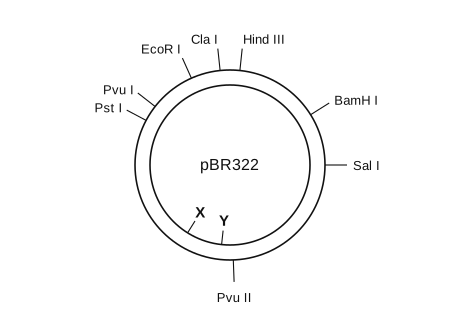
The following diagram showing restriction sites in E. coli cloning vector pBR322. Find the role of ‘X’ and ‘Y’ genes:
निम्नलिखित आरेख E. coli क्लोनिंग संवाहक pBR322 में प्रतिबंधन स्थलों को दर्शाता है। ‘X’ और ‘Y’ जीनों की भूमिका ज्ञात कीजिए:
  1. AThe gene ‘X’ is responsible for controlling the copy number of the linked DNA and ‘Y’ for protein involved in the replication of plasmid.जीन ‘X’ जुड़े हुए DNA की प्रतिलिपि संख्या (copy number) के नियंत्रण के लिए उत्तरदायी है तथा ‘Y’ प्लाज्मिड के प्रतिकृतिकरण में शामिल प्रोटीन के लिए।
  2. BThe gene ‘X’ is for protein involved in replication of plasmid and ‘Y’ for resistance to antibiotics.जीन ‘X’ प्लाज्मिड के प्रतिकृतिकरण में शामिल प्रोटीन के लिए है तथा ‘Y’ प्रतिजैविकों के प्रति प्रतिरोध के लिए।
  3. CGene ‘X’ is responsible for recognition sites and ‘Y’ is responsible for antibiotic resistance.जीन ‘X’ पहचान स्थलों के लिए उत्तरदायी है तथा ‘Y’ प्रतिजैविक प्रतिरोध के लिए उत्तरदायी है।
  4. DThe gene ‘X’ is responsible for resistance to antibiotics and ‘Y’ for protein involved in the replication of plasmid.जीन ‘X’ प्रतिजैविकों के प्रति प्रतिरोध के लिए उत्तरदायी है तथा ‘Y’ प्लाज्मिड के प्रतिकृतिकरण में शामिल प्रोटीन के लिए।
Show answer

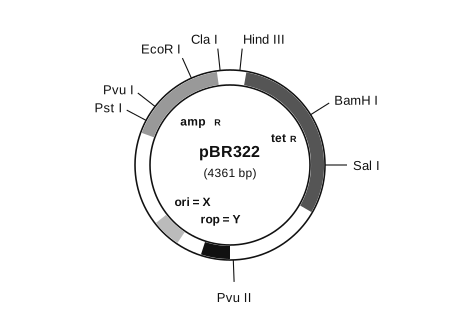
Concept: In the NCERT map of pBR322, the region near the bottom-left is ori and the adjacent region near Pvu II is rop.

  1. X marks ori – the origin of replication; it is also responsible for controlling the copy number of the linked DNA.
  2. Y marks rop – codes for proteins involved in the replication of the plasmid.
  3. Antibiotic resistance is carried by ampR (with Pvu I, Pst I sites) and tetR (with BamH I, Sal I sites) – not at X or Y, so (B) and (D) are wrong.
  4. Recognition sites are the restriction sites marked outside the ring – not genes X/Y, so (C) is wrong.

Short trick: In pBR322 read clockwise from Pvu II: "rop then ori" → Y = rop, X = ori.

Answer: (A) X – controls copy number (ori); Y – protein for plasmid replication (rop)

अवधारणा: NCERT के pBR322 मानचित्र में नीचे-बाईं ओर का क्षेत्र ori तथा Pvu II के पास का क्षेत्र rop है।

  1. X = ori – प्रतिकृतिकरण का उद्गम; यही जुड़े DNA की प्रतिलिपि संख्या को भी नियंत्रित करता है।
  2. Y = rop – प्लाज्मिड प्रतिकृतिकरण में शामिल प्रोटीनों का कोड करता है।
  3. प्रतिजैविक प्रतिरोध ampR (Pvu I, Pst I स्थल युक्त) व tetR (BamH I, Sal I स्थल युक्त) पर है – X या Y पर नहीं, अतः (B) व (D) गलत।
  4. पहचान स्थल वलय के बाहर दिखाए गए प्रतिबंधन स्थल हैं – जीन X/Y नहीं, अतः (C) गलत।

शॉर्ट ट्रिक: pBR322 में Pvu II से दक्षिणावर्त पढ़ें: "पहले rop फिर ori" → Y = rop, X = ori।

उत्तर: (A) X – प्रतिलिपि संख्या नियंत्रण (ori); Y – प्लाज्मिड प्रतिकृतिकरण प्रोटीन (rop)

NEET UGZoologyBiotechnology – cloning vector pBR322NEET UG 2024 · 5 May Shift 1
Q540.
Given below are two statements:
Statement I: In the nephron, the descending limb of loop of Henle is impermeable to water and permeable to electrolytes.
Statement II: The proximal convoluted tubule is lined by simple columnar brush border epithelium and increases the surface area for reabsorption.
In the light of the above statements, choose the correct answer from the options given below:
नीचे दो कथन दिए गए हैं:
कथन I: वृक्काणु में हेनले लूप की अवरोही भुजा जल के लिए अपारगम्य तथा विद्युत-अपघट्यों के लिए पारगम्य है।
कथन II: समीपस्थ संवलित नलिका (PCT) सरल स्तंभाकार ब्रश बॉर्डर उपकला से आस्तरित है तथा पुनरवशोषण हेतु सतही क्षेत्रफल बढ़ाती है।
उपर्युक्त कथनों के आलोक में, नीचे दिए गए विकल्पों में से सही उत्तर चुनिए:
  1. ABoth statement I and statement II are falseकथन I और कथन II दोनों असत्य हैं
  2. BStatement I is true but statement II is falseकथन I सत्य है परन्तु कथन II असत्य है
  3. CStatement I is false but statement II is trueकथन I असत्य है परन्तु कथन II सत्य है
  4. DBoth statement I and statement II are trueकथन I और कथन II दोनों सत्य हैं
Show answer

Concept: Descending limb: permeable to water, almost impermeable to electrolytes; PCT: simple cuboidal brush border epithelium.

  1. Statement I reverses the property – the descending limb is permeable to water and almost impermeable to electrolytes (it is the ascending limb that is impermeable to water) → false.
  2. Statement II – PCT is lined by simple cuboidal (not columnar) brush border epithelium → false.
  3. Both statements are false.

Short trick: "Descending = Drinks water; Ascending = Absorbs salt". PCT = "cuboidal with brush border".

Answer: (A) Both statement I and statement II are false

अवधारणा: अवरोही भुजा: जल के लिए पारगम्य, विद्युत-अपघट्यों के लिए लगभग अपारगम्य; PCT: सरल घनाकार ब्रश बॉर्डर उपकला।

  1. कथन I गुण को उलट देता है – अवरोही भुजा जल के लिए पारगम्य तथा विद्युत-अपघट्यों के लिए लगभग अपारगम्य है (जल के लिए अपारगम्य आरोही भुजा है) → असत्य।
  2. कथन II – PCT सरल घनाकार (स्तंभाकार नहीं) ब्रश बॉर्डर उपकला से आस्तरित है → असत्य।
  3. दोनों कथन असत्य हैं।

शॉर्ट ट्रिक: "अवरोही = जल पीती है; आरोही = लवण सोखती है"। PCT = "घनाकार, ब्रश बॉर्डर सहित"।

उत्तर: (A) कथन I और कथन II दोनों असत्य हैं

NEET UGZoologyExcretion – nephron structure and functionNEET UG 2024 · 5 May Shift 1