NEET UG · 2,240 questions

NEET UG 2015, 2016, 2017, 2018, 2019, 2020, 2021, 2022, 2023, 2024, 2025, 2026 PYQs

Real previous year questions, subject-wise. Try the question, then open the answer and the explanation in Hindi & English – free, no login.

Courses – airGurukul

2,240 questions.

Q1441.
Select the correct sequence of organs in the alimentary canal of cockroach starting from mouth
मुख से प्रारंभ करते हुए कॉकरोच की आहार नाल में अंगों का सही क्रम चुनिए
  1. APharynx → Oesophagus → Crop → Gizzard → Ileum → Colon → Rectumग्रसनी → ग्रसिका → अन्नपुट (Crop) → पेषणी (Gizzard) → क्षुद्रांत्र (Ileum) → वृहदांत्र (Colon) → मलाशय
  2. BPharynx → Oesophagus → Gizzard → Crop → Ileum → Colon → Rectumग्रसनी → ग्रसिका → पेषणी (Gizzard) → अन्नपुट (Crop) → क्षुद्रांत्र (Ileum) → वृहदांत्र (Colon) → मलाशय
  3. CPharynx → Oesophagus → Gizzard → Ileum → Crop → Colon → Rectumग्रसनी → ग्रसिका → पेषणी (Gizzard) → क्षुद्रांत्र (Ileum) → अन्नपुट (Crop) → वृहदांत्र (Colon) → मलाशय
  4. DPharynx → Oesophagus → Ileum → Crop → Gizzard → Colon → Rectumग्रसनी → ग्रसिका → क्षुद्रांत्र (Ileum) → अन्नपुट (Crop) → पेषणी (Gizzard) → वृहदांत्र (Colon) → मलाशय
Show answer

Concept: Cockroach gut = foregut (pharynx, oesophagus, crop, gizzard) → midgut (mesenteron with hepatic caeca) → hindgut (ileum, colon, rectum).

  1. Mouth → pharynx → narrow oesophagus → sac-like crop (stores food) → gizzard/proventriculus (chitinous teeth grind food).
  2. Midgut → hindgut, which is differentiated into ileum, colon and rectum → anus. This is option (A).
  3. (B) puts gizzard before crop; (C) and (D) place crop after ileum – both crop and gizzard belong to the foregut, so these are wrong.

Short trick: Store before you grind: Crop comes before Gizzard (C before G in the alphabet); hindgut = I-C-R (Ileum, Colon, Rectum).

Answer: (A) Pharynx → Oesophagus → Crop → Gizzard → Ileum → Colon → Rectum

अवधारणा: कॉकरोच की आहार नाल = अग्रांत्र (ग्रसनी, ग्रसिका, अन्नपुट, पेषणी) → मध्यांत्र (यकृत अंधनाल सहित) → पश्चांत्र (क्षुद्रांत्र, वृहदांत्र, मलाशय)।

  1. मुख → ग्रसनी → पतली ग्रसिका → थैलीनुमा अन्नपुट (भोजन संग्रह) → पेषणी/प्रोवेंट्रिकुलस (काइटिनी दाँत भोजन पीसते हैं)।
  2. मध्यांत्र → पश्चांत्र, जो क्षुद्रांत्र, वृहदांत्र और मलाशय में विभेदित है → गुदा। यही विकल्प (A) है।
  3. (B) में पेषणी अन्नपुट से पहले है; (C) व (D) में अन्नपुट क्षुद्रांत्र के बाद है – अन्नपुट व पेषणी दोनों अग्रांत्र के भाग हैं, अतः ये गलत हैं।

शॉर्ट ट्रिक: पहले संग्रह, फिर पिसाई: Crop, Gizzard से पहले (वर्णमाला में C, G से पहले); पश्चांत्र = I-C-R (Ileum, Colon, Rectum)।

उत्तर: (A) ग्रसनी → ग्रसिका → अन्नपुट (Crop) → पेषणी (Gizzard) → क्षुद्रांत्र (Ileum) → वृहदांत्र (Colon) → मलाशय

NEET UGBiologyStructural organisation in animals – cockroach digestive systemNEET UG 2019 · 5 May Shift 1
Q1442.
Which of the following pairs of gases is mainly responsible for green house effect?
निम्नलिखित में से गैसों का कौन-सा युग्म मुख्य रूप से हरितगृह प्रभाव (green house effect) के लिए उत्तरदायी है?
  1. AOzone and Ammoniaओज़ोन और अमोनिया
  2. BOxygen and Nitrogenऑक्सीजन और नाइट्रोजन
  3. CNitrogen and Sulphur dioxideनाइट्रोजन और सल्फर डाइऑक्साइड
  4. DCarbon dioxide and Methaneकार्बन डाइऑक्साइड और मेथेन
Show answer

Concept: Greenhouse gases trap long-wave (infra-red) radiation re-emitted by the earth. NCERT share: CO2 60%, CH4 20%, CFCs 14%, N2O 6%.

  1. CO2 and CH4 together contribute ~80% of the greenhouse effect → (D).
  2. (A) Ammonia is not a significant greenhouse gas; (B) O2 and N2 do not absorb infra-red radiation; (C) SO2 causes acid rain, N2 is inert.

Short trick: GHG order “C-M-C-N” = CO2 60 > Methane 20 > CFC 14 > N2O 6.

Answer: (D) Carbon dioxide and Methane

अवधारणा: हरितगृह गैसें पृथ्वी द्वारा पुनः उत्सर्जित दीर्घ तरंग (अवरक्त) विकिरण को रोक लेती हैं। NCERT के अनुसार योगदान: CO2 60%, CH4 20%, CFCs 14%, N2O 6%।

  1. CO2 तथा CH4 मिलकर हरितगृह प्रभाव का ~80% योगदान देती हैं → (D)।
  2. (A) अमोनिया प्रमुख हरितगृह गैस नहीं है; (B) O2 व N2 अवरक्त विकिरण अवशोषित नहीं करतीं; (C) SO2 अम्ल वर्षा करती है, N2 अक्रिय है।

शॉर्ट ट्रिक: हरितगृह गैसों का क्रम “C-M-C-N” = CO2 60 > मेथेन 20 > CFC 14 > N2O 6।

उत्तर: (D) कार्बन डाइऑक्साइड और मेथेन

NEET UGBiologyEnvironmental issues – greenhouse effectNEET UG 2019 · 5 May Shift 1
Q1443.
Which of the following muscular disorders is inherited?
निम्नलिखित में से कौन-सा पेशीय विकार वंशागत है?
  1. ATetanyअपतानिका (Tetany)
  2. BMuscular dystrophyपेशीय दुष्पोषण (Muscular dystrophy)
  3. CMyasthenia gravisमाइस्थेनिया ग्रेविस
  4. DBotulismबॉटुलिज़्म
Show answer

Concept: NCERT: Muscular dystrophy – progressive degeneration of skeletal muscle, mostly due to a genetic disorder.

  1. (A) Tetany – rapid spasms due to low Ca2+ in body fluid (often hypoparathyroidism) – not inherited.
  2. (C) Myasthenia gravis – auto-immune disorder affecting the neuromuscular junction.
  3. (D) Botulism – food poisoning by the toxin of Clostridium botulinum (infection/toxin).

Short trick: Dys-trophy runs in the family “tree” (genetic, e.g. Duchenne, X-linked).

Answer: (B) Muscular dystrophy

अवधारणा: NCERT: पेशीय दुष्पोषण – कंकाल पेशियों का क्रमिक अपह्रास, जो प्रायः आनुवंशिक विकार के कारण होता है।

  1. (A) अपतानिका – देह-तरल में Ca2+ की कमी (प्रायः अल्पपैराथायरॉयडिता) से तीव्र ऐंठन – वंशागत नहीं।
  2. (C) माइस्थेनिया ग्रेविस – तंत्रिका-पेशी संधि को प्रभावित करने वाला स्व-प्रतिरक्षा विकार।
  3. (D) बॉटुलिज़्म – Clostridium botulinum के आविष (toxin) से होने वाली खाद्य विषाक्तता।

शॉर्ट ट्रिक: डिस-ट्रॉफी परिवार के “वंश-वृक्ष” में चलती है (आनुवंशिक, जैसे ड्यूशेन, X-सहलग्न)।

उत्तर: (B) पेशीय दुष्पोषण (Muscular dystrophy)

NEET UGBiologyLocomotion and movement – disorders of muscular systemNEET UG 2019 · 5 May Shift 1
Q1444.
The ciliated epithelial cells are required to move particles or mucus in a specific direction. In humans, these cells are mainly present in
पक्ष्माभी उपकला कोशिकाएँ कणों या श्लेष्मा को एक विशिष्ट दिशा में ले जाने के लिए आवश्यक हैं। मनुष्यों में ये कोशिकाएँ मुख्य रूप से उपस्थित होती हैं
  1. ABile duct and Bronchiolesपित्त वाहिनी और श्वसनिकाएँ
  2. BFallopian tubes and Pancreatic ductअंडवाहिनियाँ (Fallopian tubes) और अग्न्याशयी वाहिनी
  3. CEustachian tube and Salivary ductयूस्टेकियन नलिका और लार वाहिनी
  4. DBronchioles and Fallopian tubesश्वसनिकाएँ और अंडवाहिनियाँ (Fallopian tubes)
Show answer

Concept: NCERT: ciliated epithelium “is mainly present in the inner surface of hollow organs like bronchioles and fallopian tubes.”

  1. Bronchioles: cilia sweep mucus with trapped dust towards the pharynx.
  2. Fallopian tubes: cilia move the ovum/zygote towards the uterus → (D).
  3. Bile duct, pancreatic duct and salivary duct are lined by cuboidal/columnar (non-ciliated) epithelium, so (A), (B), (C) each contain a wrong organ.

Short trick: Cilia carry “Breath & Baby” – Bronchioles and Fallopian tubes.

Answer: (D) Bronchioles and Fallopian tubes

अवधारणा: NCERT: पक्ष्माभी उपकला “मुख्यतः खोखले अंगों जैसे श्वसनिकाओं और अंडवाहिनियों की भीतरी सतह पर पाई जाती है।”

  1. श्वसनिकाएँ: पक्ष्माभ धूल फँसी श्लेष्मा को ग्रसनी की ओर धकेलते हैं।
  2. अंडवाहिनियाँ: पक्ष्माभ अंडाणु/युग्मनज को गर्भाशय की ओर ले जाते हैं → (D)।
  3. पित्त वाहिनी, अग्न्याशयी वाहिनी तथा लार वाहिनी घनाकार/स्तंभाकार (अपक्ष्माभी) उपकला से आस्तरित हैं, अतः (A), (B), (C) प्रत्येक में एक अंग गलत है।

शॉर्ट ट्रिक: पक्ष्माभ “साँस और शिशु” को ले जाते हैं – श्वसनिकाएँ और अंडवाहिनियाँ।

उत्तर: (D) श्वसनिकाएँ और अंडवाहिनियाँ (Fallopian tubes)

NEET UGBiologyAnimal tissues – ciliated epitheliumNEET UG 2019 · 5 May Shift 1
Q1445.
Match the Column-I with Column-II
Column-IColumn-II
(a) P - wave(i) Depolarisation of ventricles
(b) QRS complex(ii) Repolarisation of ventricles
(c) T - wave(iii) Coronary ischemia
(d) Reduction in the size of T-wave(iv) Depolarisation of atria
(v) Repolarisation of atria
Select the correct option.
स्तंभ-I का स्तंभ-II से मिलान कीजिए
स्तंभ-Iस्तंभ-II
(a) P - तरंग(i) निलयों का विध्रुवण
(b) QRS सम्मिश्र(ii) निलयों का पुनर्ध्रुवण
(c) T - तरंग(iii) हृद्-धमनी अरक्तता (Coronary ischemia)
(d) T-तरंग के आकार में कमी(iv) अलिंदों का विध्रुवण
(v) अलिंदों का पुनर्ध्रुवण
सही विकल्प चुनिए।
  1. A(a)-(iv), (b)-(i), (c)-(ii), (d)-(iii)
  2. B(a)-(iv), (b)-(i), (c)-(ii), (d)-(v)
  3. C(a)-(ii), (b)-(i), (c)-(v), (d)-(iii)
  4. D(a)-(ii), (b)-(iii), (c)-(v), (d)-(iv)
Show answer

Concept: Each ECG wave records one electrical event of the heart; deviations from normal shape indicate disease.

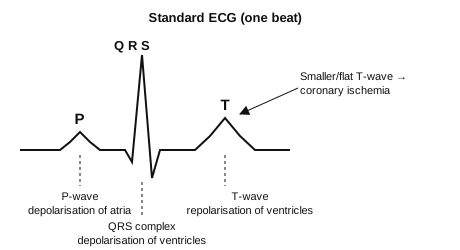
  1. P-wave → excitation (depolarisation of atria) → (iv).
  2. QRS complex → depolarisation of ventricles (initiates ventricular contraction) → (i).
  3. T-wave → return of ventricles to normal (repolarisation of ventricles) → (ii).
  4. Reduced/flat T-wave → coronary ischemia (insufficient O2 supply to heart muscle) → (iii).
  5. (v) atrial repolarisation is hidden in the QRS complex and is not matched. Answer a-iv, b-i, c-ii, d-iii = (A).

Short trick: “P = Primary chambers (atria), QRS = ventricles squeeze, T = Take rest (repolarise)”.

Answer: (A) (a)-(iv), (b)-(i), (c)-(ii), (d)-(iii)

अवधारणा: ECG की प्रत्येक तरंग हृदय की एक विद्युत घटना को दर्शाती है; सामान्य आकार से विचलन रोग का संकेत है।

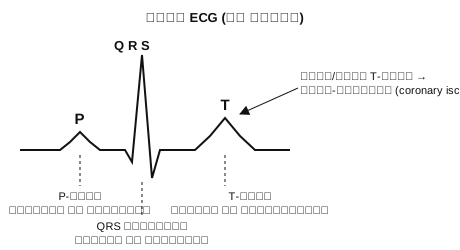
  1. P-तरंग → उत्तेजन (अलिंदों का विध्रुवण) → (iv)।
  2. QRS सम्मिश्र → निलयों का विध्रुवण (निलय संकुचन आरंभ करता है) → (i)।
  3. T-तरंग → निलयों का सामान्य अवस्था में लौटना (निलयों का पुनर्ध्रुवण) → (ii)।
  4. छोटी/चपटी T-तरंग → हृद्-धमनी अरक्तता (हृद पेशी को O2 की अपर्याप्त आपूर्ति) → (iii)।
  5. (v) अलिंदों का पुनर्ध्रुवण QRS सम्मिश्र में छिप जाता है और मिलान में नहीं आता। उत्तर a-iv, b-i, c-ii, d-iii = (A)।

शॉर्ट ट्रिक: “P = पहले कक्ष (अलिंद), QRS = निलय सिकुड़े, T = थकान उतारो (पुनर्ध्रुवण)”।

उत्तर: (A) (a)-(iv), (b)-(i), (c)-(ii), (d)-(iii)

NEET UGBiologyBody fluids and circulation – ECGNEET UG 2019 · 5 May Shift 1
Q1446.
Which one of the following is not a method in situ conservation of biodiversity?
निम्नलिखित में से कौन-सी जैव विविधता के स्वस्थाने (in situ) संरक्षण की विधि नहीं है?
  1. ABiosphere Reserveजीवमंडल आरक्षित क्षेत्र (Biosphere Reserve)
  2. BWildlife Sanctuaryवन्यजीव अभयारण्य
  3. CBotanical Gardenवानस्पतिक उद्यान (Botanical Garden)
  4. DSacred Groveपवित्र उपवन (Sacred Grove)
Show answer

Concept: In situ = protecting organisms in their natural habitat; ex situ = protecting them outside it.

  1. Biosphere reserves, wildlife sanctuaries, national parks and sacred groves protect the whole natural ecosystem – in situ.
  2. Botanical gardens (like zoos, seed banks, cryopreservation) keep plants away from their natural habitat – ex situ → (C).

Short trick: “Garden, Zoo, Bank = off-site”; Park, Sanctuary, Reserve, Grove = on-site.

Answer: (C) Botanical Garden

अवधारणा: स्वस्थाने = जीवों को उनके प्राकृतिक आवास में संरक्षित करना; बहिःस्थाने = उन्हें आवास से बाहर संरक्षित करना।

  1. जीवमंडल आरक्षित क्षेत्र, वन्यजीव अभयारण्य, राष्ट्रीय उद्यान और पवित्र उपवन पूरे प्राकृतिक पारितंत्र की रक्षा करते हैं – स्वस्थाने।
  2. वानस्पतिक उद्यान (चिड़ियाघर, बीज बैंक, निम्नताप परिरक्षण की तरह) पादपों को उनके प्राकृतिक आवास से दूर रखते हैं – बहिःस्थाने → (C)।

शॉर्ट ट्रिक: “उद्यान, चिड़ियाघर, बैंक = बाहर”; पार्क, अभयारण्य, आरक्षित क्षेत्र, उपवन = वहीं।

उत्तर: (C) वानस्पतिक उद्यान (Botanical Garden)

NEET UGBiologyBiodiversity – in situ and ex situ conservationNEET UG 2019 · 5 May Shift 1
Q1447.
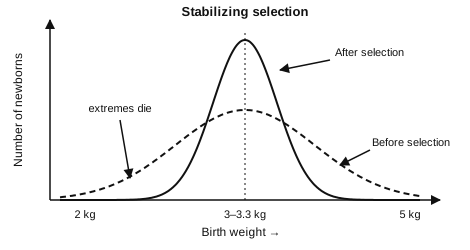
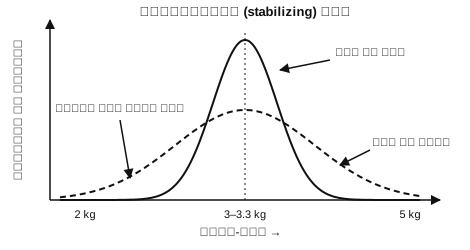
In a species, the weight of newborn ranges from 2 to 5 kg. 97% of the newborn with an average weight between 3 to 3.3 kg survive whereas 99% of the infants born with weight from 2 to 2.5 kg or 4.5 to 5 kg die. Which type of selection process is taking place?
एक जाति में नवजातों का भार 2 से 5 kg के बीच होता है। 3 से 3.3 kg औसत भार वाले 97% नवजात जीवित रहते हैं, जबकि 2 से 2.5 kg या 4.5 से 5 kg भार के साथ जन्मे 99% शिशु मर जाते हैं। कौन-सा वरण प्रक्रम हो रहा है?
  1. ADirectional Selectionदिशात्मक वरण (Directional Selection)
  2. BStabilizing Selectionस्थायीकारी वरण (Stabilizing Selection)
  3. CDisruptive Selectionविदारक वरण (Disruptive Selection)
  4. DCyclical Selectionचक्रीय वरण (Cyclical Selection)
Show answer

Concept: In stabilizing selection individuals with the mean (average) character value are favoured and both extremes are eliminated; the curve becomes narrower and taller around the same mean.

  1. Here average-weight babies (3–3.3 kg) survive, both light (2–2.5 kg) and heavy (4.5–5 kg) babies die → extremes removed, mean retained → stabilizing.
  2. (A) Directional – one extreme favoured, mean shifts.
  3. (C) Disruptive – both extremes favoured, mean removed (two peaks).
  4. (D) Cyclical selection is not one of the NCERT types here.

Short trick: Human birth weight is the textbook example of stabilizing selection: “Middle survives”.

Answer: (B) Stabilizing Selection

अवधारणा: स्थायीकारी वरण में माध्य (औसत) लक्षण वाले जीवों को वरीयता मिलती है और दोनों चरम रूप समाप्त हो जाते हैं; वक्र उसी माध्य के चारों ओर सँकरा और ऊँचा हो जाता है।

  1. यहाँ औसत भार (3–3.3 kg) वाले शिशु जीवित रहते हैं, हल्के (2–2.5 kg) और भारी (4.5–5 kg) दोनों मरते हैं → चरम हटे, माध्य बना रहा → स्थायीकारी।
  2. (A) दिशात्मक – एक चरम को वरीयता, माध्य खिसकता है।
  3. (C) विदारक – दोनों चरमों को वरीयता, माध्य हटता है (दो शिखर)।
  4. (D) चक्रीय वरण यहाँ NCERT के प्रकारों में नहीं है।

शॉर्ट ट्रिक: मानव जन्म-भार स्थायीकारी वरण का पाठ्यपुस्तकीय उदाहरण है: “बीच वाला बचता है”।

उत्तर: (B) स्थायीकारी वरण (Stabilizing Selection)

NEET UGBiologyEvolution – types of natural selectionNEET UG 2019 · 5 May Shift 1
Q1448.
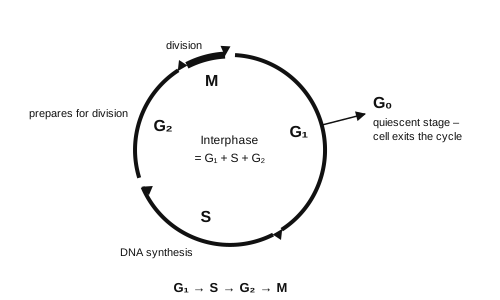
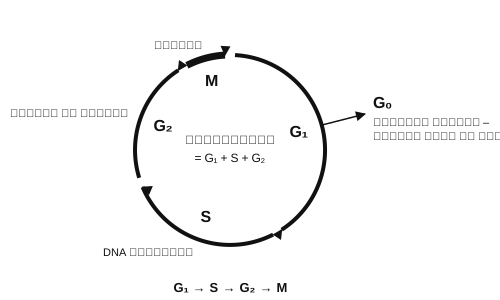
The correct sequence of phases of cell cycle is :
कोशिका चक्र की प्रावस्थाओं का सही क्रम है :
  1. AM → G1 → G2 → S
  2. BG1 → G2 → S → M
  3. CS → G1 → G2 → M
  4. DG1 → S → G2 → M
Show answer

Concept: Interphase = G1 (gap 1, growth) → S (DNA synthesis) → G2 (gap 2, preparation for division); then M phase (mitosis).

  1. G1: cell grows, metabolically active, no DNA replication.
  2. S: DNA content doubles (2C → 4C), centrioles duplicate.
  3. G2: proteins for mitosis synthesised; then M phase → (D).
  4. Every other option puts S out of its place between G1 and G2.

Short trick: S is sandwiched between the two gaps: G1 – S – G2 – M.

Answer: (D) G1 → S → G2 → M

अवधारणा: अंतरावस्था = G1 (अंतराल 1, वृद्धि) → S (DNA संश्लेषण) → G2 (अंतराल 2, विभाजन की तैयारी); फिर M प्रावस्था (समसूत्री विभाजन)।

  1. G1: कोशिका वृद्धि करती है, उपापचयी रूप से सक्रिय, DNA प्रतिकृतियन नहीं।
  2. S: DNA की मात्रा दोगुनी (2C → 4C), तारककेंद्र का द्विगुणन।
  3. G2: समसूत्री विभाजन हेतु प्रोटीन संश्लेषण; फिर M प्रावस्था → (D)।
  4. अन्य प्रत्येक विकल्प में S, G1 और G2 के बीच के अपने स्थान पर नहीं है।

शॉर्ट ट्रिक: S दोनों अंतरालों के बीच सैंडविच है: G1 – S – G2 – M।

उत्तर: (D) G1 → S → G2 → M

NEET UGBiologyCell cycle – phasesNEET UG 2019 · 5 May Shift 1
Q1449.
How does steroid hormone influence the cellular activities?
स्टेरॉयड हॉर्मोन कोशिकीय क्रियाओं को किस प्रकार प्रभावित करता है?
  1. AChanging the permeability of the cell membraneकोशिका झिल्ली की पारगम्यता बदलकर
  2. BBinding to DNA and forming a gene-hormone complexDNA से बंधकर तथा जीन-हॉर्मोन सम्मिश्र बनाकर
  3. CActivating cyclic AMP located on the cell membraneकोशिका झिल्ली पर स्थित चक्रीय AMP को सक्रिय करके
  4. DUsing aquaporin channels as second messengerएक्वापोरिन चैनलों को द्वितीयक संदेशवाहक के रूप में प्रयोग करके
Show answer

Concept: Steroid (lipid-soluble) hormones cross the plasma membrane and act through intracellular receptors.

  1. Hormone + intracellular receptor → hormone-receptor complex enters the nucleus → binds the genome/DNA → regulates gene expression (transcription) → new proteins → physiological effect. So (B).
  2. (A), (C): changes in membrane permeability and cAMP second messengers are features of protein/peptide hormones acting on membrane-bound receptors (cAMP is cytoplasmic, not “located on membrane”).
  3. (D) Aquaporins are water channels, not second messengers.

Short trick: Steroid = Slips inside, Speaks to DNA; peptide = stays outside, uses second messenger.

Answer: (B) Binding to DNA and forming a gene-hormone complex

अवधारणा: स्टेरॉयड (वसा-विलेय) हॉर्मोन प्लाज़्मा झिल्ली को पार करके अंतःकोशिकीय ग्राही के माध्यम से कार्य करते हैं।

  1. हॉर्मोन + अंतःकोशिकीय ग्राही → हॉर्मोन-ग्राही सम्मिश्र केंद्रक में → जीनोम/DNA से बंधता है → जीन अभिव्यक्ति (अनुलेखन) का नियमन → नए प्रोटीन → कार्यिकीय प्रभाव। अतः (B)।
  2. (A), (C): झिल्ली पारगम्यता में परिवर्तन तथा cAMP द्वितीयक संदेशवाहक, झिल्ली-ग्राहियों पर कार्य करने वाले प्रोटीन/पेप्टाइड हॉर्मोनों के लक्षण हैं (cAMP कोशिकाद्रव्य में होता है, “झिल्ली पर स्थित” नहीं)।
  3. (D) एक्वापोरिन जल चैनल हैं, द्वितीयक संदेशवाहक नहीं।

शॉर्ट ट्रिक: स्टेरॉयड = अंदर घुसता है, DNA से बात करता है; पेप्टाइड = बाहर रहता है, द्वितीयक संदेशवाहक प्रयोग करता है।

उत्तर: (B) DNA से बंधकर तथा जीन-हॉर्मोन सम्मिश्र बनाकर

NEET UGBiologyChemical coordination – mechanism of hormone actionNEET UG 2019 · 5 May Shift 1
Q1450.
Which of the following statements is not correct?
निम्नलिखित में से कौन-सा कथन सही नहीं है?
  1. ALysosomes have numerous hydrolytic enzymesलयनकायों में अनेक जल-अपघटनी एंजाइम होते हैं
  2. BThe hydrolytic enzymes of lysosomes are active under acidic pHलयनकायों के जल-अपघटनी एंजाइम अम्लीय pH पर सक्रिय होते हैं
  3. CLysosomes are membrane bound structuresलयनकाय झिल्ली-परिबद्ध संरचनाएँ हैं
  4. DLysosomes are formed by the process of packaging in the endoplasmic reticulumलयनकाय अंतर्द्रव्यी जालिका (ER) में संवेष्टन (packaging) प्रक्रम द्वारा बनते हैं
Show answer

Concept: NCERT: “Lysosomes are membrane bound vesicular structures formed by the process of packaging in the Golgi apparatus.”

  1. (A) True – rich in hydrolases (lipases, proteases, carbohydrases).
  2. (B) True – these enzymes are optimally active at acidic pH.
  3. (C) True – single-membrane vesicles.
  4. (D) False – packaging occurs in the Golgi apparatus, not the ER → answer (D).

Short trick: ER makes the enzymes, Golgi packs them → lysosome is a “Golgi parcel”.

Answer: (D) Lysosomes are formed by the process of packaging in the endoplasmic reticulum

अवधारणा: NCERT: “लयनकाय झिल्ली-परिबद्ध पुटिकीय संरचनाएँ हैं, जो गॉल्जी उपकरण में संवेष्टन प्रक्रम द्वारा बनती हैं।”

  1. (A) सत्य – जल-अपघटनी एंजाइमों (लाइपेज़, प्रोटिएज़, कार्बोहाइड्रेज़) से भरपूर।
  2. (B) सत्य – ये एंजाइम अम्लीय pH पर सर्वाधिक सक्रिय होते हैं।
  3. (C) सत्य – एकल-झिल्ली पुटिकाएँ।
  4. (D) असत्य – संवेष्टन गॉल्जी उपकरण में होता है, ER में नहीं → उत्तर (D)।

शॉर्ट ट्रिक: ER एंजाइम बनाता है, गॉल्जी उन्हें पैक करता है → लयनकाय = “गॉल्जी का पार्सल”।

उत्तर: (D) लयनकाय अंतर्द्रव्यी जालिका (ER) में संवेष्टन (packaging) प्रक्रम द्वारा बनते हैं

NEET UGBiologyCell – lysosomes (endomembrane system)NEET UG 2019 · 5 May Shift 1
Q1451.
Which one of the following statements regarding post-fertilization development in flowering plants is incorrect?
पुष्पी पादपों में निषेचन-पश्च परिवर्धन के संबंध में निम्नलिखित में से कौन-सा कथन गलत है?
  1. AOvary develops into fruitअंडाशय फल में विकसित होता है
  2. BZygote develops into embryoयुग्मनज भ्रूण में विकसित होता है
  3. CCentral cell develops into endospermकेंद्रीय कोशिका भ्रूणपोष में विकसित होती है
  4. DOvules develop into embryo sacबीजांड भ्रूणकोष में विकसित होते हैं
Show answer

Concept: After double fertilisation: zygote → embryo, primary endosperm cell (central cell) → endosperm, ovules → seeds, ovary → fruit.

  1. (A), (B), (C) are correct post-fertilisation changes.
  2. (D) Ovules mature into seeds; the embryo sac (female gametophyte) is formed inside the ovule before fertilisation → (D) is incorrect.

Short trick: “Ovule → Seed, Ovary → Fruit” (the longer word becomes the bigger structure).

Answer: (D) Ovules develop into embryo sac

अवधारणा: द्विनिषेचन के बाद: युग्मनज → भ्रूण, प्राथमिक भ्रूणपोष कोशिका (केंद्रीय कोशिका) → भ्रूणपोष, बीजांड → बीज, अंडाशय → फल।

  1. (A), (B), (C) सही निषेचन-पश्च परिवर्तन हैं।
  2. (D) बीजांड परिपक्व होकर बीज बनते हैं; भ्रूणकोष (मादा युग्मकोद्भिद्) बीजांड के भीतर निषेचन से पहले बनता है → (D) गलत है।

शॉर्ट ट्रिक: “बीजांड → बीज, अंडाशय → फल”।

उत्तर: (D) बीजांड भ्रूणकोष में विकसित होते हैं

NEET UGBiologySexual reproduction in flowering plants – post-fertilisation eventsNEET UG 2019 · 5 May Shift 1
Q1452.
Concanavalin A is
कॉन्कैनावेलिन A है
  1. Aan alkaloidएक ऐल्कलॉइड
  2. Ban essential oilएक सगंध तेल (essential oil)
  3. Ca lectinएक लेक्टिन
  4. Da pigmentएक वर्णक
Show answer

Concept: NCERT table of secondary metabolites: Lectins – Concanavalin A.

  1. (A) Alkaloids – morphine, codeine.
  2. (B) Essential oils – lemon grass oil.
  3. (D) Pigments – carotenoids, anthocyanins.
  4. Concanavalin A (from jack bean) is a carbohydrate-binding protein = lectin → (C).

Short trick: “Con-A” sticks to sugars like a Lec-tin (lectin) “lock”.

Answer: (C) a lectin

अवधारणा: NCERT की द्वितीयक उपापचयजों की तालिका: लेक्टिन – कॉन्कैनावेलिन A।

  1. (A) ऐल्कलॉइड – मॉर्फीन, कोडीन।
  2. (B) सगंध तेल – लेमन ग्रास तेल।
  3. (D) वर्णक – कैरोटिनॉइड, एंथोसायनिन।
  4. कॉन्कैनावेलिन A (जैक बीन से) एक कार्बोहाइड्रेट-बंधक प्रोटीन = लेक्टिन → (C)।

शॉर्ट ट्रिक: “Con-A” शर्कराओं से चिपकता है – लेक्टिन।

उत्तर: (C) एक लेक्टिन

NEET UGBiologyBiomolecules – secondary metabolitesNEET UG 2019 · 5 May Shift 1
Q1453.
Which one of the following equipments is essentially required for growing microbes on a large scale, for industrial production of enzymes?
एंजाइमों के औद्योगिक उत्पादन हेतु सूक्ष्मजीवों को बड़े पैमाने पर उगाने के लिए निम्नलिखित में से कौन-सा उपकरण अनिवार्य रूप से आवश्यक है?
  1. ABOD incubatorBOD इनक्यूबेटर
  2. BSludge digesterआपंक पाचक (Sludge digester)
  3. CIndustrial ovenऔद्योगिक ओवन
  4. DBioreactorजैव रिएक्टर (Bioreactor)
Show answer

Concept: Large-scale culture of microbes (100–1000 L or more) is done in bioreactors (fermenters), which provide optimum temperature, pH, O2, nutrients and stirring.

  1. (A) BOD incubator – keeps samples at 20 °C to measure biochemical oxygen demand, small-scale.
  2. (B) Sludge digester – anaerobic digestion of sewage sludge to produce biogas.
  3. (C) Industrial oven – for drying/heating, kills microbes.
  4. Hence bioreactor → (D) (e.g. stirred-tank bioreactor).

Short trick: “Large-scale anything with microbes = Bioreactor” (NCERT: stirred-tank & sparged bioreactors).

Answer: (D) Bioreactor

अवधारणा: सूक्ष्मजीवों का बड़े पैमाने (100–1000 L या अधिक) पर संवर्धन जैव रिएक्टरों (किण्वकों) में किया जाता है, जो उचित ताप, pH, O2, पोषक तथा विलोडन प्रदान करते हैं।

  1. (A) BOD इनक्यूबेटर – जैव रासायनिक ऑक्सीजन माँग मापने हेतु नमूनों को 20 °C पर रखता है, छोटे पैमाने पर।
  2. (B) आपंक पाचक – वाहित मल आपंक का अवायवीय पाचन कर बायोगैस बनाता है।
  3. (C) औद्योगिक ओवन – सुखाने/गर्म करने के लिए, सूक्ष्मजीवों को मार देता है।
  4. अतः जैव रिएक्टर → (D) (जैसे विलोडित-टैंक जैव रिएक्टर)।

शॉर्ट ट्रिक: “सूक्ष्मजीवों के साथ कोई भी बड़े पैमाने का कार्य = जैव रिएक्टर”।

उत्तर: (D) जैव रिएक्टर (Bioreactor)

NEET UGBiologyMicrobes in human welfare – industrial products (bioreactor)NEET UG 2019 · 5 May Shift 1
Q1454.
Consider the following statement :
(A) Coenzyme or metal ion that is tightly bound to enzyme protein is called prosthetic group.
(B) A complete catalytic active enzyme with its bound prosthetic group is called apoenzyme.
Select the correct option.
निम्नलिखित कथनों पर विचार कीजिए :
(A) एंजाइम प्रोटीन से दृढ़ता से बंधे सहएंजाइम या धातु आयन को प्रोस्थेटिक समूह कहते हैं।
(B) अपने बंधे हुए प्रोस्थेटिक समूह सहित पूर्ण उत्प्रेरकी सक्रिय एंजाइम को एपोएंजाइम कहते हैं।
सही विकल्प चुनिए।
  1. ABoth (A) and (B) are true.(A) और (B) दोनों सत्य हैं।
  2. B(A) is true but (B) is false.(A) सत्य है परंतु (B) असत्य है।
  3. CBoth (A) and (B) are false.(A) और (B) दोनों असत्य हैं।
  4. D(A) is false but (B) is true.(A) असत्य है परंतु (B) सत्य है।
Show answer

Concept: NCERT: cofactors are of three kinds – prosthetic groups (organic compounds tightly bound to the apoenzyme, e.g. haem), co-enzymes (organic, transiently bound, e.g. NAD) and metal ions. Protein part alone = apoenzyme; apoenzyme + cofactor = holoenzyme.

  1. (A) False – a prosthetic group is an organic compound tightly bound to the apoenzyme; a coenzyme is loosely/transiently bound and a metal ion is a separate category of cofactor.
  2. (B) False – the complete catalytically active enzyme with its bound prosthetic group is the holoenzyme; apoenzyme is only the inactive protein part.
  3. Both false → (C).

Short trick: Apo = alone protein (inactive); Holo = whole enzyme (active).

Answer: (C) Both (A) and (B) are false.

अवधारणा: NCERT: सहकारक तीन प्रकार के होते हैं – प्रोस्थेटिक समूह (एपोएंजाइम से दृढ़ता से बंधे कार्बनिक यौगिक, जैसे हीम), सहएंजाइम (कार्बनिक, क्षणिक रूप से बंधे, जैसे NAD) तथा धातु आयन। केवल प्रोटीन भाग = एपोएंजाइम; एपोएंजाइम + सहकारक = होलोएंजाइम।

  1. (A) असत्य – प्रोस्थेटिक समूह एपोएंजाइम से दृढ़ता से बंधा कार्बनिक यौगिक है; सहएंजाइम ढीला/क्षणिक रूप से बंधता है तथा धातु आयन सहकारक की एक अलग श्रेणी है।
  2. (B) असत्य – बंधे प्रोस्थेटिक समूह सहित पूर्ण उत्प्रेरकी सक्रिय एंजाइम होलोएंजाइम है; एपोएंजाइम केवल निष्क्रिय प्रोटीन भाग है।
  3. दोनों असत्य → (C)।

शॉर्ट ट्रिक: एपो = अकेला प्रोटीन (निष्क्रिय); होलो = पूरा (whole) एंजाइम (सक्रिय)।

उत्तर: (C) (A) और (B) दोनों असत्य हैं।

NEET UGBiologyBiomolecules – enzyme cofactorsNEET UG 2019 · 5 May Shift 1
Q1455.
Purines found both in DNA and RNA are
DNA और RNA दोनों में पाए जाने वाले प्यूरीन हैं
  1. AAdenine and thymineऐडेनीन और थाइमीन
  2. BAdenine and guanineऐडेनीन और ग्वानीन
  3. CGuanine and cytosineग्वानीन और साइटोसीन
  4. DCytosine and thymineसाइटोसीन और थाइमीन
Show answer

Concept: Purines (double ring): adenine and guanine – present in both DNA and RNA. Pyrimidines (single ring): cytosine (both), thymine (DNA only), uracil (RNA only).

  1. (A) thymine is a pyrimidine (and only in DNA).
  2. (C) cytosine is a pyrimidine.
  3. (D) both are pyrimidines.
  4. So the purines common to DNA and RNA = A and G → (B).

Short trick: “Pure As Gold” – Purines = Adenine, Guanine.

Answer: (B) Adenine and guanine

अवधारणा: प्यूरीन (दोहरी वलय): ऐडेनीन और ग्वानीन – DNA और RNA दोनों में उपस्थित। पिरिमिडीन (एकल वलय): साइटोसीन (दोनों में), थाइमीन (केवल DNA), यूरेसिल (केवल RNA)।

  1. (A) थाइमीन एक पिरिमिडीन है (और केवल DNA में)।
  2. (C) साइटोसीन एक पिरिमिडीन है।
  3. (D) दोनों पिरिमिडीन हैं।
  4. अतः DNA और RNA में उभयनिष्ठ प्यूरीन = A और G → (B)।

शॉर्ट ट्रिक: “Pure As Gold” – प्यूरीन = ऐडेनीन, ग्वानीन।

उत्तर: (B) ऐडेनीन और ग्वानीन

NEET UGBiologyBiomolecules – nitrogen bases (purines)NEET UG 2019 · 5 May Shift 1
Q1456.
Select the correct sequence for transport of sperm cells in male reproductive system.
नर जनन तंत्र में शुक्राणु कोशिकाओं के परिवहन का सही क्रम चुनिए।
  1. ATestis → Epididymis → Vasa efferentia → Rete testis → Inguinal canal → Urethraवृषण → अधिवृषण → शुक्र वाहिकाएँ (Vasa efferentia) → वृषण जालिका (Rete testis) → वंक्षण नाल (Inguinal canal) → मूत्रमार्ग
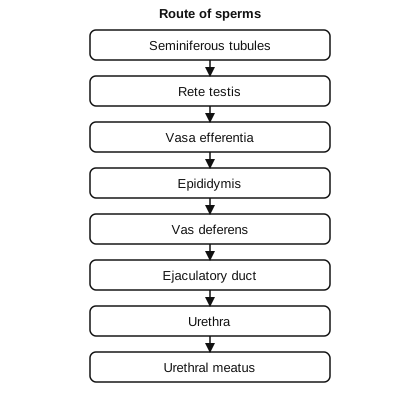
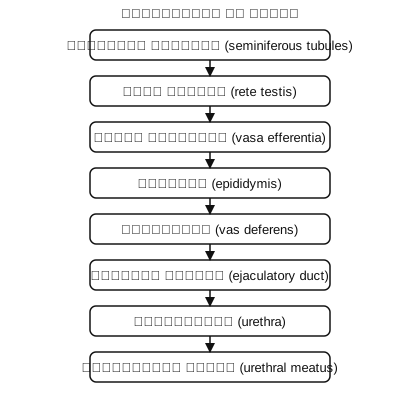
  2. BSeminiferous tubules → Rete testis → Vasa efferentia → Epididymis → Vas deferens → Ejaculatory duct → Urethra → Urethral meatusशुक्रजनक नलिकाएँ → वृषण जालिका (Rete testis) → शुक्र वाहिकाएँ (Vasa efferentia) → अधिवृषण → शुक्रवाहक (Vas deferens) → स्खलनीय वाहिनी → मूत्रमार्ग → मूत्रमार्ग छिद्र (Urethral meatus)
  3. CSeminiferous tubules → Vasa efferentia → Epididymis → Inguinal canal → Urethraशुक्रजनक नलिकाएँ → शुक्र वाहिकाएँ (Vasa efferentia) → अधिवृषण → वंक्षण नाल (Inguinal canal) → मूत्रमार्ग
  4. DTestis → Epididymis → Vasa efferentia → Vas deferens → Ejaculatory duct → Inguinal canal → Urethra → Urethral meatusवृषण → अधिवृषण → शुक्र वाहिकाएँ (Vasa efferentia) → शुक्रवाहक (Vas deferens) → स्खलनीय वाहिनी → वंक्षण नाल (Inguinal canal) → मूत्रमार्ग → मूत्रमार्ग छिद्र
Show answer

Concept: NCERT: male sex accessory ducts = rete testis, vasa efferentia, epididymis and vas deferens; sperms are made in the seminiferous tubules.

  1. Seminiferous tubules open into the rete testis → vasa efferentia leave the testis → open into the epididymis (on the posterior surface of testis) → vas deferens → joins the seminal vesicle duct to form the ejaculatory duct → urethra → out through the urethral meatus. This is (B).
  2. (A) and (D) put the epididymis before vasa efferentia; (A) and (C) omit vas deferens/ejaculatory duct; the inguinal canal is the passage of the spermatic cord, not a sperm duct.

Short trick: “Super Rich VIPs Enjoy Very Expensive Umbrellas” → Seminiferous, Rete, Vasa eff., Epididymis, Vas def., Ejaculatory, Urethra.

Answer: (B) Seminiferous tubules → Rete testis → Vasa efferentia → Epididymis → Vas deferens → Ejaculatory duct → Urethra → Urethral meatus

अवधारणा: NCERT: नर सहायक नलिकाएँ = वृषण जालिका, शुक्र वाहिकाएँ, अधिवृषण तथा शुक्रवाहक; शुक्राणु शुक्रजनक नलिकाओं में बनते हैं।

  1. शुक्रजनक नलिकाएँ वृषण जालिका में खुलती हैं → शुक्र वाहिकाएँ वृषण से बाहर निकलती हैं → अधिवृषण (वृषण की पश्च सतह पर) में खुलती हैं → शुक्रवाहक → शुक्राशय की वाहिनी से मिलकर स्खलनीय वाहिनी बनाता है → मूत्रमार्ग → मूत्रमार्ग छिद्र से बाहर। यही (B) है।
  2. (A) और (D) में अधिवृषण शुक्र वाहिकाओं से पहले है; (A) और (C) में शुक्रवाहक/स्खलनीय वाहिनी छूट गई है; वंक्षण नाल शुक्र रज्जु का मार्ग है, शुक्राणु वाहिनी नहीं।

शॉर्ट ट्रिक: “Super Rich VIPs Enjoy Very Expensive Umbrellas” → शुक्रजनक, जालिका, शुक्र वाहिका, अधिवृषण, शुक्रवाहक, स्खलनीय, मूत्रमार्ग।

उत्तर: (B) शुक्रजनक नलिकाएँ → वृषण जालिका (Rete testis) → शुक्र वाहिकाएँ (Vasa efferentia) → अधिवृषण → शुक्रवाहक (Vas deferens) → स्खलनीय वाहिनी → मूत्रमार्ग → मूत्रमार्ग छिद्र (Urethral meatus)

NEET UGBiologyHuman reproduction – male reproductive systemNEET UG 2019 · 5 May Shift 1
Q1457.
Match the hominids with their correct brain size :
HominidBrain size
(a) Homo habilis(i) 900 cc
(b) Homo neanderthalensis(ii) 1350 cc
(c) Homo erectus(iii) 650-800 cc
(d) Homo sapiens(iv) 1400 cc
Select the correct option.
होमिनिडों का उनके सही मस्तिष्क आकार से मिलान कीजिए :
होमिनिडमस्तिष्क आकार
(a) Homo habilis(i) 900 cc
(b) Homo neanderthalensis(ii) 1350 cc
(c) Homo erectus(iii) 650-800 cc
(d) Homo sapiens(iv) 1400 cc
सही विकल्प चुनिए।
  1. A(a)-(iii), (b)-(i), (c)-(iv), (d)-(ii)
  2. B(a)-(iii), (b)-(ii), (c)-(i), (d)-(iv)
  3. C(a)-(iii), (b)-(iv), (c)-(i), (d)-(ii)
  4. D(a)-(iv), (b)-(iii), (c)-(i), (d)-(ii)
Show answer

Concept: NCERT brain capacities: Homo habilis 650–800 cc, Homo erectus ~900 cc, Neanderthal man 1400 cc, modern Homo sapiens ~1350 cc (average).

  1. (a) H. habilis → 650-800 cc (iii).
  2. (b) H. neanderthalensis → 1400 cc (iv) – the largest of all.
  3. (c) H. erectus → 900 cc (i).
  4. (d) H. sapiens → 1350 cc (ii).
  5. a-iii, b-iv, c-i, d-ii = (C).

Short trick: Neanderthal's brain was slightly bigger than ours (1400 > 1350); sequence habilis 700 → erectus 900 → us 1350.

Answer: (C) (a)-(iii), (b)-(iv), (c)-(i), (d)-(ii)

अवधारणा: NCERT के अनुसार मस्तिष्क क्षमता: Homo habilis 650–800 cc, Homo erectus ~900 cc, निएंडरथल मानव 1400 cc, आधुनिक Homo sapiens ~1350 cc (औसत)।

  1. (a) H. habilis → 650-800 cc (iii)।
  2. (b) H. neanderthalensis → 1400 cc (iv) – सबसे बड़ा।
  3. (c) H. erectus → 900 cc (i)।
  4. (d) H. sapiens → 1350 cc (ii)।
  5. a-iii, b-iv, c-i, d-ii = (C)।

शॉर्ट ट्रिक: निएंडरथल का मस्तिष्क हमसे थोड़ा बड़ा था (1400 > 1350); क्रम habilis 700 → erectus 900 → हम 1350।

उत्तर: (C) (a)-(iii), (b)-(iv), (c)-(i), (d)-(ii)

NEET UGBiologyEvolution – human evolution (brain size)NEET UG 2019 · 5 May Shift 1
Q1458.
Variations caused by mutation, as proposed by Hugo de Vries are
ह्यूगो डी व्रीज़ द्वारा प्रस्तावित, उत्परिवर्तन से उत्पन्न विभिन्नताएँ होती हैं
  1. Arandom and directionalयादृच्छिक और दिशात्मक
  2. Brandom and directionlessयादृच्छिक और दिशाहीन
  3. Csmall and directionalछोटी और दिशात्मक
  4. Dsmall and directionlessछोटी और दिशाहीन
Show answer

Concept: Hugo de Vries (work on Oenothera lamarckiana): mutations are large, sudden, random and directionless; he called single-step large mutation saltation.

  1. Darwin's variations were small and directional (gradual).
  2. De Vries' mutations are random and directionless → (B).
  3. (C), (D) “small” describes Darwinian variations; (A) “directional” is wrong for mutations.

Short trick: De Vries = “Direction-less, Random, Saltation”; Darwin = small & directional.

Answer: (B) random and directionless

अवधारणा: ह्यूगो डी व्रीज़ (Oenothera lamarckiana पर कार्य): उत्परिवर्तन बड़े, अचानक, यादृच्छिक और दिशाहीन होते हैं; एक-चरणीय बड़े उत्परिवर्तन को उन्होंने साल्टेशन (उच्छलन) कहा।

  1. डार्विन की विभिन्नताएँ छोटी और दिशात्मक (क्रमिक) थीं।
  2. डी व्रीज़ के उत्परिवर्तन यादृच्छिक और दिशाहीन हैं → (B)।
  3. (C), (D) “छोटी” डार्विनी विभिन्नताओं का वर्णन है; (A) उत्परिवर्तनों के लिए “दिशात्मक” गलत है।

शॉर्ट ट्रिक: डी व्रीज़ = “दिशाहीन, यादृच्छिक, साल्टेशन”; डार्विन = छोटी व दिशात्मक।

उत्तर: (B) यादृच्छिक और दिशाहीन

NEET UGBiologyEvolution – mutation theory (Hugo de Vries)NEET UG 2019 · 5 May Shift 1
Q1459.
Which of the following pair of organelles does not contain DNA?
निम्नलिखित में से कोशिकांगों के किस युग्म में DNA नहीं होता?
  1. AMitochondria and Lysosomesमाइटोकॉन्ड्रिया और लयनकाय
  2. BChloroplast and Vacuolesहरितलवक और रसधानियाँ
  3. CLysosomes and Vacuolesलयनकाय और रसधानियाँ
  4. DNuclear envelope and Mitochondriaकेंद्रक आवरण और माइटोकॉन्ड्रिया
Show answer

Concept: Only the nucleus, mitochondria and chloroplasts (plastids) contain DNA. Lysosomes and vacuoles are single-membrane parts of the endomembrane system without DNA.

  1. (A) Mitochondria have DNA.
  2. (B) Chloroplasts have DNA.
  3. (D) Mitochondria have DNA.
  4. (C) Lysosomes and vacuoles – neither contains DNA → answer.

Short trick: DNA lives in the “N-M-C” trio (Nucleus, Mitochondria, Chloroplast); any pair containing M or C is out.

Answer: (C) Lysosomes and Vacuoles

अवधारणा: केवल केंद्रक, माइटोकॉन्ड्रिया और हरितलवक (लवक) में DNA होता है। लयनकाय और रसधानियाँ अंतःझिल्ली तंत्र के एकल-झिल्ली भाग हैं, जिनमें DNA नहीं होता।

  1. (A) माइटोकॉन्ड्रिया में DNA है।
  2. (B) हरितलवक में DNA है।
  3. (D) माइटोकॉन्ड्रिया में DNA है।
  4. (C) लयनकाय और रसधानियाँ – किसी में DNA नहीं → उत्तर।

शॉर्ट ट्रिक: DNA “N-M-C” तिकड़ी (केंद्रक, माइटोकॉन्ड्रिया, हरितलवक) में रहता है; M या C वाला हर युग्म बाहर।

उत्तर: (C) लयनकाय और रसधानियाँ

NEET UGBiologyCell – organelles containing DNANEET UG 2019 · 5 May Shift 1
Q1460.
Due to increasing air-borne allergens and pollutants, many people in urban areas are suffering from respiratory disorder causing wheezing due to
वायुजनित एलर्जनों और प्रदूषकों के बढ़ने के कारण शहरी क्षेत्रों में अनेक लोग घरघराहट (wheezing) उत्पन्न करने वाले श्वसन विकार से पीड़ित हैं, जिसका कारण है
  1. Abenign growth on mucous lining of nasal cavityनासा गुहा के श्लेष्म आस्तर पर सुदम (benign) वृद्धि
  2. Binflammation of bronchi and bronchiolesश्वसनी और श्वसनिकाओं की शोथ (inflammation)
  3. Cproliferation of fibrous tissues and damage of the alveolar wallsतंतुमय ऊतकों का प्रचुरोद्भवन तथा कूपिका भित्तियों की क्षति
  4. Dreduction in the secretion of surfactants by pneumocytes.न्यूमोसाइट्स द्वारा पृष्ठसक्रियकों (surfactants) के स्राव में कमी।
Show answer

Concept: Asthma – difficulty in breathing with wheezing due to inflammation of bronchi and bronchioles; often triggered by allergens and pollutants.

  1. (A) Benign growth in nasal mucosa = nasal polyp – blocks the nose, does not cause wheezing.
  2. (C) Fibrosis/alveolar-wall damage = occupational lung disease / emphysema.
  3. (D) Surfactant deficiency = respiratory distress syndrome of premature babies.
  4. Hence (B).

Short trick: Wheezing = Windpipe branches inflamed = Asthma (allergy-linked).

Answer: (B) inflammation of bronchi and bronchioles

अवधारणा: दमा (Asthma) – श्वसनी और श्वसनिकाओं की शोथ के कारण घरघराहट के साथ साँस लेने में कठिनाई; प्रायः एलर्जनों और प्रदूषकों से उत्प्रेरित।

  1. (A) नासा श्लेष्मा में सुदम वृद्धि = नासा पॉलिप – नाक बंद करता है, घरघराहट नहीं।
  2. (C) तंतुमयता/कूपिका भित्ति क्षति = व्यावसायिक फेफड़ा रोग / वातस्फीति (emphysema)।
  3. (D) पृष्ठसक्रियक की कमी = समय-पूर्व शिशुओं का श्वसन संकट संलक्षण।
  4. अतः (B)।

शॉर्ट ट्रिक: घरघराहट = श्वसनी शाखाओं में शोथ = दमा (एलर्जी से जुड़ा)।

उत्तर: (B) श्वसनी और श्वसनिकाओं की शोथ (inflammation)

NEET UGBiologyBreathing and exchange of gases – respiratory disordersNEET UG 2019 · 5 May Shift 1