Q1781.A first order reaction has a specific reaction rate of 10–2 s–1. How much time will it take for 20 g of the reactant to reduce to 5 g?
एक प्रथम कोटि अभिक्रिया का विशिष्ट अभिक्रिया वेग 10–2 s–1 है। 20 g अभिकारक को घटकर 5 g होने में कितना समय लगेगा?
- A238.6 second238.6 सेकंड
- B138.6 second138.6 सेकंड
- C346.5 second346.5 सेकंड
- D693.0 second693.0 सेकंड
Show answer
Concept: First order: t1/2 = 0.693/k, independent of initial amount.
- t1/2 = 0.693/10–2 = 69.3 s
- 20 g → 10 g → 5 g = 2 half-lives
- t = 2 × 69.3 = 138.6 s
- Check: t = (2.303/k) log(20/5) = 230.3 × 0.602 = 138.6 s.
Short trick: Amount becomes 1/2n after n half-lives: 20 → 5 is 1/4 → n = 2.
Answer: (B)
अवधारणा: प्रथम कोटि: t1/2 = 0.693/k, प्रारम्भिक मात्रा से स्वतंत्र।
- t1/2 = 0.693/10–2 = 69.3 s
- 20 g → 10 g → 5 g = 2 अर्धायु
- t = 2 × 69.3 = 138.6 s
- जाँच: t = (2.303/k) log(20/5) = 230.3 × 0.602 = 138.6 s।
शॉर्ट ट्रिक: n अर्धायु के बाद मात्रा 1/2n रह जाती है: 20 → 5 अर्थात् 1/4 → n = 2।
उत्तर: (B)
NEET UGChemistryChemical kinetics – first order half-lifeNEET UG 2017 · 7 May Shift 1
Q1782.Name the gas that can readily decolourises acidified KMnO4 solution:
उस गैस का नाम बताइए जो अम्लीकृत KMnO4 विलयन को शीघ्र रंगहीन कर देती है:
- ACO2
- BSO2
- CNO2
- DP2O5
Show answer
Concept: Decolourising acidified KMnO4 (purple MnO4– → colourless Mn2+) needs a reducing agent.
- SO2 (S in +4) is readily oxidised to SO42–: 5SO2 + 2MnO4– + 2H2O → 5SO42– + 4H+ + 2Mn2+.
- (A) CO2: C already +4 (maximum) – not a reductant.
- (C) NO2: mainly an oxidising gas under these conditions; not the standard test gas.
- (D) P2O5: P in +5 (maximum), and it is a solid.
Short trick: Lab test for SO2: decolourises acidified KMnO4 and turns acidified K2Cr2O7 green.
Answer: (B)
अवधारणा: अम्लीकृत KMnO4 को रंगहीन करने (बैंगनी MnO4– → रंगहीन Mn2+) के लिए अपचायक चाहिए।
- SO2 (S की +4 अवस्था) आसानी से SO42– में ऑक्सीकृत होता है: 5SO2 + 2MnO4– + 2H2O → 5SO42– + 4H+ + 2Mn2+।
- (A) CO2: C पहले से +4 (अधिकतम) – अपचायक नहीं।
- (C) NO2: इन परिस्थितियों में मुख्यतः ऑक्सीकारक गैस; मानक परीक्षण गैस नहीं।
- (D) P2O5: P की +5 (अधिकतम) अवस्था, और यह ठोस है।
शॉर्ट ट्रिक: SO2 का प्रयोगशाला परीक्षण: अम्लीकृत KMnO4 को रंगहीन करती है तथा अम्लीकृत K2Cr2O7 को हरा कर देती है।
उत्तर: (B)
NEET UGChemistryp-block elements – reducing property of SO<sub>2</sub>NEET UG 2017 · 7 May Shift 1
Q1783.The heating of phenyl-methyl ethers with HI produces.
फ़ेनिल-मेथिल ईथरों को HI के साथ गर्म करने पर बनता है।
- AEthyl chloridesएथिल क्लोराइड
- BIodobenzeneआयोडोबेन्ज़ीन
- CPhenolफ़ीनॉल
- DBenzeneबेन्ज़ीन
Show answer
Concept: Alkyl aryl ethers are cleaved by HI at the O–alkyl bond, because the O–aryl bond has partial double-bond character and phenyl cannot undergo SN2.
- C6H5–O–CH3 + HI → C6H5–O+(H)–CH3; I– attacks CH3 (SN2).
- Products: C6H5OH (phenol) + CH3I.
- (B) iodobenzene is not formed – I– cannot displace OH from an aryl carbon; (A) no Cl or ethyl group is present; (D) benzene would need removal of oxygen.
Short trick: Ar–O–R + HI → ArOH + RI, always (aryl stays with O).
Answer: (C)
अवधारणा: ऐल्किल ऐरिल ईथर, HI द्वारा O–ऐल्किल आबंध पर विदलित होते हैं, क्योंकि O–ऐरिल आबंध में आंशिक द्विआबंध लक्षण होता है तथा फ़ेनिल पर SN2 नहीं हो सकता।
- C6H5–O–CH3 + HI → C6H5–O+(H)–CH3; I–, CH3 पर आक्रमण करता है (SN2)।
- उत्पाद: C6H5OH (फ़ीनॉल) + CH3I।
- (B) आयोडोबेन्ज़ीन नहीं बनता – I– ऐरिल कार्बन से OH को विस्थापित नहीं कर सकता; (A) यहाँ कोई Cl या एथिल समूह नहीं है; (D) बेन्ज़ीन के लिए ऑक्सीजन हटाना पड़ेगा।
शॉर्ट ट्रिक: Ar–O–R + HI → ArOH + RI, सदैव (ऐरिल O के साथ रहता है)।
उत्तर: (C)
NEET UGChemistryEthers – cleavage of alkyl aryl ethers by HINEET UG 2017 · 7 May Shift 1
Q1784.Pick out the correct statement with respect [Mn(CN)6]3– :
[Mn(CN)6]3– के संबंध में सही कथन चुनिए :
- AIt is sp3d2 hybridised and octahedralयह sp3d2 संकरित तथा अष्टफलकीय है
- BIt is sp3d2 hybridised and tetrahedralयह sp3d2 संकरित तथा चतुष्फलकीय है
- CIt is d2sp3 hybridised and octahedralयह d2sp3 संकरित तथा अष्टफलकीय है
- DIt is dsp2 hybridised and square planarयह dsp2 संकरित तथा वर्ग समतलीय है
Show answer
Concept: CN– is a strong-field ligand: it pairs up the d electrons, leaving two inner 3d orbitals free for d2sp3 (inner-orbital) hybridisation.
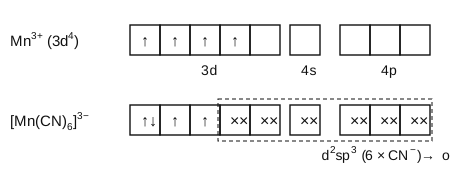
- Oxidation state: x + 6(–1) = –3 ⇒ Mn(+3) = [Ar]3d4.
- With CN–, the 4 electrons pair into three 3d orbitals (↑↓ ↑ ↑) → two 3d orbitals empty.
- 2 (3d) + 1 (4s) + 3 (4p) → d2sp3; 6 ligands → octahedral (2 unpaired e–, paramagnetic).
- (A) sp3d2 is for weak-field (outer) complexes; (B) sp3d2 can never be tetrahedral; (D) dsp2 needs CN = 4.
Short trick: CN = 6 + strong ligand + d3–d6 metal → d2sp3, octahedral.
Answer: (C)
अवधारणा: CN– प्रबल क्षेत्र लिगैंड है: यह d इलेक्ट्रॉनों को युग्मित कर देता है, जिससे दो आंतरिक 3d कक्षक d2sp3 (आंतरिक कक्षक) संकरण के लिए रिक्त हो जाते हैं।
- ऑक्सीकरण अवस्था: x + 6(–1) = –3 ⇒ Mn(+3) = [Ar]3d4।
- CN– के साथ 4 इलेक्ट्रॉन तीन 3d कक्षकों में युग्मित हो जाते हैं (↑↓ ↑ ↑) → दो 3d कक्षक रिक्त।
- 2 (3d) + 1 (4s) + 3 (4p) → d2sp3; 6 लिगैंड → अष्टफलकीय (2 अयुग्मित e–, अनुचुंबकीय)।
- (A) sp3d2 दुर्बल क्षेत्र (बाह्य) संकुलों के लिए है; (B) sp3d2 कभी चतुष्फलकीय नहीं हो सकता; (D) dsp2 के लिए उपसहसंयोजन संख्या 4 चाहिए।
शॉर्ट ट्रिक: उपसहसंयोजन संख्या 6 + प्रबल लिगैंड + d3–d6 धातु → d2sp3, अष्टफलकीय।
उत्तर: (C)
NEET UGChemistryCoordination compounds – VBT hybridisationNEET UG 2017 · 7 May Shift 1
Q1785.Ionic mobility of which of the following alkali metal ions is lowest when aqueous solution of their salts are put under an electric field?
जब इनके लवणों के जलीय विलयन को विद्युत क्षेत्र में रखा जाता है, तो निम्नलिखित में से किस क्षार धातु आयन की आयनिक गतिशीलता न्यूनतम होती है?
- ANa
- BK
- CRb
- DLi
Show answer
Concept: In water, mobility depends on the size of the hydrated ion, not the bare ion.
- Li+ is the smallest ion → highest charge density → most heavily hydrated.
- Hydrated radius: Li+(aq) > Na+(aq) > K+(aq) > Rb+(aq).
- Largest hydrated ion moves slowest → Li+ has the lowest ionic mobility/conductance; Rb+ the highest.
Short trick: Smallest bare ion = biggest "water coat" = slowest: mobility Li+ < Na+ < K+ < Rb+ < Cs+.
Answer: (D)
अवधारणा: जल में गतिशीलता जलयोजित आयन के आकार पर निर्भर करती है, नग्न आयन पर नहीं।
- Li+ सबसे छोटा आयन है → सर्वाधिक आवेश घनत्व → सर्वाधिक जलयोजित।
- जलयोजित त्रिज्या: Li+(aq) > Na+(aq) > K+(aq) > Rb+(aq)।
- सबसे बड़ा जलयोजित आयन सबसे धीरे चलता है → Li+ की आयनिक गतिशीलता/चालकता न्यूनतम; Rb+ की अधिकतम।
शॉर्ट ट्रिक: सबसे छोटा नग्न आयन = सबसे मोटा "जल आवरण" = सबसे धीमा: गतिशीलता Li+ < Na+ < K+ < Rb+ < Cs+।
उत्तर: (D)
NEET UGChemistrys-block elements – ionic mobility of hydrated alkali ionsNEET UG 2017 · 7 May Shift 1
Q1786.The equilibrium constants of the following are.
N2 + 3H2 ⇌ 2NH3 K1
N2 + O2 ⇌ 2NO K2
K3
The equilibrium constant (K) of the reaction:
, will be
निम्नलिखित के साम्य स्थिरांक हैं।
N2 + 3H2 ⇌ 2NH3 K1
N2 + O2 ⇌ 2NO K2
K3
अभिक्रिया:
का साम्य स्थिरांक (K) होगा
- A
- B
- C
- D
Show answer
Concept: Adding equations → multiply K; reversing → 1/K; multiplying an equation by n → Kn.
- Target = (eq. 2) + 3 × (eq. 3) – (eq. 1).
- Check: N2 + O2 + 3H2 + 3/2 O2 + 2NH3 → 2NO + 3H2O + N2 + 3H2 ⇒ 2NH3 + 5/2 O2 → 2NO + 3H2O ✓
- K = K2 × K33 × (1/K1) = K2K33/K1.
Short trick: NH3 is on the reactant side → K1 goes to the denominator; 3H2O → K3 cubed; 2NO once → K2.
Answer: (B)
अवधारणा: समीकरणों को जोड़ने पर K गुणा होते हैं; उलटने पर 1/K; किसी समीकरण को n से गुणा करने पर Kn।
- लक्ष्य = (समी. 2) + 3 × (समी. 3) – (समी. 1)।
- जाँच: N2 + O2 + 3H2 + 3/2 O2 + 2NH3 → 2NO + 3H2O + N2 + 3H2 ⇒ 2NH3 + 5/2 O2 → 2NO + 3H2O ✓
- K = K2 × K33 × (1/K1) = K2K33/K1।
शॉर्ट ट्रिक: NH3 अभिकारक पक्ष में है → K1 हर में; 3H2O → K3 का घन; 2NO एक बार → K2।
उत्तर: (B)
NEET UGChemistryEquilibrium – combining equilibrium constantsNEET UG 2017 · 7 May Shift 1
Q1787.Which of the following reactions is appropriate for converting acetamide to methanamine?
ऐसीटैमाइड को मेथेनेमीन में परिवर्तित करने के लिए निम्नलिखित में से कौन-सी अभिक्रिया उपयुक्त है?
- ACarbylamine reactionकार्बिलऐमीन अभिक्रिया
- BHoffmann hypobromamide reactionहॉफ़मान हाइपोब्रोमैमाइड अभिक्रिया
- CStephens reactionस्टीफ़न अभिक्रिया
- DGabriels phthalimide synthesisगैब्रिएल थैलिमाइड संश्लेषण
Show answer
Concept: Hoffmann bromamide degradation converts an amide RCONH2 into a 1° amine RNH2 with one carbon less.
- CH3CONH2 + Br2 + 4NaOH → CH3NH2 + Na2CO3 + 2NaBr + 2H2O
- Acetamide (C2) → methanamine (C1): exactly one carbon lost.
- (A) carbylamine is a test for 1° amines (gives isocyanide); (C) Stephens reduces nitriles to aldehydes; (D) Gabriel makes 1° amines from alkyl halides, not from amides.
Short trick: Amide → amine with one C less = Hoffmann (Br2/NaOH).
Answer: (B)
अवधारणा: हॉफ़मान ब्रोमैमाइड निम्नीकरण ऐमाइड RCONH2 को एक कार्बन कम वाली 1° ऐमीन RNH2 में बदलता है।
- CH3CONH2 + Br2 + 4NaOH → CH3NH2 + Na2CO3 + 2NaBr + 2H2O
- ऐसीटैमाइड (C2) → मेथेनेमीन (C1): ठीक एक कार्बन कम।
- (A) कार्बिलऐमीन 1° ऐमीनों का परीक्षण है (आइसोसायनाइड देता है); (C) स्टीफ़न अभिक्रिया नाइट्राइलों को ऐल्डिहाइड में अपचयित करती है; (D) गैब्रिएल ऐल्किल हैलाइडों से 1° ऐमीन बनाता है, ऐमाइडों से नहीं।
शॉर्ट ट्रिक: ऐमाइड → एक C कम वाली ऐमीन = हॉफ़मान (Br2/NaOH)।
उत्तर: (B)
NEET UGChemistryAmines – Hoffmann bromamide degradationNEET UG 2017 · 7 May Shift 1
Q1788.Mechanism of a hypothetical reaction X2 + Y2 → 2XY is given below :
(i) X2 → X + X (fast)
(ii) X + Y2 ⇌ XY + Y (slow)
(iii) X + Y → XY (fast)
The overall order of the reaction will be
एक काल्पनिक अभिक्रिया X2 + Y2 → 2XY की क्रियाविधि नीचे दी गई है :
(i) X2 → X + X (तीव्र)
(ii) X + Y2 ⇌ XY + Y (मंद)
(iii) X + Y → XY (तीव्र)
अभिक्रिया की कुल कोटि होगी
- A1
- B2
- C0
- D1.5
Show answer
Concept: Rate is set by the slow step; an intermediate (X) is eliminated using the fast step before it, treated as a rapid equilibrium X2 ⇌ 2X.
- Slow step (ii): rate = k[X][Y2]
- Fast step (i) as equilibrium: K = [X]2/[X2] ⇒ [X] = K1/2[X2]1/2
- Rate = kK1/2[X2]1/2[Y2]
- Order = 1/2 + 1 = 1.5
Short trick: Fast step before slow step → substitute the intermediate from its equilibrium; a dissociation A2 ⇌ 2A always contributes order ½.
Answer: (D)
अवधारणा: वेग मंद पद द्वारा तय होता है; मध्यवर्ती (X) को उससे पहले वाले तीव्र पद द्वारा हटाया जाता है, जिसे तीव्र साम्य X2 ⇌ 2X माना जाता है।
- मंद पद (ii): वेग = k[X][Y2]
- तीव्र पद (i) को साम्य मानकर: K = [X]2/[X2] ⇒ [X] = K1/2[X2]1/2
- वेग = kK1/2[X2]1/2[Y2]
- कोटि = 1/2 + 1 = 1.5
शॉर्ट ट्रिक: मंद पद से पहले तीव्र पद → मध्यवर्ती को उसके साम्य से प्रतिस्थापित कीजिए; वियोजन A2 ⇌ 2A सदैव ½ कोटि जोड़ता है।
उत्तर: (D)
NEET UGChemistryChemical kinetics – mechanism and order (pre-equilibrium)NEET UG 2017 · 7 May Shift 1
Q1789.The IUPAC name of the compound
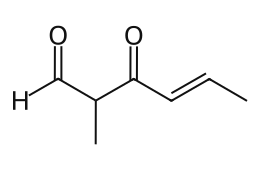
is ________.
यौगिक
का IUPAC नाम ________ है।
- A3-keto-2-methylhex-4-enal
- B5-formylhex-2-en-3-one
- C5-methyl-4-oxohex-2-en-5-al
- D3-keto-2-methylhex-5-enal
Show answer
Concept: Principal group: –CHO (aldehyde) ranks above ketone; it gets C-1 and the suffix "-al". The ketone becomes a prefix (oxo/keto).
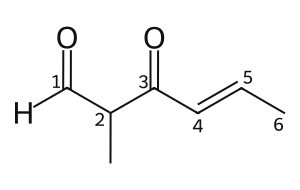
- Chain: CHO(1)–CH(CH3)(2)–CO(3)–CH(4)=CH(5)–CH3(6) → 6 carbons, hex.
- Substituents: 2-methyl, 3-keto (3-oxo); double bond at C-4 → hex-4-enal.
- Name: 3-keto-2-methylhex-4-enal (modern form: 2-methyl-3-oxohex-4-enal) = (A).
- (B) and (C) number from the wrong end/choose the wrong principal group; (D) puts the double bond at C-5 instead of C-4.
Short trick: Aldehyde present? Its carbon is always C-1 and the name ends in "-al".
Answer: (A)
अवधारणा: मुख्य समूह: –CHO (ऐल्डिहाइड) का स्थान कीटोन से ऊपर है; इसे C-1 तथा अनुलग्न "-al" मिलता है। कीटोन पूर्वलग्न (oxo/keto) बन जाता है।
- शृंखला: CHO(1)–CH(CH3)(2)–CO(3)–CH(4)=CH(5)–CH3(6) → 6 कार्बन, hex।
- प्रतिस्थापी: 2-methyl, 3-keto (3-oxo); C-4 पर द्विआबंध → hex-4-enal।
- नाम: 3-keto-2-methylhex-4-enal (आधुनिक रूप: 2-methyl-3-oxohex-4-enal) = (A)।
- (B) तथा (C) गलत सिरे से क्रमांकन/गलत मुख्य समूह चुनते हैं; (D) द्विआबंध को C-4 के स्थान पर C-5 पर रखता है।
शॉर्ट ट्रिक: ऐल्डिहाइड उपस्थित हो तो उसका कार्बन सदैव C-1 होता है और नाम "-al" पर समाप्त होता है।
उत्तर: (A)
NEET UGChemistryOrganic chemistry – IUPAC nomenclature (polyfunctional)NEET UG 2017 · 7 May Shift 1
Q1790.Extraction of gold and silver involves leaching with CN– ion. Silver is later recovered by
सोने तथा चाँदी के निष्कर्षण में CN– आयन द्वारा निक्षालन (leaching) सम्मिलित है। बाद में चाँदी को किसके द्वारा प्राप्त किया जाता है?
- ALiquationद्रवगलन (Liquation)
- BDistillationआसवन
- CZone refiningमंडल परिष्करण (Zone refining)
- DDisplacement with ZnZn द्वारा विस्थापन
Show answer
Concept: Mac-Arthur–Forrest cyanide process: Ag/Au are leached as soluble cyanide complexes and then displaced by the more electropositive zinc.
- Leaching: 4Ag + 8CN– + 2H2O + O2 → 4[Ag(CN)2]– + 4OH–
- Recovery: 2[Ag(CN)2]– + Zn → [Zn(CN)4]2– + 2Ag↓
- (A) liquation refines low-melting metals (Sn); (B) distillation refines volatile metals (Zn, Hg); (C) zone refining gives ultra-pure Si, Ge, Ga – none recover Ag from solution.
Short trick: Cyanide leach → Zn dust: "Zinc pulls silver/gold out of cyanide".
Answer: (D)
अवधारणा: मैक-आर्थर–फॉरेस्ट सायनाइड प्रक्रम: Ag/Au को विलेय सायनाइड संकुलों के रूप में निक्षालित किया जाता है और फिर अधिक विद्युत्-धनात्मक जिंक द्वारा विस्थापित किया जाता है।
- निक्षालन: 4Ag + 8CN– + 2H2O + O2 → 4[Ag(CN)2]– + 4OH–
- पुनर्प्राप्ति: 2[Ag(CN)2]– + Zn → [Zn(CN)4]2– + 2Ag↓
- (A) द्रवगलन कम गलनांक वाली धातुओं (Sn) का परिष्करण करता है; (B) आसवन वाष्पशील धातुओं (Zn, Hg) के लिए; (C) मंडल परिष्करण अति-शुद्ध Si, Ge, Ga देता है – कोई भी विलयन से Ag प्राप्त नहीं करता।
शॉर्ट ट्रिक: सायनाइड निक्षालन → Zn चूर्ण: "जिंक सायनाइड से चाँदी/सोना खींच लेता है"।
उत्तर: (D)
NEET UGChemistryMetallurgy – cyanide process (leaching of Ag/Au)NEET UG 2017 · 7 May Shift 1
Q1791.Double fertilization is exhibited by
द्विनिषेचन किसके द्वारा प्रदर्शित किया जाता है?
- AGymnospermsअनावृतबीजी (जिम्नोस्पर्म)
- BAlgaeशैवाल
- CFungiकवक
- DAngiospermsआवृतबीजी (एंजियोस्पर्म)
Show answer
Concept: Double fertilisation = syngamy + triple fusion, both taking place in the same embryo sac; it is unique to angiosperms.
- One male gamete fuses with the egg (syngamy) → diploid zygote.
- The second male gamete fuses with the two polar nuclei (triple fusion) → triploid primary endosperm nucleus.
- (A) Gymnosperms – only one fertilisation; endosperm is haploid female gametophyte tissue. (B) Algae and (C) Fungi – simple syngamy, no endosperm.
Short trick: Triploid endosperm (3n) ⇔ double fertilisation ⇔ angiosperms only.
Answer: (D) Angiosperms
अवधारणा: द्विनिषेचन = युग्मक संलयन + त्रिक संलयन, दोनों एक ही भ्रूणकोष में होते हैं; यह केवल आवृतबीजियों का विशिष्ट लक्षण है।
- एक नर युग्मक अंड से संलयित होता है (युग्मक संलयन) → द्विगुणित युग्मनज।
- दूसरा नर युग्मक दो ध्रुवीय केंद्रकों से संलयित होता है (त्रिक संलयन) → त्रिगुणित प्राथमिक भ्रूणपोष केंद्रक।
- (A) अनावृतबीजी – केवल एक निषेचन; भ्रूणपोष अगुणित मादा युग्मकोद्भिद ऊतक है। (B) शैवाल तथा (C) कवक – साधारण युग्मक संलयन, भ्रूणपोष नहीं।
शॉर्ट ट्रिक: त्रिगुणित भ्रूणपोष (3n) ⇔ द्विनिषेचन ⇔ केवल आवृतबीजी।
उत्तर: (D) आवृतबीजी (एंजियोस्पर्म)
NEET UGBiologySexual reproduction in flowering plants – double fertilisationNEET UG 2017 · 7 May Shift 1
Q1792.Which of the following are found in extreme saline conditions?
निम्नलिखित में से कौन अत्यधिक लवणीय परिस्थितियों में पाए जाते हैं?
- AArchaebacteriaआर्कीबैक्टीरिया
- BEubacteriaयूबैक्टीरिया
- CCyanobacteriaसायनोबैक्टीरिया
- DMycobacteriaमाइकोबैक्टीरिया
Show answer
Concept: Archaebacteria live in the harshest habitats – extreme salt (halophiles), hot springs (thermoacidophiles) and marshy areas (methanogens). Their cell wall/membrane structure lets them survive there.
- Halophiles (e.g. Halobacterium) are archaebacteria living in salt pans and the Dead Sea.
- (B) Eubacteria – “true bacteria” of ordinary habitats. (C) Cyanobacteria – photosynthetic, in fresh water/soil. (D) Mycobacteria – pathogens such as TB bacillus.
Short trick: Archae = “ancient” – three extremes: Halophiles, Thermoacidophiles, Methanogens (“HTM”).
Answer: (A) Archaebacteria
अवधारणा: आर्कीबैक्टीरिया अत्यंत कठोर आवासों में रहते हैं – अधिक लवण (हैलोफाइल), गर्म झरने (थर्मोएसिडोफाइल) तथा दलदली क्षेत्र (मेथेनोजन)। उनकी कोशिका भित्ति/झिल्ली की विशेष संरचना उन्हें वहाँ जीवित रहने में सहायता करती है।
- हैलोफाइल (जैसे Halobacterium) आर्कीबैक्टीरिया हैं जो लवण क्षेत्रों तथा मृत सागर में रहते हैं।
- (B) यूबैक्टीरिया – सामान्य आवासों के “वास्तविक जीवाणु”। (C) सायनोबैक्टीरिया – प्रकाश-संश्लेषी, अलवण जल/मृदा में। (D) माइकोबैक्टीरिया – रोगजनक, जैसे TB जीवाणु।
शॉर्ट ट्रिक: Archae = “प्राचीन” – तीन चरम आवास: Halophiles, Thermoacidophiles, Methanogens (“HTM”)।
उत्तर: (A) आर्कीबैक्टीरिया
NEET UGBiologyBiological classification – ArchaebacteriaNEET UG 2017 · 7 May Shift 1
Q1793.Select the mismatch :
बेमेल युग्म का चयन कीजिए :
- AFrankia – Alnus
- BRhodospirillum – Mycorrhiza
- CAnabaena – Nitrogen fixerAnabaena – नाइट्रोजन स्थिरीकारक
- DRhizobium – Alfalfa
Show answer
Concept: Rhodospirillum is a free-living anaerobic N2-fixing bacterium; a mycorrhiza is a fungus–root association, so the pair is wrong.
- (A) Frankia (actinomycete) forms N2-fixing root nodules on non-leguminous Alnus – correct.
- (C) Anabaena is a heterocyst-bearing cyanobacterium that fixes N2 – correct.
- (D) Rhizobium forms nodules on legumes such as alfalfa – correct.
- (B) Rhodospirillum has nothing to do with fungi/mycorrhiza – mismatch.
Short trick: Mycorrhiza always pairs with a fungus (e.g. Glomus); “Rhodospirillum” is a free-living bacterium (like Azotobacter).
Answer: (B) Rhodospirillum – Mycorrhiza
अवधारणा: Rhodospirillum एक स्वतंत्रजीवी अवायवीय N2-स्थिरीकारी जीवाणु है; कवकमूल (mycorrhiza) कवक और जड़ का सहयोग है, अतः यह युग्म गलत है।
- (A) Frankia (ऐक्टिनोमाइसीट) अदलहनी Alnus की जड़ों पर N2-स्थिरीकारी ग्रंथिकाएँ बनाता है – सही।
- (C) Anabaena हेटेरोसिस्ट युक्त सायनोबैक्टीरिया है जो N2 स्थिर करता है – सही।
- (D) Rhizobium अल्फाल्फा जैसे दलहनों पर ग्रंथिकाएँ बनाता है – सही।
- (B) Rhodospirillum का कवक/कवकमूल से कोई संबंध नहीं – बेमेल।
शॉर्ट ट्रिक: कवकमूल हमेशा किसी कवक (जैसे Glomus) के साथ जुड़ता है; “Rhodospirillum” स्वतंत्रजीवी जीवाणु है (Azotobacter की तरह)।
उत्तर: (B) Rhodospirillum – Mycorrhiza
NEET UGBiologyMineral nutrition / Biological classification – nitrogen fixersNEET UG 2017 · 7 May Shift 1
Q1794.What is the criterion for DNA fragments movement on agarose gel during gel electrophoresis?
जेल वैद्युतकणसंचलन (gel electrophoresis) के दौरान ऐगारोज़ जेल पर DNA खंडों की गति का मानदंड क्या है?
- AThe larger the fragment size, the farther it movesखंड का आकार जितना बड़ा, वह उतनी अधिक दूरी तय करता है
- BThe smaller the fragment size, the farther it movesखंड का आकार जितना छोटा, वह उतनी अधिक दूरी तय करता है
- CPositively charged fragments move to farther endधनावेशित खंड अधिक दूर वाले सिरे तक जाते हैं
- DNegatively charged fragments do not moveऋणावेशित खंड गति नहीं करते
Show answer
Concept: All DNA fragments are negatively charged (phosphate groups) and move towards the anode; agarose acts as a molecular sieve, so they separate by size.
- Smaller fragments slip through the gel pores easily and travel farther.
- (A) is the reverse of the truth. (C) DNA is never positively charged. (D) Negatively charged DNA is exactly what moves (to the anode).
Short trick: “Small runs fast” – the smallest band is nearest the positive end (bottom of the gel).
Answer: (B) The smaller the fragment size, the farther it moves
अवधारणा: सभी DNA खंड ऋणावेशित (फॉस्फेट समूह) होते हैं और ऐनोड की ओर चलते हैं; ऐगारोज़ आणविक छलनी का कार्य करता है, अतः खंड आकार के आधार पर पृथक होते हैं।
- छोटे खंड जेल के छिद्रों से आसानी से निकलकर अधिक दूर तक जाते हैं।
- (A) सत्य का उल्टा है। (C) DNA कभी धनावेशित नहीं होता। (D) ऋणावेशित DNA ही तो (ऐनोड की ओर) गति करता है।
शॉर्ट ट्रिक: “छोटा तेज़ दौड़ता है” – सबसे छोटा बैंड धनात्मक सिरे (जेल के नीचे) के सबसे निकट होता है।
उत्तर: (B) खंड का आकार जितना छोटा, वह उतनी अधिक दूरी तय करता है
NEET UGBiologyBiotechnology – gel electrophoresisNEET UG 2017 · 7 May Shift 1
Q1795.Attractants and rewards are required for
आकर्षक (attractants) तथा पुरस्कार (rewards) किसके लिए आवश्यक हैं?
- AAnemophilyवायु-परागण (एनीमोफिली)
- BEntomophilyकीट-परागण (एंटोमोफिली)
- CHydrophilyजल-परागण (हाइड्रोफिली)
- DCleistogamyअनुन्मील्यता (क्लिस्टोगैमी)
Show answer
Concept: Animal (insect) pollinated flowers must attract visitors (colour, fragrance) and reward them (nectar, pollen, sometimes a safe egg-laying site).
- Entomophily = pollination by insects – needs both attractants and rewards.
- (A) Wind and (C) water pollination are abiotic – no visitor to attract. (D) Cleistogamous flowers never open; self-pollination occurs inside the closed bud.
Short trick: Rewards are only needed when a living agent does the work – insects/birds/bats.
Answer: (B) Entomophily
अवधारणा: जंतु (कीट) परागित पुष्पों को आगंतुकों को आकर्षित (रंग, सुगंध) करना तथा उन्हें पुरस्कार (मकरंद, पराग, कभी-कभी अंडे देने का सुरक्षित स्थान) देना पड़ता है।
- कीट-परागण = कीटों द्वारा परागण – इसमें आकर्षक तथा पुरस्कार दोनों आवश्यक हैं।
- (A) वायु तथा (C) जल परागण अजैविक हैं – किसी आगंतुक को आकर्षित नहीं करना। (D) अनुन्मील्य पुष्प कभी खुलते ही नहीं; स्वपरागण बंद कलिका के अंदर होता है।
शॉर्ट ट्रिक: पुरस्कार तभी चाहिए जब कोई जीवित वाहक काम करे – कीट/पक्षी/चमगादड़।
उत्तर: (B) कीट-परागण (एंटोमोफिली)
NEET UGBiologySexual reproduction in flowering plants – pollinationNEET UG 2017 · 7 May Shift 1
Q1796.Which of the following is made up of dead cells?
निम्नलिखित में से कौन मृत कोशिकाओं से बना है?
- AXylem parenchymaजाइलम मृदूतक
- BCollenchymaस्थूलकोण ऊतक (कॉलेनकाइमा)
- CPhellemकॉर्क (फेलम)
- DPhloemफ्लोएम
Show answer
Concept: Cork cambium (phellogen) cuts off phellem (cork) on the outside; its cells are suberised and dead at maturity.
- Phellem = cork – dead, compactly arranged, suberin-walled cells.
- (A) Xylem parenchyma – the only living xylem element. (B) Collenchyma – living, with pectin-thickened corners. (D) Phloem – sieve tubes, companion cells, phloem parenchyma are living (only phloem fibres are dead).
Short trick: Phellem = empty (dead) outside; phelloderm inside is living.
Answer: (C) Phellem
अवधारणा: कॉर्क एधा (फेलोजन) बाहर की ओर फेलम (कॉर्क) बनाती है; इसकी कोशिकाएँ सुबेरिनयुक्त तथा परिपक्व होने पर मृत होती हैं।
- फेलम = कॉर्क – मृत, सघन, सुबेरिन भित्ति वाली कोशिकाएँ।
- (A) जाइलम मृदूतक – जाइलम का एकमात्र जीवित अवयव। (B) स्थूलकोण ऊतक – जीवित, कोनों पर पेक्टिन का स्थूलन। (D) फ्लोएम – चालनी नलिकाएँ, सहचर कोशिकाएँ, फ्लोएम मृदूतक जीवित होते हैं (केवल फ्लोएम तंतु मृत)।
शॉर्ट ट्रिक: Phellem = empty (मृत) बाहर; अंदर का phelloderm जीवित।
उत्तर: (C) कॉर्क (फेलम)
NEET UGBiologyAnatomy of flowering plants – peridermNEET UG 2017 · 7 May Shift 1
Q1797.Which cells of 'Crypts of Lieberkuhn' secrete antibacterial lysozyme?
‘लीबरकुन की दरारों (Crypts of Lieberkuhn)’ की कौन-सी कोशिकाएँ जीवाणुरोधी लाइसोज़ाइम स्रावित करती हैं?
- AArgentaffin cellsअर्जेन्टाफिन कोशिकाएँ
- BPaneth cellsपैनेथ कोशिकाएँ
- CZymogen cellsज़ाइमोजन कोशिकाएँ
- DKupffer cellsकुफ़्फ़र कोशिकाएँ
Show answer
Concept: The intestinal crypts contain Paneth cells at their base, which secrete lysozyme – an antibacterial enzyme.
- Paneth cells → lysozyme (defence of the intestinal lining).
- (A) Argentaffin cells – hormone (serotonin-type) producing endocrine cells. (C) Zymogen (chief) cells – secrete enzymes (pepsinogen) in gastric glands. (D) Kupffer cells – phagocytic cells of the liver, not in the intestine.
Short trick: Paneth = Protect (lysozyme); Kupffer = liver – eliminate at once.
Answer: (B) Paneth cells
अवधारणा: आंत्र दरारों के आधार पर पैनेथ कोशिकाएँ होती हैं जो लाइसोज़ाइम – एक जीवाणुरोधी एंज़ाइम – स्रावित करती हैं।
- पैनेथ कोशिकाएँ → लाइसोज़ाइम (आंत्र स्तर की रक्षा)।
- (A) अर्जेन्टाफिन कोशिकाएँ – हॉर्मोन (सीरोटोनिन प्रकार) बनाने वाली अंतःस्रावी कोशिकाएँ। (C) ज़ाइमोजन (मुख्य) कोशिकाएँ – जठर ग्रंथियों में एंज़ाइम (पेप्सिनोजन) स्रावित करती हैं। (D) कुफ़्फ़र कोशिकाएँ – यकृत की भक्षक कोशिकाएँ, आंत्र में नहीं।
शॉर्ट ट्रिक: Paneth = Protect (लाइसोज़ाइम); कुफ़्फ़र = यकृत – तुरंत हटाएँ।
उत्तर: (B) पैनेथ कोशिकाएँ
NEET UGBiologyDigestion and absorption – intestinal glandsNEET UG 2017 · 7 May Shift 1
Q1798.Adult human RBCs are enucleate. Which of the following statement(s) is/are most appropriate explanation for this feature?
(a) They do not need to reproduce
(b) They are somatic cells
(c) They do not metabolize
(d) All their internal space is available for oxygen transport
वयस्क मानव की लाल रुधिर कणिकाएँ (RBC) केंद्रकविहीन होती हैं। इस लक्षण की सर्वाधिक उपयुक्त व्याख्या निम्नलिखित में से कौन-सा/से कथन है/हैं?
(a) उन्हें जनन करने की आवश्यकता नहीं होती
(b) वे कायिक कोशिकाएँ हैं
(c) वे उपापचय नहीं करतीं
(d) उनका संपूर्ण आंतरिक स्थान ऑक्सीजन परिवहन के लिए उपलब्ध होता है
- AOnly (d)केवल (d)
- BOnly (a)केवल (a)
- C(a), (c) and (d)(a), (c) तथा (d)
- D(b) and (c)(b) तथा (c)
Show answer
Concept: Mammalian RBCs lose their nucleus (and most organelles) during maturation so that the whole cell volume can be packed with haemoglobin for O2 transport.
- (d) is the adaptive reason – more space for haemoglobin, plus a biconcave shape for diffusion.
- (a) Many cells that do not divide still keep a nucleus – not the explanation. (b) All body cells except gametes are somatic and most are nucleated – irrelevant. (c) False – RBCs do metabolise (anaerobic glycolysis gives them ATP).
Short trick: RBC = “O2 bag”: empty the bag (no nucleus, no mitochondria) to fill it with Hb.
Answer: (A) Only (d)
अवधारणा: स्तनधारियों की RBC परिपक्वन के दौरान अपना केंद्रक (तथा अधिकांश कोशिकांग) खो देती हैं ताकि पूरा कोशिका आयतन O2 परिवहन हेतु हीमोग्लोबिन से भरा जा सके।
- (d) अनुकूलनीय कारण है – हीमोग्लोबिन के लिए अधिक स्थान, साथ ही विसरण हेतु उभयावतल आकार।
- (a) विभाजित न होने वाली अनेक कोशिकाओं में भी केंद्रक रहता है – यह व्याख्या नहीं। (b) युग्मकों के अतिरिक्त सभी कोशिकाएँ कायिक हैं और अधिकांश में केंद्रक होता है – असंबद्ध। (c) गलत – RBC उपापचय करती हैं (अवायवीय ग्लाइकोलिसिस से ATP मिलता है)।
शॉर्ट ट्रिक: RBC = “O2 थैला”: थैले को खाली करो (केंद्रक नहीं, माइटोकॉन्ड्रिया नहीं) ताकि उसमें Hb भरा जा सके।
उत्तर: (A) केवल (d)
NEET UGBiologyBody fluids and circulation – RBCsNEET UG 2017 · 7 May Shift 1
Q1799.The hepatic portal vein drains blood to liver from
यकृत निवाहिका शिरा (hepatic portal vein) किससे रक्त यकृत तक ले जाती है?
- AHeartहृदय
- BStomachआमाशय
- CKidneysवृक्क
- DIntestineआंत्र
Show answer
Concept: A portal vein starts in capillaries of one organ and ends in capillaries of another; the hepatic portal vein carries absorbed food-rich blood from the intestine to the liver before it reaches the systemic circulation.
- Intestine → hepatic portal vein → liver (NCERT line).
- (A) Heart receives blood from the liver via the hepatic vein, not the reverse. (B) Stomach does contribute a small tributary, but NCERT’s answer for the system is intestine. (C) Kidneys drain into renal veins → inferior vena cava.
Short trick: Portal = “gate”: food passes the liver’s gate (checking/detox, glycogen storage) before entering general blood.
Answer: (D) Intestine
अवधारणा: निवाहिका शिरा एक अंग की केशिकाओं से आरंभ होकर दूसरे अंग की केशिकाओं में समाप्त होती है; यकृत निवाहिका शिरा अवशोषित पोषक-युक्त रक्त को आंत्र से यकृत तक, दैहिक परिसंचरण में पहुँचने से पहले, ले जाती है।
- आंत्र → यकृत निवाहिका शिरा → यकृत (NCERT पंक्ति)।
- (A) हृदय को यकृत से रक्त यकृत शिरा द्वारा मिलता है, उल्टा नहीं। (B) आमाशय से एक छोटी शाखा आती है, परंतु NCERT के अनुसार इस तंत्र का उत्तर आंत्र है। (C) वृक्क वृक्क-शिराओं → पश्च महाशिरा में जाते हैं।
शॉर्ट ट्रिक: Portal = “द्वार”: भोजन सामान्य रक्त में जाने से पहले यकृत के द्वार (जाँच/विषहरण, ग्लाइकोजन संचय) से गुज़रता है।
उत्तर: (D) आंत्र
NEET UGBiologyBody fluids and circulation – portal systemNEET UG 2017 · 7 May Shift 1
Q1800.The final proof for DNA as the genetic material came from the experiments of
DNA के आनुवंशिक पदार्थ होने का अंतिम प्रमाण किसके प्रयोगों से मिला?
- AGriffithग्रिफ़िथ
- BHershey and Chaseहर्षे तथा चेज़
- CAvery, Mcleod and McCartyएवरी, मैक्लिऑड तथा मैक्कार्टी
- DHargobind Khoranaहरगोबिंद खुराना
Show answer
Concept: Hershey and Chase (1952) used bacteriophages labelled with 32P (DNA) and 35S (protein); only 32P entered bacteria – unequivocal proof that DNA is the genetic material.
- (A) Griffith (1928) – only showed a “transforming principle” existed.
- (C) Avery, MacLeod, McCarty (1944) – showed DNA is the transforming principle, but not all biologists were convinced.
- (D) Khorana – synthetic RNA/genetic code, not proof of genetic material.
Short trick: Order: Griffith (something transforms) → Avery (it is DNA) → Hershey–Chase (final proof, blender experiment).
Answer: (B) Hershey and Chase
अवधारणा: हर्षे तथा चेज़ (1952) ने 32P (DNA) तथा 35S (प्रोटीन) से चिह्नित जीवाणुभोजियों का उपयोग किया; केवल 32P जीवाणुओं में प्रविष्ट हुआ – DNA के आनुवंशिक पदार्थ होने का असंदिग्ध प्रमाण।
- (A) ग्रिफ़िथ (1928) – केवल यह दिखाया कि कोई “रूपांतरण कारक” होता है।
- (C) एवरी, मैक्लिऑड, मैक्कार्टी (1944) – दिखाया कि रूपांतरण कारक DNA है, परंतु सभी जीवविज्ञानी सहमत नहीं हुए।
- (D) खुराना – कृत्रिम RNA/आनुवंशिक कूट, आनुवंशिक पदार्थ का प्रमाण नहीं।
शॉर्ट ट्रिक: क्रम: ग्रिफ़िथ (कुछ रूपांतरित करता है) → एवरी (वह DNA है) → हर्षे–चेज़ (अंतिम प्रमाण, ब्लेंडर प्रयोग)।
उत्तर: (B) हर्षे तथा चेज़
NEET UGBiologyMolecular basis of inheritance – DNA as genetic materialNEET UG 2017 · 7 May Shift 1

