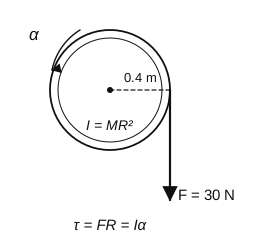
Q1741.A rope is wound around a hollow cylinder of mass 3 kg and radius 40 cm. What is the angular acceleration of the cylinder if the rope is pulled with a force of 30 N?
3 kg द्रव्यमान तथा 40 cm त्रिज्या के एक खोखले बेलन पर एक रस्सी लिपटी है। यदि रस्सी को 30 N बल से खींचा जाए, तो बेलन का कोणीय त्वरण क्या है?
- A25 m/s2
- B0.25 rad/s2
- C25 rad/s2
- D5 m/s2
Show answer
Concept: with and, for a hollow cylinder about its axis, .
- N m
- kg m²
- rad/s²
Short trick: α = F/(MR) = 30/(3 × 0.4) = 25; and angular acceleration must be in rad/s² – (A), (D) have wrong units.
Answer: (C) 25 rad/s2
अवधारणा: जहाँ तथा खोखले बेलन के लिए उसके अक्ष के परितः ।
- N m
- kg m²
- rad/s²
शॉर्ट ट्रिक: α = F/(MR) = 30/(3 × 0.4) = 25; तथा कोणीय त्वरण rad/s² में होना चाहिए – (A), (D) के मात्रक गलत हैं।
उत्तर: (C) 25 rad/s2
NEET UGPhysicsRotational motion – torque on a hollow cylinderNEET UG 2017 · 7 May Shift 1
Q1742.A beam of light from a source L is incident normally on a plane mirror fixed at a certain distance x from the source. The beam is reflected back as a spot on a scale placed just above the source L. When the mirror is rotated through a small angle θ, the spot of the light is found to move through a distance y on the scale. The angle θ is given by
एक स्रोत L से प्रकाश का एक पुंज, स्रोत से एक निश्चित दूरी x पर स्थिर एक समतल दर्पण पर अभिलम्बवत् आपतित होता है। पुंज परावर्तित होकर स्रोत L के ठीक ऊपर रखे एक पैमाने पर एक धब्बे (spot) के रूप में लौटता है। जब दर्पण को एक छोटे कोण θ से घुमाया जाता है, तो प्रकाश का धब्बा पैमाने पर दूरी y से विस्थापित होता पाया जाता है। कोण θ दिया जाता है
- A
- B
- C
- D
Show answer
Concept: Rotating a mirror by θ (fixed incident ray) rotates the reflected ray by 2θ.
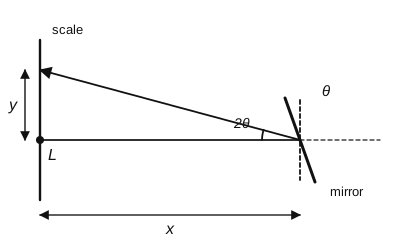
- Reflected ray turns by 2θ and travels distance x back to the scale.
- Small angle:
Short trick: Mirror θ → ray 2θ; spot shift y = x·2θ.
Answer: (A)
अवधारणा: आपतित किरण स्थिर रहते हुए दर्पण को θ घुमाने पर परावर्तित किरण 2θ घूम जाती है।
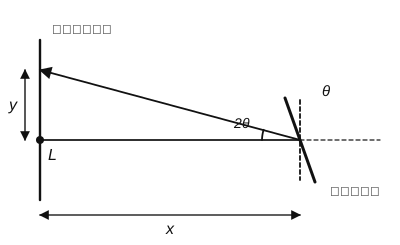
- परावर्तित किरण 2θ घूमती है तथा पैमाने तक x दूरी तय करती है।
- छोटे कोण के लिए:
शॉर्ट ट्रिक: दर्पण θ → किरण 2θ; धब्बे का विस्थापन y = x·2θ।
उत्तर: (A)
NEET UGPhysicsRay optics – rotation of plane mirrorNEET UG 2017 · 7 May Shift 1
Q1743.The two nearest harmonics of a tube closed at one end and open at other end are 220 Hz and 260 Hz. What is the fundamental frequency of the system?
एक सिरे पर बंद तथा दूसरे सिरे पर खुली एक नली के दो निकटतम संनादी 220 Hz तथा 260 Hz हैं। निकाय की मूल आवृत्ति क्या है?
- A10 Hz
- B20 Hz
- C30 Hz
- D40 Hz
Show answer
Concept: A closed pipe has only odd harmonics ; neighbouring ones differ by .
- Hz
- Check: 220 = 11 × 20 and 260 = 13 × 20 – consecutive odd multiples ✓
Short trick: Closed pipe: f₀ = (difference of successive harmonics)/2. 40 Hz (D) would be the open-pipe answer.
Answer: (B) 20 Hz
अवधारणा: बंद पाइप में केवल विषम संनादी होते हैं; निकटवर्ती संनादियों में का अंतर होता है।
- Hz
- जाँच: 220 = 11 × 20 तथा 260 = 13 × 20 – क्रमागत विषम गुणज ✓
शॉर्ट ट्रिक: बंद पाइप: f₀ = (क्रमागत संनादियों का अंतर)/2। 40 Hz (D) खुले पाइप का उत्तर होता।
उत्तर: (B) 20 Hz
NEET UGPhysicsWaves – closed organ pipe harmonicsNEET UG 2017 · 7 May Shift 1
Q1744.A thin prism having refracting angle 10° is made of glass of refractive index 1.42. This prism is combined with another thin prism of glass of refractive index 1.7. This combination produces dispersion without deviation. The refracting angle of second prism should be
10° अपवर्तक कोण वाला एक पतला प्रिज़्म 1.42 अपवर्तनांक वाले काँच से बना है। इस प्रिज़्म को 1.7 अपवर्तनांक वाले काँच के एक अन्य पतले प्रिज़्म के साथ संयोजित किया जाता है। यह संयोजन विचलन रहित वर्ण-विक्षेपण उत्पन्न करता है। दूसरे प्रिज़्म का अपवर्तक कोण होना चाहिए
- A4°
- B6°
- C8°
- D10°
Show answer
Concept: Thin prism deviation ; no net deviation → the two deviations are equal and opposite.
Short trick: Higher-μ prism needs a smaller angle: 10° × 0.42/0.70 = 6°.
Answer: (B) 6°
अवधारणा: पतले प्रिज़्म का विचलन ; कुल विचलन शून्य → दोनों विचलन बराबर तथा विपरीत।
शॉर्ट ट्रिक: अधिक μ वाले प्रिज़्म को छोटा कोण चाहिए: 10° × 0.42/0.70 = 6°।
उत्तर: (B) 6°
NEET UGPhysicsRay optics – dispersion without deviationNEET UG 2017 · 7 May Shift 1
Q1745.The resistance of a wire is 'R' ohm. If it is melted and stretched to 'n' times its original length, its new resistance will be
एक तार का प्रतिरोध 'R' ओम है। यदि इसे पिघलाकर इसकी मूल लम्बाई के 'n' गुना तक खींचा जाए, तो इसका नया प्रतिरोध होगा
- AnR
- B
- Cn2R
- D
Show answer
Concept: Volume is constant on recasting: = constant, so .
- Length becomes nl, area becomes A/n.
Short trick: Stretch n times → R × n² (length ×n and area ÷n).
Answer: (C) n2R
अवधारणा: पुनः ढालने पर आयतन नियत रहता है: = नियत, अतः ।
- लम्बाई nl हो जाती है, क्षेत्रफल A/n।
शॉर्ट ट्रिक: n गुना खींचने पर → R × n² (लम्बाई ×n तथा क्षेत्रफल ÷n)।
उत्तर: (C) n2R
NEET UGPhysicsCurrent electricity – resistance on stretchingNEET UG 2017 · 7 May Shift 1
Q1746.With respect to the conformers of ethane, which of the following statements is true?
एथेन के संरूपणों (conformers) के संबंध में, निम्नलिखित में से कौन-सा कथन सत्य है?
- ABond angle remains same but bond length changesआबंध कोण समान रहता है परन्तु आबंध लम्बाई बदलती है
- BBond angle changes but bond length remains sameआबंध कोण बदलता है परन्तु आबंध लम्बाई समान रहती है
- CBoth bond angle and bond length changeआबंध कोण तथा आबंध लम्बाई दोनों बदलते हैं
- DBoth bond angles and bond length remains sameआबंध कोण तथा आबंध लम्बाई दोनों समान रहते हैं
Show answer
Concept: Conformers arise only by rotation about the C–C σ bond; rotation changes only the dihedral (torsional) angle.
- Rotation about C–C does not stretch or bend any bond, so all C–H and C–C bond lengths stay the same.
- All H–C–H and H–C–C bond angles (≈109.5°) also stay the same.
- Only the dihedral angle (0° eclipsed → 60° staggered) and the torsional energy change.
- Hence (A), (B), (C) are wrong; (D) is true.
Short trick: Conformers = same bonds, same angles, only a different "twist" (dihedral angle).
Answer: (D)
अवधारणा: संरूपण केवल C–C σ आबंध के चारों ओर घूर्णन से बनते हैं; घूर्णन से केवल द्विफलकी (dihedral/मरोड़) कोण बदलता है।
- C–C के चारों ओर घूर्णन से कोई आबंध खिंचता या मुड़ता नहीं, अतः सभी C–H तथा C–C आबंध लम्बाइयाँ समान रहती हैं।
- सभी H–C–H तथा H–C–C आबंध कोण (≈109.5°) भी समान रहते हैं।
- केवल द्विफलकी कोण (0° ग्रसित → 60° सांतरित) तथा मरोड़ी ऊर्जा बदलती है।
- अतः (A), (B), (C) गलत हैं; (D) सत्य है।
शॉर्ट ट्रिक: संरूपण = वही आबंध, वही कोण, केवल अलग "घुमाव" (द्विफलकी कोण)।
उत्तर: (D)
NEET UGChemistryOrganic chemistry – conformations of ethaneNEET UG 2017 · 7 May Shift 1
Q1747.Which of the following pairs of compounds is isoelectronic and isostructural?
निम्नलिखित में से यौगिकों का कौन-सा युग्म समइलेक्ट्रॉनिक (isoelectronic) तथा समसंरचनात्मक (isostructural) है?
- ABeCl2, XeF2
- BTeI2, XeF2
- CIBr2–, XeF2
- DIF3, XeF2
Show answer
Concept: Count valence electrons and apply VSEPR: same electron count + same shape = isoelectronic and isostructural.
- XeF2: 8 + 2×7 = 22 valence e–; Xe has 2 bp + 3 lp (sp3d) → linear.
- IBr2–: 7 + 2×7 + 1 = 22 valence e–; I has 2 bp + 3 lp → linear. Matches XeF2.
- (A) BeCl2: 2 + 14 = 16 e– (linear but not isoelectronic).
- (B) TeI2: 6 + 14 = 20 e–, 2 bp + 2 lp → bent.
- (D) IF3: 7 + 21 = 28 e–, T-shaped.
Short trick: Trihalide-type ions XY2– of halogens (I3–, IBr2–, ICl2–) are all linear, exactly like XeF2.
Answer: (C)
अवधारणा: संयोजकता इलेक्ट्रॉन गिनिए और VSEPR लगाइए: समान इलेक्ट्रॉन संख्या + समान आकृति = समइलेक्ट्रॉनिक तथा समसंरचनात्मक।
- XeF2: 8 + 2×7 = 22 संयोजकता e–; Xe पर 2 bp + 3 lp (sp3d) → रैखिक।
- IBr2–: 7 + 2×7 + 1 = 22 संयोजकता e–; I पर 2 bp + 3 lp → रैखिक। XeF2 से मेल खाता है।
- (A) BeCl2: 2 + 14 = 16 e– (रैखिक, परन्तु समइलेक्ट्रॉनिक नहीं)।
- (B) TeI2: 6 + 14 = 20 e–, 2 bp + 2 lp → कोणीय (bent)।
- (D) IF3: 7 + 21 = 28 e–, T-आकृति।
शॉर्ट ट्रिक: हैलोजनों के XY2– प्रकार के आयन (I3–, IBr2–, ICl2–) सभी XeF2 की भाँति रैखिक होते हैं।
उत्तर: (C)
NEET UGChemistryChemical bonding – VSEPR, isoelectronic & isostructural speciesNEET UG 2017 · 7 May Shift 1
Q1748.HgCl2 and I2 both when dissolved in water containing I– ions the pair of species formed is
HgCl2 तथा I2 दोनों को I– आयन युक्त जल में घोलने पर बनने वाली स्पीशीज़ का युग्म है
- AHgI2, I3–
- BHgI2, I–
- CHgI42–, I3–
- DHg2I2, I–
Show answer
Concept: Excess I– converts Hg2+ into the soluble tetraiodomercurate(II) complex and I2 into the triiodide ion.
- HgCl2 + 2I– → HgI2↓ (red) + 2Cl–
- HgI2 + 2I– → [HgI4]2– (soluble; very large formation constant)
- I2 + I– ⇌ I3– (this is why I2 dissolves in KI solution)
- So the species present are HgI42– and I3–. HgI2 does not survive in excess I–; Hg2I2 needs Hg(I), which is absent.
Short trick: Same chemistry as Nessler's reagent K2[HgI4]: red HgI2 dissolves in excess KI; and I2 + KI → KI3.
Answer: (C)
अवधारणा: आधिक्य I–, Hg2+ को विलेय टेट्राआयोडोमर्क्यूरेट(II) संकुल में तथा I2 को ट्राइआयोडाइड आयन में बदल देता है।
- HgCl2 + 2I– → HgI2↓ (लाल) + 2Cl–
- HgI2 + 2I– → [HgI4]2– (विलेय; विरचन स्थिरांक बहुत अधिक)
- I2 + I– ⇌ I3– (इसी कारण I2, KI विलयन में घुल जाता है)
- अतः उपस्थित स्पीशीज़ HgI42– तथा I3– हैं। आधिक्य I– में HgI2 नहीं बचता; Hg2I2 के लिए Hg(I) चाहिए, जो अनुपस्थित है।
शॉर्ट ट्रिक: नेसलर अभिकर्मक K2[HgI4] वाला ही रसायन: लाल HgI2 आधिक्य KI में घुल जाता है; तथा I2 + KI → KI3।
उत्तर: (C)
NEET UGChemistryp-block / d-block – complex formation with iodideNEET UG 2017 · 7 May Shift 1
Q1749.Mixture of chloroxylenol and terpineol acts as
क्लोरोज़ाइलेनॉल तथा टर्पिनिऑल का मिश्रण किस रूप में कार्य करता है?
- AAnalgesicपीड़ाहारी (Analgesic)
- BAntisepticपूतिरोधी (Antiseptic)
- CAntipyreticज्वरनाशी (Antipyretic)
- DAntibioticप्रतिजैविक (Antibiotic)
Show answer
Concept: NCERT: Dettol, a common antiseptic, is a mixture of chloroxylenol and terpineol.
- Chloroxylenol + terpineol = Dettol, applied on wounds/skin → antiseptic.
- (A) Analgesics (aspirin, morphine) relieve pain.
- (C) Antipyretics (paracetamol) lower fever.
- (D) Antibiotics (penicillin) are produced by microbes and kill/inhibit bacteria inside the body.
Short trick: "Dettol = Chloroxylenol + Terpineol" – Dettol is applied on living tissue (wounds) → antiseptic; disinfectants are for floors/drains, antibiotics act inside the body.
Answer: (B)
अवधारणा: NCERT: डेटॉल, एक सामान्य पूतिरोधी, क्लोरोज़ाइलेनॉल तथा टर्पिनिऑल का मिश्रण है।
- क्लोरोज़ाइलेनॉल + टर्पिनिऑल = डेटॉल, घाव/त्वचा पर लगाया जाता है → पूतिरोधी।
- (A) पीड़ाहारी (ऐस्पिरिन, मॉर्फीन) दर्द दूर करते हैं।
- (C) ज्वरनाशी (पैरासिटामॉल) बुखार कम करते हैं।
- (D) प्रतिजैविक (पेनिसिलिन) सूक्ष्मजीवों से बनते हैं और शरीर के अंदर जीवाणुओं को नष्ट/निरुद्ध करते हैं।
शॉर्ट ट्रिक: "डेटॉल = क्लोरोज़ाइलेनॉल + टर्पिनिऑल" – डेटॉल जीवित ऊतकों (घावों) पर लगाया जाता है → पूतिरोधी; विसंक्रामी फर्श/नालियों के लिए होते हैं, प्रतिजैविक शरीर के अंदर कार्य करते हैं।
उत्तर: (B)
NEET UGChemistryChemistry in everyday life – antisepticsNEET UG 2017 · 7 May Shift 1
Q1750.Which is the incorrect statement?
कौन-सा कथन गलत है?
- AFeO0.98 has non stoichiometric metal deficiency defectFeO0.98 में अरससमीकरणमितीय (non-stoichiometric) धातु न्यूनता दोष होता है
- BDensity decreases in case of crystals with Schottky's defectशॉट्की दोष वाले क्रिस्टलों में घनत्व घटता है
- CNaCl(s) is insulator, silicon is semiconductor, silver is conductor, quartz is piezo electric crystalNaCl(s) विद्युतरोधी है, सिलिकॉन अर्धचालक है, सिल्वर चालक है, क्वार्ट्ज़ दाब-विद्युत (piezo electric) क्रिस्टल है
- DFrenkel defect is favoured in those ionic compounds in which sizes of cation and anions are almost equalफ्रेंकेल दोष उन आयनिक यौगिकों में अनुकूल होता है जिनमें धनायन तथा ऋणायन के आकार लगभग समान होते हैं
Show answer
Concept: Frenkel defect needs a small cation that can slip into interstitial sites (large size difference between cation and anion). Non-stoichiometric ferrous oxide (wüstite) is iron-deficient, FexO with x < 1 (about Fe0.93–0.96O).
- (D) is incorrect: Frenkel defect is favoured when the cation is much smaller than the anion (ZnS, AgCl, AgBr); ions of almost equal size favour the Schottky defect (NaCl, KCl, CsCl).
- (A) refers to non-stoichiometric ferrous oxide, which has less iron than the ideal 1 : 1 ratio (some Fe2+ missing, charge balanced by Fe3+) – a metal deficiency defect, so it is taken as a correct statement.
- (B) correct: in a Schottky defect equal numbers of cations and anions leave the lattice → mass per unit volume, i.e. density, decreases.
- (C) correct: NaCl is an insulator, Si a semiconductor, Ag a conductor and quartz a piezoelectric crystal.
Short trick: Schottky = "Same size, Subtract ions" (density ↓); Frenkel = "Far-different size, Fits into voids" (density same). Any statement pairing Frenkel with "equal size" is wrong.
Answer: (D) Frenkel defect is favoured in those ionic compounds in which sizes of cation and anions are almost equal
अवधारणा: फ्रेंकेल दोष के लिए छोटा धनायन चाहिए जो अंतराकाशी स्थलों में खिसक सके (धनायन तथा ऋणायन के आकार में बड़ा अंतर)। अरससमीकरणमितीय फेरस ऑक्साइड (वुस्टाइट) में आयरन कम होता है, FexO जहाँ x < 1 (लगभग Fe0.93–0.96O)।
- (D) गलत है: फ्रेंकेल दोष तब अनुकूल होता है जब धनायन, ऋणायन से बहुत छोटा हो (ZnS, AgCl, AgBr); लगभग समान आकार वाले आयन शॉट्की दोष के अनुकूल होते हैं (NaCl, KCl, CsCl)।
- (A) अरससमीकरणमितीय फेरस ऑक्साइड की बात करता है, जिसमें आदर्श 1 : 1 अनुपात से कम आयरन होता है (कुछ Fe2+ अनुपस्थित, आवेश Fe3+ द्वारा संतुलित) – यह धातु न्यूनता दोष है, अतः इसे सही कथन माना जाता है।
- (B) सही: शॉट्की दोष में समान संख्या में धनायन तथा ऋणायन जालक से हट जाते हैं → प्रति इकाई आयतन द्रव्यमान अर्थात् घनत्व घटता है।
- (C) सही: NaCl विद्युतरोधी, Si अर्धचालक, Ag चालक तथा क्वार्ट्ज़ दाब-विद्युत (piezoelectric) क्रिस्टल है।
शॉर्ट ट्रिक: शॉट्की = "समान आकार, आयन घटे" (घनत्व ↓); फ्रेंकेल = "आकार में बड़ा अंतर, आयन रिक्ति में खिसके" (घनत्व समान)। जो कथन फ्रेंकेल को "समान आकार" से जोड़े, वह गलत है।
उत्तर: (D) फ्रेंकेल दोष उन आयनिक यौगिकों में अनुकूल होता है जिनमें धनायन तथा ऋणायन के आकार लगभग समान होते हैं
NEET UGChemistrySolid state – point defectsNEET UG 2017 · 7 May Shift 1
Q1751.Concentration of the Ag+ ions in a saturated solution of Ag2C2O4 is 2.2 × 10⁻⁴ mol L–1. Solubility product of Ag2C2O4 is
Ag2C2O4 के संतृप्त विलयन में Ag+ आयनों की सांद्रता 2.2 × 10⁻⁴ mol L–1 है। Ag2C2O4 का विलेयता गुणनफल है
- A2.42 × 10–8
- B2.66 × 10–12
- C4.5 × 10–11
- D5.3 × 10–12
Show answer
Concept: Ag2C2O4(s) ⇌ 2Ag+ + C2O42–; Ksp = [Ag+]2[C2O42–].
- [Ag+] = 2s = 2.2 × 10⁻⁴ M ⇒ [C2O42–] = s = 1.1 × 10⁻⁴ M
- Ksp = (2.2 × 10⁻⁴)2 × (1.1 × 10–4) = 4.84 × 10–8 × 1.1 × 10–4
- Ksp = 5.324 × 10⁻¹² ≈ 5.3 × 10⁻¹²
Short trick: Ksp = 4s3 with s = 1.1 × 10⁻⁴: 4 × 1.331 × 10–12 = 5.32 × 10⁻¹².
Answer: (D)
अवधारणा: Ag2C2O4(s) ⇌ 2Ag+ + C2O42–; Ksp = [Ag+]2[C2O42–]।
- [Ag+] = 2s = 2.2 × 10⁻⁴ M ⇒ [C2O42–] = s = 1.1 × 10⁻⁴ M
- Ksp = (2.2 × 10⁻⁴)2 × (1.1 × 10–4) = 4.84 × 10–8 × 1.1 × 10–4
- Ksp = 5.324 × 10⁻¹² ≈ 5.3 × 10⁻¹²
शॉर्ट ट्रिक: Ksp = 4s3, s = 1.1 × 10⁻⁴: 4 × 1.331 × 10–12 = 5.32 × 10⁻¹²।
उत्तर: (D)
NEET UGChemistryIonic equilibrium – solubility productNEET UG 2017 · 7 May Shift 1
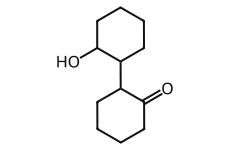
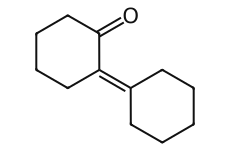
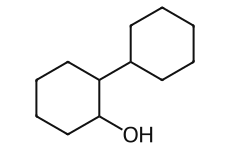
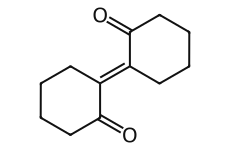
Q1752.Of the following, which is the product formed when cyclohexanone undergoes aldol condensation followed by heating?
निम्नलिखित में से, साइक्लोहेक्सेनॉन के ऐल्डोल संघनन के पश्चात् गर्म करने पर बनने वाला उत्पाद कौन-सा है?
- A
- B
- C
- D
Show answer
Concept: Aldol: the α-carbanion of one ketone adds to the C=O of another → β-hydroxy ketone; on heating it loses H2O → α,β-unsaturated ketone.
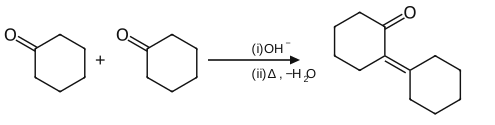
- OH– removes an α-H of cyclohexanone → enolate.
- Enolate attacks C=O of a second cyclohexanone → 2-(1-hydroxycyclohexyl)cyclohexanone (aldol, OH on the ring carbon that was the C=O).
- Heating removes H2O between that OH and the α-H → C=C conjugated with C=O: 2-cyclohexylidenecyclohexanone = (B).
- (A)/(C): still contain OH (not dehydrated) and (C) has lost the C=O; (D) has two C=O groups – impossible, one C=O is consumed in aldol.
Short trick: Aldol condensation of 2 RCOR′ → one C=O remains + new C=C at the α,β-position (−H2O). Look for exactly one C=O conjugated with a C=C.
Answer: (B)
अवधारणा: ऐल्डोल: एक कीटोन का α-कार्बऋणायन दूसरे के C=O पर जुड़ता है → β-हाइड्रॉक्सी कीटोन; गर्म करने पर H2O निकलता है → α,β-असंतृप्त कीटोन।
- OH– साइक्लोहेक्सेनॉन का एक α-H हटाता है → ईनोलेट।
- ईनोलेट दूसरे साइक्लोहेक्सेनॉन के C=O पर आक्रमण करता है → 2-(1-हाइड्रॉक्सीसाइक्लोहेक्सिल)साइक्लोहेक्सेनॉन (ऐल्डोल; OH उस वलय-कार्बन पर जो पहले C=O था)।
- गर्म करने पर उस OH तथा α-H के बीच से H2O निकलता है → C=O के साथ संयुग्मित C=C: 2-साइक्लोहेक्सिलिडीनसाइक्लोहेक्सेनॉन = (B)।
- (A)/(C): अभी भी OH है (निर्जलीकरण नहीं हुआ) तथा (C) में C=O ही नहीं है; (D) में दो C=O हैं – असंभव, ऐल्डोल में एक C=O उपयोग हो जाता है।
शॉर्ट ट्रिक: 2 RCOR′ का ऐल्डोल संघनन → एक C=O बचता है + α,β-स्थिति पर नया C=C (−H2O)। ठीक एक C=O जो C=C से संयुग्मित हो, ढूँढिए।
उत्तर: (B)
NEET UGChemistryAldehydes & ketones – aldol condensationNEET UG 2017 · 7 May Shift 1
Q1753.The species, having bond angles of 120° is
120° आबंध कोण वाली स्पीशीज़ है
- APH3
- BClF3
- CNCl3
- DBCl3
Show answer
Concept: 120° angles occur in trigonal planar AX3 molecules (sp2, no lone pair).
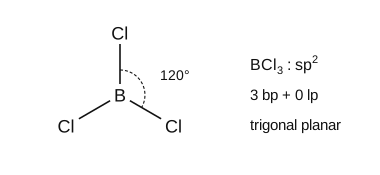
- BCl3: B has 3 bond pairs, 0 lone pair → sp2, trigonal planar, Cl–B–Cl = 120°.
- (A) PH3: 3 bp + 1 lp, almost pure p-orbitals → ≈ 93.5°.
- (B) ClF3: 3 bp + 2 lp → T-shaped, ≈ 87.5°.
- (C) NCl3: 3 bp + 1 lp → pyramidal, ≈ 107°.
Short trick: AX3 with no lone pair on the central atom (BF3, BCl3, SO3, CO32–) → 120°.
Answer: (D)
अवधारणा: 120° कोण त्रिकोणीय समतलीय AX3 अणुओं (sp2, कोई एकाकी युग्म नहीं) में होते हैं।
- BCl3: B पर 3 आबंधी युग्म, 0 एकाकी युग्म → sp2, त्रिकोणीय समतलीय, Cl–B–Cl = 120°।
- (A) PH3: 3 bp + 1 lp, लगभग शुद्ध p-कक्षक → ≈ 93.5°।
- (B) ClF3: 3 bp + 2 lp → T-आकृति, ≈ 87.5°।
- (C) NCl3: 3 bp + 1 lp → पिरामिडी, ≈ 107°।
शॉर्ट ट्रिक: केन्द्रीय परमाणु पर कोई एकाकी युग्म न हो ऐसे AX3 (BF3, BCl3, SO3, CO32–) → 120°।
उत्तर: (D)
NEET UGChemistryChemical bonding – VSEPR bond anglesNEET UG 2017 · 7 May Shift 1
Q1754.If molality of the dilute solution is doubled, the value of molal depression constant (Kf) will be
यदि तनु विलयन की मोललता दोगुनी कर दी जाए, तो मोलल अवनमन स्थिरांक (Kf) का मान होगा
- ADoubledदोगुना
- BHalvedआधा
- CTripledतिगुना
- DUnchangedअपरिवर्तित
Show answer
Concept: ΔTf = Kf m. Kf = RTf2Msolvent/(1000 ΔfusH) depends only on the solvent.
- Doubling m doubles ΔTf, not Kf.
- Kf is a property of the solvent (e.g. 1.86 K kg mol–1 for water), independent of the solute and its molality.
- So Kf remains unchanged; (A), (B), (C) wrongly treat a constant as a variable.
Short trick: Kf, Kb = "solvent's fingerprint" – change only if the solvent changes.
Answer: (D)
अवधारणा: ΔTf = Kf m। Kf = RTf2Mविलायक/(1000 ΔfusH) केवल विलायक पर निर्भर करता है।
- m दोगुना करने पर ΔTf दोगुना होता है, Kf नहीं।
- Kf विलायक का गुण है (जैसे जल के लिए 1.86 K kg mol–1), विलेय तथा उसकी मोललता से स्वतंत्र।
- अतः Kf अपरिवर्तित रहता है; (A), (B), (C) एक स्थिरांक को चर मान लेते हैं।
शॉर्ट ट्रिक: Kf, Kb = "विलायक की पहचान" – केवल विलायक बदलने पर बदलते हैं।
उत्तर: (D)
NEET UGChemistrySolutions – depression in freezing point (K<sub>f</sub>)NEET UG 2017 · 7 May Shift 1
Q1755.Which one is the most acidic compound?
कौन-सा यौगिक सर्वाधिक अम्लीय है?
- A
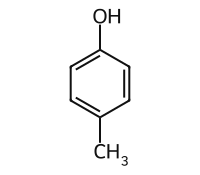
- B
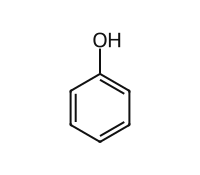
- C
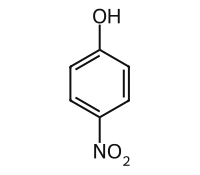
- D
Show answer
Concept: Electron-withdrawing groups (–NO2: –I, –R) at o/p positions stabilise the phenoxide ion and increase acidity; electron-donating groups (–CH3) decrease it.
- p-Cresol (A): CH3 (+I, hyperconjugation) destabilises phenoxide → least acidic (pKa ≈ 10.2).
- Phenol (B): pKa ≈ 10.0.
- p-Nitrophenol (C): one NO2 → pKa ≈ 7.1.
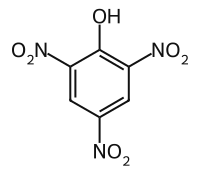
- 2,4,6-Trinitrophenol, picric acid (D): three NO2 at o, o, p → pKa ≈ 0.4, strongest acid.
Short trick: More NO2 groups at ortho/para = more acidic; picric acid is even more acidic than acetic acid.
Answer: (D)
अवधारणा: o/p स्थितियों पर इलेक्ट्रॉन-आकर्षी समूह (–NO2: –I, –R) फ़ीनॉक्साइड आयन को स्थायी करके अम्लता बढ़ाते हैं; इलेक्ट्रॉन-दाता समूह (–CH3) उसे घटाते हैं।
- p-क्रिसॉल (A): CH3 (+I, अतिसंयुग्मन) फ़ीनॉक्साइड को अस्थायी करता है → सबसे कम अम्लीय (pKa ≈ 10.2)।
- फ़ीनॉल (B): pKa ≈ 10.0।
- p-नाइट्रोफ़ीनॉल (C): एक NO2 → pKa ≈ 7.1।
- 2,4,6-ट्राइनाइट्रोफ़ीनॉल, पिक्रिक अम्ल (D): o, o, p पर तीन NO2 → pKa ≈ 0.4, सबसे प्रबल अम्ल।
शॉर्ट ट्रिक: ऑर्थो/पैरा पर जितने अधिक NO2, उतना अधिक अम्लीय; पिक्रिक अम्ल तो ऐसीटिक अम्ल से भी अधिक अम्लीय है।
उत्तर: (D)
NEET UGChemistryAlcohols, phenols – acidity of phenolsNEET UG 2017 · 7 May Shift 1
Q1756.It is because of inability of ns2 electrons of the valence shell to participate in bonding that
संयोजकता कोश के ns2 इलेक्ट्रॉनों की आबंधन में भाग लेने की अक्षमता के कारण
- ASn2+ is reducing while Pb4+ is oxidisingSn2+ अपचायक है जबकि Pb4+ ऑक्सीकारक है
- BSn2+ is oxidising while Pb4+ is reducingSn2+ ऑक्सीकारक है जबकि Pb4+ अपचायक है
- CSn2+ and Pb2+ are both oxidising and reducingSn2+ तथा Pb2+ दोनों ऑक्सीकारक तथा अपचायक हैं
- DSn4+ is reducing while Pb4+ is oxidisingSn4+ अपचायक है जबकि Pb4+ ऑक्सीकारक है
Show answer
Concept: Inert pair effect increases down group 14: the lower state (+2) becomes more stable for Pb, while +4 is more stable for Sn.
- For Sn, +4 is more stable → Sn2+ readily goes to Sn4+ → Sn2+ is a reducing agent.
- For Pb, +2 is more stable (inert pair) → Pb4+ readily goes to Pb2+ → Pb4+ is an oxidising agent (e.g. PbO2).
- (B) reverses both roles; (C) Pb2+ is the stable state and is not a good reductant; (D) Sn4+ is already the stable maximum state and cannot reduce.
Short trick: "Sn loves +4, Pb loves +2": the ion that is NOT in its favourite state does the redox job – Sn2+ reduces, Pb4+ oxidises.
Answer: (A)
अवधारणा: वर्ग 14 में नीचे जाने पर अक्रिय युग्म प्रभाव बढ़ता है: Pb के लिए निम्न अवस्था (+2) अधिक स्थायी होती है, जबकि Sn के लिए +4 अधिक स्थायी है।
- Sn के लिए +4 अधिक स्थायी → Sn2+ आसानी से Sn4+ बनता है → Sn2+ अपचायक है।
- Pb के लिए +2 अधिक स्थायी (अक्रिय युग्म) → Pb4+ आसानी से Pb2+ बनता है → Pb4+ ऑक्सीकारक है (जैसे PbO2)।
- (B) दोनों भूमिकाएँ उलट देता है; (C) Pb2+ स्थायी अवस्था है, अच्छा अपचायक नहीं; (D) Sn4+ पहले से ही स्थायी अधिकतम अवस्था में है, अपचयन नहीं कर सकता।
शॉर्ट ट्रिक: "Sn को +4 पसंद, Pb को +2 पसंद": जो आयन अपनी पसंदीदा अवस्था में नहीं है वही रेडॉक्स करता है – Sn2+ अपचयन, Pb4+ ऑक्सीकरण।
उत्तर: (A)
NEET UGChemistryp-block elements – inert pair effectNEET UG 2017 · 7 May Shift 1
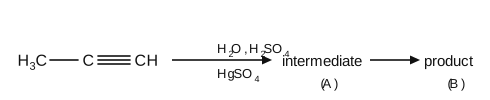
Q1757.Predict the correct intermediate and product in the following reaction
निम्नलिखित अभिक्रिया में सही मध्यवर्ती तथा उत्पाद की प्रागुक्ति कीजिए
- A
- B
- C
- D
Show answer
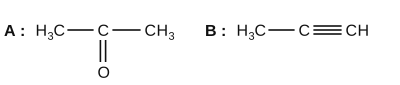
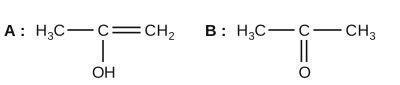
Concept: Hg2+/dil. H2SO4 hydrates an alkyne by Markovnikov addition of water → enol, which tautomerises to the ketone.
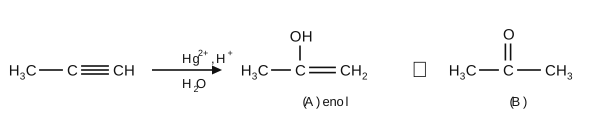
- Propyne: H+ adds to terminal CH, OH goes to the internal carbon (Markovnikov).
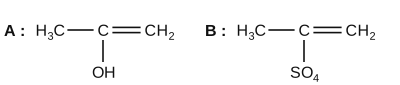
- Intermediate (A) = enol H3C–C(OH)=CH2 (prop-1-en-2-ol).
- Enol → keto tautomerism gives (B) = H3C–CO–CH3 (acetone).
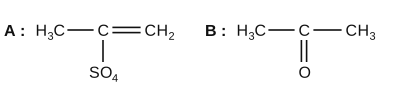
- (A), (B): SO4 is never attached to carbon here; (C): the ketone does not go back to the alkyne.
Short trick: Terminal alkyne + Hg2+/H+/H2O → methyl ketone (only ethyne gives an aldehyde).
Answer: (D)
अवधारणा: Hg2+/तनु H2SO4, ऐल्काइन में जल का मार्कोनीकॉफ़ योगज कराता है → ईनॉल, जो चलावयवता द्वारा कीटोन बन जाता है।
- प्रोपाइन: H+ अंतस्थ CH पर जुड़ता है, OH आंतरिक कार्बन पर (मार्कोनीकॉफ़)।
- मध्यवर्ती (A) = ईनॉल H3C–C(OH)=CH2 (प्रोप-1-ईन-2-ऑल)।
- ईनॉल → कीटो चलावयवता से (B) = H3C–CO–CH3 (ऐसीटोन)।
- (A), (B): यहाँ SO4 कभी कार्बन से नहीं जुड़ता; (C): कीटोन वापस ऐल्काइन नहीं बनता।
शॉर्ट ट्रिक: अंतस्थ ऐल्काइन + Hg2+/H+/H2O → मेथिल कीटोन (केवल एथाइन से ऐल्डिहाइड बनता है)।
उत्तर: (D)
NEET UGChemistryHydrocarbons – hydration of alkynes (keto–enol tautomerism)NEET UG 2017 · 7 May Shift 1
Q1758.Which one of the following statements is not correct?
निम्नलिखित में से कौन-सा कथन सही नहीं है?
- ACatalyst does not initiate any reactionउत्प्रेरक कोई अभिक्रिया प्रारम्भ नहीं करता
- BThe value of equilibrium constant is changed in the presence of a catalyst in the reaction at equilibriumसाम्यावस्था पर स्थित अभिक्रिया में उत्प्रेरक की उपस्थिति में साम्य स्थिरांक का मान बदल जाता है
- CEnzymes catalyse mainly bio-chemical reactionsएन्ज़ाइम मुख्यतः जैव-रासायनिक अभिक्रियाओं को उत्प्रेरित करते हैं
- DCoenzymes increase the catalytic activity of enzymeसहएन्ज़ाइम (coenzymes) एन्ज़ाइम की उत्प्रेरक सक्रियता बढ़ाते हैं
Show answer
Concept: A catalyst lowers Ea of forward and backward reactions equally, so equilibrium is reached faster but K is unchanged.
- (B) is false: K depends only on temperature (ΔG° = –RT ln K); a catalyst does not change ΔG°.
- (A) true: a catalyst only speeds up a reaction that is already feasible; it does not start a non-spontaneous one.
- (C) true: enzymes are biocatalysts of biochemical reactions.
- (D) true: coenzymes/activators bind to enzymes and increase their activity.
Short trick: Catalyst changes "how fast", never "how far" (K, ΔG, ΔH unchanged).
Answer: (B)
अवधारणा: उत्प्रेरक अग्र तथा पश्च दोनों अभिक्रियाओं की Ea समान रूप से घटाता है, अतः साम्य शीघ्र प्राप्त होता है परन्तु K अपरिवर्तित रहता है।
- (B) असत्य है: K केवल ताप पर निर्भर है (ΔG° = –RT ln K); उत्प्रेरक ΔG° नहीं बदलता।
- (A) सत्य: उत्प्रेरक केवल पहले से संभव अभिक्रिया को तेज करता है; अस्वतः अभिक्रिया प्रारम्भ नहीं करता।
- (C) सत्य: एन्ज़ाइम जैव-रासायनिक अभिक्रियाओं के जैव-उत्प्रेरक हैं।
- (D) सत्य: सहएन्ज़ाइम/सक्रियक एन्ज़ाइम से जुड़कर उसकी सक्रियता बढ़ाते हैं।
शॉर्ट ट्रिक: उत्प्रेरक "कितनी तेजी से" बदलता है, "कितनी दूर तक" कभी नहीं (K, ΔG, ΔH अपरिवर्तित)।
उत्तर: (B)
NEET UGChemistryChemical kinetics / equilibrium – catalysisNEET UG 2017 · 7 May Shift 1
Q1759.Which one is the wrong statement?
कौन-सा कथन गलत है?
- Ade-Broglie's wavelength is given by , where m = mass of the particle, v = group velocity of the particleडी ब्रॉग्ली तरंगदैर्ध्य द्वारा दी जाती है, जहाँ m = कण का द्रव्यमान, v = कण का समूह वेग (group velocity)
- BThe uncertainty principle is अनिश्चितता सिद्धांत है
- CHalf-filled and fully filled orbitals have greater stability due to greater exchange energy, greater symmetry and more balanced arrangementअर्ध-पूरित तथा पूर्ण-पूरित कक्षकों का स्थायित्व अधिक विनिमय ऊर्जा, अधिक सममिति तथा अधिक संतुलित व्यवस्था के कारण अधिक होता है
- DThe energy of 2s orbital is less than the energy of 2p orbital in case of Hydrogen like atomsहाइड्रोजन सदृश परमाणुओं में 2s कक्षक की ऊर्जा 2p कक्षक की ऊर्जा से कम होती है
Show answer
Concept: In a one-electron (hydrogen-like) species, orbital energy depends only on n: eV.
- (D) wrong: for H, He+, Li2+, 2s and 2p have the same energy (degenerate) as both have n = 2.
- (A) correct: λ = h/mv; the particle moves with the group velocity of its matter wave.
- (B) correct: energy–time form of Heisenberg's principle, ΔE·Δt ≥ h/4π.
- (C) correct: NCERT reasons for extra stability of half/fully filled subshells (exchange energy, symmetry).
Short trick: Only multi-electron atoms follow the (n + l) rule; in hydrogen-like atoms 2s = 2p, 3s = 3p = 3d.
Answer: (D)
अवधारणा: एक-इलेक्ट्रॉन (हाइड्रोजन सदृश) स्पीशीज़ में कक्षक ऊर्जा केवल n पर निर्भर करती है: eV।
- (D) गलत: H, He+, Li2+ में 2s तथा 2p की ऊर्जा समान (समभ्रंश) होती है क्योंकि दोनों के लिए n = 2।
- (A) सही: λ = h/mv; कण अपनी द्रव्य तरंग के समूह वेग से चलता है।
- (B) सही: हाइज़ेनबर्ग सिद्धांत का ऊर्जा–समय रूप, ΔE·Δt ≥ h/4π।
- (C) सही: अर्ध/पूर्ण पूरित उपकोशों के अतिरिक्त स्थायित्व के NCERT कारण (विनिमय ऊर्जा, सममिति)।
शॉर्ट ट्रिक: (n + l) नियम केवल बहु-इलेक्ट्रॉन परमाणुओं पर लागू होता है; हाइड्रोजन सदृश परमाणुओं में 2s = 2p, 3s = 3p = 3d।
उत्तर: (D)
NEET UGChemistryStructure of atom – de Broglie, uncertainty, orbital energiesNEET UG 2017 · 7 May Shift 1
Q1760.A gas is allowed to expand in a well insulated container against a constant external pressure of 2.5 atm from an initial volume of 2.50 L to a final volume of 4.50 L. The change in internal energy ΔU of the gas in joules will be
एक गैस को अच्छी तरह से ऊष्मारोधित पात्र में 2.5 atm के नियत बाह्य दाब के विरुद्ध 2.50 L के प्रारम्भिक आयतन से 4.50 L के अंतिम आयतन तक प्रसारित होने दिया जाता है। गैस की आंतरिक ऊर्जा में परिवर्तन ΔU जूल में होगा
- A1136.25 J
- B–500 J
- C–505 J
- D+505 J
Show answer
Concept: Insulated container → adiabatic, q = 0, so ΔU = w = –PextΔV.
- ΔV = 4.50 – 2.50 = 2.00 L
- w = –2.5 atm × 2.00 L = –5.0 L atm
- 1 L atm = 101.3 J ⇒ w = –5.0 × 101.3 = –506.5 J
- ΔU = q + w = 0 + (–506.5) ≈ –505 J (nearest option). The gas does work and cools, so ΔU is negative; (D) has the wrong sign.
Short trick: Expansion in an insulated box: ΔU = –PΔV; L atm × 101.3 → J; sign must be negative.
Answer: (C)
अवधारणा: ऊष्मारोधित पात्र → रुद्धोष्म, q = 0, अतः ΔU = w = –PextΔV।
- ΔV = 4.50 – 2.50 = 2.00 L
- w = –2.5 atm × 2.00 L = –5.0 L atm
- 1 L atm = 101.3 J ⇒ w = –5.0 × 101.3 = –506.5 J
- ΔU = q + w = 0 + (–506.5) ≈ –505 J (निकटतम विकल्प)। गैस कार्य करती है और ठंडी होती है, अतः ΔU ऋणात्मक है; (D) का चिह्न गलत है।
शॉर्ट ट्रिक: ऊष्मारोधित पात्र में प्रसार: ΔU = –PΔV; L atm × 101.3 → J; चिह्न ऋणात्मक होना चाहिए।
उत्तर: (C)
NEET UGChemistryThermodynamics – work in adiabatic irreversible expansionNEET UG 2017 · 7 May Shift 1

