Q181.What should come in place of the question mark (?) in the given series based on the English alphabetical order?
KEV CWN UOF MGX ?
दिए गए शृंखला में अंग्रेज़ी वर्णमाला क्रम के आधार पर प्रश्न चिह्न (?) के स्थान पर क्या आना चाहिए?
KEV CWN UOF MGX ?
- AEYP
- BEDS
- CEPY
- DERT
Show answer
Concept: Every letter moves back 8 places (wrapping around Z→A).
| Position | KEV | CWN | UOF | MGX | ? |
|---|
| 1st (−8) | K | C | U | M | E |
| 2nd (−8) | E | W | O | G | Y |
| 3rd (−8) | V | N | F | X | P |
- M − 8 = E, G − 8 = Y (7 − 8 + 26 = 25), X − 8 = P.
Short trick: Check only the middle letter: G − 8 = Y (G→F→…→Y backwards); only EYP has Y in the middle.
Answer: (A) EYP
अवधारणा: हर अक्षर 8 स्थान पीछे जाता है (Z→A चक्र के साथ)।
| स्थान | KEV | CWN | UOF | MGX | ? |
|---|
| 1st (−8) | K | C | U | M | E |
| 2nd (−8) | E | W | O | G | Y |
| 3rd (−8) | V | N | F | X | P |
- M − 8 = E, G − 8 = Y (7 − 8 + 26 = 25), X − 8 = P।
शॉर्ट ट्रिक: बीच का अक्षर देखें: G − 8 = Y → केवल EYP में Y दूसरे स्थान पर है।
उत्तर: (A) EYP
RRB ALP CBT 1General Intelligence and ReasoningLetter series – cyclic shiftRRB ALP CBT 1 2025 · 18 Feb Shift 2
Q182.Each of A, B, C, D, E, F and G play a game on a different day of a week starting from Monday and ending on Sunday of the same week. C plays the game on Friday. Only one person plays between C and B but B does not play on the last day. A plays immediately before D but D does not play on the last day. F plays immediately after G. On which day does E play the game?
A, B, C, D, E, F और G में से प्रत्येक एक ही सप्ताह के सोमवार से शुरू होकर रविवार को समाप्त होने वाले अलग-अलग दिन एक खेल खेलता है। C शुक्रवार को खेल खेलता है। C और B के बीच केवल एक व्यक्ति खेलता है लेकिन B अंतिम दिन नहीं खेलता है। A, D से ठीक पहले खेलता है लेकिन D अंतिम दिन नहीं खेलता है। F, G के ठीक बाद खेलता है। E किस दिन खेल खेलता है?
- ASundayरविवार
- BTuesdayमंगलवार
- CThursdayगुरुवार
- DSaturdayशनिवार
Show answer
Concept: Place the fixed person, then the blocks of two consecutive days.
- C = Friday; one between C and B → B = Wednesday (Sunday not allowed).
- Free: Mon, Tue, Thu, Sat, Sun. Consecutive pairs available: Mon–Tue and Sat–Sun.
- A–D cannot end on Sunday → A–D = Mon–Tue; G–F = Sat–Sun.
| Mon | Tue | Wed | Thu | Fri | Sat | Sun |
|---|
| A | D | B | E | C | G | F |
- E = Thursday.
Short trick: Two blocks of 2 need two pairs of consecutive free days; the lone free day left (Thursday) must be E’s.
Answer: (C) Thursday
अवधारणा: पहले निश्चित व्यक्ति रखें, फिर दो क्रमागत दिनों वाले जोड़े।
- C = शुक्रवार; C और B के बीच एक → B = बुधवार (रविवार नहीं)।
- खाली: सोम, मंगल, गुरु, शनि, रवि। क्रमागत जोड़े: सोम–मंगल और शनि–रवि।
- A–D रविवार पर समाप्त नहीं हो सकता → A–D = सोम–मंगल; G–F = शनि–रवि।
| सोम | मंगल | बुध | गुरु | शुक्र | शनि | रवि |
|---|
| A | D | B | E | C | G | F |
- E = गुरुवार।
शॉर्ट ट्रिक: दो-दो के दो ब्लॉक के लिए दो क्रमागत जोड़े चाहिए; बचा अकेला दिन (गुरुवार) E का है।
उत्तर: (C) गुरुवार
RRB ALP CBT 1General Intelligence and ReasoningDay-based schedulingRRB ALP CBT 1 2025 · 18 Feb Shift 2
Q183.Rajan starts from Point A and drives 51 km towards east. He then takes a right turn, drives 56 km, turns right and drives 56 km. He then takes a right turn and drives 63 km. He takes a final right turn, drives 5 km and stops at Point P. How far (shortest distance) and towards which direction should he drive in order to reach Point A again? (All turns are 90 degrees turns only unless specified)
राजन बिंदु A से शुरू करके पूर्व की ओर 51 km गाड़ी चलाता है। फिर वह दाएँ मुड़ता है, 56 km गाड़ी चलाता है, दाएँ मुड़ता है और 56 km गाड़ी चलाता है। फिर वह दाएँ मुड़ता है और 63 km गाड़ी चलाता है। वह अंतिम बार दाएँ मुड़ता है, 5 km गाड़ी चलाता है और बिंदु P पर रुक जाता है। बिंदु A पर फिर से पहुँचने के लिए उसे कितनी दूर (न्यूनतम दूरी) और किस दिशा में गाड़ी चलानी चाहिए? (जब तक निर्दिष्ट न हो, सभी मोड़ केवल 90 डिग्री के मोड़ हैं)
- A8 km to the southदक्षिण की ओर 8 km
- B9 km to the northउत्तर की ओर 9 km
- C7 km to the southदक्षिण की ओर 7 km
- D10 km to the northउत्तर की ओर 10 km
Show answer
Concept: Find net east–west and net north–south displacement.
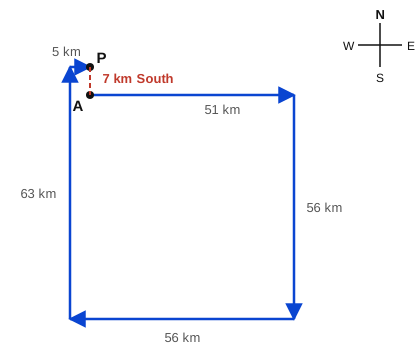
- East–west: +51 − 56 + 5 = 0.
- North–south: −56 + 63 = +7 (P is 7 km north of A).
- So he must drive 7 km towards south.
Short trick: Opposite legs cancel: east 51 + 5 = west 56; north 63 − south 56 = 7 → 7 km south.
Answer: (C) 7 km to the south
अवधारणा: कुल पूर्व–पश्चिम और उत्तर–दक्षिण विस्थापन निकालें।
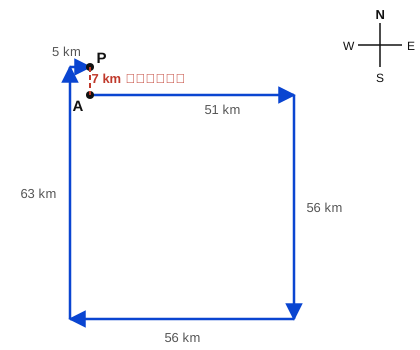
- पूर्व–पश्चिम: +51 − 56 + 5 = 0।
- उत्तर–दक्षिण: −56 + 63 = +7 (P, A से 7 km उत्तर में)।
- अतः उसे 7 km दक्षिण की ओर जाना होगा।
शॉर्ट ट्रिक: विपरीत भुजाएँ कटती हैं: पूर्व 51 + 5 = पश्चिम 56; उत्तर 63 − दक्षिण 56 = 7 → 7 km दक्षिण।
उत्तर: (C) दक्षिण की ओर 7 km
RRB ALP CBT 1General Intelligence and ReasoningDirection sense – shortest distanceRRB ALP CBT 1 2025 · 18 Feb Shift 2
Q184.DM3 is related to LU27 in a certain way. In the same way, AR12 is related to IZ1728. To which of the given options is DK13 related, following the same logic?
DM3 एक निश्चित प्रकार से LU27 से संबंधित है। उसी प्रकार AR12, IZ1728 से संबंधित है। उसी तर्क के अनुसार DK13 दिए गए विकल्पों में से किससे संबंधित है?
- ALS2197
- BMS1019
- CMR169
- DLR507
Show answer
Concept: Letters shift +8; number is cubed.
- DM3: D+8 = L, M+8 = U, → LU27 ✓
- AR12: A+8 = I, R+8 = Z, ✓
- DK13: D+8 = L, K+8 = S, → LS2197.
Short trick: Only option A ends in a perfect cube of 13 (2197); unit digit of = → 7.
Answer: (A) LS2197
अवधारणा: अक्षर +8 खिसकते हैं; संख्या का घन होता है।
- DM3: D+8 = L, M+8 = U, ✓
- AR12: A+8 = I, R+8 = Z, ✓
- DK13: L, S, → LS2197।
शॉर्ट ट्रिक: केवल विकल्प A में 13 का घन (2197) है; का इकाई अंक = का → 7।
उत्तर: (A) LS2197
RRB ALP CBT 1General Intelligence and ReasoningAlphanumeric analogy – letters +8, number cubedRRB ALP CBT 1 2025 · 18 Feb Shift 2
Q185.A question is followed by two statements numbered (I) and (II). You have to decide whether the data provided in the statements are sufficient to answer the question. Read both the statements and select the most appropriate answer.
Question:
Among 5 poles, I, L, O, M and D each having a different height, which pole is the tallest?
Statements:
(I) I is taller than only two poles. L is taller than D and no pole has height between L and D.
(II) M is taller than D.
एक प्रश्न के बाद दो कथन (I) और (II) दिए गए हैं। आपको यह तय करना है कि कथनों में दिए गए आँकड़े प्रश्न का उत्तर देने के लिए पर्याप्त हैं या नहीं। दोनों कथनों को पढ़ें और सबसे उपयुक्त उत्तर चुनें।
प्रश्न:
5 खंभों I, L, O, M और D में से प्रत्येक की ऊँचाई अलग-अलग है, कौन-सा खंभा सबसे ऊँचा है?
कथन:
(I) I केवल दो खंभों से ऊँचा है। L, D से ऊँचा है और L तथा D के बीच किसी खंभे की ऊँचाई नहीं है।
(II) M, D से ऊँचा है।
- AData in both statements I and II together are not sufficient to answer the question.कथन I और II दोनों में दिए गए आँकड़े मिलकर भी प्रश्न का उत्तर देने के लिए पर्याप्त नहीं हैं।
- BData in both statements I and II together (and not statement I alone or statement II alone) are sufficient to answer the question.कथन I और II दोनों में दिए गए आँकड़े मिलकर (न कि केवल कथन I या केवल कथन II) प्रश्न का उत्तर देने के लिए पर्याप्त हैं।
- CData in statement II alone is sufficient to answer the question while data in statement I is not.केवल कथन II में दिए गए आँकड़े प्रश्न का उत्तर देने के लिए पर्याप्त हैं, जबकि कथन I के आँकड़े पर्याप्त नहीं हैं।
- DData in statement I alone is sufficient to answer the question while data in statement II is not.केवल कथन I में दिए गए आँकड़े प्रश्न का उत्तर देने के लिए पर्याप्त हैं, जबकि कथन II के आँकड़े पर्याप्त नहीं हैं।
Show answer
Concept: Check each statement alone, then both together.
- (I): I is 3rd from the bottom. L, D adjacent with L above → (D, L) at positions 1–2 or 4–5. Tallest unknown.
- (II) alone says only M > D – not enough.
- Together: if D = 4, L = 5 then M > D is impossible → D = 1, L = 2. Positions 4 and 5 go to M and O in either order → tallest still unknown.
Short trick: After combining, two poles (M, O) still have no relation between them – so the tallest cannot be fixed.
Answer: (A) Data in both statements I and II together are not sufficient to answer the question.
अवधारणा: हर कथन अलग से, फिर दोनों को मिलाकर जाँचें।
- (I): I नीचे से तीसरा है। L, D सटे हैं और L ऊपर → (D, L) स्थान 1–2 या 4–5 पर। सबसे ऊँचा अज्ञात।
- (II) अकेले केवल M > D बताता है – पर्याप्त नहीं।
- दोनों मिलाकर: D = 4, L = 5 हो तो M > D असंभव → D = 1, L = 2। स्थान 4 और 5 पर M और O किसी भी क्रम में → सबसे ऊँचा अज्ञात।
शॉर्ट ट्रिक: मिलाने के बाद भी M और O के बीच कोई संबंध नहीं – सबसे ऊँचा तय नहीं होता।
उत्तर: (A) कथन I और II दोनों मिलकर भी पर्याप्त नहीं हैं।
RRB ALP CBT 1General Intelligence and ReasoningData sufficiency – rankingRRB ALP CBT 1 2025 · 18 Feb Shift 2
Q186.Refer to the following letter series and answer the question that follows. Counting to be done from left to right only.
(Left) U N M K L P E C S X D F Y U M U T E W X Z S E Q A Z S I O P L M J (Right) How many such consonants are there that are immediately preceded by a vowel and immediately followed by a consonant?
निम्नलिखित अक्षर शृंखला को देखें और उसके बाद दिए गए प्रश्न का उत्तर दें। गिनती केवल बाएँ से दाएँ की जानी है।
(बाएँ) U N M K L P E C S X D F Y U M U T E W X Z S E Q A Z S I O P L M J (दाएँ)
ऐसे कितने व्यंजन हैं जिनके ठीक पहले एक स्वर है और ठीक बाद एक व्यंजन है?
- A5
- B3
- C6
- D4
Show answer
Concept: Pattern needed: Vowel – Consonant – Consonant.
- Check the letter after every vowel: U N M ✓, E C S ✓, U M U → M followed by U ✗, U T E ✗, E W X ✓, E Q A ✗, A Z S ✓, I O → O is vowel, O P L ✓.
- Count = 5.
Short trick: Start only at vowels (U, U, U, E, E, A, I, O) – 8 checks instead of 33.
Answer: (A) 5
अवधारणा: आवश्यक पैटर्न: स्वर – व्यंजन – व्यंजन।
- हर स्वर के बाद वाला अक्षर जाँचें: U N M ✓, E C S ✓, E W X ✓, A Z S ✓, O P L ✓; बाकी (U M U, U T E, E Q A) ✗।
- संख्या = 5।
शॉर्ट ट्रिक: केवल स्वरों से शुरू करें – 33 के बजाय 8 जाँच।
उत्तर: (A) 5
RRB ALP CBT 1General Intelligence and ReasoningLetter series – vowel/consonant conditionsRRB ALP CBT 1 2025 · 18 Feb Shift 2
Q187.Read the given statements and conclusions carefully. Assuming that the information given in the statements is true, even if it appears to be at variance with commonly known facts, decide which of the given conclusions logically follow(s) from the statements.
Statements:
All farmers are graduates.
All graduates are employees.
Conclusions:
(I) Some employees are graduates.
(II) All farmers are employees.
दिए गए कथनों और निष्कर्षों को ध्यानपूर्वक पढ़ें। यह मानते हुए कि कथनों में दी गई जानकारी सत्य है, भले ही वह सामान्यतः ज्ञात तथ्यों से भिन्न प्रतीत होती हो, निर्णय लें कि दिए गए निष्कर्षों में से कौन-सा/से निष्कर्ष कथनों का तार्किक रूप से अनुसरण करता है/करते हैं।
कथन:
सभी किसान स्नातक हैं।
सभी स्नातक कर्मचारी हैं।
निष्कर्ष:
(I) कुछ कर्मचारी स्नातक हैं।
(II) सभी किसान कर्मचारी हैं।
- AOnly conclusion (I) followsकेवल निष्कर्ष (I) अनुसरण करता है
- BBoth conclusions (I) and (II) followनिष्कर्ष (I) और (II) दोनों अनुसरण करते हैं
- CNeither conclusion (I) nor (II) followsन तो निष्कर्ष (I) और न ही (II) अनुसरण करता है
- DOnly conclusion (II) followsकेवल निष्कर्ष (II) अनुसरण करता है
Show answer
Concept: All A are B + All B are C ⇒ All A are C; “All B are C” also gives “Some C are B”.
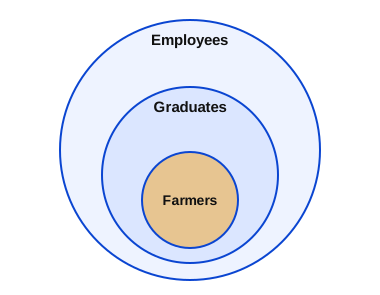
- All farmers ⊂ graduates ⊂ employees.
- (I) Some employees are graduates – conversion of “All graduates are employees” ✓
- (II) All farmers are employees ✓
Short trick: In an “All–All” chain, the outermost circle contains everything inside → both follow.
Answer: (B) Both conclusions (I) and (II) follow
अवधारणा: सभी A, B हैं + सभी B, C हैं ⇒ सभी A, C हैं; “सभी B, C हैं” से “कुछ C, B हैं” भी।
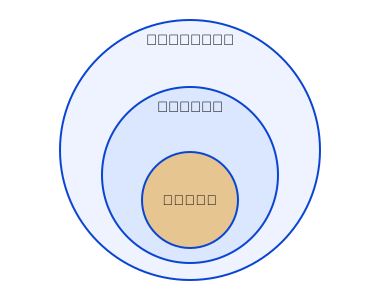
- किसान ⊂ स्नातक ⊂ कर्मचारी।
- (I) कुछ कर्मचारी स्नातक हैं ✓
- (II) सभी किसान कर्मचारी हैं ✓
शॉर्ट ट्रिक: “सभी–सभी” शृंखला में सबसे बाहरी वृत्त में सब कुछ आता है → दोनों अनुसरण करते हैं।
उत्तर: (B) निष्कर्ष (I) और (II) दोनों अनुसरण करते हैं
RRB ALP CBT 1General Intelligence and ReasoningSyllogism – “All” chainRRB ALP CBT 1 2025 · 18 Feb Shift 2
Q188.In a certain code language,
'A + B' means 'A is the wife of B',
'A - B' means 'A is the daughter of B',
'A * B' means 'A is the father of B' and
'A / B' means 'A is the brother of B'.
Based on the above, how is W related to E if 'W - Q * F * E'?
एक निश्चित कूट भाषा में,
'A + B' का अर्थ है 'A, B की पत्नी है',
'A - B' का अर्थ है 'A, B की पुत्री है',
'A * B' का अर्थ है 'A, B का पिता है' और
'A / B' का अर्थ है 'A, B का भाई है'।
उपर्युक्त के आधार पर, यदि 'W - Q * F * E' है, तो W का E से क्या संबंध है?
- AFather's brotherपिता का भाई
- BMotherमाता
- CDaughterपुत्री
- DFather's sisterपिता की बहन
Show answer
Concept: Decode symbol by symbol, left to right.
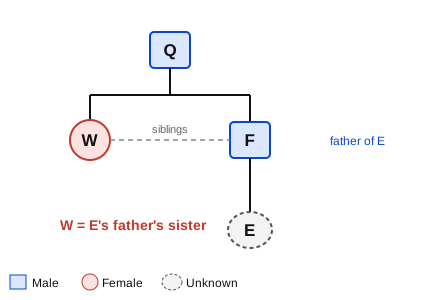
- W − Q: W is the daughter of Q (W is female).
- Q * F: Q is the father of F → W and F are siblings.
- F * E: F is the father of E.
- So W is the sister of E’s father.
Short trick: W is a female of the generation just above E (father’s side) → father’s sister; “Mother” is ruled out since W is F’s sibling.
Answer: (D) Father's sister
अवधारणा: प्रतीकों को बाएँ से दाएँ एक-एक करके खोलें।
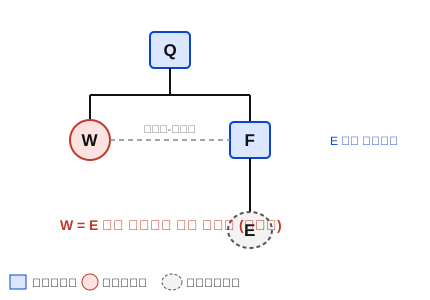
- W − Q: W, Q की पुत्री है (W महिला)।
- Q * F: Q, F का पिता है → W और F भाई-बहन।
- F * E: F, E का पिता है।
- अतः W, E के पिता की बहन है।
शॉर्ट ट्रिक: W, E से एक पीढ़ी ऊपर, पिता की ओर की महिला → पिता की बहन (बुआ)।
उत्तर: (D) पिता की बहन
RRB ALP CBT 1General Intelligence and ReasoningCoded blood relationRRB ALP CBT 1 2025 · 18 Feb Shift 2
Q189.What will come in the place of ‘?’ in the following equation, if ‘+’ and ‘-‘ are interchanged and ‘×’ and ‘÷’ are interchanged?
18 - 36 ÷ 10 × 20 + 34 = ?
यदि '+' और '-' को आपस में बदल दिया जाए तथा '×' और '÷' को आपस में बदल दिया जाए, तो निम्नलिखित समीकरण में '?' के स्थान पर क्या आएगा?
18 - 36 ÷ 10 × 20 + 34 = ?
- A3
- B2
- C4
- D0
Show answer
Concept: Swap the signs first, then apply BODMAS.
- After interchange: 18 + 36 × 10 ÷ 20 − 34.
- 36 × 10 ÷ 20 = 18.
- 18 + 18 − 34 = 2.
Short trick: Rewrite the whole expression once with new signs before calculating – avoids sign errors.
Answer: (B) 2
अवधारणा: पहले चिह्न बदलें, फिर BODMAS लगाएँ।
- बदलने के बाद: 18 + 36 × 10 ÷ 20 − 34।
- 36 × 10 ÷ 20 = 18।
- 18 + 18 − 34 = 2।
शॉर्ट ट्रिक: गणना से पहले पूरा व्यंजक नए चिह्नों के साथ एक बार लिख लें।
उत्तर: (B) 2
RRB ALP CBT 1General Intelligence and ReasoningSymbol interchangeRRB ALP CBT 1 2025 · 18 Feb Shift 2
Q190.Seven people, J, K, L, M, N, O and P, are sitting in a row, facing north. Only three people sit to the right of J. Only two people sit to the left of P. K sits third to the right to P. M sits to the immediate left of P. Only three people sit between L and O. O does not sit to the immediate left of M. Who sits to the immediate left of P?
सात व्यक्ति, J, K, L, M, N, O और P, उत्तर की ओर मुख करके एक पंक्ति में बैठे हैं। J के दाईं ओर केवल तीन व्यक्ति बैठे हैं। P के बाईं ओर केवल दो व्यक्ति बैठे हैं। K, P के दाईं ओर तीसरे स्थान पर बैठा है। M, P के ठीक बाईं ओर बैठा है। L और O के बीच केवल तीन व्यक्ति बैठे हैं। O, M के ठीक बाईं ओर नहीं बैठा है। P के ठीक बाईं ओर कौन बैठा है?
- AK
- BM
- CO
- DJ
Show answer
Concept: Facing north: left = left end, right = right end. Fix absolute positions first.
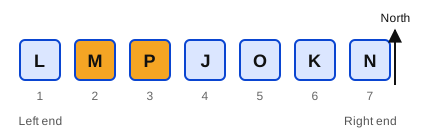
- 3 to the right of J → J = 4. 2 to the left of P → P = 3.
- K third to the right of P → K = 6. M immediately left of P → M = 2.
- Remaining 1, 5, 7: L–O with three between → (1, 5). O ≠ 1 (immediate left of M) → O = 5, L = 1, N = 7.
Short trick: The question is answered by one clue: “M sits to the immediate left of P”.
Answer: (B) M
अवधारणा: उत्तर की ओर मुख: बायाँ = बायाँ छोर। पहले निश्चित स्थान तय करें।
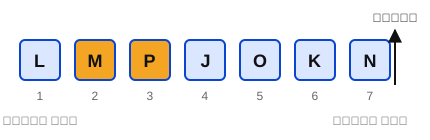
- J के दाएँ 3 → J = 4। P के बाएँ 2 → P = 3।
- K, P के दाएँ तीसरा → K = 6। M, P के ठीक बाएँ → M = 2।
- शेष 1, 5, 7: L–O के बीच तीन → (1, 5)। O ≠ 1 → O = 5, L = 1, N = 7।
शॉर्ट ट्रिक: उत्तर सीधे एक संकेत से: “M, P के ठीक बाईं ओर बैठा है”।
उत्तर: (B) M
RRB ALP CBT 1General Intelligence and ReasoningLinear seating – facing northRRB ALP CBT 1 2025 · 18 Feb Shift 2
Q191.In a certain code language,
'A # B' means ‘A is the daughter of B’,
'A @ B' means ‘A is the brother of B’,
'A + B' means ‘A is the wife of B’ and
'A - B' means ‘A is the father of B’.
Based on the above, how is D related to R if ‘D # M + S @ P - R’?
एक निश्चित कूट भाषा में,
'A # B' का अर्थ है 'A, B की पुत्री है',
'A @ B' का अर्थ है 'A, B का भाई है',
'A + B' का अर्थ है 'A, B की पत्नी है' और
'A - B' का अर्थ है 'A, B का पिता है'।
उपर्युक्त के आधार पर, यदि 'D # M + S @ P - R' है, तो D का R से क्या संबंध है?
- ABrother's daughterभाई की पुत्री
- BFather's brother's daughterपिता के भाई की पुत्री
- CFather's daughterपिता की पुत्री
- DFather's brother's wifeपिता के भाई की पत्नी
Show answer
Concept: Decode each symbol from left to right.
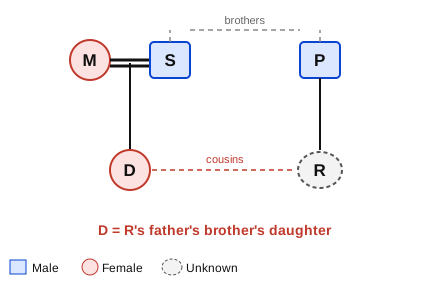
- D # M: D is the daughter of M.
- M + S: M is the wife of S → D is S’s daughter.
- S @ P: S is the brother of P.
- P − R: P is the father of R.
- D = daughter of R’s father’s brother (cousin).
Short trick: Go from R upward: R → father P → P’s brother S → S’s daughter D.
Answer: (B) Father's brother's daughter
अवधारणा: प्रतीकों को बाएँ से दाएँ खोलें।
- D # M: D, M की पुत्री है।
- M + S: M, S की पत्नी है → D, S की पुत्री।
- S @ P: S, P का भाई है।
- P − R: P, R का पिता है।
- D = R के पिता के भाई की पुत्री।
शॉर्ट ट्रिक: R से ऊपर चलें: R → पिता P → P का भाई S → S की पुत्री D।
उत्तर: (B) पिता के भाई की पुत्री
RRB ALP CBT 1General Intelligence and ReasoningCoded blood relationRRB ALP CBT 1 2025 · 18 Feb Shift 2
Q192.What should come in place of the question mark (?) in the given series based on the English alphabetical order?
TKB ULG VML WNQ ?
दिए गए शृंखला में अंग्रेज़ी वर्णमाला क्रम के आधार पर प्रश्न चिह्न (?) के स्थान पर क्या आना चाहिए?
TKB ULG VML WNQ ?
- AYQW
- BXQW
- CYOX
- DXOV
Show answer
Concept: Each position follows its own step.
- 1st: T U V W → X (+1).
- 2nd: K L M N → O (+1).
- 3rd: B G L Q → V (+5).
- Answer XOV.
Short trick: First two letters must be X, O → only XOV.
Answer: (D) XOV
अवधारणा: हर स्थान का अपना अंतर है।
- पहला: T U V W → X (+1)।
- दूसरा: K L M N → O (+1)।
- तीसरा: B G L Q → V (+5)।
- उत्तर XOV।
शॉर्ट ट्रिक: पहले दो अक्षर X, O होने चाहिए → केवल XOV।
उत्तर: (D) XOV
RRB ALP CBT 1General Intelligence and ReasoningLetter seriesRRB ALP CBT 1 2025 · 18 Feb Shift 2
Q193.In this question, a question is followed by two statements numbered (I) and (II). You have to decide whether the data provided in the statements are sufficient to answer the question. Read both the statements and decide the appropriate answer.
Among the five poles—I, N, C, H, and L—each having a different height, which pole is the shortest?
(I) C is taller than only two poles. I is shorter than C and N is shorter than I.
(II) H is taller than L.
एक प्रश्न के बाद दो कथन (I) और (II) दिए गए हैं। आपको यह तय करना है कि कथनों में दिए गए आँकड़े प्रश्न का उत्तर देने के लिए पर्याप्त हैं या नहीं। दोनों कथनों को पढ़ें और सबसे उपयुक्त उत्तर चुनें।
पाँच खंभों—I, N, C, H और L—में से प्रत्येक की ऊँचाई अलग-अलग है, कौन-सा खंभा सबसे छोटा है?
(I) C केवल दो खंभों से ऊँचा है। I, C से छोटा है और N, I से छोटा है।
(II) H, L से ऊँचा है।
- AData in statement I alone is sufficient to answer the question while data in statement II is notकेवल कथन I में दिए गए आँकड़े प्रश्न का उत्तर देने के लिए पर्याप्त हैं, जबकि कथन II के आँकड़े पर्याप्त नहीं हैं
- BBoth statements I and II together are NOT sufficient to answer the questionकथन I और II दोनों मिलकर भी प्रश्न का उत्तर देने के लिए पर्याप्त नहीं हैं
- CBoth statements I and II together (and not statement I alone or statement II alone) are sufficient to answer the questionकथन I और II दोनों मिलकर (न कि केवल कथन I या केवल कथन II) प्रश्न का उत्तर देने के लिए पर्याप्त हैं
- DData in statement II alone is sufficient to answer the question while data in statement I is notकेवल कथन II में दिए गए आँकड़े प्रश्न का उत्तर देने के लिए पर्याप्त हैं, जबकि कथन I के आँकड़े पर्याप्त नहीं हैं
Show answer
Concept: Check each statement alone.
- (I): C is taller than only two poles; I < C and N < I ⇒ these two are N and I, so N < I < C ⇒ N is the shortest ✓
- (II): H > L says nothing about the others ✗
Short trick: “Taller than only two” + two poles named below it → those are the bottom two; the lower of them is the shortest.
Answer: (A) Data in statement I alone is sufficient to answer the question while data in statement II is not
अवधारणा: हर कथन को अलग से जाँचें।
- (I): C केवल दो से ऊँचा; I < C और N < I ⇒ वे दो N और I हैं, N < I < C ⇒ N सबसे छोटा ✓
- (II): H > L बाकी के बारे में कुछ नहीं बताता ✗
शॉर्ट ट्रिक: “केवल दो से ऊँचा” + उसके नीचे दो नाम → वही सबसे नीचे के दो; उनमें निचला सबसे छोटा।
उत्तर: (A) केवल कथन I पर्याप्त है, कथन II नहीं
RRB ALP CBT 1General Intelligence and ReasoningData sufficiency – rankingRRB ALP CBT 1 2025 · 18 Feb Shift 2
Q194.Refer to the following letter series and answer the question that follows. Counting to be done from left to right only.
(Left) B V J W N U Y N G N R O N R K C G N J W A (Right)
How many such vowels are there, each of which is immediately preceded by a consonant and also immediately followed by a vowel?
निम्नलिखित अक्षर शृंखला को देखें और उसके बाद दिए गए प्रश्न का उत्तर दें। गिनती केवल बाएँ से दाएँ की जानी है।
(बाएँ) B V J W N U Y N G N R O N R K C G N J W A (दाएँ)
ऐसे कितने स्वर हैं, जिनमें से प्रत्येक के ठीक पहले एक व्यंजन है और ठीक बाद एक स्वर भी है?
- ANoneकोई नहीं
- BThreeतीन
- CTwoदो
- DOneएक
Show answer
Concept: Pattern needed: Consonant – Vowel – Vowel.
- Vowels in the series: U (N U Y), O (R O N), A (W A at the end).
- U is followed by Y (consonant), O by N, and A is the last letter.
- No vowel is followed by a vowel → count = 0.
Short trick: Only 3 vowels exist and none sits next to another vowel → None.
Answer: (A) None
अवधारणा: आवश्यक पैटर्न: व्यंजन – स्वर – स्वर।
- शृंखला में स्वर: U (N U Y), O (R O N), A (अंत में W A)।
- U के बाद Y (व्यंजन), O के बाद N, और A अंतिम अक्षर है।
- किसी स्वर के बाद स्वर नहीं → संख्या = 0।
शॉर्ट ट्रिक: केवल 3 स्वर हैं और कोई भी दूसरे स्वर के पास नहीं → कोई नहीं।
उत्तर: (A) कोई नहीं
RRB ALP CBT 1General Intelligence and ReasoningLetter series – vowel/consonant conditionsRRB ALP CBT 1 2025 · 18 Feb Shift 2
Q195.In the following number-pairs, the second number is obtained by applying certain mathematical operations to the first number. Select the set in which the numbers are related in the same way as are the numbers of the following sets.
(NOTE : Operations should be performed on the whole numbers, without breaking down the numbers into its constituent digits. E.g. 13 – Operations on 13 such as adding / subtracting /multiplying etc. to 13 can be performed. Breaking down 13 into 1 and 3 and then performing mathematical operations on 1 and 3 is not allowed.)
14 - 26
32 - 44
निम्नलिखित संख्या-युग्मों में, पहली संख्या पर कुछ गणितीय संक्रियाएँ करके दूसरी संख्या प्राप्त की जाती है। वह समुच्चय चुनिए जिसमें संख्याएँ उसी प्रकार संबंधित हैं जिस प्रकार निम्नलिखित समुच्चयों की संख्याएँ संबंधित हैं।
(नोट: संक्रियाएँ पूर्ण संख्याओं पर की जानी चाहिए, संख्याओं को उनके घटक अंकों में तोड़े बिना। उदाहरण के लिए 13 – 13 पर संक्रियाएँ जैसे 13 में जोड़ना/घटाना/गुणा करना आदि किया जा सकता है। 13 को 1 और 3 में तोड़कर फिर 1 और 3 पर गणितीय संक्रियाएँ करने की अनुमति नहीं है।)
14 - 26
32 - 44
- A29 - 41
- B40 - 54
- C56 - 69
- D70 - 83
Show answer
Concept: Find the common operation in both pairs.
- 14 + 12 = 26; 32 + 12 = 44 → rule: add 12.
- 29 + 12 = 41 ✓; 40 → 52 (not 54); 56 → 68 (not 69); 70 → 82 (not 83).
Short trick: Just subtract: only 41 − 29 = 12.
Answer: (A) 29 - 41
अवधारणा: दोनों युग्मों में समान संक्रिया खोजें।
- 14 + 12 = 26; 32 + 12 = 44 → नियम: 12 जोड़ें।
- 29 + 12 = 41 ✓; 40 → 52 (54 नहीं); 56 → 68 (69 नहीं); 70 → 82 (83 नहीं)।
शॉर्ट ट्रिक: केवल घटाएँ: सिर्फ़ 41 − 29 = 12।
उत्तर: (A) 29 - 41
RRB ALP CBT 1General Intelligence and ReasoningNumber pair relationRRB ALP CBT 1 2025 · 18 Feb Shift 2
Q196.Read the given statements and conclusions carefully. Assuming that the information given in the statements is true, even if it appears to be at variance with commonly known facts, decide which of the given conclusions logically follow(s) from the statements.
Statements:
Some Indians are Americans.
Some Americans are Russians.
Conclusions:
(I) No Russian is an American.
(II) All Indians are Russians.
दिए गए कथनों और निष्कर्षों को ध्यानपूर्वक पढ़ें। यह मानते हुए कि कथनों में दी गई जानकारी सत्य है, भले ही वह सामान्यतः ज्ञात तथ्यों से भिन्न प्रतीत होती हो, निर्णय लें कि दिए गए निष्कर्षों में से कौन-सा/से निष्कर्ष कथनों का तार्किक रूप से अनुसरण करता है/करते हैं।
कथन:
कुछ भारतीय अमेरिकी हैं।
कुछ अमेरिकी रूसी हैं।
निष्कर्ष:
(I) कोई भी रूसी अमेरिकी नहीं है।
(II) सभी भारतीय रूसी हैं।
- AOnly conclusion (I) follows.केवल निष्कर्ष (I) अनुसरण करता है।
- BOnly conclusion (II) follows.केवल निष्कर्ष (II) अनुसरण करता है।
- CNeither conclusion (I) nor (II) follows.न तो निष्कर्ष (I) और न ही (II) अनुसरण करता है।
- DBoth conclusions (I) and (II) follow.निष्कर्ष (I) और (II) दोनों अनुसरण करते हैं।
Show answer
Concept: Two “Some” statements give no definite link between the end terms.
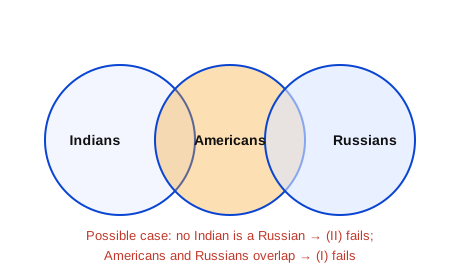
- (I) “No Russian is American” directly contradicts “Some Americans are Russians” ✗
- (II) “All Indians are Russians” – Indians and Russians are not connected definitely ✗
- A possible diagram where both fail is shown above.
Short trick: Some + Some ⇒ no conclusion between the end terms; and a conclusion opposite to a statement can never follow.
Answer: (C) Neither conclusion (I) nor (II) follows.
अवधारणा: दो “कुछ” कथनों से छोर के पदों में कोई निश्चित संबंध नहीं बनता।
- (I) “कोई रूसी अमेरिकी नहीं” सीधे “कुछ अमेरिकी रूसी हैं” का विरोधी है ✗
- (II) “सभी भारतीय रूसी हैं” – भारतीय और रूसी निश्चित रूप से जुड़े नहीं ✗
- ऊपर एक संभावित आरेख दिखाया गया है जिसमें दोनों गलत हैं।
शॉर्ट ट्रिक: कुछ + कुछ ⇒ छोर के पदों में कोई निष्कर्ष नहीं; और कथन के विपरीत निष्कर्ष कभी अनुसरण नहीं करता।
उत्तर: (C) न तो निष्कर्ष (I) और न ही (II) अनुसरण करता है।
RRB ALP CBT 1General Intelligence and ReasoningSyllogism – “Some” statementsRRB ALP CBT 1 2025 · 18 Feb Shift 2
Q197.Seven people, A, B, C, D, E, F and G, are sitting around a circular table facing the centre. E sits second to the left of A. G sits third to the right of E and second to the left of C. F sits third to left of B. How many people sit between C and A when counted from the left of C?
सात व्यक्ति, A, B, C, D, E, F और G, केंद्र की ओर मुख करके एक वृत्ताकार मेज़ के चारों ओर बैठे हैं। E, A के बाईं ओर दूसरे स्थान पर बैठा है। G, E के दाईं ओर तीसरे स्थान पर और C के बाईं ओर दूसरे स्थान पर बैठा है। F, B के बाईं ओर तीसरे स्थान पर बैठा है। C के बाईं ओर से गिनने पर C और A के बीच कितने व्यक्ति बैठे हैं?
- ATwoदो
- BNoneकोई नहीं
- COneएक
- DThreeतीन
Show answer
Concept: Facing the centre: left = clockwise, right = anticlockwise. Number seats 0–6 clockwise.
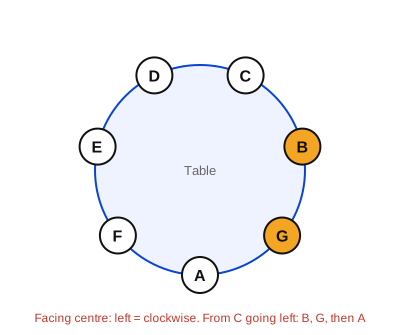
- A = 0; E second to the left of A → E = 2.
- G third to the right of E → G = 6; G second to the left of C → C = 4.
- F third to the left of B: only B = 5, F = 1 works; D = 3.
- From C going left (clockwise): B, G, then A → two persons between.
Short trick: G is 2nd to the left of C and A is just next to G → between C and A on the left side: B and G = 2.
Answer: (A) Two
अवधारणा: केंद्र की ओर मुख: बायाँ = दक्षिणावर्त, दायाँ = वामावर्त। स्थानों को 0–6 दक्षिणावर्त क्रमांकित करें।
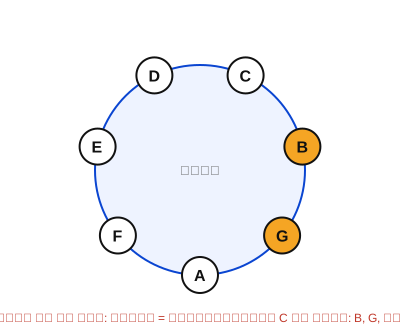
- A = 0; E, A के बाएँ दूसरा → E = 2।
- G, E के दाएँ तीसरा → G = 6; G, C के बाएँ दूसरा → C = 4।
- F, B के बाएँ तीसरा: केवल B = 5, F = 1 संभव; D = 3।
- C से बाएँ (दक्षिणावर्त): B, G, फिर A → बीच में दो व्यक्ति।
शॉर्ट ट्रिक: G, C के बाएँ दूसरा और A, G के ठीक बाद → C और A के बीच B और G = 2।
उत्तर: (A) दो
RRB ALP CBT 1General Intelligence and ReasoningCircular seating – facing centreRRB ALP CBT 1 2025 · 18 Feb Shift 2
Q198.41 is related to 165 following a certain logic. Following the same logic, 18 is related to 73. To which of the given options is 122 related, following the same logic?
(NOTE: Operations should be performed on the whole numbers, without breaking down the numbers into their constituent digits. E.g. 13 – Operations on 13 such as adding/subtracting/multiplying to 13 can be performed. Breaking down 13 into 1 and 3 and then performing mathematical operations on 1 and 3 is not allowed.)
एक निश्चित तर्क के अनुसार 41, 165 से संबंधित है। उसी तर्क के अनुसार 18, 73 से संबंधित है। उसी तर्क के अनुसार 122 दिए गए विकल्पों में से किससे संबंधित है?
(नोट: संक्रियाएँ पूर्ण संख्याओं पर की जानी चाहिए, संख्याओं को उनके घटक अंकों में तोड़े बिना। उदाहरण के लिए 13 – 13 पर संक्रियाएँ जैसे 13 में जोड़ना/घटाना/गुणा करना आदि किया जा सकता है। 13 को 1 और 3 में तोड़कर फिर 1 और 3 पर गणितीय संक्रियाएँ करने की अनुमति नहीं है।)
- A489
- B492
- C495
- D487
Show answer
Concept: Find one rule for both given pairs.
- ✓; ✓
- .
Short trick: 4 × 122 = 488 → answer must be 488 + 1 = 489 (only option ending in 9 just above 488).
Answer: (A) 489
अवधारणा: दोनों युग्मों पर एक नियम।
- ✓; ✓
- ।
शॉर्ट ट्रिक: 4 × 122 = 488 → 488 + 1 = 489।
उत्तर: (A) 489
RRB ALP CBT 1General Intelligence and ReasoningNumber analogyRRB ALP CBT 1 2025 · 18 Feb Shift 2
Q199.In a certain code language, ‘CROW’ is coded as ‘2916’ and ‘WORK’ is coded as ‘6152’. What is the code for ‘K’ in the given code language?
एक निश्चित कूट भाषा में, 'CROW' को '2916' के रूप में और 'WORK' को '6152' के रूप में कूटबद्ध किया जाता है। दी गई कूट भाषा में 'K' के लिए कूट क्या है?
- A6
- B1
- C5
- D2
Show answer
Concept: Letters common to both words take the digits common to both codes.
- CROW = {2, 9, 1, 6}; WORK = {6, 1, 5, 2}.
- Common letters R, O, W ↔ common digits 2, 1, 6.
- Left-over: C = 9 and K = 5.
Short trick: K appears only in WORK; the only digit of 6152 not in 2916 is 5.
Answer: (C) 5
अवधारणा: दोनों शब्दों के उभयनिष्ठ अक्षरों के कूट भी उभयनिष्ठ होते हैं।
- CROW = {2, 9, 1, 6}; WORK = {6, 1, 5, 2}।
- उभयनिष्ठ R, O, W ↔ 2, 1, 6।
- शेष: C = 9 और K = 5।
शॉर्ट ट्रिक: K केवल WORK में है; 6152 का वह अंक जो 2916 में नहीं → 5।
उत्तर: (C) 5
RRB ALP CBT 1General Intelligence and ReasoningCoding – common lettersRRB ALP CBT 1 2025 · 18 Feb Shift 2
Q200.Based on the English alphabetical order, three of the following four letter-cluster pairs are alike in a certain way and thus form a group. Which letter-cluster pair DOES NOT belong to that group? (Note: The odd one out is not based on the number of consonants/vowels or their position in the letter-cluster.)
अंग्रेज़ी वर्णमाला क्रम के आधार पर, निम्नलिखित चार अक्षर-समूह युग्मों में से तीन किसी प्रकार से एकसमान हैं और इस प्रकार एक समूह बनाते हैं। कौन-सा अक्षर-समूह युग्म उस समूह से संबंधित नहीं है? (नोट: असंगत का निर्धारण व्यंजनों/स्वरों की संख्या या अक्षर-समूह में उनके स्थान पर आधारित नहीं है।)
- AHL−JN
- BNR−OV
- CMQ−OS
- DTX−VZ
Show answer
Concept: Check the gaps inside and between the clusters.
- HL−JN: H+4=L, H+2=J, J+4=N.
- MQ−OS and TX−VZ: same +4, +2, +4.
- NR−OV: N+4=R but N+1=O, O+7=V ✗
Short trick: Compare first letters only: H→J, M→O, T→V are +2, but N→O is +1.
Answer: (B) NR−OV
अवधारणा: क्लस्टर के भीतर और बीच के अंतर जाँचें।
- HL−JN: H+4=L, H+2=J, J+4=N।
- MQ−OS और TX−VZ: वही +4, +2, +4।
- NR−OV: N+4=R पर N+1=O, O+7=V ✗
शॉर्ट ट्रिक: केवल पहले अक्षर देखें: H→J, M→O, T→V में +2, पर N→O में +1।
उत्तर: (B) NR−OV
RRB ALP CBT 1General Intelligence and ReasoningOdd one out – letter pairsRRB ALP CBT 1 2025 · 18 Feb Shift 2

