Q201.Select the pair which follows the same pattern as that followed by the two pairs given below. Both pairs follow the same pattern.
GPI : IMK
NQJ : PNL
वह युग्म चुनिए जो उसी पैटर्न का अनुसरण करता है जिसका अनुसरण नीचे दिए गए दो युग्म करते हैं। दोनों युग्म एक ही पैटर्न का अनुसरण करते हैं।
GPI : IMK
NQJ : PNL
- ACZS : EWU
- BSRL : UOM
- CKKE : MHF
- DAVU : CRW
Show answer
Concept: Rule: 1st +2, 2nd −3, 3rd +2.
- GPI → IMK: G+2=I, P−3=M, I+2=K ✓; NQJ → PNL ✓
- CZS → EWU: C+2=E, Z−3=W, S+2=U ✓
- Others fail, e.g. SRL → UOM (L+1), KKE → MHF (E+1).
Short trick: Check only the 3rd letter (+2): S→U ✓, L→M ✗, E→F ✗, U→W ✓; then 2nd letter (−3): V→R ✗ → CZS : EWU.
Answer: (A) CZS : EWU
अवधारणा: नियम: पहला +2, दूसरा −3, तीसरा +2।
- GPI → IMK: G+2=I, P−3=M, I+2=K ✓; NQJ → PNL ✓
- CZS → EWU: C+2=E, Z−3=W, S+2=U ✓
- अन्य असफल, जैसे SRL → UOM (L+1), KKE → MHF (E+1)।
शॉर्ट ट्रिक: पहले तीसरा अक्षर (+2) जाँचें, फिर दूसरा (−3) → CZS : EWU।
उत्तर: (A) CZS : EWU
RRB ALP CBT 1General Intelligence and ReasoningLetter pair analogyRRB ALP CBT 1 2025 · 18 Feb Shift 2
Q202.Among five people named V, W, X, Y and Z, each have a certain age. X is thrice the age of V. The age of V is 12. Y is half the age of Z. W is twice the age of Y. If Z's age is equal to the age of X, what is the age of W?
V, W, X, Y और Z नाम के पाँच व्यक्तियों में से प्रत्येक की एक निश्चित आयु है। X की आयु V की आयु की तीन गुनी है। V की आयु 12 है। Y की आयु Z की आयु की आधी है। W की आयु Y की आयु की दोगुनी है। यदि Z की आयु X की आयु के बराबर है, तो W की आयु क्या है?
- A35
- B36
- C42
- D54
Show answer
Concept: Work from the given value step by step.
- V = 12 → X = 3 × 12 = 36.
- Z = X = 36 → Y = 36 ÷ 2 = 18.
- W = 2 × Y = 36.
Short trick: W = 2Y and Y = Z/2 ⇒ W = Z = X = 36.
Answer: (B) 36
अवधारणा: दिए गए मान से क्रमशः आगे बढ़ें।
- V = 12 → X = 36।
- Z = X = 36 → Y = 18।
- W = 2 × Y = 36।
शॉर्ट ट्रिक: W = 2Y और Y = Z/2 ⇒ W = Z = X = 36।
उत्तर: (B) 36
RRB ALP CBT 1General Intelligence and ReasoningAge relationsRRB ALP CBT 1 2025 · 18 Feb Shift 2
Q203.If ‘P’ stands for ‘×’, ‘Q’ stands for ‘÷’, ‘R’ stands for ‘−’ and ‘S’ stands for ‘+’, then what will come in place of the question mark (?) in the following equation?
(60 Q 4) P 6 R 10 P 3 = ?
यदि 'P' का अर्थ '×', 'Q' का अर्थ '÷', 'R' का अर्थ '−' और 'S' का अर्थ '+' है, तो निम्नलिखित समीकरण में प्रश्न चिह्न (?) के स्थान पर क्या आएगा?
(60 Q 4) P 6 R 10 P 3 = ?
- A60
- B40
- C80
- D45
Show answer
Concept: Replace letters by operators, then BODMAS.
- (60 ÷ 4) × 6 − 10 × 3
- = 15 × 6 − 30 = 90 − 30 = 60.
Short trick: Bracket first: 15 × 6 = 90; then 90 − 30.
Answer: (A) 60
अवधारणा: अक्षरों को चिह्नों से बदलें, फिर BODMAS।
- (60 ÷ 4) × 6 − 10 × 3
- = 90 − 30 = 60।
शॉर्ट ट्रिक: पहले कोष्ठक: 15 × 6 = 90; फिर 90 − 30।
उत्तर: (A) 60
RRB ALP CBT 1General Intelligence and ReasoningSymbol substitutionRRB ALP CBT 1 2025 · 18 Feb Shift 2
Q204.If ‘A’ stands for ‘÷’, ‘B’ stands for ‘x’, ‘C’ stands for ‘+’ and ‘D’ stands for ‘-’, what will come in place of the question mark (?) in the following equation?
75 C 112 A 7 B 4 D 40 = ?
यदि 'A' का अर्थ '÷', 'B' का अर्थ '×', 'C' का अर्थ '+' और 'D' का अर्थ '-' है, तो निम्नलिखित समीकरण में प्रश्न चिह्न (?) के स्थान पर क्या आएगा?
75 C 112 A 7 B 4 D 40 = ?
- A99
- B94
- C97
- D98
Show answer
Concept: Replace letters by operators, then BODMAS.
- 75 + 112 ÷ 7 × 4 − 40
- 112 ÷ 7 = 16; 16 × 4 = 64.
- 75 + 64 − 40 = 99.
Short trick: Do ÷ and × left to right before + and −.
Answer: (A) 99
अवधारणा: अक्षरों को चिह्नों से बदलें, फिर BODMAS।
- 75 + 112 ÷ 7 × 4 − 40
- 112 ÷ 7 = 16; 16 × 4 = 64।
- 75 + 64 − 40 = 99।
शॉर्ट ट्रिक: + और − से पहले ÷ और × बाएँ से दाएँ।
उत्तर: (A) 99
RRB ALP CBT 1General Intelligence and ReasoningSymbol substitutionRRB ALP CBT 1 2025 · 18 Feb Shift 2
Q205.Based on the English alphabetical order, three of the following four letter-cluster pairs are alike in a certain way and thus form a group. Which letter-cluster pair DOES NOT belong to that group? (Note: The odd one out is not based on the number of consonants/vowels or their position in the letter-cluster.)
अंग्रेज़ी वर्णमाला क्रम के आधार पर, निम्नलिखित चार अक्षर-समूह युग्मों में से तीन किसी प्रकार से एकसमान हैं और इस प्रकार एक समूह बनाते हैं। कौन-सा अक्षर-समूह युग्म उस समूह से संबंधित नहीं है? (नोट: असंगत का निर्धारण व्यंजनों/स्वरों की संख्या या अक्षर-समूह में उनके स्थान पर आधारित नहीं है।)
- AIJ-KL
- BAB-CA
- CEF-GH
- DMN-OP
Show answer
Concept: Valid pairs are four consecutive letters split as two pairs.
- IJ-KL, EF-GH, MN-OP: I J K L, E F G H, M N O P ✓
- AB-CA: after C should come D, not A ✗
Short trick: Read each pair as one 4-letter run – AB-CA breaks the run.
Answer: (B) AB-CA
अवधारणा: सही युग्म चार क्रमागत अक्षर हैं जो दो जोड़ों में बँटे हैं।
- IJ-KL, EF-GH, MN-OP: क्रमागत ✓
- AB-CA: C के बाद D आना चाहिए, A नहीं ✗
शॉर्ट ट्रिक: हर युग्म को 4 अक्षरों की लगातार पंक्ति की तरह पढ़ें – AB-CA टूटता है।
उत्तर: (B) AB-CA
RRB ALP CBT 1General Intelligence and ReasoningOdd one out – consecutive lettersRRB ALP CBT 1 2025 · 18 Feb Shift 2
Q206.Each of T, R, O, U, B, L and E has an exam on a different day of a week starting from Monday and ending on Sunday of the same week. Only three people have exam between L and T. Only three people have exam between U and O. B has exam on some day before E and on some day after R. Only O has exam after T. How many people have exam after B?
T, R, O, U, B, L और E में से प्रत्येक की एक ही सप्ताह के सोमवार से शुरू होकर रविवार को समाप्त होने वाले अलग-अलग दिन परीक्षा है। L और T के बीच केवल तीन व्यक्तियों की परीक्षा है। U और O के बीच केवल तीन व्यक्तियों की परीक्षा है। B की परीक्षा E से पहले किसी दिन और R के बाद किसी दिन है। T के बाद केवल O की परीक्षा है। B के बाद कितने व्यक्तियों की परीक्षा है?
- ATwoदो
- BThreeतीन
- CFourचार
- DOneएक
Show answer
Concept: Start with the clue that fixes positions absolutely.
- Only O after T → T = Saturday, O = Sunday.
- Three between L and T → L = Tuesday; three between U and O → U = Wednesday.
- R < B < E on the free days Mon, Thu, Fri → R = Mon, B = Thu, E = Fri.
| Mon | Tue | Wed | Thu | Fri | Sat | Sun |
|---|
| R | L | U | B | E | T | O |
- After B: E, T, O → 3.
Short trick: “Only O after T” fixes the last two days at once; the rest follows by counting gaps.
Answer: (B) Three
अवधारणा: उस संकेत से शुरू करें जो स्थान को पूर्ण रूप से तय करता है।
- T के बाद केवल O → T = शनिवार, O = रविवार।
- L और T के बीच तीन → L = मंगलवार; U और O के बीच तीन → U = बुधवार।
- R < B < E खाली दिनों सोम, गुरु, शुक्र पर → R = सोम, B = गुरु, E = शुक्र।
| सोम | मंगल | बुध | गुरु | शुक्र | शनि | रवि |
|---|
| R | L | U | B | E | T | O |
- B के बाद: E, T, O → 3।
शॉर्ट ट्रिक: “T के बाद केवल O” से अंतिम दो दिन तुरंत तय; शेष अंतर गिनकर।
उत्तर: (B) तीन
RRB ALP CBT 1General Intelligence and ReasoningDay-based schedulingRRB ALP CBT 1 2025 · 18 Feb Shift 2
Q207.Based on the English alphabetical order, three of the following four letter-clusters are alike in a certain way and thus form a group. Which letter-cluster DOES NOT belong to that group?
(Note: The odd one out is not based on the number of consonants/vowels or their position in the letter-cluster.)
अंग्रेज़ी वर्णमाला क्रम के आधार पर, निम्नलिखित चार अक्षर-समूहों में से तीन किसी प्रकार से एकसमान हैं और इस प्रकार एक समूह बनाते हैं। कौन-सा अक्षर-समूह उस समूह से संबंधित नहीं है?
(नोट: असंगत का निर्धारण व्यंजनों/स्वरों की संख्या या अक्षर-समूह में उनके स्थान पर आधारित नहीं है।)
- AMRY
- BJOU
- CQVB
- DDIO
Show answer
Concept: Check the gaps between consecutive letters.
- JOU: J+5=O, O+6=U. QVB: Q+5=V, V+6=B (wrap). DIO: D+5=I, I+6=O.
- MRY: M+5=R, R+7=Y ✗
Short trick: All begin with +5; just test the second gap (+6) – MRY gives +7.
Answer: (A) MRY
अवधारणा: क्रमागत अक्षरों के बीच अंतर जाँचें।
- JOU: +5, +6। QVB: +5, +6 (चक्र)। DIO: +5, +6।
- MRY: M+5=R, R+7=Y ✗
शॉर्ट ट्रिक: सभी में पहला अंतर +5; केवल दूसरा (+6) जाँचें – MRY में +7।
उत्तर: (A) MRY
RRB ALP CBT 1General Intelligence and ReasoningOdd one out – letter gapsRRB ALP CBT 1 2025 · 18 Feb Shift 2
Q208.Seven boxes, M, N, O, P, Q, R and S, are kept one over the other but not necessarily in the same order. O is kept third from the top. Only two boxes are kept between O and Q. P is kept immediately above Q. M is kept immediately below R. N is not kept at the lowermost position. Which box is fourth from the bottom?
सात बक्से, M, N, O, P, Q, R और S, एक के ऊपर एक रखे गए हैं लेकिन ज़रूरी नहीं कि इसी क्रम में हों। O ऊपर से तीसरे स्थान पर रखा है। O और Q के बीच केवल दो बक्से रखे हैं। P, Q के ठीक ऊपर रखा है। M, R के ठीक नीचे रखा है। N सबसे नीचे के स्थान पर नहीं रखा है। नीचे से चौथा बक्सा कौन-सा है?
- AQ
- BP
- CN
- DM
Show answer
Concept: Number positions from the top (1 = top, 7 = bottom).
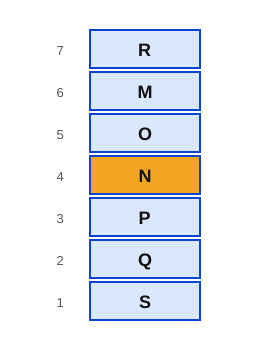
- O = 3; two between O and Q → Q = 6; P just above Q → P = 5.
- R just above M: free 1, 2, 4, 7 → R = 1, M = 2.
- N not at bottom → N = 4, S = 7.
- 4th from bottom = 4th from top (7 boxes) = N.
Short trick: With 7 items, 4th from bottom = 4th from top – just find who is at position 4.
Answer: (C) N
अवधारणा: स्थान ऊपर से क्रमांकित करें (1 = सबसे ऊपर, 7 = सबसे नीचे)।
- O = 3; O और Q के बीच दो → Q = 6; P, Q के ठीक ऊपर → P = 5।
- R, M के ठीक ऊपर: खाली 1, 2, 4, 7 → R = 1, M = 2।
- N सबसे नीचे नहीं → N = 4, S = 7।
- नीचे से चौथा = ऊपर से चौथा (7 बक्से) = N।
शॉर्ट ट्रिक: 7 वस्तुओं में नीचे से चौथा = ऊपर से चौथा – बस स्थान 4 देखें।
उत्तर: (C) N
RRB ALP CBT 1General Intelligence and ReasoningBox stackingRRB ALP CBT 1 2025 · 18 Feb Shift 2
Q209.What should come in place of the question mark (?) in the given series?
192 185 198 191 204 197 210 ?
दी गई शृंखला में प्रश्न चिह्न (?) के स्थान पर क्या आना चाहिए?
192 185 198 191 204 197 210 ?
- A205
- B201
- C206
- D203
Show answer
Concept: Differences alternate: −7, +13.
- 192 −7 185 +13 198 −7 191 +13 204 −7 197 +13 210 −7 → 203.
Short trick: Alternate terms: 185, 191, 197 → next 203 (+6 each).
Answer: (D) 203
अवधारणा: अंतर एकांतर: −7, +13।
- 192 −7 185 +13 198 −7 191 +13 204 −7 197 +13 210 −7 → 203।
शॉर्ट ट्रिक: एकांतर पद: 185, 191, 197 → अगला 203 (+6)।
उत्तर: (D) 203
RRB ALP CBT 1General Intelligence and ReasoningNumber series – alternatingRRB ALP CBT 1 2025 · 18 Feb Shift 2
Q210.Each vowel in the word PRINTED is changed to the letter immediately following it in the English alphabetical order and each consonant is changed to the letter immediately preceding it in the English alphabetical order. Which of the following letters will be third from the left in the new group of letters thus formed?
शब्द PRINTED में प्रत्येक स्वर को अंग्रेज़ी वर्णमाला क्रम में उसके ठीक बाद वाले अक्षर से और प्रत्येक व्यंजन को अंग्रेज़ी वर्णमाला क्रम में उसके ठीक पहले वाले अक्षर से बदल दिया जाता है। इस प्रकार बने अक्षरों के नए समूह में बाएँ से तीसरा अक्षर निम्नलिखित में से कौन-सा होगा?
- AJ
- BS
- CM
- DF
Show answer
Concept: Vowel → next letter; consonant → previous letter.
- P R I N T E D → O Q J M S F C.
- 3rd from the left = J.
Short trick: Only the 3rd letter matters: I is a vowel → I + 1 = J.
Answer: (A) J
अवधारणा: स्वर → अगला अक्षर; व्यंजन → पिछला अक्षर।
- P R I N T E D → O Q J M S F C।
- बाएँ से तीसरा = J।
शॉर्ट ट्रिक: केवल तीसरा अक्षर देखें: I स्वर है → I + 1 = J।
उत्तर: (A) J
RRB ALP CBT 1General Intelligence and ReasoningLetter coding – vowel/consonant shiftRRB ALP CBT 1 2025 · 18 Feb Shift 2
Q211.Refer to the following letter series and answer the question that follows. Counting to be done from left to right only.
(Left) Y D A U L K E I C B A O O A N M I Q F U E L (Right)
How many such consonants are there, each of which is immediately preceded by a consonant and also immediately followed by a vowel?
निम्नलिखित अक्षर शृंखला को देखें और उसके बाद दिए गए प्रश्न का उत्तर दें। गिनती केवल बाएँ से दाएँ की जानी है।
(बाएँ) Y D A U L K E I C B A O O A N M I Q F U E L (दाएँ)
ऐसे कितने व्यंजन हैं, जिनमें से प्रत्येक के ठीक पहले एक व्यंजन है और ठीक बाद एक स्वर भी है?
- A4
- B8
- C5
- D7
Show answer
Concept: Pattern needed: Consonant – Consonant – Vowel.
- Y D A ✓, L K E ✓, C B A ✓, N M I ✓, Q F U ✓
- Count = 5.
Short trick: Look at each vowel and check the two letters before it are both consonants.
Answer: (C) 5
अवधारणा: आवश्यक पैटर्न: व्यंजन – व्यंजन – स्वर।
- Y D A ✓, L K E ✓, C B A ✓, N M I ✓, Q F U ✓
- संख्या = 5।
शॉर्ट ट्रिक: हर स्वर से पहले के दो अक्षर देखें – दोनों व्यंजन हों तो गिनें।
उत्तर: (C) 5
RRB ALP CBT 1General Intelligence and ReasoningLetter series – consonant conditionsRRB ALP CBT 1 2025 · 18 Feb Shift 2
Q212.What should come in place of ? in the given series?
56 68 87 113 146 ?
दी गई शृंखला में ? के स्थान पर क्या आना चाहिए?
56 68 87 113 146 ?
- A188
- B185
- C187
- D186
Show answer
Concept: First differences increase by 7.
- Differences: 12, 19, 26, 33 → next 40.
- 146 + 40 = 186.
Short trick: Second difference constant (7) → next difference = 33 + 7 = 40.
Answer: (D) 186
अवधारणा: पहले अंतर 7 से बढ़ते हैं।
- अंतर: 12, 19, 26, 33 → अगला 40।
- 146 + 40 = 186।
शॉर्ट ट्रिक: द्वितीय अंतर स्थिर (7) → अगला अंतर = 40।
उत्तर: (D) 186
RRB ALP CBT 1General Intelligence and ReasoningNumber series – second differencesRRB ALP CBT 1 2025 · 18 Feb Shift 2
Q213.In a certain code language, ‘HALT’ is coded as ‘6928’ and ‘GHAT’ is coded as ‘4862’. What is the code for ‘G’ in the given code language?
एक निश्चित कूट भाषा में, 'HALT' को '6928' के रूप में और 'GHAT' को '4862' के रूप में कूटबद्ध किया जाता है। दी गई कूट भाषा में 'G' के लिए कूट क्या है?
- A6
- B8
- C4
- D2
Show answer
Concept: Common letters ↔ common digits.
- HALT = {6, 9, 2, 8}; GHAT = {4, 8, 6, 2}.
- H, A, T ↔ 6, 2, 8; L = 9 and G = 4.
Short trick: G is only in GHAT; the digit of 4862 missing in 6928 is 4.
Answer: (C) 4
अवधारणा: उभयनिष्ठ अक्षर ↔ उभयनिष्ठ अंक।
- HALT = {6, 9, 2, 8}; GHAT = {4, 8, 6, 2}।
- H, A, T ↔ 6, 2, 8; L = 9 और G = 4।
शॉर्ट ट्रिक: G केवल GHAT में; 4862 का वह अंक जो 6928 में नहीं → 4।
उत्तर: (C) 4
RRB ALP CBT 1General Intelligence and ReasoningCoding – common lettersRRB ALP CBT 1 2025 · 18 Feb Shift 2
Q214.Refer to the following number, symbol series and answer the question. Counting to be done from left to right only. All numbers are single-digit numbers.
(Left) @ 8 1 < 2 + + > 6 # \ * 7 & + * * 3 3 $ 2 (Right)
How many such numbers are there each of which is immediately preceded by a symbol and also immediately followed by a symbol?
निम्नलिखित संख्या, प्रतीक शृंखला को देखें और प्रश्न का उत्तर दें। गिनती केवल बाएँ से दाएँ की जानी है। सभी संख्याएँ एक-अंकीय संख्याएँ हैं।
(बाएँ) @ 8 1 < 2 + + > 6 # \ * 7 & + * * 3 3 $ 2 (दाएँ)
ऐसी कितनी संख्याएँ हैं जिनमें से प्रत्येक के ठीक पहले एक प्रतीक है और ठीक बाद भी एक प्रतीक है?
- ATwoदो
- BOneएक
- CThreeतीन
- DNoneकोई नहीं
Show answer
Concept: Pattern needed: Symbol – Number – Symbol.
- < 2 + ✓, > 6 # ✓, * 7 & ✓
- 8 1 and 3 3 are adjacent numbers; last 2 has nothing after it.
- Count = 3.
Short trick: Skip every number that has another number beside it – only isolated numbers can qualify.
Answer: (C) Three
अवधारणा: आवश्यक पैटर्न: प्रतीक – संख्या – प्रतीक।
- < 2 + ✓, > 6 # ✓, * 7 & ✓
- 8 1 और 3 3 सटी संख्याएँ हैं; अंतिम 2 के बाद कुछ नहीं।
- संख्या = 3।
शॉर्ट ट्रिक: जिस संख्या के बगल में दूसरी संख्या हो उसे छोड़ दें – केवल अकेली संख्याएँ योग्य हैं।
उत्तर: (C) तीन
RRB ALP CBT 1General Intelligence and ReasoningNumber–symbol seriesRRB ALP CBT 1 2025 · 18 Feb Shift 2
Q215.Refer to the following number and symbol series and answer the question that follows. (All numbers are single-digit numbers only.)
(Left) 3 ^ 5 # 6 £ 1 $ @ 8 % 7 * 4 ≺ Ω 9 2 (Right)
If all the symbols are dropped from the series, which of the following will be fifth from the left?
निम्नलिखित संख्या और प्रतीक शृंखला को देखें और उसके बाद दिए गए प्रश्न का उत्तर दें। (सभी संख्याएँ केवल एक-अंकीय संख्याएँ हैं।)
(बाएँ) 3 ^ 5 # 6 £ 1 $ @ 8 % 7 * 4 ≺ Ω 9 2 (दाएँ)
यदि शृंखला से सभी प्रतीक हटा दिए जाएँ, तो निम्नलिखित में से कौन-सा बाएँ से पाँचवाँ होगा?
- A8
- B7
- C1
- D4
Show answer
Concept: Write only the numbers in order.
- Numbers: 3, 5, 6, 1, 8, 7, 4, 9, 2.
- 5th from the left = 8.
Short trick: Count numbers only while scanning: 3(1) 5(2) 6(3) 1(4) 8(5) – stop at 8.
Answer: (A) 8
अवधारणा: केवल संख्याएँ क्रम में लिखें।
- संख्याएँ: 3, 5, 6, 1, 8, 7, 4, 9, 2।
- बाएँ से 5वीं = 8।
शॉर्ट ट्रिक: पढ़ते हुए केवल संख्याएँ गिनें: 3(1) 5(2) 6(3) 1(4) 8(5)।
उत्तर: (A) 8
RRB ALP CBT 1General Intelligence and ReasoningNumber–symbol series – dropping symbolsRRB ALP CBT 1 2025 · 18 Feb Shift 2
Q216.Since the mass of the Moon is less than that of the Earth, what can be said about the weight of an object on the Moon compared to its weight on Earth?
चूँकि चंद्रमा का द्रव्यमान पृथ्वी के द्रव्यमान से कम है, तो पृथ्वी पर किसी वस्तु के भार की तुलना में चंद्रमा पर उसके भार के बारे में क्या कहा जा सकता है?
- AZero on the Moonचंद्रमा पर शून्य
- BGreater on the Moonचंद्रमा पर अधिक
- CLess on the Moonचंद्रमा पर कम
- DSame on bothदोनों पर समान
Show answer
Concept: Weight ; mass stays the same everywhere, but depends on the mass and radius of the planet.
- because the Moon’s mass is much smaller.
- So the same object weighs about one-sixth on the Moon.
- It is not zero – the Moon still attracts the object.
Short trick: Memory hook: “Moon = 1/6” – a 60 kg-weight person feels like 10 kg there.
Answer: (C) Less on the Moon
अवधारणा: भार ; द्रव्यमान हर जगह समान रहता है, परंतु ग्रह के द्रव्यमान और त्रिज्या पर निर्भर करता है।
- चंद्रमा का द्रव्यमान बहुत कम है, इसलिए ।
- अतः वही वस्तु चंद्रमा पर लगभग छठा भाग भारी होती है।
- भार शून्य नहीं होता – चंद्रमा भी वस्तु को आकर्षित करता है।
शॉर्ट ट्रिक: याद रखें: “चंद्रमा = 1/6” – पृथ्वी पर 60 kg-भार वाला व्यक्ति वहाँ 10 kg जैसा।
उत्तर: (C) चंद्रमा पर कम
RRB ALP CBT 1General ScienceGravitation – weight on the MoonRRB ALP CBT 1 2025 · 18 Feb Shift 2
Q217.Thicker muscular walls are present in the ventricles of the heart due to which of the following reasons?
हृदय के निलयों (ventricles) में मोटी पेशीय भित्तियाँ निम्नलिखित में से किस कारण से होती हैं?
- ATo store blood before it enters the atriaआलिंदों में प्रवेश करने से पहले रुधिर का भंडारण करने के लिए
- BTo pump blood with high pressureरुधिर को उच्च दाब से पंप करने के लिए
- CTo receive blood from the body and lungsशरीर और फेफड़ों से रुधिर प्राप्त करने के लिए
- DTo control heartbeat and rhythmहृदय-स्पंदन और लय को नियंत्रित करने के लिए
Show answer
Concept: Ventricles are pumping chambers; atria are receiving chambers.
- The ventricles must push blood to the lungs (right) and the whole body (left).
- This needs high pressure, so their walls are thick and muscular (left ventricle thickest).
- Atria only receive blood and pass it a short distance, so their walls are thin.
Short trick: Hook: “Ventricle = Venture out” – blood leaves the heart from ventricles, so they need strong muscles.
Answer: (B) To pump blood with high pressure
अवधारणा: निलय पंप करने वाले कक्ष हैं; आलिंद रुधिर प्राप्त करने वाले कक्ष हैं।
- निलयों को रुधिर फेफड़ों (दायाँ) और पूरे शरीर (बायाँ) तक भेजना होता है।
- इसके लिए उच्च दाब चाहिए, इसलिए उनकी भित्तियाँ मोटी और पेशीय होती हैं (बायाँ निलय सबसे मोटा)।
- आलिंद केवल रुधिर प्राप्त करते हैं, इसलिए उनकी भित्तियाँ पतली होती हैं।
शॉर्ट ट्रिक: याद रखें: रुधिर निलयों से ही हृदय के बाहर जाता है, इसलिए उन्हें मज़बूत पेशी चाहिए।
उत्तर: (B) रुधिर को उच्च दाब से पंप करने के लिए
RRB ALP CBT 1General ScienceHuman heart – ventriclesRRB ALP CBT 1 2025 · 18 Feb Shift 2
Q218.In onion peel and human cheek cells, the lightly stained region enclosed by the cell membrane is called:
प्याज़ की झिल्ली और मानव गाल की कोशिकाओं में, कोशिका झिल्ली से घिरा हल्का अभिरंजित क्षेत्र क्या कहलाता है?
- AVacuoleरिक्तिका
- BNucleusकेंद्रक
- CCytoplasmकोशिकाद्रव्य
- DCell wallकोशिका भित्ति
Show answer
Concept: In stained onion peel / cheek cells, the nucleus is darkly stained; the rest inside the membrane is lightly stained.
- The fluid content inside the plasma membrane (excluding nucleus) is the cytoplasm.
- Iodine / methylene blue stain the nucleus darker than the cytoplasm.
- Cheek cells have no cell wall; vacuoles are not the lightly stained “region”.
Short trick: Hook: “Dark dot = Nucleus, light background = Cytoplasm.”
Answer: (C) Cytoplasm
अवधारणा: अभिरंजित प्याज़ झिल्ली / गाल की कोशिकाओं में केंद्रक गहरा रंगा होता है; झिल्ली के भीतर का शेष भाग हल्का रंगा होता है।
- प्लाज़्मा झिल्ली के भीतर का तरल भाग (केंद्रक को छोड़कर) कोशिकाद्रव्य है।
- आयोडीन / मेथिलीन ब्लू केंद्रक को अधिक गहरा रंगते हैं।
- गाल की कोशिका में कोशिका भित्ति नहीं होती।
शॉर्ट ट्रिक: याद रखें: “गहरा बिंदु = केंद्रक, हल्की पृष्ठभूमि = कोशिकाद्रव्य।”
उत्तर: (C) कोशिकाद्रव्य
RRB ALP CBT 1General ScienceCell – cytoplasmRRB ALP CBT 1 2025 · 18 Feb Shift 2
Q219.Among the following, which structure is cup shaped at one end of coiled tube in kidney?
निम्नलिखित में से कौन-सी संरचना वृक्क में कुंडलित नलिका के एक सिरे पर प्याले के आकार की होती है?
- ACollecting ductसंग्राहक वाहिनी
- BLoop of Henleyहेनले का लूप
- CBowman’s capsuleबोमन संपुट
- DGlomerulusकेशिका गुच्छ (ग्लोमेरुलस)
Show answer
Concept: Each nephron begins with a cup-shaped Bowman’s capsule enclosing the glomerulus.
- The glomerulus is the bunch of capillaries inside the cup.
- Bowman’s capsule is the cup itself at the start of the coiled tubule – filtration happens here.
- Loop of Henle and collecting duct are further along the tube.
Short trick: Hook: “Bowman’s Bowl” – capsule = cup; glomerulus = the ball in the cup.
Answer: (C) Bowman’s capsule
अवधारणा: प्रत्येक वृक्काणु की शुरुआत प्याले के आकार के बोमन संपुट से होती है, जो ग्लोमेरुलस को घेरे रहता है।
- ग्लोमेरुलस प्याले के अंदर केशिकाओं का गुच्छा है।
- बोमन संपुट स्वयं प्याला है जो कुंडलित नलिका के आरंभ में होता है – यहीं निस्यंदन होता है।
- हेनले का लूप और संग्राहक वाहिनी नलिका में आगे होते हैं।
शॉर्ट ट्रिक: याद रखें: “बोमन = बाउल (कटोरा)” – संपुट प्याला है, ग्लोमेरुलस उसमें गेंद।
उत्तर: (C) बोमन संपुट
RRB ALP CBT 1General ScienceExcretory system – nephronRRB ALP CBT 1 2025 · 18 Feb Shift 2
Q220.A metal object exposed to a humid environment starts corroding. Which of the following methods would be the most effective and long-lasting in preventing corrosion?
आर्द्र वातावरण के संपर्क में आई एक धातु की वस्तु संक्षारित होने लगती है। संक्षारण को रोकने में निम्नलिखित में से कौन-सी विधि सबसे प्रभावी और दीर्घकालिक होगी?
- AApplying a single coat of paintपेंट की एक परत लगाना
- BCoating with a more reactive metal like zincज़िंक जैसी अधिक अभिक्रियाशील धातु की परत चढ़ाना
- CWrapping the metal with a dry cloth to prevent moisture exposureनमी के संपर्क से बचाने के लिए धातु को सूखे कपड़े में लपेटना
- DPeriodically wiping the surface with oilसमय-समय पर सतह को तेल से पोंछना
Show answer
Concept: Coating iron with zinc (galvanisation) protects it even if the coating gets scratched.
- Zinc is more reactive than iron, so it corrodes in preference to iron (sacrificial protection).
- Paint or oil only block moisture and wear off; a dry cloth does not stop humid air.
- Hence zinc coating is the most effective and long-lasting.
Short trick: Hook: “Zinc sacrifices itself for iron.”
Answer: (B) Coating with a more reactive metal like zinc
अवधारणा: लोहे पर ज़िंक की परत (यशदलेपन) खरोंच लगने पर भी सुरक्षा देती है।
- ज़िंक लोहे से अधिक अभिक्रियाशील है, अतः पहले ज़िंक संक्षारित होता है (त्यागी सुरक्षा)।
- पेंट या तेल केवल नमी रोकते हैं और घिस जाते हैं; सूखा कपड़ा आर्द्र वायु नहीं रोकता।
- अतः ज़िंक की परत सबसे प्रभावी और दीर्घकालिक है।
शॉर्ट ट्रिक: याद रखें: “ज़िंक लोहे के लिए स्वयं को त्याग देता है।”
उत्तर: (B) ज़िंक जैसी अधिक अभिक्रियाशील धातु की परत चढ़ाना
RRB ALP CBT 1General ScienceCorrosion – galvanisationRRB ALP CBT 1 2025 · 18 Feb Shift 2

