RRB ALP CBT 1 · 825 questions

RRB ALP CBT 1 2025 PYQs

Real previous year questions, subject-wise. Try the question, then open the answer and the explanation in Hindi & English – free, no login.

Courses – airGurukul

825 questions.

Q241.
A rider travels 60 km at a speed of 30 km/h, then travels another 40 km at a speed of 20 km/h, and finally covers 50 km at 25 km/h. What is the average speed (in km/h) of the rider for the entire journey?
एक सवार 60 km की दूरी 30 km/h की चाल से तय करता है, फिर अगले 40 km 20 km/h की चाल से और अंत में 50 km 25 km/h की चाल से तय करता है। पूरी यात्रा के लिए सवार की औसत चाल (km/h में) क्या है?
  1. A25
  2. B21
  3. C22
  4. D26
Show answer

Concept: Average speed = total distance ÷ total time.

  1. Times: 60/30 = 2 h, 40/20 = 2 h, 50/25 = 2 h
  2. Total distance = 150 km, total time = 6 h
  3. Average = 150 ÷ 6 = 25 km/h

Short trick: Equal times on each part ⇒ average speed = simple mean of speeds = (30 + 20 + 25)/3 = 25.

Answer: (A) 25

अवधारणा: औसत चाल = कुल दूरी ÷ कुल समय।

  1. समय: 60/30 = 2 घं, 40/20 = 2 घं, 50/25 = 2 घं
  2. कुल दूरी = 150 km, कुल समय = 6 घं
  3. औसत = 150 ÷ 6 = 25 km/h

शॉर्ट ट्रिक: प्रत्येक भाग में समय बराबर ⇒ औसत चाल = चालों का साधारण माध्य = (30 + 20 + 25)/3 = 25।

उत्तर: (A) 25

RRB ALP CBT 1MathematicsSpeed – average speedRRB ALP CBT 1 2025 · 18 Feb Shift 1
Q242.
When the one-third of a number is increased by 83, the result is 97. Find the sum of the digits of the original number.
जब किसी संख्या के एक-तिहाई में 83 जोड़ा जाता है, तो परिणाम 97 आता है। मूल संख्या के अंकों का योग ज्ञात कीजिए।
  1. A4
  2. B8
  3. C6
  4. D7
Show answer

Concept: Form the equation.

  1. x3+83=97⇒x3=14
  2. x = 42; sum of digits = 4 + 2 = 6

Short trick: (97 − 83) × 3 = 42 directly.

Answer: (C) 6

अवधारणा: समीकरण बनाएँ।

  1. x3+83=97⇒x3=14
  2. x = 42; अंकों का योग = 4 + 2 = 6

शॉर्ट ट्रिक: सीधे (97 − 83) × 3 = 42।

उत्तर: (C) 6

RRB ALP CBT 1MathematicsLinear equationsRRB ALP CBT 1 2025 · 18 Feb Shift 1
Q243.
An article is sold at a profit of 40%. If the cost price is increased by ₹28 and the selling price is reduced by ₹84, then the profit would be 37.5%. What is the original cost price (in ₹) of the article?
एक वस्तु 40% लाभ पर बेची जाती है। यदि क्रय मूल्य ₹28 बढ़ा दिया जाए और विक्रय मूल्य ₹84 कम कर दिया जाए, तो लाभ 37.5% होगा। वस्तु का मूल क्रय मूल्य (₹ में) क्या है?
  1. A4,900
  2. B5,000
  3. C4,700
  4. D4,800
Show answer

Concept: Let CP = x, so SP = 1.4x.

  1. New CP = x + 28, new SP = 1.4x − 84
  2. 1.4x − 84 = 1.375(x + 28) = 1.375x + 38.5
  3. 0.025x = 122.5 ⇒ x = 4900

Short trick: Check option A: SP = 6860; new SP 6776, new CP 4928; 4928 × 1.375 = 6776 ✓.

Answer: (A) 4,900

अवधारणा: माना क्रय मूल्य = x, विक्रय मूल्य = 1.4x।

  1. नया क्रय मूल्य = x + 28, नया विक्रय मूल्य = 1.4x − 84
  2. 1.4x − 84 = 1.375(x + 28) = 1.375x + 38.5
  3. 0.025x = 122.5 ⇒ x = 4900

शॉर्ट ट्रिक: विकल्प A जाँचें: SP = 6860; नया SP 6776, नया CP 4928; 4928 × 1.375 = 6776 ✓।

उत्तर: (A) 4,900

RRB ALP CBT 1MathematicsProfit and loss – changed CP and SPRRB ALP CBT 1 2025 · 18 Feb Shift 1
Q244.
What is the mode of the following data?
78, 60, 85, 76, 84, 86, 73, 89, 78, 77, 60, 63, 62, 72, 61, 78, 67, 77, 61, 78, 75, 61, 88, 66, 69
निम्नलिखित आँकड़ों का बहुलक क्या है?
78, 60, 85, 76, 84, 86, 73, 89, 78, 77, 60, 63, 62, 72, 61, 78, 67, 77, 61, 78, 75, 61, 88, 66, 69
  1. A60
  2. B78
  3. C61
  4. D77
Show answer

Concept: Mode is the most frequent value.

  1. Count the option values only: 60 → 2 times, 61 → 3 times, 77 → 2 times, 78 → 4 times.
  2. Highest frequency = 4 ⇒ mode = 78.

Short trick: Count only the four option values instead of tallying all 25 numbers.

Answer: (B) 78

अवधारणा: बहुलक वह मान है जो सबसे अधिक बार आता है।

  1. केवल विकल्पों के मान गिनें: 60 → 2 बार, 61 → 3 बार, 77 → 2 बार, 78 → 4 बार।
  2. सर्वाधिक बारंबारता = 4 ⇒ बहुलक = 78।

शॉर्ट ट्रिक: सभी 25 संख्याओं के स्थान पर केवल चार विकल्पों के मान गिनें।

उत्तर: (B) 78

RRB ALP CBT 1MathematicsStatistics – modeRRB ALP CBT 1 2025 · 18 Feb Shift 1
Q245.
Triangle ABC is right angled at B. BD is an altitude on AC. If AD = 5 cm and DC = 9 cm, what is the length (in cm) of BD?
त्रिभुज ABC, B पर समकोण है। BD, AC पर शीर्षलंब है। यदि AD = 5 cm और DC = 9 cm है, तो BD की लंबाई (cm में) क्या है?
  1. A25
  2. B45
  3. C35
  4. D5
Show answer

Concept: In a right triangle, the altitude to the hypotenuse is the mean proportional of the two segments: BD2=AD×DC.

  1. BD2=5×9=45
  2. BD=45=35 cm

Short trick: Altitude = product of segments — same as "mean proportional".

Answer: (C) 35

अवधारणा: समकोण त्रिभुज में कर्ण पर डाला गया शीर्षलंब दोनों खंडों का मध्यानुपाती होता है: BD2=AD×DC।

  1. BD2=5×9=45
  2. BD=45=35 cm

शॉर्ट ट्रिक: शीर्षलंब = खंडों का गुणनफल — "मध्यानुपाती" वाला सूत्र।

उत्तर: (C) 35

RRB ALP CBT 1MathematicsGeometry – altitude on hypotenuseRRB ALP CBT 1 2025 · 18 Feb Shift 1
Q246.
A can complete a task in 15 days, and B can complete the same task in 20 days. If both work together, how long will it take them to finish the task?
A किसी कार्य को 15 दिनों में पूरा कर सकता है, और B उसी कार्य को 20 दिनों में पूरा कर सकता है। यदि दोनों एक साथ कार्य करें, तो उन्हें कार्य समाप्त करने में कितना समय लगेगा?
  1. A747 days747 दिन
  2. B537 days537 दिन
  3. C437 days437 दिन
  4. D847 days847 दिन
Show answer

Concept: Use LCM as total work.

  1. Total work = LCM(15, 20) = 60 units
  2. A = 4 units/day, B = 3 units/day; together 7
  3. Time =607=847 days

Short trick: Together time = aba+b=15×2035=607.

Answer: (D) 847 days

अवधारणा: LCM को कुल कार्य मानें।

  1. कुल कार्य = LCM(15, 20) = 60 इकाई
  2. A = 4 इकाई/दिन, B = 3 इकाई/दिन; मिलकर 7
  3. समय =607=847 दिन

शॉर्ट ट्रिक: साथ में समय = aba+b=15×2035=607।

उत्तर: (D) 847 दिन

RRB ALP CBT 1MathematicsTime and work – working togetherRRB ALP CBT 1 2025 · 18 Feb Shift 1
Q247.
5% of a number is what percentage of 5% of the same number?
किसी संख्या का 5%, उसी संख्या के 5% का कितना प्रतिशत है?
  1. A110%
  2. B50%
  3. C100%
  4. D25%
Show answer

Concept: A quantity compared with itself is always 100%.

  1. 5% of N ÷ 5% of N = 1
  2. 1 × 100 = 100%

Short trick: Same quantity on both sides ⇒ 100%, no calculation needed.

Answer: (C) 100%

अवधारणा: किसी राशि की स्वयं से तुलना सदैव 100% होती है।

  1. N का 5% ÷ N का 5% = 1
  2. 1 × 100 = 100%

शॉर्ट ट्रिक: दोनों ओर समान राशि ⇒ 100%, गणना की आवश्यकता नहीं।

उत्तर: (C) 100%

RRB ALP CBT 1MathematicsPercentage – basicRRB ALP CBT 1 2025 · 18 Feb Shift 1
Q248.
A shopkeeper marks an article 30% above its cost price. He then allows a discount of 20% on the marked price and still makes a profit of ₹32. Find the cost price of the article.
एक दुकानदार किसी वस्तु पर उसके क्रय मूल्य से 30% अधिक मूल्य अंकित करता है। फिर वह अंकित मूल्य पर 20% की छूट देता है और फिर भी ₹32 का लाभ कमाता है। वस्तु का क्रय मूल्य ज्ञात कीजिए।
  1. A720
  2. B700
  3. C680
  4. D800
Show answer

Concept: Let CP = 100.

  1. MP = 130; SP = 130 × 0.8 = 104 ⇒ profit 4%
  2. 4% of CP = ₹32 ⇒ CP = 32 × 25 = ₹800

Short trick: Net effect of +30% then −20% = 30 − 20 − 6 = +4%; 4% = 32 ⇒ 100% = 800.

Answer: (D) 800

अवधारणा: माना क्रय मूल्य = 100।

  1. अंकित मूल्य = 130; विक्रय मूल्य = 130 × 0.8 = 104 ⇒ लाभ 4%
  2. क्रय मूल्य का 4% = ₹32 ⇒ क्रय मूल्य = 32 × 25 = ₹800

शॉर्ट ट्रिक: +30% फिर −20% का शुद्ध प्रभाव = 30 − 20 − 6 = +4%; 4% = 32 ⇒ 100% = 800।

उत्तर: (D) 800

RRB ALP CBT 1MathematicsDiscount – profit amountRRB ALP CBT 1 2025 · 18 Feb Shift 1
Q249.
Tarun and Varun start a business by investing ₹12,000 and ₹72,000, respectively. Tarun invests his money for 4 months and Varun for 10 months. At the end of the year, 20% of the total profit is ₹16,800. What is Varun’s share of the profit (in ₹)?
तरुण और वरुण क्रमशः ₹12,000 और ₹72,000 का निवेश करके एक व्यवसाय शुरू करते हैं। तरुण अपना धन 4 महीने के लिए और वरुण 10 महीने के लिए निवेश करता है। वर्ष के अंत में, कुल लाभ का 20%, ₹16,800 है। लाभ में वरुण का हिस्सा (₹ में) क्या है?
  1. A78,750
  2. B76,550
  3. C78,250
  4. D76,350
Show answer

Concept: Profit ratio = capital × time.

  1. Tarun : Varun = 12000 × 4 : 72000 × 10 = 48 : 720 = 1 : 15
  2. Total profit = 16800 ÷ 0.20 = ₹84,000
  3. Varun = 1516×84000=78750

Short trick: Varun = total − Tarun = 84000 − 84000/16 = 84000 − 5250 = 78,750.

Answer: (A) 78,750

अवधारणा: लाभ अनुपात = पूँजी × समय।

  1. तरुण : वरुण = 12000 × 4 : 72000 × 10 = 48 : 720 = 1 : 15
  2. कुल लाभ = 16800 ÷ 0.20 = ₹84,000
  3. वरुण = 1516×84000=78750

शॉर्ट ट्रिक: वरुण = कुल − तरुण = 84000 − 84000/16 = 84000 − 5250 = 78,750।

उत्तर: (A) 78,750

RRB ALP CBT 1MathematicsPartnership – time and capitalRRB ALP CBT 1 2025 · 18 Feb Shift 1
Q250.
Find the curved surface area (in cm2) of a hemisphere of radius 125 cm.
125 cm त्रिज्या वाले एक अर्धगोले का वक्र पृष्ठीय क्षेत्रफल (cm2 में) ज्ञात कीजिए।
  1. A31250π
  2. B31241π
  3. C31255π
  4. D31244π
Show answer

Concept: Curved surface area of a hemisphere =2πr2.

  1. 2π×1252=2π×15625
  2. =31250π cm²

Short trick: 1252=15625 (since 56); double it → 31250π. Only option ending in 0.

Answer: (A) 31250π

अवधारणा: अर्धगोले का वक्र पृष्ठीय क्षेत्रफल =2πr2।

  1. 2π×1252=2π×15625
  2. =31250π cm²

शॉर्ट ट्रिक: 1252=15625; दोगुना → 31250π। केवल यही विकल्प 0 पर समाप्त होता है।

उत्तर: (A) 31250π

RRB ALP CBT 1MathematicsMensuration – hemisphereRRB ALP CBT 1 2025 · 18 Feb Shift 1
Q251.
If ‘A’ stands for ‘÷’, ‘B’ stands for ‘x’, ‘C’ stands for ‘+’ and ‘D’ stands for ‘-’, what will come in place of the question mark (?) in the following equation?
79 D 12 B 4 C 100 A 5 = ?
यदि ‘A’ का अर्थ ‘÷’, ‘B’ का अर्थ ‘x’, ‘C’ का अर्थ ‘+’ और ‘D’ का अर्थ ‘-’ है, तो निम्नलिखित समीकरण में प्रश्नवाचक चिह्न (?) के स्थान पर क्या आएगा?
79 D 12 B 4 C 100 A 5 = ?
  1. A51
  2. B55
  3. C53
  4. D50
Show answer

Concept: Replace the letters by signs, then apply BODMAS.

  1. 79 − 12 × 4 + 100 ÷ 5
  2. = 79 − 48 + 20
  3. = 51

Short trick: Do × and ÷ first (48 and 20), then 79 − 48 + 20 = 51.

Answer: (A) 51

अवधारणा: अक्षरों के स्थान पर चिह्न रखें, फिर BODMAS लगाएँ।

  1. 79 − 12 × 4 + 100 ÷ 5
  2. = 79 − 48 + 20
  3. = 51

शॉर्ट ट्रिक: पहले × और ÷ (48 और 20), फिर 79 − 48 + 20 = 51।

उत्तर: (A) 51

RRB ALP CBT 1General Intelligence and ReasoningMathematical operations – symbol substitutionRRB ALP CBT 1 2025 · 18 Feb Shift 1
Q252.
Based on the English alphabetical order, three of the following four letter-cluster pairs are alike in a certain way and thus form a group. Which letter-cluster pair DOES NOT belong to that group?
(Note: The odd one out is not based on the number of consonants/vowels or their position in the letter-cluster.)
अंग्रेज़ी वर्णमाला क्रम के आधार पर, निम्नलिखित चार अक्षर-समूह युग्मों में से तीन किसी प्रकार से समान हैं और इस प्रकार एक समूह बनाते हैं। कौन-सा अक्षर-समूह युग्म उस समूह से संबंधित नहीं है?
(ध्यान दें: असंगत अक्षर-समूह, उस अक्षर-समूह में व्यंजनों/स्वरों की संख्या या उनके स्थान पर आधारित नहीं है।)
  1. APM - OL
  2. BTQ - KO
  3. CMJ - LI
  4. DVS - UR
Show answer

Concept: Check the position gaps inside each cluster and between the pairs.

  1. PairPattern
    PM - OLP−3=M; P−1=O, O−3=L
    MJ - LIM−3=J; L−3=I
    VS - URV−3=S; U−3=R
    TQ - KOT−3=Q but K+4=O, and T→K is −9

Short trick: In the three alike pairs the second cluster is the first cluster shifted back by one letter (PM→OL). TQ→KO breaks it.

Answer: (B) TQ - KO

अवधारणा: प्रत्येक समूह के भीतर और युग्मों के बीच अक्षरों का अंतर देखें।

  1. युग्मपैटर्न
    PM - OLP−3=M; P−1=O, O−3=L
    MJ - LIM−3=J; L−3=I
    VS - URV−3=S; U−3=R
    TQ - KOT−3=Q परंतु K+4=O, तथा T→K = −9

शॉर्ट ट्रिक: तीन समान युग्मों में दूसरा समूह पहले समूह का एक अक्षर पीछे खिसका रूप है (PM→OL)। TQ→KO इसे तोड़ता है।

उत्तर: (B) TQ - KO

RRB ALP CBT 1General Intelligence and ReasoningOdd one out – letter-cluster pairsRRB ALP CBT 1 2025 · 18 Feb Shift 1
Q253.
Read the given statements and conclusions carefully. Assuming that the information given in the statements is true, even if it appears to be at variance with commonly known facts, decide which of the given conclusions logically follow(s) from the statements.
Statements:
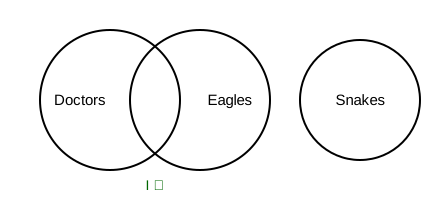
Some doctors are eagles.
No snakes are doctors.
Conclusions:
(I) Some eagles are not snakes.
(II) All eagles are doctors.
दिए गए कथनों और निष्कर्षों को ध्यानपूर्वक पढ़िए। यह मानते हुए कि कथनों में दी गई जानकारी सत्य है, भले ही वह सामान्यतः ज्ञात तथ्यों से भिन्न प्रतीत होती हो, निर्णय लीजिए कि दिए गए निष्कर्षों में से कौन-सा/से निष्कर्ष तार्किक रूप से कथनों का अनुसरण करता है/करते हैं।
कथन:
कुछ डॉक्टर, चील हैं।
कोई साँप, डॉक्टर नहीं है।
निष्कर्ष:
(I) कुछ चील, साँप नहीं हैं।
(II) सभी चील, डॉक्टर हैं।
  1. ANeither conclusion (I) nor (II) follows.न तो निष्कर्ष (I) और न ही (II) अनुसरण करता है।
  2. BOnly conclusion (II) follows.केवल निष्कर्ष (II) अनुसरण करता है।
  3. CBoth conclusions (I) and (II) follow.निष्कर्ष (I) और (II) दोनों अनुसरण करते हैं।
  4. DOnly conclusion (I) follows.केवल निष्कर्ष (I) अनुसरण करता है।
Show answer

Concept: Draw the minimum (least overlapping) Venn diagram and test each conclusion.

  1. Some doctors are eagles → Doctors and Eagles overlap.
  2. No snake is a doctor → Snakes lie outside Doctors.
  3. (I) The eagles that are doctors can never be snakes → some eagles are not snakes. Follows.
  4. (II) Only some eagles are known to be doctors → "All eagles are doctors" does not follow.

Short trick: "Some A are B" + "No C is A" ⇒ "Some B are not C" always follows (the A-part of B is safe from C).

Answer: (D) Only conclusion (I) follows.

अवधारणा: न्यूनतम वेन आरेख बनाएँ और प्रत्येक निष्कर्ष जाँचें।

  1. कुछ डॉक्टर, चील हैं → डॉक्टर और चील का अतिव्यापन।
  2. कोई साँप डॉक्टर नहीं → साँप, डॉक्टर के बाहर।
  3. (I) जो चील डॉक्टर हैं वे कभी साँप नहीं हो सकते → कुछ चील, साँप नहीं हैं। अनुसरण करता है।
  4. (II) केवल कुछ चील डॉक्टर ज्ञात हैं → "सभी चील डॉक्टर हैं" अनुसरण नहीं करता।

शॉर्ट ट्रिक: "कुछ A, B हैं" + "कोई C, A नहीं" ⇒ "कुछ B, C नहीं हैं" सदैव अनुसरण करता है।

उत्तर: (D) केवल निष्कर्ष (I) अनुसरण करता है।

RRB ALP CBT 1General Intelligence and ReasoningSyllogismRRB ALP CBT 1 2025 · 18 Feb Shift 1
Q254.
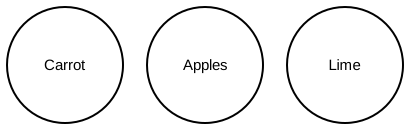
Select the Venn diagram that best illustrates the relationship between the following classes.
Carrot, Apples, Lime
उस वेन आरेख का चयन कीजिए जो निम्नलिखित वर्गों के बीच संबंध को सर्वोत्तम रूप से दर्शाता है।
गाजर, सेब, नींबू
  1. A
  2. B
  3. C
  4. D
Show answer

Concept: Check whether any member can belong to two classes at once.

  1. Carrot is a vegetable (root); apple and lime are different fruits.
  2. No carrot is an apple or a lime, and no apple is a lime.
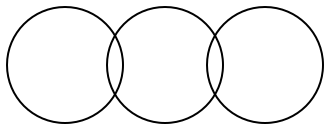
  3. So the three classes are completely separate → three disjoint circles.

Short trick: Three different items of the same level (no item is both) → three separate circles.

Answer: (B) Three separate circles (option B)

अवधारणा: जाँचें कि क्या कोई सदस्य एक साथ दो वर्गों में आ सकता है।

  1. गाजर एक सब्ज़ी (जड़) है; सेब और नींबू अलग-अलग फल हैं।
  2. कोई गाजर सेब या नींबू नहीं है, और कोई सेब नींबू नहीं है।
  3. अतः तीनों वर्ग पूर्णतः अलग हैं → तीन अलग वृत्त।

शॉर्ट ट्रिक: एक ही स्तर की तीन अलग वस्तुएँ (कोई वस्तु दोनों नहीं) → तीन अलग वृत्त।

उत्तर: (B) तीन अलग वृत्त (विकल्प B)

RRB ALP CBT 1General Intelligence and ReasoningVenn diagram – classificationRRB ALP CBT 1 2025 · 18 Feb Shift 1
Q255.
Swara starts from point P and walks for 8 m towards the north. Then she takes a right turn and walks for 5 m. Then, again, she takes a right turn and walks for 4 m. One more time she takes a right turn and walks for 10 m. Then she takes a left turn and walks for 4 m before stopping at point Q. Towards which direction should she walk in order to reach Point P again? (All turns are 90-degree turns only unless specified.)
स्वरा बिंदु P से चलना शुरू करती है और उत्तर की ओर 8 m चलती है। फिर वह दाएँ मुड़ती है और 5 m चलती है। फिर वह पुनः दाएँ मुड़ती है और 4 m चलती है। एक बार और वह दाएँ मुड़ती है और 10 m चलती है। फिर वह बाएँ मुड़ती है और 4 m चलकर बिंदु Q पर रुक जाती है। पुनः बिंदु P पर पहुँचने के लिए उसे किस दिशा में चलना चाहिए? (जब तक निर्दिष्ट न हो, सभी मोड़ केवल 90 डिग्री के मोड़ हैं।)
  1. AWestपश्चिम
  2. BSouthदक्षिण
  3. CEastपूर्व
  4. DNorthउत्तर
Show answer

Concept: Take P = (0, 0), north = +y, east = +x and trace each move.

  1. 8 m north → (0, 8); right (east) 5 m → (5, 8)
  2. Right (south) 4 m → (5, 4); right (west) 10 m → (−5, 4)
  3. Left (south) 4 m → Q = (−5, 0)
  4. Q is 5 m west of P, so she must walk East.

Short trick: Net N–S: 8 − 4 − 4 = 0; net E–W: 5 − 10 = 5 m west. Q is due west of P, so go East.

Answer: (C) East

अवधारणा: P = (0, 0), उत्तर = +y, पूर्व = +x लेकर प्रत्येक चाल को अंकित करें।

  1. 8 m उत्तर → (0, 8); दाएँ (पूर्व) 5 m → (5, 8)
  2. दाएँ (दक्षिण) 4 m → (5, 4); दाएँ (पश्चिम) 10 m → (−5, 4)
  3. बाएँ (दक्षिण) 4 m → Q = (−5, 0)
  4. Q, P से 5 m पश्चिम में है, अतः उसे पूर्व की ओर चलना होगा।

शॉर्ट ट्रिक: शुद्ध उत्तर–दक्षिण: 8 − 4 − 4 = 0; शुद्ध पूर्व–पश्चिम: 5 − 10 = 5 m पश्चिम। अतः पूर्व की ओर।

उत्तर: (C) पूर्व

RRB ALP CBT 1General Intelligence and ReasoningDirection senseRRB ALP CBT 1 2025 · 18 Feb Shift 1
Q256.
Refer to the following letter series and answer the question that follows. Counting to be done from left to right only.
(Left) N E F M L C L T X X R X D G J A M Q F T Q (Right)
How many such consonants are there, each of which is immediately preceded by a consonant and also immediately followed by a vowel?
निम्नलिखित अक्षर शृंखला को देखिए और नीचे दिए गए प्रश्न का उत्तर दीजिए। गिनती केवल बाएँ से दाएँ की जानी है।
(बाएँ) N E F M L C L T X X R X D G J A M Q F T Q (दाएँ)
ऐसे कितने व्यंजन हैं, जिनमें से प्रत्येक के ठीक पहले एक व्यंजन है और ठीक बाद एक स्वर है?
  1. AOneएक
  2. BThreeतीन
  3. CNoneकोई नहीं
  4. DTwoदो
Show answer

Concept: Look for the pattern consonant–CONSONANT–vowel. Vowels in the series: E and A only.

  1. Check the letter just before each vowel: before E is N (first letter, nothing precedes it); before A is J.
  2. J is preceded by G (consonant) and followed by A (vowel) ✓
  3. Only one such consonant: J.

Short trick: Start from the vowels (few) and look two places back — much faster than scanning every letter.

Answer: (A) One

अवधारणा: पैटर्न व्यंजन–व्यंजन–स्वर खोजें। शृंखला में स्वर केवल E और A हैं।

  1. प्रत्येक स्वर से ठीक पहले का अक्षर देखें: E से पहले N (पहला अक्षर, उससे पहले कुछ नहीं); A से पहले J।
  2. J से पहले G (व्यंजन) और बाद में A (स्वर) ✓
  3. केवल एक ऐसा व्यंजन: J।

शॉर्ट ट्रिक: स्वरों (कम संख्या) से शुरू करके दो स्थान पीछे देखें — हर अक्षर जाँचने से तेज़।

उत्तर: (A) एक

RRB ALP CBT 1General Intelligence and ReasoningLetter series – position countingRRB ALP CBT 1 2025 · 18 Feb Shift 1
Q257.
What should come in place of the question mark (?) in the given series?
108 103 97 90 82 73 ?
दी गई शृंखला में प्रश्नवाचक चिह्न (?) के स्थान पर क्या आना चाहिए?
108 103 97 90 82 73 ?
  1. A61
  2. B67
  3. C63
  4. D65
Show answer

Concept: Find the differences between consecutive terms.

  1. 108 −5 → 103 −6 → 97 −7 → 90 −8 → 82 −9 → 73
  2. Next difference = −10
  3. 73 − 10 = 63

Short trick: Differences are 5, 6, 7, 8, 9 → next 10.

Answer: (C) 63

अवधारणा: क्रमागत पदों का अंतर निकालें।

  1. 108 −5 → 103 −6 → 97 −7 → 90 −8 → 82 −9 → 73
  2. अगला अंतर = −10
  3. 73 − 10 = 63

शॉर्ट ट्रिक: अंतर 5, 6, 7, 8, 9 → अगला 10।

उत्तर: (C) 63

RRB ALP CBT 1General Intelligence and ReasoningNumber series – increasing differenceRRB ALP CBT 1 2025 · 18 Feb Shift 1
Q258.
Select the pair which follows the same pattern as that followed by the two pairs given below. Both pairs follow the same pattern.
KFM : GCR
RMS : NJX
उस युग्म का चयन कीजिए जो उसी पैटर्न का अनुसरण करता है जिसका अनुसरण नीचे दिए गए दोनों युग्म करते हैं। दोनों युग्म एक ही पैटर्न का अनुसरण करते हैं।
KFM : GCR
RMS : NJX
  1. AMSU : IPZ
  2. BORG : KNL
  3. CHOP : DJU
  4. DPST : KNY
Show answer

Concept: Find the shift for each letter position.

  1. 1st2nd3rd
    KFM → GCRK−4=GF−3=CM+5=R
    RMS → NJXR−4=NM−3=JS+5=X
    MSU → IPZM−4=IS−3=PU+5=Z ✓

Short trick: The first letter (−4) fits every option, so test the second letter (−3) at once: S→P ✓, while R→N, O→J, S→N fail.

Answer: (A) MSU : IPZ

अवधारणा: प्रत्येक स्थान के अक्षर का खिसकाव ज्ञात करें।

  1. पहलादूसरातीसरा
    KFM → GCRK−4=GF−3=CM+5=R
    RMS → NJXR−4=NM−3=JS+5=X
    MSU → IPZM−4=IS−3=PU+5=Z ✓

शॉर्ट ट्रिक: पहला अक्षर (−4) सभी विकल्पों में सही है, अतः सीधे दूसरा अक्षर (−3) जाँचें: S→P ✓, जबकि R→N, O→J, S→N असफल।

उत्तर: (A) MSU : IPZ

RRB ALP CBT 1General Intelligence and ReasoningLetter analogyRRB ALP CBT 1 2025 · 18 Feb Shift 1
Q259.
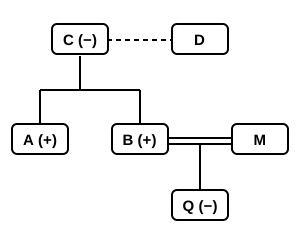
A is the brother of B. B is the son of C. M is married to B. Q is the only daughter of M. C is the sister of D. How is A related to C?
A, B का भाई है। B, C का पुत्र है। M का विवाह B से हुआ है। Q, M की इकलौती पुत्री है। C, D की बहन है। A का C से क्या संबंध है?
  1. ABrotherभाई
  2. BDaughterपुत्री
  3. CSonपुत्र
  4. DFatherपिता
Show answer

Concept: Build the family tree.

  1. B is the son of C, and A is the brother of B → A is also a child of C.
  2. A is a brother → male.
  3. So A is the son of C. (M, Q and D are extra information.)

Short trick: "Brother of my son" = my son. Ignore the spouse/daughter details.

Answer: (C) Son

अवधारणा: वंश वृक्ष बनाएँ।

  1. B, C का पुत्र है और A, B का भाई है → A भी C की संतान है।
  2. A भाई है → पुरुष।
  3. अतः A, C का पुत्र है। (M, Q और D अतिरिक्त जानकारी हैं।)

शॉर्ट ट्रिक: "मेरे पुत्र का भाई" = मेरा पुत्र। पति/पत्नी/पुत्री की जानकारी अनदेखी करें।

उत्तर: (C) पुत्र

RRB ALP CBT 1General Intelligence and ReasoningBlood relationRRB ALP CBT 1 2025 · 18 Feb Shift 1
Q260.
What will come in the place of ‘?’ in the following equation, if ‘+’ and ‘-‘ are interchanged and ‘×’ and ‘÷’ are interchanged?
6 × 45 ÷ 15 + 8 - 13 = ?
यदि ‘+’ और ‘-’ को आपस में बदल दिया जाए तथा ‘×’ और ‘÷’ को आपस में बदल दिया जाए, तो निम्नलिखित समीकरण में ‘?’ के स्थान पर क्या आएगा?
6 × 45 ÷ 15 + 8 - 13 = ?
  1. A7
  2. B5
  3. C8
  4. D6
Show answer

Concept: Swap + ↔ − and × ↔ ÷, then use BODMAS.

  1. 6 × 45 ÷ 15 + 8 − 13 becomes 6 ÷ 45 × 15 − 8 + 13
  2. 6÷45×15=6×1545=2
  3. 2 − 8 + 13 = 7

Short trick: 6×1545=2 directly, then 2 + 5 = 7.

Answer: (A) 7

अवधारणा: + ↔ − और × ↔ ÷ बदलें, फिर BODMAS लगाएँ।

  1. 6 × 45 ÷ 15 + 8 − 13 बनता है 6 ÷ 45 × 15 − 8 + 13
  2. 6÷45×15=6×1545=2
  3. 2 − 8 + 13 = 7

शॉर्ट ट्रिक: सीधे 6×1545=2, फिर 2 + 5 = 7।

उत्तर: (A) 7

RRB ALP CBT 1General Intelligence and ReasoningMathematical operations – interchange of signsRRB ALP CBT 1 2025 · 18 Feb Shift 1