Q101.In the following series, only one letter-cluster is incorrect. Select the INCORRECT letter- cluster.
SAI XFN CUM HPX MUC RZH
निम्नलिखित श्रृंखला में, केवल एक अक्षर-समूह गलत है। गलत अक्षर-समूह का चयन कीजिए।
SAI XFN CUM HPX MUC RZH
- ACUM
- BRZH
- CMUC
- DHPQ
Show answer
Concept: Each position of the cluster increases by a fixed step.
- First letters: S, X, C, H, M, R .
- Second letters should be A, F, K, P, U, Z ; third letters I, N, S, X, C, H .
- The third cluster should be CKS but is CUM – wrong.
Trick: Write the three positions as three separate series; the term breaking two of them is the culprit.
Answer: (A) CUM
अवधारणा: समूह का हर स्थान एक निश्चित अंतर से बढ़ता है।
- पहले अक्षर: S, X, C, H, M, R ।
- दूसरे अक्षर A, F, K, P, U, Z और तीसरे I, N, S, X, C, H होने चाहिए ।
- तीसरा पद CKS होना चाहिए, पर CUM है – गलत।
ट्रिक: तीनों स्थानों को अलग श्रृंखला लिखें; जो पद दो श्रृंखलाएँ तोड़े वही गलत।
उत्तर: (A) CUM
RRB NTPC Graduate CBT 2General Intelligence and ReasoningLetter Series – Wrong TermRRB NTPC Graduate CBT 2 2024 · 13 Oct Shift 2
Q102.A question is followed by two statements numbered I and II. You have to decide whether the data provided in the statements are sufficient to answer the question. Read both the statements and select the most appropriate answer.
Question:
Six friends, B, C, D, E, F and G, are sitting in a straight line, facing north. Who among them is sitting at the extreme right end?
Statements:
(I) There are exactly four people sitting between B and E. G sits to the immediate right of E.
(II) F is an immediate neighbour of C. Exactly two people sit between B and C.
एक प्रश्न के बाद दो कथन I और II दिए गए हैं। आपको यह तय करना है कि कथनों में दिए गए आँकड़े प्रश्न का उत्तर देने के लिए पर्याप्त हैं या नहीं। दोनों कथनों को पढ़िए और सबसे उपयुक्त उत्तर का चयन कीजिए।
प्रश्न:
छह मित्र, B, C, D, E, F और G, उत्तर की ओर मुख करके एक सीधी पंक्ति में बैठे हैं। उनमें से कौन सबसे दाएँ छोर पर बैठा है?
कथन:
(I) B और E के बीच ठीक चार व्यक्ति बैठे हैं। G, E के ठीक दाएँ बैठा है।
(II) F, C का निकटतम पड़ोसी है। B और C के बीच ठीक दो व्यक्ति बैठे हैं।
- AData in statements I and II together are sufficient to answer the question.कथन I और II के आँकड़े एक साथ प्रश्न का उत्तर देने के लिए पर्याप्त हैं।
- BData in statement I alone is sufficient to answer the question, while data in statement II is not.केवल कथन I के आँकड़े प्रश्न का उत्तर देने के लिए पर्याप्त हैं, जबकि कथन II के आँकड़े पर्याप्त नहीं हैं।
- CData in statements I and II together are not sufficient to answer the question.कथन I और II के आँकड़े एक साथ भी प्रश्न का उत्तर देने के लिए पर्याप्त नहीं हैं।
- DData in statement II alone is sufficient to answer the question, while data in statement I is not.केवल कथन II के आँकड़े प्रश्न का उत्तर देने के लिए पर्याप्त हैं, जबकि कथन I के आँकड़े पर्याप्त नहीं हैं।
Show answer
Concept: 6 seats in a line; check each statement separately.
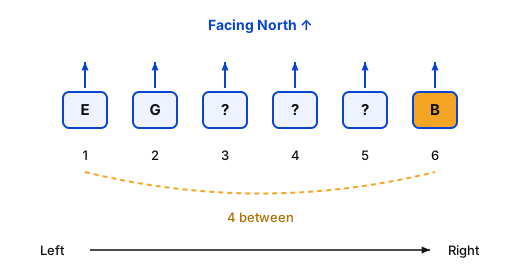
- Statement I: 4 people between B and E means they occupy the two ends (seats 1 and 6).
- G is immediately right of E, so E cannot be at seat 6 → E at 1, G at 2, B at 6. Extreme right = B. I alone is sufficient.
- Statement II gives only relative pairs (F–C, B–C) with no end fixed → not sufficient.
Trick: "4 between" in a row of 6 = both persons at the two ends.
Answer: (B) Data in statement I alone is sufficient, while II is not.
अवधारणा: एक पंक्ति में 6 सीटें; हर कथन अलग-अलग जाँचें।
- कथन I: B और E के बीच 4 लोग, अर्थात दोनों सिरों पर (सीट 1 और 6)।
- G, E के ठीक दाएँ है, अतः E सीट 6 पर नहीं हो सकता → E = 1, G = 2, B = 6। दाएँ छोर पर B। I अकेला पर्याप्त।
- कथन II में कोई छोर तय नहीं → अपर्याप्त।
ट्रिक: 6 की पंक्ति में "बीच में 4" = दोनों व्यक्ति दोनों सिरों पर।
उत्तर: (B) केवल कथन I पर्याप्त है, II नहीं।
RRB NTPC Graduate CBT 2General Intelligence and ReasoningData Sufficiency – SeatingRRB NTPC Graduate CBT 2 2024 · 13 Oct Shift 2
Q103.What should come in place of the question mark (?) in the given series?
14, 25, 47, 80, 124 , ?
दी गई श्रृंखला में प्रश्न चिह्न (?) के स्थान पर क्या आना चाहिए?
14, 25, 47, 80, 124 , ?
- A177
- B179
- C178
- D180
Show answer
Concept: Look at successive differences.
- Differences: , , , .
- They are multiples of 11: next difference .
- .
Trick: Differences – table of 11.
Answer: (B) 179
अवधारणा: क्रमागत अंतर देखें।
- अंतर: , , , ।
- ये 11 के गुणज हैं, अगला अंतर ।
- ।
ट्रिक: अंतर – 11 का पहाड़ा।
उत्तर: (B) 179
RRB NTPC Graduate CBT 2General Intelligence and ReasoningNumber SeriesRRB NTPC Graduate CBT 2 2024 · 13 Oct Shift 2
Q104.A question is followed by two statements numbered (I) and (II). You have to decide whether the data provided in the statements are sufficient to answer the question. Read both the statements and decide the appropriate answer.
Five people P, Q, R, S and T are sitting in a row, all facing north. Who is sitting second from the left end?
Statements:
I. P is sitting to the immediate right of T. P is sitting to the immediate left of S.
II. Only T is sitting between P and Q.
एक प्रश्न के बाद दो कथन (I) और (II) दिए गए हैं। आपको यह तय करना है कि कथनों में दिए गए आँकड़े प्रश्न का उत्तर देने के लिए पर्याप्त हैं या नहीं। दोनों कथनों को पढ़िए और उपयुक्त उत्तर तय कीजिए।
पाँच व्यक्ति P, Q, R, S और T एक पंक्ति में उत्तर की ओर मुख करके बैठे हैं। बाएँ छोर से दूसरे स्थान पर कौन बैठा है?
कथन:
I. P, T के ठीक दाएँ बैठा है। P, S के ठीक बाएँ बैठा है।
II. P और Q के बीच केवल T बैठा है।
- AData in statement I alone is sufficient to answer the question while data in statement II is notकेवल कथन I के आँकड़े प्रश्न का उत्तर देने के लिए पर्याप्त हैं, जबकि कथन II के आँकड़े पर्याप्त नहीं हैं
- BBoth statements I and II together are NOT sufficient to answer the questionकथन I और II दोनों एक साथ भी प्रश्न का उत्तर देने के लिए पर्याप्त नहीं हैं
- CBoth statements I and II together (and not statement I alone or statement II alone) are sufficient to answer the questionकथन I और II दोनों एक साथ (न कि केवल कथन I या केवल कथन II) प्रश्न का उत्तर देने के लिए पर्याप्त हैं
- DData in statement II alone is sufficient to answer the question while data in statement I is notकेवल कथन II के आँकड़े प्रश्न का उत्तर देने के लिए पर्याप्त हैं, जबकि कथन I के आँकड़े पर्याप्त नहीं हैं
Show answer
Concept: 5 people in a row facing north; combine I and II and see if one answer is fixed.
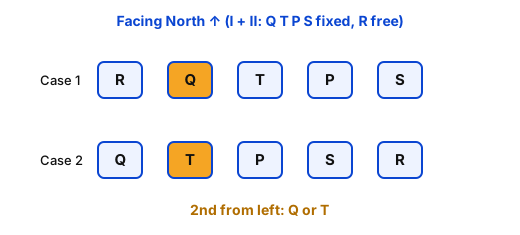
- I: T P S sit together in that order. Alone, many positions possible.
- II: only T between P and Q → with I, the block becomes Q T P S.
- R can be at either end: R Q T P S or Q T P S R → 2nd from left is Q or T.
- Even together the answer is not unique.
Trick: If even after combining one person (R) can float, data is insufficient.
Answer: (B) Both statements I and II together are NOT sufficient.
अवधारणा: 5 लोग उत्तर की ओर मुख किए पंक्ति में; I और II मिलाकर देखें।
- I: T P S इसी क्रम में साथ बैठे हैं। अकेले अनेक स्थितियाँ संभव।
- II: P और Q के बीच केवल T → I के साथ खंड Q T P S बनता है।
- R किसी भी सिरे पर हो सकता है: R Q T P S या Q T P S R → बाएँ से दूसरा Q या T।
- दोनों मिलाकर भी उत्तर निश्चित नहीं।
ट्रिक: मिलाने पर भी कोई व्यक्ति (R) घूम सकता हो तो डेटा अपर्याप्त है।
उत्तर: (B) कथन I और II मिलकर भी पर्याप्त नहीं हैं।
RRB NTPC Graduate CBT 2General Intelligence and ReasoningData Sufficiency – SeatingRRB NTPC Graduate CBT 2 2024 · 13 Oct Shift 2
Q105.A, B, C, D, E and F have different heights. E is taller than exactly 4 people and F is shorter than exactly 4 people. D is shorter than A but taller than C. C is not the shortest. How many people are shorter than C?
A, B, C, D, E और F की ऊँचाइयाँ अलग-अलग हैं। E ठीक 4 व्यक्तियों से लंबा है और F ठीक 4 व्यक्तियों से छोटा है। D, A से छोटा है लेकिन C से लंबा है। C सबसे छोटा नहीं है। कितने व्यक्ति C से छोटे हैं?
- A2
- B4
- C3
- D1
Show answer
Concept: Rank the six from tallest (1) to shortest (6).
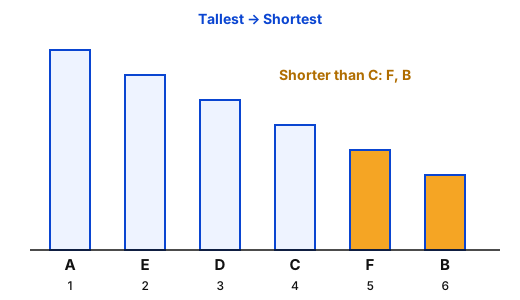
- E taller than exactly 4 → 2nd. F shorter than exactly 4 → 5th.
- A > D > C, and C is not the shortest; left places are 1, 3, 4, 6.
- So A = 1, D = 3, C = 4, B = 6.
- Shorter than C: F and B → 2.
Trick: "Taller than exactly " in people → rank from top.
Answer: (A) 2
अवधारणा: छहों को सबसे लंबे (1) से सबसे छोटे (6) तक क्रम दें।
- E ठीक 4 से लंबा → दूसरा। F ठीक 4 से छोटा → पाँचवाँ।
- A > D > C, और C सबसे छोटा नहीं; बचे स्थान 1, 3, 4, 6।
- अतः A = 1, D = 3, C = 4, B = 6।
- C से छोटे: F और B → 2।
ट्रिक: में "ठीक से लंबा" → ऊपर से स्थान ।
उत्तर: (A) 2
RRB NTPC Graduate CBT 2General Intelligence and ReasoningRanking – HeightRRB NTPC Graduate CBT 2 2024 · 13 Oct Shift 2
Q106.In a certain code, ‘dogs bark loud’ is coded as ‘xl mn vc’, ‘cats and dogs’ is coded as ‘rs tp xl’, and ‘bark and play’ is coded as ‘mn rs wz’. What is the code for ‘cats’ in that code? (All codes are two-letter codes.)
एक निश्चित कूट भाषा में, 'dogs bark loud' को 'xl mn vc' लिखा जाता है, 'cats and dogs' को 'rs tp xl' लिखा जाता है, और 'bark and play' को 'mn rs wz' लिखा जाता है। उस कूट भाषा में 'cats' का कूट क्या है? (सभी कूट दो अक्षर वाले कूट हैं।)
- Amn
- Bxl
- Ctp
- Drs
Show answer
Concept: Common words in two sentences share the common code.
- ‘dogs’ in 1 and 2 → common code xl.
- ‘bark’ in 1 and 3 → mn; ‘and’ in 2 and 3 → rs.
- Sentence 2: cats and dogs = rs tp xl → cats = tp.
Trick: Strike out known codes; the leftover is the answer.
Answer: (C) tp
अवधारणा: दो वाक्यों में सामान्य शब्द का कोड भी सामान्य होता है।
- ‘dogs’ वाक्य 1 और 2 में → xl।
- ‘bark’ 1 और 3 में → mn; ‘and’ 2 और 3 में → rs।
- वाक्य 2: cats and dogs = rs tp xl → cats = tp।
ट्रिक: ज्ञात कोड काटते जाएँ; बचा हुआ कोड उत्तर है।
उत्तर: (C) tp
RRB NTPC Graduate CBT 2General Intelligence and ReasoningCoding – Word CodesRRB NTPC Graduate CBT 2 2024 · 13 Oct Shift 2
Q107.Refer to the following letter, number, symbol series and answer the question. Counting to be done from left to right.
(Left) $ T 1 & 9 Z 7 * A 0 # K @ N Z (Right)
How many such numbers are there which are immediately preceded by a symbol and also immediately followed by a letter?
निम्नलिखित अक्षर, संख्या, प्रतीक श्रृंखला को देखिए और प्रश्न का उत्तर दीजिए। गिनती बाएँ से दाएँ की जानी है।
(बाएँ) $ T 1 & 9 Z 7 * A 0 # K @ N Z (दाएँ)
ऐसी कितनी संख्याएँ हैं जिनके ठीक पहले एक प्रतीक है और ठीक बाद एक अक्षर भी है?
- ATwoदो
- BOneएक
- CFourचार
- DNoneकोई नहीं
Show answer
Concept: Check every number with its left and right neighbours.
- Numbers: 1, 9, 7, 0.
- 1: preceded by T (letter) ✗; 9: preceded by & (symbol), followed by Z (letter) ✓.
- 7: preceded by Z ✗; 0: preceded by A ✗.
- Only one such number (9).
Trick: Pattern to find: Symbol – Number – Letter.
Answer: (B) One
अवधारणा: हर संख्या के बाएँ और दाएँ पड़ोसी जाँचें।
- संख्याएँ: 1, 9, 7, 0।
- 1: पहले T (अक्षर) ✗; 9: पहले & (प्रतीक), बाद में Z (अक्षर) ✓।
- 7: पहले Z ✗; 0: पहले A ✗।
- ऐसी केवल एक संख्या (9)।
ट्रिक: खोजें: प्रतीक – संख्या – अक्षर।
उत्तर: (B) एक
RRB NTPC Graduate CBT 2General Intelligence and ReasoningAlphanumeric SeriesRRB NTPC Graduate CBT 2 2024 · 13 Oct Shift 2
Q108.Read the given statements and conclusions carefully. Assuming that the information given in the statements is true, even if it appears to be at variance with commonly known facts, decide which of the given conclusions logically follow(s) from the statements.
Statements:
No nail is a cutter.
All cutters are knives.
No cutter is a scissor.
Conclusions:
(I) No scissor is a knife.
(II) Some nails are knives.
दिए गए कथनों और निष्कर्षों को ध्यानपूर्वक पढ़िए। यह मानते हुए कि कथनों में दी गई जानकारी सत्य है, भले ही वह सामान्यतः ज्ञात तथ्यों से भिन्न प्रतीत होती हो, तय कीजिए कि दिए गए निष्कर्षों में से कौन-सा/कौन-से निष्कर्ष तार्किक रूप से कथनों का अनुसरण करता है/करते हैं।
कथन:
कोई भी कील, कटर नहीं है।
सभी कटर, चाकू हैं।
कोई भी कटर, कैंची नहीं है।
निष्कर्ष:
(I) कोई भी कैंची, चाकू नहीं है।
(II) कुछ कीलें, चाकू हैं।
- AOnly conclusion (I) follows.केवल निष्कर्ष (I) अनुसरण करता है।
- BBoth conclusions (I) and (II) follow.निष्कर्ष (I) और (II) दोनों अनुसरण करते हैं।
- COnly conclusion (II) follows.केवल निष्कर्ष (II) अनुसरण करता है।
- DNeither conclusion (I) nor (II) follows.न तो निष्कर्ष (I) और न ही (II) अनुसरण करता है।
Show answer
Concept: Draw the minimum (possible-case) Venn diagram.
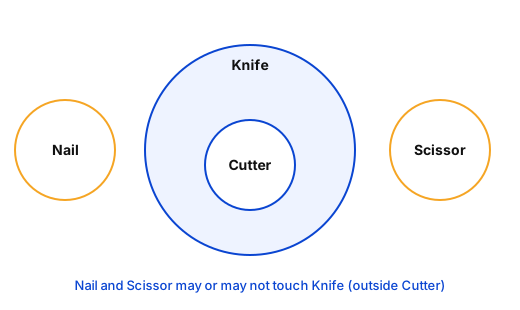
- Cutter lies inside Knife; Nail and Scissor are both outside Cutter.
- Scissor may or may not overlap the Knife area outside Cutter → I (No scissor is a knife) is not certain.
- Nail may or may not overlap Knife → II (Some nails are knives) is not certain.
Trick: "No A is B" + "All B are C" gives no definite relation between A and C.
Answer: (D) Neither conclusion (I) nor (II) follows.
अवधारणा: न्यूनतम (संभावित) वेन आरेख बनाएँ।
- Cutter, Knife के अंदर; Nail और Scissor दोनों Cutter से बाहर।
- Scissor, Cutter के बाहर वाले Knife भाग को छू भी सकता है, नहीं भी → I निश्चित नहीं।
- Nail भी Knife को छू सकता है या नहीं → II निश्चित नहीं।
ट्रिक: "कोई A, B नहीं" + "सभी B, C हैं" से A और C का कोई निश्चित संबंध नहीं।
उत्तर: (D) न तो (I) और न ही (II) अनुसरण करता है।
RRB NTPC Graduate CBT 2General Intelligence and ReasoningSyllogismRRB NTPC Graduate CBT 2 2024 · 13 Oct Shift 2
Q109.In the following series, only one letter-cluster is incorrect. Select the INCORRECT letter- cluster.
WOG ASK EWO IAS MEV QIA
निम्नलिखित श्रृंखला में, केवल एक अक्षर-समूह गलत है। गलत अक्षर-समूह का चयन कीजिए।
WOG ASK EWO IAS MEV QIA
- AEWO
- BMEV
- CQIA
- DIAS
Show answer
Concept: Track each letter position separately.
- 1st letters: W, A, E, I, M, Q (+4 each).
- 2nd letters: O, S, W, A, E, I (+4 each).
- 3rd letters: G, K, O, S, ?, A → should be W (+4), but MEV has V.
- Correct cluster: MEW, so MEV is incorrect.
Trick: All three positions move +4: W(23)+4 = A(27−26).
Answer: (B) MEV
अवधारणा: हर स्थान का अक्षर अलग से देखें।
- पहले अक्षर: W, A, E, I, M, Q (+4)।
- दूसरे अक्षर: O, S, W, A, E, I (+4)।
- तीसरे अक्षर: G, K, O, S, ?, A → W होना चाहिए, पर MEV में V है।
- सही पद MEW, अतः MEV गलत।
ट्रिक: तीनों स्थान +4 चलते हैं: W(23)+4 = A।
उत्तर: (B) MEV
RRB NTPC Graduate CBT 2General Intelligence and ReasoningLetter Series – Odd OneRRB NTPC Graduate CBT 2 2024 · 13 Oct Shift 2
Q110.Laksh starts from point A and drives 7 km towards east. He then takes a right turn and drives 12 km. He takes a final left turn and drives 6 km and stops at point B. Vinod starts from point P, which is 16 km east of Point A, and drives 4 km towards east. He then takes a right turn and drives 12 km. He takes a final right turn and drives 3 km and stops at Point Q. What is the shortest distance between Point Q and Point B? (All turns are 90 degree turns only.)
लक्ष बिंदु A से चलना शुरू करता है और पूर्व की ओर 7 km गाड़ी चलाता है। फिर वह दाएँ मुड़ता है और 12 km गाड़ी चलाता है। वह अंतिम बार बाएँ मुड़ता है और 6 km गाड़ी चलाकर बिंदु B पर रुक जाता है। विनोद बिंदु P से चलना शुरू करता है, जो बिंदु A से 16 km पूर्व में है, और पूर्व की ओर 4 km गाड़ी चलाता है। फिर वह दाएँ मुड़ता है और 12 km गाड़ी चलाता है। वह अंतिम बार दाएँ मुड़ता है और 3 km गाड़ी चलाकर बिंदु Q पर रुक जाता है। बिंदु Q और बिंदु B के बीच की न्यूनतम दूरी कितनी है? (सभी मोड़ केवल 90 डिग्री के मोड़ हैं।)
- A5 km
- B6 km
- C3 km
- D4 km
Show answer
Concept: Put A at origin (east = +x, north = +y).
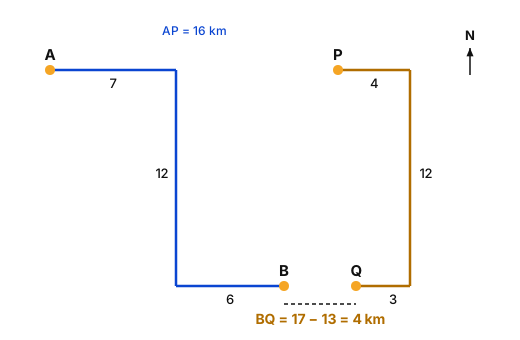
- Laksh: 7 E → (7, 0); right (south) 12 → (7, −12); left (east) 6 → B (13, −12).
- P = (16, 0); Vinod: 4 E → (20, 0); right (south) 12 → (20, −12); right (west) 3 → Q (17, −12).
- B and Q on same line: .
Trick: Both end 12 km south, so only east–west positions matter.
Answer: (D) 4 km
अवधारणा: A को मूल बिंदु मानें (पूर्व = +x, उत्तर = +y)।
- लक्ष: 7 पूर्व → (7, 0); दाएँ (दक्षिण) 12 → (7, −12); बाएँ (पूर्व) 6 → B (13, −12)।
- P = (16, 0); विनोद: 4 पूर्व → (20, 0); दाएँ (दक्षिण) 12 → (20, −12); दाएँ (पश्चिम) 3 → Q (17, −12)।
- B और Q एक ही रेखा पर: ।
ट्रिक: दोनों 12 km दक्षिण में रुकते हैं, केवल पूर्व–पश्चिम स्थिति देखें।
उत्तर: (D) 4 km
RRB NTPC Graduate CBT 2General Intelligence and ReasoningDirection and DistanceRRB NTPC Graduate CBT 2 2024 · 13 Oct Shift 2
Q111.Eight people are sitting in two parallel rows containing 4 people each in such a way that there is equal distance between adjacent persons.
In row 1, A, D, G and F are seated and all of them are facing south.
In row 2, P, R, N and Z are seated and all of them are facing north.
Thus, each person faces another person from the other row.
Z sits third to the left of R. The one facing F is an immediate neighbour of R. A sits at some place to the right of F and is not facing P. D sits third to the right of G. Who amongst the following faces N?
आठ व्यक्ति दो समानांतर पंक्तियों में बैठे हैं, जिनमें से प्रत्येक पंक्ति में 4 व्यक्ति इस प्रकार बैठे हैं कि आसन्न व्यक्तियों के बीच समान दूरी है।
पंक्ति 1 में, A, D, G और F बैठे हैं और उन सभी का मुख दक्षिण की ओर है।
पंक्ति 2 में, P, R, N और Z बैठे हैं और उन सभी का मुख उत्तर की ओर है।
इस प्रकार, प्रत्येक व्यक्ति दूसरी पंक्ति के किसी अन्य व्यक्ति की ओर मुख किए हुए है।
Z, R के बाएँ से तीसरे स्थान पर बैठा है। F की ओर मुख करने वाला व्यक्ति R का निकटतम पड़ोसी है। A, F के दाएँ कहीं बैठा है और उसका मुख P की ओर नहीं है। D, G के दाएँ से तीसरे स्थान पर बैठा है। निम्नलिखित में से कौन N की ओर मुख किए हुए है?
- AP
- BG
- CA
- DZ
Show answer
Concept: Number positions 1–4 from west. Row 2 (north-facing): left = west; Row 1 (south-facing): left = east.
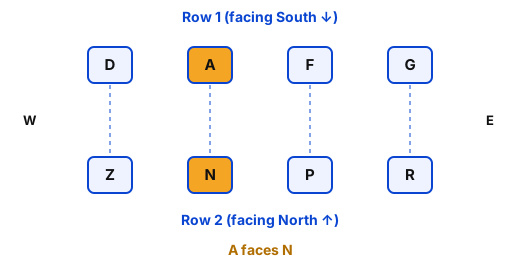
- Z third to left of R → Z at 1, R at 4 (row 2).
- Facing F is neighbour of R → position 3, so F at 3.
- D third to right of G → G at 4, D at 1; A at 2 (right of F ✓).
- A not facing P → position 2 of row 2 is N, P at 3. A faces N.
Trick: In opposite rows, "right" of a south-facing person is the viewer’s left.
Answer: (C) A
अवधारणा: स्थानों को पश्चिम से 1–4 क्रमांक दें। पंक्ति 2 (उत्तरमुखी): बायाँ = पश्चिम; पंक्ति 1 (दक्षिणमुखी): बायाँ = पूर्व।
- Z, R के तीसरे बाएँ → Z = 1, R = 4 (पंक्ति 2)।
- F के सामने वाला R का पड़ोसी → स्थान 3, अतः F = 3।
- D, G के तीसरे दाएँ → G = 4, D = 1; A = 2 (F के दाएँ ✓)।
- A, P के सामने नहीं → पंक्ति 2 में स्थान 2 पर N, P = 3। A, N के सामने।
ट्रिक: दक्षिणमुखी व्यक्ति का "दायाँ" देखने वाले का बायाँ होता है।
उत्तर: (C) A
RRB NTPC Graduate CBT 2General Intelligence and ReasoningSeating – Parallel RowsRRB NTPC Graduate CBT 2 2024 · 13 Oct Shift 2
Q112.What should come in place of the question mark (?) in the given series?
9, 25, 57, 105, 169 , ?
दी गई श्रृंखला में प्रश्न चिह्न (?) के स्थान पर क्या आना चाहिए?
9, 25, 57, 105, 169 , ?
- A248
- B247
- C249
- D250
Show answer
Concept: Look at the differences.
- Differences: 16, 32, 48, 64 (multiples of 16).
- Next difference .
- .
Trick: Differences = table of 16.
Answer: (C) 249
अवधारणा: अंतर देखें।
- अंतर: 16, 32, 48, 64 (16 के गुणज)।
- अगला अंतर ।
- ।
ट्रिक: अंतर = 16 का पहाड़ा।
उत्तर: (C) 249
RRB NTPC Graduate CBT 2General Intelligence and ReasoningNumber SeriesRRB NTPC Graduate CBT 2 2024 · 13 Oct Shift 2
Q113.In this question, a statement is given followed by two courses of action, numbered I and II. You must assume everything in the statement to be true, and on the basis of the information given in the statement, decide which of the given courses of action logically follow(s) for pursuing.
Statement:
Many students in rural schools fail to clear the basic reading and writing tests due to lack of trained teachers and poor infrastructure.
Courses of Action:
I. Immediate recruitment and training of teachers should be carried out in rural areas. II. All students failing the tests should be expelled from schools to maintain quality.
इस प्रश्न में, एक कथन और उसके बाद दो कार्यवाहियाँ I और II दी गई हैं। आपको कथन में दी गई प्रत्येक बात को सत्य मानना है, और कथन में दी गई जानकारी के आधार पर तय करना है कि दी गई कार्यवाहियों में से कौन-सी कार्यवाही/कार्यवाहियाँ तार्किक रूप से अनुसरण करने योग्य है/हैं।
कथन:
ग्रामीण विद्यालयों के कई छात्र प्रशिक्षित शिक्षकों की कमी और खराब बुनियादी ढाँचे के कारण पढ़ने और लिखने की बुनियादी परीक्षाएँ उत्तीर्ण नहीं कर पाते।
कार्यवाहियाँ:
I. ग्रामीण क्षेत्रों में शिक्षकों की तत्काल भर्ती और प्रशिक्षण किया जाना चाहिए। II. गुणवत्ता बनाए रखने के लिए परीक्षाओं में अनुत्तीर्ण होने वाले सभी छात्रों को विद्यालयों से निष्कासित कर दिया जाना चाहिए।
- ANeither I nor II followsन तो I और न ही II अनुसरण करती है
- BOnly II followsकेवल II अनुसरण करती है
- CBoth I and II followI और II दोनों अनुसरण करती हैं
- DOnly I followsकेवल I अनुसरण करती है
Show answer
Concept: A valid course of action must solve the stated cause practically.
- Cause: lack of trained teachers and poor infrastructure → recruiting and training teachers (I) directly addresses it.
- Expelling failing students (II) is harsh and does not remove the cause.
Trick: Reject extreme / punitive actions like "expel all", "ban all".
Answer: (D) Only I follows
अवधारणा: सही कार्यवाही बताए गए कारण को व्यावहारिक रूप से दूर करे।
- कारण: प्रशिक्षित शिक्षकों की कमी व खराब बुनियादी ढाँचा → शिक्षकों की भर्ती व प्रशिक्षण (I) सीधे समाधान है।
- असफल छात्रों को निकालना (II) कठोर है और कारण दूर नहीं करता।
ट्रिक: "सभी को निकालो/प्रतिबंधित करो" जैसे अतिवादी कदम अस्वीकार करें।
उत्तर: (D) केवल I अनुसरण करता है
RRB NTPC Graduate CBT 2General Intelligence and ReasoningStatement and Course of ActionRRB NTPC Graduate CBT 2 2024 · 13 Oct Shift 2
Q114.Which of the following letter-clusters should replace # and % so that the pattern and relationship followed between the letter-cluster pair on the left side of :: is the same as that on the right side of ::?
# : NVS :: JRO : %
निम्नलिखित में से कौन-से अक्षर-समूह # और % को प्रतिस्थापित करेंगे ताकि :: के बाईं ओर के अक्षर-समूह युग्म के बीच का पैटर्न और संबंध वही हो जो :: के दाईं ओर है?
# : NVS :: JRO : %
- A# = MUR, % = KSP
- B# = MUS, % = KSP
- C# = MUR, % = KSO
- D# = MUR, % = KRP
Show answer
Concept: Find the rule from the complete pair and apply it.
- Try (A): MUR → NVS: M+1 = N, U+1 = V, R+1 = S.
- Same rule: JRO → J+1 = K, R+1 = S, O+1 = P → KSP.
- Both # = MUR and % = KSP fit.
Trick: Each letter +1 on both sides of ::.
Answer: (A) # = MUR, % = KSP
अवधारणा: पूरे जोड़े से नियम ज्ञात कर लागू करें।
- (A) जाँचें: MUR → NVS: M+1 = N, U+1 = V, R+1 = S।
- वही नियम: JRO → K, S, P → KSP।
- # = MUR और % = KSP दोनों सही।
ट्रिक: :: के दोनों ओर हर अक्षर +1।
उत्तर: (A) # = MUR, % = KSP
RRB NTPC Graduate CBT 2General Intelligence and ReasoningLetter AnalogyRRB NTPC Graduate CBT 2 2024 · 13 Oct Shift 2
Q115.What will come in the place of the question mark (?) in the following equation, if ‘+’ and ‘−’ are interchanged and ‘×’ and ‘÷’ are interchanged?
50 − 8 + 2 ÷ 6 × 4 = ?
यदि '+' और '−' को आपस में बदल दिया जाए तथा '×' और '÷' को आपस में बदल दिया जाए, तो निम्नलिखित समीकरण में प्रश्न चिह्न (?) के स्थान पर क्या आएगा?
50 − 8 + 2 ÷ 6 × 4 = ?
- A56
- B54
- C57
- D55
Show answer
Concept: Swap the signs, then use BODMAS.
- After swapping: .
- .
- .
Trick: Rewrite the whole expression first, then solve – avoids sign slips.
Answer: (D) 55
अवधारणा: चिह्न बदलें, फिर BODMAS लगाएँ।
- बदलने के बाद: ।
- ।
- ।
ट्रिक: पहले पूरा व्यंजक दोबारा लिखें, फिर हल करें।
उत्तर: (D) 55
RRB NTPC Graduate CBT 2General Intelligence and ReasoningMathematical Operations – InterchangeRRB NTPC Graduate CBT 2 2024 · 13 Oct Shift 2
Q116.Read the given statements and conclusions carefully. Assuming that the information given in the statements is true, even if it appears to be at variance with commonly known facts, decide which of the given conclusions logically follow(s) from the statements.
Statements:
All parks are meadows.
All meadows are forests.
Some forests are gardens.
Conclusions:
(I): Some parks are gardens.
(II): Some meadows are gardens.
दिए गए कथनों और निष्कर्षों को ध्यानपूर्वक पढ़िए। यह मानते हुए कि कथनों में दी गई जानकारी सत्य है, भले ही वह सामान्यतः ज्ञात तथ्यों से भिन्न प्रतीत होती हो, तय कीजिए कि दिए गए निष्कर्षों में से कौन-सा/कौन-से निष्कर्ष तार्किक रूप से कथनों का अनुसरण करता है/करते हैं।
कथन:
सभी पार्क, घास के मैदान हैं।
सभी घास के मैदान, वन हैं।
कुछ वन, उद्यान हैं।
निष्कर्ष:
(I): कुछ पार्क, उद्यान हैं।
(II): कुछ घास के मैदान, उद्यान हैं।
- ABoth conclusions I and II followनिष्कर्ष I और II दोनों अनुसरण करते हैं
- BNeither conclusion I nor II followsन तो निष्कर्ष I और न ही II अनुसरण करता है
- COnly conclusion II followsकेवल निष्कर्ष II अनुसरण करता है
- DOnly conclusion I followsकेवल निष्कर्ष I अनुसरण करता है
Show answer
Concept: Draw the possible-case diagram: Park ⊂ Meadow ⊂ Forest; Garden overlaps only Forest.
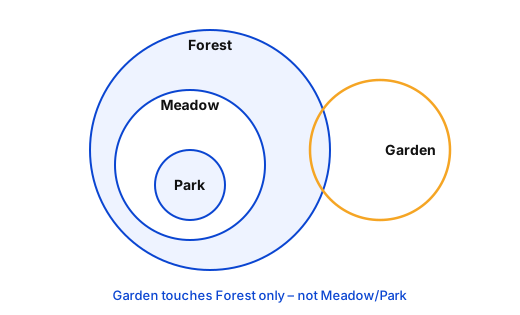
- "Some forests are gardens" – the common part may lie outside Meadow and Park.
- So no definite link between Park and Garden → I does not follow.
- Similarly no definite link between Meadow and Garden → II does not follow.
Trick: "Some" with the bigger set (Forest) never passes down to its subsets.
Answer: (B) Neither conclusion I nor II follows
अवधारणा: संभावित आरेख: Park ⊂ Meadow ⊂ Forest; Garden केवल Forest से मिलता है।
- "कुछ forests, gardens हैं" – यह भाग Meadow और Park के बाहर भी हो सकता है।
- Park और Garden का निश्चित संबंध नहीं → I अनुसरण नहीं करता।
- इसी प्रकार Meadow–Garden भी निश्चित नहीं → II अनुसरण नहीं करता।
ट्रिक: बड़े समूह (Forest) के साथ "कुछ" का संबंध उसके उप-समूहों तक नहीं पहुँचता।
उत्तर: (B) न तो I और न ही II अनुसरण करता है
RRB NTPC Graduate CBT 2General Intelligence and ReasoningSyllogismRRB NTPC Graduate CBT 2 2024 · 13 Oct Shift 2
Q117.What should come in place of the question mark (?) in the given series?
4 4 12 60 420 ?
दी गई श्रृंखला में प्रश्न चिह्न (?) के स्थान पर क्या आना चाहिए?
4 4 12 60 420 ?
- A3720
- B3760
- C3780
- D3740
Show answer
Concept: Look at the multipliers.
- , , , .
- Multipliers are odd numbers 1, 3, 5, 7 → next 9.
- .
Trick: Ratios growing by 2 → multiply by consecutive odd numbers.
Answer: (C) 3780
अवधारणा: गुणक देखें।
- , , , ।
- गुणक विषम संख्याएँ 1, 3, 5, 7 → अगला 9।
- ।
ट्रिक: क्रमागत विषम संख्याओं से गुणा।
उत्तर: (C) 3780
RRB NTPC Graduate CBT 2General Intelligence and ReasoningNumber SeriesRRB NTPC Graduate CBT 2 2024 · 13 Oct Shift 2
Q118.In a certain code language,
A + B means ‘A is the mother of B’
A – B means ‘A is the brother of B’
A x B means ‘A is the wife of B’
A ÷ B means ‘A is the father of B’
Which of the following means that S is daughter of P?
एक निश्चित कूट भाषा में,
A + B का अर्थ है 'A, B की माँ है'
A – B का अर्थ है 'A, B का भाई है'
A x B का अर्थ है 'A, B की पत्नी है'
A ÷ B का अर्थ है 'A, B का पिता है'
निम्नलिखित में से किसका अर्थ है कि S, P की पुत्री है?
- AP x Q ÷ R – S + T
- BP x Q ÷ R + S – T
- CP x Q + R – S ÷ T
- DP – Q ÷ R x S + T
Show answer
Concept: S must be female and a child of P (or P’s husband).
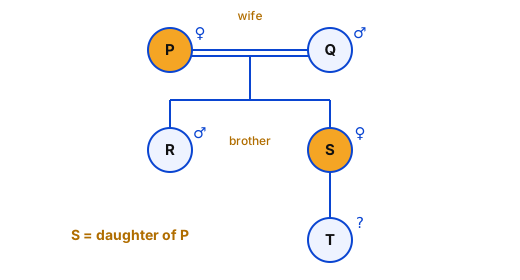
- (A) P × Q: P is wife of Q. Q ÷ R: Q is father of R.
- R – S: R is brother of S → S is also child of Q and P.
- S + T: S is mother of T → S is female.
- So S is the daughter of P.
Trick: For "daughter", the person must later appear as mother (+) or wife (×) to fix gender.
Answer: (A) P x Q ÷ R – S + T
अवधारणा: S स्त्री हो और P (या उसके पति) की संतान हो।
- (A) P × Q: P, Q की पत्नी। Q ÷ R: Q, R का पिता।
- R – S: R, S का भाई → S भी Q और P की संतान।
- S + T: S, T की माँ → S स्त्री।
- अतः S, P की पुत्री है।
ट्रिक: "पुत्री" के लिए व्यक्ति बाद में माँ (+) या पत्नी (×) के रूप में आना चाहिए, ताकि लिंग तय हो।
उत्तर: (A) P x Q ÷ R – S + T
RRB NTPC Graduate CBT 2General Intelligence and ReasoningCoded Blood RelationsRRB NTPC Graduate CBT 2 2024 · 13 Oct Shift 2
Q119.9 is related to 55 following a certain logic. Following the same logic, 12 is related to 73. To which of the given options is 16 related, following the same logic?
(NOTE: Operations should be performed on the whole numbers, without breaking down the numbers into their constituent digits. E.g. 13 – Operations on 13 such as adding to/subtracting from/multiplying with 13 can be performed. Breaking down 13 into 1 and 3 and then performing mathematical operations on 1 and 3 is not allowed.)
किसी निश्चित तर्क का अनुसरण करते हुए 9, 55 से संबंधित है। उसी तर्क का अनुसरण करते हुए, 12, 73 से संबंधित है। उसी तर्क का अनुसरण करते हुए, 16 दिए गए विकल्पों में से किससे संबंधित है?
(ध्यान दें: संख्याओं को उनके घटक अंकों में विभक्त किए बिना, पूर्ण संख्याओं पर संक्रियाएँ की जानी चाहिए। उदाहरण के लिए, 13 – 13 पर संक्रियाएँ जैसे 13 में जोड़ना/13 में से घटाना/13 से गुणा करना आदि की जा सकती हैं। 13 को 1 और 3 में विभक्त करना और फिर 1 और 3 पर गणितीय संक्रियाएँ करना वर्जित है।)
- A98
- B99
- C96
- D97
Show answer
Concept: Find a rule that fits both given pairs.
- ✓; ✓.
- .
Trick: Check the gap: → multiplier is 6.
Answer: (D) 97
अवधारणा: दोनों जोड़ों पर लागू नियम खोजें।
- ✓; ✓।
- ।
ट्रिक: अंतर देखें: → गुणक 6।
उत्तर: (D) 97
RRB NTPC Graduate CBT 2General Intelligence and ReasoningNumber AnalogyRRB NTPC Graduate CBT 2 2024 · 13 Oct Shift 2
Q120.What will come in the place of the question mark (?) in the following equation, if ‘+’ and ‘−’ are interchanged and ‘×’ and ‘÷’ are interchanged?
60 + 15 ÷ 3 − 10 × 2 = ?
यदि '+' और '−' को आपस में बदल दिया जाए तथा '×' और '÷' को आपस में बदल दिया जाए, तो निम्नलिखित समीकरण में प्रश्न चिह्न (?) के स्थान पर क्या आएगा?
60 + 15 ÷ 3 − 10 × 2 = ?
- A21
- B20
- C22
- D19
Show answer
Concept: Swap the signs, then use BODMAS.
- After swapping: .
- , .
- .
Trick: Rewrite first, then solve ÷/× before +/−.
Answer: (B) 20
अवधारणा: चिह्न बदलें, फिर BODMAS लगाएँ।
- बदलने के बाद: ।
- , ।
- ।
ट्रिक: पहले दोबारा लिखें, फिर ÷/× को +/− से पहले हल करें।
उत्तर: (B) 20
RRB NTPC Graduate CBT 2General Intelligence and ReasoningMathematical Operations – InterchangeRRB NTPC Graduate CBT 2 2024 · 13 Oct Shift 2

