Question bank

Q&A: practice questions with answers

Search questions on any topic. Filter by exam category, exam, subject and topic, try the question, then open the answer and explanation.

Courses – airGurukul

53,050 questions in the question bank.

Q1641.
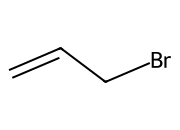
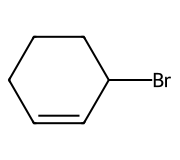
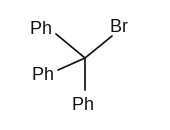
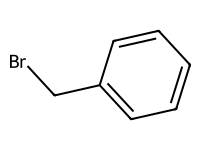
Which among the following halides will generate the most stable carbocation in the nucleophilic substitution reaction?
निम्नलिखित हैलाइडों में से कौन-सा नाभिकरागी प्रतिस्थापन अभिक्रिया में सबसे स्थायी कार्बधनायन उत्पन्न करेगा?
  1. A
  2. B
  3. C
  4. D
Show answer

Concept: Carbocation stability rises with the number of groups that can delocalise the positive charge by resonance/hyperconjugation.

  1. (A) Allyl bromide → allyl cation: charge spread over 2 carbons (one π system).
  2. (B) 3-Bromocyclohexene → secondary allylic (cyclohexenyl) cation: resonance over 2 carbons plus one alkyl framework.
  3. (C) Triphenylmethyl bromide, Ph3C–Br → trityl cation Ph3C+: the charge is delocalised into three benzene rings (9 extra resonance structures) – by far the most stable; its salts even exist as ionic solids.
  4. (D) Benzyl bromide → benzyl cation: delocalisation into only one ring.

Short trick: More phenyls on C+ = more resonance: Ph3C+ > Ph2CH+ > PhCH2+ ≈ allyl.

Answer: (C)

अवधारणा: कार्बधनायन का स्थायित्व उन समूहों की संख्या के साथ बढ़ता है जो अनुनाद/अतिसंयुग्मन द्वारा धनावेश को विस्थानीकृत कर सकते हैं।

  1. (A) ऐलिल ब्रोमाइड → ऐलिल धनायन: आवेश 2 कार्बनों पर (एक π तंत्र)।
  2. (B) 3-ब्रोमोसाइक्लोहेक्सीन → द्वितीयक ऐलिलिक (साइक्लोहेक्सेनिल) धनायन: 2 कार्बनों पर अनुनाद तथा साथ में एक ऐल्किल ढाँचा।
  3. (C) ट्राइफ़ेनिलमेथिल ब्रोमाइड, Ph3C–Br → ट्राइटिल धनायन Ph3C+: आवेश तीन बेंज़ीन वलयों में विस्थानीकृत (9 अतिरिक्त अनुनादी संरचनाएँ) – सबसे स्थायी; इसके लवण तो आयनिक ठोस के रूप में भी मिलते हैं।
  4. (D) बेंज़िल ब्रोमाइड → बेंज़िल धनायन: केवल एक वलय में विस्थानीकरण।

शॉर्ट ट्रिक: C+ पर जितने अधिक फ़ेनिल, उतना अधिक अनुनाद: Ph3C+ > Ph2CH+ > PhCH2+ ≈ ऐलिल।

उत्तर: (C)

JEE Main 2025 (January) – Paper 1 (B.E./B.Tech)ChemistryHaloalkanes – carbocation stabilityJEE Main 2025 (January) – Paper 1 (B.E./B.Tech) 2025 · 29 Jan Shift 2 →
Q1642.
Given below are two statements :
Statement (I) : It is impossible to specify simultaneously with arbitrary precision, both the linear momentum and the position of a particle.
Statement (II) : If the uncertainty in the measurement of position and uncertainty in measurement of momentum are equal for an electron, then the uncertainty in the measurement of velocity is ⩾hπ×12m.
In the light of the above statements, choose the correct answer from the options given below :
नीचे दो कथन दिए गए हैं :
कथन (I) : किसी कण के रैखिक संवेग तथा स्थिति, दोनों को एक साथ यथेच्छ परिशुद्धता से निर्धारित करना असंभव है।
कथन (II) : यदि किसी इलेक्ट्रॉन के लिए स्थिति के मापन की अनिश्चितता तथा संवेग के मापन की अनिश्चितता बराबर हों, तो वेग के मापन की अनिश्चितता ⩾hπ×12m होगी।
उपर्युक्त कथनों के आलोक में, नीचे दिए गए विकल्पों में से सही उत्तर चुनिए :
  1. AStatement I is false but Statement II is trueकथन I असत्य है परंतु कथन II सत्य है
  2. BBoth Statement I and Statement II are falseकथन I और कथन II दोनों असत्य हैं
  3. CBoth Statement I and Statement II are trueकथन I और कथन II दोनों सत्य हैं
  4. DStatement I is true but Statement II is falseकथन I सत्य है परंतु कथन II असत्य है
Show answer

Concept: Heisenberg's uncertainty principle: Δx⋅Δp≥h4π.

  1. Statement I is the uncertainty principle itself – true.
  2. Statement II: put Δx=Δp. Then (Δp)2≥h4π ⇒ Δp≥12hπ.
  3. Since Δp=mΔv: Δv≥12mhπ=hπ×12m – exactly as stated. True.

Short trick: Δx=Δp ⇒ Δp=h/4π; divide by m for Δv.

Answer: (C)

अवधारणा: हाइज़ेनबर्ग का अनिश्चितता सिद्धांत: Δx⋅Δp≥h4π।

  1. कथन I स्वयं अनिश्चितता सिद्धांत है – सत्य।
  2. कथन II: Δx=Δp रखिए। तब (Δp)2≥h4π ⇒ Δp≥12hπ।
  3. चूँकि Δp=mΔv: Δv≥12mhπ=hπ×12m – ठीक वैसा ही जैसा कथन में है। सत्य।

शॉर्ट ट्रिक: Δx=Δp ⇒ Δp=h/4π; Δv के लिए m से भाग दीजिए।

उत्तर: (C)

JEE Main 2025 (January) – Paper 1 (B.E./B.Tech)ChemistryAtomic Structure – Heisenberg uncertainty principleJEE Main 2025 (January) – Paper 1 (B.E./B.Tech) 2025 · 29 Jan Shift 2 →
Q1643.
0.1 M solution of KI reacts with excess of H2SO4 and KIO3 solutions. According to equation
5I− + IO3− + 6H+ → 3I2 + 3H2O
Identify the correct statements :
(A) 200 mL of KI solution reacts with 0.004 mol of KIO3
(B) 200 mL of KI solution reacts with 0.006 mol of H2SO4
(C) 0.5 L of KI solution produced 0.005 mol of I2
(D) Equivalent weight of KIO3 is equal to (Molecular weight5)
Choose the correct answer from the options given below :
KI का 0.1 M विलयन H2SO4 तथा KIO3 विलयनों के आधिक्य से अभिक्रिया करता है। समीकरण
5I− + IO3− + 6H+ → 3I2 + 3H2O के अनुसार
सही कथनों की पहचान कीजिए :
(A) KI विलयन का 200 mL, KIO3 के 0.004 mol से अभिक्रिया करता है
(B) KI विलयन का 200 mL, H2SO4 के 0.006 mol से अभिक्रिया करता है
(C) KI विलयन के 0.5 L से I2 के 0.005 mol बनते हैं
(D) KIO3 का तुल्यांकी भार (अणु भार (Molecular weight)5) के बराबर है
नीचे दिए गए विकल्पों में से सही उत्तर चुनिए :
  1. A(A) and (D) onlyकेवल (A) और (D)
  2. B(C) and (D) onlyकेवल (C) और (D)
  3. C(B) and (C) onlyकेवल (B) और (C)
  4. D(A) and (B) onlyकेवल (A) और (B)
Show answer

Concept: Use mole ratios from 5I− + IO3− + 6H+ → 3I2 + 3H2O; equivalent weight = M/(electrons per formula unit).

  1. (A) 200 mL × 0.1 M = 0.02 mol I−. KIO3 needed =0.025=0.004 mol – correct.
  2. (B) H+ needed =0.02×65=0.024 mol ⇒ H2SO4 =0.012 mol, not 0.006 – wrong.
  3. (C) 0.5 L ⇒ 0.05 mol I− ⇒ I2 =0.05×35=0.03 mol, not 0.005 – wrong.
  4. (D) In IO3− iodine goes from +5 to 0, gaining 5 electrons ⇒ equivalent weight of KIO3 =M5 – correct.

Short trick: Everything scales off 0.02 mol I−; divide by 5 for IO3−, multiply by 6/5 for H+, 3/5 for I2.

Answer: (A)

अवधारणा: 5I− + IO3− + 6H+ → 3I2 + 3H2O से मोल अनुपात लीजिए; तुल्यांकी भार = M/(प्रति सूत्र इकाई इलेक्ट्रॉन)।

  1. (A) 200 mL × 0.1 M = 0.02 mol I−। आवश्यक KIO3 =0.025=0.004 mol – सही।
  2. (B) आवश्यक H+ =0.02×65=0.024 mol ⇒ H2SO4 =0.012 mol, 0.006 नहीं – गलत।
  3. (C) 0.5 L ⇒ 0.05 mol I− ⇒ I2 =0.05×35=0.03 mol, 0.005 नहीं – गलत।
  4. (D) IO3− में आयोडीन +5 से 0 तक जाता है, 5 इलेक्ट्रॉन ग्रहण ⇒ KIO3 का तुल्यांकी भार =M5 – सही।

शॉर्ट ट्रिक: सब कुछ 0.02 mol I− से: IO3− के लिए ÷5, H+ के लिए ×6/5, I2 के लिए ×3/5।

उत्तर: (A)

JEE Main 2025 (January) – Paper 1 (B.E./B.Tech)ChemistryRedox – stoichiometry and equivalent weightJEE Main 2025 (January) – Paper 1 (B.E./B.Tech) 2025 · 29 Jan Shift 2 →
Q1644.
Given below are two statements :
Statement (I): In partition chromatography, stationary phase is thin film of liquid present in the inert support.
Statement (II) : In paper chromatography, the material of paper acts as a stationary phase.
In the light of the above statements, choose the correct answer from the options given below :
नीचे दो कथन दिए गए हैं :
कथन (I) : वितरण वर्णलेखन (partition chromatography) में, स्थिर प्रावस्था अक्रिय आधार में उपस्थित द्रव की पतली फिल्म होती है।
कथन (II) : पेपर वर्णलेखन में, कागज़ का पदार्थ स्थिर प्रावस्था का कार्य करता है।
उपर्युक्त कथनों के आलोक में, नीचे दिए गए विकल्पों में से सही उत्तर चुनिए :
  1. AStatement I is true but Statement II is falseकथन I सत्य है परंतु कथन II असत्य है
  2. BStatement I is false but Statement II is trueकथन I असत्य है परंतु कथन II सत्य है
  3. CBoth Statement I and Statement II are falseकथन I और कथन II दोनों असत्य हैं
  4. DBoth Statement I and Statement II are trueकथन I और कथन II दोनों सत्य हैं
Show answer

Concept: Partition chromatography works by continuous differential partitioning of components between a stationary liquid phase and a mobile liquid phase.

  1. Statement I: in partition chromatography the stationary phase is indeed a thin film of liquid held on an inert solid support – true.
  2. Statement II: paper chromatography is a type of partition chromatography; the stationary phase is the water trapped in the pores/fibres of the paper, not the cellulose material of the paper itself – false.
  3. Hence Statement I is true and Statement II is false.

Short trick: In paper chromatography: paper = support, trapped water = stationary phase.

Answer: (A)

अवधारणा: वितरण वर्णलेखन में घटक, स्थिर द्रव प्रावस्था और गतिशील द्रव प्रावस्था के बीच लगातार भिन्न-भिन्न रूप से वितरित होते रहते हैं।

  1. कथन I: वितरण वर्णलेखन में स्थिर प्रावस्था वास्तव में अक्रिय ठोस आधार पर टिकी द्रव की पतली फिल्म होती है – सत्य।
  2. कथन II: पेपर वर्णलेखन वितरण वर्णलेखन का ही एक प्रकार है; स्थिर प्रावस्था कागज़ के छिद्रों/रेशों में फँसा जल है, कागज़ का सेलुलोस पदार्थ नहीं – असत्य।
  3. अतः कथन I सत्य और कथन II असत्य है।

शॉर्ट ट्रिक: पेपर वर्णलेखन में: कागज़ = आधार, फँसा हुआ जल = स्थिर प्रावस्था।

उत्तर: (A)

JEE Main 2025 (January) – Paper 1 (B.E./B.Tech)ChemistryPurification techniques – chromatographyJEE Main 2025 (January) – Paper 1 (B.E./B.Tech) 2025 · 29 Jan Shift 2 →
Q1645.
If C(diamond) → C(graphite) + X kJ mol−1
C(diamond) + O2(g) → CO2(g) + Y kJ mol−1
C(graphite) + O2(g) → CO2(g) + Z kJ mol−1
at constant temperature. Then
यदि स्थिर ताप पर
C(हीरा) → C(ग्रेफ़ाइट) + X kJ mol−1
C(हीरा) + O2(g) → CO2(g) + Y kJ mol−1
C(ग्रेफ़ाइट) + O2(g) → CO2(g) + Z kJ mol−1
हो, तो
  1. AX = −Y + Z
  2. B−X = Y + Z
  3. CX = Y + Z
  4. DX = Y − Z
Show answer

Concept: Hess's law – enthalpy change is path independent. Here X, Y, Z are the heats evolved (written on the product side).

  1. Diamond → graphite can be built as: diamond + O2 → CO2 (releases Y), then CO2 → graphite + O2 (absorbs Z).
  2. Net heat evolved X=Y−Z.
  3. Check with enthalpies: ΔH1=−X, ΔH2=−Y, ΔH3=−Z; Hess: −X=−Y−(−Z) ⇒ X=Y−Z.

Short trick: Subtract the two combustion equations: (diamond – graphite) combustion difference = transition heat.

Answer: (D)

अवधारणा: हेस का नियम – एन्थैल्पी परिवर्तन पथ पर निर्भर नहीं करता। यहाँ X, Y, Z निर्मुक्त ऊष्माएँ हैं (उत्पाद पक्ष में लिखी गई)।

  1. हीरा → ग्रेफ़ाइट को ऐसे बनाइए: हीरा + O2 → CO2 (Y निर्मुक्त), फिर CO2 → ग्रेफ़ाइट + O2 (Z अवशोषित)।
  2. नेट निर्मुक्त ऊष्मा X=Y−Z।
  3. एन्थैल्पी से जाँच: ΔH1=−X, ΔH2=−Y, ΔH3=−Z; हेस: −X=−Y−(−Z) ⇒ X=Y−Z।

शॉर्ट ट्रिक: दोनों दहन समीकरण घटाइए: (हीरा – ग्रेफ़ाइट) के दहन का अंतर = संक्रमण ऊष्मा।

उत्तर: (D)

JEE Main 2025 (January) – Paper 1 (B.E./B.Tech)ChemistryThermochemistry – Hess's lawJEE Main 2025 (January) – Paper 1 (B.E./B.Tech) 2025 · 29 Jan Shift 2 →
Q1646.
In the sulphur estimation, 0.20 g of a pure organic compound gave 0.40 g of barium sulphate. The percentage of sulphur in the compound is ______ ×10−1 %. (Molar mass : O = 16, S = 32, Ba = 137 in g mol−1)
सल्फ़र आकलन में, एक शुद्ध कार्बनिक यौगिक के 0.20 g से 0.40 g बेरियम सल्फ़ेट प्राप्त हुआ। यौगिक में सल्फ़र का प्रतिशत ______ ×10−1 % है। (मोलर द्रव्यमान : O = 16, S = 32, Ba = 137, g mol−1 में)
Show answer

Concept: Carius method: all sulphur in the compound ends up as BaSO4. %S=32MBaSO4×mBaSO4mcompound×100.

  1. MBaSO4=137+32+4(16)=233 g mol−1.
  2. Mass of S in 0.40 g BaSO4 =32233×0.40=0.05494 g.
  3. %S=0.054940.20×100=27.47%=274.7×10⁻¹%≈275×10−1%.

Short trick: %S=32233×0.400.20×100=6400233≈27.5.

Answer: 275

अवधारणा: कैरिअस विधि: यौगिक का सारा सल्फ़र BaSO4 के रूप में प्राप्त होता है। %S=32MBaSO4×mBaSO4mयौगिक×100।

  1. MBaSO4=137+32+4(16)=233 g mol−1।
  2. 0.40 g BaSO4 में S का द्रव्यमान =32233×0.40=0.05494 g।
  3. %S=0.054940.20×100=27.47%=274.7×10⁻¹%≈275×10−1%।

शॉर्ट ट्रिक: %S=32233×0.400.20×100=6400233≈27.5।

उत्तर: 275

JEE Main 2025 (January) – Paper 1 (B.E./B.Tech)ChemistryOrganic analysis – estimation of sulphurJEE Main 2025 (January) – Paper 1 (B.E./B.Tech) 2025 · 29 Jan Shift 2 →
Q1647.
Isomeric hydrocarbons → negative Baeyer's test (Molecular formula C9H12)
The total number of isomers from above with four different non-aliphatic substitution sites is -
समावयवी हाइड्रोकार्बन → ऋणात्मक बेयर परीक्षण (अणुसूत्र C9H12)
उपर्युक्त में से चार भिन्न अ-ऐलिफ़ैटिक (non-aliphatic) प्रतिस्थापन स्थलों वाले समावयवियों की कुल संख्या है -
Show answer

Concept: C9H12 with a negative Baeyer's test (no C=C/C≡C oxidisable by cold KMnO4) means benzene-ring isomers. “Non-aliphatic substitution sites” = distinct types of ring (aromatic) H positions.

  1. The 8 aromatic isomers: n-propylbenzene, isopropylbenzene, o-/m-/p-ethyltoluene, 1,2,3-, 1,2,4- and 1,3,5-trimethylbenzene.
  2. Distinct ring-H sites: n-propyl- and isopropylbenzene → 3 (o, m, p); p-ethyltoluene → 2; 1,2,3-TMB → 2; 1,2,4-TMB → 3; 1,3,5-TMB → 1.
  3. o-Ethyltoluene (1-Et-2-Me): ring H at C-3, 4, 5, 6 are all inequivalent → 4 sites.
  4. m-Ethyltoluene (1-Et-3-Me): H at C-2, 4, 5, 6 are all inequivalent → 4 sites.
  5. So exactly 2 isomers qualify.

Short trick: Four different ring-H types need two different substituents placed unsymmetrically → only o- and m-ethyltoluene.

Answer: 2

अवधारणा: ऋणात्मक बेयर परीक्षण (ठंडे KMnO4 से ऑक्सीकृत होने वाला C=C/C≡C नहीं) वाले C9H12 का अर्थ है बेंज़ीन-वलय समावयवी। “अ-ऐलिफ़ैटिक प्रतिस्थापन स्थल” = वलय (ऐरोमैटिक) H स्थितियों के भिन्न प्रकार।

  1. 8 ऐरोमैटिक समावयवी: n-प्रोपिलबेंज़ीन, आइसोप्रोपिलबेंज़ीन, o-/m-/p-एथिलटॉलूईन, 1,2,3-, 1,2,4- तथा 1,3,5-ट्राइमेथिलबेंज़ीन।
  2. भिन्न वलय-H स्थल: n-प्रोपिल- व आइसोप्रोपिलबेंज़ीन → 3 (o, m, p); p-एथिलटॉलूईन → 2; 1,2,3-TMB → 2; 1,2,4-TMB → 3; 1,3,5-TMB → 1।
  3. o-एथिलटॉलूईन (1-Et-2-Me): C-3, 4, 5, 6 के वलय H सभी असमतुल्य → 4 स्थल।
  4. m-एथिलटॉलूईन (1-Et-3-Me): C-2, 4, 5, 6 के H सभी असमतुल्य → 4 स्थल।
  5. अतः ठीक 2 समावयवी ऐसे हैं।

शॉर्ट ट्रिक: चार भिन्न वलय-H प्रकारों के लिए दो भिन्न प्रतिस्थापी असममित स्थिति में चाहिए → केवल o- व m-एथिलटॉलूईन।

उत्तर: 2

JEE Main 2025 (January) – Paper 1 (B.E./B.Tech)ChemistryHydrocarbons – aromatic isomers of C9H12JEE Main 2025 (January) – Paper 1 (B.E./B.Tech) 2025 · 29 Jan Shift 2 →
Q1648.
Consider the following low-spin complexes K3[Co(NO2)6], K4[Fe(CN)6], K3[Fe(CN)6], Cu2[Fe(CN)6] and Zn2[Fe(CN)6]
The sum of the spin-only magnetic moment values of complexes having yellow colour is _____ B.M. (answer in nearest integer)
निम्नलिखित निम्न-चक्रण संकुलों पर विचार कीजिए: K3[Co(NO2)6], K4[Fe(CN)6], K3[Fe(CN)6], Cu2[Fe(CN)6] तथा Zn2[Fe(CN)6]
पीले रंग वाले संकुलों के चक्रण-मात्र चुंबकीय आघूर्ण मानों का योग _____ B.M. है। (निकटतम पूर्णांक में उत्तर दीजिए)
Show answer

Concept: Identify the yellow complexes, then add their spin-only moments μ=n(n+2) for low-spin configurations.

  1. K3[Co(NO2)6] (potassium hexanitrocobaltate(III)) – yellow; Co3+ d6 low spin: t2g6, n=0, μ=0.
  2. K4[Fe(CN)6] (potassium ferrocyanide) – yellow; Fe2+ d6 low spin: n=0, μ=0.
  3. K3[Fe(CN)6] is ruby red, Cu2[Fe(CN)6] is chocolate brown, Zn2[Fe(CN)6] is white – none is yellow.
  4. Sum =0+0=0 B.M.

Short trick: Both yellow ones are low-spin d6 → diamagnetic → the sum must be 0.

Answer: 0

अवधारणा: पहले पीले संकुल पहचानिए, फिर निम्न-चक्रण विन्यासों के लिए उनके चक्रण-मात्र आघूर्ण μ=n(n+2) जोड़िए।

  1. K3[Co(NO2)6] (पोटैशियम हेक्सानाइट्रोकोबाल्टेट(III)) – पीला; Co3+ d6 निम्न-चक्रण: t2g6, n=0, μ=0।
  2. K4[Fe(CN)6] (पोटैशियम फेरोसायनाइड) – पीला; Fe2+ d6 निम्न-चक्रण: n=0, μ=0।
  3. K3[Fe(CN)6] लाल, Cu2[Fe(CN)6] चॉकलेटी भूरा, Zn2[Fe(CN)6] श्वेत है – कोई पीला नहीं।
  4. योग =0+0=0 B.M.

शॉर्ट ट्रिक: दोनों पीले संकुल निम्न-चक्रण d6 हैं → प्रतिचुंबकीय → योग 0 ही होगा।

उत्तर: 0

JEE Main 2025 (January) – Paper 1 (B.E./B.Tech)ChemistryCoordination Compounds – colour and magnetic momentJEE Main 2025 (January) – Paper 1 (B.E./B.Tech) 2025 · 29 Jan Shift 2 →
Q1649.
In the Claisen-Schmidt reaction to prepare, dibenzalacetone from 5.3 g of benzaldehyde, a total of 3.51 g of product was obtained. The percentage yield in this reaction was ______ %.
5.3 g बेंज़ैल्डिहाइड से डाइबेंज़ैलऐसीटोन बनाने की क्लेज़न-श्मिट अभिक्रिया में कुल 3.51 g उत्पाद प्राप्त हुआ। इस अभिक्रिया में प्रतिशत लब्धि ______ % थी।
Show answer

Concept: Claisen–Schmidt condensation: 2 C6H5CHO + CH3COCH3 → (C6H5CH=CH)2C=O (dibenzalacetone, C17H14O) + 2H2O. Benzaldehyde is the limiting reagent.

  1. Moles of PhCHO =5.3106=0.05 mol.
  2. 2 mol PhCHO give 1 mol product ⇒ theoretical product =0.025 mol.
  3. M(C17H14O) =17(12)+14(1)+16=234 g mol−1 ⇒ theoretical mass =0.025×234=5.85 g.
  4. %yield=3.515.85×100=60%.

Short trick: 3.515.85=0.6 exactly – the data are built for a clean 60.

Answer: 60

अवधारणा: क्लेज़न–श्मिट संघनन: 2 C6H5CHO + CH3COCH3 → (C6H5CH=CH)2C=O (डाइबेंज़ैलऐसीटोन, C17H14O) + 2H2O। बेंज़ैल्डिहाइड सीमांत अभिकर्मक है।

  1. PhCHO के मोल =5.3106=0.05 mol।
  2. 2 mol PhCHO से 1 mol उत्पाद ⇒ सैद्धांतिक उत्पाद =0.025 mol।
  3. M(C17H14O) =17(12)+14(1)+16=234 g mol−1 ⇒ सैद्धांतिक द्रव्यमान =0.025×234=5.85 g।
  4. % लब्धि =3.515.85×100=60%।

शॉर्ट ट्रिक: 3.515.85=0.6 ठीक-ठीक – आँकड़े सीधे 60 के लिए बने हैं।

उत्तर: 60

JEE Main 2025 (January) – Paper 1 (B.E./B.Tech)ChemistryAldehydes & Ketones – Claisen–Schmidt, percentage yieldJEE Main 2025 (January) – Paper 1 (B.E./B.Tech) 2025 · 29 Jan Shift 2 →
Q1650.
Total number of non bonded electrons present in NO2− ion based on Lewis theory is
लूइस सिद्धांत के आधार पर NO2− आयन में उपस्थित अनाबंधित (non bonded) इलेक्ट्रॉनों की कुल संख्या है
Show answer

Concept: Non-bonded electrons = total valence electrons − electrons used in bonds.

  1. Total valence electrons in NO2− =5+2(6)+1=18.
  2. Lewis structure: O=N–O− → one N–O single bond and one N=O double bond = 3 bond pairs = 6 bonding electrons.
  3. Non-bonded electrons =18−6=12 (one lone pair on N, two on the double-bonded O, three on the single-bonded O).

Short trick: 18 valence e− − 6 in bonds = 12 = 6 lone pairs.

Answer: 12

अवधारणा: अनाबंधित इलेक्ट्रॉन = कुल संयोजी इलेक्ट्रॉन − आबंधों में लगे इलेक्ट्रॉन।

  1. NO2− में कुल संयोजी इलेक्ट्रॉन =5+2(6)+1=18।
  2. लूइस संरचना: O=N–O− → एक N–O एकल आबंध तथा एक N=O द्विआबंध = 3 आबंध युग्म = 6 आबंधी इलेक्ट्रॉन।
  3. अनाबंधित इलेक्ट्रॉन =18−6=12 (N पर एक एकाकी युग्म, द्विआबंधित O पर दो, एकल-आबंधित O पर तीन)।

शॉर्ट ट्रिक: 18 संयोजी e− − 6 आबंधी = 12 = 6 एकाकी युग्म।

उत्तर: 12

JEE Main 2025 (January) – Paper 1 (B.E./B.Tech)ChemistryChemical Bonding – Lewis structure of NO2-JEE Main 2025 (January) – Paper 1 (B.E./B.Tech) 2025 · 29 Jan Shift 2 →
Q1651.
Let x1,x2,…,x10 be ten observations such that ∑i=110(xi−2)=30, ∑i=110(xi−β)2=98, β>2, and their variance is 45. If μ and σ2 are respectively the mean and the variance of 2(x1−1)+4β, 2(x2−1)+4β,…,2(x10−1)+4β, then βμσ2 is equal to :
माना x1,x2,…,x10 दस प्रेक्षण इस प्रकार हैं कि ∑i=110(xi−2)=30, ∑i=110(xi−β)2=98, β>2 तथा इनका प्रसरण (variance) 45 है। यदि 2(x1−1)+4β, 2(x2−1)+4β,…,2(x10−1)+4β के माध्य (mean) तथा प्रसरण क्रमशः μ तथा σ2 हैं, तो βμσ2 बराबर है :
  1. A100
  2. B120
  3. C110
  4. D90
Show answer

Concept: If yi=cxi+d then y¯=cx¯+d and σy2=c2σx2.

  1. ∑(xi−2)=30⇒∑xi=50⇒x¯=5.
  2. Variance =∑xi210−x¯2=45⇒∑xi2=10(25+45)=258.
  3. ∑(xi−β)2=258−2β(50)+10β2=98⇒β2−10β+16=0⇒β=2 or 8; since β>2, β=8.
  4. yi=2(xi−1)+4β=2xi+30⇒μ=2(5)+30=40 and σ2=22⋅45=165.
  5. βμσ2=8×4016/5=100.

Short trick: Adding a constant never changes variance – only the factor 2 scales it to 4σx2.

Answer: (A) 100

अवधारणा: यदि yi=cxi+d हो, तो y¯=cx¯+d तथा σy2=c2σx2.

  1. ∑(xi−2)=30⇒∑xi=50⇒x¯=5.
  2. प्रसरण =∑xi210−x¯2=45⇒∑xi2=10(25+45)=258.
  3. ∑(xi−β)2=258−2β(50)+10β2=98⇒β2−10β+16=0⇒β=2 या 8; चूँकि β>2, अतः β=8.
  4. yi=2(xi−1)+4β=2xi+30⇒μ=2(5)+30=40 तथा σ2=22⋅45=165.
  5. βμσ2=8×4016/5=100.

शॉर्ट ट्रिक: अचर जोड़ने से प्रसरण नहीं बदलता – केवल गुणांक 2 से प्रसरण 4σx2 हो जाता है।

उत्तर: (A) 100

JEE Main 2025 (January) – Paper 1 (B.E./B.Tech)MathematicsStatistics – mean and varianceJEE Main 2025 (January) – Paper 1 (B.E./B.Tech) 2025 · 29 Jan Shift 1 →
Q1652.
Consider an A. P. of positive integers, whose sum of the first three terms is 54 and the sum of the first twenty terms lies between 1600 and 1800. Then its 11th term is :
धनात्मक पूर्णांकों की एक समांतर श्रेढ़ी (A.P.) लीजिए, जिसके प्रथम तीन पदों का योग 54 है तथा प्रथम बीस पदों का योग 1600 और 1800 के बीच है। तो इसका 11वाँ पद है :
  1. A90
  2. B84
  3. C122
  4. D108
Show answer

Concept: S3=3a2, so the second term is fixed at once.

  1. S3=3(a+d)=54⇒a+d=18⇒a=18−d.
  2. S20=10(2a+19d)=10(36+17d). Given 1600<10(36+17d)<1800⇒124<17d<144⇒7.3<d<8.5.
  3. Terms are positive integers, so d=8 and a=10.
  4. T11=a+10d=10+80=90.

Short trick: a+d=18 kills one unknown instantly; only an integer d in (7.3,8.5) survives.

Answer: (A) 90

अवधारणा: S3=3a2, अतः दूसरा पद तुरंत निश्चित हो जाता है।

  1. S3=3(a+d)=54⇒a+d=18⇒a=18−d.
  2. S20=10(2a+19d)=10(36+17d). दिया है 1600<10(36+17d)<1800⇒124<17d<144⇒7.3<d<8.5.
  3. पद धनात्मक पूर्णांक हैं, अतः d=8 तथा a=10.
  4. T11=a+10d=10+80=90.

शॉर्ट ट्रिक: a+d=18 से एक अज्ञात तुरंत समाप्त; (7.3,8.5) में केवल पूर्णांक d=8 ही संभव है।

उत्तर: (A) 90

JEE Main 2025 (January) – Paper 1 (B.E./B.Tech)MathematicsSequences and series – A.P.JEE Main 2025 (January) – Paper 1 (B.E./B.Tech) 2025 · 29 Jan Shift 1 →
Q1653.
The number of solutions of the equation (9x−9x+2)(2x−7x+3)=0 is:
समीकरण (9x−9x+2)(2x−7x+3)=0 के हलों की संख्या है :
  1. A2
  2. B3
  3. C1
  4. D4
Show answer

Concept: Put t=1x (so x>0, t>0); each factor becomes a quadratic in t.

  1. First factor: 9t2−9t+2=0⇒(3t−1)(3t−2)=0⇒t=13,23⇒x=9,94.
  2. Second factor: 2t2−7t+3=0⇒(2t−1)(t−3)=0⇒t=12,3⇒x=4,19.
  3. All four values of t are positive and give four distinct admissible x: 9,94,4,19.

Short trick: Both quadratics in t have positive roots (sign pattern +,−,+ with positive product and sum of roots), so every root counts – total 2+2=4.

Answer: (D) 4

अवधारणा: t=1x रखें (अतः x>0, t>0); प्रत्येक गुणनखंड t में द्विघात बन जाता है।

  1. पहला गुणनखंड: 9t2−9t+2=0⇒(3t−1)(3t−2)=0⇒t=13,23⇒x=9,94.
  2. दूसरा गुणनखंड: 2t2−7t+3=0⇒(2t−1)(t−3)=0⇒t=12,3⇒x=4,19.
  3. t के चारों मान धनात्मक हैं और चार भिन्न मान्य x देते हैं: 9,94,4,19.

शॉर्ट ट्रिक: दोनों द्विघातों के मूल धनात्मक हैं (चिह्न-क्रम +,−,+: मूलों का योग तथा गुणनफल दोनों धनात्मक), अतः हर मूल गिना जाएगा – कुल 2+2=4.

उत्तर: (D) 4

JEE Main 2025 (January) – Paper 1 (B.E./B.Tech)MathematicsQuadratic equations – substitutionJEE Main 2025 (January) – Paper 1 (B.E./B.Tech) 2025 · 29 Jan Shift 1 →
Q1654.
Define a relation R on the interval [0,π2) by xRy if and only if sec2⁡x−tan2⁡y=1. Then R is :
अंतराल [0,π2) पर एक संबंध R इस प्रकार परिभाषित कीजिए : xRy यदि और केवल यदि sec2⁡x−tan2⁡y=1. तो R है :
  1. Aboth reflexive and transitive but not symmetricस्वतुल्य (reflexive) तथा संक्रामक (transitive) दोनों है परंतु सममित (symmetric) नहीं है
  2. Ban equivalence relationएक तुल्यता संबंध (equivalence relation) है
  3. Creflexive but neither symmetric not transitiveस्वतुल्य है परंतु न तो सममित है और न संक्रामक
  4. Dboth reflexive and symmetric but not transitiveस्वतुल्य तथा सममित दोनों है परंतु संक्रामक नहीं है
Show answer

Concept: sec2⁡x=1+tan2⁡x, so the condition sec2⁡x−tan2⁡y=1 is just tan2⁡x=tan2⁡y.

  1. On [0,π2), tan is non-negative and one-one, so tan2⁡x=tan2⁡y⇔tan⁡x=tan⁡y⇔x=y.
  2. Thus R is exactly the identity relation on the interval.
  3. Identity relation is reflexive (x=x), symmetric (x=y⇒y=x) and transitive (x=y, y=z⇒x=z) – an equivalence relation. Hence (A), (C), (D) are all wrong because R is in fact symmetric and transitive too.

Short trick: Whenever the defining condition reduces to "x=y", the relation is automatically an equivalence relation.

Answer: (B) an equivalence relation

अवधारणा: sec2⁡x=1+tan2⁡x, अतः शर्त sec2⁡x−tan2⁡y=1 वास्तव में tan2⁡x=tan2⁡y ही है।

  1. [0,π2) पर tan अऋणात्मक तथा एकैकी है, अतः tan2⁡x=tan2⁡y⇔tan⁡x=tan⁡y⇔x=y.
  2. अर्थात R इस अंतराल पर तत्समक (identity) संबंध है।
  3. तत्समक संबंध स्वतुल्य (x=x), सममित (x=y⇒y=x) तथा संक्रामक (x=y, y=z⇒x=z) होता है – अर्थात तुल्यता संबंध। इसलिए (A), (C), (D) गलत हैं, क्योंकि R वस्तुतः सममित और संक्रामक भी है।

शॉर्ट ट्रिक: जब भी शर्त "x=y" में बदल जाए, संबंध स्वतः तुल्यता संबंध होता है।

उत्तर: (B) एक तुल्यता संबंध है

JEE Main 2025 (January) – Paper 1 (B.E./B.Tech)MathematicsRelations – equivalence relationJEE Main 2025 (January) – Paper 1 (B.E./B.Tech) 2025 · 29 Jan Shift 1 →
Q1655.
Two parabolas have the same focus (4,3) and their directrices are the x-axis and the y-axis, respectively. If these parabolas intersects at the points A and B, then (AB)2 is equal to :
दो परवलयों की नाभि (focus) एक ही बिंदु (4,3) है तथा इनकी नियताएँ (directrices) क्रमशः x-अक्ष तथा y-अक्ष हैं। यदि ये परवलय बिंदुओं A तथा B पर प्रतिच्छेद करते हैं, तो (AB)2 बराबर है :
  1. A392
  2. B384
  3. C192
  4. D96
Show answer

Concept: A parabola is the locus of points equidistant from the focus and the directrix.

  1. Parabola 1 (directrix y=0): (x−4)2+(y−3)2=y2. Parabola 2 (directrix x=0): (x−4)2+(y−3)2=x2.
  2. At an intersection point both hold, so x2=y2⇒y=±x.
  3. y=−x: (x−4)2+(x+3)2=x2⇒x2−2x+25=0 – no real root.
  4. y=x: (x−4)2+(x−3)2=x2⇒x2−14x+25=0⇒x1,2=7±26, so A,B lie on y=x with x1−x2=46.
  5. (AB)2=(x1−x2)2+(y1−y2)2=2(46)2=192.

Short trick: On the line y=x, (AB)2=2(x1−x2)2=2[(x1+x2)2−4x1x2]=2(196−100)=192.

Answer: (C) 192

अवधारणा: परवलय नाभि तथा नियता से समदूरस्थ बिंदुओं का बिंदुपथ है।

  1. परवलय 1 (नियता y=0): (x−4)2+(y−3)2=y2. परवलय 2 (नियता x=0): (x−4)2+(y−3)2=x2.
  2. प्रतिच्छेद बिंदु पर दोनों सत्य हैं, अतः x2=y2⇒y=±x.
  3. y=−x: (x−4)2+(x+3)2=x2⇒x2−2x+25=0 – कोई वास्तविक मूल नहीं।
  4. y=x: (x−4)2+(x−3)2=x2⇒x2−14x+25=0⇒x1,2=7±26, अर्थात A,B रेखा y=x पर हैं तथा x1−x2=46.
  5. (AB)2=(x1−x2)2+(y1−y2)2=2(46)2=192.

शॉर्ट ट्रिक: रेखा y=x पर (AB)2=2(x1−x2)2=2[(x1+x2)2−4x1x2]=2(196−100)=192.

उत्तर: (C) 192

JEE Main 2025 (January) – Paper 1 (B.E./B.Tech)MathematicsConic sections – parabolaJEE Main 2025 (January) – Paper 1 (B.E./B.Tech) 2025 · 29 Jan Shift 1 →
Q1656.
Let P be the set of seven digit numbers with sum of their digits equal to 11 . If the numbers in P are formed by using the digits 1,2 and 3 only, then the number of elements in the set P is :
माना P उन सात अंकों की संख्याओं का समुच्चय है जिनके अंकों का योग 11 है। यदि P की संख्याएँ केवल अंकों 1, 2 तथा 3 के प्रयोग से बनाई गई हैं, तो समुच्चय P में अवयवों की संख्या है :
  1. A173
  2. B164
  3. C158
  4. D161
Show answer

Concept: Count strings (d1,…,d7), di∈{1,2,3}, ∑di=11 — a generating-function coefficient.

  1. Put ei=di−1∈{0,1,2}; then ∑ei=4.
  2. Required count = coefficient of x4 in (1+x+x2)7=(1−x3)7(1−x)−7.
  3. Coefficient =(104)−(71)(71)=210−49=161.

Short trick: For (1+x+x2)n the coefficient of x4 is (n+34)−n2; with n=7: 210−49=161.

Answer: (D) 161

अवधारणा: ऐसी शृंखलाएँ (d1,…,d7), di∈{1,2,3}, ∑di=11 गिननी हैं — जनक फलन (generating function) का गुणांक।

  1. ei=di−1∈{0,1,2} रखें; तब ∑ei=4.
  2. अभीष्ट संख्या = (1+x+x2)7=(1−x3)7(1−x)−7 में x4 का गुणांक।
  3. गुणांक =(104)−(71)(71)=210−49=161.

शॉर्ट ट्रिक: (1+x+x2)n में x4 का गुणांक =(n+34)−n2 (यहाँ n=7): 210−49=161.

उत्तर: (D) 161

JEE Main 2025 (January) – Paper 1 (B.E./B.Tech)MathematicsPermutations and combinationsJEE Main 2025 (January) – Paper 1 (B.E./B.Tech) 2025 · 29 Jan Shift 1 →
Q1657.
Let a→=i^+2j^+k^ and b→=2i^+7j^+3k^. Let L1:r→=(−i^+2j^+k^)+λa→, λ∈R and L2:r→=(j^+k^)+μb→, μ∈R be two lines. If the line L3 passes through the point of intersection of L1 and L2, and is parallel to a→+b→, then L3 passes through the point :
माना a→=i^+2j^+k^ तथा b→=2i^+7j^+3k^ हैं। माना L1:r→=(−i^+2j^+k^)+λa→, λ∈R तथा L2:r→=(j^+k^)+μb→, μ∈R दो रेखाएँ हैं। यदि रेखा L3, रेखाओं L1 तथा L2 के प्रतिच्छेद बिंदु से होकर जाती है तथा a→+b→ के समांतर है, तो L3 जिस बिंदु से होकर जाती है, वह है :
  1. A(5,17,4)
  2. B(2,8,5)
  3. C(8,26,12)
  4. D(−1,−1,1)
Show answer

Concept: Find the common point by equating the two parametric forms, then march along a→+b→.

  1. Equate components: −1+λ=2μ, 2+2λ=1+7μ, 1+λ=1+3μ.
  2. Third gives λ=3μ; first then gives 3μ−1=2μ⇒μ=1,λ=3 (second checks: 8=8). Intersection point P(2,8,4).
  3. a→+b→=3i^+9j^+4k^, so L3:(2+3t, 8+9t, 4+4t).
  4. t=2 gives (8,26,12). For the others no single t works: e.g. (5,17,4) needs t=1 from x but t=0 from z.

Short trick: Check options directly: (option − P) must be parallel to (3,9,4); only (8,26,12)−(2,8,4)=(6,18,8)=2(3,9,4) is.

Answer: (C) (8,26,12)

अवधारणा: दोनों प्राचलिक रूपों को बराबर रखकर उभयनिष्ठ बिंदु निकालें, फिर a→+b→ की दिशा में चलें।

  1. घटक बराबर रखें: −1+λ=2μ, 2+2λ=1+7μ, 1+λ=1+3μ.
  2. तीसरे से λ=3μ; पहले से 3μ−1=2μ⇒μ=1,λ=3 (दूसरा संतुष्ट: 8=8)। प्रतिच्छेद बिंदु P(2,8,4).
  3. a→+b→=3i^+9j^+4k^, अतः L3:(2+3t, 8+9t, 4+4t).
  4. t=2 पर (8,26,12) मिलता है। अन्य विकल्पों के लिए कोई एक t नहीं चलता: जैसे (5,17,4) के लिए x से t=1 पर z से t=0.

शॉर्ट ट्रिक: विकल्प जाँचें: (विकल्प − P), (3,9,4) के समांतर होना चाहिए; केवल (8,26,12)−(2,8,4)=(6,18,8)=2(3,9,4) ही है।

उत्तर: (C) (8,26,12)

JEE Main 2025 (January) – Paper 1 (B.E./B.Tech)MathematicsVector algebra – lines in spaceJEE Main 2025 (January) – Paper 1 (B.E./B.Tech) 2025 · 29 Jan Shift 1 →
Q1658.
Let a→=2i^−j^+3k^, b→=3i^−5j^+k^ and c→ be a vector such that a→×c→=c→×b→ and (a→+c→)⋅(b→+c→)=168. Then the maximum value of |c→|2 is :
माना a→=2i^−j^+3k^, b→=3i^−5j^+k^ तथा c→ एक ऐसा सदिश है कि a→×c→=c→×b→ तथा (a→+c→)⋅(b→+c→)=168 है। तो |c→|2 का अधिकतम मान है :
  1. A462
  2. B77
  3. C154
  4. D308
Show answer

Concept: a→×c→=c→×b→⇒(a→+b→)×c→=0→⇒c→∥(a→+b→).

  1. a→+b→=5i^−6j^+4k^, |a→+b→|2=25+36+16=77; write c→=t(a→+b→).
  2. (a→+c→)⋅(b→+c→)=a→⋅b→+(a→+b→)⋅c→+|c→|2.
  3. a→⋅b→=6+5+3=14; (a→+b→)⋅c→=77t; |c→|2=77t2.
  4. 14+77t+77t2=168⇒t2+t−2=0⇒t=1 or t=−2.
  5. Maximum |c→|2=77t2=77(4)=308.

Short trick: Cross condition always forces c→=t(a→+b→) – the whole problem collapses to one quadratic in t.

Answer: (D) 308

अवधारणा: a→×c→=c→×b→⇒(a→+b→)×c→=0→⇒c→∥(a→+b→).

  1. a→+b→=5i^−6j^+4k^, |a→+b→|2=25+36+16=77; c→=t(a→+b→) लिखें।
  2. (a→+c→)⋅(b→+c→)=a→⋅b→+(a→+b→)⋅c→+|c→|2.
  3. a→⋅b→=6+5+3=14; (a→+b→)⋅c→=77t; |c→|2=77t2.
  4. 14+77t+77t2=168⇒t2+t−2=0⇒t=1 या t=−2.
  5. अधिकतम |c→|2=77t2=77(4)=308.

शॉर्ट ट्रिक: सदिश-गुणन की शर्त सदैव c→=t(a→+b→) देती है – पूरा प्रश्न t के एक द्विघात में सिमट जाता है।

उत्तर: (D) 308

JEE Main 2025 (January) – Paper 1 (B.E./B.Tech)MathematicsVector algebra – cross and dot productJEE Main 2025 (January) – Paper 1 (B.E./B.Tech) 2025 · 29 Jan Shift 1 →
Q1659.
The integral 80∫0π4(sin⁡θ+cos⁡θ9+16sin⁡2θ)dθ is equal to :
समाकल 80∫0π4(sin⁡θ+cos⁡θ9+16sin⁡2θ)dθ बराबर है :
  1. A3loge⁡4
  2. B4loge⁡3
  3. C6loge⁡4
  4. D2loge⁡3
Show answer

Concept: When (sin⁡θ+cos⁡θ)dθ appears, substitute u=sin⁡θ−cos⁡θ; then sin⁡2θ=1−u2.

  1. du=(cos⁡θ+sin⁡θ)dθ; limits: θ=0⇒u=−1, θ=π4⇒u=0.
  2. I=80∫−10du9+16(1−u2)=80∫−10du25−16u2=5∫−10du(54)2−u2.
  3. =5⋅12⋅54[ln⁡|54+u54−u|]−10=2[0−ln⁡1/49/4]=2ln⁡9=4ln⁡3.

Short trick: 9+16sin⁡2θ=25−16(sin⁡θ−cos⁡θ)2 — the substitution is built into the denominator.

Answer: (B) 4loge⁡3

अवधारणा: जब (sin⁡θ+cos⁡θ)dθ दिखे, तो u=sin⁡θ−cos⁡θ प्रतिस्थापित करें; तब sin⁡2θ=1−u2.

  1. du=(cos⁡θ+sin⁡θ)dθ; सीमाएँ: θ=0⇒u=−1, θ=π4⇒u=0.
  2. I=80∫−10du9+16(1−u2)=80∫−10du25−16u2=5∫−10du(54)2−u2.
  3. =5⋅12⋅54[ln⁡|54+u54−u|]−10=2[0−ln⁡1/49/4]=2ln⁡9=4ln⁡3.

शॉर्ट ट्रिक: 9+16sin⁡2θ=25−16(sin⁡θ−cos⁡θ)2 — प्रतिस्थापन हर में ही छिपा है।

उत्तर: (B) 4loge⁡3

JEE Main 2025 (January) – Paper 1 (B.E./B.Tech)MathematicsDefinite integrationJEE Main 2025 (January) – Paper 1 (B.E./B.Tech) 2025 · 29 Jan Shift 1 →
Q1660.
Let the ellipse E1:x2a2+y2b2=1, a>b and E2:x2A2+y2B2=1, A<B have same eccentricity 13. Let the product of their lengths of latus rectums be 323, and the distance between the foci of E1 be 4. If E1 and E2 meet at A,B,C and D, then the area of the quadrilateral ABCD equals :
माना दीर्घवृत्तों E1:x2a2+y2b2=1, a>b तथा E2:x2A2+y2B2=1, A<B की उत्केन्द्रता (eccentricity) समान 13 है। माना इनके नाभिलम्बों (latus rectum) की लंबाइयों का गुणनफल 323 है तथा E1 की नाभियों के बीच की दूरी 4 है। यदि E1 तथा E2 बिंदुओं A,B,C तथा D पर मिलते हैं, तो चतुर्भुज ABCD का क्षेत्रफल बराबर है :
  1. A1265
  2. B66
  3. C1865
  4. D2465
Show answer

Concept: For e common: E1 has major axis on x-axis, E2 on y-axis; by symmetry the four intersection points form a rectangle of area 4|xy|.

  1. E1: 2ae=4⇒a⋅13=2⇒a=23, a2=12; b2=a2(1−e2)=12⋅23=8. Latus rectum ℓ1=2b2a=1623=83.
  2. E2 (B>A): A2=B2(1−e2)=23B2, ℓ2=2A2B. Given ℓ1ℓ2=323⇒2A2B=4⇒A2=2B⇒23B2=2B⇒B=3, B2=9, A2=6.
  3. Intersection of x212+y28=1 and x26+y29=1: eliminating, y2(14−19)=1⇒y2=365, x2=65.
  4. Area =4|x||y|=465⋅65=2465.

Short trick: Both ellipses are symmetric about both axes, so ABCD is automatically a rectangle – just find one intersection point.

Answer: (D) 2465

अवधारणा: समान e के साथ E1 का दीर्घ अक्ष x-अक्ष पर तथा E2 का y-अक्ष पर है; सममिति से चारों प्रतिच्छेद बिंदु आयत बनाते हैं जिसका क्षेत्रफल 4|xy| है।

  1. E1: 2ae=4⇒a⋅13=2⇒a=23, a2=12; b2=a2(1−e2)=12⋅23=8. नाभिलम्ब ℓ1=2b2a=1623=83.
  2. E2 (B>A): A2=B2(1−e2)=23B2, ℓ2=2A2B. दिया है ℓ1ℓ2=323⇒2A2B=4⇒A2=2B⇒23B2=2B⇒B=3, B2=9, A2=6.
  3. x212+y28=1 तथा x26+y29=1 का प्रतिच्छेदन: विलोपन से y2(14−19)=1⇒y2=365, x2=65.
  4. क्षेत्रफल =4|x||y|=465⋅65=2465.

शॉर्ट ट्रिक: दोनों दीर्घवृत्त दोनों अक्षों के सापेक्ष सममित हैं, अतः ABCD स्वतः आयत है – केवल एक प्रतिच्छेद बिंदु निकालना पर्याप्त है।

उत्तर: (D) 2465

JEE Main 2025 (January) – Paper 1 (B.E./B.Tech)MathematicsConic sections – ellipseJEE Main 2025 (January) – Paper 1 (B.E./B.Tech) 2025 · 29 Jan Shift 1 →