Question bank

Q&A: practice questions with answers

Search questions on any topic. Filter by exam category, exam, subject and topic, try the question, then open the answer and explanation.

Courses – airGurukul

53,050 questions in the question bank.

Q1721.
The molar mass of the water insoluble product formed from the fusion of chromite ore (FeCr2O4) with Na2CO3 in presence of O2 is _______ g mol−1.
क्रोमाइट अयस्क (FeCr2O4) के Na2CO3 के साथ O2 की उपस्थिति में संगलन से बनने वाले जल में अविलेय उत्पाद का मोलर द्रव्यमान _______ g mol−1 है।
Show answer

Concept: The first step of chromium extraction/dichromate manufacture is alkaline oxidative fusion of chromite.

  1. 4FeCr2O4 + 8Na2CO3 + 7O2 → 8Na2CrO4 + 2Fe2O3 + 8CO2.
  2. Na2CrO4 (yellow) is water soluble and is leached out; Fe2O3 is the water-insoluble residue.
  3. M(Fe2O3) = 2 × 56 + 3 × 16 = 112 + 48 = 160 g mol−1.

Short trick: Chromite fusion → soluble chromate + insoluble Fe2O3; remember Fe2O3 = 160.

Answer: 160

अवधारणा: क्रोमियम निष्कर्षण/डाइक्रोमेट निर्माण का पहला चरण क्रोमाइट का क्षारीय ऑक्सीकारी संगलन है।

  1. 4FeCr2O4 + 8Na2CO3 + 7O2 → 8Na2CrO4 + 2Fe2O3 + 8CO2।
  2. Na2CrO4 (पीला) जल में विलेय है और निक्षालित हो जाता है; Fe2O3 जल में अविलेय अवशेष है।
  3. M(Fe2O3) = 2 × 56 + 3 × 16 = 112 + 48 = 160 g mol−1।

शॉर्ट ट्रिक: क्रोमाइट संगलन → विलेय क्रोमेट + अविलेय Fe2O3; Fe2O3 = 160 याद रखिए।

उत्तर: 160
JEE Main 2025 (January) – Paper 1 (B.E./B.Tech)Chemistryd- & f-block – chromite ore chemistryJEE Main 2025 (January) – Paper 1 (B.E./B.Tech) 2025 · 29 Jan Shift 1 →
Q1722.
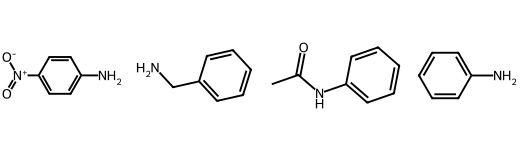
Given below are some nitrogen containing compounds

Each of them is treated with HCl separately. 1.0 g of the most basic compound will consume _______ mg of HCl.
(Given molar mass in g mol−1 C : 12, H : 1, O : 16, Cl : 35.5)
नीचे कुछ नाइट्रोजन युक्त यौगिक दिए गए हैं

प्रत्येक को अलग-अलग HCl से उपचारित किया जाता है। सबसे अधिक क्षारकीय यौगिक का 1.0 g _______ mg HCl का उपभोग करेगा।
(मोलर द्रव्यमान g mol−1 में दिए हैं: C : 12, H : 1, O : 16, Cl : 35.5)
Show answer

Concept: An sp3 benzylic amine is far more basic than aryl amines (lone pair delocalised into the ring) or an amide (lone pair tied up with C=O).

  1. Basicity: PhCH2NH2 > aniline > 4-nitroaniline > acetanilide. The most basic compound is benzylamine, C6H5CH2NH2.
  2. M(C7H9N) = 7 × 12 + 9 × 1 + 14 = 107 g mol−1; moles in 1.0 g = 1.0107.
  3. 1 mol amine neutralises 1 mol HCl (M = 36.5): mass of HCl = 1.0107×36.5=0.341 g=341 mg.

Short trick: mg of HCl per gram = 36500M; with M = 107 → 341 mg.

Answer: 341

अवधारणा: sp3 बेंज़िलिक ऐमीन, ऐरिल ऐमीनों (एकाकी युग्म वलय में विस्थानीकृत) या ऐमाइड (एकाकी युग्म C=O से बँधा) की तुलना में कहीं अधिक क्षारकीय होती है।

  1. क्षारकता: PhCH2NH2 > ऐनिलीन > 4-नाइट्रोऐनिलीन > ऐसीटैनिलाइड। सबसे अधिक क्षारकीय यौगिक बेंज़िलऐमीन, C6H5CH2NH2 है।
  2. M(C7H9N) = 7 × 12 + 9 × 1 + 14 = 107 g mol−1; 1.0 g में मोल = 1.0107।
  3. 1 mol ऐमीन 1 mol HCl (M = 36.5) को उदासीन करती है: HCl का द्रव्यमान = 1.0107×36.5=0.341 g=341 mg।

शॉर्ट ट्रिक: प्रति ग्राम HCl (mg में) = 36500M; M = 107 → 341 mg।

उत्तर: 341

JEE Main 2025 (January) – Paper 1 (B.E./B.Tech)ChemistryAmines – basicityJEE Main 2025 (January) – Paper 1 (B.E./B.Tech) 2025 · 29 Jan Shift 1 →
Q1723.
The sum of sigma (σ) and pi (π) bonds in Hex-1,3-dien-5-yne is _______.
हेक्स-1,3-डाईन-5-आइन (Hex-1,3-dien-5-yne) में सिग्मा (σ) तथा पाई (π) आबंधों का योग _______ है।
Show answer

Concept: Every single bond = 1 σ; a double bond = 1 σ + 1 π; a triple bond = 1 σ + 2 π.

  1. Hex-1,3-dien-5-yne: CH2=CH−CH=CH−C≡CH.
  2. σ bonds: 5 C−C + 6 C−H = 11.
  3. π bonds: 2 (from the two C=C) + 2 (from C≡C) = 4.
  4. Total = 11 + 4 = 15.

Short trick: For C6H6 chains: σ = atoms − 1 = 11; π = degree of unsaturation = 4 → 15.

Answer: 15

अवधारणा: प्रत्येक एकल आबंध = 1 σ; द्विआबंध = 1 σ + 1 π; त्रिआबंध = 1 σ + 2 π।

  1. हेक्स-1,3-डाईन-5-आइन: CH2=CH−CH=CH−C≡CH।
  2. σ आबंध: 5 C−C + 6 C−H = 11।
  3. π आबंध: 2 (दोनों C=C से) + 2 (C≡C से) = 4।
  4. योग = 11 + 4 = 15।

शॉर्ट ट्रिक: C6H6 शृंखला में: σ = परमाणु − 1 = 11; π = असंतृप्तता की मात्रा = 4 → 15।

उत्तर: 15

JEE Main 2025 (January) – Paper 1 (B.E./B.Tech)ChemistryChemical bonding – σ and π bond countJEE Main 2025 (January) – Paper 1 (B.E./B.Tech) 2025 · 29 Jan Shift 1 →
Q1724.
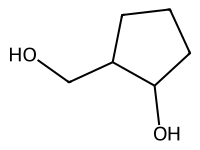
→excessCrO3 P →H(+)one mole HO−CH2−CH2−OH Q →② H3O(+)① CH3MgI in ether R →② H2O① NaBH4 reduction 'S'
0.1 mole of compound ' S ' will weigh _______ g. (Given molar mass in g mol−1 C : 12, H : 1, O : 16)
→आधिक्यCrO3 P →H(+)एक मोल HO−CH2−CH2−OH Q →② H3O(+)① CH3MgI, ईथर में R →② H2O① NaBH4 अपचयन 'S'
यौगिक ' S ' के 0.1 मोल का भार _______ g होगा। (मोलर द्रव्यमान g mol−1 में दिए हैं: C : 12, H : 1, O : 16)
Show answer

Concept: Excess CrO3 oxidises a 2° alcohol to a ketone and a 1° alcohol all the way to a carboxylic acid; ethylene glycol protects only the ketone; a Grignard reagent is simply destroyed (as CH4) by the acidic –COOH proton.

  1. Substrate = 2-(hydroxymethyl)cyclopentan-1-ol (C6H12O2). CrO3 (excess): ring −OH → C=O, −CH2OH → −COOH; P = 2-oxocyclopentane-1-carboxylic acid.
  2. One mole HO−CH2−CH2−OH/H+ converts the ketone into its cyclic acetal (1,3-dioxolane); the −COOH does not form an acetal → Q.
  3. CH3MgI only removes the acidic proton of −COOH (CH4 is evolved, −COO−MgI+ is not attacked); H3O+ workup regenerates −COOH and hydrolyses the acetal → R = 2-oxocyclopentane-1-carboxylic acid again.
  4. NaBH4 reduces the ketone (not the acid) → S = 2-hydroxycyclopentane-1-carboxylic acid, C6H10O3.
  5. M(S) = 6 × 12 + 10 × 1 + 3 × 16 = 72 + 10 + 48 = 130 g mol−1; 0.1 mol weighs 0.1 × 130 = 13 g.

Short trick: Grignard + free –COOH = just an acid–base reaction; the sequence only turns –CH2OH into –COOH: C6H12O2 (116) − 2H + O → C6H10O3 (130) → 13 g.

Answer: 13

अवधारणा: आधिक्य CrO3 द्वितीयक ऐल्कोहॉल को कीटोन में तथा प्राथमिक ऐल्कोहॉल को सीधे कार्बोक्सिलिक अम्ल तक ऑक्सीकृत करता है; एथिलीन ग्लाइकॉल केवल कीटोन को संरक्षित करता है; –COOH का अम्लीय प्रोटॉन ग्रिग्नार्ड अभिकर्मक को (CH4 के रूप में) नष्ट कर देता है।

  1. क्रियाधार = 2-(हाइड्रॉक्सीमेथिल)साइक्लोपेन्टेन-1-ऑल (C6H12O2)। CrO3 (आधिक्य): वलय −OH → C=O, −CH2OH → −COOH; P = 2-ऑक्सोसाइक्लोपेन्टेन-1-कार्बोक्सिलिक अम्ल।
  2. एक मोल HO−CH2−CH2−OH/H+ कीटोन को उसके चक्रीय ऐसीटैल (1,3-डाइऑक्सोलेन) में बदलता है; −COOH ऐसीटैल नहीं बनाता → Q।
  3. CH3MgI केवल −COOH का अम्लीय प्रोटॉन हटाता है (CH4 मुक्त होती है, −COO−MgI+ पर आक्रमण नहीं होता); H3O+ कार्य-उपचार −COOH को पुनः बनाता है तथा ऐसीटैल का जल-अपघटन करता है → R = पुनः 2-ऑक्सोसाइक्लोपेन्टेन-1-कार्बोक्सिलिक अम्ल।
  4. NaBH4 कीटोन को (अम्ल को नहीं) अपचयित करता है → S = 2-हाइड्रॉक्सीसाइक्लोपेन्टेन-1-कार्बोक्सिलिक अम्ल, C6H10O3।
  5. M(S) = 6 × 12 + 10 × 1 + 3 × 16 = 72 + 10 + 48 = 130 g mol−1; 0.1 mol का भार = 0.1 × 130 = 13 g।

शॉर्ट ट्रिक: ग्रिग्नार्ड + मुक्त –COOH = केवल अम्ल–क्षार अभिक्रिया; पूरा क्रम केवल –CH2OH को –COOH में बदलता है: C6H12O2 (116) − 2H + O → C6H10O3 (130) → 13 g।

उत्तर: 13

JEE Main 2025 (January) – Paper 1 (B.E./B.Tech)ChemistryAlcohols & carbonyls – multistep synthesisJEE Main 2025 (January) – Paper 1 (B.E./B.Tech) 2025 · 29 Jan Shift 1 →
Q1725.
If A2B is 30% ionised in an aqueous solution, then the value of van't Hoff factor (i) is ______ ×10−1.
यदि A2B जलीय विलयन में 30% आयनित होता है, तो वान्ट हॉफ गुणांक (i) का मान ______ ×10−1 है।
Show answer

Concept: For dissociation into n particles, i=1+α(n−1).

  1. A2B→2A++B2− gives n=3 particles.
  2. α=0.30, so i=1+0.30×(3−1)=1+0.6=1.6.
  3. 1.6=16×10−1 → required value is 16.

Short trick: i=1+2α for any AB2/A2B type salt.

Answer: 16

अवधारणा: n कणों में वियोजन के लिए i=1+α(n−1)।

  1. A2B→2A++B2− से n=3 कण मिलते हैं।
  2. α=0.30, अतः i=1+0.30×(3−1)=1+0.6=1.6।
  3. 1.6=16×10−1 → अभीष्ट मान 16।

शॉर्ट ट्रिक: किसी भी AB2/A2B प्रकार के लवण के लिए i=1+2α।

उत्तर: 16

JEE Main 2025 (January) – Paper 1 (B.E./B.Tech)ChemistrySolutions – van't Hoff factorJEE Main 2025 (January) – Paper 1 (B.E./B.Tech) 2025 · 29 Jan Shift 1 →
Q1726.
The distance of the line x−22=y−63=z−34 from the point (1,4,0) along the line x1=y−22=z+33 is :
बिंदु (1,4,0) से, रेखा x1=y−22=z+33 के अनुदिश, रेखा x−22=y−63=z−34 की दूरी है :
  1. A17
  2. B15
  3. C14
  4. D13
Show answer

Concept: Walk from the point along the given direction and find where this ray meets the given line; the distance travelled is the required distance.

  1. Points along the direction (1,2,3) from (1,4,0): (1+t, 4+2t, 3t).
  2. Substituting in x−22=y−63=z−34: t−12=2t−23=3t−34. Every ratio vanishes at t=1, so the ray meets the line at (2,6,3).
  3. Distance =(2−1)2+(6−4)2+(3−0)2=1+4+9=14.

Short trick: Each numerator is a multiple of (t−1), so t=1 can be spotted at sight — no equations to solve.

Answer: (C) 14

अवधारणा: बिंदु से दी गई दिशा के अनुदिश चलकर देखें कि यह किरण दी गई रेखा से कहाँ मिलती है; तय की गई दूरी ही अभीष्ट दूरी है।

  1. (1,4,0) से दिशा (1,2,3) के अनुदिश बिंदु: (1+t, 4+2t, 3t)।
  2. x−22=y−63=z−34 में रखने पर: t−12=2t−23=3t−34। t=1 पर प्रत्येक अनुपात शून्य हो जाता है, अतः किरण रेखा से (2,6,3) पर मिलती है।
  3. दूरी =(2−1)2+(6−4)2+(3−0)2=1+4+9=14।

शॉर्ट ट्रिक: प्रत्येक अंश (t−1) का गुणज है, अतः t=1 देखते ही मिल जाता है — कोई समीकरण हल करने की आवश्यकता नहीं।

उत्तर: (C) 14

JEE Main 2025 (January) – Paper 1 (B.E./B.Tech)Mathematics3D Geometry – distance along a given lineJEE Main 2025 (January) – Paper 1 (B.E./B.Tech) 2025 · 23 Jan Shift 2 →
Q1727.
Let A={(x,y)∈R×R:|x+y|≥3} and B={(x,y)∈R×R:|x|+|y|≤3}. If C={(x,y)∈A∩B:x=0 or y=0}, then ∑(x,y)∈C|x+y| is :
माना A={(x,y)∈R×R:|x+y|≥3} तथा B={(x,y)∈R×R:|x|+|y|≤3} हैं। यदि C={(x,y)∈A∩B:x=0 या y=0} है, तो ∑(x,y)∈C|x+y| है :
  1. A15
  2. B24
  3. C18
  4. D12
Show answer

Concept: On the coordinate axes both inequalities become conditions on a single variable, which pin the points down exactly.

  1. For x=0: A gives |y|≥3 and B gives |y|≤3, so |y|=3, i.e. (0,3),(0,−3).
  2. For y=0: similarly |x|=3, i.e. (3,0),(−3,0).
  3. C={(0,3),(0,−3),(3,0),(−3,0)} and each point gives |x+y|=3.
  4. ∑|x+y|=3+3+3+3=12.

Short trick: |x+y|≥3 and |x|+|y|≤3 with |x+y|≤|x|+|y| force |x+y|=|x|+|y|=3, so only the 4 axis vertices of the square survive.

Answer: (D) 12

अवधारणा: निर्देशांक अक्षों पर दोनों असमिकाएँ एक ही चर की शर्तें बन जाती हैं, जिनसे बिंदु पूर्णतः निर्धारित हो जाते हैं।

  1. x=0 के लिए: A से |y|≥3 तथा B से |y|≤3, अतः |y|=3 अर्थात् (0,3),(0,−3)।
  2. y=0 के लिए: इसी प्रकार |x|=3 अर्थात् (3,0),(−3,0)।
  3. C={(0,3),(0,−3),(3,0),(−3,0)} तथा प्रत्येक बिंदु पर |x+y|=3।
  4. ∑|x+y|=3+3+3+3=12।

शॉर्ट ट्रिक: |x+y|≥3, |x|+|y|≤3 तथा |x+y|≤|x|+|y| से |x+y|=|x|+|y|=3 बाध्य है, अतः वर्ग के केवल 4 अक्षीय शीर्ष ही बचते हैं।

उत्तर: (D) 12

JEE Main 2025 (January) – Paper 1 (B.E./B.Tech)MathematicsSets – intersection of regions in the planeJEE Main 2025 (January) – Paper 1 (B.E./B.Tech) 2025 · 23 Jan Shift 2 →
Q1728.
Let X=R×R. Define a relation R on X as : (a1,b1)R(a2,b2)⇔b1=b2. Statement I : R is an equivalence relation. Statement II : For some (a,b)∈X, the set S={(x,y)∈X:(x,y)R(a,b)} represents a line parallel to y=x. In the light of the above statements, choose the correct answer from the options given below :
माना X=R×R है। X पर एक संबंध R इस प्रकार परिभाषित कीजिए : (a1,b1)R(a2,b2)⇔b1=b2। कथन I : R एक तुल्यता संबंध (equivalence relation) है। कथन II : किसी (a,b)∈X के लिए, समुच्चय S={(x,y)∈X:(x,y)R(a,b)}, रेखा y=x के समांतर एक रेखा को निरूपित करता है। उपर्युक्त कथनों के आलोक में, नीचे दिए गए विकल्पों में से सही उत्तर चुनिए :
  1. ABoth Statement I and Statement II are falseकथन I तथा कथन II दोनों असत्य हैं
  2. BStatement I is true but Statement II is falseकथन I सत्य है परन्तु कथन II असत्य है
  3. CBoth Statement I and Statement II are trueकथन I तथा कथन II दोनों सत्य हैं
  4. DStatement I is false but Statement II is trueकथन I असत्य है परन्तु कथन II सत्य है
Show answer

Concept: Test reflexive, symmetric and transitive; then identify the equivalence class geometrically.

  1. Reflexive: b=b. Symmetric: b1=b2⇒b2=b1. Transitive: b1=b2, b2=b3⇒b1=b3. So R is an equivalence relation — Statement I is true.
  2. S={(x,y):y=b} is the horizontal line y=b, parallel to the x-axis for every (a,b) — never parallel to y=x (slope 1). Statement II is false.
  3. So (B) is correct; (A) and (D) wrongly reject Statement I, and (C) wrongly accepts Statement II.

Short trick: A relation defined by equality of any function of the coordinates (b1=b2) is automatically an equivalence relation.

Answer: (B)

अवधारणा: स्वतुल्य, सममित तथा संक्रामक की जाँच कीजिए; फिर तुल्यता वर्ग की ज्यामितीय पहचान कीजिए।

  1. स्वतुल्य: b=b। सममित: b1=b2⇒b2=b1। संक्रामक: b1=b2, b2=b3⇒b1=b3। अतः R तुल्यता संबंध है — कथन I सत्य है।
  2. S={(x,y):y=b} क्षैतिज रेखा y=b है, जो प्रत्येक (a,b) के लिए x-अक्ष के समांतर है — यह कभी भी y=x (ढाल 1) के समांतर नहीं है। कथन II असत्य है।
  3. अतः (B) सही है; (A) तथा (D) कथन I को गलत ठहराते हैं और (C) कथन II को गलत रूप से स्वीकार करता है।

शॉर्ट ट्रिक: निर्देशांकों के किसी फलन की समानता (b1=b2) से परिभाषित संबंध स्वतः तुल्यता संबंध होता है।

उत्तर: (B)

JEE Main 2025 (January) – Paper 1 (B.E./B.Tech)MathematicsRelations – equivalence relationJEE Main 2025 (January) – Paper 1 (B.E./B.Tech) 2025 · 23 Jan Shift 2 →
Q1729.
Let ∫x3sin⁡xdx=g(x)+C, where C is the constant of integration. If 8(g(π2)+g′(π2))=απ3+βπ2+γ, α,β,γ∈Z, then α+β−γ equals :
माना ∫x3sin⁡xdx=g(x)+C है, जहाँ C समाकलन अचर है। यदि 8(g(π2)+g′(π2))=απ3+βπ2+γ, α,β,γ∈Z है, तो α+β−γ बराबर है :
  1. A48
  2. B55
  3. C62
  4. D47
Show answer

Concept: Repeated integration by parts; and since g is an antiderivative, g′(x) is just the integrand.

  1. g(x)=−x3cos⁡x+3x2sin⁡x+6xcos⁡x−6sin⁡x (by parts thrice).
  2. g(π2)=0+3⋅π24−0−6=3π24−6.
  3. g′(x)=x3sin⁡x⇒g′(π2)=π38.
  4. 8(g+g′)=8(π38+3π24−6)=π3+6π2−48, so α=1, β=6, γ=−48.
  5. α+β−γ=1+6+48=55.

Short trick: Never differentiate the big expression — g′(x)=x3sin⁡x by the definition of an antiderivative.

Answer: (B) 55

अवधारणा: बार-बार खंडशः समाकलन; तथा चूँकि g प्रतिअवकलज है, g′(x) स्वयं समाकल्य ही है।

  1. g(x)=−x3cos⁡x+3x2sin⁡x+6xcos⁡x−6sin⁡x (तीन बार खंडशः समाकलन से)।
  2. g(π2)=0+3⋅π24−0−6=3π24−6।
  3. g′(x)=x3sin⁡x⇒g′(π2)=π38।
  4. 8(g+g′)=8(π38+3π24−6)=π3+6π2−48, अतः α=1, β=6, γ=−48।
  5. α+β−γ=1+6+48=55।

शॉर्ट ट्रिक: बड़े व्यंजक का अवकलन कभी न करें — प्रतिअवकलज की परिभाषा से ही g′(x)=x3sin⁡x।

उत्तर: (B) 55

JEE Main 2025 (January) – Paper 1 (B.E./B.Tech)MathematicsIndefinite Integration – integration by partsJEE Main 2025 (January) – Paper 1 (B.E./B.Tech) 2025 · 23 Jan Shift 2 →
Q1730.
A rod of length eight units moves such that its ends A and B always lie on the lines x−y+2=0 and y+2=0, respectively. If the locus of the point P, that divides the rod AB internally in the ratio 2:1 is 9(x2+αy2+βxy+γx+28y)−76=0, then α−β−γ is equal to :
आठ इकाई लंबाई की एक छड़ इस प्रकार गति करती है कि इसके सिरे A तथा B सदैव क्रमशः रेखाओं x−y+2=0 तथा y+2=0 पर स्थित रहते हैं। यदि छड़ AB को 2:1 के अनुपात में आंतरिक रूप से विभाजित करने वाले बिंदु P का बिन्दुपथ 9(x2+αy2+βxy+γx+28y)−76=0 है, तो α−β−γ बराबर है :
  1. A22
  2. B21
  3. C23
  4. D24
Show answer

Concept: Parametrise the two ends, use the section formula, and eliminate the parameters with the length condition.

  1. A=(a, a+2) on x−y+2=0 and B=(b, −2) on y=−2.
  2. P divides AB in ratio 2:1: x=a+2b3, y=(a+2)+2(−2)3=a−23, so a=3y+2 and b=3x−3y−22.
  3. Length: (a−b)2+(a+4)2=64. Substituting, (9y−3x+62)2+(3y+6)2=64, i.e. 9x2+117y2−54xy−36x+252y−76=0.
  4. This is 9(x2+13y2−6xy−4x+28y)−76=0, so α=13, β=−6, γ=−4.
  5. α−β−γ=13+6+4=23.

Short trick: The printed coefficient 28y checks your section-formula direction: 9×28=252 must appear — it does.

Answer: (C) 23

अवधारणा: दोनों सिरों को प्राचलिक रूप में लिखिए, विभाजन सूत्र लगाइए और लंबाई की शर्त से प्राचलों का विलोपन कीजिए।

  1. x−y+2=0 पर A=(a, a+2) तथा y=−2 पर B=(b, −2)।
  2. P, AB को 2:1 में विभाजित करता है: x=a+2b3, y=(a+2)+2(−2)3=a−23, अतः a=3y+2 तथा b=3x−3y−22।
  3. लंबाई: (a−b)2+(a+4)2=64। प्रतिस्थापन से (9y−3x+62)2+(3y+6)2=64, अर्थात् 9x2+117y2−54xy−36x+252y−76=0।
  4. यह 9(x2+13y2−6xy−4x+28y)−76=0 है, अतः α=13, β=−6, γ=−4।
  5. α−β−γ=13+6+4=23।

शॉर्ट ट्रिक: छपा गुणांक 28y आपके विभाजन सूत्र की दिशा की जाँच कर देता है: 9×28=252 आना चाहिए — और आता है।

उत्तर: (C) 23

JEE Main 2025 (January) – Paper 1 (B.E./B.Tech)MathematicsStraight Lines – locus of a dividing pointJEE Main 2025 (January) – Paper 1 (B.E./B.Tech) 2025 · 23 Jan Shift 2 →
Q1731.
If the square of the shortest distance between the lines x−21=y−12=z+3−3 and x+12=y+34=z+5−5 is mn, where m,n are coprime numbers, then m+n is equal to :
यदि रेखाओं x−21=y−12=z+3−3 तथा x+12=y+34=z+5−5 के बीच की न्यूनतम दूरी का वर्ग mn है, जहाँ m,n असहभाज्य (coprime) संख्याएँ हैं, तो m+n बराबर है :
  1. A21
  2. B9
  3. C14
  4. D6
Show answer

Concept: Shortest distance =|(a2→−a1→)⋅(b1→×b2→)||b1→×b2→|.

  1. b1→=(1,2,−3), b2→=(2,4,−5); b1→×b2→=(2,−1,0).
  2. a2→−a1→=(−1−2, −3−1, −5+3)=(−3,−4,−2).
  3. SD =|(−3)(2)+(−4)(−1)+0|4+1=25, so SD2=45.
  4. m=4, n=5 are coprime, m+n=9.

Short trick: The direction vectors have proportional first two components, so the cross product lies in the xy-plane — the z-part of a2→−a1→ never matters.

Answer: (B) 9

अवधारणा: न्यूनतम दूरी =|(a2→−a1→)⋅(b1→×b2→)||b1→×b2→|।

  1. b1→=(1,2,−3), b2→=(2,4,−5); b1→×b2→=(2,−1,0)।
  2. a2→−a1→=(−1−2, −3−1, −5+3)=(−3,−4,−2)।
  3. न्यूनतम दूरी =|(−3)(2)+(−4)(−1)+0|4+1=25, अतः दूरी का वर्ग =45।
  4. m=4, n=5 असहभाज्य हैं, m+n=9।

शॉर्ट ट्रिक: दिक्-सदिशों के पहले दो घटक समानुपाती हैं, अतः सदिश गुणनफल xy-तल में है — a2→−a1→ का z-भाग कभी प्रभाव नहीं डालता।

उत्तर: (B) 9

JEE Main 2025 (January) – Paper 1 (B.E./B.Tech)Mathematics3D Geometry – shortest distance between skew linesJEE Main 2025 (January) – Paper 1 (B.E./B.Tech) 2025 · 23 Jan Shift 2 →
Q1732.
limx→∞(2x2−3x+5)(3x−1)x2(3x2+5x+4)(3x+2)x is equal to :
limx→∞(2x2−3x+5)(3x−1)x2(3x2+5x+4)(3x+2)x बराबर है :
  1. A23e
  2. B2e3
  3. C23e
  4. D2e3
Show answer

Concept: Split into a rational part (ratio of leading coefficients) and a 1∞ part handled by lim(1+f)g=elimfg.

  1. 2x2−3x+53x2+5x+4→23 as x→∞.
  2. (3x−1)x/2(3x+2)x/2=(1−33x+2)x/2.
  3. Exponent limit: x2⋅(−33x+2)→−12, so this factor →e−1/2.
  4. Limit =23⋅e−1/2=23e.

Short trick: (ax+bax+c)px→ep(b−c)a; here p=12, b−c=−3, a=3 gives e−1/2 instantly.

Answer: (C) 23e

अवधारणा: परिमेय भाग (अग्रणी गुणांकों का अनुपात) तथा 1∞ भाग, जिसे lim(1+f)g=elimfg से हल करते हैं, में बाँटिए।

  1. x→∞ पर 2x2−3x+53x2+5x+4→23।
  2. (3x−1)x/2(3x+2)x/2=(1−33x+2)x/2।
  3. घातांक की सीमा: x2⋅(−33x+2)→−12, अतः यह गुणनखंड →e−1/2।
  4. सीमा =23⋅e−1/2=23e।

शॉर्ट ट्रिक: (ax+bax+c)px→ep(b−c)a; यहाँ p=12, b−c=−3, a=3 से तुरंत e−1/2।

उत्तर: (C) 23e

JEE Main 2025 (January) – Paper 1 (B.E./B.Tech)MathematicsLimits – <math display="inline" xmlns="http://www.w3.org/1998/Math/MathML"><msup><mn>1</mn><mrow data-mjx-texclass="ORD"><mi mathvariant="normal">&#x221E;</mi></mrow></msup></math> formJEE Main 2025 (January) – Paper 1 (B.E./B.Tech) 2025 · 23 Jan Shift 2 →
Q1733.
Let the point A divide the line segment joining the points P(−1,−1,2) and Q(5,5,10) internally in the ratio r:1(r>0). If O is the origin and (OQ→⋅OA→)−15|OP→×OA→|2=10, then the value of r is :
माना बिंदु A, बिंदुओं P(−1,−1,2) तथा Q(5,5,10) को मिलाने वाले रेखाखंड को r:1(r>0) के अनुपात में आंतरिक रूप से विभाजित करता है। यदि O मूलबिंदु है तथा (OQ→⋅OA→)−15|OP→×OA→|2=10 है, तो r का मान है :
  1. A7
  2. B14
  3. C3
  4. D7
Show answer

Concept: Section formula for A, then direct computation of the dot and cross products.

  1. A=(5r−1r+1, 5r−1r+1, 10r+2r+1).
  2. OQ→⋅OA→=5xA+5yA+10zA=10(15r+1)r+1.
  3. With OP→=(−1,−1,2) and OA→=(xA,xA,zA): OP→×OA→=(−zA−2xA, 2xA+zA, 0), and 2xA+zA=20rr+1, so |OP→×OA→|2=2(20rr+1)2=800r2(r+1)2.
  4. Equation: 10(15r+1)r+1−160r2(r+1)2=10. Multiplying by (r+1)2 and simplifying: 2r2=14r, so r=7 (as r>0).

Short trick: xA=yA makes the cross product's third component vanish and the first two equal in size — halving the algebra.

Answer: (D) 7

अवधारणा: A के लिए विभाजन सूत्र, फिर अदिश एवं सदिश गुणनफलों की सीधी गणना।

  1. A=(5r−1r+1, 5r−1r+1, 10r+2r+1)।
  2. OQ→⋅OA→=5xA+5yA+10zA=10(15r+1)r+1।
  3. OP→=(−1,−1,2) तथा OA→=(xA,xA,zA) से: OP→×OA→=(−zA−2xA, 2xA+zA, 0), तथा 2xA+zA=20rr+1, अतः |OP→×OA→|2=2(20rr+1)2=800r2(r+1)2।
  4. समीकरण: 10(15r+1)r+1−160r2(r+1)2=10। (r+1)2 से गुणा कर सरल करने पर: 2r2=14r, अतः r=7 (क्योंकि r>0)।

शॉर्ट ट्रिक: xA=yA होने से सदिश गुणनफल का तीसरा घटक शून्य तथा पहले दो परिमाण में बराबर हो जाते हैं — बीजगणित आधा हो जाता है।

उत्तर: (D) 7

JEE Main 2025 (January) – Paper 1 (B.E./B.Tech)MathematicsVector Algebra – section formula, dot and cross productJEE Main 2025 (January) – Paper 1 (B.E./B.Tech) 2025 · 23 Jan Shift 2 →
Q1734.
The length of the chord of the ellipse x24+y22=1, whose mid-point is (1,12), is :
दीर्घवृत्त x24+y22=1 की उस जीवा की लंबाई, जिसका मध्य-बिंदु (1,12) है, है :
  1. A5315
  2. B1315
  3. C2315
  4. D15
Show answer

Concept: Chord with mid-point (x1,y1): T=S1; then intersect with the ellipse.

  1. T=S1: x⋅14+y⋅122=14+1/42, i.e. x4+y4=38, so the chord is x+y=32.
  2. Substitute y=32−x in the ellipse: 6x2−12x+1=0, so x1+x2=2, x1x2=16.
  3. (x1−x2)2=4−46=103; slope −1 gives length =2|x1−x2|=203=2315.

Short trick: For a chord of slope m: length =1+m2|x1−x2|; with m=−1 just multiply by 2.

Answer: (C) 2315

अवधारणा: मध्य-बिंदु (x1,y1) वाली जीवा: T=S1; फिर दीर्घवृत्त के साथ प्रतिच्छेद कीजिए।

  1. T=S1: x⋅14+y⋅122=14+1/42, अर्थात् x4+y4=38, अतः जीवा x+y=32 है।
  2. दीर्घवृत्त में y=32−x रखने पर: 6x2−12x+1=0, अतः x1+x2=2, x1x2=16।
  3. (x1−x2)2=4−46=103; ढाल −1 से लंबाई =2|x1−x2|=203=2315।

शॉर्ट ट्रिक: ढाल m वाली जीवा के लिए: लंबाई =1+m2|x1−x2|; m=−1 पर केवल 2 से गुणा कीजिए।

उत्तर: (C) 2315

JEE Main 2025 (January) – Paper 1 (B.E./B.Tech)MathematicsEllipse – chord with a given mid-pointJEE Main 2025 (January) – Paper 1 (B.E./B.Tech) 2025 · 23 Jan Shift 2 →
Q1735.
The system of equations x+y+z=6, x+2y+5z=9, x+5y+λz=μ, has no solution if :
समीकरण निकाय x+y+z=6, x+2y+5z=9, x+5y+λz=μ का कोई हल नहीं है, यदि :
  1. Aλ=15,μ≠17
  2. Bλ≠17,μ≠18
  3. Cλ=17,μ≠18
  4. Dλ=17,μ=18
Show answer

Concept: No solution ⇔ coefficient determinant =0 together with an inconsistent reduced equation.

  1. Δ=|11112515λ|=(2λ−25)−(λ−5)+3=λ−17, so Δ=0 gives λ=17.
  2. With λ=17: R2−R1: y+4z=3; R3−R1: 4y+16z=μ−6.
  3. R3−R1−4(R2−R1): 0=μ−18. For no solution we need μ≠18.
  4. So λ=17, μ≠18; option (D) would give infinitely many solutions, (A) and (B) keep Δ≠0 (unique solution).

Short trick: Row-reduce once — the single condition μ−18≠0 falls out with λ=17 simultaneously.

Answer: (C) λ=17, μ≠18

अवधारणा: कोई हल नहीं ⇔ गुणांक सारणिक =0 तथा समानीत समीकरण असंगत।

  1. Δ=|11112515λ|=(2λ−25)−(λ−5)+3=λ−17, अतः Δ=0 से λ=17।
  2. λ=17 के साथ: R2−R1: y+4z=3; R3−R1: 4y+16z=μ−6।
  3. R3−R1−4(R2−R1): 0=μ−18। कोई हल न होने के लिए μ≠18 चाहिए।
  4. अतः λ=17, μ≠18; विकल्प (D) से अनंत हल मिलते, (A) तथा (B) में Δ≠0 रहता (अद्वितीय हल)।

शॉर्ट ट्रिक: एक बार पंक्ति-समानयन कीजिए — λ=17 के साथ ही एकमात्र शर्त μ−18≠0 निकल आती है।

उत्तर: (C) λ=17, μ≠18

JEE Main 2025 (January) – Paper 1 (B.E./B.Tech)MathematicsDeterminants – consistency of a linear systemJEE Main 2025 (January) – Paper 1 (B.E./B.Tech) 2025 · 23 Jan Shift 2 →
Q1736.
Let the range of the function f(x)=6+16cos⁡x⋅cos⁡(π3−x)⋅cos⁡(π3+x)⋅sin⁡3x⋅cos⁡6x, x∈R be [α,β]. Then the distance of the point (α,β) from the line 3x+4y+12=0 is :
माना फलन f(x)=6+16cos⁡x⋅cos⁡(π3−x)⋅cos⁡(π3+x)⋅sin⁡3x⋅cos⁡6x, x∈R का परिसर [α,β] है। तो बिंदु (α,β) की रेखा 3x+4y+12=0 से दूरी है :
  1. A11
  2. B8
  3. C10
  4. D9
Show answer

Concept: cos⁡xcos⁡(π3−x)cos⁡(π3+x)=14cos⁡3x, then double-angle.

  1. f(x)=6+16⋅14cos⁡3x⋅sin⁡3x⋅cos⁡6x=6+2sin⁡6xcos⁡6x=6+sin⁡12x.
  2. sin⁡12x∈[−1,1], so range =[5,7], i.e. (α,β)=(5,7).
  3. Distance =|3(5)+4(7)+12|32+42=555=11.

Short trick: The chain 4cos⁡3xsin⁡3xcos⁡6x=2sin⁡6xcos⁡6x=sin⁡12x collapses the whole product to a single sine.

Answer: (A) 11

अवधारणा: cos⁡xcos⁡(π3−x)cos⁡(π3+x)=14cos⁡3x, फिर द्विकोण सूत्र।

  1. f(x)=6+16⋅14cos⁡3x⋅sin⁡3x⋅cos⁡6x=6+2sin⁡6xcos⁡6x=6+sin⁡12x।
  2. sin⁡12x∈[−1,1], अतः परिसर =[5,7], अर्थात् (α,β)=(5,7)।
  3. दूरी =|3(5)+4(7)+12|32+42=555=11।

शॉर्ट ट्रिक: शृंखला 4cos⁡3xsin⁡3xcos⁡6x=2sin⁡6xcos⁡6x=sin⁡12x पूरे गुणनफल को एक ही sine में समेट देती है।

उत्तर: (A) 11

JEE Main 2025 (January) – Paper 1 (B.E./B.Tech)MathematicsTrigonometry – range using multiple-angle identityJEE Main 2025 (January) – Paper 1 (B.E./B.Tech) 2025 · 23 Jan Shift 2 →
Q1737.
Let x=x(y) be the solution of the differential equation y=(x−ydxdy)sin⁡(xy), y>0 and x(1)=π2. Then cos⁡(x(2)) is equal to :
माना अवकल समीकरण y=(x−ydxdy)sin⁡(xy), y>0 का हल x=x(y) है तथा x(1)=π2 है। तो cos⁡(x(2)) बराबर है :
  1. A1−2(loge⁡2)2
  2. B1−2(loge⁡2)
  3. C2(loge⁡2)−1
  4. D2(loge⁡2)2−1
Show answer

Concept: The equation is homogeneous in xy: put x=vy and separate variables.

  1. With x=vy: dxdy=v+ydvdy, so x−ydxdy=−y2dvdy.
  2. Equation: y=−y2dvdysin⁡v⇒sin⁡vdv=−dyy.
  3. Integrating: −cos⁡v=−loge⁡y+C. At y=1, v=π2: C=0, so cos⁡(xy)=loge⁡y.
  4. At y=2: cos⁡(x2)=loge⁡2, hence cos⁡x=2cos2⁡x2−1=2(loge⁡2)2−1.

Short trick: x−ydxdy=−y2ddy(xy) — recognising this quotient-rule pattern gives the substitution at once.

Answer: (D) 2(loge⁡2)2−1

अवधारणा: समीकरण xy में समघात है: x=vy रखकर चरों को पृथक कीजिए।

  1. x=vy से: dxdy=v+ydvdy, अतः x−ydxdy=−y2dvdy।
  2. समीकरण: y=−y2dvdysin⁡v⇒sin⁡vdv=−dyy।
  3. समाकलन से: −cos⁡v=−loge⁡y+C। y=1, v=π2 पर: C=0, अतः cos⁡(xy)=loge⁡y।
  4. y=2 पर: cos⁡(x2)=loge⁡2, अतः cos⁡x=2cos2⁡x2−1=2(loge⁡2)2−1।

शॉर्ट ट्रिक: x−ydxdy=−y2ddy(xy) — भागफल-नियम का यह प्रतिरूप पहचानते ही प्रतिस्थापन मिल जाता है।

उत्तर: (D) 2(loge⁡2)2−1

JEE Main 2025 (January) – Paper 1 (B.E./B.Tech)MathematicsDifferential Equations – homogeneous substitutionJEE Main 2025 (January) – Paper 1 (B.E./B.Tech) 2025 · 23 Jan Shift 2 →
Q1738.
A spherical chocolate ball has a layer of ice-cream of uniform thickness around it. When the thickness of the ice-cream layer is 1 cm, the ice-cream melts at the rate of 81 cm3/min and the thickness of the ice-cream layer decreases at the rate of 14π cm/min. The surface area (in cm2) of the chocolate ball (without the ice-cream layer) is :
एक गोलीय चॉकलेट बॉल के चारों ओर एकसमान मोटाई की आइसक्रीम की एक परत है। जब आइसक्रीम की परत की मोटाई 1 cm है, तब आइसक्रीम 81 cm3/min की दर से पिघलती है तथा आइसक्रीम की परत की मोटाई 14π cm/min की दर से घटती है। चॉकलेट बॉल (आइसक्रीम की परत के बिना) का पृष्ठीय क्षेत्रफल (cm2 में) है :
  1. A196π
  2. B256π
  3. C225π
  4. D128π
Show answer

Concept: For the outer sphere of radius R+t (ball radius R, layer thickness t), |dVdt|=4π(R+t)2|d(R+t)dt|.

  1. Ice-cream volume V=43π[(R+t)3−R3]; only the outer radius changes.
  2. At t=1: 81=4π(R+1)2⋅14π=(R+1)2.
  3. R+1=9⇒R=8.
  4. Surface area of the chocolate ball =4πR2=4π(64)=256π.

Short trick: rate of volume = (outer surface area) × (rate of thickness): 81÷14π=4π⋅81 gives outer radius 9 immediately.

Answer: (B) 256π

अवधारणा: बाहरी गोले की त्रिज्या R+t (बॉल की त्रिज्या R, परत की मोटाई t) के लिए |dVdt|=4π(R+t)2|d(R+t)dt|।

  1. आइसक्रीम का आयतन V=43π[(R+t)3−R3]; केवल बाहरी त्रिज्या बदलती है।
  2. t=1 पर: 81=4π(R+1)2⋅14π=(R+1)2।
  3. R+1=9⇒R=8।
  4. चॉकलेट बॉल का पृष्ठीय क्षेत्रफल =4πR2=4π(64)=256π।

शॉर्ट ट्रिक: आयतन की दर = (बाहरी पृष्ठीय क्षेत्रफल) × (मोटाई की दर): 81÷14π=4π⋅81 से बाहरी त्रिज्या तुरंत 9।

उत्तर: (B) 256π

JEE Main 2025 (January) – Paper 1 (B.E./B.Tech)MathematicsApplication of Derivatives – related ratesJEE Main 2025 (January) – Paper 1 (B.E./B.Tech) 2025 · 23 Jan Shift 2 →
Q1739.
The number of complex numbers z, satisfying |z|=1 and |zz¯+z¯z|=1, is :
|z|=1 तथा |zz¯+z¯z|=1 को संतुष्ट करने वाली सम्मिश्र संख्याओं z की संख्या है :
  1. A4
  2. B8
  3. C10
  4. D6
Show answer

Concept: Put z=eiθ; then zz¯=e2iθ and the sum is a real cosine.

  1. zz¯+z¯z=e2iθ+e−2iθ=2cos⁡2θ.
  2. |2cos⁡2θ|=1⇒cos⁡2θ=±12.
  3. For θ∈[0,2π), 2θ∈[0,4π): cos⁡2θ=12 gives 4 values of θ and cos⁡2θ=−12 gives 4 more.
  4. Total =8 distinct complex numbers.

Short trick: cos⁡2θ=c with |c|<1 always gives 4 solutions per full circle of θ; two values of c give 8.

Answer: (B) 8

अवधारणा: z=eiθ रखिए; तब zz¯=e2iθ तथा योग एक वास्तविक cosine है।

  1. zz¯+z¯z=e2iθ+e−2iθ=2cos⁡2θ।
  2. |2cos⁡2θ|=1⇒cos⁡2θ=±12।
  3. θ∈[0,2π) के लिए 2θ∈[0,4π): cos⁡2θ=12 से θ के 4 मान तथा cos⁡2θ=−12 से 4 और।
  4. कुल =8 भिन्न सम्मिश्र संख्याएँ।

शॉर्ट ट्रिक: |c|<1 के साथ cos⁡2θ=c से θ के पूरे चक्र में सदैव 4 हल मिलते हैं; c के दो मानों से 8।

उत्तर: (B) 8

JEE Main 2025 (January) – Paper 1 (B.E./B.Tech)MathematicsComplex Numbers – unit modulus, argument formJEE Main 2025 (January) – Paper 1 (B.E./B.Tech) 2025 · 23 Jan Shift 2 →
Q1740.
Let A=[aij] be 3×3 matrix such that A[010]=[001], A[413]=[010] and A[212]=[100], then a23 equals :
माना A=[aij] एक 3×3 आव्यूह है जिसके लिए A[010]=[001], A[413]=[010] तथा A[212]=[100] हैं, तो a23 बराबर है :
  1. A-1
  2. B2
  3. C1
  4. D0
Show answer

Concept: Av→ is the corresponding linear combination of the columns c1→,c2→,c3→ of A.

  1. First relation: c2→=(0,0,1)T.
  2. Second and third: 4c1→+c2→+3c3→=(0,1,0)T and 2c1→+c2→+2c3→=(1,0,0)T.
  3. Twice the third minus the second: c2→+c3→=(2,−1,0)T, so c3→=(2,−1,0)T−(0,0,1)T=(2,−1,−1)T.
  4. a23 is the 2nd entry of c3→, i.e. a23=−1.

Short trick: Only c3→ is needed — eliminate c1→ in one step (2× third relation − second) and never solve for the whole matrix.

Answer: (A) −1

अवधारणा: Av→, A के स्तंभों c1→,c2→,c3→ का संगत रैखिक संयोजन है।

  1. पहले संबंध से: c2→=(0,0,1)T।
  2. दूसरे तथा तीसरे से: 4c1→+c2→+3c3→=(0,1,0)T तथा 2c1→+c2→+2c3→=(1,0,0)T।
  3. तीसरे का दुगुना घटा दूसरा: c2→+c3→=(2,−1,0)T, अतः c3→=(2,−1,0)T−(0,0,1)T=(2,−1,−1)T।
  4. a23, c3→ की दूसरी प्रविष्टि है, अर्थात् a23=−1।

शॉर्ट ट्रिक: केवल c3→ चाहिए — एक ही चरण में c1→ का विलोपन कीजिए (2× तीसरा संबंध − दूसरा), पूरा आव्यूह कभी न निकालें।

उत्तर: (A) −1

JEE Main 2025 (January) – Paper 1 (B.E./B.Tech)MathematicsMatrices – columns from matrix–vector productsJEE Main 2025 (January) – Paper 1 (B.E./B.Tech) 2025 · 23 Jan Shift 2 →