Q361.The correct statements about metal carbonyls are
- The metal-carbon bonds in metal carbonyls possess both σ and π-character.
- Due to synergic bonding interactions between metal and CO ligand, the metal-carbon bond becomes weak.
- The metal-carbon σ bond is formed by the donation of lone pair of electrons on the carbonyl carbon into a vacant orbital of metal.
- The metal-carbon π bond is formed by the donation of electrons from filled d-orbital of metal into vacant π* orbital of CO.
Choose the correct answer from the options given below:
धातु कार्बोनिलों के बारे में सही कथन हैं
- धातु कार्बोनिलों में धातु-कार्बन आबंधों में σ तथा π दोनों लक्षण होते हैं।
- धातु तथा CO लिगैंड के बीच सहक्रियाशील (synergic) आबंधन अन्योन्यक्रिया के कारण धातु-कार्बन आबंध दुर्बल हो जाता है।
- धातु-कार्बन σ आबंध, कार्बोनिल कार्बन पर स्थित एकाकी इलेक्ट्रॉन युग्म के धातु के रिक्त कक्षक में दान से बनता है।
- धातु-कार्बन π आबंध, धातु के भरे हुए d-कक्षक से इलेक्ट्रॉनों के CO के रिक्त π* कक्षक में दान से बनता है।
नीचे दिए गए विकल्पों में से सही उत्तर चुनिए:
- AA and B Onlyकेवल A और B
- BA, C and D Onlyकेवल A, C और D
- CB and C Onlyकेवल B और C
- DA and D Onlyकेवल A और D
Show answer
Concept: M–CO bonding is synergic: σ-donation from C to metal plus π back-donation from metal d-orbitals into CO π*.
- A – true: the M–C bond has both σ and π character.
- B – false: synergic bonding strengthens the M–C bond (while weakening the C–O bond).
- C – true: σ bond from the lone pair on carbon into a vacant metal orbital.
- D – true: π bond by back-donation from filled metal d-orbital into vacant π* of CO.
- Correct: A, C, D. (A) and (C) include false B; (D) omits true C.
Answer: (B) A, C and D Only
अवधारणा: M–CO आबंधन सहक्रियाशील होता है: C से धातु की ओर σ-दान तथा धातु के d-कक्षकों से CO के π* में π पश्च-दान।
- A – सत्य: M–C आबंध में σ तथा π दोनों लक्षण हैं।
- B – असत्य: सहक्रियाशील आबंधन M–C आबंध को प्रबल करता है (जबकि C–O आबंध दुर्बल होता है)।
- C – सत्य: कार्बन के एकाकी युग्म के धातु के रिक्त कक्षक में दान से σ आबंध।
- D – सत्य: धातु के भरे d-कक्षक से CO के रिक्त π* में पश्च-दान द्वारा π आबंध।
- सही: A, C, D। (A) तथा (C) में असत्य B है; (D) में सत्य C छूटा है।
उत्तर: (B) केवल A, C और D
JEE Main 2026 (April) – Paper 1 (B.E./B.Tech)ChemistryCoordination Compounds – metal carbonylsJEE Main 2026 (April) – Paper 1 (B.E./B.Tech) 2026 · 5 Apr Shift 1
Q362.Given below are two statements:
Statement I: Each electron in eg orbitals destabilizes the orbitals by +0.6 Δo and each electron in the t2g orbitals stabilizes the orbitals by −0.4 Δo in an octahedral field on the basis of crystal field theory.
Statement II: All the d - orbitals of the transition metals have the same energy in their free atomic state but when a complex is formed the ligands destroy the degeneracy of these orbitals on the basis of crystal field theory.
In the light of the above statements, choose the correct answer from the options given below
नीचे दो कथन दिए गए हैं:
कथन I: क्रिस्टल क्षेत्र सिद्धांत के आधार पर अष्टफलकीय क्षेत्र में eg कक्षकों में प्रत्येक इलेक्ट्रॉन कक्षकों को +0.6 Δo से अस्थायी करता है तथा t2g कक्षकों में प्रत्येक इलेक्ट्रॉन कक्षकों को −0.4 Δo से स्थायी करता है।
कथन II: क्रिस्टल क्षेत्र सिद्धांत के आधार पर संक्रमण धातुओं के सभी d-कक्षकों की मुक्त परमाणु अवस्था में ऊर्जा समान होती है, परन्तु संकुल बनने पर लिगैंड इन कक्षकों की अपभ्रष्टता (degeneracy) को नष्ट कर देते हैं।
उपर्युक्त कथनों के आलोक में, नीचे दिए गए विकल्पों में से सही उत्तर चुनिए
- ABoth Statement I and Statement II are correctकथन I और कथन II दोनों सही हैं
- BBoth Statement I and Statement II are incorrectकथन I और कथन II दोनों गलत हैं
- CStatement I is correct but Statement II is incorrectकथन I सही है परन्तु कथन II गलत है
- DStatement I is incorrect but Statement II is correctकथन I गलत है परन्तु कथन II सही है
Show answer
Concept: In an octahedral field the five degenerate d-orbitals split into t2g (lowered by 0.4Δo) and eg (raised by 0.6Δo), keeping the barycentre unchanged.
- Statement I: 3 × (−0.4Δo) + 2 × (+0.6Δo) = 0 – the standard CFSE contributions → correct.
- Statement II: in a free (isolated) atom/ion all five d-orbitals are degenerate; the ligand field lifts this degeneracy → correct.
Answer: (A) Both Statement I and Statement II are correct
अवधारणा: अष्टफलकीय क्षेत्र में पाँच अपभ्रष्ट d-कक्षक t2g (0.4Δo नीचे) तथा eg (0.6Δo ऊपर) में विपाटित होते हैं, जिससे भारकेंद्र (barycentre) अपरिवर्तित रहता है।
- कथन I: 3 × (−0.4Δo) + 2 × (+0.6Δo) = 0 – मानक CFSE योगदान → सही।
- कथन II: मुक्त (पृथक) परमाणु/आयन में पाँचों d-कक्षक अपभ्रष्ट होते हैं; लिगैंड क्षेत्र यह अपभ्रष्टता समाप्त कर देता है → सही।
उत्तर: (A) कथन I और कथन II दोनों सही हैं
JEE Main 2026 (April) – Paper 1 (B.E./B.Tech)ChemistryCoordination Compounds – crystal field theoryJEE Main 2026 (April) – Paper 1 (B.E./B.Tech) 2026 · 5 Apr Shift 1
Q363.Given below are two statements:
Statement I: On the basis of inductive effect, the order of stability of alkyl carbanions is CH3− > CH3− CH2− > (CH3)2CH− > (CH3)3C−.
Statement II: Allyl and benzyl carbanions are more stabilised by inductive effect and not by resonance effect.
In the light of the above statements, choose the correct answer from the options given below
नीचे दो कथन दिए गए हैं:
कथन I: प्रेरणिक प्रभाव (inductive effect) के आधार पर ऐल्किल कार्बऋणायनों के स्थायित्व का क्रम CH3− > CH3− CH2− > (CH3)2CH− > (CH3)3C− है।
कथन II: ऐलिल तथा बेन्ज़िल कार्बऋणायन प्रेरणिक प्रभाव द्वारा अधिक स्थायी होते हैं, अनुनाद प्रभाव द्वारा नहीं।
उपर्युक्त कथनों के आलोक में, नीचे दिए गए विकल्पों में से सही उत्तर चुनिए
- ABoth Statement I and Statement II are correctकथन I और कथन II दोनों सही हैं
- BBoth Statement I and Statement II are incorrectकथन I और कथन II दोनों गलत हैं
- CStatement I is correct but Statement II is incorrectकथन I सही है परन्तु कथन II गलत है
- DStatement I is incorrect but Statement II is correctकथन I गलत है परन्तु कथन II सही है
Show answer
Concept: Alkyl groups are +I (electron-releasing): they intensify negative charge and destabilise carbanions. Delocalisation (resonance) stabilises a carbanion.
- Statement I: more alkyl groups → more +I → less stable carbanion, so CH3− > 1° > 2° > 3° → correct.
- Statement II: allyl (CH2=CH–CH2−) and benzyl (C6H5CH2−) carbanions are stabilised by resonance (charge delocalised over the π system) → incorrect.
Answer: (C) Statement I is correct but Statement II is incorrect
अवधारणा: ऐल्किल समूह +I (इलेक्ट्रॉन-दाता) होते हैं: ये ऋणावेश बढ़ाकर कार्बऋणायन को अस्थायी करते हैं। विस्थानीकरण (अनुनाद) कार्बऋणायन को स्थायी करता है।
- कथन I: अधिक ऐल्किल समूह → अधिक +I → कम स्थायी कार्बऋणायन, अतः CH3− > 1° > 2° > 3° → सही।
- कथन II: ऐलिल (CH2=CH–CH2−) तथा बेन्ज़िल (C6H5CH2−) कार्बऋणायन अनुनाद द्वारा स्थायी होते हैं (आवेश π तंत्र पर विस्थानीकृत) → गलत।
उत्तर: (C) कथन I सही है परन्तु कथन II गलत है
JEE Main 2026 (April) – Paper 1 (B.E./B.Tech)ChemistryGOC – carbanion stabilityJEE Main 2026 (April) – Paper 1 (B.E./B.Tech) 2026 · 5 Apr Shift 1
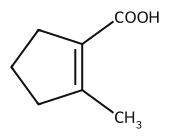
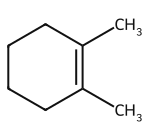
Q364."P" is a hydrocarbon of molecular formula:- C8H14. On ozonolysis, "P" forms "Q". "Q" on treatment with alkali under reflux condition produces "R", which on treatment with I2/ NaOH gives a yellow precipitate. Acidification of the solution gives "S". The structure of "S" is given below:-
The correct structure of "P" is
"P" आण्विक सूत्र C8H14 वाला एक हाइड्रोकार्बन है। ओज़ोनी अपघटन (ozonolysis) पर "P", "Q" बनाता है। "Q" क्षार के साथ पश्चवाही (reflux) स्थिति में अभिक्रिया करके "R" देता है, जो I2/ NaOH के साथ अभिक्रिया पर पीला अवक्षेप देता है। विलयन के अम्लीकरण से "S" प्राप्त होता है। "S" की संरचना नीचे दी गई है:-
"P" की सही संरचना है
- A
- B
- C
- D
Show answer
Concept: Work backwards: S (a C7 acid) comes from the haloform reaction of a methyl ketone R (C8); R is the intramolecular aldol condensation product of a diketone Q; Q is the ozonolysis product of a cyclic alkene P.
- S = 2-methylcyclopent-1-ene-1-carboxylic acid → R = 1-acetyl-2-methylcyclopentene (–COCH3 → –COOH by I2/NaOH, yellow CHI3).
- R arises from octane-2,7-dione, CH3CO(CH2)4COCH3 = Q: the enolate at C-3 attacks the C-7 carbonyl, forming a five-membered ring; dehydration gives the conjugated enone R.
- Q (a symmetrical diketone with both C=O on ring carbons bearing CH3) comes from ozonolysis of 1,2-dimethylcyclohexene, C8H14 = (D).
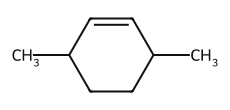
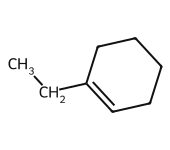
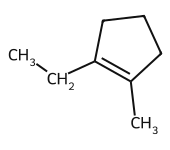
- (A) 3,6-dimethylcyclohexene gives a dialdehyde (no methyl ketone, no iodoform). (B) 1-ethylcyclohexene gives an ethyl keto-aldehyde – its aldol product is an ethyl ketone, no iodoform. (C) 1-ethyl-2-methylcyclopentene gives CH3CO(CH2)3COC2H5, whose aldol product is not the cyclopentene skeleton of S.
Short trick: Ring of S has 5 C; ozonolysis + aldol shrinks a 6-membered ring alkene to a 5-membered ring, and the two CH3 on the C=C become the CH3 and the COCH3 → 1,2-dimethylcyclohexene.
Answer: (D) 1,2-dimethylcyclohexene
अवधारणा: पीछे की ओर चलिए: S (C7 अम्ल) मेथिल कीटोन R (C8) की हैलोफॉर्म अभिक्रिया से बनता है; R डाइकीटोन Q के अंतःअणुक ऐल्डोल संघनन का उत्पाद है; Q चक्रीय ऐल्कीन P के ओज़ोनी अपघटन का उत्पाद है।
- S = 2-मेथिलसाइक्लोपेन्ट-1-ईन-1-कार्बोक्सिलिक अम्ल → R = 1-ऐसीटिल-2-मेथिलसाइक्लोपेन्टीन (I2/NaOH द्वारा –COCH3 → –COOH, पीला CHI3)।
- R, ऑक्टेन-2,7-डाइओन CH3CO(CH2)4COCH3 = Q से बनता है: C-3 पर बना ईनोलेट C-7 कार्बोनिल पर आक्रमण कर पाँच-सदस्यीय वलय बनाता है; निर्जलीकरण से संयुग्मित ईनोन R मिलता है।
- Q (सममित डाइकीटोन) 1,2-डाइमेथिलसाइक्लोहेक्सीन C8H14 = (D) के ओज़ोनी अपघटन से प्राप्त होता है।
- (A) 3,6-डाइमेथिलसाइक्लोहेक्सीन डाइऐल्डिहाइड देता है (मेथिल कीटोन नहीं, आयडोफॉर्म नहीं)। (B) 1-एथिलसाइक्लोहेक्सीन एथिल कीटो-ऐल्डिहाइड देता है – इसका ऐल्डोल उत्पाद एथिल कीटोन है, आयडोफॉर्म नहीं। (C) 1-एथिल-2-मेथिलसाइक्लोपेन्टीन CH3CO(CH2)3COC2H5 देता है, जिसका ऐल्डोल उत्पाद S का साइक्लोपेन्टीन ढाँचा नहीं देता।
शॉर्ट ट्रिक: S की वलय में 5 C हैं; ओज़ोनी अपघटन + ऐल्डोल छह-सदस्यीय वलय ऐल्कीन को पाँच-सदस्यीय वलय में बदलता है, और C=C पर लगे दोनों CH3, CH3 तथा COCH3 बन जाते हैं → 1,2-डाइमेथिलसाइक्लोहेक्सीन।
उत्तर: (D) 1,2-डाइमेथिलसाइक्लोहेक्सीन
JEE Main 2026 (April) – Paper 1 (B.E./B.Tech)ChemistryHydrocarbons – ozonolysis, aldol & haloformJEE Main 2026 (April) – Paper 1 (B.E./B.Tech) 2026 · 5 Apr Shift 1
Q365.For the following Friedel Craft's alkylation reaction, which of the statements are correct?
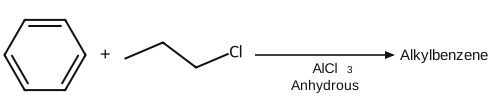
- Major product is n-propyl benzene.
- iso-propyl carbocation intermediate is also generated.
- Multiple substitution is inevitable.
- Introducing electron-donating substituent on benzene will not produce any alkyl benzene.
Choose the correct answer from the options given below:
निम्नलिखित फ्रीडेल-क्राफ्ट्स ऐल्किलन अभिक्रिया के लिए कौन-से कथन सही हैं?
- मुख्य उत्पाद n-प्रोपिल बेन्ज़ीन है।
- आइसो-प्रोपिल कार्बधनायन मध्यवर्ती भी उत्पन्न होता है।
- बहु-प्रतिस्थापन (multiple substitution) अपरिहार्य है।
- बेन्ज़ीन पर इलेक्ट्रॉन-दाता प्रतिस्थापी लगाने से कोई ऐल्किल बेन्ज़ीन नहीं बनेगा।
नीचे दिए गए विकल्पों में से सही उत्तर चुनिए:
- AA and D onlyकेवल A और D
- BB and C onlyकेवल B और C
- CA and C onlyकेवल A और C
- DB and D onlyकेवल B और D
Show answer
Concept: Friedel–Crafts alkylation goes through a carbocation (or carbocation-like complex) that can rearrange; the alkylated product is more activated than benzene.
- A – false: the 1° n-propyl cation undergoes a 1,2-hydride shift to the more stable 2° isopropyl cation, so the major product is isopropylbenzene (cumene).
- B – true: the isopropyl carbocation is generated by rearrangement.
- C – true: the alkyl group activates the ring (+I/hyperconjugation), so the product reacts further and polyalkylation always accompanies the reaction.
- D – false: electron-donating groups activate the ring and favour alkylation; it is strongly electron-withdrawing groups (e.g. –NO2) that stop it.
- Correct: B and C. (A), (C), (D) contain false A or D.
Answer: (B) B and C only
अवधारणा: फ्रीडेल–क्राफ्ट्स ऐल्किलन कार्बधनायन (या कार्बधनायन-सदृश संकुल) द्वारा होता है जो पुनर्विन्यासित हो सकता है; ऐल्किलित उत्पाद बेन्ज़ीन से अधिक सक्रियित होता है।
- A – असत्य: 1° n-प्रोपिल धनायन 1,2-हाइड्राइड विस्थापन द्वारा अधिक स्थायी 2° आइसोप्रोपिल धनायन बनाता है, अतः मुख्य उत्पाद आइसोप्रोपिलबेन्ज़ीन (क्यूमीन) है।
- B – सत्य: पुनर्विन्यास द्वारा आइसोप्रोपिल कार्बधनायन बनता है।
- C – सत्य: ऐल्किल समूह वलय को सक्रियित करता है (+I/अतिसंयुग्मन), अतः उत्पाद आगे अभिक्रिया करता है और बहु-ऐल्किलन सदैव साथ होता है।
- D – असत्य: इलेक्ट्रॉन-दाता समूह वलय को सक्रियित कर ऐल्किलन को बढ़ावा देते हैं; प्रबल इलेक्ट्रॉन-आकर्षी समूह (जैसे –NO2) इसे रोकते हैं।
- सही: B और C। (A), (C), (D) में असत्य A या D शामिल है।
उत्तर: (B) केवल B और C
JEE Main 2026 (April) – Paper 1 (B.E./B.Tech)ChemistryHydrocarbons – Friedel–Crafts alkylationJEE Main 2026 (April) – Paper 1 (B.E./B.Tech) 2026 · 5 Apr Shift 1
Q366.Benzyl isocyanide can be obtained from
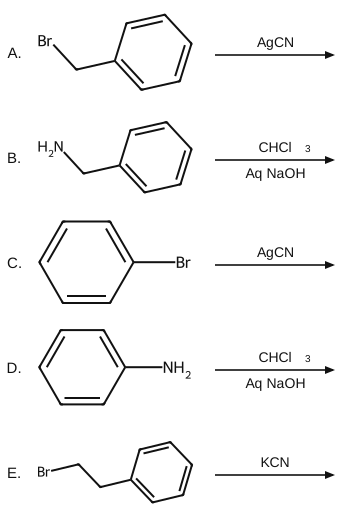
Choose the correct answer from the options given below:
बेन्ज़िल आइसोसायनाइड किससे प्राप्त किया जा सकता है
नीचे दिए गए विकल्पों में से सही उत्तर चुनिए:
- AA and B Onlyकेवल A और B
- BA and C Onlyकेवल A और C
- CB and D Onlyकेवल B और D
- DD and E Onlyकेवल D और E
Show answer
Concept: Benzyl isocyanide is C6H5CH2–N≡C. Isocyanides form from alkyl halides + AgCN (covalent, attack through N) or from 1° amines + CHCl3/base (carbylamine reaction).
- A – benzyl bromide + AgCN → C6H5CH2NC ✔.
- B – benzylamine + CHCl3/NaOH (carbylamine) → C6H5CH2NC ✔.
- C – bromobenzene does not undergo nucleophilic substitution with AgCN (C–Br has partial double-bond character); even so, it could only give phenyl, not benzyl, isocyanide ✘.
- D – aniline + CHCl3/NaOH gives phenyl isocyanide C6H5NC ✘.
- E – 2-phenylethyl bromide + KCN gives the nitrile C6H5CH2CH2CN (ionic CN− attacks through C) ✘.
Answer: (A) A and B Only
अवधारणा: बेन्ज़िल आइसोसायनाइड C6H5CH2–N≡C है। आइसोसायनाइड ऐल्किल हैलाइड + AgCN (सहसंयोजी, N द्वारा आक्रमण) से या 1° ऐमीन + CHCl3/क्षार (कार्बिलऐमीन अभिक्रिया) से बनते हैं।
- A – बेन्ज़िल ब्रोमाइड + AgCN → C6H5CH2NC ✔।
- B – बेन्ज़िलऐमीन + CHCl3/NaOH (कार्बिलऐमीन) → C6H5CH2NC ✔।
- C – ब्रोमोबेन्ज़ीन AgCN के साथ नाभिकस्नेही प्रतिस्थापन नहीं करता (C–Br में आंशिक द्विआबंध लक्षण); फिर भी यह केवल फेनिल आइसोसायनाइड दे सकता था, बेन्ज़िल नहीं ✘।
- D – ऐनिलीन + CHCl3/NaOH फेनिल आइसोसायनाइड C6H5NC देता है ✘।
- E – 2-फेनिलएथिल ब्रोमाइड + KCN नाइट्राइल C6H5CH2CH2CN देता है (आयनिक CN− C द्वारा आक्रमण करता है) ✘।
उत्तर: (A) केवल A और B
JEE Main 2026 (April) – Paper 1 (B.E./B.Tech)ChemistryAmines – isocyanide preparationJEE Main 2026 (April) – Paper 1 (B.E./B.Tech) 2026 · 5 Apr Shift 1
Q367.Consider compounds A, B and C with following structural formulae
A = CH3 − CH2 − CH2 − CH2 − CH2 − OH
B = CH2 = CH − CH2 − CH2 − CH3
C = HO − CH2 − CH2 − CH(OH) − CH3
For the conversion of B from A, reagent (D) required is ________ and structural formula of product (E) obtained when C undergoes same reaction using excess reagent (D) is ________.
निम्नलिखित संरचना सूत्रों वाले यौगिकों A, B तथा C पर विचार कीजिए
A = CH3 − CH2 − CH2 − CH2 − CH2 − OH
B = CH2 = CH − CH2 − CH2 − CH3
C = HO − CH2 − CH2 − CH(OH) − CH3
A से B के रूपांतरण के लिए आवश्यक अभिकर्मक (D) ________ है तथा आधिक्य अभिकर्मक (D) का उपयोग करके C की वही अभिक्रिया होने पर प्राप्त उत्पाद (E) का संरचना सूत्र ________ है।
- A
| D | E |
|---|
| Conc. H2SO4 | CH2 = CH − CH(OH)CH3 |
- B
| D | E |
|---|
| PCC | HO − CH2 − CH2 − CH = CH2 |
- C
- D
| D | E |
|---|
| Conc. H2SO4 or H3PO4 | CH2 = CH − CH = CH2 |
| D | E |
|---|
| Conc. H2SO4 या H3PO4 | CH2 = CH − CH = CH2 |
Show answer
Concept: A → B is the loss of H2O from an alcohol to give an alkene: acid-catalysed dehydration with conc. H2SO4 or H3PO4 on heating. PCC is an oxidising agent (alcohol → carbonyl) and cannot give an alkene.
- D = conc. H2SO4 (or H3PO4), so (B) and (C) are wrong.
- C = butane-1,3-diol has two –OH groups; with excess acid both are eliminated: HOCH2CH2CH(OH)CH3 → CH2=CH–CH=CH2 + 2H2O (conjugated buta-1,3-diene).
- (A) shows only one –OH removed, which does not fit "excess reagent".
Answer: (D) Conc. H2SO4 or H3PO4; CH2=CH–CH=CH2
अवधारणा: A → B ऐल्कोहॉल से H2O का निष्कासन कर ऐल्कीन बनाना है: गर्म करने पर सांद्र H2SO4 या H3PO4 द्वारा अम्ल-उत्प्रेरित निर्जलीकरण। PCC एक ऑक्सीकारक है (ऐल्कोहॉल → कार्बोनिल) और ऐल्कीन नहीं दे सकता।
- D = सांद्र H2SO4 (या H3PO4), अतः (B) तथा (C) गलत हैं।
- C = ब्यूटेन-1,3-डाइऑल में दो –OH समूह हैं; आधिक्य अम्ल के साथ दोनों निष्कासित होते हैं: HOCH2CH2CH(OH)CH3 → CH2=CH–CH=CH2 + 2H2O (संयुग्मित ब्यूटा-1,3-डाइईन)।
- (A) में केवल एक –OH हटाया गया है, जो "आधिक्य अभिकर्मक" के अनुरूप नहीं है।
उत्तर: (D) सांद्र H2SO4 या H3PO4; CH2=CH–CH=CH2
JEE Main 2026 (April) – Paper 1 (B.E./B.Tech)ChemistryAlcohols – acid-catalysed dehydrationJEE Main 2026 (April) – Paper 1 (B.E./B.Tech) 2026 · 5 Apr Shift 1
- AA and D Onlyकेवल A और D
- BA and C Onlyकेवल A और C
- CB and C Onlyकेवल B और C
- DA and B Onlyकेवल A और B
Show answer
Concept: Check each statement against basicity (lone-pair availability), the scope of Gabriel synthesis, Hoffmann bromamide degradation and diazonium chemistry.
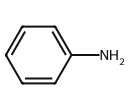
- A – correct: in benzylamine the N lone pair is not in resonance with the ring (CH2 insulates it), whereas in aniline it is delocalised; so benzylamine is the stronger base.
- B – incorrect: Gabriel synthesis cannot make aryl amines such as p-methoxyaniline, because aryl halides do not undergo SN2 with the phthalimide anion.
- C – incorrect: Hoffmann bromamide reaction of C6H5CH2CONH2 gives benzylamine C6H5CH2NH2, where –NH2 is on an sp3 carbon – it is not an aromatic amine.
- D – correct: p-nitroaniline → p-nitrobenzenediazonium chloride → (warm water) p-nitrophenol, an acidic phenol that dissolves in NaOH as the phenoxide.
- Incorrect statements: B and C.
Answer: (C) B and C Only
अवधारणा: प्रत्येक कथन को क्षारकता (एकाकी युग्म की उपलब्धता), गैब्रिएल संश्लेषण की सीमा, हॉफमान ब्रोमेमाइड निम्नीकरण तथा डाइऐज़ोनियम रसायन के आधार पर जाँचिए।
- A – सही: बेन्ज़िलऐमीन में N का एकाकी युग्म वलय के साथ अनुनाद में नहीं है (CH2 उसे पृथक रखता है), जबकि ऐनिलीन में यह विस्थानीकृत है; अतः बेन्ज़िलऐमीन प्रबल क्षारक है।
- B – गलत: गैब्रिएल संश्लेषण से p-मेथॉक्सीऐनिलीन जैसी ऐरिल ऐमीन नहीं बनाई जा सकती, क्योंकि ऐरिल हैलाइड थैलिमाइड ऋणायन के साथ SN2 नहीं करते।
- C – गलत: C6H5CH2CONH2 की हॉफमान ब्रोमेमाइड अभिक्रिया बेन्ज़िलऐमीन C6H5CH2NH2 देती है, जिसमें –NH2 sp3 कार्बन पर है – यह ऐरोमैटिक ऐमीन नहीं है।
- D – सही: p-नाइट्रोऐनिलीन → p-नाइट्रोबेन्ज़ीनडाइऐज़ोनियम क्लोराइड → (गर्म जल) p-नाइट्रोफ़ीनॉल, एक अम्लीय फ़ीनॉल जो फ़ीनॉक्साइड के रूप में NaOH में घुल जाता है।
- गलत कथन: B और C।
उत्तर: (C) केवल B और C
JEE Main 2026 (April) – Paper 1 (B.E./B.Tech)ChemistryAmines – basicity, preparation & diazotisationJEE Main 2026 (April) – Paper 1 (B.E./B.Tech) 2026 · 5 Apr Shift 1
Q369.Identify the correct statements.
- Glucose exists in two anomeric forms.
- Anomers of glucose differ in configuration at C−1 in cyclic hemiacetal structure.
- Melting point of α - anomer of glucose is greater than β - anomer.
- Specific rotation of α - anomer is +19° while for β - anomer is +112°
- α and β - anomers of glucose are prepared by crystallization of saturated glucose solution at 303 K and 371 K respectively.
Choose the correct answer from the options given below:
सही कथनों को पहचानिए।
- ग्लूकोस दो ऐनोमरी रूपों में पाया जाता है।
- ग्लूकोस के ऐनोमर चक्रीय हेमिऐसीटैल संरचना में C−1 पर विन्यास में भिन्न होते हैं।
- ग्लूकोस के α - ऐनोमर का गलनांक β - ऐनोमर से अधिक है।
- α - ऐनोमर का विशिष्ट घूर्णन +19° है जबकि β - ऐनोमर का +112° है।
- ग्लूकोस के α तथा β - ऐनोमर, संतृप्त ग्लूकोस विलयन के क्रमशः 303 K तथा 371 K पर क्रिस्टलन द्वारा बनाए जाते हैं।
नीचे दिए गए विकल्पों में से सही उत्तर चुनिए:
- AA and B Onlyकेवल A और B
- BB and C Onlyकेवल B और C
- CA, B and D Onlyकेवल A, B और D
- DA, B and E Onlyकेवल A, B और E
Show answer
Concept: α- and β-D-glucopyranose differ only at the anomeric carbon C-1; their physical constants: α – m.p. 419 K (146 °C), [α]D +112°; β – m.p. 423 K (150 °C), [α]D +19°.
- A – true: glucose exists as α and β anomers.
- B – true: they differ in configuration of –OH at C-1 of the cyclic hemiacetal.
- C – false: α-glucose melts at 146 °C, lower than β-glucose (150 °C).
- D – false: the values are interchanged (α = +112°, β = +19°).
- E – true: α-glucose crystallises from a concentrated solution at 303 K, β-glucose from a hot saturated solution at 371 K.
- Correct: A, B, E. (B) and (C) include false C or D; (A) omits true E.
Answer: (D) A, B and E Only
अवधारणा: α- तथा β-D-ग्लूकोपाइरेनोस केवल ऐनोमरी कार्बन C-1 पर भिन्न होते हैं; इनके भौतिक नियतांक: α – गलनांक 419 K (146 °C), [α]D +112°; β – गलनांक 423 K (150 °C), [α]D +19°।
- A – सत्य: ग्लूकोस α तथा β ऐनोमरों के रूप में पाया जाता है।
- B – सत्य: ये चक्रीय हेमिऐसीटैल के C-1 पर –OH के विन्यास में भिन्न होते हैं।
- C – असत्य: α-ग्लूकोस 146 °C पर पिघलता है, जो β-ग्लूकोस (150 °C) से कम है।
- D – असत्य: मान परस्पर बदल दिए गए हैं (α = +112°, β = +19°)।
- E – सत्य: α-ग्लूकोस 303 K पर सांद्र विलयन से, β-ग्लूकोस 371 K पर गर्म संतृप्त विलयन से क्रिस्टलित होता है।
- सही: A, B, E। (B) तथा (C) में असत्य C या D है; (A) में सत्य E छूटा है।
उत्तर: (D) केवल A, B और E
JEE Main 2026 (April) – Paper 1 (B.E./B.Tech)ChemistryBiomolecules – anomers of glucoseJEE Main 2026 (April) – Paper 1 (B.E./B.Tech) 2026 · 5 Apr Shift 1
Q370.Given below are two statements:
Statement I: Sodium dichromate and potassium dichromate are classified as primary standards in titrimetric analysis.
Statement II: Phenolphthalein is a weak base, therefore it dissociates in acidic medium.
In the light of the above statements, choose the correct answer from the options given below
नीचे दो कथन दिए गए हैं:
कथन I: अनुमापनी विश्लेषण में सोडियम डाइक्रोमेट तथा पोटैशियम डाइक्रोमेट को प्राथमिक मानक (primary standards) के रूप में वर्गीकृत किया जाता है।
कथन II: फ़ीनॉल्फ़्थेलीन एक दुर्बल क्षारक है, इसलिए यह अम्लीय माध्यम में वियोजित होता है।
उपर्युक्त कथनों के आलोक में, नीचे दिए गए विकल्पों में से सही उत्तर चुनिए
- ABoth Statement I and Statement II are tureकथन I और कथन II दोनों सत्य हैं
- BBoth Statement I and Statement II are falseकथन I और कथन II दोनों असत्य हैं
- CStatement I is true but Statement II is falseकथन I सत्य है परन्तु कथन II असत्य है
- DStatement I is false but Statement II is trueकथन I असत्य है परन्तु कथन II सत्य है
Show answer
Concept: A primary standard must be highly pure, stable and non-hygroscopic. Phenolphthalein is a weak organic acid (HIn).
- Statement I: K2Cr2O7 is a primary standard, but Na2Cr2O7 is hygroscopic (deliquescent) and cannot be weighed accurately, so it is not a primary standard → false.
- Statement II: phenolphthalein is a weak acid; it remains undissociated (colourless) in acidic medium and ionises to the pink In− form in basic medium → false.
Answer: (B) Both Statement I and Statement II are false
अवधारणा: प्राथमिक मानक अत्यंत शुद्ध, स्थायी तथा अनार्द्रताग्राही (non-hygroscopic) होना चाहिए। फ़ीनॉल्फ़्थेलीन एक दुर्बल कार्बनिक अम्ल (HIn) है।
- कथन I: K2Cr2O7 प्राथमिक मानक है, परन्तु Na2Cr2O7 आर्द्रताग्राही (प्रस्वेद्य) है और इसे सही-सही तौला नहीं जा सकता, अतः यह प्राथमिक मानक नहीं है → असत्य।
- कथन II: फ़ीनॉल्फ़्थेलीन एक दुर्बल अम्ल है; यह अम्लीय माध्यम में अवियोजित (रंगहीन) रहता है तथा क्षारीय माध्यम में गुलाबी In− रूप में आयनित होता है → असत्य।
उत्तर: (B) कथन I और कथन II दोनों असत्य हैं
JEE Main 2026 (April) – Paper 1 (B.E./B.Tech)ChemistryVolumetric Analysis – primary standards & indicatorsJEE Main 2026 (April) – Paper 1 (B.E./B.Tech) 2026 · 5 Apr Shift 1
Q371.Consider the following species:
BrF5, XeF5−, BF4−, ICl4−, XeF4, SF4, NH4+, ClF3, XeF2, ICl2−
Number of species having sp3d hybridized central atom is ________.
निम्नलिखित स्पीशीज़ पर विचार कीजिए:
BrF5, XeF5−, BF4−, ICl4−, XeF4, SF4, NH4+, ClF3, XeF2, ICl2−
sp3d संकरित केंद्रीय परमाणु वाली स्पीशीज़ की संख्या ________ है।
Show answer
Concept: Steric number = bonded atoms (bp) + lone pairs (lp) on the central atom; 5 → sp3d, 6 → sp3d2, 7 → sp3d3.
- Lone pairs: lp = ½(valence e− of central atom − bp ± charge), e.g. XeF2: ½(8 − 2) = 3; ICl2−: ½(7 − 2 + 1) = 3; ClF3: ½(7 − 3) = 2; SF4: ½(6 − 4) = 1.
| Species | bp + lp | Hybridisation |
|---|
| BrF5 | 5 + 1 = 6 | sp3d2 |
| XeF5− | 5 + 2 = 7 | sp3d3 |
| BF4− | 4 + 0 = 4 | sp3 |
| ICl4− | 4 + 2 = 6 | sp3d2 |
| XeF4 | 4 + 2 = 6 | sp3d2 |
| SF4 | 4 + 1 = 5 | sp3d |
| NH4+ | 4 + 0 = 4 | sp3 |
| ClF3 | 3 + 2 = 5 | sp3d |
| XeF2 | 2 + 3 = 5 | sp3d |
| ICl2− | 2 + 3 = 5 | sp3d |
- sp3d: SF4, ClF3, XeF2, ICl2− → 4 species.
Short trick: Steric number 5 = see-saw (SF4), T-shape (ClF3) or linear with 3 lp (XeF2, ICl2−).
Answer: 4
अवधारणा: स्टेरिक संख्या = केंद्रीय परमाणु पर आबंधित परमाणु (bp) + एकाकी युग्म (lp); 5 → sp3d, 6 → sp3d2, 7 → sp3d3।
- एकाकी युग्म: lp = ½(केंद्रीय परमाणु के संयोजकता e− − bp ± आवेश), जैसे XeF2: ½(8 − 2) = 3; ICl2−: ½(7 − 2 + 1) = 3; ClF3: ½(7 − 3) = 2; SF4: ½(6 − 4) = 1।
| स्पीशीज़ | bp + lp | संकरण |
|---|
| BrF5 | 5 + 1 = 6 | sp3d2 |
| XeF5− | 5 + 2 = 7 | sp3d3 |
| BF4− | 4 + 0 = 4 | sp3 |
| ICl4− | 4 + 2 = 6 | sp3d2 |
| XeF4 | 4 + 2 = 6 | sp3d2 |
| SF4 | 4 + 1 = 5 | sp3d |
| NH4+ | 4 + 0 = 4 | sp3 |
| ClF3 | 3 + 2 = 5 | sp3d |
| XeF2 | 2 + 3 = 5 | sp3d |
| ICl2− | 2 + 3 = 5 | sp3d |
- sp3d: SF4, ClF3, XeF2, ICl2− → 4 स्पीशीज़।
शॉर्ट ट्रिक: स्टेरिक संख्या 5 = सी-सॉ (SF4), T-आकार (ClF3) या 3 lp के साथ रैखिक (XeF2, ICl2−)।
उत्तर: 4
JEE Main 2026 (April) – Paper 1 (B.E./B.Tech)ChemistryChemical Bonding – hybridisation (VSEPR)JEE Main 2026 (April) – Paper 1 (B.E./B.Tech) 2026 · 5 Apr Shift 1
Q372.In an estimation of sulphur by Carius method 0.2 g of the substance gave 0.6 g of BaSO4. The percentage of sulphur in the substance is _______%.
(Given molar mass in g mol−1 S : 32, BaSO4 : 231)
कैरियस विधि द्वारा सल्फर के आकलन में 0.2 g पदार्थ से 0.6 g BaSO4 प्राप्त हुआ। पदार्थ में सल्फर की प्रतिशतता _______% है।
(दिया है मोलर द्रव्यमान g mol−1 में S : 32, BaSO4 : 231)
Show answer
Concept: All the sulphur ends up as BaSO4: 1 mol BaSO4 contains 1 mol S, so mass of S = (32/MBaSO4) × mass of BaSO4.
- Using the given molar mass 231: mass of S = (32/231) × 0.6 = 0.08312 g.
- % S = (0.08312/0.2) × 100 = 41.56 % ≈ 42 %.
Short trick: % S = 32 × 0.6 × 100/(231 × 0.2) = 1920/46.2 = 41.56 → 42.
Answer: 42
अवधारणा: सारा सल्फर BaSO4 में परिवर्तित होता है: 1 mol BaSO4 में 1 mol S होता है, अतः S का द्रव्यमान = (32/MBaSO4) × BaSO4 का द्रव्यमान।
- दिए गए मोलर द्रव्यमान 231 से: S का द्रव्यमान = (32/231) × 0.6 = 0.08312 g।
- % S = (0.08312/0.2) × 100 = 41.56 % ≈ 42 %।
शॉर्ट ट्रिक: % S = 32 × 0.6 × 100/(231 × 0.2) = 1920/46.2 = 41.56 → 42।
उत्तर: 42
JEE Main 2026 (April) – Paper 1 (B.E./B.Tech)ChemistryOrganic Analysis – Carius method (sulphur)JEE Main 2026 (April) – Paper 1 (B.E./B.Tech) 2026 · 5 Apr Shift 1
Q373.One mole of phenol is treated with dilute HNO3 at 298 K to give a mixture of products. The mixture is separated by steam distillation. The steam volatile compound (X) is separated. The increase in percentage of oxygen in (X) with respect to phenol is _______ %
(Given molar mass in g mol−1 H:1, C:12, N:14, O:16)
एक मोल फ़ीनॉल की 298 K पर तनु HNO3 के साथ अभिक्रिया से उत्पादों का मिश्रण प्राप्त होता है। मिश्रण को भाप आसवन (steam distillation) द्वारा पृथक किया जाता है। भाप-वाष्पशील यौगिक (X) पृथक किया जाता है। फ़ीनॉल की तुलना में (X) में ऑक्सीजन की प्रतिशतता में वृद्धि _______ % है
(दिया है मोलर द्रव्यमान g mol−1 में H:1, C:12, N:14, O:16)
Show answer
Concept: Dilute HNO3 at 298 K gives o- and p-nitrophenol; o-nitrophenol (intramolecular H-bond) is steam volatile, so X = o-nitrophenol, C6H5NO3.
- Phenol C6H6O: M = 94; % O = 16/94 × 100 = 17.02 %.
- o-Nitrophenol C6H5NO3: M = 72 + 5 + 14 + 48 = 139; % O = 48/139 × 100 = 34.53 %.
- Increase = 34.53 − 17.02 = 17.51 % = 175.1 × 10⁻¹ % ≈ 175 × 10−1 %.
Answer: 175
अवधारणा: 298 K पर तनु HNO3 o- तथा p-नाइट्रोफ़ीनॉल देता है; o-नाइट्रोफ़ीनॉल (अंतःअणुक H-आबंध) भाप-वाष्पशील है, अतः X = o-नाइट्रोफ़ीनॉल, C6H5NO3।
- फ़ीनॉल C6H6O: M = 94; % O = 16/94 × 100 = 17.02 %।
- o-नाइट्रोफ़ीनॉल C6H5NO3: M = 72 + 5 + 14 + 48 = 139; % O = 48/139 × 100 = 34.53 %।
- वृद्धि = 34.53 − 17.02 = 17.51 % = 175.1 × 10⁻¹ % ≈ 175 × 10−1 %।
उत्तर: 175
JEE Main 2026 (April) – Paper 1 (B.E./B.Tech)ChemistryPhenols – nitration & steam distillationJEE Main 2026 (April) – Paper 1 (B.E./B.Tech) 2026 · 5 Apr Shift 1
Q374.The values of pressure equilibrium constant recorded at different temperatures for the following equilibrium reaction have been given below
A(g) ⇌ B(g) + C(g)
| (K−1) | log10Kp |
|---|
| 0.05 | 3.5 |
| 0.06 | 2.5 |
| 0.07 | 1.5 |
The magnitude of calculated from the above data is _______. (Nearest integer)
निम्नलिखित साम्य अभिक्रिया के लिए विभिन्न तापों पर दर्ज दाब साम्य स्थिरांक के मान नीचे दिए गए हैं
A(g) ⇌ B(g) + C(g)
| (K−1) | log10Kp |
|---|
| 0.05 | 3.5 |
| 0.06 | 2.5 |
| 0.07 | 1.5 |
उपर्युक्त आँकड़ों से परिकलित का परिमाण _______ है। (निकटतम पूर्णांक)
Show answer
Concept: van 't Hoff: , so the slope of log Kp vs 1/T is −ΔH°/(2.303R).
- Slope = (2.5 − 3.5)/(0.06 − 0.05) = −1/0.01 = −100 K (the three points are collinear).
- K.
- Magnitude ≈ 230.
Answer: 230
अवधारणा: वान्ट हॉफ: , अतः log Kp बनाम 1/T की प्रवणता −ΔH°/(2.303R) है।
- प्रवणता = (2.5 − 3.5)/(0.06 − 0.05) = −1/0.01 = −100 K (तीनों बिंदु एक रेखा पर हैं)।
- K।
- परिमाण ≈ 230।
उत्तर: 230
JEE Main 2026 (April) – Paper 1 (B.E./B.Tech)ChemistryEquilibrium – van 't Hoff equationJEE Main 2026 (April) – Paper 1 (B.E./B.Tech) 2026 · 5 Apr Shift 1
Q375.If the half life of a first order reaction is 6.93 minutes then the time required for completion of 99% of the reaction will be ________ minutes .
(Given : log 2 = 0.3010)
यदि किसी प्रथम कोटि अभिक्रिया की अर्ध-आयु 6.93 मिनट है, तो अभिक्रिया के 99% पूर्ण होने में लगने वाला समय ________ मिनट होगा।
(दिया है : log 2 = 0.3010)
Show answer
Concept: First order: and .
- min−1.
- For 99% completion [A]0/[A] = 100, log 100 = 2.
- min ≈ 46 min.
Short trick: t99% = t½ × (log 100/log 2) = 6.93 × 2/0.3010 ≈ 46 min (≈ 6.64 half-lives).
Answer: 46
अवधारणा: प्रथम कोटि: तथा ।
- min−1।
- 99% पूर्णता के लिए [A]0/[A] = 100, log 100 = 2।
- min ≈ 46 मिनट।
शॉर्ट ट्रिक: t99% = t½ × (log 100/log 2) = 6.93 × 2/0.3010 ≈ 46 मिनट (≈ 6.64 अर्ध-आयु)।
उत्तर: 46
JEE Main 2026 (April) – Paper 1 (B.E./B.Tech)ChemistryChemical Kinetics – first order reactionJEE Main 2026 (April) – Paper 1 (B.E./B.Tech) 2026 · 5 Apr Shift 1
Q376.For the function defined by , among the two statements:
(I) The set contains exactly two elements, and
(II) The set is an empty set,
फलन , जो द्वारा परिभाषित है, के लिए दो कथनों में से:
(I) समुच्चय में ठीक दो अवयव हैं, तथा
(II) समुच्चय एक रिक्त समुच्चय है,
- Aonly (I) is TRUEकेवल (I) सत्य है
- Bonly (II) is TRUEकेवल (II) सत्य है
- Cboth (I) and (II) are TRUE(I) तथा (II) दोनों सत्य हैं
- Dneither (I) nor (II) is TRUEन तो (I) और न ही (II) सत्य है
Show answer
Concept: For a strictly increasing function, forces ; for other equations with , write explicitly and test signs.
- is strictly increasing and onto on , with .
- (I) Since is increasing, : . So has exactly two elements — (I) is TRUE.
- (II) , so the equation is . Let : and , so a root lies in . Hence — (II) is FALSE.
Short trick: For increasing , solve instead of — the curves can only meet on the line .
Answer: (A)
अवधारणा: निरंतर वर्धमान फलन के लिए से प्राप्त होता है; वाले अन्य समीकरणों में को स्पष्ट लिखकर चिह्न जाँचें।
- , पर निरंतर वर्धमान तथा आच्छादक है, और ।
- (I) वर्धमान है, अतः : । अतः में ठीक दो अवयव — (I) सत्य।
- (II) , अतः समीकरण है। लें: तथा , अतः में एक मूल है। अतः — (II) असत्य।
शॉर्ट ट्रिक: वर्धमान के लिए की जगह हल करें — वक्र केवल रेखा पर ही मिल सकते हैं।
उत्तर: (A)
JEE Main 2026 (April) – Paper 1 (B.E./B.Tech)MathematicsFunctions – inverse of a functionJEE Main 2026 (April) – Paper 1 (B.E./B.Tech) 2026 · 4 Apr Shift 2
Q377.Let . Then is equal to:
माना है। तब बराबर है:
- A42
- B23
- C27
- D38
Show answer
Concept: Solve the quadratic for its complex roots and use .
- .
- For : , so .
- For : , so .
- Sum .
Answer: (D)
अवधारणा: द्विघात समीकरण के सम्मिश्र मूल ज्ञात कर का प्रयोग करें।
- ।
- के लिए: , अतः ।
- के लिए: , अतः ।
- योग ।
उत्तर: (D)
JEE Main 2026 (April) – Paper 1 (B.E./B.Tech)MathematicsComplex numbers – modulusJEE Main 2026 (April) – Paper 1 (B.E./B.Tech) 2026 · 4 Apr Shift 2
Q378.If the system of equations:
has infinitely many solutions, then the value of is:
यदि समीकरण निकाय:
के अनंत हल हैं, तो का मान है:
- A16
- B18
- C19
- D21
Show answer
Concept: Infinitely many solutions and the equations are consistent (the third is a combination of the first two).
- .
- Notice in the coefficients: . So .
- .
Short trick: The coefficient rows are in arithmetic progression column-wise when ; the RHS must then follow the same AP: .
Answer: (B)
अवधारणा: अनंत हल तथा निकाय संगत हो (तीसरा समीकरण पहले दो का संयोजन हो)।
- ।
- गुणांकों में : । अतः ।
- ।
शॉर्ट ट्रिक: पर गुणांक-पंक्तियाँ स्तम्भानुसार समांतर श्रेढ़ी (A.P.) में हैं; तब दायाँ पक्ष भी उसी A.P. में होगा: ।
उत्तर: (B)
JEE Main 2026 (April) – Paper 1 (B.E./B.Tech)MathematicsDeterminants – system of linear equationsJEE Main 2026 (April) – Paper 1 (B.E./B.Tech) 2026 · 4 Apr Shift 2
Q379.If and , where , are two roots of the equation , , then is equal to:
यदि तथा , जहाँ है, समीकरण , के दो मूल हैं, तो बराबर है:
- A
- B
- C
- D
Show answer
Concept: Complex roots of a real polynomial occur in conjugate pairs; odd powers integrate to zero over .
- Roots: .
- Sum ; sum of products in pairs ; product .
- : the odd terms vanish, leaving .
Short trick: Over only the even part matters: .
Answer: (C)
अवधारणा: वास्तविक बहुपद के सम्मिश्र मूल संयुग्मी युग्मों में होते हैं; पर विषम घातों का समाकलन शून्य होता है।
- मूल: ।
- योग ; युग्मों में गुणनफलों का योग ; गुणनफल ।
- : विषम पद शून्य हो जाते हैं, शेष ।
शॉर्ट ट्रिक: पर केवल सम भाग का योगदान होता है: ।
उत्तर: (C)
JEE Main 2026 (April) – Paper 1 (B.E./B.Tech)MathematicsTheory of equations – complex roots & definite integralJEE Main 2026 (April) – Paper 1 (B.E./B.Tech) 2026 · 4 Apr Shift 2
Q380.If the quadratic equation , , has two positive roots, then the number of possible integral values of is:
यदि द्विघात समीकरण , , के दो धनात्मक मूल हैं, तो के संभव पूर्णांक मानों की संख्या है:
- A1
- B2
- C3
- D4
Show answer
Concept: Two positive roots need , sum of roots and product of roots .
- .
- Sum and product or .
- Intersection: , i.e. . Integral values: .
- Check : ✓; : ✓.
Answer: (B)
अवधारणा: दो धनात्मक मूलों के लिए , मूलों का योग तथा मूलों का गुणनफल आवश्यक है।
- ।
- योग तथा गुणनफल अथवा ।
- सर्वनिष्ठ: , अर्थात् । पूर्णांक मान: ।
- जाँच : ✓; : ✓।
उत्तर: (B)
JEE Main 2026 (April) – Paper 1 (B.E./B.Tech)MathematicsQuadratic equations – nature of rootsJEE Main 2026 (April) – Paper 1 (B.E./B.Tech) 2026 · 4 Apr Shift 2


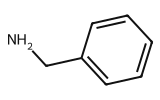 is a stronger base than
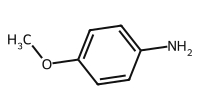 can be synthesized by Gabriel phthalimide synthesis.
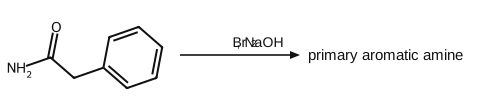
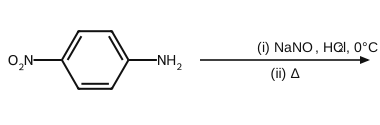 product will dissolve in NaOH