JEE Main 2026 (April) – Paper 1 (B.E./B.Tech) · 675 questions

JEE Main 2026 (April) – Paper 1 (B.E./B.Tech) 2026 PYQs

Real previous year questions, subject-wise. Try the question, then open the answer and the explanation in Hindi & English – free, no login.

Courses – airGurukul

675 questions.

Q581.
At 25°C, 20.0 mL of 0.2 M weak monoprotic acid HX is titrated against 0.2 M NaOH. The pH of the solution (a) at the start of the titration (when NaOH has not been added) and (b) when 10 mL of NaOH is added respectively, are :
Given :   Ka=5×10⁻⁴ ; pKa=3.3 ; α<<1
25°C पर, 0.2 M दुर्बल एकल-प्रोटिक अम्ल HX के 20.0 mL का 0.2 M NaOH से अनुमापन किया जाता है। विलयन का pH (a) अनुमापन के प्रारंभ में (जब NaOH नहीं मिलाया गया है) तथा (b) जब 10 mL NaOH मिलाया गया है, क्रमशः हैं :
दिया है :   Ka=5×10⁻⁴ ; pKa=3.3 ; α<<1
  1. A(a) 0.7   (b) 2.0
  2. B(a) 2.0   (b) 3.3
  3. C(a) 1.1   (b) 2.2
  4. D(a) 3.0   (b) 2.2
Show answer

Concept: For a weak acid alone, [H+]=KaC (since α<<1); at half-neutralisation the solution is a buffer with pH = pKa.

  1. (a) [H+]=5×10−4×0.2=10−4=10−2 M → pH = 2.0.
  2. (b) Equivalence needs 20 mL NaOH; 10 mL is the half-equivalence point, where [HX] = [X−].
  3. Henderson equation: pH =pKa+log⁡[X−][HX]=pKa=3.3.

Short trick: Half-neutralisation of a weak acid always gives pH = pKa – no calculation needed for (b).

Answer: (B) (a) 2.0 (b) 3.3

अवधारणा: केवल दुर्बल अम्ल के लिए [H+]=KaC (क्योंकि α<<1); अर्ध-उदासीनीकरण पर विलयन बफर होता है जिसका pH = pKa।

  1. (a) [H+]=5×10−4×0.2=10−4=10−2 M → pH = 2.0।
  2. (b) तुल्यता के लिए 20 mL NaOH चाहिए; 10 mL अर्ध-तुल्यता बिंदु है, जहाँ [HX] = [X−]।
  3. हेंडरसन समीकरण: pH =pKa+log⁡[X−][HX]=pKa=3.3।

शॉर्ट ट्रिक: दुर्बल अम्ल के अर्ध-उदासीनीकरण पर सदैव pH = pKa – (b) के लिए कोई गणना नहीं चाहिए।

उत्तर: (B) (a) 2.0 (b) 3.3
JEE Main 2026 (April) – Paper 1 (B.E./B.Tech)ChemistryIonic equilibrium – titration pHJEE Main 2026 (April) – Paper 1 (B.E./B.Tech) 2026 · 2 Apr Shift 2
Q582.
Consider the reaction aX → bY, for which the rate constant at 30°C is 1×10⁻³ mol−1 L s−1. Which of the following statements are true ?
A. When concentration of 'X' is increased to four times, the rate of reaction becomes 16 times.
B. The reaction is a second order reaction.
C. The half-life period is independent of the concentration of X.
D. Decomposition of N2O5 is an example of the above reaction.
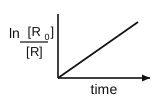
E. is valid for the above reaction.
Choose the correct answer from the options given below :
अभिक्रिया aX → bY पर विचार कीजिए, जिसके लिए 30°C पर वेग स्थिरांक 1×10⁻³ mol−1 L s−1 है। निम्नलिखित में से कौन-से कथन सत्य हैं ?
A. जब 'X' की सांद्रता चार गुनी कर दी जाती है, तो अभिक्रिया का वेग 16 गुना हो जाता है।
B. यह अभिक्रिया द्वितीय कोटि की अभिक्रिया है।
C. अर्ध-आयु काल X की सांद्रता पर निर्भर नहीं करता।
D. N2O5 का अपघटन उपर्युक्त अभिक्रिया का एक उदाहरण है।
E. उपर्युक्त अभिक्रिया के लिए मान्य है।
नीचे दिए गए विकल्पों में से सही उत्तर चुनिए :
  1. AA and B Onlyकेवल A और B
  2. BA, B and C Onlyकेवल A, B और C
  3. CA, B, D and E Onlyकेवल A, B, D और E
  4. DC and D Onlyकेवल C और D
Show answer

Concept: The unit of the rate constant identifies the order: mol−1 L s−1 = (concentration)−1 time−1 → second order.

  1. B. True – units mol−1 L s−1 belong to a second order reaction.
  2. A. True – rate =k[X]2; [X]→4[X] gives rate ×16.
  3. C. False – for second order t1/2=1k[X]0, which depends on the initial concentration.
  4. D. False – decomposition of N2O5 is the classic first order reaction.
  5. E. False – a linear ln⁡[R0][R] vs time plot holds for a first order reaction, not second order.

Short trick: Units of k for order n: mol1−n Ln−1 s−1; here n=2, and everything first-order (C, D, E) is wrong.

Answer: (A) A and B Only

अवधारणा: वेग स्थिरांक की इकाई से कोटि पता चलती है: mol−1 L s−1 = (सांद्रता)−1 समय−1 → द्वितीय कोटि।

  1. B. सत्य – इकाई mol−1 L s−1 द्वितीय कोटि की अभिक्रिया की है।
  2. A. सत्य – वेग =k[X]2; [X]→4[X] करने पर वेग 16 गुना।
  3. C. असत्य – द्वितीय कोटि के लिए t1/2=1k[X]0, जो प्रारंभिक सांद्रता पर निर्भर है।
  4. D. असत्य – N2O5 का अपघटन प्रथम कोटि की प्रसिद्ध अभिक्रिया है।
  5. E. असत्य – ln⁡[R0][R] बनाम समय का रैखिक आलेख प्रथम कोटि की अभिक्रिया के लिए मान्य है, द्वितीय कोटि के लिए नहीं।

शॉर्ट ट्रिक: कोटि n के लिए k की इकाई: mol1−n Ln−1 s−1; यहाँ n=2, अतः प्रथम कोटि से जुड़े सभी कथन (C, D, E) गलत हैं।

उत्तर: (A) केवल A और B

JEE Main 2026 (April) – Paper 1 (B.E./B.Tech)ChemistryChemical kinetics – order of reactionJEE Main 2026 (April) – Paper 1 (B.E./B.Tech) 2026 · 2 Apr Shift 2
Q583.
The correct set that contains all kinds (basic, acidic, amphoteric and neutral) of oxides is :
वह सही समुच्चय, जिसमें सभी प्रकार (क्षारकीय, अम्लीय, उभयधर्मी तथा उदासीन) के ऑक्साइड हैं, है :
  1. ANa2O, K2O, Al2O3 and As2O3Na2O, K2O, Al2O3 तथा As2O3
  2. BAl2O3, As2O3, CO and NOAl2O3, As2O3, CO तथा NO
  3. CK2O, Cl2O7, As2O3 and NOK2O, Cl2O7, As2O3 तथा NO
  4. DNa2O, N2O, Al2O3 and CONa2O, N2O, Al2O3 तथा CO
Show answer

Concept: Metal oxides of group 1/2 are basic; non-metal oxides in high oxidation states are acidic; Al2O3, As2O3 are amphoteric; CO, NO, N2O are neutral.

  1. (A) Na2O, K2O basic; Al2O3, As2O3 amphoteric – no acidic or neutral oxide.
  2. (B) Al2O3, As2O3 amphoteric; CO, NO neutral – no basic oxide.
  3. (C) K2O basic ✔, Cl2O7 acidic ✔, As2O3 amphoteric ✔, NO neutral ✔ – all four kinds present.
  4. (D) Na2O basic; N2O, CO neutral; Al2O3 amphoteric – no acidic oxide.

Short trick: Spot the acidic oxide first – only Cl2O7 in (C) is clearly acidic.

Answer: (C) K2O, Cl2O7, As2O3 and NO

अवधारणा: वर्ग 1/2 के धातु ऑक्साइड क्षारकीय होते हैं; उच्च ऑक्सीकरण अवस्था वाले अधातु ऑक्साइड अम्लीय; Al2O3, As2O3 उभयधर्मी; CO, NO, N2O उदासीन।

  1. (A) Na2O, K2O क्षारकीय; Al2O3, As2O3 उभयधर्मी – कोई अम्लीय या उदासीन ऑक्साइड नहीं।
  2. (B) Al2O3, As2O3 उभयधर्मी; CO, NO उदासीन – कोई क्षारकीय ऑक्साइड नहीं।
  3. (C) K2O क्षारकीय ✔, Cl2O7 अम्लीय ✔, As2O3 उभयधर्मी ✔, NO उदासीन ✔ – चारों प्रकार उपस्थित।
  4. (D) Na2O क्षारकीय; N2O, CO उदासीन; Al2O3 उभयधर्मी – कोई अम्लीय ऑक्साइड नहीं।

शॉर्ट ट्रिक: पहले अम्लीय ऑक्साइड पहचानिए – केवल (C) में Cl2O7 स्पष्टतः अम्लीय है।

उत्तर: (C) K2O, Cl2O7, As2O3 तथा NO

JEE Main 2026 (April) – Paper 1 (B.E./B.Tech)ChemistryClassification of oxidesJEE Main 2026 (April) – Paper 1 (B.E./B.Tech) 2026 · 2 Apr Shift 2
Q584.
Given below are two statements :
Statement I : The second ionization enthalpy of B, Al and Ga is in the order of B > Al > Ga.
Statement II : The correct order in terms of first ionization enthalpy is Si < Ge < Pb < Sn.
In the light of the above statements, choose the correct answer from the options given below :
नीचे दो कथन दिए गए हैं :
कथन I : B, Al तथा Ga की द्वितीय आयनन एन्थैल्पी का क्रम B > Al > Ga है।
कथन II : प्रथम आयनन एन्थैल्पी की दृष्टि से सही क्रम Si < Ge < Pb < Sn है।
उपर्युक्त कथनों के आलोक में, नीचे दिए गए विकल्पों में से सही उत्तर चुनिए :
  1. ABoth Statement I and Statement II are trueकथन I और कथन II दोनों सत्य हैं
  2. BBoth Statement I and Statement II are falseकथन I और कथन II दोनों असत्य हैं
  3. CStatement I is true but Statement II is falseकथन I सत्य है परन्तु कथन II असत्य है
  4. DStatement I is false but Statement II is trueकथन I असत्य है परन्तु कथन II सत्य है
Show answer

Concept: In groups 13 and 14 the poor shielding of d- (and f-) electrons makes several ionisation-enthalpy trends irregular.

  1. Statement I: ΔiH2 (kJ mol−1): B = 2427, Al = 1816, Ga = 1979. Because Ga+ has a poorly shielding 3d10 core, Ga > Al. The actual order is B > Ga > Al, so B > Al > Ga is false.
  2. Statement II: ΔiH1 (kJ mol−1): Si = 786, Ge = 761, Sn = 708, Pb = 715. The increasing order is Sn < Pb < Ge < Si, not Si < Ge < Pb < Sn, so Statement II is false.
  3. Hence both statements are false.

Short trick: Remember the group-13/14 anomalies: Ga > Al (3d effect) and Pb > Sn (4f effect) – any order ignoring them is wrong.

Answer: (B) Both Statement I and Statement II are false

अवधारणा: वर्ग 13 तथा 14 में d- (और f-) इलेक्ट्रॉनों के दुर्बल परिरक्षण के कारण आयनन एन्थैल्पी के कई क्रम अनियमित हो जाते हैं।

  1. कथन I: ΔiH2 (kJ mol−1): B = 2427, Al = 1816, Ga = 1979। Ga+ में दुर्बल परिरक्षण वाला 3d10 कोर होने से Ga > Al। वास्तविक क्रम B > Ga > Al है, अतः B > Al > Ga असत्य है।
  2. कथन II: ΔiH1 (kJ mol−1): Si = 786, Ge = 761, Sn = 708, Pb = 715। बढ़ता क्रम Sn < Pb < Ge < Si है, Si < Ge < Pb < Sn नहीं, अतः कथन II असत्य है।
  3. अतः दोनों कथन असत्य हैं।

शॉर्ट ट्रिक: वर्ग 13/14 की विसंगतियाँ याद रखिए: Ga > Al (3d प्रभाव) और Pb > Sn (4f प्रभाव) – इन्हें अनदेखा करने वाला कोई भी क्रम गलत है।

उत्तर: (B) कथन I और कथन II दोनों असत्य हैं

JEE Main 2026 (April) – Paper 1 (B.E./B.Tech)ChemistryPeriodicity – ionization enthalpyJEE Main 2026 (April) – Paper 1 (B.E./B.Tech) 2026 · 2 Apr Shift 2
Q585.
Given below are two statements :
Statement I : Among Zn, Mn, Sc and Cu, the energy required to remove the third valence electron is highest for Zn and lowest for Sc.
Statement II : The correct order of the following complexes in terms of CFSE is [Co(H2O)6]2+ < [Co(H2O)6]3+ < [Co(en)3]3+.
In the light of the above statements, choose the correct answer from the options given below :
नीचे दो कथन दिए गए हैं :
कथन I : Zn, Mn, Sc तथा Cu में, तीसरा संयोजी इलेक्ट्रॉन निकालने के लिए आवश्यक ऊर्जा Zn के लिए अधिकतम तथा Sc के लिए न्यूनतम है।
कथन II : CFSE की दृष्टि से निम्नलिखित संकुलों का सही क्रम [Co(H2O)6]2+ < [Co(H2O)6]3+ < [Co(en)3]3+ है।
उपर्युक्त कथनों के आलोक में, नीचे दिए गए विकल्पों में से सही उत्तर चुनिए :
  1. ABoth Statement I and Statement II are trueकथन I और कथन II दोनों सत्य हैं
  2. BBoth Statement I and Statement II are falseकथन I और कथन II दोनों असत्य हैं
  3. CStatement I is true but Statement II is falseकथन I सत्य है परन्तु कथन II असत्य है
  4. DStatement I is false but Statement II is trueकथन I असत्य है परन्तु कथन II सत्य है
Show answer

Concept: The third ionisation enthalpy of 3d metals depends on the stability of the M2+ configuration; CFSE grows with the metal oxidation state and the field strength of the ligand.

  1. Statement I: ΔiH3 removes an electron from M2+. Zn2+ (3d10, fully filled) → highest (≈ 3833 kJ mol−1); Sc2+ (3d1) loses its single d-electron to attain the noble-gas core → lowest (≈ 2389 kJ mol−1). Mn (d5 → high, ≈ 3248) and Cu (≈ 3554) lie in between. True.
  2. Statement II: Co2+–H2O has the smallest Δo (lower charge); Co3+–H2O has larger Δo (higher charge); en is a stronger field ligand than H2O, so [Co(en)3]3+ has the largest CFSE. True.

Short trick: d10 and d5 cores resist further ionisation; CFSE ∝ charge of metal × ligand field strength.

Answer: (A) Both Statement I and Statement II are true

अवधारणा: 3d धातुओं की तृतीय आयनन एन्थैल्पी M2+ विन्यास की स्थिरता पर निर्भर करती है; CFSE धातु की ऑक्सीकरण अवस्था तथा लिगैंड की क्षेत्र-प्रबलता के साथ बढ़ती है।

  1. कथन I: ΔiH3 में M2+ से इलेक्ट्रॉन निकलता है। Zn2+ (3d10, पूर्ण भरा) → अधिकतम (≈ 3833 kJ mol−1); Sc2+ (3d1) अपना एकमात्र d-इलेक्ट्रॉन खोकर उत्कृष्ट-गैस कोर पा लेता है → न्यूनतम (≈ 2389 kJ mol−1)। Mn (d5 → उच्च, ≈ 3248) और Cu (≈ 3554) बीच में हैं। सत्य।
  2. कथन II: Co2+–H2O का Δo सबसे छोटा (कम आवेश); Co3+–H2O का Δo बड़ा (अधिक आवेश); en, H2O से प्रबल क्षेत्र लिगैंड है, अतः [Co(en)3]3+ की CFSE सबसे बड़ी। सत्य।

शॉर्ट ट्रिक: d10 और d5 कोर आगे आयनन का प्रतिरोध करते हैं; CFSE ∝ धातु का आवेश × लिगैंड क्षेत्र-प्रबलता।

उत्तर: (A) कथन I और कथन II दोनों सत्य हैं

JEE Main 2026 (April) – Paper 1 (B.E./B.Tech)Chemistryd-block – ionization enthalpy & CFSEJEE Main 2026 (April) – Paper 1 (B.E./B.Tech) 2026 · 2 Apr Shift 2
Q586.
Which of the following complexes will show coordination isomerism ?
A. [Ag(NH3)2][Ag(CN)2]
B. [Co(NH3)6][Cr(CN)6]
C. [Co(NH3)6][Co(CN)6]
D. [Fe(NH3)6][Co(CN)6]
E. [Co(NH3)6][Fe(CN)6]
Choose the correct answer from the options given below :
निम्नलिखित में से कौन-से संकुल उपसहसंयोजन समावयवता (coordination isomerism) दर्शाएँगे ?
A. [Ag(NH3)2][Ag(CN)2]
B. [Co(NH3)6][Cr(CN)6]
C. [Co(NH3)6][Co(CN)6]
D. [Fe(NH3)6][Co(CN)6]
E. [Co(NH3)6][Fe(CN)6]
नीचे दिए गए विकल्पों में से सही उत्तर चुनिए :
  1. AB, C and D Onlyकेवल B, C और D
  2. BB, D and E Onlyकेवल B, D और E
  3. CA, C and D Onlyकेवल A, C और D
  4. DC, D and E Onlyकेवल C, D और E
Show answer

Concept: Coordination isomerism arises in salts where both cation and anion are complexes and the ligands can be interchanged between two different metal ions, e.g. [Co(NH3)6][Cr(CN)6] ⇌ [Cr(NH3)6][Co(CN)6].

  1. B. Co and Cr – different metals, both ions complex → shows coordination isomerism ✔
  2. D. Fe and Co – different metals → ✔
  3. E. Co and Fe – different metals → ✔ (D and E are in fact coordination isomers of each other).
  4. A. Both centres are Ag(I) with the same coordination number 2 – interchange of NH3/CN− gives neutral [Ag(NH3)(CN)] units, not an isomeric salt → ✘
  5. C. Both centres are Co(III) – the same metal ion in the same oxidation state, so no distinct coordination isomer by interchange of metals → ✘

Short trick: Different metal (or different oxidation state) in cation and anion → coordination isomerism; same metal, same state → no.

Answer: (B) B, D and E Only

अवधारणा: उपसहसंयोजन समावयवता उन लवणों में होती है जिनमें धनायन तथा ऋणायन दोनों संकुल हों और लिगैंडों का विनिमय दो भिन्न धातु आयनों के बीच हो सके, जैसे [Co(NH3)6][Cr(CN)6] ⇌ [Cr(NH3)6][Co(CN)6]।

  1. B. Co और Cr – भिन्न धातुएँ, दोनों आयन संकुल → उपसहसंयोजन समावयवता दर्शाता है ✔
  2. D. Fe और Co – भिन्न धातुएँ → ✔
  3. E. Co और Fe – भिन्न धातुएँ → ✔ (वास्तव में D और E एक-दूसरे के उपसहसंयोजन समावयवी हैं)।
  4. A. दोनों केंद्र Ag(I) हैं, समान उपसहसंयोजन संख्या 2 – NH3/CN− के विनिमय से उदासीन [Ag(NH3)(CN)] इकाइयाँ बनती हैं, समावयवी लवण नहीं → ✘
  5. C. दोनों केंद्र Co(III) हैं – समान धातु आयन, समान ऑक्सीकरण अवस्था, अतः धातुओं के विनिमय से कोई भिन्न उपसहसंयोजन समावयवी नहीं → ✘

शॉर्ट ट्रिक: धनायन व ऋणायन में भिन्न धातु (या भिन्न ऑक्सीकरण अवस्था) → उपसहसंयोजन समावयवता; समान धातु, समान अवस्था → नहीं।

उत्तर: (B) केवल B, D और E

JEE Main 2026 (April) – Paper 1 (B.E./B.Tech)ChemistryCoordination compounds – coordination isomerismJEE Main 2026 (April) – Paper 1 (B.E./B.Tech) 2026 · 2 Apr Shift 2
Q587.
Complete combustion of X g of an organic compound gave 0.25 g of CO2 and 0.12 g of H2O. If the % of carbon is 25% and of hydrogen is 4.89%, then X = _____ ×10−3 g. (Nearest integer)
(Molar mass of C, H and O are 12, 1 and 16 g mol−1 respectively.)
किसी कार्बनिक यौगिक के X g के पूर्ण दहन से 0.25 g CO2 तथा 0.12 g H2O प्राप्त हुए। यदि कार्बन का % 25% तथा हाइड्रोजन का 4.89% हो, तो X = _____ ×10−3 g। (निकटतम पूर्णांक)
(C, H तथा O के मोलर द्रव्यमान क्रमशः 12, 1 तथा 16 g mol−1 हैं।)
  1. A273
  2. B27
  3. C2730
  4. D227
Show answer

Concept: In Liebig's combustion method, %C =1244×mCO2msample×100.

  1. Mass of carbon in CO2 =1244×0.25=0.0682 g.
  2. %C = 25% → X=0.06820.25=0.2727 g =272.7×10⁻³ g ≈ 273 × 10−3 g.
  3. Check with hydrogen: mass of H =218×0.12=0.0133 g → %H =0.01330.2727×100=4.89% ✔

Short trick: X=12×0.25×10044×25=311 g ≈ 0.273 g.

Answer: (A) 273

अवधारणा: लीबिग की दहन विधि में %C =1244×mCO2mनमूना×100।

  1. CO2 में कार्बन का द्रव्यमान =1244×0.25=0.0682 g।
  2. %C = 25% → X=0.06820.25=0.2727 g =272.7×10⁻³ g ≈ 273 × 10−3 g।
  3. हाइड्रोजन से जाँच: H का द्रव्यमान =218×0.12=0.0133 g → %H =0.01330.2727×100=4.89% ✔

शॉर्ट ट्रिक: X=12×0.25×10044×25=311 g ≈ 0.273 g।

उत्तर: (A) 273

JEE Main 2026 (April) – Paper 1 (B.E./B.Tech)ChemistryOrganic chemistry – quantitative analysisJEE Main 2026 (April) – Paper 1 (B.E./B.Tech) 2026 · 2 Apr Shift 2
Q588.
Given below are two statements :
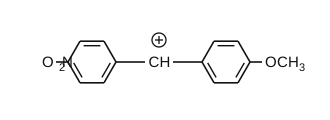
Statement I : In , the carbocation is stabilised by +R effect of −OCH3 group.
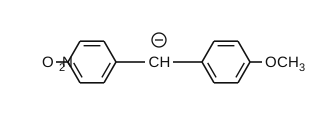
Statement II : In , the carbanion is stabilised by −R effect of −NO2 group.
In the light of the above statements, choose the correct answer from the options given below :
नीचे दो कथन दिए गए हैं :
कथन I : में, कार्बधनायन (carbocation) −OCH3 समूह के +R प्रभाव से स्थायी होता है।
कथन II : में, कार्बऋणायन (carbanion) −NO2 समूह के −R प्रभाव से स्थायी होता है।
उपर्युक्त कथनों के आलोक में, नीचे दिए गए विकल्पों में से सही उत्तर चुनिए :
  1. ABoth Statement I and Statement II are trueकथन I और कथन II दोनों सत्य हैं
  2. BBoth Statement I and Statement II are falseकथन I और कथन II दोनों असत्य हैं
  3. CStatement I is true but Statement II is falseकथन I सत्य है परन्तु कथन II असत्य है
  4. DStatement I is false but Statement II is trueकथन I असत्य है परन्तु कथन II सत्य है
Show answer

Concept: A para −OCH3 group donates its lone pair into the ring (+R) and disperses positive charge; a para −NO2 group pulls ring electrons by resonance (−R) and disperses negative charge.

  1. Statement I: the positive charge on the benzylic carbon is delocalised into the ring carrying −OCH3; the oxygen lone pair gives an oxocarbenium resonance structure, so +R of −OCH3 stabilises the carbocation. True.
  2. Statement II: the negative charge on the benzylic carbon is delocalised into the ring carrying −NO2; the charge is taken onto the nitro oxygens by resonance, so −R of −NO2 stabilises the carbanion. True.
  3. Each ion is stabilised by the substituent that matches its charge, both through the para position.

Short trick: +R donors (−OCH3) love cations; −R acceptors (−NO2) love anions.

Answer: (A) Both Statement I and Statement II are true

अवधारणा: पैरा −OCH3 समूह अपना एकाकी युग्म वलय में देता है (+R) और धनावेश को फैलाता है; पैरा −NO2 समूह अनुनाद द्वारा वलय के इलेक्ट्रॉन खींचता है (−R) और ऋणावेश को फैलाता है।

  1. कथन I: बेन्ज़िलिक कार्बन का धनावेश −OCH3 वाले वलय में विस्थानीकृत होता है; ऑक्सीजन का एकाकी युग्म ऑक्सोकार्बेनियम अनुनाद संरचना देता है, अतः −OCH3 का +R प्रभाव कार्बधनायन को स्थायी करता है। सत्य।
  2. कथन II: बेन्ज़िलिक कार्बन का ऋणावेश −NO2 वाले वलय में विस्थानीकृत होता है; अनुनाद द्वारा आवेश नाइट्रो समूह के ऑक्सीजनों पर चला जाता है, अतः −NO2 का −R प्रभाव कार्बऋणायन को स्थायी करता है। सत्य।
  3. प्रत्येक आयन उसी प्रतिस्थापी से स्थायी होता है जो उसके आवेश के अनुरूप है, दोनों पैरा स्थिति से।

शॉर्ट ट्रिक: +R दाता (−OCH3) धनायनों को, −R ग्राही (−NO2) ऋणायनों को स्थायी करते हैं।

उत्तर: (A) कथन I और कथन II दोनों सत्य हैं

JEE Main 2026 (April) – Paper 1 (B.E./B.Tech)ChemistryGOC – resonance effectsJEE Main 2026 (April) – Paper 1 (B.E./B.Tech) 2026 · 2 Apr Shift 2
Q589.
The compound (X) on
(i)   on heating in the presence of anhydrous AlCl3 and HCl gas gives 2,4-dimethyl pentane
(ii)   aromatization gives toulene and
(iii)   cyclisation gives methyl cyclohexane
The correct name of compound (X) is :
यौगिक (X)
(i)   निर्जल AlCl3 तथा HCl गैस की उपस्थिति में गर्म करने पर 2,4-डाइमेथिल पेन्टेन देता है
(ii)   ऐरोमैटीकरण (aromatization) पर टॉलूईन देता है तथा
(iii)   चक्रण (cyclisation) पर मेथिल साइक्लोहेक्सेन देता है
यौगिक (X) का सही नाम है :
  1. AHept-2-eneहेप्ट-2-ईन
  2. BHept-1,3,5-trieneहेप्ट-1,3,5-ट्राईन
  3. CHeptaneहेप्टेन
  4. DHept-2,4,6-trieneहेप्ट-2,4,6-ट्राईन
Show answer

Concept: Catalytic reforming of n-heptane: cyclisation gives methylcyclohexane and aromatization (Cr2O3/V2O5/Mo2O3, 773 K, 10–20 atm) gives toluene; anhydrous AlCl3/HCl isomerises n-alkanes to branched alkanes.

  1. All three products (2,4-dimethylpentane, toluene, methylcyclohexane) are C7 skeletons, so X is a C7 compound.
  2. Isomerisation with AlCl3/HCl converts an n-alkane into its branched isomer 2,4-dimethylpentane (C7H16) – so X must be the saturated alkane C7H16, i.e. heptane.
  3. n-Heptane on cyclisation → methylcyclohexane; on aromatization → toluene ✔
  4. The alkenes/trienes in the other options cannot give the saturated 2,4-dimethylpentane by simple isomerisation.

Short trick: NCERT reactions of n-heptane: AlCl3/HCl → branched alkane; Δ/catalyst → toluene.

Answer: (C) Heptane

अवधारणा: n-हेप्टेन का उत्प्रेरकीय पुनर्संभवन: चक्रण से मेथिलसाइक्लोहेक्सेन और ऐरोमैटीकरण (Cr2O3/V2O5/Mo2O3, 773 K, 10–20 atm) से टॉलूईन बनता है; निर्जल AlCl3/HCl n-ऐल्केनों का शाखित ऐल्केनों में समावयवन करता है।

  1. तीनों उत्पाद (2,4-डाइमेथिलपेन्टेन, टॉलूईन, मेथिलसाइक्लोहेक्सेन) C7 कंकाल के हैं, अतः X एक C7 यौगिक है।
  2. AlCl3/HCl से समावयवन एक n-ऐल्केन को उसके शाखित समावयवी 2,4-डाइमेथिलपेन्टेन (C7H16) में बदलता है – अतः X संतृप्त ऐल्केन C7H16 अर्थात हेप्टेन ही होगा।
  3. n-हेप्टेन चक्रण पर → मेथिलसाइक्लोहेक्सेन; ऐरोमैटीकरण पर → टॉलूईन ✔
  4. अन्य विकल्पों के ऐल्कीन/ट्राईन सरल समावयवन से संतृप्त 2,4-डाइमेथिलपेन्टेन नहीं दे सकते।

शॉर्ट ट्रिक: NCERT में n-हेप्टेन की अभिक्रियाएँ: AlCl3/HCl → शाखित ऐल्केन; Δ/उत्प्रेरक → टॉलूईन।

उत्तर: (C) हेप्टेन

JEE Main 2026 (April) – Paper 1 (B.E./B.Tech)ChemistryHydrocarbons – aromatization & isomerizationJEE Main 2026 (April) – Paper 1 (B.E./B.Tech) 2026 · 2 Apr Shift 2
Q590.
Correct statements regarding alkyl halides (R−X) among the following are :
A. Alcohol being less polar solvent as compared to water, alcoholic KOH favours elimination reaction with R−X.
B. Order of reactivity towards SN1 mechanism is C6H5−CH2−Cl > C6H5−CHCl−C6H5.
C. Non substituted aryl halides exhibit properties similar to alkyl halides.
D. Vinyl chloride is an example of haloalkene and allyl chloride is an example of haloalkyne.
E. R−Cl can be prepared by reacting R−OH with SOCl2 but Ar−Cl cannot be prepared by reacting Ar−OH with SOCl2.
Choose the correct answer from the options given below :
ऐल्किल हैलाइडों (R−X) के विषय में निम्नलिखित में से सही कथन हैं :
A. जल की तुलना में ऐल्कोहॉल कम ध्रुवीय विलायक होने के कारण, ऐल्कोहॉलिक KOH, R−X के साथ विलोपन अभिक्रिया को प्रोत्साहित करता है।
B. SN1 क्रियाविधि के प्रति अभिक्रियाशीलता का क्रम C6H5−CH2−Cl > C6H5−CHCl−C6H5 है।
C. अप्रतिस्थापित ऐरिल हैलाइड, ऐल्किल हैलाइडों के समान गुण प्रदर्शित करते हैं।
D. वाइनिल क्लोराइड हैलोऐल्कीन का उदाहरण है तथा ऐलिल क्लोराइड हैलोऐल्काइन का उदाहरण है।
E. R−OH की SOCl2 से अभिक्रिया द्वारा R−Cl बनाया जा सकता है परन्तु Ar−OH की SOCl2 से अभिक्रिया द्वारा Ar−Cl नहीं बनाया जा सकता।
नीचे दिए गए विकल्पों में से सही उत्तर चुनिए :
  1. AA, B and C Onlyकेवल A, B और C
  2. BB and D Onlyकेवल B और D
  3. CA and E Onlyकेवल A और E
  4. DD and E Onlyकेवल D और E
Show answer

Concept: Solvent polarity decides substitution vs elimination; SN1 rate follows carbocation stability; C(sp2)−X bonds of aryl halides behave very differently from alkyl halides.

  1. A. True – in the less polar alcoholic medium OH− acts as a strong base and elimination (alkene formation) is favoured; aqueous KOH gives substitution.
  2. B. False – (C6H5)2CHCl ionises to the benzhydryl cation stabilised by two rings, so it is more reactive in SN1 than C6H5CH2Cl; the given order is reversed.
  3. C. False – aryl halides have partial double-bond character in C−X and do not undergo the usual nucleophilic substitutions of alkyl halides.
  4. D. False – vinyl chloride is a haloalkene, but allyl chloride (CH2=CH−CH2Cl) is also a haloalkene, not a haloalkyne.
  5. E. True – SOCl2 converts alcohols to R−Cl, but phenols do not give Ar−Cl because the C−O bond of phenol has partial double-bond character and is not cleaved.

Short trick: More phenyl groups on the carbocation centre → faster SN1; allyl ≠ alkyne – spot the two traps.

Answer: (C) A and E Only

अवधारणा: विलायक की ध्रुवता प्रतिस्थापन बनाम विलोपन तय करती है; SN1 वेग कार्बधनायन के स्थायित्व पर चलता है; ऐरिल हैलाइडों के C(sp2)−X आबंध ऐल्किल हैलाइडों से बहुत भिन्न व्यवहार करते हैं।

  1. A. सत्य – कम ध्रुवीय ऐल्कोहॉलिक माध्यम में OH− प्रबल क्षारक की तरह कार्य करता है और विलोपन (ऐल्कीन बनना) प्रोत्साहित होता है; जलीय KOH प्रतिस्थापन देता है।
  2. B. असत्य – (C6H5)2CHCl आयनित होकर दो वलयों से स्थायी बेन्ज़हाइड्रिल धनायन देता है, अतः यह C6H5CH2Cl से SN1 में अधिक अभिक्रियाशील है; दिया गया क्रम उल्टा है।
  3. C. असत्य – ऐरिल हैलाइडों में C−X आबंध में आंशिक द्विआबंध गुण होता है और वे ऐल्किल हैलाइडों जैसे नाभिकरागी प्रतिस्थापन नहीं देते।
  4. D. असत्य – वाइनिल क्लोराइड हैलोऐल्कीन है, परन्तु ऐलिल क्लोराइड (CH2=CH−CH2Cl) भी हैलोऐल्कीन है, हैलोऐल्काइन नहीं।
  5. E. सत्य – SOCl2 ऐल्कोहॉलों को R−Cl में बदलता है, परन्तु फ़ीनॉल Ar−Cl नहीं देते क्योंकि फ़ीनॉल के C−O आबंध में आंशिक द्विआबंध गुण होता है और वह टूटता नहीं।

शॉर्ट ट्रिक: कार्बधनायन केंद्र पर जितने अधिक फेनिल समूह → उतना तेज SN1; ऐलिल ≠ ऐल्काइन – ये दो जाल पहचानिए।

उत्तर: (C) केवल A और E

JEE Main 2026 (April) – Paper 1 (B.E./B.Tech)ChemistryHaloalkanes and haloarenesJEE Main 2026 (April) – Paper 1 (B.E./B.Tech) 2026 · 2 Apr Shift 2
Q591.
An organic compound “x” where molar ratio of C, O and H are equal, on treatment with 50% KOH under reflux followed by acidification produced “y”. The most likely structure of “y” is :
[Molar mass of 'x' is 58 g mol−1]
एक कार्बनिक यौगिक “x”, जिसमें C, O तथा H का मोलर अनुपात बराबर है, 50% KOH के साथ रिफ्लक्स करने और फिर अम्लीकरण पर “y” देता है। “y” की सर्वाधिक संभावित संरचना है :
['x' का मोलर द्रव्यमान 58 g mol−1 है]
  1. ACH2=CH−COOH
  2. BCH3−CH=CH−CH=O
  3. CHO−CH2−COOH
  4. DCH3−COOH
Show answer

Concept: Equal numbers of C, H and O with M = 58 fix the formula; a dialdehyde without α-hydrogen undergoes intramolecular Cannizzaro with concentrated KOH.

  1. Let x = CnHnOn: 12n+n+16n=29n=58 → n=2, so x = C2H2O2 = glyoxal, OHC−CHO.
  2. Glyoxal has no α-hydrogen → with 50% KOH it undergoes an intramolecular Cannizzaro reaction: one CHO is oxidised to COO−, the other reduced to CH2OH.
  3. Acidification gives glycolic acid, HO−CH2−COOH.
  4. The other options do not have the C2 skeleton obtainable from glyoxal with this reagent.

Short trick: C : H : O equal and M = 58 → 29n = 58 → glyoxal; conc. KOH on a no-α-H dialdehyde → internal Cannizzaro.

Answer: (C) HO−CH2−COOH

अवधारणा: C, H तथा O की समान संख्या और M = 58 से सूत्र निश्चित होता है; α-हाइड्रोजन रहित डाइऐल्डिहाइड सांद्र KOH के साथ अंतःअणुक कैनिज़ारो अभिक्रिया देता है।

  1. मान लीजिए x = CnHnOn: 12n+n+16n=29n=58 → n=2, अतः x = C2H2O2 = ग्लाइऑक्सल, OHC−CHO।
  2. ग्लाइऑक्सल में α-हाइड्रोजन नहीं है → 50% KOH के साथ यह अंतःअणुक कैनिज़ारो अभिक्रिया देता है: एक CHO ऑक्सीकृत होकर COO− और दूसरा अपचयित होकर CH2OH बनता है।
  3. अम्लीकरण पर ग्लाइकोलिक अम्ल, HO−CH2−COOH प्राप्त होता है।
  4. अन्य विकल्पों में वह C2 कंकाल नहीं है जो इस अभिकर्मक से ग्लाइऑक्सल से मिल सके।

शॉर्ट ट्रिक: C : H : O बराबर और M = 58 → 29n = 58 → ग्लाइऑक्सल; α-H रहित डाइऐल्डिहाइड पर सांद्र KOH → आंतरिक कैनिज़ारो।

उत्तर: (C) HO−CH2−COOH

JEE Main 2026 (April) – Paper 1 (B.E./B.Tech)ChemistryAldehydes – Cannizzaro reactionJEE Main 2026 (April) – Paper 1 (B.E./B.Tech) 2026 · 2 Apr Shift 2
Q592.
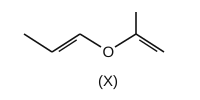
A molecule (X) with following structure under mild acidic condition is hydrolysed to produce (Y) and (Z). Identify the correct statements about (Y) and (Z).

A. Both (Y) and (Z) have same molar mass.
B. (Y) and (Z) can be distinguished from each other by NaHCO3.
C. (Y) and (Z) react with HCN with same rates.
D. (Y) and (Z) undergo addition reaction with 2,4-DNP.
Choose the correct answer from the options given below :
निम्न संरचना वाला एक अणु (X) मृदु अम्लीय परिस्थिति में जल-अपघटित होकर (Y) और (Z) देता है। (Y) और (Z) के विषय में सही कथन पहचानिए।

A. (Y) और (Z) दोनों का मोलर द्रव्यमान समान है।
B. (Y) और (Z) को NaHCO3 द्वारा एक-दूसरे से विभेदित किया जा सकता है।
C. (Y) और (Z), HCN के साथ समान वेग से अभिक्रिया करते हैं।
D. (Y) और (Z), 2,4-DNP के साथ योगज अभिक्रिया देते हैं।
नीचे दिए गए विकल्पों में से सही उत्तर चुनिए :
  1. AA, B and C Onlyकेवल A, B और C
  2. BB and C Onlyकेवल B और C
  3. CC and D Onlyकेवल C और D
  4. DA and D Onlyकेवल A और D
Show answer

Concept: X is a divinyl (enol) ether: CH3−CH=CH−O−C(CH3)=CH2. Mild acidic hydrolysis of an enol ether cleaves it to the two parent carbonyl compounds via their enols.

  1. CH3−CH=CH−O− part → enol of propanal → Y = CH3CH2CHO (propanal, M = 58).
  2. −O−C(CH3)=CH2 part → enol of acetone → Z = CH3COCH3 (acetone, M = 58).
  3. A. True – both are C3H6O, molar mass 58 g mol−1.
  4. B. False – neither an aldehyde nor a ketone is acidic enough to give effervescence with NaHCO3; it distinguishes neither.
  5. C. False – HCN addition is faster on the aldehyde (less steric crowding, more electrophilic carbonyl) than on the ketone.
  6. D. True – both carbonyl compounds react with 2,4-dinitrophenylhydrazine (addition followed by loss of water, giving 2,4-DNP derivatives).

Short trick: Enol ether + H3O+ → carbonyl compounds; propanal and acetone are isomers (both 58).

Answer: (D) A and D Only

अवधारणा: X एक डाइवाइनिल (ईनॉल) ईथर है: CH3−CH=CH−O−C(CH3)=CH2। ईनॉल ईथर का मृदु अम्लीय जल-अपघटन इसे ईनॉलों के माध्यम से दो जनक कार्बोनिल यौगिकों में तोड़ देता है।

  1. CH3−CH=CH−O− भाग → प्रोपेनैल का ईनॉल → Y = CH3CH2CHO (प्रोपेनैल, M = 58)।
  2. −O−C(CH3)=CH2 भाग → ऐसीटोन का ईनॉल → Z = CH3COCH3 (ऐसीटोन, M = 58)।
  3. A. सत्य – दोनों C3H6O हैं, मोलर द्रव्यमान 58 g mol−1।
  4. B. असत्य – न ऐल्डिहाइड और न कीटोन इतना अम्लीय है कि NaHCO3 से बुदबुदाहट दे; यह किसी को विभेदित नहीं करता।
  5. C. असत्य – HCN का योग ऐल्डिहाइड पर (कम त्रिविम बाधा, अधिक इलेक्ट्रॉनरागी कार्बोनिल) कीटोन की अपेक्षा तेज होता है।
  6. D. सत्य – दोनों कार्बोनिल यौगिक 2,4-डाइनाइट्रोफेनिलहाइड्राज़ीन से अभिक्रिया करते हैं (योग के बाद जल निकलना, 2,4-DNP व्युत्पन्न बनते हैं)।

शॉर्ट ट्रिक: ईनॉल ईथर + H3O+ → कार्बोनिल यौगिक; प्रोपेनैल और ऐसीटोन समावयवी हैं (दोनों 58)।

उत्तर: (D) केवल A और D

JEE Main 2026 (April) – Paper 1 (B.E./B.Tech)ChemistryEnol ethers – hydrolysis & carbonyl reactivityJEE Main 2026 (April) – Paper 1 (B.E./B.Tech) 2026 · 2 Apr Shift 2
Q593.
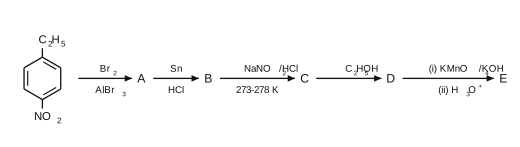
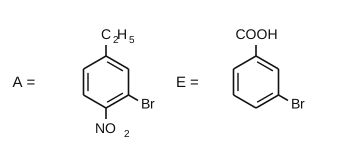
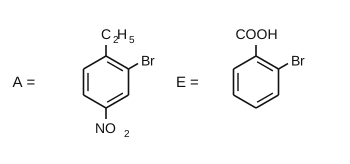
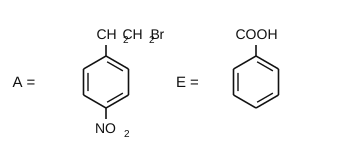
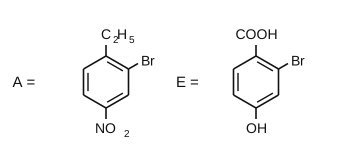
Identify compounds A and E in the following reaction sequence.
निम्नलिखित अभिक्रिया अनुक्रम में यौगिक A तथा E पहचानिए।
  1. A
  2. B
  3. C
  4. D
Show answer

Concept: Ring bromination position is decided jointly by the o/p-directing −C2H5 and m-directing −NO2; a diazonium salt treated with ethanol is reduced to the arene (−N2+ → −H).

  1. In 1-ethyl-4-nitrobenzene, −C2H5 directs ortho to itself and −NO2 directs meta to itself: both point to the position ortho to ethyl. A = 2-bromo-1-ethyl-4-nitrobenzene.
  2. Sn/HCl reduces −NO2 to −NH2: B = 2-bromo-4-ethylaniline.
  3. NaNO2/HCl at 273–278 K: diazotisation → C (diazonium chloride).
  4. C2H5OH reduces the diazonium group to −H (ethanol → ethanal): D = 1-bromo-2-ethylbenzene.
  5. KMnO4/KOH then H3O+ oxidises the ethyl side chain to −COOH: E = 2-bromobenzoic acid.
  6. The sets with Br next to NO2, side-chain bromination, or an extra −OH contradict this sequence.

Short trick: Both groups agree on the spot ortho to ethyl; ethanol kills the diazonium to H, KMnO4 turns the side chain into COOH.

Answer: (B)

अवधारणा: वलय ब्रोमीनन की स्थिति o/p-निर्देशी −C2H5 तथा m-निर्देशी −NO2 मिलकर तय करते हैं; डाइऐज़ोनियम लवण एथेनॉल से अपचयित होकर ऐरीन देता है (−N2+ → −H)।

  1. 1-एथिल-4-नाइट्रोबेन्ज़ीन में −C2H5 अपने ऑर्थो तथा −NO2 अपने मेटा स्थान को निर्देशित करता है: दोनों एथिल के ऑर्थो स्थान की ओर संकेत करते हैं। A = 2-ब्रोमो-1-एथिल-4-नाइट्रोबेन्ज़ीन।
  2. Sn/HCl, −NO2 को −NH2 में अपचयित करता है: B = 2-ब्रोमो-4-एथिलऐनिलीन।
  3. NaNO2/HCl, 273–278 K पर: डाइऐज़ोटीकरण → C (डाइऐज़ोनियम क्लोराइड)।
  4. C2H5OH डाइऐज़ोनियम समूह को −H में अपचयित करता है (एथेनॉल → एथेनैल): D = 1-ब्रोमो-2-एथिलबेन्ज़ीन।
  5. KMnO4/KOH फिर H3O+ एथिल पार्श्व शृंखला को −COOH में ऑक्सीकृत करता है: E = 2-ब्रोमोबेन्ज़ोइक अम्ल।
  6. जिन विकल्पों में Br, NO2 के पास है, पार्श्व-शृंखला ब्रोमीनन है, या अतिरिक्त −OH है, वे इस अनुक्रम के विरुद्ध हैं।

शॉर्ट ट्रिक: दोनों समूह एथिल के ऑर्थो स्थान पर सहमत हैं; एथेनॉल डाइऐज़ोनियम को H बना देता है, KMnO4 पार्श्व शृंखला को COOH।

उत्तर: (B)

JEE Main 2026 (April) – Paper 1 (B.E./B.Tech)ChemistryAromatic compounds – diazonium reaction sequenceJEE Main 2026 (April) – Paper 1 (B.E./B.Tech) 2026 · 2 Apr Shift 2
Q594.
Identify the correct pair having amino acid (A) and the hormone (B) that is iodinated derivative of the amino acid (A).
(T and Y represent one letter code for amino acids)
Amino acid (A)      Hormone (B)
उस सही युग्म को पहचानिए जिसमें ऐमीनो अम्ल (A) तथा वह हार्मोन (B) है जो ऐमीनो अम्ल (A) का आयोडीनित व्युत्पन्न है।
(T तथा Y ऐमीनो अम्लों के एक-अक्षर कोड हैं)
ऐमीनो अम्ल (A)      हार्मोन (B)
  1. AT    InsulinT    इन्सुलिन
  2. BT    ThyroxineT    थायरॉक्सिन
  3. CY    ThyroxineY    थायरॉक्सिन
  4. DY    InsulinY    इन्सुलिन
Show answer

Concept: One-letter codes: T = threonine, Y = tyrosine. Thyroxine (T4) is the tetraiodinated derivative of tyrosine made in the thyroid gland.

  1. Thyroxine is formed by iodination and coupling of tyrosine residues – so the amino acid is Y (tyrosine) and the hormone is thyroxine.
  2. Insulin is a peptide hormone, not an iodinated amino-acid derivative, so the pairs with insulin are wrong.
  3. T (threonine) is not iodinated in the body; the pair T–thyroxine is wrong.

Short trick: ThYroxine comes from tYrosine – both carry the letter Y.

Answer: (C) Y – Thyroxine

अवधारणा: एक-अक्षर कोड: T = थ्रिओनीन, Y = टाइरोसीन। थायरॉक्सिन (T4) थाइरॉइड ग्रंथि में बनने वाला टाइरोसीन का टेट्राआयोडीनित व्युत्पन्न है।

  1. थायरॉक्सिन टाइरोसीन अवशेषों के आयोडीनन तथा युग्मन से बनता है – अतः ऐमीनो अम्ल Y (टाइरोसीन) और हार्मोन थायरॉक्सिन है।
  2. इन्सुलिन एक पेप्टाइड हार्मोन है, आयोडीनित ऐमीनो अम्ल व्युत्पन्न नहीं, अतः इन्सुलिन वाले युग्म गलत हैं।
  3. T (थ्रिओनीन) शरीर में आयोडीनित नहीं होता; T–थायरॉक्सिन युग्म गलत है।

शॉर्ट ट्रिक: थायरॉक्सिन (ThYroxine) टाइरोसीन (tYrosine) से बनता है – दोनों में Y है।

उत्तर: (C) Y – थायरॉक्सिन

JEE Main 2026 (April) – Paper 1 (B.E./B.Tech)ChemistryBiomolecules – amino acids & hormonesJEE Main 2026 (April) – Paper 1 (B.E./B.Tech) 2026 · 2 Apr Shift 2
Q595.
Among Fe2+, Fe3+, Cr2+ and Zn2+, the ion that shows positive borax bead test and with highest ionisation enthalpy is :
Fe2+, Fe3+, Cr2+ तथा Zn2+ में से वह आयन, जो धनात्मक बोरेक्स मनका परीक्षण (borax bead test) दर्शाता है तथा जिसकी आयनन एन्थैल्पी उच्चतम है, है :
  1. AFe2+
  2. BZn2+
  3. CCr2+
  4. DFe3+
Show answer

Concept: The borax bead test is positive (coloured bead) only for ions with a partially filled d-subshell; ionisation enthalpy of an ion rises steeply with its charge and with a stable d5 configuration.

  1. Zn2+ is 3d10 – colourless bead → negative test, so it is ruled out even though its next ionisation is high.
  2. Fe2+ (d6), Fe3+ (d5) and Cr2+ (d4) all give coloured beads → positive test.
  3. Removing a further electron is hardest from Fe3+: it already bears +3 charge and has the extra-stable half-filled 3d5 configuration, so its ionisation enthalpy (4th IE of Fe ≈ 5290 kJ mol−1) far exceeds the 3rd IEs of Fe2+ (≈ 2957) and Cr2+ (≈ 2990).

Short trick: Coloured bead → partially filled d; among those, the ion with the biggest charge and d5 core wins the ionisation-enthalpy race.

Answer: (D) Fe3+

अवधारणा: बोरेक्स मनका परीक्षण केवल आंशिक भरे d-उपकोश वाले आयनों के लिए धनात्मक (रंगीन मनका) होता है; किसी आयन की आयनन एन्थैल्पी उसके आवेश और स्थायी d5 विन्यास के साथ तेजी से बढ़ती है।

  1. Zn2+ 3d10 है – रंगहीन मनका → परीक्षण ऋणात्मक, अतः यह बाहर हो जाता है, भले ही इसका अगला आयनन उच्च हो।
  2. Fe2+ (d6), Fe3+ (d5) और Cr2+ (d4) सभी रंगीन मनके देते हैं → परीक्षण धनात्मक।
  3. अगला इलेक्ट्रॉन निकालना Fe3+ से सबसे कठिन है: इस पर पहले से +3 आवेश है और अति-स्थायी अर्ध-पूरित 3d5 विन्यास है, अतः इसकी आयनन एन्थैल्पी (Fe की चतुर्थ IE ≈ 5290 kJ mol−1), Fe2+ (≈ 2957) और Cr2+ (≈ 2990) की तृतीय IE से बहुत अधिक है।

शॉर्ट ट्रिक: रंगीन मनका → आंशिक भरा d; उनमें से सबसे बड़े आवेश और d5 कोर वाला आयन आयनन एन्थैल्पी में सबसे आगे।

उत्तर: (D) Fe3+

JEE Main 2026 (April) – Paper 1 (B.E./B.Tech)Chemistryd-block – borax bead test & ionization enthalpyJEE Main 2026 (April) – Paper 1 (B.E./B.Tech) 2026 · 2 Apr Shift 2
Q596.
The surface of sodium metal is irradiated with radiation of wavelength x nm. The kinetic energy of ejected electrons is 2.8×10⁻²⁰ J. The work function of sodium is 2.3 eV. The value of x is _________ ×102 nm. (Nearest integer)
(Given : h =6.6×10⁻³⁴ J s ; 1 eV =1.6×10⁻¹⁹ J; c =3.0×10⁸ m s−1)
सोडियम धातु की सतह को x nm तरंगदैर्घ्य के विकिरण से विकिरणित किया जाता है। उत्सर्जित इलेक्ट्रॉनों की गतिज ऊर्जा 2.8×10⁻²⁰ J है। सोडियम का कार्य फलन 2.3 eV है। x का मान _________ ×102 nm है। (निकटतम पूर्णांक)
(दिया है : h =6.6×10⁻³⁴ J s ; 1 eV =1.6×10⁻¹⁹ J; c =3.0×10⁸ m s−1)
Show answer

Concept: Photoelectric equation: hcλ=ϕ+KE.

  1. Work function ϕ=2.3×1.6×10−19=3.68×10⁻¹⁹ J.
  2. Photon energy E=ϕ+KE=3.68×10⁻¹⁹+0.28×10−19=3.96×10⁻¹⁹ J.
  3. λ=hcE=6.6×10−34×3.0×1083.96×10−19=1.98×10−253.96×10−19=5.0×10⁻⁷ m =500 nm.
  4. x=500=5×10² nm → the required value is 5.

Short trick: 1.98×10⁻²⁵/3.96×10−19 is exactly 12×10−6 – the numbers are chosen to cancel.

Answer: 5

अवधारणा: प्रकाश-विद्युत समीकरण: hcλ=ϕ+KE।

  1. कार्य फलन ϕ=2.3×1.6×10−19=3.68×10⁻¹⁹ J।
  2. फोटॉन ऊर्जा E=ϕ+KE=3.68×10⁻¹⁹+0.28×10−19=3.96×10⁻¹⁹ J।
  3. λ=hcE=6.6×10−34×3.0×1083.96×10−19=1.98×10−253.96×10−19=5.0×10⁻⁷ m =500 nm।
  4. x=500=5×10² nm → अभीष्ट मान 5।

शॉर्ट ट्रिक: 1.98×10⁻²⁵/3.96×10−19 ठीक 12×10−6 है – संख्याएँ कटने के लिए ही चुनी गई हैं।

उत्तर: 5

JEE Main 2026 (April) – Paper 1 (B.E./B.Tech)ChemistryAtomic structure – photoelectric effectJEE Main 2026 (April) – Paper 1 (B.E./B.Tech) 2026 · 2 Apr Shift 2
Q597.
Consider the following gas phase reaction being carried out in a closed vessel at 25°C.
2A(g) → 4B(g) + C(g)
time (min)total pressure of the system (mm Hg)
30300
∞600

The pressure of C(g) at 30 minutes time interval would be _________ mm Hg. (nearest integer)
25°C पर एक बंद पात्र में होने वाली निम्नलिखित गैस प्रावस्था अभिक्रिया पर विचार कीजिए।
2A(g) → 4B(g) + C(g)
समय (min)निकाय का कुल दाब (mm Hg)
30300
∞600

30 मिनट समय अंतराल पर C(g) का दाब _________ mm Hg होगा। (निकटतम पूर्णांक)
Show answer

Concept: Let the initial pressure of A be P0 and let the fall in pressure of A at time t be 2p; then B rises by 4p and C by p, so the total pressure is P0+3p.

  1. At t=∞ all A is consumed: 2p∞=P0, so total =P0−P0+2P0+P02=5P02=600 → P0=240 mm Hg.
  2. At 30 min: P0+3p=300 → 240+3p=300 → p=20 mm Hg.
  3. Pressure of C at 30 min =p=20 mm Hg.

Short trick: Δng turns 2 volumes into 5, so P∞=52P0; the rise above P0 at any time is 3×PC.

Answer: 20

अवधारणा: मान लीजिए A का प्रारंभिक दाब P0 है और समय t पर A के दाब में कमी 2p है; तब B का दाब 4p और C का p बढ़ता है, अतः कुल दाब P0+3p होता है।

  1. t=∞ पर सारा A समाप्त: 2p∞=P0, अतः कुल =5P02=600 → P0=240 mm Hg।
  2. 30 min पर: P0+3p=300 → 240+3p=300 → p=20 mm Hg।
  3. 30 min पर C का दाब =p=20 mm Hg।

शॉर्ट ट्रिक: Δng से 2 आयतन 5 बन जाते हैं, अतः P∞=52P0; किसी भी समय P0 से वृद्धि =3×PC।

उत्तर: 20

JEE Main 2026 (April) – Paper 1 (B.E./B.Tech)ChemistryGaseous reactions – partial pressuresJEE Main 2026 (April) – Paper 1 (B.E./B.Tech) 2026 · 2 Apr Shift 2
Q598.
Consider the following two half-cell reactions along with the standard reduction potential given :
CO2 + 6H+ + 6e− → CH3OH + H2O     E°red = 0.02 V
12O2 + 2H+ + 2e− → H2O     E°red = 1.23 V
A fuel cell was set up using the above two reactions such that the cell operates under the standard condition of 1 bar pressure and 298 K temperature. The fuel cell works with 80% efficiency. If the work derived from the cell using 1 mol of CH3OH is used to compress an ideal gas isothermally against a constant pressure of 1 kPa, then the change in the volume of the gas,
ΔV = _________ m3. (nearest integer)
Given :   F = 96500 C mol−1
मानक अपचयन विभव सहित निम्नलिखित दो अर्ध-सेल अभिक्रियाओं पर विचार कीजिए :
CO2 + 6H+ + 6e− → CH3OH + H2O     E°red = 0.02 V
12O2 + 2H+ + 2e− → H2O     E°red = 1.23 V
उपर्युक्त दो अभिक्रियाओं से एक ईंधन सेल इस प्रकार बनाया गया कि सेल 1 bar दाब तथा 298 K ताप की मानक परिस्थिति में कार्य करता है। ईंधन सेल 80% दक्षता से कार्य करता है। यदि 1 mol CH3OH के उपयोग से सेल से प्राप्त कार्य का उपयोग किसी आदर्श गैस को 1 kPa के स्थिर दाब के विरुद्ध समतापीय रूप से संपीडित करने में किया जाए, तो गैस के आयतन में परिवर्तन,
ΔV = _________ m3। (निकटतम पूर्णांक)
दिया है :   F = 96500 C mol−1
Show answer

Concept: In the methanol fuel cell, CH3OH is oxidised at the anode (reverse of the first half-reaction) and O2 is reduced at the cathode; maximum work =nFE°cell, usable work = efficiency × that; compression work against constant pressure =P|ΔV|.

  1. E°cell=E°cathode−E°anode=1.23−0.02=1.21 V, with n=6 electrons per mol CH3OH.
  2. Work from cell =0.80×nFE°=0.80×6×96500×1.21=560472 J.
  3. This work compresses the gas against P=1 kPa =1000 Pa: |ΔV|=5604721000=560.47 m3.
  4. Nearest integer: ΔV = 560 m3 (the volume decreases by this amount on compression).

Short trick: 6×96500×1.21≈7.0×10⁵ J; 80% of it ÷ 1000 Pa ≈ 560 m3.

Answer: 560

अवधारणा: मेथेनॉल ईंधन सेल में CH3OH ऐनोड पर ऑक्सीकृत होता है (पहली अर्ध-अभिक्रिया का विलोम) और O2 कैथोड पर अपचयित; अधिकतम कार्य =nFE°cell, उपयोगी कार्य = दक्षता × वही; स्थिर दाब के विरुद्ध संपीडन कार्य =P|ΔV|।

  1. E°cell=E°कैथोड−E°ऐनोड=1.23−0.02=1.21 V, जिसमें प्रति mol CH3OH, n=6 इलेक्ट्रॉन।
  2. सेल से कार्य =0.80×nFE°=0.80×6×96500×1.21=560472 J।
  3. यह कार्य गैस को P=1 kPa =1000 Pa के विरुद्ध संपीडित करता है: |ΔV|=5604721000=560.47 m3।
  4. निकटतम पूर्णांक: ΔV = 560 m3 (संपीडन में आयतन इतना घटता है)।

शॉर्ट ट्रिक: 6×96500×1.21≈7.0×10⁵ J; इसका 80% ÷ 1000 Pa ≈ 560 m3।

उत्तर: 560

JEE Main 2026 (April) – Paper 1 (B.E./B.Tech)ChemistryElectrochemistry – fuel cellJEE Main 2026 (April) – Paper 1 (B.E./B.Tech) 2026 · 2 Apr Shift 2
Q599.
Number of paramagnetic ions among the following d- and f-block metal ions is _________.
Mn2+, Cu2+, Zn2+, Yb2+, Sc3+, La3+, Gd3+, Lu3+, Ti4+, Ce4+
(Atomic number of Mn = 25, Cu = 29, Zn = 30, Yb = 70, Sc = 21, La = 57, Gd = 64, Lu = 71, Ti = 22, Ce = 58)
निम्नलिखित d- तथा f-ब्लॉक धातु आयनों में अनुचुंबकीय आयनों की संख्या _________ है।
Mn2+, Cu2+, Zn2+, Yb2+, Sc3+, La3+, Gd3+, Lu3+, Ti4+, Ce4+
(परमाणु क्रमांक Mn = 25, Cu = 29, Zn = 30, Yb = 70, Sc = 21, La = 57, Gd = 64, Lu = 71, Ti = 22, Ce = 58)
Show answer

Concept: An ion is paramagnetic if it has one or more unpaired electrons; write the d/f configuration of each ion.

  1. Mn2+: 3d5 – 5 unpaired → paramagnetic ✔
  2. Cu2+: 3d9 – 1 unpaired → paramagnetic ✔
  3. Gd3+: 4f7 – 7 unpaired → paramagnetic ✔
  4. Zn2+ (3d10), Yb2+ (4f14), Lu3+ (4f14) – completely filled → diamagnetic.
  5. Sc3+, Ti4+ (3d0), La3+, Ce4+ (4f0) – empty subshells → diamagnetic.
  6. Paramagnetic ions: Mn2+, Cu2+, Gd3+ → 3.

Short trick: d0/f0 and d10/f14 are always diamagnetic – strike those out first.

Answer: 3

अवधारणा: कोई आयन अनुचुंबकीय होता है यदि उसमें एक या अधिक अयुग्मित इलेक्ट्रॉन हों; प्रत्येक आयन का d/f विन्यास लिखिए।

  1. Mn2+: 3d5 – 5 अयुग्मित → अनुचुंबकीय ✔
  2. Cu2+: 3d9 – 1 अयुग्मित → अनुचुंबकीय ✔
  3. Gd3+: 4f7 – 7 अयुग्मित → अनुचुंबकीय ✔
  4. Zn2+ (3d10), Yb2+ (4f14), Lu3+ (4f14) – पूर्ण भरे → प्रतिचुंबकीय।
  5. Sc3+, Ti4+ (3d0), La3+, Ce4+ (4f0) – रिक्त उपकोश → प्रतिचुंबकीय।
  6. अनुचुंबकीय आयन: Mn2+, Cu2+, Gd3+ → 3।

शॉर्ट ट्रिक: d0/f0 तथा d10/f14 सदैव प्रतिचुंबकीय – इन्हें पहले काट दीजिए।

उत्तर: 3

JEE Main 2026 (April) – Paper 1 (B.E./B.Tech)ChemistryMagnetic properties – d- and f-block ionsJEE Main 2026 (April) – Paper 1 (B.E./B.Tech) 2026 · 2 Apr Shift 2
Q600.
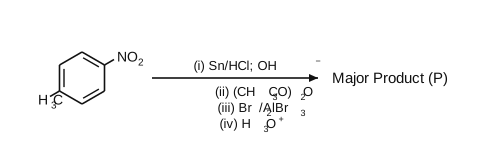
Consider the following reactions sequence

When the product (P) is subjected to Carius analysis using AgNO3, 1.0 g of the product (P) will produce _________ g of the precipitate of AgBr. (Nearest Integer)
(Given : molar mass in g mol−1 C : 12, H : 1, O : 16, N : 14, Br : 80, Ag : 108)
निम्नलिखित अभिक्रिया अनुक्रम पर विचार कीजिए

जब उत्पाद (P) का AgNO3 के साथ कैरिअस विश्लेषण किया जाता है, तो 1.0 g उत्पाद (P) से AgBr के अवक्षेप के _________ g प्राप्त होंगे। (निकटतम पूर्णांक)
(दिया है : मोलर द्रव्यमान g mol−1 में C : 12, H : 1, O : 16, N : 14, Br : 80, Ag : 108)
Show answer

Concept: Follow the sequence on 4-nitrotoluene, then apply Carius: each mole of Br in P gives one mole of AgBr.

  1. (i) Sn/HCl then OH−: −NO2 → −NH2, giving 4-methylaniline (p-toluidine).
  2. (ii) (CH3CO)2O: acetylation of −NH2 → N-(4-methylphenyl)acetamide (the −NHCOCH3 group protects and still directs o/p).
  3. (iii) Br2/AlBr3: −NHCOCH3 is the stronger director; its para position is blocked by −CH3, so Br enters ortho to −NHCOCH3.
  4. (iv) H3O+: hydrolysis of the amide → P = 2-bromo-4-methylaniline, C7H8BrN, M=84+8+80+14=186 g mol−1.
  5. Carius: moles of P in 1.0 g =1186; AgBr (M=108+80=188) formed =188186=1.01 g ≈ 1 g.

Short trick: One Br per molecule → mass of AgBr =188MP; 188/186 is almost exactly 1.

Answer: 1

अवधारणा: 4-नाइट्रोटॉलूईन पर अनुक्रम लगाइए, फिर कैरिअस: P में प्रति मोल Br से एक मोल AgBr बनता है।

  1. (i) Sn/HCl फिर OH−: −NO2 → −NH2, 4-मेथिलऐनिलीन (p-टॉलूइडीन) बनता है।
  2. (ii) (CH3CO)2O: −NH2 का ऐसीटिलीकरण → N-(4-मेथिलफेनिल)ऐसीटैमाइड (−NHCOCH3 समूह रक्षा करता है और o/p-निर्देशन भी)।
  3. (iii) Br2/AlBr3: −NHCOCH3 प्रबल निर्देशक है; इसका पैरा स्थान −CH3 से अवरुद्ध है, अतः Br, −NHCOCH3 के ऑर्थो स्थान पर जुड़ता है।
  4. (iv) H3O+: ऐमाइड का जल-अपघटन → P = 2-ब्रोमो-4-मेथिलऐनिलीन, C7H8BrN, M=84+8+80+14=186 g mol−1।
  5. कैरिअस: 1.0 g में P के मोल =1186; बना AgBr (M=108+80=188) =188186=1.01 g ≈ 1 g।

शॉर्ट ट्रिक: प्रति अणु एक Br → AgBr का द्रव्यमान =188MP; 188/186 लगभग ठीक 1 है।

उत्तर: 1

JEE Main 2026 (April) – Paper 1 (B.E./B.Tech)ChemistryOrganic chemistry – Carius methodJEE Main 2026 (April) – Paper 1 (B.E./B.Tech) 2026 · 2 Apr Shift 2