Q2041.Blood pressure in the pulmonary artery is:
फुप्फुसीय धमनी में रक्तदाब:
- ASame as that in the aortaमहाधमनी के समान होता है
- BMore than that in the carotidकैरोटिड से अधिक होता है
- CMore than that in the pulmonary veinफुप्फुसीय शिरा से अधिक होता है
- DLess than that in the venae cavaeमहाशिराओं (venae cavae) से कम होता है
Show answer
Concept: Blood always flows from higher to lower pressure. Pulmonary circuit: right ventricle → pulmonary artery (~25/8 mm Hg) → lung capillaries → pulmonary vein (~5–8 mm Hg) → left atrium.
- (C) Correct – pulmonary artery pressure > pulmonary vein pressure; that drop drives blood through the lungs.
- (A) Wrong – aorta carries systemic pressure (~120/80 mm Hg), much higher than the pulmonary artery.
- (B) Wrong – the carotid is a systemic artery with near-aortic pressure, higher than the pulmonary artery.
- (D) Wrong – venae cavae have the lowest pressure in the body (~0–5 mm Hg).
Short trick: Within any circuit: artery > arteriole > capillary > venule > vein. Systemic arteries > pulmonary artery (low-pressure lungs).
Answer: (C) More than that in the pulmonary vein
अवधारणा: रक्त सदैव उच्च से निम्न दाब की ओर बहता है। फुप्फुसीय परिपथ: दायाँ निलय → फुप्फुसीय धमनी (~25/8 mm Hg) → फेफड़ों की केशिकाएँ → फुप्फुसीय शिरा (~5–8 mm Hg) → बायाँ अलिन्द।
- (C) सही – फुप्फुसीय धमनी का दाब > फुप्फुसीय शिरा का दाब; यही अन्तर रक्त को फेफड़ों में से प्रवाहित करता है।
- (A) गलत – महाधमनी में दैहिक दाब (~120/80 mm Hg) होता है, जो फुप्फुसीय धमनी से बहुत अधिक है।
- (B) गलत – कैरोटिड दैहिक धमनी है जिसका दाब लगभग महाधमनी जितना, अर्थात् फुप्फुसीय धमनी से अधिक होता है।
- (D) गलत – महाशिराओं में शरीर का न्यूनतम दाब (~0–5 mm Hg) होता है।
शॉर्ट ट्रिक: किसी भी परिपथ में: धमनी > धमनिका > केशिका > शिरिका > शिरा। दैहिक धमनियाँ > फुप्फुसीय धमनी (फेफड़े निम्न-दाब तंत्र)।
उत्तर: (C) फुप्फुसीय शिरा से अधिक होता है
NEET UGBiologyBody fluids and circulation – blood pressure in vesselsNEET UG 2016 · 1 May Shift 1
Q2042.Cotyledon of maize grain is called:
मक्का के दाने का बीजपत्र कहलाता है:
- APlumuleप्रांकुर (Plumule)
- BColeorhizaमूलांकुरचोल (Coleorhiza)
- CColeoptileप्रांकुरचोल (Coleoptile)
- DScutellumप्रशल्क (Scutellum)
Show answer
Concept: In grasses (maize, wheat) the embryo has one large, shield-shaped cotyledon called the scutellum, lying towards one side of the embryonal axis.
- (D) Scutellum – the single cotyledon. Correct.
- (A) Plumule – embryonic shoot tip.
- (B) Coleorhiza – sheath covering the radicle and root cap.
- (C) Coleoptile – hollow foliar sheath enclosing the plumule.
Short trick: Scutellum = "scutum" = shield → shield-shaped cotyledon. Coleo-ptile covers plumule; Coleo-rhiza covers radicle.
Answer: (D) Scutellum
अवधारणा: घासों (मक्का, गेहूँ) के भ्रूण में एक बड़ा, ढाल-आकार का बीजपत्र होता है जिसे प्रशल्क (scutellum) कहते हैं; यह भ्रूणीय अक्ष के एक ओर स्थित होता है।
- (D) प्रशल्क – एकमात्र बीजपत्र। सही।
- (A) प्रांकुर – भ्रूणीय प्ररोह शीर्ष।
- (B) मूलांकुरचोल – मूलांकुर और मूलगोप को ढकने वाला आवरण।
- (C) प्रांकुरचोल – प्रांकुर को घेरने वाला खोखला पर्णीय आवरण।
शॉर्ट ट्रिक: Scutellum = "scutum" = ढाल → ढाल-आकार बीजपत्र। Coleoptile → plumule; Coleorhiza → radicle।
उत्तर: (D) प्रशल्क (Scutellum)
NEET UGBiologySexual reproduction in flowering plants – monocot seedNEET UG 2016 · 1 May Shift 1
Q2043.In the stomach, gastric acid is secreted by the:
आमाशय में जठर अम्ल का स्राव कौन करती हैं?
- AGastrin secreting cellsगैस्ट्रिन-स्रावी कोशिकाएँ
- BParietal cellsभित्तीय (Parietal) कोशिकाएँ
- CPeptic cellsपेप्टिक कोशिकाएँ
- DAcidic cellsअम्लीय कोशिकाएँ
Show answer
Concept: Gastric glands have three main cell types: mucus neck cells (mucus), peptic/chief cells (pepsinogen), and parietal/oxyntic cells (HCl + intrinsic factor).
- (B) Parietal (oxyntic) cells – secrete HCl. Correct.
- (A) G-cells secrete the hormone gastrin, which only stimulates acid secretion.
- (C) Peptic (chief/zymogenic) cells – secrete proenzyme pepsinogen.
- (D) "Acidic cells" – no such cell type.
Short trick: Oxyntic = "acid-forming" (Greek oxys = acid) → HCl + Castle's intrinsic factor (for vit. B12).
Answer: (B) Parietal cells
अवधारणा: जठर ग्रन्थियों में तीन मुख्य कोशिकाएँ होती हैं: श्लेष्मा ग्रीवा कोशिकाएँ (श्लेष्मा), पेप्टिक/मुख्य कोशिकाएँ (पेप्सिनोजन) और भित्तीय/ऑक्सिन्टिक कोशिकाएँ (HCl + नैज कारक)।
- (B) भित्तीय (ऑक्सिन्टिक) कोशिकाएँ – HCl स्रावित करती हैं। सही।
- (A) G-कोशिकाएँ गैस्ट्रिन हॉर्मोन स्रावित करती हैं, जो केवल अम्ल स्राव को उद्दीपित करता है।
- (C) पेप्टिक (मुख्य/जाइमोजिनिक) कोशिकाएँ – पूर्वएन्ज़ाइम पेप्सिनोजन स्रावित करती हैं।
- (D) "अम्लीय कोशिकाएँ" – ऐसी कोई कोशिका नहीं होती।
शॉर्ट ट्रिक: Oxyntic = "अम्ल बनाने वाली" (यूनानी oxys = अम्ल) → HCl + कैसल का नैज कारक (विटामिन B12 हेतु)।
उत्तर: (B) भित्तीय कोशिकाएँ
NEET UGBiologyDigestion and absorption – gastric glandsNEET UG 2016 · 1 May Shift 1
Q2044.Depletion of which gas in the atmosphere can lead to an increased incidence of skin cancers:
वायुमण्डल में किस गैस के अवक्षय से त्वचा कैंसर की घटनाओं में वृद्धि हो सकती है?
- ANitrous oxideनाइट्रस ऑक्साइड
- BOzoneओज़ोन
- CAmmoniaअमोनिया
- DMethaneमेथेन
Show answer
Concept: Stratospheric ozone absorbs UV-B radiation. Its thinning (by CFCs → Cl atoms) lets more UV-B reach the earth, damaging DNA and causing skin cancer, snow-blindness and cataract.
- (B) Ozone – correct.
- (A) Nitrous oxide and (D) methane – greenhouse gases (global warming), not UV shields.
- (C) Ammonia – a pollutant/nitrogen compound; not a UV shield.
Short trick: Ozone measured in Dobson units; "ozone hole" over Antarctica; Montreal Protocol (1987) to cut CFCs.
Answer: (B) Ozone
अवधारणा: समतापमण्डलीय ओज़ोन UV-B विकिरण को अवशोषित करती है। इसके पतला होने (CFC → Cl परमाणु) से अधिक UV-B पृथ्वी तक पहुँचता है जो DNA को क्षति पहुँचाकर त्वचा कैंसर, हिम-अन्धता और मोतियाबिन्द उत्पन्न करता है।
- (B) ओज़ोन – सही।
- (A) नाइट्रस ऑक्साइड और (D) मेथेन – ग्रीनहाउस गैसें (वैश्विक तापन), UV कवच नहीं।
- (C) अमोनिया – प्रदूषक/नाइट्रोजन यौगिक; UV कवच नहीं।
शॉर्ट ट्रिक: ओज़ोन डॉब्सन इकाई में मापी जाती है; अण्टार्कटिका के ऊपर "ओज़ोन छिद्र"; CFC कम करने हेतु मॉन्ट्रियल प्रोटोकॉल (1987)।
उत्तर: (B) ओज़ोन
NEET UGBiologyEnvironmental issues – ozone depletionNEET UG 2016 · 1 May Shift 1
Q2045.Chrysophytes, Euglenoids, Dinoflagellates and Slime moulds are included in the kingdom:
क्राइसोफाइट, यूग्लीनॉइड, डाइनोफ्लैजेलेट और अवपंक कवक (slime moulds) किस जगत में सम्मिलित हैं?
- AMoneraमोनेरा
- BProtistaप्रोटिस्टा
- CFungiकवक (Fungi)
- DAnimaliaऐनिमेलिया
Show answer
Concept: In Whittaker's five-kingdom system, kingdom Protista holds all single-celled eukaryotes: chrysophytes, dinoflagellates, euglenoids, slime moulds and protozoans.
- (B) Protista – correct.
- (A) Monera – prokaryotes (bacteria, cyanobacteria, archaebacteria, mycoplasma).
- (C) Fungi – multicellular/filamentous heterotrophs with chitin walls (slime moulds were earlier grouped with fungi but are protists).
- (D) Animalia – multicellular heterotrophs without cell walls.
Short trick: NCERT Protista list: "Chrysophytes, Dinoflagellates, Euglenoids, Slime moulds, Protozoans" – CDESP.
Answer: (B) Protista
अवधारणा: व्हिटेकर के पाँच-जगत वर्गीकरण में जगत प्रोटिस्टा में सभी एककोशिक यूकैरियोट आते हैं: क्राइसोफाइट, डाइनोफ्लैजेलेट, यूग्लीनॉइड, अवपंक कवक और प्रोटोज़ोआ।
- (B) प्रोटिस्टा – सही।
- (A) मोनेरा – प्रोकैरियोट (जीवाणु, सायनोबैक्टीरिया, आद्यजीवाणु, माइकोप्लाज़्मा)।
- (C) कवक – काइटिन भित्ति वाले बहुकोशिक/तन्तुमय परपोषी (अवपंक कवक पहले कवकों में रखे गए थे, पर ये प्रोटिस्ट हैं)।
- (D) ऐनिमेलिया – कोशिका भित्ति-रहित बहुकोशिक परपोषी।
शॉर्ट ट्रिक: NCERT प्रोटिस्टा सूची: "क्राइसोफाइट, डाइनोफ्लैजेलेट, यूग्लीनॉइड, अवपंक कवक, प्रोटोज़ोआ"।
उत्तर: (B) प्रोटिस्टा
NEET UGBiologyBiological classification – kingdom ProtistaNEET UG 2016 · 1 May Shift 1
Q2046.Water vapour comes out from the plant leaf through the stomatal opening. Through the same stomatal opening carbon dioxide diffuses into the plant during photosynthesis. Reason out the above statements using one of following options:
जलवाष्प रन्ध्र छिद्र के द्वारा पौधे की पत्ती से बाहर निकलती है। उसी रन्ध्र छिद्र से प्रकाश-संश्लेषण के दौरान कार्बन डाइऑक्साइड पौधे में विसरित होती है। निम्नलिखित विकल्पों में से किसी एक का उपयोग करके उपर्युक्त कथनों का कारण बताइए:
- ABoth processes cannot happen simultaneouslyदोनों प्रक्रियाएँ एक साथ नहीं हो सकतीं
- BBoth processes can happen together because the diffusion coefficient of water and CO2 is differentदोनों प्रक्रियाएँ एक साथ हो सकती हैं क्योंकि जल और CO2 के विसरण गुणांक भिन्न हैं
- CThe above processes happen only during night timeउपर्युक्त प्रक्रियाएँ केवल रात्रि में होती हैं
- DOne process occurs during day time, and the other at nightएक प्रक्रिया दिन में और दूसरी रात में होती है
Show answer
Concept: Diffusion of each gas is independent: each moves down its own concentration gradient, at a rate set by its own diffusion coefficient.
- Inside the leaf water vapour concentration is high → it diffuses out; outside air has more CO2 than the photosynthesising mesophyll → CO2 diffuses in.
- Both gradients exist at the same time (daytime, stomata open), and the two gases have different diffusion coefficients, so both fluxes occur together through the same pore.
- (A) Wrong – nothing prevents two opposite gas fluxes simultaneously.
- (C), (D) Wrong – in most plants stomata open by day, when both transpiration and CO2 uptake occur together.
Short trick: Stomata are a "two-way street": H2O out, CO2 in – the price of photosynthesis is transpiration.
Answer: (B) Both processes can happen together because the diffusion coefficient of water and CO2 is different
अवधारणा: प्रत्येक गैस का विसरण स्वतन्त्र होता है: प्रत्येक गैस अपनी स्वयं की सान्द्रता प्रवणता के अनुदिश, अपने विसरण गुणांक द्वारा निर्धारित दर से गति करती है।
- पत्ती के भीतर जलवाष्प की सान्द्रता अधिक → वह बाहर विसरित होती है; प्रकाश-संश्लेषण करते मध्यपर्ण की तुलना में बाहरी वायु में CO2 अधिक → CO2 भीतर विसरित होती है।
- दोनों प्रवणताएँ एक ही समय (दिन में, रन्ध्र खुले) विद्यमान होती हैं और दोनों गैसों के विसरण गुणांक भिन्न हैं, अतः एक ही छिद्र से दोनों प्रवाह साथ-साथ होते हैं।
- (A) गलत – दो विपरीत गैस प्रवाहों को एक साथ होने से कोई नहीं रोकता।
- (C), (D) गलत – अधिकांश पौधों में रन्ध्र दिन में खुलते हैं, जब वाष्पोत्सर्जन और CO2 ग्रहण दोनों साथ होते हैं।
शॉर्ट ट्रिक: रन्ध्र "दो-तरफ़ा मार्ग" हैं: H2O बाहर, CO2 भीतर – प्रकाश-संश्लेषण की कीमत वाष्पोत्सर्जन है।
उत्तर: (B) दोनों प्रक्रियाएँ एक साथ हो सकती हैं क्योंकि जल और CO2 के विसरण गुणांक भिन्न हैं
NEET UGBiologyTransport in plants – diffusion through stomataNEET UG 2016 · 1 May Shift 1
Q2047.In mammals, which blood vessel would normally carry largest amount of urea?
स्तनधारियों में सामान्यतः कौन-सी रक्त वाहिका यूरिया की सबसे अधिक मात्रा ले जाती है?
- ARenal veinवृक्क शिरा
- BDorsal aortaपृष्ठ महाधमनी
- CHepatic veinयकृत शिरा
- DHepatic portal veinयकृत निवाहिका शिरा
Show answer
Concept: Urea is made in the liver (ornithine–urea cycle) from NH3 and CO2; it leaves the liver in the hepatic vein and is removed in the kidneys.
- (C) Hepatic vein – carries blood just after urea has been added → highest urea. Correct.
- (A) Renal vein – blood after filtration in kidney → least urea.
- (B) Dorsal aorta – mixed arterial blood; urea already diluted in the whole circulation.
- (D) Hepatic portal vein – brings blood from the gut to the liver; rich in absorbed nutrients and NH3, not yet converted to urea.
Short trick: Follow the factory: urea is produced in the liver → exits via hepatic vein (max) → cleaned in kidney → renal vein (min).
Answer: (C) Hepatic vein
अवधारणा: यूरिया यकृत में (ऑर्निथीन–यूरिया चक्र) NH3 और CO2 से बनता है; यह यकृत शिरा द्वारा यकृत से निकलता है और वृक्कों में हटाया जाता है।
- (C) यकृत शिरा – यूरिया जुड़ने के तुरन्त बाद का रक्त → सर्वाधिक यूरिया। सही।
- (A) वृक्क शिरा – वृक्क में निस्यन्दन के बाद का रक्त → न्यूनतम यूरिया।
- (B) पृष्ठ महाधमनी – मिश्रित धमनी रक्त; यूरिया पूरे परिसंचरण में पहले ही तनु हो चुका।
- (D) यकृत निवाहिका शिरा – आँत से रक्त यकृत तक लाती है; इसमें अवशोषित पोषक और NH3 अधिक, यूरिया अभी नहीं बना।
शॉर्ट ट्रिक: कारखाने का पीछा करें: यूरिया यकृत में बनता → यकृत शिरा से निकलता (अधिकतम) → वृक्क में साफ़ → वृक्क शिरा (न्यूनतम)।
उत्तर: (C) यकृत शिरा
NEET UGBiologyExcretory products and their elimination – urea formationNEET UG 2016 · 1 May Shift 1
Q2048.Seed formation without fertilization in flowering plants involves the process of:
पुष्पी पादपों में निषेचन के बिना बीज-निर्माण में कौन-सी प्रक्रिया सम्मिलित है?
- ASporulationबीजाणुजनन
- BBuddingमुकुलन
- CSomatic hybridizationकायिक संकरण
- DApomixisअसंगजनन (Apomixis)
Show answer
Concept: NCERT: "Apomixis is a form of asexual reproduction that mimics sexual reproduction" – seeds are formed without fertilisation (e.g. some Asteraceae and grasses).
- (D) Apomixis – correct; apomictic seeds produce plants identical to the parent (useful for keeping hybrid vigour).
- (A) Sporulation – asexual spore formation (fungi, algae), no seeds.
- (B) Budding – outgrowth forms a new individual (yeast, Hydra), no seeds.
- (C) Somatic hybridisation – fusion of protoplasts of two plants (pomato), a tissue-culture technique.
Short trick: Apo = without, mixis = mixing (of gametes) → seed without sex.
Answer: (D) Apomixis
अवधारणा: NCERT: "असंगजनन अलैंगिक जनन का एक रूप है जो लैंगिक जनन की नकल करता है" – बीज निषेचन के बिना बनते हैं (जैसे कुछ ऐस्टरेसी और घासें)।
- (D) असंगजनन – सही; असंगजनित बीज जनक जैसे पौधे उत्पन्न करते हैं (संकर ओज बनाए रखने में उपयोगी)।
- (A) बीजाणुजनन – अलैंगिक बीजाणु निर्माण (कवक, शैवाल), बीज नहीं।
- (B) मुकुलन – उद्वर्ध से नया जीव बनता है (यीस्ट, Hydra), बीज नहीं।
- (C) कायिक संकरण – दो पौधों के जीवद्रव्यकों का संलयन (पोमेटो), ऊतक संवर्धन तकनीक।
शॉर्ट ट्रिक: Apo = बिना, mixis = मिश्रण (युग्मकों का) → लैंगिकता के बिना बीज।
उत्तर: (D) असंगजनन
NEET UGBiologySexual reproduction in flowering plants – apomixisNEET UG 2016 · 1 May Shift 1
Q2049.Which of the following is wrongly matched in the given table?
दी गई तालिका में निम्नलिखित में से कौन-सा गलत सुमेलित है?
- A
| Microbe | Product | Application |
|---|
| Trichoderma polysporum | Cyclosporin A | Immunosuppressive drug |
| सूक्ष्मजीव | उत्पाद | अनुप्रयोग |
|---|
| Trichoderma polysporum | साइक्लोस्पोरिन A | प्रतिरक्षा-निरोधक औषधि |
- B
| Microbe | Product | Application |
|---|
| Monascus purpureus | Statins | Lowering of blood cholesterol |
| सूक्ष्मजीव | उत्पाद | अनुप्रयोग |
|---|
| Monascus purpureus | स्टैटिन | रक्त कोलेस्टेरॉल कम करना |
- C
| Microbe | Product | Application |
|---|
| Streptococcus | Streptokinase | Removal of clot from blood vessel |
| सूक्ष्मजीव | उत्पाद | अनुप्रयोग |
|---|
| Streptococcus | स्ट्रेप्टोकाइनेज़ | रक्त वाहिका से थक्का हटाना |
- D
| Microbe | Product | Application |
|---|
| Clostridium butylicum | Lipase | Removal of oil stains |
| सूक्ष्मजीव | उत्पाद | अनुप्रयोग |
|---|
| Clostridium butylicum | लाइपेज़ | तेल के धब्बे हटाना |
Show answer
Concept: NCERT industrial microbes: Clostridium butylicum produces butyric acid; lipases (used in detergents to remove oily stains) are not attributed to it.
- (A) Correct match – cyclosporin A from the fungus Trichoderma polysporum is an immunosuppressant for organ-transplant patients.
- (B) Correct match – statins from the yeast Monascus purpureus competitively inhibit cholesterol synthesis.
- (C) Correct match – streptokinase from Streptococcus (modified by genetic engineering) is a "clot buster" for myocardial infarction.
- (D) Wrong match – C. butylicum → butyric acid; the product/application pair "lipase – removal of oil stains" does not belong to this microbe.
Short trick: Acids list: Aspergillus niger – citric, Acetobacter aceti – acetic, Clostridium butylicum – butyric, Lactobacillus – lactic.
Answer: (D) Clostridium butylicum – Lipase – Removal of oil stains
अवधारणा: NCERT औद्योगिक सूक्ष्मजीव: Clostridium butylicum ब्यूटिरिक अम्ल बनाता है; लाइपेज़ (अपमार्जकों में तेलीय धब्बे हटाने हेतु) इससे सम्बन्धित नहीं है।
- (A) सही सुमेल – कवक Trichoderma polysporum से प्राप्त साइक्लोस्पोरिन A अंग-प्रत्यारोपण रोगियों में प्रतिरक्षा-निरोधक है।
- (B) सही सुमेल – यीस्ट Monascus purpureus से प्राप्त स्टैटिन कोलेस्टेरॉल संश्लेषण को प्रतिस्पर्धी रूप से रोकते हैं।
- (C) सही सुमेल – Streptococcus से प्राप्त स्ट्रेप्टोकाइनेज़ (आनुवंशिक इंजीनियरी द्वारा रूपान्तरित) हृद्पेशी रोधगलन में "थक्का-भंजक" है।
- (D) गलत सुमेल – C. butylicum → ब्यूटिरिक अम्ल; "लाइपेज़ – तेल के धब्बे हटाना" युग्म इस सूक्ष्मजीव का नहीं है।
शॉर्ट ट्रिक: अम्ल सूची: Aspergillus niger – सिट्रिक, Acetobacter aceti – ऐसीटिक, Clostridium butylicum – ब्यूटिरिक, Lactobacillus – लैक्टिक।
उत्तर: (D) Clostridium butylicum – लाइपेज़ – तेल के धब्बे हटाना
NEET UGBiologyMicrobes in human welfare – industrial productsNEET UG 2016 · 1 May Shift 1
Q2050.In a testcross involving F1 dihybrid flies, more parental – type offspring were produced than the recombinant – type offspring. This indicates:
F1 द्विसंकर मक्खियों से सम्बन्धित एक परीक्षार्थ संकरण में पुनर्योगज-प्रकार की संतति की तुलना में पैतृक-प्रकार की संतति अधिक उत्पन्न हुई। यह दर्शाता है कि:
- AThe two genes are located on two different chromosomesदोनों जीन दो भिन्न गुणसूत्रों पर स्थित हैं
- BChromosomes failed to separate during meiosisअर्धसूत्री विभाजन के दौरान गुणसूत्र पृथक नहीं हो पाए
- CThe two genes are linked and present on the same chromosomeदोनों जीन सहलग्न हैं और एक ही गुणसूत्र पर उपस्थित हैं
- DBoth of the characters are controlled by more than one geneदोनों लक्षण एक से अधिक जीन द्वारा नियन्त्रित हैं
Show answer
Concept: A dihybrid testcross (AaBb × aabb) shows the gamete types of the F1 directly. Independent assortment → 1 : 1 : 1 : 1; linkage → parental types > 50 %, recombinants < 50 %.
- Genes on different chromosomes assort independently → parental : recombinant = 50 : 50; so (A) is wrong, because here parentals are in excess.
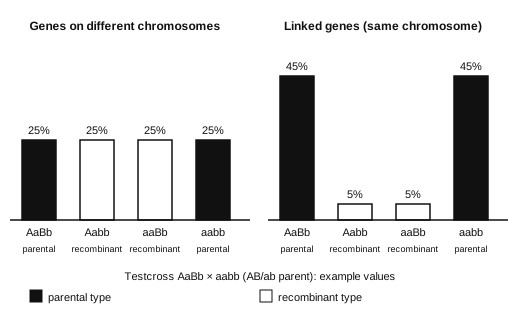
- Genes on the same chromosome tend to stay together; only crossing over makes recombinants, so parental types dominate (Morgan's Drosophila crosses).
- (B) Non-disjunction gives aneuploids, not a parental excess. (D) Polygenic inheritance gives continuous variation, not this ratio.
Short trick: Testcross ratio ≠ 1:1:1:1 with parentals in excess → linkage; % recombinants = map distance.
Answer: (C) The two genes are linked and present on the same chromosome
अवधारणा: द्विसंकर परीक्षार्थ संकरण (AaBb × aabb) F1 के युग्मक प्रकार सीधे दर्शाता है। स्वतन्त्र अपव्यूहन → 1 : 1 : 1 : 1; सहलग्नता → पैतृक प्रकार > 50 %, पुनर्योगज < 50 %।
- भिन्न गुणसूत्रों पर जीन स्वतन्त्र रूप से अपव्यूहित होते हैं → पैतृक : पुनर्योगज = 50 : 50; अतः (A) गलत है, क्योंकि यहाँ पैतृक प्रकार अधिक हैं।
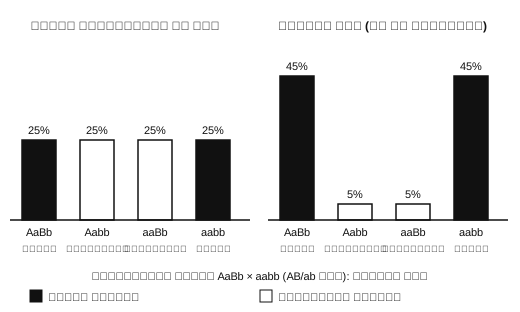
- एक ही गुणसूत्र पर जीन साथ रहने की प्रवृत्ति रखते हैं; केवल जीन-विनिमय (crossing over) से पुनर्योगज बनते हैं, अतः पैतृक प्रकार अधिक (मॉर्गन के Drosophila संकरण)।
- (B) अवियोजन से असुगुणित (aneuploid) बनते हैं, पैतृक अधिकता नहीं। (D) बहुजीनी वंशागति से सतत विभिन्नता आती है, यह अनुपात नहीं।
शॉर्ट ट्रिक: परीक्षार्थ संकरण अनुपात ≠ 1:1:1:1 और पैतृक अधिक → सहलग्नता; % पुनर्योगज = मानचित्र दूरी।
उत्तर: (C) दोनों जीन सहलग्न हैं और एक ही गुणसूत्र पर उपस्थित हैं
NEET UGBiologyPrinciples of inheritance – linkageNEET UG 2016 · 1 May Shift 1
Q2051.It is much easier for a small animal to run uphill than for a large animal, because:
छोटे प्राणी के लिए बड़े प्राणी की तुलना में चढ़ाई पर दौड़ना कहीं अधिक आसान है, क्योंकि:
- AIt is easier to carry a small body weight.छोटे शरीर का भार ढोना आसान है।
- BSmaller animals have a higher metabolic rate.छोटे प्राणियों की उपापचयी दर अधिक होती है।
- CSmall animals have a lower O2 requirementछोटे प्राणियों की O2 आवश्यकता कम होती है
- DThe efficiency of muscles in large animals is less than in the small animals.बड़े प्राणियों में पेशियों की दक्षता छोटे प्राणियों की तुलना में कम होती है।
Show answer
Concept: Small animals have a larger surface-area-to-volume ratio and a higher mass-specific (per gram) metabolic rate, so they can generate energy (ATP) fast enough per unit body mass for the extra work of climbing.
- (B) Correct – higher metabolic rate per unit mass → quicker energy release → easier uphill running.
- (A) Body weight is relative; the work per kg of body mass for climbing is about the same for both, so weight alone is not the reason.
- (C) Wrong – per gram, small animals need more O2, not less.
- (D) Muscle efficiency (energy converted to work) is broadly similar across animal sizes.
Short trick: Mouse vs elephant: per gram, the mouse burns far more energy – "small body, fast fire".
Answer: (B) Smaller animals have a higher metabolic rate.
अवधारणा: छोटे प्राणियों में पृष्ठ-क्षेत्रफल-से-आयतन अनुपात अधिक और प्रति ग्राम उपापचयी दर अधिक होती है, अतः वे प्रति इकाई शरीर-भार चढ़ाई के अतिरिक्त कार्य हेतु पर्याप्त तीव्रता से ऊर्जा (ATP) उत्पन्न कर पाते हैं।
- (B) सही – प्रति इकाई भार अधिक उपापचयी दर → तीव्र ऊर्जा मुक्ति → चढ़ाई पर दौड़ना आसान।
- (A) शरीर का भार सापेक्ष है; चढ़ने में प्रति kg शरीर-भार किया गया कार्य दोनों के लिए लगभग समान है, अतः केवल भार कारण नहीं।
- (C) गलत – प्रति ग्राम छोटे प्राणियों को अधिक O2 चाहिए, कम नहीं।
- (D) पेशी दक्षता (ऊर्जा का कार्य में रूपान्तरण) विभिन्न आकार के प्राणियों में लगभग समान होती है।
शॉर्ट ट्रिक: चूहा बनाम हाथी: प्रति ग्राम चूहा कहीं अधिक ऊर्जा जलाता है – "छोटा शरीर, तेज़ आग"।
उत्तर: (B) छोटे प्राणियों की उपापचयी दर अधिक होती है।
NEET UGBiologyBreathing and respiration – metabolic rate and body sizeNEET UG 2016 · 1 May Shift 1
Q2052.Which of the following is not a characteristic feature during mitosis in somatic cells?
कायिक कोशिकाओं में समसूत्री विभाजन के दौरान निम्नलिखित में से कौन-सा अभिलक्षण नहीं होता?
- ASpindle fibresतर्कु तन्तु
- BDisappearance of nucleolusकेन्द्रिक का लोप
- CChromosome movementगुणसूत्र संचलन
- DSynapsisसूत्रयुग्मन (Synapsis)
Show answer
Concept: Synapsis is the pairing of homologous chromosomes (forming the synaptonemal complex) in zygotene of meiosis I; it never occurs in mitosis.
- (A) Spindle fibres – formed in prophase/metaphase of mitosis.
- (B) Nucleolus disappears at end of prophase of mitosis.
- (C) Chromatids move to opposite poles in anaphase of mitosis.
- (D) Synapsis – a meiosis-only event, so not a feature of mitosis.
Short trick: Meiosis-only words: synapsis, bivalent/tetrad, chiasma, crossing over, terminalisation.
Answer: (D) Synapsis
अवधारणा: सूत्रयुग्मन अर्धसूत्री विभाजन I के युग्मपट्ट (zygotene) में समजात गुणसूत्रों का युग्मन (सिनैप्टोनीमल सम्मिश्र का निर्माण) है; यह समसूत्री विभाजन में कभी नहीं होता।
- (A) तर्कु तन्तु – समसूत्री के पूर्वावस्था/मध्यावस्था में बनते हैं।
- (B) समसूत्री की पूर्वावस्था के अन्त में केन्द्रिक लुप्त होता है।
- (C) समसूत्री की पश्चावस्था में अर्धगुणसूत्र विपरीत ध्रुवों की ओर जाते हैं।
- (D) सूत्रयुग्मन – केवल अर्धसूत्री घटना, अतः समसूत्री का अभिलक्षण नहीं।
शॉर्ट ट्रिक: केवल अर्धसूत्री के शब्द: सूत्रयुग्मन, युगली/चतुष्क, काएज़्मा, जीन-विनिमय, उपान्तीभवन।
उत्तर: (D) सूत्रयुग्मन
NEET UGBiologyCell cycle and cell division – mitosis vs meiosisNEET UG 2016 · 1 May Shift 1
Q2053.Which of the following statements is not correct?
निम्नलिखित में से कौन-सा कथन सही नहीं है?
- APollen grains of many species can germinate on the stigma of a flower, but only one pollen tube of the same species grows into the style.अनेक जातियों के परागकण किसी पुष्प के वर्तिकाग्र पर अंकुरित हो सकते हैं, परन्तु वर्तिका में समान जाति की केवल एक ही पराग नलिका वृद्धि करती है।
- BInsects that consume pollen or nectar without bringing about pollination are called pollen/nectar robbers.जो कीट परागण किए बिना पराग या मकरन्द का उपभोग करते हैं उन्हें पराग/मकरन्द दस्यु (robbers) कहते हैं।
- CPollen germination and pollen tube growth are regulated by chemical components of pollen interacting with those of the pistil.परागकण का अंकुरण और पराग नलिका की वृद्धि, पराग के रासायनिक घटकों की स्त्रीकेसर के रासायनिक घटकों के साथ अन्योन्यक्रिया द्वारा नियन्त्रित होते हैं।
- DSome reptiles have also been reported as pollinators in some plant species.कुछ पादप जातियों में कुछ सरीसृपों को भी परागणकर्ता के रूप में पाया गया है।
Show answer
Concept: The pistil recognises compatible pollen; only compatible pollen (usually of the same species) germinates, and many pollen tubes of the same species can grow down the style together.
- (A) Not correct – (i) the pistil rejects incompatible pollen of other species, so "pollen of many species germinate" is false; (ii) several compatible pollen tubes enter the style, not just one.
- (B) Correct – NCERT: insects that consume pollen/nectar without pollinating are pollen/nectar robbers.
- (C) Correct – pollen–pistil interaction is a dialogue mediated by chemical components of both.
- (D) Correct – NCERT: some primates, arboreal rodents and reptiles (gecko lizard, garden lizard) act as pollinators.
Short trick: Pistil = "bouncer": lets in the right (compatible) crowd – many of them – and turns away others.
Answer: (A) Pollen grains of many species can germinate on the stigma … only one pollen tube … grows into the style.
अवधारणा: स्त्रीकेसर सुयोग्य पराग को पहचानता है; केवल सुयोग्य पराग (सामान्यतः उसी जाति का) अंकुरित होता है, और उसी जाति की अनेक पराग नलिकाएँ एक साथ वर्तिका में बढ़ सकती हैं।
- (A) सही नहीं – (i) स्त्रीकेसर अन्य जातियों के असुयोग्य पराग को अस्वीकार कर देता है, अतः "अनेक जातियों के पराग अंकुरित होते हैं" असत्य है; (ii) वर्तिका में कई सुयोग्य पराग नलिकाएँ प्रवेश करती हैं, केवल एक नहीं।
- (B) सही – NCERT: परागण किए बिना पराग/मकरन्द खाने वाले कीट पराग/मकरन्द दस्यु कहलाते हैं।
- (C) सही – पराग-स्त्रीकेसर संकर्षण दोनों के रासायनिक घटकों द्वारा संचालित संवाद है।
- (D) सही – NCERT: कुछ प्राइमेट, वृक्षवासी कृन्तक और सरीसृप (गेको छिपकली, उद्यान छिपकली) परागणकर्ता होते हैं।
शॉर्ट ट्रिक: स्त्रीकेसर = "द्वारपाल": सही (सुयोग्य) भीड़ – अनेक – को भीतर आने देता है और अन्य को लौटा देता है।
उत्तर: (A) अनेक जातियों के परागकण … वर्तिका में … केवल एक ही पराग नलिका वृद्धि करती है।
NEET UGBiologySexual reproduction in flowering plants – pollination and pollen–pistil interactionNEET UG 2016 · 1 May Shift 1
Q2054.Specialized epidermal cells surrounding the guard cells are called:
द्वार कोशिकाओं को घेरे रहने वाली विशिष्ट बाह्यत्वचीय कोशिकाएँ कहलाती हैं:
- AComplementary cellsपूरक कोशिकाएँ
- BSubsidiary cellsसहायक कोशिकाएँ (Subsidiary cells)
- CBulliform cellsआवर्ध त्वक् कोशिकाएँ (Bulliform cells)
- DLenticelsवातरन्ध्र (Lenticels)
Show answer
Concept: NCERT: "Sometimes, a few epidermal cells, in the vicinity of the guard cells become specialised in their shape and size and are known as subsidiary cells. The stomatal aperture, guard cells and the surrounding subsidiary cells are together called stomatal apparatus."
- (B) Subsidiary cells – correct.
- (A) Complementary cells – loosely arranged cells filling a lenticel, not around stomata.
- (C) Bulliform cells – large, empty adaxial epidermal cells of grass leaves that roll the leaf in water stress.
- (D) Lenticels – lens-shaped openings in the bark (periderm) for gas exchange.
Short trick: Stomatal apparatus = pore + guard cells + subsidiary cells. Lenticel ↔ complementary cells (both in bark).
Answer: (B) Subsidiary cells
अवधारणा: NCERT: "कभी-कभी द्वार कोशिकाओं के समीप की कुछ बाह्यत्वचीय कोशिकाएँ आकार और माप में विशिष्ट हो जाती हैं, जिन्हें सहायक कोशिकाएँ कहते हैं। रन्ध्र छिद्र, द्वार कोशिकाएँ और चारों ओर की सहायक कोशिकाएँ मिलकर रन्ध्री उपकरण कहलाती हैं।"
- (B) सहायक कोशिकाएँ – सही।
- (A) पूरक कोशिकाएँ – वातरन्ध्र को भरने वाली ढीली व्यवस्थित कोशिकाएँ, रन्ध्रों के चारों ओर नहीं।
- (C) आवर्ध त्वक् कोशिकाएँ – घास की पत्तियों की ऊपरी बाह्यत्वचा की बड़ी, खाली कोशिकाएँ जो जल-तनाव में पत्ती को मोड़ देती हैं।
- (D) वातरन्ध्र – गैस विनिमय हेतु छाल (परित्वक्) में लेंस-आकार के छिद्र।
शॉर्ट ट्रिक: रन्ध्री उपकरण = छिद्र + द्वार कोशिकाएँ + सहायक कोशिकाएँ। वातरन्ध्र ↔ पूरक कोशिकाएँ (दोनों छाल में)।
उत्तर: (B) सहायक कोशिकाएँ
NEET UGBiologyAnatomy of flowering plants – stomatal apparatusNEET UG 2016 · 1 May Shift 1
Q2055.Which of the following guards the opening of hepatopancreatic duct into the duodenum?
निम्नलिखित में से कौन ग्रहणी में यकृत-अग्न्याशयी वाहिनी के छिद्र की रक्षा करता है?
- ASemilunar valveअर्धचन्द्राकार कपाट
- BIleocaecal valveशेषान्त्र-अन्धान्त्र कपाट
- CPyloric sphincterजठरनिर्गमी अवरोधिनी (Pyloric sphincter)
- DSphincter of Oddiओडी की अवरोधिनी (Sphincter of Oddi)
Show answer
Concept: NCERT: "The bile duct and the pancreatic duct open together into the duodenum as the common hepato-pancreatic duct which is guarded by a sphincter called the sphincter of Oddi."
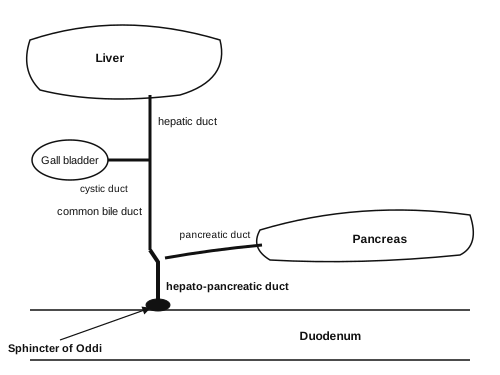
- (D) Sphincter of Oddi – correct.
- (A) Semilunar valves – at the bases of the aorta and pulmonary artery in the heart.
- (B) Ileocaecal valve – between ileum and caecum (small → large intestine).
- (C) Pyloric sphincter – between stomach and duodenum.
Short trick: Gut sphincters in order: gastro-oesophageal (cardiac) → pyloric → Oddi (on the bile-pancreatic duct) → ileocaecal → anal.
Answer: (D) Sphincter of Oddi
अवधारणा: NCERT: "पित्त वाहिनी और अग्न्याशयी वाहिनी मिलकर सामान्य यकृत-अग्न्याशयी वाहिनी के रूप में ग्रहणी में खुलती हैं, जिसकी रक्षा ओडी की अवरोधिनी नामक अवरोधिनी करती है।"
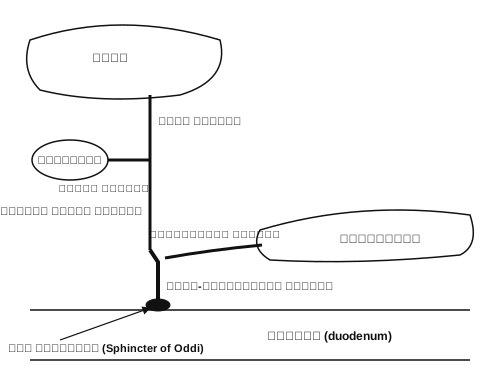
- (D) ओडी की अवरोधिनी – सही।
- (A) अर्धचन्द्राकार कपाट – हृदय में महाधमनी और फुप्फुसीय धमनी के आधार पर।
- (B) शेषान्त्र-अन्धान्त्र कपाट – शेषान्त्र और अन्धान्त्र के बीच (छोटी → बड़ी आँत)।
- (C) जठरनिर्गमी अवरोधिनी – आमाशय और ग्रहणी के बीच।
शॉर्ट ट्रिक: आहारनाल की अवरोधिनियाँ क्रम से: जठर-ग्रसिका (हृदयी) → जठरनिर्गमी → ओडी (पित्त-अग्न्याशयी वाहिनी पर) → शेषान्त्र-अन्धान्त्र → गुदा।
उत्तर: (D) ओडी की अवरोधिनी
NEET UGBiologyDigestion and absorption – duct system and sphinctersNEET UG 2016 · 1 May Shift 1
Q2056.Stems modified into flat green organs performing the functions of leaves are known as:
पत्तियों का कार्य करने वाले चपटे हरे अंगों में रूपान्तरित तने कहलाते हैं:
- ACladodesक्लैडोड
- BPhyllodesपर्णाभवृन्त (Phyllodes)
- CPhyllocladesपर्णाभ स्तम्भ (Phylloclades)
- DScalesशल्क
Show answer
Concept: NCERT: "Some plants of arid regions modify their stems into flattened (Opuntia) or fleshy cylindrical (Euphorbia) structures. They contain chlorophyll and carry out photosynthesis" – phylloclades.
- (C) Phylloclades – flat green stems of many internodes (Opuntia, Euphorbia). Correct, as per NCERT term.
- (A) Cladodes – phylloclades of only one (or two) internode (e.g. Asparagus); a special type, not the general term.
- (B) Phyllodes – flattened green petioles (Australian Acacia) – leaf, not stem.
- (D) Scales – small, dry, non-green leaves (onion, ginger).
Short trick: Phylloclade = flat stem (klados = branch); Phyllode = flat petiole.
Answer: (C) Phylloclades
अवधारणा: NCERT: "शुष्क क्षेत्रों के कुछ पौधों के तने चपटे (Opuntia) या गूदेदार बेलनाकार (Euphorbia) संरचनाओं में रूपान्तरित हो जाते हैं। इनमें क्लोरोफिल होता है और ये प्रकाश-संश्लेषण करते हैं" – पर्णाभ स्तम्भ।
- (C) पर्णाभ स्तम्भ – अनेक पर्वों वाले चपटे हरे तने (Opuntia, Euphorbia)। NCERT शब्द के अनुसार सही।
- (A) क्लैडोड – केवल एक (या दो) पर्व वाले पर्णाभ स्तम्भ (जैसे Asparagus); एक विशेष प्रकार, सामान्य शब्द नहीं।
- (B) पर्णाभवृन्त – चपटे हरे पर्णवृन्त (ऑस्ट्रेलियाई Acacia) – पत्ती, तना नहीं।
- (D) शल्क – छोटी, शुष्क, अहरित पत्तियाँ (प्याज़, अदरक)।
शॉर्ट ट्रिक: Phylloclade = चपटा तना (klados = शाखा); Phyllode = चपटा पर्णवृन्त।
उत्तर: (C) पर्णाभ स्तम्भ
NEET UGBiologyMorphology of flowering plants – phyllocladeNEET UG 2016 · 1 May Shift 1
Q2057.The primitive prokaryotes responsible for the production of biogas from the dung of ruminant animals, include the:
जुगाली करने वाले पशुओं के गोबर से बायोगैस के उत्पादन के लिए उत्तरदायी आदिम प्रोकैरियोट में सम्मिलित हैं:
- AHalophilesलवणरागी (Halophiles)
- BThermoacidophilesतापअम्लरागी (Thermoacidophiles)
- CMethanogensमेथेनोजन (Methanogens)
- DEubacteriaसुजीवाणु (Eubacteria)
Show answer
Concept: Methanogens (e.g. Methanobacterium) are archaebacteria living anaerobically in the rumen and in sludge; they produce methane, the main component of biogas.
- (C) Methanogens – correct.
- (A) Halophiles – archaebacteria of extremely salty areas; no methane.
- (B) Thermoacidophiles – archaebacteria of hot acidic springs.
- (D) Eubacteria – "true bacteria", not the primitive archaebacteria that make methane.
Short trick: Archaebacteria trio: Halo (salt), Thermo-acido (hot springs), Methano (marshy/rumen → gobar gas).
Answer: (C) Methanogens
अवधारणा: मेथेनोजन (जैसे Methanobacterium) आद्यजीवाणु हैं जो रूमेन और पंक में अवायवीय रूप से रहते हैं; ये मेथेन बनाते हैं, जो बायोगैस का मुख्य घटक है।
- (C) मेथेनोजन – सही।
- (A) लवणरागी – अत्यधिक लवणीय क्षेत्रों के आद्यजीवाणु; मेथेन नहीं बनाते।
- (B) तापअम्लरागी – गर्म अम्लीय झरनों के आद्यजीवाणु।
- (D) सुजीवाणु – "वास्तविक जीवाणु", मेथेन बनाने वाले आदिम आद्यजीवाणु नहीं।
शॉर्ट ट्रिक: आद्यजीवाणु त्रयी: हैलो (लवण), थर्मो-एसिडो (गर्म झरने), मेथेनो (दलदल/रूमेन → गोबर गैस)।
उत्तर: (C) मेथेनोजन
NEET UGBiologyBiological classification / microbes – methanogens and biogasNEET UG 2016 · 1 May Shift 1
Q2058.A river with an inflow of domestic sewage rich in organic waste may result in:
कार्बनिक अपशिष्ट से भरपूर घरेलू वाहित मल के अन्तर्वाह वाली नदी का परिणाम हो सकता है:
- ADrying of the river very soon due to algal bloom.शैवाल प्रस्फुटन के कारण नदी का बहुत शीघ्र सूख जाना।
- BIncreased population of aquatic food web organisms.जलीय खाद्य जाल के जीवों की समष्टि में वृद्धि।
- CAn increased production of fish due to biodegradable nutrients.जैवनिम्नीकरणीय पोषकों के कारण मछली उत्पादन में वृद्धि।
- DDeath of fish due to lack of oxygen.ऑक्सीजन की कमी से मछलियों की मृत्यु।
Show answer
Concept: Organic sewage raises BOD: microbes decomposing it consume dissolved oxygen (DO) sharply, so fish and other aquatic animals die.
- (D) Correct – DO falls → fish mortality.
- (A) Algal bloom deteriorates water quality but does not dry a river.
- (B) Food-web organisms (other than decomposers) decline, not increase, because of low oxygen.
- (C) Fish production falls, not rises.
Short trick: More sewage → more BOD → less DO → fish die. High BOD = high pollution.
Answer: (D) Death of fish due to lack of oxygen.
अवधारणा: कार्बनिक वाहित मल BOD बढ़ाता है: इसका अपघटन करने वाले सूक्ष्मजीव घुली ऑक्सीजन (DO) का तीव्र उपभोग करते हैं, अतः मछलियाँ और अन्य जलीय प्राणी मर जाते हैं।
- (D) सही – DO घटती है → मछलियों की मृत्यु।
- (A) शैवाल प्रस्फुटन जल गुणवत्ता बिगाड़ता है पर नदी को सुखाता नहीं।
- (B) ऑक्सीजन कम होने से खाद्य जाल के जीव (अपघटकों को छोड़कर) घटते हैं, बढ़ते नहीं।
- (C) मछली उत्पादन घटता है, बढ़ता नहीं।
शॉर्ट ट्रिक: अधिक वाहित मल → अधिक BOD → कम DO → मछलियाँ मरती हैं। उच्च BOD = उच्च प्रदूषण।
उत्तर: (D) ऑक्सीजन की कमी से मछलियों की मृत्यु।
NEET UGBiologyEnvironmental issues / microbes – sewage and BODNEET UG 2016 · 1 May Shift 1
Q2059.A cell at telophase stage is observed by a student in a plant brought from the field. He tells his teacher that this cell is not like other cells at telophase stage. There is no formation of cell plate and thus the cell is containing more number of chromosomes as compared to other dividing cells. This would result in:
खेत से लाए गए एक पौधे में एक छात्र अन्त्यावस्था (telophase) की एक कोशिका देखता है। वह अपने शिक्षक को बताता है कि यह कोशिका अन्त्यावस्था की अन्य कोशिकाओं जैसी नहीं है। इसमें कोशिका पट्टिका का निर्माण नहीं हुआ है और इस कारण इस कोशिका में अन्य विभाजित कोशिकाओं की तुलना में अधिक गुणसूत्र हैं। इसका परिणाम होगा:
- AAneuploidyअसुगुणिता (Aneuploidy)
- BPolyploidyबहुगुणिता (Polyploidy)
- CSomaclonal variationकायक्लोनी विभिन्नता
- DPolytenyबहुपट्टिता (Polyteny)
Show answer
Concept: If chromosomes have separated at anaphase but cytokinesis (cell-plate formation) fails, both complete sets stay in one cell → the whole chromosome set is doubled (2n → 4n) = polyploidy.
- (B) Polyploidy – increase in whole sets of chromosomes. Correct.
- (A) Aneuploidy – gain/loss of one or a few chromosomes (non-disjunction), not of whole sets.
- (C) Somaclonal variation – genetic variation among plants regenerated from tissue culture.
- (D) Polyteny – repeated DNA replication without separation of chromatids (giant salivary-gland chromosomes of Drosophila), no change in chromosome number.
Short trick: Failure of cytokinesis = whole-set doubling = polyploidy (colchicine works the same way by blocking spindle).
Answer: (B) Polyploidy
अवधारणा: यदि पश्चावस्था में गुणसूत्र पृथक हो गए हों पर कोशिकाद्रव्य विभाजन (कोशिका पट्टिका निर्माण) विफल हो जाए, तो दोनों पूर्ण समुच्चय एक ही कोशिका में रह जाते हैं → पूरा गुणसूत्र समुच्चय दोगुना (2n → 4n) = बहुगुणिता।
- (B) बहुगुणिता – गुणसूत्रों के पूर्ण समुच्चयों में वृद्धि। सही।
- (A) असुगुणिता – एक या कुछ गुणसूत्रों की वृद्धि/कमी (अवियोजन), पूर्ण समुच्चय नहीं।
- (C) कायक्लोनी विभिन्नता – ऊतक संवर्धन से पुनर्जनित पौधों में आनुवंशिक विभिन्नता।
- (D) बहुपट्टिता – अर्धगुणसूत्रों के पृथक हुए बिना बार-बार DNA प्रतिकृतियन (Drosophila की लार-ग्रन्थि के विशाल गुणसूत्र), गुणसूत्र संख्या में परिवर्तन नहीं।
शॉर्ट ट्रिक: कोशिकाद्रव्य विभाजन की विफलता = पूर्ण समुच्चय दोगुना = बहुगुणिता (कॉल्चिसीन भी तर्कु रोककर यही करता है)।
उत्तर: (B) बहुगुणिता
NEET UGBiologyPrinciples of inheritance / cell division – polyploidyNEET UG 2016 · 1 May Shift 1
Q2060.A typical fat molecules is made up of:
एक प्रारूपिक वसा अणु किससे बना होता है?
- AThree glycerol molecules and one fatty acid moleculesतीन ग्लिसरॉल अणु और एक वसा अम्ल अणु
- BOne glycerol and three fatty acid moleculesएक ग्लिसरॉल और तीन वसा अम्ल अणु
- COne glycerol and one fatty acid moleculeएक ग्लिसरॉल और एक वसा अम्ल अणु
- DThree glycerol and three fatty acid moleculesतीन ग्लिसरॉल और तीन वसा अम्ल अणु
Show answer
Concept: A fat (neutral fat) is a triglyceride: glycerol (trihydroxy propane) has three –OH groups, each esterified with one fatty acid.
- 1 glycerol + 3 fatty acids → triglyceride + 3 H2O. Hence (B).
- (C) one glycerol + one fatty acid = monoglyceride, not a typical fat.
- (A), (D) – a fat never contains three glycerol molecules.
Short trick: "Tri-glyceride" = TRI fatty acids on one glycerol backbone (an "E" shape).
Answer: (B) One glycerol and three fatty acid molecules
अवधारणा: वसा (उदासीन वसा) एक ट्राइग्लिसराइड है: ग्लिसरॉल (ट्राइहाइड्रॉक्सी प्रोपेन) में तीन –OH समूह होते हैं, प्रत्येक एक वसा अम्ल से एस्टरीकृत।
- 1 ग्लिसरॉल + 3 वसा अम्ल → ट्राइग्लिसराइड + 3 H2O। अतः (B)।
- (C) एक ग्लिसरॉल + एक वसा अम्ल = मोनोग्लिसराइड, प्रारूपिक वसा नहीं।
- (A), (D) – वसा में कभी तीन ग्लिसरॉल अणु नहीं होते।
शॉर्ट ट्रिक: "ट्राइ-ग्लिसराइड" = एक ग्लिसरॉल आधार पर तीन वसा अम्ल ("E" आकार)।
उत्तर: (B) एक ग्लिसरॉल और तीन वसा अम्ल अणु
NEET UGBiologyBiomolecules – lipids (triglycerides)NEET UG 2016 · 1 May Shift 1

